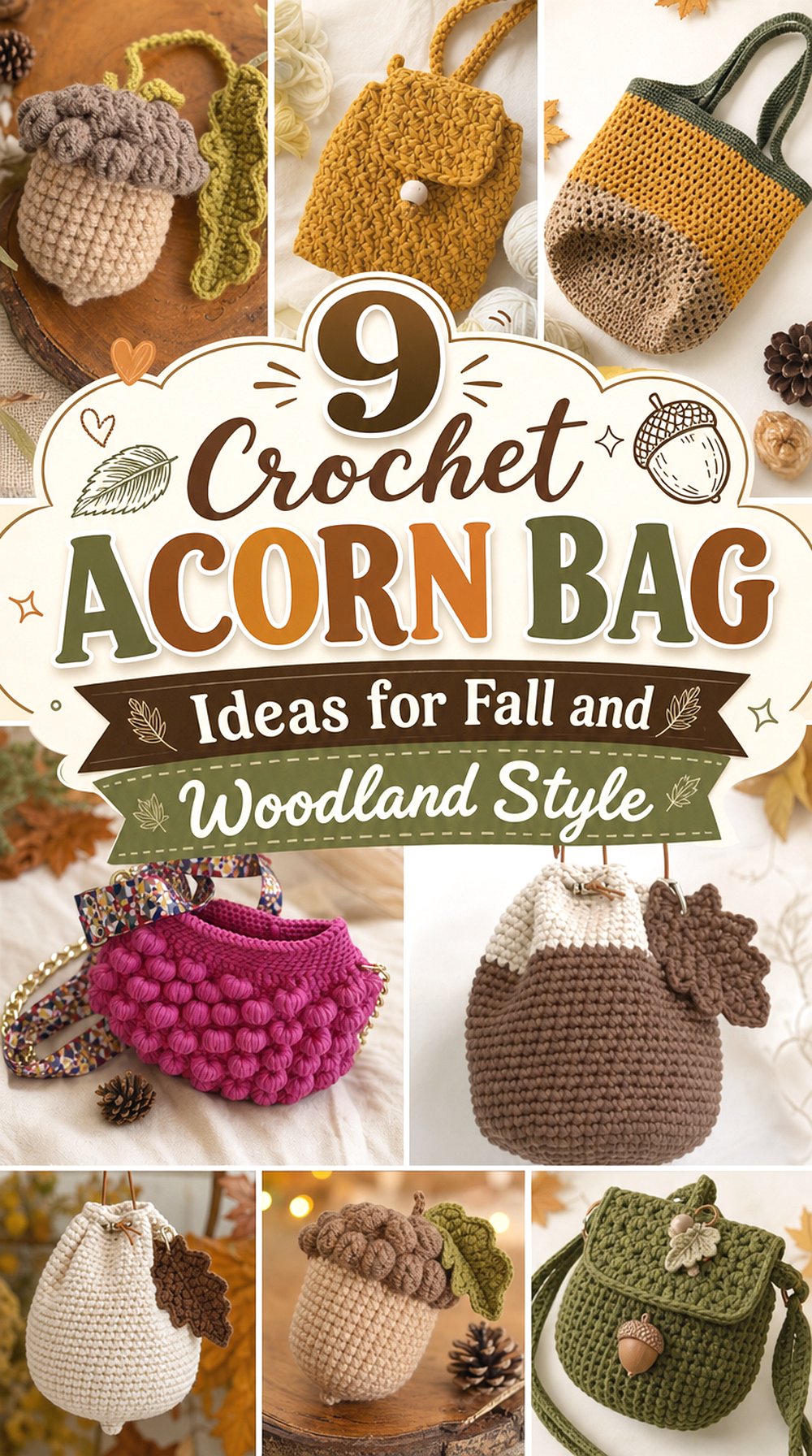
9 Crochet Acorn Bag Ideas for Fall and Woodland Style
An acorn bag can be much more than one rounded brown pouch. The tutorials collected here range from a larger market bag to crossbody and bucket shapes, a backpack, compact carry bags, and tiny acorn pouches that work more like trinket holders or bag charms.
That variety matters because shape, opening size, strap placement, yarn structure, and finished scale can change how useful an acorn-themed bag actually is. This roundup focuses on those practical differences so you can compare the projects before committing to one, while leaving exact construction details to the original creators.
Quick List
- Crochet Acorn Market Tote
- Crochet Acorn Crossbody Bag
- Crochet Acorn Bucket Bag
- Crochet Acorn Backpack
- Crochet Linen-Style Mini Acorn Bag
- Crochet Structured Jersey-Yarn Acorn Bag
- Crochet Bridge-Yarn Acorn Bag Pouch
- Crochet Mini Acorn Trinket Pouch
- Crochet Acorn and Oak Leaf Charm Pouch
Choose the Bag Shape Before Choosing the Colors
The acorn theme can survive across very different bag constructions, so start with function rather than deciding only from the cutest finished silhouette. A market bag gives you a broader carrying area, while a crossbody keeps the bag close to the body. Bucket styles concentrate capacity vertically, backpacks move the carrying points to the back, and mini pouches are better suited to genuinely small objects.
Think about the opening as well. A dramatically shaped acorn cap may create the strongest woodland look, but you still need convenient access to whatever goes inside. For a practical everyday bag, compare the usable opening, body depth, carrying method, and likely contents before deciding which interpretation to follow.
Structure and Stretch Can Change the Acorn Silhouette
Rounded novelty bags rely heavily on their outline. If the fabric stretches or collapses too much, an acorn body can lose the bulbous lower shape that makes the design recognizable. Yarn thickness, stitch density, the weight of the contents, and whether the bag has internal support can all affect that result.
A lining may be worth considering when you want to limit stretching, keep small belongings from working through the crochet fabric, or give a soft outer shell more support. It is not automatically necessary for every project, however. A tiny pouch holding lightweight notions has different structural demands from a crossbody carrying a phone and other everyday items. Judge reinforcement according to the intended use rather than applying the same solution to every bag.
Check Straps, Openings, and Cap Proportions Early
An acorn cap is visually important, but the carrying system is what turns the shape into a functional bag. Long straps can stretch when the crochet fabric or fiber is flexible, while attachment points may distort if they are carrying more weight than the surrounding fabric handles comfortably. Backpack straps add another issue: both sides need to sit consistently so the bag hangs well.
Before adapting any tutorial, identify which element actually opens, how wide that opening becomes, where the strap or handles connect, and whether the decorative cap interferes with access. If you plan to change the yarn or overall scale, recheck those relationships instead of assuming every component can simply be enlarged by the same amount.
1. Crochet Acorn Market Tote

This idea takes the acorn theme into a much roomier market-bag format instead of building a small novelty purse. HandmadebyRaine identifies the finished project as an Acorn Market Bag and states that the sample measures about 12 inches wide by 12 inches long. That gives this option a distinctly different purpose from the tiny pouches later in the roundup.
The broader body also lets the acorn-inspired stitch or color treatment read as an overall bag design rather than a miniature sculptural object. Choose this direction when usable carrying space matters more than reproducing a compact three-dimensional acorn.
Market-Bag Scale Makes the Theme More Graphic
On a larger carryall, the acorn idea does not have to depend entirely on a tiny rounded silhouette. Repeated texture, color sections, and the overall outline can communicate the theme across a larger surface.
That makes this a useful option if you like autumn styling but would rather make something that functions as a conventional tote. Before starting, compare the creator’s stated dimensions with a bag you already use so you understand how that scale will feel in practice.
Handles Need Their Own Stretch Check
A roomy bag can place more strain on its handles than a miniature pouch simply because there is room to put more inside. Crochet fabric can respond differently depending on fiber, stitch construction, handle length, and load.
If you adapt the yarn or handles, check how much the handle section stretches with the type of contents you realistically intend to carry. Reinforcement may be useful in some versions, but it should be treated as an adaptation rather than assumed to be part of the original tutorial.
Decide Whether an Open Carryall Suits Your Contents
Market-style bags and small closed pouches solve different problems. If the bag will carry objects that could slip through an open fabric or need more privacy, an added lining or inner pouch may make the finished piece more useful.
If you mainly want a lightweight seasonal tote, extra internal construction may be unnecessary. Decide based on your intended contents rather than adding structure automatically, since reinforcement also changes drape and weight.
Creator: HandmadebyRaine
2. Crochet Acorn Crossbody Bag
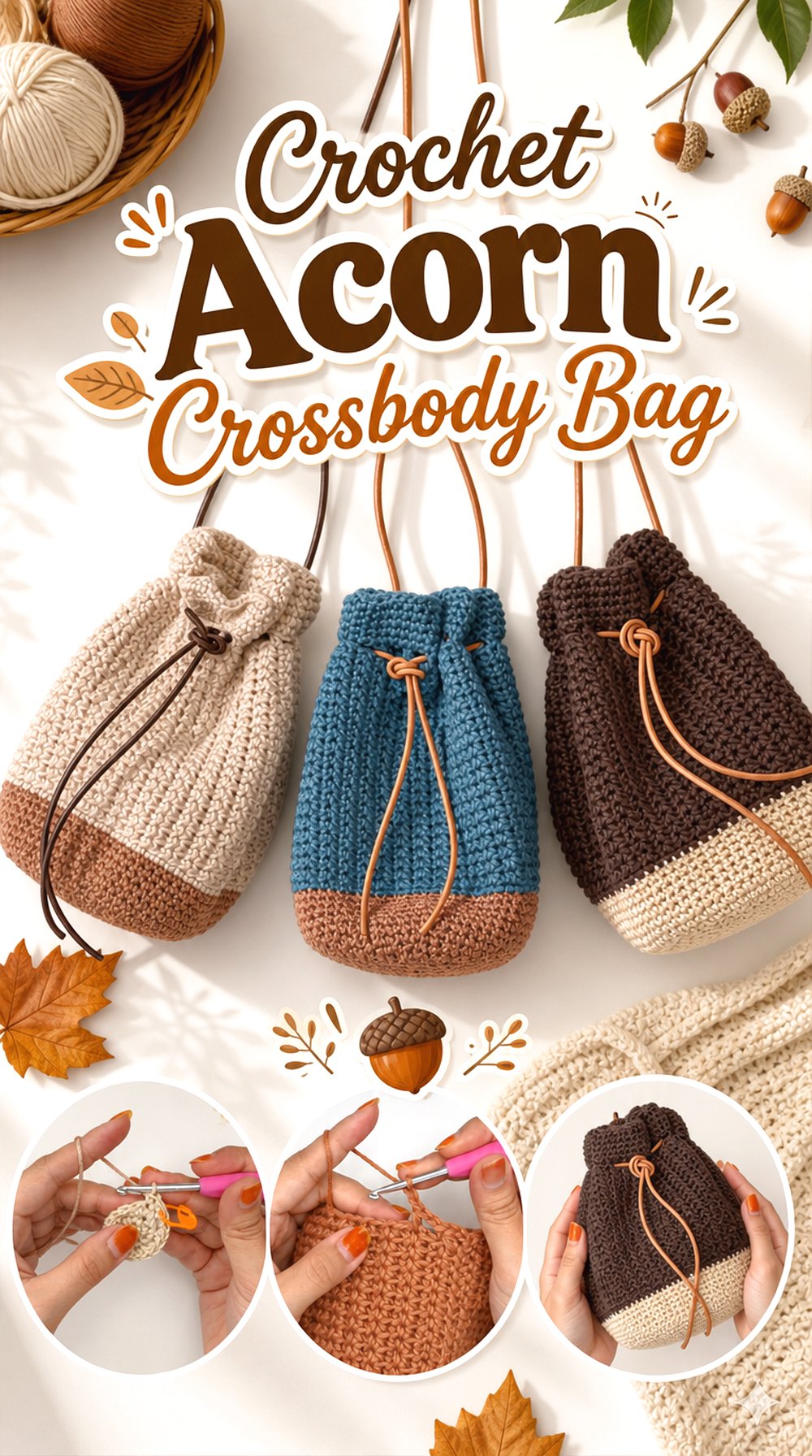
A crossbody interpretation makes the acorn itself the main accessory. The tutorial from 뜨개작가 아빌 crochet ha’bil presents an acorn cross bag with a warm fall-and-winter look, giving this project a closer-to-the-body carrying style than the market tote.
This is the direction to consider when you want the recognizable nut shape to stay prominent while still functioning as a wearable bag. Because a crossbody depends heavily on its strap, the most important adaptation decisions are not just the acorn colors—they are strap length, attachment stability, opening access, and how the bag behaves once something is placed inside.
Strap Length Changes Where the Acorn Sits
A crossbody can look quite different depending on whether it lands high against the torso or lower toward the hip. That position also changes how easily you can reach the opening.
If you depart from the tutorial’s materials or intended proportions, test the strap against the actual wearer before permanently finishing it. Remember that a crochet strap may lengthen under load, so its relaxed measurement alone does not tell you exactly where the finished bag will sit.
A Rounded Body Needs Realistic Capacity Expectations
An acorn-shaped body is designed around a recognizable silhouette, not maximum rectangular storage efficiency. Bulbous sides and a narrower upper area can reduce the usable space for rigid objects even if the exterior looks generous.
Before choosing this style for everyday use, compare the opening and internal form with the objects you expect to carry. A phone, wallet, or glasses case may need more specific clearance than soft items do. Avoid assuming exterior width automatically equals usable opening width.
Keep the Cap From Competing With Access
The upper brown section is what makes an acorn bag instantly readable, but decorative scale and practical access need to work together. If you customize the cap to make it deeper, wider, or more textured, check that the change does not make the opening awkward to reach.
This is particularly important when changing yarn thickness because a thicker fabric can make small openings feel more substantial and less flexible than expected. Treat the cap and opening as one functional area when planning adjustments.
Creator: 뜨개작가 아빌 crochet ha’bil
3. Crochet Acorn Bucket Bag
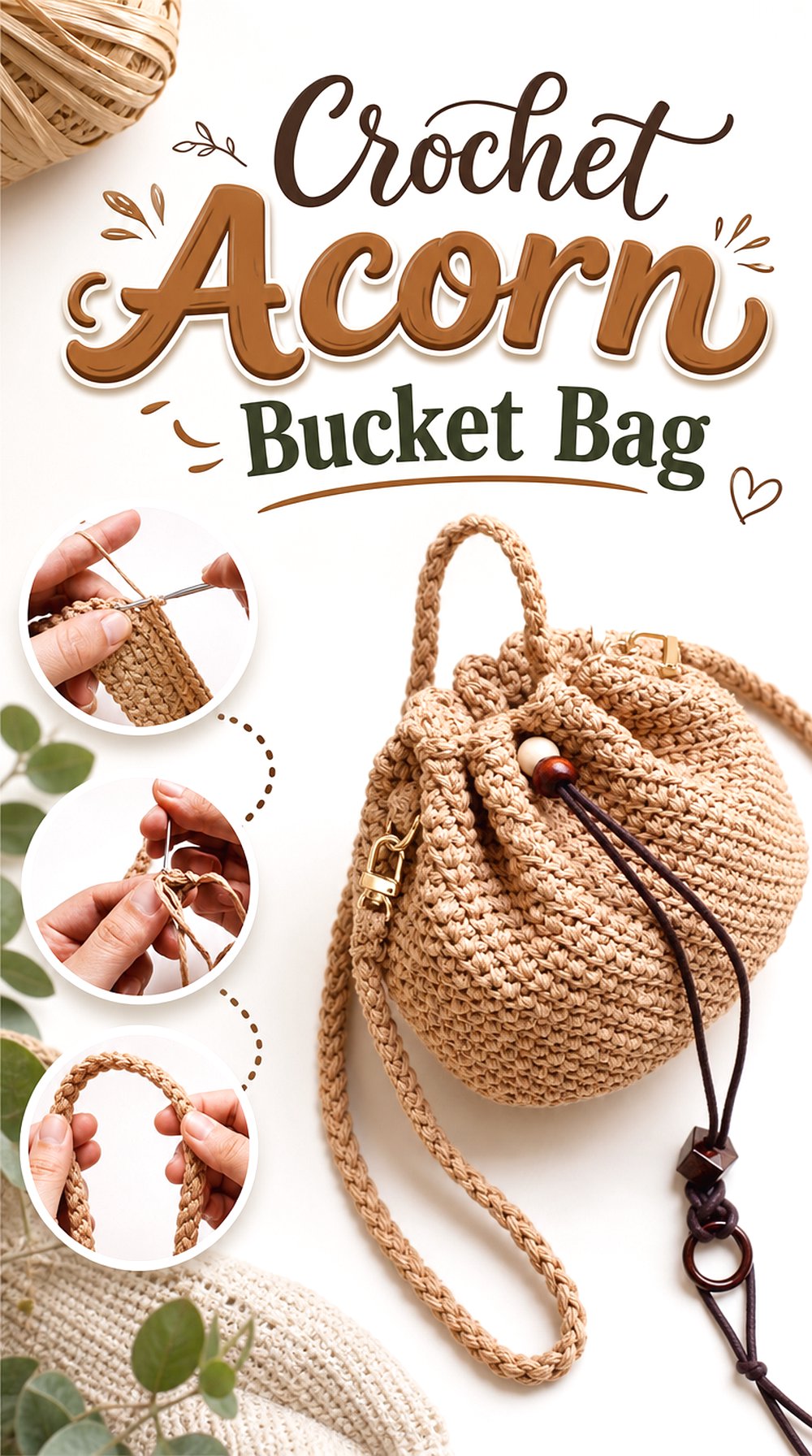
The bucket-bag version from 디어코바늘 -Dear crochet offers another way to preserve the rounded acorn appearance while giving the body a more vertical bag format. The creator identifies the tutorial as a “Crochet Acorn bucket Bag,” separating it clearly from the flatter market tote and the backpack construction.
This type of silhouette suits readers who like the idea of an acorn purse but want a deeper body rather than a tiny novelty pouch. Pay attention to how the upper section, opening, and sides relate to one another, because those proportions determine whether the project reads as a usable bucket bag or simply an oversized ornament.
Vertical Depth Can Be More Useful Than Extra Width
A bucket format concentrates the storage area downward. That can be convenient for soft or moderately sized belongings, but deeper does not automatically mean easier to organize.
Think about what tends to disappear at the bottom of your current bags. If you routinely carry several small objects, a simple fabric pocket or removable inner pouch could be more helpful than increasing the external dimensions. Any added organizer should be fitted to the finished bag rather than assumed from the tutorial.
The Upper Edge Controls the Acorn Proportion
Bucket bags naturally emphasize vertical side walls, while an acorn is recognized by the relationship between its rounded lower body and darker cap. Changing one section without checking the other can shift the visual balance.
If you plan to substitute yarn, compare the developing body and upper section as you work rather than deciding from yarn labels alone. The important checkpoint is the finished proportion, not whether the replacement yarn seems similar in the skein.
Test Your Largest Item Before Finishing
A common bag-planning mistake is checking overall capacity but forgetting the opening. A rigid object must pass through the narrowest usable point before it can benefit from the roomier body underneath.
For an adapted bucket bag, use your largest intended everyday item as the practical checkpoint. If it cannot pass comfortably through the opening, increasing internal depth will not solve the problem.
Creator: 디어코바늘 -Dear crochet
4. Crochet Acorn Backpack
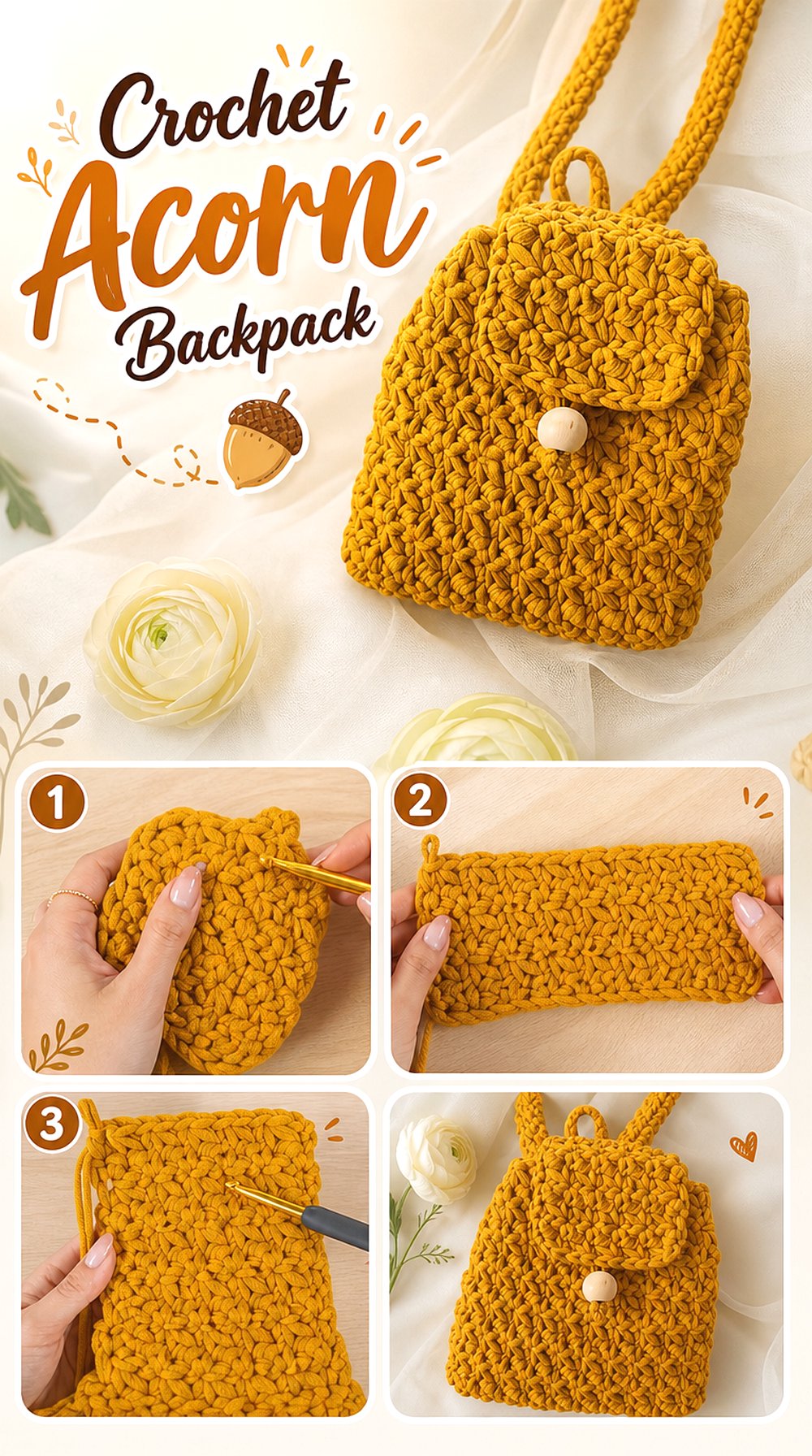
Turning the theme into a backpack immediately changes both the look and the functional demands. 메이드인한코한코 made in hankohanko has a dedicated acorn backpack tutorial, making this the strongest option in the collection for readers who want the woodland shape carried on the back instead of from one shoulder or a single long strap.
The backpack format also gives the acorn body more visual presence. Rather than treating the nut as a small decorative accessory, the entire back panel becomes part of the silhouette. That makes strap symmetry, opening access, and shape retention especially important planning points.
Two Straps Change the Direction of the Pull
A purse normally concentrates its load through one strap or two handles. A backpack divides that pull between attachment points on both sides of the body.
When adapting the design, check that both straps are the same effective length and that their attachment areas sit symmetrically. Small differences may cause the bag to tilt once worn. Reinforcement decisions should focus on the places where the straps transfer weight into the crochet fabric rather than simply making the entire bag stiffer.
Backpack Proportions Need a Wider Viewing Check
A small acorn pouch is usually viewed in the hand, while a backpack is seen as part of the wearer’s overall silhouette. A cap that seems appropriately dramatic when lying flat may look different once the bag curves against the back.
Before permanently finishing decorative components, view the bag hanging vertically and from several feet away. That makes it easier to judge whether the cap, lower body, and straps visually compete or remain balanced.
Opening Access Matters Once the Bag Is Worn
Backpacks are often opened while being held in a different position from purses. A charming opening that works perfectly on a table may feel less convenient when the bag is hanging or partly filled.
As you evaluate the tutorial, pay attention to how the creator accesses the bag and whether that method matches how you expect to use it. If you customize the top, preserve enough room for your hand and intended contents to move comfortably through the opening.
Creator: 메이드인한코한코 made in hankohanko
5. Crochet Linen Style Mini Acorn Bag
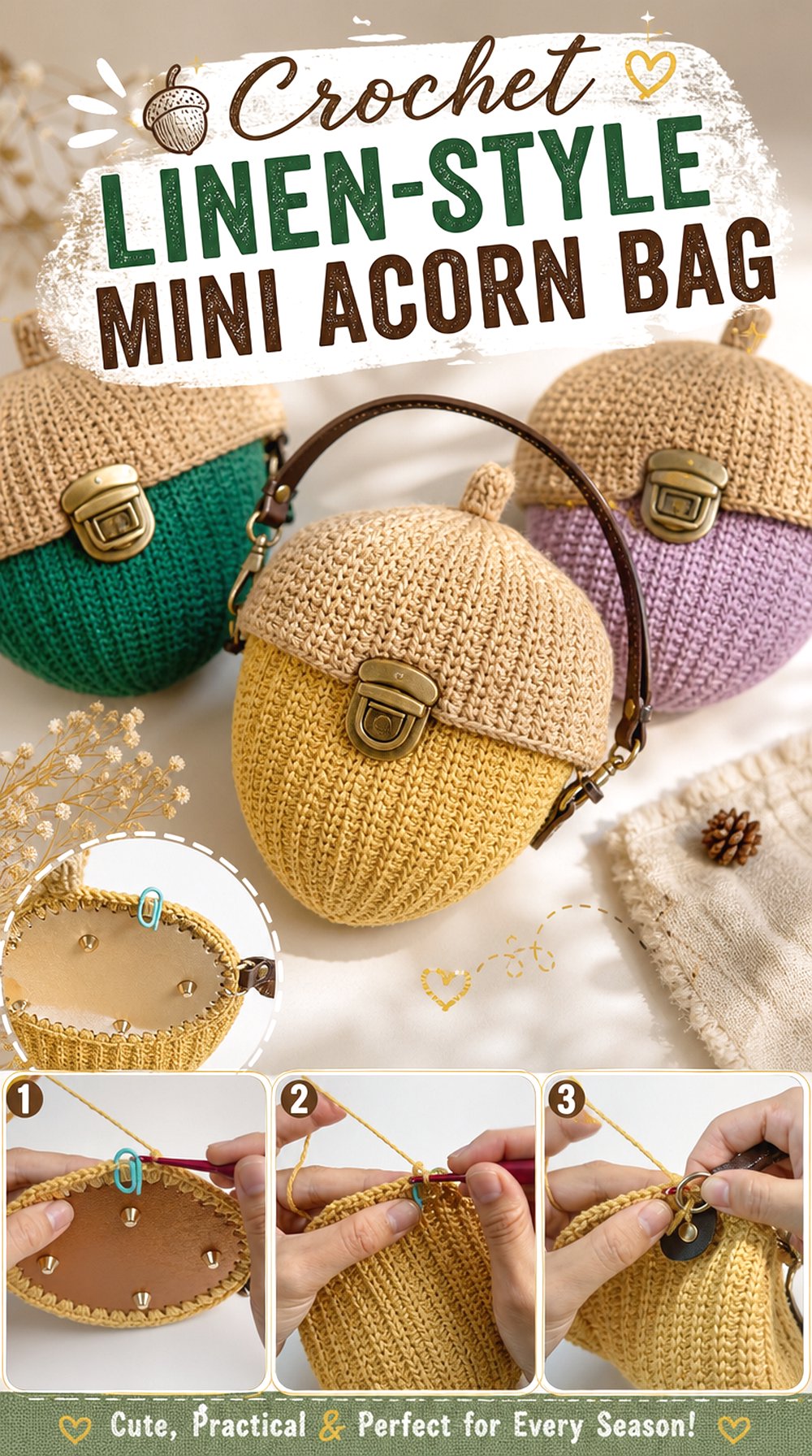
This compact project from 동인천 송현모사 combines the acorn theme with what the creator calls a linen-style mini bag. The channel’s playlist identifies it as a crochet mini acorn bag intended as a small carry piece, so it occupies a useful middle ground between the full-size wearable bags and the tiny trinket pouches later in this list.
Its appeal is less about exaggerating the acorn into a plush-looking object and more about combining the shape with a neater bag-like surface. That makes it worth considering if you prefer woodland influence that is still easy to style as an accessory.
Linen-Style Texture Gives the Surface a Quieter Look
A more regular, woven-looking crochet surface can make the acorn theme feel less toy-like than heavily dimensional texture. That can be useful when you want the color division and silhouette to provide most of the woodland character.
If you substitute yarn, pay attention to stitch definition. A very fuzzy fiber may hide the surface pattern, while a sharply defined fiber makes each color transition and stitch more visible. Choose according to which feature you want the eye to notice first.
Mini Scale Requires a Contents Check
“Mini” is useful stylistically, but it is not a universal capacity. Before planning to use any compact bag for a phone, wallet, keys, or other daily object, confirm the creator’s finished measurements or compare the project against the item itself.
Do not enlarge it only because something narrowly fails to fit. Changing the scale can also affect the cap, strap, opening, and overall acorn proportion, so treat resizing as a whole-project adjustment.
Subtle Color Contrast Can Change the Mood
Acorn bags do not have to use one exact beige-and-brown palette. What matters visually is maintaining enough separation between the nut body and cap for the form to remain readable.
A low-contrast combination can produce a quieter everyday accessory, while stronger contrast makes the acorn theme more obvious. When choosing colors, view the yarns together in the lighting where you expect to use the bag rather than relying only on online swatches.
Creator: 동인천 송현모사
6. Crochet Structured Jersey Yarn Acorn Bag
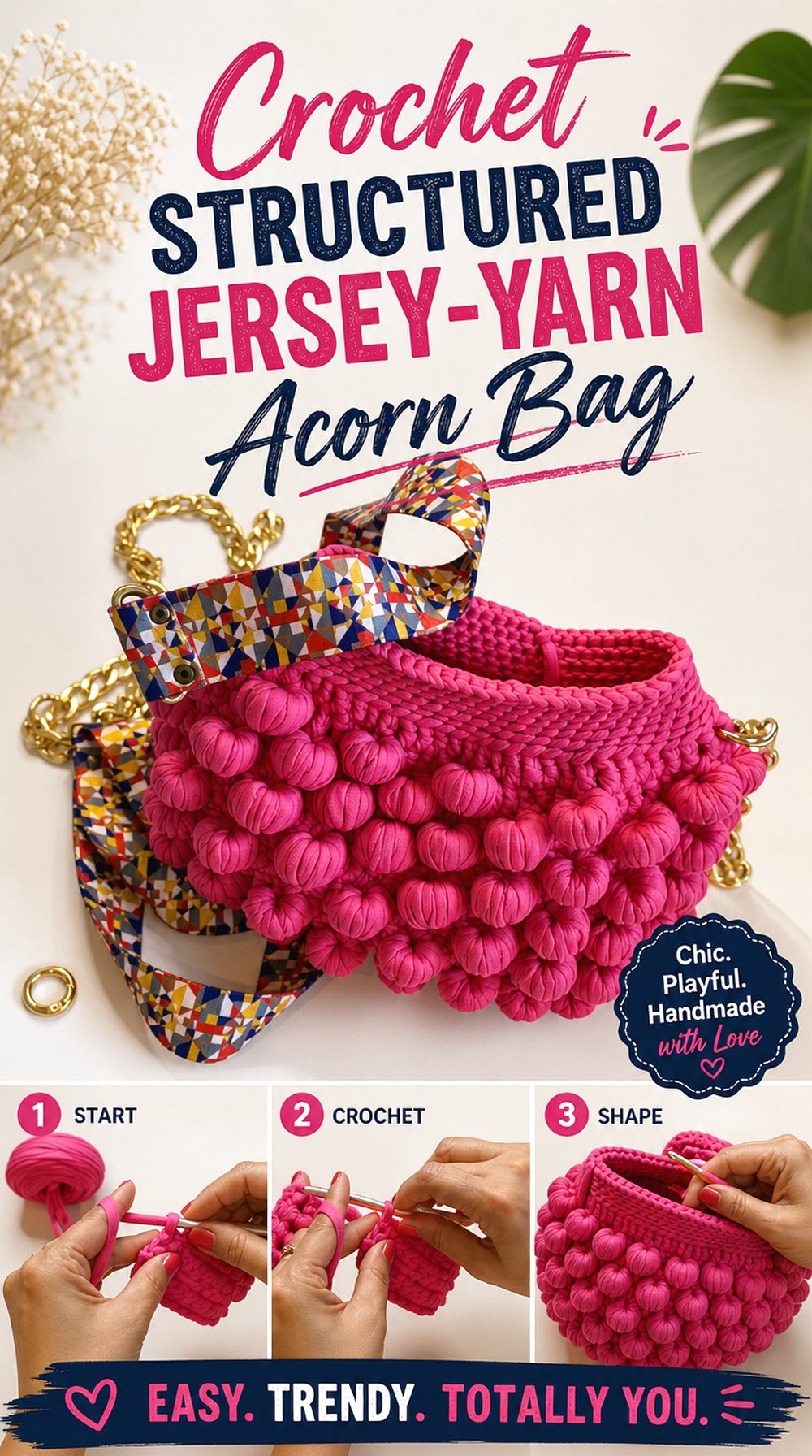
Fischer Fios features a Bolota Babaloo crochet bag demonstrated with its extra-premium jersey yarn, giving this idea a substantially chunkier material direction than the miniature pouches. The video description identifies it as an acorn bag and credits Jussara da Silva with the design.
This is a useful project to compare with finer-yarn options because thicker material can make the acorn silhouette read more like a sculptural handbag. Instead of focusing only on stitch detail, look at the relationship among yarn bulk, bag body, handle area, and overall finished shape.
Thick Material Changes the Visual Weight
As yarn becomes bulkier, individual stitches and edges occupy more physical space. That can help a novelty bag develop a bold outline, but it also means small proportion changes become more noticeable.
If you replace the tutorial yarn with something substantially thinner or thicker, do not assume you will reproduce the same visual result. Check the growing fabric against the intended bag scale and stop to assess the silhouette before committing to every finishing component.
Handle Attachments Deserve Extra Attention
A chunky bag body can place significant visual emphasis on the places where its handles connect. Even when the crochet itself is secure, an attachment that looks too narrow may seem out of proportion with a substantial body.
When customizing handles, consider both function and scale. Wider or more structured connections may visually suit a bold bag, but any change should remain compatible with the actual fabric and construction shown by the creator rather than being added blindly.
Bigger Stitches Can Shift Finished Scale Quickly
A small difference in yarn thickness or hook choice can accumulate across a bag body. That matters more on a novelty shape because enlarging the lower section also changes how large the cap, handles, and opening need to appear.
If exact dimensions matter, follow the creator’s material information closely or make a sample before committing to a substitute. Do not rely on yarn category alone to guarantee matching proportions.
Creator: Fischer Fios
7. Crochet Bridge Yarn Acorn Bag Pouch
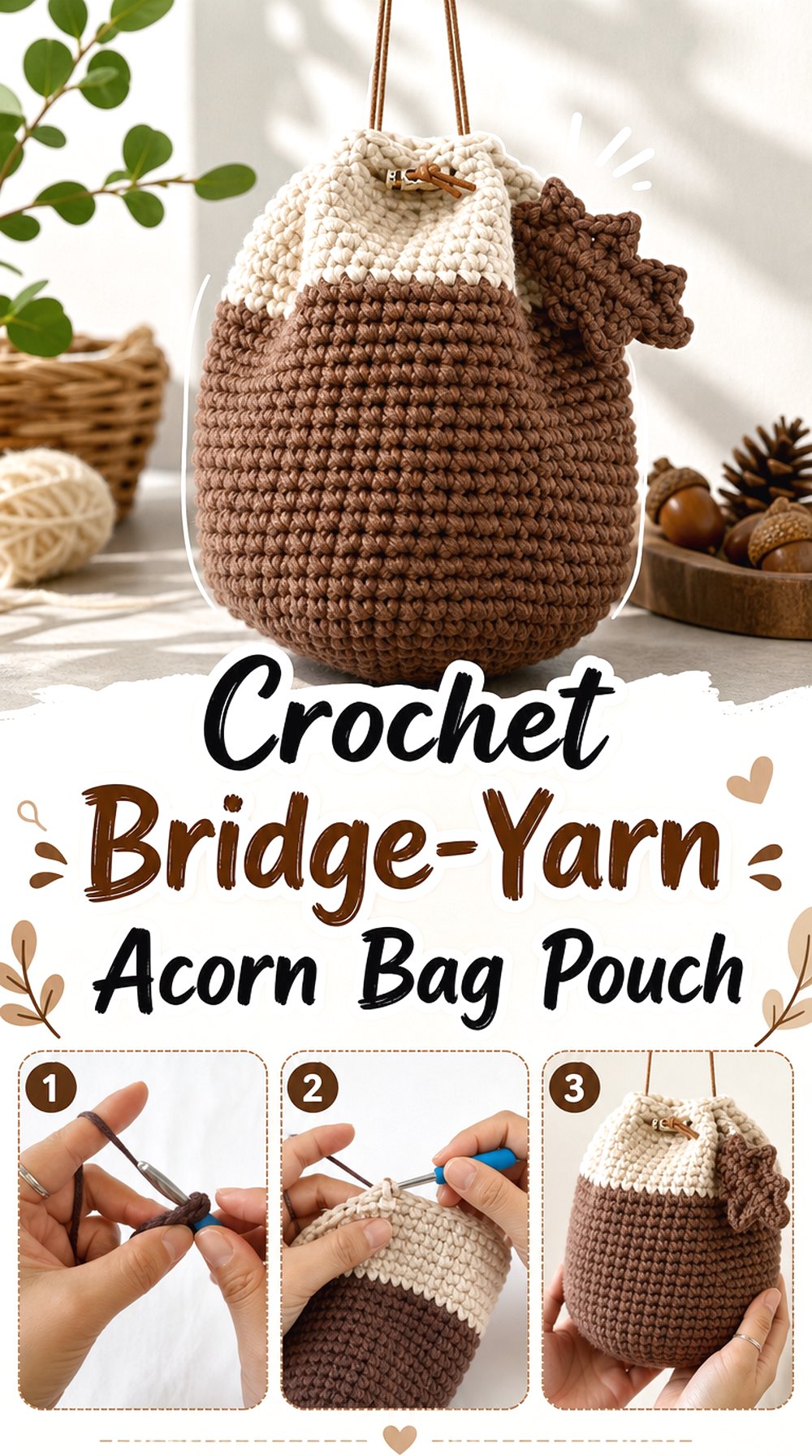
The Shasha Friend Factory tutorial presents an acorn pouch made with bridge yarn. Its description specifically identifies the finished piece as a pouch or bag for fall and discusses the yarn used for the project, giving this option a more substantial material identity than the tiny scrap-scale pouches.
This project works well as a comparison point between a sculptural bag and a small container. Rather than enlarging a generic flat pouch and adding brown trim, the design is organized around the acorn form itself. Watch the lower-body shaping and upper proportions closely if the silhouette is what attracts you to this version.
Material Choice Is Part of the Silhouette
When a tutorial has been designed around a particular type of yarn, switching fibers may change more than surface appearance. A softer substitute can collapse differently, while a firmer one may make the body feel more rigid.
If you substitute, first decide which characteristic you are trying to preserve: finished scale, stitch definition, stiffness, or overall shape. Matching only the color will not necessarily keep the original acorn profile.
Watch the Bottom Before Judging the Finished Shape
The lower portion of an acorn carries much of its recognizable rounded outline. If the bottom spreads too flat, the bag can begin to look more like a conventional bucket or bowl.
During an adaptation, evaluate the shape while the bag contains something lightweight that approximates normal use. This gives a more realistic view than judging an empty soft shell lying flat. Any structural changes should still leave room for the bag to open and function normally.
Keep the Opening in Proportion With the Body
A full-looking acorn body can tempt you to enlarge the lower portion without adjusting the usable opening. That can create a bag that appears spacious but is frustrating to reach into.
If you change the scale, compare body width, upper opening, and intended contents together. A successful novelty shape still needs a practical path into the storage area.
Creator: 샤샤친구팩토리의 코바늘TV
8. Crochet Mini Acorn Trinket Pouch
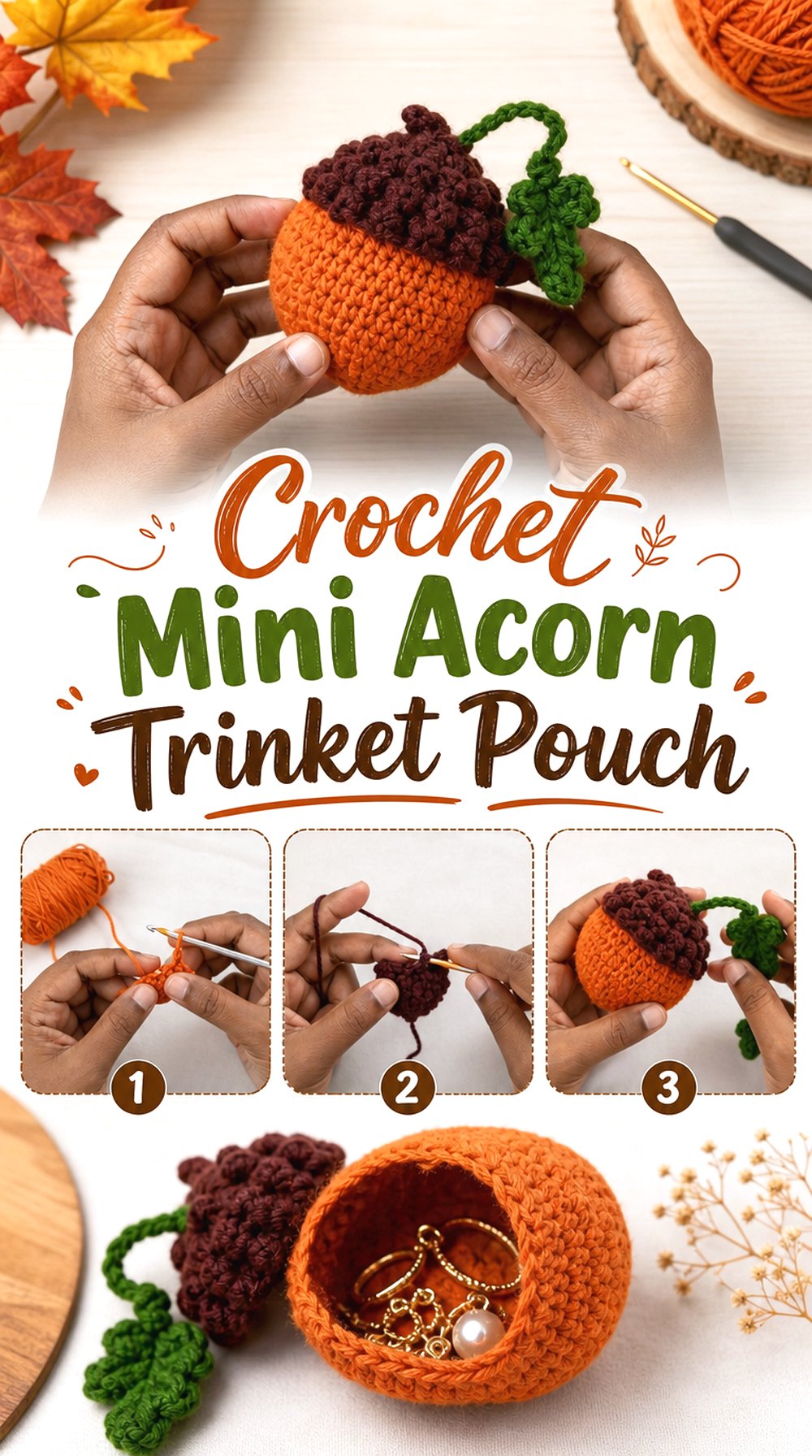
Club Crafteria’s version is deliberately small. The creator describes it as a mini acorn pouch and explains that the project is organized into a body, top, and leaf, making it a good choice when you want a compact container rather than a full wearable bag.
Because the scale is small, the strongest use case is likely to be tiny belongings rather than general everyday carry. That makes the relationship between the opening and intended object especially important. It also provides a convenient format for playing with acorn colors without committing to the yarn and finishing involved in a large shoulder bag.
Tiny Pouches Need a Real Contents Test
A small pouch can look roomy in a close-up video while still being unsuitable for a particular object. Instead of relying on appearance alone, confirm finished measurements where available or compare the developing pouch directly with what you want to store.
Pay particular attention to the opening. A trinket may fit comfortably inside the widest part of the body yet still fail to pass through the top.
Three Visible Parts Make Color Planning Straightforward
The creator identifies body, top, and leaf as separate project components. That naturally creates three visual areas you can coordinate without needing complicated color changes across the entire pouch.
You could keep the body and cap close to realistic acorn colors and use the leaf as the accent, or soften the whole palette for a less literal version. Whatever colors you choose, keep enough contrast between the main body and cap to preserve the acorn identity at such a small scale.
Creator: Club Crafteria
9. Crochet Acorn and Oak Leaf Charm Pouch
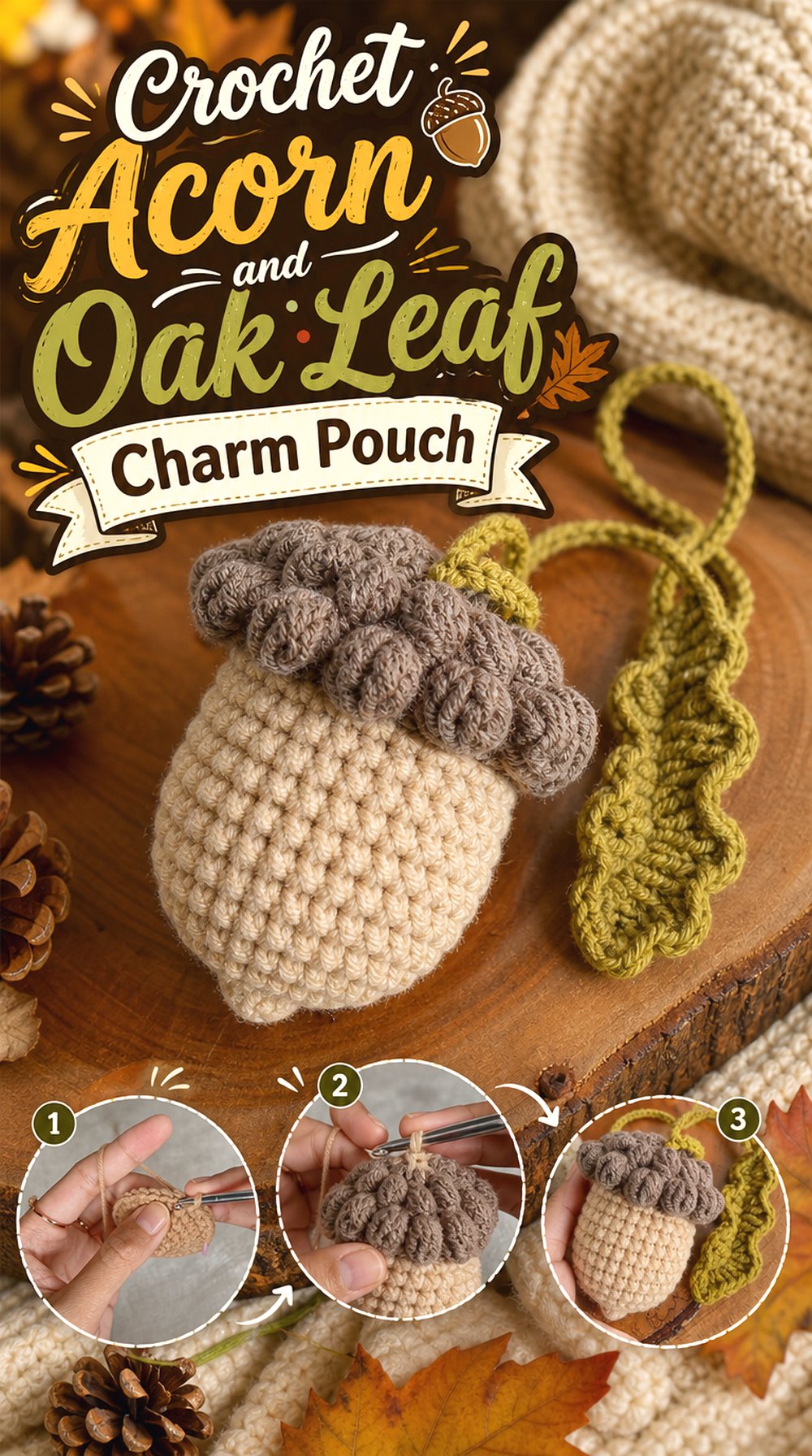
Kukkacrochet By Putri takes the smallest carrying concept in a different direction: the finished acorn is presented as a bag charm that can also function as a pouch. The tutorial pairs the acorn with an oak leaf, making the decorative attachment almost as important as the storage function.
This is the strongest option for readers who want an acorn accessory attached to another bag rather than a stand-alone purse. Its tiny scale also makes proportion especially noticeable. A stem, leaf, attachment loop, or cap that looks only slightly oversized on the worktable can dominate the whole piece once it is hanging from a larger bag.
Attachment Security Matters More Than Capacity
A bag charm is repeatedly moved, bumped, and pulled as the main bag is handled. That means the connection point deserves more attention than it would on a pouch stored inside a drawer.
Before using the finished piece for anything important, check the attachment and any small decorative elements for secure finishing. If it will hold a tiny personal item, consider how easily the pouch could detach from the main bag during normal use.
Let the Oak Leaf Support the Acorn, Not Hide It
The leaf creates an unmistakable woodland detail, but on a very small pouch it can visually cover a surprising amount of the acorn body.
If you change yarn thickness or leaf color, hold the finished pieces together before permanent assembly and check them from hanging distance. The most balanced version is not necessarily the one with the largest leaf; it is the one where both shapes remain easy to recognize.
Creator: Kukkacrochet By Putri
Which Crochet Acorn Bag Style Should You Choose?
For useful carrying space, start with the market tote, bucket bag, backpack, or crossbody rather than trying to enlarge one of the tiny pouches. Those tutorials were already conceived as wearable bags, so their carrying formats give you a more relevant starting point.
For a smaller accessory, the linen-style mini bag sits between a full handbag and a trinket pouch. The Club Crafteria version goes smaller again, while the Kukkacrochet design makes the most sense when the acorn itself will hang from another bag.
If sculptural texture is your priority, compare the bridge-yarn pouch and the chunky jersey-yarn bag. In either case, keep structure, opening access, and strap or handle support in mind before changing materials.
Conclusion
The strongest crochet acorn bag choice depends on what you actually want to carry. The market tote offers the broadest everyday-bag direction, while the crossbody, bucket bag, and backpack make the acorn itself a more obvious wearable statement. The linen-style mini bag provides a smaller middle ground, and the final pouch ideas make more sense for tiny belongings or decorative use.
Whichever shape you choose, check the opening, strap or handle attachment, yarn structure, and finished scale before making major adaptations. Use the original tutorials near each project for exact construction details, especially when changing yarn or proportions.
Frequently Asked Questions
What yarn qualities help a crochet acorn bag keep its rounded shape?
Look at how firmly the finished crochet fabric behaves rather than choosing by fiber name alone. A dense, stable fabric generally preserves a sculptural silhouette better than fabric that stretches easily, but very rigid material can also make openings and straps less flexible.
The tutorial’s original yarn is the safest reference point when you want a similar result. If substituting, make a small sample and compare thickness, stretch, and stitch definition before committing to the whole bag.
Should I line a crochet acorn bag?
It depends on how the bag will be used. A lining can help contain small objects, reduce some stretching, and give a soft crochet shell additional support. It is more relevant for an everyday crossbody or tote than for an acorn charm holding almost nothing.
Do not assume lining will automatically fix every shape problem. If the outer crochet fabric is much softer than expected, you may also need to reconsider the yarn, gauge, or overall structural plan.
Why can crochet bag straps become longer after use?
Crochet fabric can stretch when it is pulled continuously by the weight of the bag and its contents. The amount depends on the stitch structure, fiber, strap dimensions, and load.
For a crossbody or backpack, test the strap with representative weight before deciding the final worn position. Reinforcement can be considered when appropriate, but it should work with the specific strap construction rather than being treated as a universal requirement.
Which acorn bag idea is better for very small items?
The Club Crafteria mini pouch and Kukkacrochet bag-charm pouch are the most clearly small-scale choices in this roundup. The first is explicitly presented as a mini pouch, while the second is designed as a bag charm that can also function as a pouch.
For either option, confirm that the intended item can pass through the opening. Exterior size alone does not tell you whether a rigid object will fit.
Can I resize an acorn bag just by changing the yarn and hook?
Changing yarn thickness or hook size can change the finished dimensions, but it also changes fabric density, stiffness, strap scale, opening size, and the relationship between the acorn body and cap. It is therefore not a reliable universal resizing formula.
If size is important, use the creator’s stated measurements or material recommendations as your reference and reassess every connected component when making a major substitution.
How can I keep the acorn cap from looking too large?
Judge the cap against the finished or nearly finished bag body rather than looking at it by itself. The correct visual balance depends on body width, bag depth, yarn thickness, and how far the cap extends around the opening.
If you change materials, pause before permanent assembly and view the pieces together while the bag is hanging naturally. That gives a more useful proportion check than measuring the two pieces separately.