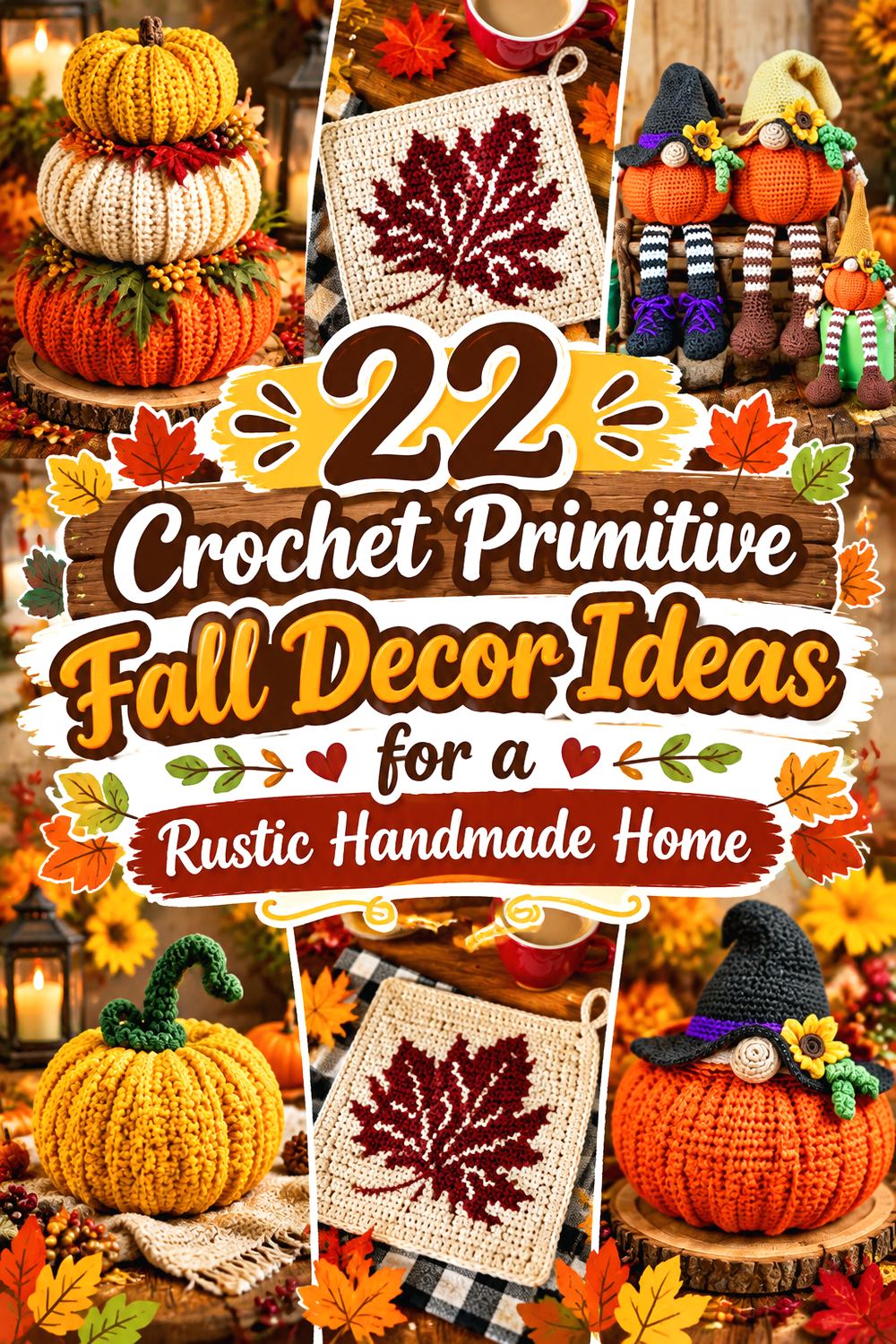
22 Crochet Primitive Fall Decor Ideas for a Rustic Handmade Home
Primitive fall decorating works especially well with crochet because texture can do much of the visual work. Ribbing can suggest an old field pumpkin, uneven mushrooms can look gathered from the woods, and muted leaves, acorns, scarecrows, baskets, and harvest foods fit naturally beside wood, crocks, linen, and other country-style pieces.
The 22 projects below cover much more than stuffed pumpkins. There are hanging pieces, kitchen accents, shelf sitters, practical storage, soft furnishings, bowl fillers, and several dimensional centerpieces. Each idea links to one original tutorial and includes planning points that can help you adapt the finished look without reconstructing or replacing the creator’s pattern.
The primitive character can come from color, scale, texture, and display choices rather than from changing the underlying tutorial.
Quick List
- Crochet Marled Cottage Pumpkin
- Crochet Primitive Scarecrow Shelf Sitter
- Crochet Oversized Acorn Accent
- Crochet Autumn Harvest Wreath
- Crochet Rustic Farmhouse Mushroom Trio
- Crochet Folk Turkey Applique Accent
- Crochet Granny-Stitch Owl Ornament
- Crochet Mosaic Pumpkin Coaster
- Crochet Candy Corn Bowl Filler
- Crochet Sunflower Table Placemat
- Crochet Mixed Fall Leaf Garland
- Crochet Pumpkin Colorwork Pillow Cover
- Crochet Harvest Corn Cob Accent
- Crochet Autumn Apple Bowl Filler
- Crochet Rope Harvest Basket
- Crochet Tapestry Fall Wall Hanging
- Crochet Lidded Pumpkin Basket
- Crochet Maple Leaf Potholder
- Crochet Pumpkin Pie Hot Pad
- Crochet Stacked Pumpkin Centerpiece
- Crochet Pumpkin Gnome Mantel Sitter
- Crochet Stiffened Leaf Bowl
What Makes Crochet Fall Decor Look Primitive?
“Primitive” is more about visual language than one particular stitch. Muted pumpkin orange, tobacco brown, mustard, dull gold, faded green, brick red, oatmeal, and charcoal usually create a more timeworn harvest mood than bright novelty colors. Slight variation between pieces can also help a display feel collected rather than matched.
Texture matters just as much. Ribbing, visible crochet grain, bulky yarn, irregular leaf shapes, and simple folk forms tend to work well. Avoid assuming that thicker yarn automatically looks more rustic, though. Changing yarn weight may alter proportions, stuffing coverage, or the way a project stands.
For coordinated displays, choose three or four recurring colors and let one or two pieces deviate. A single faded blue pumpkin or dark plum leaf can add the mismatched, gathered quality associated with country and primitive interiors.
Match Structure to the Place You Want to Decorate
A shelf sitter, garland, pillow, basket, and potholder have different structural needs even when they share the same fall palette. Stuffed objects need enough fabric density to contain filling cleanly. Hanging pieces benefit from controlled weight so they do not pull out of shape. Baskets need stronger bases and rims than purely decorative bowl fillers.
Before substituting yarn, decide what the finished object needs to do. A soft yarn may give a pumpkin pleasant squashiness but make a storage basket collapse. A stiff fiber may help a placemat lie neatly but make an amigurumi figure feel less rounded.
For anything intended to touch hot cookware, follow the source’s material guidance rather than treating ordinary decorative yarn as interchangeable. Likewise, stiffened bowls and embellished pieces should remain decorative unless the original construction and materials support another use.
Plan a Primitive Fall Display Without Making Everything Match
A useful primitive arrangement usually mixes heights and forms. One large pumpkin beside three tiny pumpkins is still visually repetitive; a pumpkin beside a scarecrow, narrow corn cob, low leaf bowl, and trailing garland creates stronger contrast.
Think in layers. Use wall art or a wreath as the background, a taller figure as the middle layer, and small apples, acorns, mushrooms, or candy corn near the front. Functional pieces such as baskets and placemats can carry the same palette into a kitchen or dining area without filling every surface with figurines.
Keep embellishment selective. If every item has raffia, buttons, bows, patches, and artificial leaves, the individual shapes start competing. A primitive display often looks more convincing when the crochet texture itself remains visible.
1. Crochet Marled Cottage Pumpkin
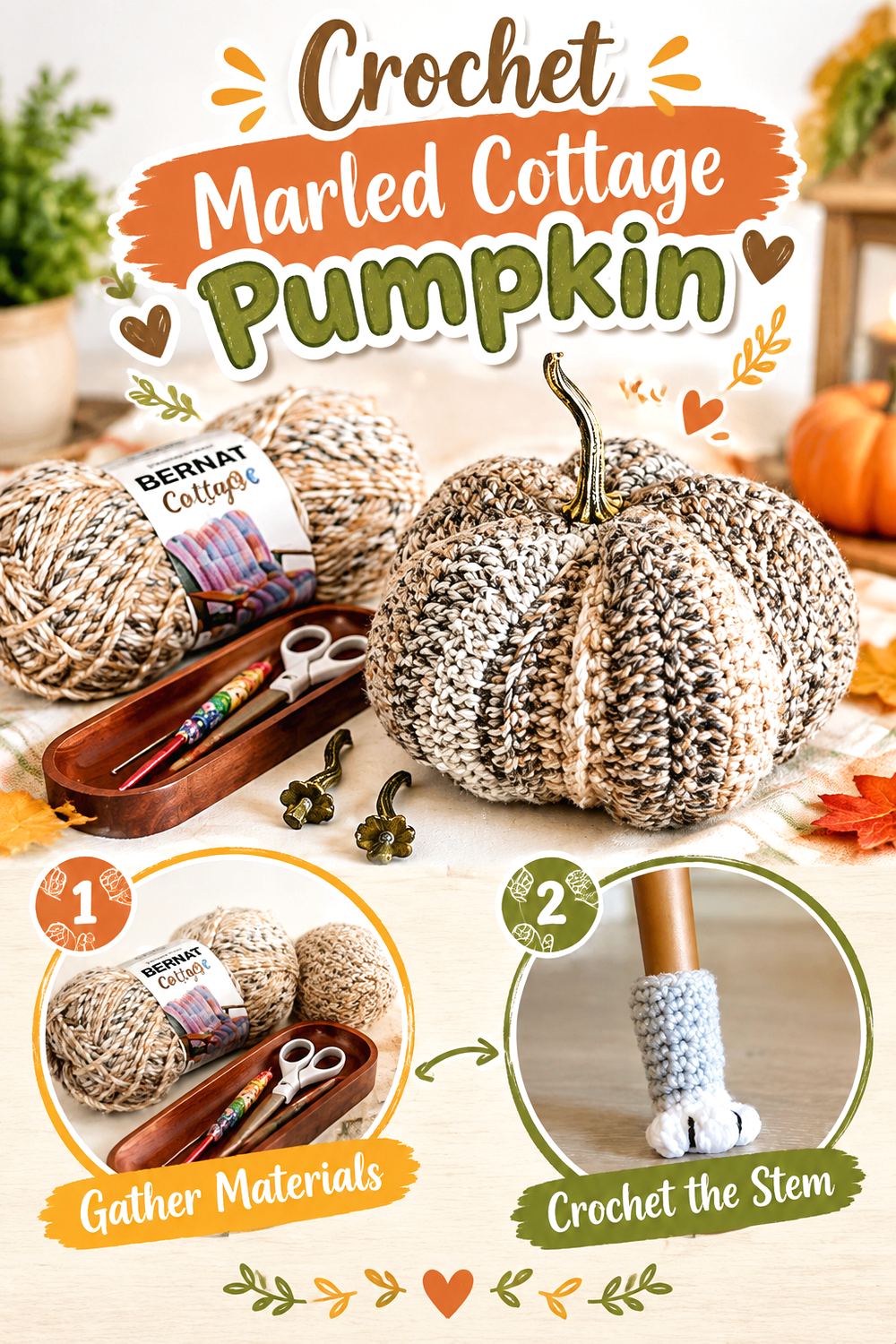
A substantial ribbed pumpkin is an obvious anchor for primitive fall decorating, especially when the yarn already has tonal variation. Repeat Crafter Me’s Bernat Cottage pumpkin is crocheted flat in a long strip, with stitch changes creating pronounced dimensional ridges before the piece is shaped and finished as a stuffed pumpkin. The marled yarn in the original gives the surface a particularly rustic, country-home quality.
For a primitive display, this is the sort of pumpkin that can stand alone on a stool, settle into a wooden bowl, or provide the largest shape in a mixed harvest grouping.
Let the Yarn Carry the Rustic Look
A slightly mottled or heathered yarn can create visual age without adding extra decorations. If you substitute yarn, compare not only weight but also how clearly the ribbing shows. Extremely fuzzy yarn can soften those ridges, while very smooth yarn may make the pumpkin feel cleaner and more contemporary.
Muted cream, clay, moss, tobacco, or dull pumpkin orange can all work. Follow the tutorial’s construction rather than changing stitch structure solely to force a different aesthetic.
Shape Before You Embellish
Stuffing and final shaping determine whether a crocheted pumpkin reads as pleasantly squat or overly round. Pause before attaching stems, leaves, bows, or other accents and check the pumpkin from several angles.
If it will sit in a bowl or on a narrow shelf, test that placement first. A decorative stem that looks balanced on an open tabletop may be too tall beneath shelving or inside a covered cabinet.
Original Tutorial and Creator Credit
Creator/Site: Repeat Crafter Me
2. Crochet Primitive Scarecrow Shelf Sitter
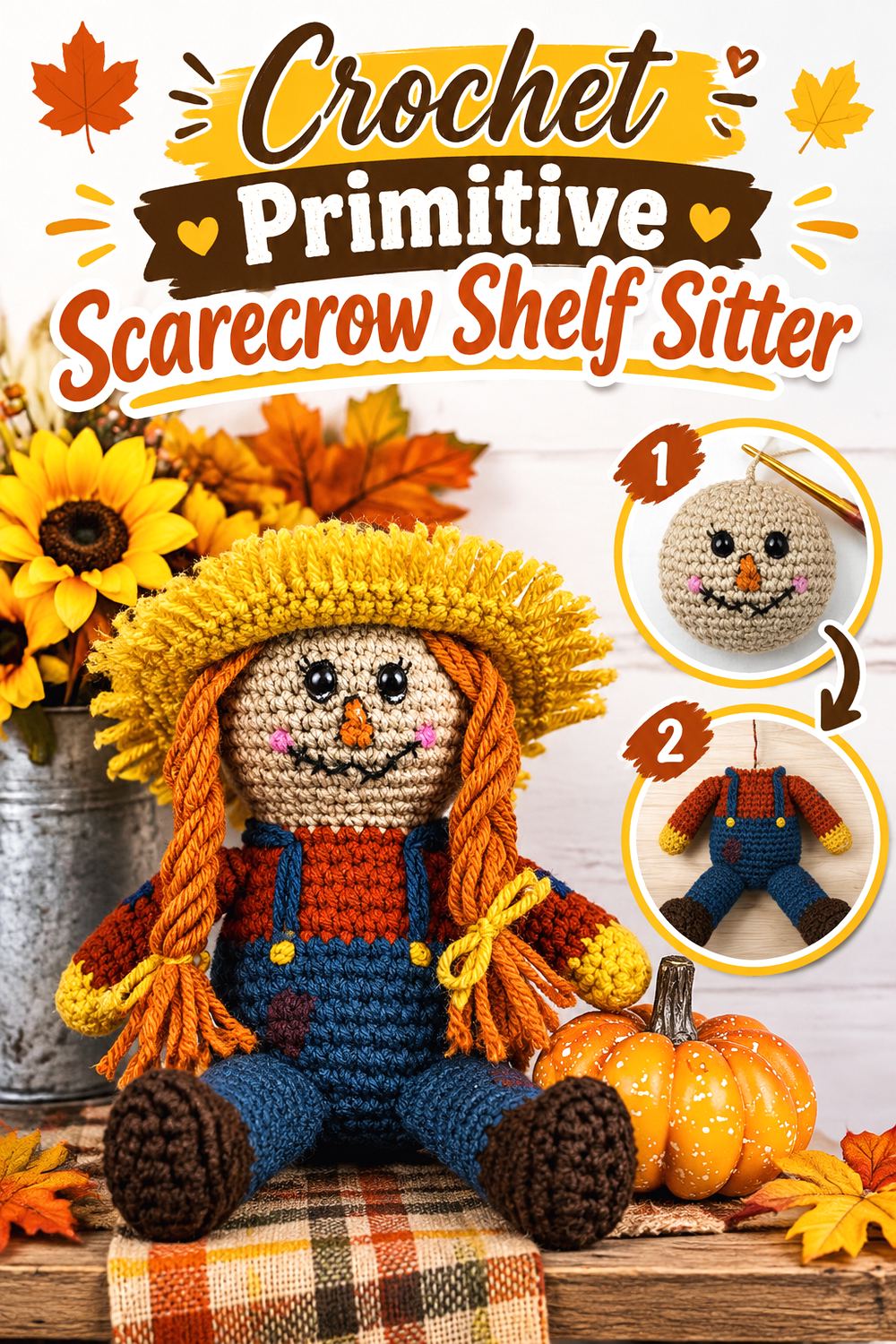
A scarecrow introduces a human-shaped folk element that breaks up rows of pumpkins and leaves. Winding Road Crochet’s tutorial produces a stuffed scarecrow with a hat, hair, facial details, clothing accents, and a compact seated form intended for fall decorating.
That makes it a natural shelf sitter for a primitive display. Rather than surrounding it with every possible harvest embellishment, give the figure breathing room beside a small basket, a dark pumpkin, or a few crocheted leaves. The recognizable silhouette already carries plenty of seasonal character.
Keep the Face Folk, Not Fussy
Facial treatment has a large effect on the final personality. A restrained expression and a limited palette can push the scarecrow toward country folk art, while very bright details may make it feel more playful.
Follow the creator’s tutorial for the actual face construction and finishing. If you alter colors, make those changes at the palette level rather than trying to redraw or reconstruct the source’s decorative technique.
Give the Base Enough Stability
Shelf figures look better when they stay where they are placed. Before finishing, consider whether the stuffed form sits squarely and whether the hat or hair makes the figure visually top-heavy.
For display around young children or pets, avoid assuming sewn, glued, button-like, or eye components are suitable for handling. Keep decorative pieces out of reach when their embellishments were chosen for display rather than toy use.
Original Tutorial and Creator Credit
Creator/Site: Winding Road Crochet
3. Crochet Oversized Acorn Accent
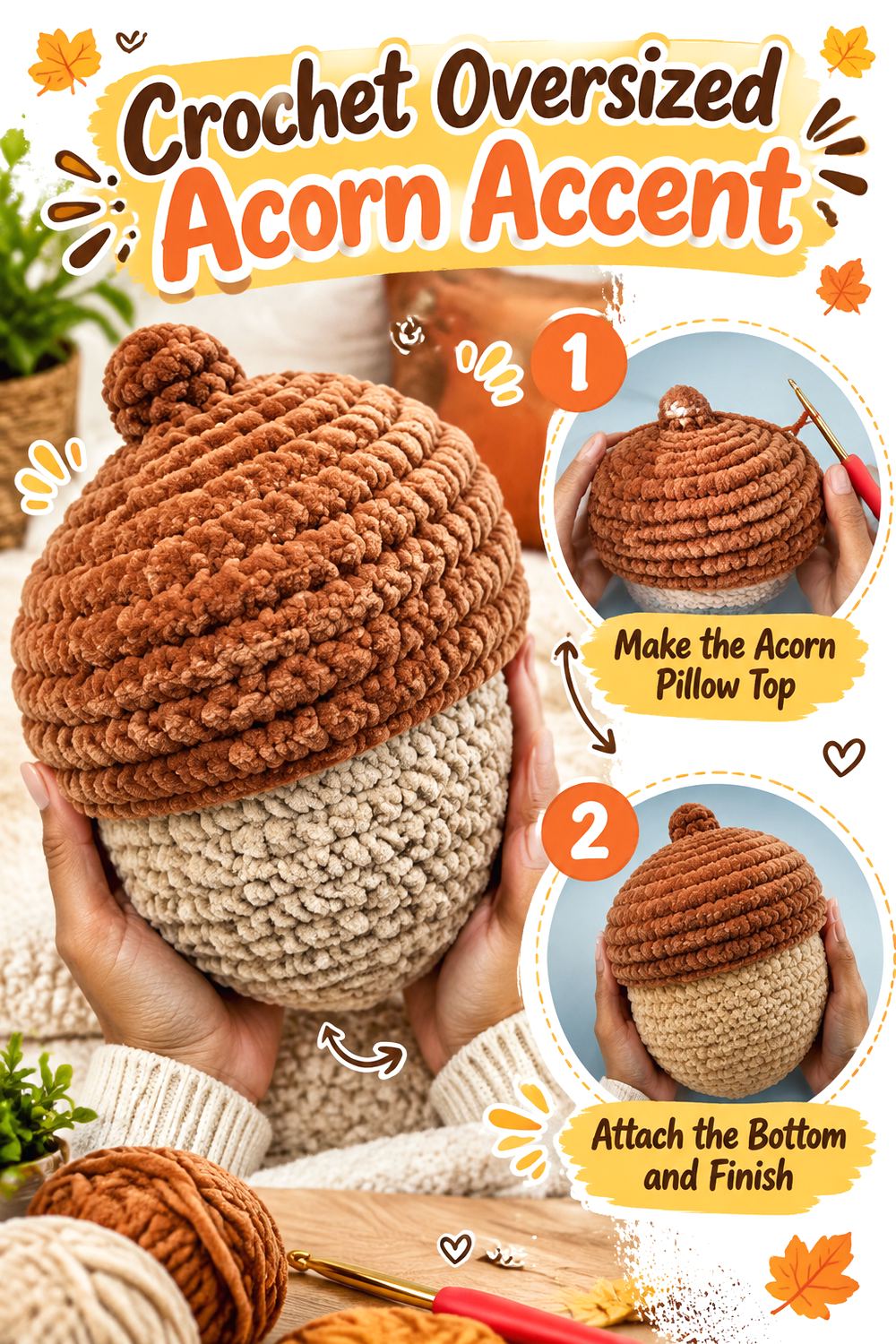
An oversized acorn gives a primitive display a woodland shape without adding another pumpkin. The video from ~ comfy cozy naoetry ~ teaches a no-sew crochet acorn presented specifically as fall decor, a pillow, or a plush-style piece. Its large cap-and-nut silhouette makes it visually different from tiny garland acorns.
Placed on a bench, low shelf, or inside a large wooden trencher, the exaggerated scale can look especially effective beside smaller leaves and mushrooms. It also gives you an opportunity to use brown-on-brown contrast rather than relying on orange.
Decide Between Pillow Scale and Bowl-Filler Scale
The source demonstrates a substantial form, so think about the surrounding furniture before choosing yarn substitutions. A very large acorn can become a focal object; a reduced version behaves more like bowl filler.
Changing yarn and hook can affect the final scale, but the original tutorial should remain your guide for construction. Test your selected yarn for dense coverage so stuffing does not distract from the cap texture.
Keep Cap-to-Body Contrast Visible
The most important visual division is between the cap and lower acorn body. Primitive styling does not require high color contrast, but it does benefit from a readable texture or tone change.
Try dark brown over camel, charcoal over oatmeal, or olive-brown over muted rust. If both sections are nearly identical in value and texture, the acorn silhouette can become less distinct from across the room.
Original Tutorial and Creator Credit
Creator: ~ comfy cozy naoetry ~
4. Crochet Autumn Harvest Wreath
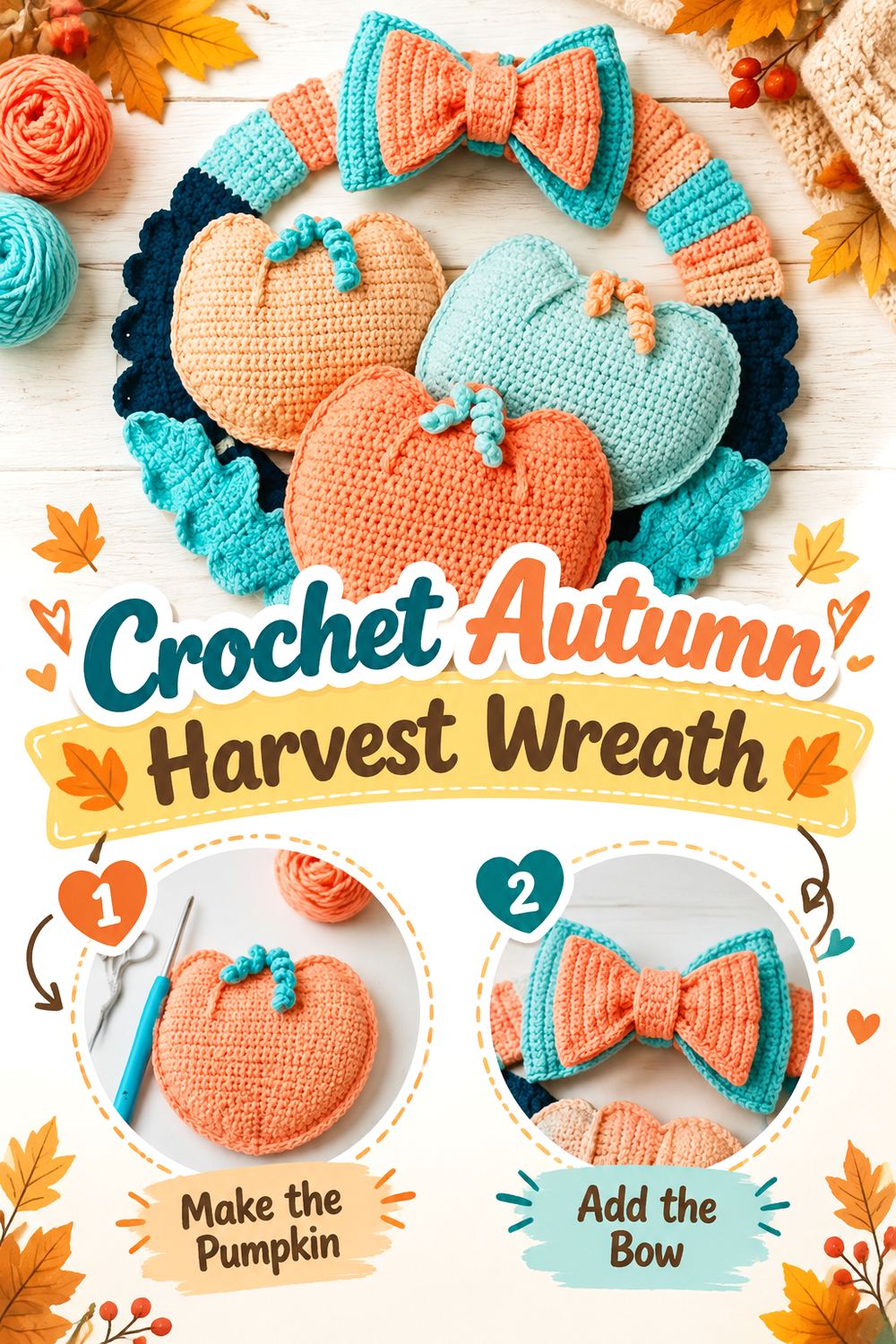
A wreath can establish the entire fall palette before you add a single tabletop object. Laura’s Art Design teaches a complete autumn crochet wreath built from multiple crocheted components arranged around a wired wreath base.
For primitive styling, consider replacing candy-bright shades with tobacco brown, muted pumpkin, dull gold, faded sage, cream, and burgundy while keeping the tutorial’s construction intact. The circular form works well on an interior door, above a sideboard, or as a wall focal point behind a mantel arrangement.
Balance the Wreath Before Securing Pieces
Multi-element wreaths can become visually heavy on one side. Before permanently attaching pieces, arrange the finished components around the base and view the wreath from several feet away.
Primitive displays often benefit from mild asymmetry, but there is a difference between intentional imbalance and a wreath that physically droops. Pay attention to where the heaviest crochet pieces sit and how the underlying wreath form responds.
Think About Door Depth
A dimensional wreath may not suit every door. Storm doors, narrow hallways, and doors that swing against a wall can limit how far crochet components should project.
Measure the available depth before making very bulky embellishments. If the wreath will be displayed outdoors, also remember that the tutorial materials may not be designed for prolonged exposure to rain, direct sun, or damp conditions.
Original Tutorial and Creator Credit
Creator: Laura’s Art Design
5. Crochet Rustic Farmhouse Mushroom Trio
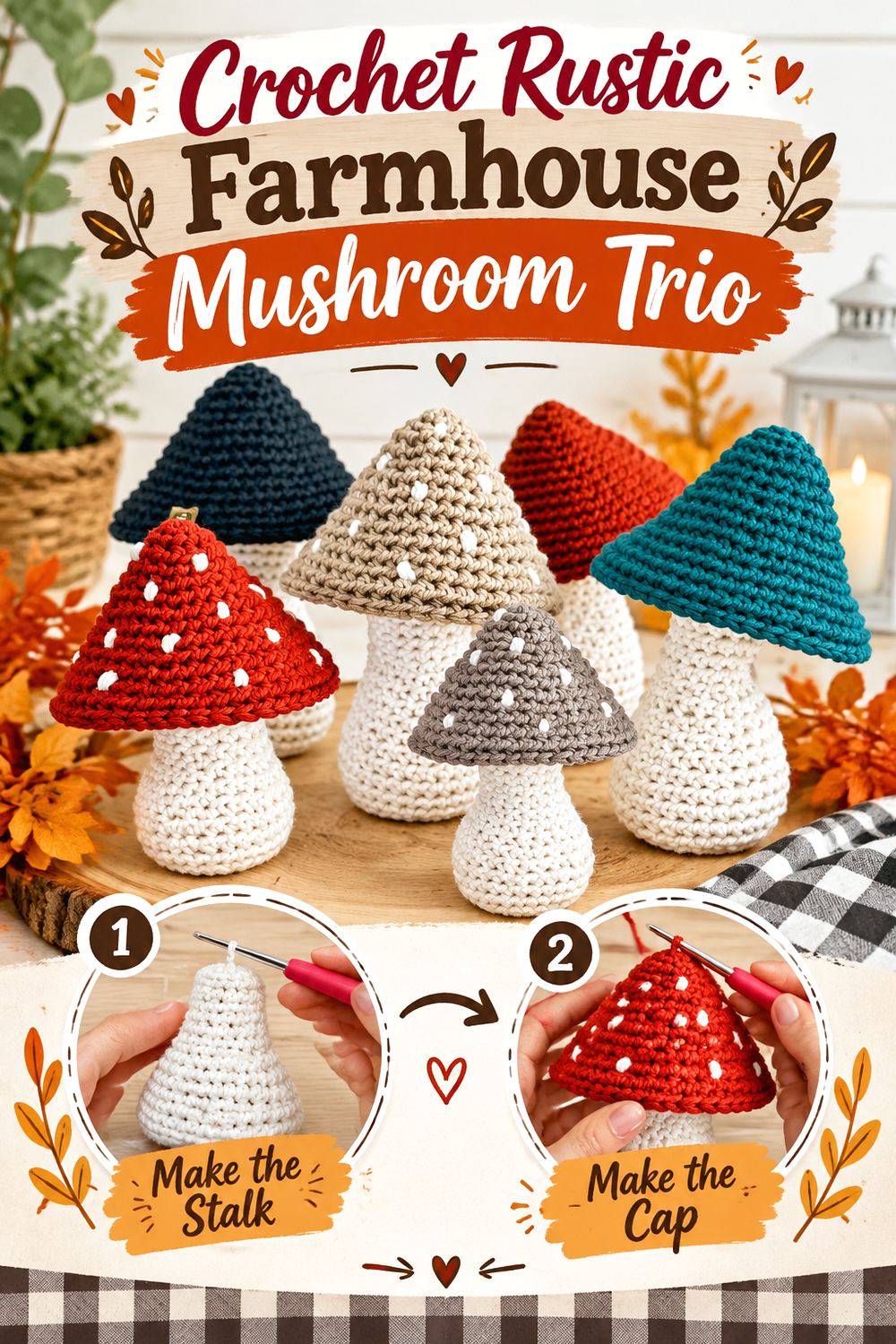
Mushrooms bring a woodland layer to harvest decorating and work particularly well when pumpkins already dominate the room. MJ’s Off The Hook Designs created these as rustic farmhouse crochet mushrooms in multiple sizes, with a no-sew construction and chunky texture intended for fall home decor.
A trio looks convincing on a tiered tray, shelf, or low centerpiece because varying heights create movement without requiring many colors. The source shows several cap colors, making this one of the easiest projects in the list to reinterpret in dusty primitive tones.
Build a Family of Uneven Heights
Three identical mushrooms can read like a matched set, while short, medium, and tall forms feel more organic. The source itself provides multiple sizes, so take advantage of that variation rather than relying only on color changes.
For a collected look, keep stems related in color and let the caps shift through muted rust, dull teal, brown, charcoal, or faded rose.
Dense Fabric Matters More Than Exact Gauge
MJ’s notes emphasize a firm fabric so stuffing does not show, particularly when yarn substitutions are made.
That is a useful checkpoint for any stuffed primitive decor. A looser gauge may enlarge the piece, but exposed filling can make even a well-shaped mushroom look unfinished. Check fabric density early rather than discovering the problem during stuffing.
Original Tutorial and Creator Credit
Creator/Site: MJ’s Off The Hook Designs
6. Crochet Folk Turkey Applique Accent
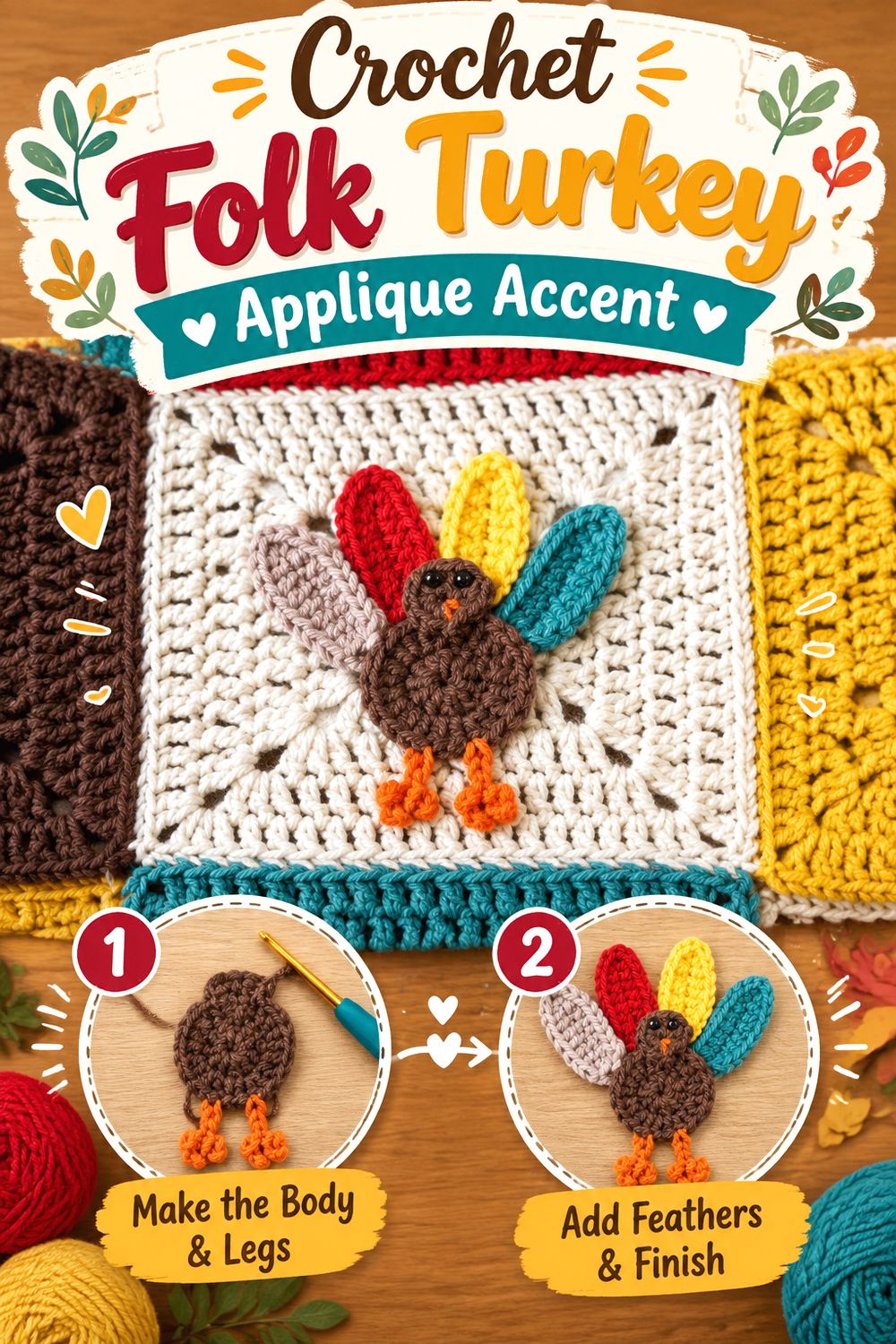
Not every fall project needs to be three-dimensional. Maria’s Blue Crayon’s turkey applique is a flat seasonal motif with a recognizable head, body, feet, and separate colorful feathers. It was designed as part of a fall-themed blanket, but the finished motif can also inspire smaller decorative applications.
For primitive decor, the flat turkey could become a focal accent on a simple crochet panel, seasonal cloth display, or framed textile arrangement without competing with larger shelf pieces. Use the original tutorial for the applique itself and treat any mounting method as a separate decorating decision.
Use the Motif as a Small Focal Point
A detailed applique usually needs quieter surroundings. If you mount the turkey on another crochet surface, keep that background simple enough that the tail feathers remain readable.
Muted colors can still provide contrast. Rust, old gold, olive, barn red, and taupe create a harvest palette without requiring vivid rainbow feathers.
Choose Child-Safe Details by Intended Use
The source uses small facial components in the applique. If your finished piece will stay on a wall, decorative hardware may be appropriate. If it will be handled by a baby or toddler, reconsider detachable details and review the original source carefully.
Display decor and toys have different safety expectations. Do not assume an embellishment is child-safe simply because it is common in amigurumi.
Original Tutorial and Creator Credit
Creator/Site: Maria’s Blue Crayon
7. Crochet Granny Stitch Owl Ornament
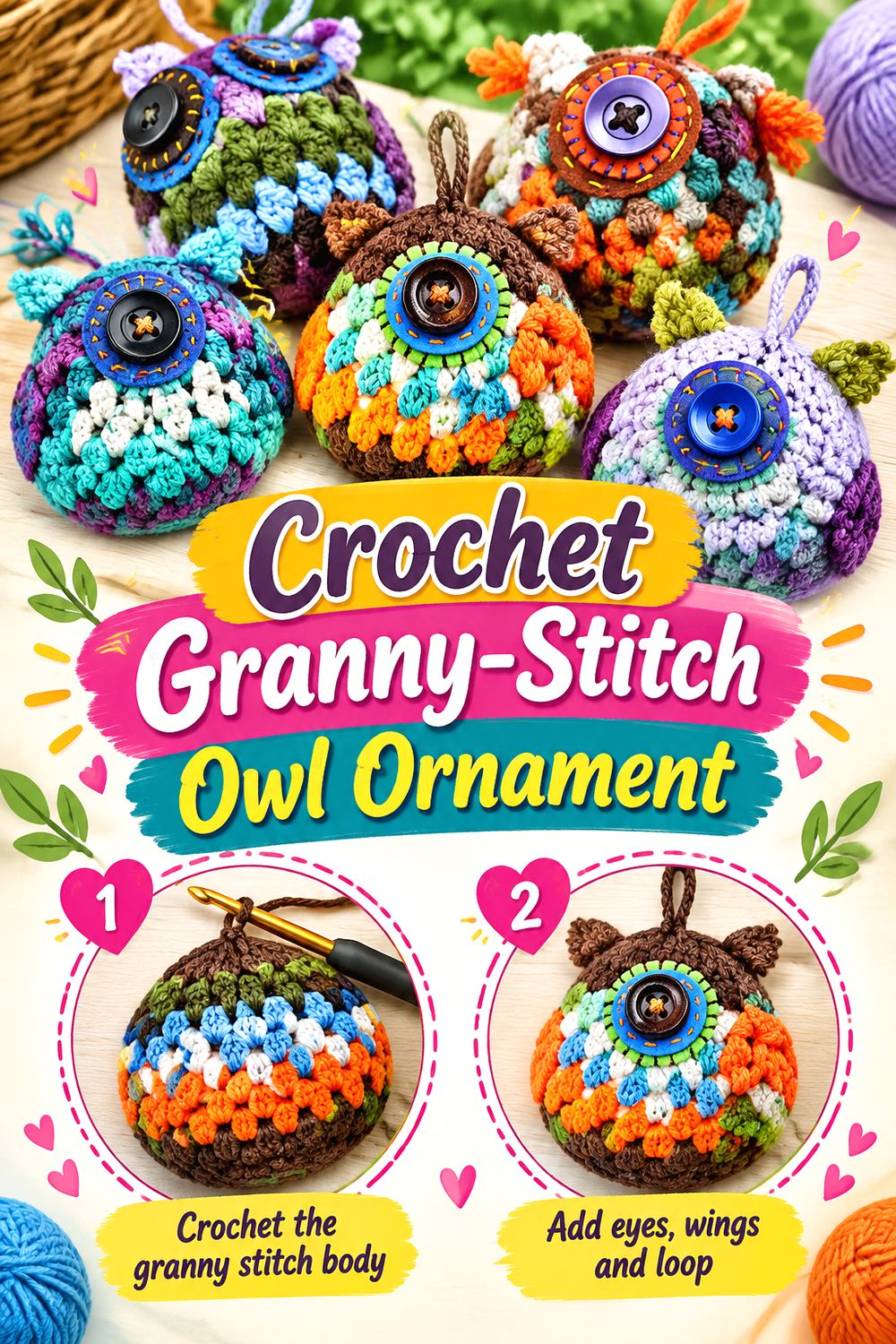
Owls fit primitive fall decorating because the shape connects easily with woodland themes, branches, leaves, and darker autumn colors. Zeens and Roger offers a crochet owl decoration based on granny-style texture, giving the little bird a more open, visibly crocheted surface than tightly stuffed amigurumi.
That makes this project a good choice for hanging from a peg rail, cabinet knob, twig arrangement, or interior branch display. A few muted scraps can create a folk-style owl without needing a large amount of yarn.
Let the Granny Texture Stay Visible
The stitch texture is part of this owl’s character, so avoid burying it beneath excessive embellishment. A restrained palette of cream, brown, olive, rust, and mustard can emphasize the handmade geometry.
If you substitute a substantially different yarn weight, remember that open granny-style fabric can change in drape and scale. Check the tutorial’s construction before treating hook size as a purely cosmetic choice.
Add Hanging Hardware Lightly
A hanging ornament works best when the attachment does not overpower the body. Thin yarn, narrow twine, or another lightweight hanger can preserve the small-scale folk look.
Whatever you use, check that the attachment point does not stretch the crochet fabric. For ornaments displayed near lights, candles, or fireplaces, keep yarn well away from flame and high heat.
Original Tutorial and Creator Credit
Creator/Site: Zeens and Roger
8. Crochet Mosaic Pumpkin Coaster
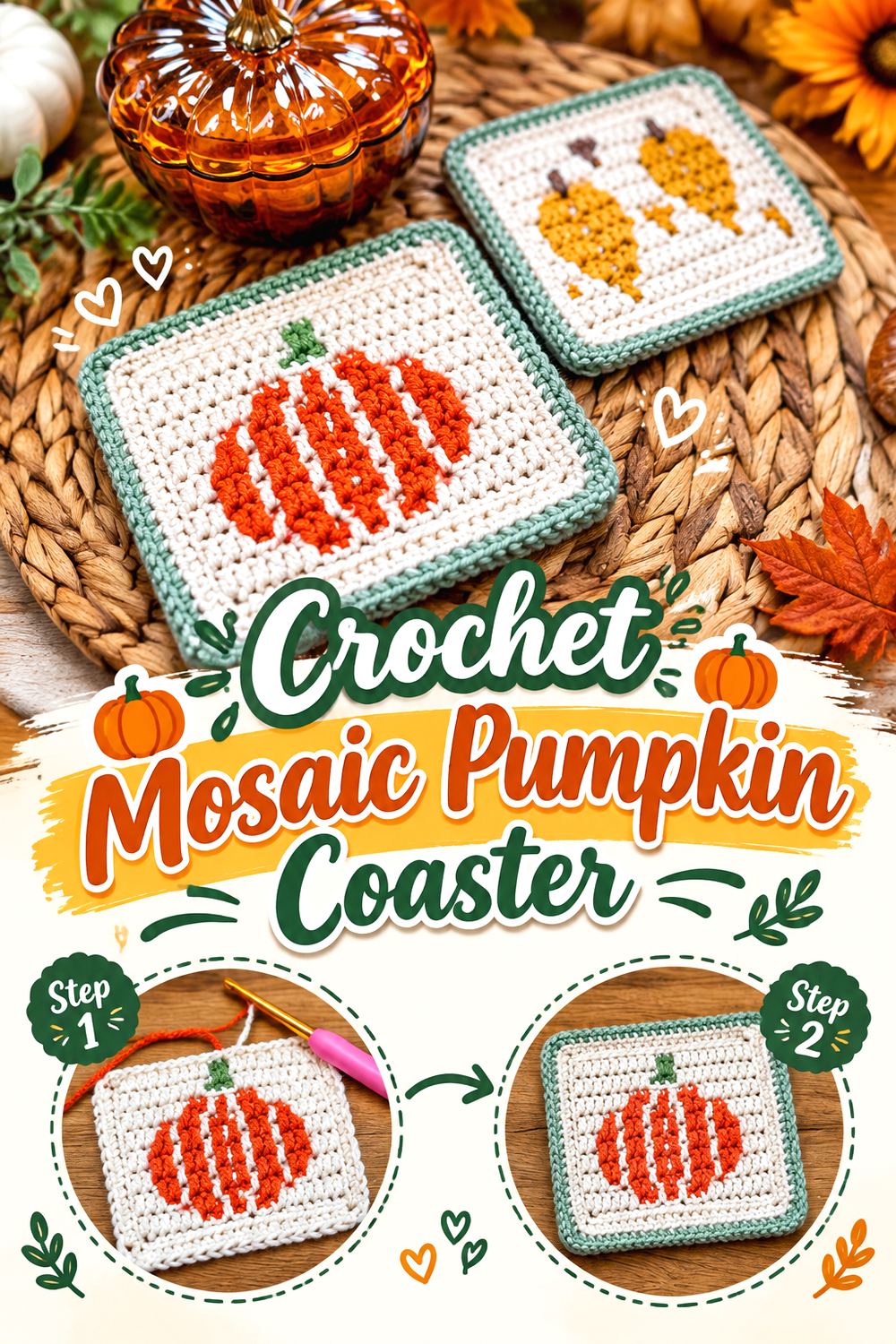
A primitive fall home does not have to limit crochet to purely decorative objects. HanJan Crochet’s pumpkin coaster uses an overlay mosaic motif and a neat border, creating a compact square with a graphic pumpkin rather than a stuffed silhouette.
That makes it useful on a coffee table, sideboard, or seasonal tray where another three-dimensional pumpkin would add clutter. For a more subdued look, swap bright contrast for oatmeal against rust, tan against brown, or cream against muted olive while preserving enough contrast for the mosaic design to remain legible.
Contrast Drives the Mosaic
Mosaic motifs depend on value difference. Two beautiful primitive colors can still fail together if they are too similar in lightness.
Photograph yarn choices in grayscale before starting if you are unsure. If the pumpkin disappears in the grayscale image, the finished motif may also lack definition from normal viewing distance.
Treat Functional Coasters Differently
A coaster may encounter moisture, heat from mugs, and repeated handling. Decorative yarn substitutions should therefore be considered more carefully than they would be for a wall hanging.
Follow the designer’s material and care information, especially if you want the piece to function rather than simply sit beneath a decorative mug. Adding beads or bulky embellishments would reduce its usefulness as a flat surface.
Original Tutorial and Creator Credit
Creator/Site: HanJan Crochet
9. Crochet Candy Corn Bowl Filler
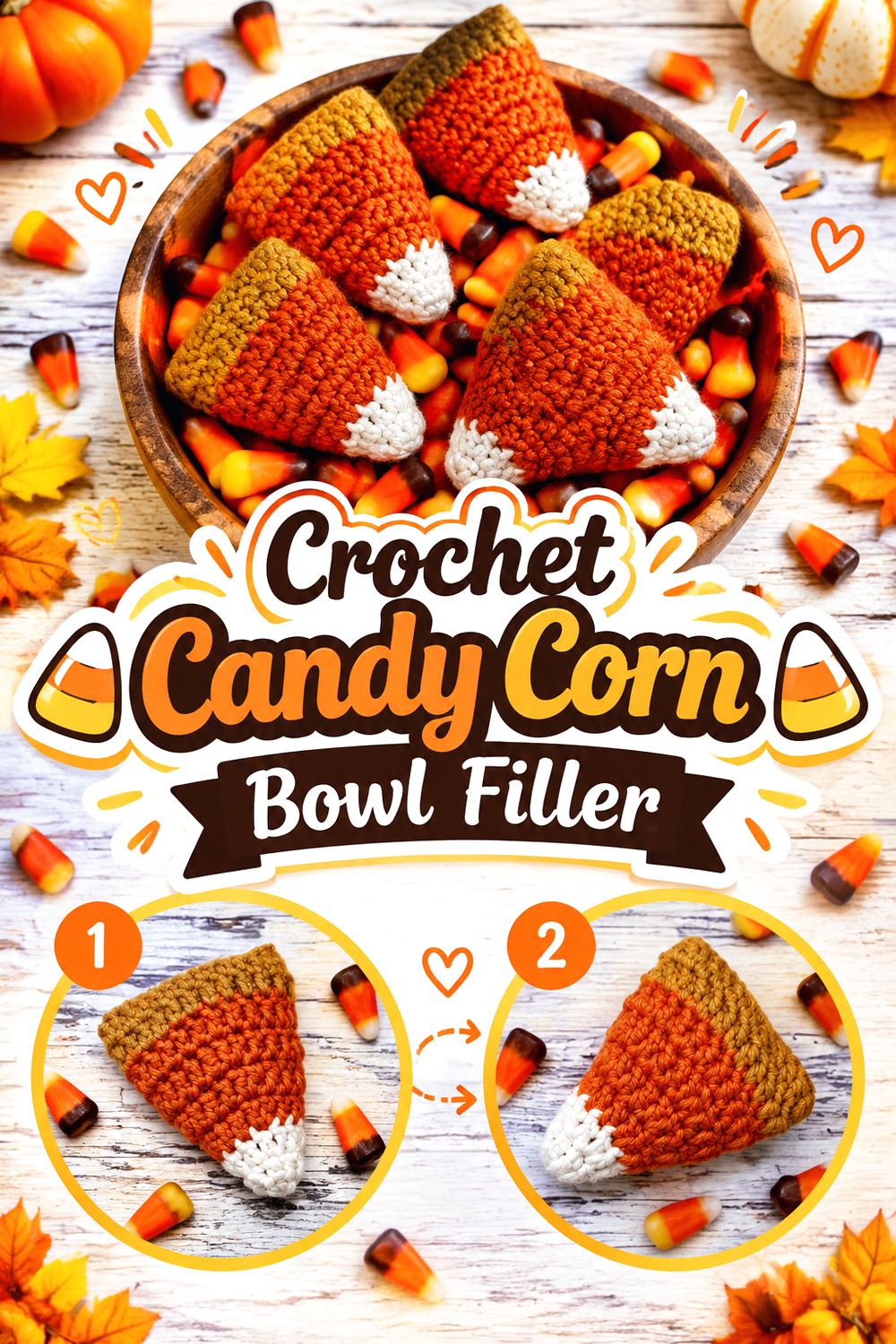
Candy corn normally leans bright and playful, but its simple triangular form can be pushed toward primitive fall decor through color. The love. life. yarn. tutorial creates a stuffed three-color crochet candy corn intended for decor or gifting.
Instead of stark white, orange, and yellow, try oatmeal, burnt pumpkin, and antique gold. The recognizable color order still communicates candy corn while the softened shades blend with baskets, crocks, and darker harvest pieces. A few scattered inside a shallow wooden bowl can provide a smaller shape among pumpkins and apples.
Primitive Color Without Losing Recognition
Muted does not have to mean muddy. Preserve enough separation between the three color bands that the candy shape remains obvious.
Warm cream, brick orange, and ochre are one option. If all three shades are similarly dark, the silhouette may remain but the familiar candy-corn effect can disappear.
Stuffing Controls the Silhouette
A tapered object needs its point and base to stay clear. Too little filling may make the triangle collapse; excessive stuffing can round out edges and distort the color bands.
Add filling gradually and compare several pieces if you are making a set. Slight differences are attractive in primitive decor, but wildly different shapes may look accidental rather than handmade.
Original Tutorial and Creator Credit
Creator/Site: love. life. yarn.
10. Crochet Sunflower Table Placemat
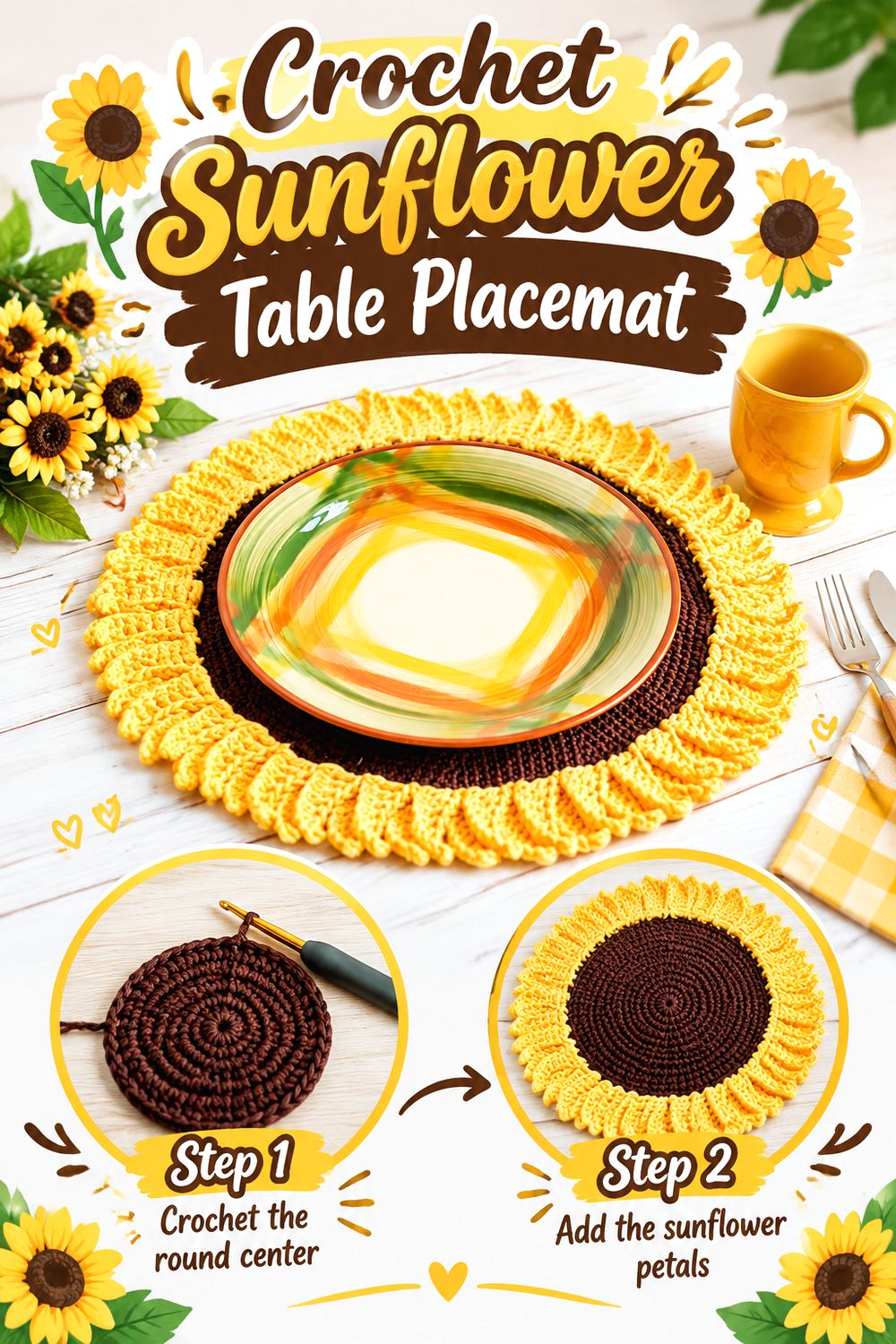
Sunflowers can become surprisingly primitive when their bright summer palette is toned down. Nana’s Crafty Home designed the Sunflower Placemat as part of a coordinated sunflower kitchen collection, giving this project a broad, flat shape suitable for dining decor.
Used beneath simple pottery or wood serving pieces, a sunflower placemat can connect the dining table to the mustard and brown tones elsewhere in a fall room. It also introduces a large circular floral motif without occupying vertical space.
Keep the Flower Flat Under Tableware
Any placemat has to succeed as a surface first. Watch for curling, raised joins, or decorative additions that could make plates sit unevenly.
If blocking is appropriate for the yarn and source instructions, use it to help the finished outline settle. Avoid attaching bulky buttons, wooden centers, or other primitive embellishments where dishes will rest.
Rustic Color Choices Can Mute the Sunflower
A sunflower does not need lemon yellow. Antique gold petals around a deep brown center can feel much more autumnal.
You can also let the surrounding table setting provide the primitive character: linen napkins, stoneware, old wood, and subdued pumpkins can make the crochet flower feel integrated rather than summery.
Original Tutorial and Creator Credit
Creator/Site: Nana’s Crafty Home
11. Crochet Mixed Fall Leaf Garland
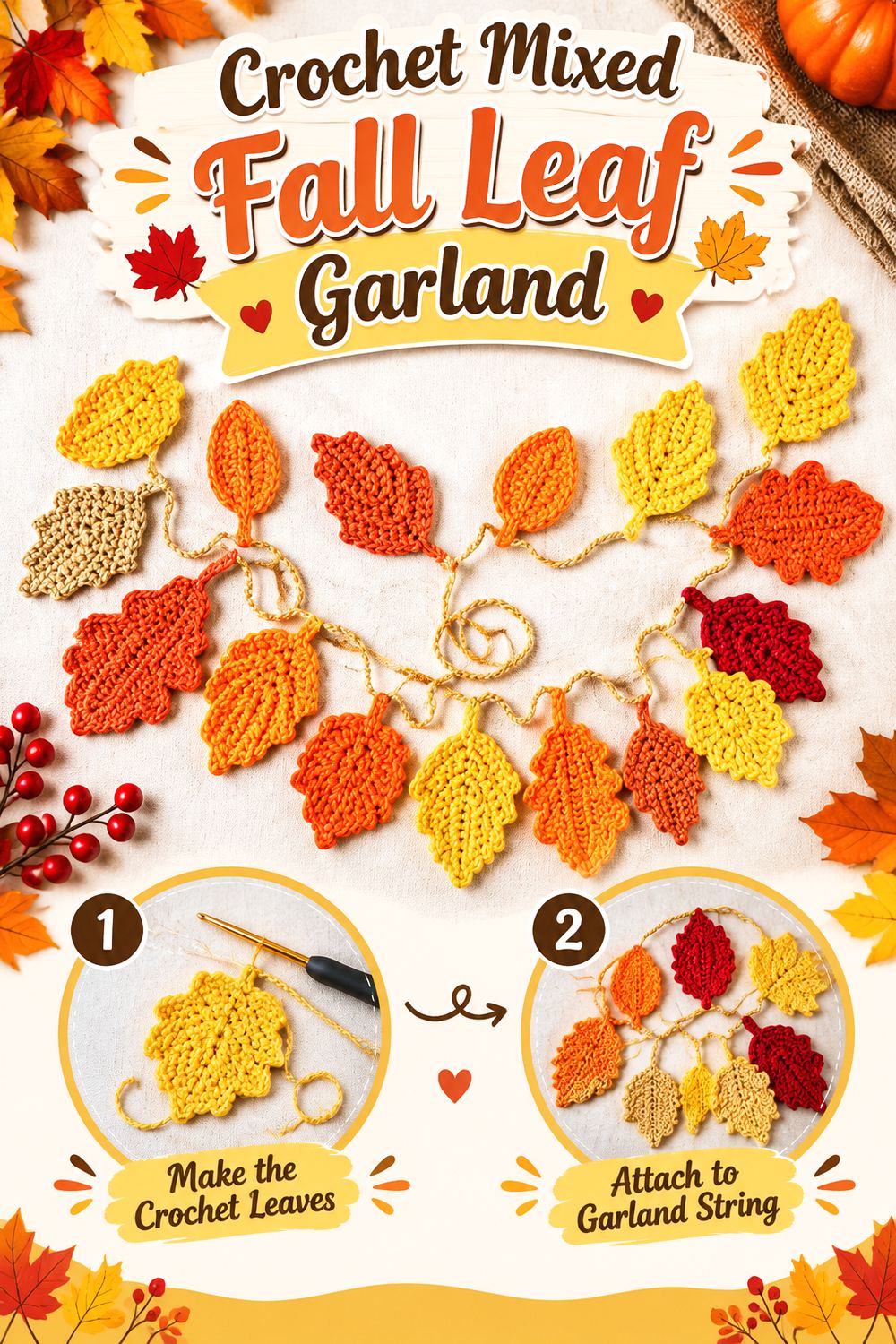
A leaf garland gives you seasonal color without adding stuffed objects to every surface. GoldenLucyCrafts combines several crocheted leaf styles in one fall garland, including pumpkin, autumn, simple, and oak leaf forms.
That variation makes the finished strand more natural than repeating one identical motif from end to end. Hung along a mantel, window, hutch, or peg rail, the garland can also visually connect other primitive pieces that use the same colors.
Mix Leaf Shapes, Not Just Colors
Changing only yarn color creates variety, but mixing leaf silhouettes gives the garland much more visual rhythm. The source already combines several shapes, which is useful inspiration for avoiding a uniform craft-store look.
Keep the palette controlled so the shape variation remains the main feature. Three to five related autumn shades are usually enough for a long strand.
Space the Garland for the Mantel
Garland density changes its character. Closely packed leaves create a fuller statement; wider spacing feels lighter and lets the cord or chain become part of the design.
Measure the intended display area before assembling. Also leave enough flexibility at the ends for tying or draping without pulling the first and last motifs awkwardly toward the mounting points.
Original Tutorial and Creator Credit
Creator/Site: GoldenLucyCrafts
12. Crochet Pumpkin Colorwork Pillow Cover
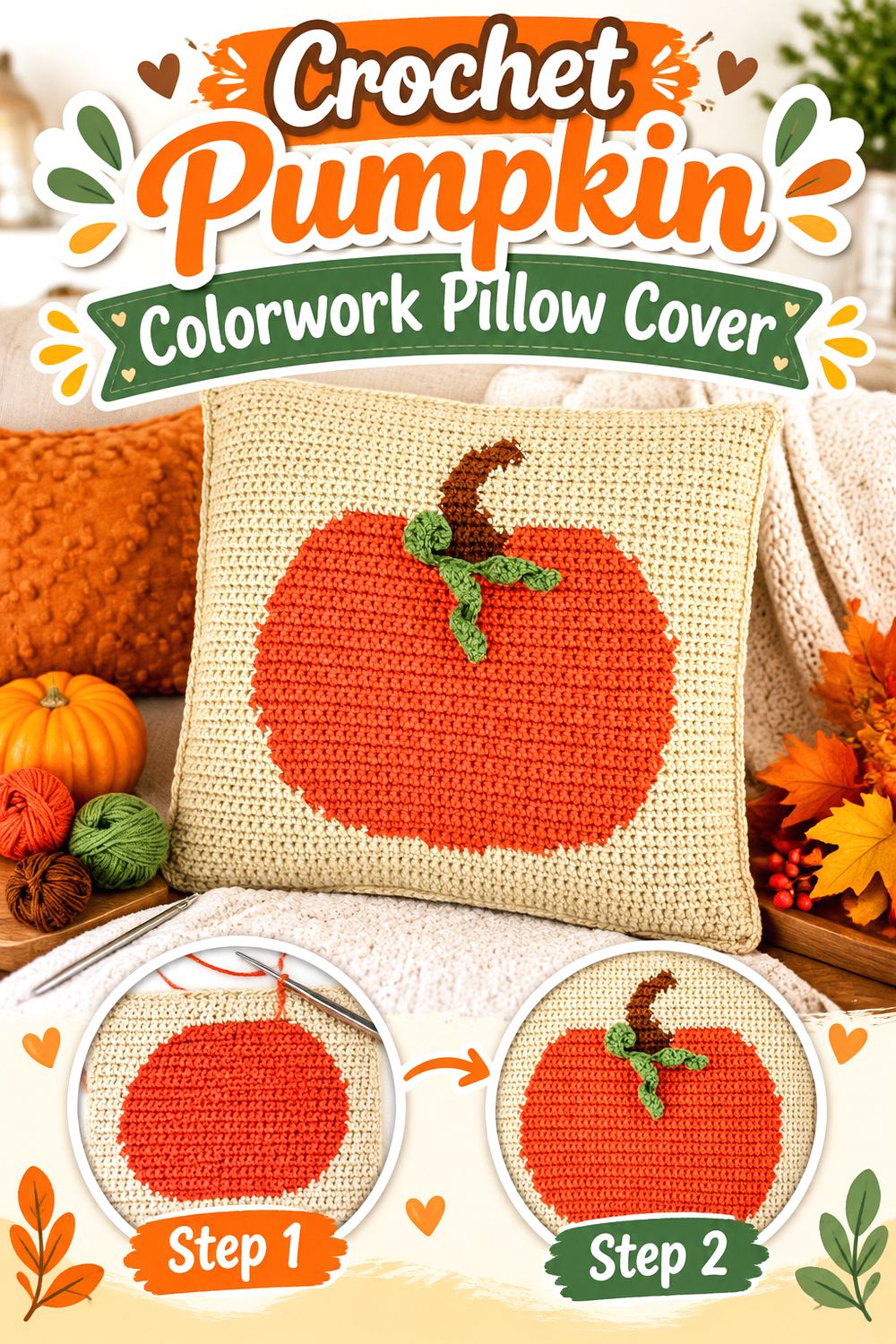
A pillow introduces a larger patch of crochet into the room and can carry fall color across furniture rather than only shelves. Jo to the World Creations’ pumpkin pillow is a removable cushion cover with a graphic pumpkin front and separate back construction.
The flat pumpkin motif makes this project visually different from round stuffed pumpkins. In a primitive room, try a deep tobacco, oatmeal, muted rust, or faded black background rather than relying on a bright white-and-orange combination.
Check the Insert Before Committing
Pillow fit affects the final look. Too much extra fabric can make a graphic motif sag; too little can distort the panel and pull the corners.
Use the source’s sizing guidance for its intended insert, and if you plan to use a different cushion, compare your actual insert to the finished-cover information before beginning a large colorwork panel.
Keep the Pumpkin Motif From Feeling Too Modern
Graphic colorwork can look contemporary when contrast is very crisp. To soften it, choose yarns with slightly heathered surfaces or lower-contrast primitive tones while still keeping the pumpkin readable.
The surrounding styling also matters. Pairing the pillow with plain linen, woven throws, or worn wood can move the same crochet motif toward farmhouse or primitive territory.
Original Tutorial and Creator Credit
Creator/Site: Jo to the World Creations
13. Crochet Harvest Corn Cob Accent
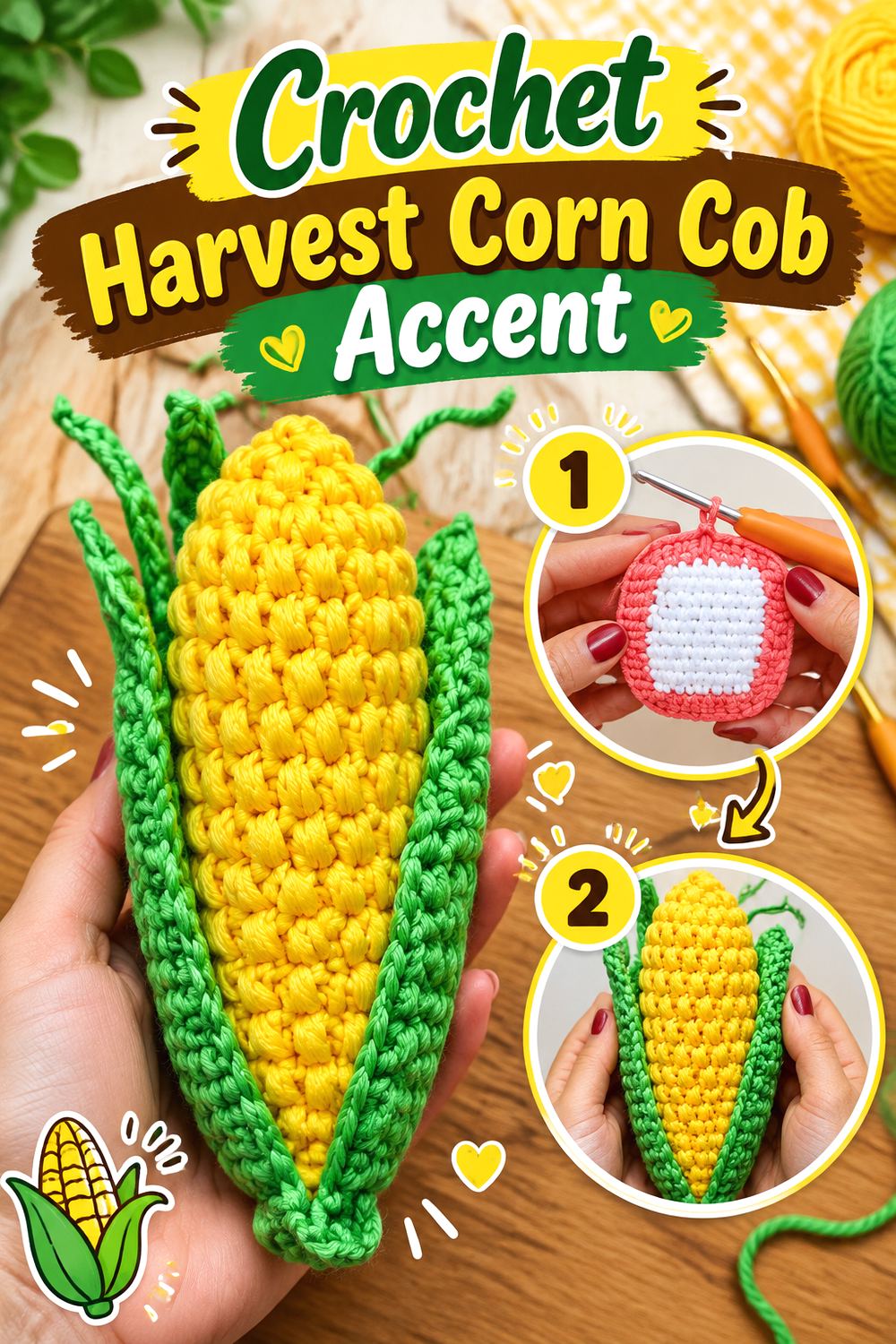
Corn is one of the strongest harvest symbols and gives a fall grouping a long, narrow silhouette that pumpkins cannot provide. Off the Beaten Hook’s tutorial teaches a realistic crochet ear of corn with a separate husk treatment.
For primitive decorating, one or more crocheted cobs could sit in a rope basket, wooden bowl, or low centerpiece with apples and muted leaves. The green husk can shift toward olive or moss, while the corn itself can use dull gold rather than vivid yellow.
Keep the Husk as the Main Texture
The husk is what keeps the piece from reading as a plain yellow cylinder. Preserve enough tonal contrast between husk and kernels to make the construction visible.
A darker olive against antique gold works particularly well with primitive palettes. If you use variegated yarn, make sure the color movement does not obscure the basic corn-and-husk division.
Decide Whether It Is Decor or a Play Piece
The source presents the corn within a crochet food collection. Your intended use should determine finishing choices.
For a static centerpiece, decorative styling is the main concern. If the item will be handled by children, reconsider any small detachable facial or decorative elements you might otherwise add and use the creator’s exact tutorial as your construction reference.
Original Tutorial and Creator Credit
Creator: Off the Beaten Hook
14. Crochet Autumn Apple Bowl Filler
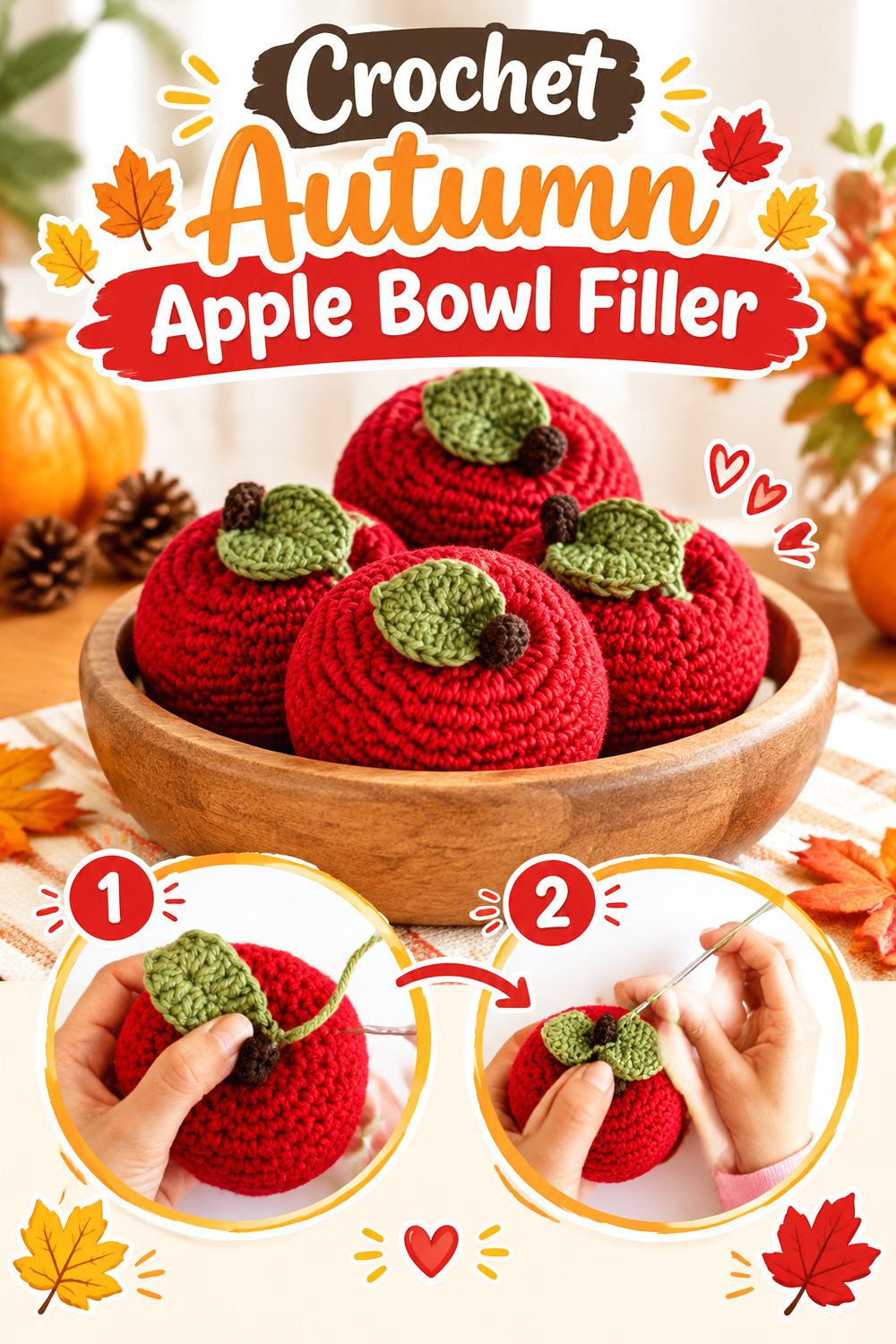
Pumpkins are not the only round fall produce worth crocheting. Alynaa Crochets demonstrates a complete apple with a stem and leaf, creating a compact amigurumi fruit that can work as seasonal bowl filler or a small tabletop accent.
A group of dusty red, muted green, and warm gold apples looks especially natural in a rope basket or dark wooden bowl. Their smoother shape also provides contrast beside deeply ribbed pumpkins, textured acorns, and leafy pieces.
Use Several Apple Tones
Real harvest displays rarely contain one mathematically identical color. A few related yarn shades can make a group feel more collected without changing the source construction.
Consider brick red, burgundy, sage green, mustard-gold, and brown-red. Keep the stems and leaves subdued so the fruit colors remain the main rhythm.
Shape the Dimple Carefully
The top indentation is one of the cues that separates an apple from a plain stuffed sphere. Follow the source closely for the actual shaping method and check the form before permanently securing the stem and leaf.
If you change yarn weight, watch how that affects the proportion between the apple body and those smaller finishing pieces.
Original Tutorial and Creator Credit
Creator: Alynaa Crochets 🎀🧶
15. Crochet Rope Harvest Basket
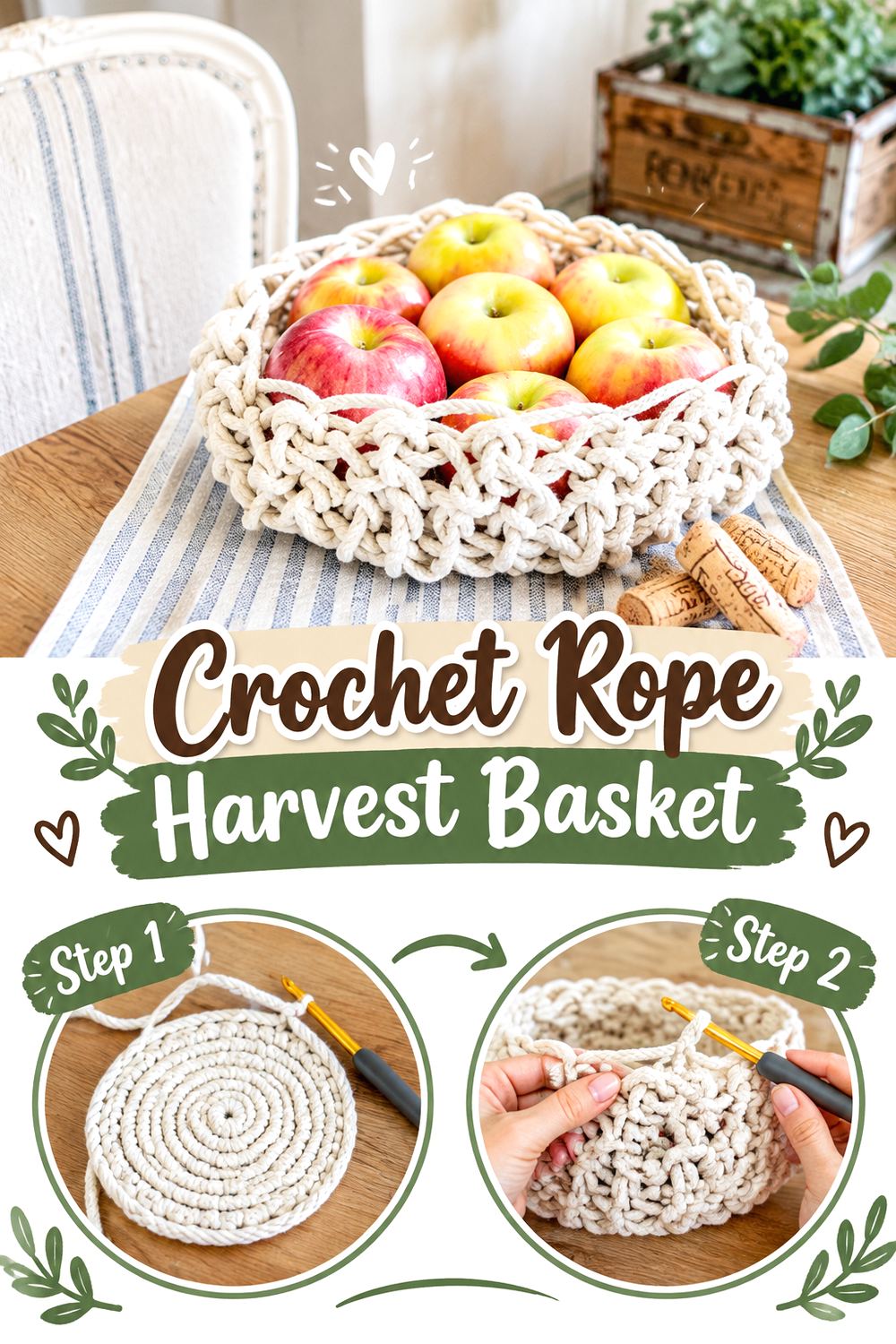
A utilitarian basket may be one of the most convincing primitive pieces in the entire list. A Box of Twine’s Harvest Basket uses cotton clothesline for a substantial rope-like surface and was specifically designed to display autumn apples; the designer also describes it as fitting rustic and farmhouse style.
Unlike a purely decorative pumpkin basket, this piece can stay out beyond the season. Fill it with crocheted apples or corn for a fiber-only display, or use it as an empty textural object beside other fall pieces.
Rope Changes the Basket Completely
Thick cord or clothesline creates a different structure than ordinary soft yarn. Do not assume you can exchange materials without affecting wall firmness, stitch size, or how the handles behave.
If substituting, choose material based on the basket’s intended function. Decorative storage can tolerate more softness than a basket expected to carry real weight.
Display Weight Has Limits
Crochet baskets can stretch, especially at handles and upper edges. The source is presented as a harvest display basket, but any substitution can change performance.
Before lifting a filled basket, inspect the handle areas and base. For a primitive centerpiece, lightweight faux produce, yarn decor, napkins, or other light objects place far less stress on the crochet.
Original Tutorial and Creator Credit
Creator/Site: A Box of Twine
16. Crochet Tapestry Fall Wall Hanging
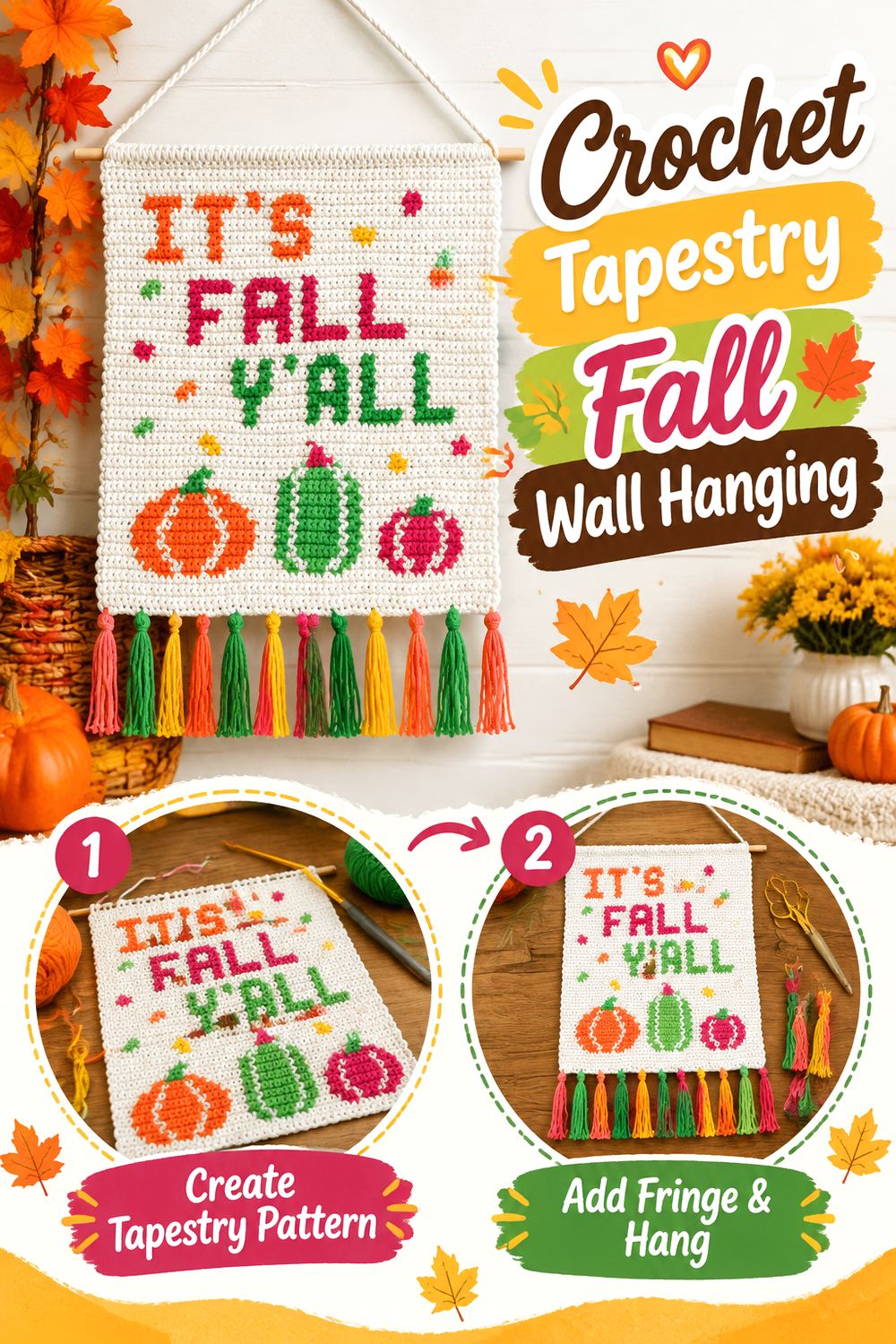
Loops & Love Crochet’s fall wall hanging is worked as a tapestry-style colorwork panel, giving you a broad seasonal statement without using stuffed forms. The original uses turned rows and frequent color changes to build the design.
A wall panel is useful when tabletops are already busy. In primitive styling, it can hang from a plain wood dowel or branch above a bench, entry table, or kitchen hutch. The flat structure also makes it easier to store than bulky wreaths or large amigurumi.
Plan Color Changes Before the First Row
Colorwork creates many opportunities for tangled yarn and uneven tension. Review the full source notes before starting and organize the palette so you know which colors will be active.
If adapting toward primitive tones, preserve enough contrast for the picture to remain legible. A subtle palette still needs clear value changes where one shape meets another.
Block Before Adding the Hanger
A wall panel exposes uneven sides more than a pillow does because there is no insert pulling it square. The source itself discusses blocking the finished crocheted piece.
Check the fiber care guidance before applying heat or moisture, and square the panel before final mounting. A level top edge will make even an intentionally rustic hanger look deliberate.
Original Tutorial and Creator Credit
Creator/Site: Loops & Love Crochet
17. Crochet Lidded Pumpkin Basket
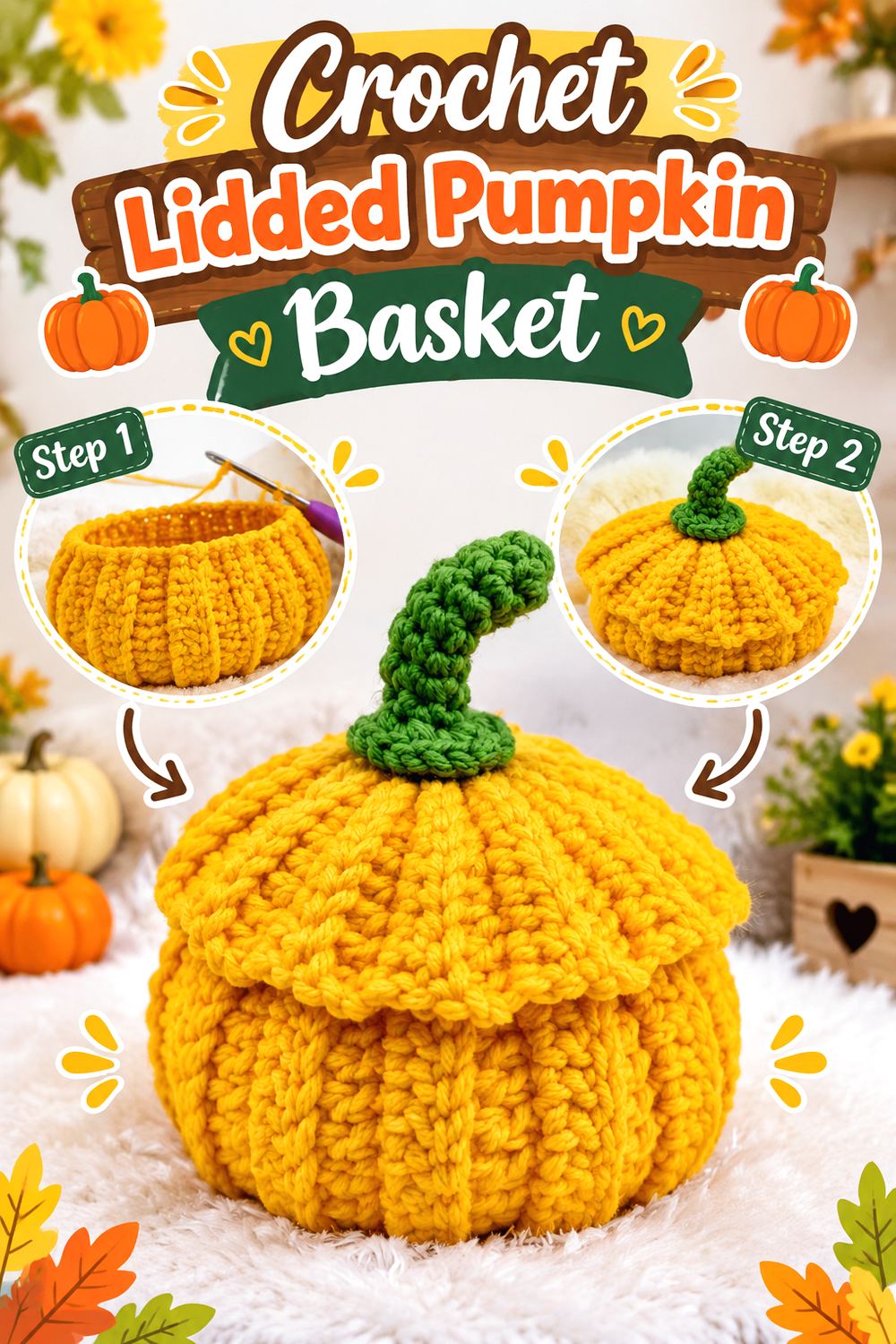
A lidded pumpkin basket combines seasonal shape with small-item storage. Hopeful Turns’ video teaches a pumpkin-shaped basket with a lid and presents it for organizing small items, decorating a table, and autumn or Halloween display.
For a primitive interpretation, cream, faded pumpkin, brown, or moss can replace a brighter palette. Keep embellishment simple so the ribbed pumpkin form and lid remain clear. This type of piece works well on an entry table, sewing shelf, or dresser because the seasonal decoration has a practical interior.
Prioritize Rim and Lid Alignment
A lidded basket succeeds when the opening remains stable and the top sits naturally. Yarn substitutions that are much softer or heavier can change that relationship.
Check the rim during construction and compare the lid to the basket before adding any decorative stem or leaf that could disguise an underlying fit problem.
Use Small Storage Only
The tutorial presents the basket for small items rather than heavy carrying. That is an important distinction.
Use it for lightweight seasonal objects, wrapped treats, stitch markers, or similar small contents. If you alter materials or size, do not assume the handle, rim, or walls gain load-bearing strength automatically.
Original Tutorial and Creator Credit
Creator: Hopeful Turns
18. Crochet Maple Leaf Potholder
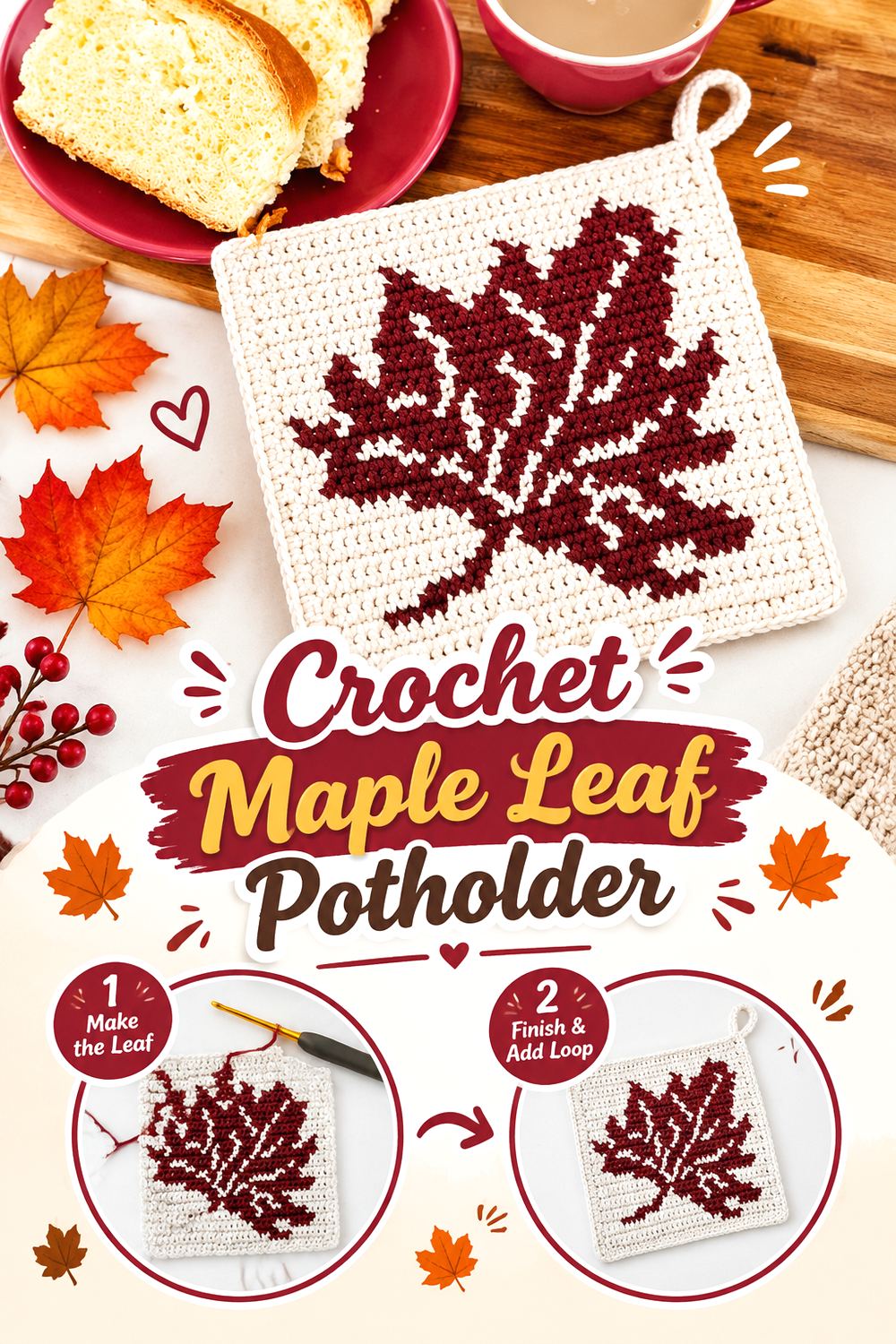
Raffamusa Designs’ Maple Leaf Potholder uses tapestry crochet to build a strong leaf graphic into a compact kitchen piece. The design is part of a fall leaf-themed potholder collection and is intended as both a practical accessory and autumn kitchen decor.
This is a good option when you want primitive fall color in a working kitchen without adding more figurines. Brown, flax, rust, dull red, or deep olive can make the maple motif feel quieter than a bright seasonal novelty print.
Heat Use Changes Yarn Choice
A decorative square and a working potholder are not interchangeable. The Raffamusa source recommends cotton for this design.
If the finished piece will contact hot cookware, follow the creator’s materials and thickness guidance closely. Do not add meltable trims or assume an acrylic substitute is safe simply because it matches the color scheme.
Keep Tapestry Fabric Flat
A potholder needs a stable surface. Uneven colorwork tension can make edges ripple or pull inward, which becomes more noticeable when the piece lies beneath cookware.
Pause during the project to check squareness and fabric density. If your color changes are tightening the center, correct tension early rather than relying on aggressive blocking later.
Original Tutorial and Creator Credit
Creator/Site: Raffamusa Designs
19. Crochet Pumpkin Pie Hot Pad
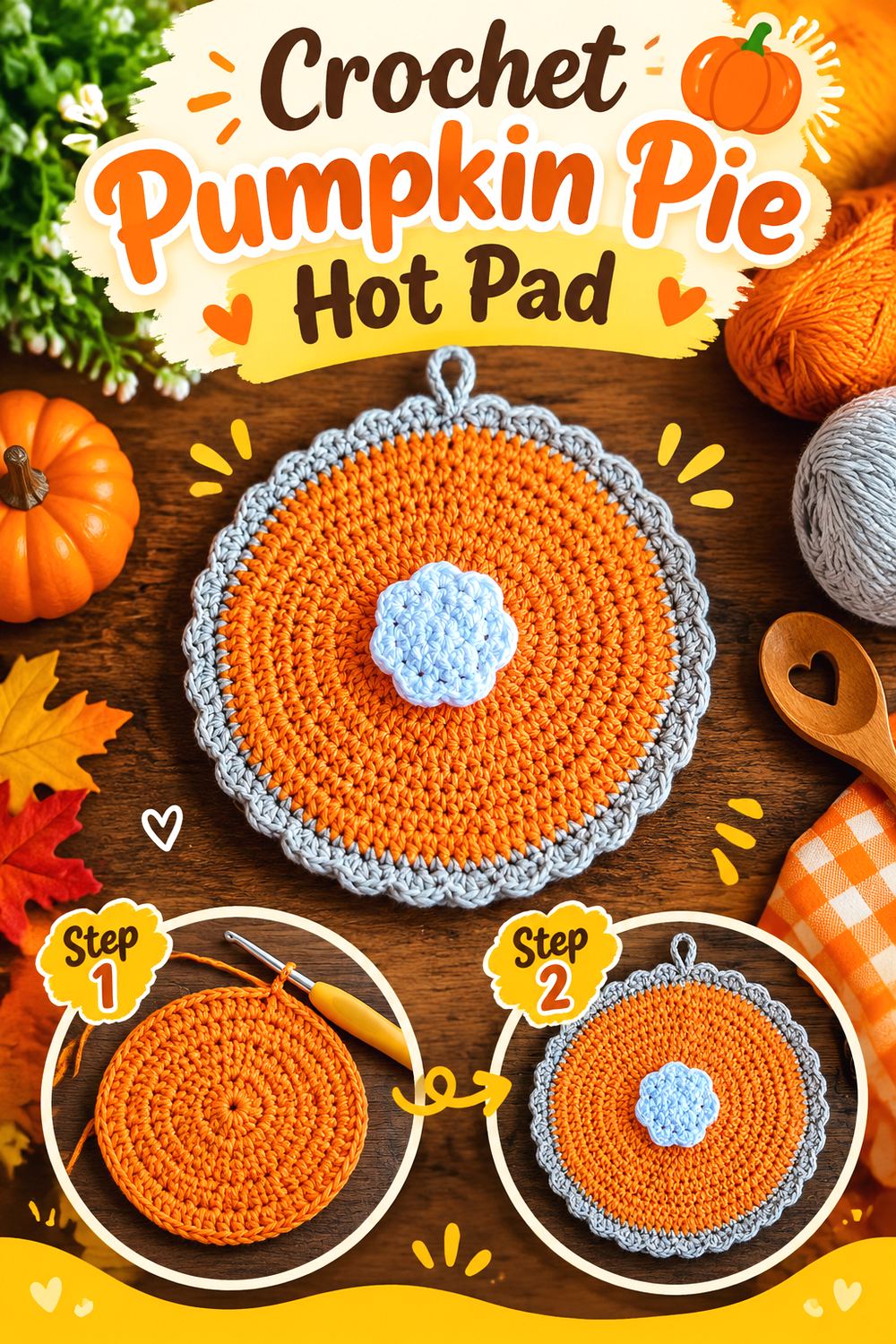
Pumpkin pie brings a different kind of harvest humor to kitchen decor. Beautiful Dawn Designs’ pumpkin pie potholder is a round fall project using cotton yarn in pie-inspired colors, giving the finished piece a clear filling, crust, and topping effect rather than another whole pumpkin.
Hung from a hook or placed beneath fall serving pieces, it introduces Thanksgiving imagery while staying compact. For primitive styling, soften the orange toward rust and choose a warm tan crust rather than a bright golden shade.
Use Heat-Safe Materials for Real Kitchen Duty
If you intend to use this as a true potholder rather than decorative wall art, material choice becomes a safety issue. Follow the original designer’s cotton-based recommendations and any thickness guidance in the tutorial.
Buttons, beads, synthetic trims, or glued rustic embellishments may make a project less suitable for direct contact with hot cookware.
Keep the Crust Edge Even
The outer crust frames the entire motif. Uneven tension there can make the hot pad look more like a circle with trim than a slice-inspired pie design.
Lay the piece flat periodically and check the border before finishing. Primitive style can tolerate handmade variation, but persistent ruffling or cupping usually signals a construction or tension issue rather than intentional rustic character.
Original Tutorial and Creator Credit
Creator/Site: Beautiful Dawn Designs
20. Crochet Stacked Pumpkin Centerpiece
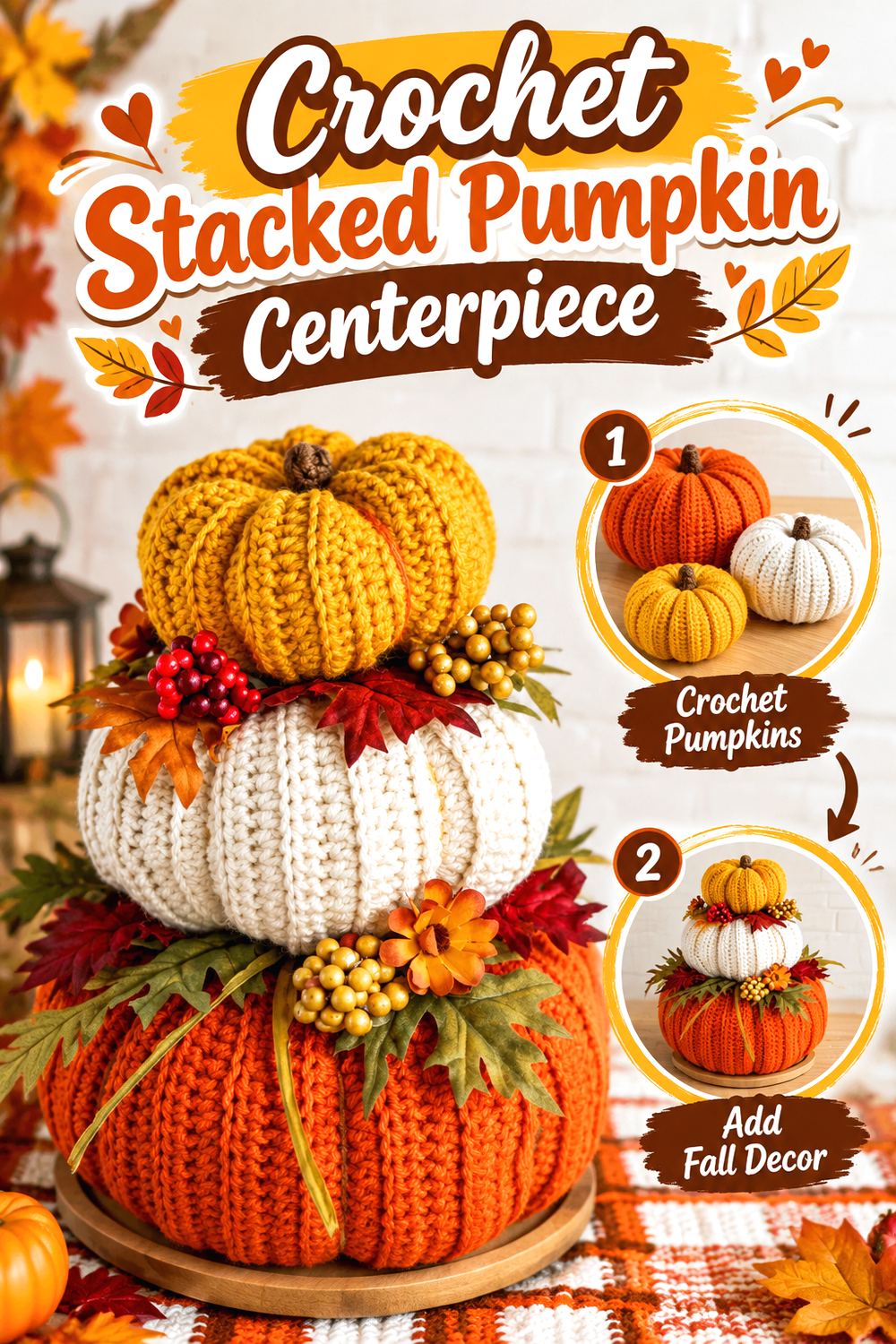
A stacked centerpiece gives height to a dining table or sideboard without relying on a vase. Winding Road Crochet’s fall centerpiece combines multiple crocheted pumpkins with leaf and floral-style accents, creating a tiered arrangement intended for tabletop display.
Because the pumpkins decrease in scale as they rise, the piece already has a strong silhouette. A primitive version could use cream, tobacco, deep rust, faded olive, or dusty blue instead of matching bright oranges. Sparse dried-look accents can keep the stack from feeling overly decorative.
Stack by Proportion, Not Color
The most convincing tiered arrangements decrease in visual mass as they rise. Even when using several colors, make sure the size hierarchy remains obvious.
Set the pumpkins together before attaching decorative leaves or floral elements. This makes it easier to spot a middle layer that feels too wide, too tall, or visually heavier than the base.
Plan for Seasonal Storage
The original source notes that the pumpkins can remain unglued, which makes rearranging and storage easier.
That is particularly useful for bulky seasonal decor. If you want a permanent centerpiece, attachment may simplify setup; if storage space is limited, keeping pieces separable can make them easier to pack and reuse elsewhere.
Original Tutorial and Creator Credit
Creator/Site: Winding Road Crochet
21. Crochet Pumpkin Gnome Mantel Sitter
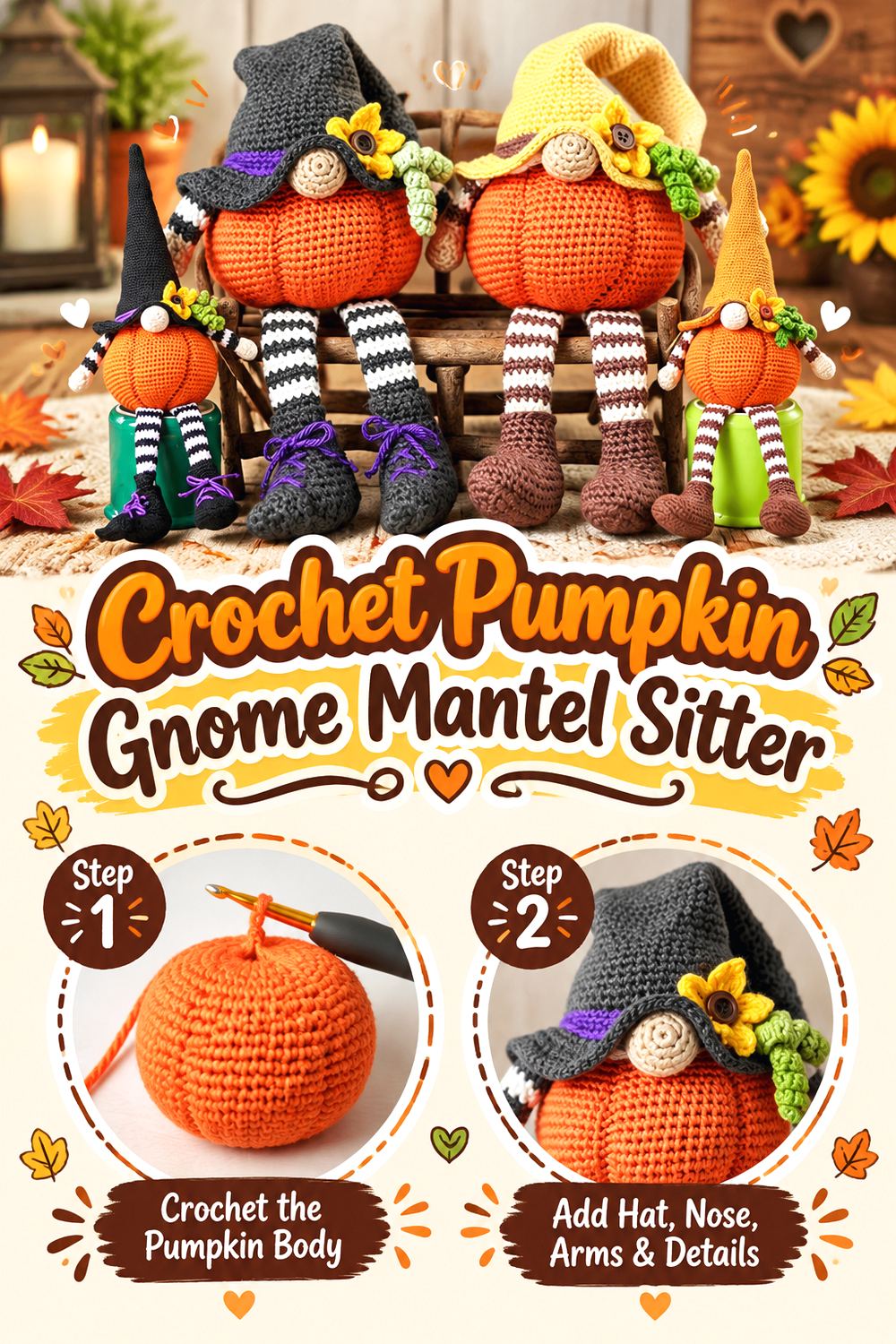
Jen Hayes Creations’ pumpkin gnome offers both Halloween and fall interpretations and includes different styling options, including shoe variations. The body itself is shaped as a pumpkin, so the seasonal motif is built into the figure rather than simply added as an accessory.
That makes the gnome a useful mantel or shelf focal point when you want character without choosing another scarecrow. For primitive decor, favor the fall version with muted ochre, brown, olive, cream, or rust rather than high-contrast Halloween colors.
Push the Fall Version, Not Halloween
Small color decisions determine whether the figure reads as harvest decor or spooky-season decor. Jen Hayes explicitly provides fall and Halloween variations, making this a good project for a softer seasonal interpretation.
A warm brown boot, dull gold hat, pumpkin-toned body, and neutral beard can coordinate with primitive shelves long after Halloween-specific decorations come down.
Stability Beats Overstuffing
The source includes active shaping of the pumpkin body. Adding more stuffing is not always the same as creating better structure.
As you finish the figure, check the base and body shape together. Too much pressure can distort shaping; too little can make the sitter slump. Follow the designer’s stuffing and shaping guidance rather than compensating with arbitrary extra fill.
Original Tutorial and Creator Credit
Creator/Site: Jen Hayes Creations
22. Crochet Stiffened Leaf Bowl
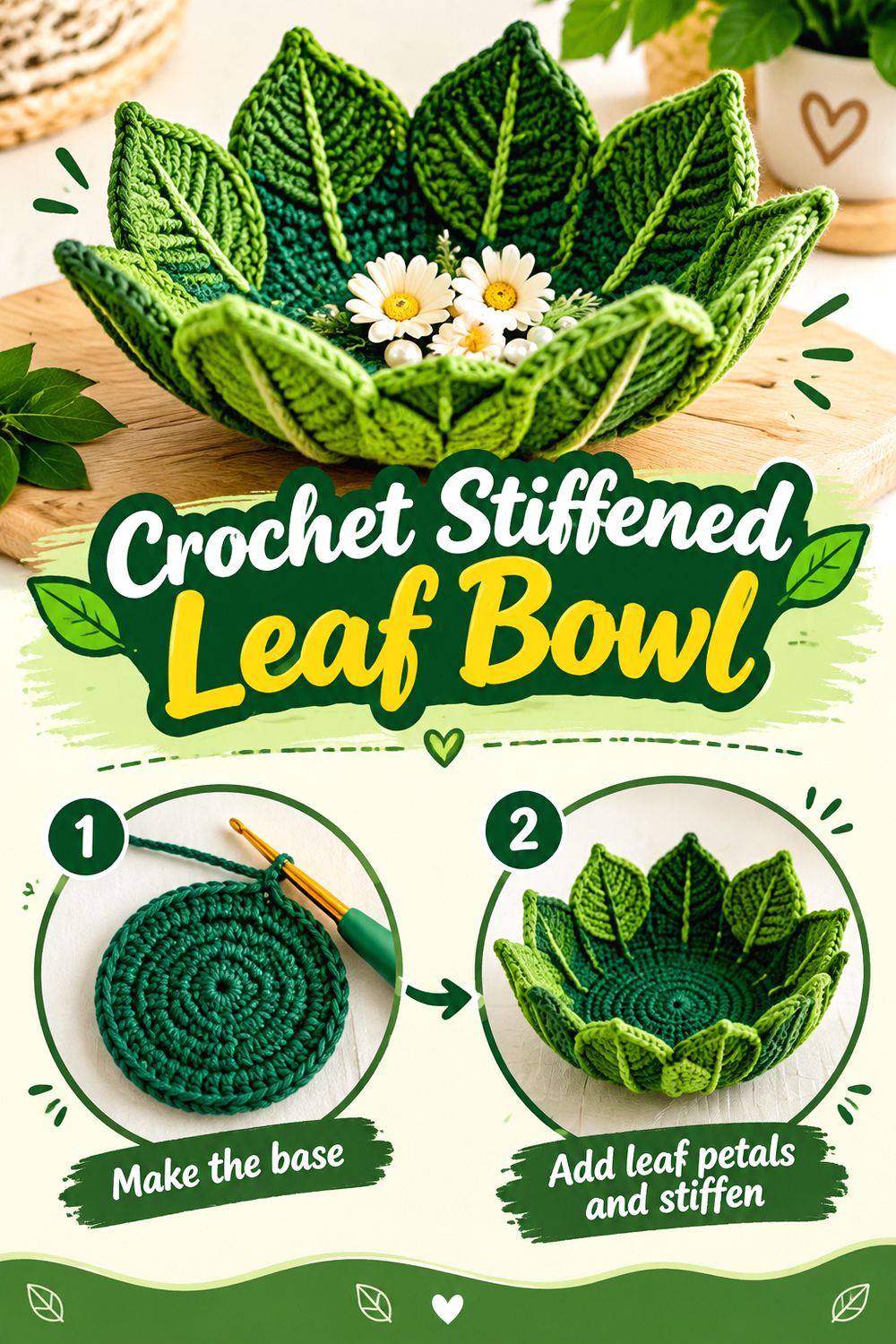
This leaf bowl is one of the most unusual ideas in the list because the crochet is assembled into a freestanding container rather than remaining flat or being stuffed. Craft Designs by Eve Leder combines a crocheted bowl base with multiple overlapping leaves and uses a bowl form and fabric stiffener during finishing.
The result suits primitive fall styling especially well because the surface resembles a pile of layered autumn leaves. It can stand empty as a sculptural piece or hold other lightweight decorative objects.
Shaping Is Part of the Construction
For this project, finishing is not merely cosmetic. The source forms the crochet over a protected bowl mold and uses stiffening product according to the manufacturer’s directions.
That means yarn substitution should be considered carefully. Different fibers absorb stiffener differently, and a bowl that looks correct while wet may change as it dries. Follow the source’s shaping sequence rather than improvising the final form.
Keep It Decorative, Not Food-Contact
The original project uses yarn and fabric stiffener as structural materials. Unless a product is specifically identified as appropriate for direct food contact, treat the finished bowl as decor rather than a serving vessel.
Use it for wrapped items, crochet acorns, faux leaves, mini pumpkins, or other dry decorative pieces. Also keep it away from open flame and hot cookware.
Original Tutorial and Creator Credit
Creator/Site: Craft Designs by Eve Leder
Which Crochet Primitive Fall Decor Works Best Where?
For a mantel or shelf, the scarecrow, mushrooms, acorn, apples, candy corn, pumpkin gnome, and individual cottage pumpkin give the strongest mix of heights and silhouettes. Add the leaf garland behind them instead of lining up many similarly sized stuffed objects.
For a dining or kitchen space, the sunflower placemat, mosaic pumpkin coaster, maple-leaf potholder, pumpkin-pie hot pad, harvest basket, and stacked centerpiece add seasonal character while still leaving room for practical use.
For vertical decorating, choose the wreath, owl ornament, turkey applique, leaf garland, or tapestry wall hanging. These are particularly useful in smaller rooms because they move seasonal interest off the tabletop.
The leaf bowl and lidded pumpkin basket work well as transitional pieces because they provide both form and contained display space.
Conclusion
Primitive fall crochet looks strongest when the collection mixes simple folk shapes with useful household pieces rather than repeating the same pumpkin at every scale. A scarecrow or gnome brings character, corn and apples strengthen the harvest theme, mushrooms and acorns add woodland influence, and garlands, wall pieces, baskets, placemats, and potholders spread the palette throughout the room.
Choose a limited range of worn-looking autumn colors, but let construction vary from flat tapestry work to stuffed amigurumi, rope crochet, ribbing, mosaic, and stiffened leaves. That variety creates a collected handmade look without relying on excessive embellishment.
Once you choose a project, use the linked original tutorials for exact construction, materials, stitch details, sizing, and finishing guidance.
Frequently Asked Questions
What colors work best for primitive crochet fall decor?
Primitive palettes usually work well with rust, tobacco brown, oatmeal, mustard, dull gold, barn red, faded olive, charcoal, muted cream, and occasionally dusty blue. You do not need to use all of them. Three or four recurring colors can make separate projects feel related, while one unexpected accent keeps the arrangement from looking overly coordinated. Always preserve enough value contrast when a tutorial depends on colorwork or a recognizable motif.
Can I make these projects with leftover yarn?
Many small decor pieces may be suitable for stash yarn, but substitution affects more than color. Yarn weight and fiber can change size, stiffness, drape, stuffing coverage, and heat tolerance. Compare your yarn with the original tutorial before beginning. For dimensional pieces, aim for fabric dense enough to contain stuffing. For potholders or other heat-contact items, follow the designer’s specific material recommendations rather than substituting ordinary acrylic solely to use scraps.
How can I make a crochet project look more primitive without changing the pattern?
Start with the palette and display rather than altering construction. Choose heathered, marled, tweedy, or low-saturation yarn where appropriate; use warm neutrals instead of bright white; and pair finished pieces with plain wood, stoneware, linen, baskets, or simple branches. Keep embellishment restrained. A strongly textured crochet surface often looks more convincing in primitive decor when it remains visible instead of being covered with bows, beads, buttons, and artificial floral picks.
Can I resize pumpkins, apples, mushrooms, and other stuffed decor?
Sometimes, but the safest approach depends on the tutorial. Changing yarn weight and hook size can alter scale without rewriting the pattern, although fabric density and proportions may also change. Some designers provide multiple sizes or substitution notes; follow those when available. Avoid inventing extra rounds or stitch counts unless you understand how the project is shaped, because even small changes can affect rib alignment, cap proportions, closures, or the final silhouette.
How do I keep stuffed fall decor from looking lumpy?
Use consistent tension, add stuffing gradually, and pay attention to the shape the tutorial is trying to create. Dense crochet fabric generally hides filling better than loose fabric. Instead of forcing large handfuls into one area, distribute smaller amounts and check the piece from several directions. Some designs also depend on cinching, surface shaping, or structured seams after stuffing, so do not assume stuffing alone creates the final form.
Are crochet fall decorations safe to use around candles or fireplaces?
Yarn, stuffing, fabric stiffeners, twine, faux leaves, and similar craft materials should be kept away from open flame and high heat. Do not place crocheted decor directly beside candle flames, on hot stove surfaces, or where fireplace sparks could reach it. Battery-operated lights can reduce some flame-related concerns, but still follow the device manufacturer’s clearance and ventilation instructions. Kitchen pieces intended for hot cookware require their own material guidance.
How should crochet fall decor be stored after the season?
Clean pieces according to the yarn label and creator guidance, then make sure they are completely dry before storage. Avoid crushing stuffed pumpkins, gnomes, wreath components, or shaped baskets beneath heavier decorations. Flat wall hangings and garlands can often be stored with less bulk if laid or loosely rolled rather than sharply folded. Keep stiffened pieces supported so they do not deform, and separate items with snag-prone embellishments from delicate crochet surfaces.