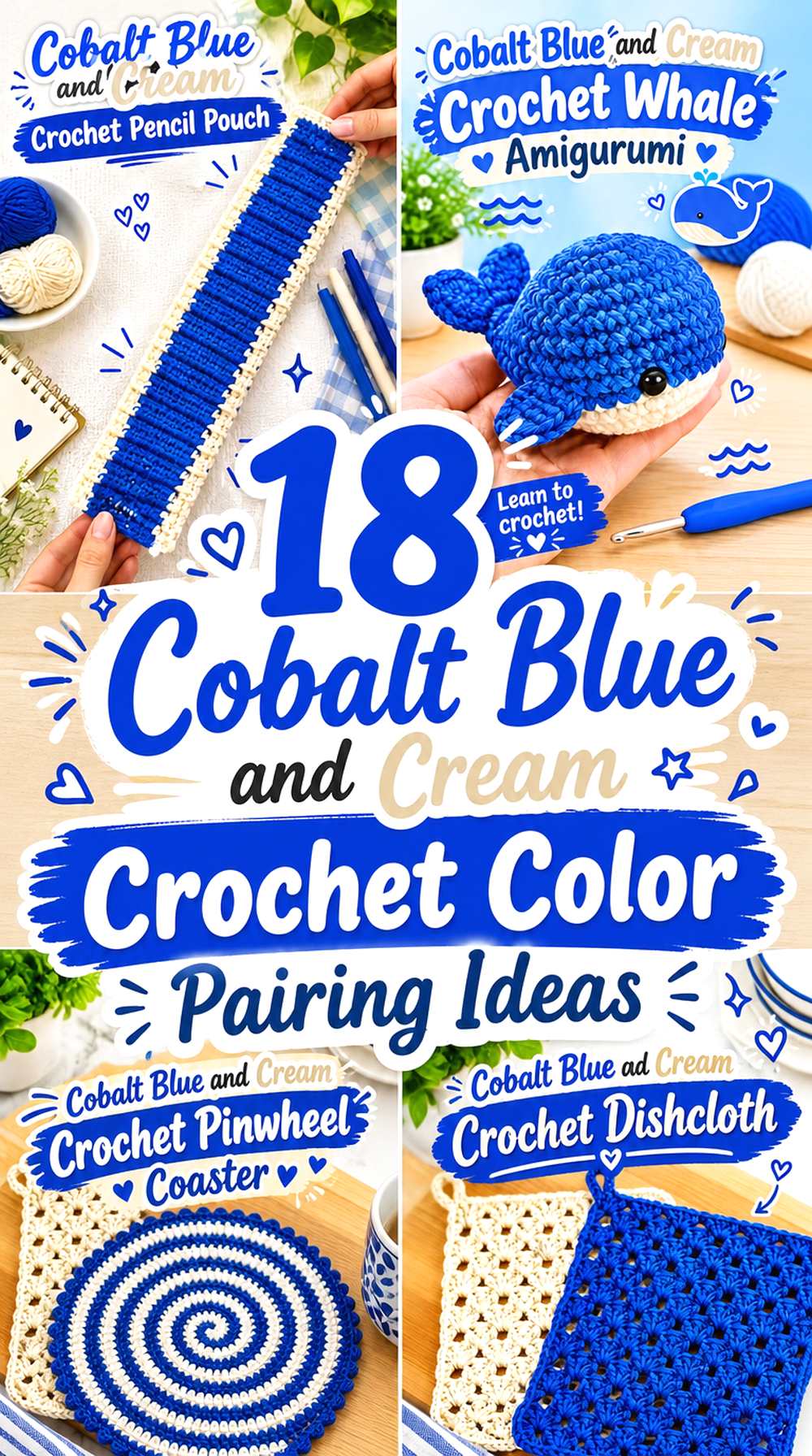
18 Cobalt Blue and Cream Crochet Color Pairing Ideas
Cobalt blue and cream create a crochet pairing with clear visual separation without requiring a large palette. Cobalt brings the stronger, more saturated color presence, while cream can open up motifs, borders, ribbing, and textured areas that might otherwise disappear into one uninterrupted field of blue.
The pair also changes considerably depending on color placement. A cobalt-dominant blanket feels very different from a cream-dominant sweater with cobalt sleeves, even though both use the same two colors. The ideas below focus on those placement decisions so you can decide not only whether cobalt blue and cream work together, but where each color should go on a specific crochet project.
Quick List
- Cobalt Blue And Cream Crochet Solid Granny Square
- Cobalt Blue And Cream Crochet Granny Stripe Blanket
- Cobalt Blue And Cream Crochet Cardigan
- Cobalt Blue And Cream Crochet Storage Basket
- Cobalt Blue And Cream Crochet Beanie
- Cobalt Blue And Cream Crochet Textured Scarf
- Cobalt Blue And Cream Crochet Mug Cozy
- Cobalt Blue And Cream Crochet Shawl
- Cobalt Blue And Cream Crochet Headband
- Cobalt Blue And Cream Crochet Market Bag
- Cobalt Blue And Cream Crochet Dishcloth
- Cobalt Blue And Cream Crochet Cowl
- Cobalt Blue And Cream Crochet Pinwheel Coaster
- Cobalt Blue And Cream Crochet Whale Amigurumi
- Cream And Cobalt Blue Crochet Sweater
- Cream And Cobalt Blue Crochet Bucket Hat
- Cobalt Blue And Cream Crochet Pencil Pouch
- Cobalt Blue And Cream Crochet Hooded Vest
How to Balance Cobalt Blue and Cream in Crochet
Start by deciding whether cobalt blue or cream should control the largest visual area. Using both in equal amounts can work for regular stripes, checkerboard layouts, and alternating motifs, but many crochet projects become easier to read when one shade clearly leads.
Cobalt blue is useful when you want a strong main field with lighter details around it. Cream works well as the larger field when you want cobalt to appear as a concentrated border, cuff, stripe, motif center, or other defined feature.
Also compare the actual yarns rather than relying only on their color names. Cobalt yarns vary in darkness and saturation, while cream can range from nearly white to noticeably warm beige. Looking at the two skeins side by side—and checking them in grayscale if necessary—can help confirm that small motifs and textured details will remain distinct.
Use Cobalt Blue and Cream Placement to Protect Crochet Texture
Color placement matters more when a project includes ribbing, bobbles, openwork, raised stitches, granny clusters, or other surface detail. If an entire textured section is worked in one dark or highly saturated color, some of the structure may be less obvious from a distance.
Cream can be placed around detailed sections to provide a lighter break, while cobalt can define outer edges and larger shapes. On wearables, that might mean cream cuffs against cobalt sleeves. On granny squares, it could mean cream outer rounds around cobalt centers. On home decor, a cobalt border can frame a cream textured center without requiring a third color.
1. Cobalt Blue And Cream Crochet Solid Granny Square
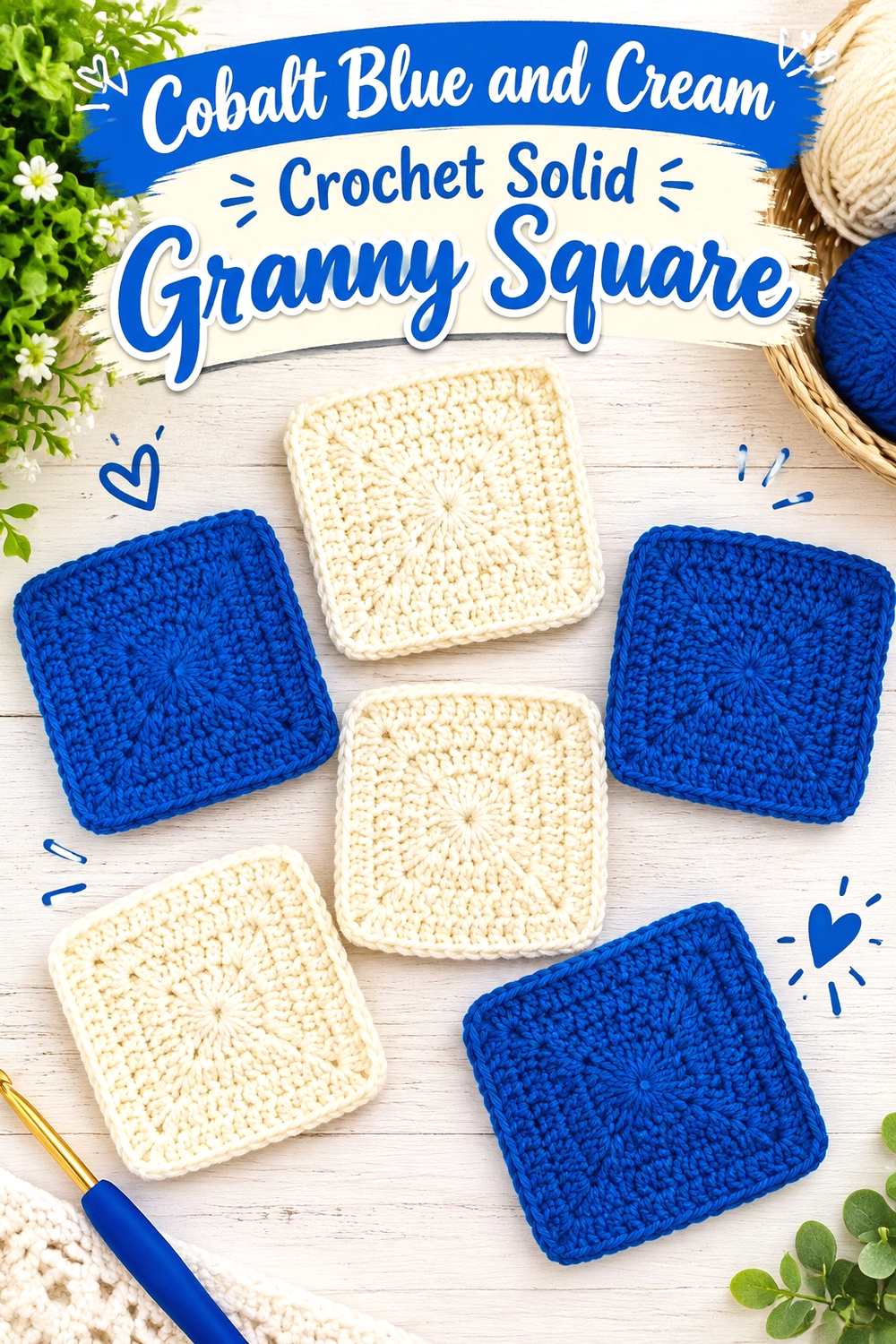
A solid granny square gives cobalt blue and cream enough uninterrupted surface to make their roles obvious. Cobalt can fill the center while cream moves toward the outside, creating a lighter frame that also helps repeated squares remain visually separated when they are arranged together.
Cobalt Blue Makes the Granny Square Center a Clear Focal Area
Place cobalt blue through the central portion when you want the square to read as blue first rather than as an even two-color block. Because the center repeats across every motif in a larger project, cobalt becomes the visual thread connecting the squares.
If the center detail seems to disappear once several squares are placed together, increasing the amount of cream around each cobalt center can create more breathing room without adding another color.
Cream Can Separate Cobalt Blue Granny Squares at the Outer Edge
Using cream for an outer round or joining area can keep multiple cobalt-heavy squares from merging into one large dark field. This is especially useful when the motifs themselves are meant to remain recognizable after joining.
If cream becomes too dominant, move cobalt back into a narrow outer detail or repeat it elsewhere in the finished item so the square still feels intentionally two-colored.
Creator Credit: Littlejohn’s Yarn
2. Cobalt Blue And Cream Crochet Granny Stripe Blanket
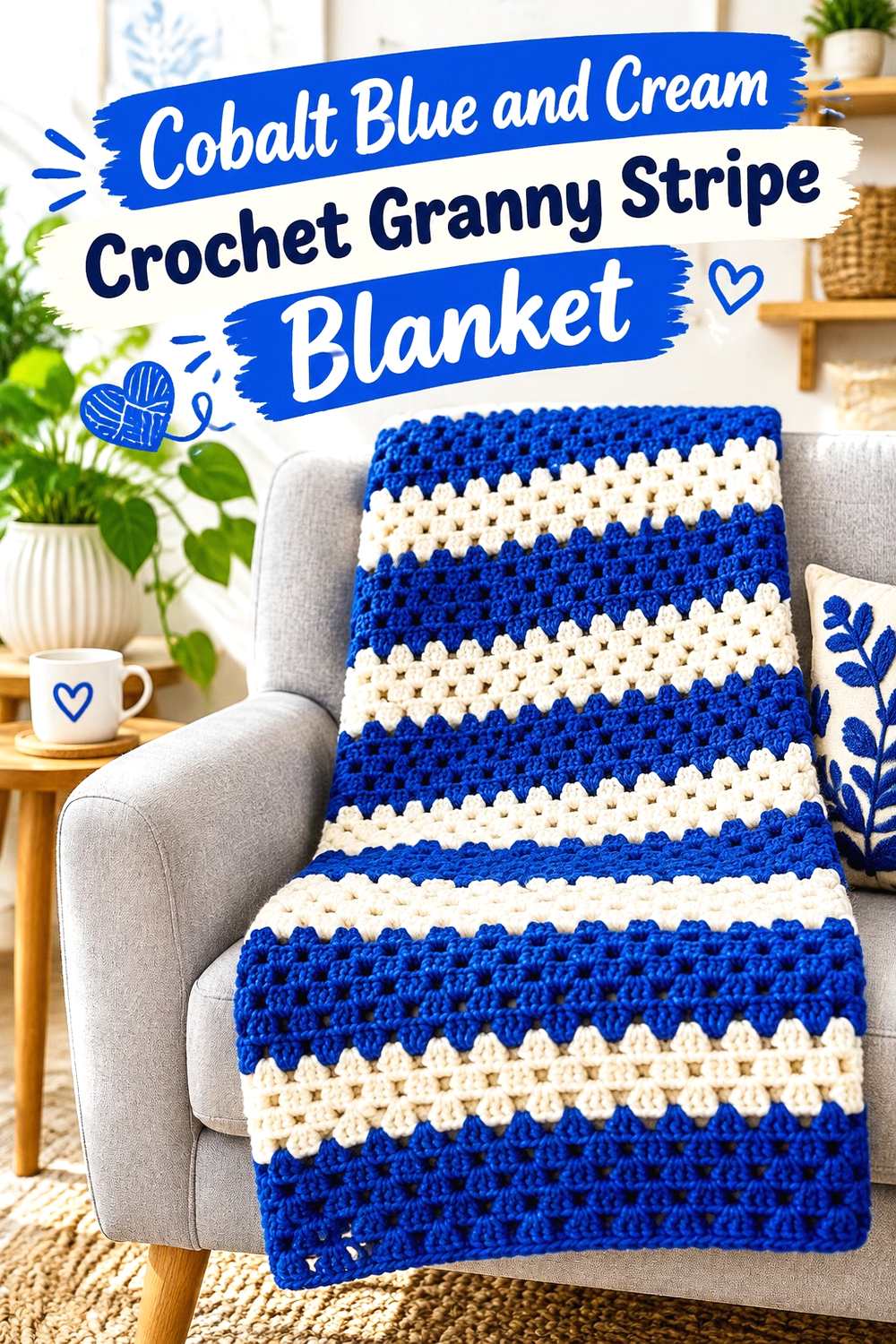
A granny stripe blanket gives this pairing room to work at a larger scale. Cobalt blue can carry broad sections of the blanket while cream interrupts the stronger color at planned intervals, preventing the entire surface from reading as one continuous blue block.
Cream Breaks Up Long Cobalt Blue Blanket Sections
Cream is especially useful between substantial cobalt sections because it creates a clear pause in the blanket surface. Wider cobalt areas keep the saturated blue dominant, while occasional cream bands prevent the palette from becoming visually dense.
Before committing to the whole blanket, compare a small group of stripes from across the room. A sequence that looks balanced close up can appear very different once the blanket is viewed as one large surface.
Cobalt Blue Can Reconnect the Cream Stripes at the Blanket Border
If cream appears repeatedly through the main blanket, a cobalt blue outer border can bring the stronger color back around the entire piece. That creates a deliberate frame rather than allowing the last cream stripe to determine the final visual edge.
A cream border is the alternative when you want the blanket to finish more lightly, but check whether it leaves enough cobalt near the perimeter to connect with the interior stripes.
Creator Credit: The Loopy Lamb
3. Cobalt Blue And Cream Crochet Cardigan
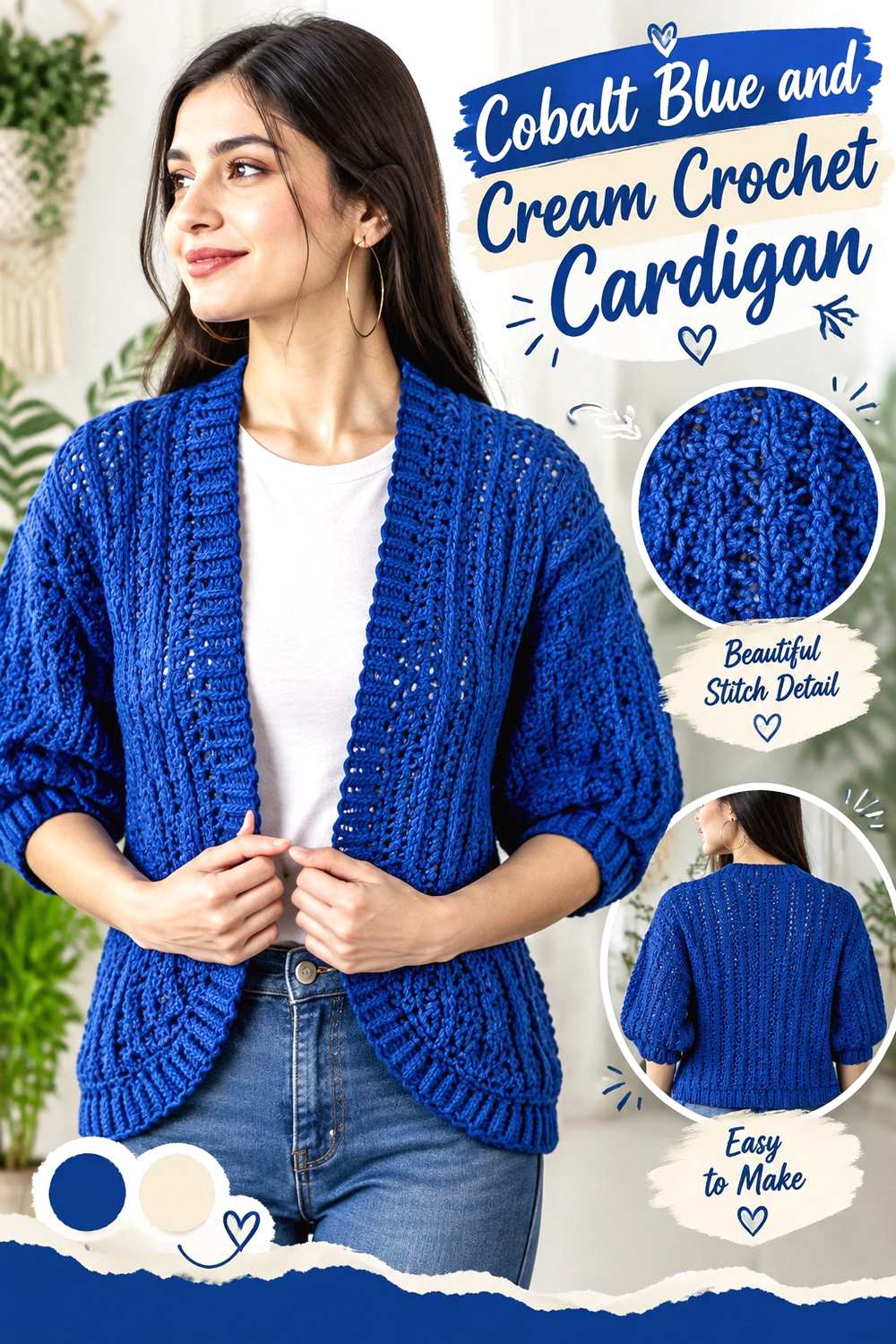
For a cardigan, cobalt blue can lead across the main body panels while cream is reserved for cuffs, edging, and the front opening. This keeps the wearable visually cohesive instead of dividing every panel into competing blocks of color.
Cobalt Blue Keeps the Main Cardigan Panels Visually Connected
Using cobalt across the front, back, and most of the sleeves allows the garment to read as one continuous design. Cream can then act as a controlled finishing color rather than competing with the body construction.
If you want more cream without turning the cardigan into a heavily striped garment, repeat it at several finishing points such as the cuffs and lower edging.
Cream Can Frame the Cobalt Blue Cardigan at Cuffs and Front Edges
Cream around the cuffs or front band creates a lighter boundary against cobalt blue and can make those structural edges easier to distinguish. Repeating cream in more than one finishing area also prevents a single cream band from looking disconnected.
Keep the cream placement reasonably consistent from one side of the cardigan to the other so the contrast supports the garment shape instead of pulling attention toward one isolated area.
Creator Credit: TCDDIY
4. Cobalt Blue And Cream Crochet Storage Basket
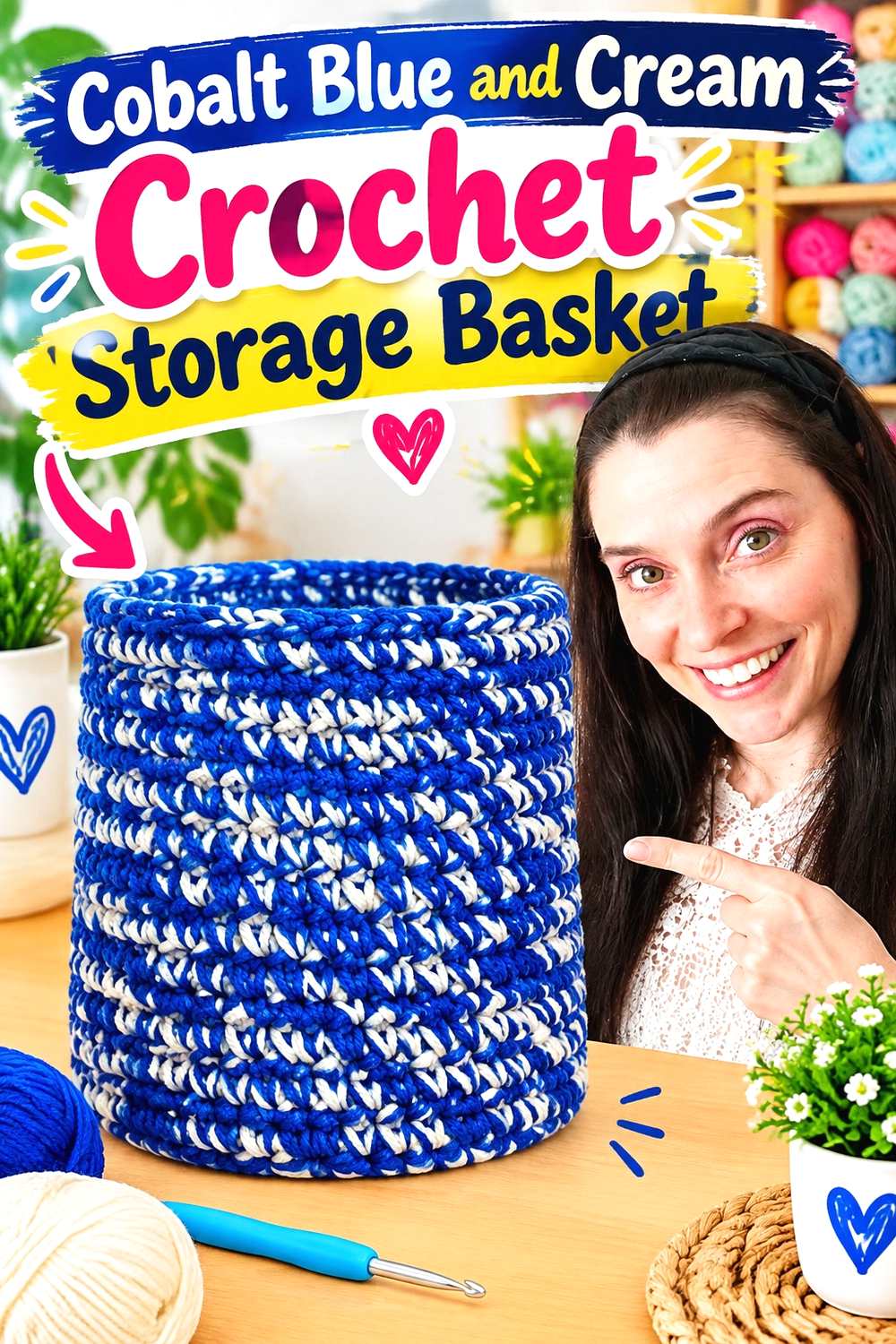
A crochet basket offers clear zones for color placement: body, base, rim, and handles. Cobalt blue can cover the main walls while cream defines the upper edge, creating a two-color design without breaking the basket into many small stripes.
Cobalt Blue Gives the Crochet Basket Body One Strong Color Field
Keeping cobalt blue across most of the basket body emphasizes the overall shape and gives textured stitches room to repeat without frequent color interruptions. It also leaves the rim available for a noticeable cream finish.
If you prefer a striped basket, consider using wider cobalt areas rather than alternating every available row so the strong blue still has a dominant role.
Cream Can Define the Cobalt Blue Basket Rim and Handles
A cream rim provides a clear finishing line around the top opening, while repeating cream on the handles can connect functional details to the color scheme. Because both areas sit near the top of the basket, the accent remains concentrated instead of scattered.
If cream appears only on one small handle detail, it may look accidental. Repeating it around the rim gives the lighter shade a visible purpose.
Creator Credit: Jayda InStitches
5. Cobalt Blue And Cream Crochet Beanie
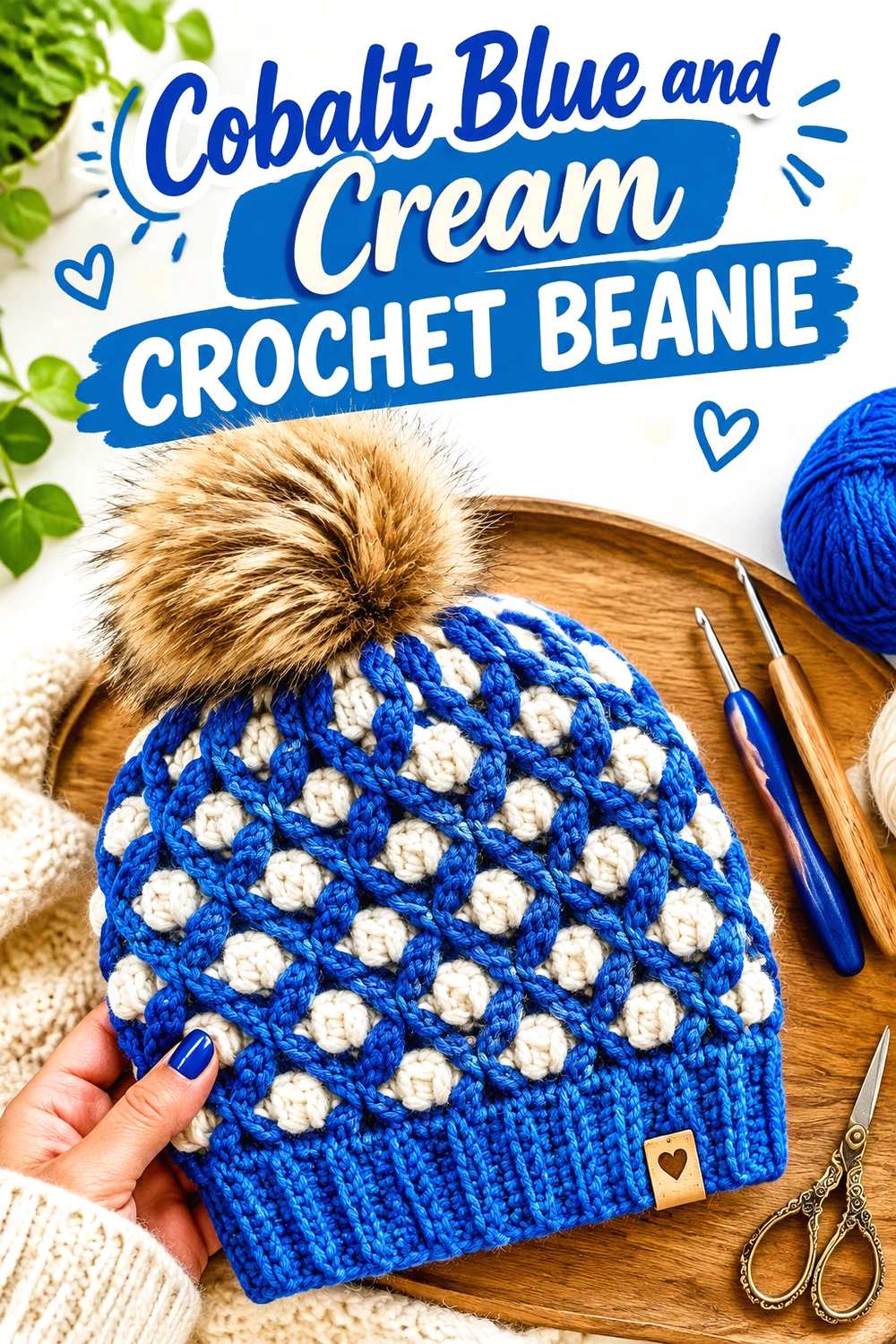
A cobalt-dominant beanie can use cream to emphasize the brim or another finishing detail without fragmenting the crown. Because a hat has a relatively small surface, controlling the amount of cream matters more than adding many separate color changes.
Cream Gives the Cobalt Blue Beanie Brim a Defined Edge
A cream brim creates a distinct lower boundary beneath a cobalt blue crown. This is especially useful when the brim has ribbing or another texture that you want to separate visually from the main hat fabric.
If the cream section feels too wide, reduce its visual area rather than adding more cobalt stripes throughout the brim.
Cobalt Blue Repetition Can Keep Cream Beanie Details Connected
If cream appears at the brim and another feature such as a pom or narrow accent, repeat cobalt between those areas so the blue remains the dominant color. The goal is to make cream look intentionally placed rather than evenly distributed everywhere.
For a quieter result, keep the crown entirely cobalt and use cream only once at the brim.
Creator Credit: TL Yarn Crafts
6. Cobalt Blue And Cream Crochet Textured Scarf
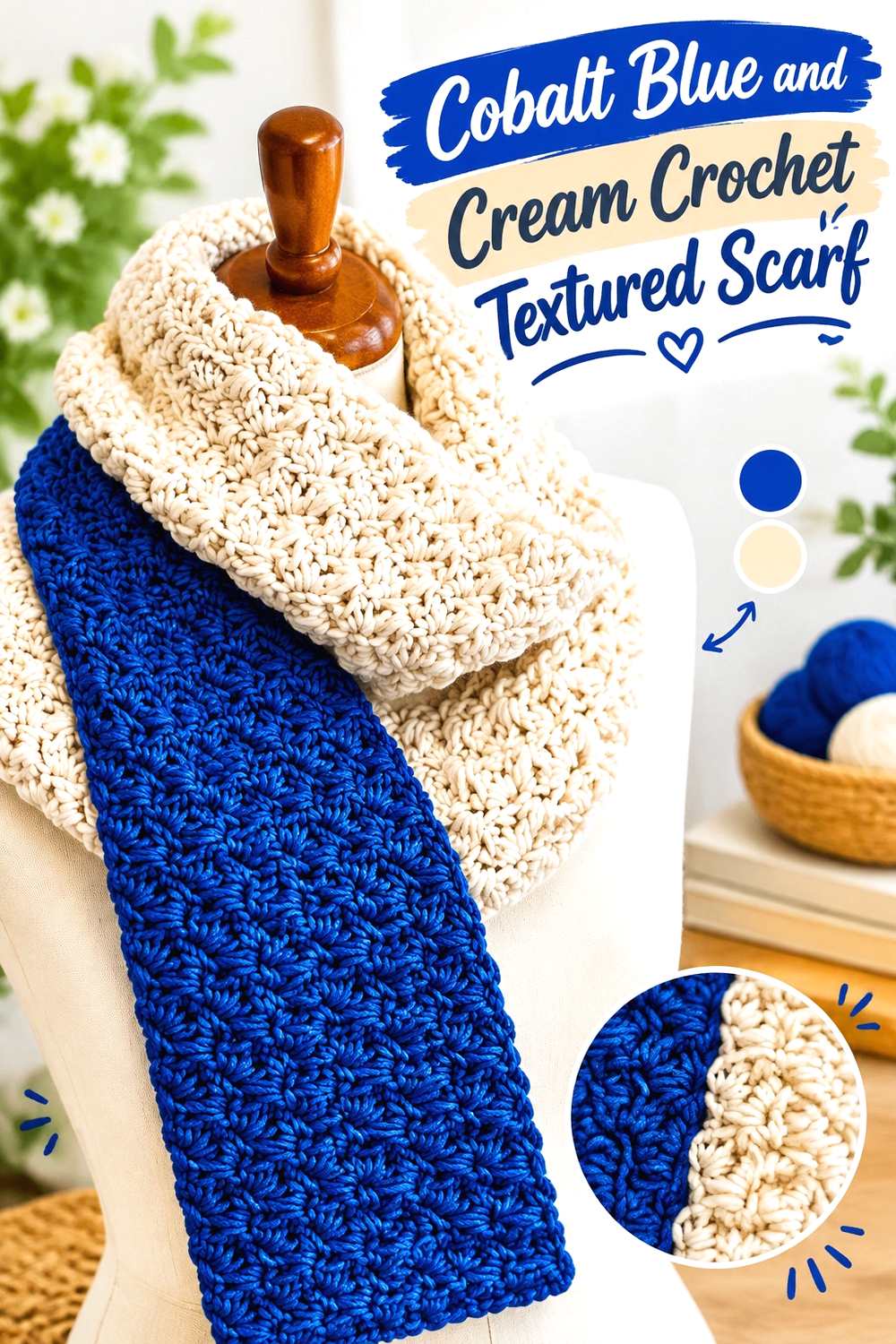
A scarf allows cobalt blue and cream to run in long sections, which can look more settled than many short alternating stripes. This approach is particularly useful when the crochet stitch already creates a strong surface pattern.
Cobalt Blue Long Sections Keep the Crochet Scarf From Looking Chopped Up
Give cobalt blue enough length to establish a recognizable section before switching to cream. Longer blocks let the scarf texture continue without making every small stitch repeat compete with a color change.
You can also place cobalt at both ends with cream through the middle if you want the darker shade to visually frame the scarf.
Cream Can Make Dense Cobalt Blue Scarf Texture Easier to Compare
Placing a cream block next to cobalt blue provides a useful comparison between the same stitch texture in a light and saturated shade. The difference can be particularly noticeable on raised or shadow-producing surfaces.
If the scarf begins to feel too segmented, reduce the number of color transitions rather than reducing the contrast between the yarns.
Creator Credit: Hooked by Robin
7. Cobalt Blue And Cream Crochet Mug Cozy
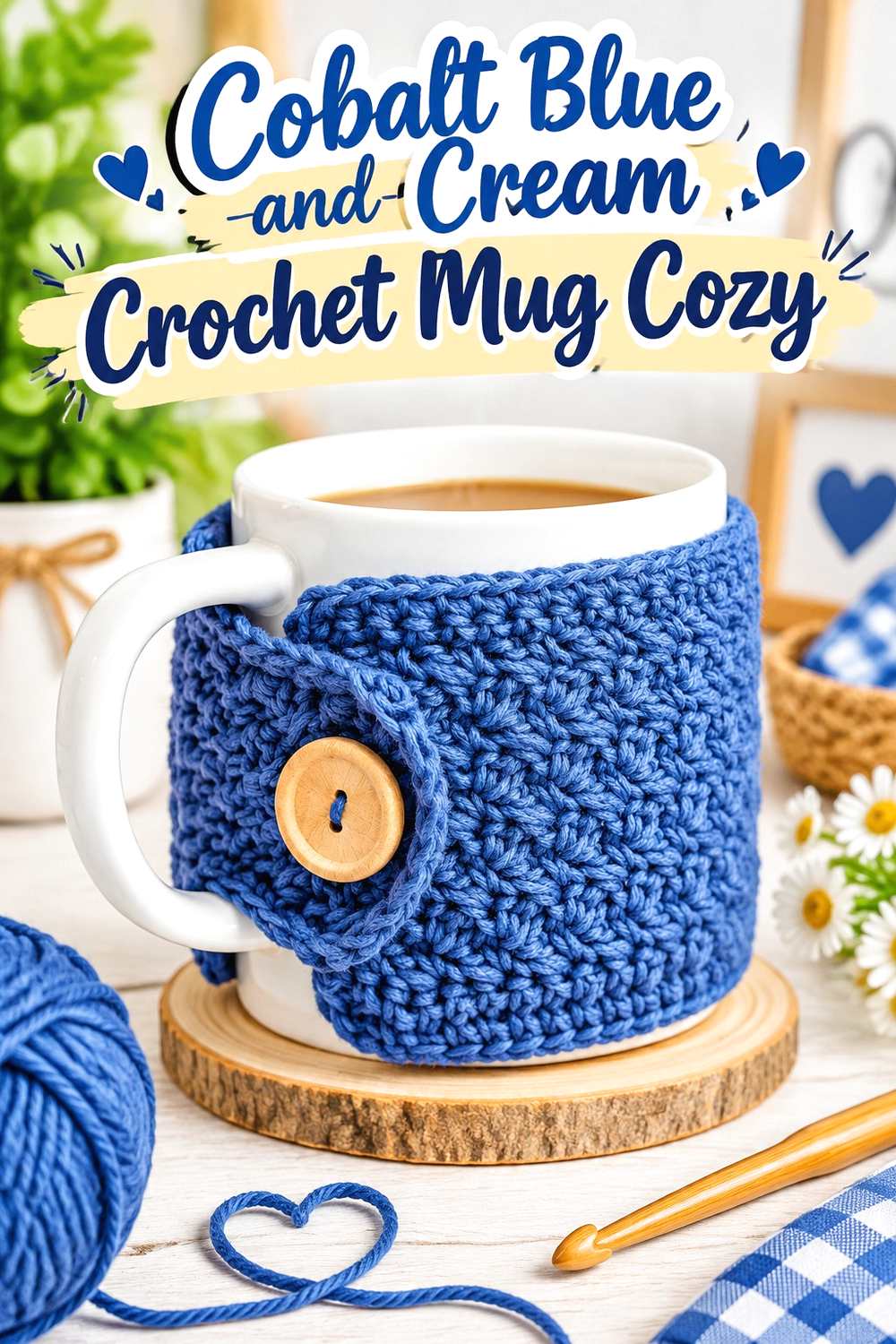
A mug cozy has limited space, so a simple hierarchy usually works better than several narrow stripes. Cobalt blue can form the main body, while cream outlines the edge, closure flap, or another small finishing area.
Cobalt Blue Gives the Mug Cozy Body One Clear Base Color
Using cobalt blue across most of the cozy keeps the small rectangular or wrapped surface visually unified. This leaves enough room for cream to identify the edge without dividing the main fabric repeatedly.
If the cozy includes prominent texture, compare how visible that texture remains in your actual cobalt yarn before deciding whether the entire center should stay blue.
Cream Can Separate the Cobalt Blue Mug Cozy Edge and Closure Area
Cream edging can help the perimeter read clearly against the cobalt body. Carrying the same cream toward a flap or closure area creates repetition within the small project instead of introducing an isolated light detail.
Keep the contrast placement away from random interior spots unless the design specifically benefits from a color-blocked surface.
Creator Credit: Rich Textures Crochet
8. Cobalt Blue And Cream Crochet Shawl
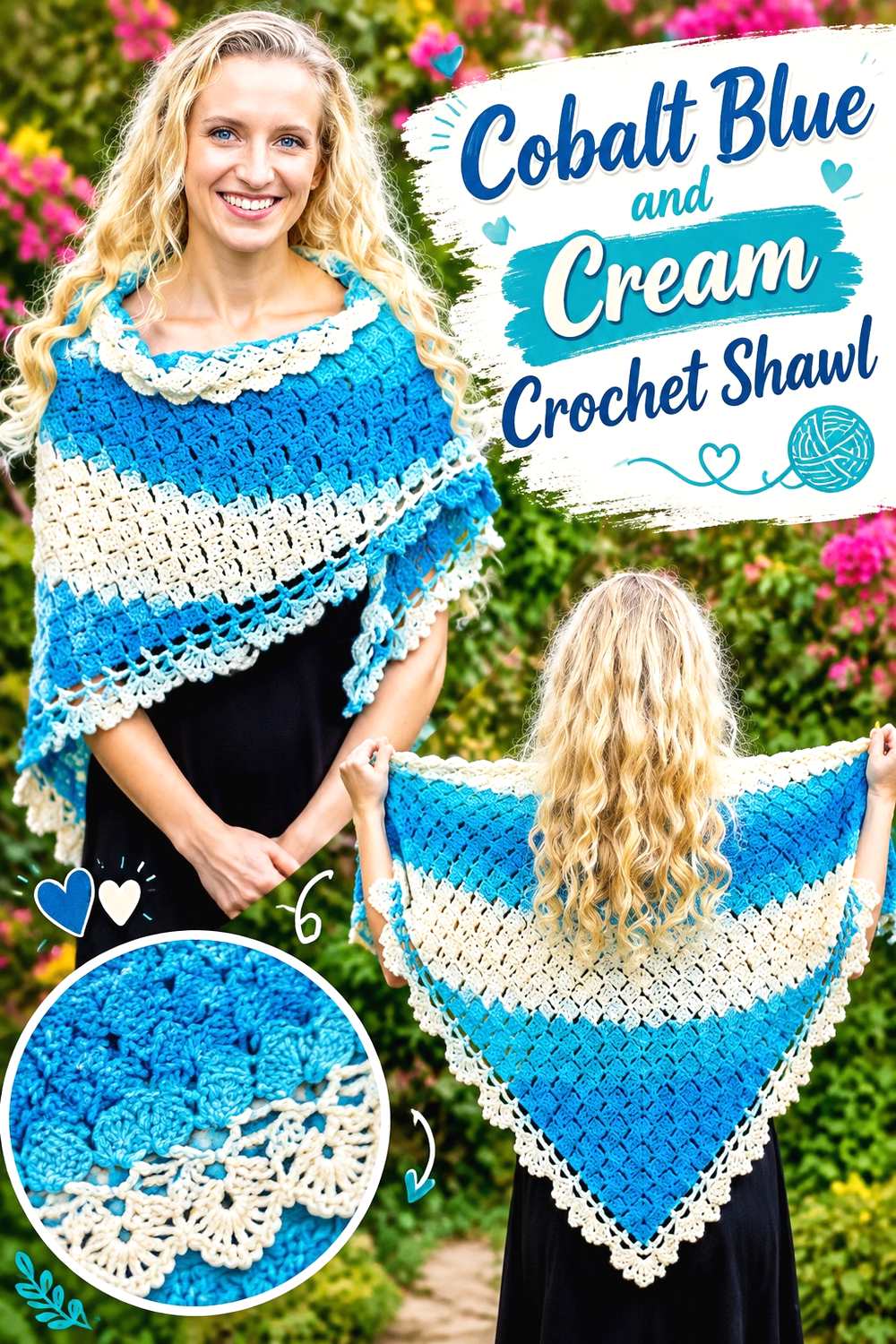
A shawl gives you the option to shift the color balance gradually across a large triangular or curved shape. Cream can occupy the upper or central portion while cobalt blue becomes stronger toward the outer edge, making the shape more defined as it expands.
Cream Can Open the Upper Shawl Before Cobalt Blue Takes Over
Starting the visible color distribution with more cream keeps the narrow upper area from becoming overly concentrated with cobalt. As the shawl widens, cobalt can occupy progressively larger visual sections without overwhelming the smaller starting area.
This direction works particularly well when you want the finished shawl to look cream-led near the neckline and blue-led near the perimeter.
Cobalt Blue Can Give the Crochet Shawl Edge a Strong Finish
Placing cobalt blue along the outer shawl edge creates a defined boundary around lighter cream sections. If the shawl includes openwork near the border, the darker color can also make the overall outline easier to see.
If the cobalt border appears visually too heavy, repeat a small amount of cobalt earlier in the shawl so the final edge does not arrive as an unrelated block.
Creator Credit: naztazia
9. Cobalt Blue And Cream Crochet Headband
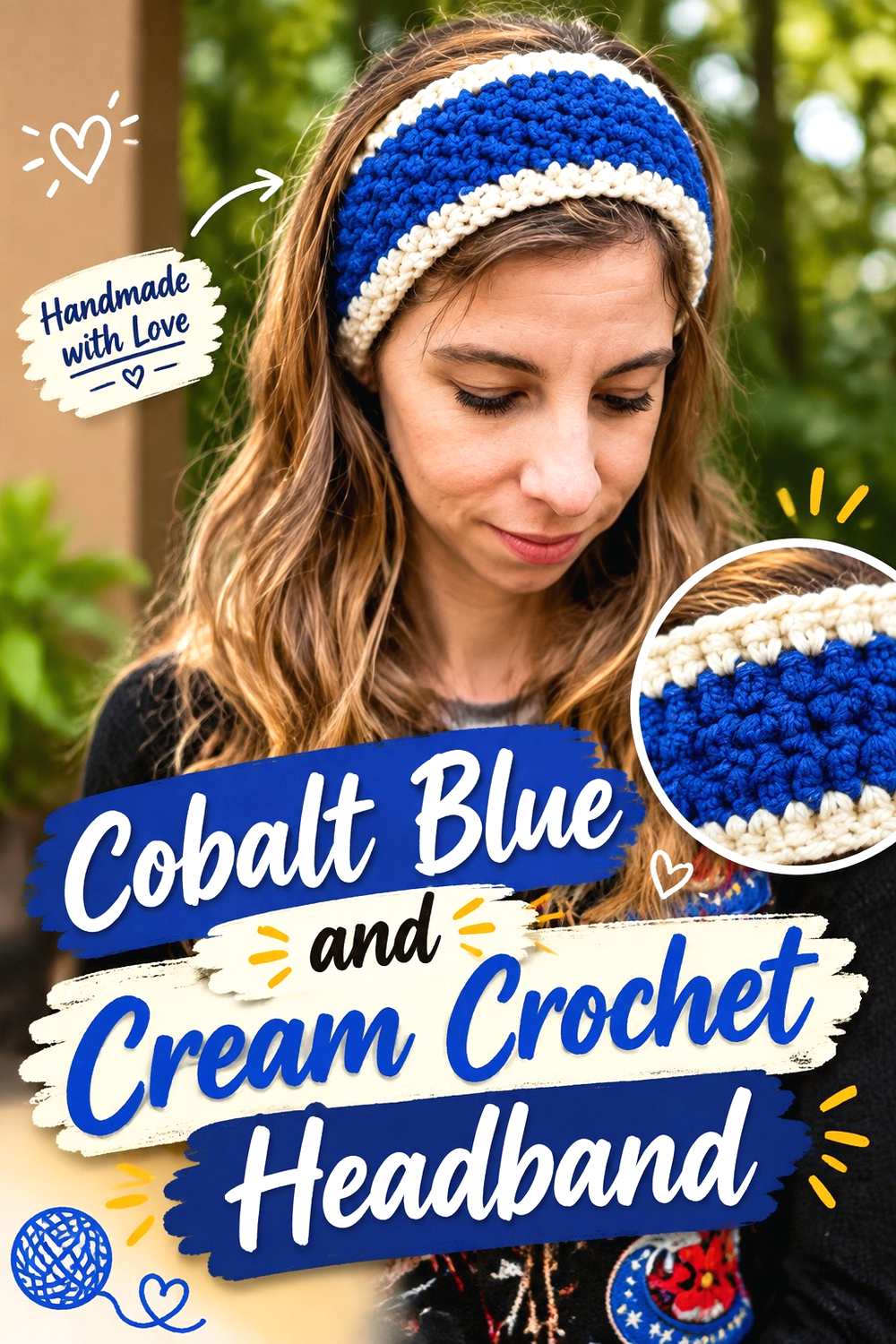
A crochet headband benefits from a restrained palette because the surface is narrow. Cobalt blue can cover most of the band, while cream is used near the edges or around a front feature to clarify the shape without creating numerous tiny stripes.
Cobalt Blue Should Lead the Headband if the Front Detail Is the Main Feature
Keeping the band primarily cobalt allows a twist, overlap, or textured front section to read as one continuous construction. Too many color switches through that area can make the shape harder to follow.
If you want stronger two-color contrast, place the cream beside the feature rather than changing color repeatedly inside it.
Cream Can Define the Cobalt Blue Headband Edges
A narrow cream edge can separate the cobalt blue center from the outer silhouette of the headband. Because the project is small, even a limited amount of cream can have a noticeable visual effect.
Repeat cream consistently along matching edges if you want a balanced finish instead of using it on only one side.
Creator Credit: Sigoni Macaroni
10. Cobalt Blue And Cream Crochet Market Bag
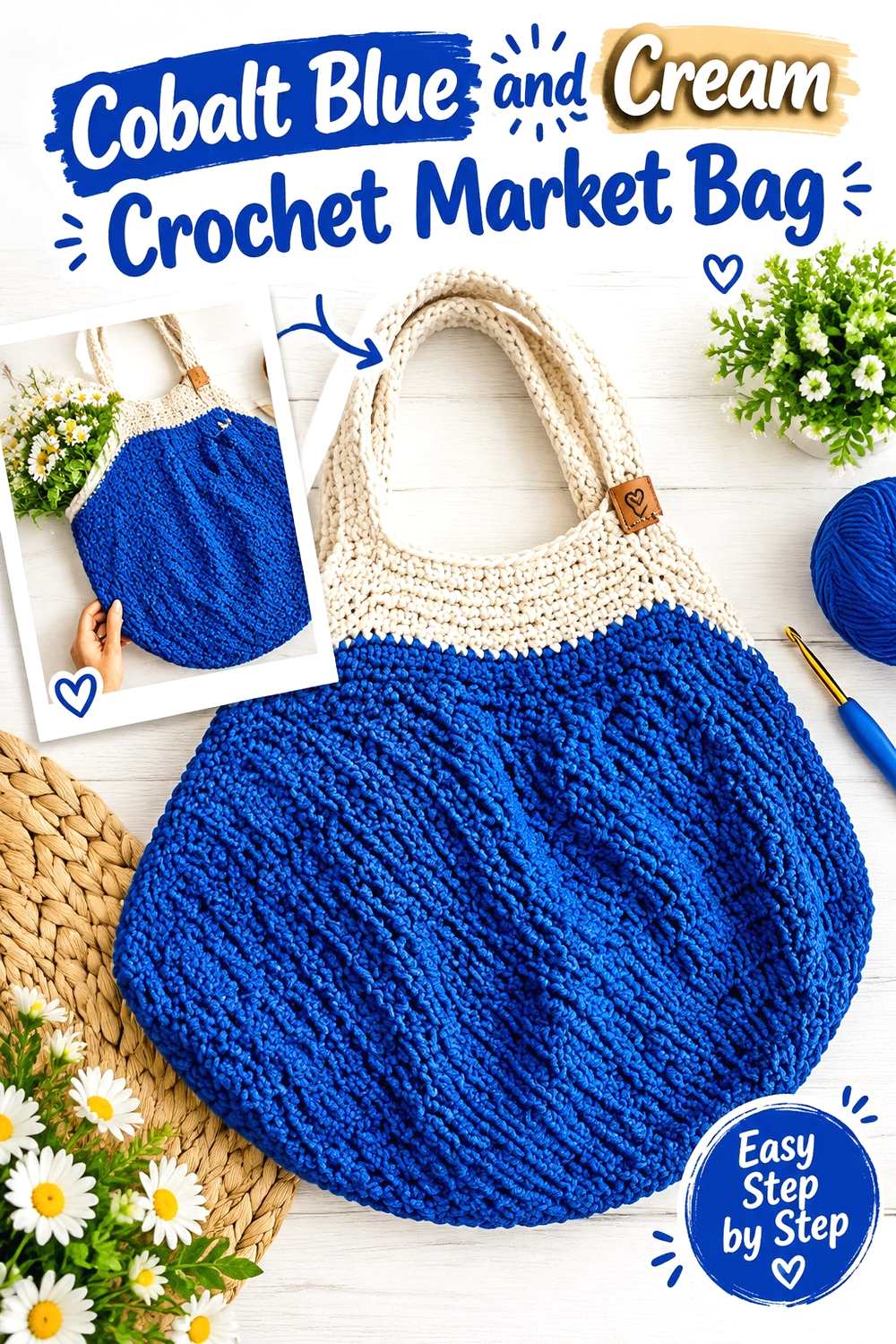
Open crochet fabric changes how color is perceived because the background can show through the stitches. Using cobalt blue for most of a market bag gives the mesh or open sections a stronger continuous identity, while cream can define the top and straps.
Cobalt Blue Gives an Open Crochet Market Bag a Stronger Main Field
Cobalt blue can carry the larger body section even when the crochet fabric contains substantial open space. Keeping one dominant shade through that area prevents the openings and frequent color changes from competing with each other.
If you introduce cream into the body, repeat it in substantial sections rather than as isolated stitches that may disappear within the mesh.
Cream Can Highlight the Cobalt Blue Market Bag Straps and Top Edge
Using cream at the upper band and strap creates a clear visual transition from the cobalt bag body to the carrying area. Repeating the lighter color across both details makes the contrast look planned.
Alternatively, use cobalt straps with a cream upper edge if you want the handles to visually continue the body color.
Creator Credit: MJ’s Off The Hook Designs
11. Cobalt Blue And Cream Crochet Dishcloth
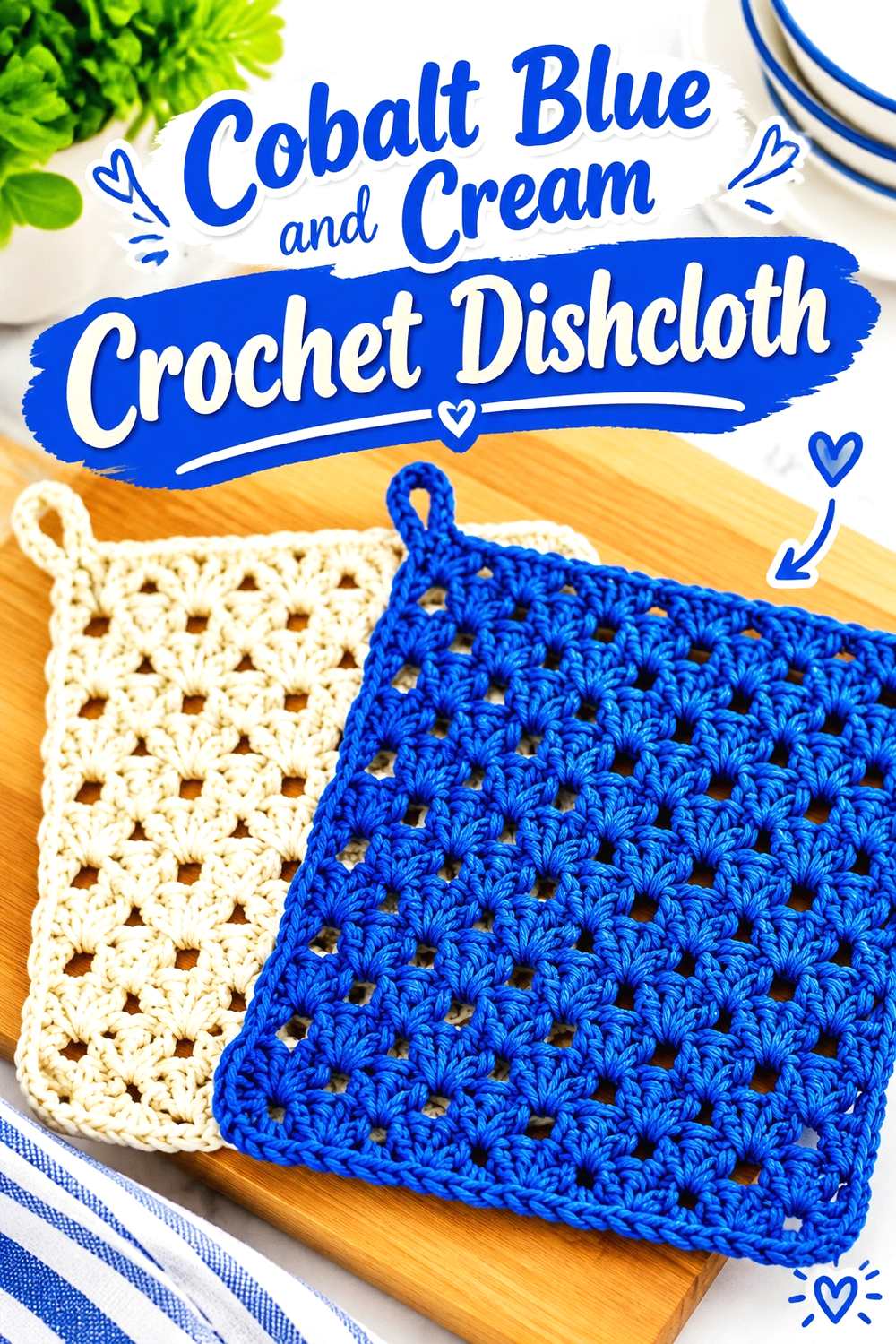
A dishcloth is small enough that cobalt blue and cream can be compared within a compact textured surface. Cream can form the central field while cobalt appears in a border or repeating section, making individual stitch areas easier to distinguish.
Cream Can Keep Small Cobalt Blue Dishcloth Texture From Merging Together
When the stitch pattern includes small openings or closely repeated texture, cream can provide a lighter neighboring area that prevents the entire surface from reading as a single dark block.
Work a small sample before deciding on the final distribution, since the way the two yarns interact will depend on the actual stitch texture.
Cobalt Blue Gives a Cream Crochet Dishcloth a Clear Perimeter
A cobalt blue border can frame a cream center and keep the lighter field from visually fading into its surroundings. It also provides a natural location for the stronger shade without requiring frequent color changes through the main fabric.
If cobalt already occupies several interior sections, a cream border may produce a more balanced reversal.
Creator Credit: Fiber Flux
12. Cobalt Blue And Cream Crochet Cowl
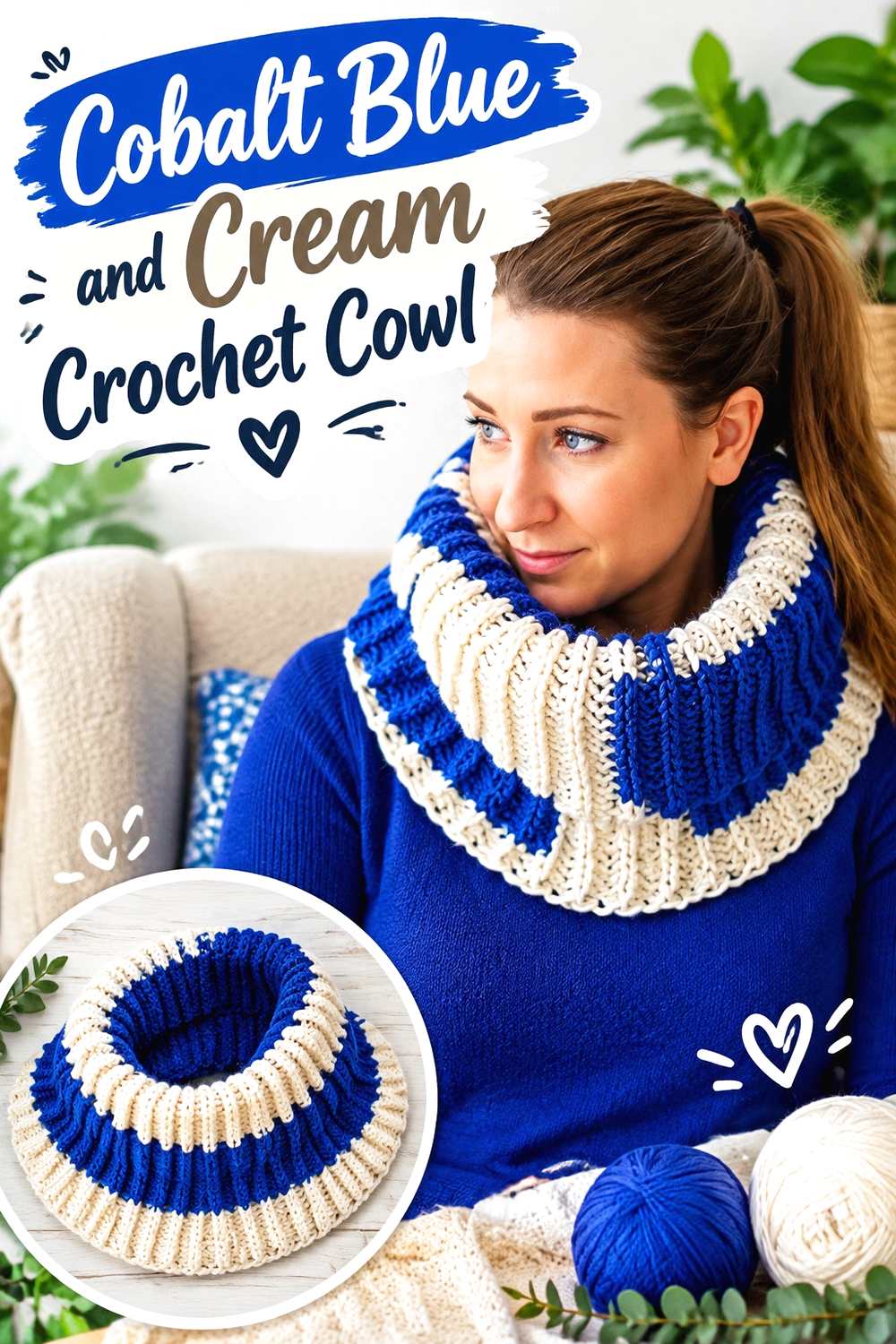
Because a cowl folds and overlaps when worn, narrow stripes can appear differently depending on how the fabric sits. Broad cobalt and cream sections create a more predictable color arrangement even when the cowl is folded.
Cobalt Blue Can Carry the Main Folded Area of the Crochet Cowl
Use cobalt blue across the largest central area if you want the deeper color to remain visible through most folds. Cream can then be concentrated nearer one or both edges.
This prevents the cowl from turning into a series of small alternating bands that become visually irregular once layered.
Cream Along the Cowl Edge Can Separate Cobalt Blue Layers
Cream at the outer edge creates a lighter line that remains visible when cobalt sections fold over one another. Repeating cream on both boundaries can make the finish feel more deliberate if the construction allows it.
If the cream edge becomes too prominent, return to cobalt for the final finishing detail.
Creator Credit: B.Hooked Crochet
13. Cobalt Blue And Cream Crochet Pinwheel Coaster
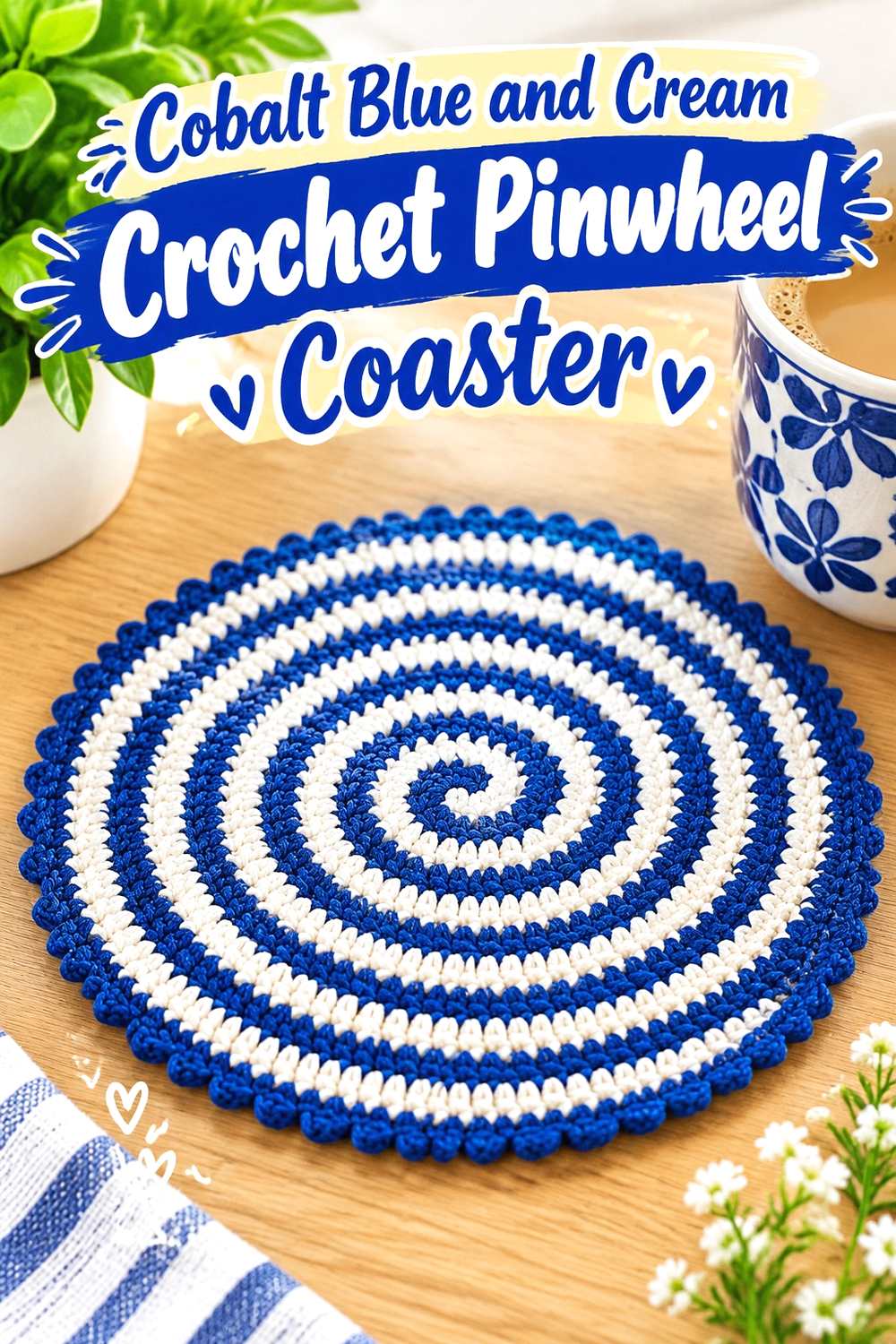
A pinwheel coaster is one of the strongest places to use cobalt blue and cream in relatively equal amounts because the project depends on repeating directional sections. Alternating the two shades can make the rotational shape easier to recognize.
Cobalt Blue and Cream Can Clarify the Crochet Coaster Pinwheel
Place cobalt and cream in repeating sections around the coaster so the eye can follow the change from one segment to the next. The light-dark difference is more useful here than a subtle tonal pairing because the shape itself depends on visible separation.
Check the layout before finishing the outer edge to make sure neither shade unexpectedly dominates one side.
Cream Repetition Keeps Cobalt Blue Balanced Around the Coaster Edge
If cobalt occupies the strongest pinwheel segments, repeat cream at regular points rather than restricting it to one isolated wedge. That maintains the visual rhythm around a circular design.
For a more cobalt-heavy version, finish the perimeter in blue while leaving cream inside the rotating sections.
Creator Credit: The Crochet Crowd
14. Cobalt Blue And Cream Crochet Whale Amigurumi

A two-tone whale is a natural place for this color pairing because the body already provides clear upper and lower areas. Cobalt blue can cover the main body while cream defines the underside and smaller contrasting sections.
Cobalt Blue Gives the Crochet Whale a Strong Main-Body Silhouette
Use cobalt blue across the largest body area so the whale reads as a blue figure first. Keeping the main surface consistent also prevents small shaping changes from becoming visually fragmented by unnecessary color switches.
Cream can then be introduced where the body naturally benefits from a distinct second zone.
Cream Can Separate the Cobalt Blue Whale Belly and Small Details
Cream on the underside creates a clear division from the cobalt upper body without requiring a third color. If additional details are needed, repeat cream selectively rather than introducing unrelated accents.
For projects intended for young children, separately consider whether any attached or small components are appropriate for the intended use.
Creator Credit: Club Crochet
15. Cream And Cobalt Blue Crochet Sweater
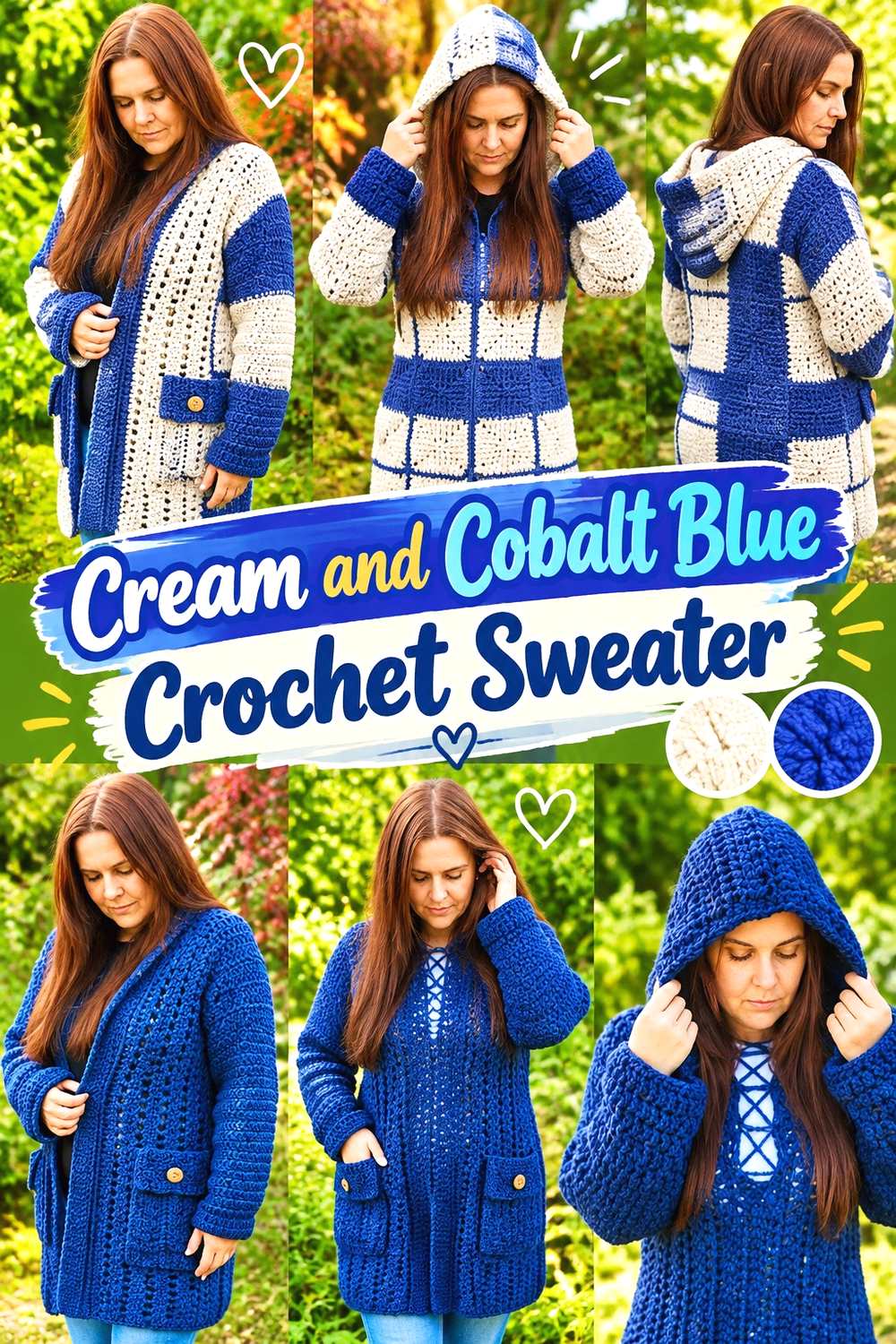
This version reverses the earlier cardigan balance by letting cream control the sweater body and moving cobalt blue toward the sleeves, cuffs, or another concentrated area. The same pairing therefore produces a substantially lighter overall wearable.
Cream Can Lead the Crochet Sweater Body for a Lighter Color Balance
Using cream across the main front and back gives the garment a large neutral field. Cobalt blue then becomes more noticeable even when it covers a smaller area.
This approach is useful when you want the strong blue to function as a deliberate feature rather than the default color of every panel.
Cobalt Blue on Sleeves or Cuffs Can Anchor the Cream Sweater
Cobalt sleeves create larger side areas of contrast, while cobalt cuffs offer a more restrained option. Either placement keeps the stronger color connected to the garment structure rather than appearing as a small unrelated stripe.
If the cobalt sleeves feel too visually separate, repeat a narrow cobalt detail at the neckline or lower edge.
Creator Credit: Bag-O-Day Crochet
16. Cream And Cobalt Blue Crochet Bucket Hat
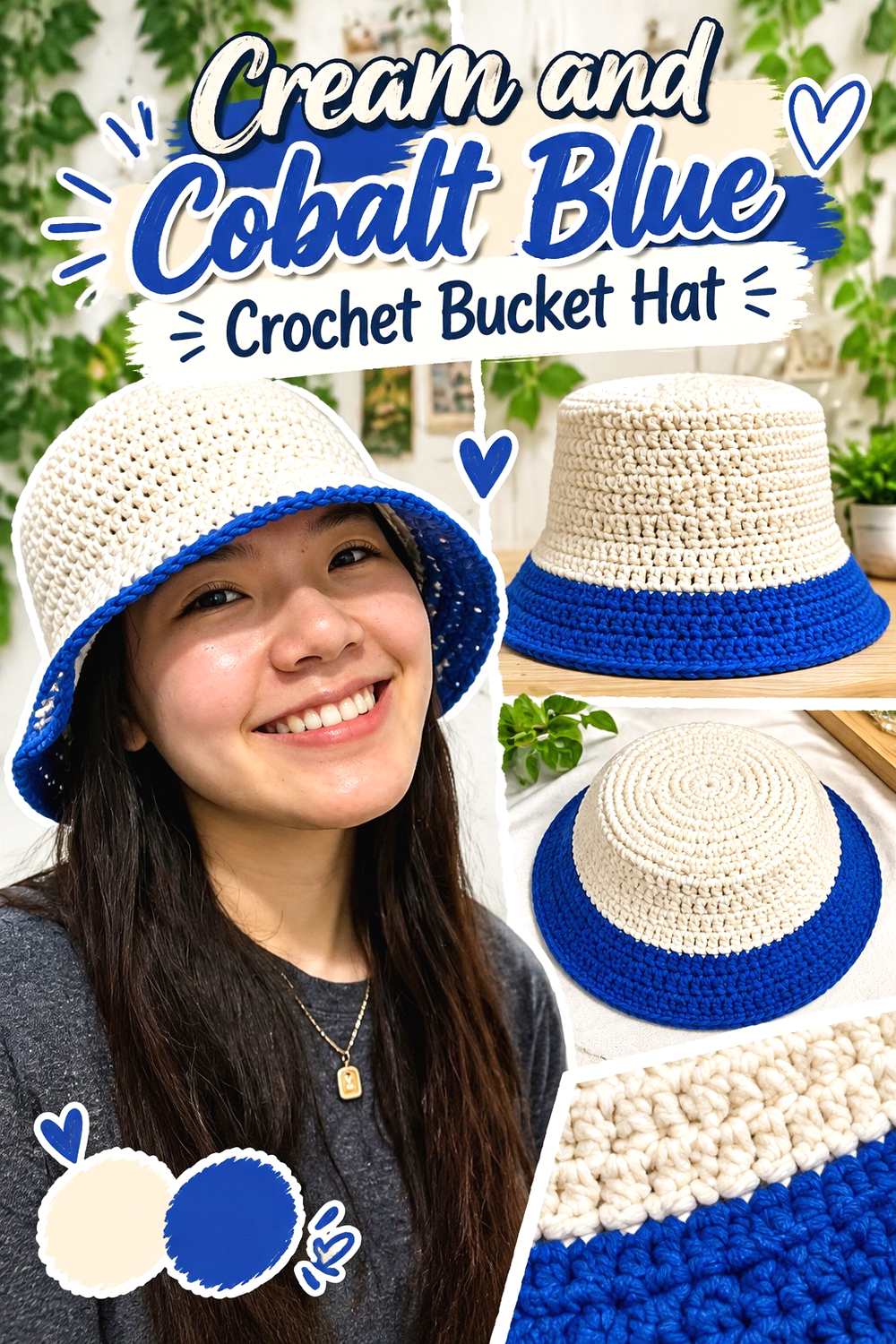
A bucket hat offers three obvious color zones: crown, sides, and brim. Making the crown and sides cream while reserving cobalt blue for the brim creates a strong outer ring without covering the entire hat in the more saturated shade.
Cream Keeps the Crochet Bucket Hat Crown Visually Light
A cream crown gives the upper portion of the hat an uninterrupted neutral field. Continue cream through the sides if you want the cobalt blue brim to remain the only strong color break.
If you want slightly more blue, add a restrained cobalt detail where the side section meets the brim rather than scattering small stripes around the crown.
Cobalt Blue Gives the Cream Bucket Hat Brim a Defined Outer Ring
A cobalt blue brim clearly separates the lower edge from the cream crown and side walls. Because the brim extends outward, it already carries strong visual weight, so it may not need additional cobalt sections elsewhere.
For a blue-dominant alternative, reverse the arrangement and use cream only on the brim.
Creator Credit: VivCrochets
17. Cobalt Blue And Cream Crochet Pencil Pouch
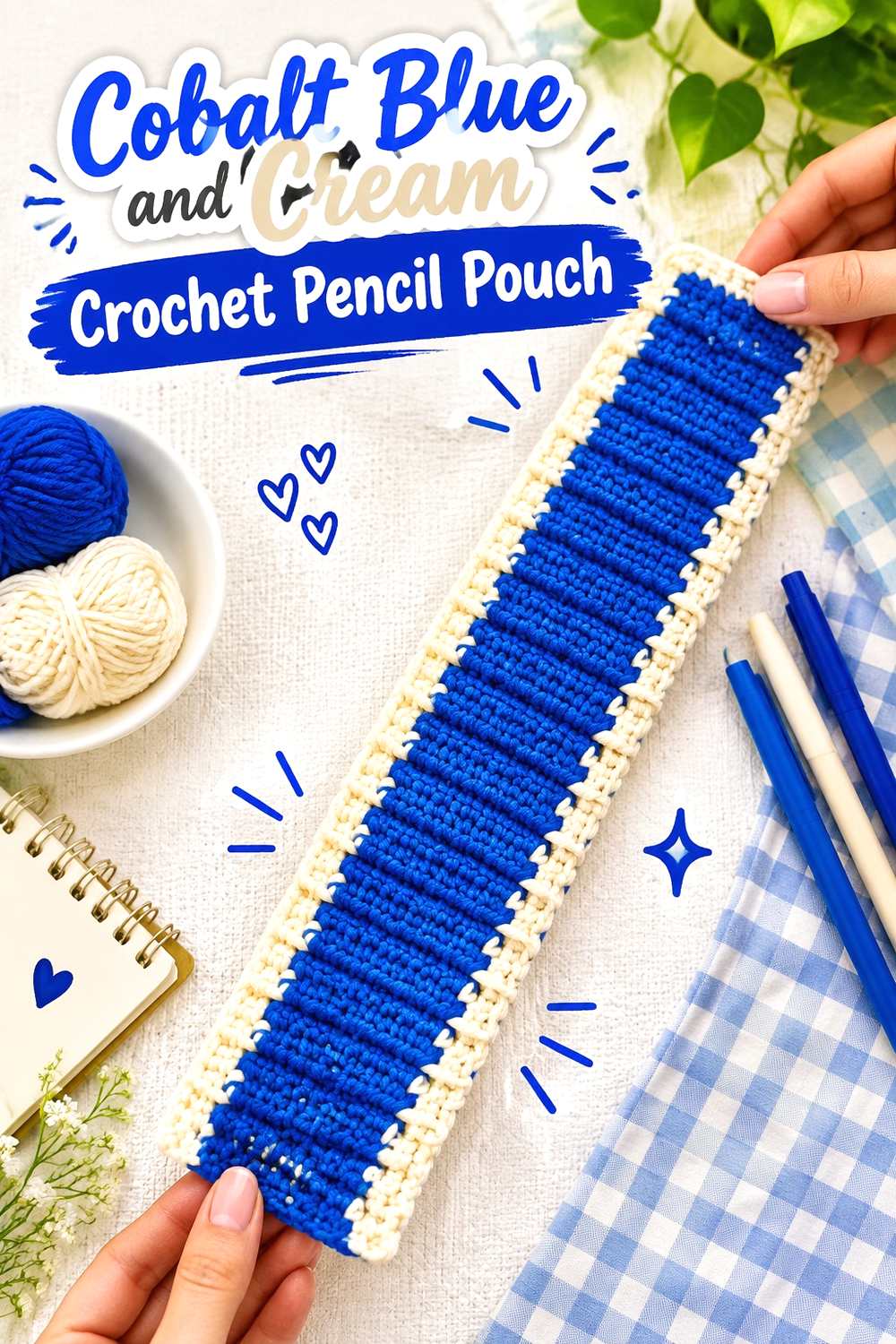
A rectangular pouch can use cobalt blue as one large body block and cream around the flap, closure, or decorative edge. Keeping the contrast concentrated near the opening helps visually identify where the pouch transitions from body to closure.
Cobalt Blue Makes the Crochet Pencil Pouch Body Read as One Block
Use cobalt throughout most of the pouch panels when you want the rectangular shape to stay visually uninterrupted. This works particularly well when the pouch already has texture or a decorative border competing for attention.
A cream flap can then create a clear change at the top without dividing the storage area itself.
Cream Can Separate the Cobalt Blue Pouch Flap or Scalloped Edge
Cream around a flap or decorative outer edge makes that finishing detail easier to see against a cobalt body. Repeat the cream consistently across the closure area rather than using several unrelated light accents.
If the flap is also cobalt, a cream edge alone may provide enough separation.
Creator Credit: Crochet Chronicles
18. Cobalt Blue And Cream Crochet Hooded Vest
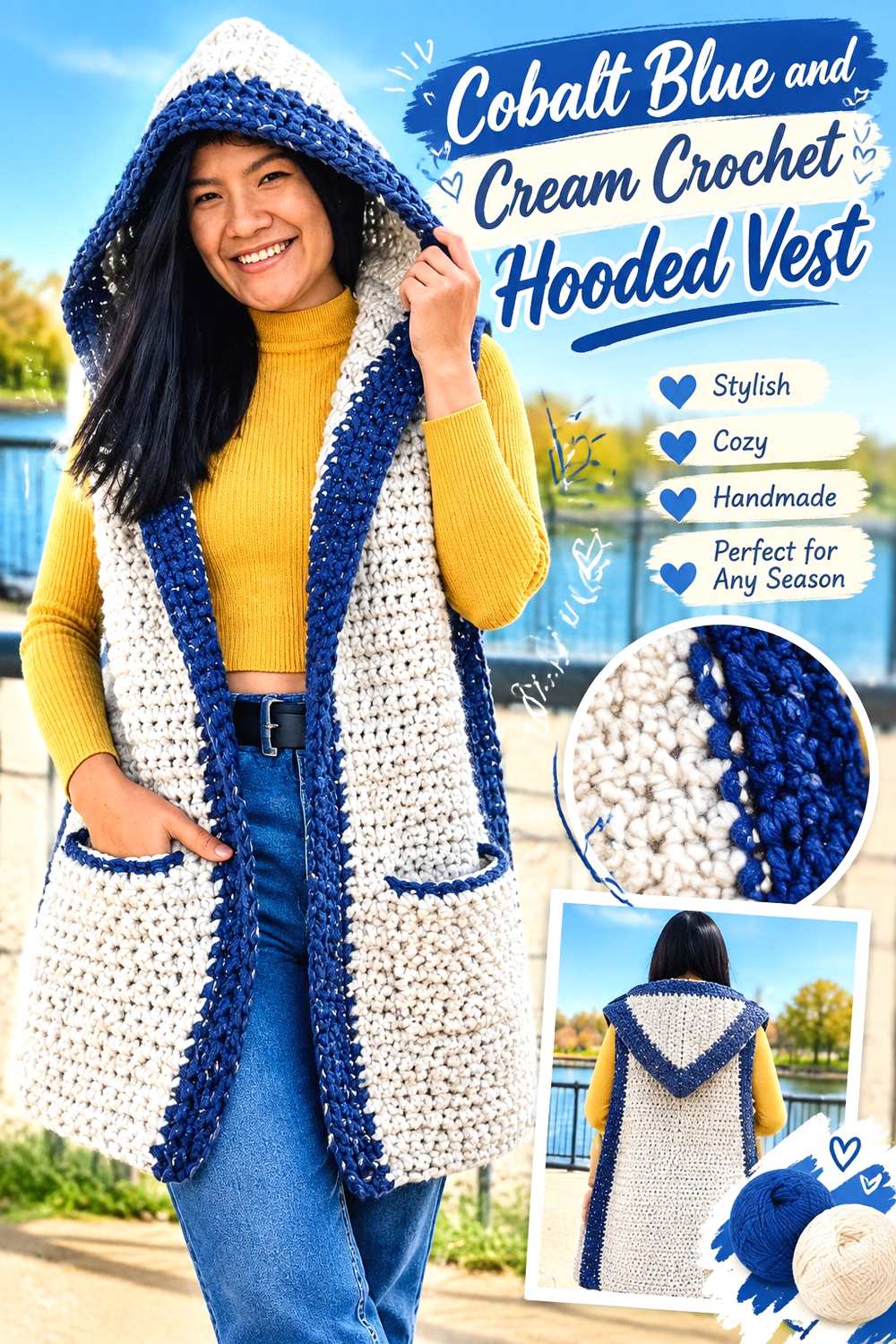
A hooded vest gives cobalt blue and cream more structural locations than a simple sleeveless panel. Cobalt can lead down the main body and front panels, while cream appears around the hood, pockets, edging, or other finishing areas.
Cobalt Blue Down the Crochet Vest Panels Creates a Strong Vertical Anchor
Keeping the main front and back areas cobalt makes the body construction feel connected from shoulder to hem. This also prevents the garment from becoming overly segmented when pockets, a hood, and edging are already adding separate visual features.
Use cream selectively around those features instead of interrupting the main panels with numerous narrow stripes.
Cream Can Break Up Cobalt Blue Around the Hood and Pocket Edges
Cream around the hood opening creates a lighter outline near the top of the garment, while a small repeat around pocket edges can connect that accent farther down the vest.
If both hood and pockets use cream, leave enough cobalt between them to preserve the strong blue panel structure rather than turning the whole front into an even checkerboard of the two colors.
Creator Credit: KnitcroAddict
Conclusion
Cobalt blue and cream can move in several directions without adding a third shade. For the strongest cobalt look, let blue dominate blankets, cardigan panels, baskets, scarves, bags, and amigurumi bodies while cream handles borders and finishing details.
For a lighter result, reverse that balance on projects such as sweaters and bucket hats, allowing cream to cover most of the surface while cobalt defines sleeves, brims, or other larger accents. Motifs and pinwheel designs can handle a more even split because their structure benefits from obvious repeated contrast.
Before committing to a large project, compare the actual yarns in the stitch texture you plan to use. The most useful pairing is not simply cobalt beside cream—it is a deliberate decision about which shade leads, where the contrast appears, and which crochet details need the clearest separation.
Frequently Asked Questions
Do cobalt blue and cream have enough contrast for crochet?
They often provide noticeable light-and-dark separation because cream is typically much lighter than cobalt blue, but the exact result depends on the yarns you choose. Compare the skeins side by side and, for motifs or detailed colorwork, consider checking a photo in grayscale before starting the full project.
Should cobalt blue or cream be the dominant crochet color?
Use cobalt blue as the dominant shade when you want a stronger, more saturated finished item with light borders or trim. Let cream dominate when you want the blue concentrated into brims, cuffs, sleeves, borders, or other defined features. The right choice depends on which part of the crochet item you want to emphasize.
Can I replace cream with ivory or oatmeal next to cobalt blue?
Yes, provided the substitute still serves the same visual role. Choose a light neutral that remains clearly separated from the cobalt blue. A warmer oatmeal will change the pairing more noticeably than a pale ivory, so compare the yarns together before replacing the original cream.
Does cream look different from bright white beside cobalt blue?
Cream generally produces a warmer, softer transition, while a bright white can create a sharper light-dark contrast. The effect also depends on the specific cobalt and neutral yarn, so compare actual skeins rather than assuming every cream or white will behave the same way.
How can I keep cobalt blue and cream stripes from looking too busy?
Give one color more visual space or use broader sections instead of switching shades frequently. This is particularly useful on textured scarves, cowls, blankets, and wearables where the stitch pattern already adds visual activity.
Should cobalt blue or cream be used for a crochet border?
A cobalt border can give a cream-centered project a stronger frame, while cream can lighten the edge of a cobalt-heavy project. Look at the color already occupying the outer part of the item and choose the border based on whether you want continuity or a noticeable final contrast.