11 Oxblood and Cool Blue Crochet Lace-Up Leg Cuff Ideas
Oxblood and Cool Blue create a strong warm-dark versus cool-light relationship that works especially well on crochet lace-up leg cuffs. The lacing already creates a vertical focal point, so the two colors can be assigned clear jobs: one can cover the main cuff while the other traces the opening, fills the lacing, frames the edges, or defines a flare.
An Oxblood body with Cool Blue laces gives the cuff a deep base and makes the crisscross detail easy to notice. Reversing the colors creates a lighter leg cuff with darker Oxblood definition. You can also divide the colors between ribbing and body texture, upper and lower sections, side panels, scalloped edges, or flared hems.
The tutorials linked below include an exact lace-up leg-warmer construction plus ribbed, shell-textured, slouchy, flared, boot-cuff, and taller leg-warmer references. Where the tutorial does not itself include lacing, the lace-up treatment described here is an independent adaptation rather than a feature attributed to the creator.
Quick List
- Oxblood Crochet Leg Cuffs With Cool Blue Front Lacing
- Cool Blue Crochet Leg Cuffs With Oxblood Corset Lacing
- Oxblood And Cool Blue Crochet Split Panel Lace Up Leg Cuffs
- Oxblood Ribbed Crochet Leg Cuffs With Cool Blue Lacing
- Cool Blue Slouchy Crochet Leg Cuffs With Oxblood Lace Up Panels
- Oxblood Shell Texture Crochet Leg Cuffs With Cool Blue Laces
- Oxblood And Cool Blue Crochet Flared Lace Up Leg Cuffs
- Cool Blue Scalloped Crochet Leg Cuffs With Oxblood Lacing
- Oxblood Crochet Boot Length Cuffs With Cool Blue Side Lacing
- Cool Blue Tall Crochet Leg Cuffs With Oxblood Lace Up Accents
- Oxblood And Cool Blue Crochet Thigh High Lace Up Leg Cuffs
Decide Whether Oxblood or Cool Blue Should Carry the Crochet Cuff
Oxblood has greater visual weight, so it works naturally as the main surface when you want the lace-up detail to sit against a deep background. Cool Blue can then be reserved for the crisscross laces, eyelet edges, upper ribbing, or lower border. Even a relatively small amount of Cool Blue can be noticeable when surrounded by Oxblood.
A Cool Blue base changes the hierarchy. Oxblood lacing becomes a concentrated dark accent running vertically along the leg. Because that line attracts attention, you may need less Oxblood elsewhere. Repeating it only at the upper cuff or lower edge can be enough to connect the lacing to the whole piece.
Use Oxblood and Cool Blue to Make the Lace-Up Section Read Clearly
Lacing is easiest to see when it has both color contrast and enough open space around it. If Oxblood and Cool Blue differ strongly in hue but are similar in lightness, a thin lace may disappear more than expected.
Compare the actual yarns side by side and, when useful, view them in grayscale. If their values are close, use the secondary color on the entire lacing channel or bordering edge rather than relying only on a narrow strand crossing the main color.
The lacing also needs to remain visually orderly when the cuff is worn. Check the finished piece on the leg before deciding how strongly to tighten the crossings. The goal is a readable lace-up feature without making the fabric pucker unnecessarily.
Keep Oxblood and Cool Blue Balanced Around Boots and Shoes
The lower part of a leg cuff often sits directly above or over footwear, so its color carries more styling weight than a small border might on another crochet accessory. An Oxblood flare can create a dark finish over shoes, while a Cool Blue lower edge can lighten a predominantly Oxblood piece.
Consider which details will actually remain visible with your intended footwear. If boots cover the lower border, put the important contrast higher on the cuff. If the whole lower section stays exposed, the flare, scallop, or lace ending can carry more of the palette.
1. Oxblood Crochet Leg Cuffs With Cool Blue Front Lacing

This is the clearest version of the color scheme. Oxblood covers the main cuff from upper edge to ankle, while Cool Blue forms the visible crisscross line down the front. The deep body keeps the accessory visually grounded, and the cooler lace creates a narrow but continuous contrast feature.
Let Oxblood Dominate the Crochet Leg Cuff Body
Keep the broadest fabric areas Oxblood so the lace-up line has a consistent background. This is especially useful on flared cuffs because the widening lower section already adds visual movement without requiring another large color block.
If the Oxblood crochet texture is pronounced, check whether shadows make the fabric significantly darker before widening the Cool Blue accents.
Use Cool Blue to Keep the Oxblood Lace-Up Opening Visible
Cool Blue can be used for the actual lacing and, when needed, a narrow edge beside the opening. Giving the lighter color a small supporting border can make the crisscross structure easier to distinguish than using a thin Cool Blue strand alone.
Avoid spreading Cool Blue over several unrelated sections until you have judged the lacing first. It should remain the strongest cool-colored feature.
Creator Credit: by red bean
2. Cool Blue Crochet Leg Cuffs With Oxblood Corset Lacing
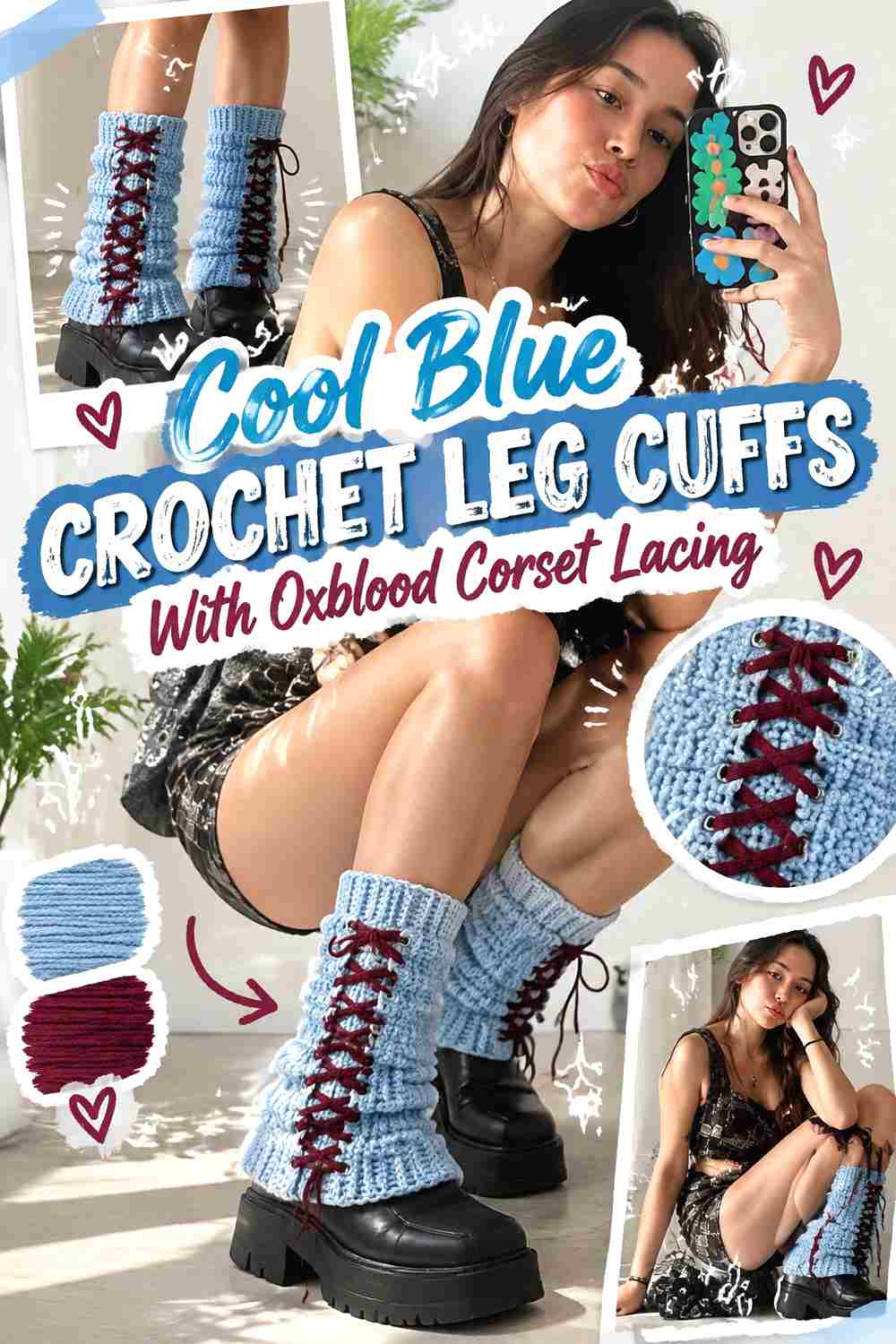
This reversal makes the cuff noticeably lighter while concentrating Oxblood in the most graphic part of the design. The dark crisscross line can become the focal point from knee to ankle without requiring broad Oxblood panels.
Keep Cool Blue Continuous Behind the Oxblood Lacing
A mostly uninterrupted Cool Blue cuff gives Oxblood a clean background. Avoid alternating colors directly behind every crossing because the lacing itself already creates repeated visual movement.
Cool Blue also gives textured stitches room to remain visible between the darker diagonal lines.
Repeat Oxblood Above the Cool Blue Crochet Cuff
A narrow Oxblood upper band can connect the lacing to the top of the leg cuff. Keep that repeat smaller than the Cool Blue body so the accessory does not become evenly divided between dark and light colors.
If the top band already looks strong, the lower edge can remain Cool Blue.
Creator Credit: Kae Neebs
3. Oxblood And Cool Blue Crochet Split Panel Lace Up Leg Cuffs

This idea gives both shades substantial fabric area. One side of the cuff can remain Oxblood while a Cool Blue panel runs beside the lace-up opening, allowing the lacing to sit between two visibly different color zones.
Keep the Oxblood Crochet Panel Wider Than Cool Blue
Giving Oxblood the larger section preserves a clear dominant color. If Oxblood and Cool Blue occupy identical halves and the lacing adds another strong line through the middle, the design can become more symmetrical and graphic than intended.
A narrower Cool Blue panel provides contrast while leaving Oxblood in control.
Position Cool Blue Beside the Oxblood Lace-Up Channel
Cool Blue can act as a visual separator between the Oxblood body and the lacing. This is useful if the actual lace is also Oxblood or another dark tone because the lighter panel prevents the closure from disappearing.
Check both cuffs side by side before finishing so the panel orientation remains consistent.
Creator Credit: Crochet MC
4. Oxblood Ribbed Crochet Leg Cuffs With Cool Blue Lacing
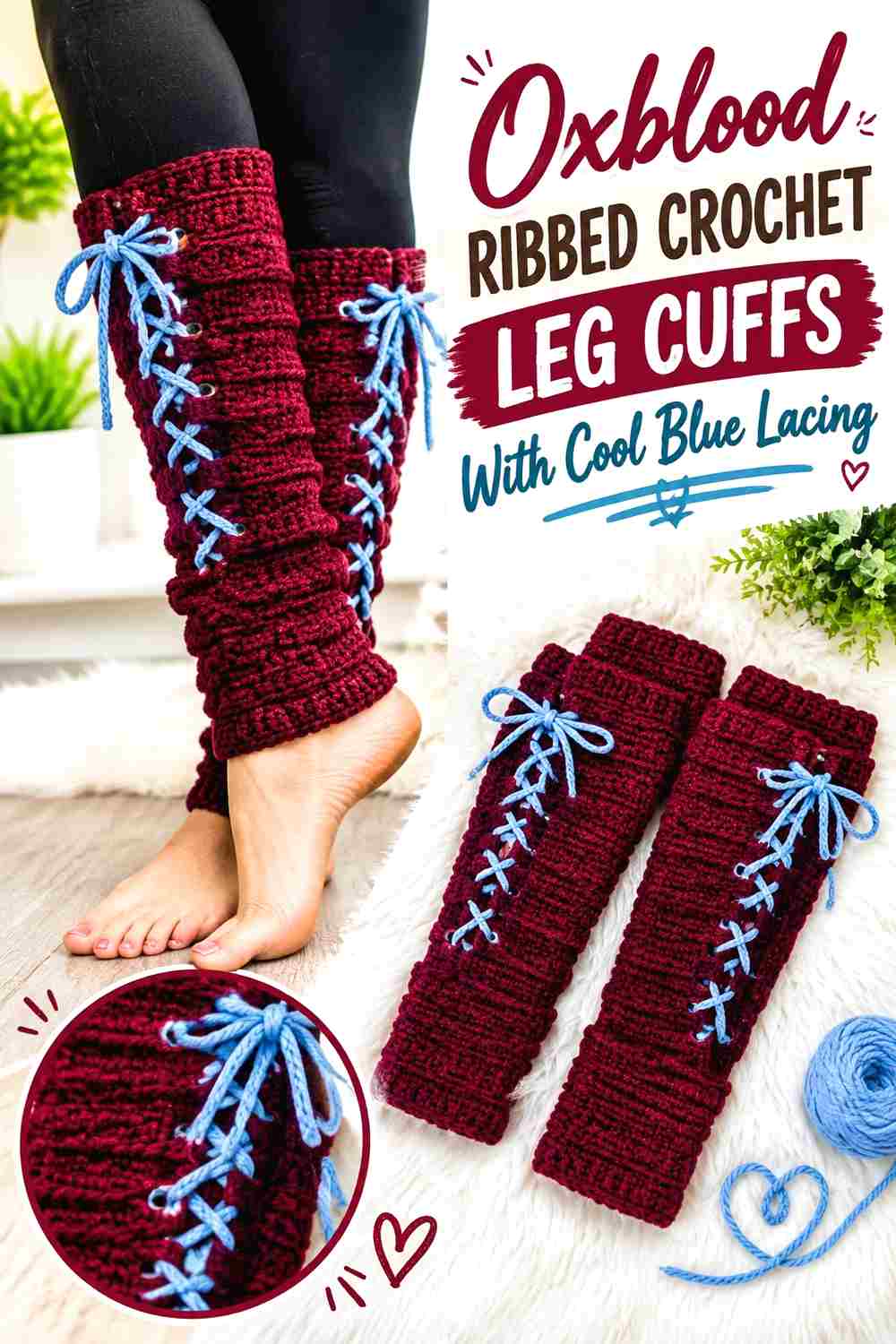
Vertical ribbing and vertical lacing can reinforce each other, so this design benefits from restrained color placement. Oxblood handles the ribbed structure while Cool Blue marks only the opening and selected finishing details.
Let Oxblood Ribbing Create the Main Crochet Texture
Keeping the ribbed body one color prevents the surface from becoming overly segmented. Oxblood shadows between ribs provide enough internal variation that the cuff does not need multiple alternating bands.
The straight rib lines can also provide a useful visual reference for keeping the lace-up opening aligned.
Keep Cool Blue Clear of Too Many Oxblood Rib Lines
Place Cool Blue at the actual lacing channel rather than changing every neighboring rib. The contrast should identify the opening instead of turning the entire cuff into alternating vertical stripes.
A narrow Cool Blue lower edge can repeat the color if the lacing alone feels isolated.
Creator Credit: Ned & Mimi
5. Cool Blue Slouchy Crochet Leg Cuffs With Oxblood Lace Up Panels
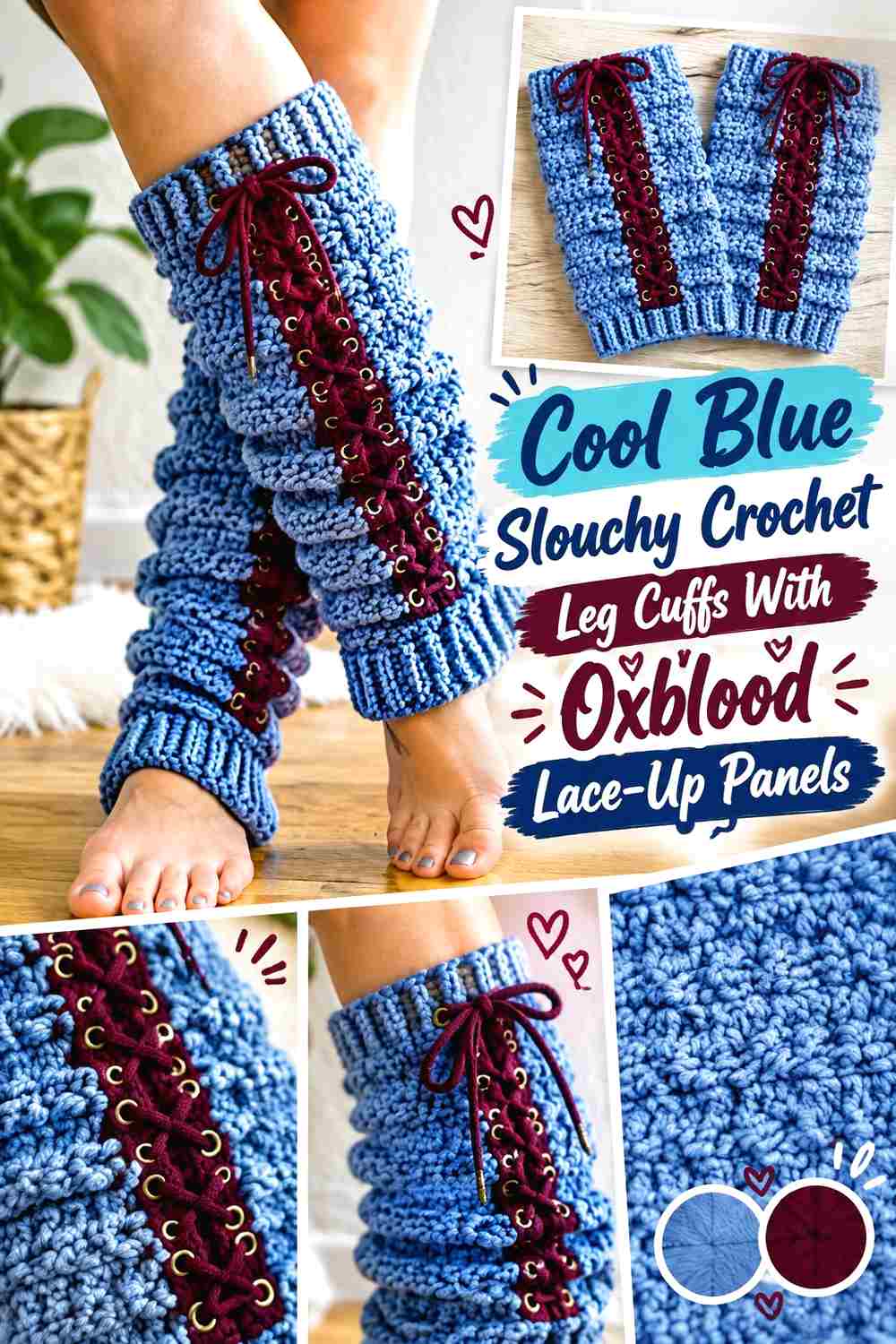
Slouchy fabric introduces folds, so the color treatment needs to survive compression. Cool Blue can cover most of the relaxed fabric while Oxblood is concentrated in a more controlled lace-up section that remains visible when the cuff gathers.
Give Cool Blue Enough Area to Form Visible Crochet Folds
Keep most of the slouchy center Cool Blue so the softer folds read as one continuous color field. Breaking every fold with Oxblood stripes can make the surface look busier once it gathers around the ankle.
Keep the Oxblood Lace-Up Panel Straighter Than the Cool Blue Body
A defined Oxblood panel can provide visual structure beside the relaxed Cool Blue fabric. When trying the cuff on, check that the lacing still faces the intended direction instead of disappearing into the folds.
If the panel twists significantly, correct the placement before duplicating it on the second cuff.
Creator Credit: Sigoni Macaroni
6. Oxblood Shell Texture Crochet Leg Cuffs With Cool Blue Laces
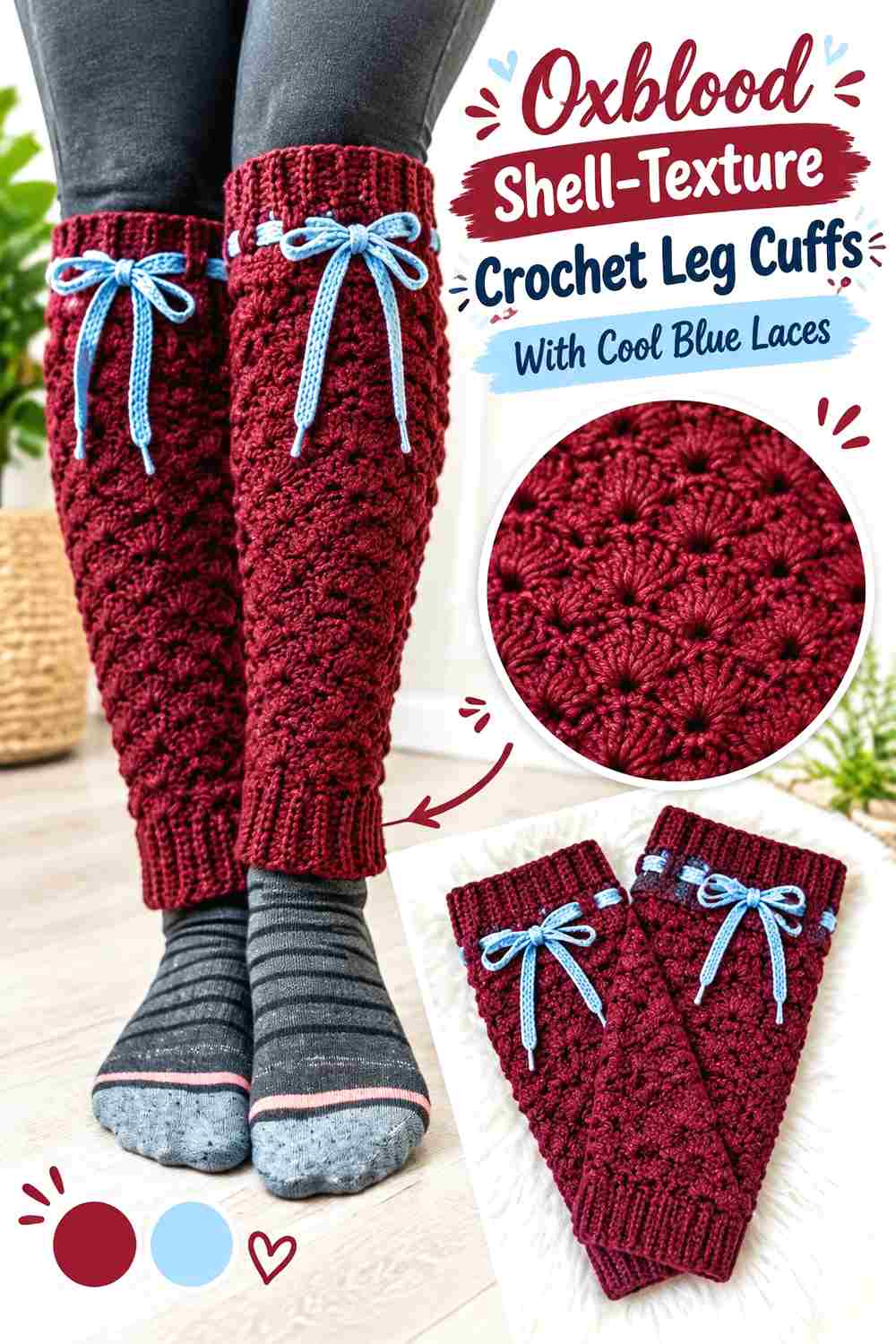
Shell texture gives the Oxblood body its own pattern of highlights and shadows, so the Cool Blue should be used where it improves definition rather than scattered through every shell.
Keep Oxblood Across Most of the Crochet Shell Texture
A single Oxblood field makes repeated shells easier to read as texture instead of separate color motifs. This is particularly useful if the lace-up detail already adds a second strong pattern.
If Oxblood appears too dark in the shell recesses, consider a slightly lighter Oxblood variation rather than introducing Cool Blue into every repeat.
Use Cool Blue Along the Oxblood Lace-Up Edge
A Cool Blue lace or narrow opening edge gives the eye one clean line beside the textured Oxblood surface. This separates the decorative shell pattern from the functional-looking lace-up feature.
Keep the Cool Blue placement similar on both cuffs so the texture and lacing remain balanced as a pair.
Creator Credit: Crochet With Akita
7. Oxblood And Cool Blue Crochet Flared Lace Up Leg Cuffs
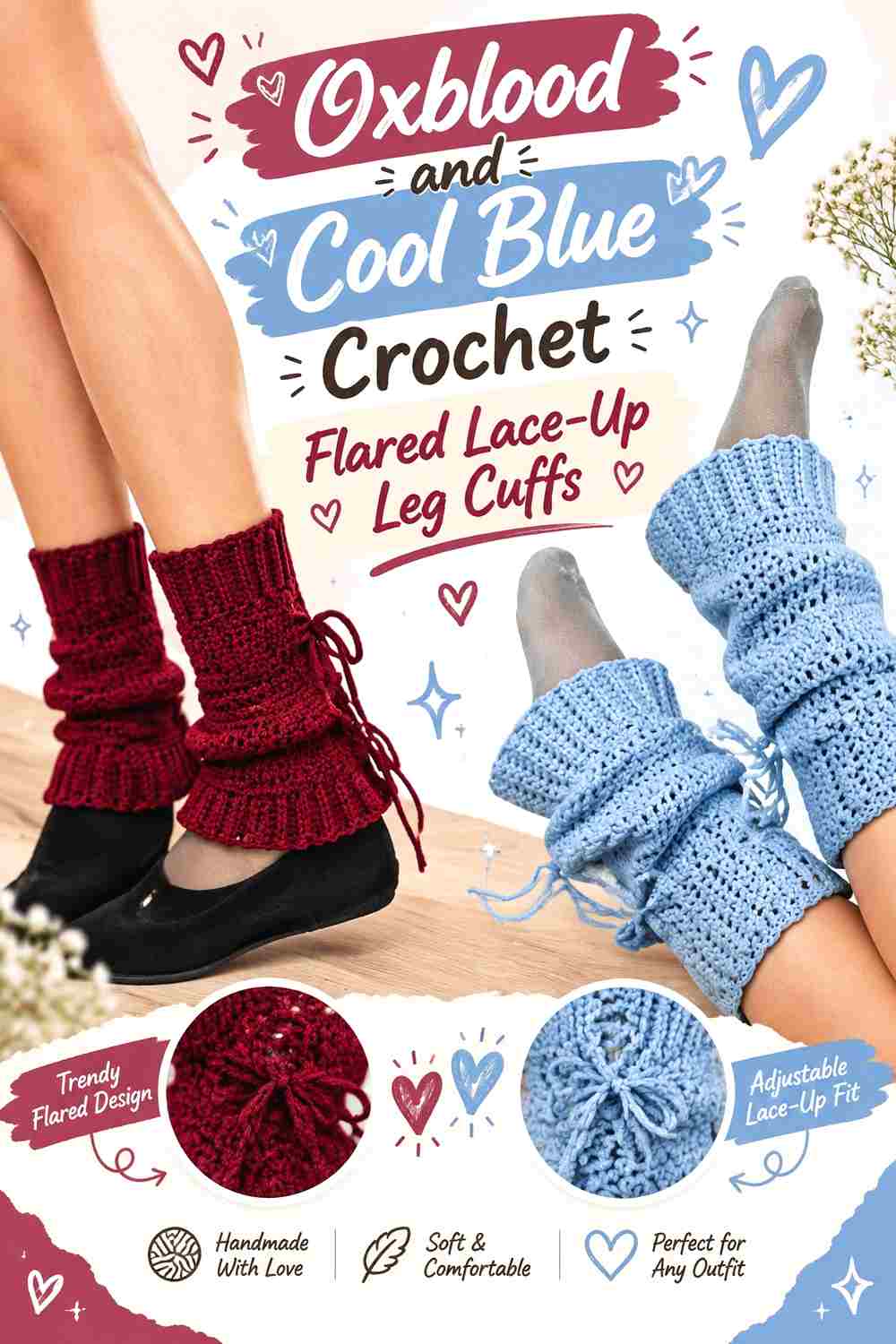
A flared lower section already creates a strong silhouette, so this idea uses color to distinguish the fitted upper area from the widening hem. Oxblood can carry the upper cuff while Cool Blue expands through part of the flare.
Keep Oxblood Strong Around the Crochet Calf Section
Use Oxblood through the narrower upper portion so the leg cuff has a dark visual anchor before the flare begins. This makes the later Cool Blue section feel like an intentional transition rather than an unrelated lower border.
Let Cool Blue Expand Through the Oxblood Flare
Cool Blue can appear more generously toward the lower edge because the flare provides more surface area. Decide whether the lacing should stay Oxblood across this section or switch to Cool Blue with the fabric.
Keeping the lace Oxblood against a Cool Blue flare maintains definition all the way to the ankle.
Creator Credit: nat’s record
8. Cool Blue Scalloped Crochet Leg Cuffs With Oxblood Lacing

A scalloped edge gives Cool Blue a decorative outline near the footwear, while Oxblood creates a stronger vertical line through the lace-up section. The two details should complement each other rather than compete for equal attention.
Let Cool Blue Carry the Crochet Scalloped Edge
Keeping the scallops the same Cool Blue as the main cuff allows their shape to provide the decoration. Changing each scallop to Oxblood can make an already detailed edge considerably busier.
Use Oxblood to Contrast the Cool Blue Lace-Up Front
Oxblood lacing gives the eye a clear vertical path above the scalloped edge. End the lacing cleanly before or near the lower decorative section so the crisscross pattern does not visually collide with too many shaped edges.
If the scallops will sit inside tall boots, shift more Oxblood-and-Cool-Blue contrast higher on the cuff where it remains visible.
Creator Credit: Forest Lily
9. Oxblood Crochet Boot Length Cuffs With Cool Blue Side Lacing

A shorter boot cuff gives the lace-up section less vertical space, so color contrast becomes more important. Oxblood can cover the compact body while Cool Blue creates a concise side-lacing feature.
Keep Oxblood Simple on the Short Crochet Cuff
Short cuffs have less room for multiple competing sections. A solid Oxblood body lets the Cool Blue lacing become the main decorative feature without needing additional stripes or large panels.
Put Cool Blue Lacing Where the Oxblood Boot Cuff Stays Visible
Consider where the top of the boot will sit. If footwear hides the lower part of the cuff, position the most important Cool Blue crossing or border higher so the contrast remains visible.
Side lacing can also keep the front surface cleaner when you want the Oxblood texture itself to show.
Creator Credit: Bag-O-Day Crochet
10. Cool Blue Tall Crochet Leg Cuffs With Oxblood Lace Up Accents
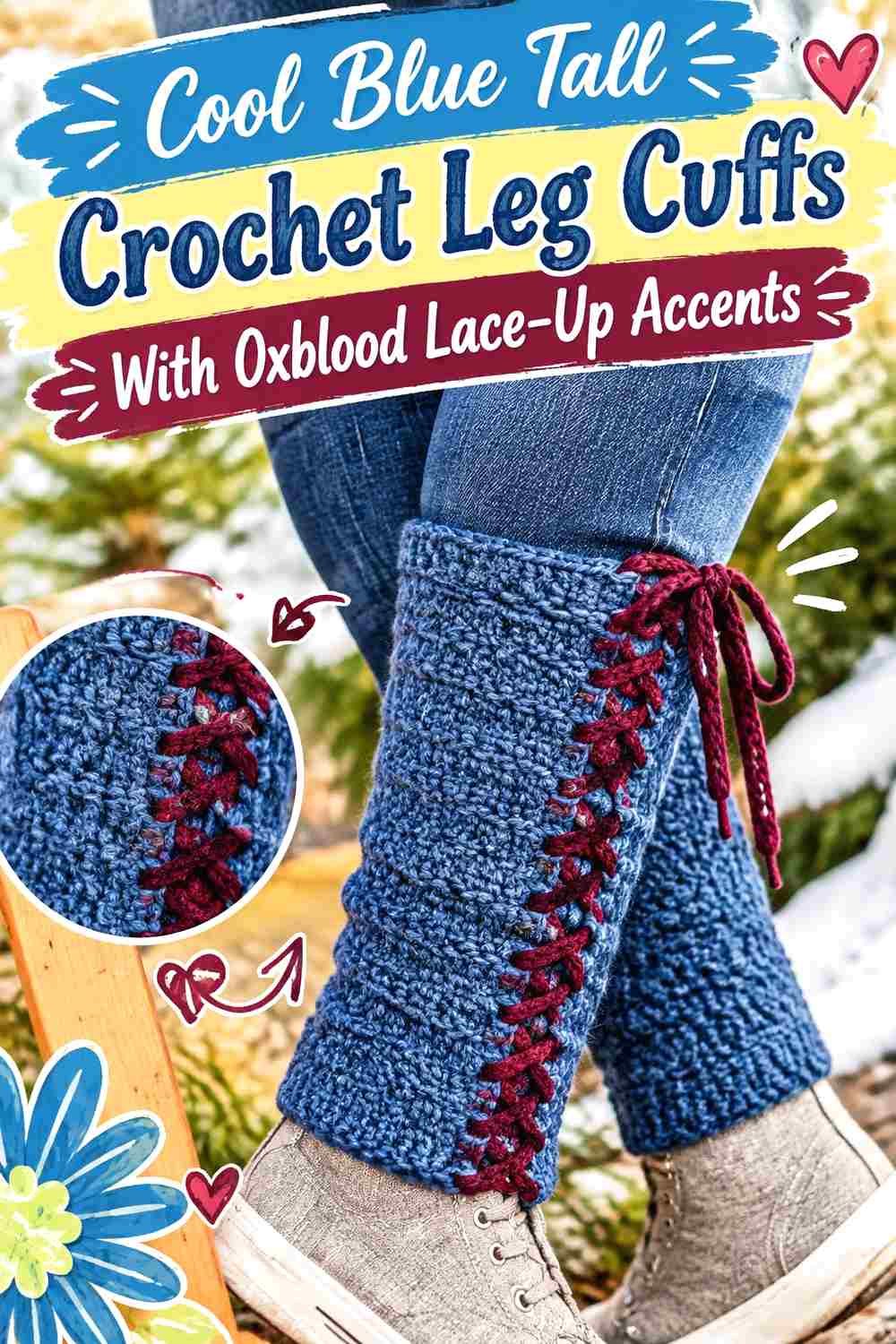
A taller cuff creates more vertical area, so the lace does not necessarily need to run continuously from top to bottom. Cool Blue can dominate the full length while Oxblood appears in selected lace-up zones.
Let Cool Blue Control the Full Crochet Leg-Cuff Height
A large Cool Blue field prevents a tall accessory from becoming visually heavy. It also gives you flexibility to decide whether Oxblood belongs near the ankle, calf, or upper edge.
Break Oxblood Lacing Into Controlled Cool Blue Sections
Instead of one uninterrupted dark crisscross, you can visually emphasize one main lacing area and leave more Cool Blue fabric plain. This gives the tall cuff breathing room.
Keep any repeated Oxblood section aligned between the two cuffs so the pair looks deliberate rather than mismatched.
Creator Credit: The Crochet Crowd
11. Oxblood And Cool Blue Crochet Thigh High Lace Up Leg Cuffs

A thigh-high version magnifies every color decision because much more fabric is visible. Oxblood can anchor the upper and central leg, while Cool Blue lacing or lower blocks prevent the long accessory from becoming one uninterrupted dark column.
Give Oxblood the Largest Crochet Thigh-High Area
Keep Oxblood across the main length if you want the deeper shade to dominate. With this much surface, the color itself already creates a strong statement, so Cool Blue does not need equal coverage.
Use Cool Blue to Break Up the Oxblood Lace-Up Length
Cool Blue can appear along the lacing channel, lower cuff, or another controlled section to interrupt the long Oxblood field. Choose one main Cool Blue role before adding extra stripes.
For a tall piece, also compare the first finished cuff with the second throughout construction so the location of major color transitions remains consistent.
Creator Credit: Cassandra Paz
Comparing the Oxblood and Cool Blue Lace-Up Leg Cuff Directions
Ideas 1 and 2 provide the clearest color reversal. The first uses Cool Blue as the lace against an Oxblood body, while the second makes Oxblood the darker lace on a Cool Blue foundation.
Ideas 3 and 4 emphasize vertical structure through panels and ribbing. Idea 5 uses slouchy Cool Blue fabric against a more controlled Oxblood lace-up area, while Idea 6 gives Oxblood shell texture most of the decorative work.
For stronger lower-leg emphasis, Idea 7 uses the flare as a larger Cool Blue color zone and Idea 8 combines a Cool Blue scalloped edge with Oxblood lacing. Idea 9 keeps the accessory compact for boot-height styling.
Ideas 10 and 11 provide more vertical coverage. On taller cuffs, larger uninterrupted color sections generally keep Oxblood and Cool Blue easier to read than frequent small changes all the way up the leg.
Conclusion
Oxblood and Cool Blue work particularly well on crochet lace-up leg cuffs because the colors can reinforce the shape of the lacing instead of functioning as decoration alone. An Oxblood body with Cool Blue lacing creates a deep foundation with a lighter vertical accent, while a Cool Blue body makes Oxblood lacing more concentrated and graphic.
Ribbing, shell texture, slouch, scallops, flares, and taller constructions all change how much color the cuff can comfortably carry. A highly textured piece usually needs fewer color changes, while a simple ribbed or smooth body can support a stronger panel or contrasting lace.
Before finalizing the palette, check the colors in worked crochet, compare both cuffs as a pair, and look at them with the footwear you plan to wear. Use the linked tutorials for their original construction details and treat any added lace-up channels or color placement as a separate adaptation.
Frequently Asked Questions
Should Oxblood or Cool Blue Be the Main Color on Crochet Lace-Up Leg Cuffs?
Use Oxblood as the main color when you want a deeper, warmer cuff with lighter Cool Blue lacing. Use Cool Blue when you want the accessory to feel lighter and prefer the Oxblood lace-up detail to become the strongest dark accent.
What Color Should the Laces Be on Oxblood Crochet Leg Cuffs?
Cool Blue creates the clearest two-color interpretation because it contrasts with the Oxblood body and keeps the crisscross feature tied directly to the requested palette. You can also use Oxblood lacing against a Cool Blue panel when you want the opposite hierarchy.
How Can I Make Cool Blue Lacing More Visible Against Oxblood?
Check the light/dark value of the two yarns rather than relying only on their different hues. If the Cool Blue lace still merges into the Oxblood fabric, add a narrow Cool Blue edge around the lacing channel or choose a Cool Blue variation with stronger value separation.
Should Both Oxblood and Cool Blue Leg Cuffs Have Identical Color Placement?
Matching placement gives the pair a more symmetrical appearance, particularly when the lacing or panels are visually strong. An asymmetrical pair is possible, but the difference should be deliberate and repeated clearly enough that it does not look accidental.
Can Oxblood and Cool Blue Work on Flared Crochet Leg Cuffs?
Yes. One effective approach is to keep Oxblood around the fitted calf and let Cool Blue occupy part of the expanding lower section. You can then continue Oxblood lacing over the Cool Blue area to preserve contrast through the flare.
How Do Oxblood and Cool Blue Work With Textured Crochet Leg Cuffs?
Texture already creates highlights and shadows, so fewer color changes may be needed. Oxblood can carry shell, ribbed, or raised texture while Cool Blue remains concentrated around the lace-up section. This keeps the stitch surface and color contrast from competing equally.
Where Should the Main Color Change Go on Tall Oxblood and Cool Blue Leg Cuffs?
Use a visually meaningful area such as the upper cuff, lower leg, flare, or lace-up panel rather than inserting frequent changes simply to use both colors equally. Larger blocks generally remain easier to read across a taller accessory.
Should Cool Blue Appear at the Top or Bottom of an Oxblood Leg Cuff?
Either works, but consider visibility. A Cool Blue lower edge can be effective with low footwear, while a Cool Blue upper band remains visible above taller boots. Put the strongest contrast where it will actually be seen when the cuff is worn.