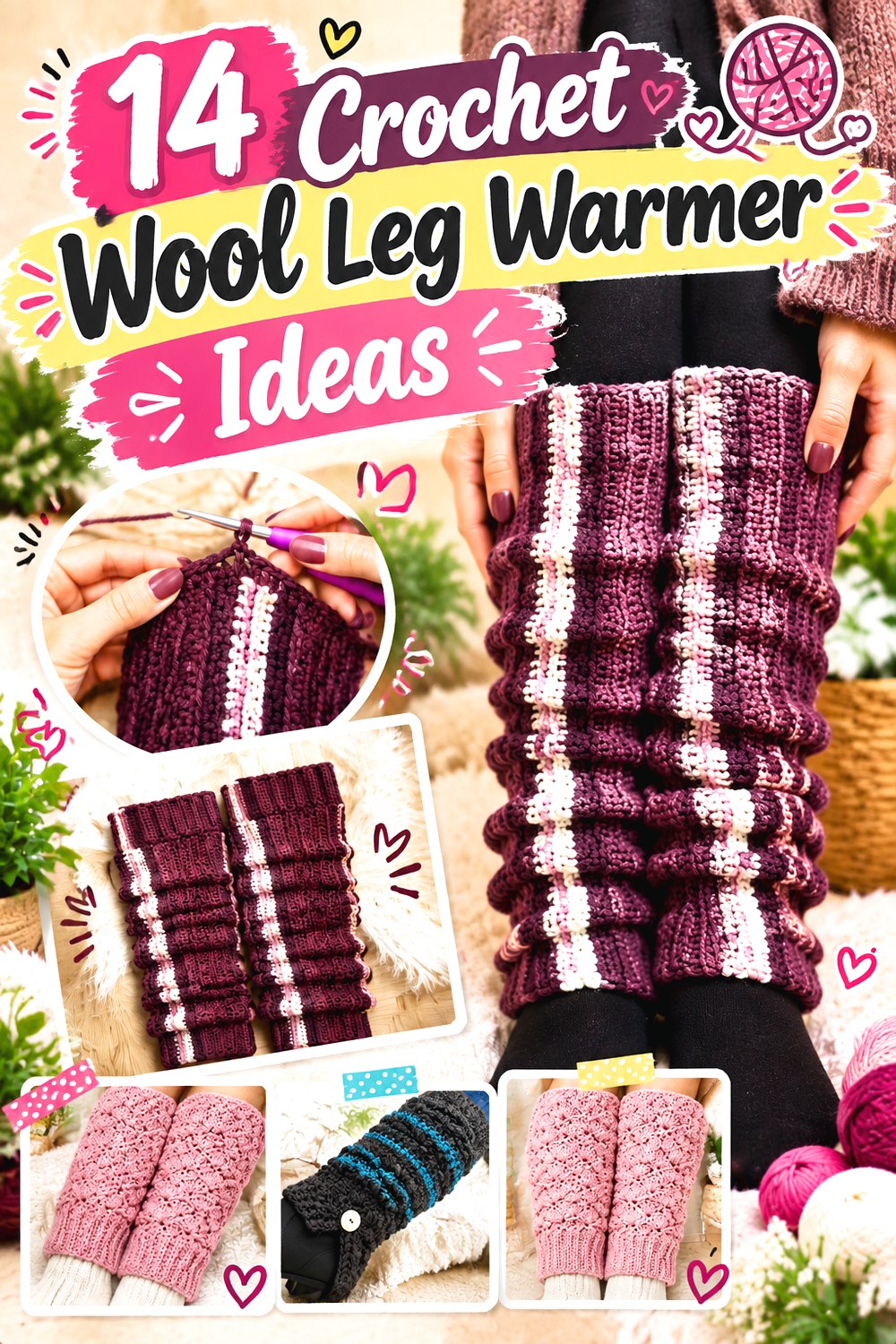
14 Crochet Wool Leg Warmer Ideas
Crochet wool leg warmers can range from slim, close-fitting layers to intentionally slouchy tubes, sculpted cable designs, colorful statement pieces, and chunky cold-weather accessories. The fiber matters, but so do construction, circumference, stitch density, cuff design, and the amount of fabric you want around the ankle.
The projects below use original tutorials from different crochet designers and channels. Some creators work directly with wool or wool blends, while others demonstrate constructions that can be considered for a wool version after checking yarn weight and gauge. That distinction is important: replacing acrylic, cotton, or another fiber with wool can change elasticity, drape, warmth, and finished dimensions. Use the ideas to compare silhouettes and techniques, then follow the credited original tutorial for its exact construction details.
Quick List
- Crochet Brick-Texture Slouch Wool Leg Warmers
- Crochet Cabled Wool Boot-to-Calf Leg Warmers
- Crochet Asymmetrical Stripe Wool Leg Warmers
- Crochet Picot-Edge Wool-Blend Leg Warmers
- Crochet Spike-Stitch Tapered Wool Leg Warmers
- Crochet Self-Striping Rib-Cuff Wool Leg Warmers
- Crochet Knit-Look Wool Tweed Leg Warmers
- Crochet Chunky Post-Rib Wool Leg Warmers
- Crochet Simple Double-Crochet Wool Tube Leg Warmers
- Crochet Faux-Knit Ribbed Wool Leg Warmers
- Crochet Shell-Stitch Slouch Wool Leg Warmers
- Crochet Crossed-Puff Wool Leg Warmers
- Crochet Color-Block Merino-Blend Leg Warmers
- Crochet Minimal Wool Panel Leg Warmers
Choosing Wool for Warmth Without Losing the Right Fit
Wool can be a strong choice for leg warmers because it can provide substantial warmth without requiring an extremely bulky fabric. However, “wool” covers many yarn structures: smooth worsted-spun wool, lofty woolen-spun yarn, tweed, superwash wool, and blends can all behave differently.
When adapting a tutorial, start with the yarn weight and gauge specified by the designer rather than assuming any wool yarn is interchangeable. A lofty yarn can produce a thicker fabric at the same nominal weight, while a smoother yarn may reveal cables and ribs more clearly. Superwash treatment can also change how fabric relaxes after washing.
For a fitted warmer, make a meaningful swatch and assess stretch as well as stitch size. The fabric needs enough give to pass over the heel or calf where required, yet enough recovery to remain in position during wear.
Fit, Slouch, and Cuff Structure Matter More Than Length Alone
Measure the part of the leg where the upper edge will actually sit rather than relying only on a generic calf measurement. A warmer intended to stop below the widest part of the calf may need different shaping from a tall version reaching close to the knee.
Slouchy designs need deliberate extra length or fabric volume, but additional fabric also adds weight. With wool, that can become noticeable in highly textured or chunky patterns. A firm upper cuff can help stabilize the warmer, while excessive tightness can make the accessory uncomfortable.
Also consider how the warmer will be worn. A tube layered over thin leggings has different fit requirements from one expected to sit over jeans or bulky footwear. Before committing to the second warmer, try the first one with the clothing and shoes you actually plan to use.
Blocking, Washing, and Wool Substitutions
Finishing can noticeably change crochet wool fabric, so avoid assuming the blocking method demonstrated for another fiber is automatically appropriate for your yarn. Heat, steam, agitation, and temperature changes can affect wool differently depending on its treatment and blend.
Follow the care instructions on the yarn label and any project-specific finishing advice supplied by the creator. If you are using an unfamiliar wool, wash your swatch first. Check whether it relaxes, grows, felts, becomes denser, or loses some elasticity before adjusting the full pair.
For textured leg warmers, block with restraint. Stretching cables, ribbing, puff stitches, or elastic-looking crochet too aggressively can flatten the very texture that helps the project hold its shape.
1. Crochet Brick Texture Slouch Wool Leg Warmers
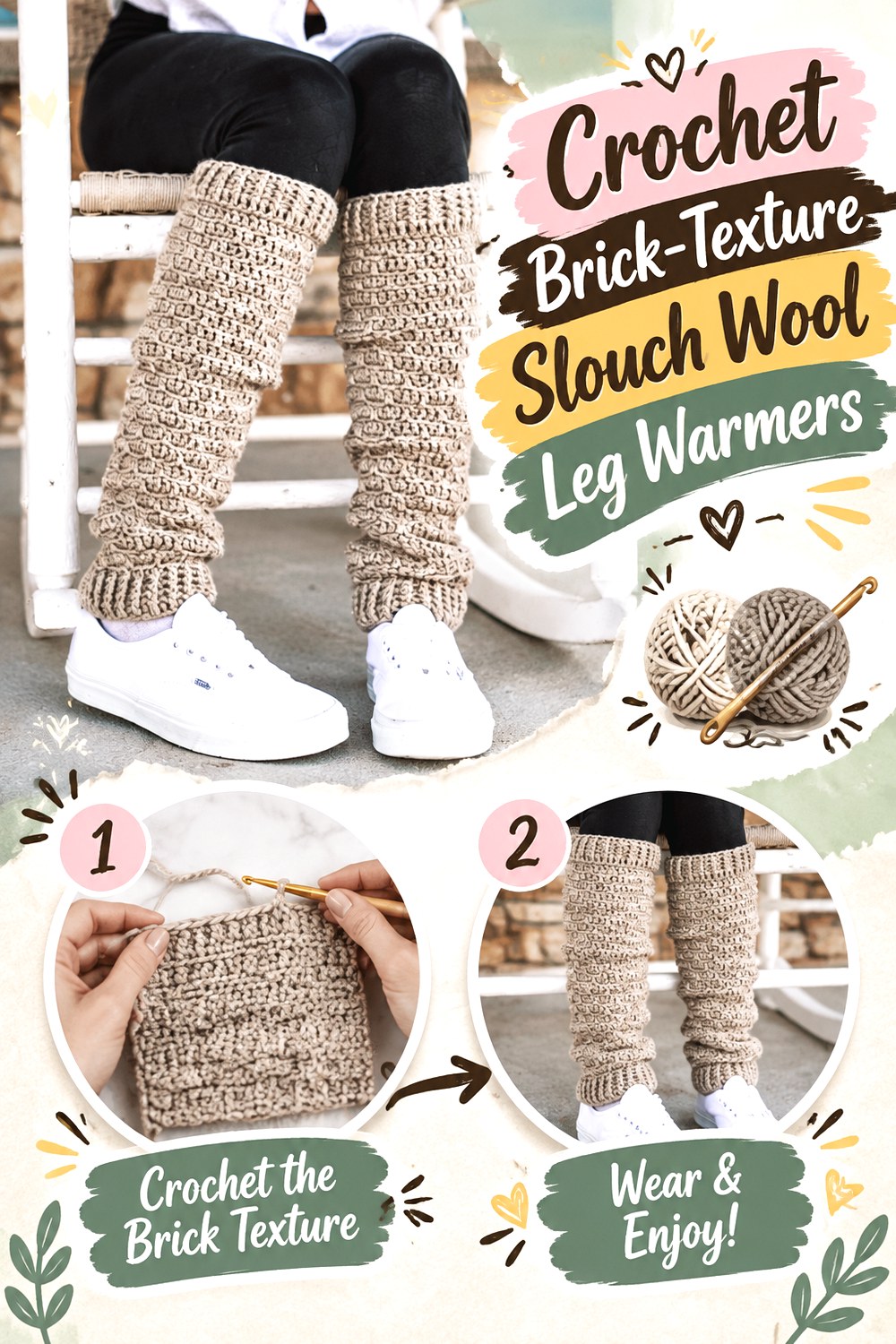
A deeply textured body paired with defined ribbed sections gives this style more visual movement than a plain tube. Sigoni Macaroni’s original design is intentionally slouchy and uses Lion Brand Fisherman’s Wool, a medium-weight 100% wool yarn. The body combines raised-looking texture with structured cuffs, making this a particularly relevant source for readers specifically interested in a true wool version rather than simply substituting fiber.
The extra surface detail makes these leg warmers well suited to leggings and simple footwear where the crochet can become the main texture in the outfit. They also offer a useful contrast to later close-fitting and minimal designs.
Why Wool Suits the Slouch
A lofty wool yarn can help a slouchy leg warmer look substantial instead of limp, but the same loft adds volume around the ankle. Consider whether you want soft folds or a more sculptural scrunch. If you substitute another wool, compare the thickness and elasticity of your swatch with the designer’s fabric rather than relying only on the yarn’s weight category.
Check the Cuff Before Adding Length
The source specifically encourages checking fit during construction and provides resizing guidance. That is especially useful for a slouch design because the upper section has to support more fabric than a short boot cuff.
Try the cuff at its intended height before investing in the full body. A cuff that already slides on a short sample is unlikely to improve once additional wool weight is hanging beneath it.
When Texture Can Feel Bulky
Raised stitches and wool fibers both create physical depth. If the warmer will sit partly inside a tall boot, test a short sample with that footwear before completing the pair. A fabric that feels comfortable over leggings may be too thick once compressed between the leg and boot shaft.
Original Tutorial and Creator Credit
Creator/Site: Sigoni Macaroni
2. Crochet Cabled Wool Boot to Calf Leg Warmers
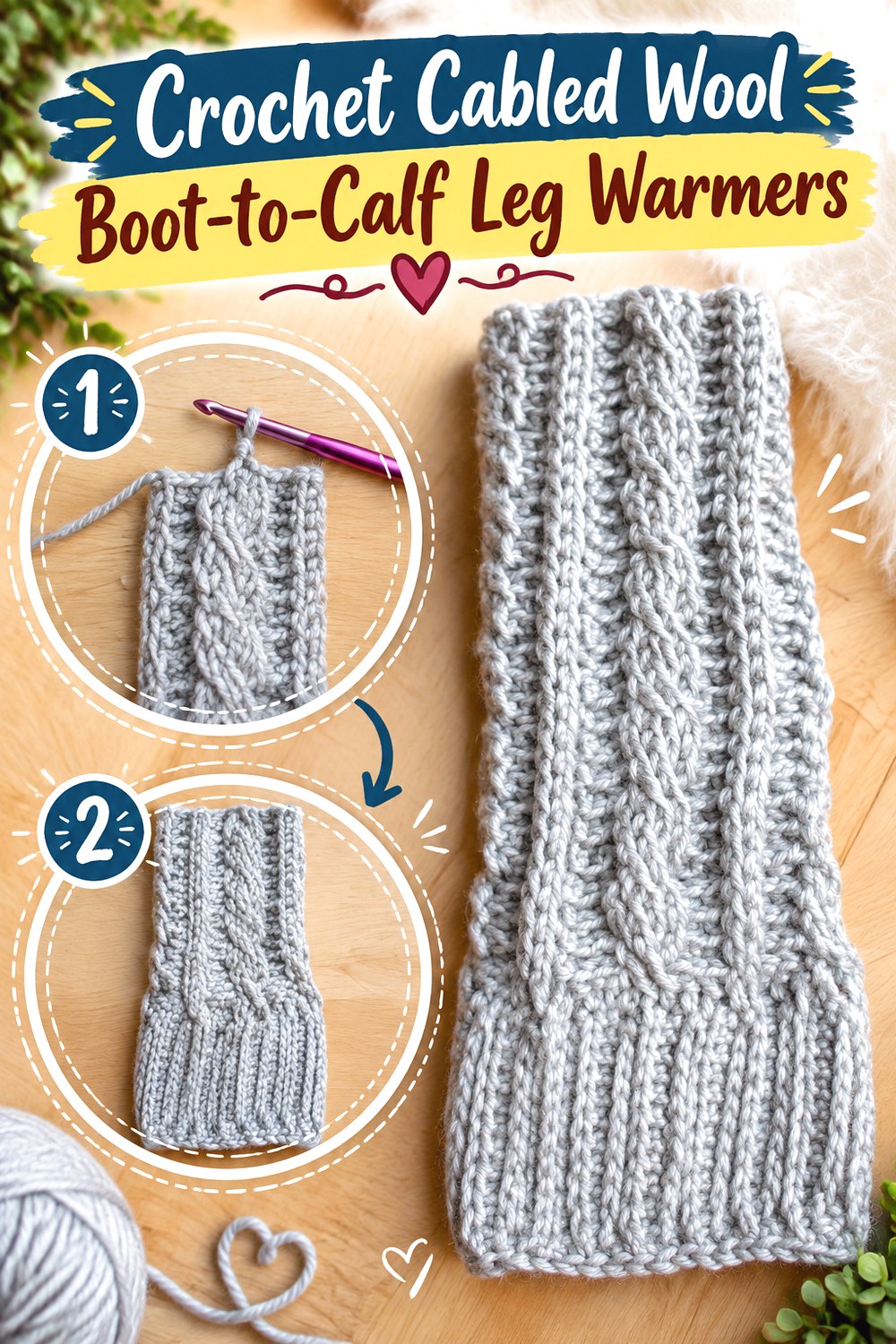
For stronger stitch definition, consider a cable-focused warmer framed by ribbed bands. All About Ami’s original Cabled Legwarmers/Boot Cuffs use prominent crochet cables through the main body, with ribbed sections providing a cleaner transition at the edges. The designer also demonstrates how the same concept can be stopped earlier for a shorter boot-cuff version.
The original sample uses a worsted-weight acrylic yarn, so a wool adaptation should be treated as a substitution rather than an assumed equivalent. This design earns its place because the deep cable relief gives wool an entirely different visual role from the softer brick texture of the first project.
Cable Definition Needs the Right Yarn
Not every wool displays cables equally. A smooth, rounded yarn generally makes raised stitch crossings easier to read visually than an extremely fuzzy yarn. Before buying enough for a pair, crochet a small cable sample and view it in normal lighting. If the shadows disappear into the halo, the finished texture may look less defined than expected.
Boot Cuff or Full-Length?
The original source deliberately shows both possibilities. A shorter cuff reduces bulk and yarn use, while the longer version creates a more obvious cold-weather layer.
Decide before starting which part of the cable design you actually want visible above or below your boots. Extra length has limited value if most of the detailed fabric will stay hidden inside footwear.
Watch Stretch at the Ribbed Bands
The designer notes that the ribbed section can stretch with repeated wear. Wool substitutions can change that behavior, so don’t copy a circumference adjustment without checking your own fabric.
Aim for secure stretch rather than a rigidly tight band. If the ribbing loses recovery during swatching, reconsider yarn or hook choice before making both warmers.
Original Tutorial and Creator Credit
Creator/Site: All About Ami
3. Crochet Asymmetrical Stripe Wool Leg Warmers
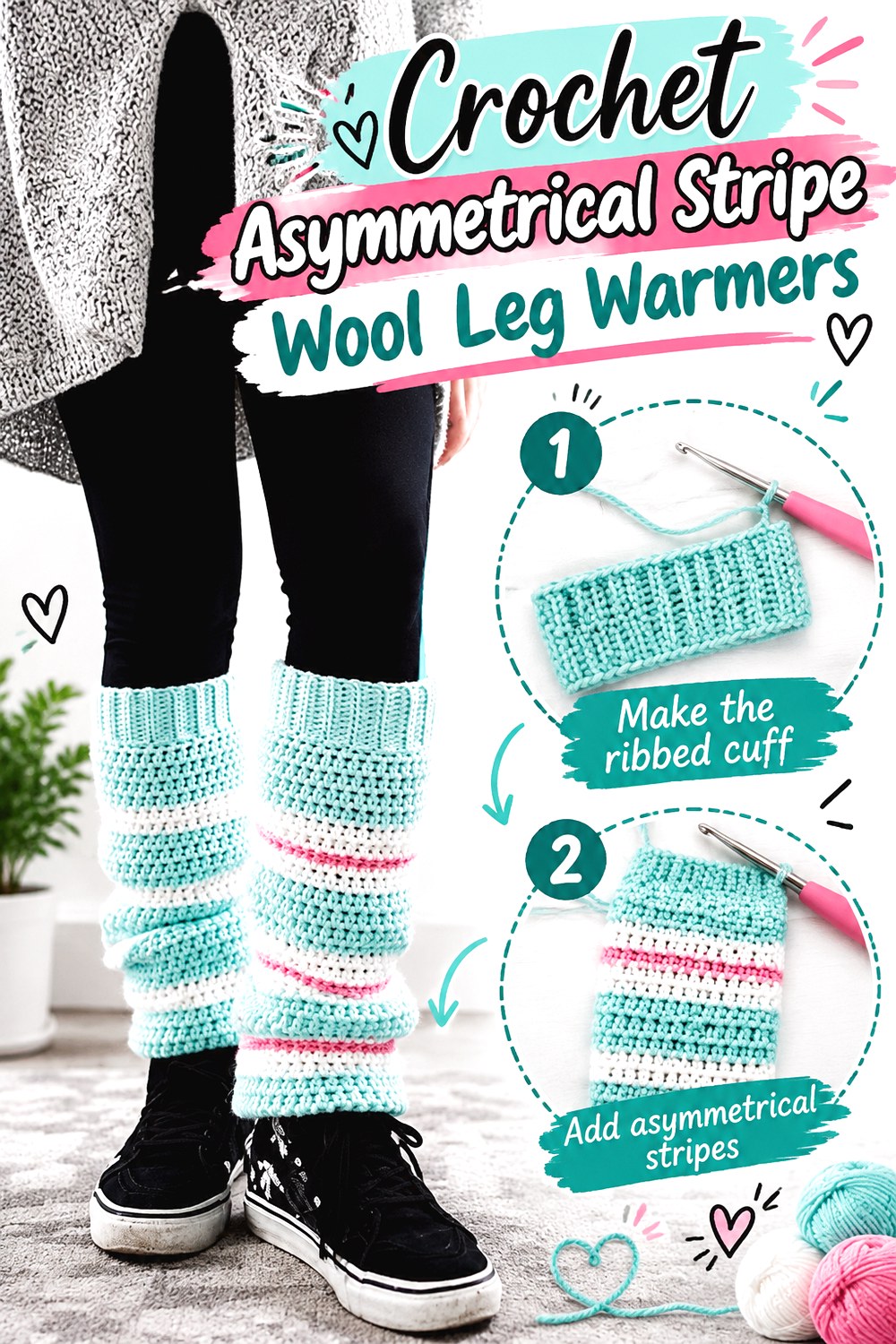
Colorwork can make a simple leg-warmer silhouette far more distinctive. Once Upon a Cheerio’s Sugar Rush design uses mismatched stripe arrangements rather than making the two legs identical, producing a playful pair with deliberate asymmetry. The project also incorporates contrasting surface detail and varies hook size to help establish its relaxed shape.
For a wool interpretation, the strongest idea to borrow is not a particular color palette but the unequal stripe rhythm. Two or three coordinated wool shades could create a more subdued version while preserving the offbeat visual balance. This is one of the most graphic options in the roundup and suits readers who want the warmers to function as a visible accessory rather than disappear into an outfit.
Plan the Stripe Rhythm First
Wool shades can behave differently once several colors are placed together, especially when one yarn is heathered and another is solid. Arrange skeins beside the intended shoes and leggings before crocheting. You do not need identical stripe widths on both legs, but the pair should still look related through repeated colors, texture, or proportion.
Use Wool Without Losing the Slouch
Switching from the tutorial yarn to wool may change how freely the fabric collapses around the ankle. A springy wool can hold folds more firmly, while a heavier wool may pull the warmer downward.
Swatch the main fabric and physically compress it into a slouch. That simple test tells you more about the eventual silhouette than judging an unwashed flat swatch alone.
Keep the Pair Intentionally Mismatched
Random color changes can look accidental unless there is a unifying decision. Repeat the same palette, edging, and overall height while altering only the stripe placement. The original source demonstrates a deliberately mismatched pair, giving you a clear model for creating variation without making the two pieces feel unrelated.
Original Tutorial and Creator Credit
Creator/Site: Once Upon a Cheerio
4. Crochet Picot Edge Wool Blend Leg Warmers
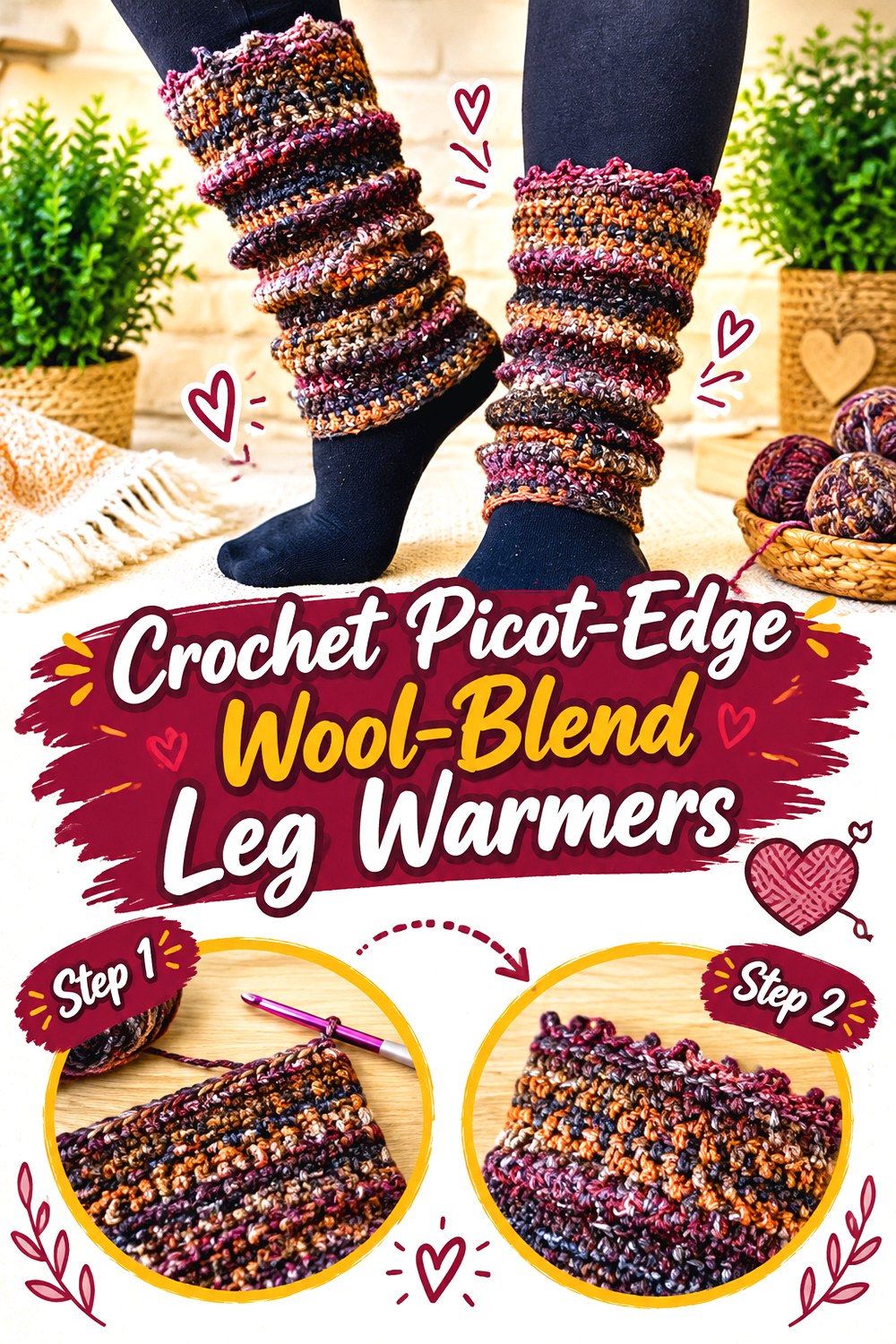
A decorative edge can change the character of an otherwise restrained tube. Heart Hook Home’s Sesame Leg Warmers use a straightforward body finished with a small picot treatment, creating a softer, slightly dressier edge instead of a heavy ribbed cuff. The source uses Berroco Sesame, which it identifies as a size-4 wool, acrylic, cotton, and nylon blend.
Because the embellishment stays confined to the border, the warmer remains visually quiet through most of its length. That makes it a useful option for multicolored or tweedy wool blends where the yarn already provides enough interest. It also differs substantially from cable and post-stitch designs because the body does not rely on dramatic relief.
Let the Picot Edge Stay Decorative
A picot border contributes visual finish but should not be expected to perform like firm ribbing. If you need stronger grip at the calf, focus first on getting the body’s circumference correct rather than trying to tighten the decorative edge.
This distinction matters particularly with wool blends that relax after washing.
Mixed-Fiber Wool Blends Change Drape
The original yarn combines wool with several other fibers. If you substitute pure wool, expect the feel and recovery to differ.
Treat the original yarn weight as only one part of the match. Compare gauge, surface texture, stretch, and washed drape before deciding whether the replacement works for the same silhouette.
Check Ankle Bulk With Flats
The source was designed with ankle warmth and flat shoes in mind. For that styling, excessive fabric near the foot can interfere with the clean line of the shoe.
Try the lower portion with your intended footwear. If it bunches heavily at the heel, adjusting length may be more useful than changing circumference.
Original Tutorial and Creator Credit
Creator/Site: Heart Hook Home
5. Crochet Spike Stitch Tapered Wool Leg Warmers
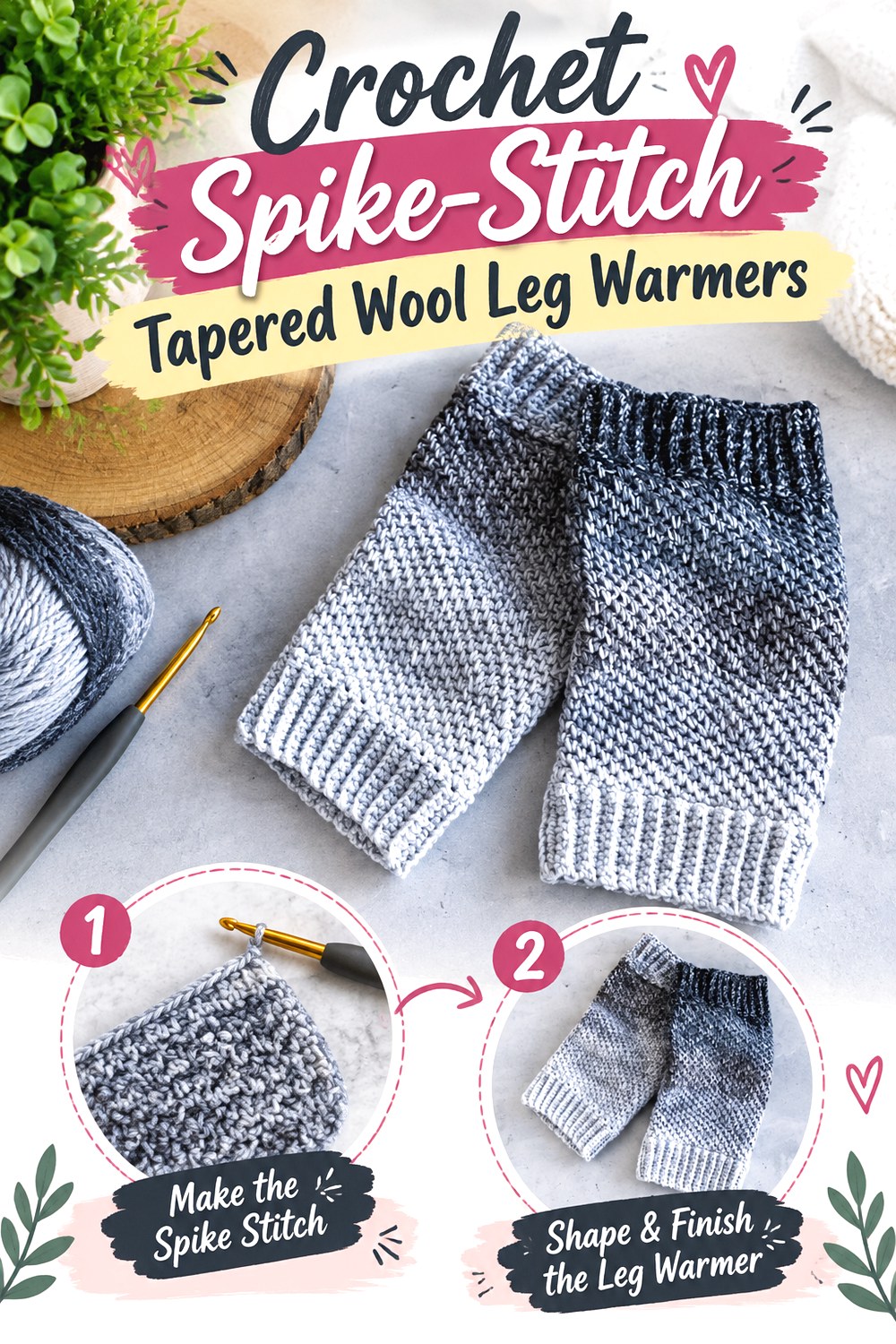
A tapered silhouette can offer a more intentional fit than a straight cylinder. CAAB Crochet’s leg warmer design begins narrower at the ankle and grows toward the calf, while spiked single crochet supplies vertical-looking surface texture through the body. The creator also provides project-specific customization guidance for adjusting the bands and height.
For a wool version, the combination of shaping and stitch definition is the main attraction. A solid wool would emphasize the elongated spike texture, while a gently shaded yarn could show color transitions without relying on separate stripes. This project is a strong choice for readers who dislike excess fabric around the ankle but still want a textured finish.
Use Tapering to Control Sag
A lower edge that is deliberately smaller than the calf area can reduce unnecessary fabric around the ankle. That does not automatically prevent slipping, though; the upper fit remains the primary support point.
Check both circumferences rather than resizing the whole warmer by one percentage. Calf and ankle proportions vary substantially between wearers.
Spike Stitches Reward Clear Definition
Longer spike-style stitches can disappear in highly fuzzy wool. If the texture is the reason you chose this project, test the exact yarn before committing.
A smooth wool, wool blend, or lightly heathered shade can allow the elongated stitch placement to remain visible while still giving the project a winter-weight appearance.
Fit the Top Band Before the Body
The source gives specific customization logic around the upper and lower bands. Use that as a reminder to establish the support point early.
A beautiful body fabric will not compensate for an upper band that is too loose to stay in place or so tight that it feels restrictive.
Original Tutorial and Creator Credit
Creator/Site: CAAB Crochet
6. Crochet Self Striping Rib Cuff Wool Leg Warmers
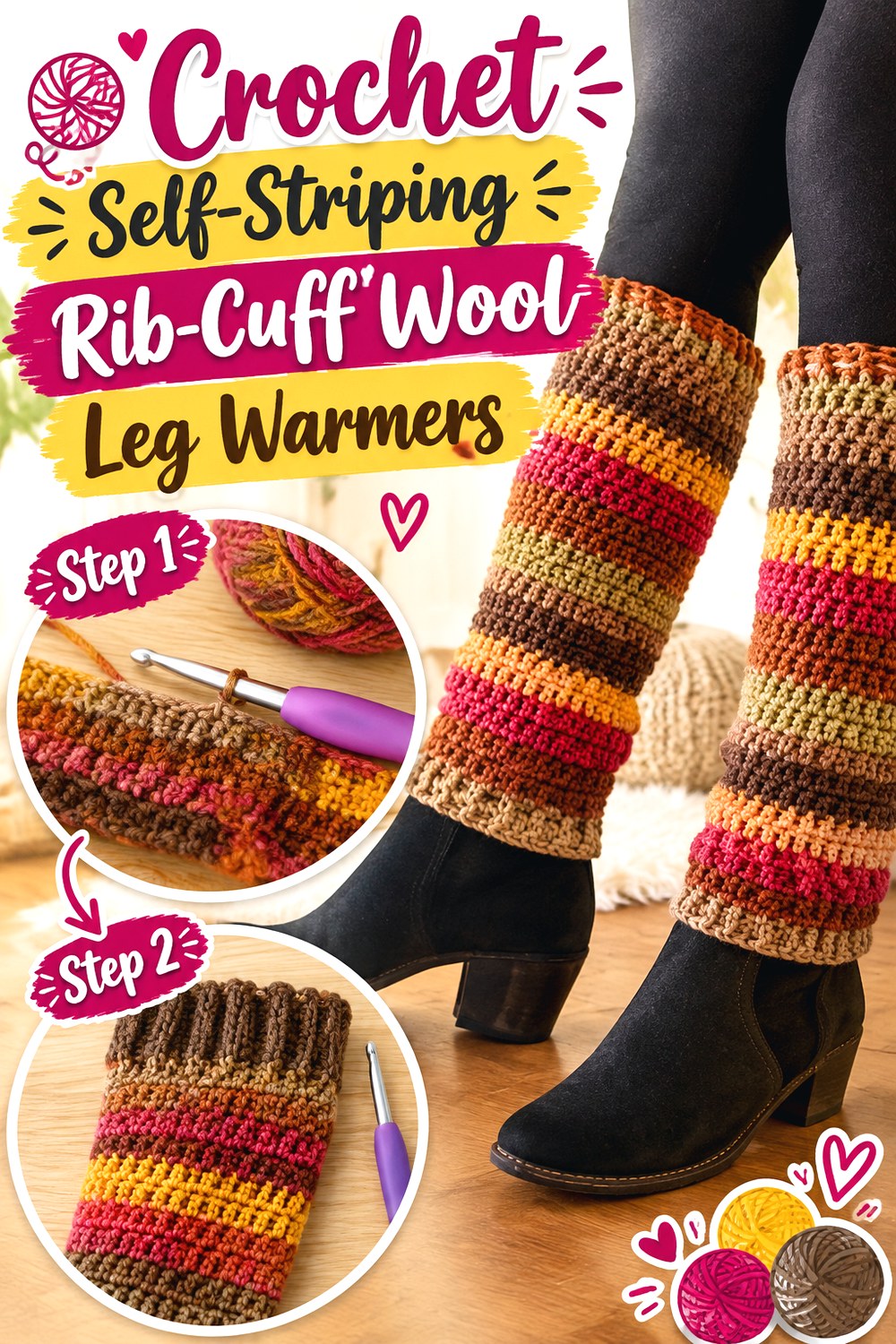
Self-striping yarn offers color variation without frequent manual color changes. Carroway Crochet’s Love My Leg Warmers design uses a straightforward double-crochet body framed by post-stitch ribbing, and the creator shows the style in a self-striping worsted-weight yarn. Multiple adult sizes are included in the source.
For a wool adaptation, this construction provides a relatively uncluttered canvas for long color repeats, marled wool, or gradient yarn. The body is visually simpler than the cable and spike-stitch ideas, so the yarn can become the feature. A solid wool would produce a quieter result with the ribbed edges providing most of the texture.
Self-Striping Yarn Changes the Visual Scale
Short color repeats can create numerous narrow bands, while long repeats may produce broad blocks that do not match exactly between the two legs. Decide whether matching matters before winding or cutting yarn.
For a relaxed handmade look, related rather than identical color placement can work well. For a more tailored pair, plan both starting points before crocheting.
Keep the Ribbing Elastic
Post-stitch ribbing adds definition at the ends, but fiber choice affects how readily it stretches and returns. When substituting wool, compare the ribbing swatch after stretching it several times.
If it stays noticeably enlarged, a smaller hook or different wool may be worth considering, provided the change still works with the original pattern’s gauge requirements.
Size Length Separately From Circumference
The Carroway source provides adult sizing and also discusses changing the length. That separation is useful: a wearer with a larger calf does not automatically need a proportionally taller warmer.
Choose circumference for fit and height for styling. Treat them as two different decisions.
Original Tutorial and Creator Credit
Creator/Site: Carroway Crochet
7. Crochet Knit Look Wool Tweed Leg Warmers
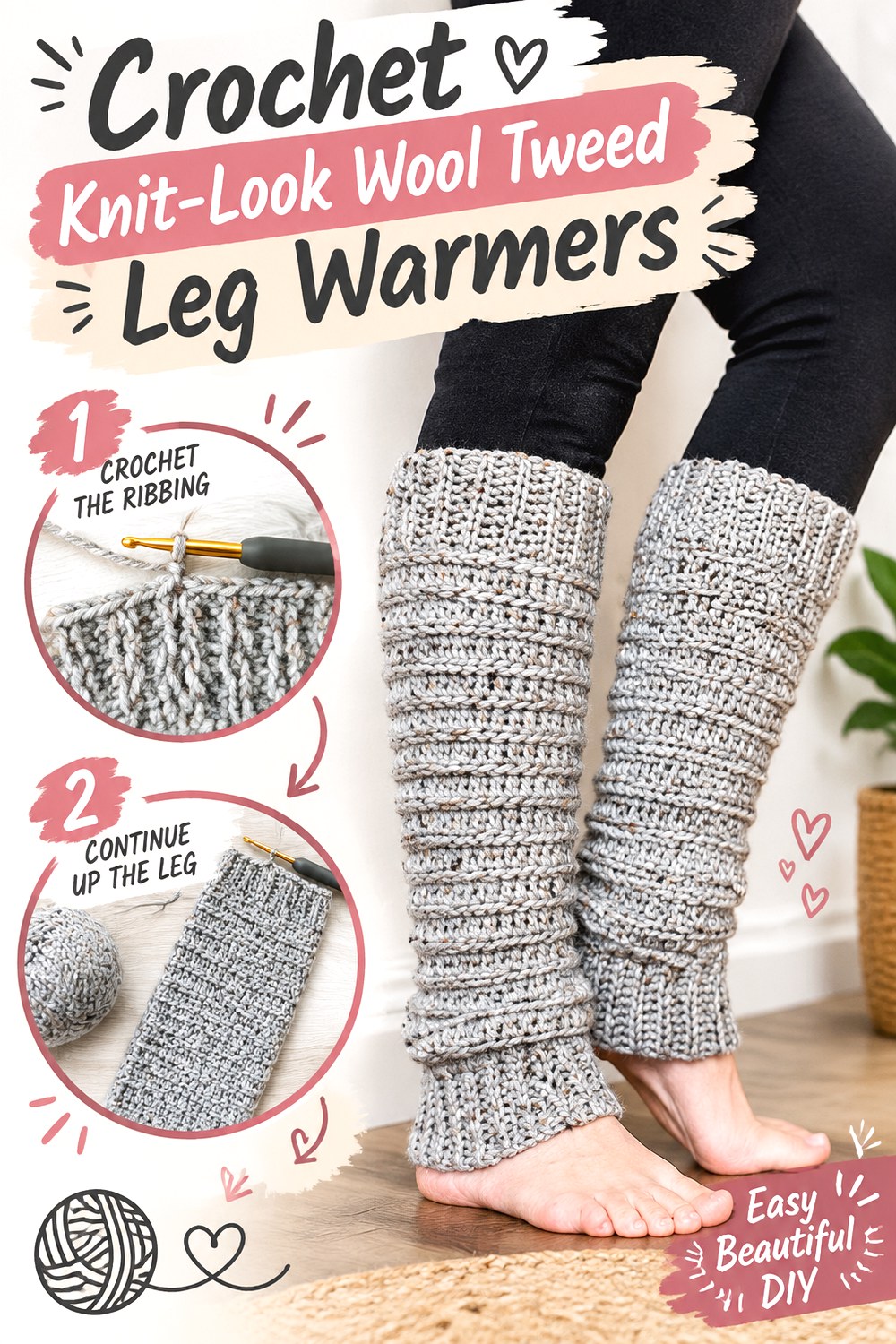
For a quieter heritage-style finish, the Willow Leg Warmers from Ned & Mimi use alternating crochet textures to create pronounced ribbing with a knit-like appearance. The original sample uses Wool of the Andes Tweed, identified by the designer as a wool-and-Donegal-tweed yarn, and the written pattern spans sizes from baby through adult large.
This is one of the strongest choices for readers who want wool itself to reinforce the design identity. Tweed flecks add subtle surface variation without interrupting the ribbed structure, while the straight, long silhouette feels more classic than overtly slouchy or decorative styles.
Why Tweed Works With Knit-Look Texture
Tweed adds small points of color while leaving the stitch structure readable. That balance can suit ribbed crochet particularly well because the fabric already contains strong linear texture.
If substituting another tweed wool, check whether thick neps interfere with tight slip-stitch areas. A yarn that moves smoothly through the hook will make the repeated ribbing more comfortable to work.
A Family-Size Pattern Still Needs Measurement Checks
The original tutorial supplies eight sizes, but size labels should not replace measuring the actual wearer. Children’s and adults’ calf proportions vary, and preferred ease varies too.
Compare the tutorial’s intended fit with the actual calf measurement before choosing a size. For children, also make sure the warmer does not restrict normal movement.
Keep Slip-Stitch Tension Relaxed
The source specifically notes that slip-stitch rows can become tight. Dense wool can amplify that problem.
Periodically lay the work flat and check that one edge is not shortening. If the fabric begins to curve or draw inward, tension consistency is worth correcting before you have a full-length panel.
Original Tutorial and Creator Credit
Creator/Site: Ned & Mimi
8. Crochet Chunky Post Rib Wool Leg Warmers
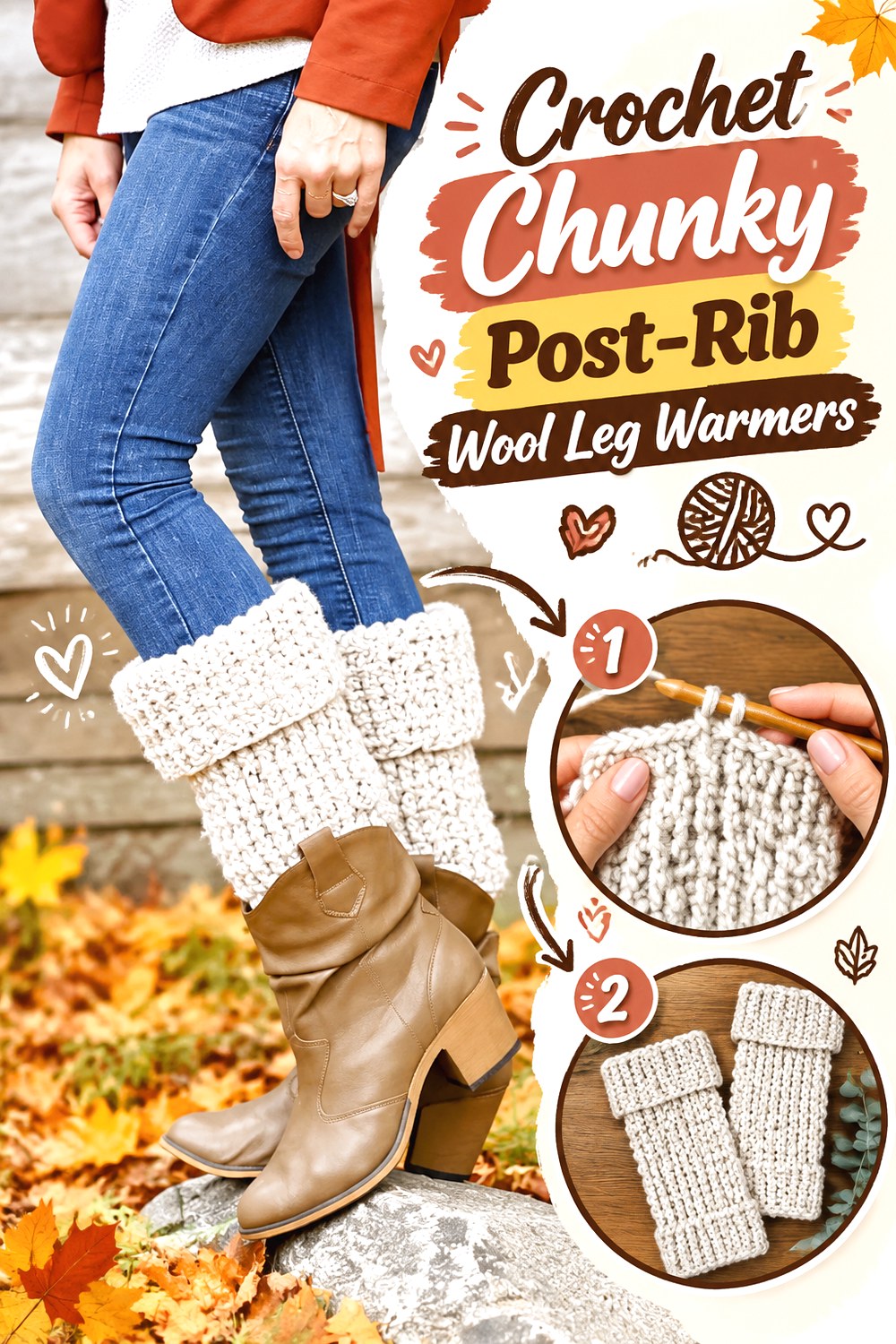
Chunky ribbing creates a dramatically different silhouette from thinner, drapier leg warmers. Life + Yarn’s design uses a bulky fabric with alternating front- and back-post texture, producing pronounced vertical ridges before the piece is seamed.
Interpreted in wool, this becomes an intentionally substantial cold-weather accessory rather than a barely-there layer. The texture works especially well with simple outfits, but bulk needs to be treated as a functional consideration. This style is better suited to visible wear over leggings or outside boots than to squeezing beneath a narrow boot shaft.
Chunky Wool Can Become Heavy
A thick wool fabric combines yarn mass with a deep stitch structure. Before making a tall pair, crochet enough of the pattern to estimate how the finished fabric feels when hanging vertically.
If it already feels weighty, extra length may encourage sliding. A slightly shorter warmer can preserve the chunky visual impact without adding unnecessary mass.
Flat Construction Makes Seaming Matter
The Life + Yarn design is worked flat and then joined. With thick wool, an uneven seam can become more noticeable against the leg.
Before closing the piece, align the row edges carefully and avoid pulling the seam tighter than the surrounding fabric. The join should bend with the warmer rather than form a rigid ridge.
Post Ribbing Needs Room to Stretch
Deep front- and back-post texture consumes more yarn and creates thicker fabric than plain double crochet. That makes circumference checks important.
Test the ribbed fabric around the intended calf while wearing the base layer you expect to pair with it. A measurement that works over bare skin may be too snug over winter leggings.
Original Tutorial and Creator Credit
Creator/Site: Life + Yarn
9. Crochet Simple Double Crochet Wool Tube Leg Warmers
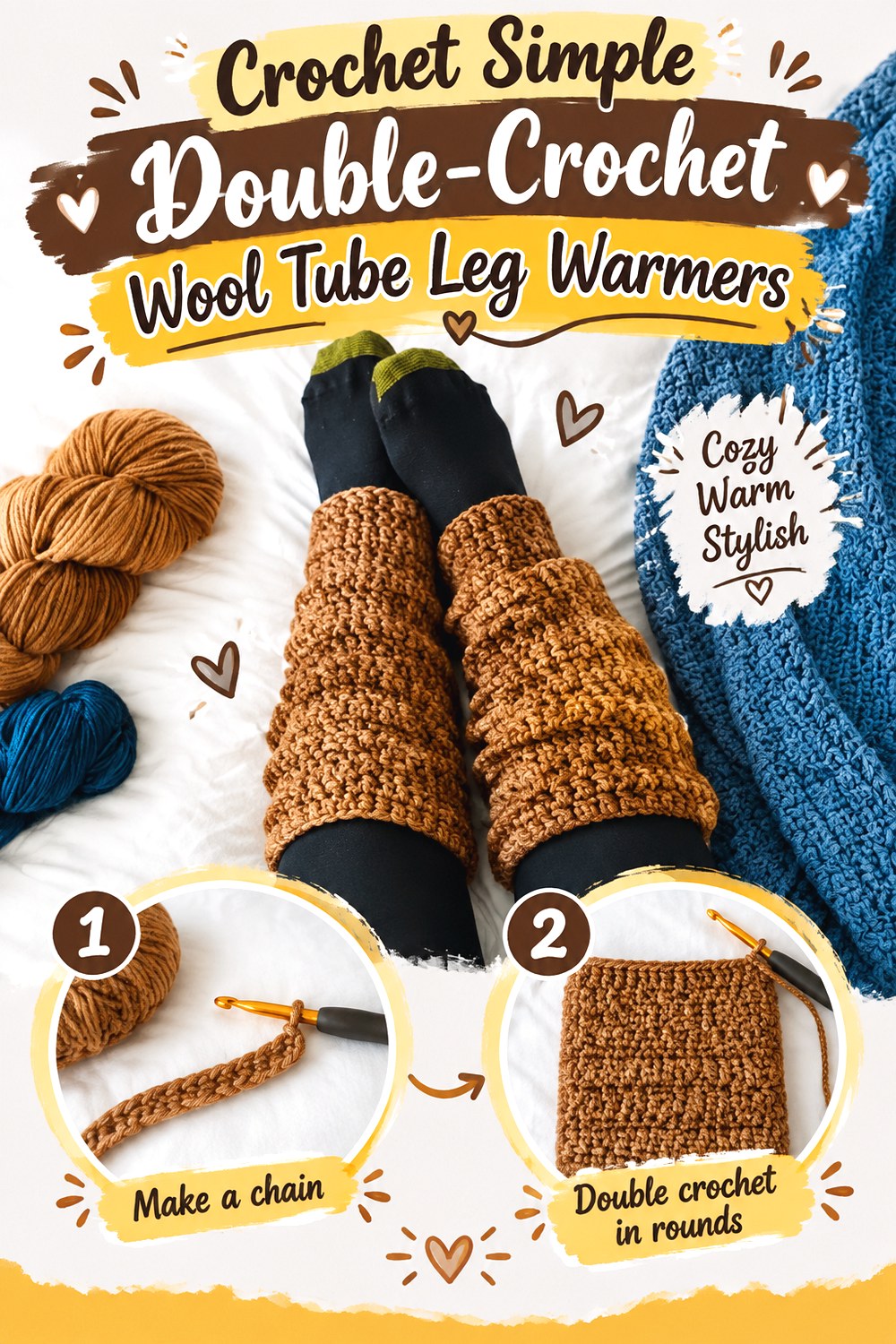
Sometimes the yarn should do more visual work than the stitch pattern. B.Hooked’s leg warmer design is a straightforward tube crocheted in joined rounds using double crochet. The source specifically discusses using medium-weight yarn and notes that versions have been made with specialty hand-dyed wool as well as other yarns.
That simplicity makes it a useful foundation for a hand-dyed wool with tonal variation, subtle speckles, or long color shifts. There are no cables or complex motifs competing with the yarn. It is also a good contrast to the shaped and heavily textured ideas above.
The Plain Tube Is a Good Wool Showcase
A simple stitch field makes yarn character immediately visible. If you have an artisanal wool whose color changes would disappear in cables or puff stitches, a plain double-crochet body may show it more clearly.
The trade-off is that uneven tension or obvious round joins can also be more visible, so consistency matters.
Gauge Matters More Than Decoration
B.Hooked emphasizes measuring and checking gauge because the finished tube is expected to fit a particular calf range. Wool substitution can alter both initial gauge and washed size.
Check the fabric again after treating your swatch according to its care instructions. Base final sizing decisions on the finished swatch, not just fresh stitches.
Original Tutorial and Creator Credit
Creator/Site: B.Hooked
10. Crochet Faux Knit Ribbed Wool Leg Warmers
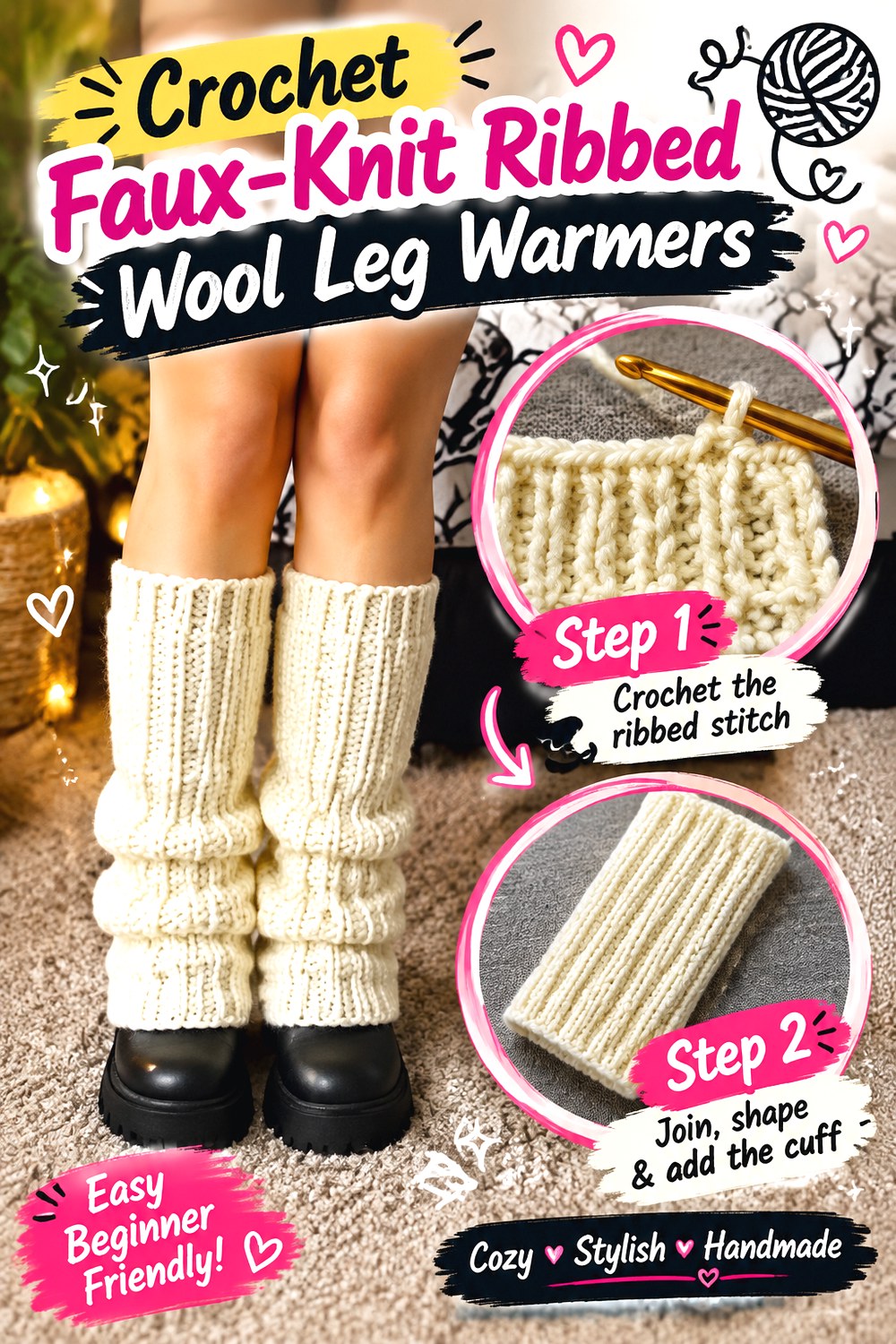
Kae Neebs demonstrates a rib-heavy leg-warmer design using back-loop half double crochet to create a strong faux-knit effect, followed by a fitted cuff treatment. The tutorial also discusses shaping and finishing after construction.
A wool version could create a clean, minimal winter accessory where the vertical-looking ribs provide enough detail without added cables or colorwork. Compared with the chunky post-rib version, this approach reads flatter and more streamlined, making it more compatible with simple boots and layered everyday outfits.
Faux-Knit Ribs Need Consistent Tension
Long fields of ribbing reveal changes in row height quickly. Stop occasionally and compare the two long edges of your panel. If one begins to shorten, correct the tension before continuing.
With wool, also check the ribbing after washing the swatch because some yarns relax enough to noticeably change the finished circumference.
Use Heat Finishing Carefully With Wool
The video includes steaming guidance for its project. Do not assume the same heat treatment is appropriate for every wool yarn.
Consult the yarn label first. When in doubt, test any finishing technique on a separate swatch so you can see whether the wool relaxes, changes texture, or reacts poorly before exposing the finished pair.
Original Tutorial and Creator Credit
Creator: Kae Neebs
11. Crochet Shell Stitch Slouch Wool Leg Warmers
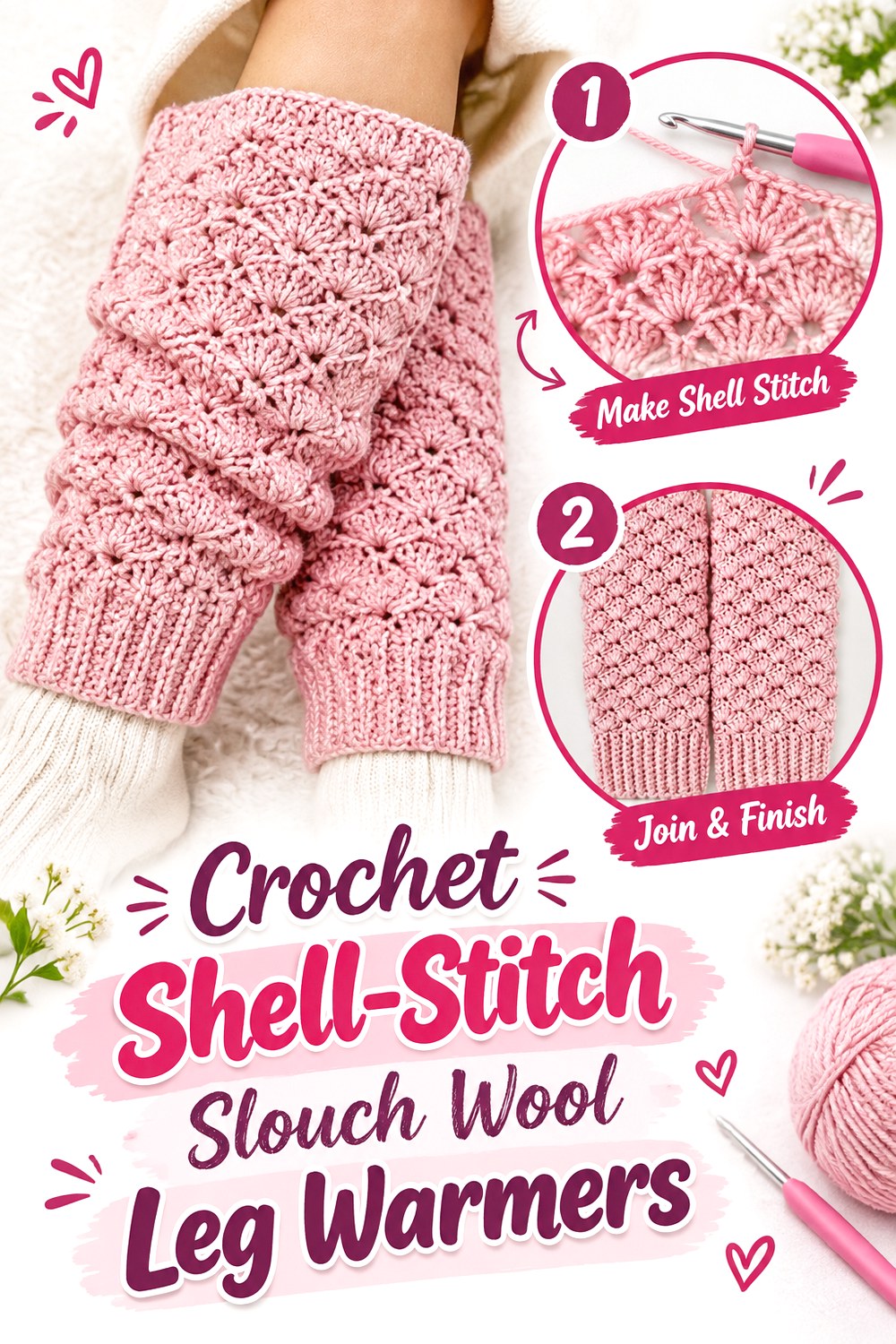
Shell stitches offer a softer, scalloped surface compared with rigid ribs and cables. Crochet With Akita’s tutorial pairs a shell-patterned body with ribbed sections and is designed to create a slouchy women’s leg warmer whose size can be customized.
This construction is a useful wool idea for someone who wants obvious crochet texture without the density of cable work. Depending on the wool chosen, the shells can look crisp and architectural or softer and more blended. Because open spaces may appear between stitch groups, the warmer can also feel visually lighter than a fully ribbed tube.
Shell Texture Adds Air and Movement
Grouped stitches naturally create more variation in thickness across the fabric. That can help a wool warmer avoid looking like one solid column around the leg.
However, more open areas also change wind resistance and stretch. Think of this primarily as a textured fashion layer rather than assuming it will perform like the densest wool fabric.
Match Wool Choice to the Open Pattern
A highly fuzzy yarn may blur the shell outlines and fill the visual gaps between groups. A smoother wool can retain clearer scalloped definition.
Crochet a full pattern repeat in your candidate yarn before purchasing the rest. Small swatches that do not contain the complete shell may not reveal the real fabric.
Keep the Ribbed Ends Firm
The tutorial uses ribbing to frame the shell body. That contrast is functional as well as decorative.
When adapting to wool, make sure the ribbed sections retain enough elasticity to support the slouch. If the cuff stretches permanently during your test, reconsider the yarn or sizing before proceeding.
Original Tutorial and Creator Credit
Creator: Crochet With Akita
12. Crochet Crossed Puff Wool Leg Warmers
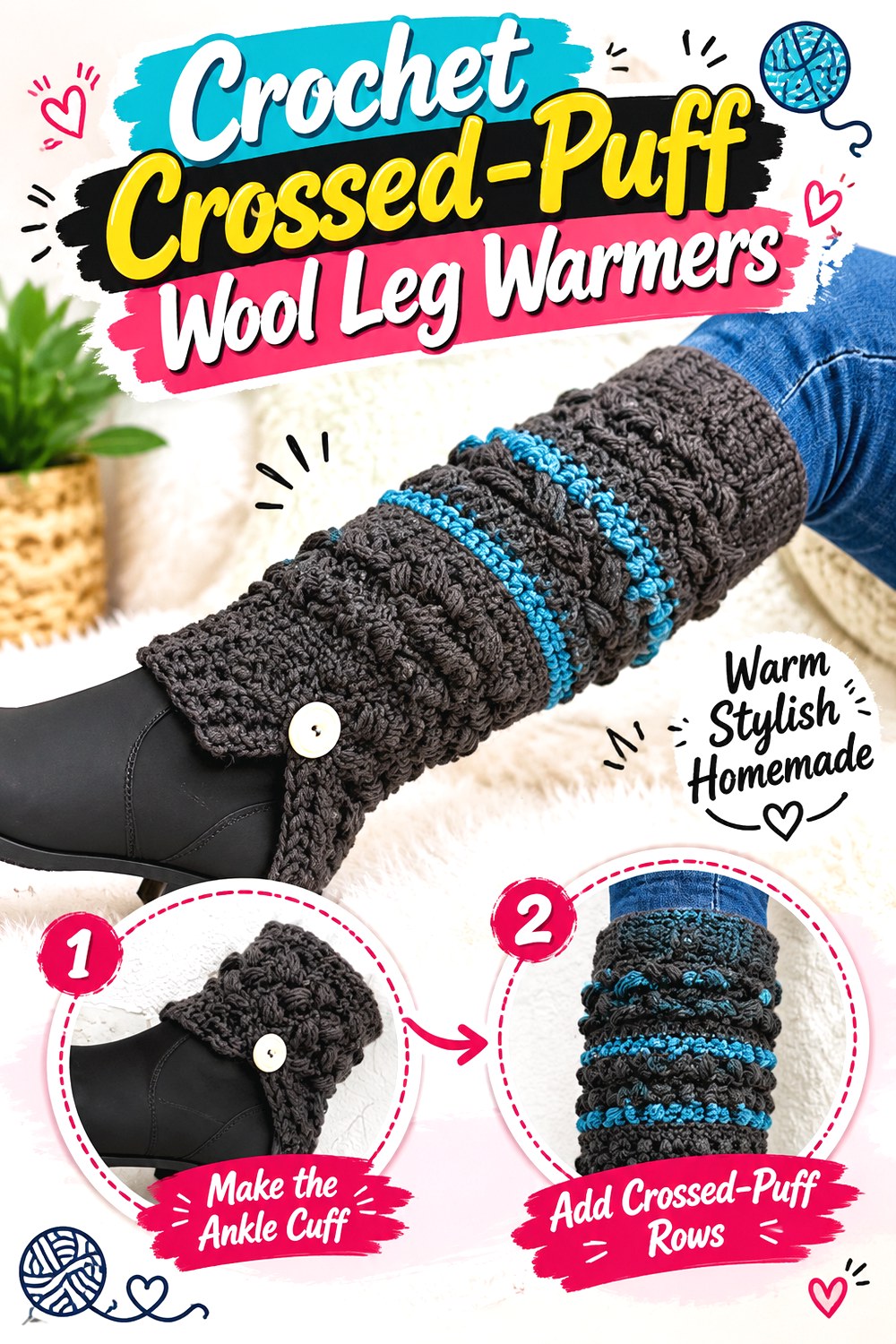
For a more decorative central feature, Francesca Uncinettando Crochet&Love demonstrates wool leg warmers that combine elastic-looking crochet sections with a central crossed-puff motif. The creator specifies wool and uses different hook sizes for different portions of the design.
That change in texture and density gives the warmer a more segmented appearance than a single-stitch tube. It is particularly interesting for solid or lightly heathered wool, where shadows from the puff texture can remain visible. The tutorial also discusses adjusting measurements for younger wearers, making fit planning part of the original construction rather than an afterthought.
Puff Stitches Magnify Yarn Bulk
Puff-style texture gathers multiple loops into one visual element, so a bulky or very fuzzy wool can make the motif substantially thicker than expected.
Make a sample of the puff section, not merely the surrounding ribbing. Check whether you like both its appearance and its physical thickness against the leg.
Two-Strand Sections Change Density
The tutorial uses yarn differently between its elastic-looking area and central motif, including a two-strand treatment in part of the project.
That means substitutions should be evaluated by resulting fabric rather than simply copying a hook size. Different wool yarns held together can become dense very quickly.
Measure Before the Central Motif
When a design changes stitch structure through the middle, later circumference corrections can become awkward. Establish the fit of the foundational section first.
If making the warmer for a child or teenager, use current measurements and verify that the finished fabric allows comfortable movement rather than relying solely on age labels.
Original Tutorial and Creator Credit
Creator: Francesca Uncinettando Crochet&Love
13. Crochet Color Block Merino Blend Leg Warmers
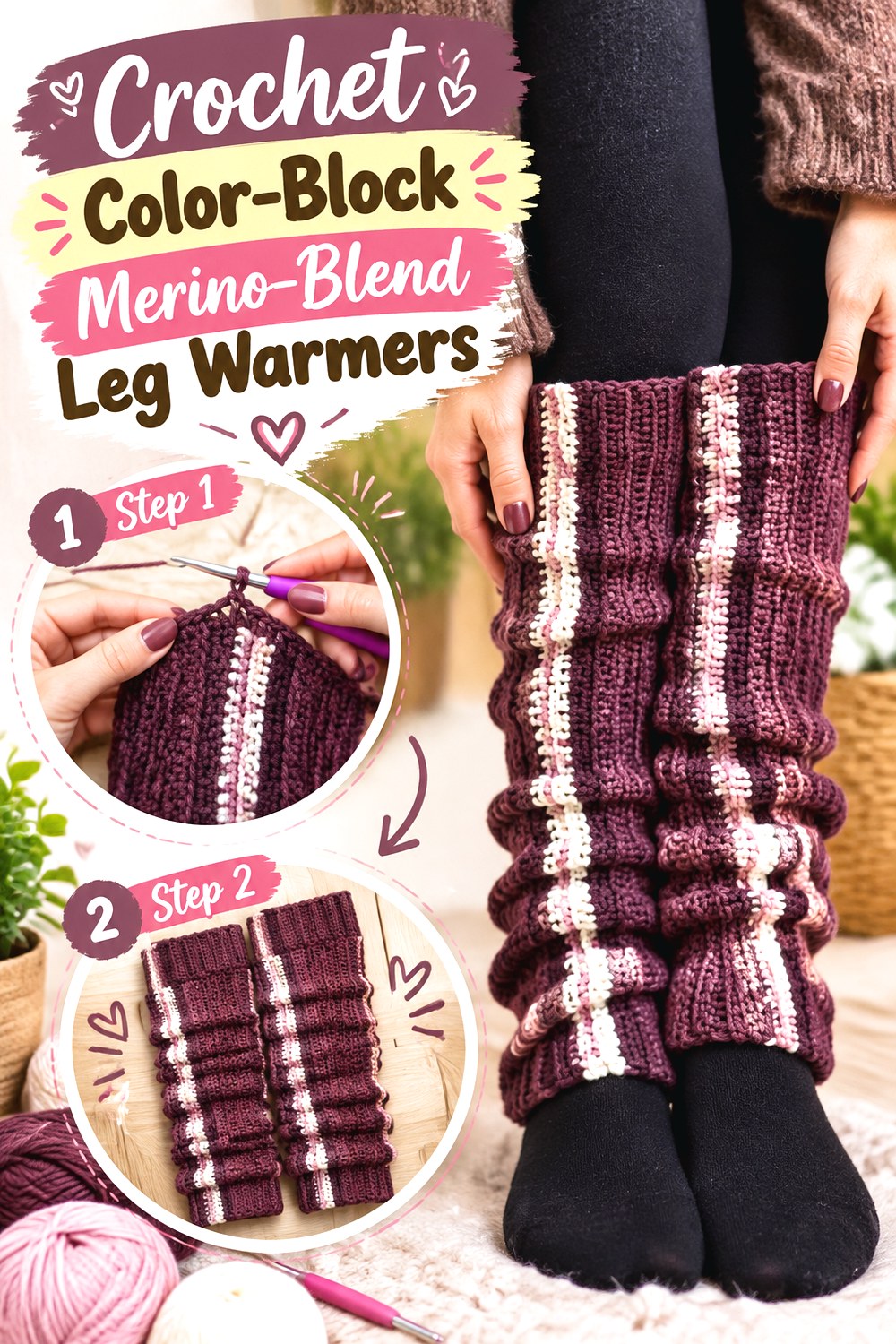
Bloodimaryart Crochet approaches leg warmers as a colorful accessory rather than a single-tone winter basic. The video sample uses three colors of a yarn identified as Cotton Merino, with the designer explaining that the colors can be positioned differently depending on how the warmer is turned. The tutorial also demonstrates color changes and side seaming.
This idea works well for readers who want natural-fiber character without an all-wool appearance. Broad color areas make the warmer feel more graphic than a tiny stripe repeat, while the comparatively uncomplicated construction keeps attention on palette and proportions.
Color Blocking Can Highlight Natural Fibers
Choose colors with enough contrast to remain distinct once the yarn is crocheted. Heathered or marled shades can soften the boundary between blocks, while clear solids produce a more graphic result.
Lay the yarns next to your regular winter footwear first. A palette that looks balanced in skeins may read differently once one shade occupies much more fabric than another.
Choose Seams That Stay Comfortable
The source demonstrates seaming the side of the project. With a natural-fiber blend, avoid pulling the seam so tightly that it becomes a stiff vertical cord.
After joining a short test section, stretch it sideways. The seam should move with the surrounding crochet rather than becoming the least elastic part of the warmer.
Swatch Mixed-Fiber Merino Yarns
A yarn name containing merino does not mean it behaves like pure wool. Blended fibers can alter drape, softness, recovery, and washing behavior.
If substituting another wool or wool blend for the tutorial yarn, match the creator’s intended fabric dimensions and gauge rather than relying on fiber name alone.
Original Tutorial and Creator Credit
Creator: Bloodimaryart Crochet
14. Crochet Minimal Wool Panel Leg Warmers
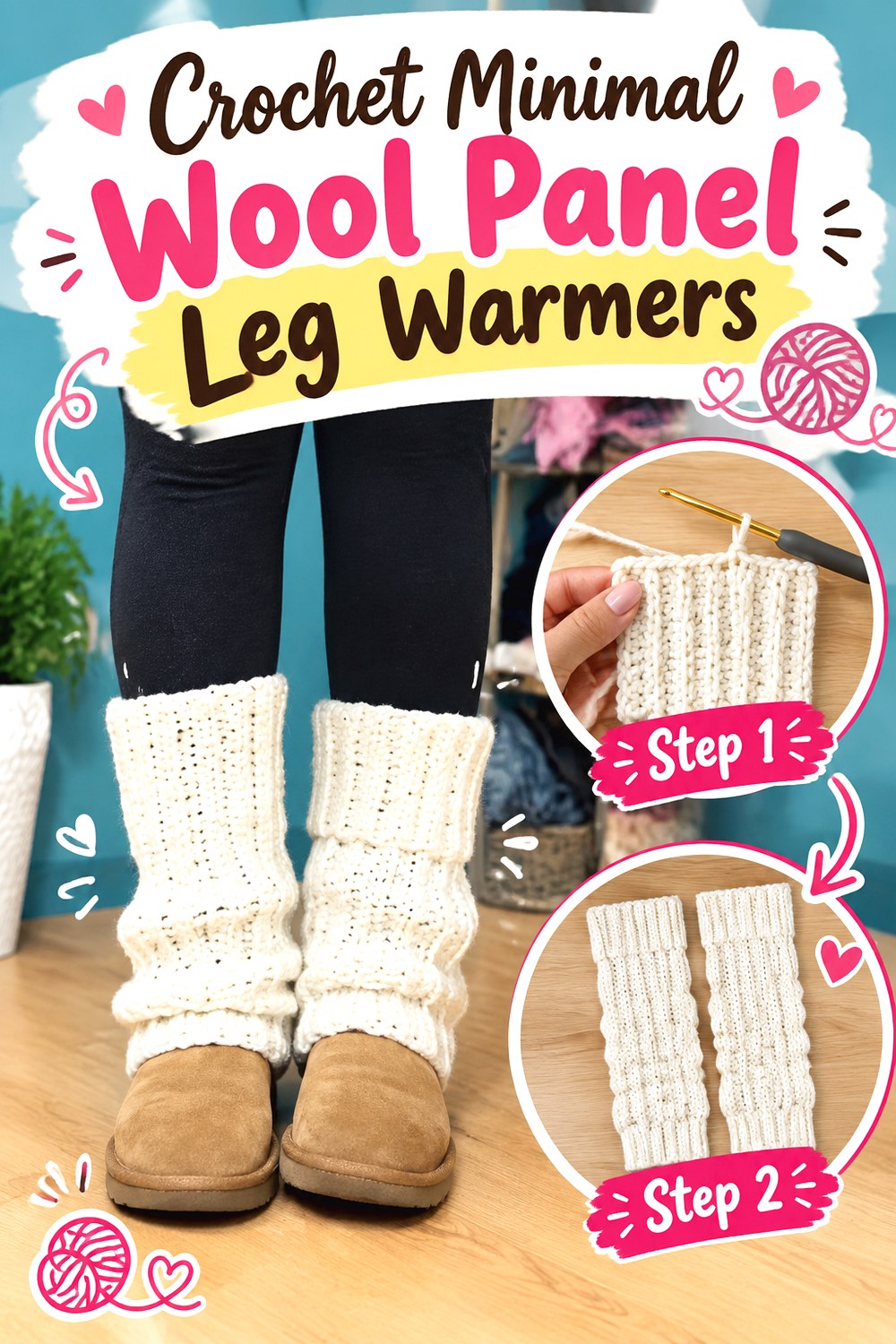
A very simple panel construction is useful when the main priorities are wool texture, fit, and speed of visual planning rather than elaborate stitchwork. The vivi e cuci tutorial demonstrates leg warmers made from wool with a large hook, beginning with measurements and a crocheted panel before joining the piece.
This final idea is intentionally restrained. It gives hand-dyed, marled, heathered, or naturally colored wool space to stand on its own and can be easier to assess for circumference than a complex patterned design. It also provides a useful counterpoint to the cables, shells, puff stitches, and colorwork elsewhere in the list.
A Simple Panel Makes Fit Easy to Read
Before seaming, wrap the panel around the intended part of the leg and assess the fabric under realistic stretch. This makes it easier to spot excessive positive ease or a panel that will feel restrictive.
Remember that washing may alter wool dimensions, so the finished swatch remains your best guide.
Decide How Much Ease You Want
A straight panel can be worn relatively fitted or with extra circumference for a softer look, but those are different styling decisions. If you want visible slouch, increasing only width may create looseness without attractive folds.
Consider circumference and total height together, and compare the planned warmer against your boots and leggings before making the second piece.
Original Tutorial and Creator Credit
Creator: vivi e cuci
How to Choose Between These Crochet Wool Leg Warmer Styles
| If you want… | Consider | Main thing to check |
|---|---|---|
| Soft, intentional slouch | Brick-texture or shell-stitch warmers | Upper-cuff grip and fabric weight |
| Strong stitch definition | Cabled or spike-stitch warmers | Whether your wool clearly shows raised texture |
| A classic wool look | Knit-look tweed warmers | Gauge and ribbing recovery |
| Bold color | Asymmetrical stripes or color blocks | Color placement and yarn consistency |
| Maximum visual thickness | Chunky post-rib warmers | Weight and compatibility with boots |
| Minimal construction | Double-crochet tube or simple panel | Accurate circumference |
| Decorative finishing | Picot-edge warmers | Whether the body itself provides enough support |
| Dimensional detail | Crossed-puff warmers | Added bulk in the motif area |
Conclusion
These 14 crochet wool leg warmer ideas show how much the same basic accessory can change through yarn, fit, texture, and construction. For maximum stitch definition, cables, spike stitches, or knit-look ribs are strong directions. For relaxed styling, the brick-texture and shell versions provide more slouch, while simple tubes and flat panels leave room for an interesting wool yarn to become the feature.
Whatever design you choose, measure the actual wearer, check your wool after washing a swatch, and think about how the finished warmer will interact with boots, leggings, or other layers. Wool substitution can affect both fit and drape, so use the original tutorials near the end of your planning process for the creators’ exact construction details.
Frequently Asked Questions
Can I use wool in a crochet leg warmer tutorial that originally uses acrylic?
Often you can explore a wool substitution, but do not treat yarns of the same labeled weight as automatically interchangeable. Match the tutorial’s gauge and assess your washed swatch for thickness, stretch, and recovery. Wool may produce a warmer, springier, or denser fabric than the original yarn. If the design depends on close sizing, recalculate only after confirming how your substituted yarn behaves.
How can I stop crochet wool leg warmers from falling down?
Start with the upper circumference rather than trying to fix slipping by making the entire warmer smaller. The cuff should usually provide enough grip to support the body without feeling restrictive. Heavy cables, chunky wool, and generous slouch all increase the amount of fabric the cuff must support. Try the first warmer on before making its mate and check fit again after washing.
What wool weight is best for crochet leg warmers?
There is no single best weight. The safest choice is usually the weight specified by the original tutorial, particularly when the pattern is fitted or gauge-dependent. Medium-weight wool can balance warmth with manageable bulk, while chunky wool creates a more substantial accessory. Lighter wool may suit intricate texture or layering under boots. Always judge the finished fabric rather than the yarn category alone.
Are pure-wool leg warmers likely to feel itchy?
That depends on the particular wool, yarn construction, and wearer. Some people are comfortable with wool directly against the skin, while others prefer a softer blend or wear leg warmers over leggings or tights. Handle the yarn against the skin before committing to a pair if sensitivity is a concern. A yarn marketed as soft still cannot guarantee comfort for every wearer.
How should crochet wool leg warmers be blocked and washed?
Use the yarn manufacturer’s care instructions together with any relevant finishing guidance from the original designer. Do not automatically apply high heat or vigorous agitation to wool. Make and wash a swatch first, particularly when using an unfamiliar or non-superwash yarn. Measure the swatch before and after drying so you know whether the fabric grows, contracts, becomes denser, or loses elasticity.
Can crochet wool leg warmers be resized for children?
They can be when the chosen tutorial supports suitable sizing or when its designer provides clear customization guidance. Use the child’s current calf and leg measurements rather than relying only on age. The warmer should not restrict movement or circulation, and extra fabric around the ankle should not interfere with footwear. For exact sizing changes, follow the adjustment method given by the original pattern creator rather than inventing stitch counts.