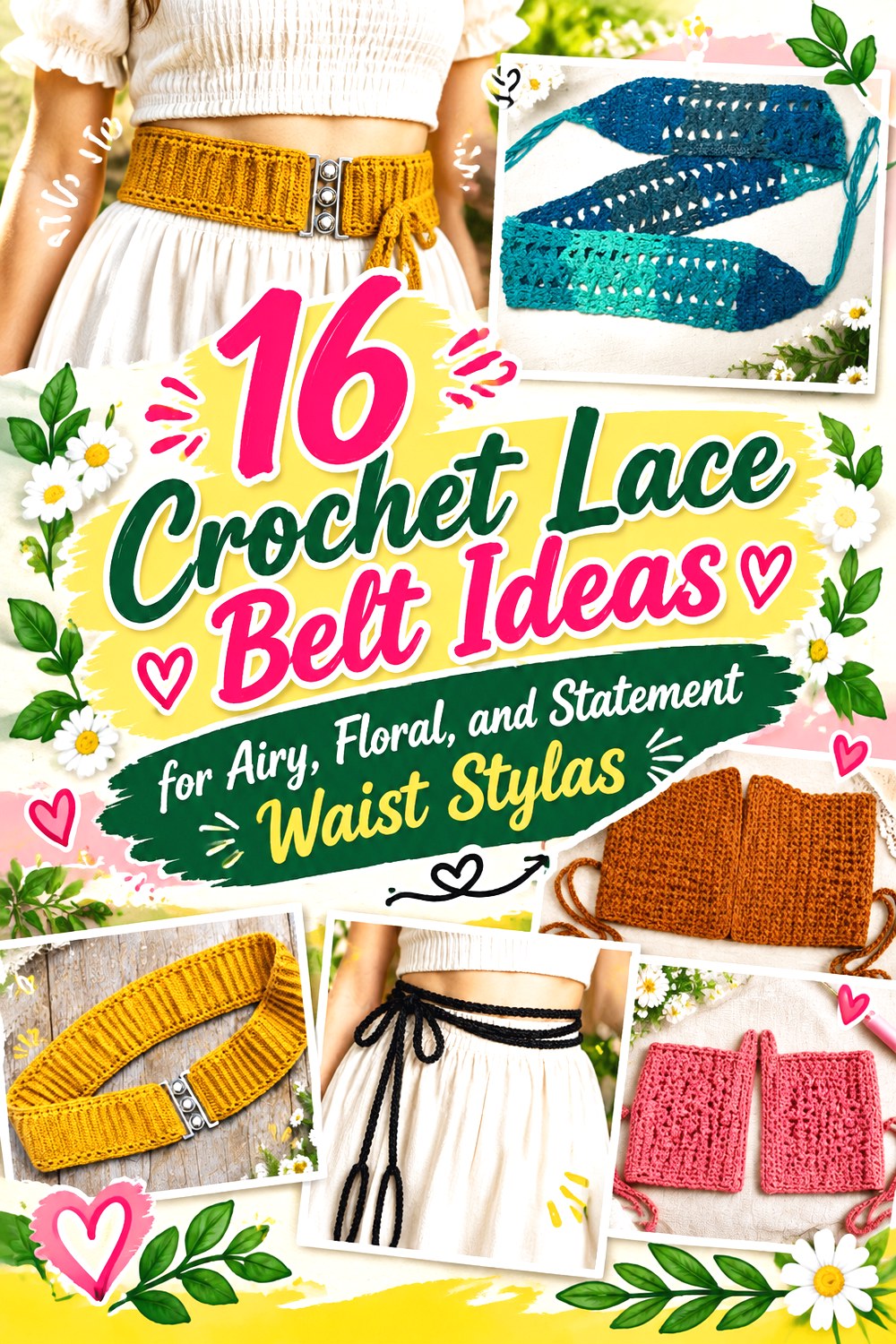
16 Crochet Lace Belt Ideas for Airy, Floral, and Statement Waist Styles
A crochet lace belt can be a barely-there tie, a row of linked flowers, a crisp geometric band, or a broad waist piece with visible lacing. Those differences affect much more than appearance. Width determines whether a belt can pass through garment loops, openwork changes how much the clothing underneath shows through, and the closure influences how precisely the finished length needs to fit.
These 16 ideas cover continuous lace, scalloped shells, flower squares, tape lace, leaves, hearts, rings, beads, tassels, cords, granny squares, and shaped waist belts. Some emphasize delicate decoration, while others add enough structure to become the main feature of an outfit. Use the guidance below to compare drape, stretch, motif scale, closure type, and wearing position before choosing an original tutorial for the construction details.
Quick List
- Crochet Airy Fan Tie Belt
- Crochet Scalloped Shell Ribbon Belt
- Crochet Flower-Frame Motif Belt
- Crochet Floral Tape-Lace Sash
- Crochet Leaf Garland Wrap Belt
- Crochet Heart-Link Waist Chain
- Crochet O-Ring Graphic Buckle Belt
- Crochet Beaded Lace Clasp Belt
- Crochet Tassel-Cord Boho Belt
- Crochet Charleston Medallion Tie Belt
- Crochet Granny-Square Buckle Belt
- Crochet Linked Blossom Waist Belt
- Crochet Irish-Lace Cord Wrap Belt
- Crochet Shaped Lace-Up Corset Belt
- Crochet Wide Textured Clasp Belt
- Crochet Pointed Shell-Lace Sash Belt
Choose Lace Density for the Way You Will Wear the Belt
Start with function rather than color. A highly open fan, floral tape, heart chain, or O-ring design is most convincing when the negative space is allowed to show. These belts generally behave more like decorative waist accessories than rigid straps, especially when they close with long ties.
A denser band makes more sense when hardware has to remain stable or when the belt needs a strong visual line over a loose dress. Motif construction sits between those extremes: flowers, squares, and leaves provide recognizable shapes while leaving openings between or inside them.
Also consider the garment beneath the belt. Intricate lace can disappear against a busy print, while a wide solid section may overwhelm a lightweight dress. If you want to use existing belt loops, measure the actual openings first rather than assuming a decorative crochet design will fit through them.
Plan Finished Length, Stretch, and Closure Together
A tie belt offers substantial adjustment because the tails absorb differences in circumference. A buckle or fixed clasp is less forgiving. With hardware, the closure itself occupies part of the finished circumference, so it should be considered while the crocheted section is still being sized.
Stretch complicates that decision. A long narrow piece may lengthen under gentle wearing tension even when it measures correctly on a table. Open lace can also narrow as it stretches, changing both the appearance of the motifs and the fit.
Check the project at the position where you will actually wear it—natural waist, lower waist, hips, or over a garment. For wider belts, test the upper and lower edges rather than relying on one circumference measurement. When substituting yarn, repeat those checks because fiber, stitch density, and tension can change how the belt behaves.
Match Yarn Character to Lace Definition and Hardware
Crisp motifs are easier to read when the yarn surface does not hide the stitch structure. A strong fuzzy halo can soften shells, leaves, hearts, and fine floral lace, while a smoother yarn generally makes the openings more obvious. That does not make one fiber universally better; it simply changes the finished effect.
Weight matters too. Beads, clasps, buckles, and long tassels add forces that a plain lace strip does not experience. Before adapting a delicate motif to substantial hardware, examine how the original tutorial handles the fastening area. A denser transition may be more suitable than attaching a heavy buckle directly to large chain spaces.
For substitutions, make enough of a sample to see several repeats and apply the finishing treatment appropriate for the yarn. Judge the sample both relaxed and under light tension before committing to a full belt.
1. Crochet Airy Fan Tie Belt
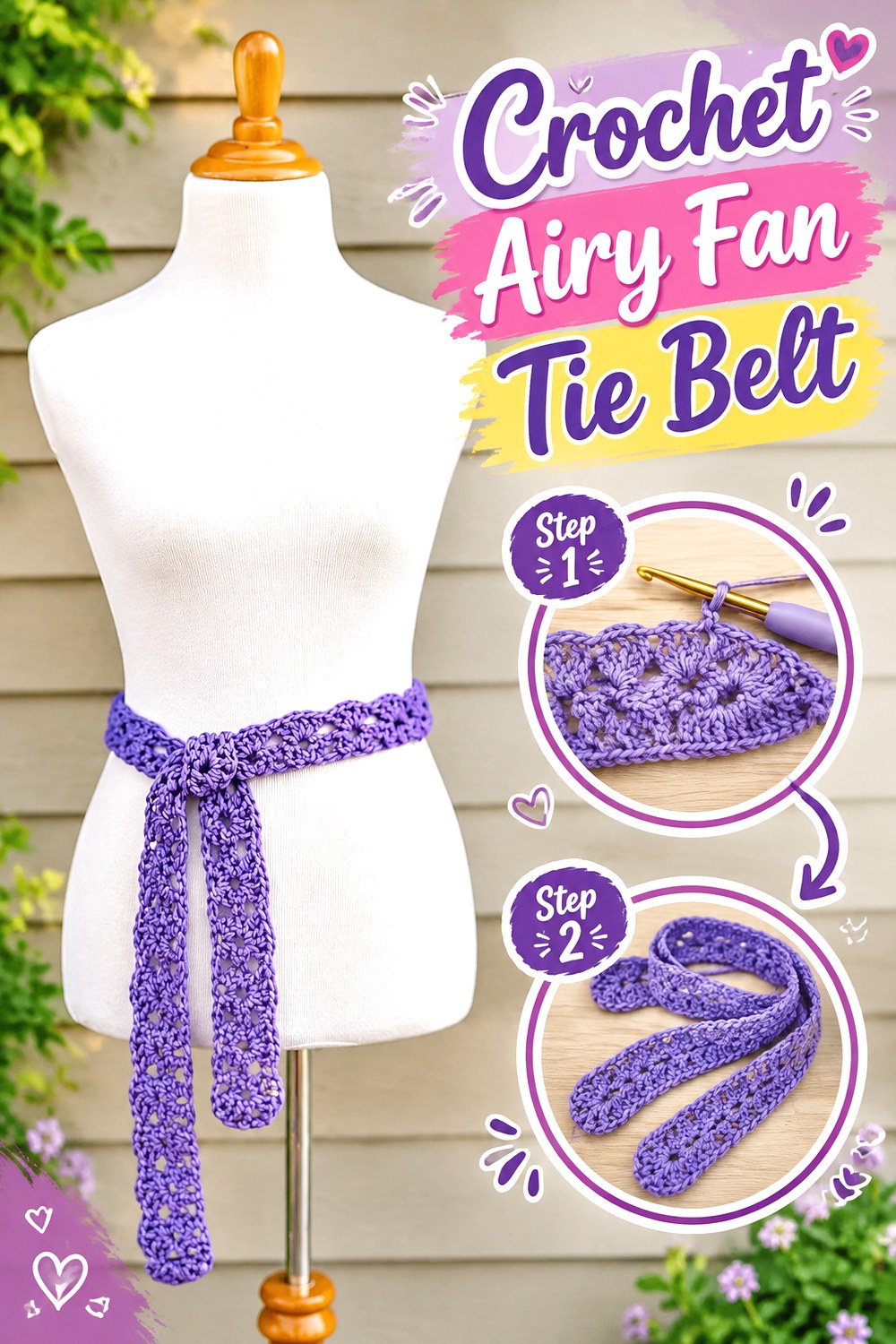
This long, narrow design lets open crochet provide nearly all of the visual interest. Fiber Flux’s original project uses a repeating lace construction without a bulky buckle, leaving the finished strip free to wrap and tie. The result is especially useful over dresses, tunics, or long shirts when you want a soft horizontal accent instead of firm waist structure.
Because the design stretches across a long span, small changes in tension can become surprisingly visible. It is also a good choice when you want the clothing underneath to remain part of the design, since the open sections create contrast rather than covering the garment completely.
Tie Length Is Part of the Silhouette
Do not choose the final length by waist circumference alone. Think about what should happen after the belt wraps around you. A compact side knot needs less extra length than a large bow or long hanging tails.
Use a temporary ribbon or length of yarn to imitate the finished belt around the intended outfit. This gives you a practical visual reference for how much overlap and tail length feels balanced before you commit to the complete crochet strip.
Watch for Progressive Narrowing
Repeated openwork provides an easy way to spot changing tension. If later fans become tighter than earlier ones, the belt can gradually narrow even though each individual repeat appears acceptable while you are working.
Periodically lay the piece flat and compare sections from different points along its length. Pronounced narrowing is better addressed while the project is underway rather than relying on blocking to correct a major tension change after finishing.
Let the Openwork Show
An airy belt needs visual contrast to make its pattern readable. Before choosing a final yarn color, place a short sample over several garments you already own. Lace that looks dramatic against a solid dress may become almost invisible over a similarly colored print.
If the stitch pattern is the main attraction, choose styling that leaves enough uninterrupted background around the openings.
Original Tutorial and Creator Credit
Creator/Site: Fiber Flux
2. Crochet Scalloped Shell Ribbon Belt
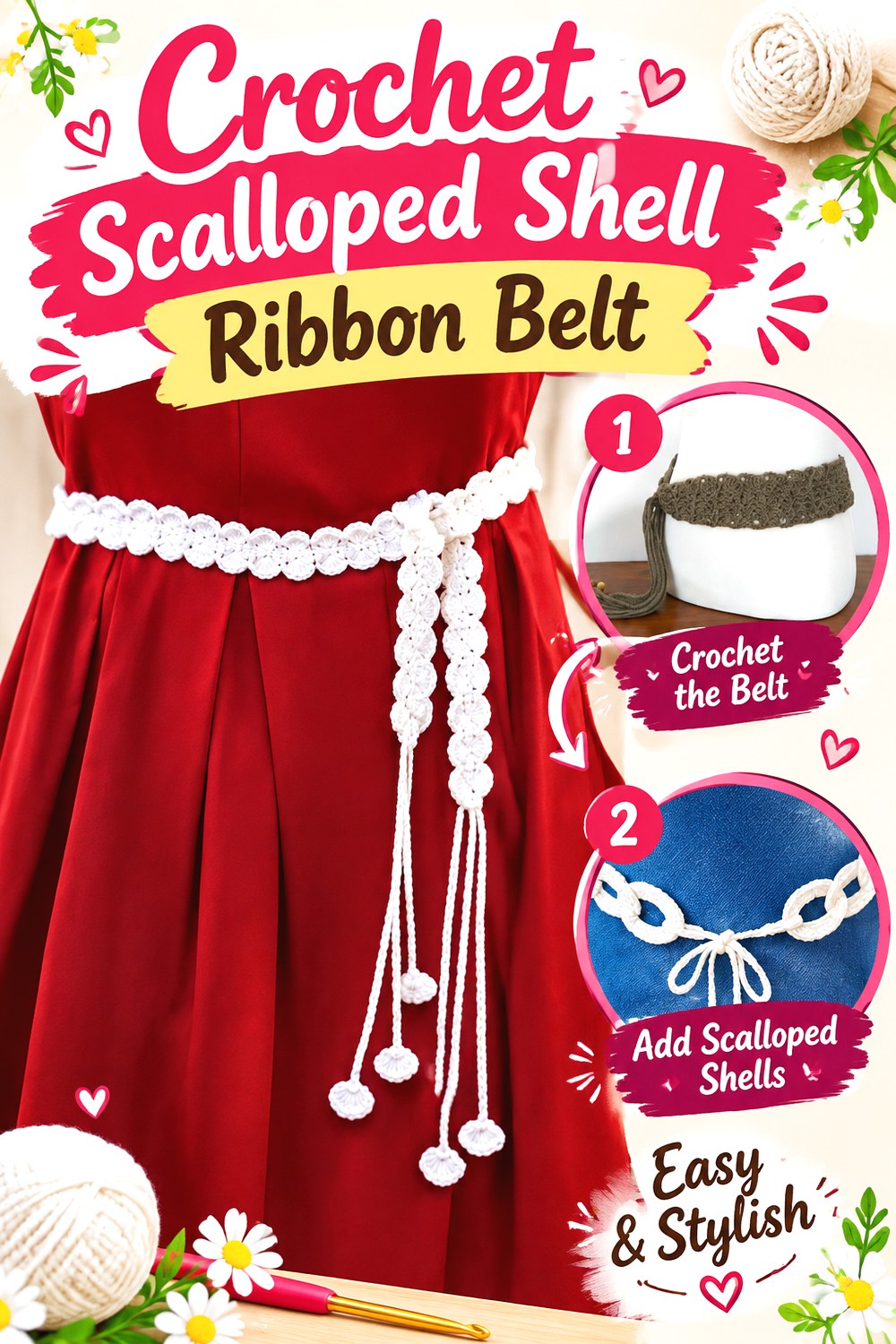
Instead of straight-edged mesh, this belt uses shell-shaped crochet to create a decorative rhythm along the waist. Gloriarte’s tutorial shows a continuous crocheted belt in which the curved stitch pattern becomes a defining part of the silhouette. The result feels more ornamental than a plain strap while remaining much narrower than a corset-style waist piece.
This direction works particularly well when you want the belt itself to resemble lace trim. Because the shells are repeated continuously, the quality of their outline matters more than adding extra decoration. It is also a useful option for styling over relatively simple garments where scallops can remain visible.
Give Scallops a Calm Background
The edge of the belt is part of the design, so consider what will appear immediately above and below it. Dense prints or heavily textured knits can compete with small shell shapes.
A plain dress, simple blouse, or low-contrast layer gives the curves more room to register. Test a short section against the intended garment before deciding whether the belt needs stronger color contrast.
Sample for Edge Curl
Decorative stitch combinations do not always behave identically in different yarns. If you substitute fiber or change hook size, work enough repeats to judge both edges rather than evaluating only stitch appearance.
Gently curve the sample as it would sit around a waist. If one edge flares strongly or the strip repeatedly rolls, reconsider the material or tension before making the full length.
Keep the Shell Definition Crisp
Gloriarte’s tutorial specifies cotton for the demonstrated project, which provides useful context for the clearly separated stitch shapes shown in the finished belt.
If you choose a significantly fuzzier or springier substitute, expect the outline to change. The best comparison is a completed sample under light wearing tension, not the untouched skein.
Original Tutorial and Creator Credit
Creator: Gloriarte
3. Crochet Flower Frame Motif Belt
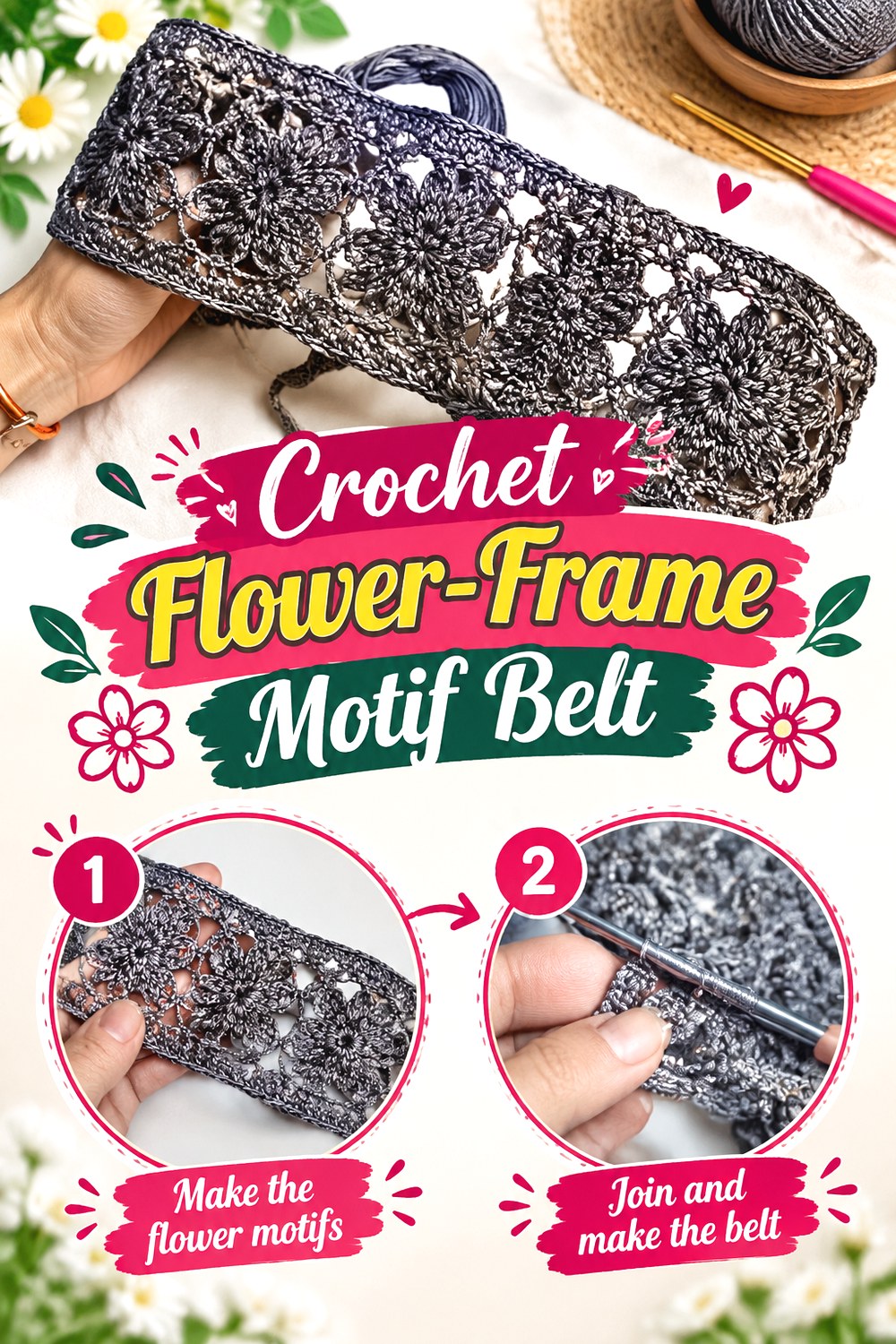
This idea turns individual floral squares into the body of the belt. Nebeska Crochet with Love demonstrates flowers enclosed within square frames and joined into a continuous waist accessory, creating more defined modules than uninterrupted fan or shell lace. The source also discusses multiple fastening possibilities, so the floral strip can be considered alongside different closure styles.
The attraction here is the balance between geometry and decoration. Square boundaries help organize the flowers into a straight band, while the centers keep the design light and recognizable. It suits readers who enjoy motif crochet and want each repeated unit to remain obvious in the finished accessory.
Motif Size Becomes a Sizing Unit
With a continuous stitch pattern, small adjustments can often be distributed across the length. A motif belt behaves differently because each additional square adds a complete visual unit.
Finish and, when appropriate for the yarn, block representative motifs before judging how many you need. Their settled dimensions are more useful than measurements taken while the pieces are still curled or freshly crocheted.
Keep the Floral Run Centered
The sequence of squares becomes an obvious focal area once worn. Before permanently adding ties or hardware, place the motif strip around the intended wearing point and look at where the center flower or center join lands.
This matters especially when the total number of motifs does not create perfect front-to-back symmetry. It is usually easier to adjust the closure plan before every component is attached.
Make the Joins Part of the Design
Connections between motifs can either disappear quietly or create visible divisions. Strongly contrasting joining yarn may make the belt read as separate blocks, while a more integrated join allows the flowers to dominate.
Whichever effect you prefer, compare several joined squares together. One seam rarely shows the cumulative visual effect that appears after an entire row of motifs is assembled.
Original Tutorial and Creator Credit
Creator: Nebeska Crochet with Love
4. Crochet Floral Tape Lace Sash
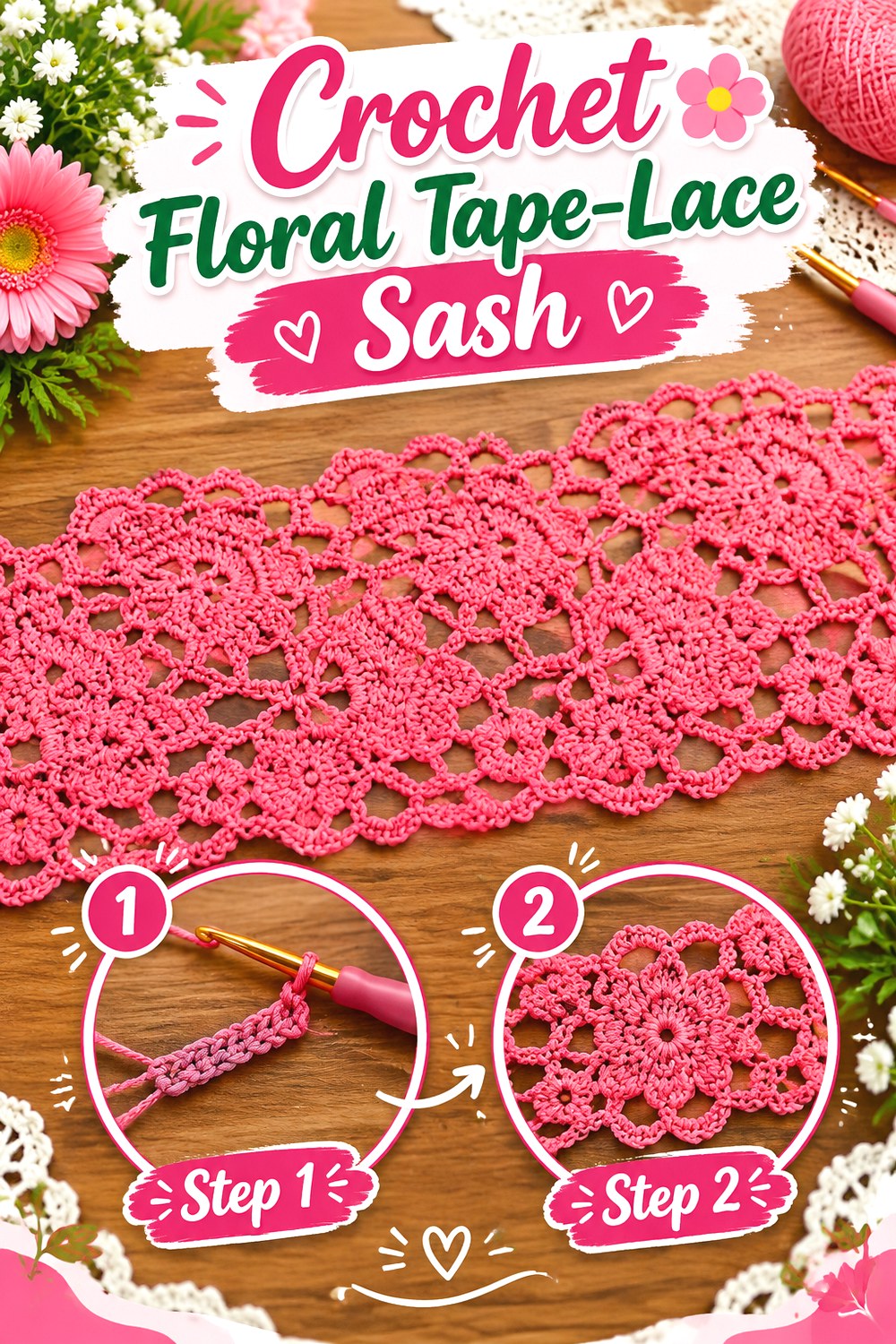
For a finer lace effect, this design uses connected floral forms to produce a continuous decorative tape. Crochet.ElenaRugalStudio’s tutorial shows a wide crochet lace composed around a round floral motif and continued as a strip, giving the finished piece an unmistakably lace-driven appearance rather than the look of a plain crocheted strap.
This construction is useful when you want the waist accessory to resemble traditional decorative trim enlarged into a wearable sash. The floral shapes remain connected without the obvious square borders of granny or flower-frame motifs, so the eye follows a more fluid line along the belt.
Tape Lace Has a Strong Direction
A floral repeat can have a definite visual orientation even when the finished strip is technically reversible or flexible. Make enough of the lace to see how the flowers appear from a normal viewing distance, then wrap the sample loosely around the waist.
This can reveal whether the motifs remain upright and balanced along the sides or whether the strip naturally wants to curve in a way that affects placement.
Protect Delicate Fastening Areas
Large chain spaces and fine petals are primarily decorative. If you adapt the lace to a buckle, clasp, or heavily pulled tie, do not assume the most open section is automatically the best attachment point.
Study the original finishing method first. Any modified closure should distribute tension into a stable area so repeated fastening does not concentrate force on one fragile-looking loop.
Fine Openwork Rewards Consistent Finishing
Small differences in motif shape can become noticeable when many repeats sit side by side. Before deciding that an irregular section needs to be remade, apply the finishing method appropriate for your yarn and assess the settled fabric.
Blocking can help organize suitable lace, but it is not a substitute for correcting a major stitch-count or tension problem. The finished strip should still look balanced without being stretched aggressively into shape.
Original Tutorial and Creator Credit
Creator: Crochet.ElenaRugalStudio
5. Crochet Leaf Garland Wrap Belt
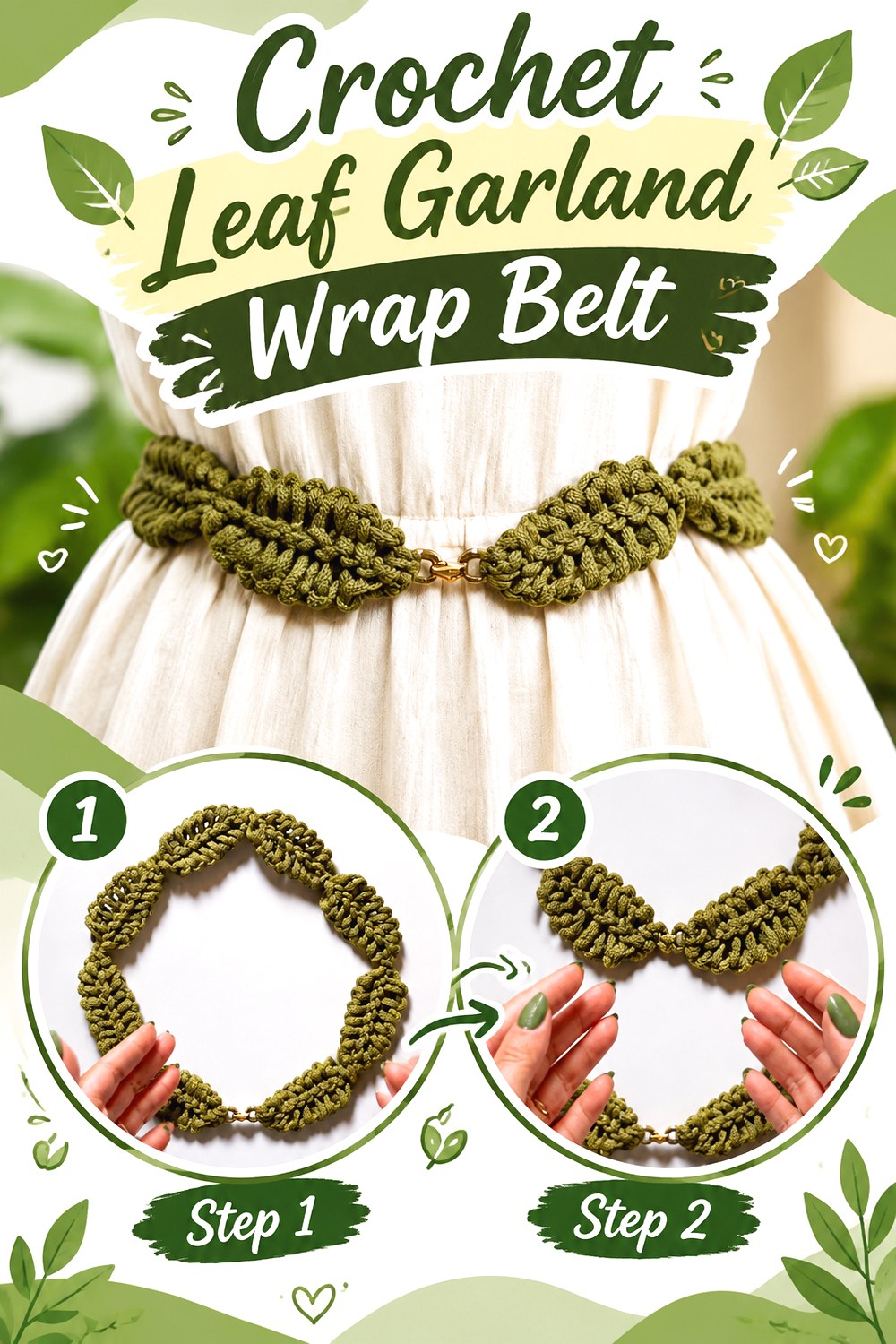
Leaves replace conventional shells and flowers in this botanical waist accessory. Michelle Duarte Crochê presents the project specifically as a crochet leaf belt, so the recognizable foliage forms create the outer silhouette rather than merely decorating a solid background band.
The result works well when you want lace to feel organic and asymmetrical rather than geometric. It can sit over dresses, skirts, or longer tops where the leaf edges remain exposed. Because individual motifs have an obvious top, tip, and direction, layout becomes a bigger design decision than it would be with a simple mesh strip.
Plan Leaf Orientation First
A row of leaves can appear to travel in one direction, alternate direction, or mirror around a central point. Those arrangements create noticeably different visual movement.
Before joining or extending the full belt, place several completed leaves in different orientations. Photographing the alternatives can make the overall flow easier to compare than deciding one motif at a time.
Do Not Hide the Best Motifs in Belt Loops
A leaf can be wider than the narrow band connecting it to the next section. If the belt is intended for jeans or trousers, check the actual garment loops before assuming the whole decorative strip will pass through them.
If the leaves are too broad, wearing the belt over the waistband may preserve the botanical silhouette more successfully than forcing motifs through loops.
Watch the Last Leaf Near the Closure
The end motif often experiences more handling than leaves in the center because it sits beside a tie, hook, or fastening point. Examine how the tutorial transitions from decoration into closure.
For any adaptation, avoid placing all normal tying tension directly on a narrow petal tip or isolated chain space. The final motif should still look like part of the design rather than becoming an improvised structural anchor.
Original Tutorial and Creator Credit
Creator: Michelle Duarte Crochê
6. Crochet Heart Link Waist Chain
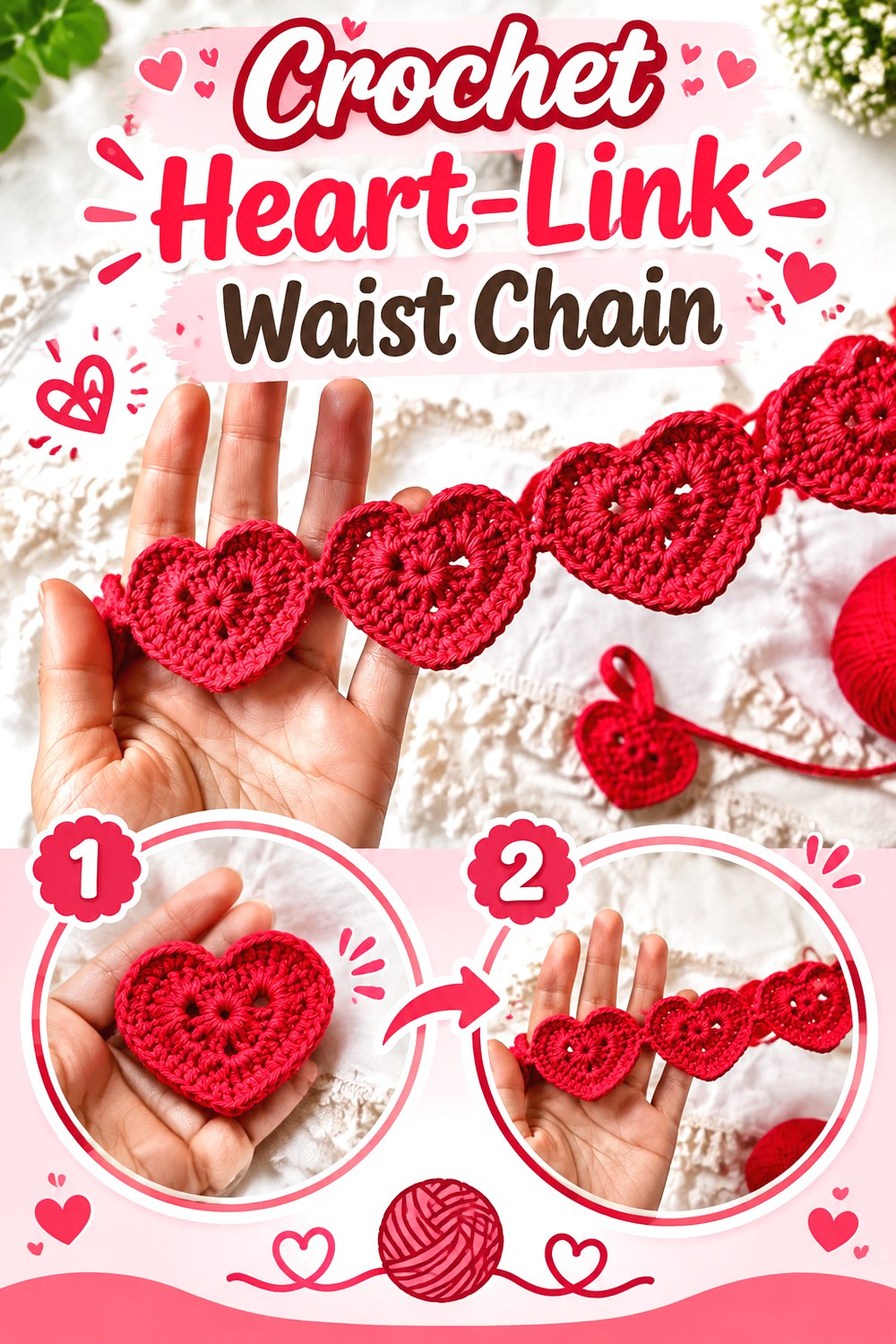
ABoC Studio’s belt uses repeated crochet hearts as the links of the accessory itself rather than sewing hearts onto a conventional strap. That produces large areas of negative space and makes the waistline feel closer to decorative crochet jewelry than a functional trouser belt.
The recognizable motif gives this idea a playful character that is quite different from botanical lace or shell repeats. It works best where the individual hearts can remain visible against the garment underneath. The continuous chain format also makes motif consistency especially noticeable because neighboring shapes are naturally compared with one another.
Heart Links Reveal Tension Changes
Small tension differences can change the width, height, or center opening of a recognizable motif. Compare new hearts with earlier ones while the work grows instead of waiting until the belt is complete.
They do not need to be mechanically identical, but a sudden size shift can interrupt the visual rhythm. Catching that change early is much easier than trying to disguise one oversized link later.
Negative Space Needs Contrast
The empty area inside and around each heart is part of the design. A low-contrast pairing can make the shapes disappear even when the crochet itself is beautifully formed.
Try the belt over several garment colors before choosing its main styling role. A heart chain that reads clearly against denim may create a completely different effect against a patterned dress.
Treat It as a Decorative Accessory
An open chain of motifs has a different job from a densely crocheted belt intended to hold garments in position. Consider it primarily for styling unless the original construction and your intended use clearly support something more demanding.
This distinction also helps when choosing a closure: a lightweight decorative fastening usually fits the visual language better than oversized hardware attached directly to a small heart.
Original Tutorial and Creator Credit
Creator: ABoC Studio
7. Crochet O Ring Graphic Buckle Belt
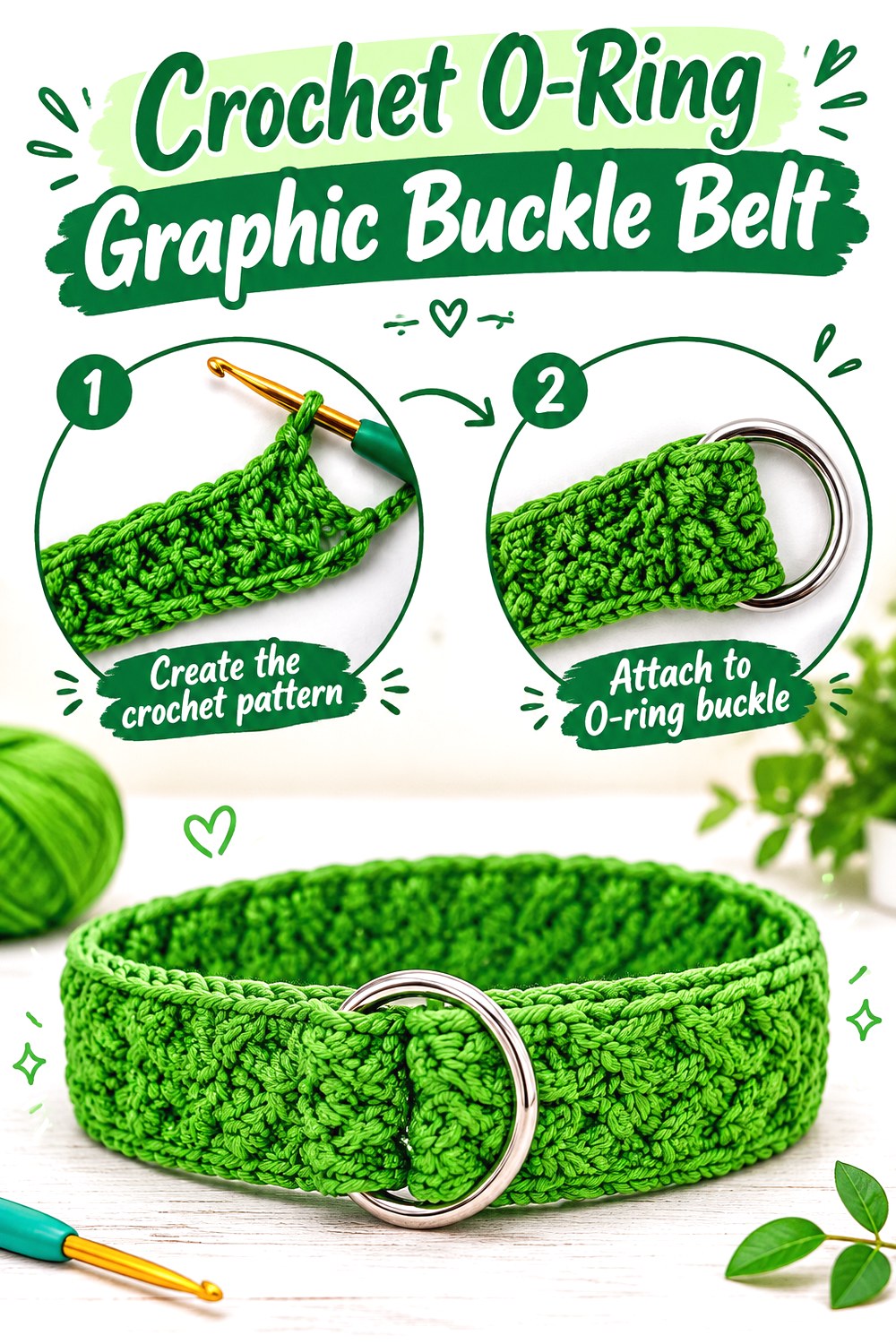
Large overlapping circles give this belt one of the strongest geometric identities in the collection. Crochet Bits describes its original design as a vintage-style belt with overlapping O-rings, a flatter backside, lace joining through the middle, and a buckle finish.
The circles create dramatic negative space without relying on flowers or traditional fan lace. At the same time, the buckle makes the accessory look more like conventional belt hardware than a simple crochet sash. This is a useful choice over plain clothing where the repeated rings can remain obvious from a distance.
Ring Repetition Magnifies Inconsistency
A sequence of circles makes size differences easy to spot. Compare each new ring with its neighbors and look at both its opening and its position relative to the center line.
Also watch the overlap. Even evenly sized rings can look irregular if one twists differently from the rest. Correcting orientation early prevents later sections from reinforcing the distortion.
Buckle Width Is Nonnegotiable
The decorative band and the hardware have to work together physically. Before making a long strip, compare the actual usable opening of the buckle with the section that needs to pass through or attach to it.
A buckle that looks attractive beside a skein may still be too narrow, excessively large, or awkward once placed next to the finished crochet.
Keep the Circles Flat
Large rings can flip or rotate when the belt curves around the body. Test a developing section at the intended waist position and observe whether the motifs settle consistently.
If a substituted yarn makes them unusually limp or rigid, the visual effect may differ considerably from the source. Sampling several repeats gives a more meaningful result than judging one isolated circle.
Original Tutorial and Creator Credit
Creator/Site: Crochet Bits
8. Crochet Beaded Lace Clasp Belt
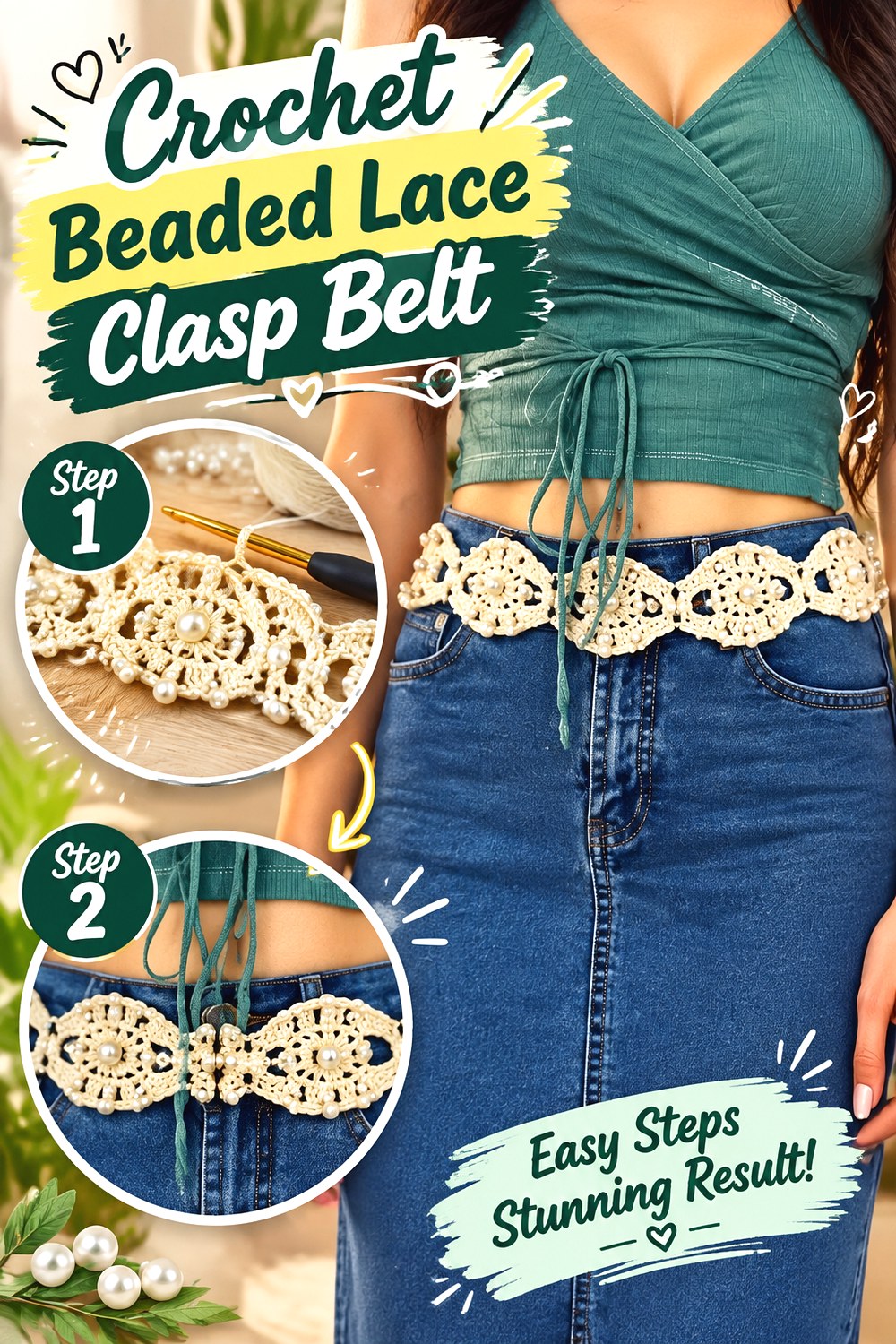
This belt adds beads to a crocheted foundation, shifting the accessory toward a jewelry-like finish without replacing the yarn structure entirely. Sarah’s tutorial covers the crocheted sections, assembly, and bead addition, making embellishment an integral feature of the completed belt rather than an unrelated decoration added afterward.
Beads create small points of shine and visual weight, which makes this idea noticeably different from an all-fiber lace tie. A compact fastening also keeps the ends from competing with the embellishment. Choose this direction when you want the belt to function primarily as a refined decorative accent.
Bead Weight Changes Drape
Adding many embellishments to an open crocheted strip can make it hang differently from the undecorated sample. Test a small beaded section both flat and vertically before assuming the original drape will remain unchanged.
If substantially heavier replacement beads are used, the surrounding stitches may stretch more than expected. Balance the visual effect against what the crochet can comfortably carry.
Check Bead Surfaces Against Clothing
Beads and attachment points come into direct contact with the garment underneath. Run your fingers over the reverse side and edges before pairing the belt with delicate knits or loosely woven fabric.
Rough holes, sharp findings, or protruding connections can create snagging risks. Smooth embellishments and tidy finishing matter more when the belt will be worn over fine material.
Balance Decoration Around the Clasp
A clasp creates a visual endpoint, while beads create repeated focal points. Lay the completed or nearly completed belt flat and check whether the embellishment appears balanced as it approaches both ends.
This is particularly useful if you modify bead spacing. An otherwise attractive pattern can feel abruptly cut off if the final decorative element sits uncomfortably close to one side of the closure.
Original Tutorial and Creator Credit
Creator: Sarah
9. Crochet Tassel Cord Boho Belt
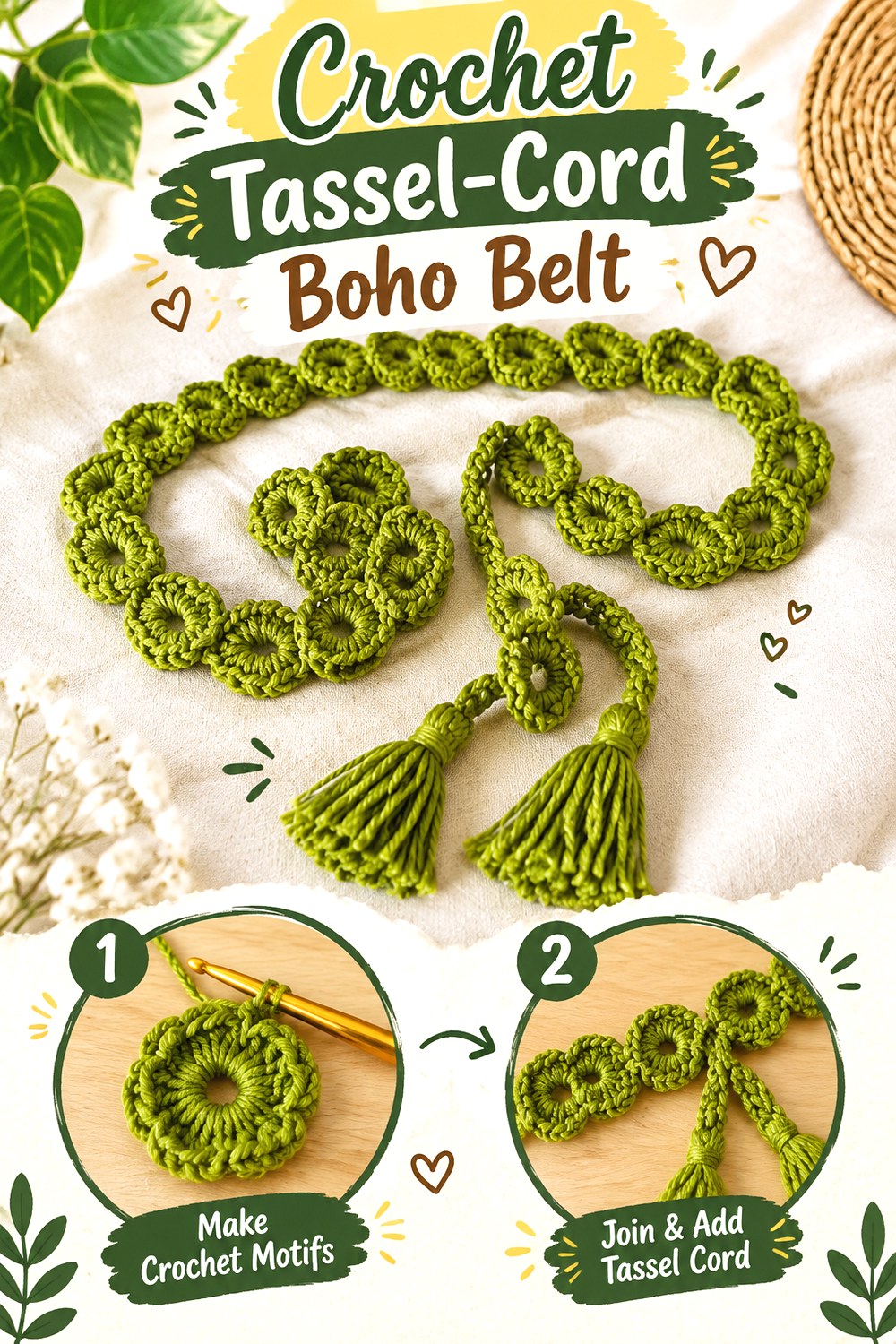
Hook & Loop Crochet Tutorials divides this boho belt into a main belt section, cord, and tassels, so the hanging ends remain a deliberate part of the finished accessory. That creates more movement than a buckle belt and gives the closure substantially more visual presence than a simple knotted lace strip.
This format works especially well over dresses, tunics, and relaxed layered outfits where the tails are meant to remain visible. The transition between the band and cord also creates opportunities to compare different textures without turning the project into a row of separate motifs.
Tassels Alter the Final Length
The crocheted portion can fit correctly while the completed accessory still feels too long once tassels are added. Consider where the entire end treatment should finish on the outfit.
Before permanently trimming or attaching fringe, imitate the intended tassel length with temporary yarn bundles. This makes it easier to judge proportion against the wearer rather than on a table.
A Cord Transition Can Twist
Moving from a wider belt body to a narrow tie concentrates tension at the transition. Check that both sides leave the main section at comparable angles and that tying does not force one edge to fold inward.
When substituting materials, compare the thickness of the cord with the body. A very thin tie attached to a substantial band may look visually disconnected even if it functions.
Store Fringe Deliberately
Tassels require more maintenance than plain crocheted ends because fibers can become bent or tangled during storage. Consider that before choosing this format for an accessory that will be packed frequently.
Care should follow the yarn label and the creator’s guidance where provided. If the tassels become rumpled, address the fiber according to its own care requirements rather than assuming every yarn tolerates the same reshaping method.
Original Tutorial and Creator Credit
Creator: Hook & Loop Crochet Tutorials
10. Crochet Charleston Medallion Tie Belt
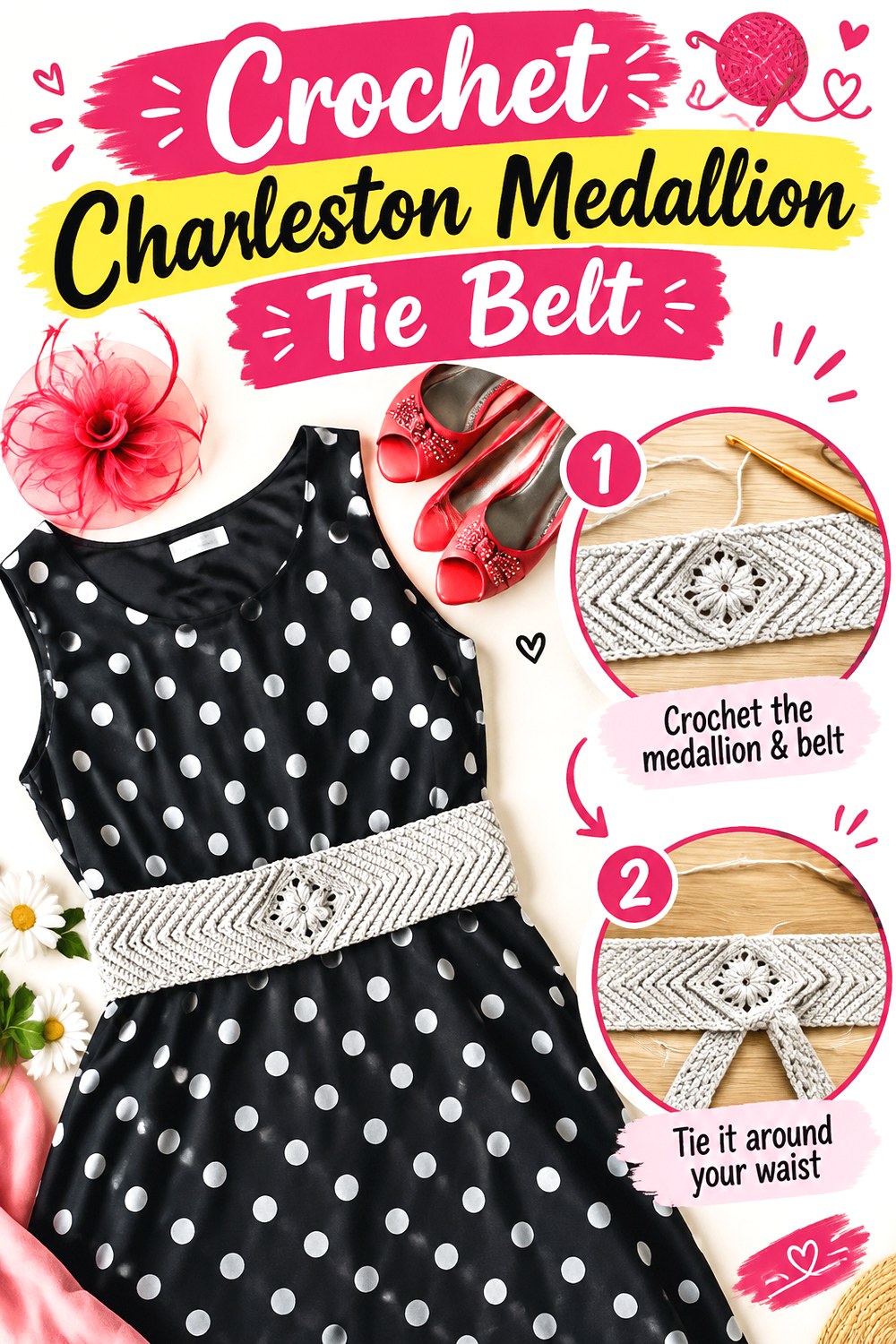
Blue Star Crochet’s Charleston design takes a different route from a repeating motif belt: a square motif establishes the central decorative area, while crocheted sections extend from it and taper toward tie strings. The source specifically describes the motif as the starting point and explains that the finished belt leaves a gap for tying rather than meeting with fixed hardware.
That central emphasis gives the accessory a clear front focal point. It works well when you want one significant piece of stitch detail rather than a line of identical flowers or circles stretching around the entire body.
A Central Motif Controls Symmetry
Once the front square becomes the visual anchor, left and right proportions are easier to notice. Check that the extensions from both sides develop evenly and that the motif sits where you actually want it when the belt is tied.
Do the fit check over the intended outfit. Garment thickness can slightly change where a centered element lands once the tie is tightened.
Pointed Ends Make Ties Feel Intentional
Gradually narrowing a wider band into a tie creates a softer visual transition than abruptly attaching a skinny cord to a broad square.
If you change the size of the central motif or surrounding band, examine the taper as a separate design proportion. Ends that are too abrupt may flare or fold where the tie begins.
Test the Full Width Over Clothing
The central portion occupies more vertical space than a skinny lace cord. Check how that width interacts with seams, waist gathers, buttons, or pockets on the garment beneath it.
A broad decorative center generally reads best when it has enough clear background to sit flat. Crowding it over bulky garment details can distort the motif and reduce comfort.
Original Tutorial and Creator Credit
Creator/Site: Blue Star Crochet
11. Crochet Granny Square Buckle Belt
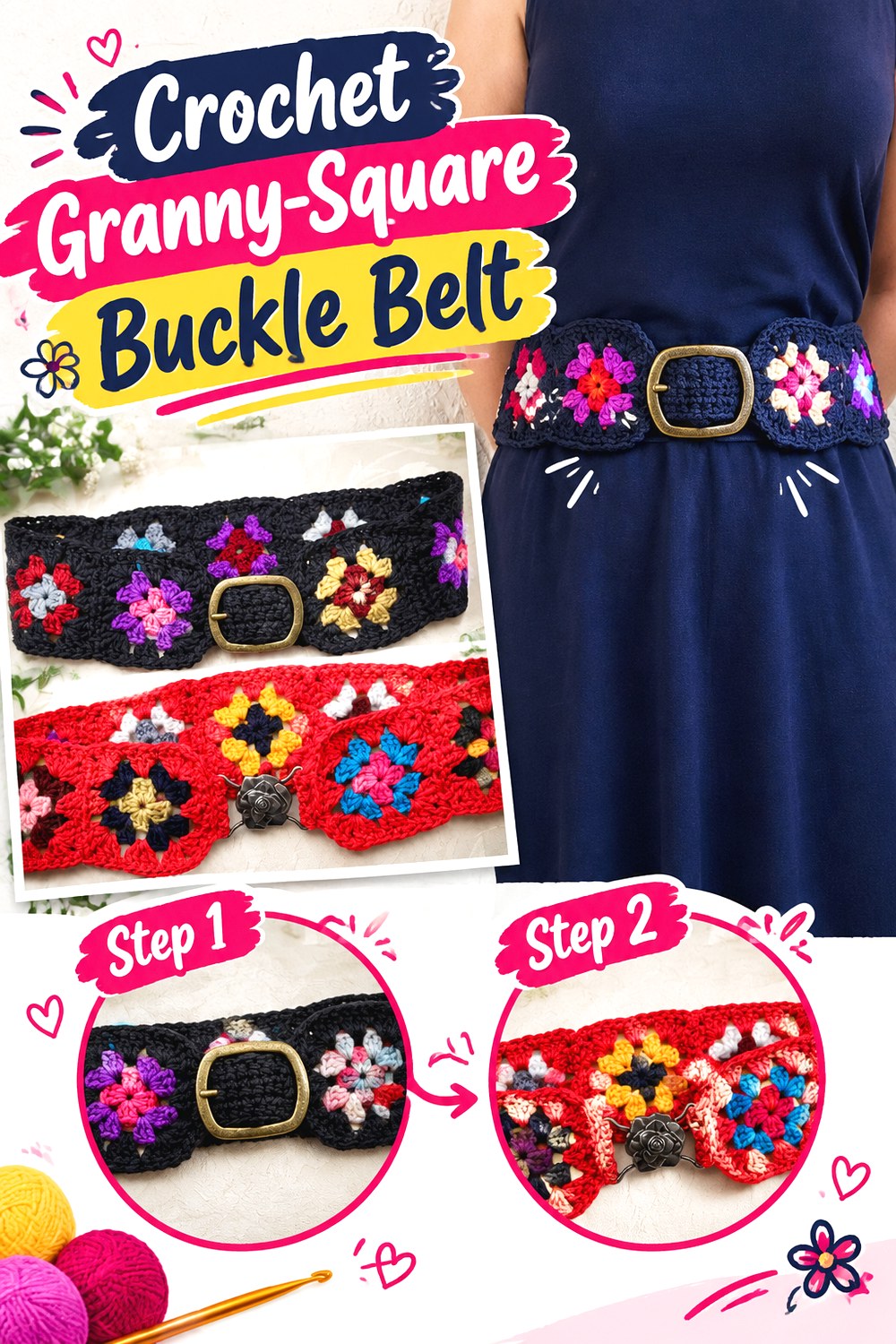
This version combines recognizable granny-square construction with conventional belt hardware. Crochet&Copy demonstrates a series of squares assembled into the waist band and completes the accessory with a buckle, creating a much more structured visual finish than a flower chain or long lace sash.
Color can play a major role because every square provides another visible unit, but fit should come before palette planning. The motif dimensions, joins, and buckle section all contribute to the final circumference. Choose this project when you want patchwork character while still retaining a clearly recognizable belt fastening.
Block Squares Before the Final Count
A motif that measures one way immediately off the hook may settle differently after appropriate finishing. Complete a representative sample before deciding how many squares the belt needs.
Arrange the finished motifs in a line at the intended wearing position before joining everything permanently. That check gives you a clearer estimate of the final span and also reveals how the color sequence looks at body scale.
Hardware Needs a Stable End
Open granny construction and solid buckle attachment perform different jobs. Pay particular attention to the transition between the final square and the fastening area shown by the creator.
If adapting the motifs, confirm that the new design still provides a reasonable place for hardware. Extremely open squares may require a different transition rather than simply copying the original buckle treatment.
Plan the Color Rhythm Around the Front
When multiple colors are involved, the buckle creates a natural starting point from which the sequence is viewed. Lay the proposed square arrangement beside the actual hardware before joining it.
This prevents an unintended cluster of similar colors from accumulating around the most visible section. A quick flat layout can solve color-balance problems without changing any crochet technique.
Original Tutorial and Creator Credit
Creator: Crochet&Copy
12. Crochet Linked Blossom Waist Belt
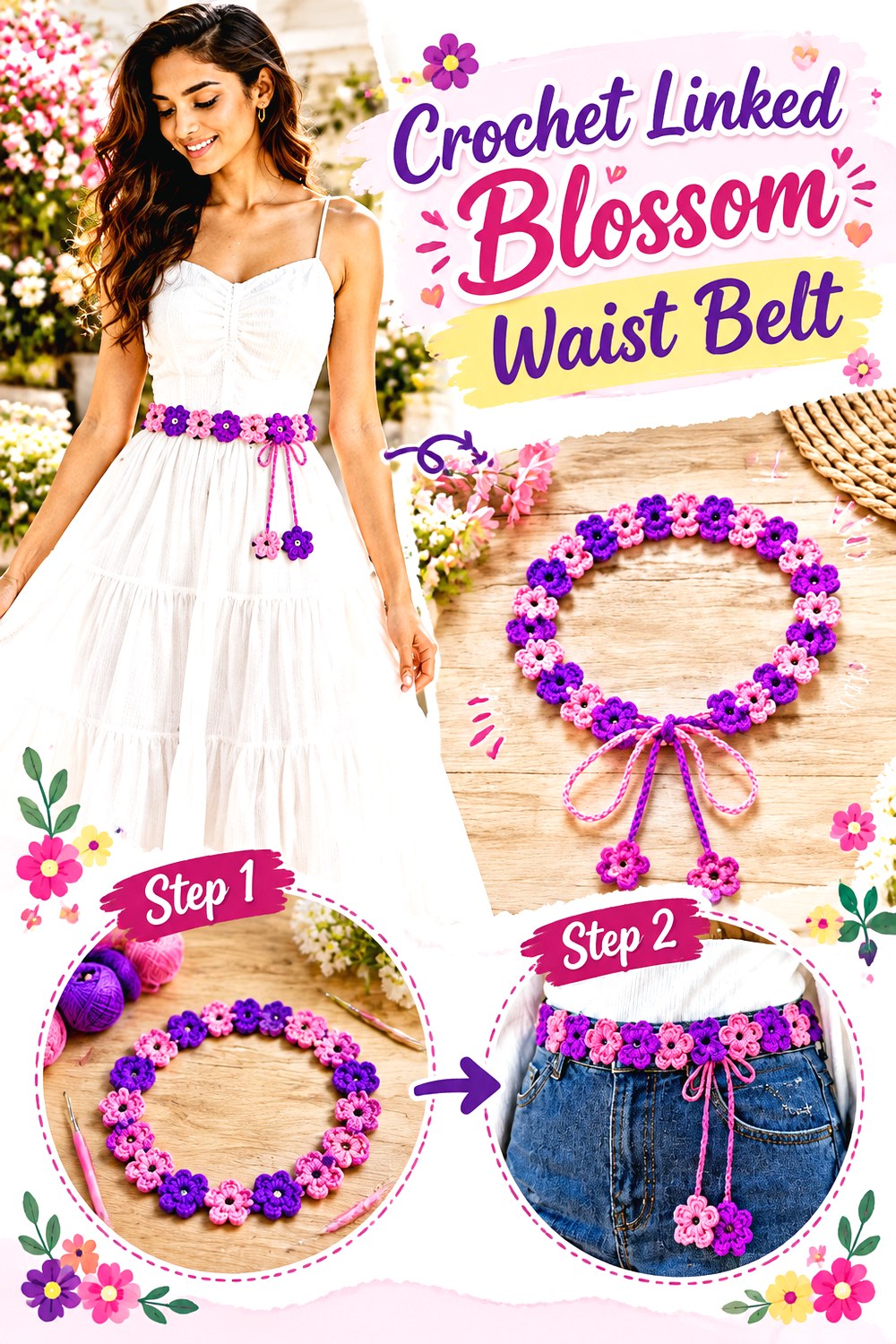
Instead of framing flowers inside squares, 𝐊𝐧𝐢𝐭𝐭𝐢𝐧𝐠 𝐛𝐲 𝐖𝐚𝐣𝐢𝐝𝐚 lets individual blossoms form the decorative line of the belt. The tutorial shows separate flower motifs being made and joined before belt strings are added, so the exposed floral outline remains visible rather than being enclosed by a geometric border.
That gives the accessory a lighter, garland-like character. It pairs naturally with simple dresses or denim when you want the flowers themselves to provide the main visual statement. The exposed petals also make finishing quality and consistent spacing more noticeable.
Blossom Spacing Changes the Whole Rhythm
Even when individual flowers match well, inconsistent gaps between them can make the final belt look uneven. Lay several motifs in a straight arrangement before permanently joining the entire sequence.
View the layout from farther away as well as close up. Small spacing differences that seem insignificant at hook distance can become much more obvious once the belt is seen as one long accessory.
Protect the Outer Petals
Exposed petals are more vulnerable to snagging than flowers enclosed in a square frame. Check loose ends and connection points carefully before wearing the belt over open knits, textured lace, or other looped fabrics.
If the belt will be used frequently, inspect joined areas occasionally. Decorative motifs are most effective when the petals retain their intended orientation rather than being repeatedly pulled by the fastening system.
Separate Visual Drama From Support
A chain of blossoms is primarily a decorative format. If you need a belt to perform substantial garment-holding work, a denser or hardware-supported construction may be more appropriate.
That distinction gives you freedom to let the flower belt remain light and expressive without asking delicate motif connections to behave like a rigid woven strap.
Original Tutorial and Creator Credit
Creator: 𝐊𝐧𝐢𝐭𝐭𝐢𝐧𝐠 𝐛𝐲 𝐖𝐚𝐣𝐢𝐝𝐚
13. Crochet Irish Lace Cord Wrap Belt
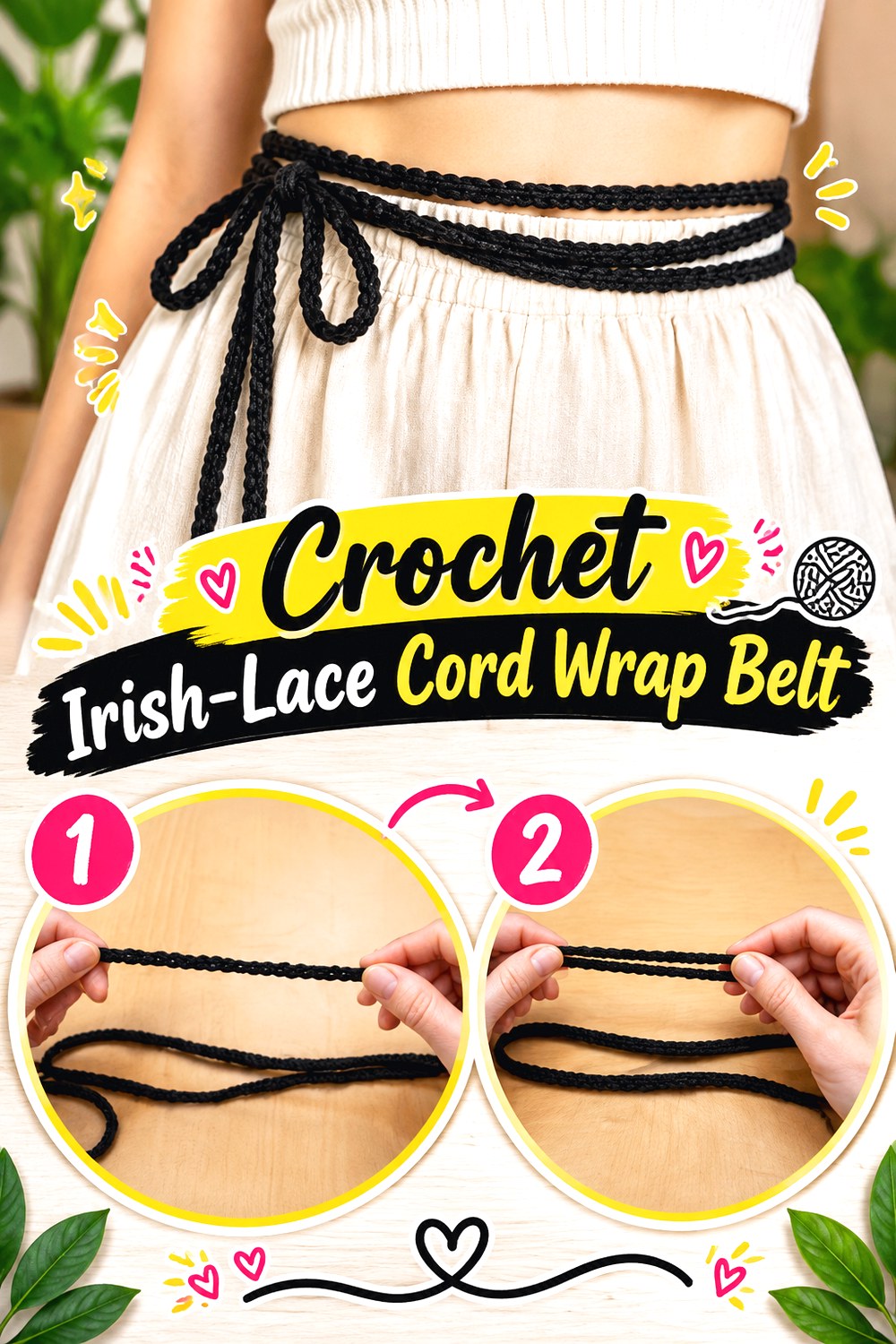
LaceVibes demonstrates a slim crocheted cord intended for applications that include belts, drawstrings, dresses, cardigans, tunics, and Irish-lace work. That makes this the most minimal belt silhouette in the collection: instead of presenting a broad lace panel, it creates a narrow handmade line that can wrap or tie around the waist.
A cord is also useful beyond wearing it alone. It can become the closure component for a separate motif belt or other crocheted garment. Choose this idea when bulky knots, large motifs, and wide coverage are not desirable.
Knot Bulk Matters More on a Cord
Because there is little decorative fabric across the waist, the knot or bow becomes a major part of the final appearance. Test several tying styles before deciding how much finished length you need.
A short knot creates a restrained look, while long doubled wraps and hanging tails feel distinctly more bohemian. The amount of extra cord should follow the intended styling rather than a generic waist measurement.
Check Stretch Over the Full Length
A small amount of elongation can become significant across a long narrow cord. Once enough length exists to test, measure it relaxed and then under gentle tension similar to wearing.
If it changes substantially, take that behavior into account before adding permanent decorative ends or assuming the knot will always sit in the same place.
Use It as a Closure Component
A slim cord can solve a different problem from a full belt. It may provide the tie system for floral tape, a corset opening, or another handmade garment.
When combining it with a separate crochet piece, compare their visual weights. A thick, firm cord can overwhelm delicate lace, while an extremely fine cord may look inadequate beside a broad waist panel.
Original Tutorial and Creator Credit
Creator: LaceVibes
14. Crochet Shaped Lace Up Corset Belt
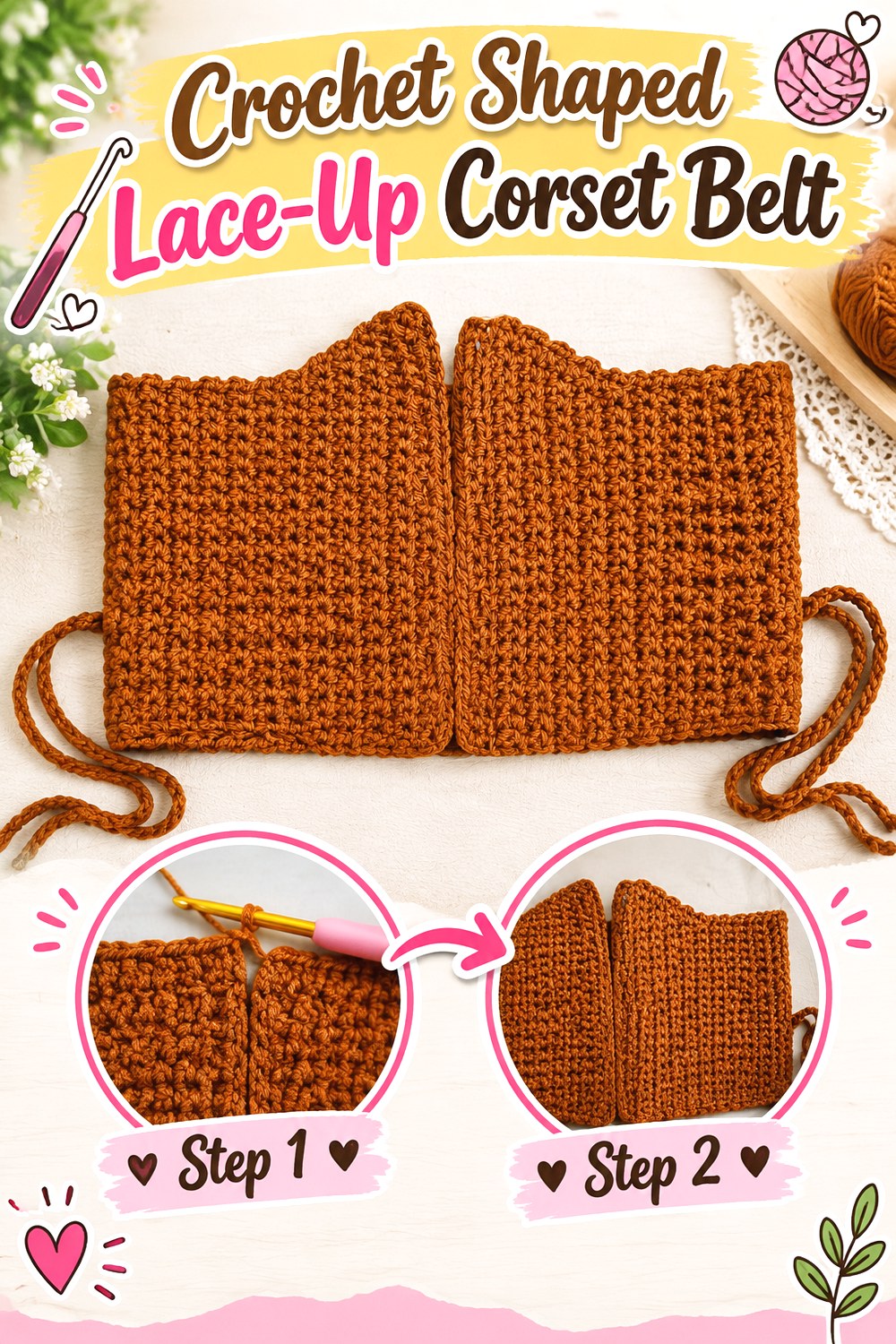
A broad lace-up waist belt creates a very different silhouette from the narrow lace ideas above. Kemunto crochets demonstrates a shaped corset-style belt with decreasing, straight, and increasing portions followed by openings and lacing, producing a panel that deliberately follows the waist rather than behaving like a simple rectangular strip.
The visible lacing becomes both the fastening system and a focal feature. This project suits styling over dresses, shirts, or costume layers when you want the crochet to occupy substantial visual space. Treat it as a fashion accessory rather than assuming it provides the engineered support of structured corsetry.
Lacing Does Not Fix the Wrong Base Size
An open lacing gap provides useful adjustment, but it cannot compensate indefinitely for a body panel that is dramatically too long or too short.
Follow the creator’s measurement approach for construction and check the belt with the lacing inserted before considering the fit complete. The two edges should remain reasonably balanced rather than being pulled into extreme distortion.
Sit and Move Before Finalizing
A broad belt interacts with the body differently from a skinny tie. Check the upper and lower edges while standing, sitting, and moving normally over the clothing you expect to wear.
If an edge digs in, folds sharply, or rides upward, the issue may relate to placement, width, or overall fit rather than simply how tightly the lacing is pulled.
Protect the Lacing Edges
The loops or openings beside the lacing experience repeated tension every time the belt is tightened. Inspect these areas for excessive elongation as the project develops.
If you substitute yarn, pay particular attention to how it responds under repeated light pulling. A fiber that stretches differently from the demonstrated material can alter both the size of the opening and the way the panel sits.
Original Tutorial and Creator Credit
Creator: Kemunto crochets
15. Crochet Wide Textured Clasp Belt
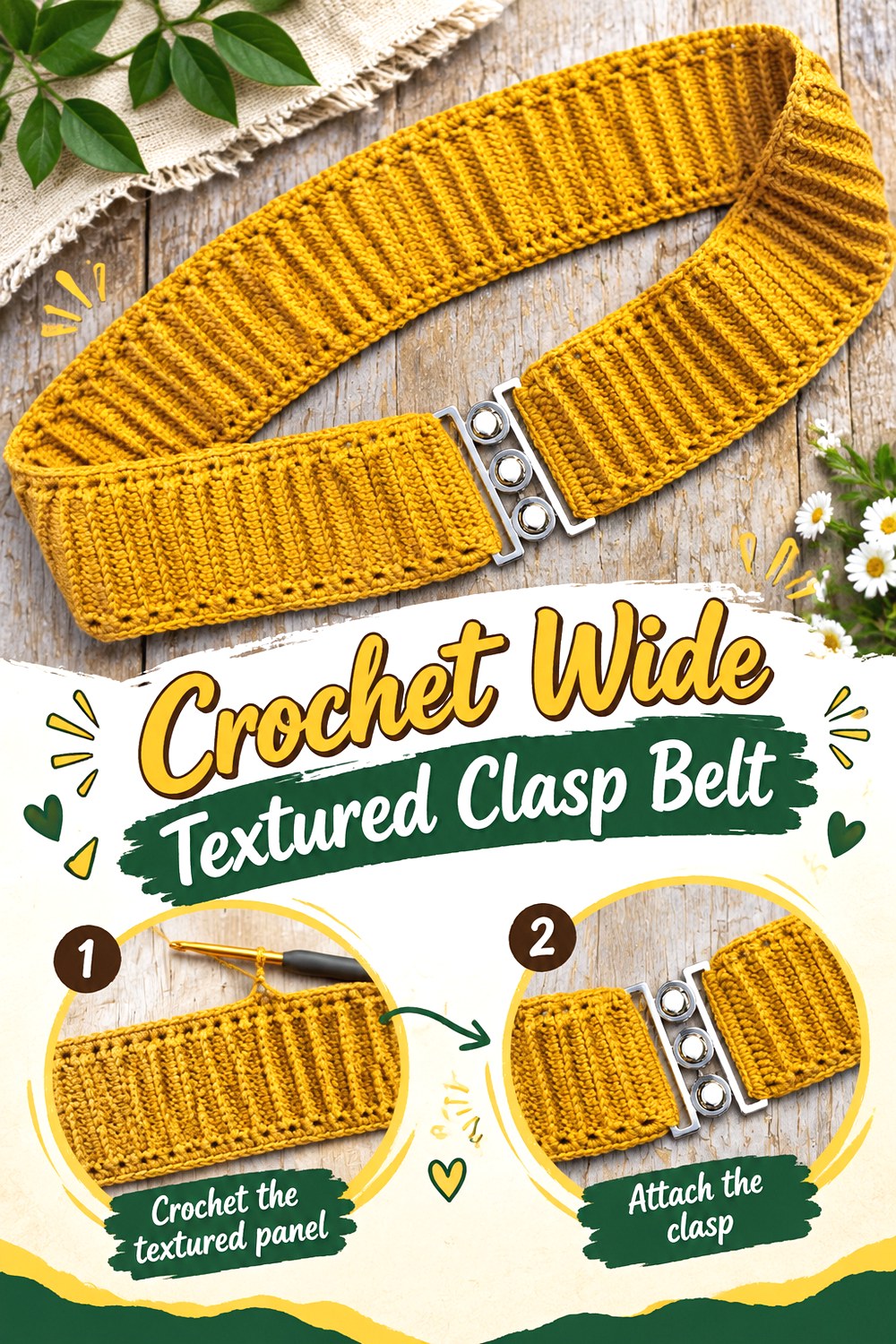
Yarn + Chai’s waist belt provides a structured counterpoint to the highly open lace projects. The original design uses a broad crocheted band with a two-part metal clasp, and the designer emphasizes checking the belt against the body and closure while determining its finished dimensions.
Although the body is denser than classic lace, it earns a place here because it solves a common lace-belt design question: what happens when you want a handmade waist accent but prefer a fixed, polished closure over long ties? It is especially useful with busy garments where very fine lace might visually disappear.
A Clasp Makes Length More Exact
Ties can absorb several inches of variation through different knots or overlaps. A fixed clasp cannot. Include the closure itself when judging the final circumference rather than sizing the crochet band in isolation.
Temporarily position the hardware as the belt grows. This provides a much more realistic fit check than waiting until the full strip is complete.
Wide Fabric Can Fold Differently
A broad belt covers enough vertical space that its top and bottom edges may respond differently to the body. Test it at the actual wearing point and over the intended clothing before final finishing.
A belt that lies perfectly flat on a table may curve, flare, or fold once wrapped. Those observations are more useful than a flat measurement alone.
Substitution Changes Stretch
Yarn + Chai provides a particular yarn category and sample information for the demonstrated belt, but another yarn should not be expected to behave identically.
When substituting, compare both stitch definition and lengthwise stretch. A clasped belt depends more heavily on predictable finished dimensions than a long adjustable tie does.
Original Tutorial and Creator Credit
Creator/Site: Yarn + Chai’s waist belt provides a structured counterpoint to the highly open lace projects. The original design uses a broad crocheted band with a two-part metal clasp, and the designer emphasizes checking the belt against the body and closure while determining its finished dimensions.
Although the body is denser than classic lace, it earns a place here because it solves a common lace-belt design question: what happens when you want a handmade waist accent but prefer a fixed, polished closure over long ties? It is especially useful with busy garments where very fine lace might visually disappear.
A Clasp Makes Length More Exact
Ties can absorb several inches of variation through different knots or overlaps. A fixed clasp cannot. Include the closure itself when judging the final circumference rather than sizing the crochet band in isolation.
Temporarily position the hardware as the belt grows. This provides a much more realistic fit check than waiting until the full strip is complete.
Wide Fabric Can Fold Differently
A broad belt covers enough vertical space that its top and bottom edges may respond differently to the body. Test it at the actual wearing point and over the intended clothing before final finishing.
A belt that lies perfectly flat on a table may curve, flare, or fold once wrapped. Those observations are more useful than a flat measurement alone.
Substitution Changes Stretch
Yarn + Chai provides a particular yarn category and sample information for the demonstrated belt, but another yarn should not be expected to behave identically.
When substituting, compare both stitch definition and lengthwise stretch. A clasped belt depends more heavily on predictable finished dimensions than a long adjustable tie does.
Original Tutorial and Creator Credit
Creator/Site:Yarn + Chai’s waist belt provides a structured counterpoint to the highly open lace projects. The original design uses a broad crocheted band with a two-part metal clasp, and the designer emphasizes checking the belt against the body and closure while determining its finished dimensions.
Although the body is denser than classic lace, it earns a place here because it solves a common lace-belt design question: what happens when you want a handmade waist accent but prefer a fixed, polished closure over long ties? It is especially useful with busy garments where very fine lace might visually disappear.
A Clasp Makes Length More Exact
Ties can absorb several inches of variation through different knots or overlaps. A fixed clasp cannot. Include the closure itself when judging the final circumference rather than sizing the crochet band in isolation.
Temporarily position the hardware as the belt grows. This provides a much more realistic fit check than waiting until the full strip is complete.
Wide Fabric Can Fold Differently
A broad belt covers enough vertical space that its top and bottom edges may respond differently to the body. Test it at the actual wearing point and over the intended clothing before final finishing.
A belt that lies perfectly flat on a table may curve, flare, or fold once wrapped. Those observations are more useful than a flat measurement alone.
Substitution Changes Stretch
Yarn + Chai provides a particular yarn category and sample information for the demonstrated belt, but another yarn should not be expected to behave identically.
When substituting, compare both stitch definition and lengthwise stretch. A clasped belt depends more heavily on predictable finished dimensions than a long adjustable tie does.
Original Tutorial and Creator Credit
Creator/Site: Yarn + Chai
16. Crochet Pointed Shell Lace Sash Belt
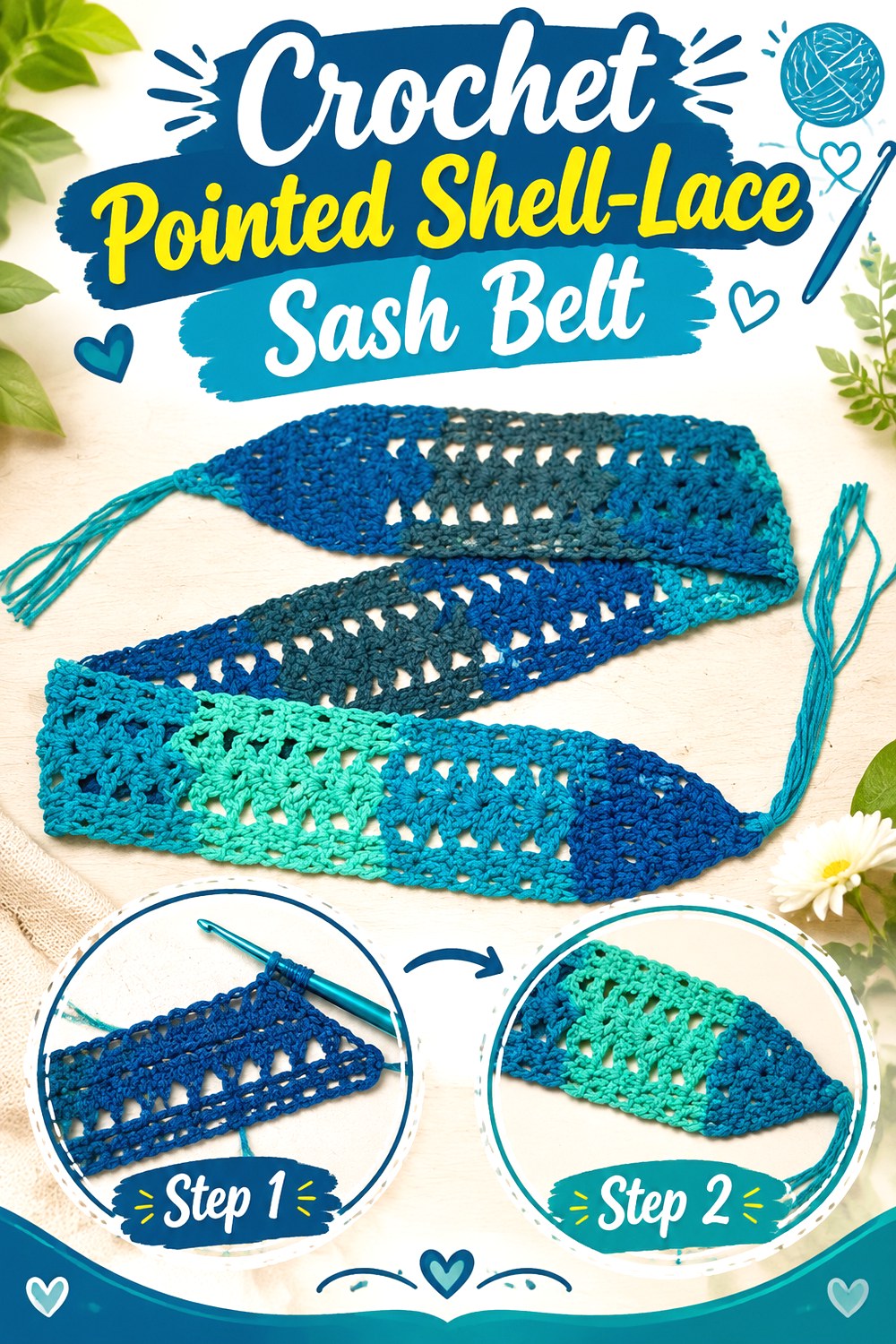
Sara Sach’s Beach Time Scarf is intentionally designed as a multi-use open lace accessory that can also be worn as a belt. The original Posh Pooch Designs page describes pointed ends and optional fringe, giving this idea a softer sash-like appearance than a conventional waist strap with hardware.
Its versatility is the main distinction. Instead of making an accessory that performs only one job, you can use the same narrow lace piece as a belt, scarf, headscarf, or hatband depending on how you size and style it. For belt use, however, the waist position and desired tail length should remain the primary planning considerations.
Pointed Ends Need Visual Symmetry
When both tails remain visible after tying, their final shapes matter. Check that the points settle in comparable directions rather than allowing one end to twist behind the belt.
This becomes especially noticeable with an asymmetrical side knot. Lay the finished piece flat first, then test several tying positions to see how naturally the points hang.
Fringe Changes Its Versatility
The creator presents fringe as optional, which gives you a genuine styling decision. Long fringe increases movement and makes the belt more overtly bohemian, but clean ends may make the same piece easier to reuse as a head or neck accessory.
Think about storage as well. Fringe generally requires more attention than a simple tapered edge.
Multi-Use Sizing Still Needs a Priority
One length rarely performs every styling role identically. A piece that creates generous belt tails may feel longer when tied around the head, while a compact scarf length may not create the belt wrap you want.
Decide which use matters most before altering the source dimensions. Treat other styling roles as bonuses rather than compromising the primary fit in an attempt to optimize every possible use.
Original Tutorial and Creator Credit
Creator/Site: Sara Sach of Posh Pooch Designs
Which Crochet Lace Belt Style Should You Choose?
| If you want | Good options to compare | Main checkpoint |
|---|---|---|
| Soft continuous lace | Airy Fan Tie Belt or Scalloped Shell Ribbon Belt | Edge consistency and drape |
| Detailed traditional-looking lace | Floral Tape-Lace Sash | Motif direction and fastening strength |
| Botanical styling | Leaf Garland Wrap Belt | Leaf orientation and garment contrast |
| Graphic negative space | Heart-Link or O-Ring Belt | Repeat consistency |
| Jewelry-like detail | Beaded Lace Clasp Belt | Embellishment weight and snagging |
| Strong motif construction | Flower-Frame, Granny-Square, or Linked Blossom Belt | Motif dimensions and joining |
| Relaxed boho movement | Tassel-Cord or Pointed Shell-Lace Sash | Tail length and fringe |
| Minimal handmade tie | Irish-Lace Cord Wrap Belt | Stretch and knot bulk |
| Defined waist statement | Lace-Up Corset or Wide Clasp Belt | Circumference, width, and closure |
| One centered focal motif | Charleston Medallion Tie Belt | Symmetry and garment placement |
The most useful distinction is between decorative lace and structural fastening. Fans, floral tape, hearts, blossoms, and leaves allow the underlying garment to remain highly visible. Motif squares provide more substance, while the O-ring and beaded designs combine open crochet with hardware or embellishment. The wide clasp and corset styles create the clearest waist definition but require more deliberate fit checks.
Conclusion
The strongest crochet lace belt choice depends on what you want the accessory to do after the stitchwork is finished. Choose fan lace, floral tape, hearts, flowers, leaves, or a pointed sash when negative space and decorative texture should lead the design. Granny squares, O-rings, beads, and central motifs create stronger focal points, while a wide clasp or lace-up waist belt gives the outfit a more defined horizontal structure.
Before starting, decide where the belt will sit, whether it must fit through garment loops, and how much adjustment the closure should provide. Sample major yarn substitutions and check the work under gentle wearing tension. For exact construction, sizing methods, materials, and finishing details, follow the original tutorials credited with each project.
Frequently Asked Questions
What yarn should I use when I want crochet lace motifs to look crisp?
A relatively smooth yarn usually lets chain spaces, shells, leaves, hearts, and floral edges remain easier to see than a yarn with a pronounced fuzzy halo. However, fiber content alone does not predict the final result. Twist, thickness, hook choice, and tension also influence definition. Make several repeats of the intended lace and examine them against the garment you plan to wear. If the belt uses hardware, test how the sample behaves under light tension as well.
How do I decide how long a crochet lace belt should be?
Measure at the actual position where the belt will be worn and over the clothing that will normally sit underneath it. Then consider the closure separately. A long tie needs extra length for the knot, bow, overlap, or hanging tails, whereas a clasp or buckle occupies part of the circumference and offers less adjustment. For motif belts, use the finished dimensions of a representative motif to plan the layout instead of assuming an unblocked piece will remain exactly the same size.
Can a crochet lace belt be worn through jeans or trouser loops?
Sometimes, but the deciding factor is the finished width and shape rather than the fact that the project is called a belt. Wide shells, flowers, O-rings, granny squares, leaves, and corset-style pieces may be too large for standard garment loops. Measure the openings on the exact trousers or jeans first. If a decorative motif is wider than the loops, wearing the belt over the waistband may preserve the design better than reducing or compressing the motifs simply to force them through.
Should I block a crochet lace belt?
Blocking can help appropriate yarns and lace constructions settle into a clearer shape, but the correct method depends on the fiber and any embellishments or hardware. Follow the yarn-label care information and any guidance provided by the original designer. Motif belts often benefit from having components brought to consistent dimensions before joining. However, blocking should refine suitable crochet rather than being used to force a seriously uneven belt into dimensions that its stitch structure does not naturally support.
Can I add a buckle or clasp to any lace belt pattern?
Not automatically. Highly open lace may not provide a stable place for hardware to carry repeated fastening tension. Before modifying a tie-style design, identify whether the end section can support the intended buckle or clasp without distorting large chain spaces or delicate motifs. A denser transition or reinforced attachment area may be appropriate, but that becomes a design modification rather than part of the original tutorial. Sample the idea first and keep the hardware proportional to the width and weight of the crochet.
How should I care for belts with beads, tassels, or metal closures?
Care depends on the yarn fiber and every added material, so avoid assuming a single washing method is appropriate. Follow the yarn label and any care directions supplied by the original creator. Beads and metal hardware may change how the piece can be washed or dried, while tassels can become tangled or misshapen during storage. Before cleaning an embellished belt, consider whether the findings can tolerate the same treatment as the yarn and inspect loose connections or snag-prone areas.