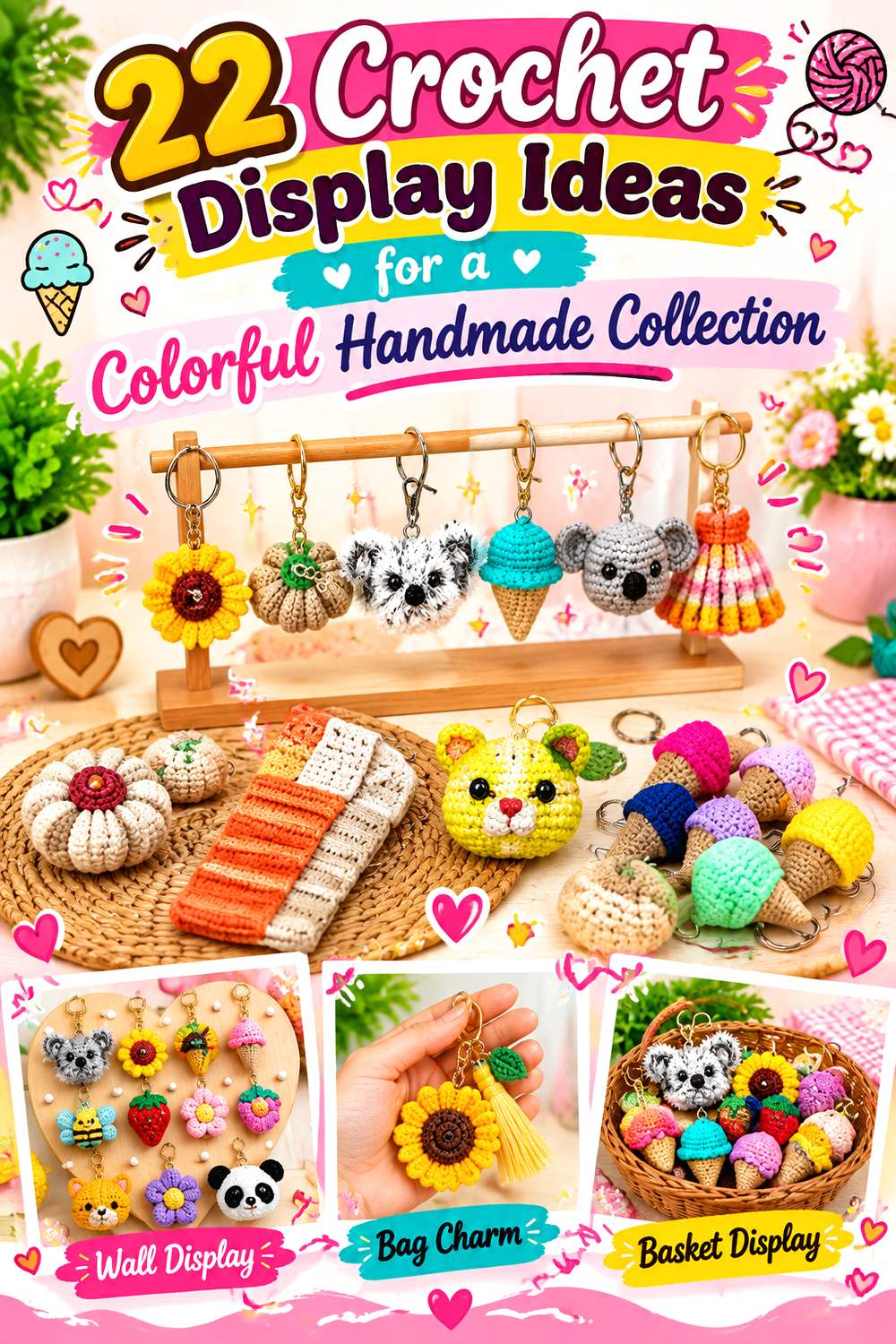
22 Crochet Keychain Display Ideas for a Colorful Handmade Collection
A strong crochet keychain display needs more than twenty small projects in different colors. The most interesting collections mix flat and dimensional pieces, compact motifs and longer dangling shapes, recognizable objects and playful characters. That variety matters whether you are arranging a craft-fair rack, filling a gift display, planning product photography, or simply building a coordinated set of handmade bag charms.
These 22 ideas range from fruit and flowers to animals, seasonal motifs, a miniature bag, and even a functional mushroom holder. The goal is to help you compare silhouette, texture, attachment points, weight, movement, and display role before committing to multiples. Each project also points back to one original tutorial so you can confirm materials and exact construction directly with the designer or creator.
Quick List
- Crochet Strawberry Drop Keychain
- Crochet Ragdoll Apple Keychain
- Crochet Lemon Slice Keychain
- Crochet Mushroom Holder Keychain
- Crochet Popcorn Flower Keychain
- Crochet Sunflower Charm Keychain
- Crochet Puff-Heart Keychain
- Crochet Rainbow-and-Cloud Keychain
- Crochet Stuffed Star Keychain
- Crochet Crescent Moon Keychain
- Crochet Striped Bee Keychain
- Crochet Frog Face Keychain
- Crochet Mini Whale Keychain
- Crochet Bobble-Shell Turtle Keychain
- Crochet Beaded Jellyfish Keychain
- Crochet Octopus Keychain
- Crochet Painted-Detail Cat Keychain
- Crochet Faux-Fur Koala Keychain
- Crochet Ice Cream Cone Keychain
- Crochet Sprinkle Donut Keychain
- Crochet Granny-Style Mini Bag Keychain
- Crochet Ridged Pumpkin Keychain
Build a Display With Shape, Scale, and Movement in Mind
A display reads more clearly when neighboring keychains do not all occupy the same visual space. Flat apples, hearts, flowers, and stars can create a tidy backdrop, while stuffed whales, turtles, frogs, and cats bring depth. Longer designs such as jellyfish, rainbows with clouds, or a hanging mushroom holder can break up rows of compact shapes and create movement.
Before making multiples, sketch where each silhouette might sit on your board, peg rack, grid wall, or tabletop stand. Repeating one shape heavily can make a collection look narrower than it really is, even when the colors vary. Another useful checkpoint is hanging orientation. Some pieces naturally face forward; others may rotate around a split ring. If front-facing presentation matters, test one finished sample on the hardware you intend to use before producing a full batch.
Choose Materials for Structure as Well as Color
Small crochet pieces magnify differences in yarn behavior. A yarn that creates pleasant drape in a scarf may feel floppy in a tiny fruit or star, while very plush yarn can soften details that depend on defined edges. Dense amigurumi also needs fabric firm enough to contain stuffing without obvious gaps.
Think about the role of each project. A flat apple or lemon benefits from tidy edges and a recognizable outline. A jellyfish needs tentacles that hang freely without becoming excessively heavy. A faux-fur koala relies on texture, while a donut or pumpkin needs enough body to retain its shape. Yarn substitutions can change finished scale as well as weight, so confirm the creator’s materials before substituting. If you are planning a coordinated display, consistent hardware can visually tie very different yarn textures together.
Plan Hardware and Small Details Before Making Multiples
The keychain connection is a functional stress point, not merely decoration. A ring attached through one lightly secured strand can distort a small project after repeated handling. Follow the creator’s attachment method and inspect the connection after the piece is stuffed, shaped, and fully finished.
Also consider how the keychains will be handled. Beads, glued embellishments, safety eyes, and other small components may not suit every recipient or setting, particularly where very young children are concerned. Embroidery can be an alternative on some designs, but changing a facial detail or attachment method may affect construction, so check the tutorial first. For display pieces, keep hardware length reasonably consistent unless varied hanging heights are intentional. That small decision can make a mixed collection look much more organized.
1. Crochet Strawberry Drop Keychain
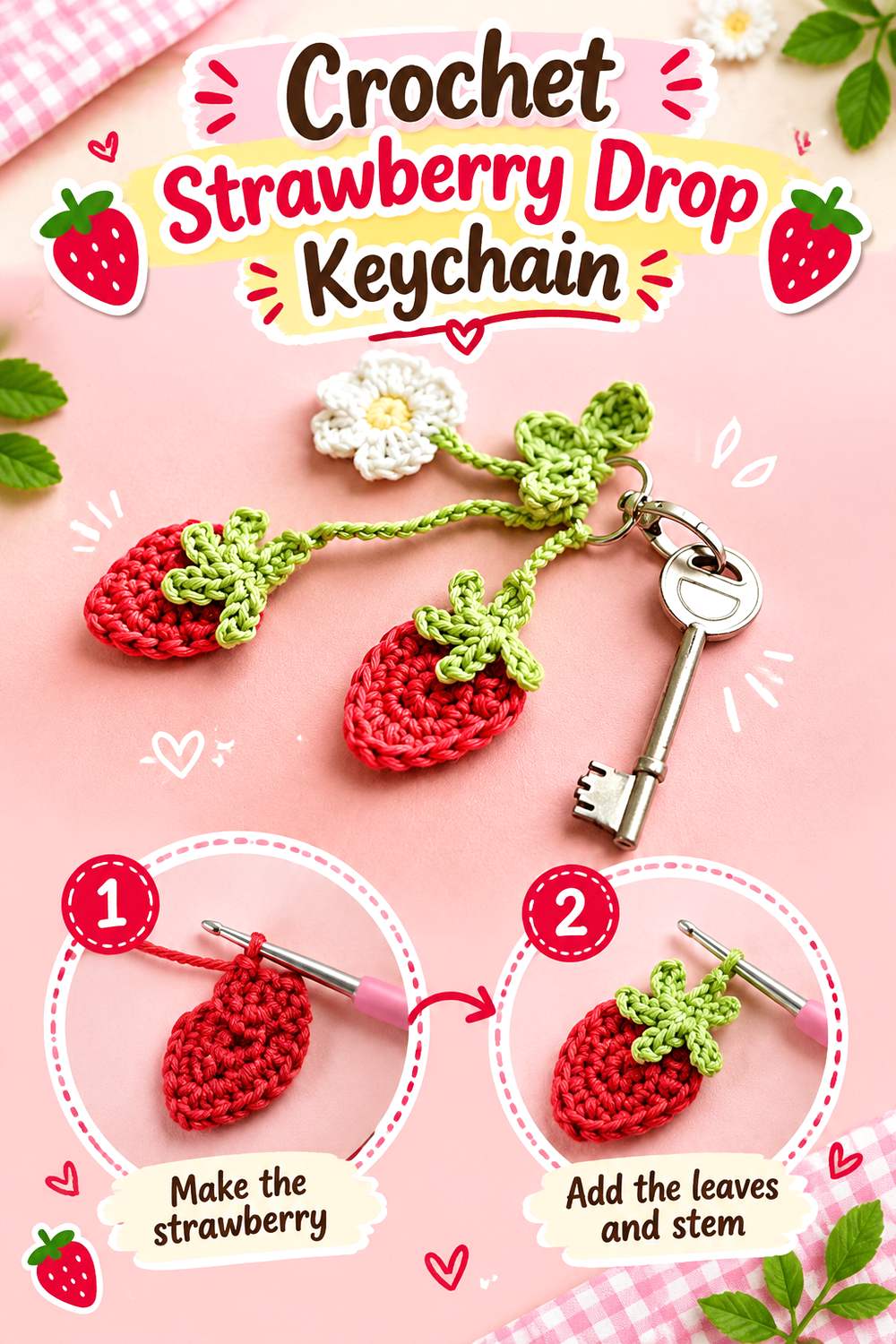
A strawberry brings a recognizable tapered silhouette to a keychain rack without taking up much visual space. Bella Coco Crochet’s original project is a dimensional strawberry made specifically as a keychain, making it a strong fruit option beside flatter motifs such as the apple or lemon. Its leafy top adds a second shape and color area, which helps the piece remain recognizable even when viewed from several feet away.
For a display, strawberries work well as small pops of saturated color between larger animal charms. Before changing yarn weight, remember that thicker yarn increases both the berry’s bulk and the strain placed on its hanging point.
Keep the Berry Shape Easy to Read
The strongest visual feature is the difference between the rounded body and leafy crown. If your yarn substitution softens that distinction, the piece may appear more like a generic ball from a distance. Check the finished shape before deciding how many to add to a display.
Small embroidered or stitched surface details can add contrast, but they should support the strawberry shape rather than overwhelm it. Consistency matters more when several are displayed together.
Check the Top Attachment Before Hanging
A strawberry naturally puts its hardware near the narrow upper section. That concentrates repeated pulling in a small area, especially if the keychain is used on a frequently handled bag.
Follow the original attachment guidance and inspect the crown after adding the ring. If you change hardware, make sure the connection does not compress or distort the leaves. A clean top profile is important because it is one of the fruit’s main visual identifiers.
Original Tutorial and Creator Credit
Creator/Site: Bella Coco Crochet
2. Crochet Ragdoll Apple Keychain
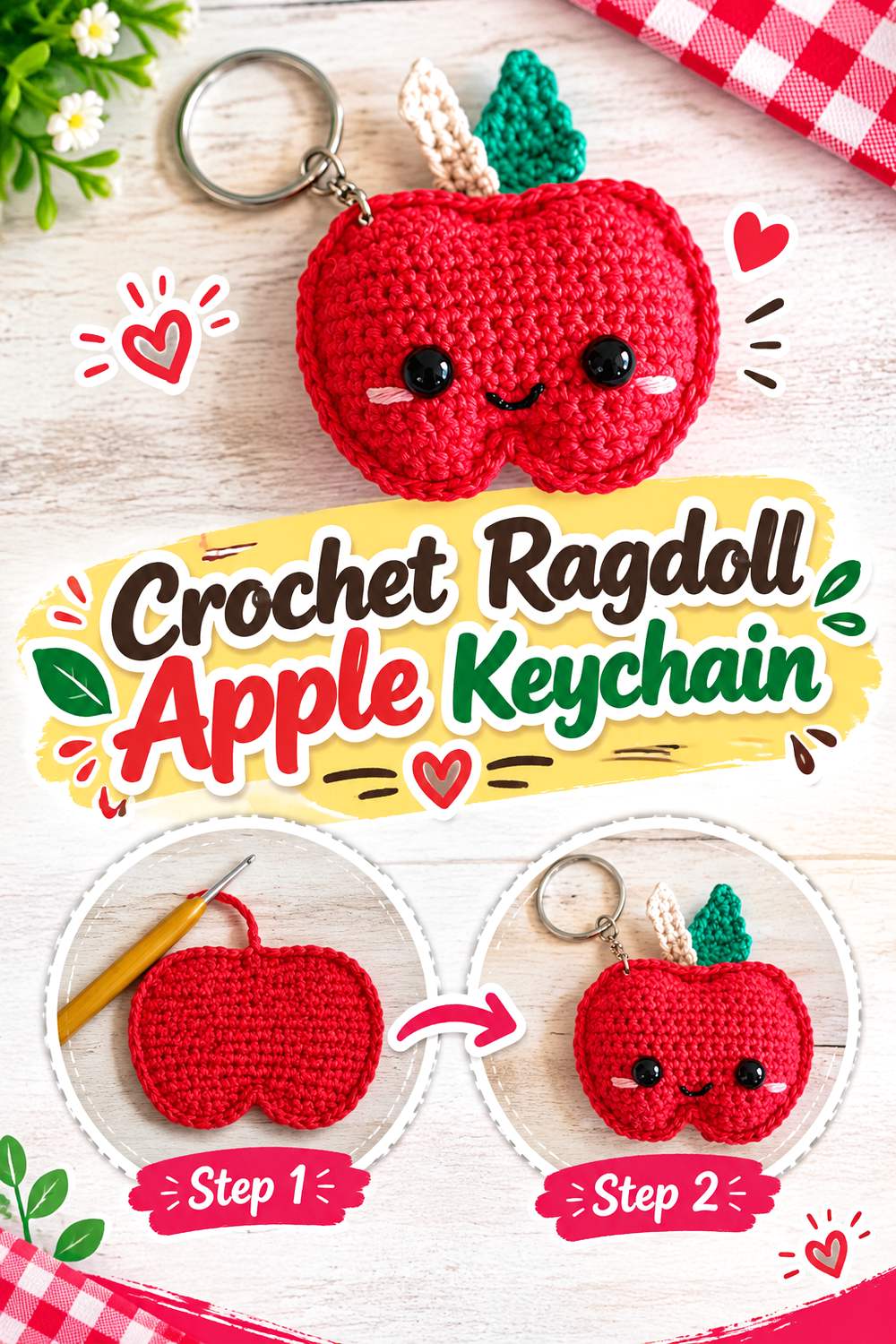
This apple offers a noticeably different construction look from round amigurumi fruit. Spin a Yarn Crochet uses the site’s recognizable flat-panel ragdoll style, giving the finished apple a broad front face, shaped outline, stem, and leaf rather than a spherical profile. The original version is lightly dimensional after the panels are joined and stuffed.
That wide face makes the apple especially useful on a display where tiny three-dimensional pieces might otherwise disappear visually. It can also provide a clean block of color between more detailed animals or flowers. Because its shape depends on the panel outline, yarn changes that substantially increase stitch size can alter its proportions.
Use the Wide Silhouette as a Display Anchor
Flat or lightly stuffed designs can occupy more visible width without projecting far forward from a rack. That makes this apple useful around the center of a display, where its broad outline can separate clusters of narrower keychains.
If you create several color versions, keep the stem and leaf contrast clear enough that the fruit remains immediately identifiable. Color variation should not erase the structural cues that make the design read as an apple.
Watch the Panel Edges
Joined-panel projects show inconsistencies around their perimeter more readily than round amigurumi. Uneven tension, mismatched panels, or overstuffing can pull the outline away from the intended shape.
Before closing the piece, compare the front and back edges and distribute stuffing gradually. When substituting yarn, make a single sample first; thicker yarn may produce a much larger keychain than expected even when the stitch sequence remains unchanged.
Original Tutorial and Creator Credit
Creator/Site: Spin a Yarn Crochet
3. Crochet Lemon Slice Keychain
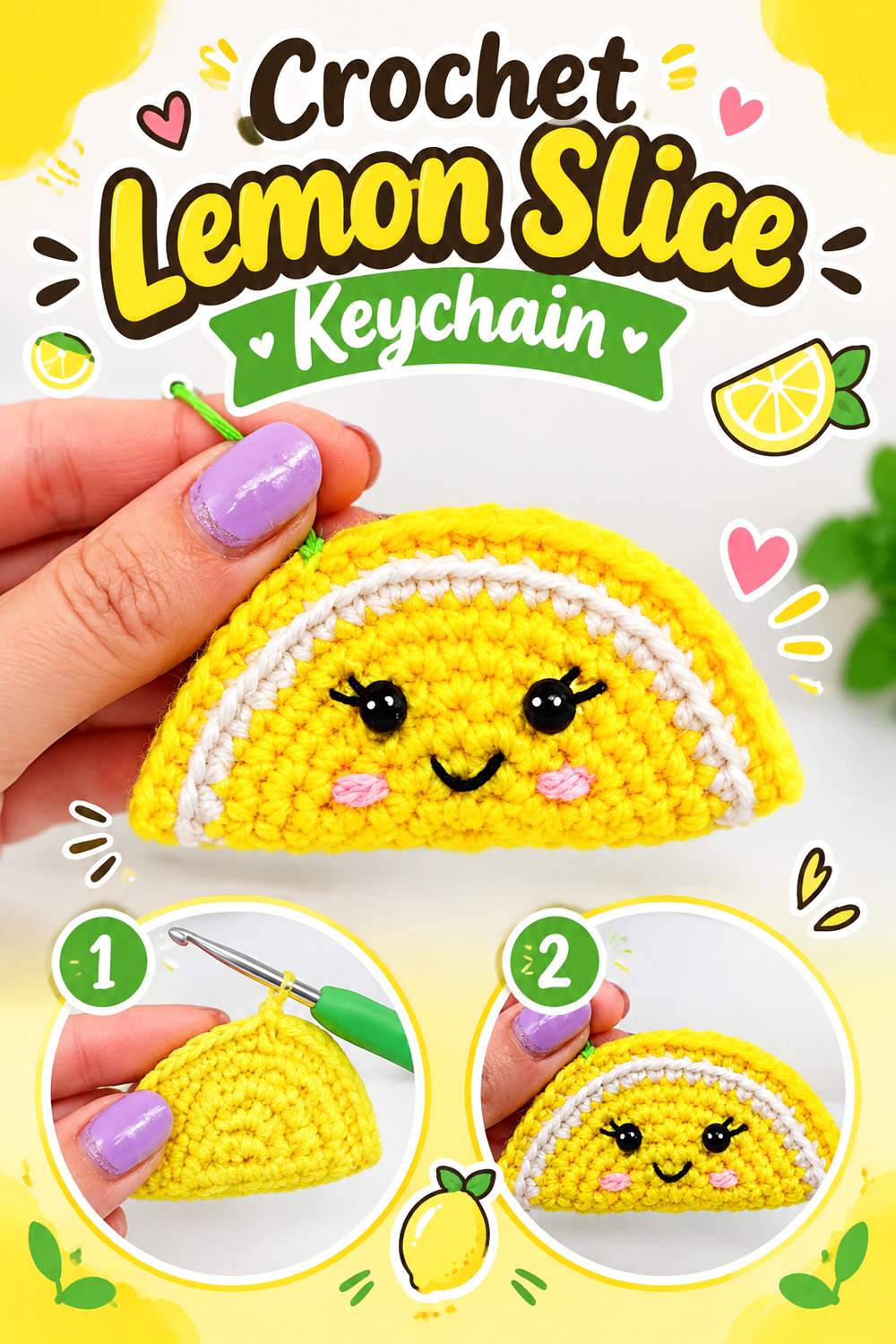
A lemon slice changes the fruit theme from dimensional produce to a compact graphic shape. Natalina Craft’s tutorial creates a flat, unstuffed lemon keychain, which makes it a useful lower-bulk option for displays crowded with plush pieces. The contrasting rind and facial details give it a clear front side, while its circular format sits neatly beside flowers, stars, or hearts.
Because this version is not stuffed, yarn selection affects edge firmness more than volume. A very soft or loose fabric may curl or lose the clean disc-like outline that gives the design its graphic appeal.
Preserve a Flat Finished Edge
A flat keychain should hang without excessive cupping or rippling. If your edge begins to wave, check tension and compare your work with the original tutorial before continuing.
Blocking may help some fibers lie flatter, but care depends on the yarn you use. Follow the fiber label and creator guidance rather than applying heat or moisture automatically. Good edge definition will make the lemon read more clearly when several keychains overlap on a display.
Let Contrast Do the Work
The rind, center, and facial details create much of this project’s visual impact. If you substitute colors, keep enough tonal separation for those areas to remain distinct.
That is particularly important on a market board or product photo where viewers may first see the keychain from a distance. A subtle monochrome version can work, but it will rely more heavily on stitch texture and outline than the original high-contrast approach.
Original Tutorial and Creator Credit
Creator/Site: Natalina Craft
4. Crochet Mushroom Holder Keychain
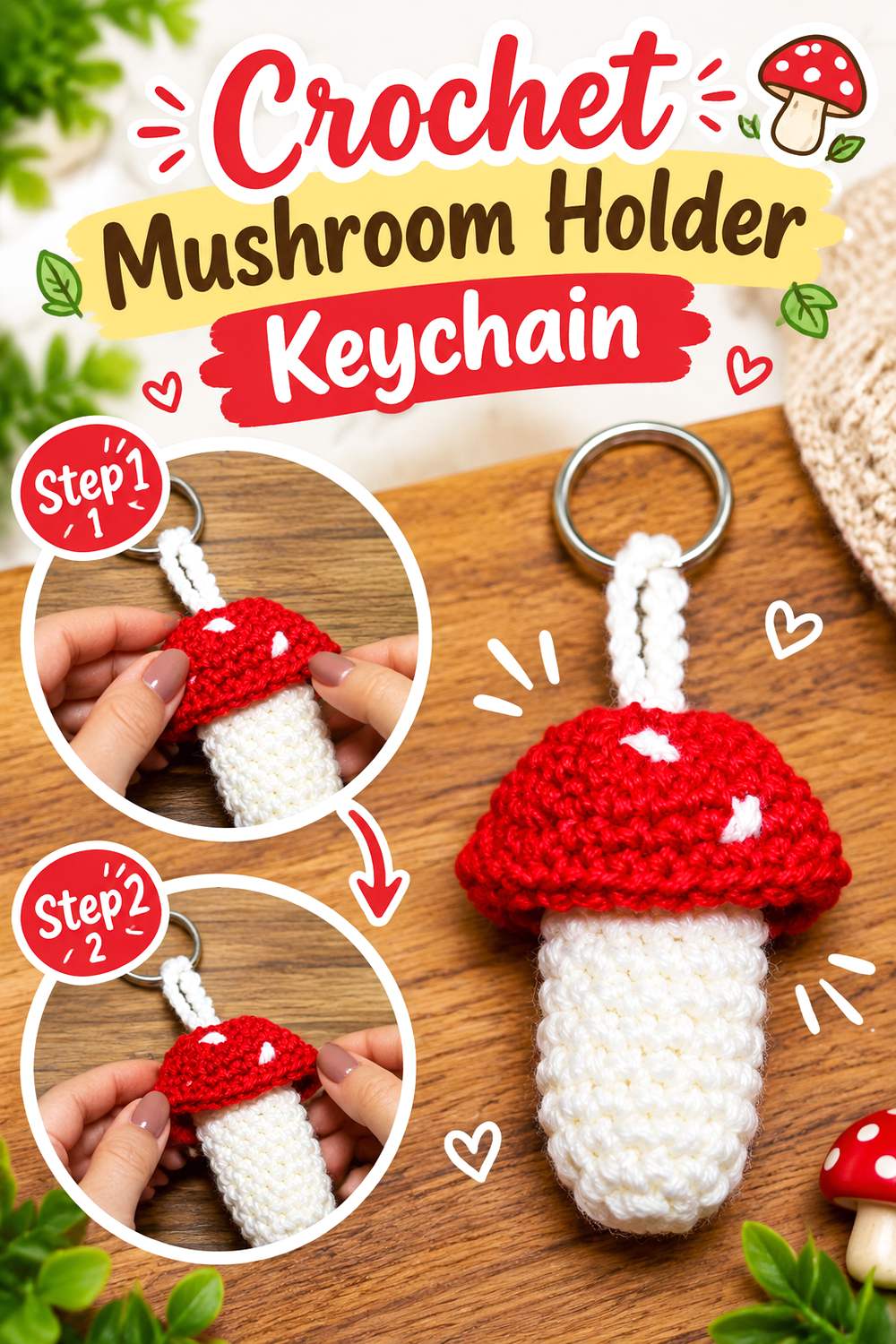
The mushroom source from The Cozy Tangerine adds function to the collection rather than serving only as a decorative charm. The project is designed as a mushroom-shaped keychain pouch or holder, with the tutorial demonstrating a version intended for a small cylindrical item. That makes its elongated profile and open storage purpose quite different from the compact amigurumi pieces in this roundup.
On a display, the extra length provides welcome vertical variation. If you adapt the holder for something other than the source’s demonstrated use, compare the intended object’s dimensions with the finished opening rather than assuming every small item will fit.
Treat Capacity as a Fit Question
A holder works only when its contents and opening are compatible. Yarn weight, hook size, and tension can all alter the usable interior, so do not rely on appearance alone when making substitutions.
Make one sample and test it with the exact type of item you intend to carry. If the fit is very tight, forcing the object inside may strain the stitches and hardware. If it is too loose, the item may not remain secure during normal movement.
Balance Function With Hanging Weight
A loaded holder weighs more than an empty decorative keychain. That extra load matters at the connection between crochet fabric, jump ring, and keychain hardware.
Inspect the top connection regularly if the finished piece will see everyday use. The best display version should also show the mushroom silhouette clearly without requiring the holder to be filled; that lets buyers or gift recipients understand the design before handling it.
Original Tutorial and Creator Credit
Creator: The Cozy Tangerine
5. Crochet Popcorn Flower Keychain
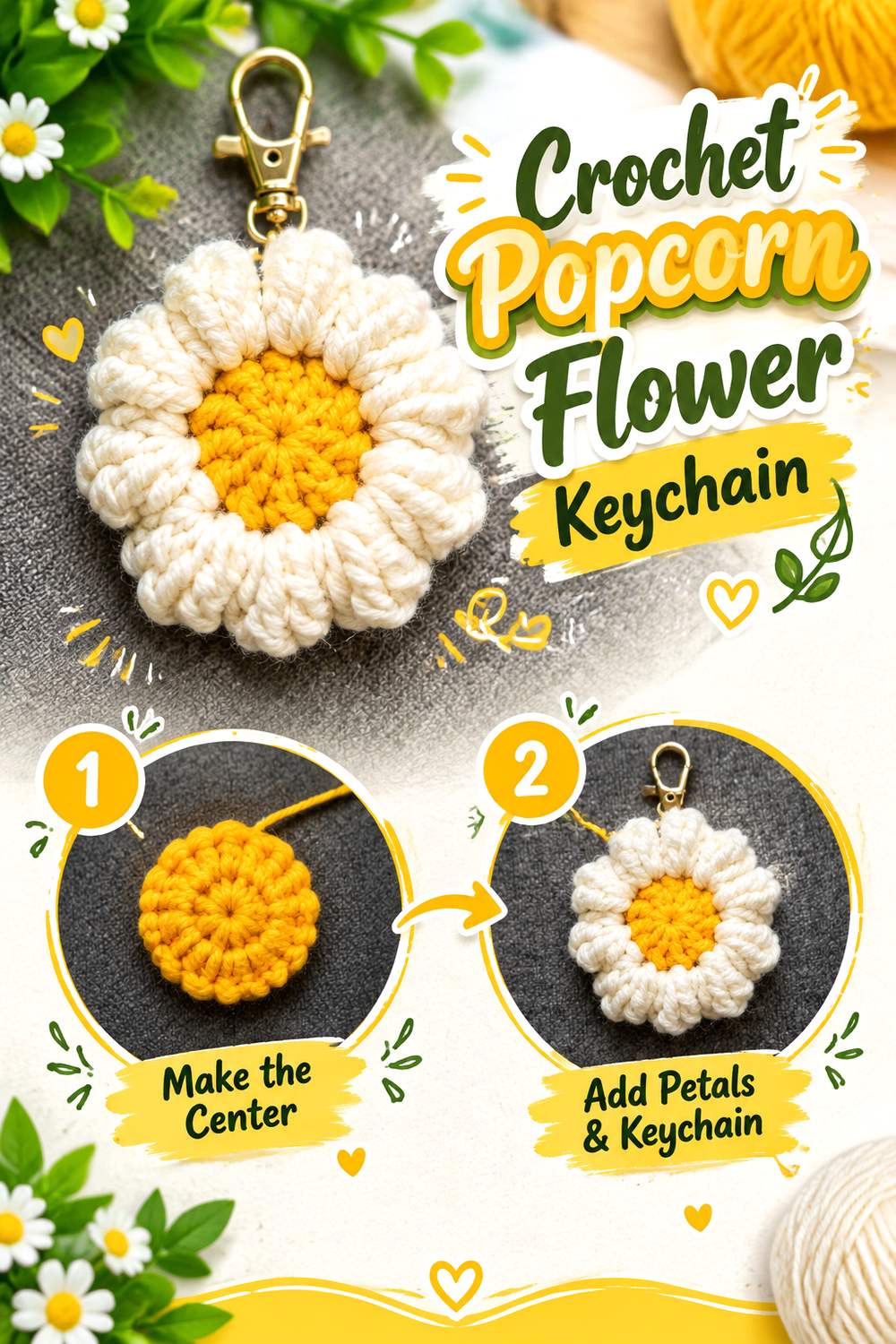
VivCrochets’ flower keychain uses a prominent textured center and radiating petals, creating a compact floral piece with more surface relief than a simple appliqué. The source includes both a written pattern and video tutorial and presents the flower as a keychain or bag charm.
This design works well when you want floral color without the extra vertical length of a stemmed flower. Its roughly circular silhouette can also visually bridge the lemon, donut, and sunflower projects while still looking distinct because the texture is concentrated in the petals and center.
Keep the Petal Texture Consistent
Textured flower stitches can look uneven when tension changes from one repeat to the next. Because the flower is small, variations that seem minor while crocheting may become obvious once all petals surround the center.
Pause before attaching the keychain and look at the piece flat. Petals should occupy the space around the center evenly enough that one side does not appear noticeably heavier. Correcting tension is easier before the hardware is in place.
Consider How It Sits Beside Other Flowers
A flower-only display can quickly become repetitive. Pair this compact textured shape with the larger sunflower or with non-floral motifs rather than placing several similar discs together.
Color can reinforce the distinction, but construction should do most of the work. The popcorn-like texture and concentrated petal ring give this project a different visual rhythm from a sunflower’s wider, more directional petal arrangement.
Original Tutorial and Creator Credit
Creator/Site: VivCrochets
6. Crochet Sunflower Charm Keychain
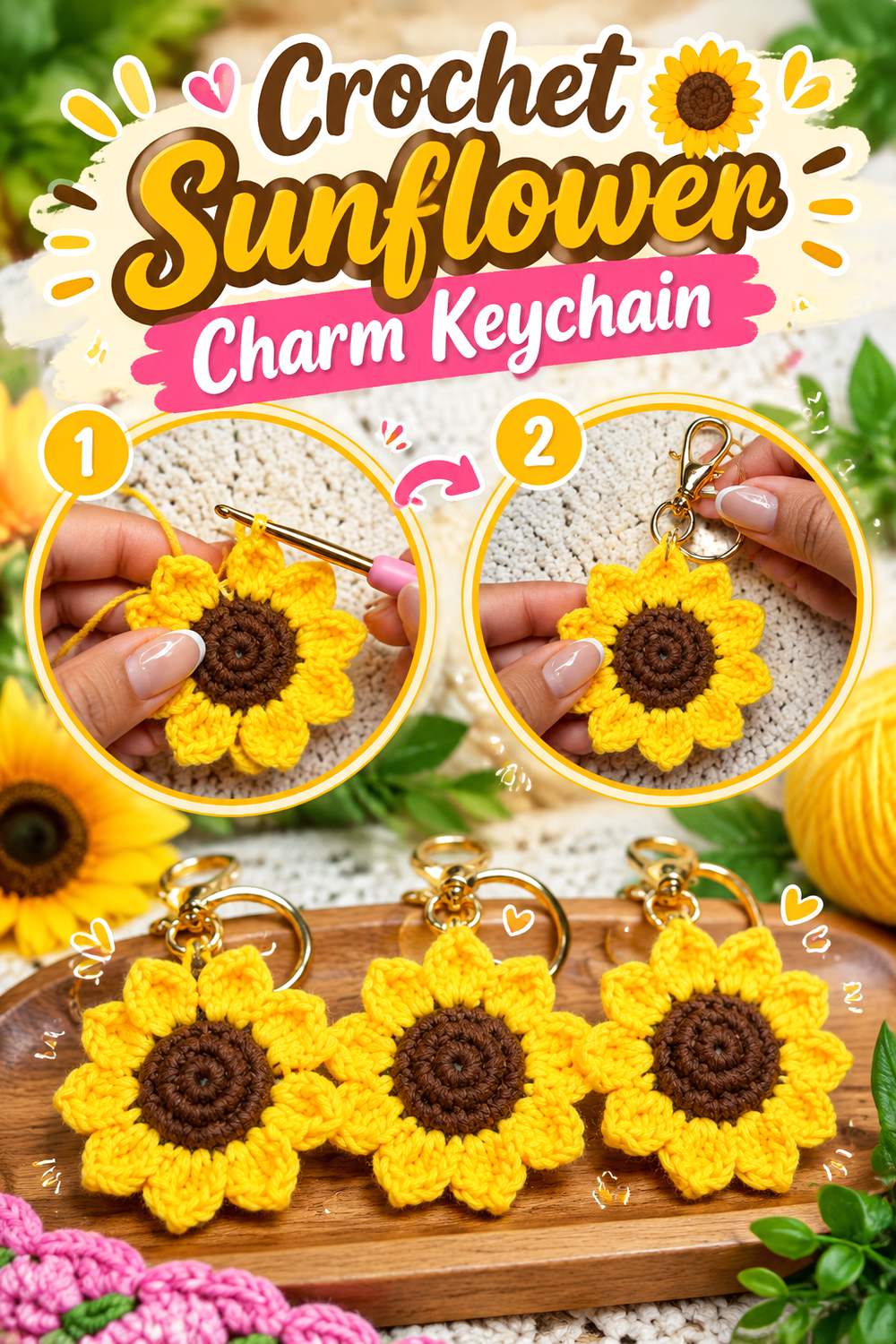
A sunflower creates a more directional floral silhouette than the previous compact flower. Shelen Crochet’s video shows a small sunflower assembled with a distinct center, yellow petals, and green finishing elements before the keychain is added.
That layered color structure gives a display a bright focal point without relying on a large overall project. It can work especially well near neutral animals such as the koala or beside solid fruit shapes. The main planning question is whether your chosen yarn will keep the petals defined or allow them to collapse into the center.
Give the Petals Enough Definition
The sunflower’s identity depends on visible separation between center and petals. A fuzzy yarn may blur those boundaries, while very stiff yarn can make small petals feel bulky.
If you substitute fibers, compare one completed petal section with the source before making multiples. Defined edges usually matter more than perfect stiffness. Once hung, gravity will also change how a soft flower sits, so evaluate it vertically rather than only on a table.
Watch the Back as Well as the Front
Flower keychains tend to rotate. A beautifully finished front can lose some impact if the back is untidy or the hardware pulls the center out of shape.
Before displaying the piece, check how tails are secured and whether any attachment stitches are conspicuous from the reverse. You do not need both sides to be identical, but a clean back makes the project feel more intentional when it swings on a rack.
Original Tutorial and Creator Credit
Creator: Shelen Crochet
7. Crochet Puff Heart Keychain
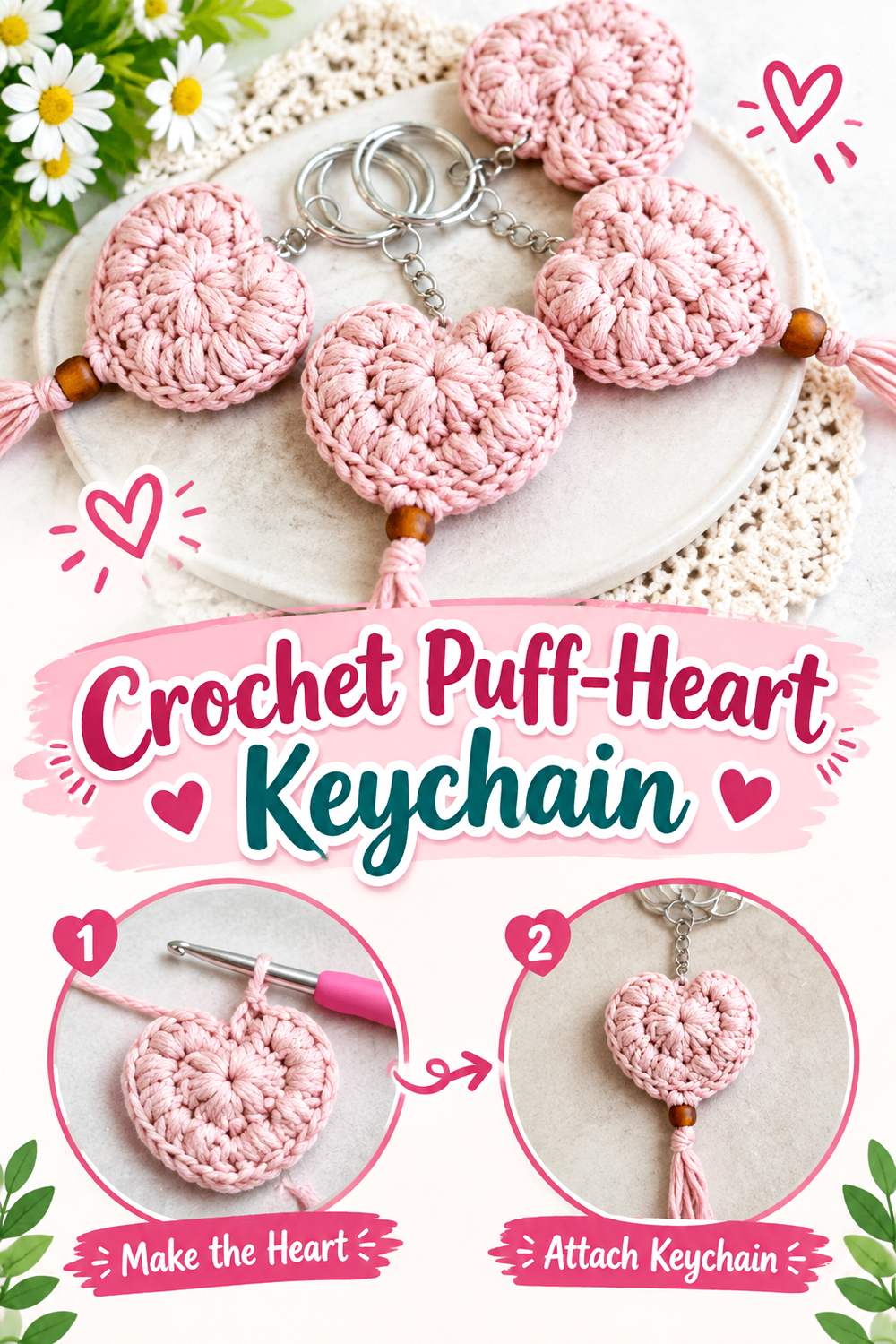
A heart adds a simple geometric motif to a collection dominated by recognizable objects and animals. Made by Gootie’s original pattern uses textured puff-stitch detail and creates a small stuffed heart rather than a completely flat appliqué.
That combination gives it enough depth to stand beside amigurumi while keeping a clean, familiar outline. Hearts are also easy to recolor for different display themes without changing their identity. Since the lobes and lower point define the silhouette, however, overstuffing or uneven joining can quickly make the shape look less balanced.
Protect the Center Dip and Lower Point
The characteristic heart outline depends on three places: the two upper curves, the center indentation, and the lower point. Stuffing that is packed too firmly can push those areas outward.
Add filling gradually and compare both sides before closing. If you change yarn weight, check whether the fabric still allows the shape to form cleanly. A larger, softer version may need different handling than the small source sample.
Use Hearts to Connect Color Groups
Because the shape remains recognizable in almost any palette, hearts can act as visual bridges between otherwise separate sections of a display.
For example, one heart can repeat the yellow used in flowers while another echoes the pink in fruit or dessert pieces. That kind of controlled repetition makes a mixed collection feel coordinated without requiring every project to use the same yarn colors.
Original Tutorial and Creator Credit
Creator/Site: Made by Gootie
8. Crochet Rainbow And Cloud Keychain
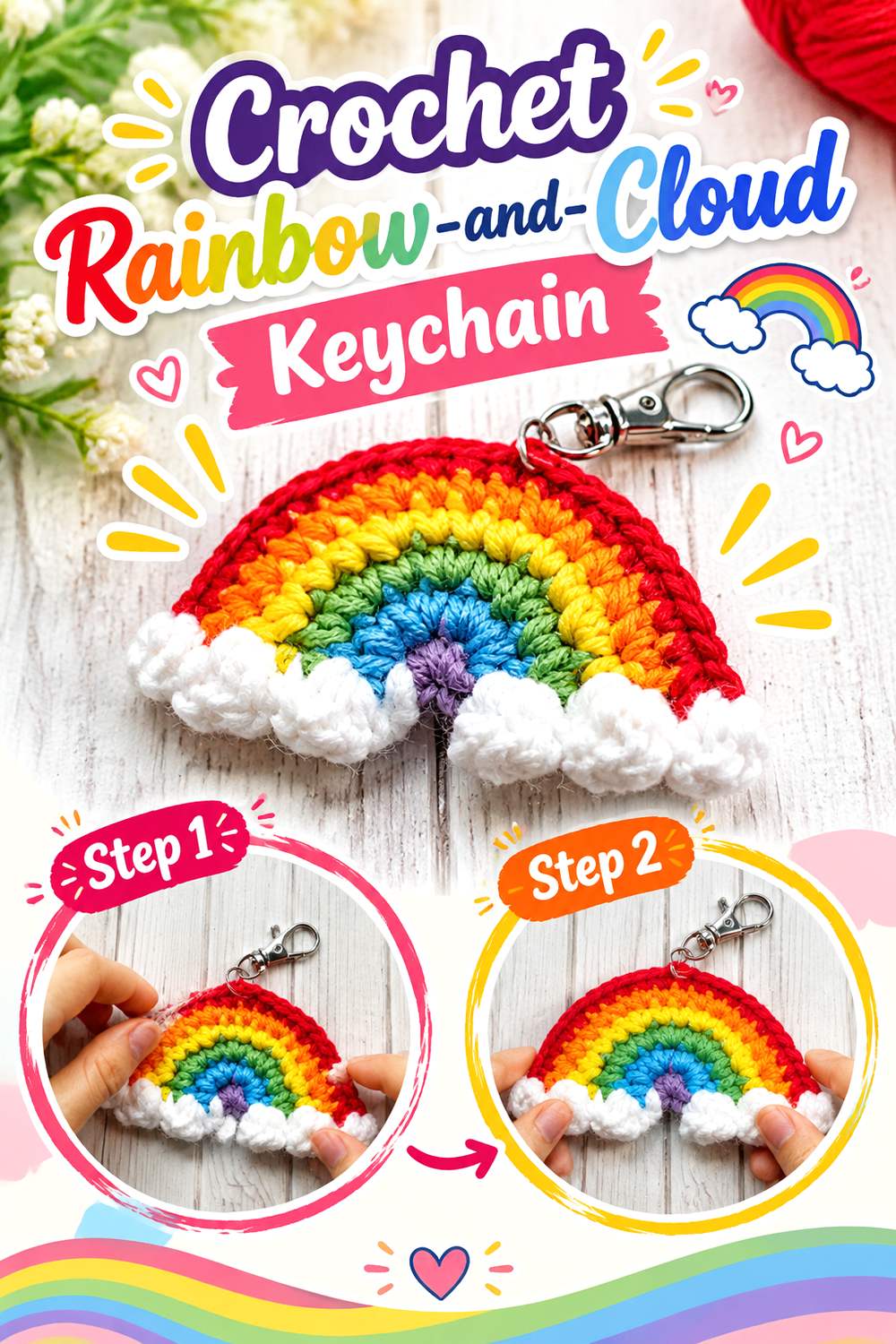
The Caffeinated Snail’s rainbow keychain introduces an arched silhouette plus cloud elements, creating more horizontal width and hanging detail than most single-shape charms. The tutorial specifically covers the rainbow, clouds, and adding the keyring.
This is a strong display piece when you need to interrupt a row of compact circles and stuffed animals. Multiple color bands also make it easier to echo shades used elsewhere in a collection. The main risk is visual clutter: too many unrelated colors can make a small rainbow compete with every neighboring piece.
Build a Controlled Palette
A rainbow does not have to match every item on the board, but it can help unify several of them. Choosing bands that repeat existing display colors creates connection without making the project monochromatic.
Before crocheting several versions, place the yarn skeins beside your other finished keychains. If the rainbow contains every dominant color already on the board, one or two examples may provide enough visual impact without overwhelming smaller motifs.
Keep the Hanging Line Balanced
Wide keychains can tilt if the attachment point is not visually centered relative to the finished form. Follow the tutorial’s hardware placement and inspect the piece while it is hanging, not just while it lies flat.
If one cloud or side appears heavier, make sure that is a deliberate design feature rather than an assembly issue. Balanced hanging is particularly noticeable when rainbows are arranged in a straight row.
Original Tutorial and Creator Credit
Creator: The Caffeinated Snail
9. Crochet Stuffed Star Keychain
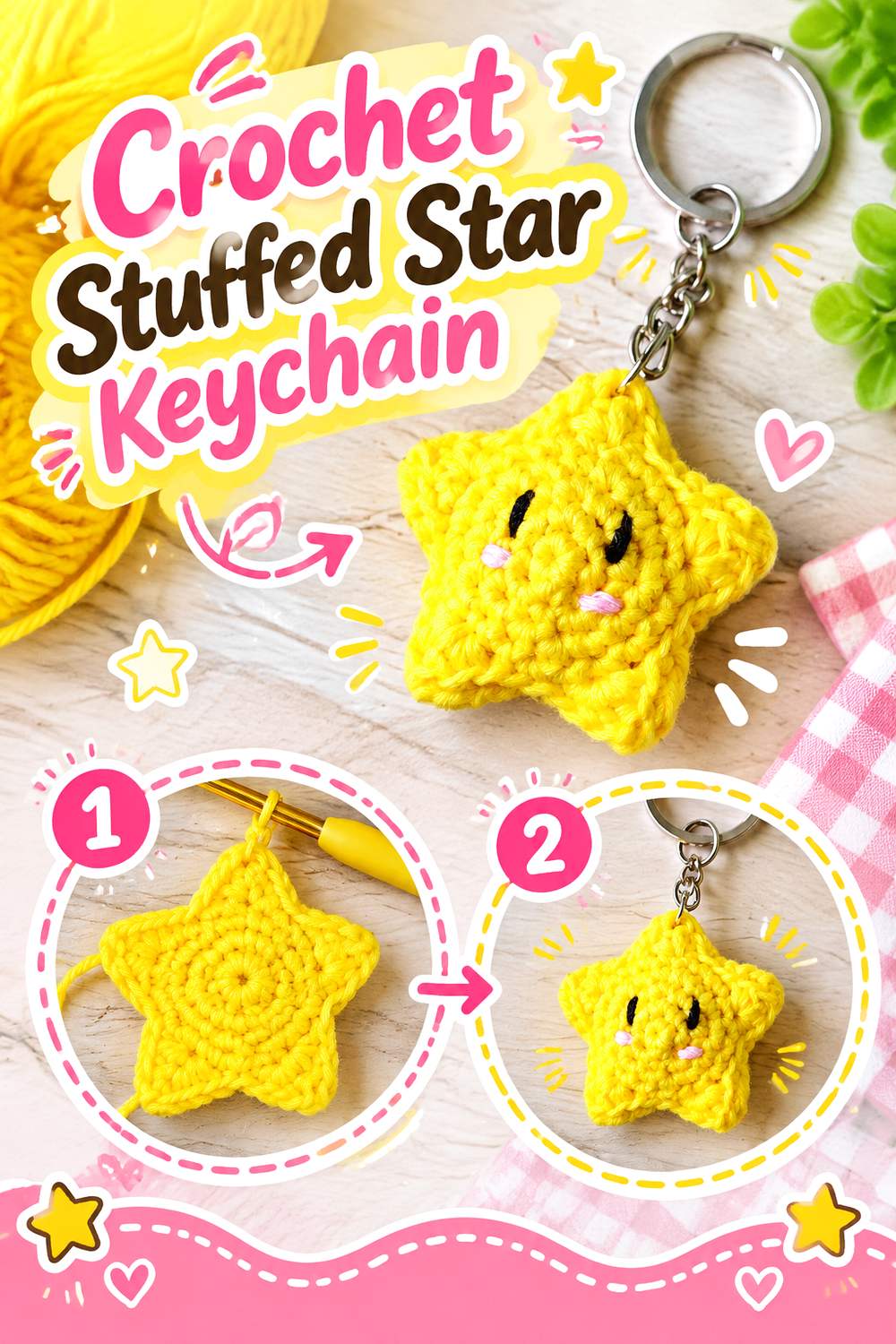
A star offers sharp directional points that contrast nicely with the rounded fruit, animals, and flowers in this collection. Hook N Bloom’s original written tutorial presents a small amigurumi star that can be lightly stuffed and finished with a keychain ring.
This shape is particularly useful in display gaps where a round charm would feel repetitive. Stars also adapt easily to seasonal, celestial, or bright graphic palettes. Their main challenge is not size but symmetry: each point needs to remain distinct enough that the finished piece does not collapse into a rounded pentagon.
Check Every Point Before Closing
Stuffing can migrate toward the middle and leave the tips looking flat, or it can become too dense and push the edges outward. Shape the piece gradually as you fill it.
If one point is noticeably shorter or bulkier, compare your stitch placement with the source before closing. Small differences are more visible on geometric motifs than on organic forms such as fruit or animals.
Use Stars as Spacing Pieces
A star occupies space irregularly because of its points, which can be useful between two wider keychains. Instead of lining every item edge-to-edge, allow a little negative space around the star.
That helps the silhouette read clearly and prevents its points from becoming visually tangled with neighboring hardware. On product photos, a small rotation can also create movement while keeping the front fully visible.
Original Tutorial and Creator Credit
Creator/Site: Hook N Bloom
10. Crochet Crescent Moon Keychain
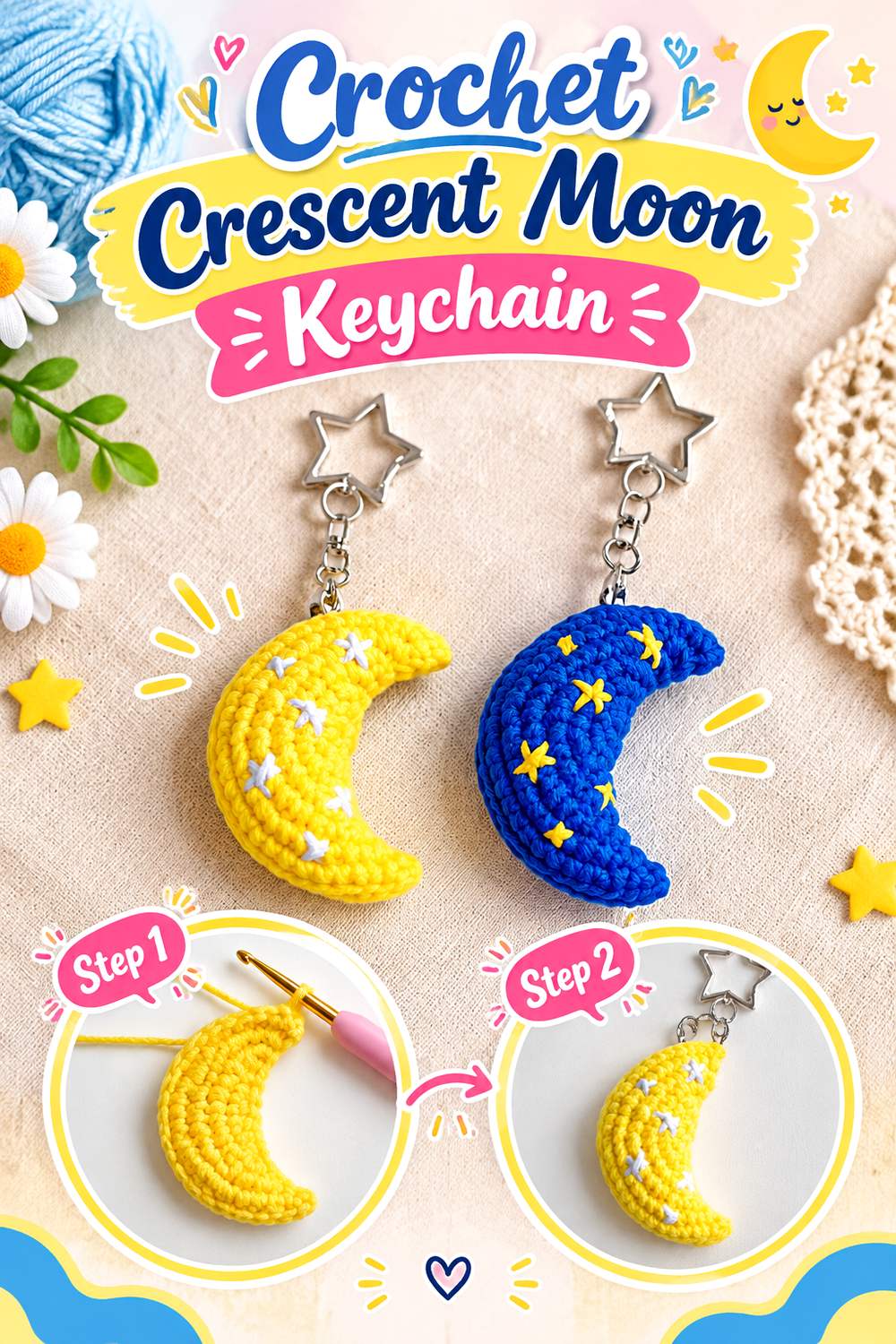
Tutu Crochet’s moon keychain adds a curved celestial shape rather than the radial geometry of the star. The source describes a stuffed crescent with optional embroidered star details, giving the design a strong recognizable outline plus room for surface personalization.
A crescent works well toward the edge of a display because its open inner curve leaves natural negative space. It also provides a calmer shape beside detailed animals or flowers. If you change yarn thickness, pay close attention to how the inner curve behaves; excessive bulk can make a small crescent look nearly closed.
Keep the Crescent Open
The negative space inside the moon is part of the design. If your tension, stuffing, or yarn weight causes the tips to draw too close together, the silhouette may lose its clarity.
Compare the shape before and after stuffing. A lighter fill can sometimes preserve the curve better than packing the piece firmly. Any adjustment should still follow the construction principles shown in the original tutorial.
Add Surface Detail Sparingly
Small embroidered stars can reinforce the celestial theme, but the moon already has a strong silhouette. Too many details may make a tiny keychain look crowded.
If you are preparing several for a display, consider varying just one controlled element—such as the embroidery color—while keeping the moon itself consistent. This provides variety without making the collection look like unrelated samples.
Original Tutorial and Creator Credit
Creator/Site: Tutu Crochet
11. Crochet Striped Bee Keychain
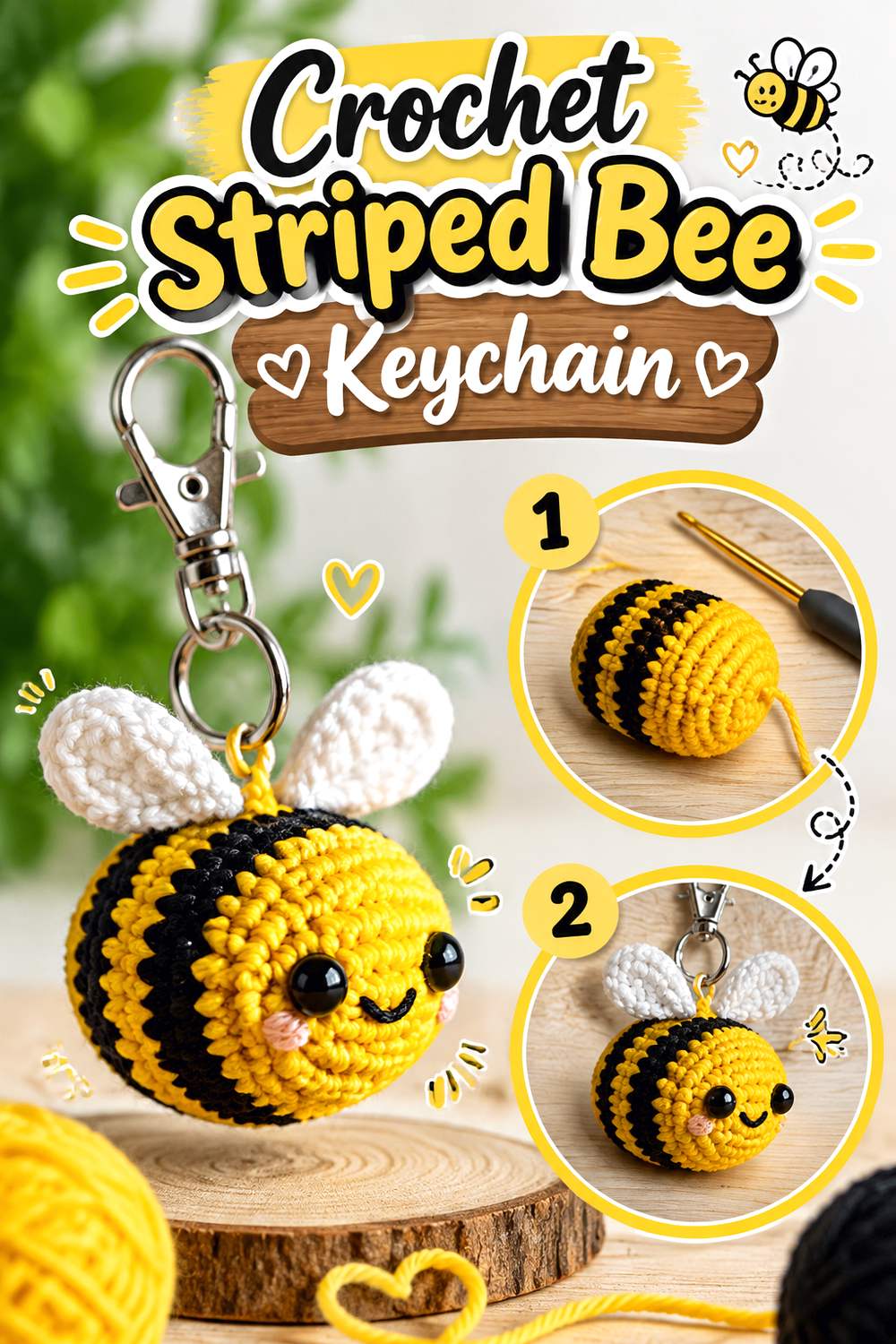
A bee introduces bold striping, small wings, and a compact amigurumi body. Hook & Loop Crochet Tutorials’ video shows the bee being worked, detailed, stuffed, given wings, and finally attached to a keyring.
Its contrasting horizontal bands give a display visual energy without requiring a complicated silhouette. Because the wings project beyond the body, however, they are likely to receive more incidental handling than an entirely enclosed shape. That makes finishing and attachment quality especially important if the charm will be used rather than simply photographed.
Check the Wings From the Front and Side
Wing placement changes how clearly the bee reads as a bee. If the wings sit too far forward, they may cover the body stripes; too far back, and they can disappear in a front-facing display.
Compare both sides before securing them permanently. Symmetry does not need to be mathematically perfect, but the wings should feel balanced relative to the body’s center line.
Let the Stripes Stay Crisp
Strong color boundaries are one of this project’s major visual features. If your yarn changes create loose transitions or obvious gaps, they will show clearly on such a small object.
Take extra care where colors meet and secure tails according to the tutorial’s construction. When displaying several bees, consistent stripe placement will usually look more polished than merely matching the exact shades.
Original Tutorial and Creator Credit
Creator: Hook & Loop Crochet Tutorials
12. Crochet Frog Face Keychain
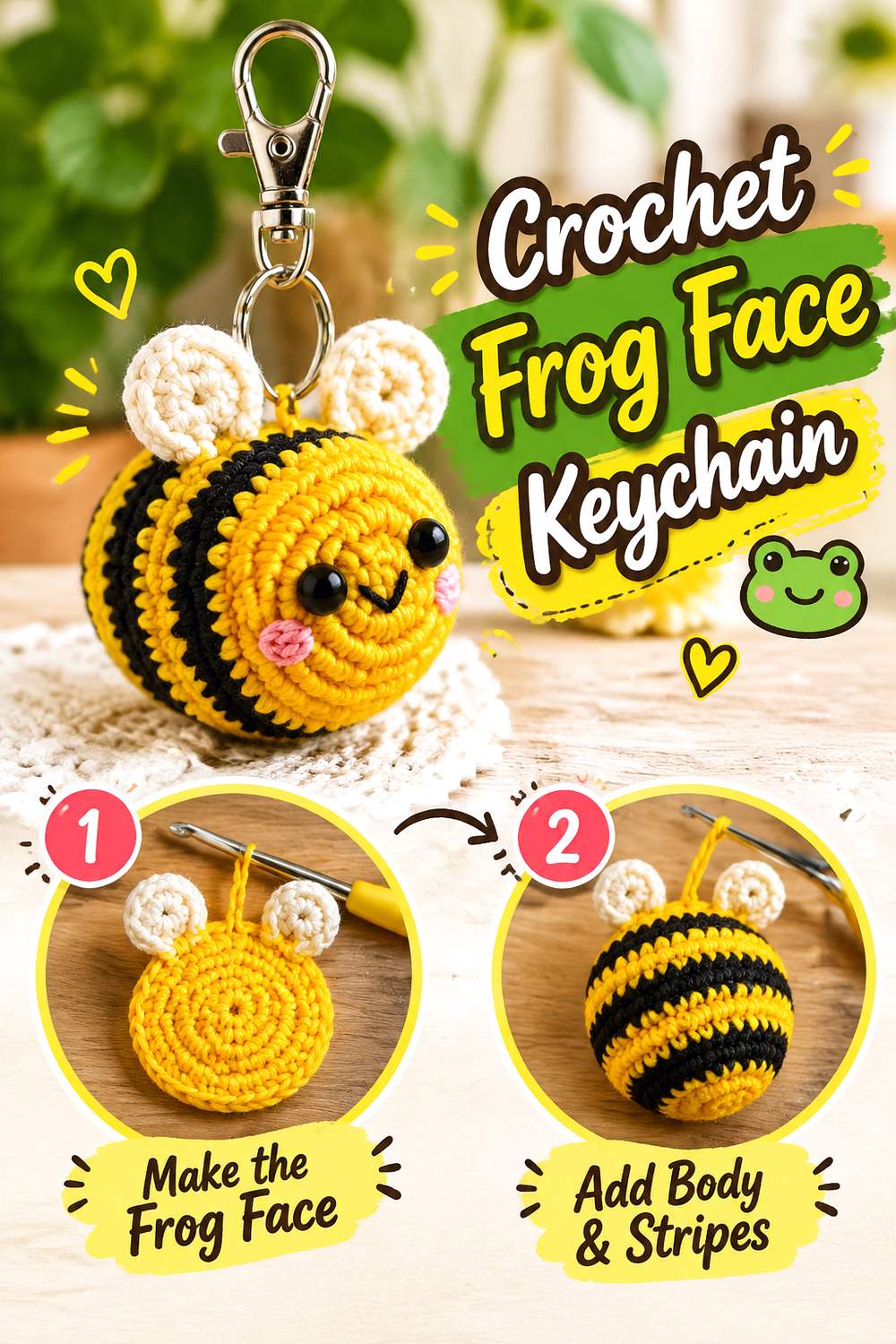
Divine Crochets’ frog keychain is a compact stuffed character with prominent eyes and embroidered facial details. The tutorial builds the frog as a small amigurumi piece and finishes it with the keyring, making the face itself the main visual focus.
That makes it a useful character project for a display where full-bodied animals would take up too much space. The large eye area also creates a recognizable silhouette from the front. If you plan color variations, keep enough contrast in the face details that the expression does not disappear against the body yarn.
Facial Placement Controls the Character
Tiny changes in eye, mouth, or blush placement can noticeably change a small amigurumi expression. Complete the main shape first and assess the front before adding permanent embroidery.
If you make a batch, use the tutorial’s visual placement as your reference rather than trying to copy the first finished frog by memory. That helps keep expressions intentionally consistent without reproducing the pattern itself.
Think About Small-Part Use
The tutorial includes specific face detailing, and any substituted components should suit the intended recipient. For items that may reach very young children, detachable small parts can require additional caution.
If you prefer embroidery for a particular use, first check whether the construction leaves enough surface area for it. Changing a finishing method can alter the appearance even when the crocheted body stays the same.
Original Tutorial and Creator Credit
Creator: Divine Crochets
13. Crochet Mini Whale Keychain
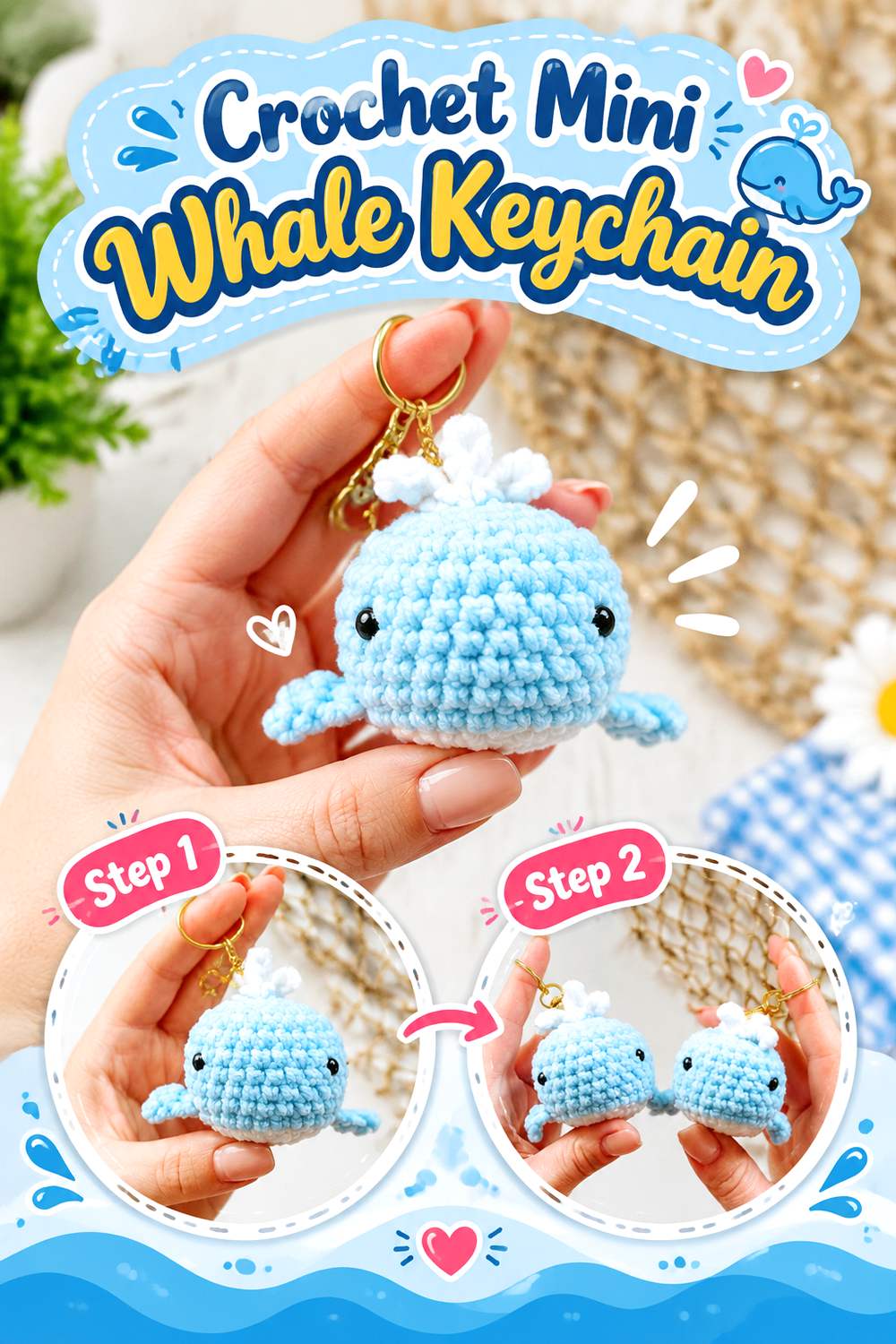
Double Dutch Crochet Co.’s whale is a compact stuffed sea-animal keychain with contrasting body areas, side fins, a tail, and a small water-spout detail. The designer specifically presents it as a mini version suitable for a keychain or bag charm.
The elongated body breaks up a display dominated by circular or upright shapes, while the fins add recognizable side detail without creating excessive overall size. Because those details project from the body, make sure they remain secure if the keychain will be repeatedly pulled from a bag or pocket.
Keep the Body Smooth
A whale benefits from a clean, rounded body rather than a visibly lumpy stuffed form. Add filling in small amounts and distribute it before closing.
If stuffing begins to show between stitches, check your tension and yarn substitution rather than simply adding more fiberfill. Dense fabric usually supports a cleaner small-amigurumi finish than loose stitches stretched around a heavily packed center.
Protect the Small Projection Details
Fins, tail elements, and the water spout contribute a lot of character in very little space. They can also be the first areas to bend or snag.
When arranging a market rack, give the whale enough space that its side details are not constantly trapped beneath neighboring keychains. That improves both presentation and handling.
Original Tutorial and Creator Credit
Creator/Site: Double Dutch Crochet Co.
14. Crochet Bobble Shell Turtle Keychain
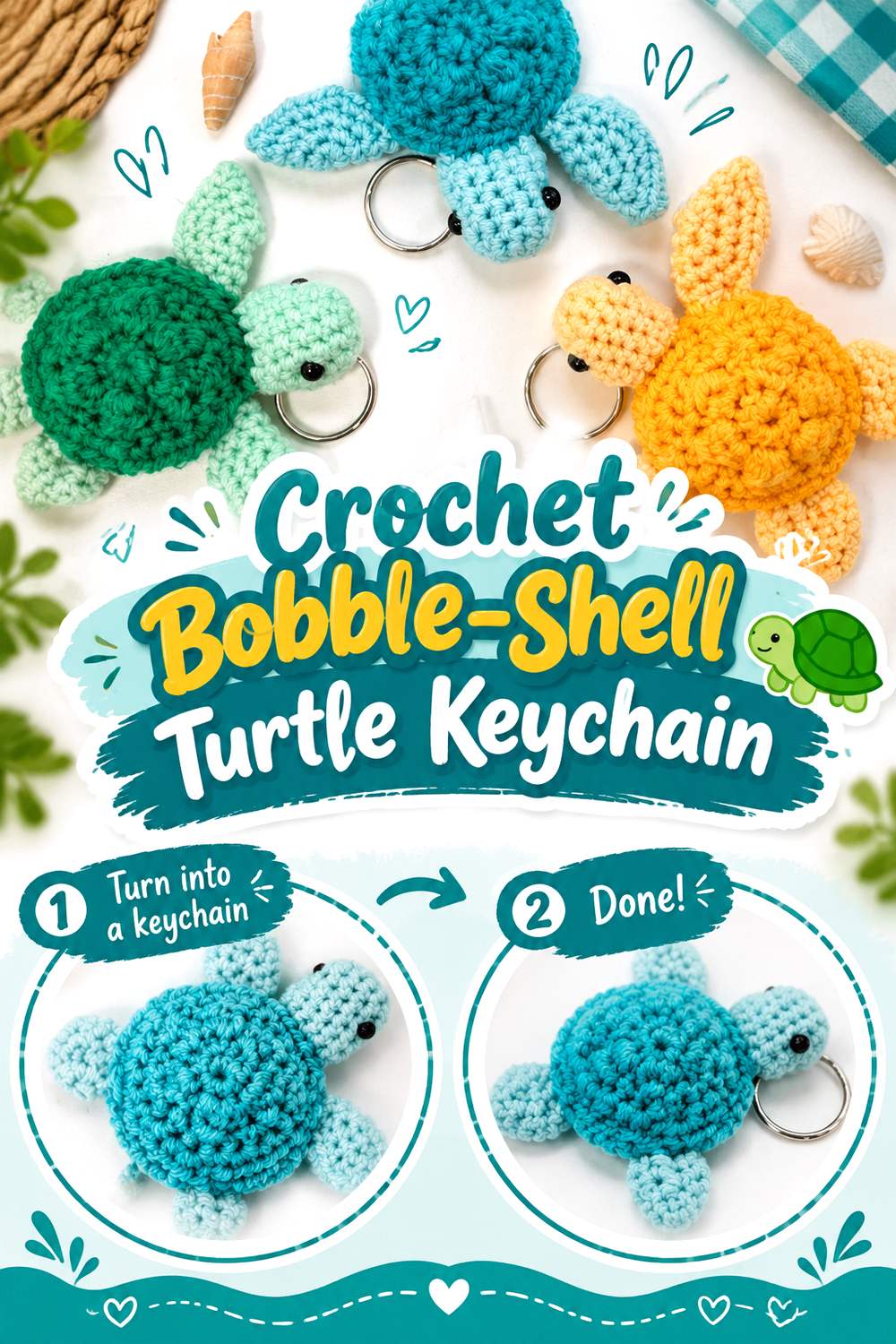
Off the Hook for You’s small turtle was designed as a keyring and combines amigurumi-style body pieces with a textured shell. The shell uses raised bobble detail, creating a tactile surface that is very different from the smooth bodies of the whale, frog, or fruit pieces.
Its relatively flat profile is useful on a crowded display because it provides animal character without projecting as far forward as a round plush. The shell is the visual centerpiece, so color choices should preserve enough contrast or texture definition for that surface to remain visible.
Let the Shell Carry the Texture
A highly textured shell already creates substantial visual detail. Pairing it with extremely variegated yarn may obscure the raised pattern, especially from several feet away.
If texture is your main reason for choosing this project, make one shell sample in the proposed yarn before committing to a batch. Solid or gently shifting colors often allow dimensional stitches to read more clearly than busy, high-contrast color changes.
Confirm the Turtle Hangs Naturally
A turtle has a wide body and multiple projecting limbs, so the keyring position affects its orientation more than it would on a simple circle.
After assembly, hold the piece from the ring and check whether the head, shell, and flippers sit in a visually pleasing position. A keychain meant to lie flat on a table can look very different once gravity takes over.
Original Tutorial and Creator Credit
Creator/Site: Off the Hook for You
15. Crochet Beaded Jellyfish Keychain
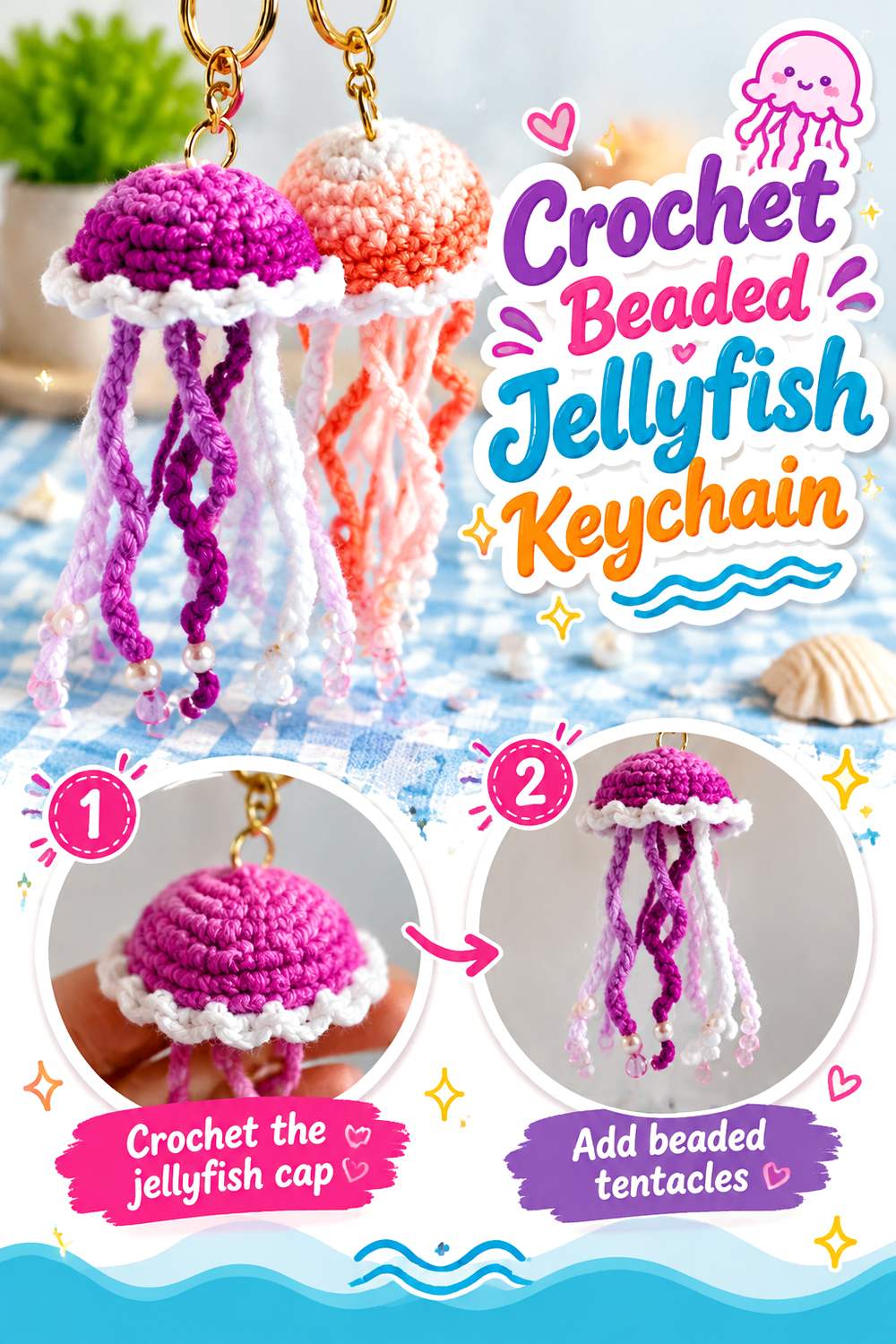
Crochet with Ritu’s jellyfish adds significant vertical movement to a display. The tutorial shows a mini jellyfish keychain with a rounded body, dangling tentacles, color changes, and bead details.
Those hanging elements make it a natural choice for the bottom row of a board or the outer edge of a rack, where the tentacles have room to fall freely. The combination of yarn strands and beads can also make the piece visually heavier than its crocheted body suggests, so hardware and intended use deserve extra attention.
Give the Tentacles Room to Hang
A jellyfish loses much of its character when the tentacles are compressed behind other keychains. Leave vertical clearance below the body when arranging the display.
Before photographing or hanging multiples, gently separate the tentacles so their different lines remain visible. If the yarn tends to twist after storage, reshape it according to the fiber’s care requirements rather than applying unverified heat.
Treat Beads as Functional Additions
Beads change both weight and safety considerations. Check that they are secured using the method demonstrated in the tutorial and consider whether they are suitable for the eventual recipient.
For a display intended primarily for adults, the bead detail can add light-catching contrast. For other uses, you may decide a bead-free interpretation is more appropriate, but confirm how that change affects the tutorial’s intended appearance.
Original Tutorial and Creator Credit
Creator: Crochet with Ritu
16. Crochet Octopus Keychain
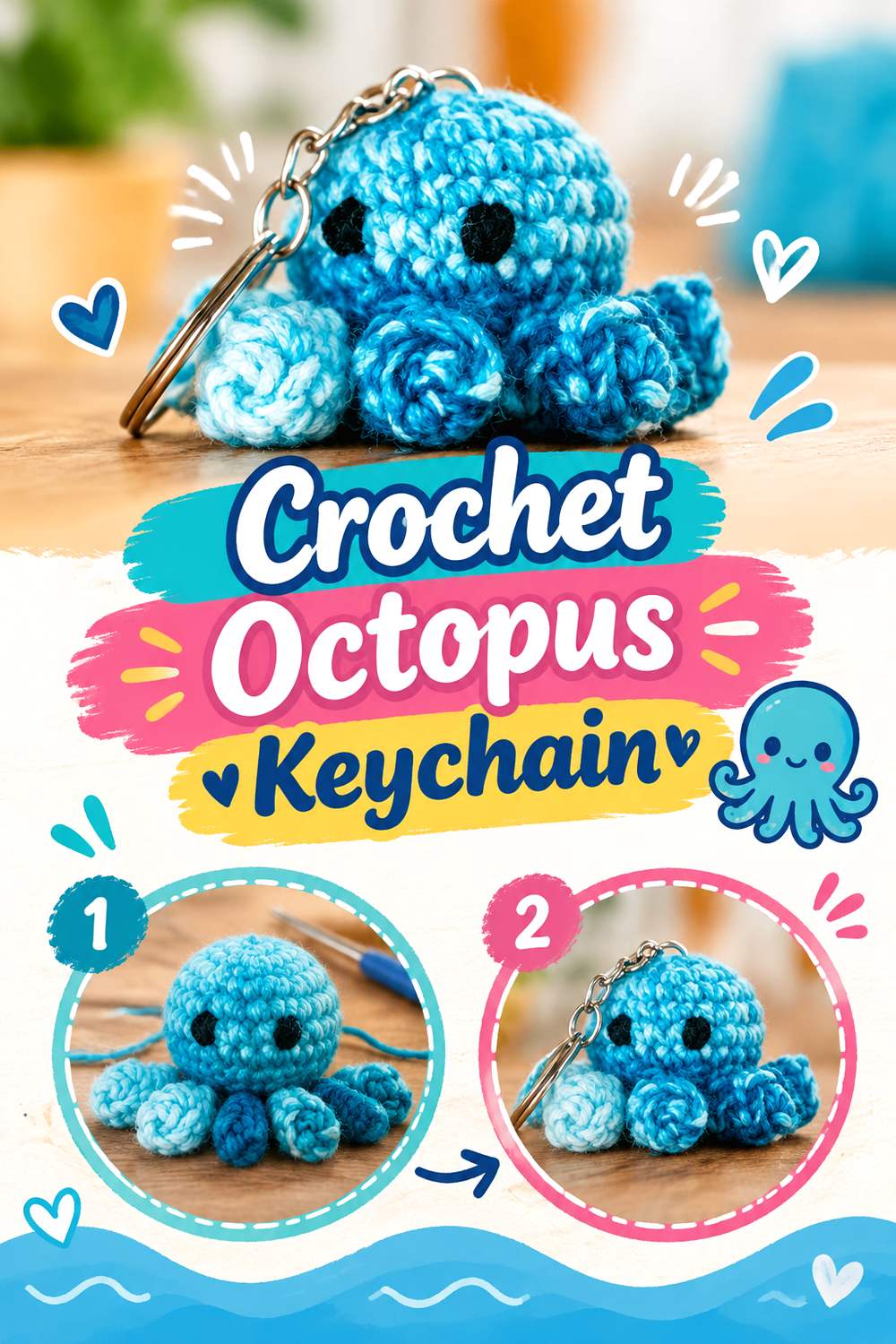
Yarn & Crochet’s octopus keychain introduces another sea creature but with a more compact, radial lower silhouette than the jellyfish. The original page provides the full online tutorial and presents the finished octopus specifically as a keychain or bag decoration.
This is helpful when you want movement without the longer vertical drop of jellyfish tentacles. The clustered arms create texture around the lower half of the body, giving the project a distinct footprint even if it shares a similar rounded top.
Keep the Lower Shape Separated
Multiple curled or projecting arms can visually merge into one dense mass if the yarn is too bulky for the scale of the project.
After finishing, arrange the lower section so individual elements can be seen. If your substitute yarn produces a significantly larger piece, check whether the original proportions still work before attaching hardware. Scaling every component equally is not always automatic when fiber and hook size change.
Make the Top Connection Discreet
Because much of the visual action is at the bottom, bulky hardware at the crown can make the octopus appear top-heavy.
Use the tutorial’s attachment approach as your guide and choose hardware that is strong without overwhelming the crocheted body. On a mixed display, matching the metal finish to neighboring keychains can also make varied motifs feel like one coordinated collection.
Original Tutorial and Creator Credit
Creator/Site: Yarn & Crochet
17. Crochet Painted Detail Cat Keychain
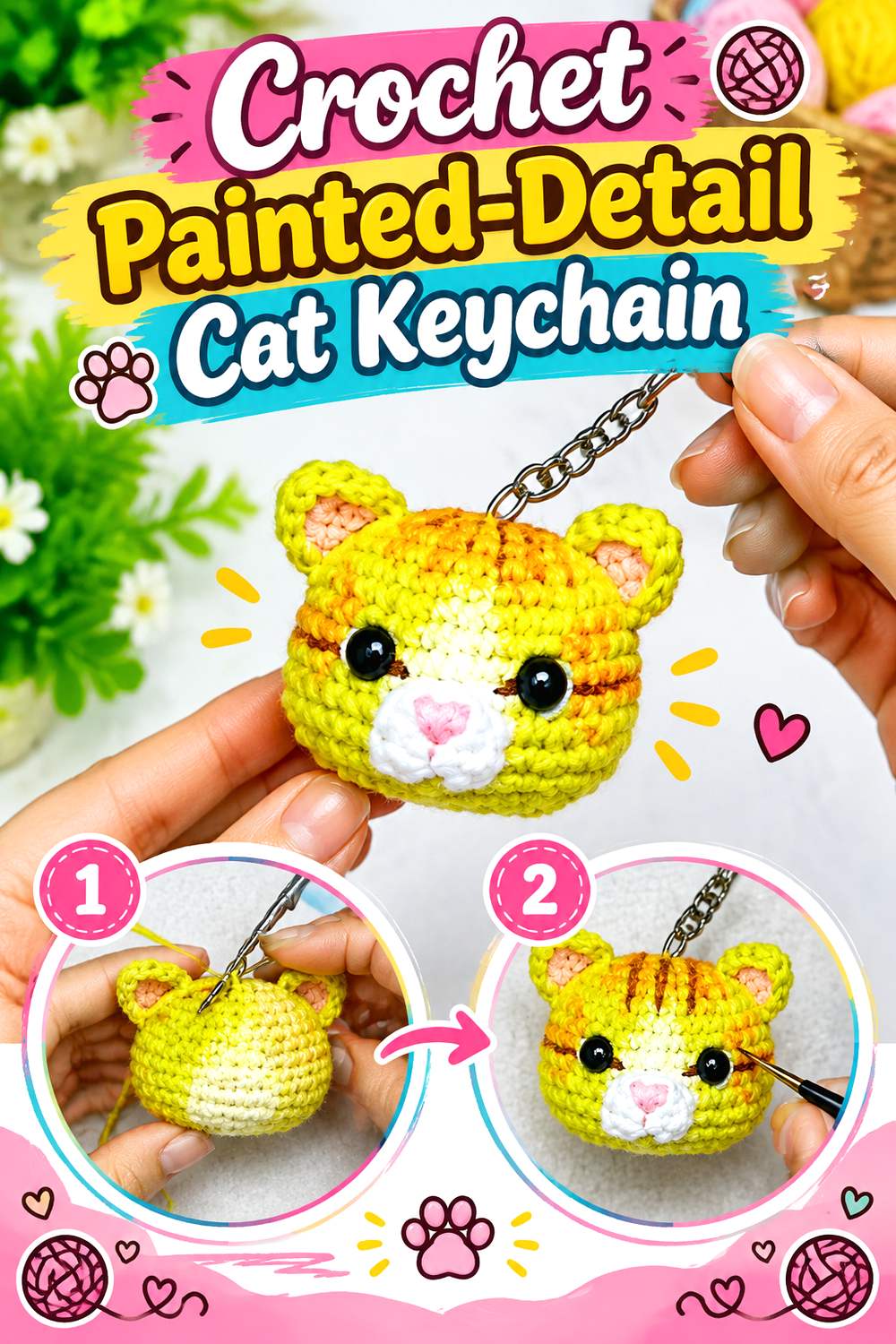
Luaji Crochet’s cat keychain uses a small amigurumi cat head with ears and facial features, then shows several surface-color variations created with fabric paint. The creator specifically discusses using the same basic cat to represent different coat patterns.
That makes this project unusually flexible for a display: instead of altering construction, you can create visible variety through finishing. The compact head shape also sits well beside the frog while remaining distinct because of the pointed ears and cat-specific markings.
Test Surface Decoration First
Paint behaves differently on different fibers and yarn textures. The creator specifically discusses material choice in relation to the painted finish, so do not assume every yarn will accept surface decoration equally well.
Make a small swatch or spare piece before painting a finished keychain. Test whether the color remains crisp, whether the fabric stiffens noticeably, and whether the result matches the visual effect you want.
Use Coat Patterns to Create Variety
This project can generate several distinct-looking cats without multiplying pattern types on your display. Tuxedo, calico, tabby-like, or simplified solid-color interpretations can create a collection within the larger collection.
Keep the underlying face and ear shape consistent so the group still looks intentional. Variation is most effective when viewers can immediately recognize that the pieces belong to the same design family.
Original Tutorial and Creator Credit
Creator: Luaji Crochet
18. Crochet Faux Fur Koala Keychain
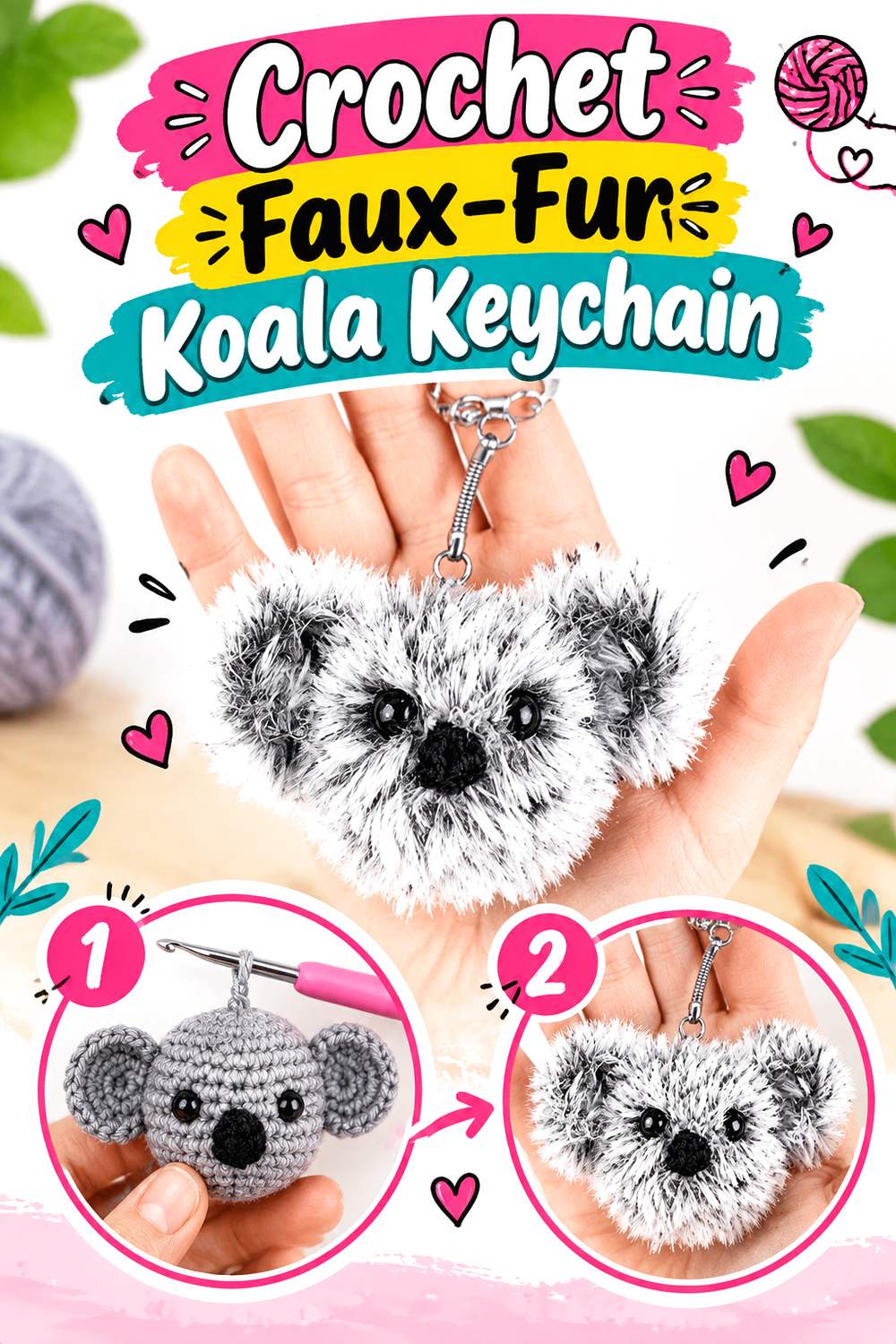
The Loopy Lamb’s koala is a head-shaped keychain designed around faux-fur texture. Unlike the smooth, stitch-defined animals elsewhere in the roundup, much of this project’s character comes from the yarn surface itself. The designer created it as a small introduction to working with faux fur and includes a video tutorial alongside the written pattern.
On a display, that texture acts almost like a different material category, making the koala stand out even in a neutral shade. Faux fur can obscure stitches and facial components, however, so this is a project where finishing and selective trimming have a major effect on readability.
Let Texture Replace Extra Detail
The fuzzy surface already provides strong visual interest. Adding too many contrasting embellishments could compete with the soft koala look.
Focus on clear ears, eyes, and nose so the character remains recognizable. If your chosen fur is longer or denser than the source yarn, the face may need careful grooming or trimming in the areas the designer indicates rather than additional decoration.
Check the Hardware Through the Fur
Faux fur can hide where the actual crochet fabric ends and where a split ring is attached. Make sure the hardware is secured to the structural stitches, not merely caught in loose fibers.
After assembly, tug the ring gently while watching the crocheted base beneath the fur. The connection should take the load without relying on the decorative pile for support.
Original Tutorial and Creator Credit
Creator/Site: The Loopy Lamb
19. Crochet Ice Cream Cone Keychain
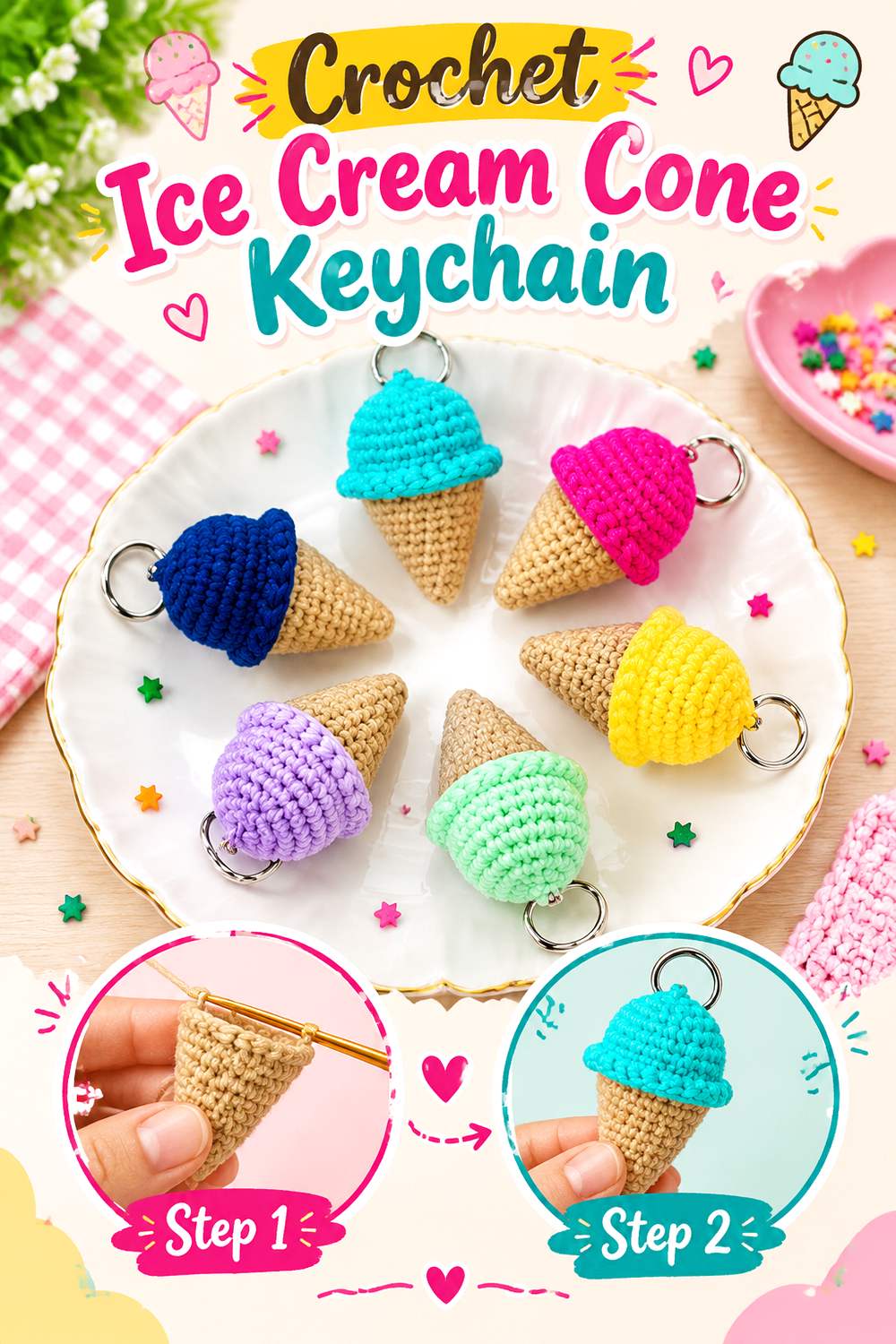
The Friendly Red Fox’s ice cream cone combines a tapered base with a rounded top and a contrasting edge where the scoop meets the cone. That upright silhouette is immediately different from the circular donut and fruit charms, making it useful for visual height without the flexible strands of a jellyfish.
The design also invites color variation in the scoop while keeping the cone recognizable. If you make several, this is one of the easiest ways to introduce a small family of related pieces without changing the structure.
Keep the Cone From Becoming Top-Heavy
The scoop is visually and physically wider than the tapered lower section. Too much stuffing in the top can make the piece feel disproportionately bulky.
Shape the cone and scoop as one finished silhouette rather than treating them as unrelated sections. When hanging, check that the hardware does not cause the scoop to lean dramatically to one side.
Build a Flavor Group Without Losing Cohesion
A small row of different scoop colors can create variety while the tan cone provides a repeating anchor. That is more coherent than changing every component of every keychain.
For an organized display, choose a limited scoop palette drawn from colors already used elsewhere—perhaps strawberry pink, lemon yellow, or mint green. Repeating those shades can tie the dessert group back to the broader collection.
Original Tutorial and Creator Credit
Creator/Site: The Friendly Red Fox
20. Crochet Sprinkle Donut Keychain
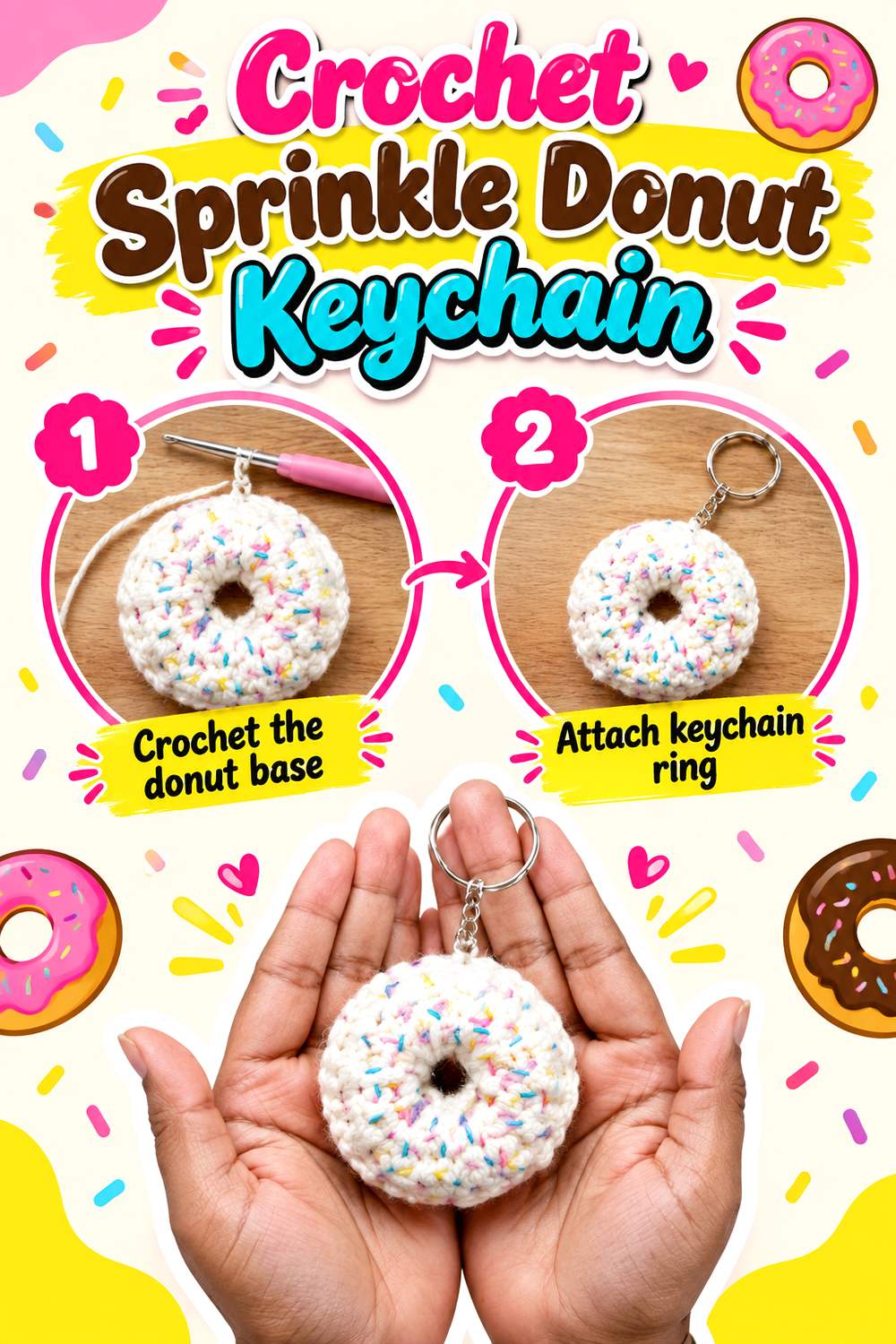
Martian Creations’ donut provides a bold ring silhouette, stuffed thickness, frosting color, and embroidered sprinkle details. The open center is the defining shape feature, so it reads differently from other round projects even when viewed beside a flower or lemon.
This is a strong middle-row project for a display because it has enough visual weight to stand out but remains compact. Surface sprinkles also make it easy to connect the donut to the color palette used elsewhere without changing the base construction.
Protect the Center Opening
The center hole is what keeps the project unmistakably donut-shaped. Stuffing or seaming that closes it too tightly can make the finished piece look more like a round pastry or ball.
Work carefully around both the inside and outside edges and compare the shape with the source during assembly. A balanced ring is more important than making the donut extremely firm.
Use Sprinkles as Controlled Accent Color
Tiny stitched sprinkles can repeat colors from the rest of your display. That gives the donut visual complexity without requiring multicolored base yarn.
Avoid packing the surface so densely that the frosting disappears. A few well-spaced accents usually read more clearly at keychain scale than a large number of competing stitches.
Original Tutorial and Creator Credit
Creator/Site: Martian Creations
21. Crochet Granny Style Mini Bag Keychain
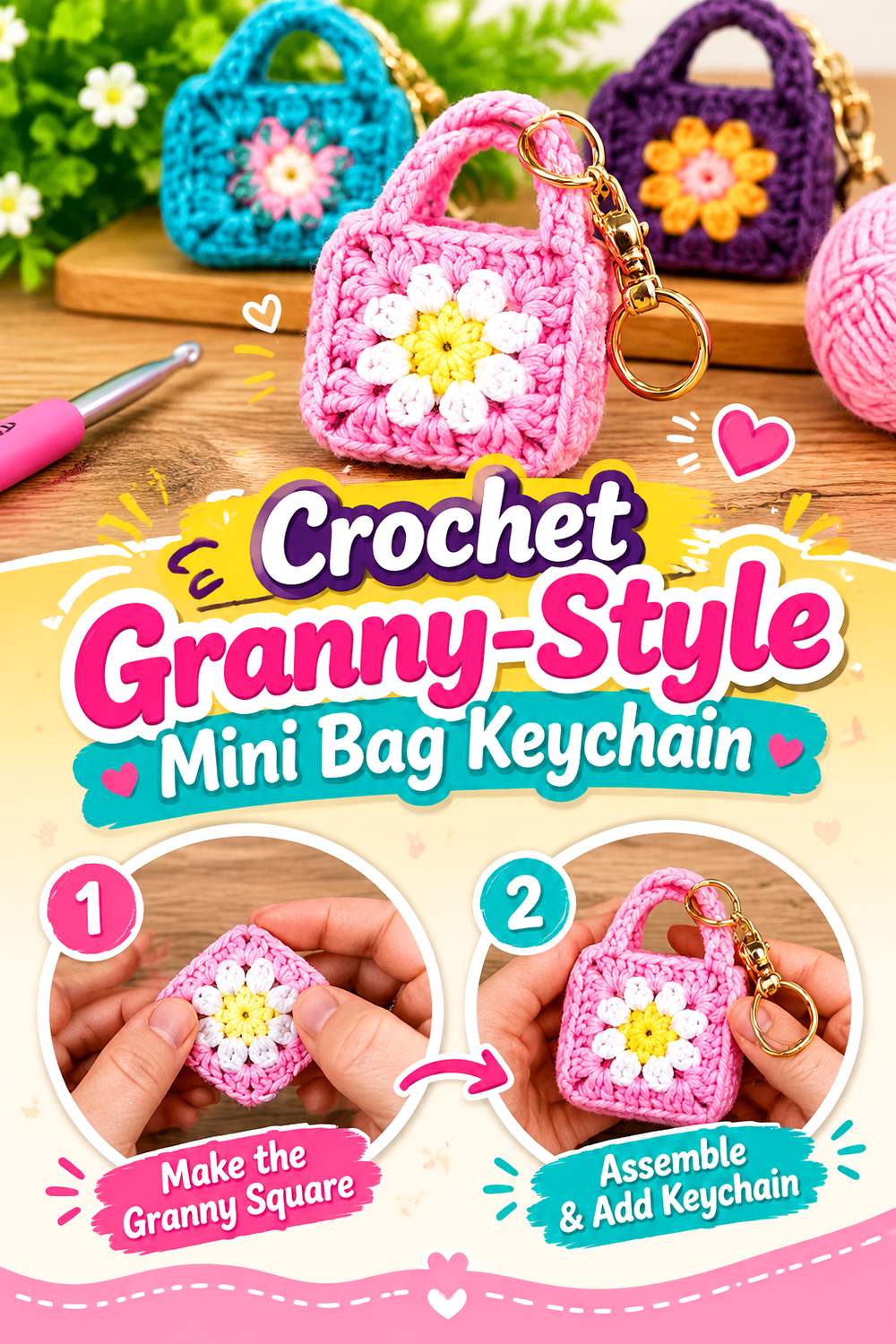
Crochet Decor’s video turns a small granny-style crochet piece into a miniature handbag keychain with a flap, handle, and decorative closure detail. It adds an object-based silhouette rather than another animal or food motif, and its small bag form introduces visible construction lines that feel more architectural than amigurumi.
This is useful near the center of a mixed display because the squared body contrasts with the many rounded designs around it. The tutorial also shows multicolor possibilities, so the mini bag can act as a palette connector between different display sections.
Keep the Mini Bag Proportional
At very small scale, a handle that is too thick or a flap that extends too far can dominate the entire bag. If you substitute yarn, evaluate each component relative to the finished body rather than assuming all proportions will scale perfectly.
Hang the sample before making multiples. The handle, flap, and keyring should remain visually distinct instead of collapsing into one crowded top edge.
Decide Whether It Is Decorative or Functional
A miniature handbag shape may look like it can hold something, but do not assume useful capacity unless the tutorial demonstrates it and the finished size suits your intended object.
For display purposes, treat it primarily as a novelty keychain unless you have tested a specific function. That avoids overstating what a small crocheted accessory can realistically carry.
Original Tutorial and Creator Credit
Creator: Crochet Decor
22. Crochet Ridged Pumpkin Keychain
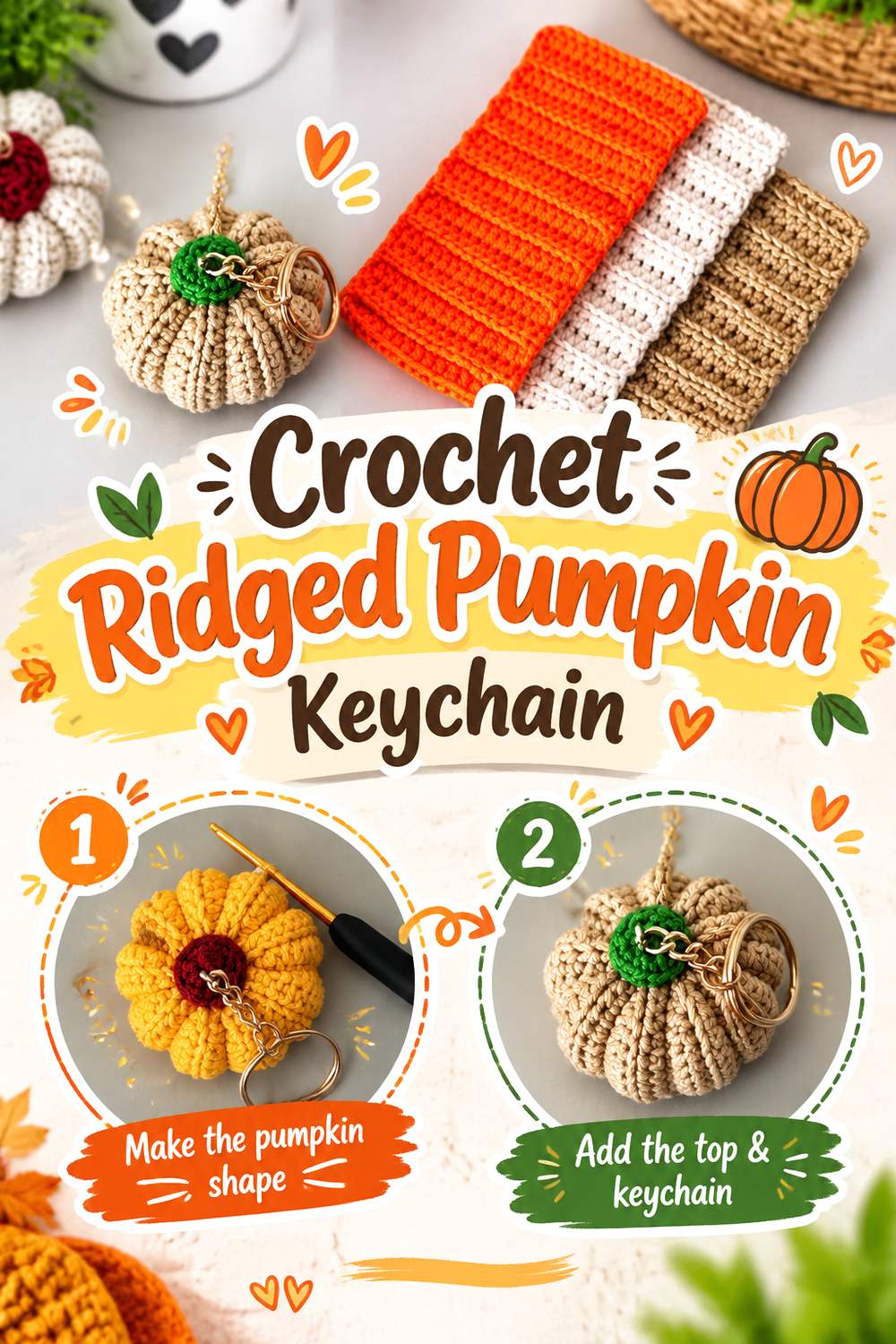
Tuba Crochet’s pumpkin closes the list with a seasonal shape that relies on pronounced ridges rather than a simple stuffed sphere. The creator’s video shows a small autumn pumpkin made specifically as a keychain, giving the display a clear seasonal option alongside the more year-round fruit, animals, and flowers.
The squat, ribbed shape provides texture without adding separate wings, limbs, or petals. It also works in a range of autumnal colors, although the stem and pumpkin ridges should remain distinct enough for the form to read clearly.
Shape the Ridges Evenly
Pumpkin character comes from the segmentation. If the shaping is much tighter on one side than another, the finished piece can lean or develop uneven bulges.
Rotate the pumpkin as you shape it and compare each section before securing the finishing work. Stuffing should support the body but still allow the ridge definition to remain visible.
Use Seasonal Pieces as Accents
One seasonal project can add freshness to a general display without forcing the entire rack into a holiday theme. Position the pumpkin near compatible warm colors such as the mushroom, donut, or strawberry rather than isolating it.
If you make several pumpkins, vary color more readily than construction. A consistent shape keeps the group recognizable while muted orange, cream, rust, or other appropriate yarn colors can create a broader autumn palette.
Original Tutorial and Creator Credit
Creator: Tuba Crochet
Which Crochet Keychain Styles Work Best Together?
A balanced display usually benefits from combining several visual roles rather than arranging similar projects in isolated categories.
| Display Role | Strong Options | Why They Help |
|---|---|---|
| Flat or low-profile anchors | Apple, lemon, heart, star | Add recognizable shapes without excessive depth |
| Dimensional focal pieces | Whale, frog, turtle, cat, koala | Create volume and character |
| Long or moving silhouettes | Mushroom holder, rainbow, jellyfish | Break up repeated compact shapes |
| Strong texture | Flower, sunflower, turtle, koala, pumpkin | Add surface variation even in limited palettes |
| Food and fruit accents | Strawberry, apple, lemon, ice cream, donut | Make color grouping simple and recognizable |
| Novelty object shapes | Mini bag, mushroom holder | Keep the collection from becoming entirely character-based |
| Seasonal or thematic accents | Pumpkin, moon, star | Allow easy display changes without replacing the full collection |
The easiest combination to read at a glance is usually one wide or flat shape beside one dimensional piece and one dangling or irregular shape. You can then repeat colors across those different constructions to create cohesion.
Conclusion
These 22 crochet keychain display ideas give you more to work with than a row of similarly sized amigurumi. The apple and lemon offer broad graphic shapes, the whale and turtle bring recognizable animal forms, the jellyfish and mushroom create vertical movement, and projects such as the koala, sunflower, donut, and pumpkin add distinctive texture.
For a coordinated display, choose projects according to silhouette first and color second. Test how each sample hangs before making multiples, pay particular attention to hardware connections, and use repetition selectively so the collection feels related without looking duplicated. When you are ready to make any design, return to the credited original tutorials for the creator’s exact materials, construction, assembly, and finishing details.
Frequently Asked Questions
How many different crochet keychains should I put on one display?
There is no universal number because the ideal density depends on the physical rack, keychain size, and viewing distance. Instead of filling every available hook immediately, arrange a smaller sample first and check whether individual silhouettes remain visible. Wider pieces such as rainbows and apples need more lateral room, while jellyfish and mushroom holders need vertical clearance. Leaving some negative space usually makes a mixed handmade collection easier to browse.
Should all crochet keychains use the same yarn?
Not necessarily. Different fibers and textures can make the collection more interesting, as the smooth fruit, textured turtle shell, and faux-fur koala demonstrate. Consistency can instead come from a controlled color palette or matching hardware. When substituting yarn in a particular project, confirm the creator’s original material choice because changing yarn weight, fiber, or hook size can alter scale, stiffness, detail definition, and how much strain reaches the keychain attachment.
How can I stop crochet keychains from stretching at the ring?
Start by following the original tutorial’s attachment method rather than attaching hardware wherever it looks convenient. Keychain connections receive repeated pulling, so the ring should be anchored to structurally secure crochet rather than a loose decorative strand. Yarn type and construction also matter. After finishing one sample, hang it with the intended hardware and inspect whether the attachment point distorts before making additional copies.
Are safety eyes appropriate for every crochet keychain?
No. Their suitability depends on how the finished keychain will be used and who may handle it. Several amigurumi tutorials use safety eyes because they create clean facial detail, but detachable small components may be inappropriate in some situations, particularly around very young children. When necessary, consider whether embroidered features are compatible with the design, and check the original construction before changing the finishing method.
How do I make a crochet keychain collection look coordinated without repeating the same project?
Repeat selected colors, hardware finishes, or spacing rather than repeating an identical silhouette. For example, the same yellow could appear in a lemon, sunflower, bee, and star, yet each project would still look structurally different. Another approach is to use a limited group of metal keyrings or lobster clasps across the collection. Cohesion usually comes from controlled repetition, while variety comes from shape, texture, scale, and construction.
Should crochet keychains be blocked before display?
Only when the project and fiber benefit from it. Flat flowers, stars, or other graphic shapes may sometimes look cleaner after appropriate shaping, while stuffed amigurumi generally relies more on tension, filling, and hand shaping. Blocking methods vary by fiber, and embellishments or mixed materials can affect care. Follow the yarn label and original creator’s guidance rather than assuming the same blocking method is suitable for every project.
What is the best way to arrange these ideas for a craft-fair display?
Start with your largest or most distinctive silhouettes, then fill around them with compact designs. Place long jellyfish or mushroom holders where they can hang freely, use wide apples or rainbows where they have side clearance, and separate similarly shaped round pieces with stars, animals, or mini bags. Keep prices or labels from covering the crochet itself, and test the display from several feet away to make sure individual project types remain easy to identify.