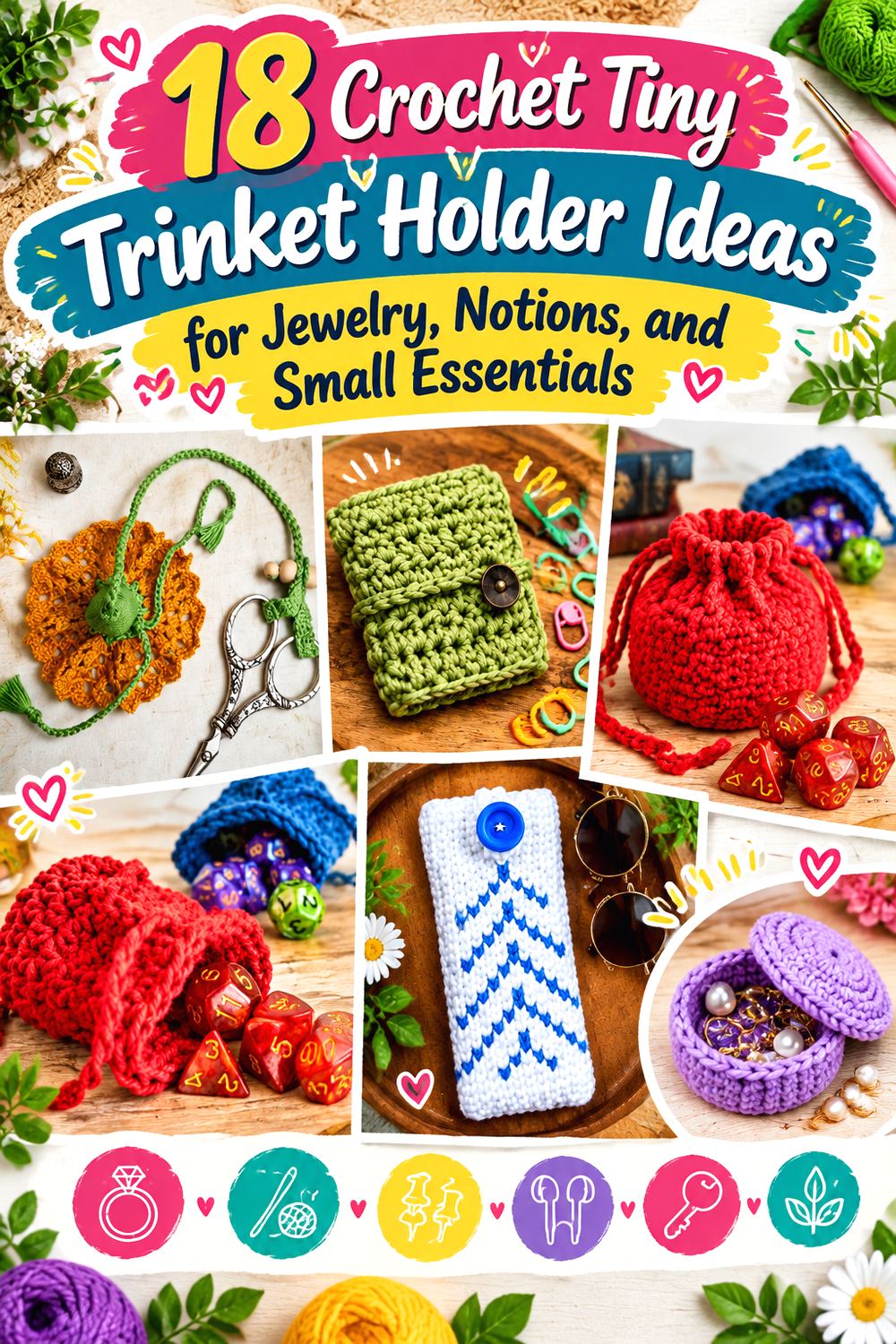
18 Crochet Tiny Trinket Holder Ideas for Jewelry, Notions, and Small Essentials
Tiny crochet storage can take surprisingly different forms. An open bowl works well when you want rings or stitch markers visible, while a lidded box protects loose pieces, a hanging basket clears tabletop space, and a buttoned or zippered pouch makes more sense when the contents need to travel.
These 18 crochet tiny trinket holder ideas cover that wider range instead of repeating the same round basket. You’ll find shallow dishes, structured boxes, portable cases, drawstring pouches, keyring sleeves, and specialty organizers for items such as lip balm, earbuds, stitch markers, and sewing tools. Along the way, the practical notes focus on structure, closure security, scale, yarn substitution, and finishing so you can choose a project that suits what you actually plan to store.
Quick List
- Crochet Rounded Trinket Bowl
- Crochet Folded Hexagon Catchall
- Crochet Cord-Reinforced Jewelry Box
- Crochet Square Lidded Trinket Box
- Crochet Cluster-Stitch Mini Basket
- Crochet Mini Hanging Jewelry Basket
- Crochet Lip Balm Keyring Sleeve
- Crochet Hanging Earbud Case
- Crochet Granny-Square Crystal Pouch
- Crochet Buttoned Keepsake Pouch
- Crochet Keyring Earbud Pouch
- Crochet Twist-Top Coin Pod
- Crochet Granny-Square Zipper Pouch
- Crochet Colorwork Glasses Sleeve
- Crochet Drawstring Dice and Token Bag
- Crochet Multi-Strand Little Bowl
- Crochet Stitch Marker Wrap Holder
- Crochet Thimble and Scissor Keeper
Choose Structure According to What the Holder Will Carry
A tiny holder for rings does not need the same body as one carrying coins, earbuds, or craft tools. Open dishes benefit from enough firmness to keep the rim recognizable, while travel pouches need fabric that can flex without leaving large openings between stitches. A denser fabric generally contains very small objects more reliably than open lace.
Yarn choice can change the result even when the construction stays the same. Firm cotton, multiple strands, tighter tension, or a reinforced core can produce a more defined container, while softer yarn can make a pouch more collapsible. That is not automatically a disadvantage: a flexible pouch may pack better inside a handbag.
Before substituting yarn, compare the planned contents with the tutorial’s finished form. If the project depends on a fitted object, rigid shape, zipper, button, or lid, changing yarn thickness may also change how those features align.
Match the Opening and Closure to the Trinkets
Open bowls and baskets are convenient for items you reach for repeatedly, such as rings, clips, stitch markers, or desk notions. Their weakness is obvious: turn one over and the contents are loose. For travel, look toward drawstrings, buttons, zippers, fitted lids, or snug sleeve-style designs.
Think about the smallest object rather than the largest. Earrings, beads, needles, and tiny findings can escape through surprisingly modest gaps. A decorative open stitch that works beautifully for larger notions may not be appropriate for loose jewelry unless you add a separate lining or container.
Buttons, beads, key rings, and other hardware also change how a project should be used. Secure them carefully, and avoid treating small detachable components as suitable around babies, toddlers, or pets. When a closure is essential to the design, follow the original tutorial’s construction rather than estimating its placement.
Scale Tiny Projects by Checking the Finished Function
Small crochet projects seem easy to resize because adding or removing a round changes the dimensions quickly, but function can shift just as fast. A bowl that is widened without increasing wall stability may become floppy. A lip balm sleeve made slightly too large may stop gripping the tube. A fitted lid can fail if the base and cover are altered independently.
For open catchalls, small changes are usually more forgiving. For cases designed around electronics, glasses, buttons, zippers, or specific tools, compare the work with the actual item as you progress wherever the original designer recommends doing so.
When using a different yarn, treat the original tutorial’s gauge, size information, and construction notes as the primary reference. If a designer does not explain resizing, it is safer to preserve the overall proportions than to assume every dimension can be changed independently.
1. Crochet Rounded Trinket Bowl
1. Crochet Rounded Trinket Bowl
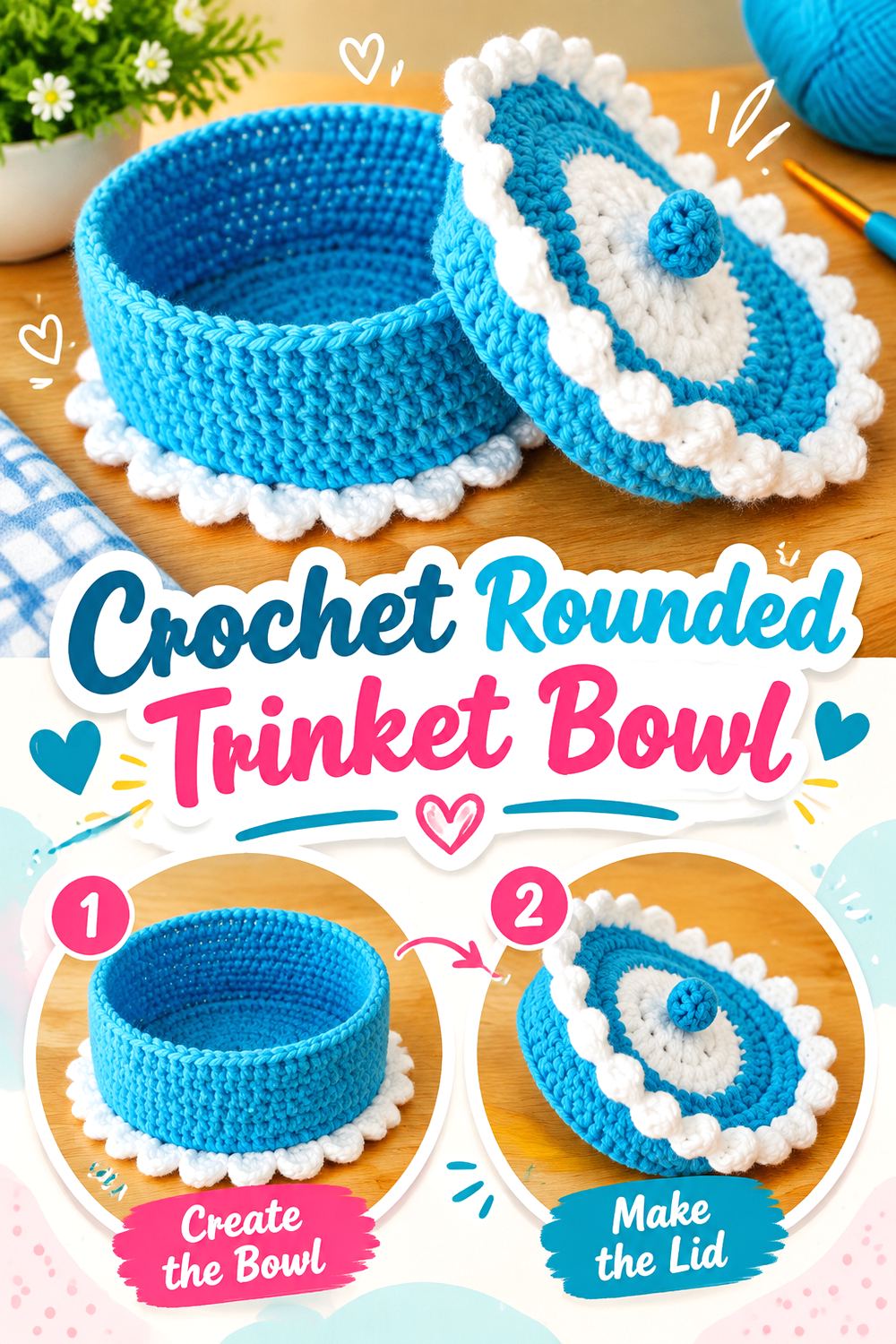
A softly rounded crochet bowl is one of the most straightforward ways to corral rings, hair clips, stitch markers, and other pieces that otherwise scatter across a dresser. This version has enough wall height to distinguish it from a flat coaster while keeping the opening completely visible, making it better for frequently handled objects than for anything that needs to be enclosed.
Its main advantage is access. Nothing has to be unbuttoned or untied, so it works well as a bedside, vanity, or craft-table catchall. Because the shape itself does most of the work, yarn behavior matters: a limp fabric will produce a very different result from a bowl whose sides can support themselves.
Decide How Firm the Rim Needs to Be
The smaller the bowl, the more noticeable a collapsing rim can become. If you plan to substitute yarn, compare the firmness of your fabric with the source project before completing the full height. A yarn that creates attractive drape in a wearable may be less helpful here.
For lightweight contents, moderate flexibility may be perfectly acceptable. If you want the bowl to read as a defined piece of tabletop storage, a firmer fabric and tidy final edge will generally make the silhouette clearer.
Keep the Use Open and Visible
This style makes the most sense for items you want to see immediately. Rings, clips, small keepsakes, and stitch markers can be dropped in without managing a closure.
It is less suited to loose objects that will travel in a bag. For those, one of the buttoned, zippered, or drawstring options later in the list offers better containment. That distinction is more important than decorative differences between two bowls.
Original Tutorial and Creator Credit
Creator/Site: Crochet ‘n’ Create
2. Crochet Folded Hexagon Catchall
2. Crochet Folded Hexagon Catchall
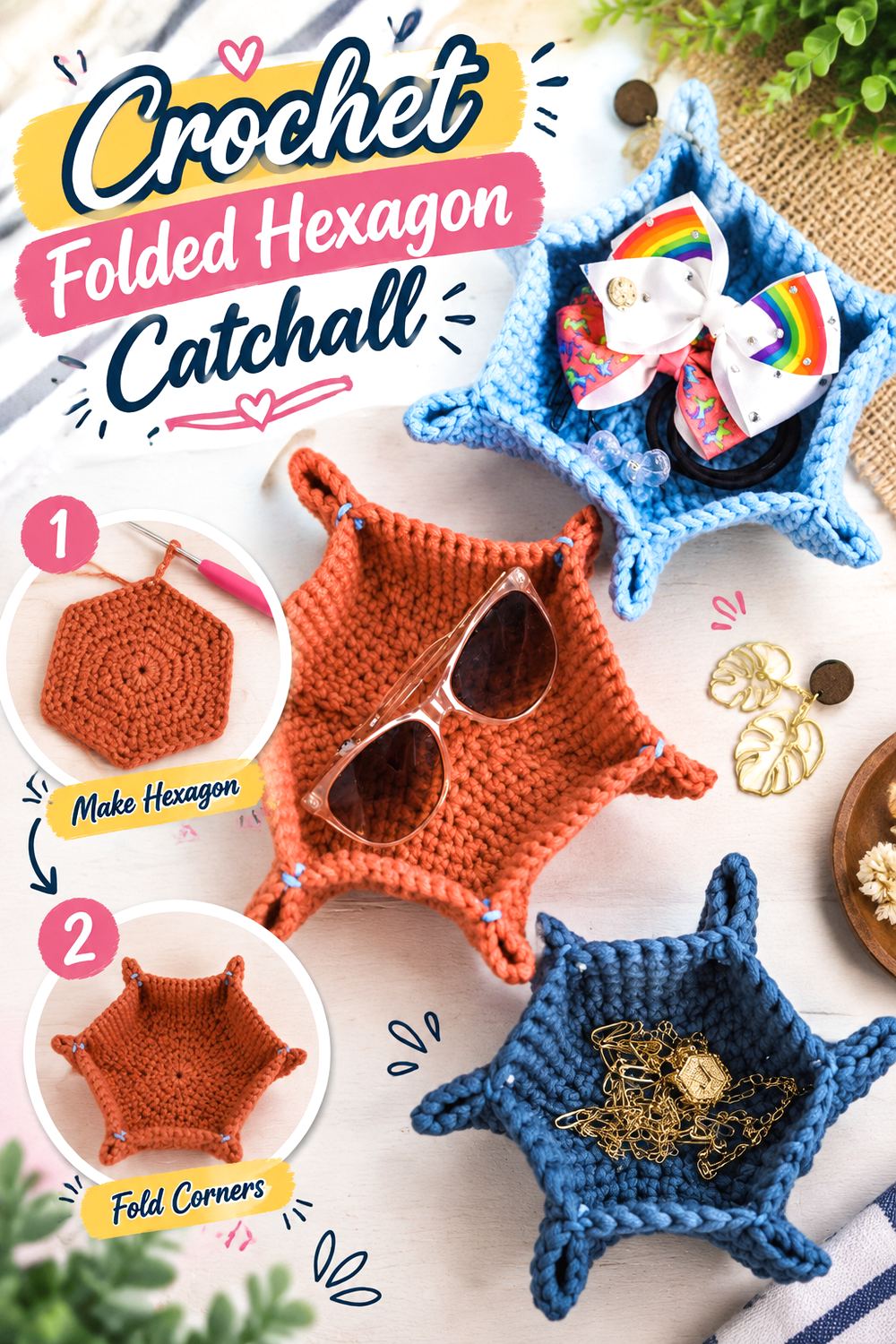
Instead of growing straight upward from a circular base, this project begins with a hexagonal form whose points are brought together to create the sides. That gives the finished holder a more architectural look, with defined corners and folded sections that separate it visually from conventional round baskets.
The source offers multiple finished sizes, so the same construction can move from jewelry catchall toward slightly larger tabletop storage. The smallest version is especially relevant here because the shallow profile keeps tiny contents easy to reach. This is a good choice when you want the holder itself to contribute shape and texture to the surface rather than disappear as a plain container.
Watch the Fabric at the Folding Points
The corners are central to the finished silhouette, so fabric that is too soft can make the shape look less deliberate. The designer specifically discusses creating a tight, stiff fabric when changing yarn.
If you substitute materials, assess how well the hexagon holds a crease and whether the folded sides stay upright. The goal is not maximum stiffness at any cost; it is enough body for the six-sided structure to remain recognizable.
Use Blocking to Refine Rather Than Rescue
The tutorial notes that the base can be shaped and blocked if needed. That makes sense for a folded design because a flat, even bottom helps the sides sit more predictably.
Blocking cannot compensate for a dramatically different yarn behavior or a mismatched scale, though. If the base is already excessively floppy before assembly, reconsider the yarn or hook relationship rather than relying entirely on finishing.
Original Tutorial and Creator Credit
Creator/Site: Winding Road Crochet
3. Crochet Cord Reinforced Jewelry Box
3. Crochet Cord Reinforced Jewelry Box
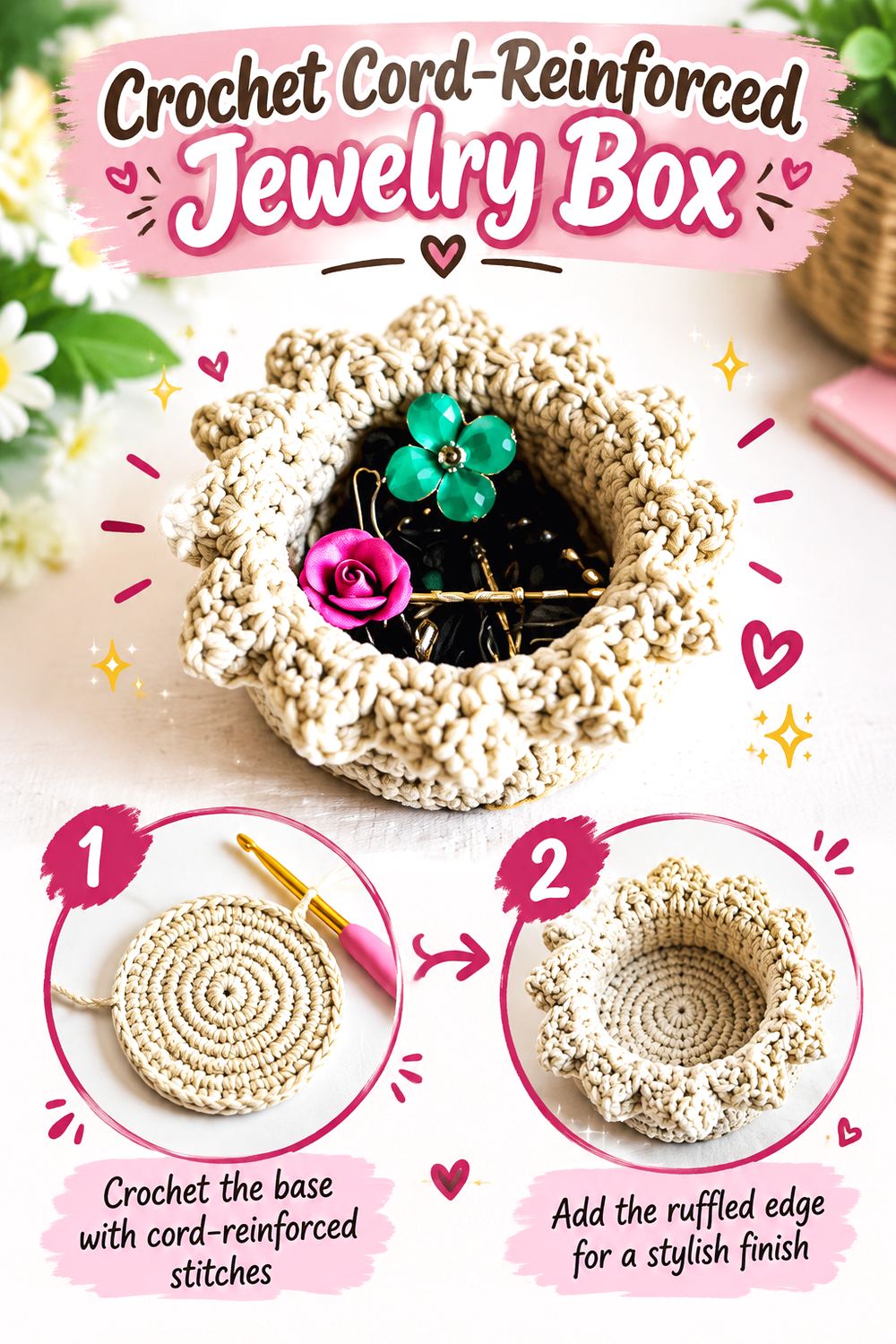
This compact crochet box stands out because the original design incorporates macramé cord inside the crocheted fabric. The reinforcement gives the walls more body and creates a storage piece that feels closer to a small container than a soft pouch.
That makes it a useful direction for jewelry, wrapped candies, keepsakes, or desk odds and ends that benefit from clearly defined sides. The visible reinforcement can also become part of the texture instead of something that must be hidden. Compared with a simple bowl, this idea asks you to think more carefully about structural material as well as yarn, which makes it particularly interesting if your priority is shape retention.
Reinforcement Changes More Than Stiffness
Carrying cord inside crochet adds thickness, resistance, and visual definition. If you substitute a much wider or firmer core, the fabric may become harder to manipulate and the finished dimensions can shift.
Use the tutorial’s material relationship as your starting point rather than choosing reinforcement independently of the yarn. The designer notes that a wider cord can be explored, but the crocheting yarn still has to wrap around it successfully.
Consider What the Box Will Sit Beside
A reinforced holder works well on a dresser or desk because it has a stronger visual presence than a collapsible pouch. That can be useful when the storage is also meant to function as decor.
For frequent travel, however, added structure may take more room in a bag. Decide whether you value a crisp standing shape or the ability to flatten and compress the holder when empty.
Original Tutorial and Creator Credit
Creator/Site: Chabepatterns
4. Crochet Square Lidded Trinket Box
4. Crochet Square Lidded Trinket Box
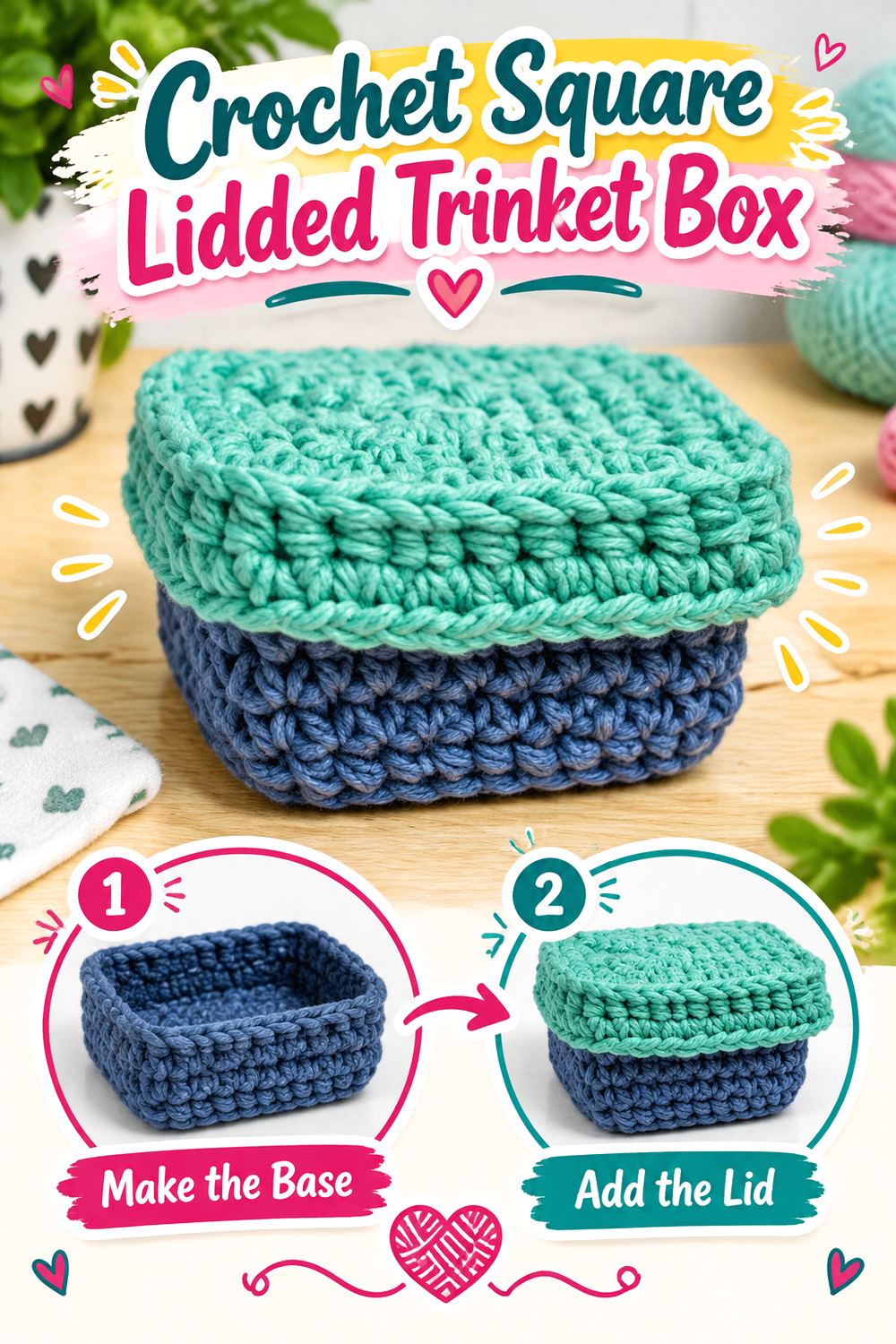
A separate lid immediately changes how a tiny crochet container can be used. This square box keeps the contents visually concealed and gives small gifts or keepsakes a more finished presentation than an open dish. The angular shape is another welcome change from the many circular trinket baskets available.
Because the base and lid are separate pieces, proportion matters more here than it does with a basic bowl. The cover needs to relate properly to the box opening rather than simply looking attractive on its own. This is therefore a better project for crocheters who are willing to pay attention to gauge and finished dimensions, especially if they intend to substitute yarn.
Fit the Lid Before Calling the Box Finished
A lid that is much too tight can distort the upper edge; one that is too loose may slide off when the box is picked up. If your tension or yarn differs from the source, compare the two pieces before completing all finishing work.
This is one of those projects where a small size difference can matter disproportionately because the entire function depends on the relationship between the lid and base.
Think of the Lid as Part of the Presentation
Closed boxes work especially well for a single ring, earrings, a tiny keepsake, or a small wrapped gift because the recipient has to open the container to reveal what is inside.
For everyday notions you reach for repeatedly, the lid may simply create an unnecessary extra step. Match the closure style to the frequency of use rather than assuming enclosed storage is automatically better.
Original Tutorial and Creator Credit
Creator/Site: Crochet Spot
5. Crochet Cluster Stitch Mini Basket
5. Crochet Cluster Stitch Mini Basket
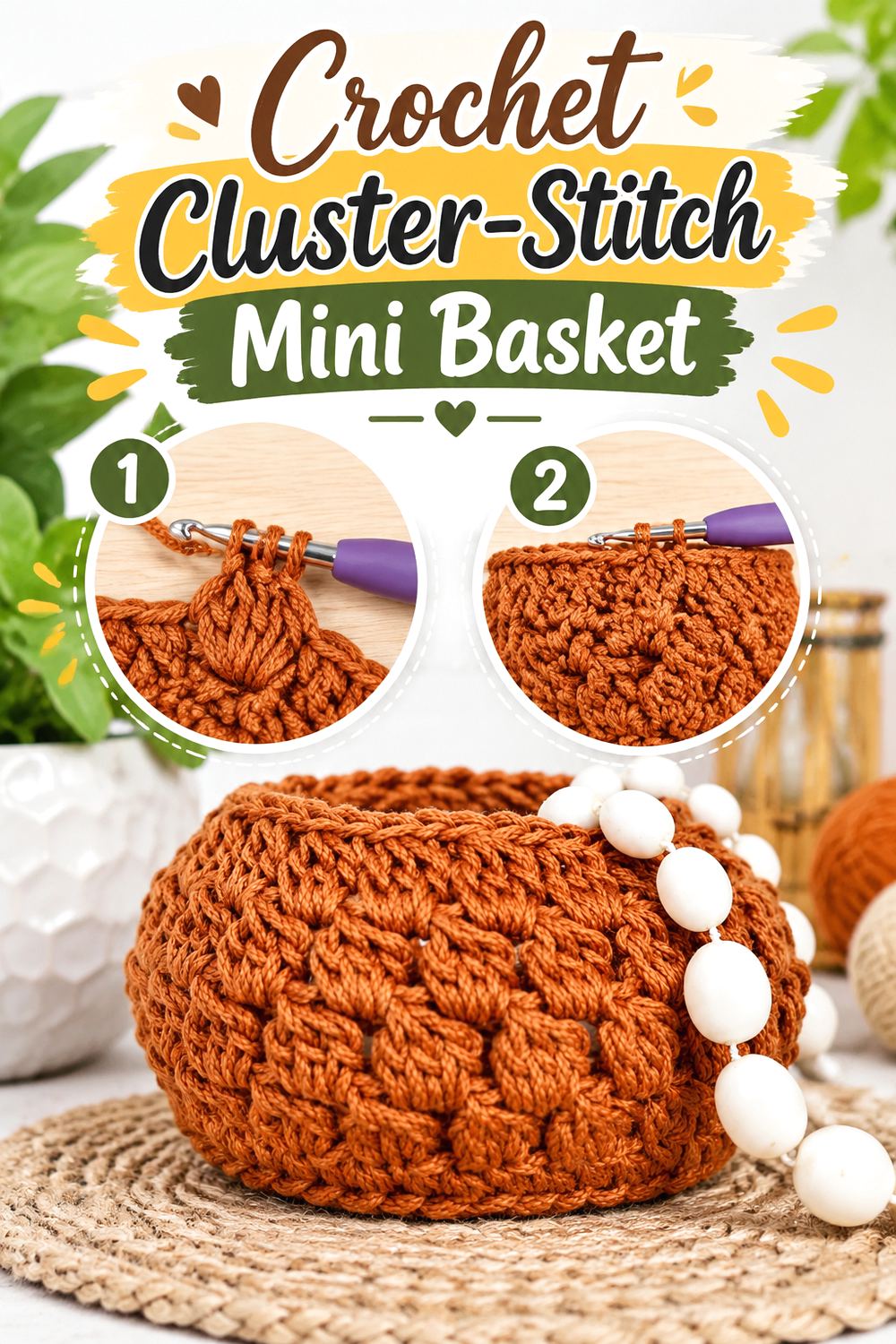
This little basket gains most of its personality from textured cluster stitches around the sides. The base remains relatively simple, while the clustered section adds enough dimension to make the finished piece read as decorative storage rather than a plain utility cup.
It is well suited to jewelry, small bathroom items, or other lightweight objects that can remain visible. The source also explains how the final slip-stitch edge helps draw the upper portion inward, creating the softly rounded profile visible in the finished basket. That makes edge tension an important design feature rather than merely the place where you stop crocheting.
Let Texture Work Without Sacrificing Stability
Puffed or clustered stitches add visual interest, but they also behave differently from dense single crochet. If you change yarn, check whether the textured section still supports the upper walls or spreads farther than you want.
A firmer base paired with more dimensional sides can create an appealing contrast. The goal is to maintain enough structure that the texture looks intentional instead of making the basket appear stretched.
Pay Attention to the Final Rim
The source notes that tighter slip stitches help curve the top inward. That is a useful reminder that finishing tension can affect the entire silhouette of a small holder.
If your slip stitches naturally run loose, compare the rim with the tutorial photos before fastening off. For tiny containers, the final round is highly visible and can determine whether the piece looks bowl-shaped, cup-shaped, or simply unfinished.
Original Tutorial and Creator Credit
Creator/Site: CAAB Crochet
6. Crochet Mini Hanging Jewelry Basket
6. Crochet Mini Hanging Jewelry Basket
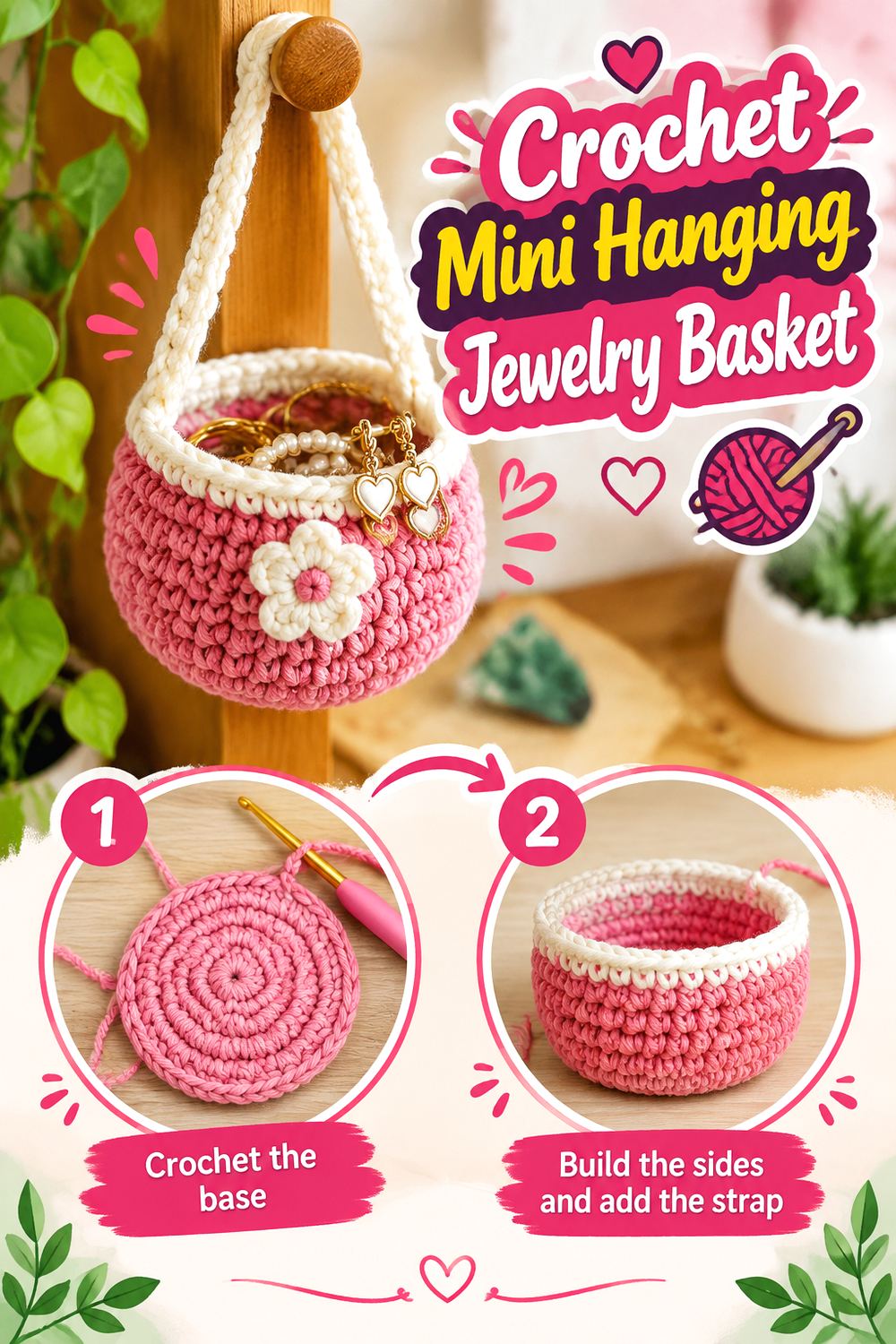
A hanging basket solves a different problem from every tabletop catchall above: it uses vertical space. The Asmi Handmade design includes a mini size specifically discussed for trinkets and jewelry, with a small loop that lets the container hang near a dresser or other convenient spot.
This makes sense when rings, earrings, clips, or similar objects need a home but the surface itself is already crowded. Because the basket hangs from one point, however, balance becomes more important. Very heavy objects or uneven loading can change the way a soft crocheted container sits, so this is best treated as lightweight small-item storage rather than a general-purpose hanging bin.
Favor Shape-Retaining Fabric
The designer explains that a stiffer yarn helps the basket retain its shape. That becomes especially relevant in hanging storage because gravity is always pulling on the container.
If you use softer yarn, the basket may still function, but expect a more relaxed silhouette. For jewelry or other tiny pieces, also check that the stitch fabric is closed enough that nothing can work through the gaps.
Place the Loop With Real Use in Mind
Before deciding where the holder will live, think about how easily you can reach into it while it is hanging. A loop that works beautifully on a hook may feel awkward if the basket is tucked behind other objects.
Keep the load modest and make sure the hanging point itself is secure. Small crochet storage should not be used to support substantial weight simply because the yarn feels strong.
Original Tutorial and Creator Credit
Creator/Site: Asmi Handmade
7. Crochet Lip Balm Keyring Sleeve
7. Crochet Lip Balm Keyring Sleeve
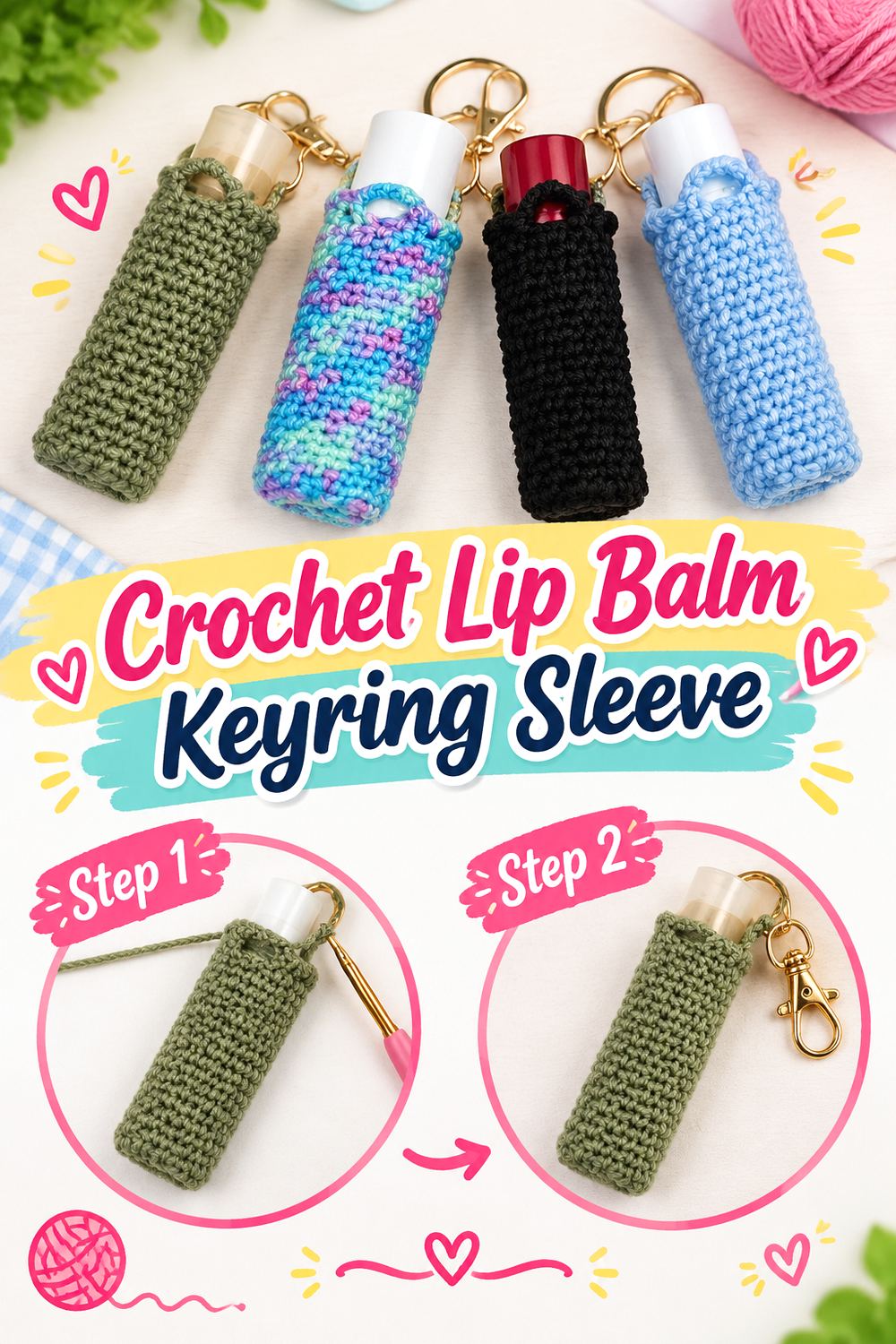
A lip balm holder is less of a general catchall and more of a fitted micro-container. PlanetJune’s design uses a slim sleeve with a hanging loop, allowing the tube to stay attached to a bag, belt loop, or keyring rather than disappearing into a larger pouch.
Its fitted nature is what makes this idea useful—and what makes careless resizing risky. The source specifically encourages checking the fit against the actual lip balm tube during construction. This is a strong project for readers who want a tiny holder with a clearly defined everyday purpose rather than generic decorative storage.
Fit Matters More Than Decorative Size
If the sleeve is too loose, the tube can slip out. If it is too narrow, forcing the lip balm inside can stretch the fabric or make removal frustrating.
The original designer gives adjustment guidance around hook and yarn choices, so use the physical tube as the checkpoint. This is a better strategy than assuming every lip balm brand or yarn substitution will behave identically.
Think About the Hardware Connection
The hanging loop is what turns a tiny sleeve into an accessible accessory. If you add a key ring or other finding, make sure the connection point is secure and appropriate for the weight involved.
Metal hardware can also affect care. Follow the yarn label and source guidance rather than assuming the entire finished item can be washed exactly like an undecorated crochet swatch.
Original Tutorial and Creator Credit
Creator/Site: PlanetJune
8. Crochet Hanging Earbud Case
8. Crochet Hanging Earbud Case
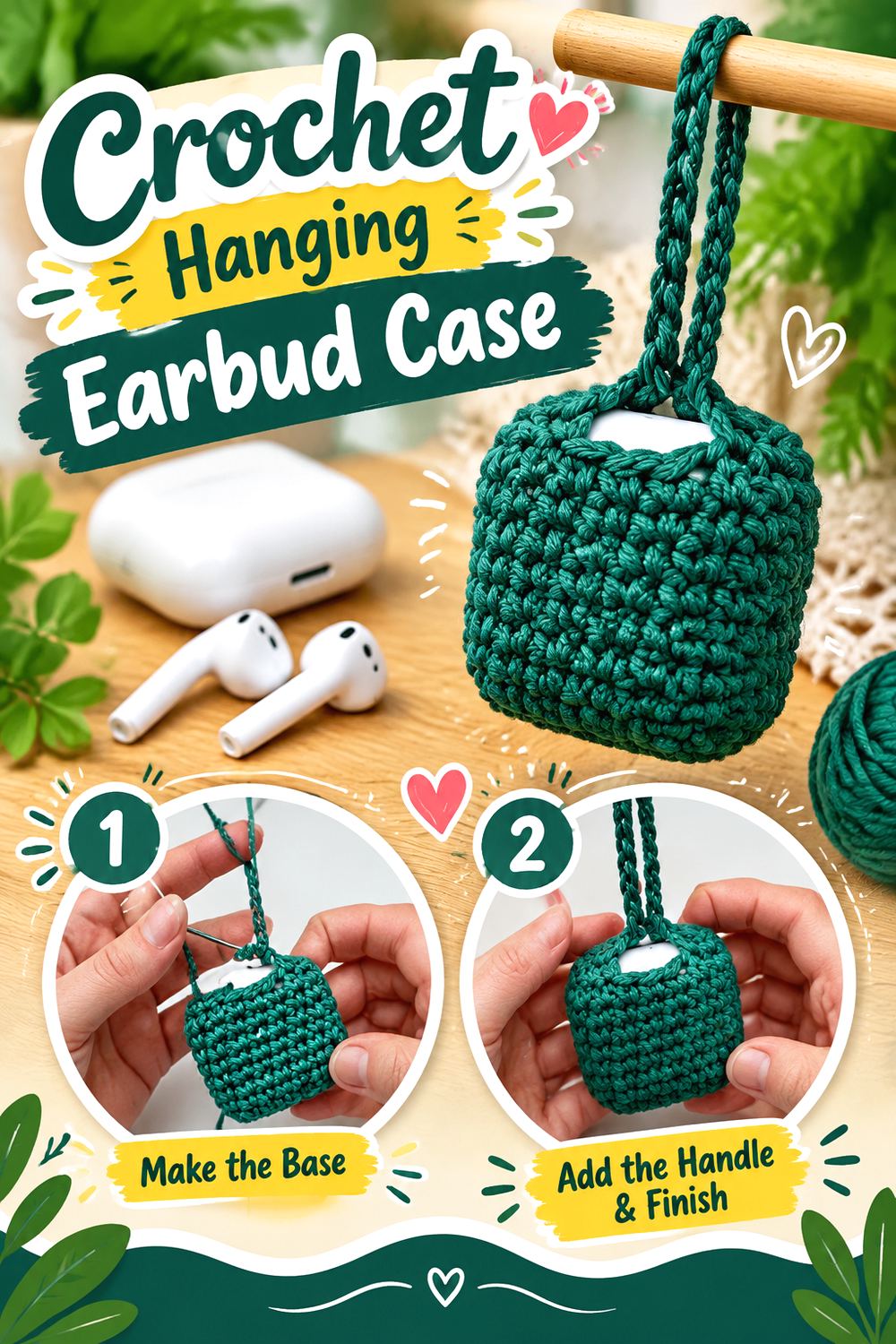
This compact case is designed around regular AirPods and includes a built-in hanging loop so the finished piece can attach to a bag or hook. The form is deliberately minimal: a small oval-based sleeve rather than a bulky accessory pouch.
That makes it a practical example of how tiny crochet storage can be shaped around a specific object. It is also a reminder that electronic cases are not interchangeable. A holder sized for one device should not be assumed to fit another model simply because both are called earbuds. Check the source variation intended for your device before starting.
Verify Device Compatibility First
The tutorial identifies the case as fitting regular AirPods and separately points viewers toward a different AirPods Pro tutorial. That distinction matters.
When a crochet holder depends on a device’s dimensions, treat the exact model as part of the pattern requirements. Increasing or decreasing stitches by guesswork can affect the opening, hanging loop placement, and how securely the case sits inside.
Keep the Opening Practical
A tiny electronics pouch needs a balance between access and retention. Too much looseness can let the case shift; too much tightness makes repeated removal inconvenient.
As you crochet, compare the developing fabric with the actual case if the tutorial instructs you to do so. Crochet stretches differently according to yarn and tension, so the finished fit cannot be predicted from stitch count alone when substitutions are made.
Original Tutorial and Creator Credit
Creator: Crochet With Julie
9. Crochet Granny Square Crystal Pouch
9. Crochet Granny Square Crystal Pouch
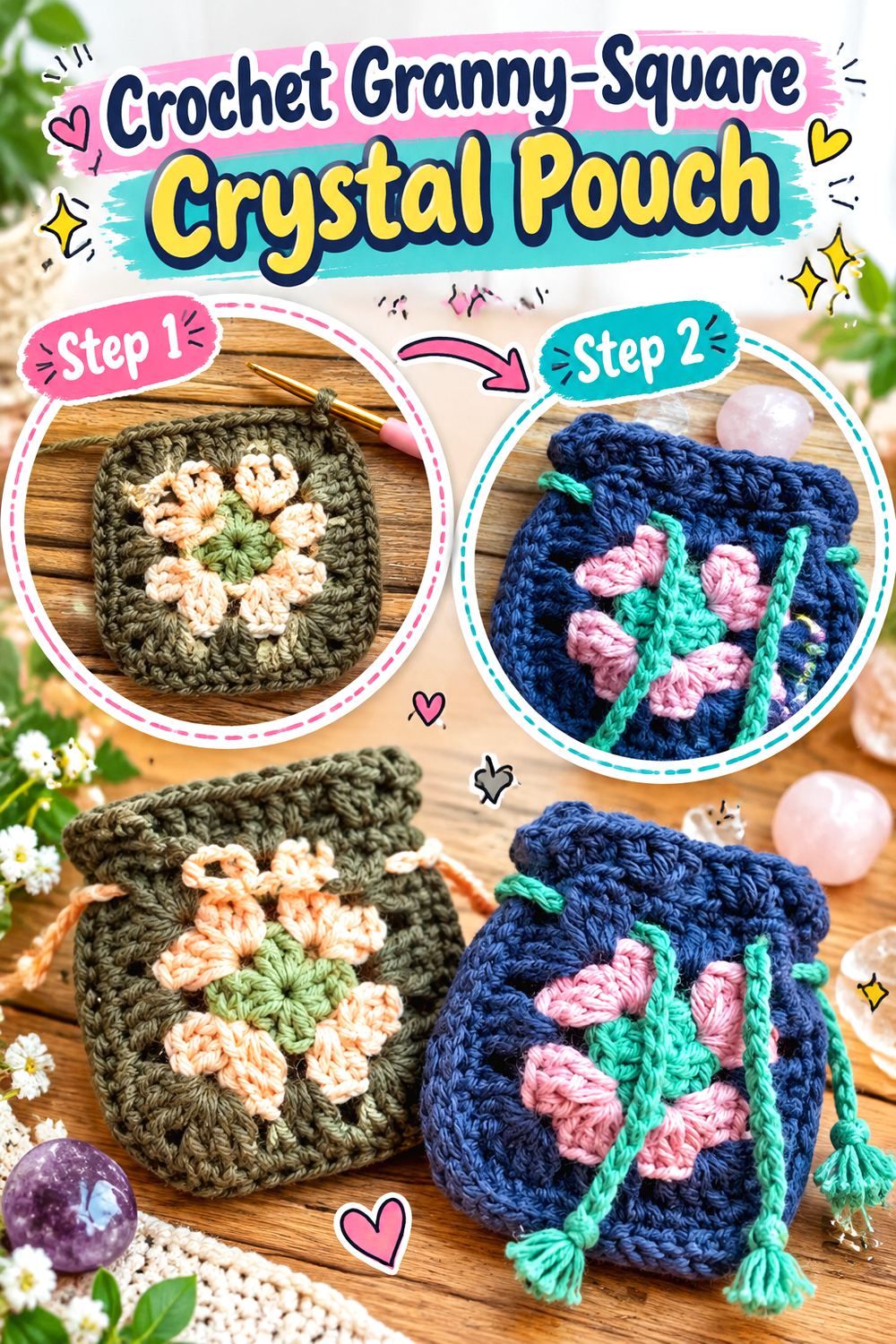
This mini pouch uses a variation on granny-square construction to create front and back sections, then closes with a drawstring. That combination makes the finished piece visually lighter than a dense coin purse and gives it a distinctly handmade, motif-based appearance.
The tutorial presents it as a crystal pouch, but the basic idea can also suit other larger trinkets that will not slip through the openings. Because granny-style fabric includes visible spaces, this is not the best option for loose beads, earring backs, or similarly tiny components unless you introduce an appropriate inner layer.
Judge the Stitch Openings Against the Contents
Decorative gaps are part of the character of a granny-style pouch. Do not assume that because the pouch closes at the top, every small item is automatically contained.
Hold the finished fabric against the smallest object you plan to store. If it can pass through the stitch openings, choose larger contents or consider another design with denser fabric.
Use Color Placement Deliberately
Motif construction makes color changes more prominent than they are on a plain single-crochet pouch. A high-contrast palette emphasizes the square structure, while closely related shades can make the surface feel more blended.
Because the drawstring adds another visible line, consider it part of the color composition rather than an afterthought. Secure the ends so the closure remains functional as well as decorative.
Original Tutorial and Creator Credit
Creator: The Cozy Tangerine
10. Crochet Buttoned Keepsake Pouch
10. Crochet Buttoned Keepsake Pouch
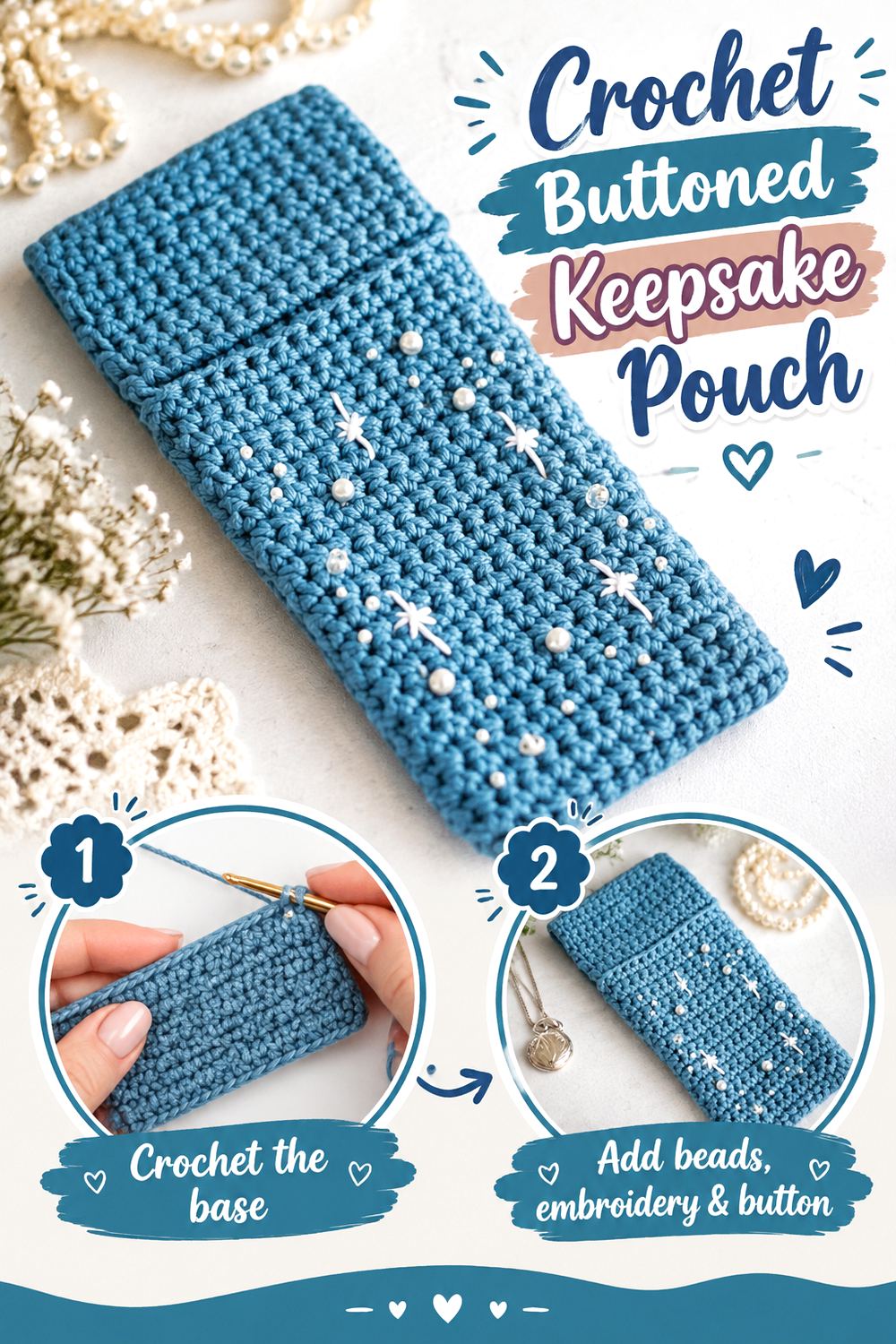
This compact Thoresby Cottage pouch is sized as a small gift-card holder and is also described as a jewelry pouch. A flap and button give it more security than an open bowl without introducing the added assembly of a zipper.
The neat rectangular shape works well for flat or moderately small objects: a gift card, earrings secured on a card, a tiny note, or another keepsake. Decorative beads or embroidery can be added according to the source, which means the project can lean minimalist or embellished. If the pouch is meant for actual loose jewelry, though, containment should take priority over decoration.
Check the Button Before Final Placement
A flap closure depends on alignment. If you use a different yarn or button size, the original placement may not translate perfectly.
Fold the finished flap naturally and determine where it meets the body before securing the button. Avoid stretching the flap just to reach the closure because repeated tension can change how the pouch sits over time.
Embellishments Change the Care Requirements
Beads and other decorations can make a tiny pouch feel special, especially when it is used as gift packaging, but they also introduce extra materials and attachment points.
Use secure stitching and follow the care needs of the most delicate component. If small beads or buttons are present, keep the finished item away from babies, toddlers, and pets that might pull or mouth detachable pieces.
Original Tutorial and Creator Credit
Creator/Site: Thoresby Cottage
11. Crochet Keyring Earbud Pouch
11. Crochet Keyring Earbud Pouch
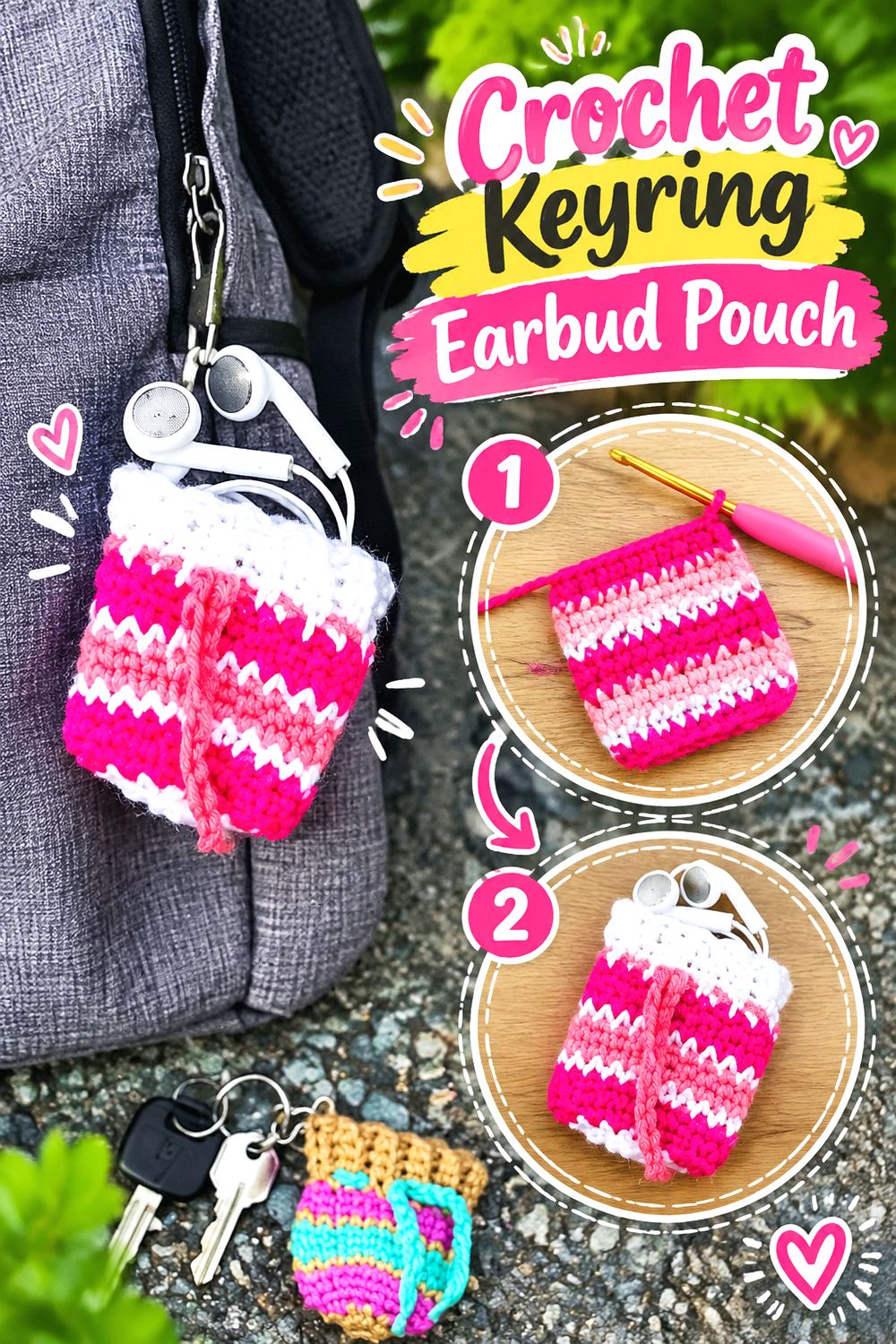
A keyring pouch sits between a generic coin purse and a device-specific sleeve. Blackstone Designs presents this small holder as suitable for earbuds or coins and adds hardware so it can attach to keys, a zipper pull, or a bag.
The portability is the main distinction. Instead of trying to create a decorative container for a dresser, this project is meant to stay with you. That means the attachment point and closure deserve at least as much attention as the stitch texture. It is a useful choice for readers who want tiny storage that can move between a handbag, backpack, or project bag.
Reinforce the Point That Takes the Pull
Any holder attached to a keyring will experience repeated tugging where the hardware meets the crochet. Inspect that area as you work and follow the designer’s assembly carefully.
If you modify the loop or ring, avoid making the connection so narrow that all the load is concentrated on a weak strand of yarn. A small pouch is light, but daily handling adds repeated stress.
Choose Contents That Match the Closure
Coins and earbuds have different containment needs. Loose change can be heavy relative to the pouch size, while earbuds may be lighter but more important to protect from falling out.
Do not overload a tiny keyring container simply because more objects will fit. A secure closure and modest contents help the accessory retain its shape and remain comfortable when clipped to another item.
Original Tutorial and Creator Credit
Creator/Site: Blackstone Designs
12. Crochet Twist Top Coin Pod
12. Crochet Twist Top Coin Pod
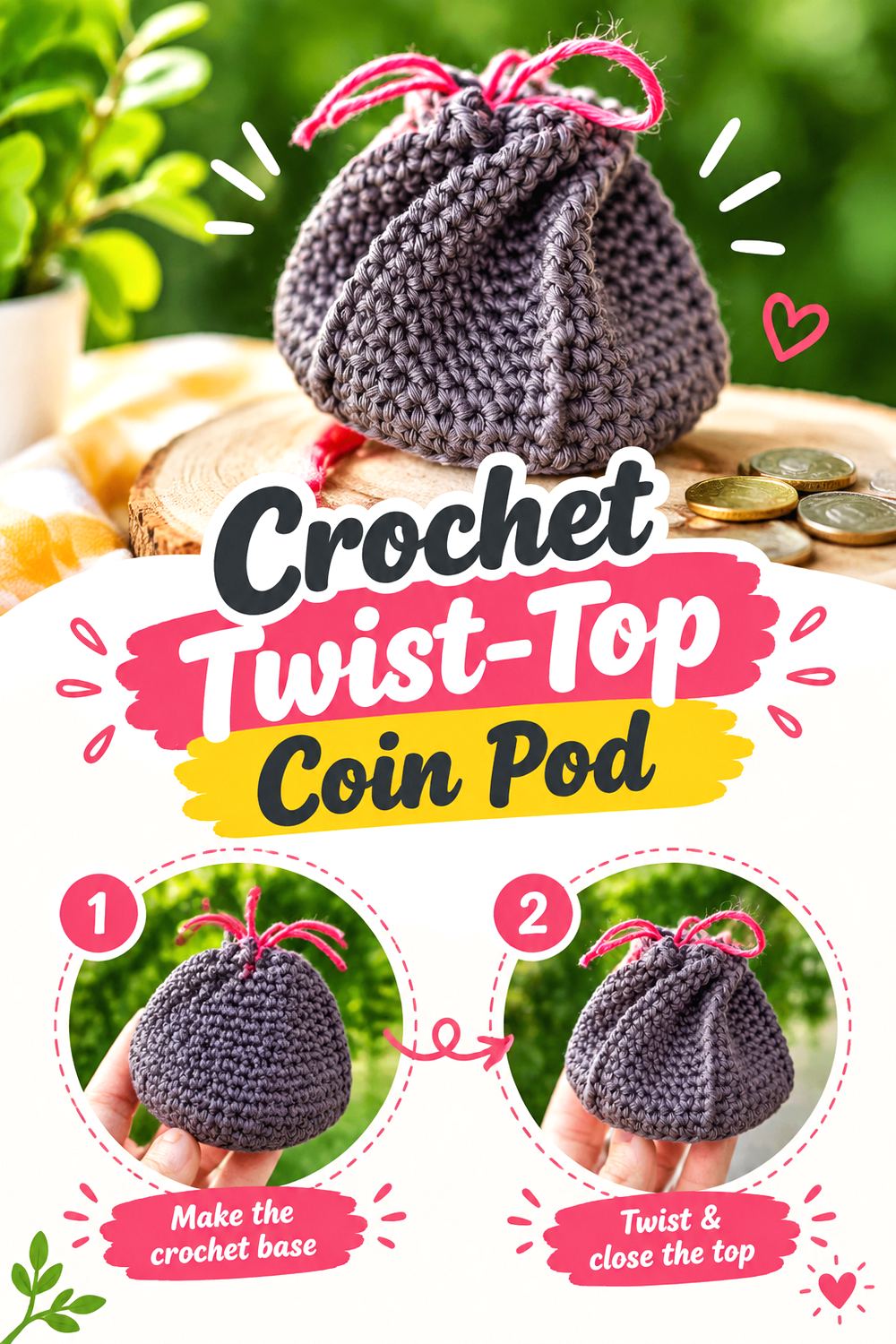
This coin holder has a much less conventional silhouette than a flat zip pouch. The byGoldenberry design forms a small rounded pod with segmented shaping that twists toward the top, giving the closure area an origami-like appearance.
That makes the project attractive for anyone who wants the container itself to be the focal point. The shape is useful for coins and similarly compact items, but it also depends on accurate shaping. If the segments become uneven, the twist will draw attention to the mismatch, so consistent tension matters more here than it does in a loose drawstring sack.
Keep the Sections Visually Consistent
A segmented design magnifies uneven tension because each section sits beside another repeating section. Check the form periodically rather than waiting until the closure has been completed.
If one area is noticeably looser, correct the tension problem early. A consistent fabric will help the top converge more evenly and preserve the intended geometric effect.
Do Not Treat a Novel Closure as Universal Storage
A sculptural coin pod can be satisfying to use, but it may not replace a zipper for every situation. Think about whether you will carry the holder upright, drop it into a crowded handbag, or simply keep it on a desk.
For very tiny or high-value items, inspect the finished opening carefully before relying on it for travel.
Original Tutorial and Creator Credit
Creator/Site: byGoldenberry
13. Crochet Granny Square Zipper Pouch
13. Crochet Granny Square Zipper Pouch
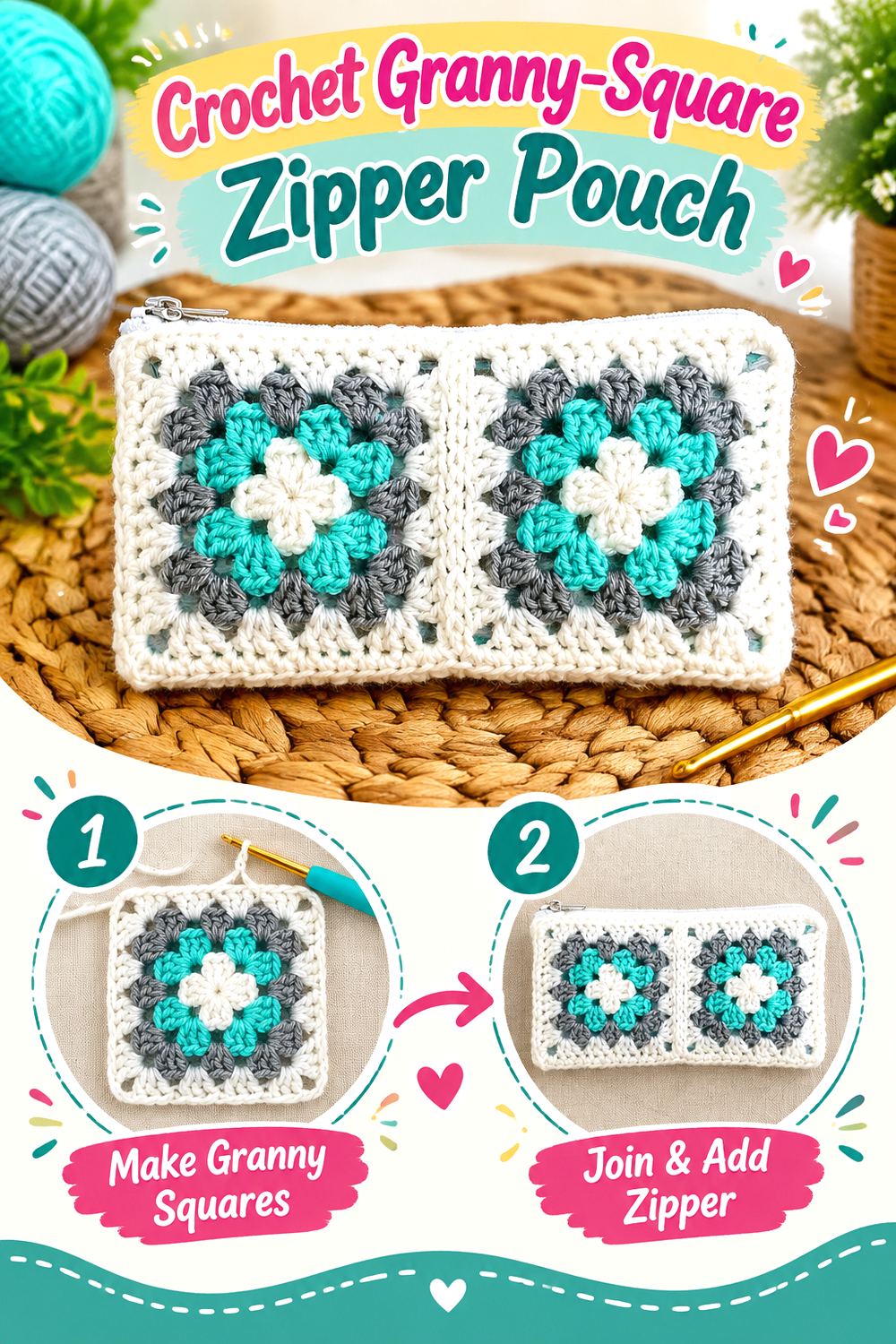
Four granny squares, a zipper, and a lining give this Banana Moon Studio pouch a very different construction story from the open granny-style crystal holder. The zipper makes the opening more controlled, while the lining creates a barrier between the contents and the holes in the crochet motifs.
That combination makes the project useful for notions, pencils, glasses, or other small objects that benefit from enclosed storage. It is less “tiny bowl” and more compact organizer, but it belongs in this roundup because it demonstrates how motif crochet can become genuinely functional when the finishing is designed around the gaps.
A Lining Solves a Specific Problem
Open granny-square fabric can lose tiny objects through its spaces. Adding a lining changes that completely, allowing the crochet exterior to stay decorative while the inside provides containment.
If you change the lining fabric, avoid excessive bulk at the seams. The liner should support the pouch’s function without fighting the flexibility of the crochet shell.
Give the Zipper Enough Attention
A zipper is not just decorative hardware. If it is sewn in unevenly, the pouch can ripple, twist, or become difficult to open.
Before stitching it permanently, align the crochet edges and check that the zipper operates freely. Take particular care around bulky motif joins, where extra thickness can make placement less forgiving.
Original Tutorial and Creator Credit
Creator/Site: Banana Moon Studio
14. Crochet Colorwork Glasses Sleeve
14. Crochet Colorwork Glasses Sleeve
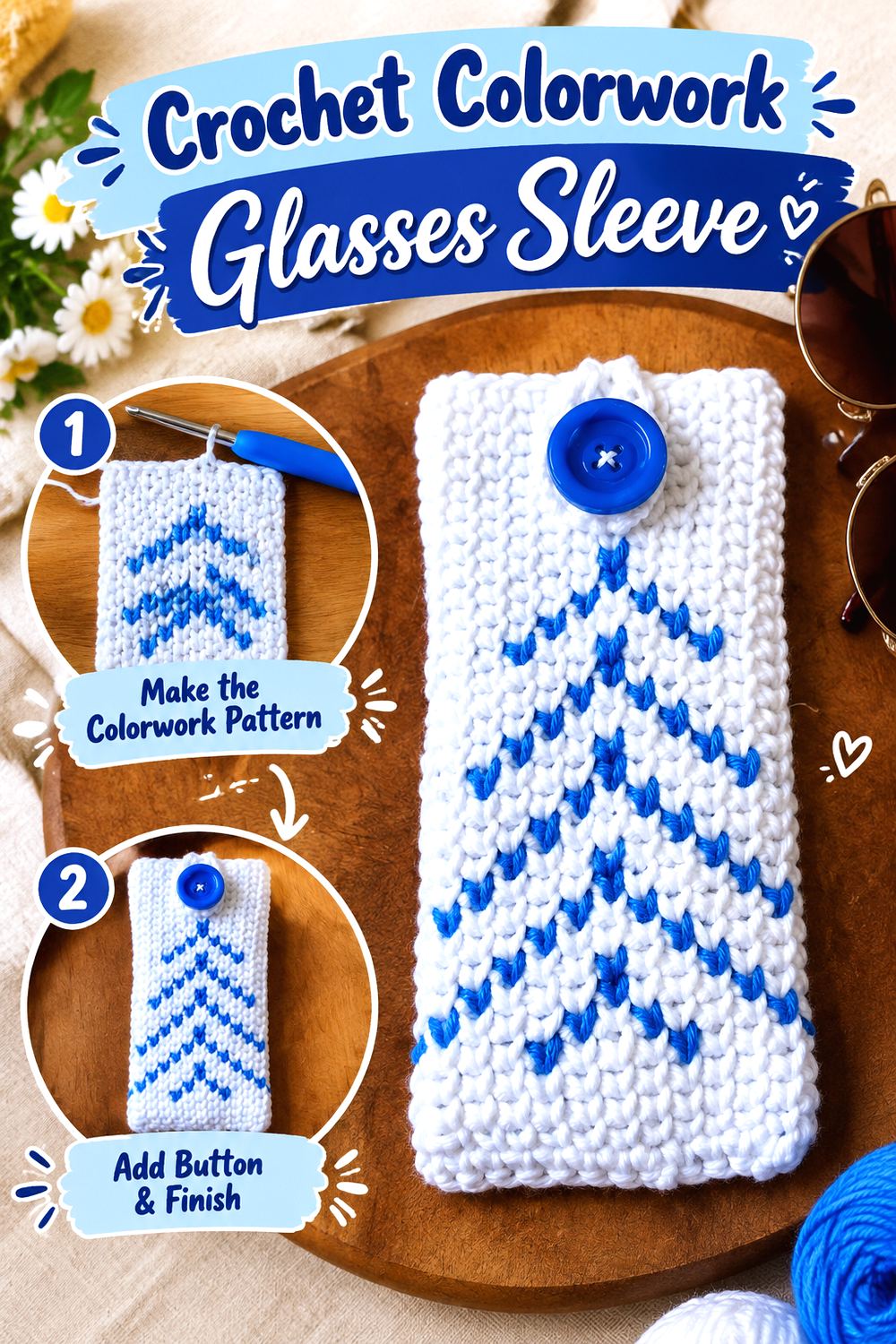
Blue Star Crochet’s case brings colorwork into the tiny-holder category. The finished sleeve uses a Fair Isle-style arrow design and a closure, producing a compact case that can hold glasses but can also inspire storage for other similarly shaped items.
The elongated form is the real value here. Most trinket containers are round or nearly square, while this narrow sleeve suits longer objects and can tuck easily inside a handbag. The colorwork adds another decision point: yarn substitutions need to cooperate not only in weight and texture but also in contrast if you want the motif to remain clear.
Test Color Contrast Before Committing
Two yarns can look distinct in the skein yet blend when worked into small repeating motifs. Place them beside one another and, ideally, crochet a small sample before starting the full case.
Strong contrast emphasizes the arrow pattern. Lower contrast creates a subtler surface, which can also be attractive, but it changes the visual effect significantly.
Adapt the Use More Carefully Than the Shape
The source notes that the pocket can serve purposes beyond glasses. Even so, match the item to the fabric. Sharp tools or objects with rough edges may need a different lining or case structure.
For glasses, remember that crochet provides a soft barrier rather than a rigid crush-proof shell. Choose the project for scratch separation and organization, not as a substitute for hard protective eyewear cases.
Original Tutorial and Creator Credit
Creator/Site: Blue Star Crochet
15. Crochet Drawstring Dice and Token Bag
15. Crochet Drawstring Dice And Token Bag
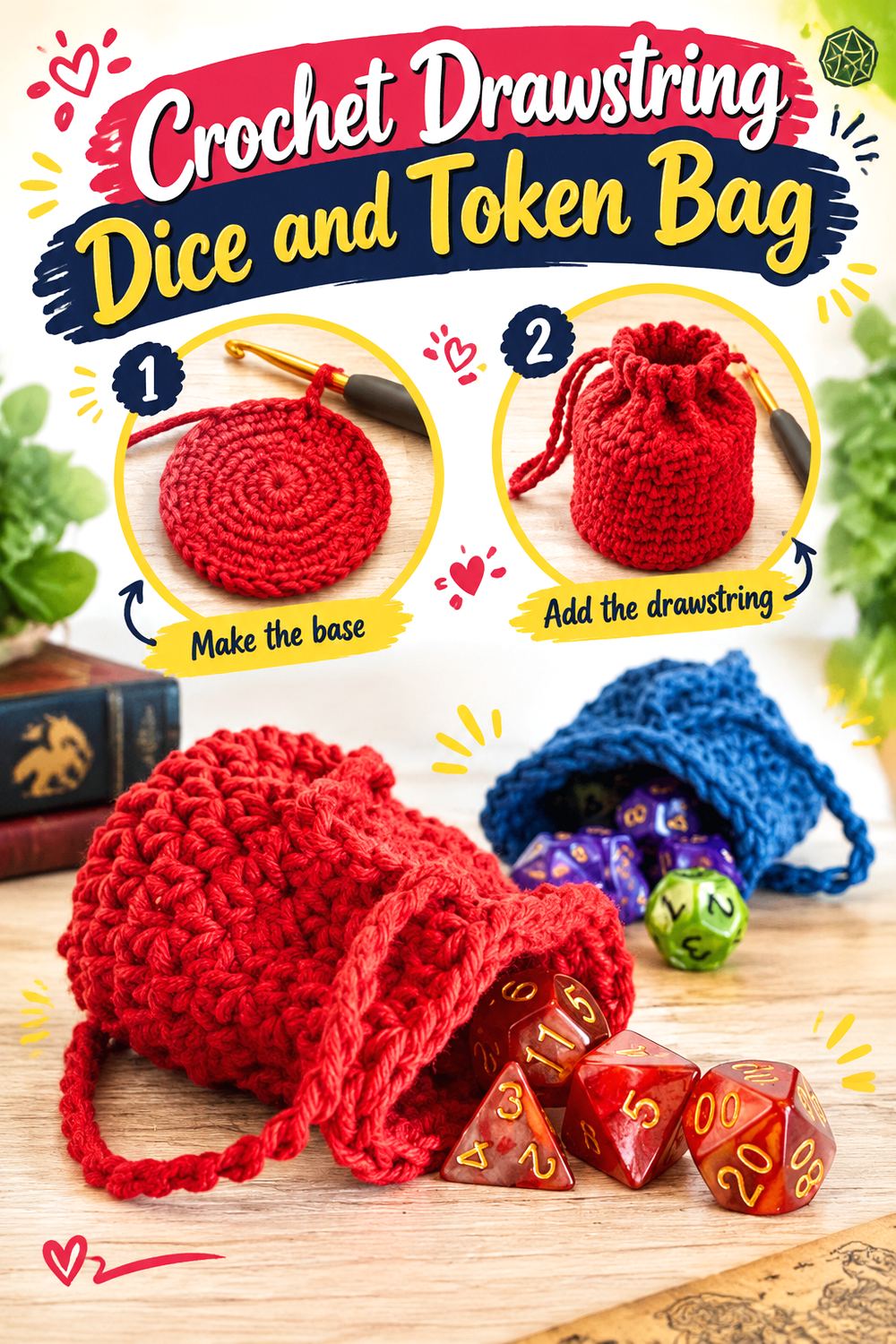
A drawstring sack is useful when the contents are numerous, irregular, or likely to change. Crafting Each Day’s dice bag begins at the bottom and develops upward before finishing with a drawstring closure, giving small gaming pieces a dedicated container that can open widely during use.
The same general form can also hold larger beads, game tokens, or other trinkets that will not pass through the stitch spaces. Unlike a fitted sleeve, it does not have to match one object exactly. The trade-off is that a drawstring closure can create a bulky gathered top, particularly if thick yarn or an oversized cord is substituted.
Keep the Drawstring in Scale
A heavy cord can overwhelm a small bag, while a very thin tie may cut into soft crocheted fabric. Match the drawstring to the size and density of the pouch.
After threading it, open and close the bag several times before trimming or finishing the ends. The top should gather smoothly without requiring excessive force.
Size the Base for the Actual Collection
Dice or tokens occupy three-dimensional space, so width and height both matter. If you plan to alter the bag, consider the volume of the contents rather than simply making the opening wider.
A very wide, shallow bag behaves differently from a narrower, taller one even when both use a similar amount of yarn. Preserve the original proportions unless you have a clear functional reason to change them.
Original Tutorial and Creator Credit
Creator/Site: Crafting Each Day
16. Crochet Multi Strand Little Bowl
16. Crochet Multi Strand Little Bowl
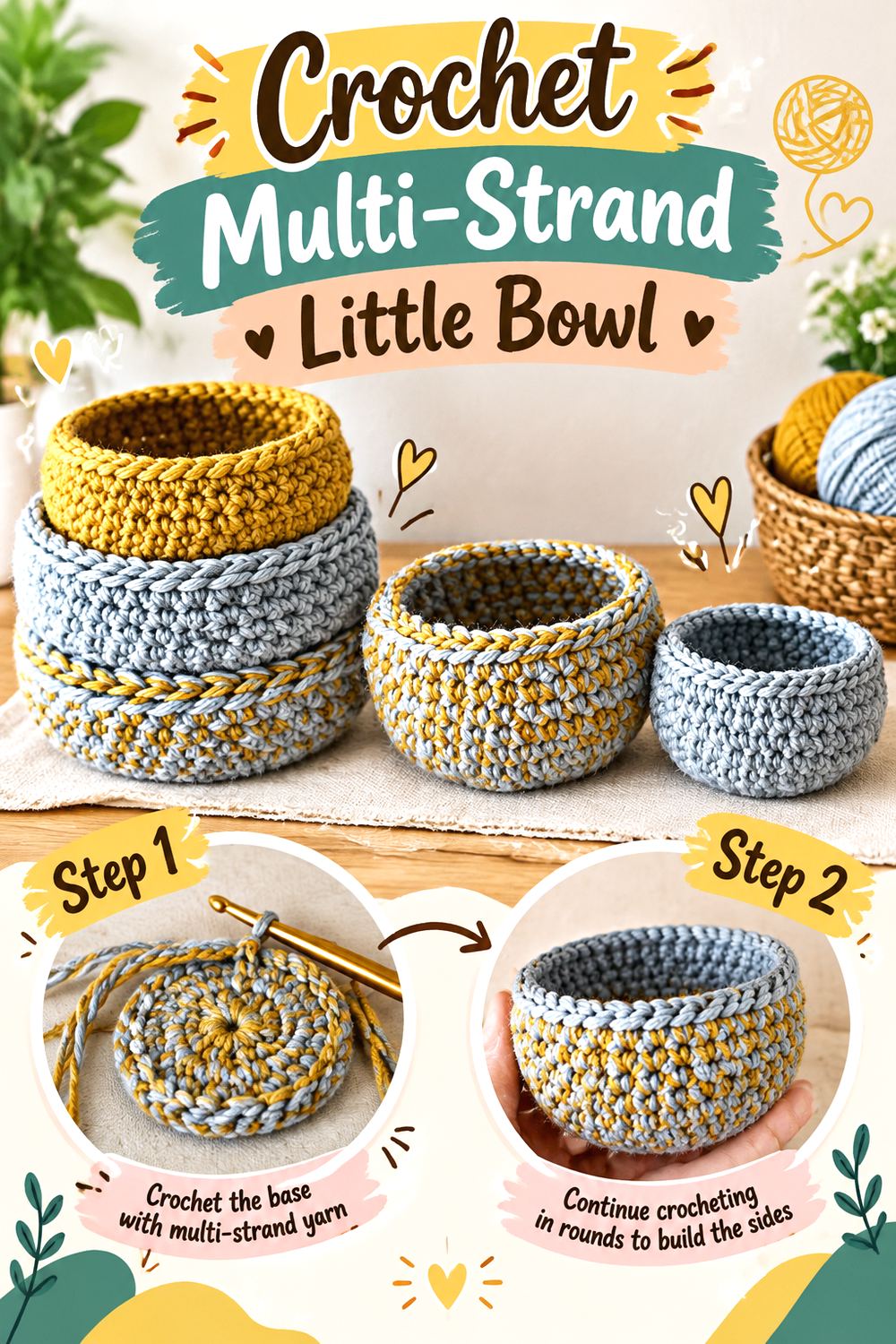
Mezzacraft’s little bowls demonstrate how significantly scale can change when the basic construction remains the same but yarn is held single, double, or triple with corresponding hook changes. For a trinket-holder roundup, the smallest version is particularly appealing as a compact dish for rings, stitch markers, or a handful of tiny notions.
The lesson is broader than the specific bowl: yarn thickness is part of the design. Holding multiple strands together does not merely make the stitches look chunkier; it creates a larger and more substantial container from the same underlying pattern. That makes this an excellent project for understanding material-driven scaling.
Use Strand Count as a Design Choice
The tutorial demonstrates different sizes by changing both the number of strands held together and the hook. That gives you a clear example of how material scale influences the finished object.
Do not assume that simply doubling yarn while keeping every other variable unchanged will reproduce the designer’s result. Follow the corresponding hook and construction guidance from the source.
Choose the Smallest Size for True Trinkets
As bowls increase in diameter, their best use changes. A small dish is ideal for a few rings or notions; a larger one starts functioning more like general household storage.
If your goal is specifically a tiny trinket holder, resist the urge to oversize the project unless you actually need the capacity. Small scale is part of what makes these bowls convenient on crowded surfaces.
Original Tutorial and Creator Credit
Creator/Site: Mezzacraft
17. Crochet Stitch Marker Wrap Holder
17. Crochet Stitch Marker Wrap Holder
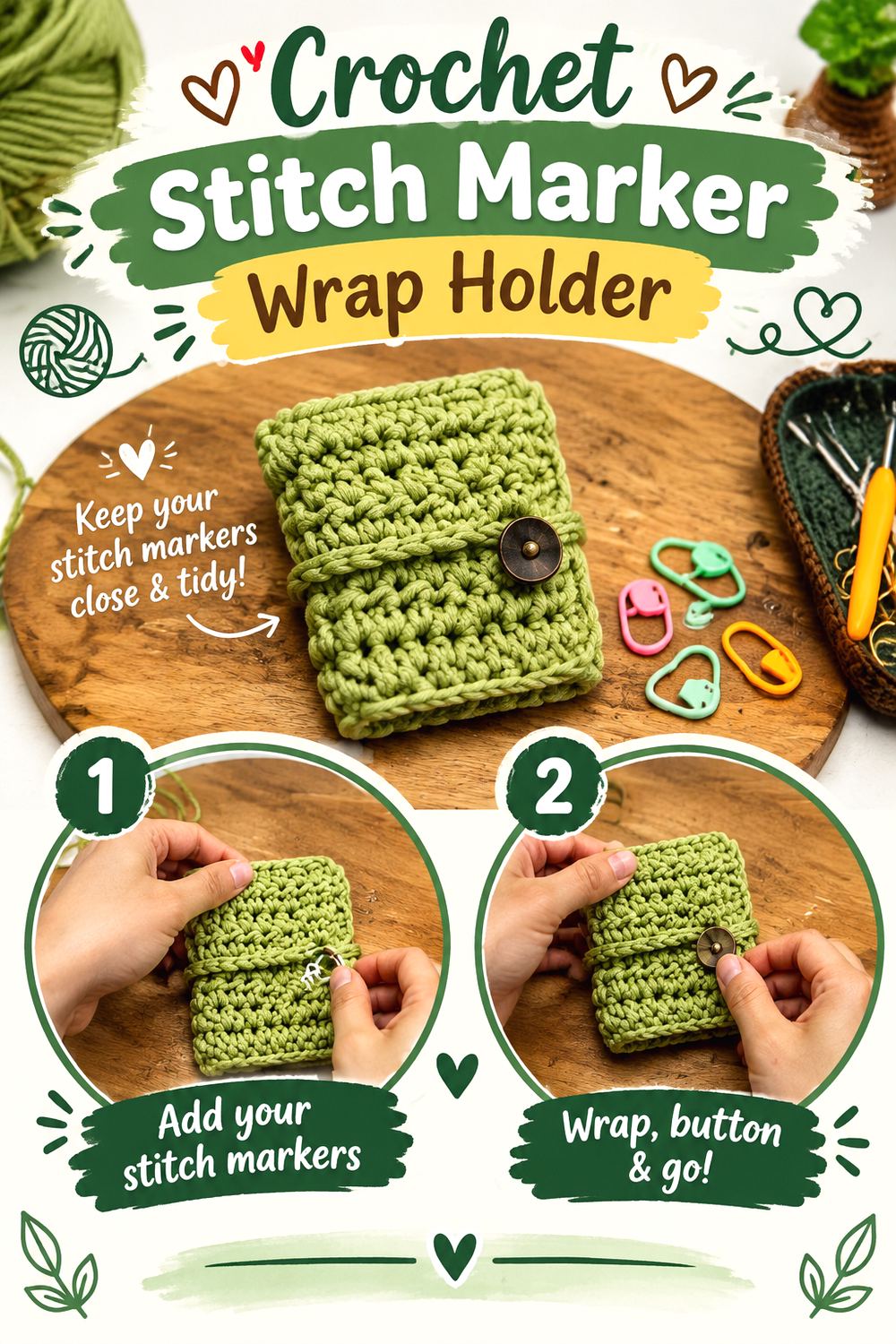
This stitch-marker holder is much flatter than a pouch or basket. XY Craft Studio uses a crocheted rectangle that folds and wraps closed with a long chain, creating a compact little organizer specifically for small crochet tools.
That makes it a smart option for a project bag where loose stitch markers are easy to lose. It also incorporates a button and beads in the original tutorial, so the closure itself becomes part of the design. Because stitch markers vary widely in shape and thickness, test the capacity with your own collection instead of assuming every type will sit identically inside the folded holder.
Avoid Overfilling the Fold
A flat wrap works best when the contents allow the two sides to come together naturally. If too many bulky markers are added, the closure may pull at the fabric and the wrap can become distorted.
Spread the markers rather than stacking all of them in one point. The goal is controlled organization, not maximum capacity.
Treat Buttons and Beads as Functional Hardware
The source uses a chain that wraps around the holder, with a button and beads incorporated into the finishing. Make sure any substituted components have holes and sizes that cooperate with the yarn and closure.
Because these are small detachable objects, keep the finished organizer away from very young children and pets. Inspect the attachments periodically if the holder travels frequently in a project bag.
Original Tutorial and Creator Credit
Creator/Site: XY Craft Studio
18. Crochet Thimble and Scissor Keeper
18. Crochet Thimble And Scissor Keeper
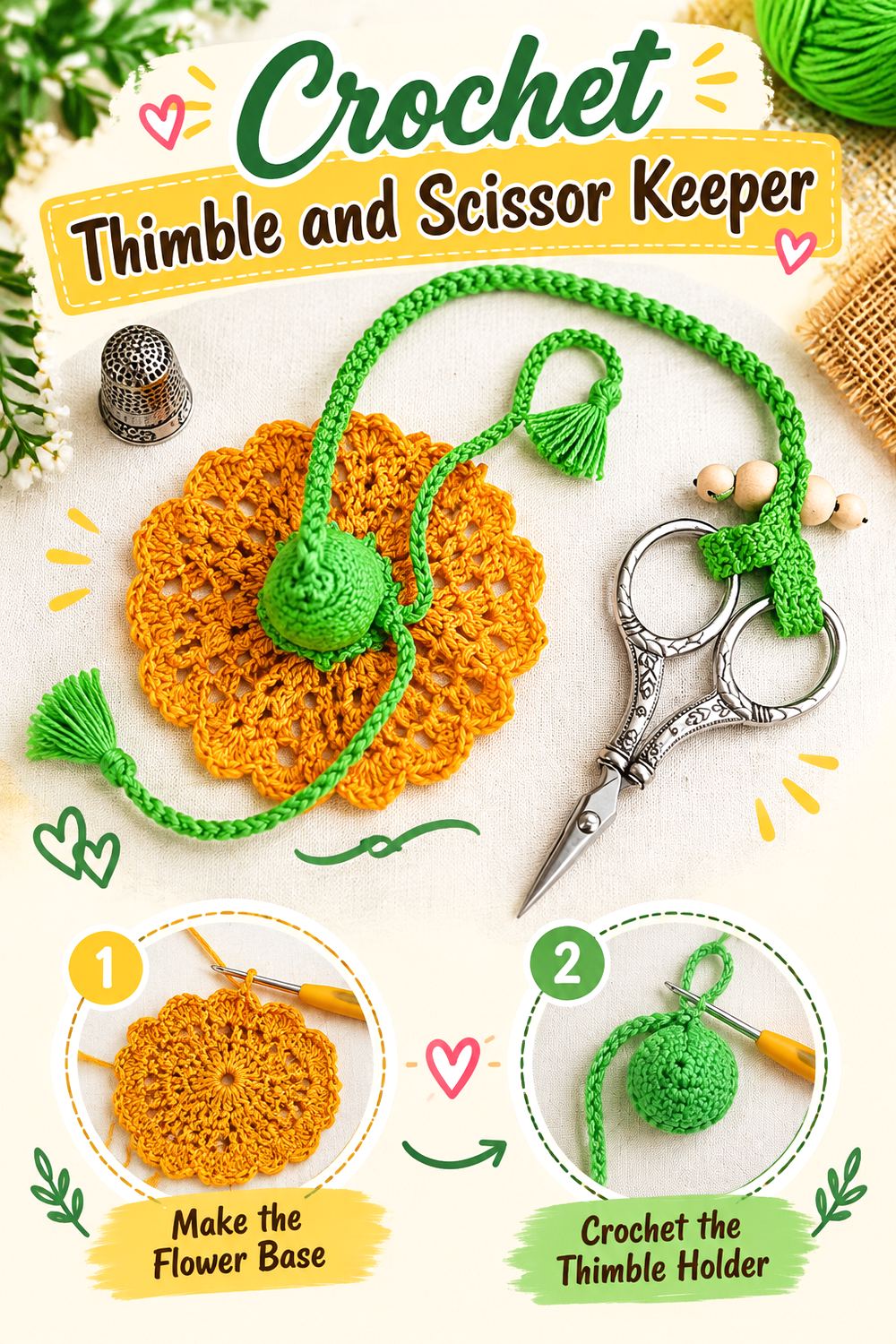
This is the most specialized trinket holder in the list. Look At What I Made documents a vintage-inspired tool keeper that combines a small thimble holder with storage for a pair of scissors, turning two easy-to-misplace sewing tools into one coordinated accessory.
The project is not presented as a modern designer invention; the source carefully explains that it replicates an older peer-taught item and credits the people connected with its history. That transparency makes it particularly interesting. Functionally, it also shows how crochet storage can be shaped around a very specific tool rather than beginning with a generic pouch and finding something to place inside afterward.
Check the Thimble Fit Early
The source provides guidance for adjusting the holder if the thimble section is too wide or needs a different height. That matters because thimbles do not all share exactly the same proportions.
Use your actual thimble as the fitting reference. A slightly snug holder is more useful than one that lets the tool fall out whenever the keeper is lifted.
Respect Sharp-Tool Storage
A scissor keeper organizes a tool; it does not remove the risks associated with sharp points or blades. Use the project with small scissors suited to the design and store it responsibly.
If children can access the area, keep the entire set out of reach. Also inspect the crochet periodically for wear where metal edges repeatedly contact the yarn.
Original Tutorial and Creator Credit
Creator/Site: Look At What I Made
Comparing the 18 Crochet Tiny Trinket Holder Ideas
For open, visible storage, the Rounded Trinket Bowl, Folded Hexagon Catchall, Cluster-Stitch Mini Basket, and Multi-Strand Little Bowl keep frequently used objects easiest to reach. Choose the hexagon when you want the shape itself to be a design feature and the cluster basket when texture matters more.
For covered storage, the Square Lidded Trinket Box offers the clearest container-style presentation. The Buttoned Keepsake Pouch and Granny-Square Zipper Pouch are better for travel, while the Drawstring Dice and Token Bag handles irregular collections without requiring a fitted closure.
For very specific objects, the Lip Balm Keyring Sleeve, Hanging Earbud Case, Stitch Marker Wrap Holder, and Thimble and Scissor Keeper make more sense than resizing a generic basket. The Mini Hanging Jewelry Basket is the strongest option when freeing surface space is the main goal.
Conclusion
The most useful tiny crochet holder depends less on decoration than on how the contents need to behave. Rings and stitch markers are convenient in an open bowl; coins and earbuds benefit from better containment; giftable keepsakes suit a lid or button flap; and fitted everyday items such as lip balm work best in a holder designed around their dimensions.
Structure also deserves attention. Reinforced boxes, folded hexagons, textured baskets, lined granny-square pouches, and soft drawstring bags all react differently when yarn or scale changes. Pick the function first, then choose the construction that supports it. For exact materials, sizing, closures, and construction details, follow the original tutorials credited with each project.
Frequently Asked Questions
What yarn works best for tiny crochet trinket holders?
There is no single best yarn because the desired structure changes from project to project. Firm cotton can suit baskets and fitted sleeves, while softer yarn can work well for flexible pouches. Multiple strands or reinforcement can add body where a container needs to stand upright. Start with the yarn specified by the original designer when possible, and be especially cautious with substitutions in fitted cases, lids, and projects that incorporate zippers or hardware.
How can I make a small crochet bowl hold its shape better?
Fabric density matters. A smaller hook relative to the yarn, a firmer fiber, multiple strands, or reinforcement can all change the amount of structure, but those changes can also affect finished size. Some bowl designs additionally rely on a tight final edge or blocking. Follow the original pattern’s shaping advice first. If your fabric is already very floppy halfway through the project, changing finishing alone may not be enough to create a crisp container.
Are open crochet stitches safe for storing earrings and beads?
They can be unsuitable for very small loose components. Compare the smallest bead, earring back, or finding with the openings in the finished fabric. If the object can pass through, choose a denser stitch pattern or a properly fitted lining. Drawstrings and zippers only secure the opening at the top; they do not prevent tiny objects from slipping through holes in the body of the crochet.
Can I resize a crochet trinket holder with thicker yarn?
Sometimes, but the result may change in more ways than overall size. Thicker yarn can make walls stiffer, closures bulkier, lids fit differently, and fitted sleeves too large for their intended objects. Open bowls are generally more forgiving than cases built around electronics, lip balm, buttons, or zippers. If the designer gives resizing guidance, use it. Otherwise, maintain the original proportions and make a small test before committing to a major yarn change.
Should tiny crochet pouches be lined?
A lining is useful when the crochet fabric has openings larger than the items you plan to store, or when you want a smoother interior around delicate pieces. It is not automatically necessary for every pouch. Dense crochet can contain many objects effectively without one. If you do add lining, keep seam bulk under control and make sure it does not interfere with the zipper, button, drawstring, or intended stretch of the outer fabric.
Which trinket holder style is best for traveling?
A closed pouch is usually more practical than an open bowl when the item will move inside a handbag or backpack. Zippers offer strong containment, while buttons and drawstrings can be simpler and lighter. Keyring holders are useful for objects you need frequently, but the attachment point needs secure finishing. Whatever closure you choose, test it with the actual contents before traveling, especially when carrying jewelry or other small items that would be difficult to replace.