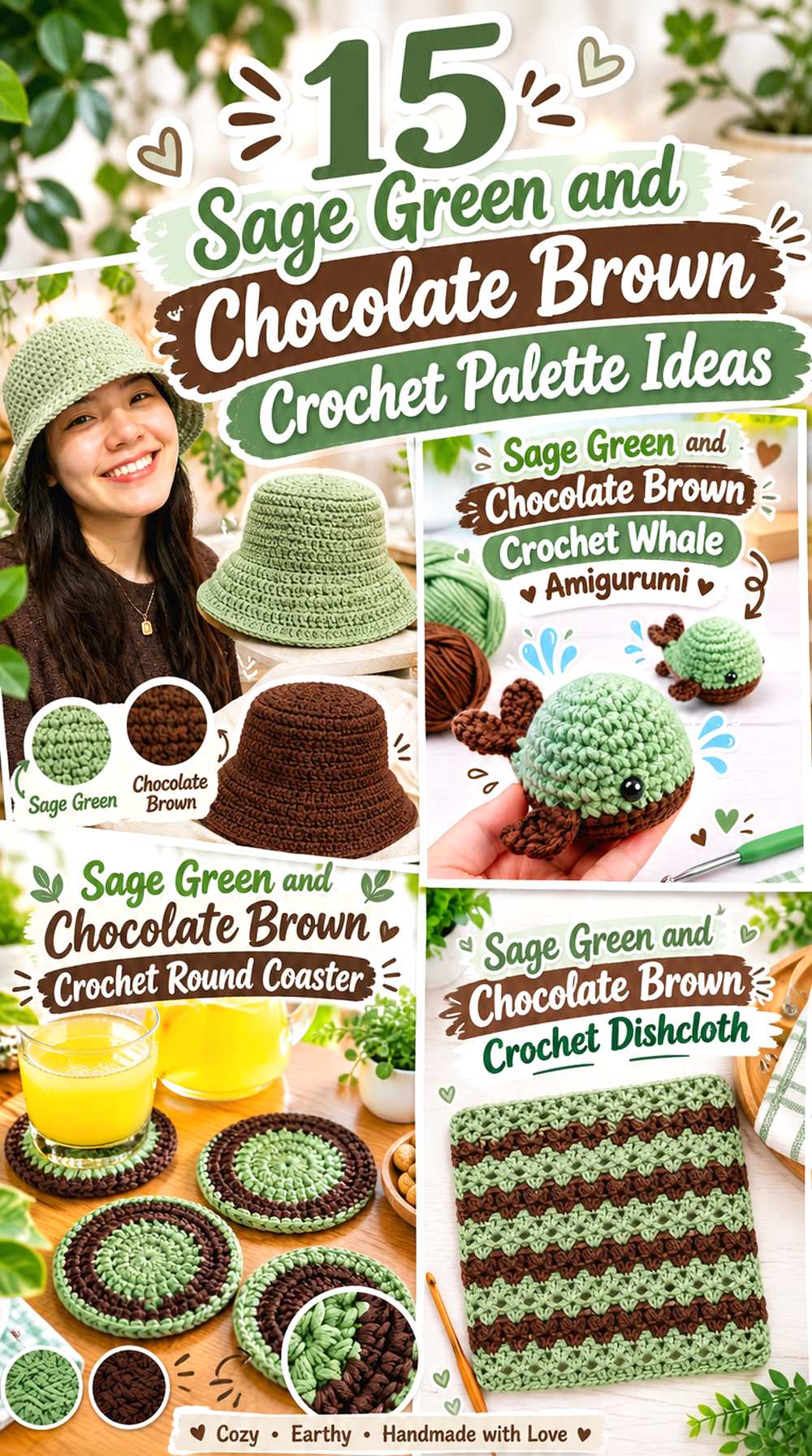
15 Sage Green and Chocolate Brown Crochet Palette Ideas
Sage green and chocolate brown make a crochet palette that can shift from soft and botanical to deep and earthy simply by changing which color covers more of the project. Sage has enough color to remain distinct from a neutral, while chocolate brown can supply the darker visual anchor around borders, cuffs, straps, joins, and other defined areas.
The pairing becomes much more useful when you plan color roles before crocheting. A sage-dominant cardigan with chocolate edging has a very different visual weight from a brown sweater with sage sleeves, even though the yarn palette is identical. The 15 ideas below explore those changes across motifs, blankets, accessories, home pieces, garments, and amigurumi.
Quick List
- Sage Green And Chocolate Brown Crochet Solid Granny Square
- Sage Green And Chocolate Brown Crochet Mesh Blanket
- Sage Green And Chocolate Brown Crochet Cardigan
- Sage Green And Chocolate Brown Crochet Storage Basket
- Sage Green And Chocolate Brown Crochet Textured Beanie
- Sage Green And Chocolate Brown Crochet Scarf
- Sage Green And Chocolate Brown Crochet Mug Cozy
- Sage Green And Chocolate Brown Crochet Pocket Shawl
- Sage Green And Chocolate Brown Crochet Headband
- Sage Green And Chocolate Brown Crochet Crossbody Bag
- Sage Green And Chocolate Brown Crochet Dishcloth
- Sage Green And Chocolate Brown Crochet Cowl
- Sage Green And Chocolate Brown Crochet Round Coaster
- Sage Green And Chocolate Brown Crochet Whale Amigurumi
- Sage Green And Chocolate Brown Crochet Bucket Hat
How to Balance Sage Green and Chocolate Brown in Crochet
Start by choosing a dominant color rather than automatically giving both yarns equal space. Sage green works well across larger fields when you want a lighter overall project, with chocolate brown supplying definition. Chocolate brown can take the dominant role when you want a deeper result and need sage to break up the dark surface.
Value contrast is worth checking with the actual yarn. A very dark chocolate brown and a pale sage will separate strongly, while a medium brown paired with a deeper muted sage may blend more than expected. Place the skeins side by side or check a photograph in grayscale if small motifs, stripes, or textured details need clear separation.
Use Sage Green and Chocolate Brown Where Crochet Structure Changes
Color changes often look most intentional when they follow the construction of the object. A chocolate brown bag strap can define a sage bag body; brown cuffs can finish sage sleeves; sage motif centers can repeat inside brown granny-square borders.
This approach is especially useful on textured crochet. Rather than changing color randomly through cables, bobbles, ribbing, or openwork, use sage and chocolate brown to distinguish meaningful areas such as the body, border, brim, pocket, join, handle, or outer round.
1. Sage Green And Chocolate Brown Crochet Solid Granny Square
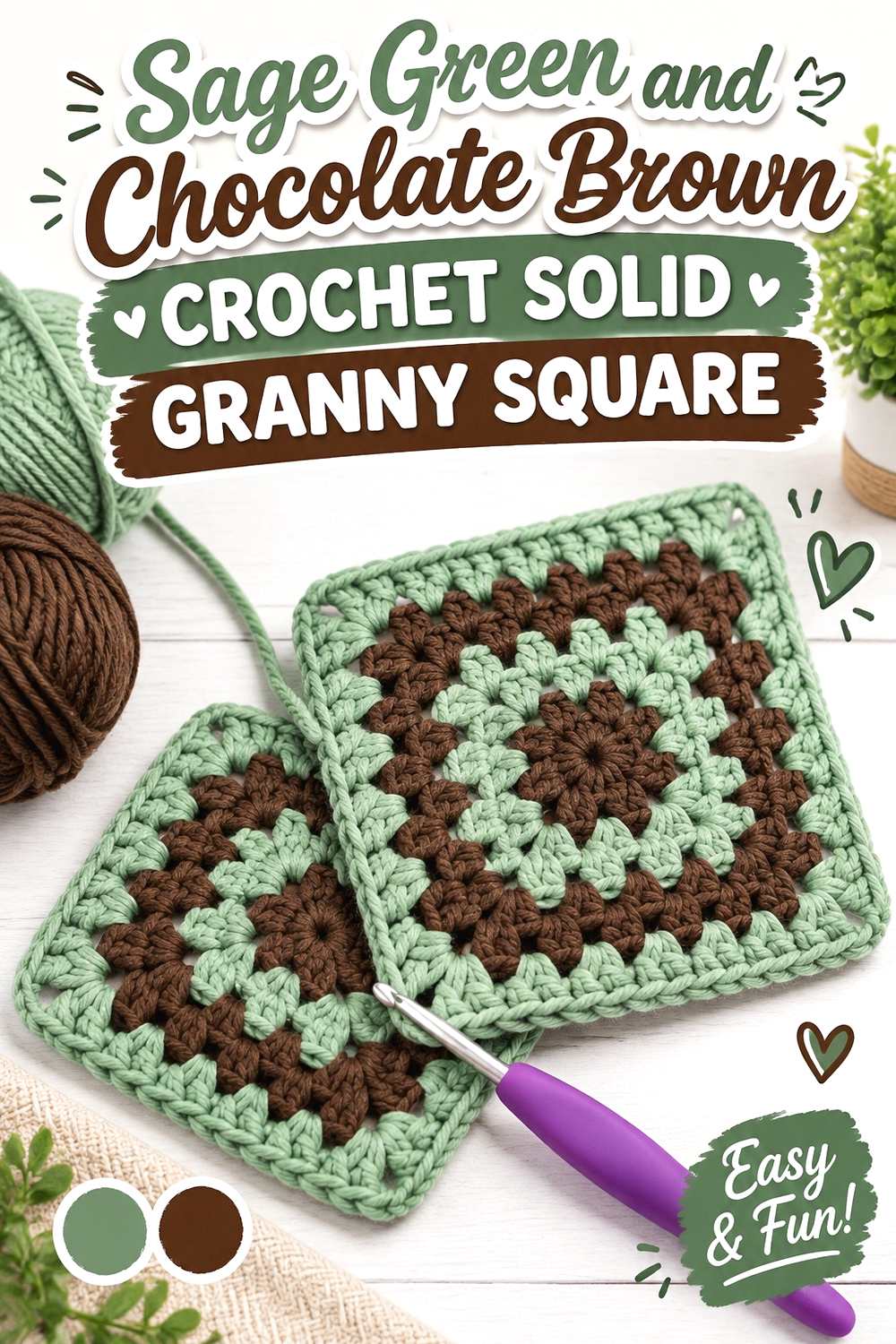
A solid granny square gives both colors enough uninterrupted space to establish a clear hierarchy. Sage green can fill the center and most of the motif while chocolate brown forms the outer rounds, creating an earthy frame around the lighter green center.
Sage Green Can Keep the Crochet Granny Square Center Visually Open
Use sage green through the central rounds when the square should read as green first. Keeping several connected rounds in sage gives the motif a calm central field instead of breaking it into many narrow rings.
This is particularly useful when multiple squares will be joined, because repeating the same sage center can create a consistent visual rhythm across the final project.
Chocolate Brown Can Define the Sage Green Granny Square Edge
Chocolate brown works well around the outer portion because its darker value can establish a clear boundary around the sage center. It can also serve as a useful transition if the finished squares will be joined with brown.
If the brown edge begins to dominate the motif, reduce its visual width rather than adding more colors. The contrast between sage and chocolate is already enough to distinguish the square.
Creator Credit: Hooked by Robin
2. Sage Green And Chocolate Brown Crochet Mesh Blanket
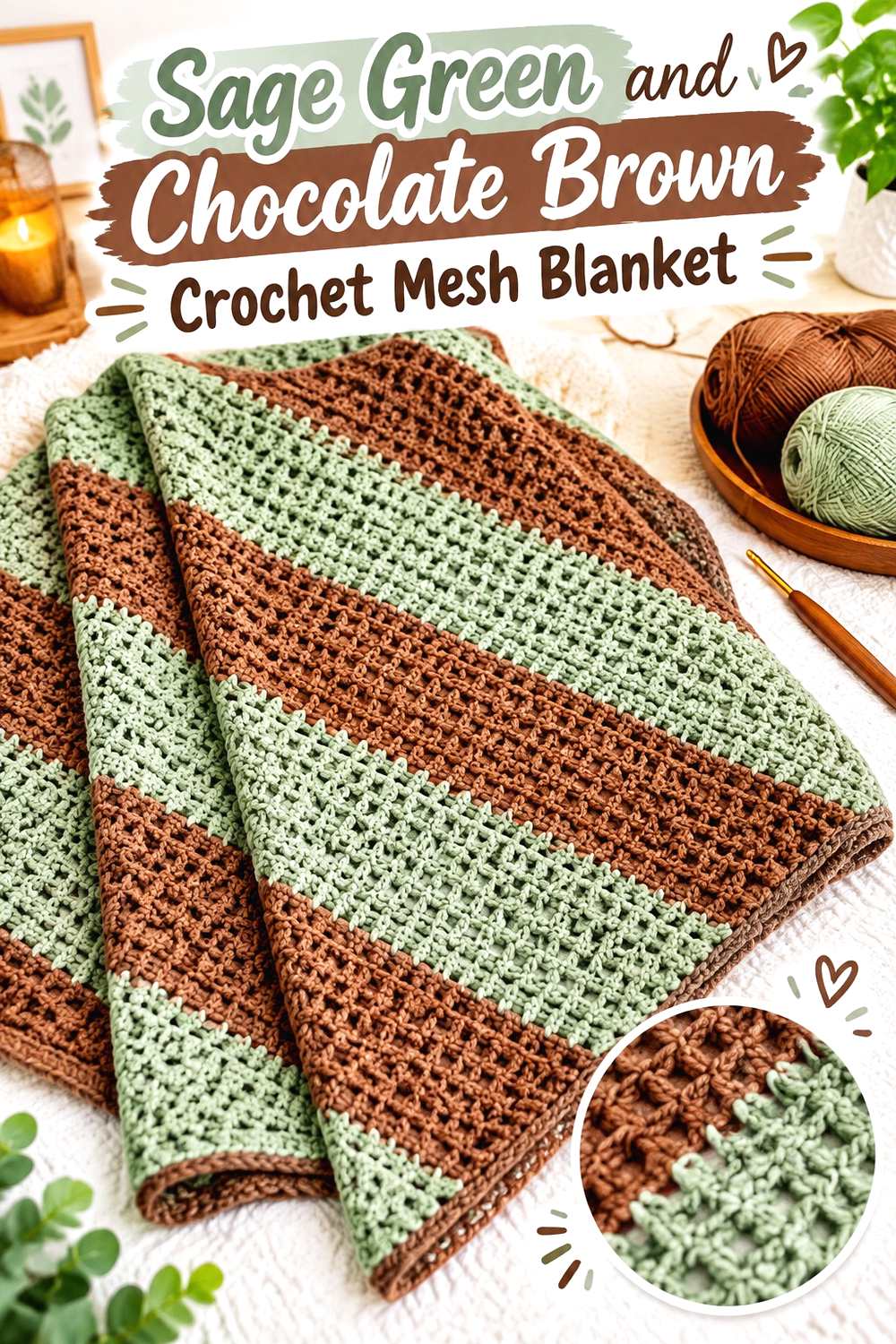
An open mesh blanket changes the palette because surrounding colors can remain visible through the fabric. Giving sage green the larger share keeps the blanket from becoming visually heavy, while chocolate brown can appear in planned stripes or the border.
Sage Green Gives the Crochet Mesh Blanket a Softer Main Field
Use longer sage sections through the blanket if you want the openwork to remain the main visual feature. Frequent color changes can compete with mesh construction, especially across a large surface.
Wider sage areas allow the eye to follow the stitch pattern before encountering the deeper chocolate contrast.
Chocolate Brown Can Frame Sage Green Without Overloading the Mesh
Chocolate brown is particularly useful near the outer edge because it gives the lighter sage field a definite perimeter. A few repeated brown sections inside the blanket can connect the border to the main surface.
If brown appears only at the very end, compare the unfinished blanket before committing to a wide border. A very dark frame can visually outweigh a delicate open interior.
Creator Credit: Daisy Farm Crafts
3. Sage Green And Chocolate Brown Crochet Cardigan
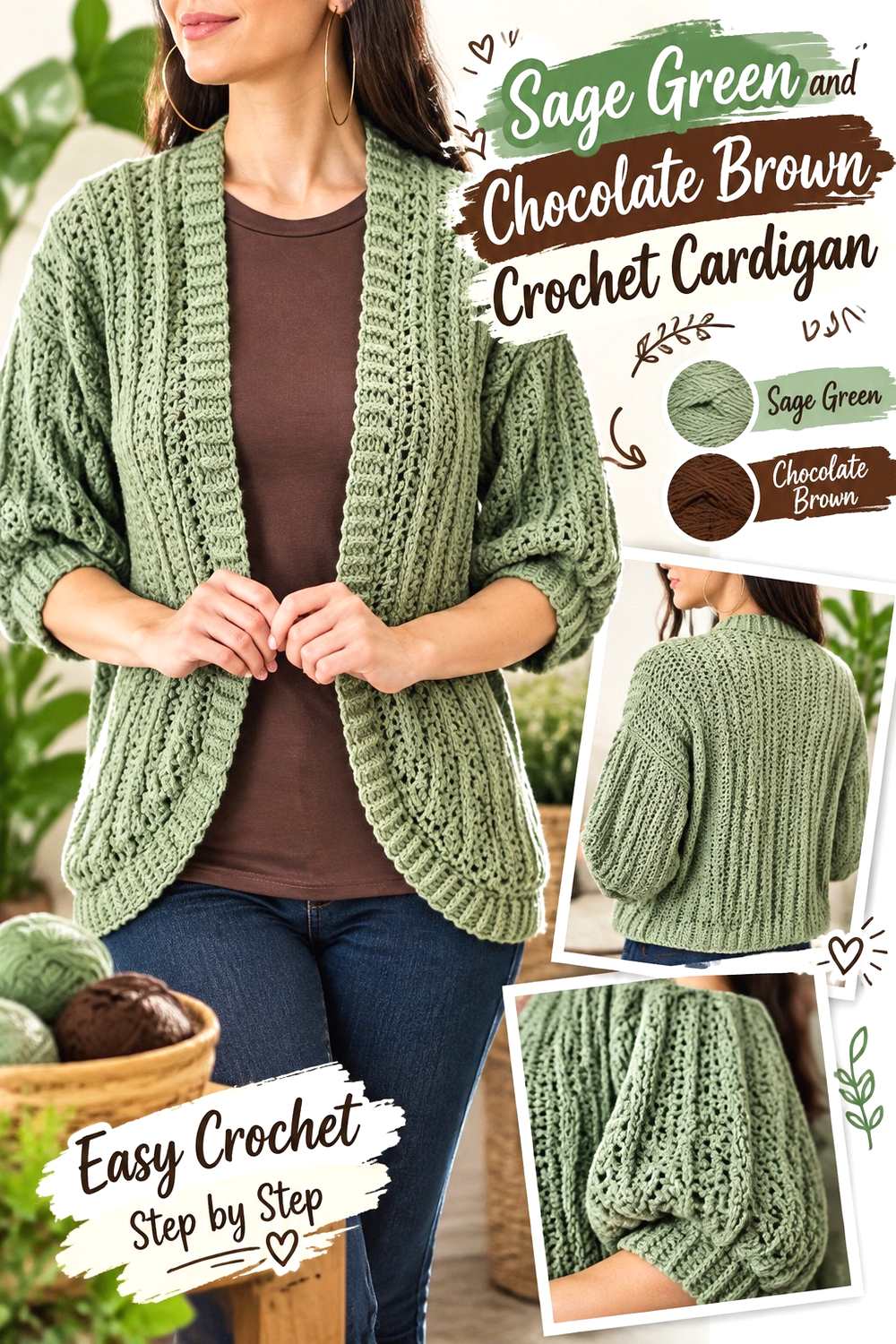
On a cardigan, sage green can cover the main body and sleeves while chocolate brown is concentrated around cuffs, the front opening, and lower edging. This lets color changes reinforce the garment structure instead of dividing every panel.
Sage Green Can Connect the Main Crochet Cardigan Panels
Keeping sage across the front and back establishes a continuous main color from shoulder to hem. Carrying the same sage through most of the sleeves also prevents the cardigan from looking like several unrelated color blocks.
If you want more brown, introduce it at repeated finishing areas instead of interrupting the center of each body panel.
Chocolate Brown Gives Sage Green Cardigan Edges More Definition
Chocolate brown cuffs and front edging can create a darker outline around a sage cardigan. Repeating brown at the lower edge can help the trim feel connected instead of looking like a single isolated accent.
Consider the visual width of the brown band as well. A narrow edge acts mainly as definition, while a broad band becomes a significant part of the overall color balance.
Creator Credit: TCDDIY
4. Sage Green And Chocolate Brown Crochet Storage Basket
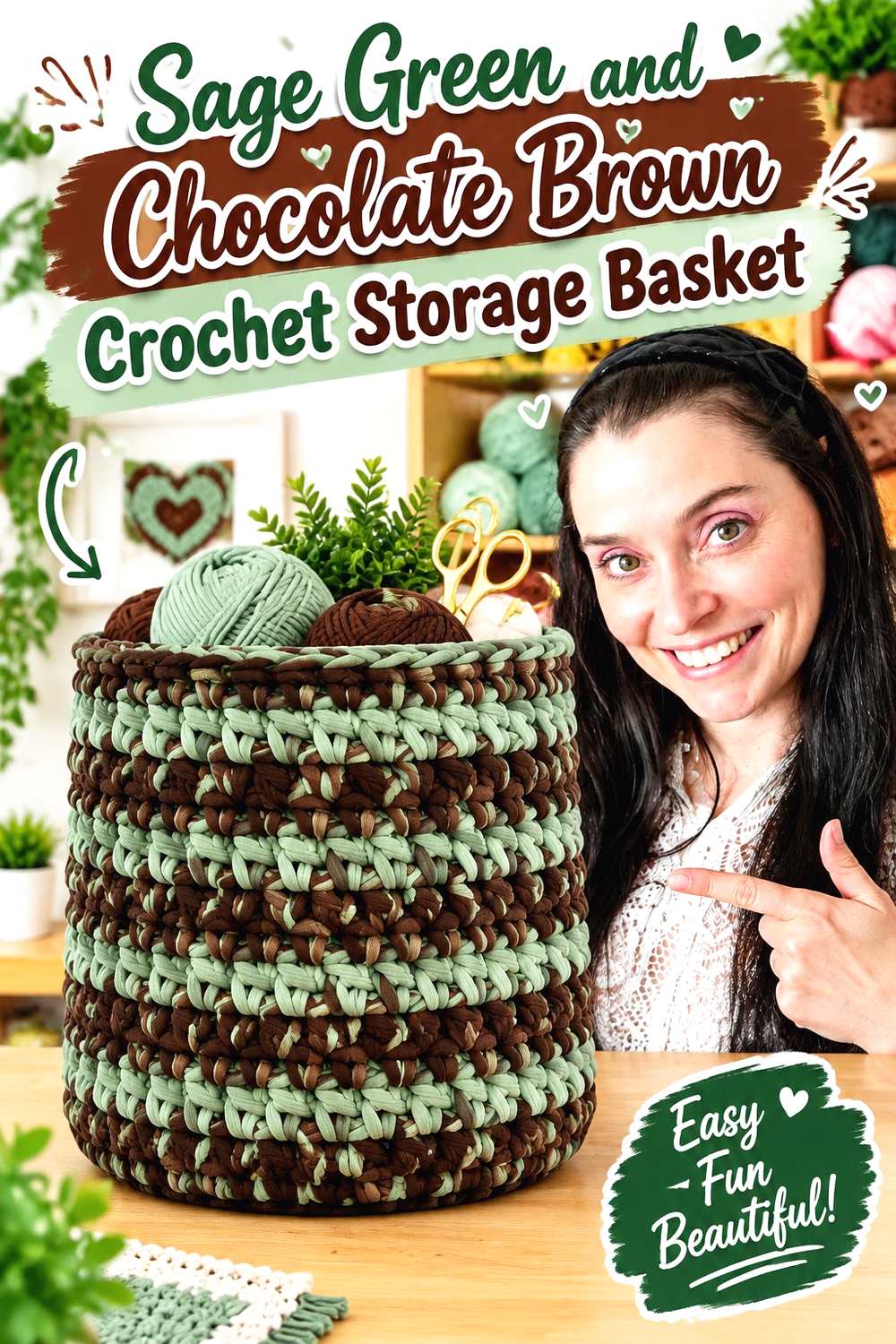
A basket gives the palette clear functional zones. Sage green can cover most of the walls, while chocolate brown defines the base, upper rim, or handles. That creates color variation without filling the basket with narrow stripes.
Sage Green Can Keep the Crochet Basket Body From Feeling Too Dark
Using sage across the largest upright area creates a lighter main field and lets any stitch texture remain visually separate from the brown structural accents.
If the basket includes pronounced surface texture, test the sage section first to see how clearly that texture appears before deciding where the brown should begin.
Chocolate Brown Can Anchor the Sage Green Basket Base and Rim
A chocolate brown base can visually ground the basket, while a brown rim repeats the darker color at the opposite end. Using the same brown on handles can connect all three structural areas.
If both base and rim are wide, let sage occupy enough of the center wall to remain clearly dominant.
Creator Credit: Jayda InStitches
5. Sage Green And Chocolate Brown Crochet Textured Beanie
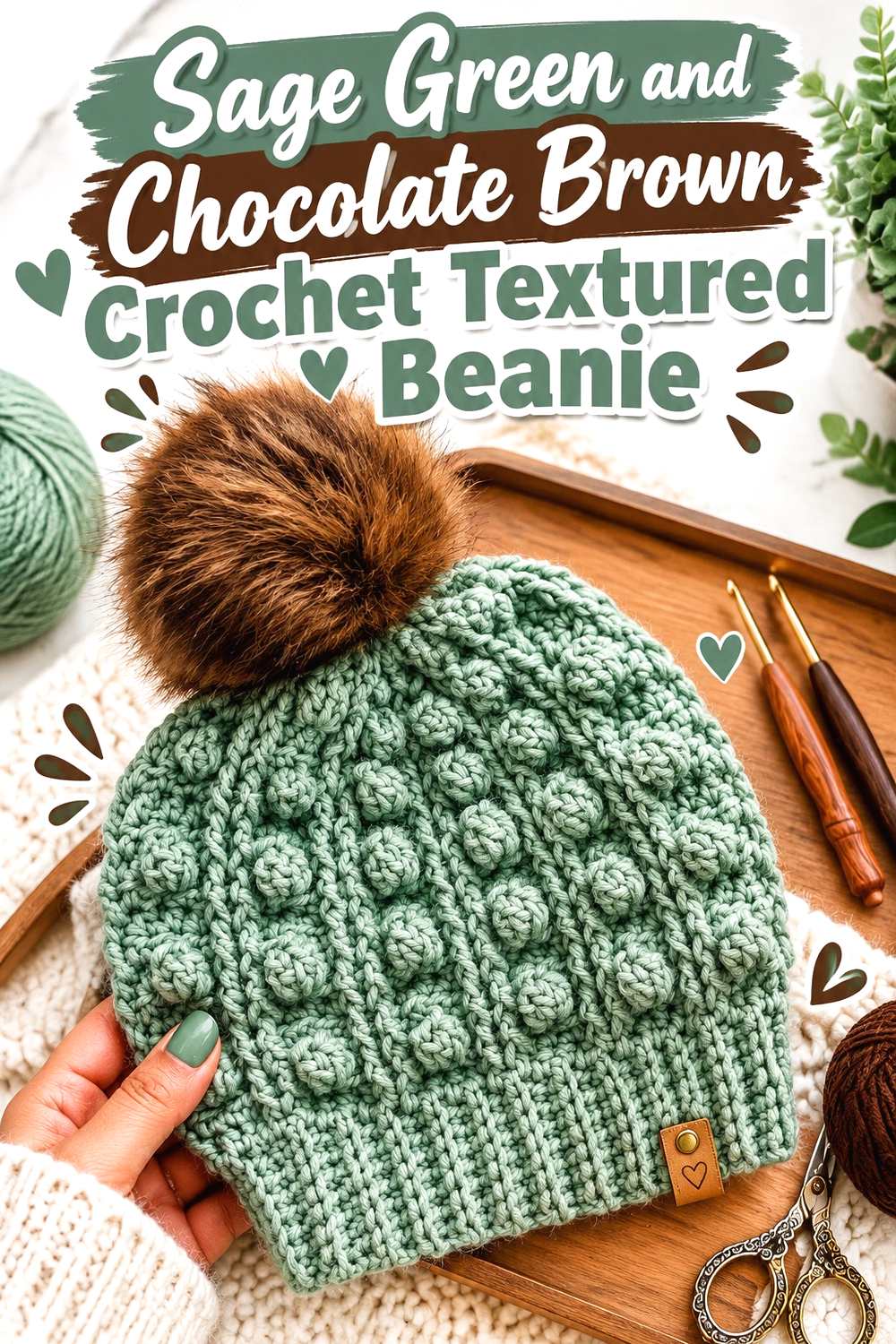
A textured beanie can use sage green across the crown so raised stitches remain visible, with chocolate brown reserved for the brim. The darker lower band gives the hat a strong edge without competing with every textured section.
Sage Green Lets the Crochet Beanie Texture Carry the Crown
Keeping the crown mainly sage allows bobbles, cables, or other raised details to repeat without additional interruption from frequent color changes.
If your sage yarn is fairly dark, compare the texture under normal lighting before committing to the full hat. Some stitch definition may become less obvious when light and shadow are subtle.
Chocolate Brown Can Give the Sage Green Beanie a Stronger Brim
Chocolate brown at the brim creates a defined lower edge and separates ribbing from the sage crown. Because the brim already forms its own structural section, the color change has a natural place to occur.
For a more balanced two-color appearance, repeat a small amount of brown near the top rather than adding multiple brown stripes through the textured crown.
Creator Credit: TL Yarn Crafts
6. Sage Green And Chocolate Brown Crochet Scarf
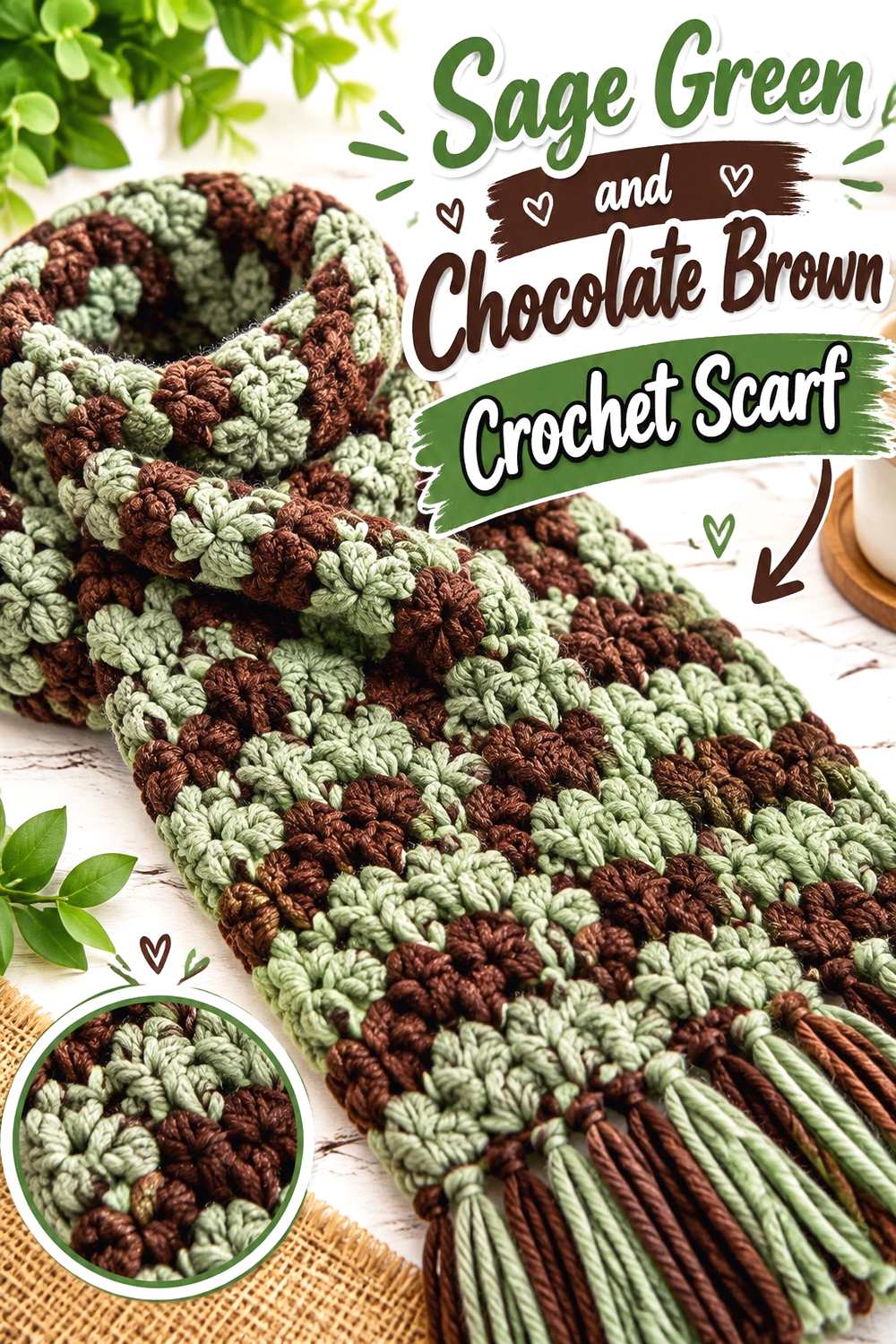
A scarf provides enough length for broader color blocks rather than constant alternation. Sage green can dominate the center while chocolate brown finishes both ends, producing symmetry and keeping the dark shade concentrated.
Sage Green Can Carry the Long Crochet Scarf Center
A large uninterrupted sage section lets textured stitches continue across the length without being repeatedly divided by color changes. This is useful when the stitch surface already provides substantial visual interest.
If you prefer stripes, use fewer, wider sections so the scarf does not become visually chopped into many small pieces.
Chocolate Brown Can Balance Both Ends of a Sage Green Scarf
Placing chocolate brown at both ends gives the deeper color equal visual weight on each side. It also frames the longer sage center when the scarf hangs vertically.
Make the two brown areas reasonably consistent if symmetry is the goal. Unequal dark blocks can pull the visual balance toward one end.
Creator Credit: Atreyu Crochet
7. Sage Green And Chocolate Brown Crochet Mug Cozy
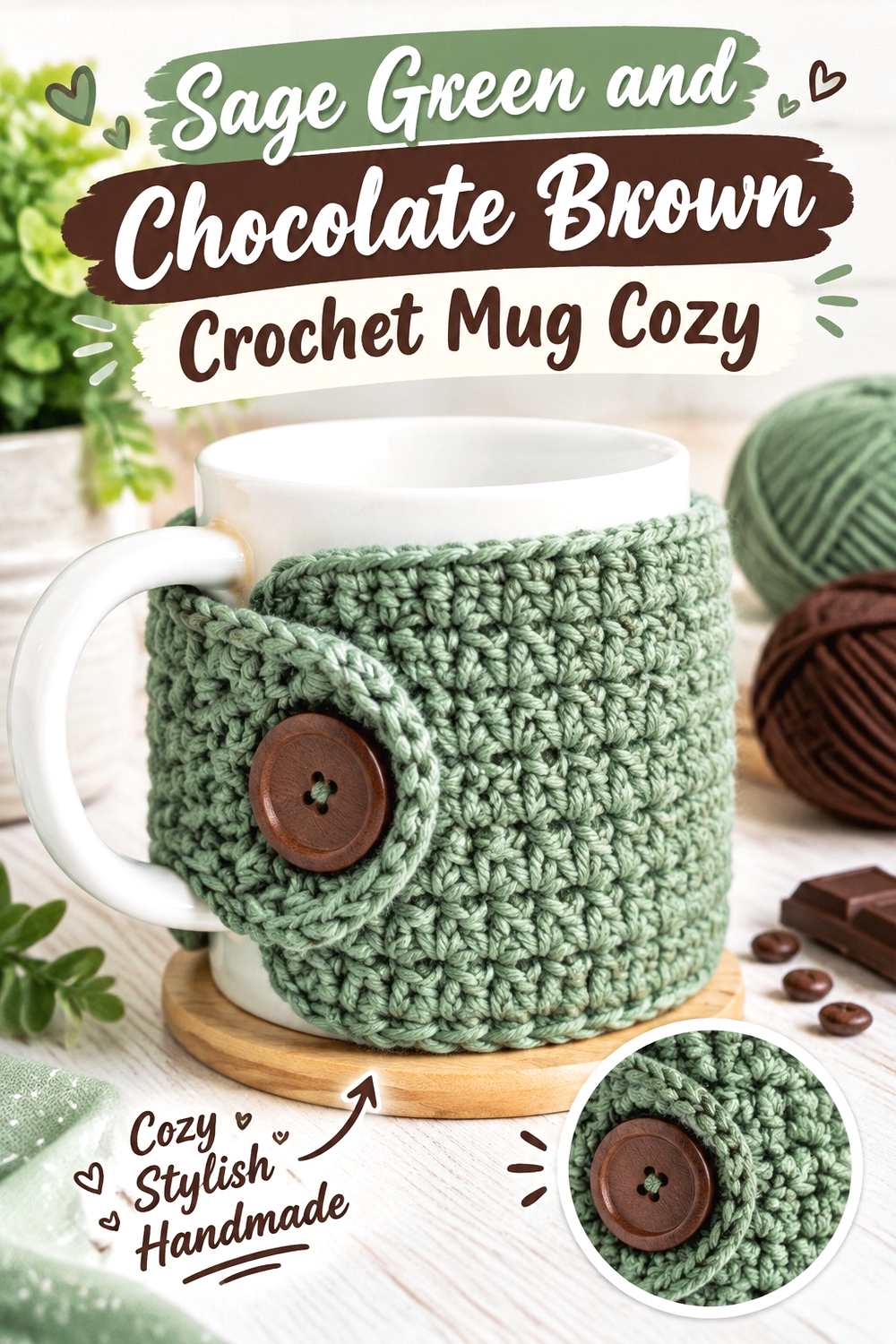
The small surface of a mug cozy benefits from simple color roles. Sage green can cover the main textured body, while chocolate brown defines the flap, button area, or outer edging.
Sage Green Keeps the Crochet Mug Cozy Body Visually Unified
Using sage for most of the cozy lets the repeated stitch texture read as one continuous surface. This is preferable to frequent green-and-brown alternation when the project already has a prominent textured stitch.
The relatively small size means even a limited amount of brown will remain noticeable.
Chocolate Brown Can Define the Sage Green Mug Cozy Closure
Place chocolate brown along the button flap, outer edge, or another closure-related area to give the darker color a practical visual location.
Repeating brown along a narrow border can connect the closure to the rest of the cozy without taking over the sage body.
Creator Credit: Rich Textures Crochet
8. Sage Green And Chocolate Brown Crochet Pocket Shawl
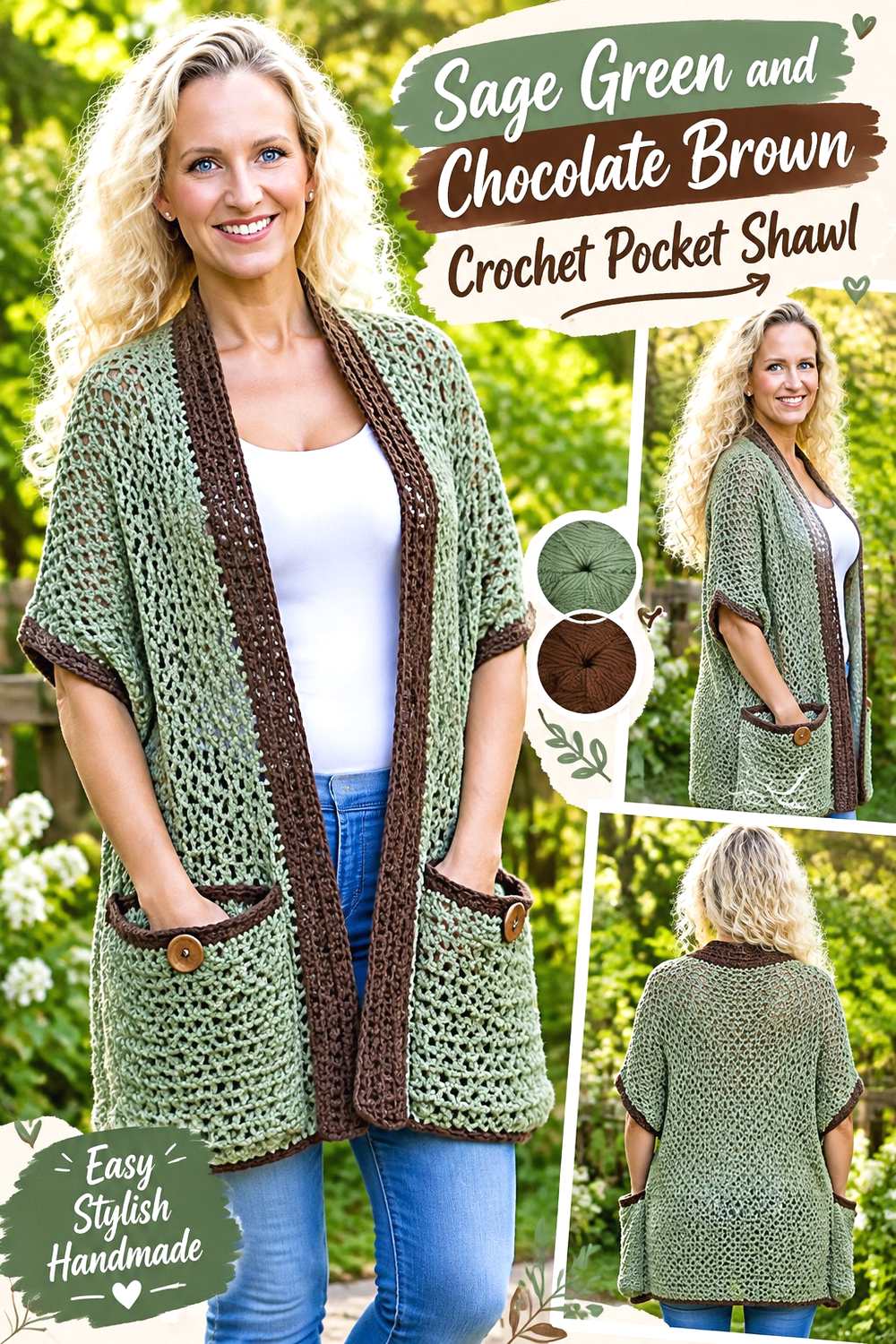
A pocket shawl provides three especially useful color zones: the long body, pockets, and edging. Sage green can control the main wrap while chocolate brown distinguishes the pockets and perimeter.
Sage Green Can Lead Across the Main Crochet Pocket Shawl
Using sage along most of the length keeps the wrap relatively light in appearance and avoids breaking the long rectangular form into too many competing sections.
If the stitch pattern contains open spaces, the muted green also gives you a consistent field against which the darker pocket details can stand out.
Chocolate Brown Can Make Sage Green Shawl Pockets Intentional
Chocolate brown pockets create clear darker blocks at the ends of a sage shawl. Repeat brown along an outer edge or narrow trim so the pockets do not appear as unrelated additions.
If full brown pockets seem too heavy, use sage pockets with chocolate brown edging instead.
Creator Credit: naztazia
9. Sage Green And Chocolate Brown Crochet Headband
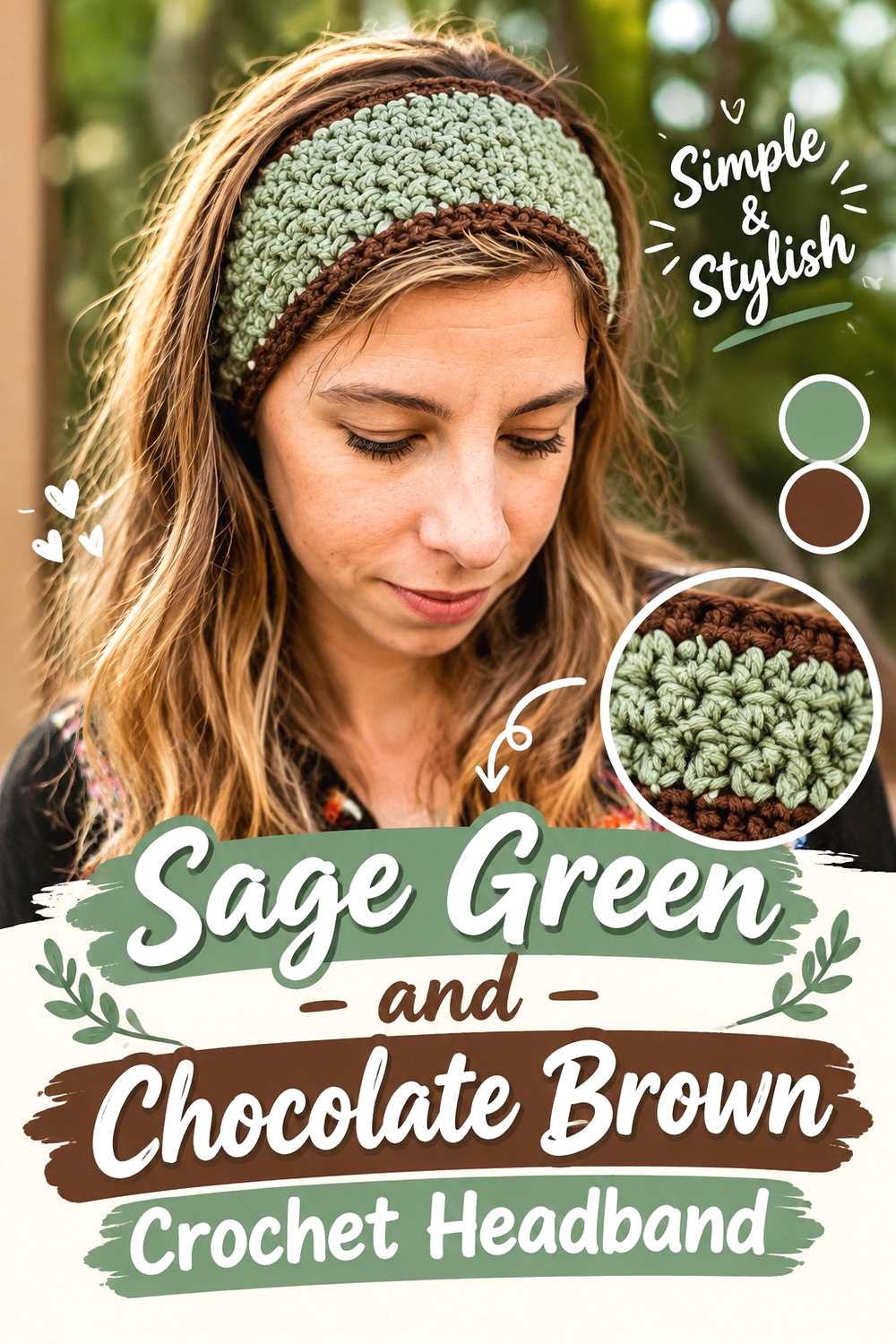
A headband has little surface area, so strong color hierarchy helps prevent the project from becoming busy. Sage green can cover the textured main band while chocolate brown outlines the edge or front feature.
Sage Green Can Keep the Crochet Headband Texture Easy to Read
Use sage throughout the main band when the crochet texture is one of the design’s primary features. Keeping one color through the repeated stitch pattern prevents small color changes from obscuring that surface.
This also leaves chocolate brown available for a concentrated finishing detail.
Chocolate Brown Can Outline a Sage Green Crochet Headband
A narrow chocolate brown edge can create a crisp boundary around sage without taking much visual space. If the headband includes a twist or overlap, brown can instead be reserved for that front detail.
Avoid scattering several small brown sections across a narrow band unless a repeated pattern is intentional.
Creator Credit: Sigoni Macaroni
10. Sage Green And Chocolate Brown Crochet Crossbody Bag
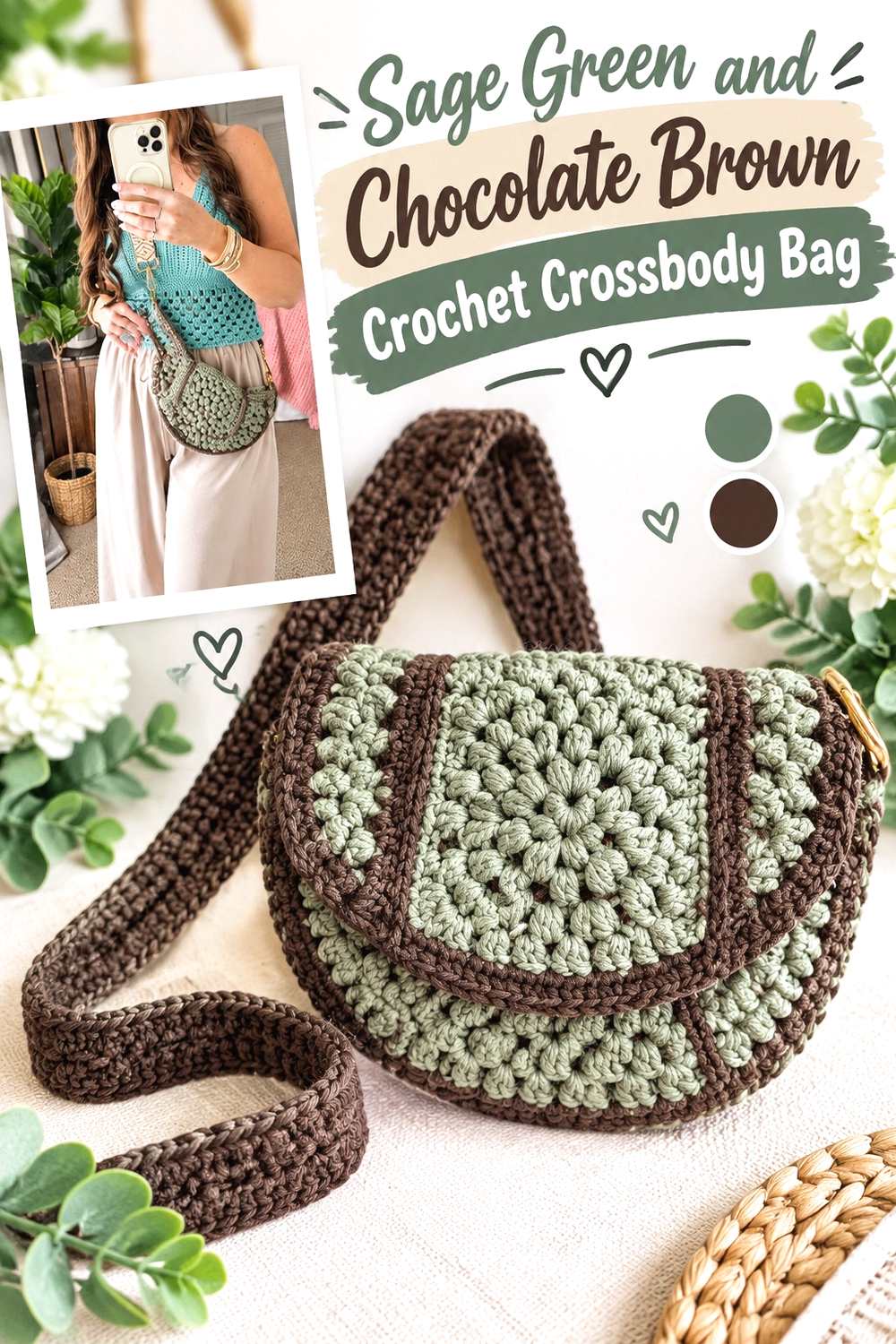
A crossbody bag gives chocolate brown a natural role in joins, straps, and outer framing, while sage green can occupy the larger motif faces. That division also helps repeated granny-square or puff motifs remain distinguishable after assembly.
Sage Green Can Lead Across the Crochet Crossbody Bag Motifs
Use sage through most of each motif if you want the bag to read as green from a distance. A repeated sage center or main field also helps several separate squares feel related after joining.
If motif texture is important, avoid dividing every round evenly between the two shades.
Chocolate Brown Can Connect Sage Green Bag Joins and Straps
Chocolate brown is useful along motif borders or joins because the darker shade can create a visible framework around sage squares. Repeating the same brown on the strap connects the bag body to the carrying detail.
For a less outlined look, keep the joins sage and reserve chocolate solely for the strap and upper edge.
Creator Credit: MJ’s Off The Hook Designs
11. Sage Green And Chocolate Brown Crochet Dishcloth
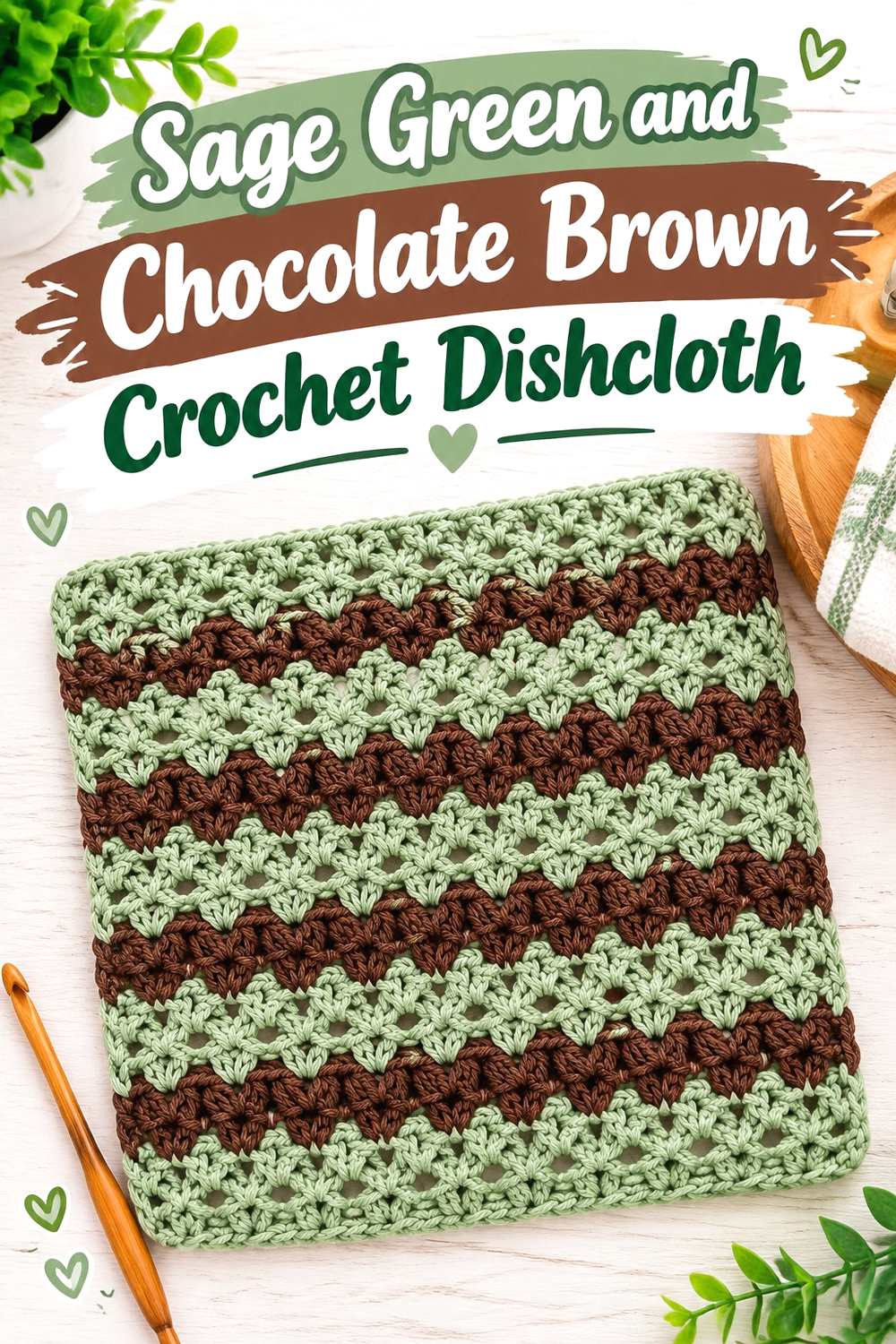
A textured dishcloth is one project where the colors can share the surface more evenly. Sage and chocolate brown can alternate through larger bands or repeated textured rows so the stitch changes and color changes reinforce each other.
Sage Green Can Keep Chocolate Brown Dishcloth Texture From Becoming Too Heavy
If chocolate brown appears through raised or dense sections, sage can provide lighter intervals that stop the whole square from visually merging into one dark textured block.
Make the sage repeats substantial enough to remain noticeable after the dishcloth is viewed as a whole.
Chocolate Brown Can Emphasize Sage Green Crochet Dishcloth Rows
Chocolate brown bands can mark specific textured sections and create a repeated horizontal structure across the dishcloth.
If both yarns are similar in value, check a swatch before relying on color alone to make the row changes obvious.
Creator Credit: Fiber Flux
12. Sage Green And Chocolate Brown Crochet Cowl
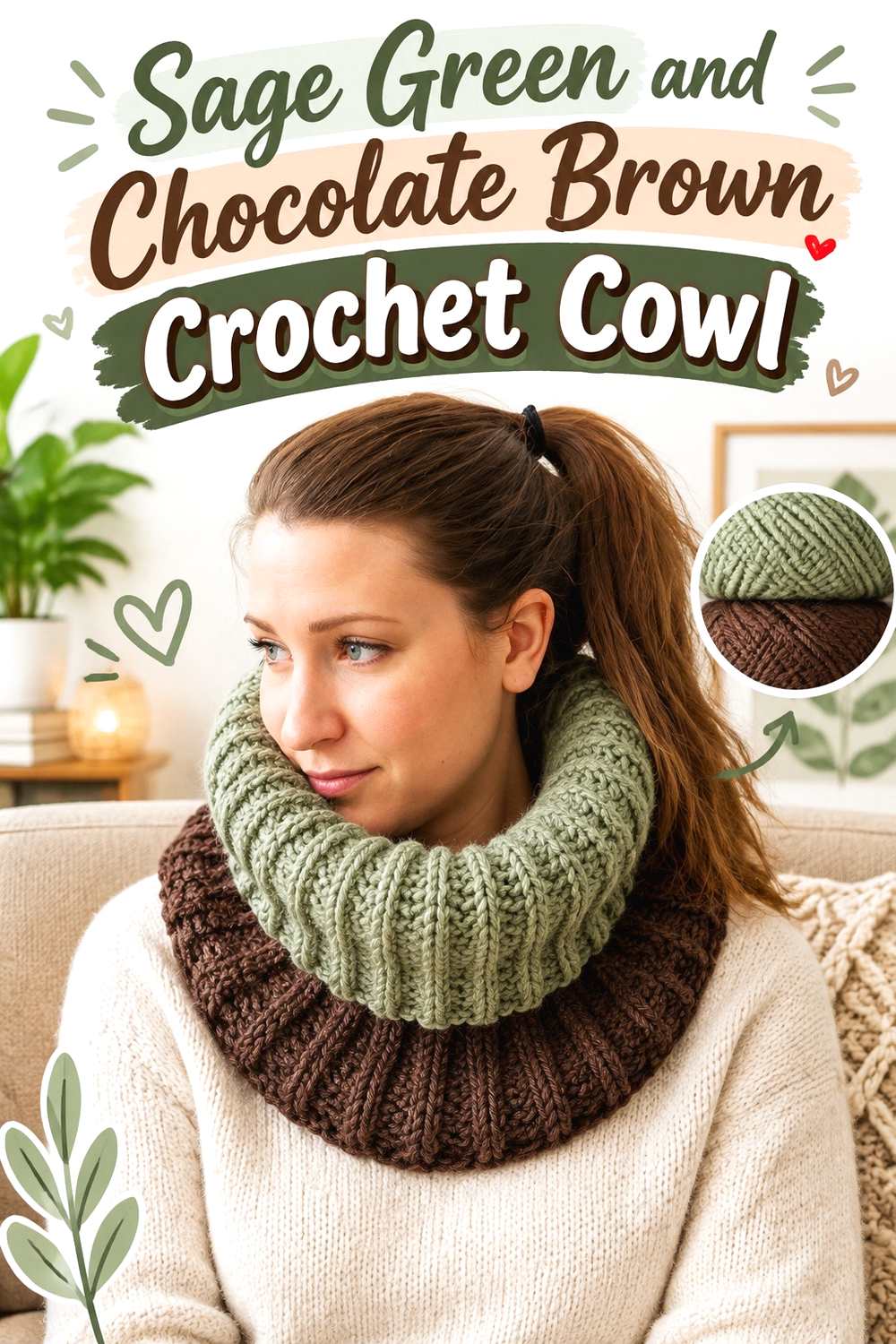
Because a cowl folds and overlaps, broad blocks usually preserve the palette more clearly than many narrow stripes. Chocolate brown can form the main center, while sage green appears along the upper and lower edges.
Chocolate Brown Can Give the Crochet Cowl a Deep Central Field
Using chocolate brown through the widest portion gives the cowl a strong visual center that remains noticeable even after the fabric folds.
If the texture has deep ridges or shadows, check how visible those details remain in the brown yarn before making the entire center dark.
Sage Green Can Separate Chocolate Brown Cowl Edges
Sage green at both edges introduces lighter lines above and below the brown center. Those edges can remain visible when the cowl is folded, giving the muted green an important role without requiring many color changes.
For a greener overall result, widen the sage edge sections instead of adding narrow alternating stripes.
Creator Credit: B.Hooked Crochet
13. Sage Green And Chocolate Brown Crochet Round Coaster
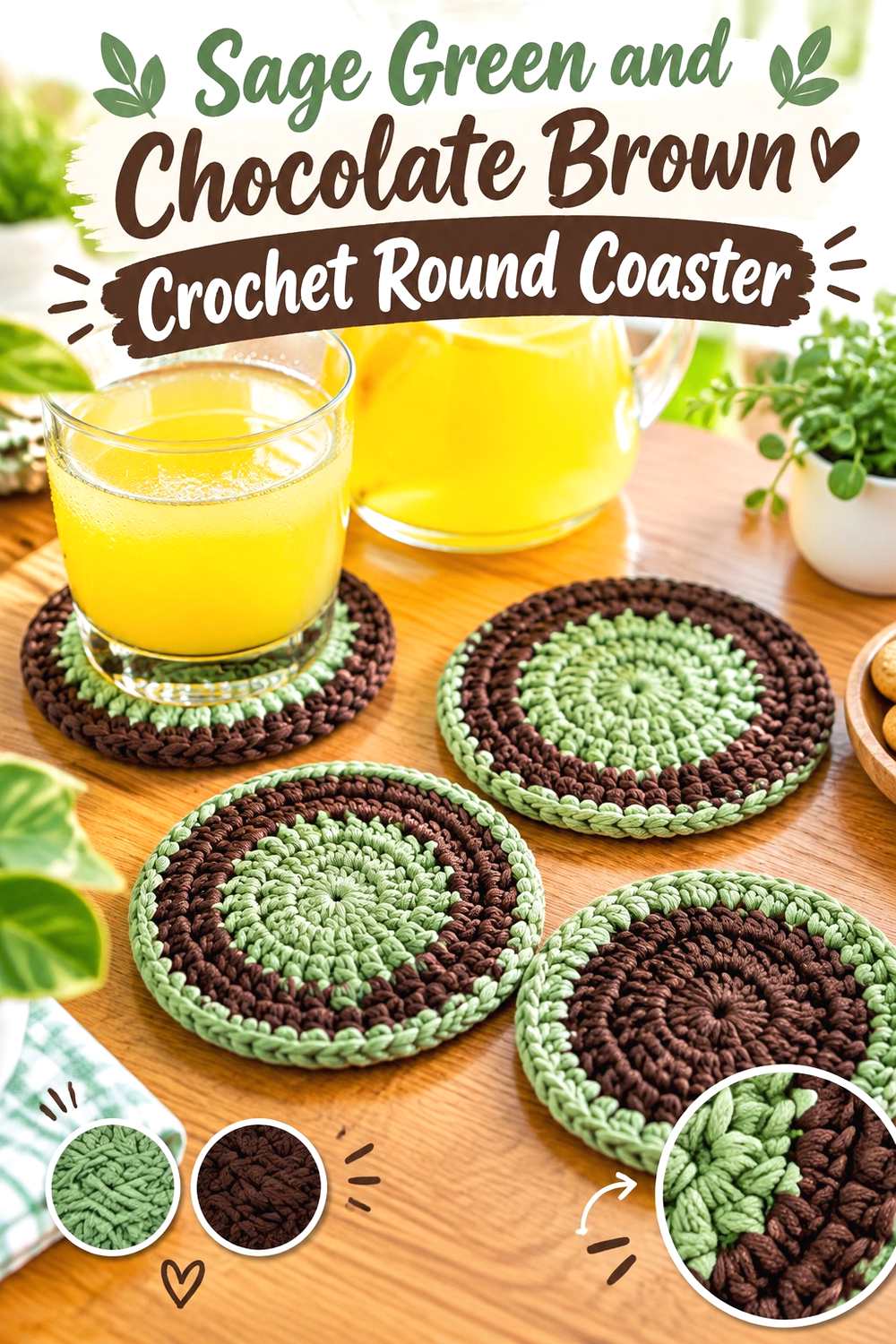
A round coaster is well suited to a concentrated accent strategy. Sage green can form the main circle, while chocolate brown appears in one contrasting round and again at the perimeter.
Sage Green Can Keep the Crochet Coaster Center Simple
Use sage across the central rounds to maintain one continuous field. This helps the circular shape remain clear before the stronger brown contrast is introduced.
Because the coaster is small, even a single contrasting round can create a noticeable change.
Chocolate Brown Can Repeat Around the Sage Green Coaster Edge
A chocolate brown accent round followed by a brown outer edge can connect the darker color across the design. Alternatively, return to sage for the final round if you want the brown to remain an interior stripe rather than a frame.
Compare several coasters together if making a set, since repeated dark borders can have more visual impact collectively than on one coaster alone.
Creator Credit: The Crochet Crowd
14. Sage Green And Chocolate Brown Crochet Whale Amigurumi
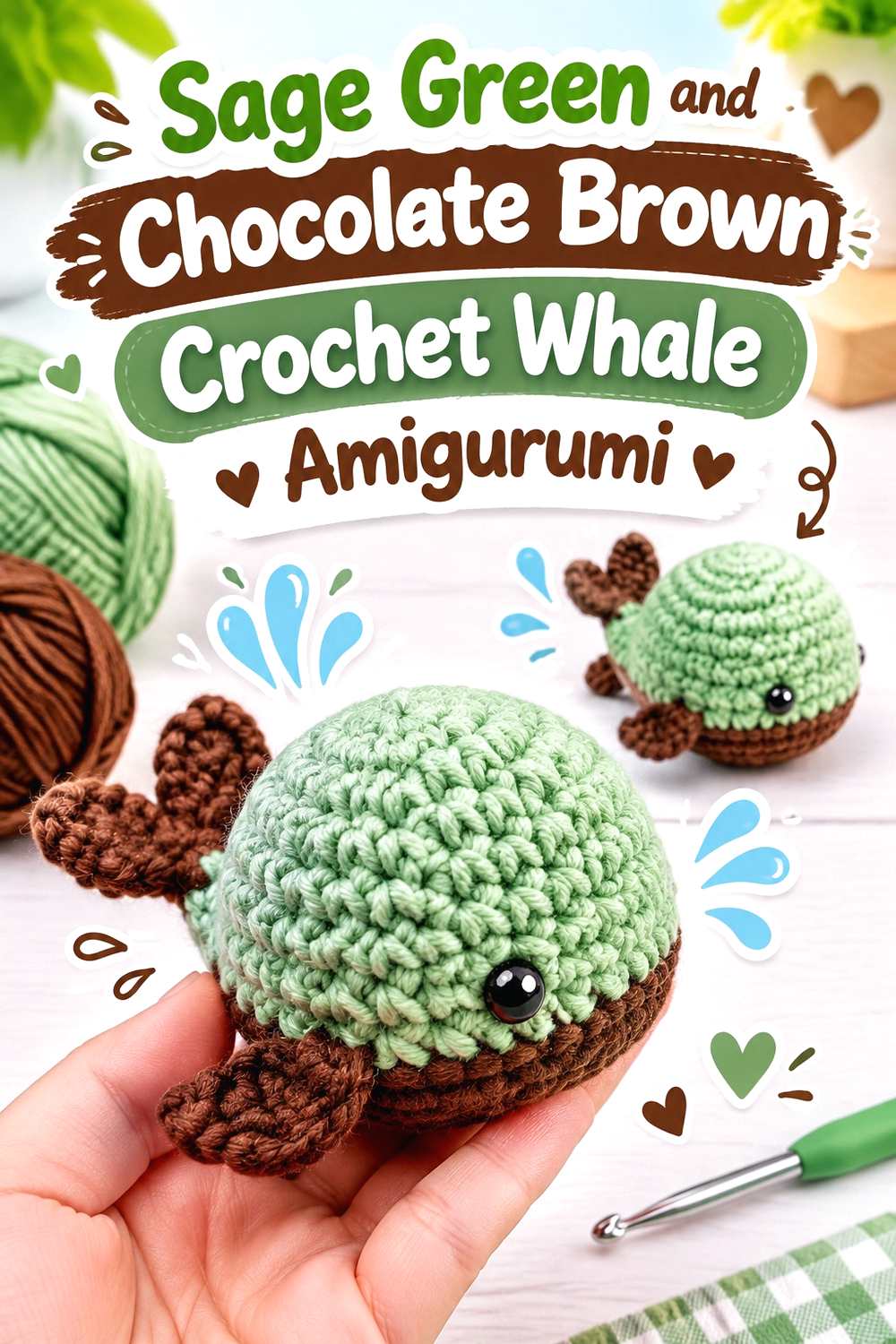
A two-tone whale gives these colors naturally defined areas. Sage green can cover the upper body while chocolate brown replaces the usual contrasting underside, creating an earthy version of a familiar two-color amigurumi layout.
Sage Green Can Establish the Crochet Whale’s Main Body Color
Use sage across the largest upper body area so the shape reads as green first. Keeping the main color continuous also avoids unnecessary visual interruption across the shaping.
A muted sage works especially well when you want the finished figure to stay within an earthy palette rather than introducing a bright accent.
Chocolate Brown Can Separate the Sage Green Whale Underside
Chocolate brown gives the underside a distinct darker section and can be repeated sparingly on other appropriate details if the construction allows.
Because the brown is much darker than many sage shades, keep the upper sage area large enough that the finished whale does not become brown-dominant unintentionally.
For items intended for children, separately consider whether small attached components are appropriate for the intended use.
Creator Credit: Club Crochet
15. Sage Green And Chocolate Brown Crochet Bucket Hat
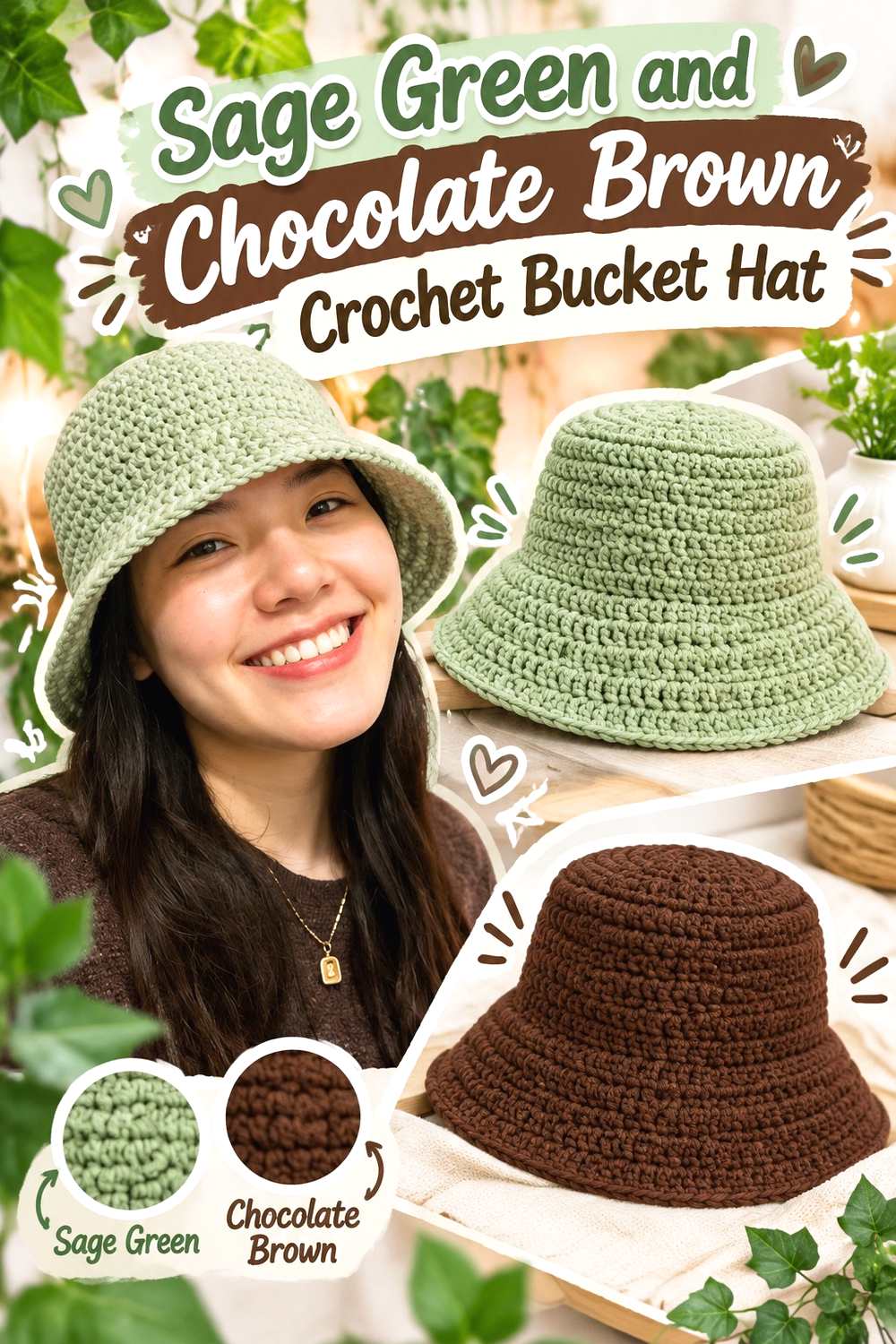
A bucket hat provides three useful color zones: crown, side wall, and brim. Chocolate brown can cover the crown and sides while sage green takes over at the brim, producing a deliberate reversal of the sage-dominant ideas earlier in the list.
Chocolate Brown Can Lead the Crochet Bucket Hat Crown and Sides
Using chocolate brown through the upper hat creates one uninterrupted dark field. Keeping both crown and side wall brown also allows the change to sage to follow a clear construction point.
This arrangement works well when you want brown to be the main color without turning every section of the hat dark.
Sage Green Can Give the Chocolate Brown Bucket Hat Brim a Lighter Finish
A sage brim creates a noticeable outer ring around the brown upper section. Since the brim projects outward, even one sage section can carry substantial visual weight.
If you want stronger color connection, repeat a narrow sage detail near the transition between the crown and side wall rather than adding several unrelated stripes.
Creator Credit: VivCrochets
Comparing Sage Green and Chocolate Brown Crochet Directions
For a sage-dominant result, look toward the granny square, mesh blanket, cardigan, basket, scarf, mug cozy, pocket shawl, crossbody bag, and coaster ideas. These place the lighter green over most of the visible surface and use chocolate brown mainly for framing or structural definition.
The cowl and bucket hat show the opposite approach, allowing chocolate brown to establish the larger visual field while sage provides a lighter finish. The dishcloth and whale fall closer to the middle because their construction gives both colors clear, repeated areas.
If the project contains many motifs or textured elements, consider giving one color a consistent job throughout the entire piece. Repeating chocolate brown for joins, for example, usually creates a clearer hierarchy than changing the joining color unpredictably from motif to motif.
Conclusion
Sage green and chocolate brown can produce much more than one earthy crochet look. The balance changes substantially depending on whether sage occupies the main surface or chocolate brown controls the larger blocks.
Choose a sage-led layout when you want a lighter field with darker definition around borders, cuffs, straps, and edges. Increase the chocolate brown when you want a deeper result, using sage strategically on brims, borders, or smaller structural sections to keep the palette separated.
Before beginning a large project, crochet a small sample with the actual yarns. What matters most is preserving enough contrast for the specific motifs, texture, edging, or construction details that need to remain visible.
Frequently Asked Questions
Do sage green and chocolate brown work well together in crochet?
They can form a cohesive earthy palette because the muted green and dark brown are distinct without requiring several additional colors. The exact effect depends on how light your sage is, how dark your brown is, and how much surface each one covers.
Should sage green or chocolate brown dominate a crochet project?
Let sage green dominate when you want the finished project to appear lighter and greener overall. Make chocolate brown dominant when you want a darker visual base. Borders, cuffs, joins, handles, and brims are useful places for whichever color takes the supporting role.
How can I tell whether sage green and chocolate brown have enough contrast?
Place the actual yarns side by side and look at them from a short distance. You can also photograph them and view the image in grayscale. If the shades appear nearly identical in grayscale, small motifs or narrow stripes may have less separation than expected.
Can I replace sage green with another muted green?
Yes. Try to preserve the qualities that make sage function in the palette: a softened green appearance and enough light-dark separation from the chocolate brown. Olive or eucalyptus-like greens can shift the overall direction, so compare the substitute directly with your brown yarn.
Can I replace chocolate brown with a lighter brown?
Yes, but a lighter brown reduces the value contrast. That can produce a softer, more blended palette, which may work well for broad sections but may give small borders or motif details less definition.
Should chocolate brown always be the crochet border color?
No. Chocolate brown creates a strong frame around sage, but a sage border can be useful when the center is already brown-heavy. Choose the border according to the color balance of the entire project rather than assuming the darkest shade must always finish the edge.
How can I keep a sage green and chocolate brown crochet project from looking too dark?
Increase the visual share of sage green, particularly across the largest panels, motif centers, or blanket sections. You can also limit chocolate brown to narrower borders, cuffs, joins, straps, or other structural details instead of distributing it evenly across the entire project.