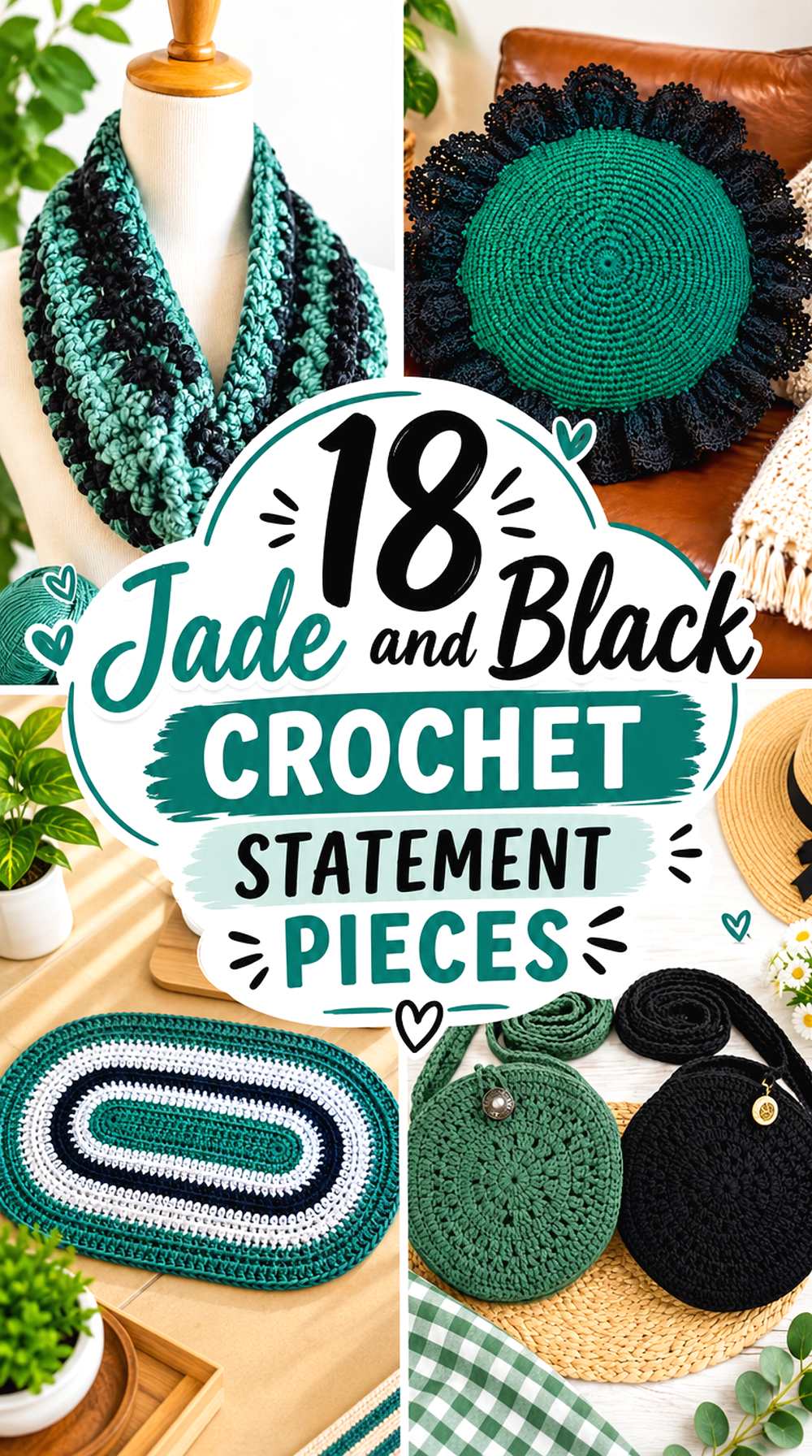
19 Jade and Black Crochet Statement Pieces
Jade and black can turn a crochet project into a statement piece without relying on a complicated multicolor palette. Jade supplies the concentrated color, while black can sharpen edges, separate motifs, define garment structure, and prevent the green from spreading across every part of the design.
The strongest results usually come from giving the two colors different jobs. A jade cardigan can use black around cuffs and openings, while a black vest can reserve jade for broad panels. Granny squares can use black as a framework around jade centers, and home decor can use black borders to contain large areas of green.
The tutorials supporting these ideas demonstrate the underlying crochet projects. The jade-and-black palettes below are independent color adaptations, so check the original tutorials for their exact construction details.
Quick List
- Jade And Black Crochet Oversized Cardigan
- Jade And Black Crochet Granny Square Tote
- Jade And Black Crochet C2c Mesh Blanket
- Jade And Black Crochet Bucket Hat
- Jade And Black Crochet Poncho
- Jade And Black Crochet Statement Beanie
- Jade And Black Crochet Sweater Vest
- Jade And Black Crochet Textured Scarf
- Jade And Black Crochet Granny Shawl
- Jade And Black Crochet Market Bag
- Jade And Black Crochet Round Crossbody Bag
- Jade And Black Crochet Two Tone Top
- Jade And Black Crochet Statement Skirt
- Jade And Black Crochet Oval Rug
- Jade And Black Crochet V Neck Sweater
- Jade And Black Crochet Statement Cape
- Jade And Black Crochet Pillow Cover
- Jade And Black Crochet Statement Cowl
Give Jade and Black Different Visual Jobs
Jade and black both have enough visual weight to command attention, so dividing a project into clear roles is usually more effective than scattering both colors everywhere. Decide whether jade should be the main field, the concentrated focal color, or roughly equal to black before planning individual stripes or motifs.
Black is especially effective for framing because it can visually separate jade panels, squares, borders, straps, cuffs, and edges. Jade can then occupy larger uninterrupted areas where its color is clearly visible instead of appearing only as tiny accents.
Check Jade and Black Contrast Before Detailed Crochet
Not every jade yarn has the same lightness. A bright or medium jade may stand clearly against black, while a very deep green can approach black in value. That matters when the project contains small motifs, surface details, or narrow stripes.
Place the yarns beside each other before committing to intricate colorwork. A grayscale photo is also useful when you need to know whether the shapes will remain distinct even without relying on hue.
1. Jade And Black Crochet Oversized Cardigan

An oversized cardigan provides enough surface for large jade sections to make an immediate impact. Let jade dominate the main body and sleeves, then use black around the cuffs, lower hem, and front opening to contain the saturated color and reinforce the garment outline.
Jade Works Best Across Large Crochet Cardigan Panels
Keep broad front and back areas in jade when you want the cardigan to make a strong color statement. Large uninterrupted sections also allow stitch texture to continue without being repeatedly broken by black stripes.
If the sleeves are also jade, the garment reads as one coordinated field rather than several separate blocks.
Black Can Frame a Jade Crochet Cardigan Without Taking Over
Use black around structural areas such as cuffs, front bands, and the lower edge. These placements make the dark color look connected to the cardigan construction instead of randomly inserted.
For a stronger graphic effect, widen one black feature—such as the front border—rather than adding many thin black lines everywhere.
Creator Credit: WONDER NETTING
2. Jade And Black Crochet Granny Square Tote
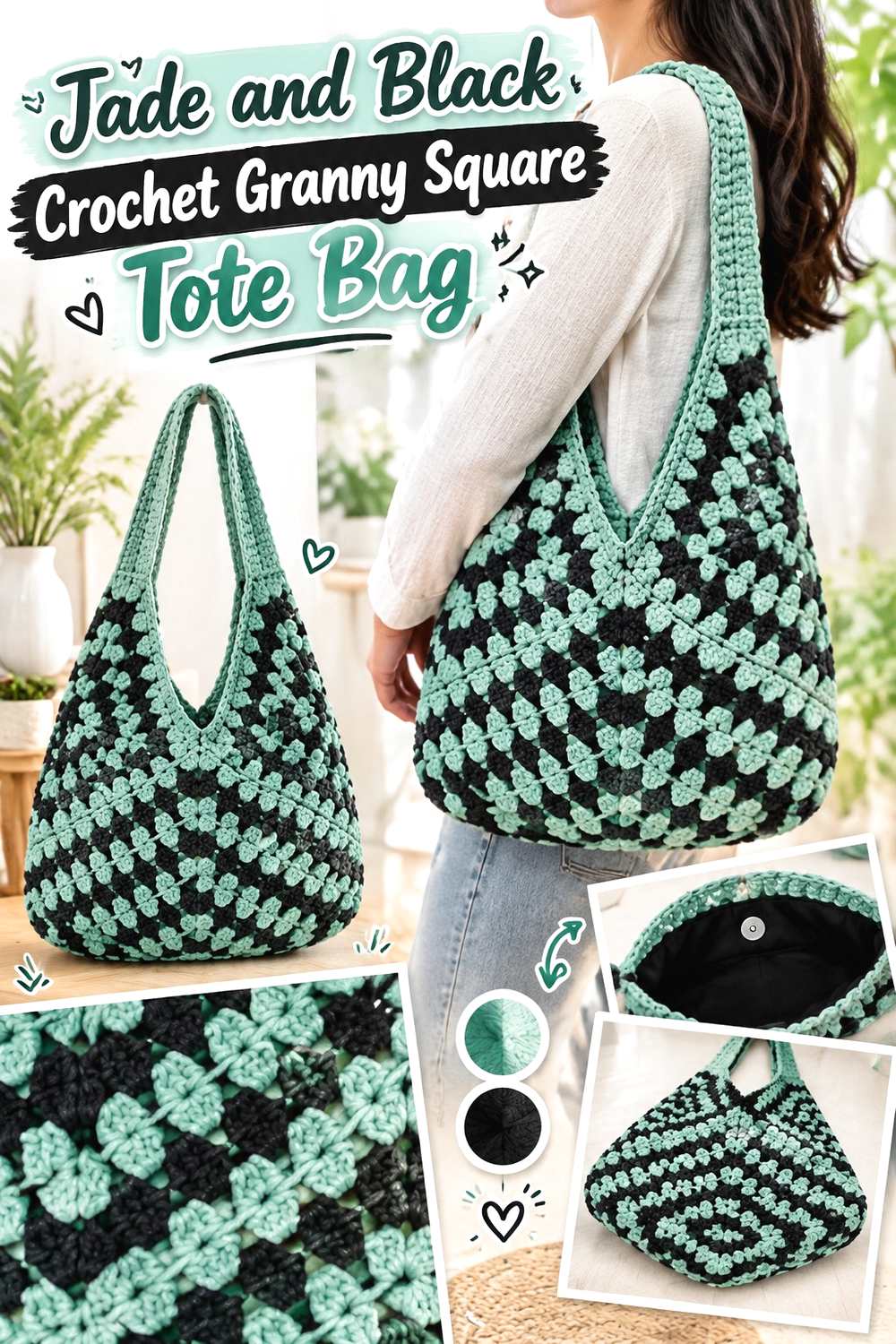
A granny square tote gives jade and black repeated geometric areas. Jade can fill motif centers while black surrounds the squares, handles the joins, and continues into the strap or upper edge.
Jade Centers Keep the Crochet Tote Motifs Visually Connected
Repeat jade in the central area of each granny square so the bag maintains a consistent focal color. Even if the squares are arranged in different orientations, recurring jade centers help the surface feel planned.
Avoid making each jade section extremely small if you want the bag to read as jade-and-black from a distance.
Black Joins Can Turn Jade Crochet Squares Into a Graphic Grid
Black outer rounds or joins create strong boundaries between jade motifs. This works particularly well on a tote because the repeated dark lines can emphasize the arrangement of the squares.
Carry black into the straps or top edge so the framework continues beyond the motifs instead of ending abruptly at the bag body.
Creator Credit: gias.yarniverse
3. Jade And Black Crochet C2c Mesh Blanket
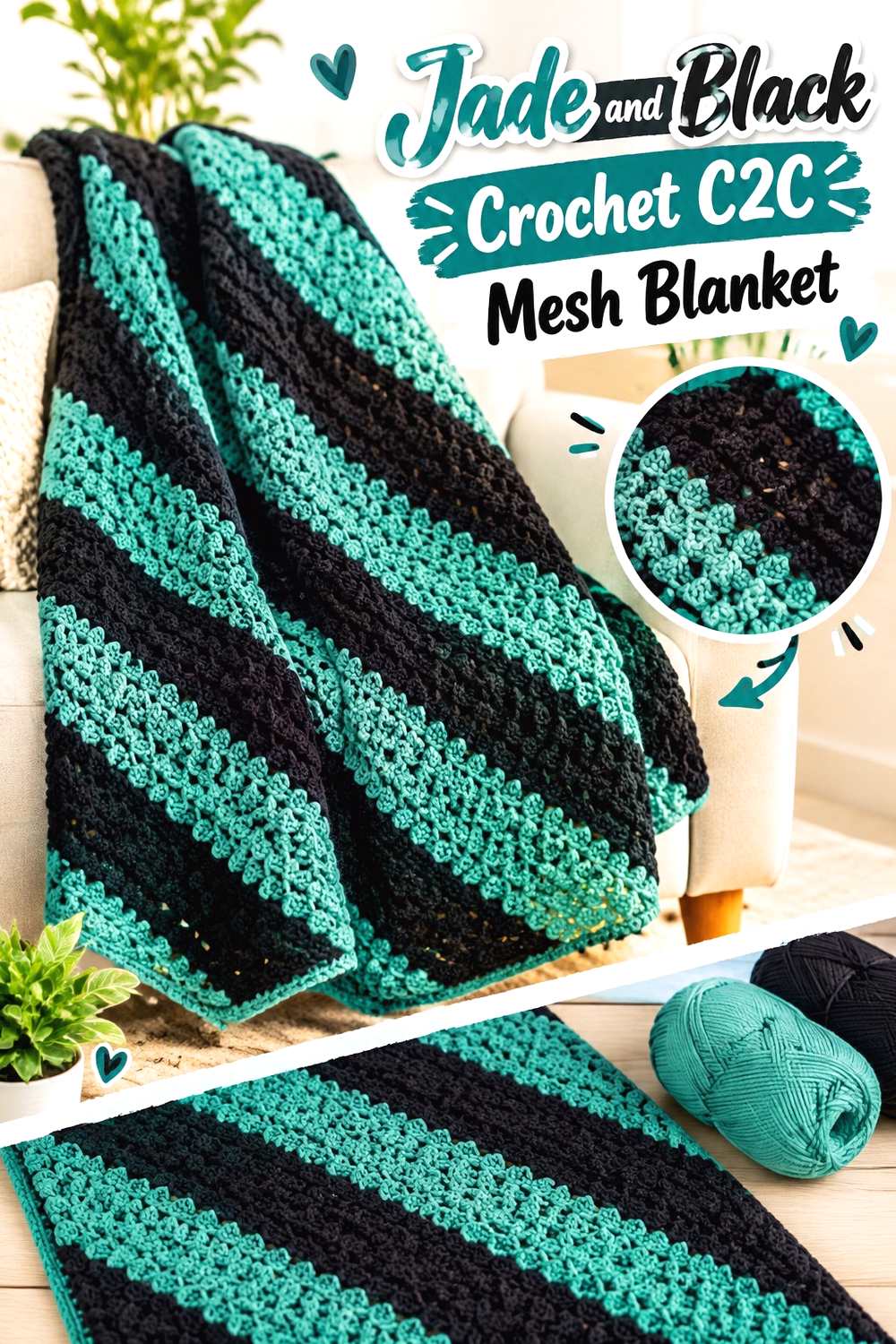
A corner-to-corner mesh blanket offers plenty of room for broad diagonal movement. Jade can form the larger sections while black creates occasional high-contrast bands and a strong outer border.
Jade Needs Broad Sections in a Crochet Mesh Blanket
Open fabric already creates visual activity, so give jade enough rows to establish clear blocks before switching colors. Frequent jade-and-black changes can make the mesh and the stripe pattern compete for attention.
Broad jade areas also keep the blanket from becoming predominantly dark.
Black Can Emphasize the Diagonal Shape Around Jade Crochet Sections
Use black in selected diagonal bands or around the outer edge to reinforce the direction of the C2C construction. A black border is particularly effective when jade reaches close to the perimeter.
If the blanket already contains several wide black bands, consider returning to jade at the edge to keep the final frame from becoming too heavy.
Creator Credit: Daisy Farm Crafts
4. Jade And Black Crochet Bucket Hat

The crown, sides, and brim of a bucket hat create three natural color zones. Jade can lead across the crown and side wall, with black concentrated on the brim for a strong outer ring.
Jade Can Keep the Crochet Bucket Hat Crown Bold and Uninterrupted
Continue jade from the top through the main side section when you want the saturated green to control the hat. This gives the smaller project a cleaner statement than several thin alternating stripes.
A continuous jade field also leaves the brim available for one decisive contrast change.
Black Makes a Jade Crochet Bucket Hat Brim More Graphic
A black brim creates a clear dark perimeter around the jade upper section. Because the brim projects outward, it already has strong visual presence, so black does not need to appear everywhere else.
For a more evenly balanced design, repeat a narrow black line where the crown transitions into the side wall.
Creator Credit: VivCrochets
5. Jade And Black Crochet Poncho
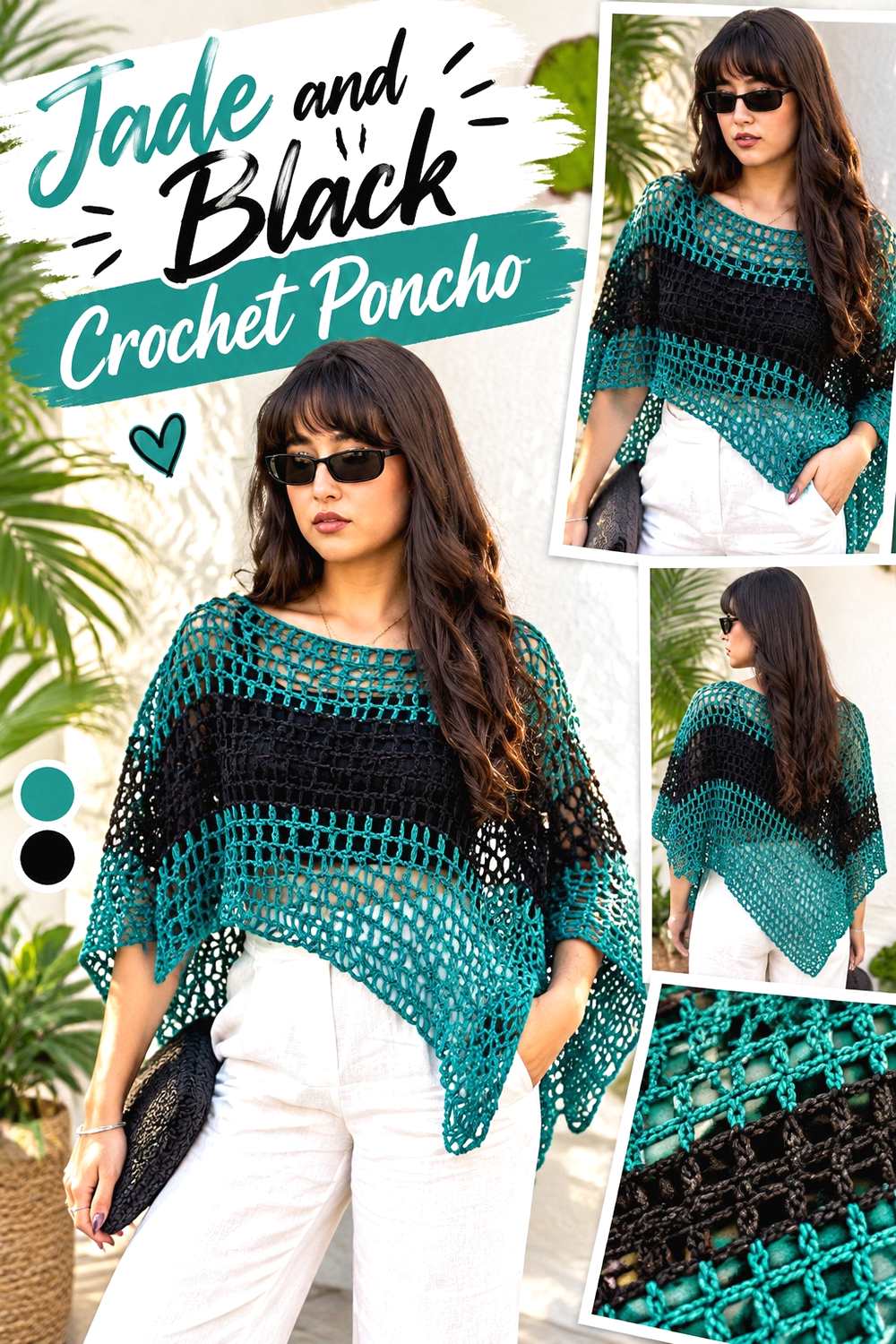
A poncho offers a large uninterrupted silhouette where color blocking can become part of the garment shape. Jade can dominate the main panels, while black defines the neckline, lower edge, or a central geometric band.
Jade Gives the Crochet Poncho Enough Color to Read as a Statement
Use jade over substantial panel areas rather than restricting it to narrow stripes. The poncho’s broad surface gives the green room to remain visible even when the garment folds and drapes.
If black occupies one entire panel, repeat jade elsewhere so the finished piece still feels intentionally two-colored.
Black Can Define the Jade Crochet Poncho Neckline and Perimeter
A black neckline creates a clear upper anchor, while black along the lower edge can visually contain the larger jade field.
If you use both placements, keep the center predominantly jade. Too many heavy black bands can divide the poncho into several unrelated horizontal zones.
Creator Credit: Lorena
6. Jade And Black Crochet Statement Beanie
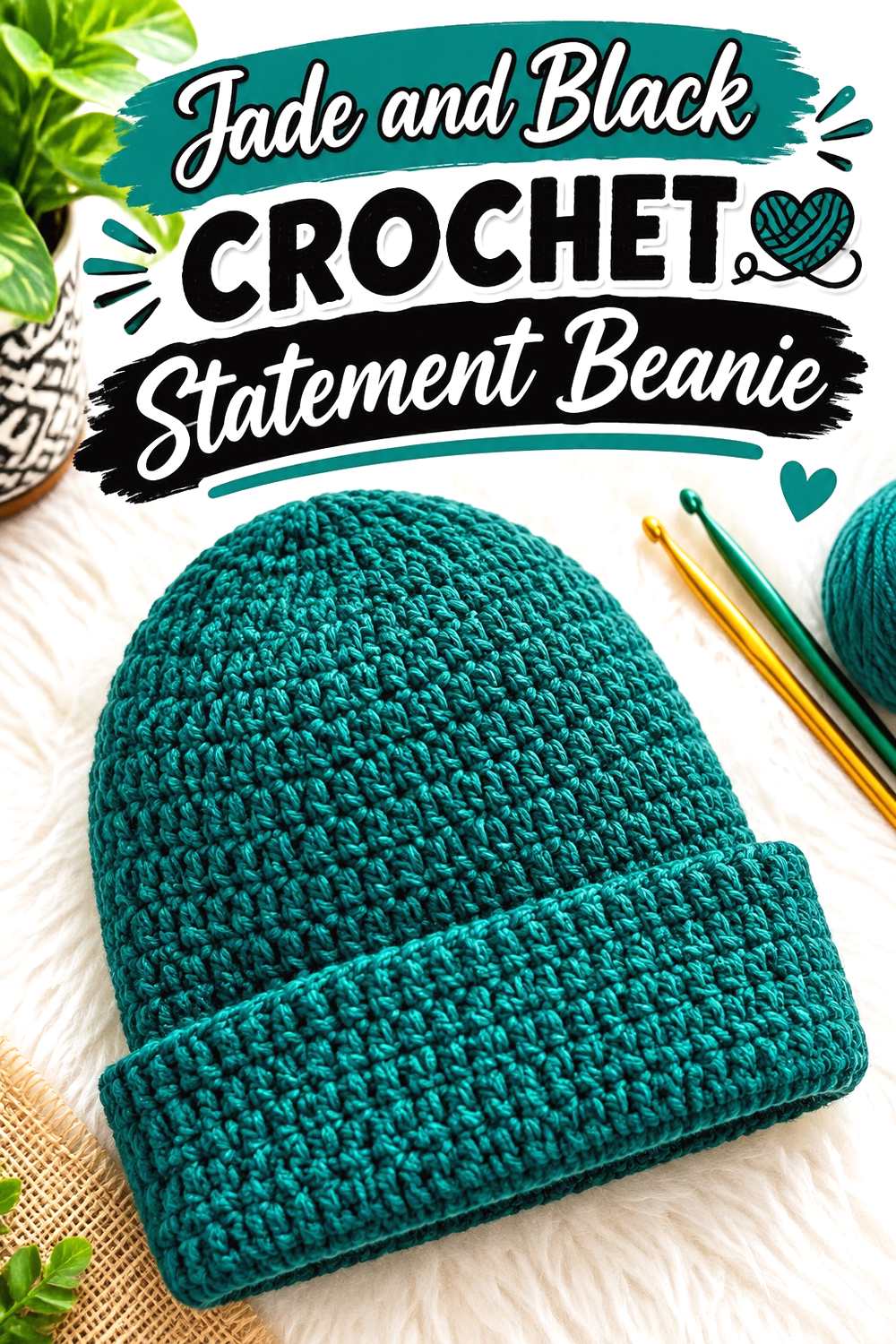
A beanie has less surface than a sweater or blanket, which makes every color change more noticeable. A black body with a wide jade brim creates a different direction from the jade-dominant hat ideas elsewhere in the list.
Black Can Give the Crochet Beanie a Strong Main Silhouette
Let black cover the crown when you want the beanie to feel graphic rather than heavily striped. The uninterrupted dark section also allows shaping to remain visually clean.
This approach reserves the stronger color event for the lower section.
Jade Makes the Black Crochet Beanie Brim the Focal Point
A generous jade brim can become the defining feature of the hat. Because it sits around the face and lower perimeter, even a single jade section carries substantial visual weight.
If the brim is narrow, consider repeating jade in a small top detail to prevent it from looking disconnected.
Creator Credit: lerugi crochets
7. Jade And Black Crochet Sweater Vest
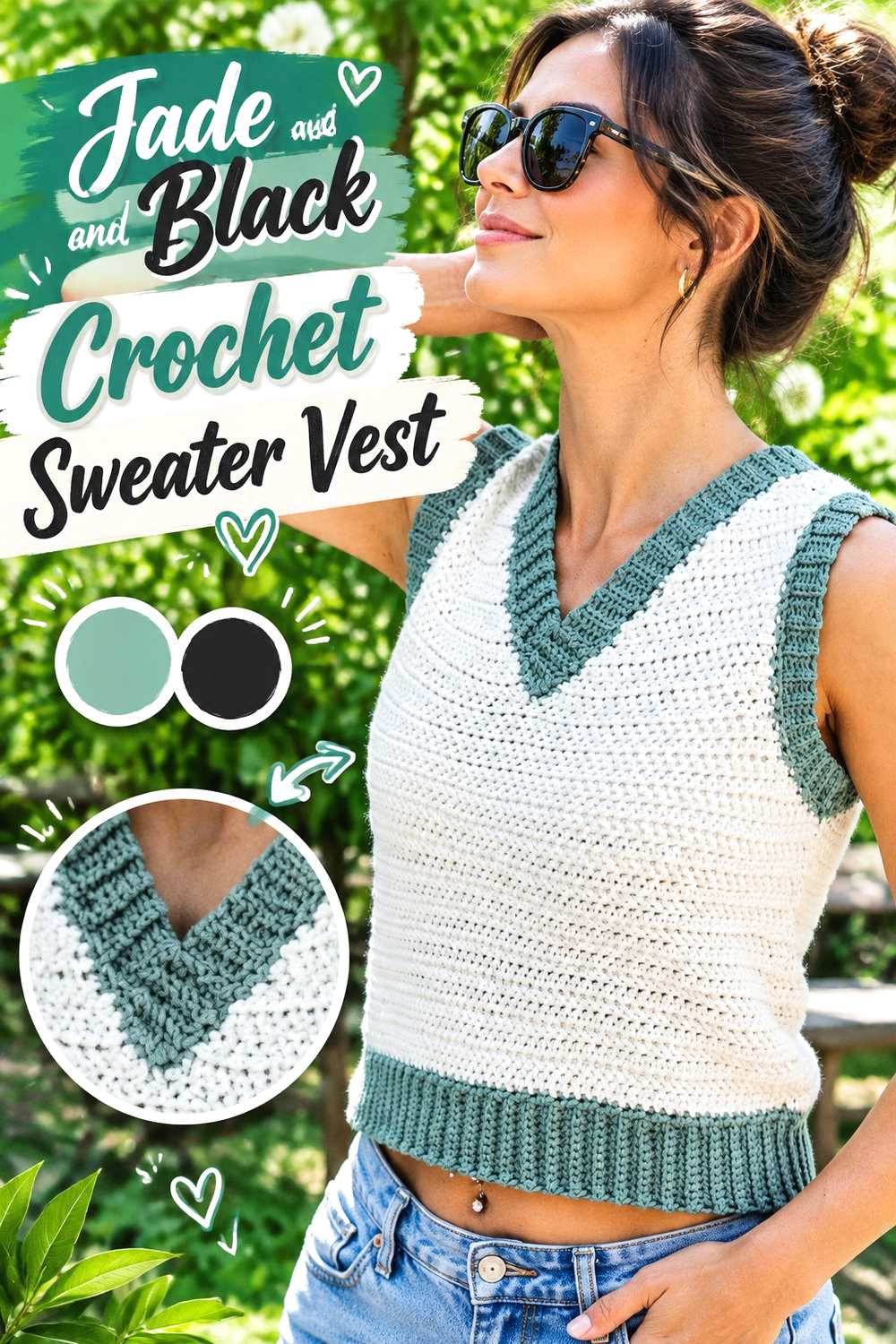
A sweater vest allows strong vertical color planning without sleeves competing for attention. Jade can fill the central front and back panels while black finishes the neckline, armholes, and lower ribbing.
Jade Can Dominate the Crochet Vest Without Covering Every Edge
Use jade across the largest panel areas so the garment reads as green first. Keeping the center consistent also gives the eye an uninterrupted vertical field.
This is particularly useful when you want black to act as structure rather than as an equal competing color.
Black Ribbing Can Sharpen the Jade Crochet Vest Outline
Black around the neckline and armholes clearly defines the boundaries of the jade body. Repeating it at the lower edge connects all of the finishing areas.
Keep the thickness of the black trim in proportion to the vest. Very wide dark ribbing can reduce the apparent area of the jade panels considerably.
Creator Credit: Leelee Knits
8. Jade And Black Crochet Textured Scarf
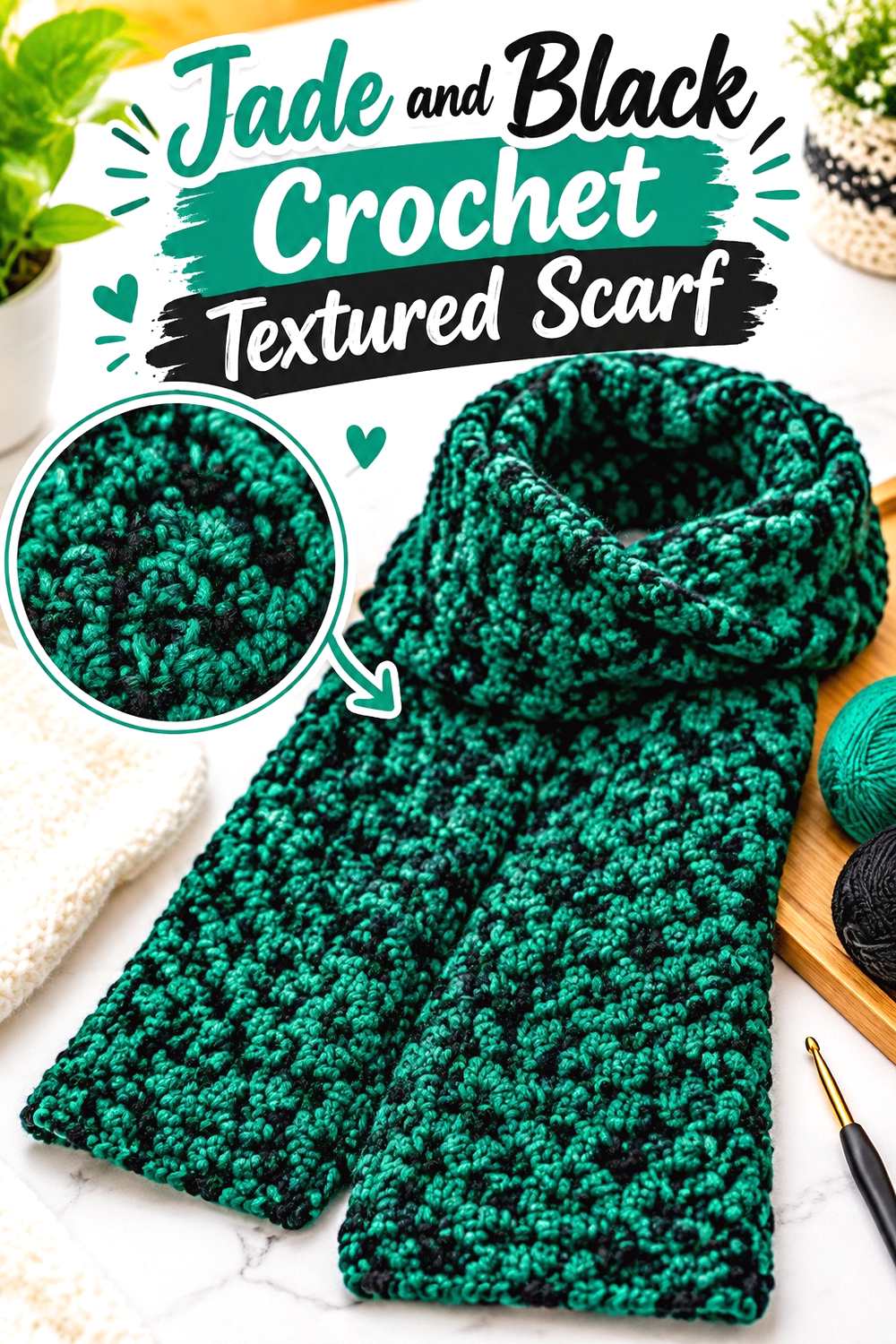
A long scarf can support dramatic blocks of color without looking fragmented. Try a wide jade center with black at both ends, or reverse the arrangement for a darker statement.
Jade Needs Enough Length to Show the Crochet Scarf Texture
Allow jade to continue through a substantial section so the stitch pattern and saturated color can be read together. Changing to black every few rows may distract from an unusual or highly textured stitch.
Long jade blocks also create more visible contrast against black end sections.
Black Can Balance Both Ends of a Jade Crochet Scarf
Matching black sections at both ends provide symmetry and visually frame the jade center when the scarf hangs vertically.
If fringe is part of your adaptation, choosing black fringe can extend that framing effect without adding another shade.
Creator Credit: Atreyu Crochet
9. Jade And Black Crochet Granny Shawl

A triangular granny shawl naturally expands outward, making it useful for changing the color balance as the piece grows. Start with jade as the main field and bring black toward the perimeter for a dramatic finish.
Jade Can Carry the Expanding Crochet Shawl Center
Keeping the central area jade allows the green to remain the dominant color even after the shawl becomes much wider. Occasional black sections can be introduced later without overwhelming the starting area.
This gives the palette a deliberate progression rather than a simple equal stripe repeat.
Black Can Turn the Jade Crochet Shawl Border Into the Main Frame
A black outer border clearly defines the triangular silhouette against the jade body. It can be especially effective around a decorative or scalloped edge because the dark shade makes the perimeter easy to see.
Repeat a small amount of black earlier in the shawl if you want the final border to feel integrated rather than suddenly introduced.
Creator Credit: Hooked by Robin
10. Jade And Black Crochet Market Bag

An open market bag behaves differently from solid crochet because the surroundings remain visible through the fabric. Jade can carry the open body while black defines the top edge and handles.
Jade Keeps an Open Crochet Market Bag Visually Cohesive
Use jade through most of the mesh or openwork so color changes do not compete with the gaps in the fabric. One continuous main shade gives the bag body a stronger overall identity.
If you introduce black into the mesh, use deliberate broad sections rather than scattered dark stitches.
Black Straps Can Anchor a Jade Crochet Market Bag
Black handles and a black upper band create a strong transition between the jade storage area and the carrying structure.
Repeating black around both handles is more cohesive than adding it to only one isolated part of the bag.
Creator Credit: Home Handwork Diy
11. Jade And Black Crochet Round Crossbody Bag
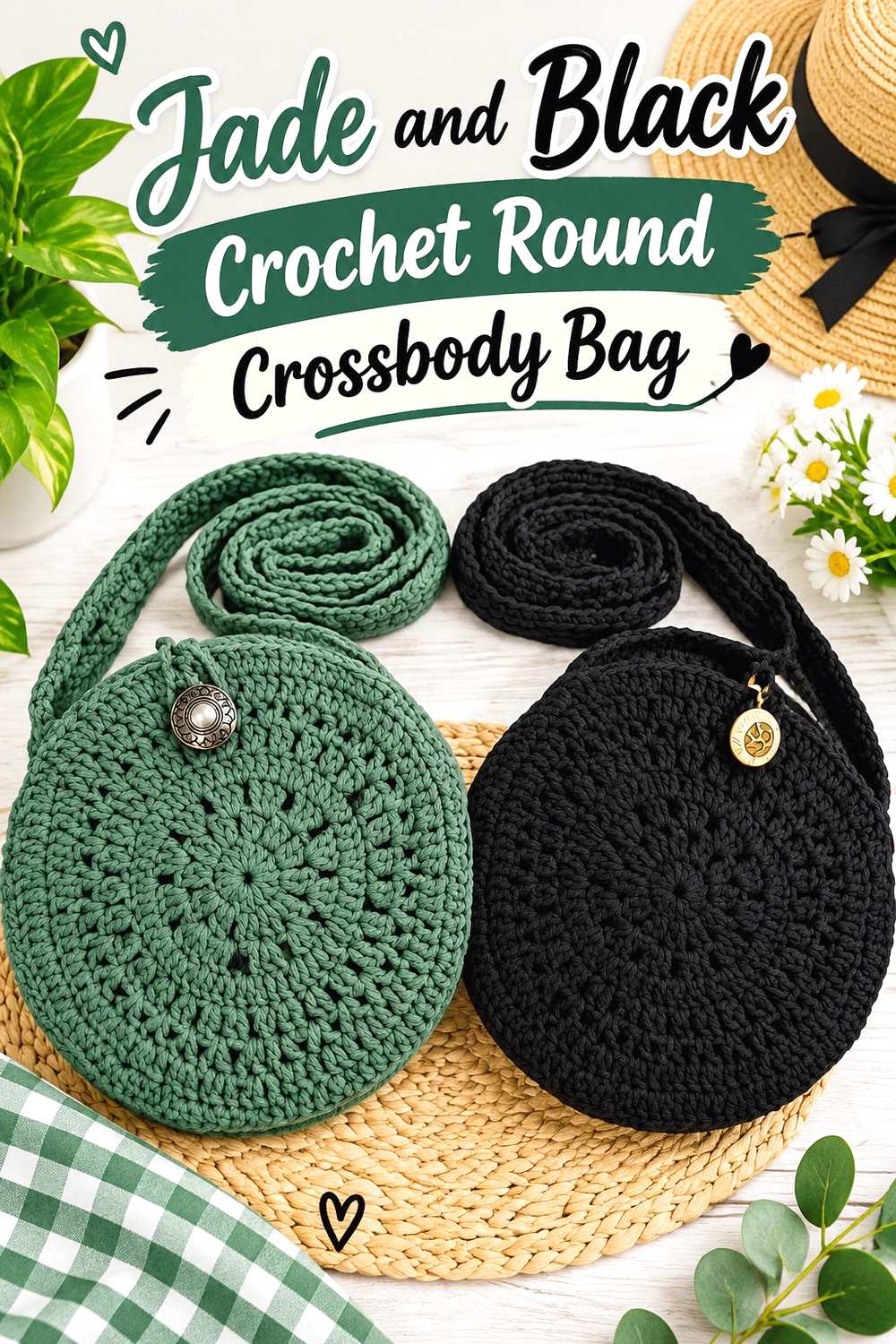
A round bag offers a strong opportunity for concentric color placement. Jade can fill the circular faces while black defines the perimeter, side section, and strap.
Jade Gives the Crochet Crossbody Bag Face a Strong Focal Circle
Use jade across most of the front and back circles so their shape is immediately visible. Keeping the central faces green also distinguishes them from black structural sections.
If the round pattern has obvious texture, test the jade yarn first to make sure the stitch definition remains clear.
Black Can Outline a Jade Crochet Crossbody Bag and Continue Into the Strap
A black outer edge visually contains the jade circle. Continue the same black into the strap so the dark color appears to extend naturally from the bag perimeter.
This color strategy can be more cohesive than making the strap a completely separate jade-and-black stripe pattern.
Creator Credit: Crochet Musings
12. Jade And Black Crochet Two Tone Top
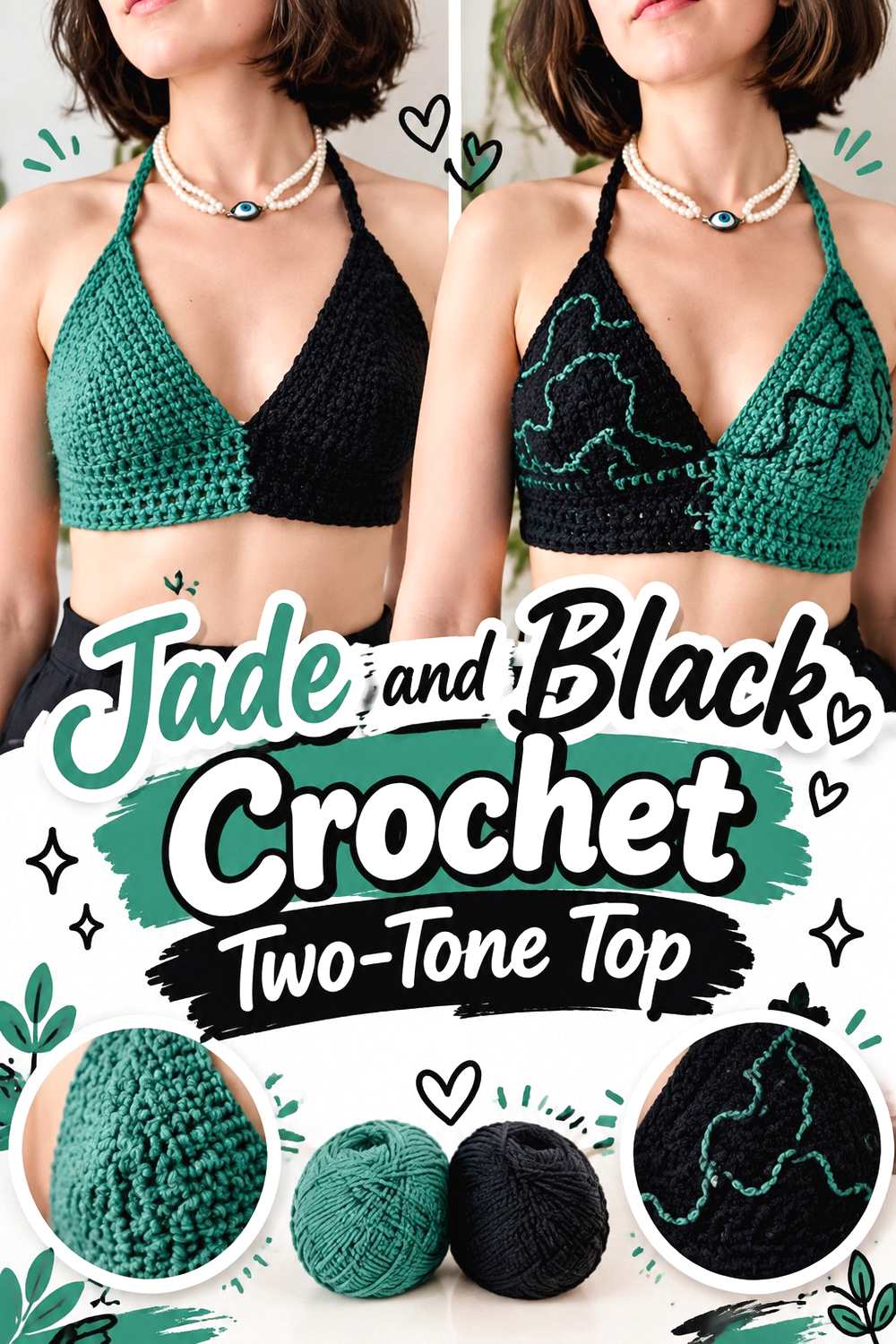
A two-tone top is one place where jade and black can occupy nearly equal areas. Instead of using black only as trim, divide the garment into major blocks that clearly show both colors.
Jade Can Control One Large Crochet Top Section Instead of Tiny Accents
Give jade a substantial area such as one side, the main cup section, or another major component. Statement color blocking needs enough surface for the green to remain recognizable from a distance.
Avoid reducing jade to scattered edging if bold contrast is the goal.
Black Gives Jade Crochet Color Blocking a Deliberate Boundary
Use black on the opposing major section or around defined structural areas so the contrast follows the construction.
When jade and black occupy similar amounts, check the balance from the front before finishing. One dark section can appear visually heavier even if both colors technically cover equal area.
Creator Credit: made in the moment
13. Jade And Black Crochet Statement Skirt
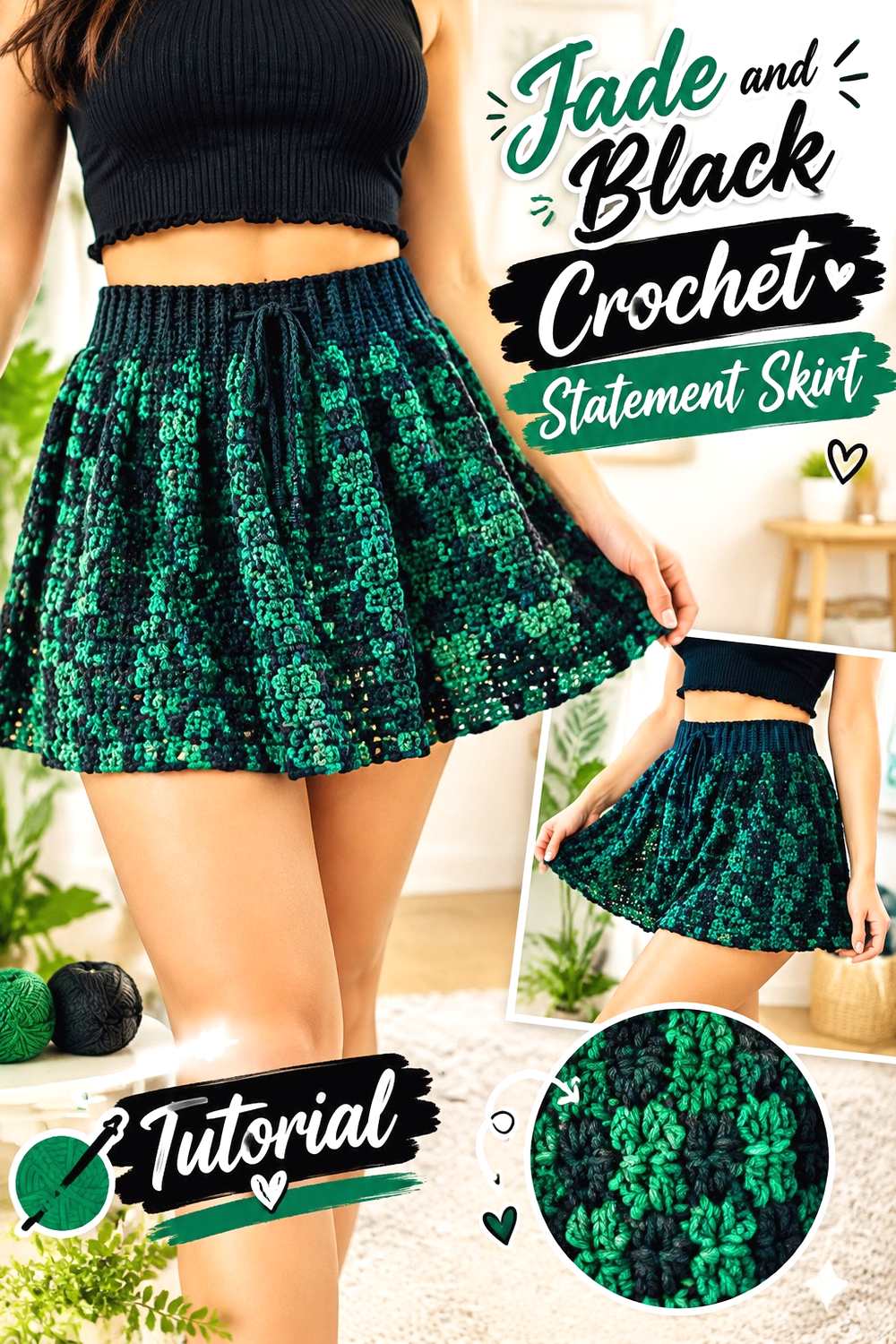
A skirt provides long vertical and horizontal areas where color distribution can noticeably change the silhouette. A jade body with black waistband and lower section creates strong framing without making the center too dark.
Jade Can Carry the Main Crochet Skirt Surface
Let jade occupy most of the central skirt area when you want the garment to read primarily as green. Long continuous sections also avoid making the silhouette look chopped into many small bands.
If the stitch surface contains texture, broad jade fields help that detail remain part of the design rather than competing with repeated color changes.
Black Can Define the Jade Crochet Skirt Waist and Hem
Using black at the waistband gives the palette a dark upper anchor. Repeating black near the hem creates a second boundary and keeps the darker color distributed across the garment.
If both bands are substantial, keep enough jade between them so the statement color remains dominant.
Creator Credit: TCDDIY
14. Jade And Black Crochet Oval Rug
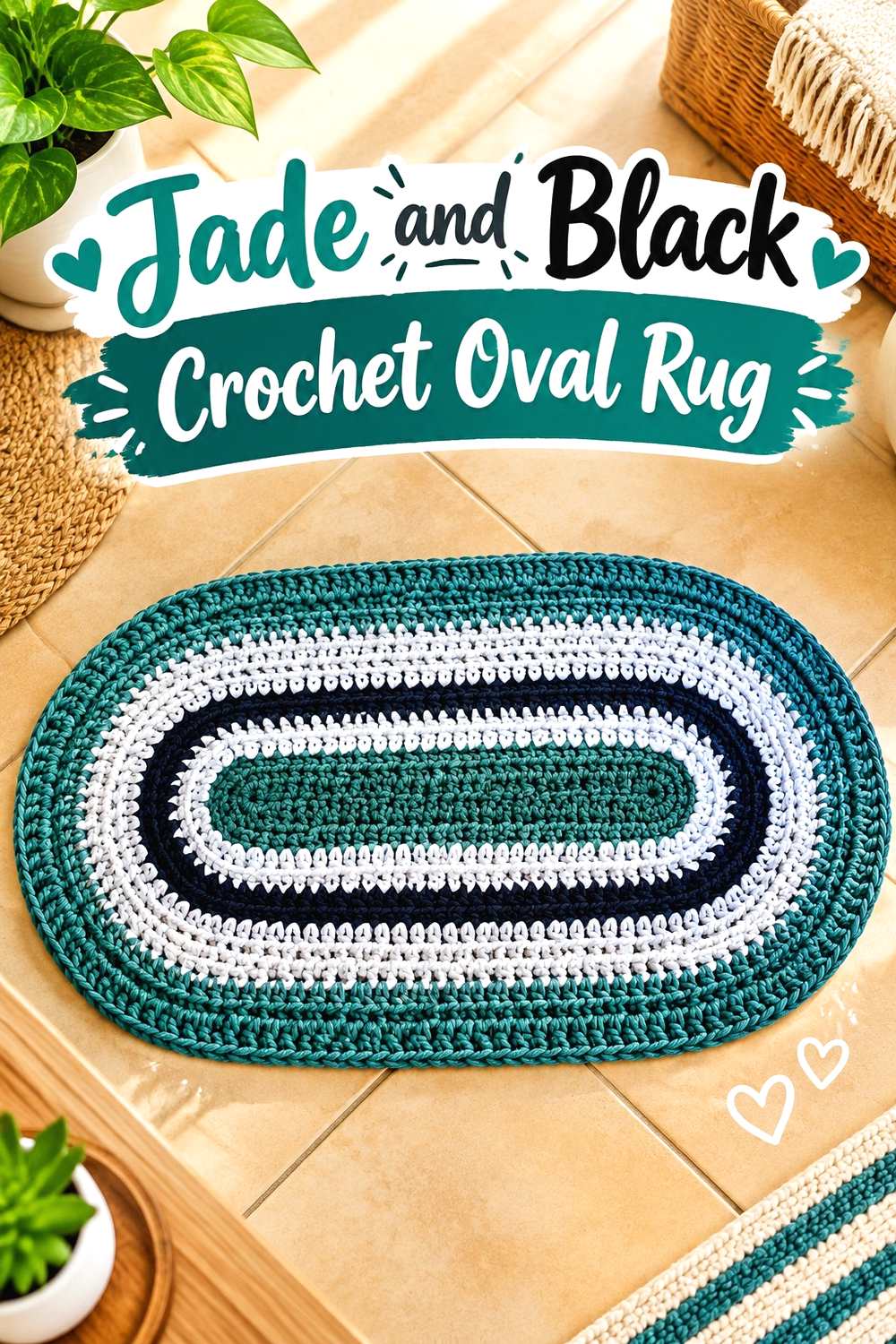
A rug is viewed largely as a complete shape rather than as a collection of small details, so broad concentric jade-and-black areas can work especially well. Jade can cover the center, with black used toward the outer rounds.
Jade Gives the Crochet Rug Center a Large Color Field
Use jade across enough of the middle for the green to remain the first color noticed. A tiny jade center surrounded by extensive black will quickly turn the project into a black rug with a green accent.
Broad jade sections are also easier to coordinate with a bold dark outer frame.
Black Can Make the Jade Crochet Rug Perimeter More Defined
A black outer section creates a clear border around the oval shape. Because the edge covers a large circumference, even a modest-width black band can carry significant visual weight.
Check the balance before extending the border farther; dark outer rounds can change the entire rug more quickly than expected.
Creator Credit: Erin Halvorsen
15. Jade And Black Crochet V Neck Sweater
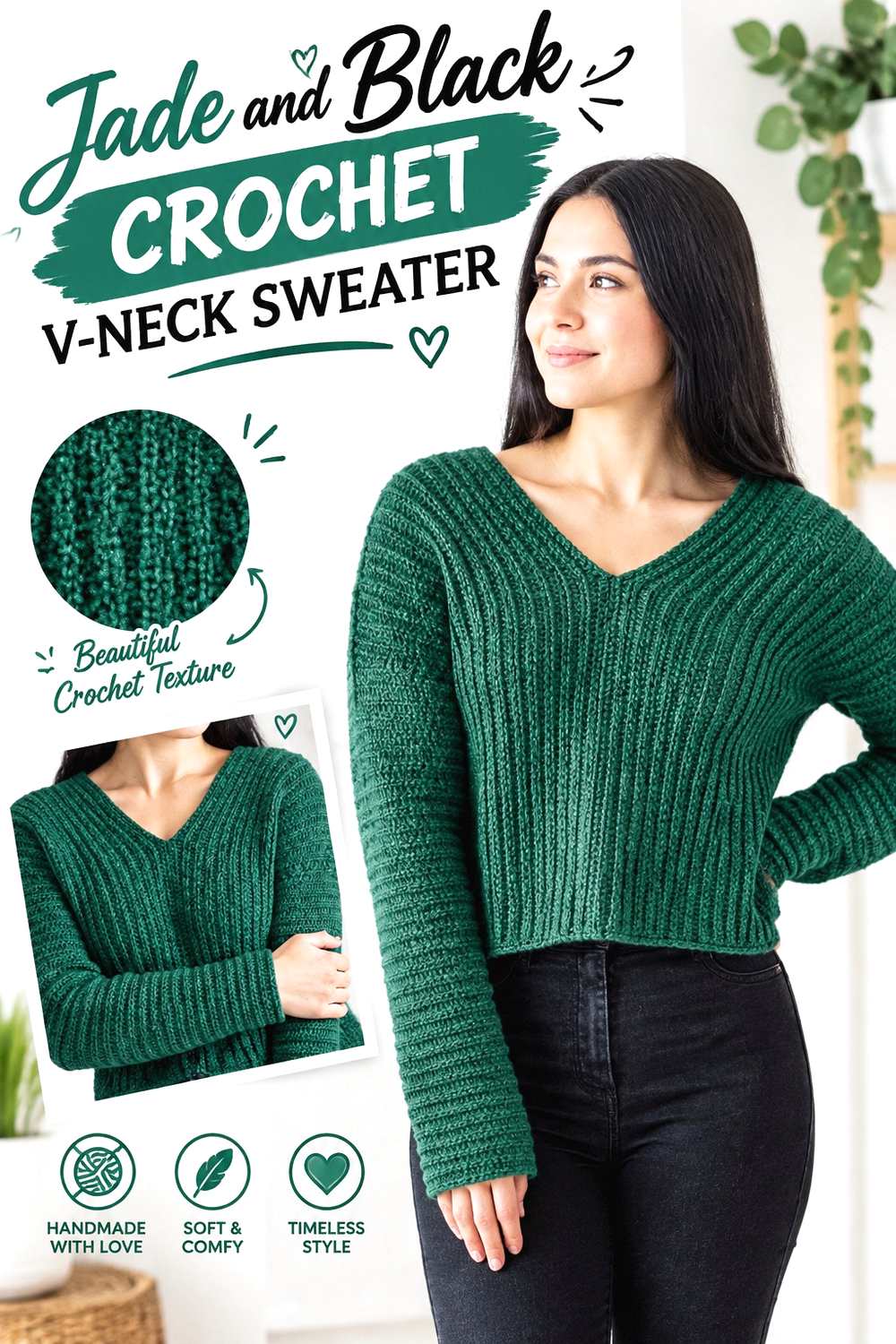
A V-neck sweater gives black a natural location around the neckline while leaving jade available for the body and sleeves. The contrast can emphasize the neck opening without dividing every garment panel.
Jade Can Keep the Crochet Sweater Body Visually Continuous
Use jade through the main torso when you want the saturated color to dominate. Extending jade into the sleeves creates one connected field across the wearable.
For stronger color blocking, change only the lower portion of the sleeves rather than adding numerous black stripes.
Black Can Sharpen the Jade Crochet V-Neck and Cuffs
A black neckline makes the V shape easier to distinguish from the jade body. Repeating black at the cuffs distributes the contrast across both the upper and lower parts of the garment.
If the neckline trim is already broad, a narrow cuff may be enough to connect the color without making the sleeves look black-dominant.
Creator Credit: forthefrills
16. Jade And Black Crochet Statement Cape
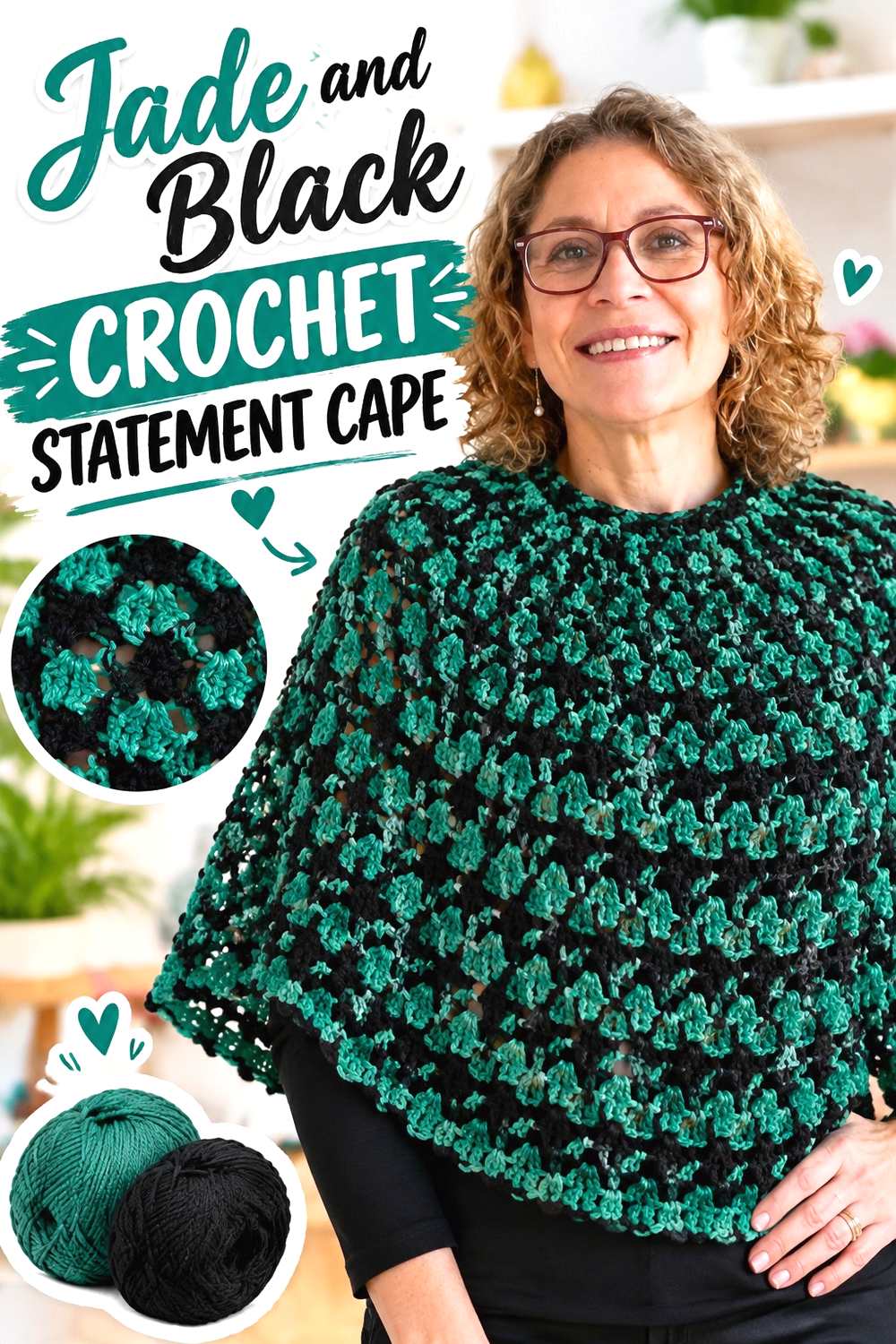
A cape creates one of the largest uninterrupted wearable surfaces in this collection. Black can cover the upper portion around the shoulders, then transition into jade across the expanding lower area.
Black Can Anchor the Upper Jade Crochet Cape
Using black close to the neckline gives the cape a strong visual start and places the darkest shade around the narrowest part of the silhouette.
As the fabric expands, changing to jade prevents black from controlling the entire lower portion.
Jade Can Become Stronger as the Crochet Cape Widens
Increase the visual share of jade across the broader lower section so the green becomes more noticeable as the cape opens outward.
A final black edge can reconnect the hem with the upper neckline, but keep it narrow if you want jade to remain the main statement.
Creator Credit: Hobby Crochet
17. Jade And Black Crochet Pillow Cover
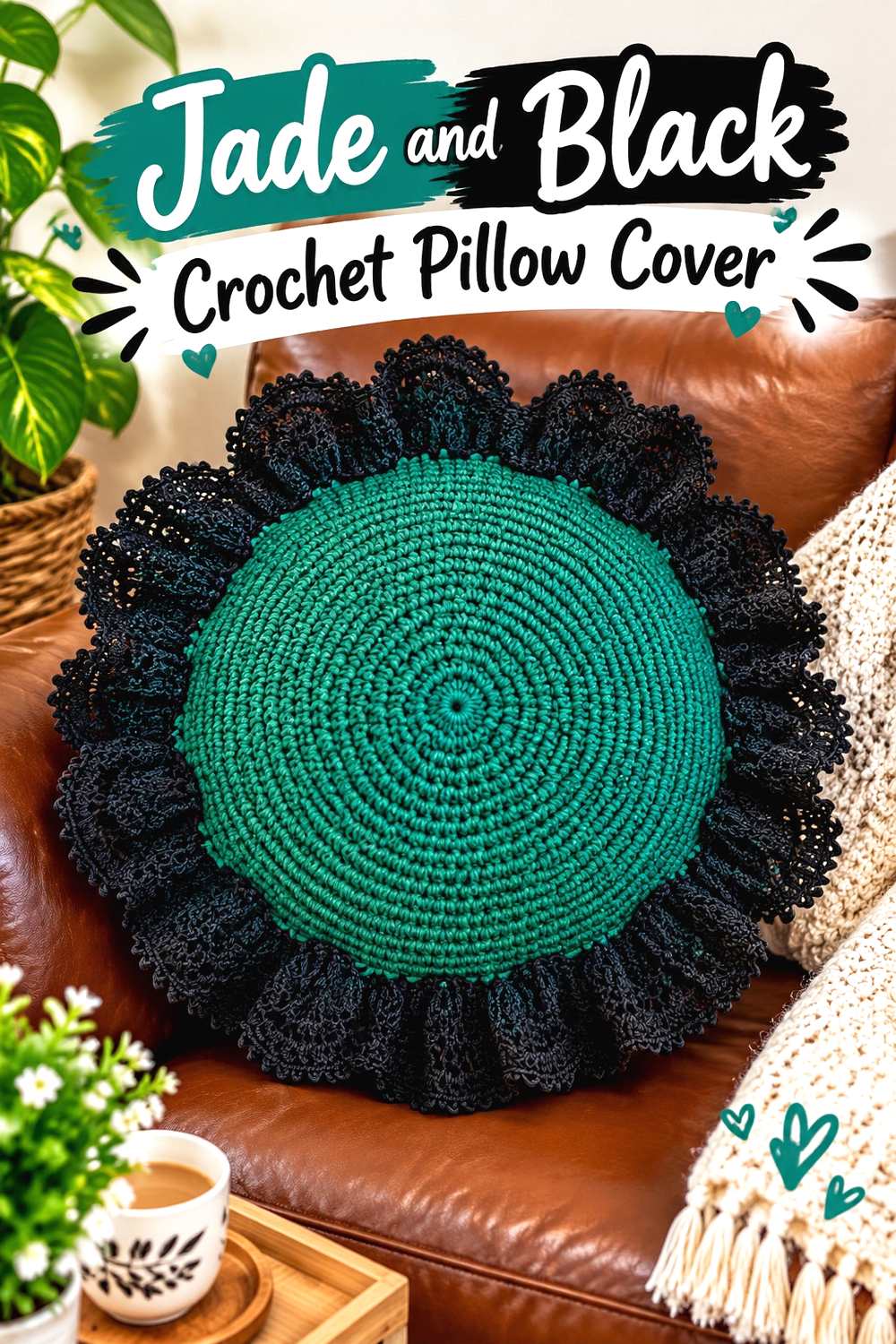
A pillow puts the entire palette on a compact, front-facing surface, making color proportions immediately noticeable. Jade can cover the main face while black creates a thick frame or contrasting back.
Jade Can Give the Crochet Pillow Face One Strong Statement Surface
Use jade across most of the front if texture is the primary design feature. A continuous green field gives raised stitches, ribs, or other details room to show without constant color interruption.
If the stitch pattern is subtle, compare it under ordinary room lighting before deciding how much black to introduce.
Black Can Frame a Jade Crochet Pillow Without Hiding the Texture
A black border around the jade front creates a strong decor outline. Keep the dark frame narrower when the jade texture is intended to be the main attraction.
Another option is a jade front with a predominantly black back, giving the pillow two different color weights depending on how it is displayed.
Creator Credit: HelenMay Crochet
18. Jade And Black Crochet Statement Cowl
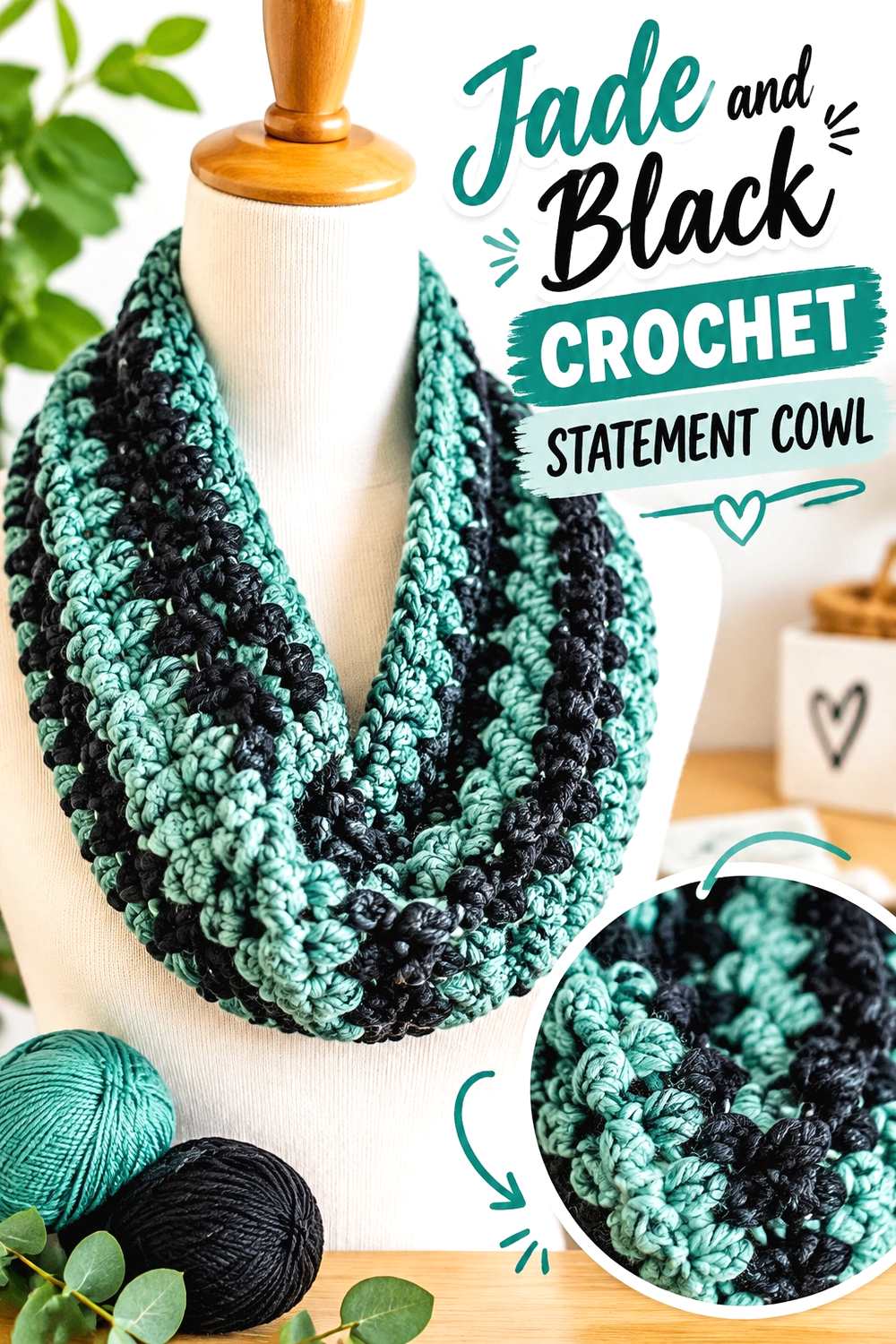
A cowl folds and overlaps, so color placement needs to remain recognizable even when the fabric is not lying flat. Broad jade and black blocks work more reliably than many narrow alternating stripes.
Jade Can Stay Visible Across the Main Crochet Cowl Fold
Place jade through the widest central area if you want green to remain visible as the cowl bunches around the neck. Narrow jade bands may disappear between darker folds.
A substantial green center gives the cowl its statement color even when only part of the fabric is visible.
Black Can Define the Jade Crochet Cowl at Both Edges
Use black along the upper and lower edges to frame the jade center. These dark boundaries can remain visible even after the cowl folds.
If two black edges make the piece feel too enclosed, keep one boundary jade and use black only at the opposite edge.
Creator Credit: Fiber Flux
Comparing Jade and Black Crochet Statement Directions
For a jade-dominant statement, the oversized cardigan, blanket, shawl, market bag, V-neck sweater, pillow, and wall hanging give the green the largest uninterrupted areas. Black mainly provides structure around them.
For a darker result, the beanie, cape, and selected color-blocked wearables can let black occupy larger regions while jade becomes a concentrated feature. The granny tote, two-tone top, rug, and wall hanging can move closer to an even split because their strong geometric construction can support repeated high contrast.
The key is not simply using more color. A statement palette usually becomes clearer when one or two large areas carry the contrast rather than dozens of tiny color changes.
Conclusion
Jade and black have enough contrast to create bold crochet pieces with only two colors, but placement determines whether the result feels graphic, color-blocked, motif-driven, or heavily framed.
Use jade across broad panels when you want the green to command attention. Reserve black for edges, joins, straps, cuffs, waistbands, and borders when you want stronger definition. Reverse the balance when a dark garment or decor piece with concentrated jade sections better suits your intended look.
Before committing to a large statement piece, test the actual yarns together. Deep jade can sit much closer to black than a brighter jade, and that difference matters when small crochet details need to remain visible.
Frequently Asked Questions
Does jade have enough contrast with black for crochet?
Often, but it depends on the specific jade yarn. A brighter or lighter jade usually separates clearly from black, while a deep jade may have similar value. Compare the yarns directly and use a grayscale photo when motif visibility is important.
Should jade or black dominate a crochet statement piece?
Choose jade as the dominant color when you want the finished project to look strongly green. Use black as the dominant field when you want a darker piece with jade concentrated into bold features. Neither arrangement is universally better; the project shape determines where each role is most effective.
Where should black go in a jade crochet wearable?
Black can work particularly well around cuffs, necklines, hems, front bands, waistbands, or other structural boundaries. These placements give the dark color a clear purpose while leaving larger panels available for jade.
How can I stop jade and black crochet from looking too dark?
Increase the area covered by jade and reduce the width or number of black sections. Instead of alternating the colors evenly, confine black to borders, joins, straps, or finishing details.
Can jade and black be used equally in one crochet project?
Yes, especially in granny squares, checkerboard layouts, bold stripes, and major two-color blocks. With an approximately even split, pay attention to distribution because black can appear visually heavier than jade even when the physical areas are similar.
Should black always be the border around jade crochet?
No. A black border gives jade strong definition, but a jade border can be useful when the interior is already black-heavy. Choose the final edge according to the total color balance rather than automatically assigning the darkest color to the border.
How can I make jade-and-black granny squares look connected?
Repeat the same color role across the motifs. For example, keep jade in the centers and black around the outer rounds or joins. Consistent placement creates a visible system across the finished item even when individual squares contain different details.


