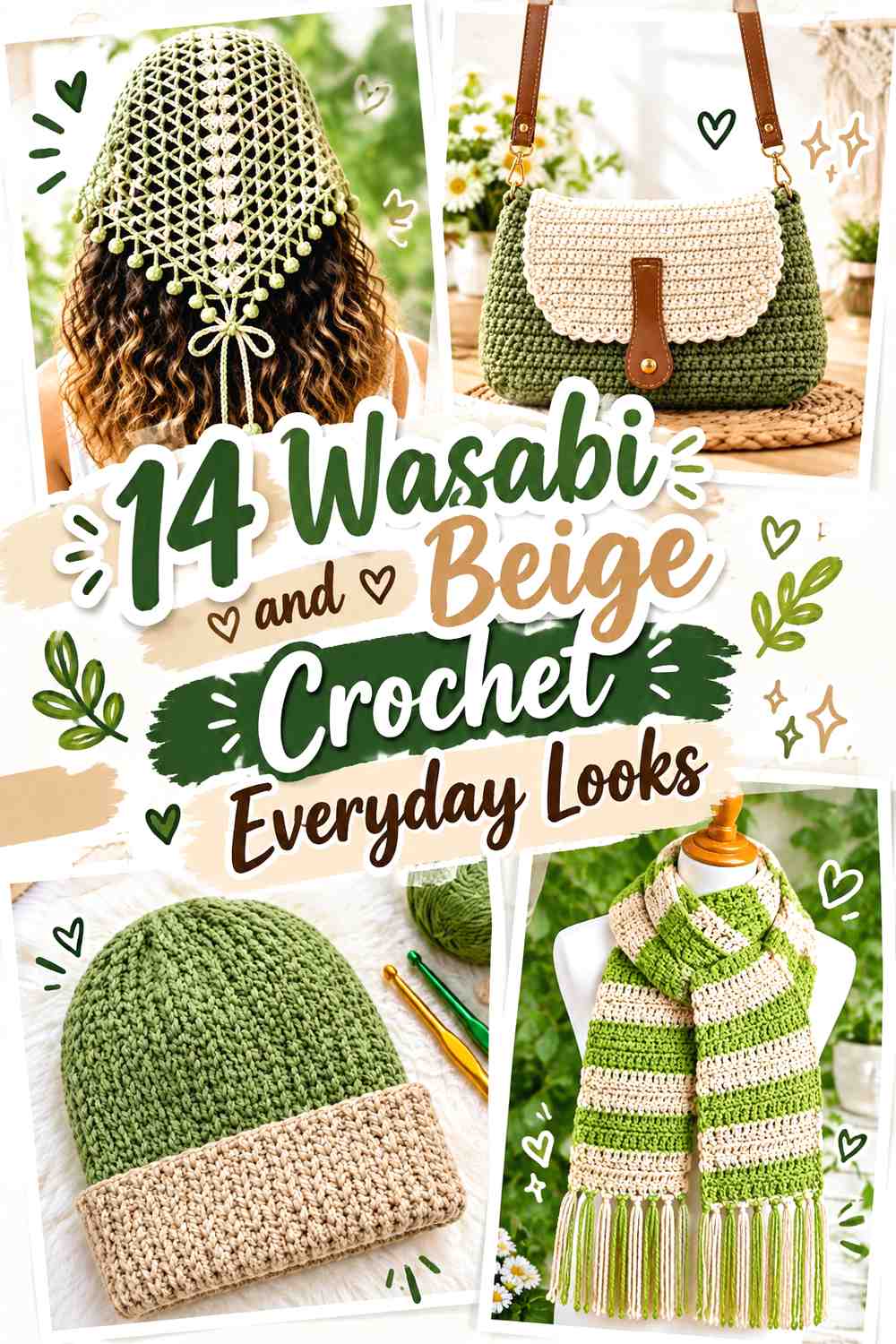
14 Wasabi and Beige Crochet Everyday Looks
Wasabi and beige can make wearable crochet feel colorful without requiring every part of an outfit to compete for attention. Beige gives larger garment panels a quieter base, while wasabi can define cuffs, hems, necklines, straps, brims, or other details that benefit from a stronger color break.
You can also reverse those roles. A wasabi sweater vest, beanie, pair of shorts, or tote can become the main color statement, with beige used to control the edges and connect the piece to simple wardrobe neutrals. The important decision is not whether the colors appear in equal amounts, but which shade should lead on each particular item.
The tutorials linked below support the crochet construction concepts. The wasabi-and-beige palettes are independent color adaptations, so the creators do not necessarily use these exact colors in their original projects.
Quick List
- Beige Led Wasabi Trim Crochet Cardigan
- Wasabi And Beige Crochet Sweater Vest
- Beige Body And Wasabi Sleeve Crochet Sweater
- Wasabi Mesh And Beige Cuff Crochet Shrug
- Beige And Wasabi Crochet Summer Top
- Wasabi And Beige Crochet Shorts
- Beige And Wasabi Crochet Everyday Scarf
- Wasabi And Beige Crochet Beanie
- Beige And Wasabi Crochet Bucket Hat
- Beige And Wasabi Crochet Headband
- Beige And Wasabi Crochet Poncho
- Wasabi And Beige Crochet Everyday Tote
- Beige And Wasabi Crochet Shoulder Bag
- Wasabi And Beige Crochet Bandana
Decide Whether Wasabi or Beige Should Lead the Outfit
The size of the crochet item should influence the color balance. On a cardigan, sweater, or poncho, covering the entire garment in wasabi creates a much stronger color statement than using the same shade on a headband or shoulder bag. Beige is useful across larger panels when you want the crochet texture to remain noticeable without making the garment the brightest part of the outfit.
For smaller accessories, wasabi can safely occupy a larger percentage of the project. A wasabi beanie, bandana, tote, or pair of shorts can provide the focal color while beige appears only around an edge, brim, strap, waistband, or trim.
Try to assign the colors jobs before starting: dominant color, supporting color, and—when another shade is added later—accent color. That produces a more deliberate wearable than switching colors simply because both yarns need equal use.
Check Wasabi and Beige Contrast Before Crocheting a Wearable
Color names alone do not tell you how much light-and-dark contrast two yarns have. One wasabi yarn may be pale and muted, while another may be considerably more saturated. Beige can likewise range from light cream-beige to deeper tan.
Place your actual yarns together and look at them from several feet away. If the boundary becomes difficult to see, avoid relying on the color change to define small cuffs, narrow stripes, or detailed motifs. A grayscale photo can also reveal whether the yarns differ enough in value.
For everyday wear, consider your other clothes at the same time. If most of your wardrobe already contains beige, cream, denim, brown, gray, black, or white, decide whether the crochet piece should repeat those quieter colors or introduce wasabi as the main point of contrast.
1. Beige Led Wasabi Trim Crochet Cardigan

A beige-dominant cardigan is one of the easiest ways to make this palette work as an everyday layer. Let beige cover the large back and front areas, then use wasabi where the cardigan naturally changes structure: cuffs, neckline edging, lower hem, or selected sleeve details. Because a cardigan exposes the outfit underneath, this arrangement gives you several colors to coordinate without making every visible surface equally strong.
Beige Keeps the Crochet Cardigan Easy to Layer
When beige covers most of the cardigan, the garment can sit over darker pants, denim, simple dresses, or neutral tops without requiring the base outfit to repeat wasabi exactly. Beige also gives textured crochet stitches enough uninterrupted surface to be seen without frequent color changes breaking up the panels.
Before adding wasabi, put the unfinished beige body over a few outfits you already wear. That makes it easier to decide whether the stronger color belongs around the neckline, closer to the hands, or mainly at the lower edge.
Wasabi Cuffs Give the Beige Cardigan Controlled Color
Cuffs are a practical place to introduce wasabi because they repeat on both sleeves and already form a visual endpoint. That repetition makes the color look intentional even if only a small percentage of the cardigan is green.
You can repeat a narrower amount of wasabi around the neckline or hem if the cuffs otherwise feel disconnected. Avoid automatically outlining every cardigan edge in wasabi; too much continuous contrast can turn a beige-led garment into a heavily framed one.
Creator Credit: VivCrochets
2. Wasabi And Beige Crochet Sweater Vest

A sweater vest can handle a more wasabi-forward palette because the sleeveless shape leaves the shirt underneath visible. Wasabi can occupy the main front and back panels while beige defines the neckline, armholes, and lower trim. The underlying shirt then becomes another part of the outfit, so test the vest over the colors you realistically plan to wear beneath it.
Wasabi Gives the Crochet Sweater Vest Its Main Color Statement
Using wasabi across the body creates a clear focal layer without spreading the color onto sleeves. This makes a vest useful when you want more wasabi than a small accessory provides but less than a full sweater would introduce.
If the stitch texture is detailed, make a sample in your chosen wasabi first. Very saturated or dark yarns can reduce the visibility of subtle surface texture, so compare the fabric under both indoor and daylight conditions before committing the entire vest.
Beige Can Define the Wasabi Neckline and Armholes
Beige trim around the neckline and armholes separates the wasabi body from the shirt underneath. Repeating beige at the lower edge can complete that relationship without requiring stripes throughout the vest.
Choose an underlayer after considering the beige trim. A plain neutral shirt lets the two crochet colors remain the focus, while another strong color introduces a three-color outfit that needs more deliberate coordination.
Creator Credit: Brunaticality
3. Beige Body And Wasabi Sleeve Crochet Sweater
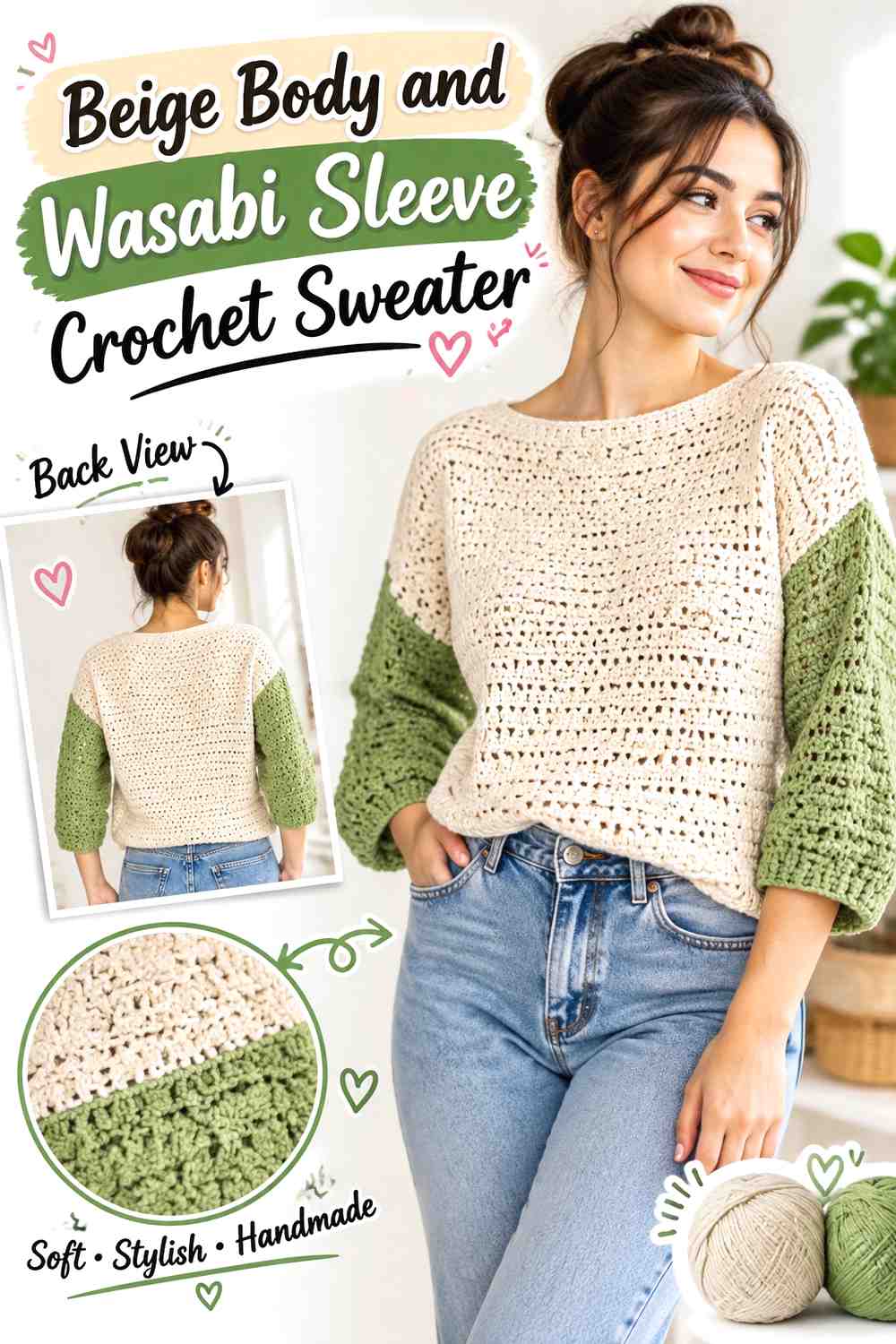
A sweater gives you more surface area than a vest, so color blocking can be useful. Keeping the central body beige while allowing wasabi to move outward across the sleeves makes the color visible without covering the whole torso. On a batwing-style silhouette, this placement also emphasizes the wide sleeve shape whenever the arms move away from the body.
Beige Keeps the Crochet Sweater Torso Visually Grounded
A continuous beige torso creates a calm center and makes the sweater easier to combine with jeans, trousers, or skirts in colors already present in an everyday wardrobe. It also prevents several broad color blocks from competing across the front.
If you want a stronger transition into the sleeves, introduce a narrow wasabi area near the upper body rather than abruptly alternating many beige and wasabi stripes.
Wasabi Sleeves Emphasize the Crochet Batwing Shape
Wasabi becomes more noticeable across generous sleeves because those sections spread outward when worn. That means you may need less wasabi than expected to achieve a strong two-color effect.
Keep both sleeves balanced unless deliberate asymmetry is part of your plan. If solid wasabi sleeves feel too dominant, use beige near the cuffs or carry beige farther down the upper sleeve to reduce the overall green area.
Creator Credit: TCDDIY
4. Wasabi Mesh And Beige Cuff Crochet Shrug

A shrug covers less of the torso than a cardigan, so wasabi can become the dominant shade without occupying the entire outfit. If the crochet is open or mesh-like, remember that the top worn underneath will show through and visually mix with the yarn color. Beige cuffs or edging can then provide a quieter endpoint around the hands and front opening.
Wasabi Mesh Changes With the Color Worn Under the Crochet Shrug
Open crochet does not display color in isolation. Wasabi over a black top can appear more strongly outlined than the same shrug over cream or beige because the background shows through the spaces.
Test the wasabi swatch over at least two tops before deciding whether you want the shrug to blend with or contrast against the layer underneath. This small check is more useful than judging openwork against a bare tabletop.
Beige Cuffs Can Calm a Wasabi Crochet Shrug
Beige cuffs give the sleeves a defined finish while reducing the amount of wasabi nearest the hands. You can repeat beige around the opening if the cuffs need a second connection point.
Keep that edging relatively consistent. Adding separate beige sections at cuffs, shoulders, neckline, sleeve centers, and back can interrupt the visual continuity that makes a simple shrug useful as an everyday layer.
Creator Credit: LaDenser Crochets
5. Beige And Wasabi Crochet Summer Top

A beige-led crochet top makes wasabi easier to introduce in smaller garment details. The main panels can remain beige while wasabi appears at the straps, hem, neckline, or one deliberate band. Because tops are often worn directly beside another lower-body garment, think about whether the wasabi detail should sit near the face, waist, or shoulders before deciding its location.
Beige Gives the Crochet Top a Flexible Main Field
Keeping most of the front and back beige allows the crochet stitch pattern to remain the main surface detail. It also leaves room for wasabi to do a specific job instead of appearing repeatedly throughout every section.
If the top has an open stitch pattern, place your beige yarn over the undergarment or layer you expect to wear beneath it. The background color can noticeably change how warm, light, or dark the beige appears.
Wasabi Works Better on Selected Crochet Top Edges
Use wasabi where you want the eye to land: straps for an upper-body accent, a hem for a lower color break, or a neckline for a smaller frame. Using all three at equal width can make the beige center look boxed in.
For a quieter everyday version, choose one prominent wasabi location and repeat only a thin amount elsewhere.
Creator Credit: KnitcroAddict
6. Wasabi And Beige Crochet Shorts

Crochet shorts make wasabi a larger outfit element without placing the color around the upper body. Wasabi can cover the main body while beige distinguishes the waistband and leg edges. Because the waistband forms a strong horizontal line, even a relatively narrow beige section can noticeably change the finished color balance.
Wasabi Can Lead the Crochet Shorts Without Requiring a Matching Top
Treat wasabi shorts as the focal garment and keep the top simpler if you want an easy two-part outfit. Beige, cream, white, denim-toned, or another restrained top color can let the crochet texture and wasabi remain more visible.
If you do repeat wasabi elsewhere, a small accessory generally provides enough connection. Matching the shorts, top, hat, and bag in identical wasabi can make the color dominate more than intended.
Beige Gives the Wasabi Waistband and Leg Edges Definition
A beige waistband provides a clear upper boundary and can visually connect the shorts with a neutral top. Beige at the leg openings can repeat that effect lower down.
You do not necessarily need both placements at equal width. If the waistband already creates strong contrast, keep the lower beige edge thinner so the main body still reads as predominantly wasabi.
Creator Credit: AC Crochets
7. Beige And Wasabi Crochet Everyday Scarf
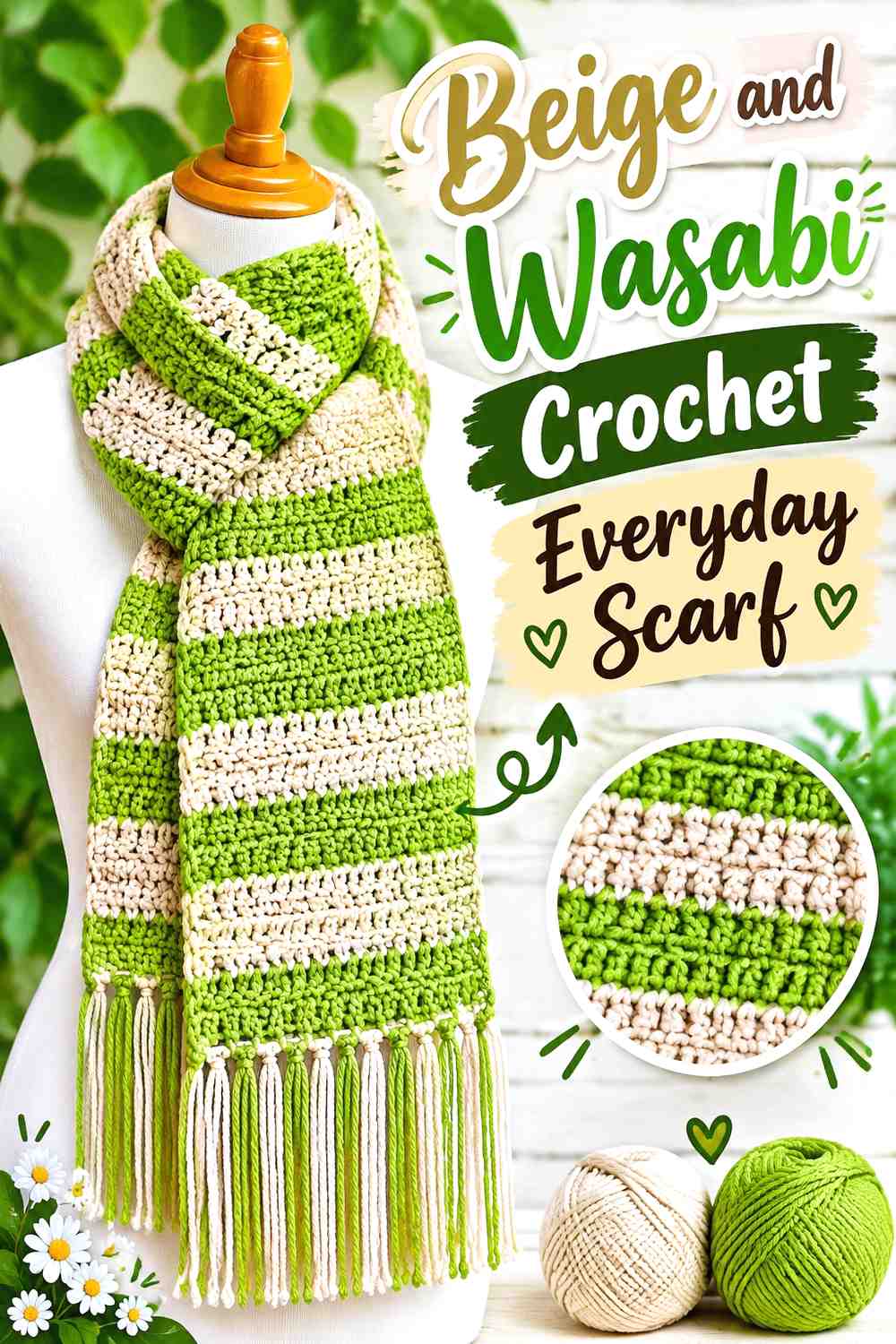
A scarf changes shape every time it is wrapped, folded, or knotted, so color placement should account for movement. A beige-dominant scarf with wasabi concentrated toward the ends keeps the center easy to layer near jackets and sweaters while allowing the stronger color to remain visible below the wrap.
Beige Makes the Crochet Scarf Easier to Wear With Several Outer Layers
Using beige through the central length prevents the area around the neck from becoming a large block of wasabi. This can be useful if the scarf will be worn with different coats, cardigans, or sweaters.
If beige and your common outerwear colors are very similar, increase the amount of wasabi near the visible ends so the scarf does not disappear into the rest of the outfit.
Wasabi Scarf Ends Stay Visible After Wrapping
The ends are logical locations for wasabi because they often remain exposed when the middle of the scarf is wrapped around the neck. Broad end blocks can communicate the palette more clearly than several thin stripes that partly disappear inside the wrap.
Try draping the unfinished scarf before deciding where to change colors. The most attractive stripe placement while the scarf lies flat may not be the placement that remains visible when worn.
Creator Credit: Fiber Flux
8. Wasabi And Beige Crochet Beanie

A beanie has limited surface area, which makes it a good place to let wasabi dominate. Use wasabi through most of the crown and body, then introduce beige at the lower edge or brim. The beige area can separate the brighter main color from coats and scarves without weakening the beanie’s clear wasabi identity.
Wasabi Can Cover Most of the Crochet Beanie
A solid wasabi crown avoids breaking a compact accessory into too many small bands. It also makes stitch texture easier to follow than frequent color changes if the beanie already has visible ribbing or directional texture.
Check the yarn from normal conversational distance. If the stitch pattern becomes difficult to see in the wasabi shade, a beige brim can provide the contrast needed at the most visible edge.
Beige Gives the Wasabi Beanie a Defined Lower Frame
A beige brim or lower band creates a clean stopping point between the hat and the rest of the outfit. Because that section circles the entire head, even a narrow band carries substantial visual weight.
If you prefer a more tonal effect, choose a medium beige rather than the lightest neutral available. The goal can be either strong separation or a softer transition; the actual yarn values determine which result you get.
Creator Credit: lerugi crochets
9. Beige And Wasabi Crochet Bucket Hat
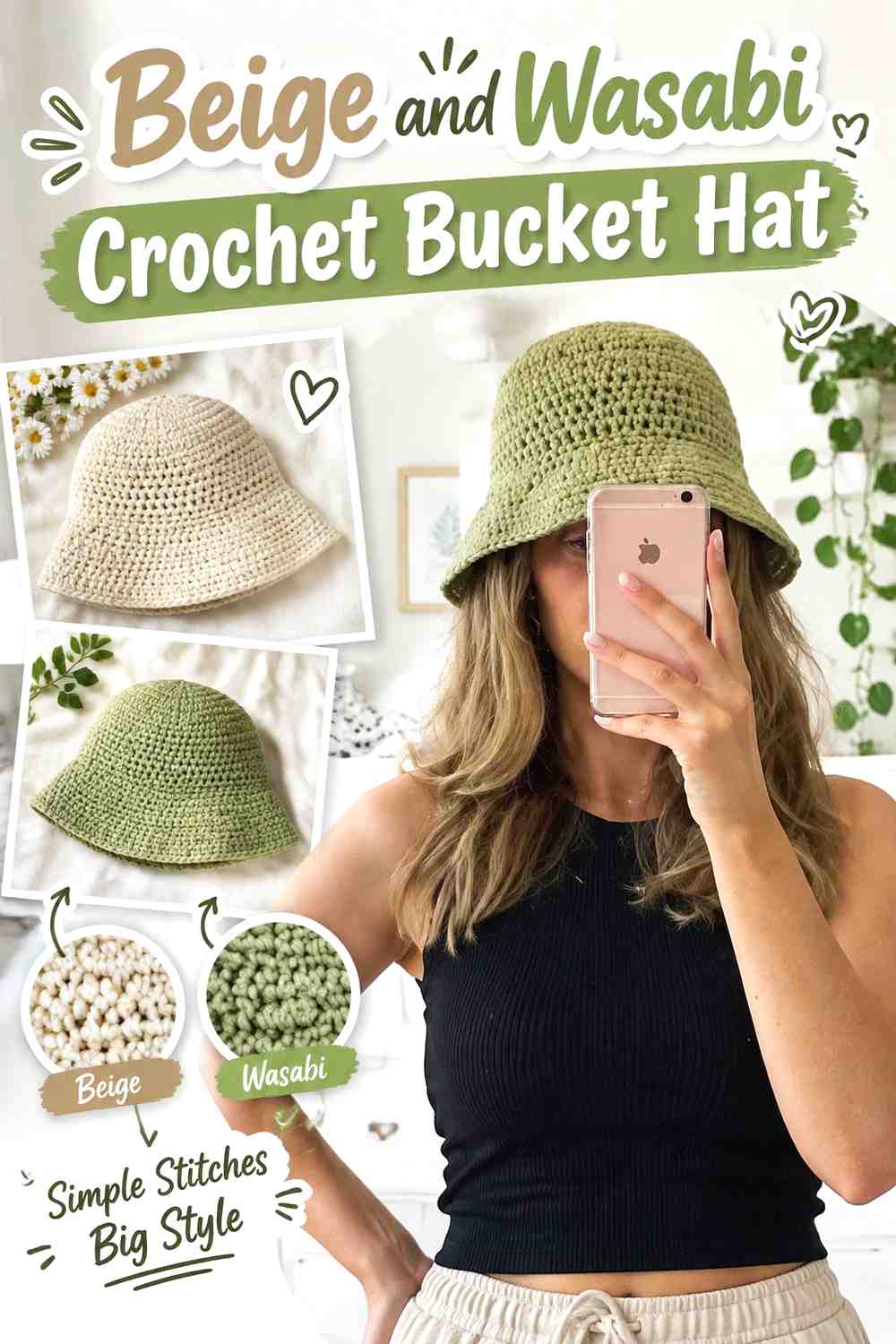
A bucket hat gives you three obvious color zones: crown, sides, and brim. Keeping the crown and sides beige while turning the brim wasabi makes the accent visible from multiple angles without surrounding the entire head in the stronger color.
Beige Keeps the Crochet Bucket Hat Crown Neutral
A beige crown creates a simple upper section that can coordinate with several outfits. It also allows the shape of the hat to remain visually clear without multiple narrow color changes.
If you want some wasabi above the brim, add one deliberate band around the sides rather than alternating every round. Broader color areas are easier to read on a compact hat.
Wasabi Makes the Crochet Bucket Hat Brim the Focal Area
The brim extends outward, so a wasabi brim can appear more prominent than the same amount of color used near the crown. Consider that visual leverage before deciding how much of the hat needs to be green.
If the brim already provides enough wasabi, keep the crown completely beige. Repetition is useful, but it is not mandatory when one structural section clearly owns the accent color.
Creator Credit: Emma P
10. Beige And Wasabi Crochet Headband
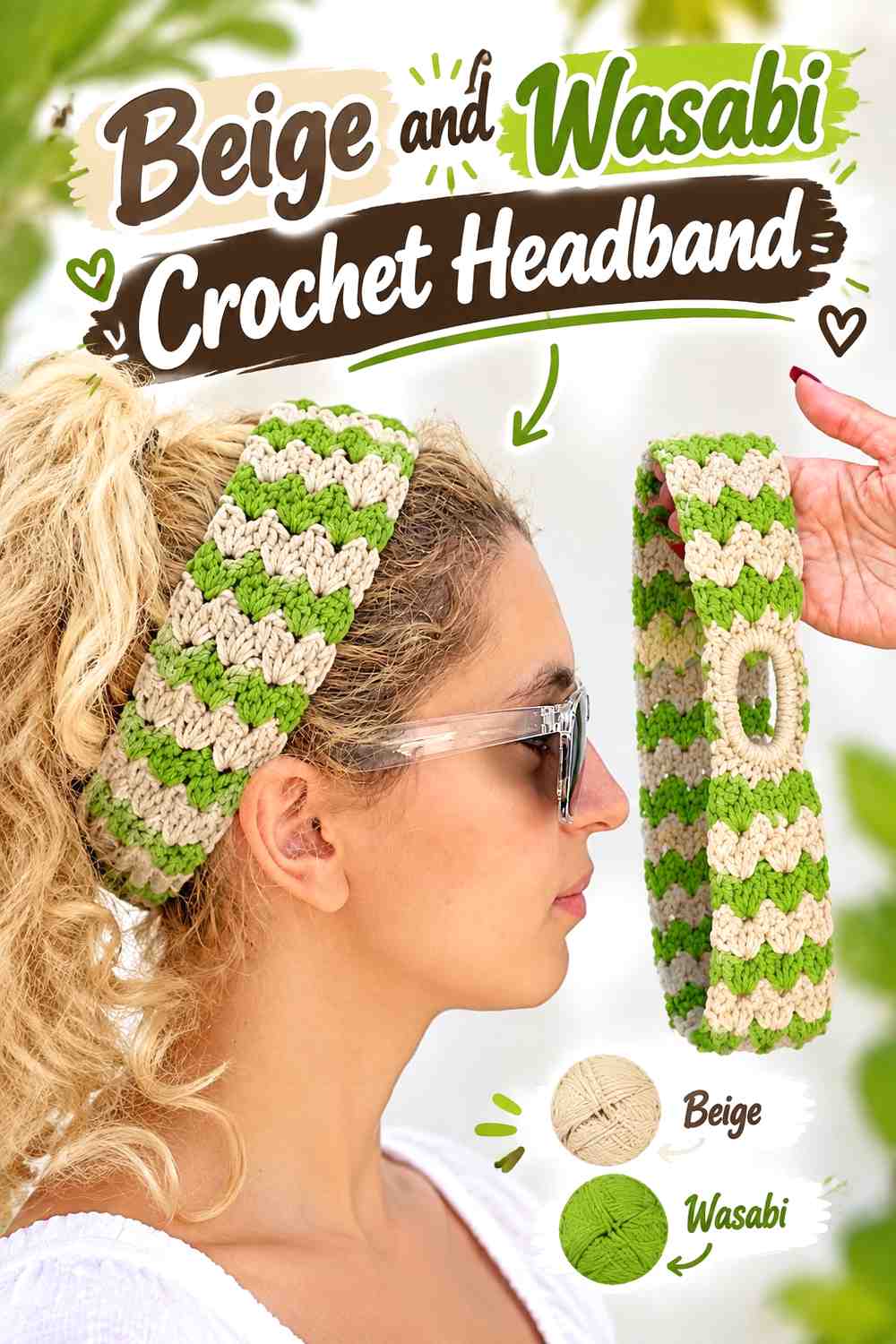
A headband is small enough to experiment with a more even beige-and-wasabi split. Beige can form the principal band while wasabi appears through a center section, repeated clusters, or a narrower stripe. Because the accessory is compact, the accent does not need to be especially wide to remain noticeable.
Beige Gives the Crochet Headband a Quiet Base
A beige main band allows the texture to do most of the visual work and makes the accessory easy to repeat with different everyday outfits. It is particularly useful when another wasabi item—such as a tote or cardigan trim—is already present.
If beige is very close to your hair color, decide whether you want the band to blend or stand apart. Increasing the wasabi area can create a clearer boundary when more visibility is preferred.
Wasabi Should Repeat Clearly Across the Crochet Headband
A single tiny wasabi spot can look accidental on a narrow accessory. Use the green as a repeated stripe, central feature, or consistent textured section so its role is easy to understand.
For a stronger version, reverse the arrangement and make wasabi the main band with beige around one edge or central detail.
Creator Credit: naztazia
11. Beige And Wasabi Crochet Poncho

A poncho has a broad uninterrupted silhouette, so beige can keep the garment wearable across several outfits while wasabi provides definition at the neckline and lower perimeter. Because the lower edge occupies so much width, a wasabi border can create a substantial color statement even when most of the garment remains beige.
Beige Prevents the Crochet Poncho From Becoming Too Color-Heavy
Use beige across the large central panels when you want the poncho to function as an easy outer layer. A continuous neutral field also gives openwork or textured crochet room to remain visible.
If the poncho will usually be worn over dark clothes, beige can provide useful separation between the base outfit and the garment silhouette.
Wasabi Can Define the Crochet Poncho Neckline or Lower Edge
A wasabi neckline keeps the color nearer the center of the outfit, while a wasabi lower border creates a wider horizontal accent. Using both can work, but they do not have to be equally substantial.
If the lower border is broad, keep the neckline narrower. This creates a hierarchy instead of giving both ends of the poncho identical visual weight.
Creator Credit: Lorena
12. Wasabi And Beige Crochet Everyday Tote
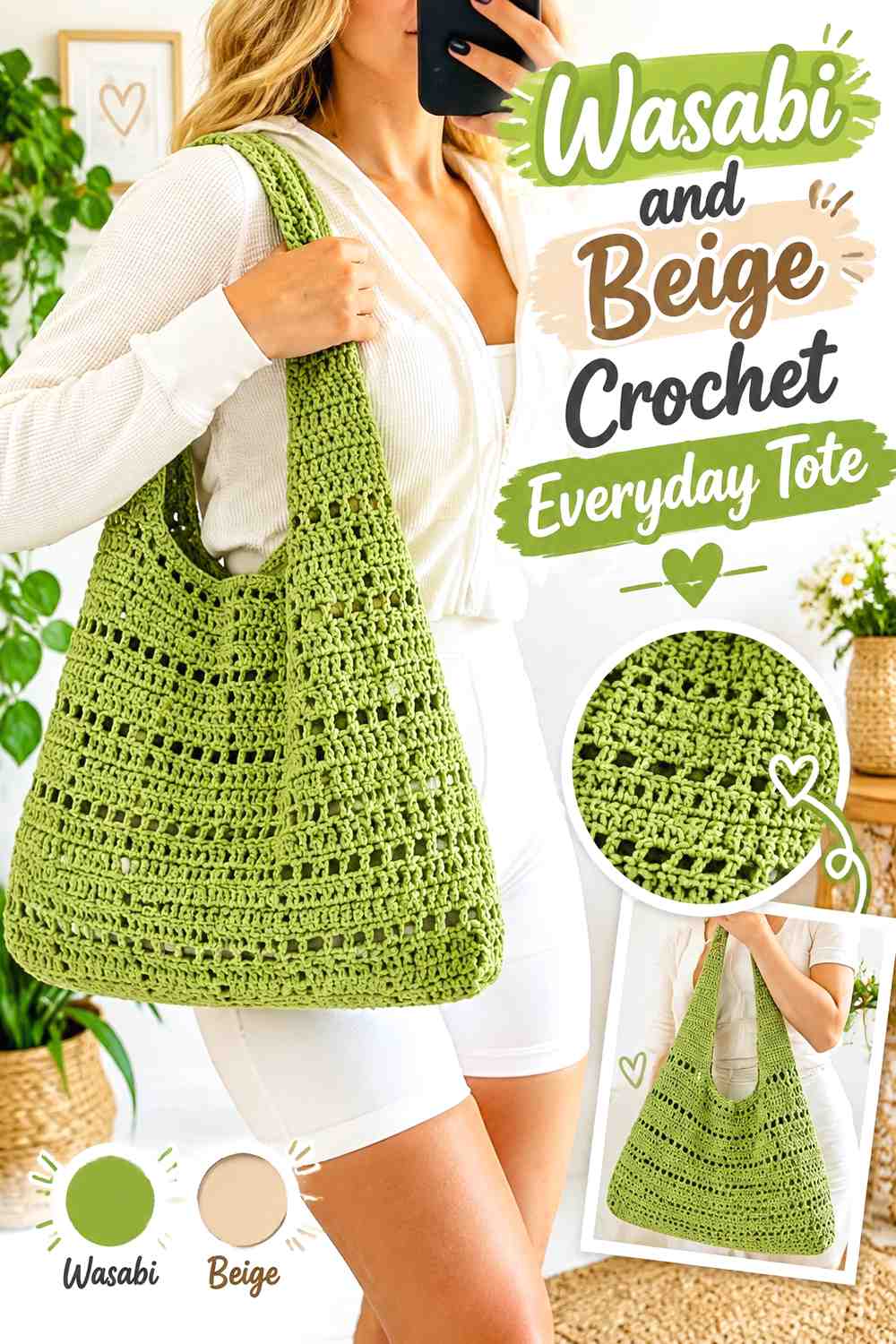
A tote can carry more wasabi than a garment because it does not surround the body. Use wasabi across the main bag surface, then introduce beige at the handles, top edge, or base. This makes the bag a portable color accent that can be worn with otherwise neutral clothing.
Wasabi Turns the Crochet Tote Into the Outfit Accent
A wasabi bag body creates one clear focal point instead of distributing green through several garments. This can be especially useful if most of the wardrobe around it is beige, denim, gray, brown, black, or white.
If the tote includes open mesh, remember that the contents or lining may be visible through the crochet. Their colors can affect how uninterrupted the wasabi field appears.
Beige Handles Can Connect the Wasabi Tote to Neutral Clothing
Handles occupy a small area but remain highly visible because they extend above the bag body. Beige handles can therefore soften a wasabi tote without requiring large neutral panels.
Repeat beige around the top edge or base only if the handles look visually isolated. One additional connection point is usually more controlled than outlining every structural part of the bag.
Creator Credit: crochet daniela
13. Beige And Wasabi Crochet Shoulder Bag
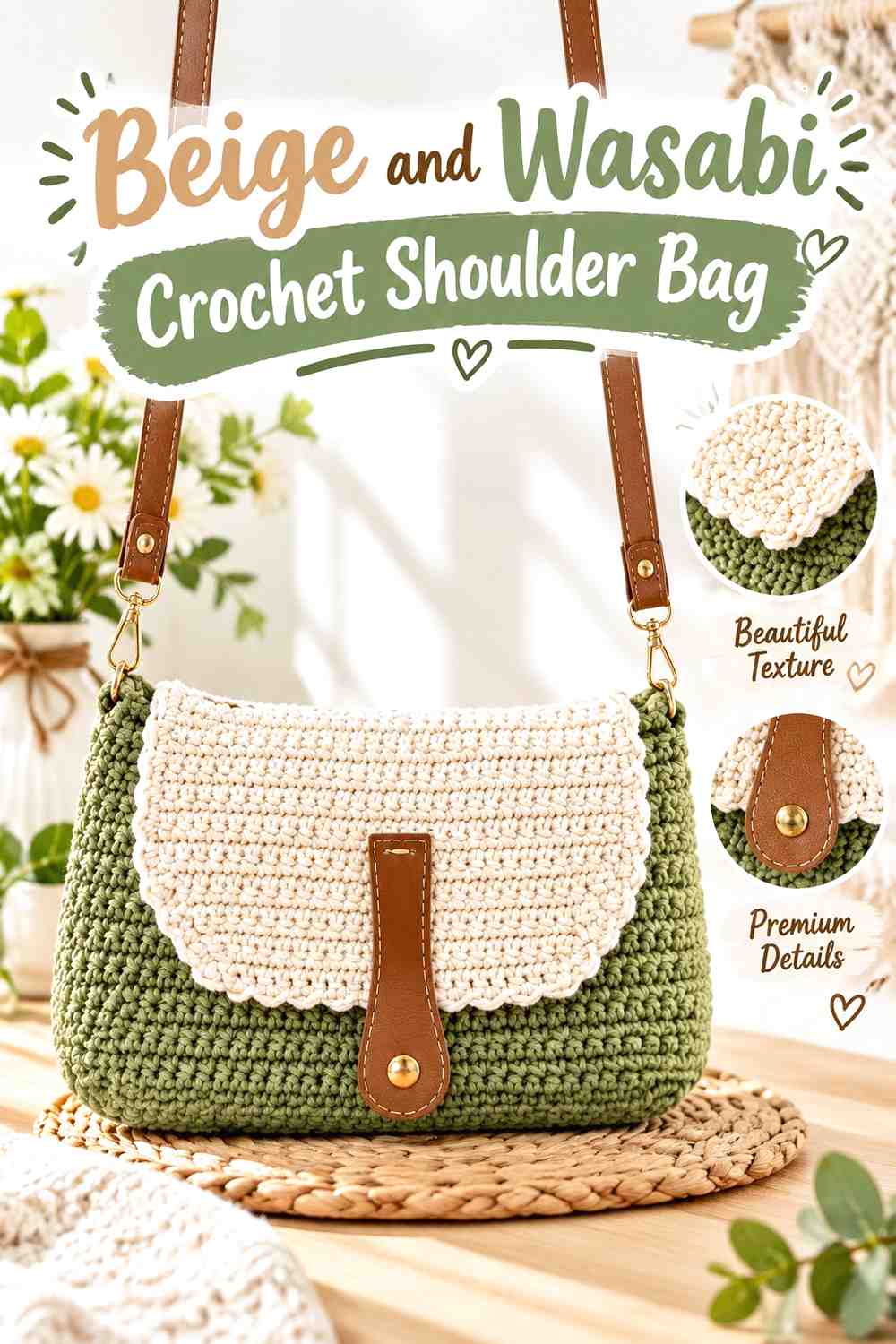
A shoulder bag sits close to the middle of an outfit, so even a modest wasabi section can attract attention. Beige can cover the main bag body, while wasabi defines a flap, strap, top edge, or selected side detail. This balance works well when the bag is intended to accompany several outfits rather than match one specific garment.
Beige Gives the Crochet Shoulder Bag a Flexible Main Color
A beige body keeps most of the bag visually neutral and lets the crochet texture remain visible. It also means the strap and closing area can carry wasabi without turning the entire accessory into one bright block.
Compare the beige against coats and tops you actually wear. If the bag blends too closely into them, increase the wasabi around the top or outer edge.
Wasabi Can Make the Crochet Strap Part of the Color Design
A wasabi strap creates a long line of color across the outfit, so it often looks stronger than its yarn quantity suggests. If the strap is already prominent, you may need only a small wasabi repeat on the bag itself.
For a quieter arrangement, keep the strap beige and move wasabi to the bag’s front panel or upper edge. Choose according to whether you want the accent to travel across the outfit or stay concentrated on the bag.
Creator Credit: Dazz Crochê
14. Wasabi And Beige Crochet Bandana
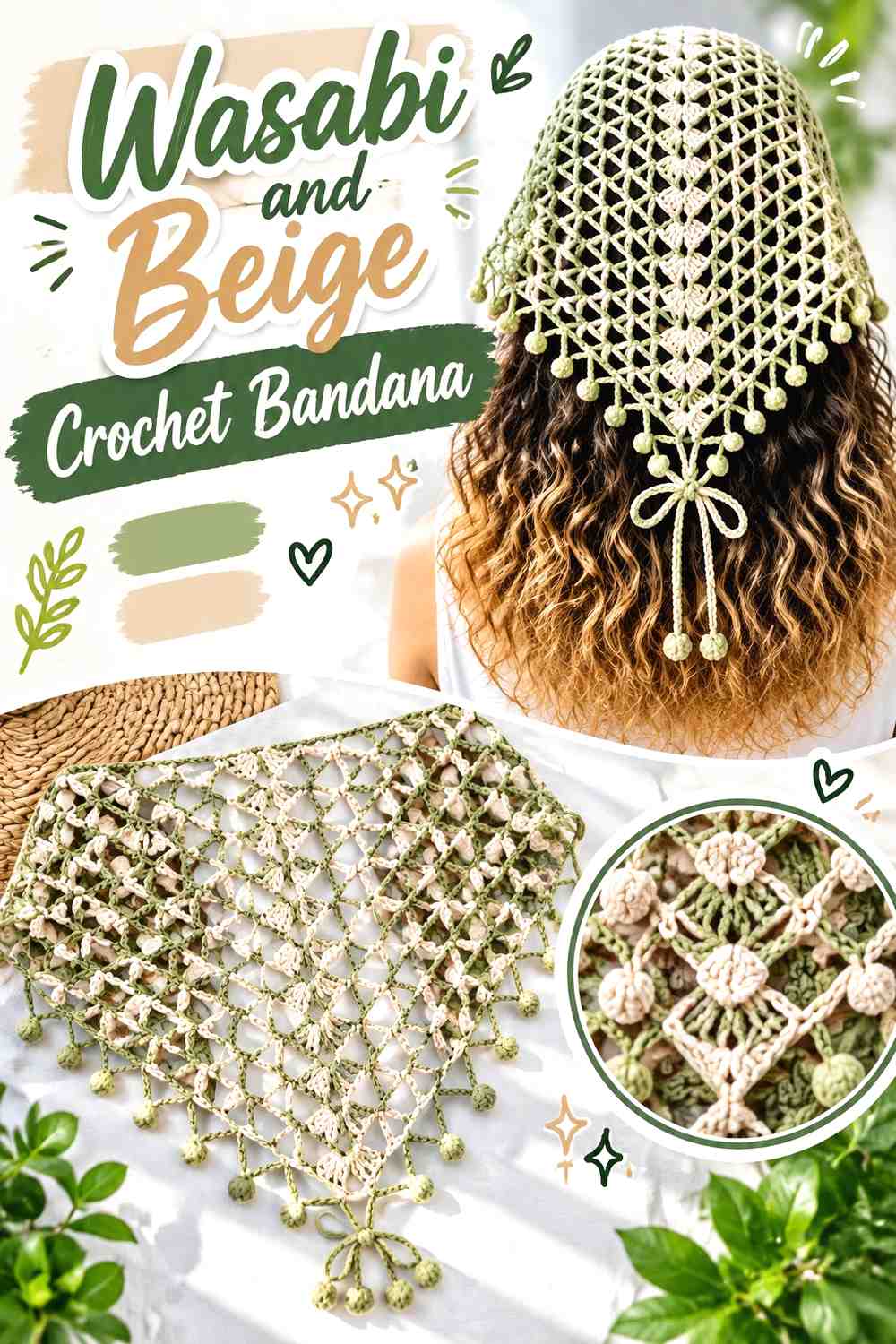
A bandana is small enough for wasabi to cover most of the main triangle while beige outlines the edge and ties. The beige border clarifies the silhouette and keeps the green from continuing through every visible detail. Because the ties remain visible from the side or back, they also provide a natural place to repeat the neutral.
Wasabi Gives the Crochet Bandana a Clear Focal Color
Use wasabi across the main body when you want the accessory to be recognizable from a distance. Keeping that central section relatively uninterrupted also allows any open crochet pattern to remain the main texture.
If your wasabi and beige have similar lightness, make sure the edging is wide enough to remain visible. A color change that disappears at a distance will not provide much definition around the triangle.
Beige Edging Keeps the Wasabi Bandana Shape Defined
Beige around the outer edge can separate the main wasabi area from hair and clothing. Carrying beige into the ties makes the neutral look structurally intentional rather than added as an isolated border.
If you want a subtler bandana, reverse the two colors: beige body, wasabi edge and ties. That keeps the stronger shade visible while greatly reducing its total area.
Creator Credit: zhaia croche
Comparing the Wasabi and Beige Everyday Looks
For the most neutral-led direction, start with the beige cardigan, summer top, scarf, bucket hat, poncho, or shoulder bag. These projects give beige most of the visible surface and use wasabi mainly to define edges or features.
For a stronger color statement, the wasabi sweater vest, shorts, beanie, tote, and bandana place the green over a larger area. The batwing sweater and shrug sit between those approaches because their wasabi sections become especially visible when the garments are worn or moved.
Small accessories also let you test the palette before committing to a large garment. A headband, bucket hat, bandana, or bag can show you how your particular wasabi yarn works with the beige clothes already in your wardrobe.
Conclusion
Wasabi and beige do not need an equal split to make a coordinated crochet wardrobe. Beige is especially useful on larger cardigan, sweater, poncho, and top panels when you want the handmade texture to carry much of the visual interest. Wasabi works well where a garment naturally needs emphasis—cuffs, hems, sleeves, waistbands, brims, straps, and borders.
If you want the color to be more prominent, choose a smaller item such as the beanie, bandana, tote, or shorts and let wasabi become dominant. If you prefer a quieter everyday direction, begin with a beige-led cardigan, scarf, poncho, or shoulder bag and reserve wasabi for repeated details.
Before committing to any of the combinations, compare your actual yarns together and with the clothes you intend to wear. The relationship between the two shades matters more than matching an imagined definition of “wasabi” or “beige.”
Frequently Asked Questions
Is Wasabi Too Bright for an Everyday Crochet Outfit?
Not necessarily. The amount and placement matter more than the color name. A saturated wasabi yarn can remain a small accent on cuffs, hems, bag straps, or hat brims, while a softer wasabi can cover a larger part of a vest, pair of shorts, or tote.
If the yarn feels stronger than you expected after making a swatch, reduce its surface area rather than abandoning the palette completely.
Should Beige or Wasabi Be the Main Color in a Crochet Cardigan?
Beige is a practical dominant color when you want the cardigan to layer with several outfits. Wasabi can then appear on cuffs, edging, or selected sleeve areas.
A wasabi-dominant cardigan is also possible, but it creates a much larger green statement because a cardigan covers considerable visual area. Consider how frequently you want the garment itself to become the focus of the outfit.
How Can I Tell Whether Wasabi and Beige Have Enough Contrast?
Place the yarns directly beside one another and look at them from a distance. You can also photograph them in grayscale to compare their light-and-dark values.
If they become difficult to distinguish, use the color change across larger sections rather than expecting a narrow stripe or tiny motif to remain clearly visible.
What Colors Can I Wear With Wasabi and Beige Crochet?
Simple wardrobe neutrals can leave the crochet palette in control. Depending on the exact yarn colors and your preferred styling, you might try the finished piece alongside denim, cream, white, brown, gray, or black garments and judge the combination directly.
There is no need to introduce every compatible color into one outfit. A restrained base often makes the wasabi-and-beige relationship easier to see.
How Do I Replace a Wasabi Yarn Without Changing the Whole Crochet Palette?
Preserve its role. If wasabi is meant to be the stronger accent, choose another muted or moderately saturated yellow-green that remains visibly different from the beige.
If your replacement is much lighter, darker, or brighter than the original yarn, reassess how much of it you use. A more intense substitute may work better on cuffs and trim than across an entire garment panel.
Should Wasabi Appear More Than Once on a Beige Crochet Garment?
Repeating it can help when the first accent feels isolated. For example, wasabi cuffs can connect to a narrow neckline edge, and a wasabi bag strap can connect to a small front detail.
That does not mean every structural edge needs the same accent. Two related placements can be enough to make the palette look deliberate without over-framing the crochet.