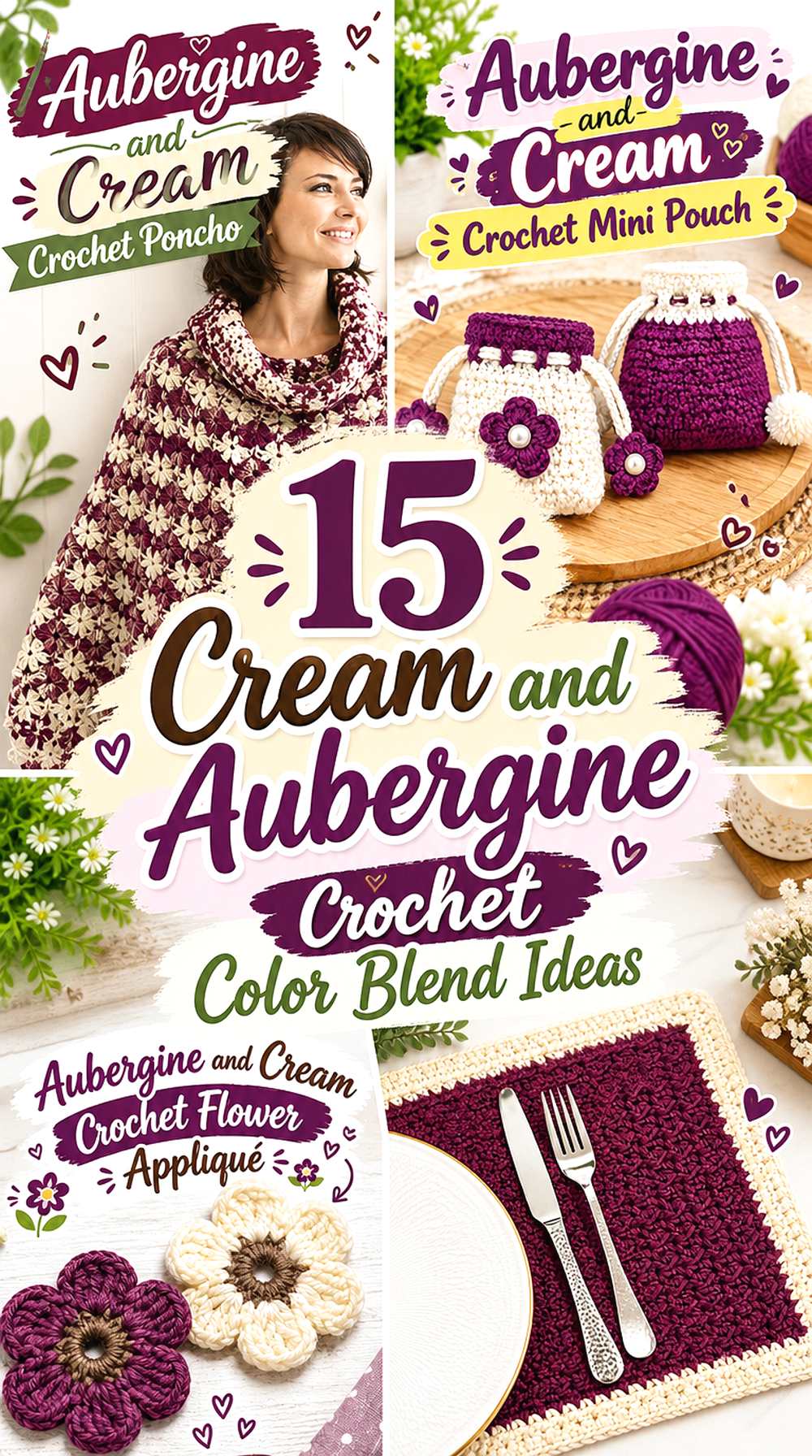
15 Cream and Aubergine Crochet Color Blend Ideas
Cream and aubergine create a crochet palette with a useful built-in contrast. Aubergine can supply the visual weight, while cream gives stitches, borders, motifs, and garment edges enough lightness to remain distinct. The important decision is not simply whether to use both colors, but how much space each color should occupy and where the transition should happen.
These 16 ideas apply the same two-color family to different crochet projects, from pillows and blankets to cardigans, bags, table decor, and smaller accessories. The linked tutorials support the construction concept for each project; the cream-and-aubergine color arrangements below are independent palette adaptations rather than claims about the colors used by the creators.
Quick List
- Aubergine And Cream Crochet Cable Pillow
- Cream And Aubergine Crochet Geometric Blanket
- Aubergine And Cream Crochet Cardigan
- Cream And Aubergine Crochet Tote Bag
- Aubergine And Cream Crochet Beanie
- Cream And Aubergine Crochet Granny Square
- Cream And Aubergine Crochet Headband
- Cream And Aubergine Crochet Flower Coaster
- Aubergine And Cream Crochet Basket
- Cream And Aubergine Crochet Scarf
- Cream And Aubergine Crochet Placemat
- Cream And Aubergine Crochet Vest
- Aubergine And Cream Crochet Mini Pouch
- Cream And Aubergine Crochet Table Runner
- Aubergine And Cream Crochet Poncho
How to Balance Cream and Aubergine in Crochet
Cream usually reads as the lighter visual space, so it can prevent aubergine from making a crochet piece feel uniformly dark. On a pillow or blanket, that might mean using cream around raised or repeating details. On a wearable, cream can be concentrated at cuffs, necklines, borders, or selected panels instead of dividing the garment into equal blocks.
Equal amounts are not required. An aubergine-led project with small cream details will look very different from a cream-led project framed with aubergine. Decide which color should be noticed first, then give the supporting color a clear job rather than scattering both shades randomly.
Check Cream and Aubergine Contrast Before Committing
The hue difference between cream and aubergine is obvious, but the amount of light-and-dark separation still depends on the yarns you select. Place the yarns together before starting, and consider looking at a grayscale photo if you want to judge value contrast without being distracted by hue.
This is especially useful for small granny-square centers, narrow garment edging, flower details, or textured stitches. If the aubergine you choose is relatively light or muted, cream may produce softer separation. A deeper aubergine will create a much stronger outline against the same cream.
1. Aubergine And Cream Crochet Cable Pillow
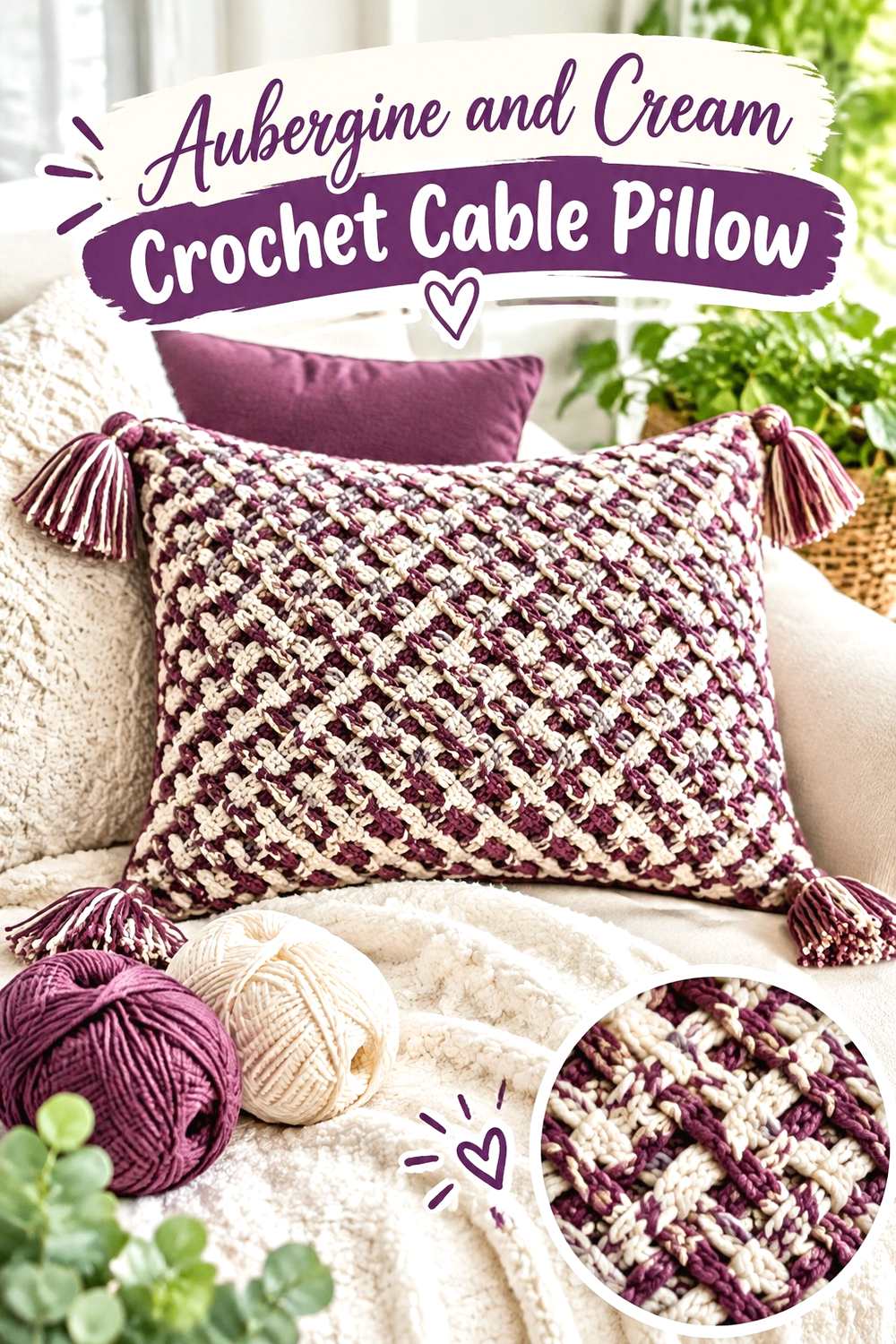
Let aubergine cover most of a textured pillow face when you want the pillow to act as the dark anchor in the room. Cream can then be reserved for an outer edge, contrasting back, or selected decorative details. This distribution keeps the pillow recognizably aubergine while allowing the lighter shade to interrupt the dark surface before the cable texture becomes visually dense.
Aubergine Gives the Crochet Pillow Texture More Visual Weight
Raised or interlaced-looking crochet texture already creates shadow, so a deep aubergine can make that relief especially prominent. Before committing to a very dark purple, work enough fabric to see whether the stitch definition remains easy to read in your lighting.
If the texture begins to disappear, cream does not have to cover half the pillow. A narrow cream frame or repeated cream detail can provide enough separation to make the darker surface easier to read.
Cream Can Frame the Aubergine Crochet Pillow Without Competing
Keep cream around the outer pillow edge when you want a cleaner division between the aubergine face and surrounding furniture. This works particularly well when the pillow will sit against another dark surface.
Avoid introducing cream in many unrelated spots unless repetition is intentional. One consistent border, back panel, or controlled group of accents usually gives the two-color scheme a clearer hierarchy.
Creator Credit: MJ’s Off The Hook Designs
2. Cream And Aubergine Crochet Geometric Blanket
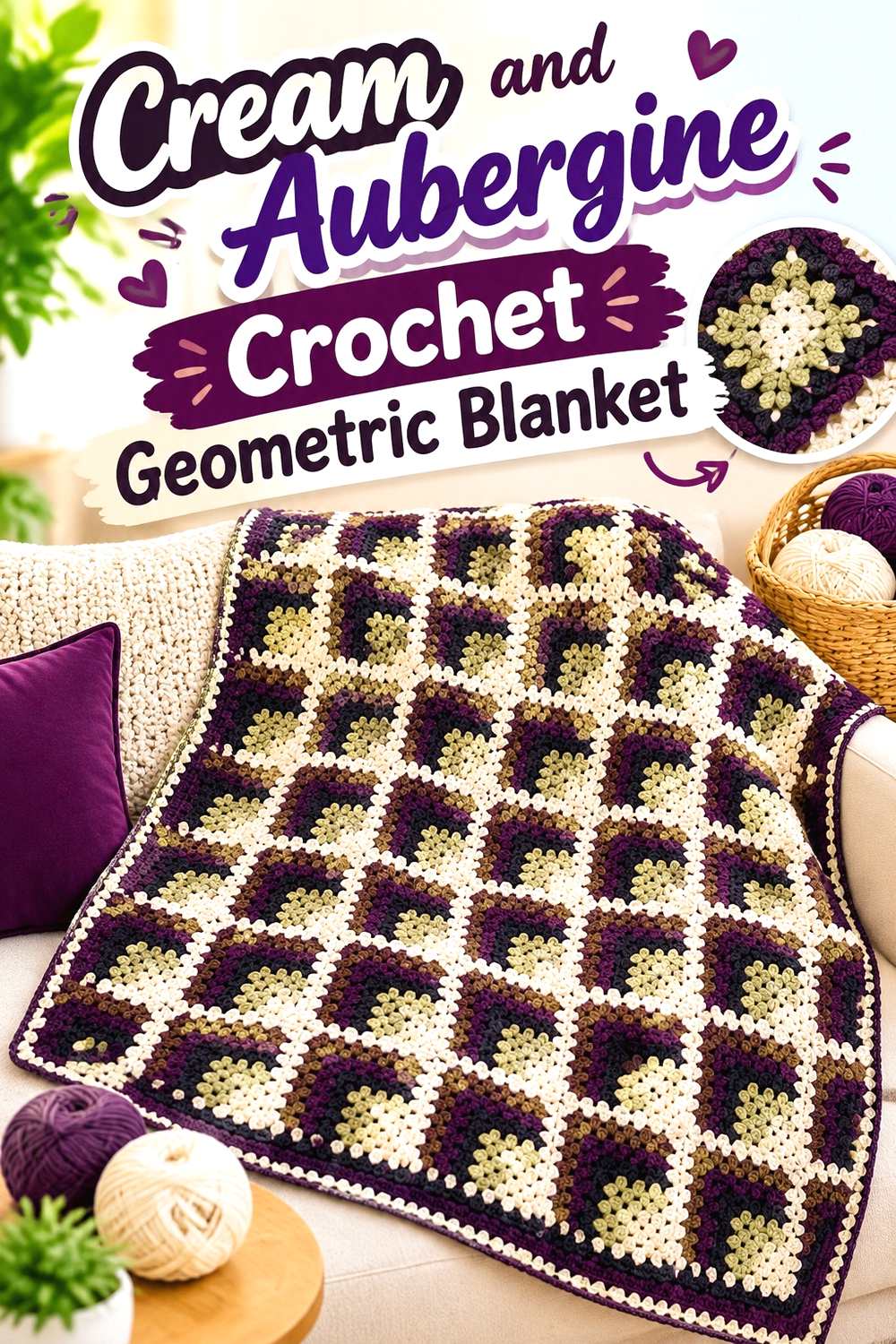
A blanket gives the palette far more surface area, making cream a useful dominant shade when you want the overall result to remain lighter. Aubergine can define selected blocks, dimensional-looking areas, or repeating sections. Repetition matters here: a dark accent that returns at regular intervals will look deliberate rather than like an isolated patch.
Cream Gives Aubergine Blanket Sections Room to Stand Apart
When several aubergine sections touch one another, the darker shade can merge into one large mass from across the room. Cream between those sections gives the geometry more breathing room and makes repeated shapes easier to distinguish.
This is particularly useful when the construction already relies on directional or dimensional effects. Keep enough cream around important shapes that the color change reinforces the design instead of hiding it.
Aubergine Works Well as the Blanket’s Repeated Dark Anchor
Rather than using aubergine once at the center and never returning to it, repeat it across the blanket or bring it back in the border. That repeated dark note helps visually connect distant sections.
If you substitute another purple, preserve the value relationship. A replacement should remain clearly darker than the cream if strong geometric definition is the goal.
Creator Credit: Sooz In The Shed
3. Aubergine And Cream Crochet Cardigan
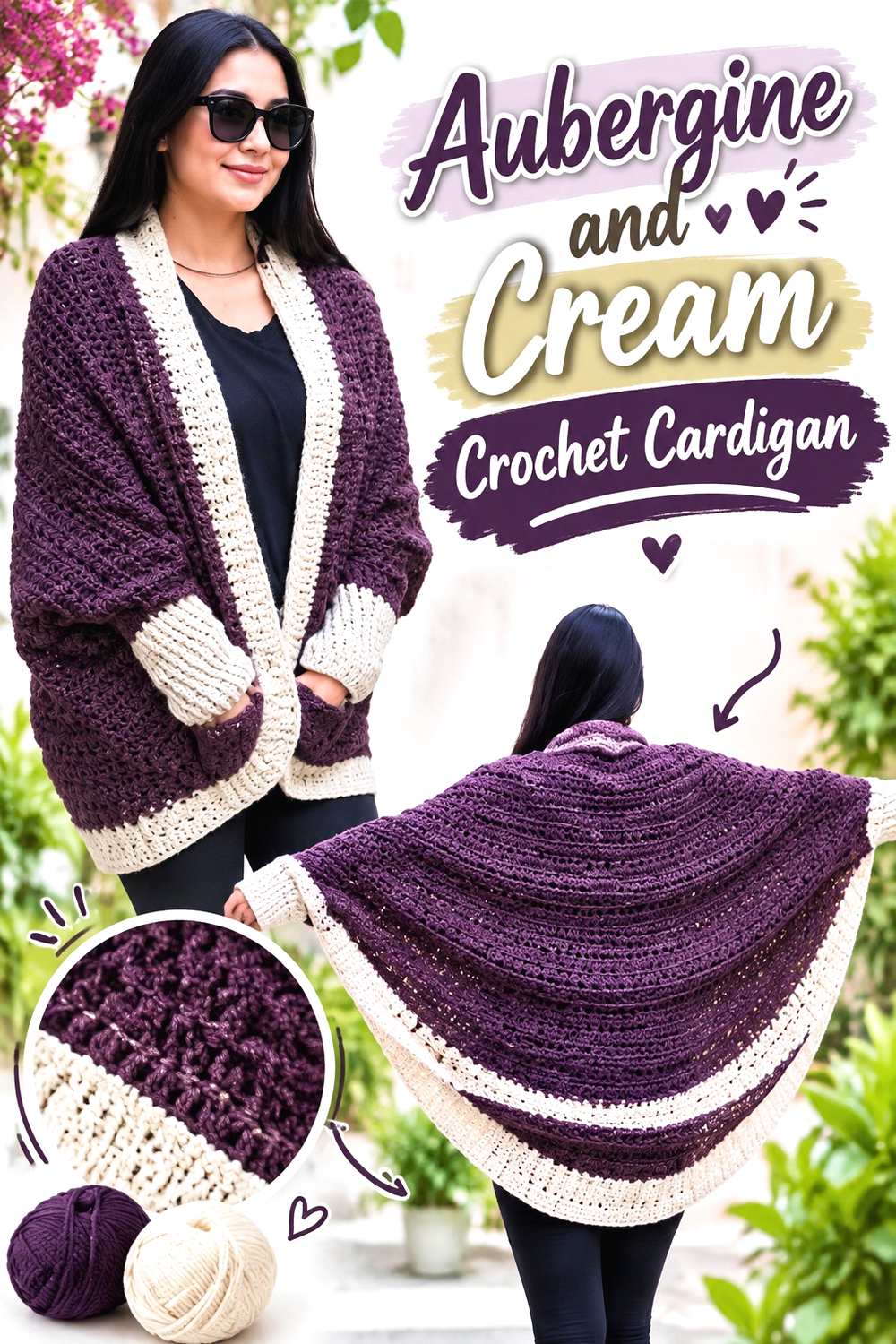
Aubergine can lead across the main cardigan panels while cream identifies the structural edges of the garment. Cream cuffs, neckline edging, front bands, or a controlled section near the hem can lighten the dark body without dividing the cardigan into too many competing areas.
Aubergine Keeps the Main Crochet Cardigan Panels Visually Connected
Using aubergine across both front and back body sections creates continuity through the garment. This is especially useful when the cardigan already includes pockets, visible seams, or textured fabric and does not need additional color fragmentation.
Before adding cream, look at the cardigan as a complete shape. Place the lighter color where it emphasizes an edge or repeated garment feature rather than wherever a color change happens to be convenient.
Cream Can Define Aubergine Cuffs and Cardigan Edging
Cream is effective on cuffs, neckline treatment, front edging, or a small pocket trim because those areas repeat across the cardigan. The repetition makes the accent feel integrated.
If cream begins to occupy every edge, pocket, seam, and panel transition, the cardigan can become visually busy. Choose a small family of related locations and repeat the same logic there.
Creator Credit: Nirvana Crochet
4. Cream And Aubergine Crochet Tote Bag
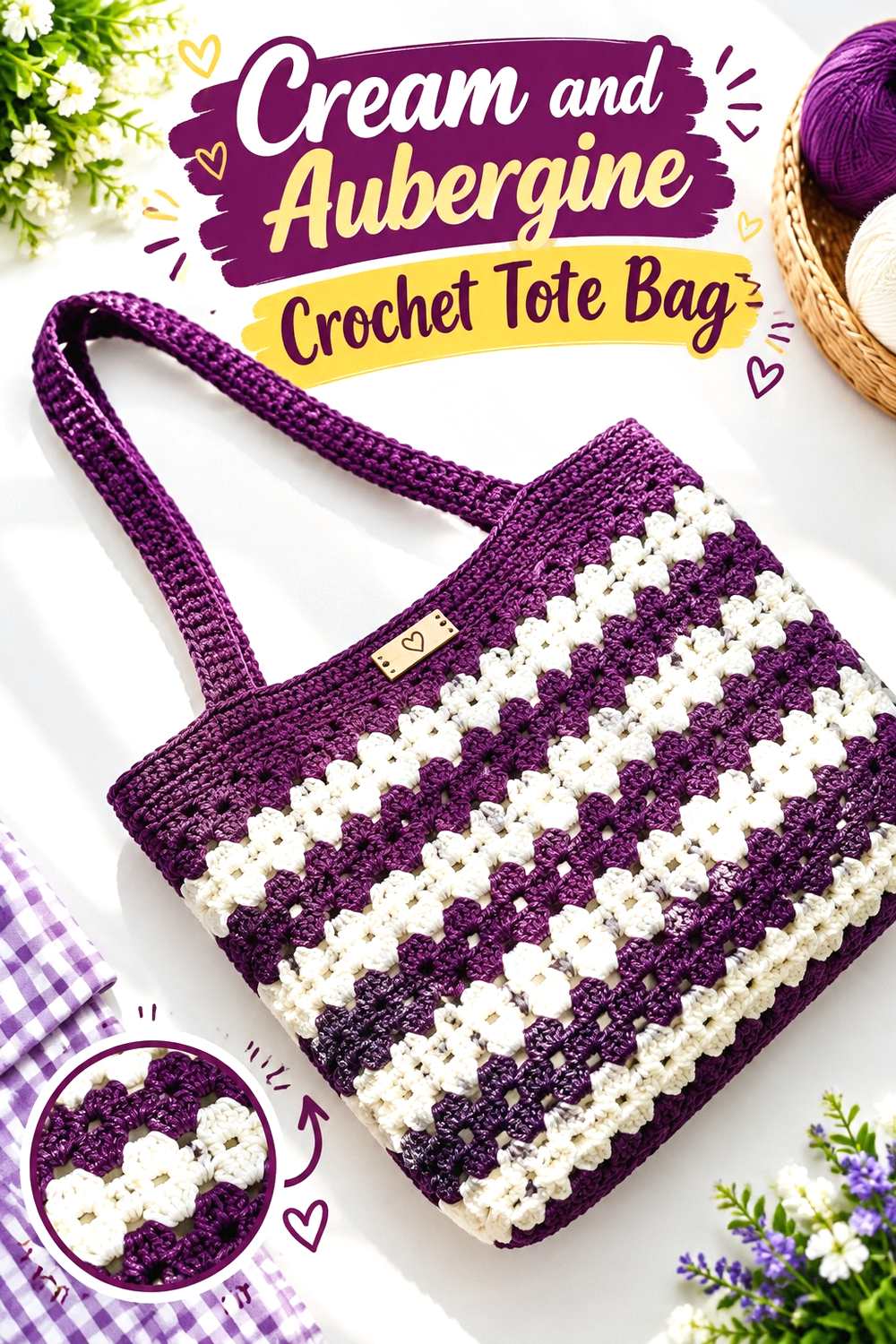
A cream-led tote gives the bag a light main surface while aubergine can strengthen the visual base and handles. Keeping the darker shade near areas such as the base, upper edge, or strap creates a useful frame around the larger cream section.
Cream Keeps the Crochet Tote Body Light Enough for Texture to Read
When the bag body contains visible stitch texture, cream can make the repeated structure easier to see from a distance. It also gives you a large neutral field where the aubergine accents can remain clearly separated.
Check the cream yarn against the intended use of the bag rather than choosing by color alone. The tutorial should guide construction; the palette decision should still account for where the finished bag will actually be handled.
Aubergine Can Connect the Crochet Tote Base and Handles
Using aubergine at the base and repeating it on the handles makes the dark color feel structural instead of decorative. It visually connects the bottom and top of the bag.
If that feels too heavy, keep the base aubergine and move to cream handles with a smaller aubergine edge. The important part is maintaining a repeated relationship rather than adding one isolated dark section.
Creator Credit: Toh Handmade
5. Aubergine And Cream Crochet Beanie
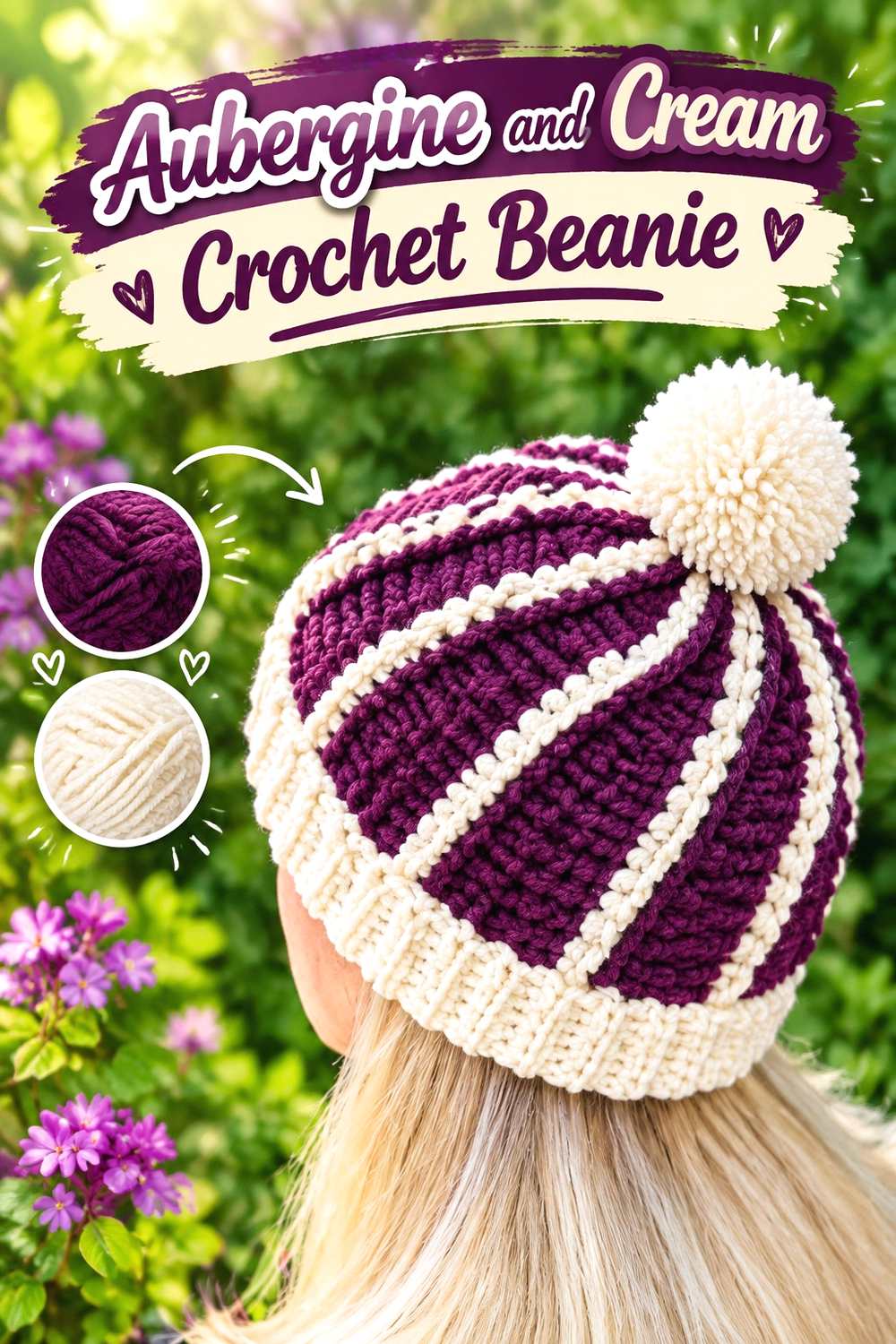
A beanie offers a compact surface, so the cream-and-aubergine split needs to stay controlled. Aubergine can dominate the crown while cream marks the lower band or a narrow transition. This prevents a small hat from becoming divided into too many equal stripes.
Aubergine Works Better Across the Main Crochet Beanie Crown
Keeping the crown mostly aubergine creates a strong uninterrupted field and allows any ribbing or dimensional texture to remain the primary feature. It also avoids placing frequent color joins throughout a small item.
If the aubergine is extremely dark, examine the fabric in ordinary indoor light before continuing. Dark yarn can make stitch placement harder to inspect even when the finished color looks good.
Cream Can Separate the Aubergine Beanie Body From the Lower Band
A cream lower band gives the beanie a clear light/dark division close to the face without requiring multiple stripes across the crown. You can reverse this approach for a cream beanie with an aubergine band when a lighter overall look is preferred.
Keep the cream section proportionate to the finished hat. A very wide light band can visually shorten the aubergine crown.
Creator Credit: Di’s Handicrafts (Crochet and Knitting)
6. Cream And Aubergine Crochet Granny Square
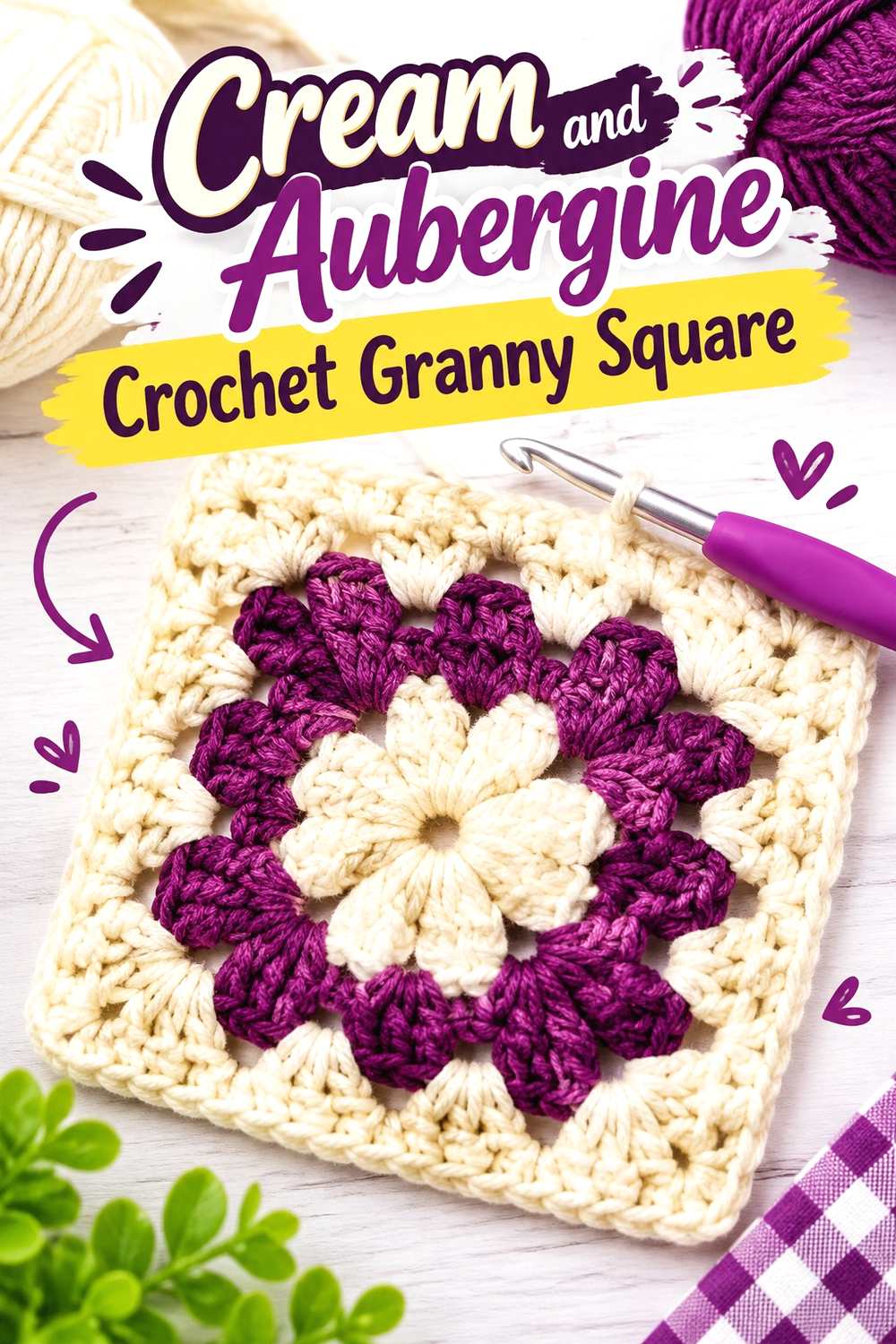
Granny squares make color placement highly visible because each round, center, or border can become a separate color decision. A cream center surrounded by aubergine produces a different effect from an aubergine center that gradually opens into cream, even when the square uses only those two shades.
Cream Can Open Up the Center of an Aubergine Crochet Granny Square
Start with cream in the visual center when you want the square to look lighter from a distance. Aubergine in later sections then acts more like a frame and can make the center appear brighter.
This arrangement is useful when many squares will be joined because too much aubergine in every center can make the complete layout darker than a single sample suggests.
Aubergine Can Define Cream Granny Square Borders and Joins
Aubergine around the outside of a cream-led square gives each motif a strong boundary. If aubergine is also used as the joining color, adjacent squares may read as clearly separated units.
Make several motifs and place them side by side before committing to the joining color. A border that looks balanced on one square may become visually dominant once repeated across an entire grid.
Creator Credit: Crochet with Tuula Maaria
7. Cream And Aubergine Crochet Headband
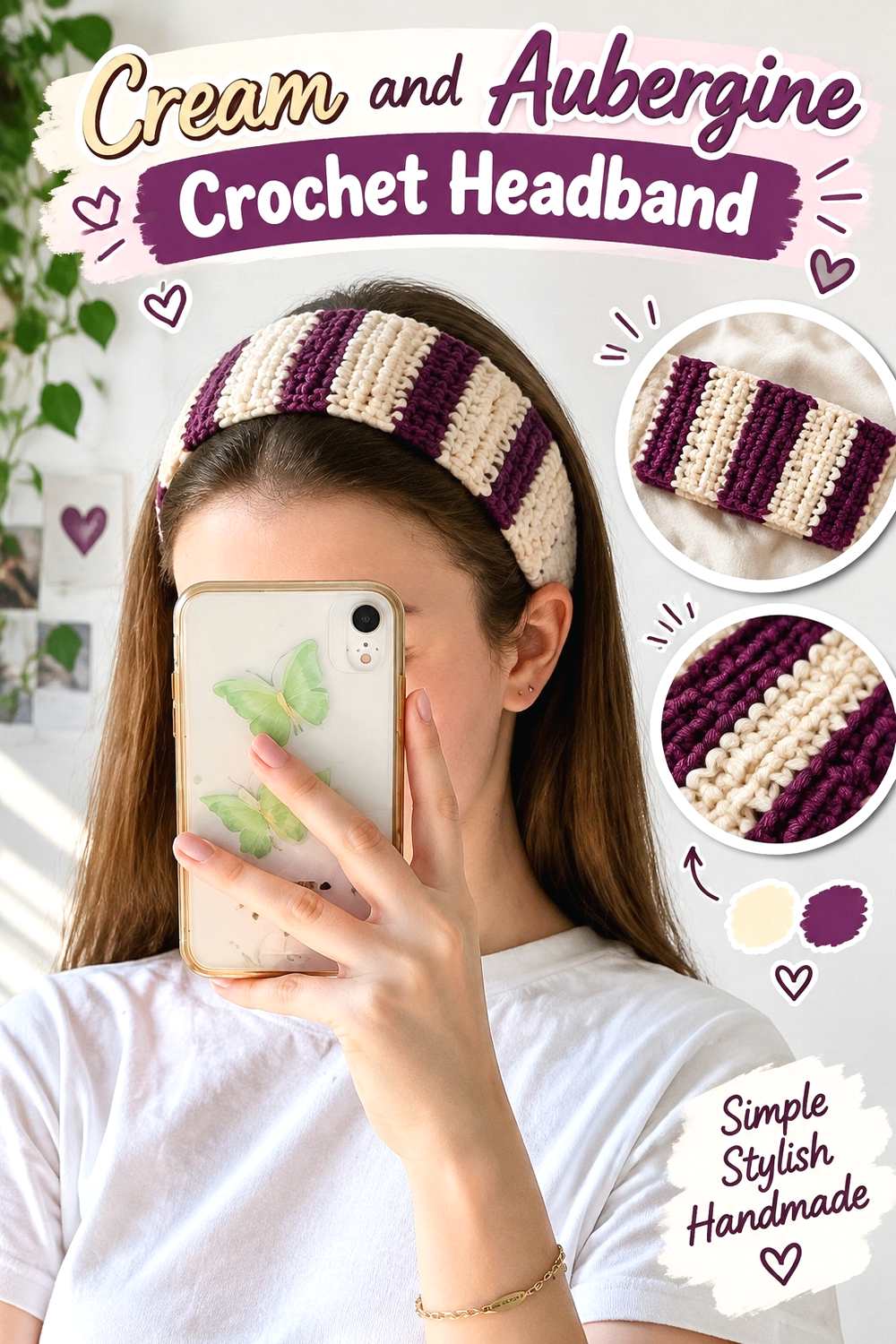
A headband is narrow enough that the two colors should have an obvious hierarchy. Cream can form most of the band while aubergine marks the central crossing, edge, or another small feature. This keeps the darker shade visible without breaking the band into several short color blocks.
Cream Keeps the Crochet Headband From Looking Visually Heavy
Because the band sits in one continuous line around the head, a light cream base can make the accessory feel less dense. It also keeps any ribbing or repeated stitch direction easy to see.
If you want a softer color transition, choose a muted aubergine rather than reducing the contrast by choosing a much darker cream.
Aubergine Can Concentrate the Crochet Headband Accent at the Center
A central aubergine section creates a focal point where the band crosses, twists, or narrows. The accent gains more impact because the rest of the headband remains cream.
Keep the aubergine placement symmetrical when symmetry is important to the design. An off-center dark block becomes much more noticeable against a pale background.
Creator Credit: carla.bycarla
8. Cream And Aubergine Crochet Flower Coaster
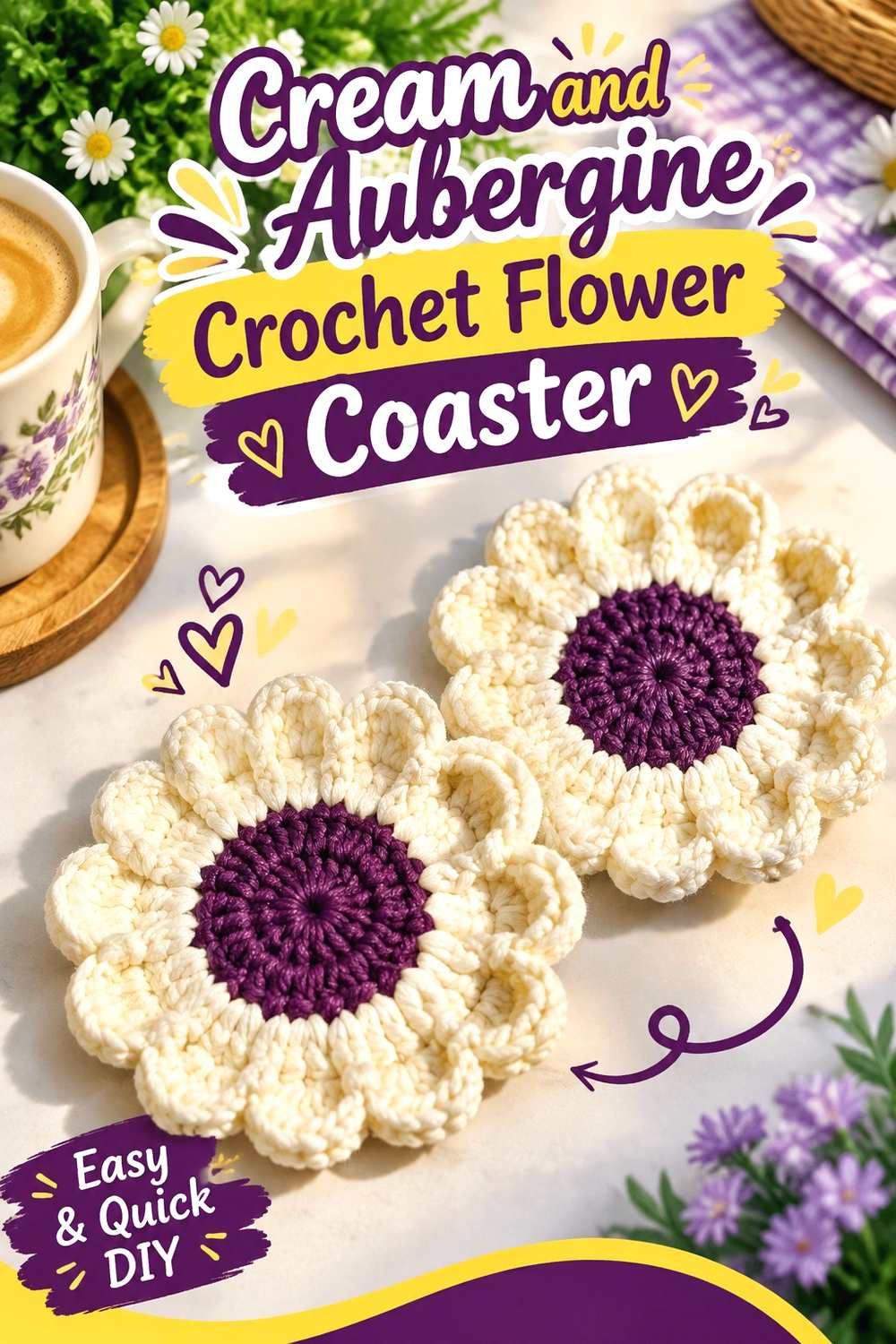
A flower coaster gives cream and aubergine clearly separated jobs. Cream petals with an aubergine center create a light outer silhouette and darker focal point, while reversing the colors produces a more dramatic flower with a pale center.
Cream Petals Keep the Aubergine Crochet Coaster Center Defined
Aubergine placed in the center becomes much more noticeable when surrounded by cream. This arrangement is useful if you want the flower structure to remain easy to identify even from across a table.
Before making a full set, crochet one coaster and place it on the actual tabletop. A cream outer edge may have very different contrast on a pale surface than on a dark wood or colored surface.
Aubergine Petals Create a Stronger Crochet Coaster Outline
For a darker variation, move aubergine into the petals and keep cream in the center. The overall coaster will carry more visual weight, especially when several are grouped together.
You can also alternate the two layouts within one set. Keep the same two colors and repeat them predictably so the coasters still look related rather than like separate palettes.
Creator Credit: A Little Crab Crochet
9. Aubergine And Cream Crochet Basket
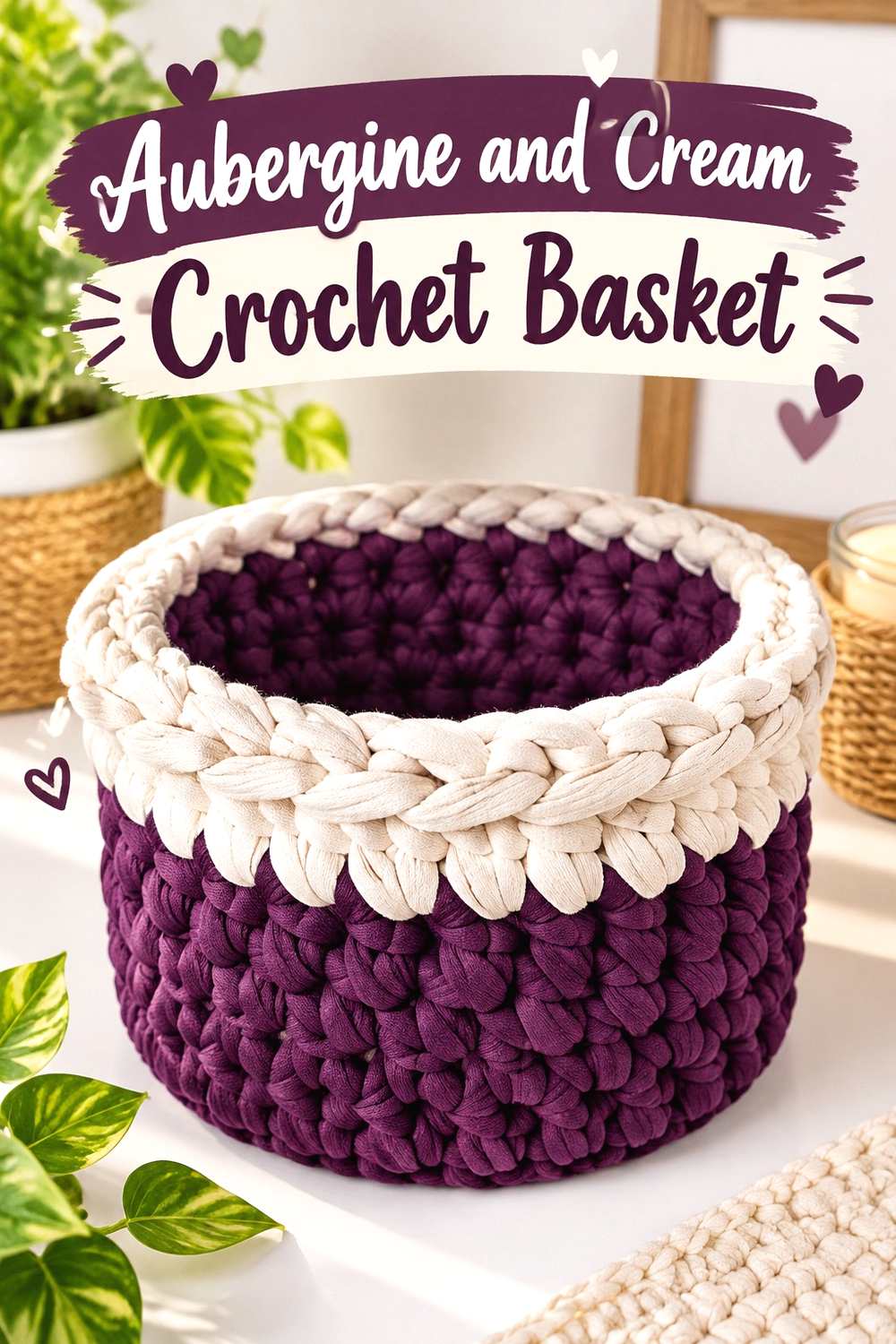
A crochet basket benefits from color placement that follows its three-dimensional shape. Aubergine can visually ground the base while cream lightens the walls above it. The color break can also help distinguish the storage area from the supporting bottom section.
Aubergine Can Ground the Base of a Cream Crochet Basket
Keeping aubergine around the lower portion makes the darkest color feel connected to the physical base. This is more cohesive than placing one unrelated aubergine stripe high on an otherwise cream basket.
Check where the basket naturally changes direction from base to walls. That structural transition can provide a logical location for the palette shift without requiring an arbitrary stripe.
Cream Keeps the Upper Crochet Basket From Becoming Too Dark
Cream on the upper walls reduces the visual weight of a deep aubergine base and makes the basket easier to coordinate with other neutral storage pieces.
If you prefer aubergine to dominate, reverse the balance and use a narrow cream rim. Even a small light edge can clearly define the basket opening against a dark body.
Creator Credit: Lallaulab
10. Cream And Aubergine Crochet Scarf
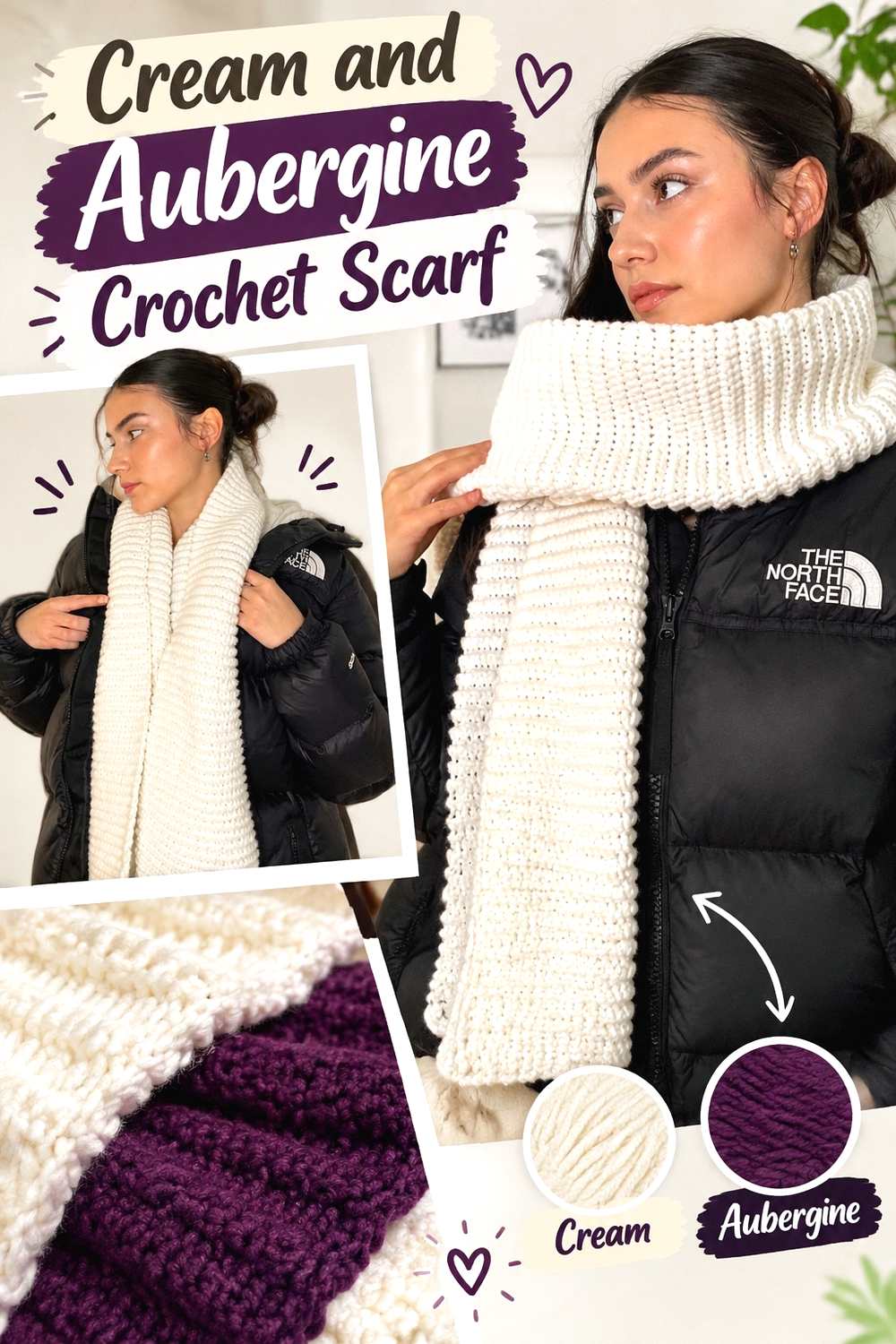
A scarf provides enough length to repeat aubergine several times without allowing it to overwhelm the palette. Cream can dominate the central length while aubergine appears at both ends, in controlled bands, or as a repeated narrow accent.
Cream Gives the Aubergine Crochet Scarf More Visual Breathing Room
A long cream section keeps the scarf light and allows the darker sections to become deliberate stopping points. This approach is particularly useful when the scarf already has a noticeable stitch texture.
If using stripes, avoid changing color at every opportunity. Larger cream sections interrupted by fewer aubergine bands generally create a clearer hierarchy.
Aubergine Can Balance Both Ends of a Cream Crochet Scarf
Repeating aubergine near both ends distributes the dark color evenly across the full length. When the scarf is worn, the two darker areas can also appear together rather than leaving one side visually heavier.
Before finalizing band width, fold or drape the work approximately as it will be worn. Color proportions can look different when a long rectangle is wrapped around the body.
Creator Credit: crochet daniela
11. Cream And Aubergine Crochet Placemat
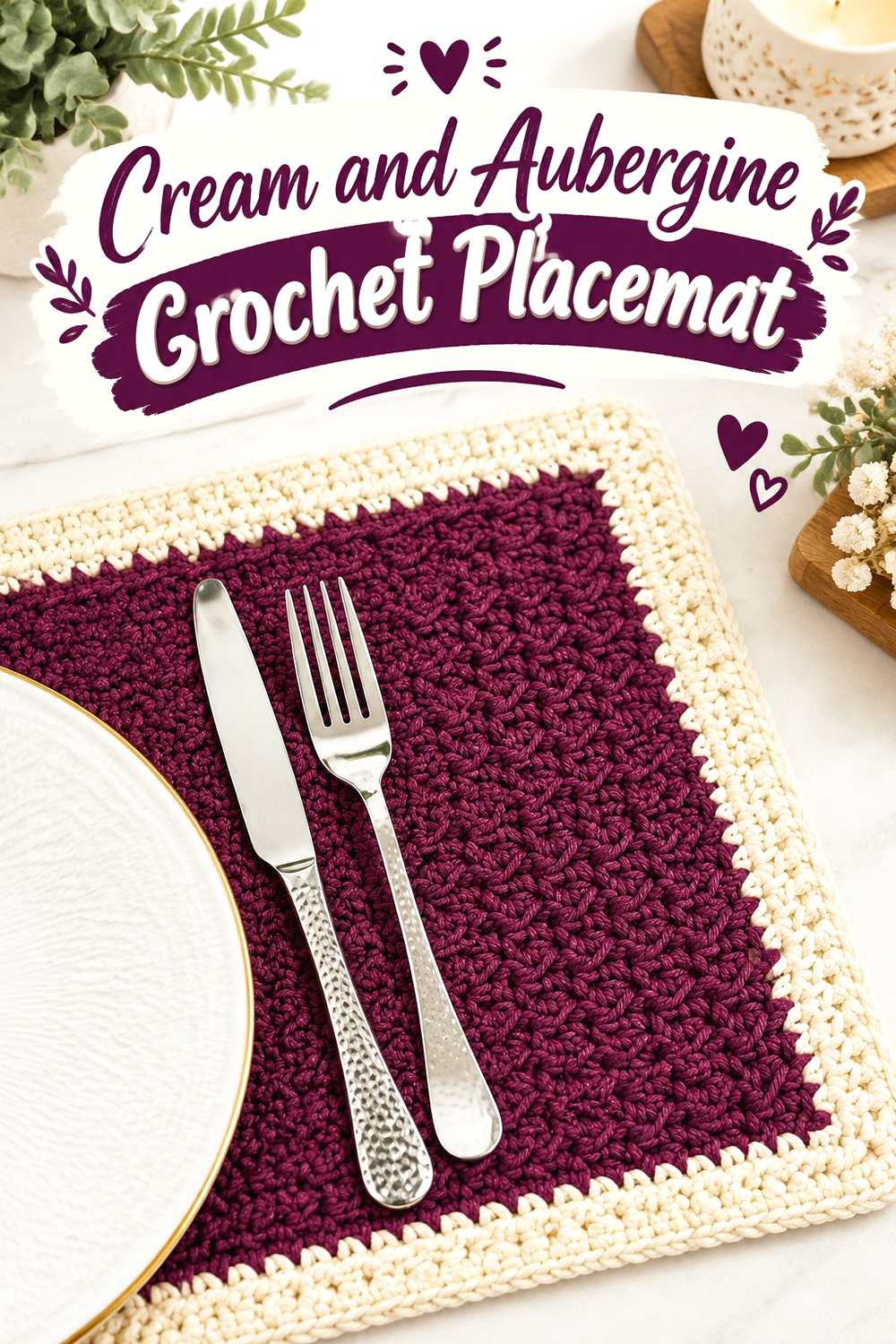
A placemat gives you a clear center-and-border relationship. Cream can cover the eating surface while aubergine frames the perimeter, creating a strong visual boundary without putting the darkest color across the whole piece.
Cream Keeps the Main Crochet Placemat Surface Visually Open
Using cream across most of the center allows the stitch pattern to remain noticeable and gives the placemat a lighter presence when several are arranged around a table.
Make one sample large enough to judge the proportion before planning an entire set. A narrow aubergine border can look stronger when repeated six or eight times around the same table.
Aubergine Can Give the Cream Crochet Placemat a Defined Outer Edge
Aubergine works well as a framing color because its depth contrasts clearly with cream. Keep it concentrated around the outer rounds or edging if the goal is definition rather than a heavily striped placemat.
If the border starts to dominate, reduce the number of dark sections instead of weakening the entire palette with a less distinct purple.
Creator Credit: The Turtle Trunk
12. Cream And Aubergine Crochet Vest
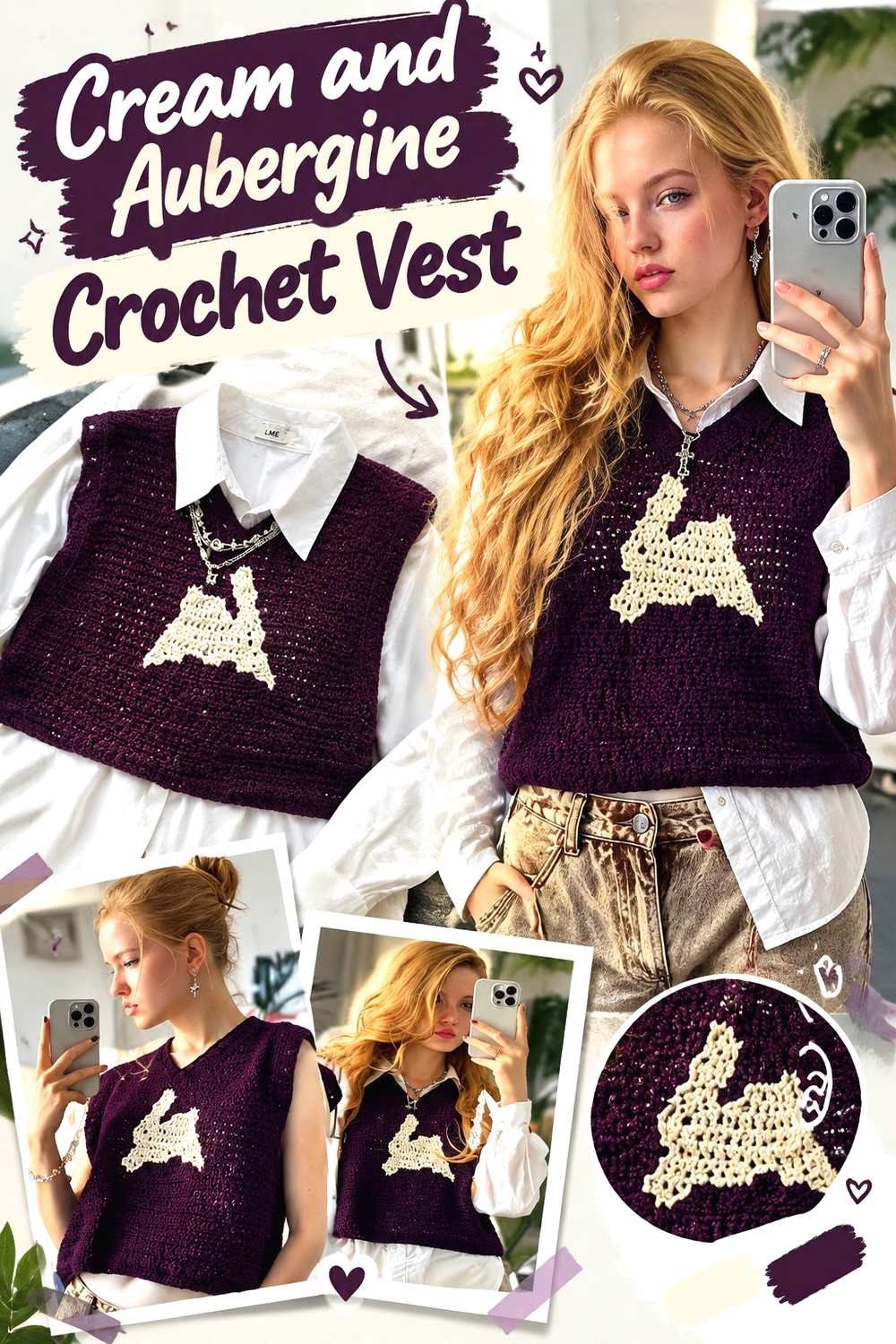
A cream-led vest gives the garment a light central field while aubergine can be concentrated around the neckline, lower edge, armholes, or selected graphic details. The darker color is most useful when it reinforces repeated garment features instead of appearing in one isolated location.
Cream Keeps the Main Aubergine Crochet Vest Accents Distinct
Use cream across the larger front and back areas if aubergine is intended to act as trim or motif color. The lighter surface gives dark details enough space to remain recognizable.
Before adding a large decorative motif, look at the complete vest front. An oversized aubergine section can shift the garment from cream-led to almost evenly divided.
Aubergine Can Tie Together Cream Crochet Vest Ribbing and Edges
Repeating aubergine at the neckline and lower edge creates visual continuity. Armhole edging can join that system when you want a stronger frame around the entire vest.
If all edging is aubergine, keep other dark additions limited. Multiple borders plus several large motifs may compete for attention on a relatively compact garment.
Creator Credit: WONDER NETTING
13. Aubergine And Cream Crochet Mini Pouch

A mini pouch is small enough that aubergine can cover most of the body without feeling excessive. Cream works well near the opening, drawstring area, flap, or another small finishing detail that needs to remain visible against the dark fabric.
Aubergine Gives the Crochet Pouch a Strong Main Color
Keeping the pouch body primarily aubergine avoids unnecessary interruptions across such a small project. It also makes a cream closure or edge easy to locate visually.
When adapting a tutorial, determine where the construction naturally creates a top edge or closure area. That is usually a more convincing place for a second color than an arbitrary change halfway through the body.
Cream Can Make the Aubergine Crochet Pouch Opening Easier to Read
A cream upper edge provides a clean boundary between the pouch body and opening. If the project includes ties or another closure feature, repeating cream there can connect the details.
Keep the cream accent relatively narrow if aubergine is meant to remain the dominant color. On a small pouch, even a short cream section occupies a noticeable share of the total surface.
Creator Credit: Shivani Creations
14. Cream And Aubergine Crochet Table Runner
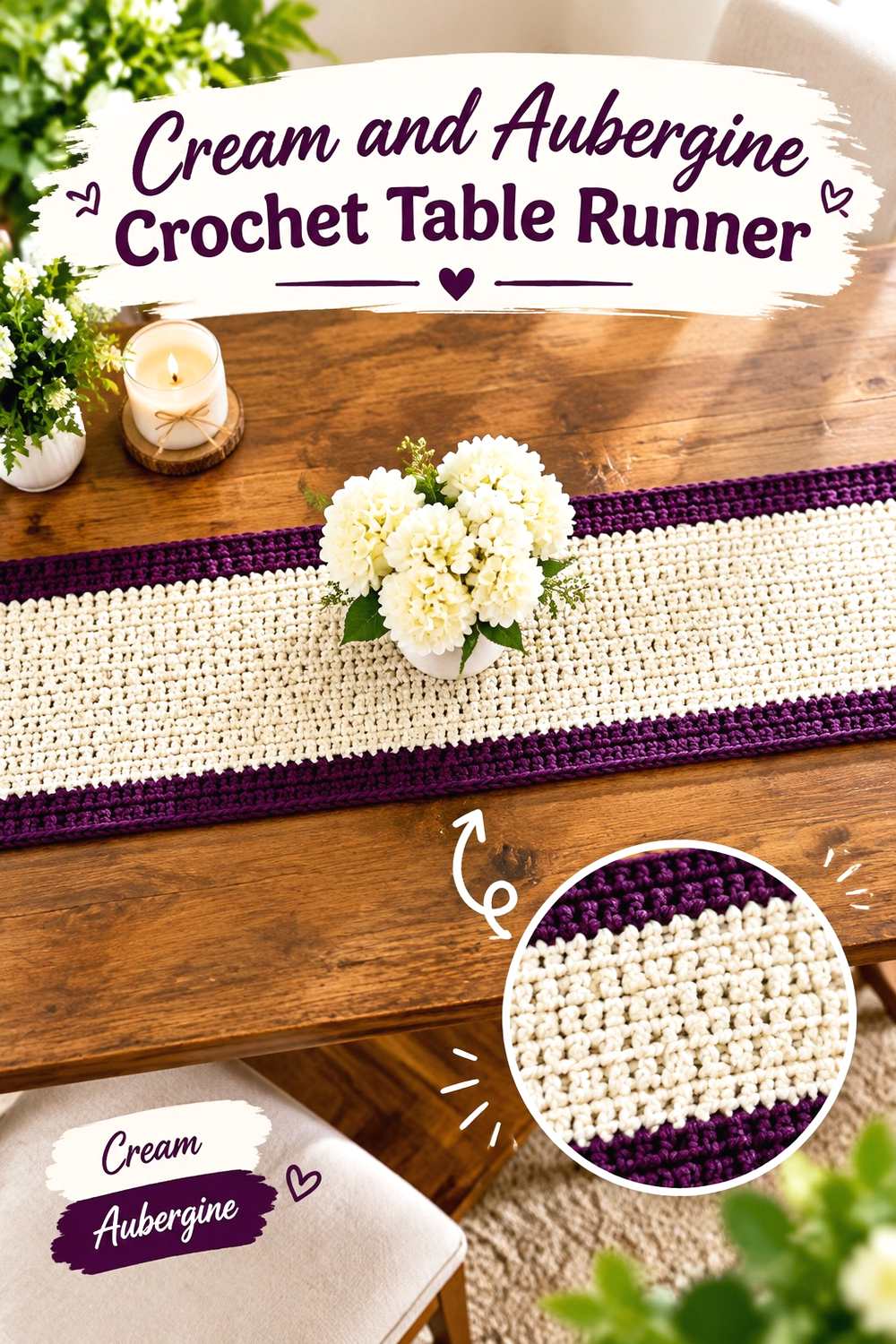
A table runner offers a long central field where cream can dominate without looking empty. Aubergine can mark the two ends, appear in spaced bands, or outline part of the border. The key is to view the runner as one long composition rather than choosing each color change independently.
Cream Keeps the Aubergine Crochet Table Runner Suitable for a Long Surface
A mostly cream center prevents the runner from becoming one long dark strip down the table. It also lets textured or open sections contribute to the design instead of forcing the color to do all the visual work.
Place the cream and aubergine yarn beside the table surface before choosing the final balance. The same palette can have very different contrast on pale wood, dark wood, glass, or a tablecloth.
Aubergine Can Anchor Both Ends of the Cream Crochet Table Runner
Mirrored aubergine end sections give the runner a clear beginning and end while leaving the central cream field uninterrupted. This can be cleaner than scattering small dark stripes throughout.
If an aubergine border is also added, keep the end sections restrained. Too many dark framing devices can reduce the visual effect of the cream center.
Creator Credit: B.Hooked Crochet
15. Aubergine And Cream Crochet Poncho
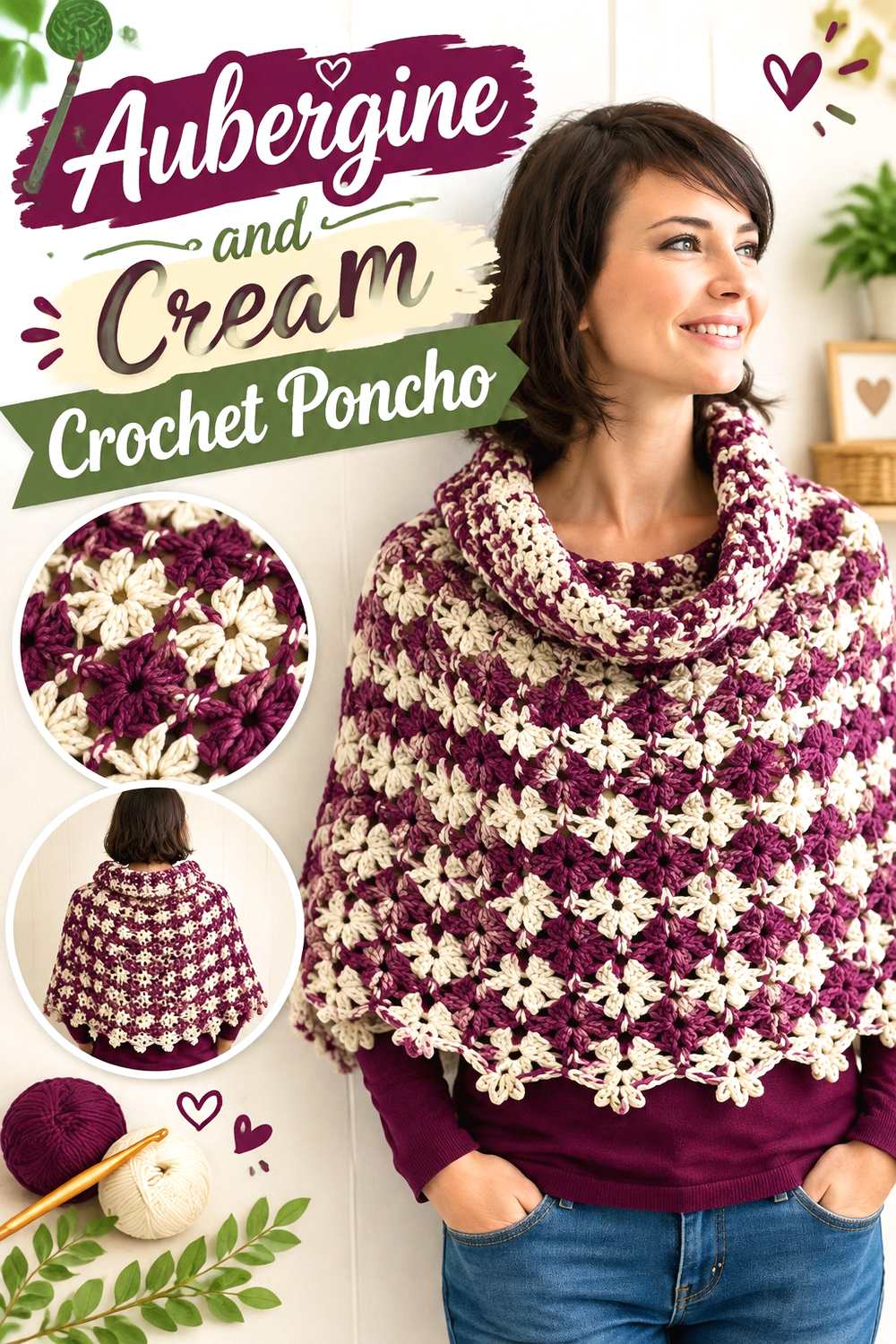
A poncho has enough fabric for aubergine to act as the dominant body color while cream identifies the neckline, cowl, lower edging, or another repeated finishing area. Because the garment drapes across a large surface, broad color regions generally read more clearly than many narrow stripes.
Aubergine Keeps the Main Crochet Poncho Surface Cohesive
Using aubergine across most of the body lets the drape and stitch pattern stay visually continuous from shoulder to hem. This is particularly effective when the construction already includes openwork or noticeable texture.
Check the aubergine yarn in both folded and stretched fabric. Open crochet can allow the clothing underneath to affect how dark the finished color appears.
Cream Can Separate the Aubergine Crochet Poncho Cowl and Hem
Cream near the neckline provides a bright break next to the large aubergine body. Repeating a smaller amount near the lower edge can connect the top and bottom without splitting the middle of the garment.
If both the cowl and hem are substantial, cream may occupy more visual space than expected. Lay the pieces together before finishing so the garment still reads as aubergine-led if that is your intended balance.
Creator Credit: Marly Bird
Conclusion
Cream and aubergine can produce very different crochet results without changing the basic two-color palette. For the lightest direction, let cream dominate blankets, scarves, placemats, vests, and table runners while aubergine defines edges or repeated details. For a deeper look, use aubergine across pillows, cardigans, baskets, pouches, beanies, and ponchos, then bring cream into borders, openings, cuffs, or focal details.
Small projects such as granny squares, flowers, headbands, and coasters are useful places to test your exact yarn combination before committing to a large piece. Compare the two yarns together, decide which color should lead, and make the second shade perform a specific job. That approach gives the cream-and-aubergine blend a clearer visual structure than simply alternating the colors whenever convenient.
Frequently Asked Questions
Is cream light enough to contrast with aubergine crochet yarn?
Usually, a cream shade and a deep aubergine will have noticeable light-and-dark separation, but the exact result depends on the yarns you choose. Compare the skeins side by side and use a grayscale photo when you want a quick value check.
Should cream or aubergine dominate a crochet project?
Either can dominate. Cream is useful when you want a lighter overall project with aubergine acting as an outline or accent. Aubergine works well when you want more visual weight and use cream to clarify borders, cuffs, motifs, or other details.
Where should aubergine go in a mostly cream crochet project?
Use aubergine where a darker visual anchor helps the item: blanket motifs, bag bases, granny-square borders, garment edging, placemat borders, scarf ends, or the ends of a table runner. Repeating the dark shade in related locations usually looks more intentional than placing it once.
How can I stop a cream and aubergine crochet project from looking too divided?
Avoid automatically giving each color half of the surface. Choose a dominant shade and let the supporting color appear in selected structural areas. Broader areas of one color with smaller repeated accents often create a more unified result than many equal stripes.
Can I substitute another purple for aubergine in these crochet palettes?
Yes. Preserve the role of the original color rather than trying to match a particular commercial shade name. If aubergine was meant to provide strong dark contrast, choose another purple that remains clearly darker than the cream. For a softer palette, use a more muted purple while keeping enough separation for important details to remain visible.
Does cream work better than bright white with aubergine crochet?
Cream generally creates a softer light/dark transition than a very bright white, but neither is universally better. Cream suits this palette when you want the light shade to support rather than sharply interrupt the aubergine. If crisp contrast is the goal, compare cream and white directly against your chosen aubergine before deciding.