
8 Crochet Autumn Granny Square Cardigan Ideas for Fall Layering
Autumn granny square cardigans can range from short, open layers to substantial coat-like pieces, so choosing one involves more than finding the right rust, mustard, or olive yarn. Square size changes the visual scale, while ribbing, hoods, pockets, closures, garment length, and motif density all affect how a cardigan fits into a fall wardrobe.
The eight ideas below deliberately use different constructions. You will find a tie-front cardigan made from large squares, a longer statement coat, a hooded version, a pocketed design, a fitted button-front option, a sunflower motif cardigan, and more. Not every original tutorial was designed specifically as an autumn project, so use the videos for their actual construction and then adapt color only when the square dimensions, yarn behavior, and finished fit remain compatible.
Quick List
- Crochet Tie-Front Autumn Granny Square Cardigan
- Crochet Longline Granny Square Coat Cardigan
- Crochet Ribbed Patchwork Granny Square Cardigan
- Crochet Hooded Granny Square Cardigan
- Crochet Buttoned Unisex Granny Square Cardigan
- Crochet Granny Square Cardigan With Inside Pockets
- Crochet Sunflower Granny Square Autumn Cardigan
- Crochet Cropped Join-As-You-Go Granny Square Cardigan
Plan the Fit Around Finished Granny Square Size
With a modular cardigan, the square is part of the sizing system. Measure motifs after they have been finished and, when appropriate for the yarn, blocked. A small difference multiplied across several motifs can noticeably change the width, sleeve length, or shoulder position. This is especially important if you substitute a sunflower or other dimensional motif for the plain granny square used in a tutorial.
As a planning example, four blocked squares measuring 5 inches each would span about 20 inches before joins, borders, shaping, and intended garment ease are considered. That is useful planning math, not a universal cardigan formula. Treat the tutorial’s own measurements and layout as the authority for its construction.
For autumn layering, also decide what belongs underneath. A cardigan meant for a thin tee does not automatically have enough room for a sweatshirt or bulky knit top.
Choose Fall Yarn for the Fabric You Want, Not Just the Color
A deep autumn palette can make almost any granny square arrangement feel seasonal, but fiber and yarn weight determine how the cardigan actually behaves. A heavier or denser fabric may create a warmer-looking garment, yet it can also increase weight at the shoulders and make large motif panels less fluid. A lighter yarn can produce easier drape, although open granny spaces may provide less wind protection.
When substituting yarn, compare the tutorial’s yarn category, finished motif measurement, and fabric character rather than matching color alone. If your square becomes substantially larger or smaller, the creator’s panel layout may no longer produce the same fit.
For a wearable fall palette, consider limiting the number of dominant shades. Rust, brown, moss, ochre, cream, charcoal, berry, or muted orange can be repeated strategically so the cardigan reads as one garment rather than a collection of unrelated squares.
Map Motifs Before Joining the Cardigan
Joining is not the ideal moment to discover that all the darkest squares have landed on one sleeve. Lay out the body and sleeve motifs first, then photograph the arrangement for reference. Floral motifs deserve particular attention because their direction and contrast are more noticeable than a basic granny square.
Also examine where seams, front bands, pockets, and ribbing will interrupt the color pattern. A contrasting join can become a visible grid, while a joining color close to the square borders can make the motifs read more continuously.
Before committing to the final join, compare the two front panels, the shoulders, and the sleeve pairs. Exact symmetry is optional, but accidental imbalance is much harder to correct once the cardigan is assembled.
1. Crochet Tie Front Autumn Granny Square Cardigan

This cardigan makes the granny square itself a major design feature. DIYGuru uses relatively large motifs, then shapes the neckline and adds front ties rather than closing the entire cardigan with a button band. The source is explicitly presented as a fall crochet project, so it is one of the closest matches to the autumn intent of this collection.
The open front makes it suitable for visible layering, while the ties give the wearer a little more control than a completely open cardigan. It is a useful direction if you want bold blocks of fall color without the busier appearance created by dozens of small motifs.
Large Squares Make Every Color Choice More Visible
With a larger motif, one rust, olive, cream, or brown section occupies much more visual space than it would in a small-square patchwork cardigan. Plan the repeat before making the entire set. If you want a quieter autumn piece, keep one border color consistent while varying the centers. For a stronger patchwork effect, alternate the dominant colors but check the full front-and-back arrangement before joining.
The Ties Create a Different Kind of Layering Fit
Front ties close only selected points of the cardigan, so they do not behave like a full button band. Think about what you expect to wear underneath and where you want the opening to remain visible. A fitted long-sleeve top may work differently under this shape than a thick sweater. Check the creator’s finished front view and neckline shaping rather than assuming the ties will provide full cold-weather coverage.
Check the Neckline Before Final Assembly
The video includes a neckline-shaping stage, which makes this more than a simple rectangle of joined squares. That shaping influences how the front panels sit around the upper chest and neck. Before finishing the ties, compare both sides and make sure the motifs are oriented consistently. If you change square dimensions, return to the creator’s measurements instead of copying the original motif count automatically.
Creator: DIYGuru
2. Crochet Longline Granny Square Coat Cardigan

This long granny square cardigan takes the motif idea in a more coat-like direction. The YARNutopia tutorial creates a substantial statement garment rather than a short sweater layer, making it a useful autumn choice when length is part of the appeal. The original design was inspired by a designer cardigan associated with Gigi Hadid and uses several contrasting colors with a buttoned front.
Because the silhouette extends farther down the body, color distribution matters on a larger vertical canvas. This option suits readers who want the cardigan to become the center of the outfit rather than a small accent over a fall top.
Longer Motif Panels Increase Garment Weight
A long cardigan places more crocheted fabric below the shoulders than a cropped version. Yarn choice therefore affects more than warmth. A substitution that produces a heavier square can make an entire long garment feel considerably different. Before committing to all the motifs, make enough fabric to judge drape and weight, then compare it with the source construction rather than choosing a yarn solely because its color looks autumnal.
Use the Length to Build a Controlled Color Rhythm
A long body gives you room to repeat colors vertically. Instead of distributing every shade randomly, consider whether dark tones should anchor the lower portion or recur at regular intervals. You can also repeat one neutral around multiple squares to prevent several strong autumn shades from competing. Lay out the front panels next to each other before joining so the color rhythm feels intentional when the cardigan hangs open.
Button Placement Affects the Jacket-Like Look
The source includes buttons, which helps distinguish this cardigan from loose open-front designs. Before changing the front finish, consider whether you want the cardigan primarily open, occasionally fastened, or functioning more like a light crochet coat. Altering the band or closure can change the usable front width, so follow the original construction closely if you want the same finished proportions.
Creator: Fuad Azmat / YARNutopia by Nadia
3. Crochet Ribbed Patchwork Granny Square Cardigan
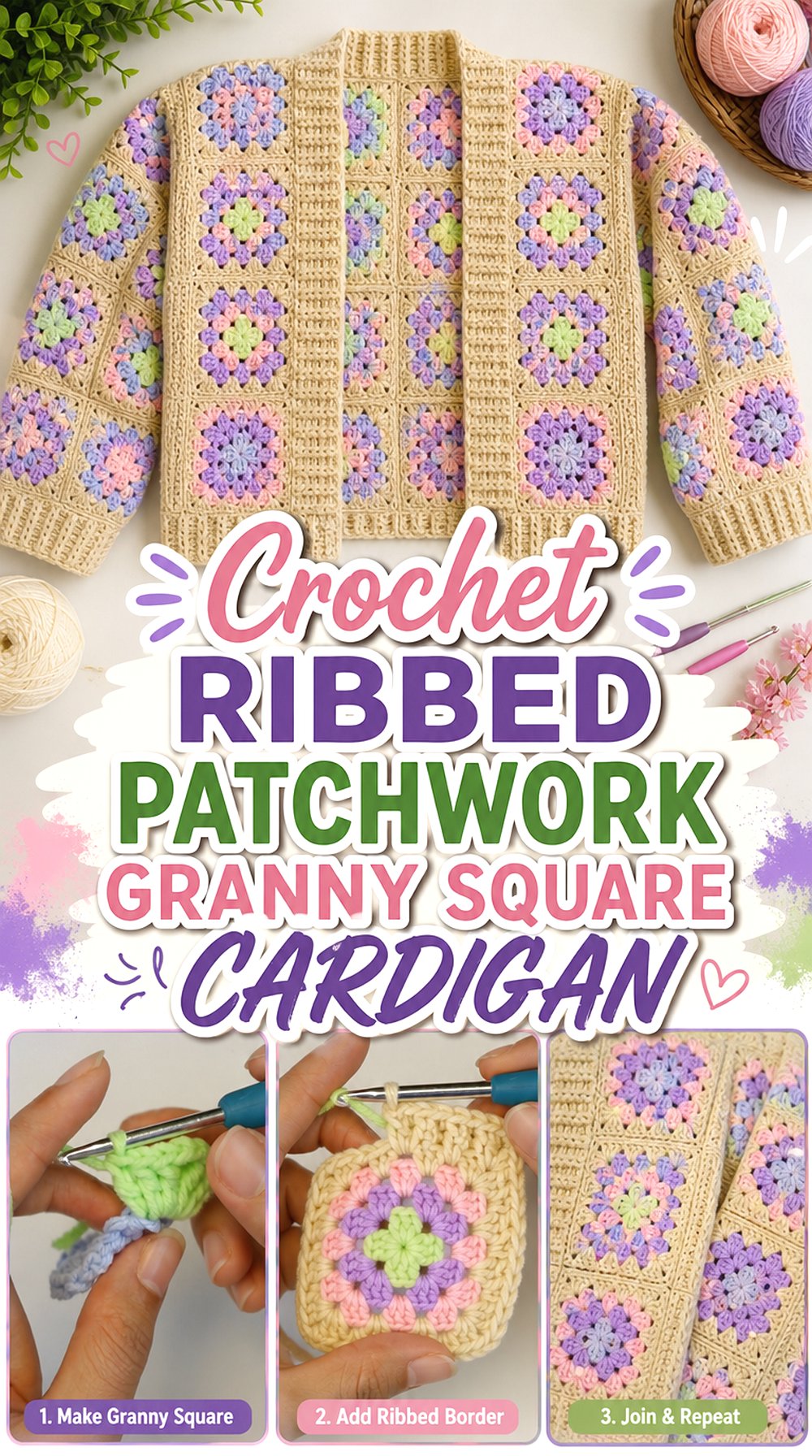
Chenda DIY’s version combines colorful granny square panels with pronounced ribbing around the hem, neckline, and wrists. Those framed edges make the finished garment feel closer to a conventional sweater even though the main fabric remains visibly patchworked. The tutorial separates the front, back, sleeves, joining, and finishing into clearly identified stages.
For autumn, the ribbing gives you a useful design tool: one repeated border shade can calm down several motif colors. This option makes sense if you like a colorful granny square surface but want the openings and edges to look visually contained rather than leaving every section with a simple motif edge.
Ribbing Can Pull the Patchwork Together Visually
Choose the ribbing color after laying out the squares, not before. A dark brown, charcoal, cream, or muted olive repeated at the cuffs, neckline, and hem can create a frame around a more varied autumn palette. High contrast makes the ribbing part of the design; low contrast lets the squares dominate. Either approach can work, but the decision should be consistent across the major edges.
Panel Alignment Matters at the Shoulders
This construction includes distinct front, back, and sleeve areas before final assembly. That means motif orientation can shift abruptly at a seam if you are not watching the layout. Place the panels beside one another before joining and check the shoulder line, sleeve direction, and front-panel balance. Fixing a rotated square is much simpler before the ribbing and final seams are complete.
Watch the Wrist Finish When Planning Sleeve Length
Ribbed cuffs add their own length and create a more defined sleeve ending. If you adapt the sleeves, do not judge their final length from the granny square portion alone. Compare the unfinished sleeve with the tutorial’s cuff section and the way you prefer sleeves to sit at the wrist. This checkpoint is especially useful if the cardigan will be worn under an autumn jacket.
Creator: Chenda DIY
4. Crochet Hooded Granny Square Cardigan

A hood immediately changes the mood of a granny square cardigan. Cherilyn Q’s tutorial uses granny squares for most of the garment and adds a hood for a more casual finished shape; the creator also explains that the hood can be omitted. That makes this a flexible choice for readers deciding between a straightforward open cardigan and something closer to a relaxed crochet hoodie.
For an autumn version, the hood can carry a solid border color or continue the patchwork palette. Because it adds fabric around the neck and upper back, however, the top of the garment already has more visual and physical weight than a collarless cardigan.
Decide on the Hood Before Finalizing the Color Layout
If the hood will be included, treat it as part of the cardigan rather than an afterthought. A very dark hood above light shoulders creates a strong focal point, while repeating a body color can make the transition softer. Lay your yarn choices together before joining the upper body so you know whether the hood will blend into the patchwork or deliberately stand apart.
A Hoodless Version Still Needs a Finished Neckline
The creator notes that the hood can be skipped and the neckline finished instead. If that is your plan, review the relevant part of the source before assuming the cardigan can simply stop at the square edge. The neck opening becomes much more visible without the hood, so even edging and balanced front corners matter more.
Keep Upper-Body Weight in Mind
Hoods add yarn at the back of the neck, while granny square garments already contain multiple joins. If you substitute a much heavier yarn, the shoulder area may behave differently from the source sample. Make a motif with the intended yarn, check its weight and flexibility, and avoid making the entire cardigan before deciding whether that fabric suits a hooded construction.
Creator: Cherilyn Q
5. Crochet Buttoned Unisex Granny Square Cardigan
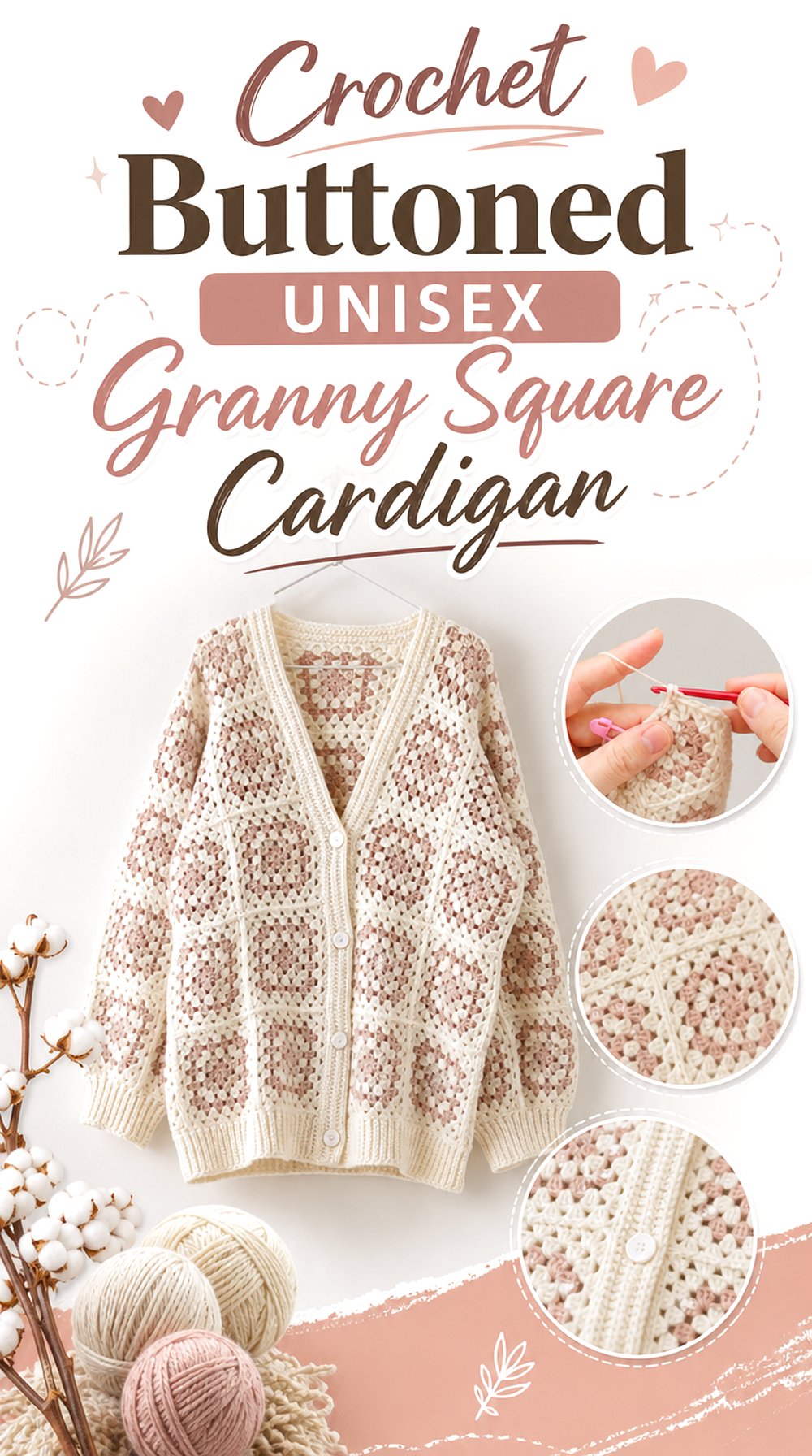
This tutorial from mochida akari – crochet and knitting creates a granny square cardigan with ribbed cuffs, hem, collar, and front finishing, plus a button closure. The creator describes the design as unisex and works with DK-weight yarn in the demonstrated version.
The restrained shape makes it a strong autumn wardrobe option for readers who prefer a cardigan that feels less decorative than a flower-motif piece. A limited palette of cream, camel, burgundy, forest green, navy, or brown could make the same basic construction read as a quiet fall layer while the visible motif grid still provides handmade texture.
“Unisex” Does Not Replace Personal Fit Checks
A unisex label describes the design intent, not how the shoulders, sleeves, or body width will fit every wearer. Review the finished measurements given by the creator and compare them with a cardigan you already like. If you need extra room for autumn layers, check that before producing the full motif set. Do not assume changing only sleeve length will correct a body-width issue.
The Button Creates a Clear Front Focal Point
Because this version includes a button, the front edges need to meet the way the original design intends. If you change square dimensions or front edging, check the closure again before sewing on the button. A front that looks balanced while open can behave differently when fastened, especially if the cardigan is being worn over a thicker base layer.
Repeated Ribbing Can Unify a Muted Autumn Palette
The cuffs, hem, collar, and front border repeat similar finishing around several parts of the garment. Using one stable neutral for those sections can make varied granny squares feel more cohesive. If you prefer minimal color changes, use tonal motifs and let the ribbing create most of the contrast. Either way, keep the trim yarn compatible with the stretch and thickness of the main fabric.
Creator: mochida akari – crochet and knitting
6. Crochet Granny Square Cardigan With Inside Pockets

Roxi crochet’s cardigan adds something many granny square garments leave out: inside pockets. The source combines granny squares with a more textured yarn treatment and provides a tutorial for a cardigan that the creator says can be adapted in size through the accompanying pattern.
That hidden storage makes this project function differently from the floral and tie-front cardigans. The pockets do not have to become part of the exterior motif arrangement, which keeps the front visually cleaner. For autumn, this could work well when you want an ornate or textured cardigan but still prefer the pockets to remain secondary.
Pocket Placement Should Not Distort the Front
A pocket adds another layer of fabric and may carry some weight in use. Check where the source positions the inside pockets and how they relate to the front panels before adapting them. If you change the cardigan width or square scale, do not automatically place the pocket at the same relative stitch location without checking how it hangs against your own finished panel.
Texture Can Compete With Granny Square Definition
The source uses more than one yarn type, including a furry yarn. That creates a different surface from a crisp all-cotton or smooth acrylic granny square cardigan. If you substitute a highly textured fall yarn, make a sample first and check whether the motif edges remain readable. Sometimes a textured accent is more effective than using fuzzy yarn across every component.
Treat Size Adaptation as a Garment Decision
The creator notes size adaptation in the written support, but any change still needs to account for body width, sleeve placement, and pocket position together. Measure the completed motif fabric instead of relying on a generic clothing size. If a square substitution changes the panel dimensions, revisit the full layout before adding the pockets.
Creator: Roxi crochet
7. Crochet Sunflower Granny Square Autumn Cardigan

Sunflower squares naturally fit an autumn palette because the motif already lends itself to golden petals, deeper centers, and earthy backgrounds. In by Kristine’s full cardigan tutorial, the sunflower square is repeated across a patchwork garment and then assembled and finished with ribbing.
Unlike a classic multicolor granny cardigan, the repeated flower creates a clear theme across the entire piece. That makes motif consistency more important: a square that is only slightly different may be much more noticeable when the viewer is expecting a repeated sunflower. This is a strong choice when you want the autumn identity to come from the motif itself rather than only the yarn palette.
Let the Flower Stay Readable After Joining
The sunflower needs enough contrast between center, petals, and surrounding square to remain recognizable once multiple motifs are joined. If you mute every color into a similar value, the floral shape may disappear. For a softer fall version, keep the contrast but choose dusty gold, caramel, brown, olive, or cream rather than reducing the contrast between motif sections.
Check Every Motif Before Building the Panels
Repeated floral squares magnify small differences. Before joining, compare the finished motifs side by side and check their dimensions, corner shape, and orientation. Correcting one inconsistent square early is much easier than forcing it into a panel. The creator’s tutorial includes the layout and assembly process, so return to that source rather than recreating the joining sequence independently.
Keep the Edging From Competing With the Flowers
A strong border color can either frame the sunflower pattern or introduce a second visual theme. Lay a few finished squares beside the proposed ribbing or edging yarn before committing. If the flowers are already high contrast, a quieter edge often gives them more room. If the motifs are tonal, a darker border can provide the definition the overall cardigan needs.
Creator: by Kristine
8. Crochet Cropped Join As You Go Granny Square Cardigan

MJ’s Off The Hook Designs takes a different approach to assembly by incorporating a join-as-you-go method into the final motif round. The finished cardigan is cropped and includes three buttons, ribbed cuffs, a ribbed collar, and a front band. The tutorial covers a range of sizes, with the video demonstrating one of them.
For autumn, the shorter silhouette works well when you want granny square texture without the weight of a long coat. It can also balance high-waisted pants or skirts differently from the longer options in this collection. The main decision, however, is whether you want to commit to joining during motif construction rather than completing every square first.
Join-As-You-Go Changes When Layout Decisions Happen
Traditional seaming lets you finish a pile of squares and rearrange them repeatedly. Join-as-you-go reduces that freedom once motifs are connected. Before starting the joining stage, finalize the front, back, and sleeve color layout and keep a photo nearby. This matters even more with a fall palette containing several dark shades that could accidentally cluster in one area.
The Cropped Length Needs Its Own Layering Plan
A cropped cardigan covers less of the lower torso than a hip-length or coat-style design, so consider what will be visible underneath. If the cardigan is meant to sit over dresses or high-rise bottoms, the shorter proportion may be exactly the point. If you want more lower-body coverage for cold-weather wear, compare the creator’s available pattern options rather than simply adding an unplanned strip after finishing.
Ribbing and Buttons Give the Short Shape More Structure
The ribbed collar, cuffs, band, and button closure create strong finished edges around a relatively short motif body. When adapting colors, consider keeping the trim consistent so the cardigan does not become visually fragmented. Also check the front fit before final button placement; additional layering underneath can change how comfortably the cardigan closes.
Creator: MJ’s Off The Hook Designs
Which Autumn Granny Square Cardigan Shape Should You Choose?
| If you want… | Consider… | Main planning point |
|---|---|---|
| An open layer with adjustable closure | Tie-Front Autumn Cardigan | Check neckline shaping and tie position |
| Maximum length and visual impact | Longline Coat Cardigan | Watch overall weight and color repetition |
| Sweater-like finished edges | Ribbed Patchwork Cardigan | Account for cuffs and borders in final dimensions |
| A casual outer-layer look | Hooded Cardigan | Plan extra yarn and visual weight around the neck |
| A restrained everyday shape | Buttoned Unisex Cardigan | Compare personal measurements rather than relying on the label |
| Hidden storage | Inside-Pocket Cardigan | Make sure pockets do not distort front drape |
| A clearly seasonal motif | Sunflower Cardigan | Keep repeated floral squares consistent |
| A short, polished modular garment | Join-As-You-Go Crop Cardigan | Finalize color placement before joining |
Conclusion
These eight crochet autumn granny square cardigan ideas cover much more than different fall color schemes. Choose the tie-front or cropped version when you want a lighter, shorter layer; the long coat when coverage and drama matter; the hooded cardigan for a casual shape; and the buttoned or ribbed designs when you prefer defined sweater-style edges. The inside-pocket option adds function, while the sunflower cardigan lets the motif carry the autumn theme.
Whichever direction you choose, measure your completed squares and plan the full garment layout before joining. Use the original tutorials near the end of your planning process for their exact construction details rather than assuming one granny square can automatically replace another.
Frequently Asked Questions
Can I replace a tutorial’s granny square with an autumn flower square?
Sometimes, but compare the blocked dimensions and fabric behavior first. Two motifs can use the same yarn weight and still finish at different sizes or densities. A thicker flower center may also change drape and garment weight. Make both the intended substitute and, if practical, the tutorial’s original square before deciding. The replacement needs to work with the creator’s panel dimensions, not merely look attractive on its own.
Should granny squares be blocked before planning a cardigan layout?
Blocking can be useful when it is appropriate for the fiber and construction because it lets you compare motifs at a more stable finished size. The important point is consistency: measure comparable squares in the same state. If one motif is stretched aggressively and another is not, the layout calculation will be misleading. Follow the yarn’s care guidance and the original tutorial when it gives project-specific blocking instructions.
Which autumn granny square cardigan is better for layering over thicker tops?
Look first at finished body and sleeve room rather than cardigan length. A long garment can still fit closely at the shoulders, while a shorter cardigan can have generous ease. Compare the source measurements with a cardigan you already wear over similar fall layers. Hooded and coat-like designs may look warmer, but visual warmth does not guarantee enough space for a sweatshirt or chunky sweater underneath.
How can I make a multicolor granny square cardigan look more autumnal without making it too busy?
Use fewer dominant colors and repeat them deliberately. One neutral border color can connect rust, mustard, olive, burgundy, brown, or muted orange motifs without eliminating variety. You can also concentrate stronger shades in the motif centers and use a consistent outer round. Lay out the entire front and back before joining so the darkest or brightest colors do not accidentally collect in one area.
What is the biggest risk when changing yarn in a granny square cardigan tutorial?
The main issue is not the yarn label itself but the fabric it creates. A substitution can change square dimensions, stretch, weight, drape, and the way seams behave. Make a sample motif and compare its finished measurement with the source before producing dozens of squares. If the motif size changes significantly, expect the panel layout or finished garment measurements to change as well.
Is join-as-you-go better than sewing all the granny squares together later?
Neither method is universally better. Join-as-you-go can integrate assembly into the motif-making process, but it requires earlier commitment to square placement. Separate motifs give you more freedom to rearrange colors and replace individual squares before final joining. If color planning is your main concern, that flexibility may be valuable. If you prefer progressive assembly, a join-as-you-go tutorial such as the MJ’s Off The Hook Designs cardigan offers a useful example.


