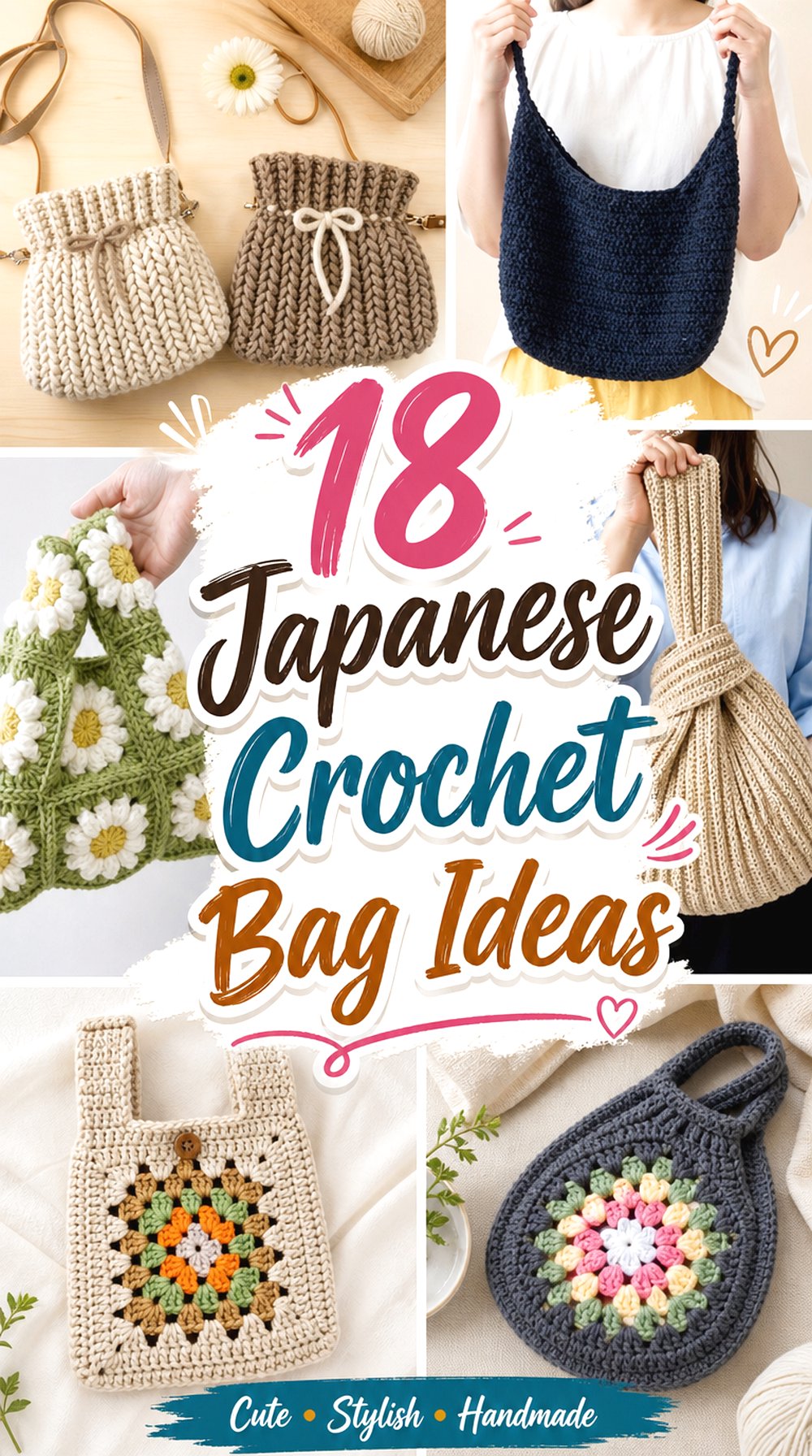
18 Japanese Crochet Bag Ideas: Knot Bags, Totes, and Pouches
Japanese crochet bag inspiration covers much more than one silhouette. This collection includes recognizable Japanese knot bags with uneven handles, a kinchaku-style drawstring shape, compact dumpling bags, floral motifs, mesh shoppers, contemporary mini purses, and structured totes. Several tutorials also come directly from Japanese crochet creators, giving the roundup a wider view of current bag-making styles.
Not every project below represents a traditional Japanese bag technique. Instead, the collection separates specific forms such as the Japanese knot bag from contemporary crochet bags that fit the broader Japanese crochet theme. The comparisons focus on decisions that affect real use: how the opening works, whether the fabric stretches, how the handle changes carrying comfort, when lining is worth considering, and which shapes suit small essentials versus everyday shopping.
Quick List
- Crochet Asymmetrical Japanese Knot Wrist Bag
- Crochet Low-Sew Panel Knot Purse
- Crochet Granny Square Japanese Knot Bag
- Crochet Japanese Knot Tote with Long Loop Handle
- Crochet Oversized Japanese Knot Beach Bag
- Crochet Two-Square Dumpling Knot Bag
- Crochet Minimal Linked-Stitch Everyday Bag
- Crochet Rounded Mini Handbag
- Crochet Flap Handbag with Ribbon Detail
- Crochet Flower Motif Carry Bag
- Crochet Kinchaku-Style Drawstring Bag
- Crochet Soft Fur Mini Bag
- Crochet Compact Drawstring Pouch Bag
- Crochet Beaded Mesh Market Bag
- Crochet Structured Bottom-Board Handbag
- Crochet Long-Handle Net Shoulder Shopper
- Crochet Ridged Two-Tone Summer Tote
- Crochet Herringbone Mini Shoulder Bag
Choose the Bag Structure Before the Japanese-Inspired Details
The opening is one of the biggest practical differences in this collection. A Japanese knot bag uses two unequal handles: the longer handle passes through the shorter one, creating the characteristic carrying closure. That makes it quite different from a drawstring bag, flap purse, or conventional open tote.
Motif construction creates another decision. Joined squares make color and layout part of the structure, while a continuously crocheted body produces a quieter surface. Mesh bags prioritize expansion and lightness but leave small contents less contained. A firm purchased base pushes a design in the opposite direction, giving the body a stronger foundation. Decide which behavior you want first; changing colors later is much easier than turning an open mesh shopper into a structured handbag.
Yarn, Lining, and Handles Change How the Bag Behaves
For bags, yarn affects more than appearance. A dense crochet fabric generally controls small contents better than open mesh, while an elastic fabric can become noticeably longer once a bag is loaded. A long shoulder strap also has more opportunity to stretch than a compact wrist handle, so evaluate the strap separately from the bag body.
Lining is especially worth considering when the crochet has large openings, the bag will hold small objects, or you want to reduce how much the body expands. It can also give joined-motif bags a cleaner interior. With fuzzy yarn, the opposite issue appears: the fibers can obscure stitch definition, making good lighting and careful edge checking more important while you work. If you plan to substitute yarn, compare the finished fabric before committing to the entire bag rather than relying only on the yarn label.
Match the Opening to What You Carry
A clever closure is not automatically the most practical choice for every purpose. Japanese knot handles are convenient for wrist carrying and quick access, but they do not function like a zipper. A drawstring can gather a much larger part of the opening, while a flap adds coverage without cinching the body. Open totes and net shoppers favor accessibility and capacity instead.
Think about the smallest object you normally carry and how often you need to reach inside. Keys or loose accessories can disappear through large mesh openings, while a tiny pouch may become awkward if its closure takes up too much of the usable space. For any tutorial without a closure you need, first check whether adding a lining, inner pouch, snap, or other modification would interfere with the original handle or opening construction.
1. Crochet Asymmetrical Japanese Knot Wrist Bag
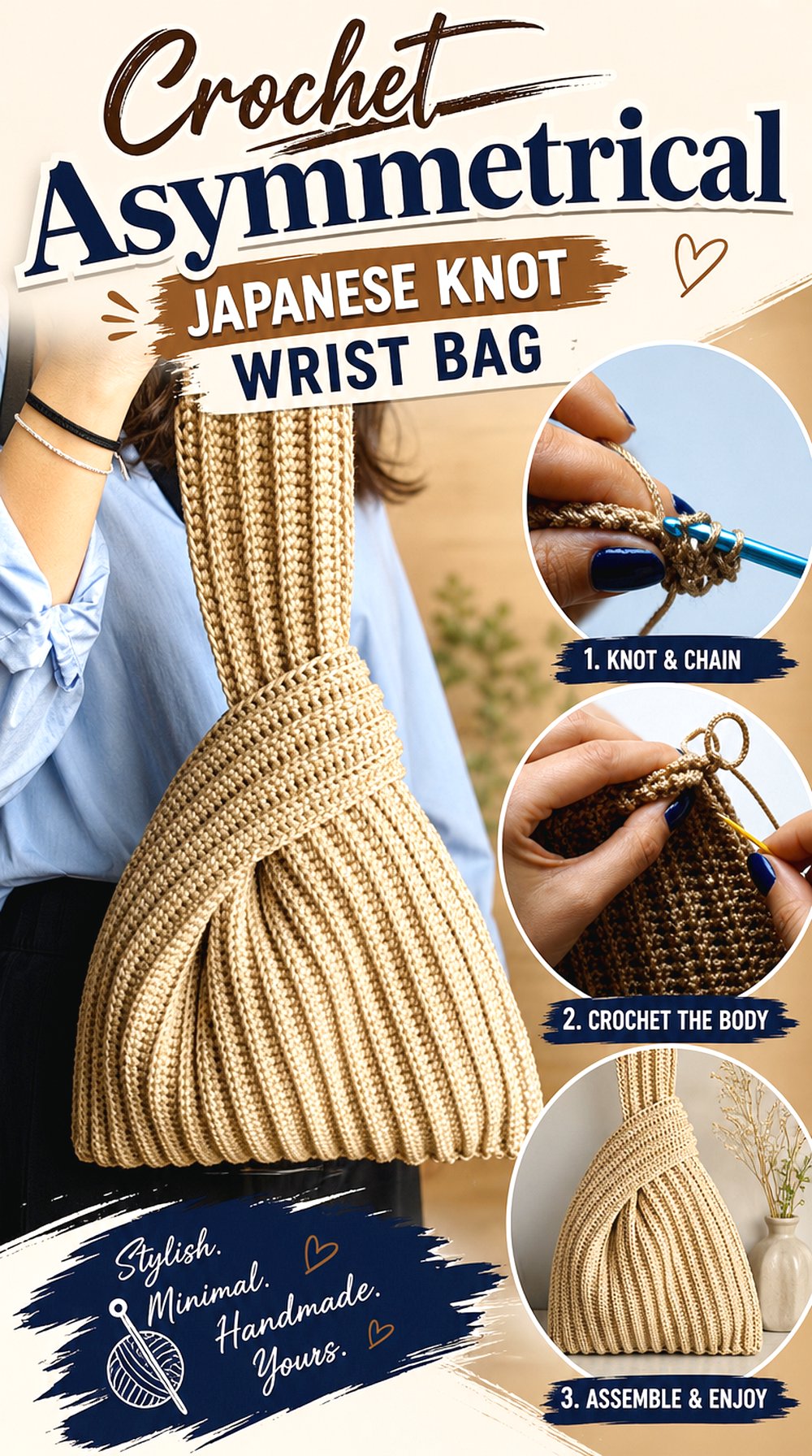
This design puts the defining Japanese knot feature front and center: one short handle and one longer loop that work together as the closure. Lallaulab’s tutorial shows the finished knot-bag form and presents more than one scale, which makes it particularly useful if you are deciding whether the shape should function as a compact wrist purse or a roomier hand-carried bag.
The minimalist body also gives yarn texture plenty of visual space. Instead of adding extra hardware, the handles themselves determine how the bag closes and how it hangs from the wrist.
Handle Proportion Controls the Knot Effect
The two handles should not be treated like a matching pair. Their deliberate difference is what allows the longer loop to pass through the shorter one. When adapting the bag, check the finished handle behavior before assuming that simply lengthening both handles will create a larger version. Altering their relationship can change where the opening gathers and how comfortably the bag sits on your wrist.
Test the Opening Before Adding a Lining
Because the body draws together when one handle moves through the other, a lining needs enough freedom near the top to follow that movement. A lining that is too rigid or attached without considering the closure can fight the intended shape. Pin or baste a proposed lining first and confirm that the longer handle still passes easily through the shorter loop.
Creator: Lallaulab
2. Crochet Low Sew Panel Knot Purse
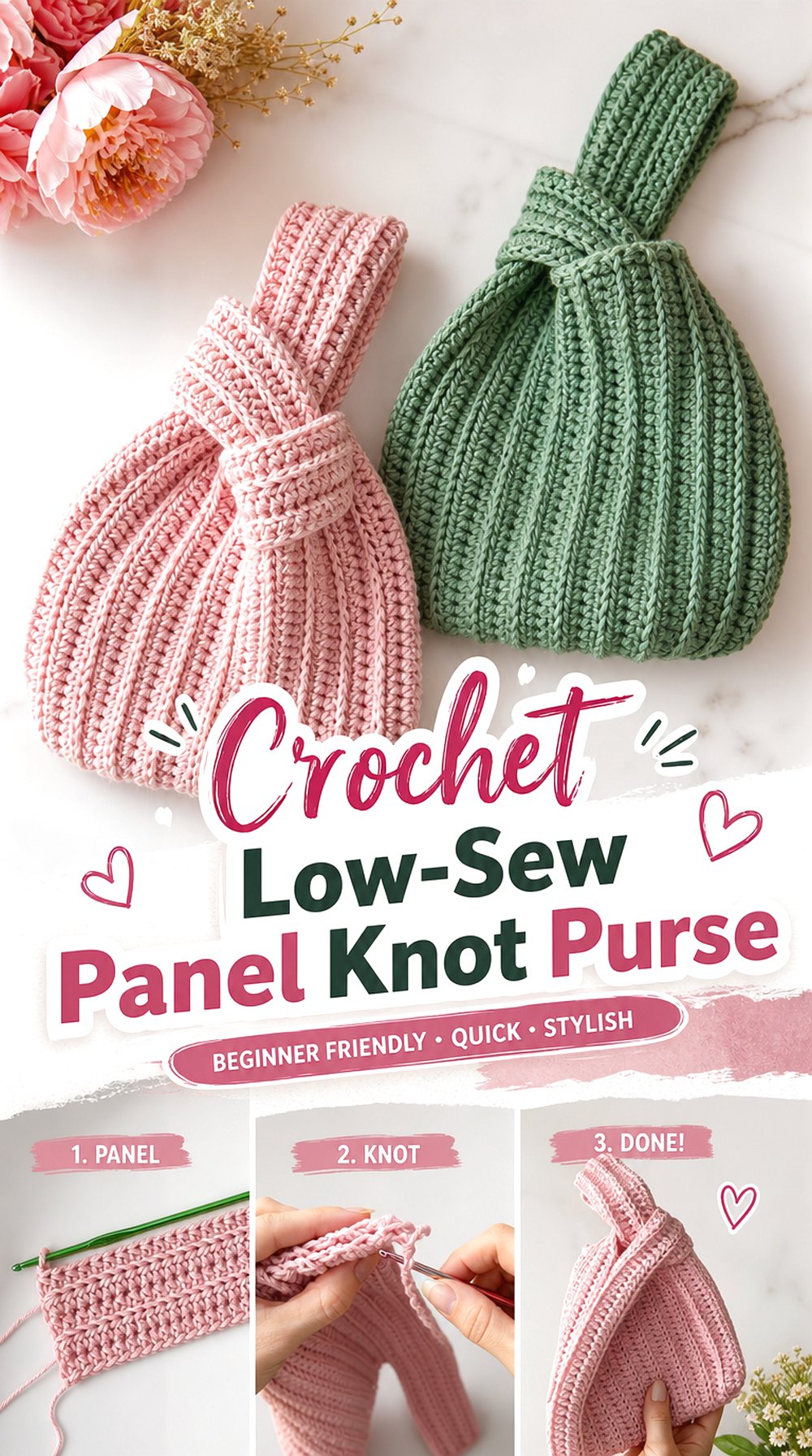
This version is a useful choice for crocheters who prefer understanding a bag as flat components before it becomes a three-dimensional object. Luckyday’s tutorial uses a panel-based approach and clearly distinguishes the short and long handle areas that create the knot-bag silhouette.
The flatter construction makes this project feel different from round-bottom or continuously worked knot bags. It can also make color planning easier because you can judge the surface of each panel before the purse is assembled.
Flat Panels Make Symmetry Easier to Check
Before joining, place the crocheted pieces side by side and compare their dimensions and edge tension. Even a small discrepancy can become more obvious once seams pull the body into shape. This checkpoint is particularly useful if you substituted yarn or changed hook size, because matching the tutorial’s visual proportions matters more than assuming your fabric will behave identically.
Keep Seams from Becoming the Stiffest Part
A very tight joining seam can produce a ridge that behaves differently from the surrounding crochet. That may be desirable for definition, but it can also make a compact bag feel rigid along one edge. Compare the flexibility of the seam with the body as you assemble it and avoid forcing the panels into alignment if their dimensions have drifted.
Creator: luckyday ♡
3. Crochet Granny Square Japanese Knot Bag
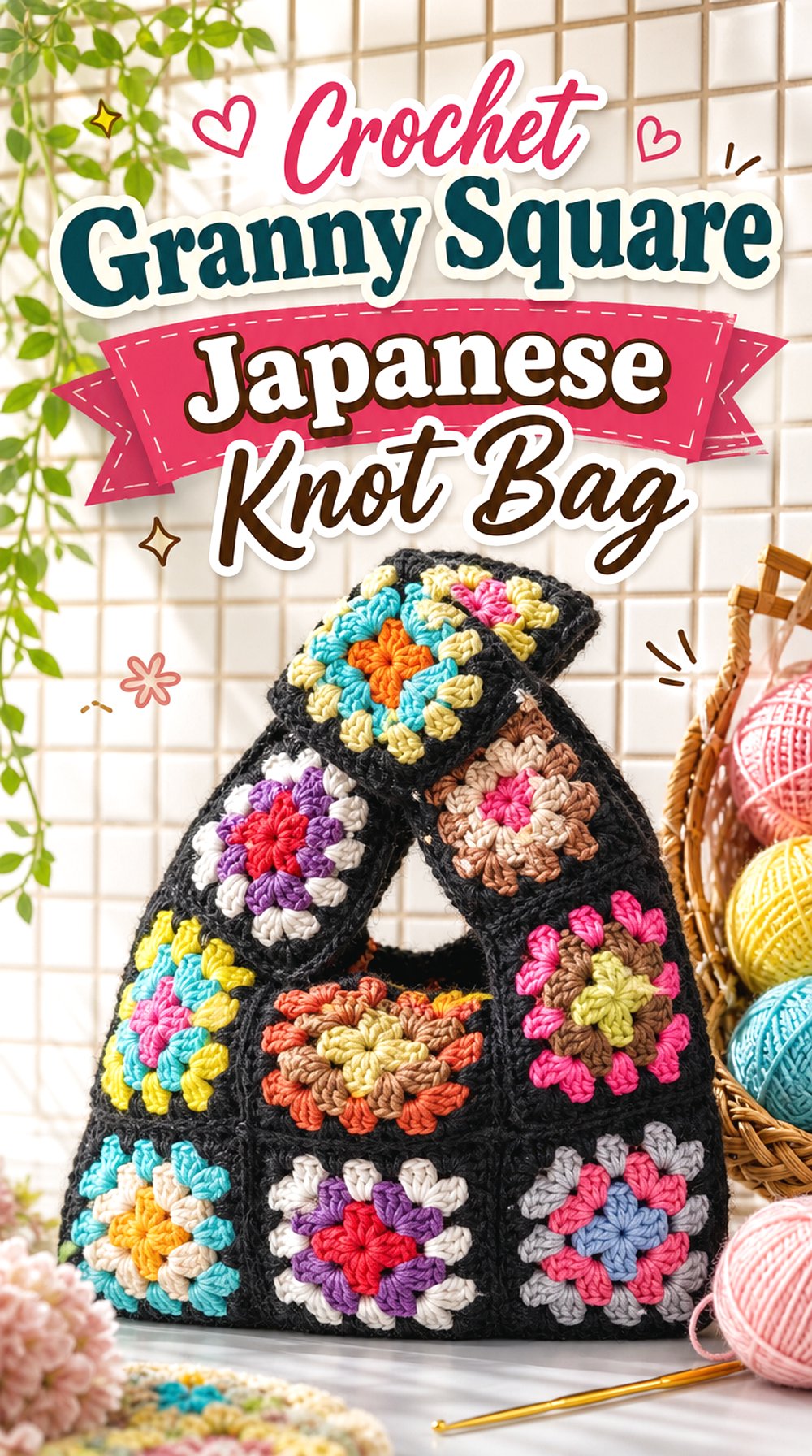
SaltyDIY combines two strong crochet identities in one finished bag: joined granny-square surfaces and asymmetrical Japanese knot handles. The tutorial visibly focuses on a square-based bag, so the joins and motif arrangement become part of the finished design rather than disappearing into a solid fabric.
This is a good direction when you want individual motifs to carry the color story. It also introduces planning questions that a continuous bag does not have, including blocked square consistency, motif direction, seam bulk, and whether the open spaces in your chosen granny square suit what you intend to carry.
Block the Squares Before Judging the Layout
Motifs that look similar straight from the hook can settle to different dimensions. Lay out the blocked squares before final joining and check both size and orientation. Correcting a slightly undersized motif at this stage is far easier than trying to disguise an uneven edge after the handles have been formed.
Let the Join Support the Bag Design
The joining method affects both appearance and flexibility. A pronounced join can outline every motif and strengthen the patchwork look, while a quieter join lets the square colors dominate. Whichever approach the tutorial uses, judge whether the seam feels strong enough at high-movement areas near the opening and handles before committing to the entire layout.
Decide Whether the Motif Holes Need Backing
Classic granny-square openings can expose small contents. If that is inconvenient for your planned use, consider a lining or removable inner pouch. SaltyDIY’s project material acknowledges lining as an option, making this an especially relevant decision for the finished bag.
Creator: SaltyDIY
4. Crochet Japanese Knot Tote with Long Loop Handle
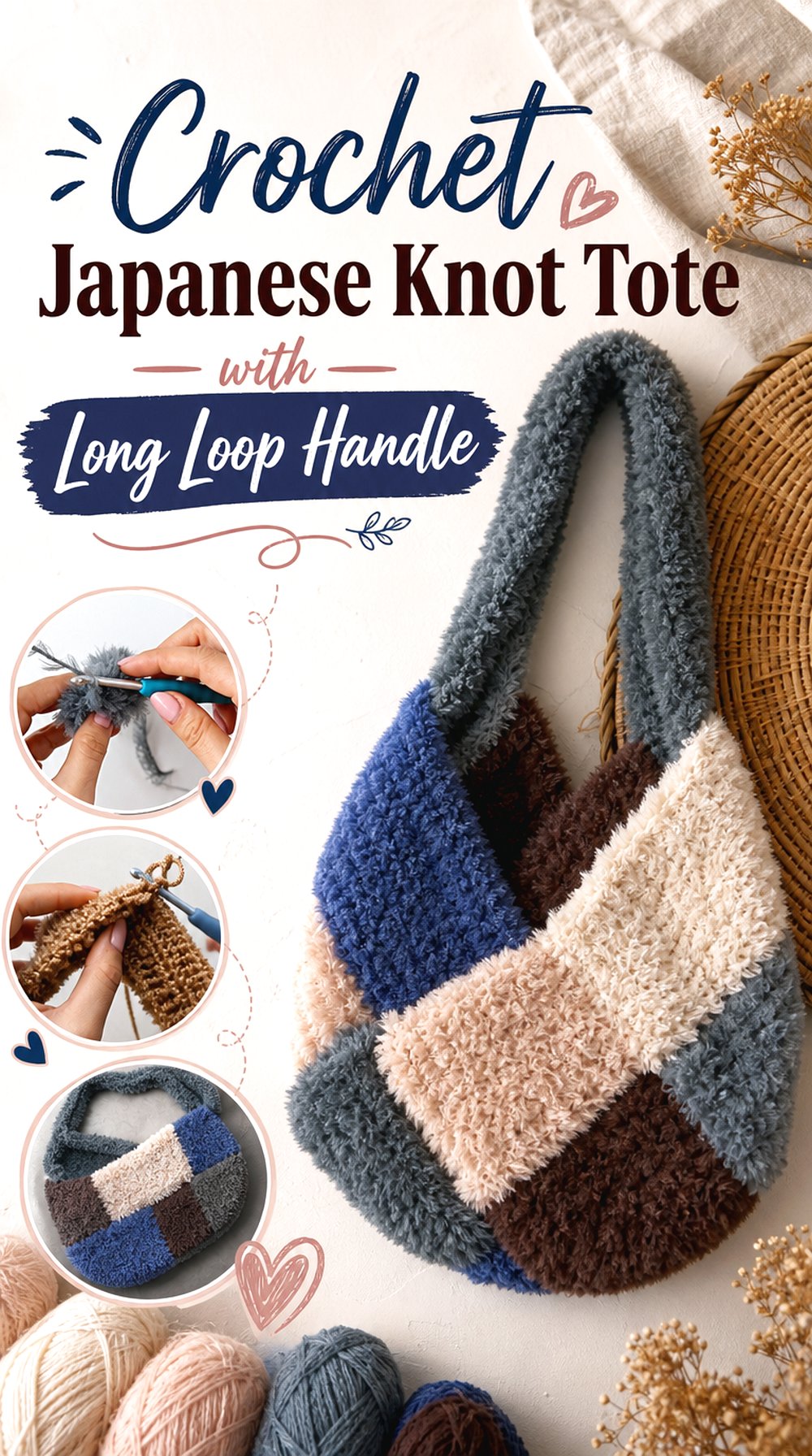
Sirin’s Crochet presents the knot concept at tote scale rather than as a tiny novelty pouch. The finished design keeps the unequal-handle identity of a Japanese knot bag while giving the body the broader presence of a tote.
This makes it a useful middle ground between the compact wrist versions and the oversized beach-style option later in the list. With a larger bag, handle stretch and opening control become more important because the contents can exert more leverage on the crocheted fabric.
A Bigger Body Puts More Pressure on the Handle
When a knot bag grows toward tote proportions, do not assess the handle only while it is empty. The longer loop may elongate once the bag carries weight, which changes where the body hangs. If you substitute a stretchier yarn, make a small fabric sample and pull it lengthwise before deciding that the tutorial’s handle proportions will transfer unchanged.
Preserve Enough Flexibility for the Closure
The longer handle still needs to move through the shorter side without excessive friction. Adding thick reinforcement everywhere can make the bag stronger but interfere with that motion. If reinforcement is necessary, target the areas that actually bear weight rather than automatically stiffening the entire opening.
Creator: Sirin’s Crochet
5. Crochet Oversized Japanese Knot Beach Bag
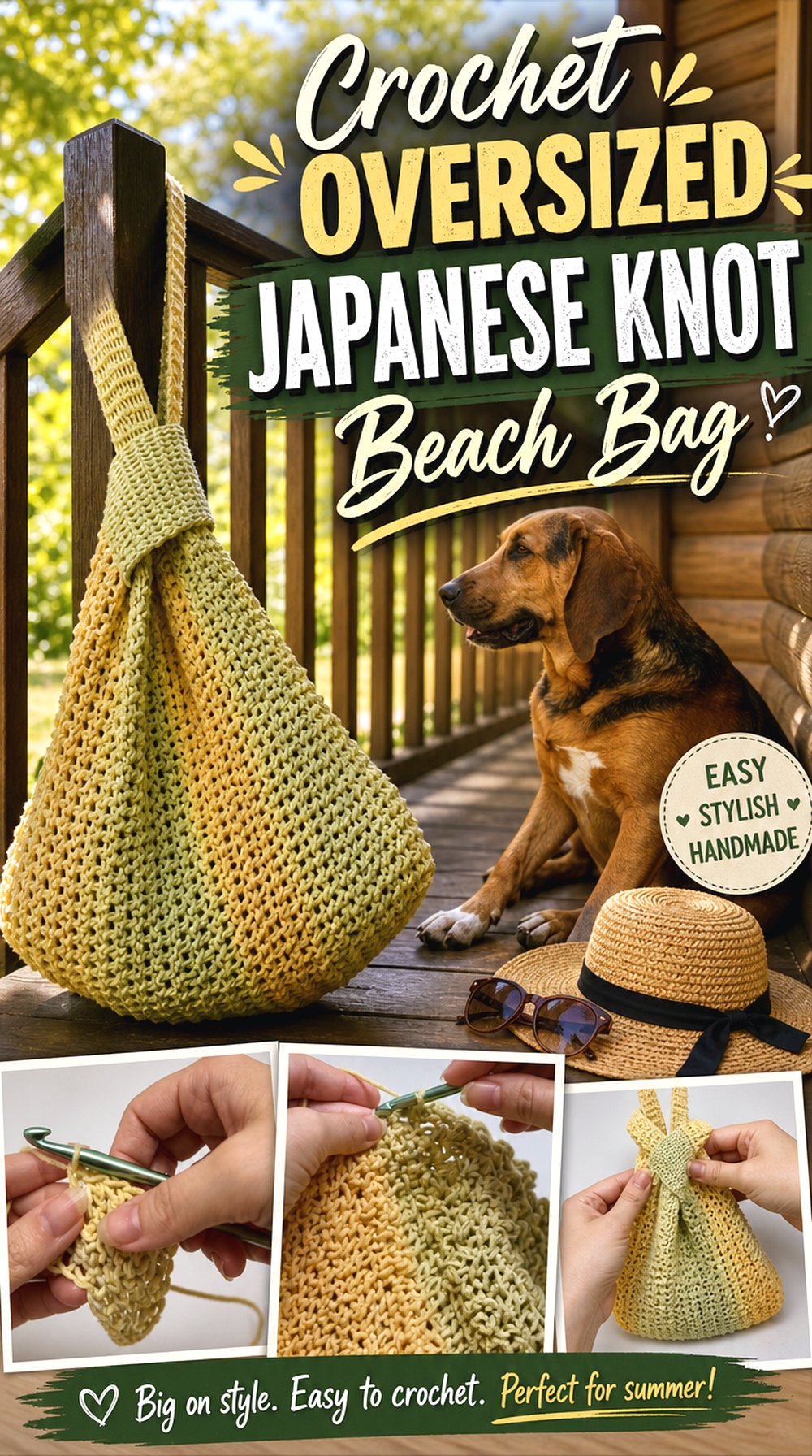
Bag-O-Day Crochet takes the Japanese knot idea into a noticeably larger beach- or market-bag direction. The tutorial explicitly frames the finished project as a large knot-style bag, making scale its defining difference from the smaller wrist purses.
A roomy crochet bag can be appealing for towels, lightweight purchases, or larger personal items, but increased capacity also magnifies stretch. The body and handles need to be judged as a system rather than treating the larger size as a simple visual enlargement.
Capacity and Strength Are Not the Same Thing
A roomy body can physically fit more objects without necessarily being suitable for heavy loads. Yarn choice, stitch elasticity, handle construction, and reinforcement all affect performance. Avoid assuming that a large finished size creates a specific weight capacity; instead, use the creator’s construction as intended and assess your substituted materials conservatively.
Watch How the Opening Changes When Filled
A knot closure that looks compact while empty can sit differently when the bag is full. Before planning an added lining or internal pocket, consider how far the body expands and where the long handle pulls the opening. Place important small items in a separate pouch if the top remains relatively open during use.
Creator: Bag-O-Day Crochet
6. Crochet Two Square Dumpling Knot Bag
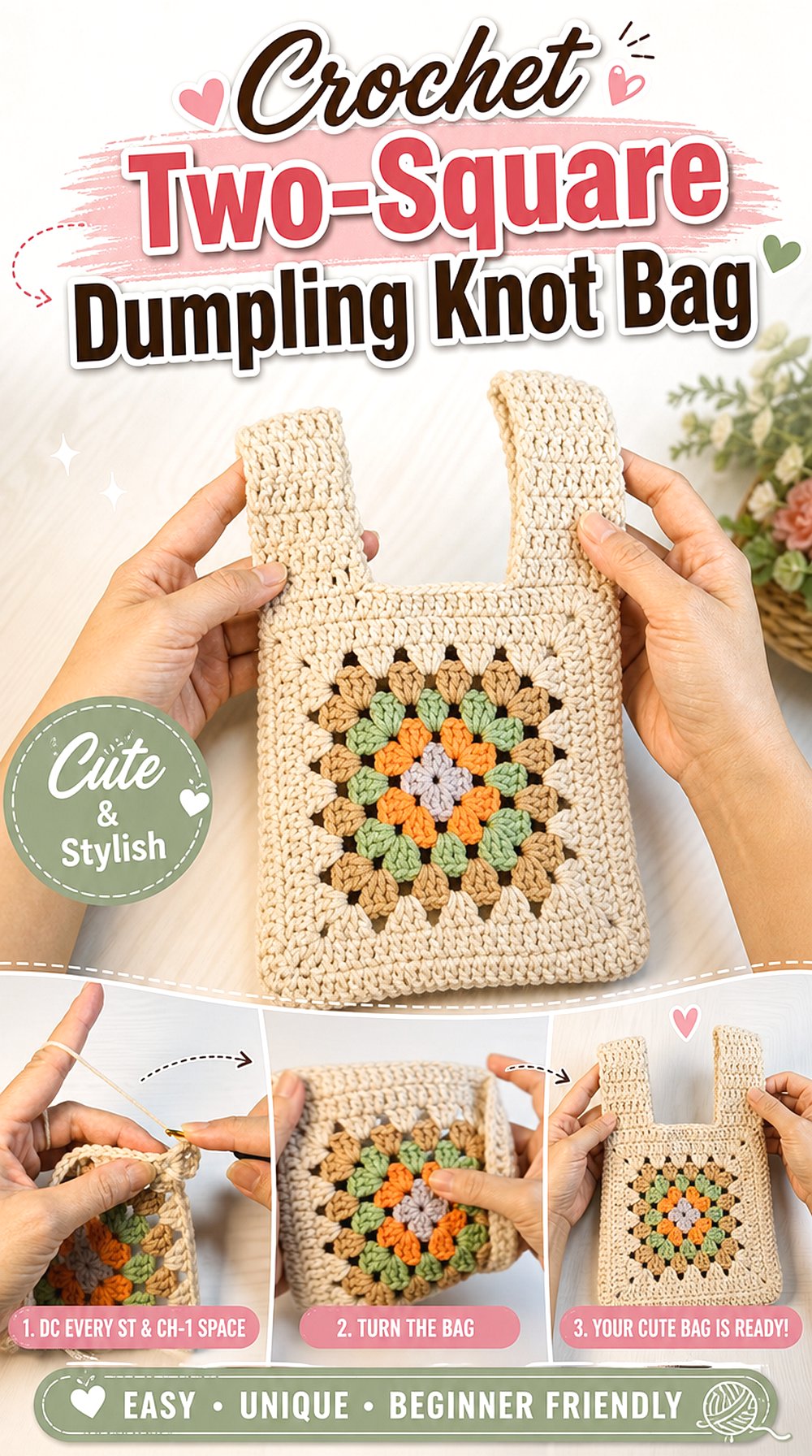
The Dumpling Bag from Crochet Musings changes the geometry completely. Instead of a straightforward tote body, two granny squares become a rounded, dumpling-like mini bag with Japanese knot handles. The creator’s project page describes the two-square construction and identifies it as a mini Japanese knot bag.
That makes this one of the most compact and shape-driven options here. It is a useful reminder that square motifs do not need to remain visibly square once they are assembled into a three-dimensional accessory.
Square Dimensions Determine the Final Scale
If you substitute a different granny-square design, the blocked dimensions matter more than the motif name. Two squares that are larger, denser, or more open than the originals will alter both the capacity and the curve of the finished dumpling shape. Make both replacement motifs first and compare them directly before committing to handle changes.
Rounded Seams Need Consistent Tension
The charm of this project comes from turning flat squares into a softer pouch form. Uneven joining tension can pull one side tighter and distort that rounded effect. Keep checking the bag from both faces while joining rather than judging only the seam directly in front of you.
Creator: Crochet Musings
7. Crochet Minimal Linked Stitch Everyday Bag
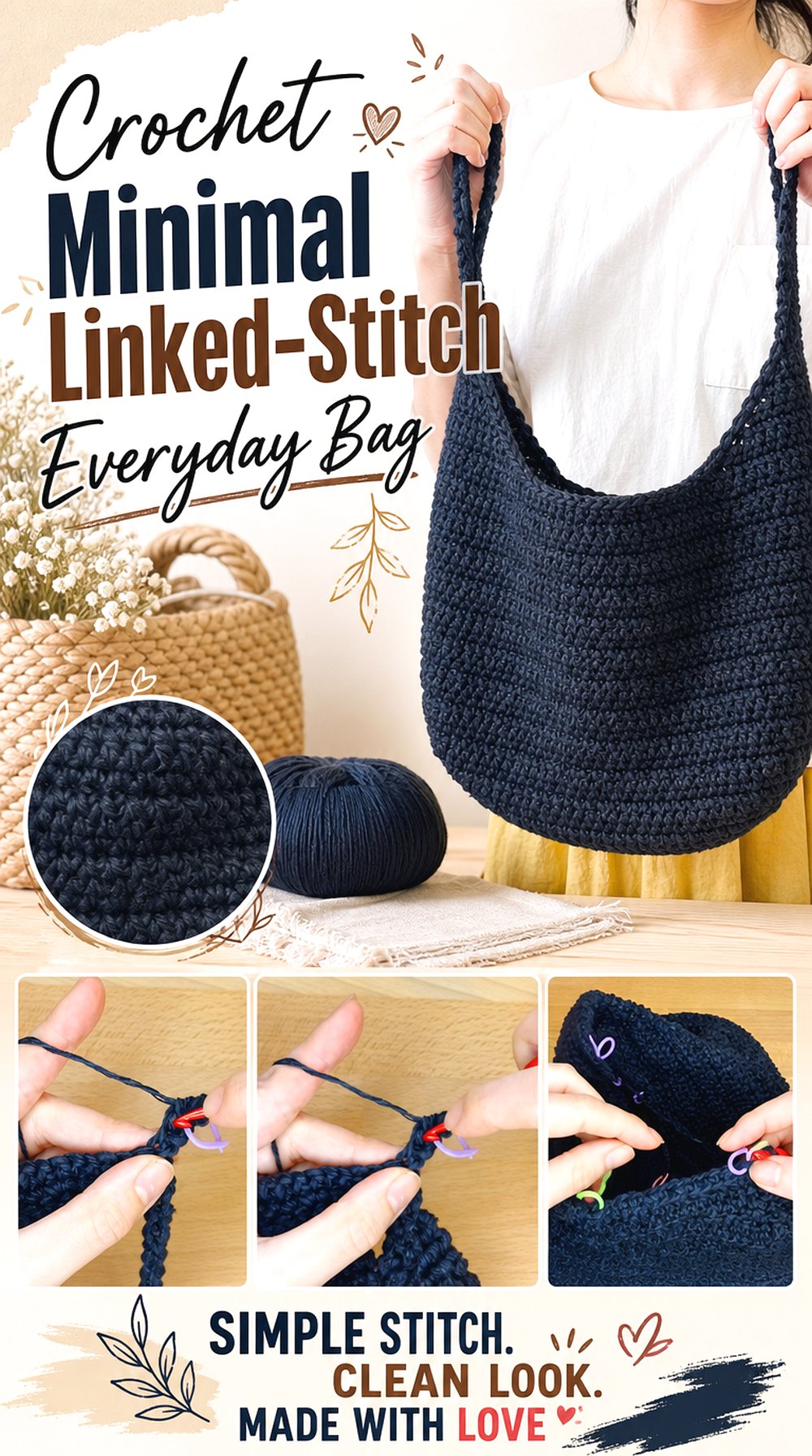
Kokakiko’s understated handbag shifts away from knot closures and decorative motifs toward a simple, solid fabric. The tutorial uses linked double crochet, which the creator presents as producing a denser surface than ordinary double crochet, and it covers the base, body, and handles of the finished bag.
This option suits the Japanese crochet theme through its contemporary Japanese creator and pared-back finished look rather than through a traditional bag form. It is a useful contrast to the highly textured and motif-heavy entries.
Dense Fabric Helps Control Small Contents
A tighter-looking fabric can reduce the need for an inner pouch compared with wide mesh, but inspect your own gauge rather than assuming no lining is needed. Hold the finished swatch against light and gently stretch it. If openings appear large enough for the items you carry, a lining may still improve function.
Minimal Styling Makes Tension More Visible
When a bag has few decorative distractions, uneven rows, a wandering seam, or inconsistent handle placement becomes easier to notice. Periodically lay the work flat and compare both sides. This is particularly important if you change yarn, because a firmer or more elastic substitute can make the same stitch pattern look quite different.
Creator: kokakiko
8. Crochet Rounded Mini Handbag
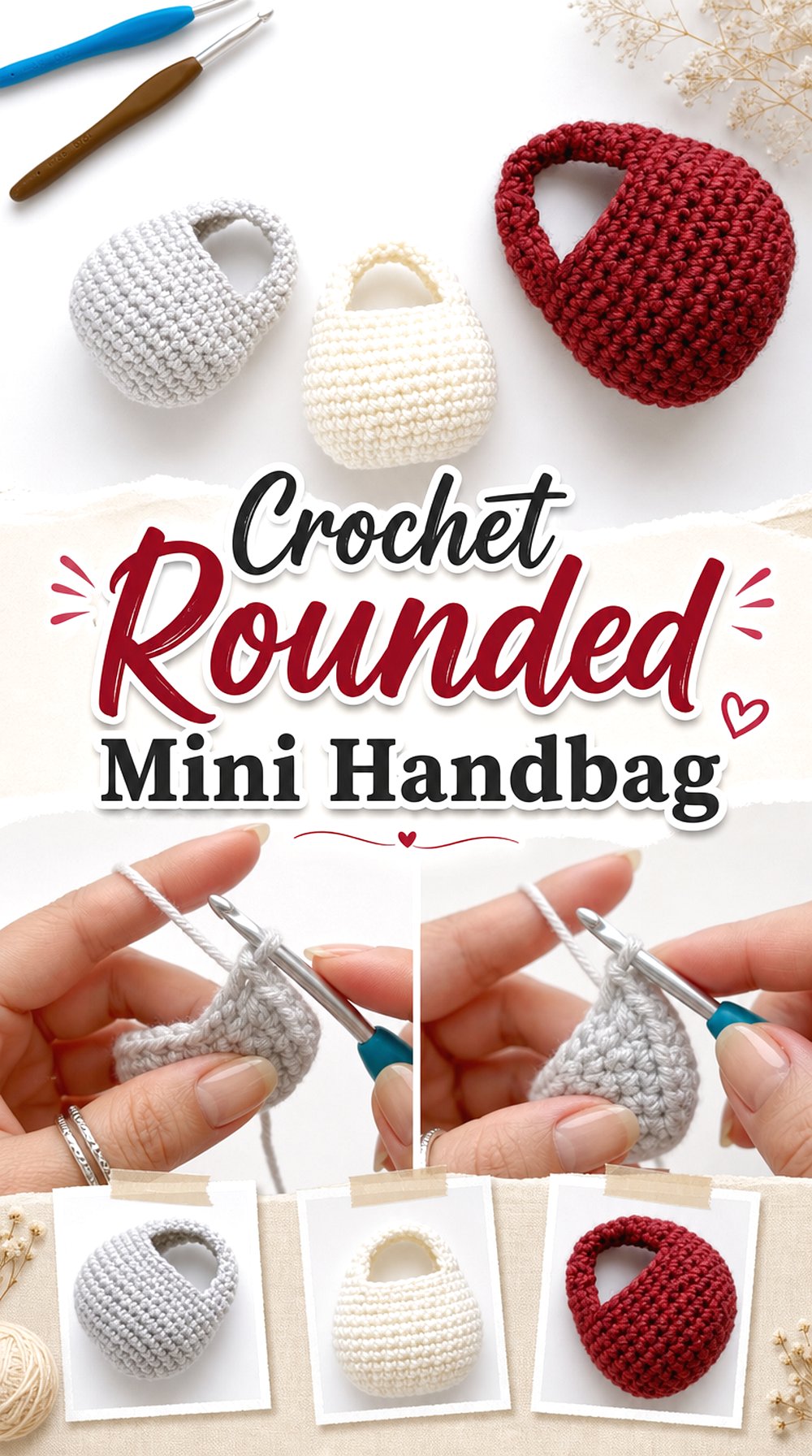
LiLi nana* offers a small handbag with a compact, rounded body rather than a flat pouch or tall tote. The tutorial title identifies it specifically as a mini bag and highlights the possibility of using leftover yarn.
Its scale makes proportion especially important. On a tiny handbag, a handle that looks only slightly too wide or an edging that feels too heavy can dominate the entire object. This project works well as inspiration when you want the bag shape—not elaborate surface decoration—to provide the character.
Small Bags Need Selective Details
A mini bag has limited visual space. If you adapt it with stripes, charms, or contrasting edging, choose one dominant idea rather than adding every embellishment at once. This keeps the rounded silhouette readable and prevents the handle area from becoming visually crowded.
Check What “Mini” Means for Your Essentials
A small finished object may suit one person’s phone and wallet but not another’s. Do not rely on the category name alone. Compare the creator’s stated or visible finished proportions with the actual object you intend to carry before changing yarn or hook size to reproduce the idea.
Creator: LiLi nana*
9. Crochet Flap Handbag with Ribbon Detail
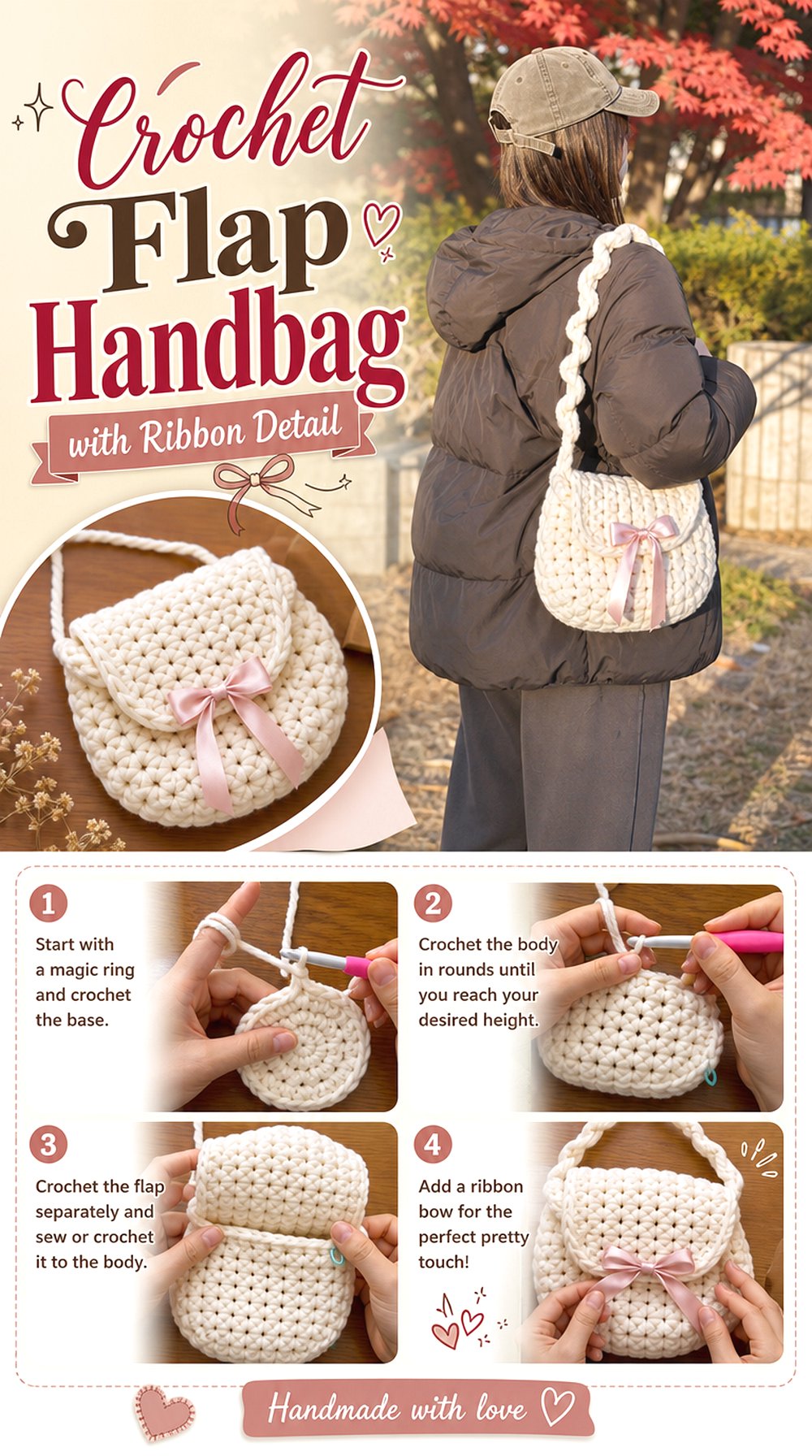
This handbag from ミミチャンネル かぎ針編み introduces a flap, decorative edging, handle, and ribbon detail, so its opening behaves very differently from the knot bags and open totes. The tutorial covers these separate elements as parts of one finished handbag.
The result feels more dressed and structured visually, even before considering lining or hardware. It is a strong option when you want a crochet bag whose front closure area becomes a focal point.
The Flap Must Align with the Filled Bag
Check flap placement with some volume inside the finished body, not only while the bag lies flat. A flap that reaches perfectly across an empty bag can sit differently once the sides expand. If you alter the depth of the body, confirm the closure area again before permanently attaching decorative elements.
Ribbon Should Complement Rather Than Carry the Load
Decorative ribbon can provide contrast and polish, but it should not automatically be treated as a structural substitute for the crocheted handle or closure. If you change its placement, think about whether it will be pulled repeatedly during opening and carrying. Keep decorative and load-bearing roles distinct unless the tutorial specifically combines them.
Creator: ミミチャンネル かぎ針編み
10. Crochet Flower Motif Carry Bag
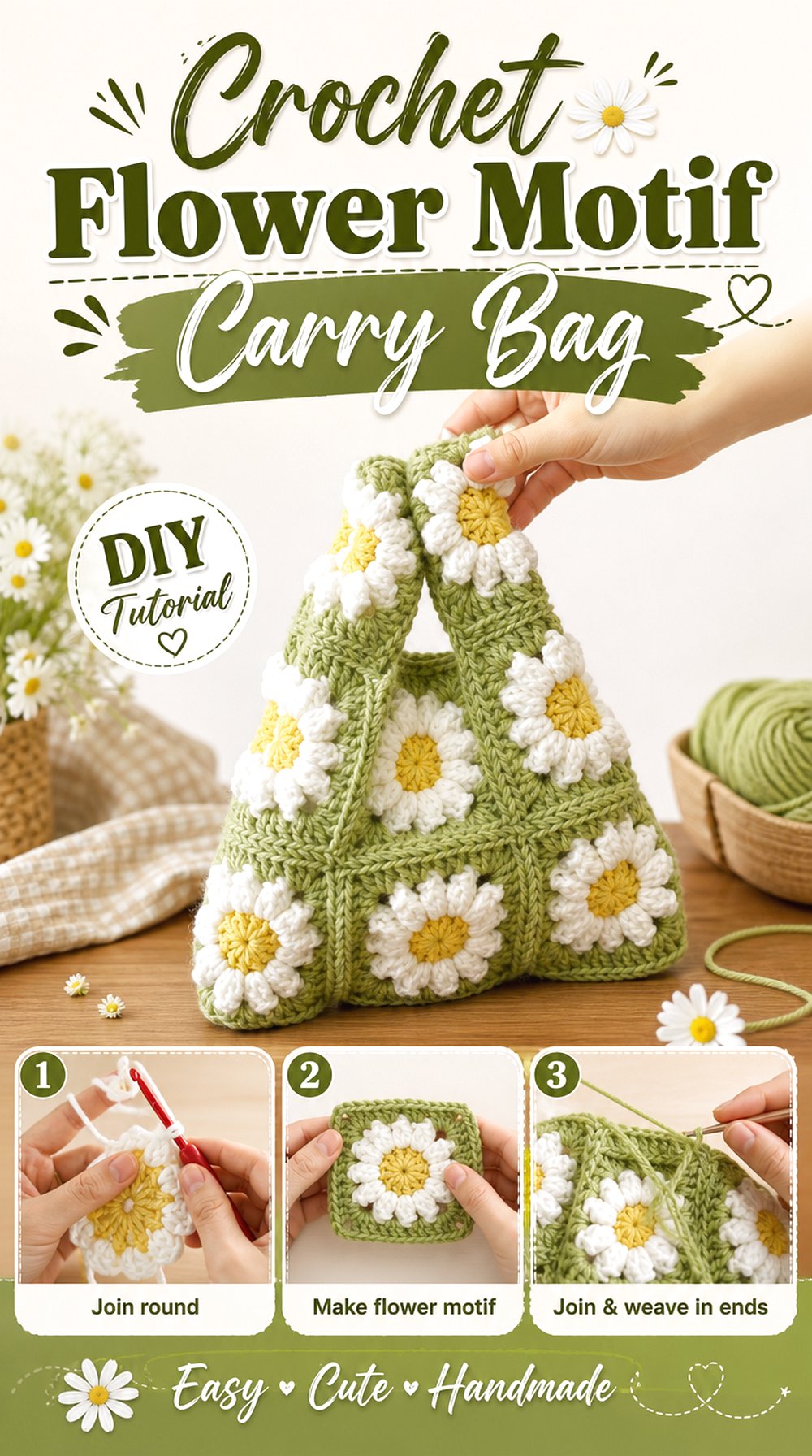
The flower-motif bag by もちだあかり mochida akari turns repeated crochet flowers into the main surface design. The creator’s published tutorial covers the motif bag and includes joining as part of the project, with an inner bag also relevant to the finished construction.
Unlike a single-color tote, this bag depends on repetition and layout. Each flower contributes to the overall rhythm, so consistency between motifs matters almost as much as the individual flower itself.
Sort the Motifs Before Joining
Lay every finished motif out at once. This lets you distribute stronger color contrasts, slight size variations, and directional details instead of discovering an imbalance after assembly. If you are using leftovers, this planning stage also helps prevent one color from becoming unintentionally concentrated in a single area.
An Inner Bag Changes the Motif Fabric’s Function
A decorative motif surface may have openings that are attractive visually but inconvenient for loose contents. Adding an inner bag or lining can allow the crochet layer to remain open and floral without requiring the motifs themselves to become denser. Check how the inner layer meets the top edge so it does not obscure the intended motif border.
Protect the Handle Join from Visual Clutter
Where handles meet a busy motif surface, additional reinforcement can compete with the floral pattern. If reinforcement is needed, look for a method that supports the connection without covering the motif feature you chose the project for.
Creator: もちだあかり mochida akari
11. Crochet Kinchaku Style Drawstring Bag
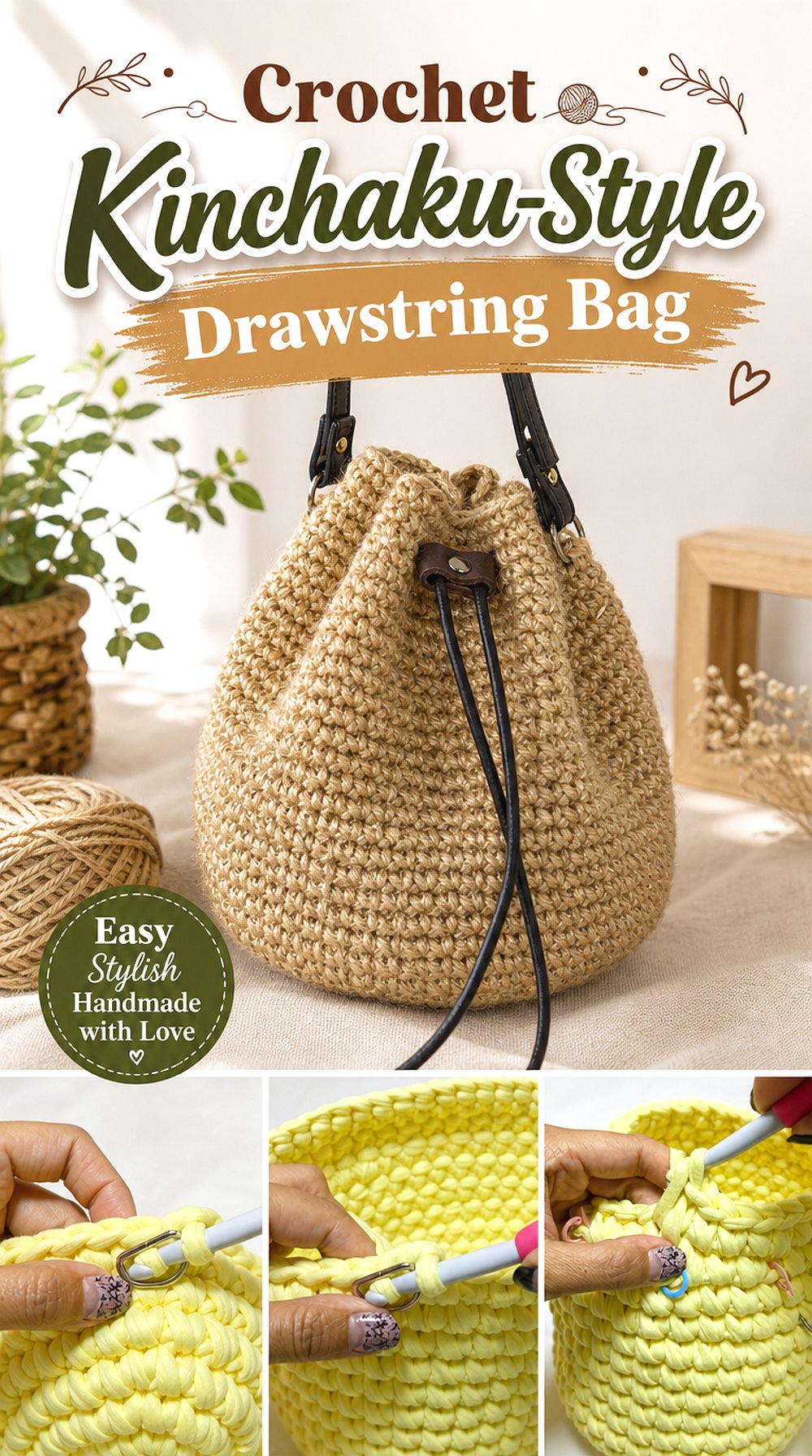
Ami-Chiku labo’s project uses a round-bottom bag body that transitions into a gathered drawstring-style opening. The tutorial explicitly describes the finished piece as 巾着風—a kinchaku-style bag—making the drawstring silhouette its central feature.
Here, “kinchaku-style” refers to the gathered pouch form of this contemporary crochet project rather than claiming that crochet construction itself is a traditional textile method. It offers a useful alternative for readers who like Japanese-inspired shapes but want a closure that cinches around much of the opening.
The Round Base Controls How the Bag Sits
A round bottom creates a different footprint from a flat two-panel purse. Check that the base lies evenly before building substantial height; rippling or cupping at the base tends to remain visible once the sidewalls grow. Yarn substitutions that change stiffness can also alter whether the finished bag stands softly or collapses.
Drawstring Channels Need Free Movement
The cord should be able to gather and reopen the top without excessive resistance. If you add lining, avoid blocking the path where the drawstring travels. Test the opening several times before finishing the lining or attaching decorative cord ends.
Creator: Ami-Chiku labo
12. Crochet Soft Fur Mini Bag
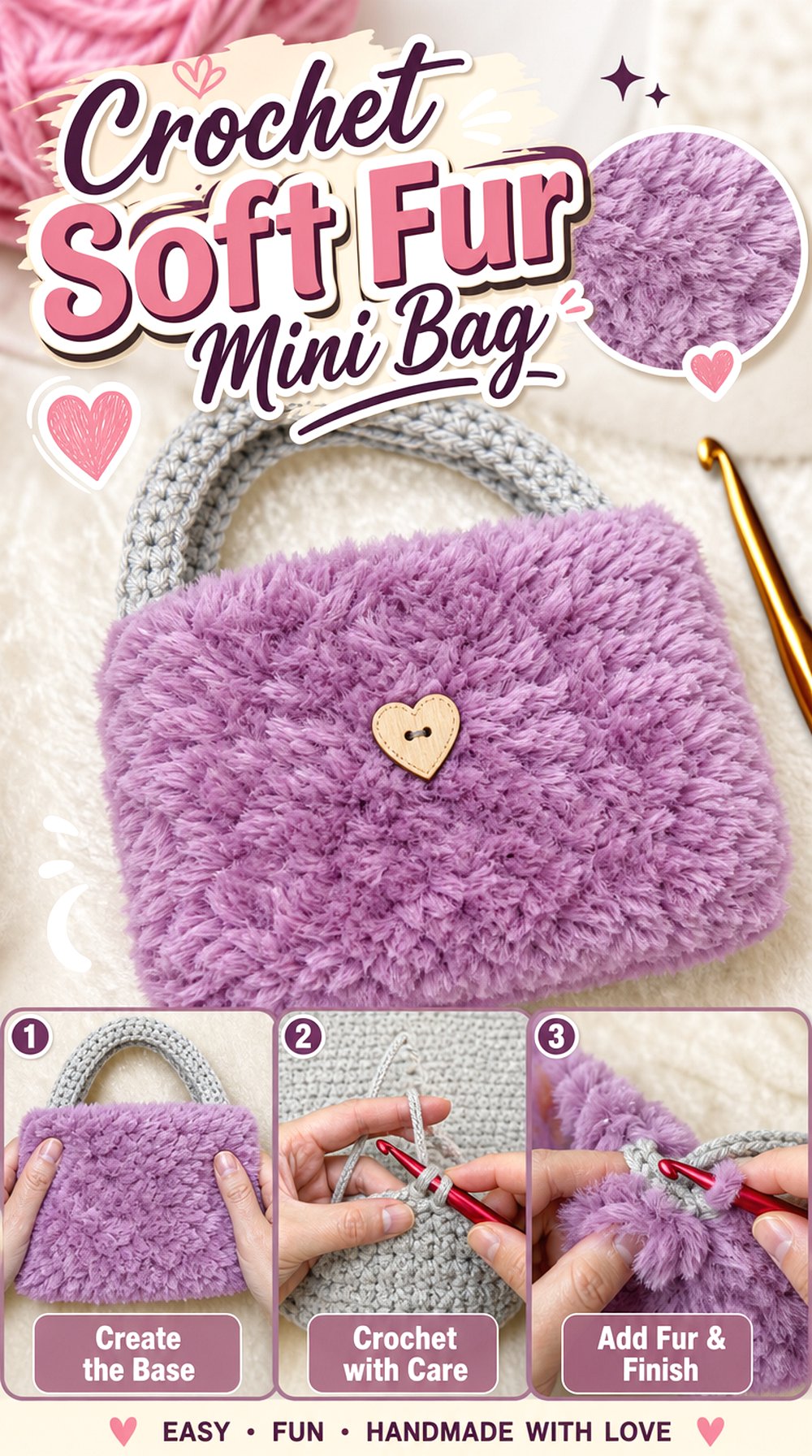
Moon Cat Craft’s mini bag relies on fuzzy fur-style yarn for its personality. The Japanese tutorial is specifically about working with the fluffy yarn and turning it into a soft bag, so texture—not motifs or an unusual closure—is the standout feature.
This project creates a useful contrast with crisp linked stitches and granny squares. Plush fibers soften the outline and conceal individual stitches, which can be appealing visually but also changes how you inspect your work.
Fuzzy Yarn Hides Both Stitches and Mistakes
With a haloed yarn, counting by sight can become harder because neighboring loops blend together. Use strong lighting and markers where the tutorial calls for important locations rather than depending on the finished texture to reveal everything. If you are new to the yarn type, make a small sample first to see how easily you can identify stitches.
Keep the Silhouette Simple Enough to Read
A fuzzy surface already supplies a great deal of visual texture. Complicated motifs or tiny decorative crochet details can disappear into it. A clean body and clear handle shape allow the fiber to remain the focus and make finishing edges easier to evaluate.
Creator: Moon Cat Craft
13. Crochet Compact Drawstring Pouch Bag
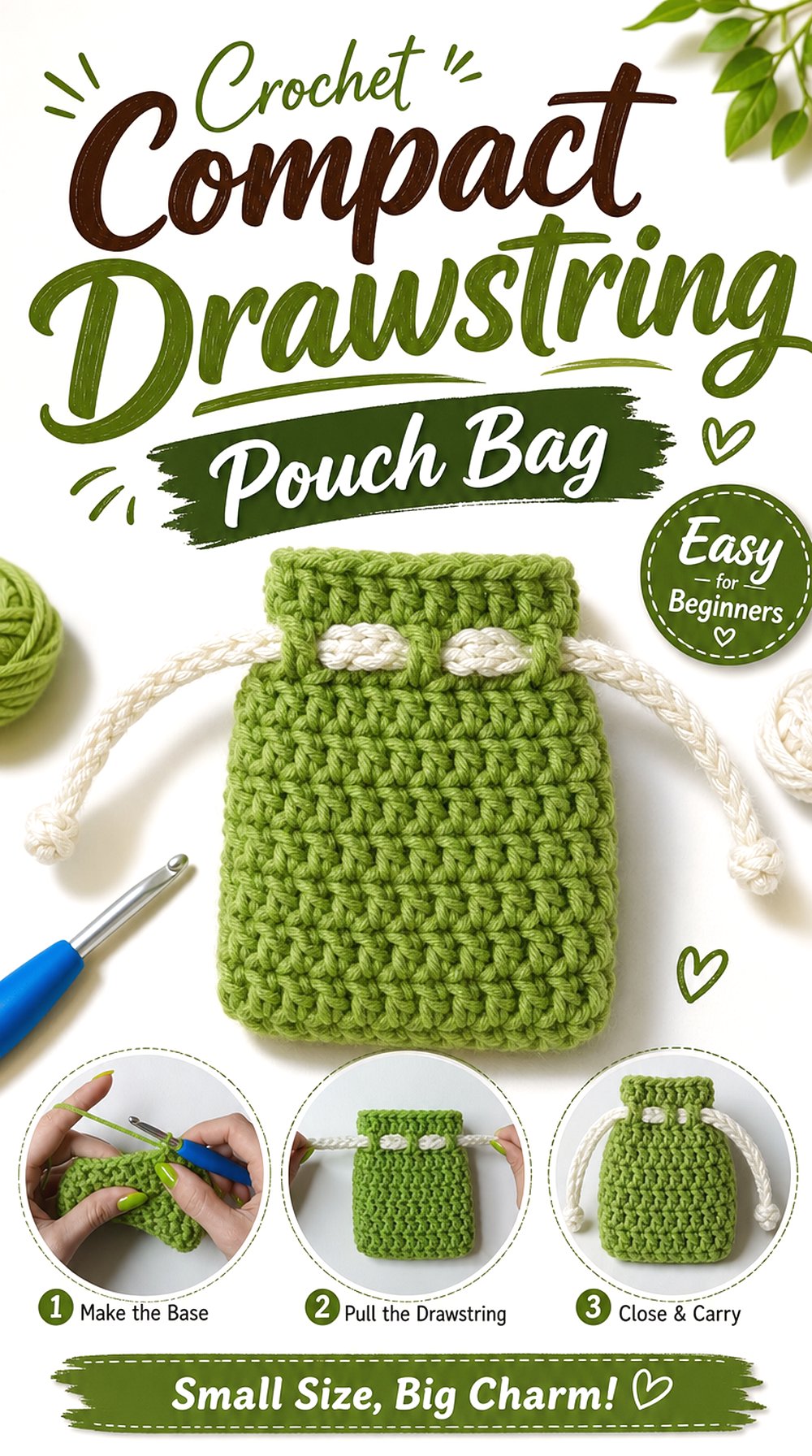
VivCrochets provides a small drawstring pouch rather than the larger round-bottom kinchaku-style bag above. The tutorial presents it as a compact crochet pouch suitable for small contents, so it works well when you want the gathered-opening idea without committing to a full handbag.
Its scale also makes it adaptable as an organizer inside a larger tote. In this list, it is less about traditional styling and more about comparing the practical behavior of a small drawstring format with knot, flap, and open-top alternatives.
Keep the Cord in Proportion to the Pouch
A bulky drawstring can overwhelm a small bag and reduce the usable opening. If you substitute a thicker yarn or cord, check how much space the gathered top occupies before finishing both ends. The closure should remain easy to manipulate without turning into the dominant feature.
Use It as an Inner Organizer
A compact pouch can solve one weakness of open crochet bags: loose small objects. It can sit inside a mesh shopper or motif tote and give keys, cosmetics, or similar items their own contained space. Compare the pouch’s filled dimensions with the parent bag before making multiple matching organizers.
Creator: VivCrochets
14. Crochet Beaded Mesh Market Bag
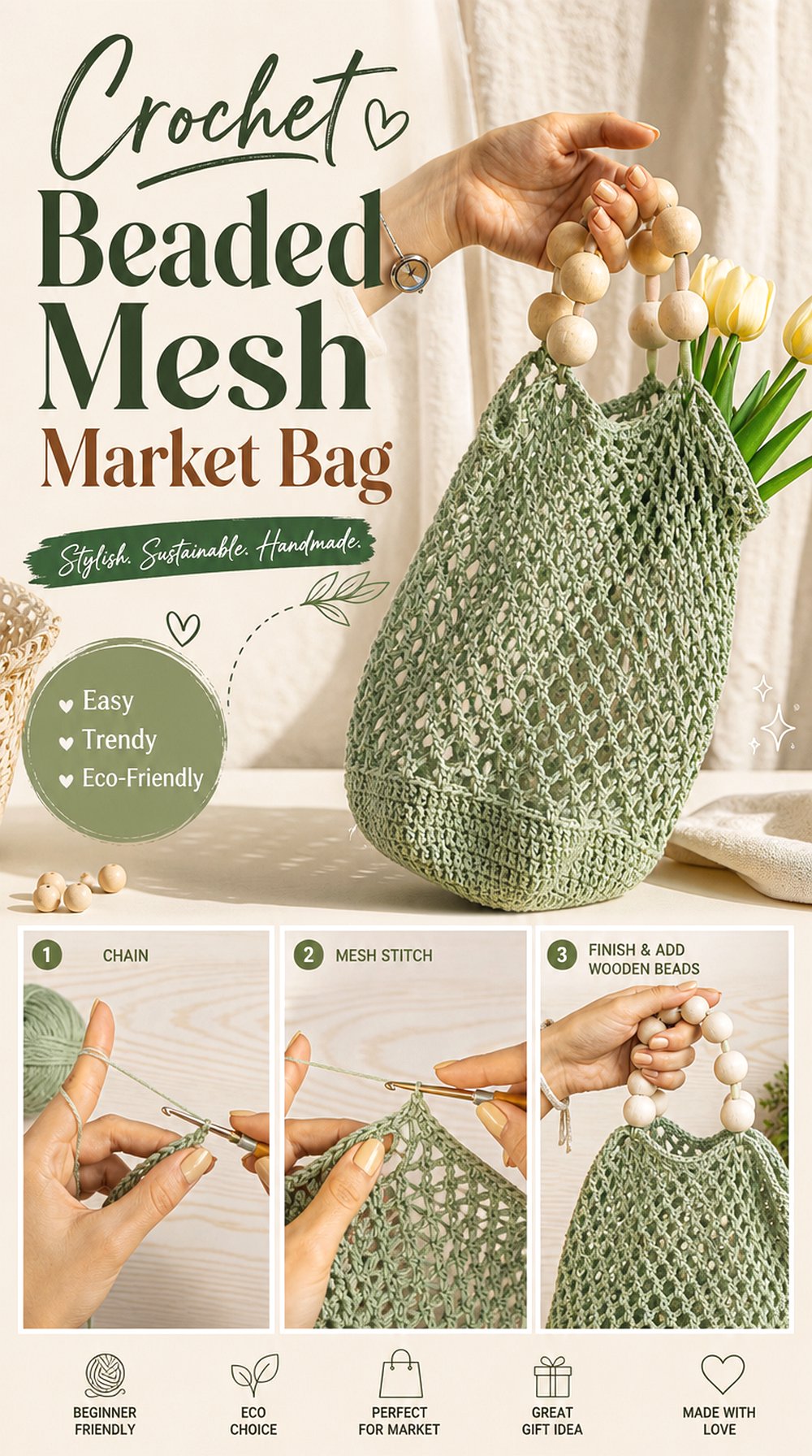
Atelier Aida combines an open mesh market-bag body with decorative finishing that includes wooden beads and organza ribbon in the tutorial materials. The combination makes this more ornamental than a plain reusable net shopper.
Mesh gives the bag a light visual presence and allows it to expand, while beads and ribbon create defined finishing points. Those two qualities need to stay balanced: the body is flexible, but the decorative additions are more localized.
Mesh Expansion Changes the Loaded Shape
Judge a net bag both flat and with contents inside. Open crochet can lengthen or widen substantially depending on fiber and stitch structure. If you alter the bag dimensions, remember that the loaded silhouette may look much larger than the empty one.
Decorative Beads Need Intentional Placement
Beads add weight exactly where they are attached. Keep them where they support the visual design rather than scattering them into areas that flex heavily or rub against contents. If you substitute heavier embellishments, reassess how they affect the top edge and handles.
Consider an Inner Pouch for Small Objects
Mesh is excellent for visibility and expansion but poor at containing tiny loose pieces. A removable pouch preserves the openwork look without permanently hiding it behind lining and can be transferred to another shopper when needed.
Creator: Atelier Aida
15. Crochet Structured Bottom Board Handbag
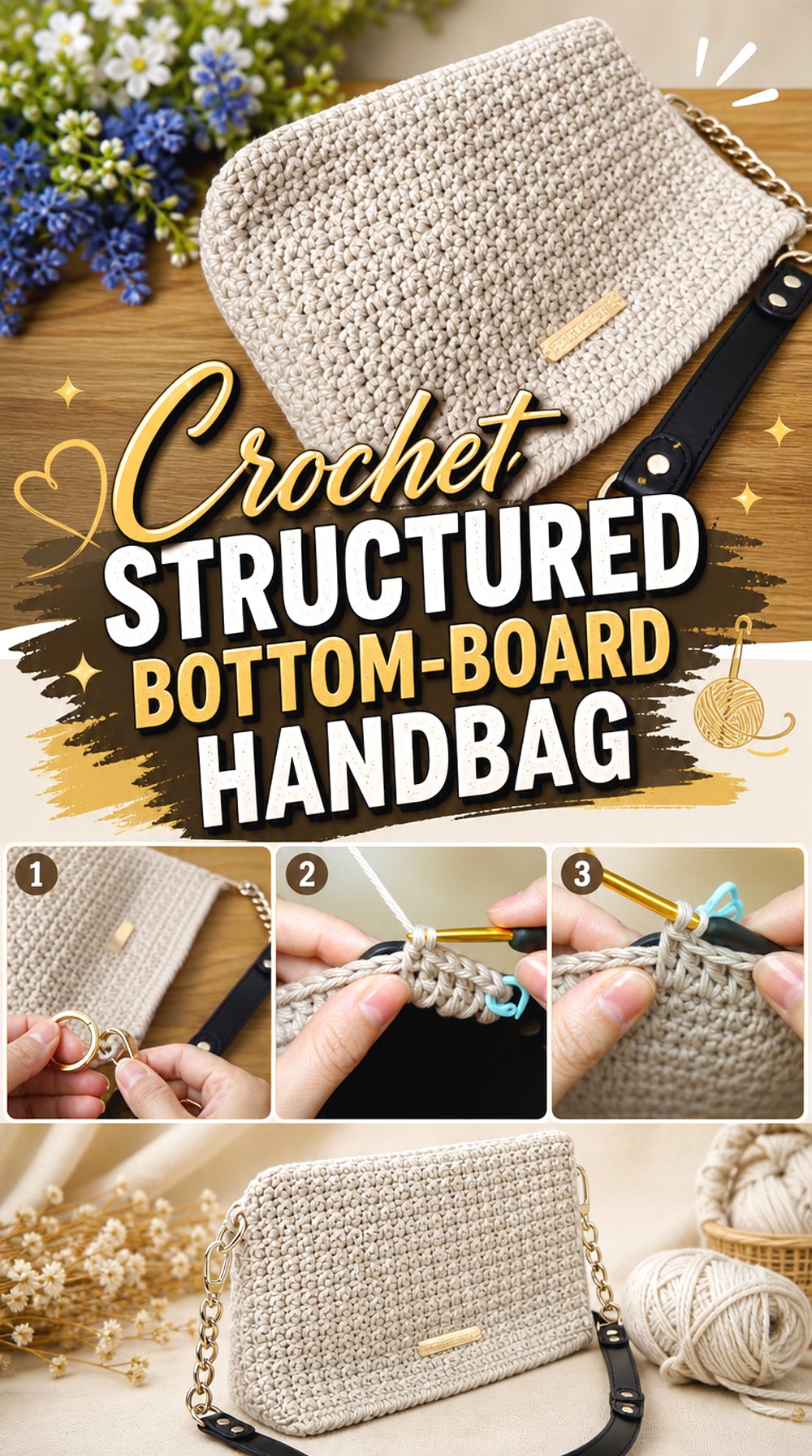
Crochet channel maiamu takes a notably different structural route by combining crocheted sides with a ready-made bag base. The tutorial also addresses handles, closure, and optional lining, so the project behaves more like a constructed handbag than a soft all-crochet tote.
The purchased base gives you a fixed footprint from the start. That can simplify one part of shaping while demanding more precision where crochet meets the rigid component.
The Base Sets a Non-Negotiable Perimeter
With an all-crochet base, dimensions can shift as your tension changes. A commercial bottom board is less forgiving. Before building height, make sure the crocheted edge meets the base without puckering or stretching aggressively around it. If you substitute another base, compare hole spacing and perimeter rather than relying only on its general shape.
Hardware Concentrates Stress
Handles and closure hardware transfer force into specific attachment points. Inspect those areas separately from the rest of the bag. Reinforcement that is unnecessary across the whole body may be worthwhile exactly where the hardware pulls against the crochet.
Lining Can Finish the Structured Interior
A rigid base and firm handles create a more tailored exterior, so an unfinished interior may feel visually inconsistent. If you add lining, measure the completed crochet shell and base rather than cutting fabric from assumed dimensions before the bag has settled into its final shape.
Creator: Crochet channel maiamu
16. Crochet Long Handle Net Shoulder Shopper
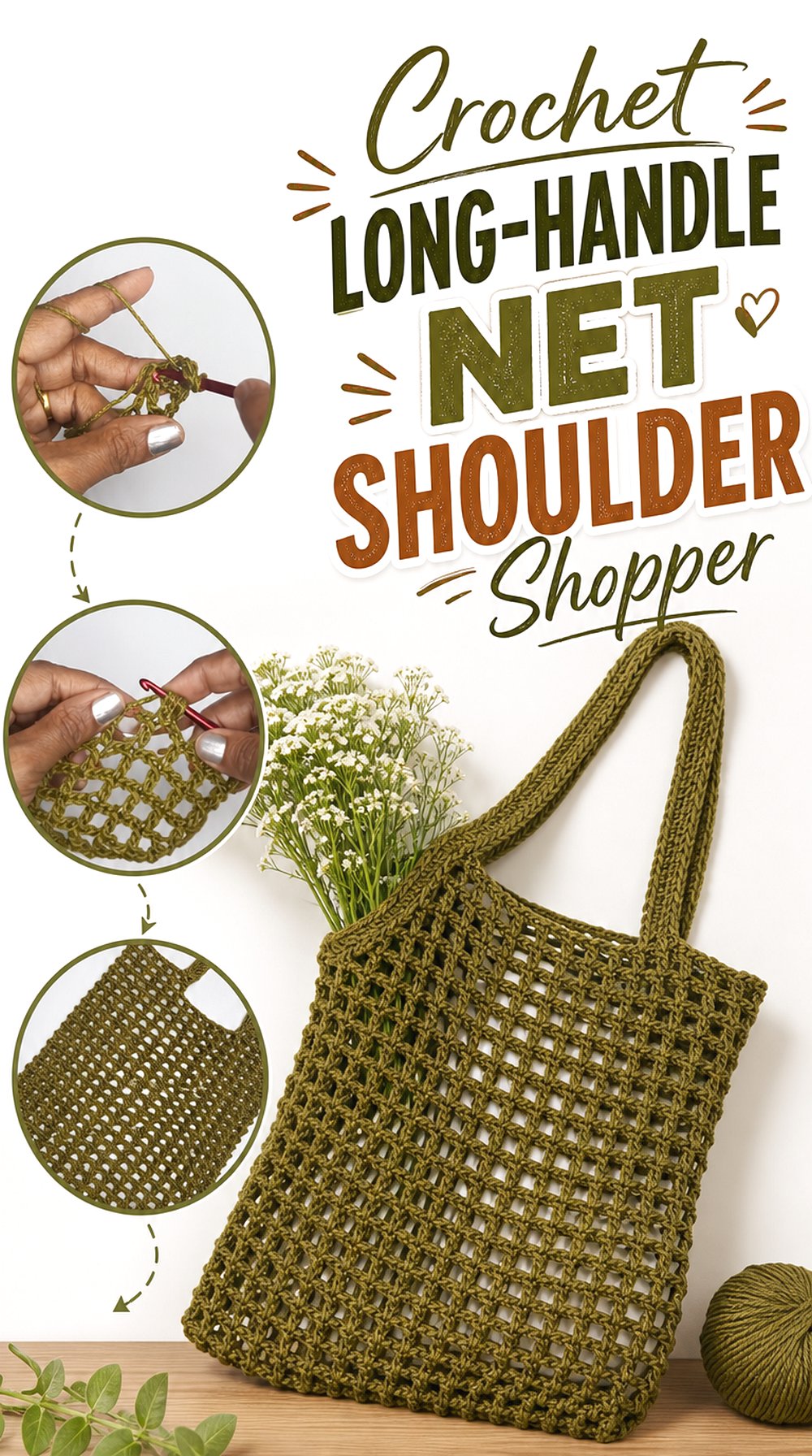
Hopeful Turns offers a straightforward mesh market bag with long handles designed for shoulder carrying. The tutorial presents it as a reusable net shoulder bag and discusses changing its size and handles, giving it a more practical shopping focus than the beaded mesh option.
Its defining feature is the combination of an expandable open body and a shoulder-length carrying format. That makes handle behavior especially important once groceries or other bulky items begin stretching the mesh.
Shoulder Length Can Increase Perceived Stretch
A long crocheted handle can lengthen under load, making the bag hang lower than expected. If you change yarn, test a strip of the chosen fabric under gentle tension before deciding how closely to follow the original handle length.
Open Mesh Works Best with the Right Contents
Large, smooth objects are naturally easier to contain than tiny pieces that can push through the openings. If you want this as an everyday handbag rather than a market shopper, add a removable inner pouch instead of assuming the net structure will behave like solid fabric.
Creator: Hopeful Turns
17. Crochet Ridged Two Tone Summer Tote
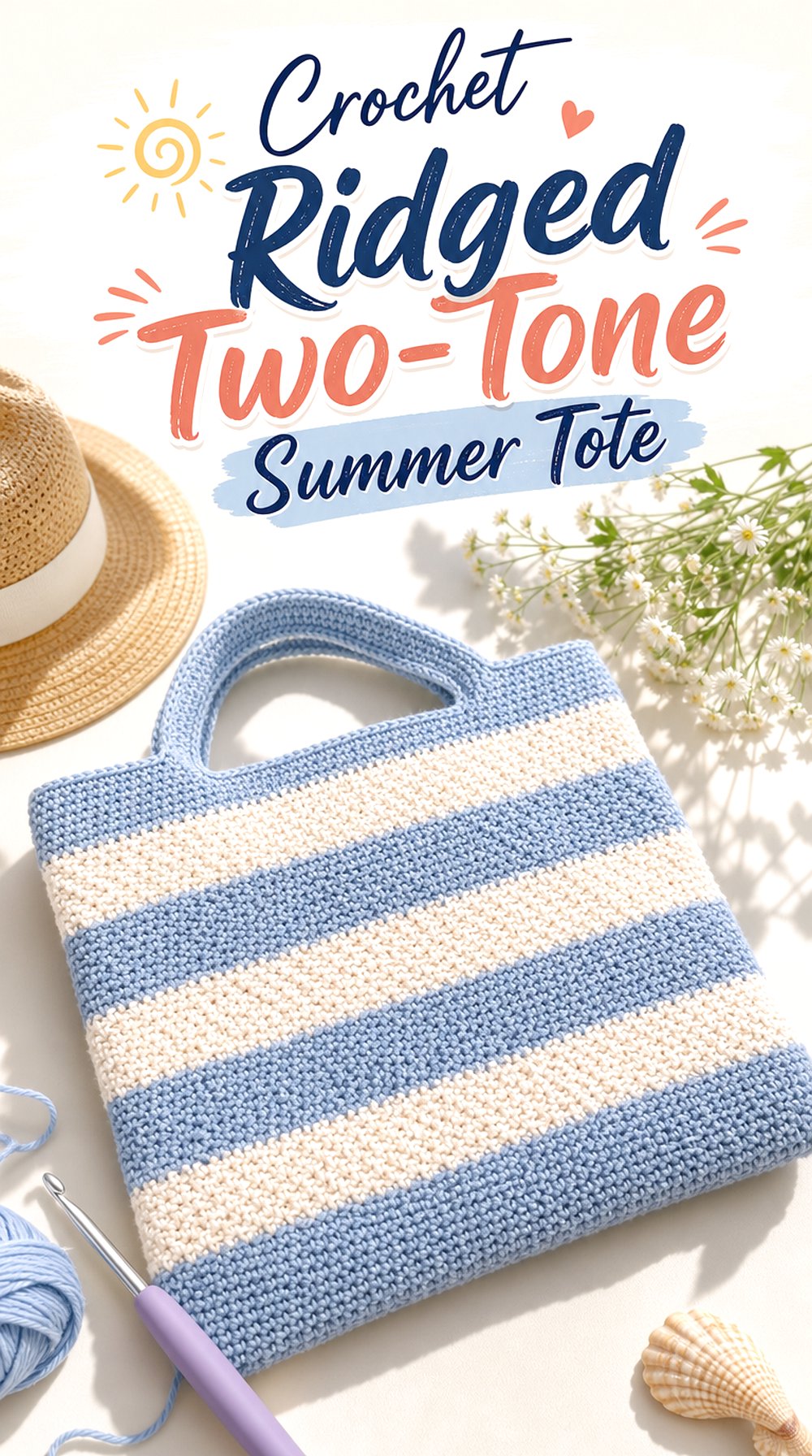
ホタルアミキッズ presents a summer tote that uses the visual contrast between regular single crochet and ridged stitch texture, with the creator’s bag collection linking directly to the tutorial. The finished project also uses contrasting colors, but the important difference is structural texture rather than color alone.
This is a contemporary Japanese crochet tote with a conventional opening, making it a useful choice if the knot and drawstring closures feel too specialized for everyday use.
Texture Can Define the Bag Without Motifs
Alternating smooth and ridged-looking areas creates visual direction while keeping the body continuous. If you substitute yarn, choose one that allows that texture contrast to remain visible. A very fuzzy fiber may soften the ridges until much of the design disappears.
Check Handle Placement Against the Full Width
On a straightforward tote, uneven handle placement is immediately noticeable. Lay the completed body flat, mark equivalent positions on both faces, and compare them before attaching or completing the handles. This matters even more when contrasting stripes or texture lines create strong visual reference points.
Creator: ホタルアミキッズ
18. Crochet Herringbone Mini Shoulder Bag
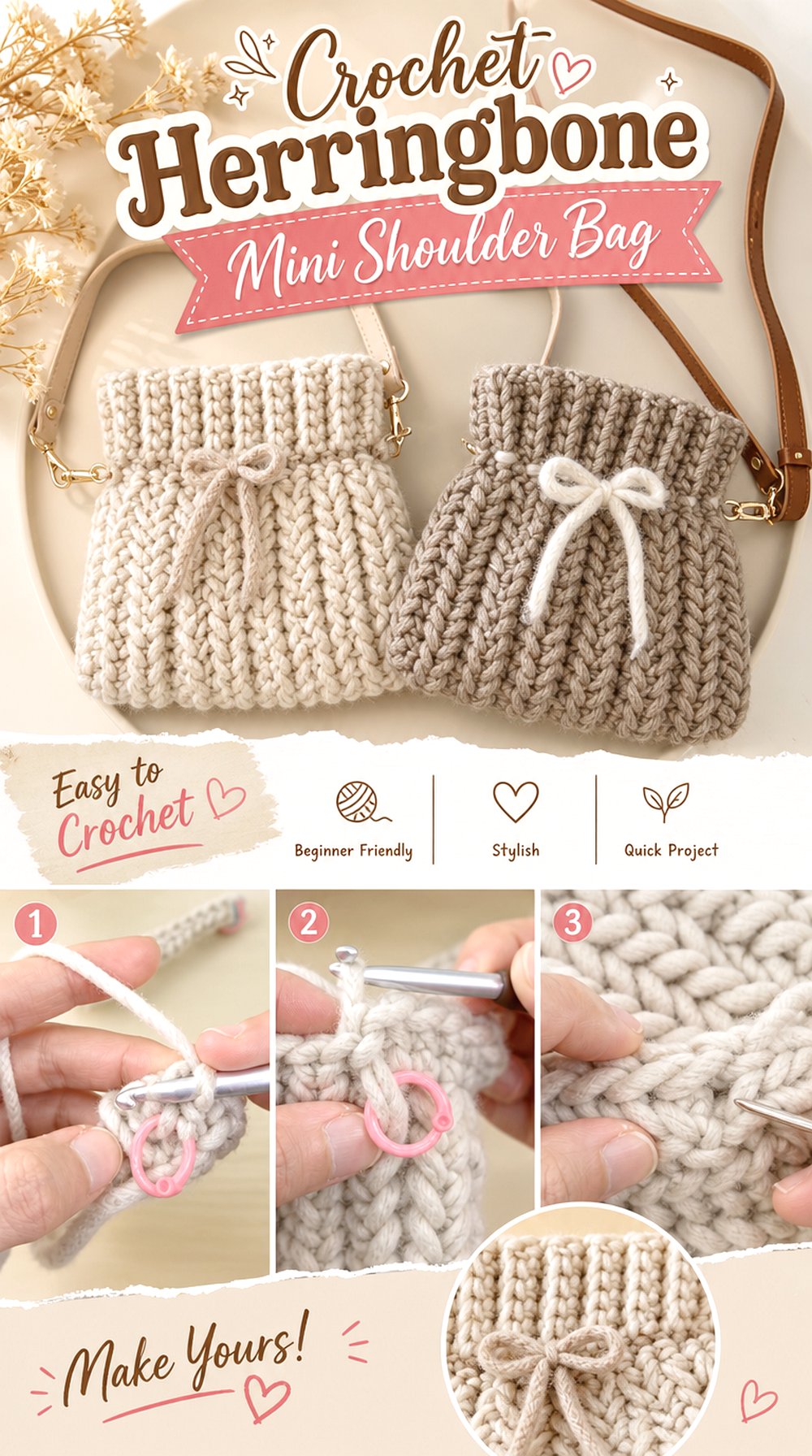
ちいさな桜’s mini shoulder bag uses herringbone texture as the main visual feature and adds a separate shoulder-carry system. The creator describes the project as a compact bag for a phone and small essentials and notes that the opening can also be considered for a drawstring-style adaptation.
Its rectangular, textured body and shoulder hardware separate it clearly from wrist knot bags and integrated-handle totes. It is a useful option if you want a small Japanese crochet project with a more accessory-like crossbody or shoulder-bag character.
Herringbone Texture Needs Clear Definition
The appeal of the fabric depends on the directional stitch pattern being visible. Before substituting yarn, work enough of a sample to see whether the herringbone effect remains recognizable. Highly variegated or fuzzy yarn can compete with the texture even when the stitch itself is correct.
Shoulder Hardware Changes the Stress Points
A removable or separately attached strap concentrates tension around the rings or attachment areas rather than distributing it through an integrated crochet handle. Check these points periodically during use, particularly if you substitute heavier hardware or plan to carry more than the small essentials shown for the original project.
A Drawstring Adaptation Changes the Top Edge
The creator notes that the opening can be adapted toward a cinched style. If you choose that direction, confirm that gathering the top does not interfere with the shoulder-hardware placement or make the useful opening too narrow for what you intend to carry.
Creator: ちいさな桜
Which Japanese Crochet Bag Style Fits Your Use?
For the most recognizable Japanese knot silhouette, start with the Lallaulab wrist bag, SaltyDIY granny-square version, or Crochet Musings dumpling bag; all preserve the unequal-handle closure while changing the body construction. Choose the Ami-Chiku labo project when you prefer a gathered kinchaku-style top instead.
For everyday capacity, the kokakiko tote and ホタルアミキッズ summer bag provide simpler open-top shapes. Atelier Aida and Hopeful Turns make more sense when expansion and market-bag use matter more than containment. If you want a bag that holds a defined silhouette, the bottom-board handbag from Crochet channel maiamu is the strongest contrast. For small personal accessories, the rounded mini bag and herringbone shoulder bag keep the scale deliberately compact.
Conclusion
These 18 Japanese crochet bag ideas show how much the finished experience changes when you switch the opening, base, handle, fabric density, or construction method. Japanese knot bags are a natural starting point if you want the distinctive asymmetrical closure, while the kinchaku-style option suits readers drawn to a gathered top. Motif bags emphasize layout and color, mesh shoppers favor expansion, and rigid-base or flap handbags offer more controlled structure.
Choose by how you plan to carry and use the bag before choosing by color alone. Once you have a shape that matches your needs, use the original tutorials for the creator’s exact construction details and check any yarn, lining, size, or hardware substitutions against your own finished fabric.
Frequently Asked Questions
What makes a crochet Japanese knot bag different from a regular tote?
The defining feature is the unequal pair of handles. One is longer, allowing it to pass through the shorter handle so the opening gathers and the bag can be carried from the longer loop. A regular tote normally has two similar handles and remains open unless another closure is added. The knot design therefore changes both the appearance and how you access the contents.
Is a kinchaku-style crochet bag the same as a Japanese knot bag?
No. In this article, “kinchaku-style” describes a bag with a gathered drawstring opening, while a Japanese knot bag closes through unequal handles. The two can both fit Japanese-inspired bag collections, but their mechanics are very different. If security around the whole opening matters more than wrist carrying, the drawstring format may suit you better.
Should I line a Japanese crochet bag?
It depends on the crochet fabric and what you plan to carry. Lining is particularly useful with open granny squares or mesh because it keeps small objects from slipping through and can limit some stretching. A dense mini bag may not need it for the same reason. Before sewing a lining into a knot or drawstring bag, confirm that the extra layer does not restrict the intended closure.
What yarn qualities help a crochet bag keep its shape?
Look at the finished fabric rather than relying on fiber name alone. A fabric with limited stretch and good stitch definition generally gives you more control over the bag’s dimensions, while very elastic crochet can sag under contents. Mesh is intentionally more flexible, and fuzzy yarn produces a softer visual outline. Make a sample and gently pull it in the direction the bag will carry weight before making a major substitution.
Why can crochet bag straps become longer during use?
Crocheted fabric can stretch when it is repeatedly loaded, and a long shoulder strap gives that movement more distance to accumulate. Yarn elasticity, stitch construction, strap width, and the weight carried all affect the result. If stretching concerns you, compare the tutorial’s materials with your substitute and consider appropriate reinforcement rather than simply making the strap shorter without testing it.
Can I replace the granny squares in a Japanese knot bag with another motif?
Yes, as an adaptation concept, but first compare the blocked dimensions, edge stitch distribution, density, and shape of the replacement motif. Two designs that are both called granny squares are not automatically interchangeable. If your replacement is larger or more open, it can alter bag capacity, joining behavior, handle placement, and the need for lining. Make and block a sample motif before planning the complete layout.