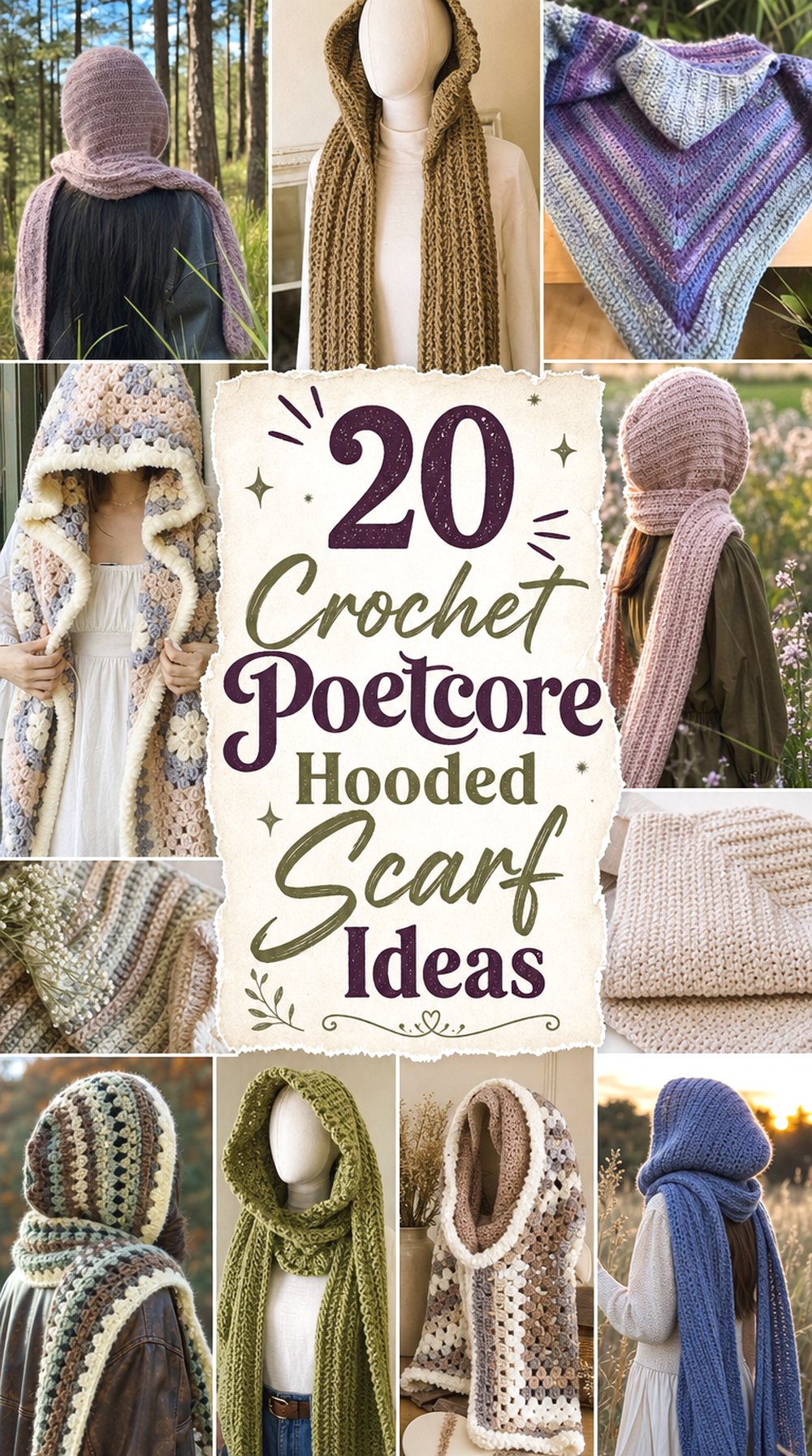
20 Crochet Poetcore Hooded Scarf Ideas
Poetcore is one of Pinterest’s named 2026 trends, built around a writerly wardrobe of oversized knits, vintage blazers, satchels, and other pieces that feel thoughtful rather than flashy. Pinterest also reports rising interest in searches such as “the poet aesthetic,” “poet core,” and “cape outfit.” A crochet hooded scarf fits naturally into that layered mood because it can sit somewhere between scarf, hood, shawl, and soft outer accessory.
The tutorials below are not being presented as creator-designed “poetcore patterns” unless the creator actually uses that language. Instead, they provide 20 different hooded-scarf constructions that can be interpreted through subdued color, tactile yarn, vintage-looking texture, thoughtful proportions, or romantic layering. The differences in hood shape, scarf length, pockets, motifs, drape, and construction will help you choose a version that suits the look you actually want.
Quick List
- Crochet Hearthside Granny Square Hooded Scarf
- Crochet Library Patchwork Hooded Scarf
- Crochet Long-Tail Granny-Stitch Poet Hood Scarf
- Crochet Reading-Walk Pocket Hooded Scarf
- Crochet Minimalist Pocket Hooded Scarf
- Crochet Rounded-Crown Block-Stitch Hooded Scarf
- Crochet Clean-Line Everyday Hood Scarf
- Crochet Romantic Triangle Hooded Wrap Scarf
- Crochet Tapered Sophie-Style Poet Hood Scarf
- Crochet Celestial Star-Square Hooded Scarf
- Crochet Deep-Texture Winter Hooded Scarf
- Crochet Woodland Poetcore Hooded Scarf
- Crochet Ribbed Pocket Hooded Scarf
- Crochet Double-Wrap Infinity Hooded Scarf
- Crochet Faux-Fur Trim Pocket Hooded Scarf
- Crochet Striped Rounded Hooded Scarf
- Crochet Faux-Fur Snood Hood Scarf
- Crochet Moss-Stitch Chilly-Day Hooded Scarf
- Crochet Draped Infinity Hooded Scarf
- Crochet Two-Panel Harley Hooded Scarf
What Makes a Crochet Hooded Scarf Read as Poetcore?
Pinterest describes Poetcore through oversized turtlenecks, vintage blazers, messenger bags, and a broader writer-inspired aesthetic rather than one prescribed garment. That gives crochet plenty of room for interpretation. A hooded scarf can move toward poetcore through proportion and texture instead of relying on literal book or pen motifs.
Muted cream, tobacco brown, moss, charcoal, oxblood, faded navy, parchment, or heathered yarn can make an uncomplicated scarf feel more literary. Tweedy surfaces, quiet stripes, star motifs, deep hoods, soft fringe, and long scarf tails can add more personality without turning the piece into costume. If you want the accessory to work with blazers and coats, also consider how much fabric will gather at the neck. A beautiful oversized hood can become inconvenient if the scarf is already extremely bulky.
Choose the Hood Shape Before the Color Palette
Hood construction changes the finished personality more than color does. A pointed or roomy hood has a romantic, wandering-poet silhouette, while a rounded crown feels closer to everyday winter clothing. A Sophie-style hood keeps the scarf narrow and graceful; a hooded shawl spreads fabric across the shoulders; granny-square constructions make their joining lines part of the visual design.
Try to decide how you want the piece to behave when the hood is down, too. A large hood becomes extra fabric behind the neck. Infinity constructions stay contained, while long tails can hang vertically or wrap around a coat. For wearable crochet, practical decisions such as fit, drape, motif scale, garment weight, and edging tension matter alongside appearance.
Yarn, Drape, and Texture Change the Literary Mood
Poetcore styling generally favors tactile, lived-in-looking clothing over shiny or highly technical surfaces. Contemporary descriptions of the trend repeatedly emphasize vintage and softer textures. For crochet, that means yarn selection can substantially change the interpretation of the same construction.
A lofty yarn can make a deep hood look soft and substantial, but added bulk may make it harder to layer under a coat. A smoother yarn reveals stars, blocks, ribs, and textured stitch patterns more clearly. Looser fabric usually drapes more naturally around the shoulders; denser fabric may hold a hood shape more decisively. When substituting yarn, check the tutorial’s sizing or gauge information rather than assuming an apparently similar yarn will produce the same hood depth or scarf length.
1. Crochet Hearthside Granny Square Hooded Scarf
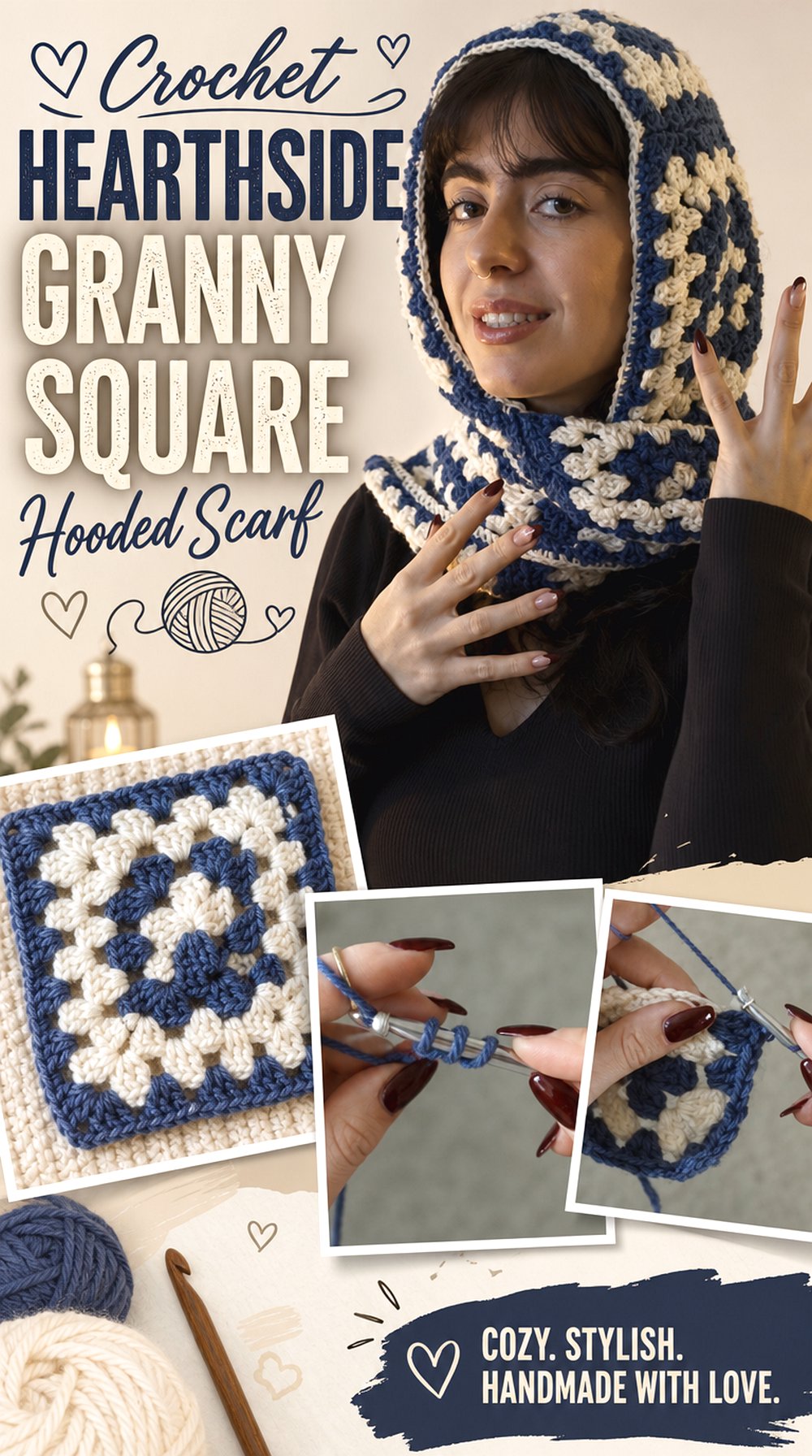
This version treats the entire hooded scarf as a patchwork composition. Käthe’s tutorial builds the piece from granny squares, so seams, color placement, and repeated motifs remain visible instead of disappearing into one continuous fabric. That construction suits poetcore especially well when the palette feels collected rather than highly saturated—think parchment, dried-herb green, faded brown, or burgundy.
Compared with a smooth one-piece hood, the square layout has a deliberately handmade rhythm. It can look at home with an oversized coat, corduroy, or a vintage-looking cardigan while still functioning as a conventional scarf-and-hood combination.
Let the Joining Lines Become Part of the Design
With a motif construction, the joins create their own grid across the hood. That makes color placement worth planning before assembly. A low-contrast join can make the piece appear quieter and more unified; a darker joining color makes every square more obvious. Lay the motifs in their intended hood and scarf arrangement first so one unusually bright square does not accidentally become the visual center of the crown.
Block Motifs Before Judging Hood Fit
Small size differences that seem harmless on individual squares become more noticeable once several are joined around the head. Compare the blocked dimensions of your motifs before assembly, especially if they came from different yarn colors or were made several days apart with changing tension. Correcting an inconsistent square before joining is much easier than trying to force an uneven hood edge into alignment afterward.
Creator: Käthe
2. Crochet Library Patchwork Hooded Scarf
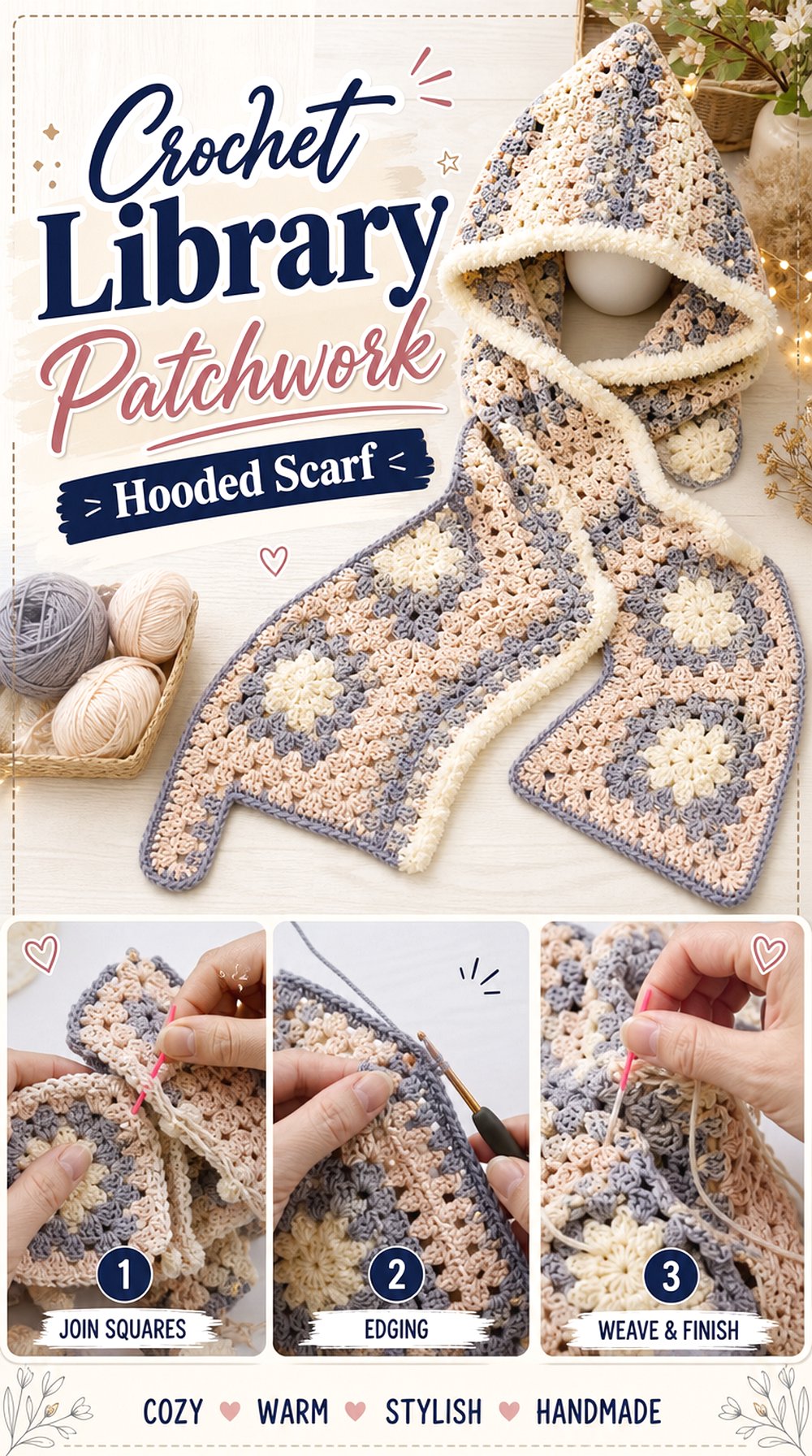
This patchwork option uses a noticeably different motif strategy: the Crochet Musings tutorial combines larger squares for the hood with smaller squares for the scarf. That change in scale keeps the head area visually bold while allowing the scarf tails to feel narrower and more flexible.
For poetcore styling, the larger hood panels could become the statement feature while the smaller squares use restrained repeating colors. The result feels less like an all-over checkerboard and more like an accessory assembled from related textile fragments—an appealing direction if you like patchwork but do not want every section to carry the same visual weight.
Mixed Square Sizes Need a Consistent Visual Language
When motif scales change, color repetition can keep the two sections related. Consider carrying one background shade or border color through both the large hood squares and smaller scarf motifs. Without that connection, the hood and tails can look like separate projects attached together. The goal is not perfect symmetry; it is enough repetition that the size shift looks intentional.
Check the Hood-to-Scarf Transition Before Final Joining
The point where large motifs meet smaller ones deserves more attention than the straight sections. Lay the pieces flat and check that the transition does not pull inward, flare outward, or create a stiff ridge. If your personal motif dimensions differ from the tutorial, compare the actual joined widths rather than relying on motif count alone.
Creator: Crochet Musings
3. Crochet Long Tail Granny Stitch Poet Hood Scarf
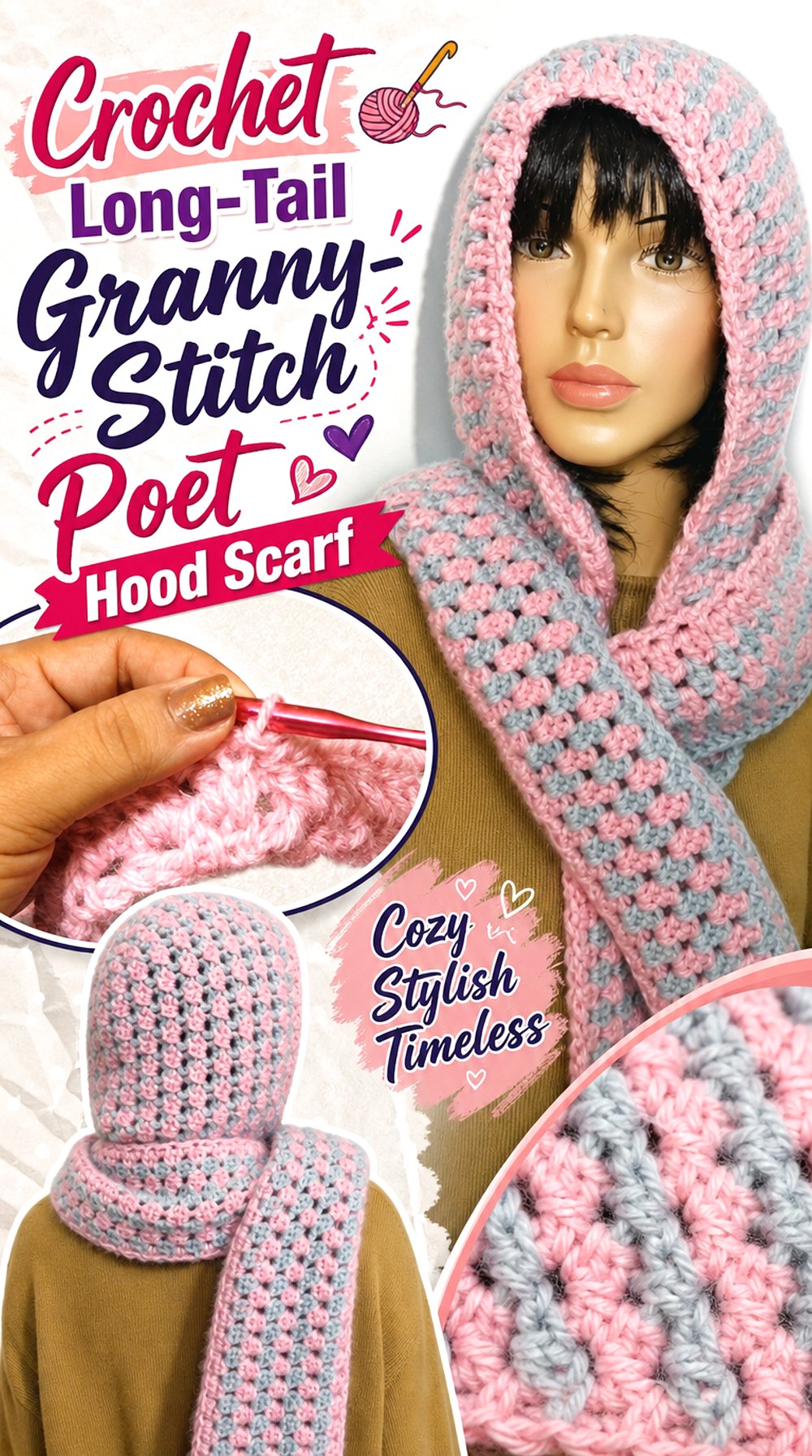
For a less fragmented look, the Vivirtejiendo tutorial uses granny stitch in a long hooded-scarf format rather than assembling many independent motifs. The recognizable clustered texture still gives a traditional crochet character, but the fabric reads as a continuous accessory.
That continuity works nicely for a subdued poetcore version because the silhouette can do more of the styling. Long scarf tails can fall over a wool coat or wrap loosely at the neck, while a simple cream, brown, navy, or heathery yarn prevents the granny texture from becoming too busy.
Continuous Granny Texture Feels Different From Patchwork
Traditional granny squares create obvious blocks; continuous granny stitch produces a more linear visual rhythm. Choose this direction if you like the nostalgic character of clustered crochet but want fewer seams and less geometric interruption. Subtle stripes can emphasize the rows, while a solid yarn lets the stitch shadows provide most of the surface interest.
Test the Scarf Tails With Your Outerwear
Long scarf ends look graceful in a flat photograph but behave differently over a coat. Before committing to extra length, drape the work around the neck with the jacket or blazer you expect to wear most often. Check whether you prefer the tails hanging straight, crossed once, or wrapped. More length is not automatically more useful if it creates excessive bulk at the front.
Creator: Vivirtejiendo
4. Crochet Reading Walk Pocket Hooded Scarf
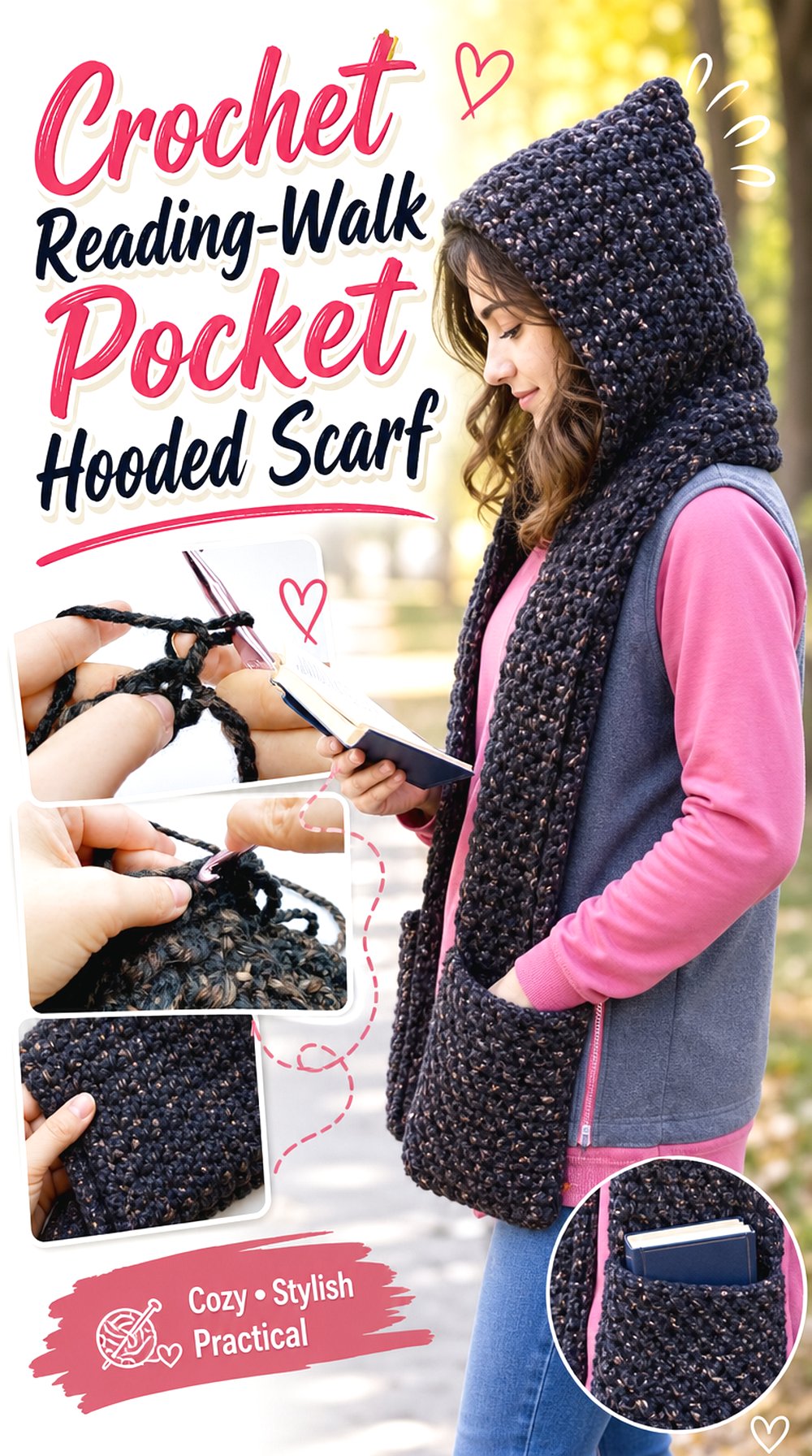
Bag-O-Day Crochet’s design combines three useful elements in one piece: long scarf tails, an attached hood, and pockets at the ends. This is one of the more practical choices for a poetcore wardrobe because the silhouette can resemble a relaxed wrap while the pockets give the long ends a clear purpose.
A deep brown, heathered charcoal, or faded olive version would shift attention toward texture and proportion rather than embellishment. It is especially suited to readers who like substantial accessories and want their scarf to stay visually interesting even when the hood is down.
Pocket Depth Changes How the Scarf Hangs
A pocket is not merely decorative. Folding or adding fabric at each end increases weight, which can pull the scarf downward and change the way the hood sits at the neckline. Before deciding to enlarge pockets, consider whether you actually want to use them for hands or simply like the appearance. Oversized pockets may make already-heavy scarf tails feel less balanced.
Keep the Neck Area From Becoming Overloaded
A hood, broad scarf, and pockets already create a substantial accessory. Adding very thick yarn, dense fringe, and large embellishments can push the piece beyond comfortable layering. If you usually wear high collars or oversized turtlenecks—the kind of pieces Pinterest associates with Poetcore—check that the scarf still settles comfortably around them.
Creator: Bag-O-Day Crochet
5. Crochet Minimalist Pocket Hooded Scarf
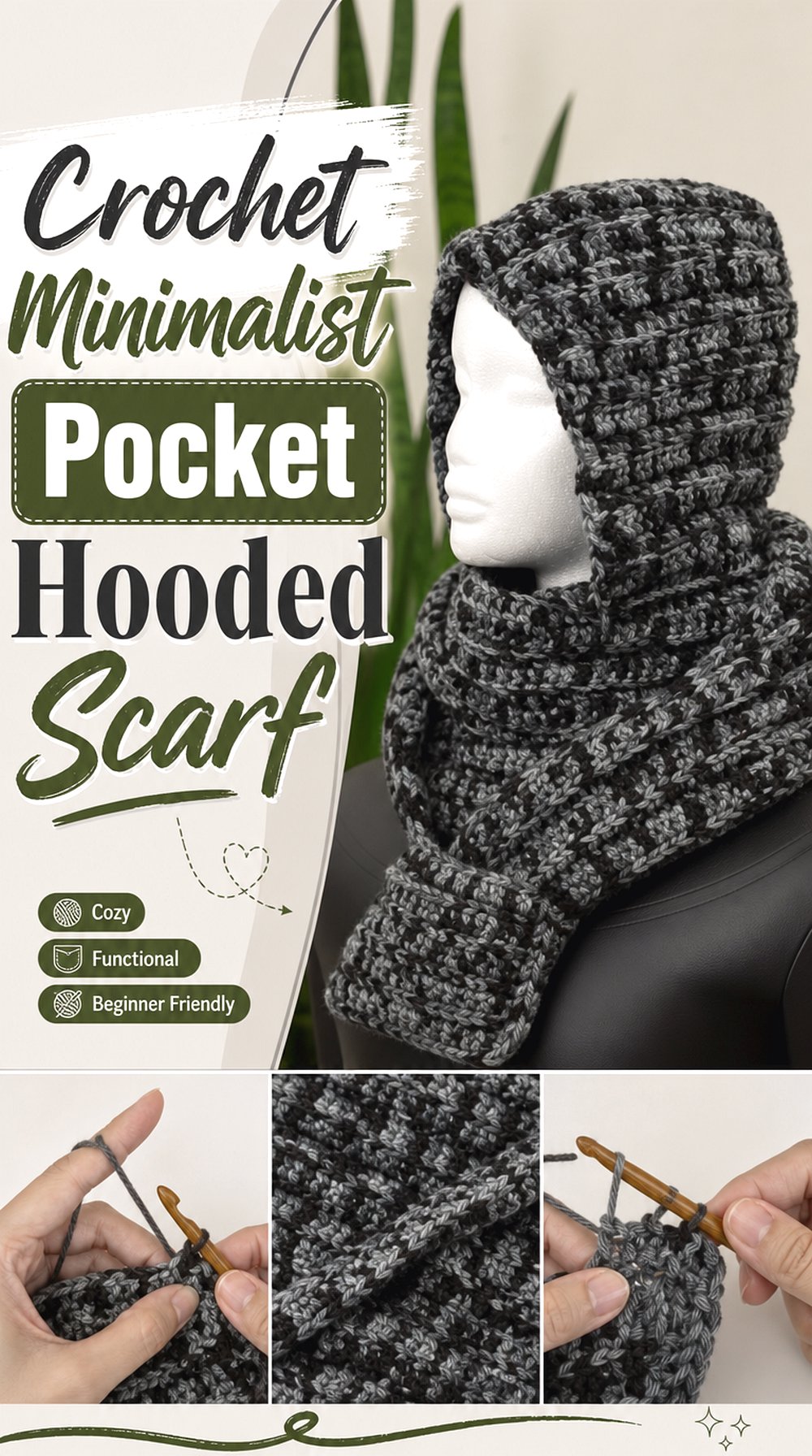
TCDDIY provides another pocket scarf route, but its cleaner uninterrupted panels offer a different starting point from granny textures or patchwork. The tutorial covers the scarf, hood, pockets, hood shaping, and finishing as related parts of one streamlined design.
That simplicity is useful for a quieter interpretation of poetcore. Instead of relying on motif contrast, you can choose a nuanced yarn—warm gray, camel, ink blue, muted wine—and let the long vertical shape work with tailored trousers, vintage blazers, or an oversized cardigan.
A Simple Surface Makes Yarn More Important
When the construction is visually restrained, irregular color changes, strong fuzz, or marling will attract more attention. Decide whether you want the yarn itself to become the feature or whether you want the silhouette to remain dominant. A relatively even yarn emphasizes the clean hood and long tails; a tweedy or softly variegated yarn makes the same shape feel more rustic.
Decide Whether the Pockets Should Blend In
Matching pockets preserve the long vertical line of the scarf. Contrast pockets break that line and make the ends more prominent. For a restrained poetcore treatment, tonal contrast—such as brown against deeper brown—can provide enough separation without looking graphic. Check the placement while wearing the scarf rather than judging it only when the project is lying flat.
Creator: TCDDIY
6. Crochet Rounded Crown Block Stitch Hooded Scarf
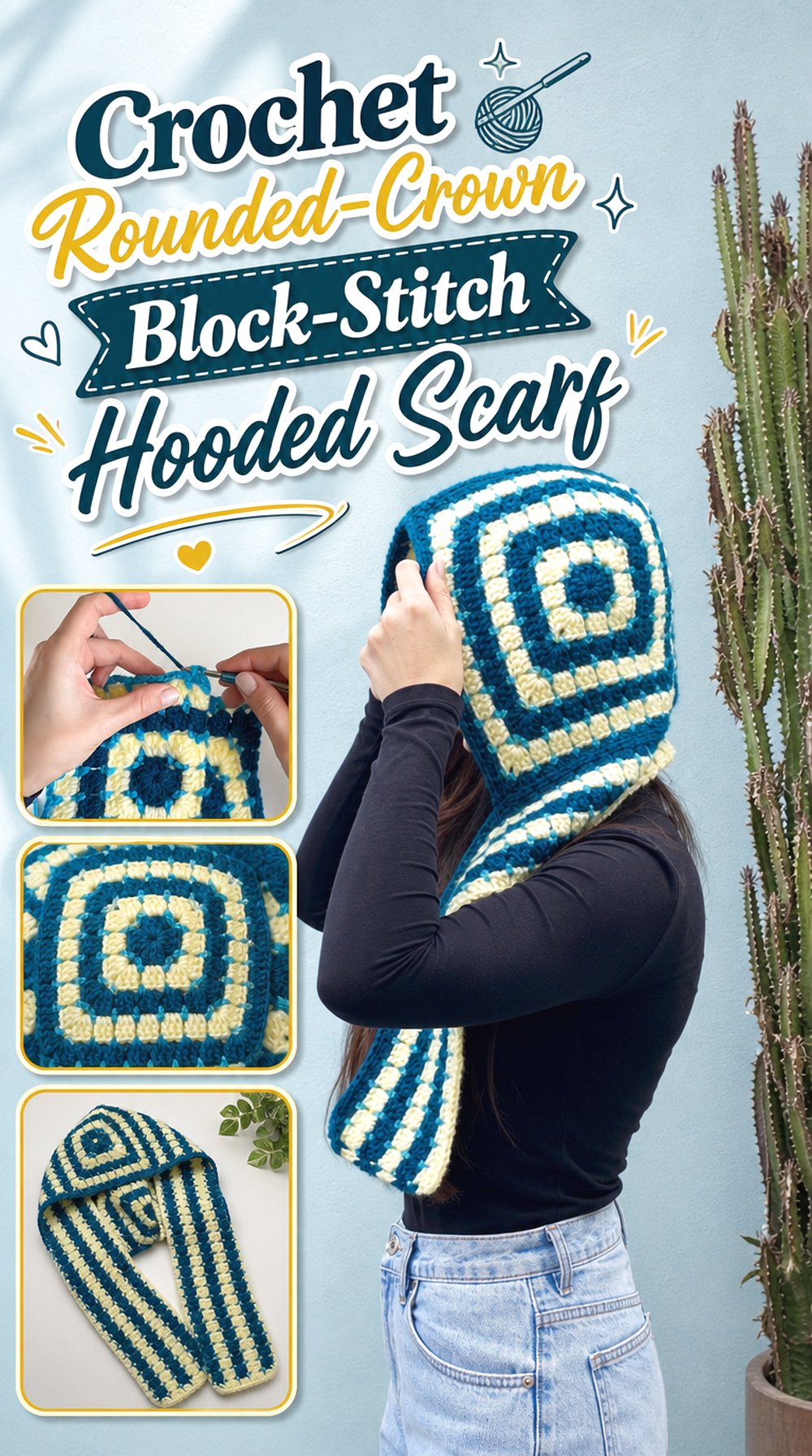
A pointed hood can feel deliberately medieval or whimsical; madebymara’s tutorial instead focuses on creating a rounded corner and uses block-stitch crochet. That difference makes this a useful option if you want poetcore atmosphere without making the hood look overtly costume-inspired.
The block texture still supplies plenty of handmade character. In a muted two-color combination, it can suggest vintage textile work while the rounded crown remains practical for everyday coats and sweaters. This is also a strong choice for people who specifically dislike a visible point at the back of a scoodie.
The Crown Shape Controls the Overall Character
A square or sharply pointed crown creates a much stronger silhouette than a rounded one. Choose the rounded version if you expect to wear the accessory frequently rather than primarily for themed styling. When trying it on, inspect the back as well as the front; the crown should have enough room to sit comfortably without leaving more projection than you actually want.
Block Stitch Rewards Thoughtful Contrast
The block pattern can carry two colors clearly, so it does not need a large palette. Ink and parchment, olive and oatmeal, or burgundy and brown can create visible pattern without pushing the piece toward rainbow patchwork. If you substitute colors, repeat them consistently enough around the hood that one accidental stripe does not dominate the crown.
Creator: madebymara
7. Crochet Clean Line Everyday Hood Scarf
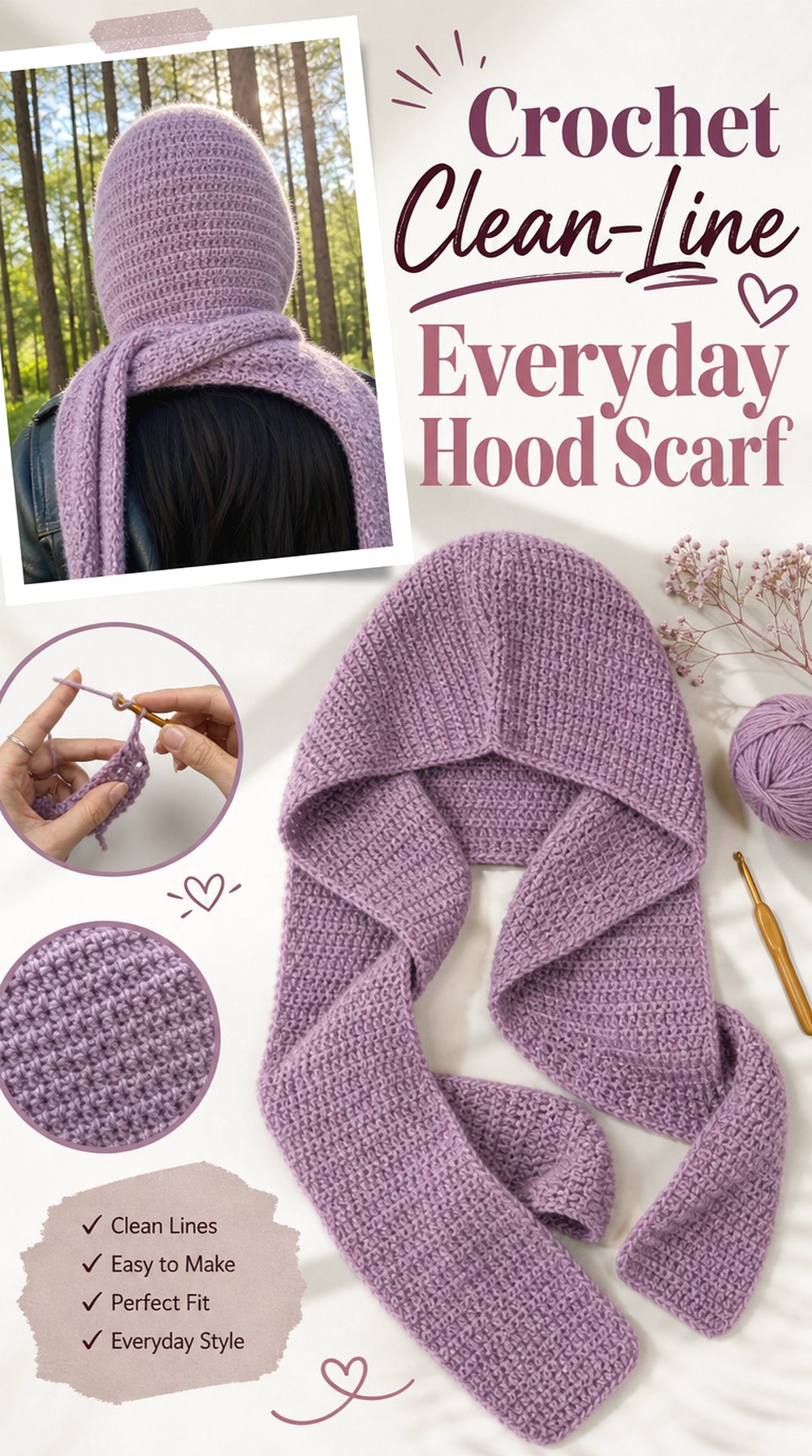
ABoC Studio’s hood scarf offers a deliberately straightforward finished form without pockets, motif patchwork, faux fur, or an infinity loop competing for attention. That makes it a versatile foundation for a literary wardrobe: the piece can sit over a shirt collar, sweater, or coat without looking themed on its own.
For poetcore, a clean scarf like this benefits from subtle details rather than many decorative additions. A single earthy yarn, understated edge treatment, or lightly heathered fiber can be enough. It is the option to consider when you want the hooded-scarf idea but still prefer relatively minimal accessories.
Minimal Construction Puts Proportion First
Without pockets or large motifs to distract the eye, differences in hood depth and scarf width become much more obvious. Check how far forward you want the hood to frame the face and whether the scarf feels narrow enough to wrap comfortably. A beautiful color cannot compensate for a hood that feels too shallow or a neck section that becomes cumbersome.
Use One Accent Instead of Several
If you want to personalize a simple scarf, choose a single visual decision: contrast edging, a small tassel treatment, subtle stripes, or an interesting yarn. Combining all of them can erase the clean quality that makes this construction useful. Poetcore tends to work particularly well when the accessory appears collected and lived-in rather than heavily decorated.
Creator: ABoC Studio
8. Crochet Romantic Triangle Hooded Wrap Scarf
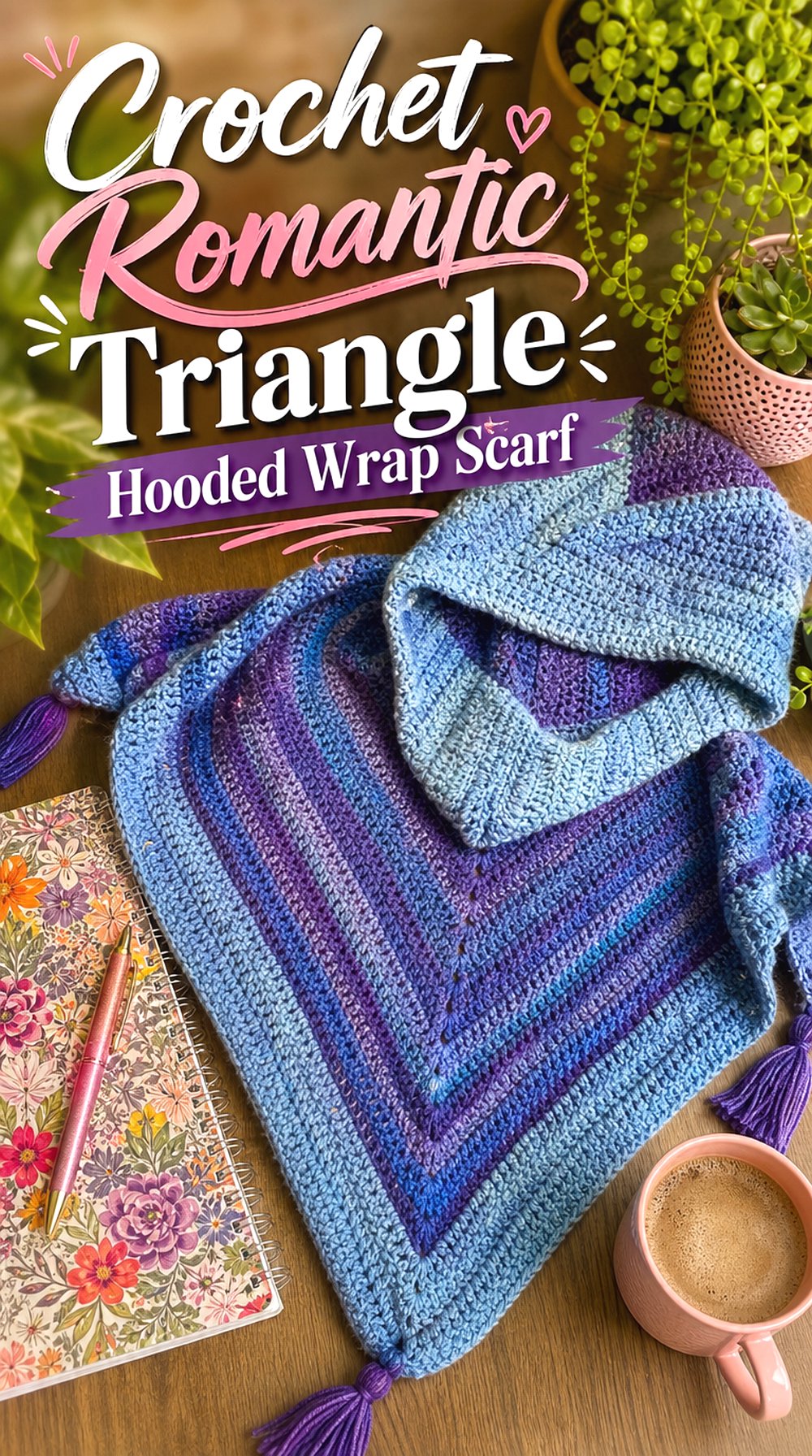
AstroKnotty’s project shifts the silhouette toward a triangular shawl with an attached hood, border, and optional-looking decorative finish rather than a conventional narrow scarf. That broad back drape makes it one of the most naturally romantic options in this collection.
It works especially well for a poetcore direction inspired by capes and softer historical layering. Pinterest specifically reports increased interest in “cape outfit” alongside Poetcore, which makes this kind of shoulder-covering shape particularly relevant. Wear it more like an outer wrap than a simple neck accessory.
Shoulder Coverage Changes the Layering Plan
A triangle wrap covers considerably more of the back and shoulders than a conventional scarf. That makes it attractive over a fitted sweater or dress but potentially bulky beneath a structured coat. Decide whether you want the piece to function as the visible outer layer or fit underneath something else. That decision should guide both yarn thickness and the final amount of drape.
Fringe Can Push the Look in Different Directions
Fringe adds motion and a slightly bohemian character, but its length and density affect the mood. Sparse, tonal fringe keeps attention on the hood and triangle. Dense or highly contrasting fringe makes the edge a stronger feature. If you plan to wear the shawl around bags or coat hardware, also consider whether long fringe will catch frequently during everyday use.
Creator: AstroKnotty
9. Crochet Tapered Sophie Style Poet Hood Scarf
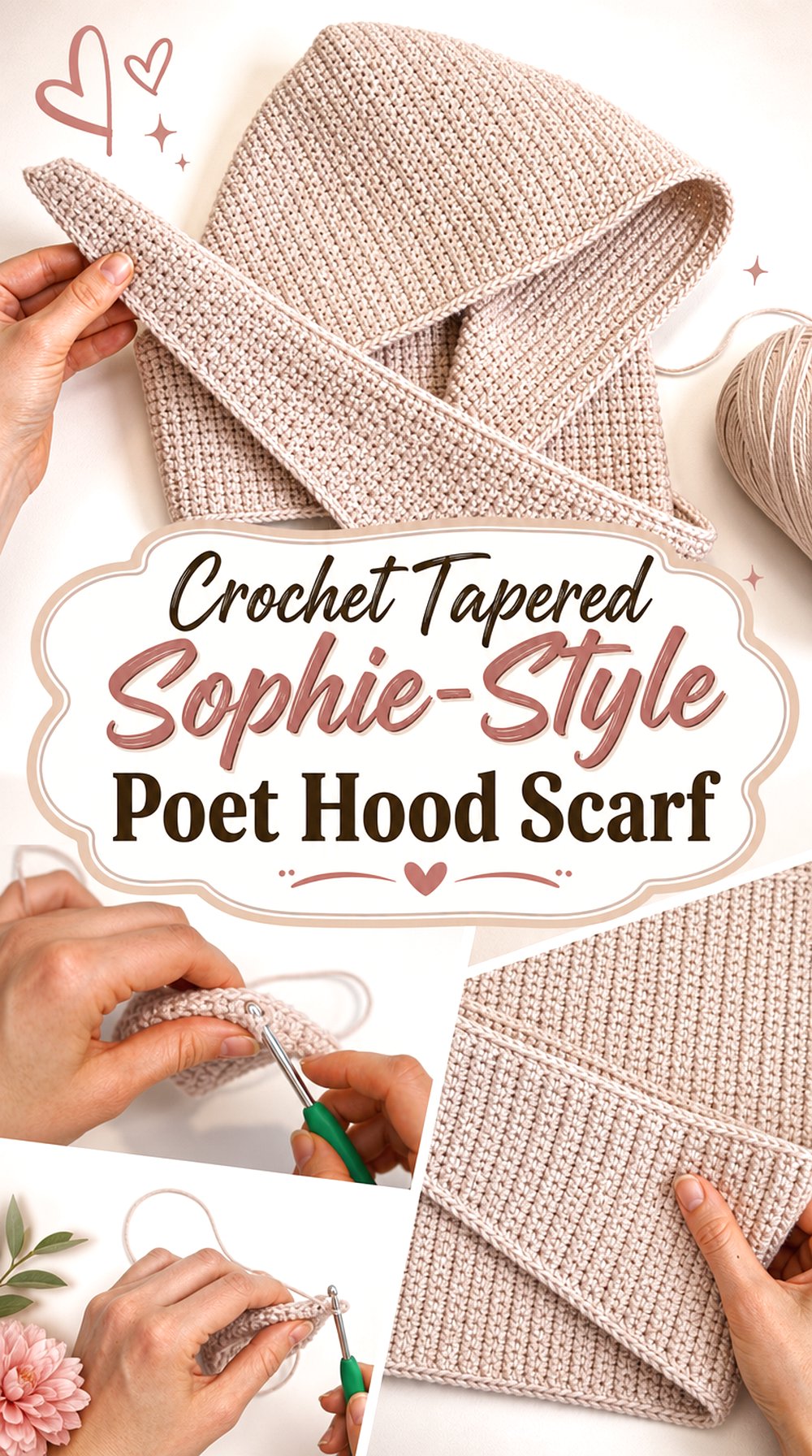
The Sophie-hood shape offers a very different answer to hooded-scarf bulk. Diving Ducks Crochet’s tutorial produces the recognizable hood-and-narrow-scarf combination with shaped sections and a finished edge rather than broad rectangular tails.
This slender outline is useful if your poetcore wardrobe already contains oversized turtlenecks, chunky cardigans, or substantial coats. Instead of adding another large layer, the tapered scarf can create a soft frame around the face and leave relatively little fabric at the chest. In an understated yarn, it can look modern while still carrying the slightly romantic feeling of a tied or draped head covering.
Tapered Ends Reduce Front Bulk
Narrow ends behave differently from full-width scarf tails. They can hang, cross, or tie with less volume, which makes this construction worth considering if you dislike a thick knot at the neck. Before extending the ends beyond the tutorial, remember that extra length changes their visual proportion and may pull on the hood.
Edge Finish Is More Visible on a Simple Shape
On a clean, tapered design, the outer edge runs through much of the silhouette. Uneven tension there can be more noticeable than it would be on a highly textured scarf. Pause periodically and lay the work flat. If the edge is beginning to ripple or draw inward, address the tension before finishing the entire piece.
Creator: Diving Ducks Crochet
10. Crochet Celestial Star Square Hooded Scarf
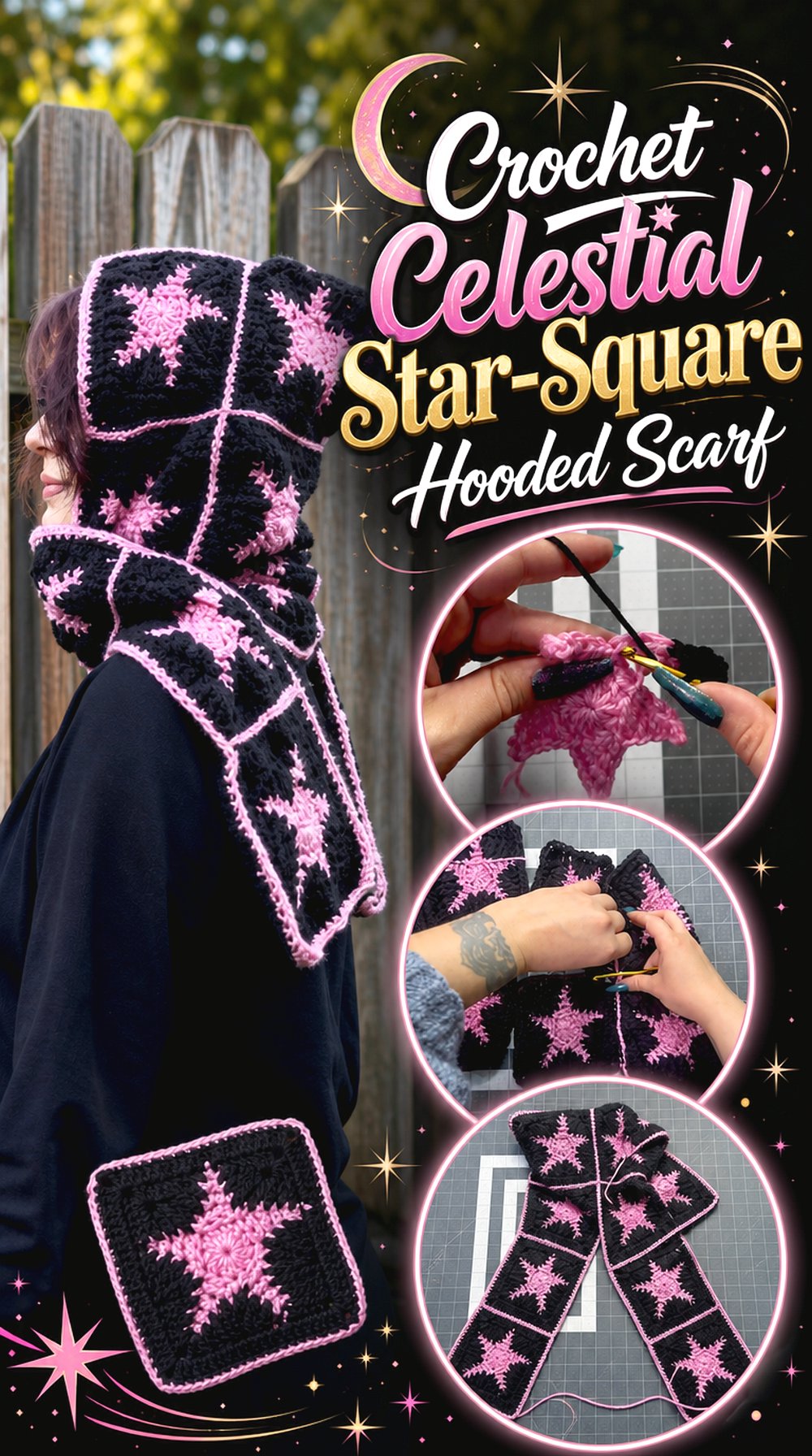
Wolfie Knots turns the hooded scarf into a celestial patchwork piece by constructing it from star granny squares. This has a much more illustrative surface than the basic granny-square options, so it works for readers who want a recognizable motif rather than texture alone.
For poetcore, stars can be handled quietly: cream stars against espresso brown, faded gold against charcoal, or dusty blue against parchment create an old-book-illustration feeling without requiring bright novelty colors. Because the motif itself is already strong, the rest of the styling can stay simple.
Decide Where the Strongest Stars Should Sit
Not every square occupies an equally visible position once the scarf is worn. Before joining, place the motifs in a complete layout and identify the crown, sides of the face, shoulders, and lower tails. Reserve your favorite or highest-contrast squares for the positions you actually want emphasized instead of distributing them randomly.
Motif Clarity Depends on Yarn Definition
A star can disappear if the yarn is extremely fuzzy or the two colors are too similar. If the celestial motif is the reason you chose this project, make a single square first and view it from several feet away. The star does not need harsh contrast, but its points should remain readable enough to survive the joining process.
Creator: Wolfie Knots
11. Crochet Deep Texture Winter Hooded Scarf
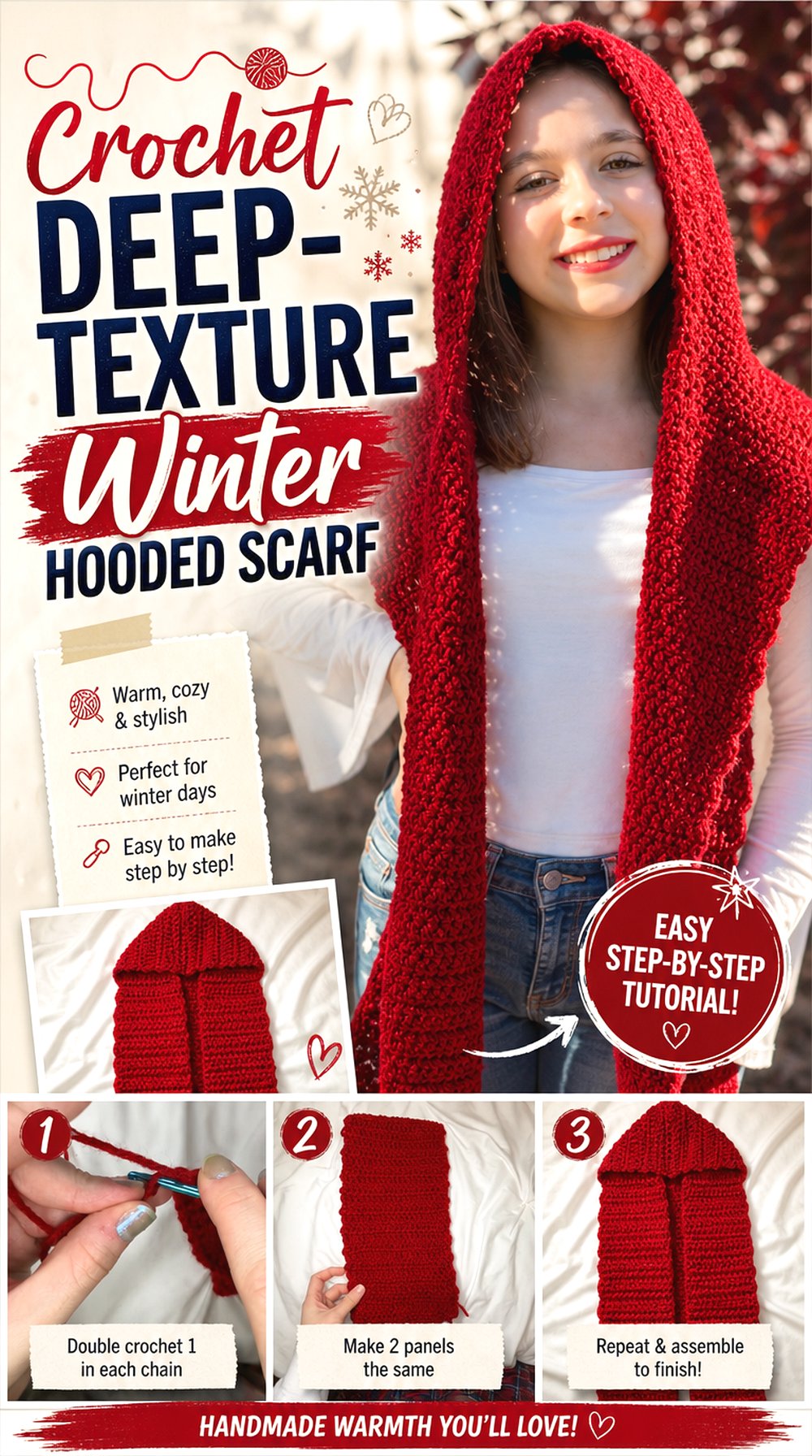
Faith.Wisest’s scoodie uses front-post and back-post crochet to create a notably thick, textured fabric. That makes this option less about delicate drape and more about dimensional winter texture—a good direction for a poetcore look based on heavy sweaters, worn coats, and substantial cold-weather accessories.
A monochrome version lets the ridges create visual interest without needing stripes or motifs. Deep brown, charcoal, forest, or burgundy would emphasize the shadow created by the raised surface, while a pale neutral makes each ridge easier to see.
Raised Texture Adds Both Character and Bulk
Three-dimensional stitch patterns consume visual and physical space. If you already plan to wear the hood over a thick turtleneck or under a close-fitting coat, check the neck area early rather than assuming it will compress comfortably. The same density that makes the surface appealing may be less suited to mild weather or indoor layering.
Solid Colors Let the Texture Read Clearly
Strong striping can compete with raised stitch architecture. For this project, a single color or closely related shades can make the relief more visible. If you do want variegated yarn, make a generous swatch first; short color changes can visually fragment the ridges and make the surface look busier than expected.
Creator: Faith.Wisest
12. Crochet Woodland Poetcore Hooded Scarf
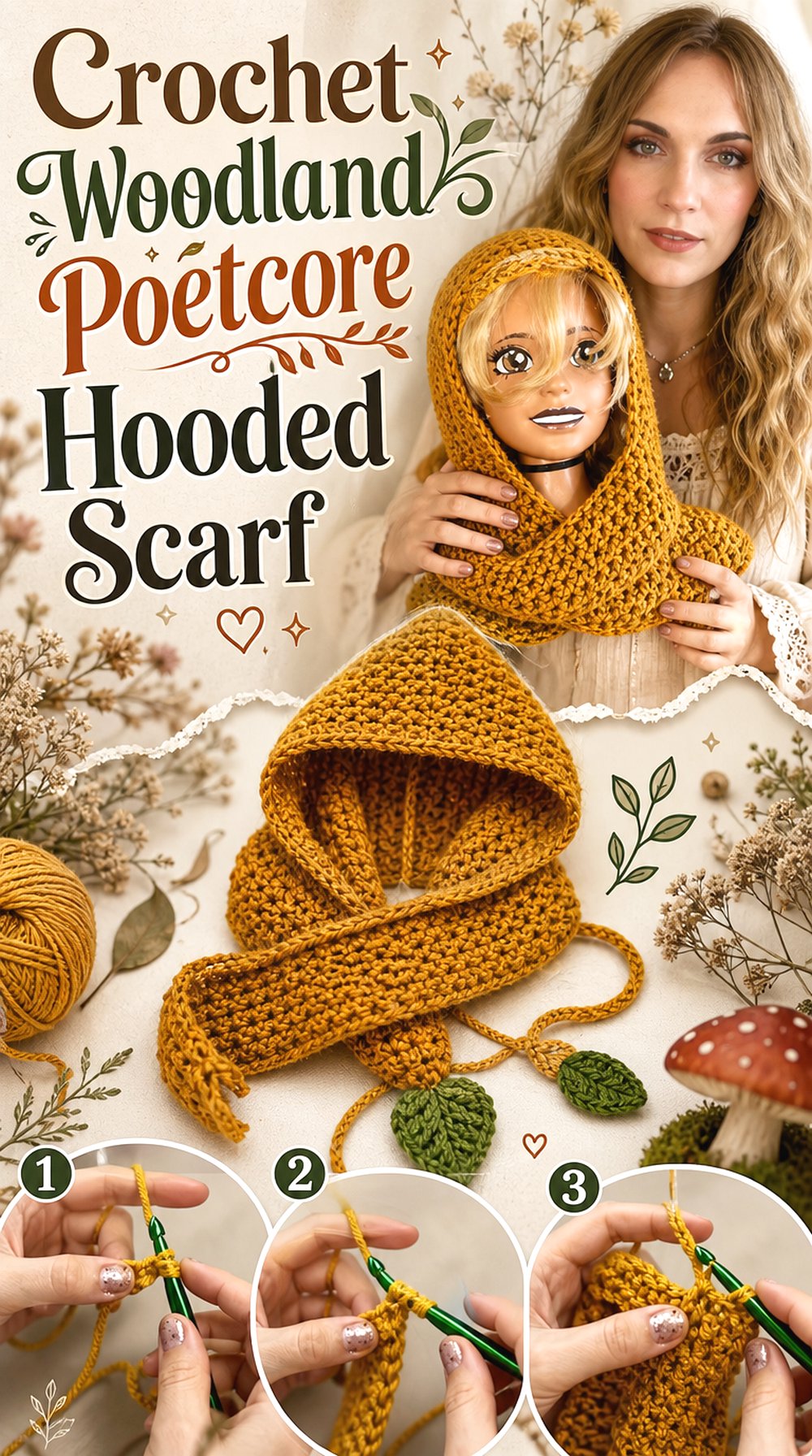
Ro Lo’s tutorial is explicitly presented as a cottagecore hooded scarf, which makes it an interesting bridge into poetcore rather than a direct match to the trend. Both aesthetics can accommodate natural colors and romantic handmade texture, but poetcore can pull the finished piece away from pastoral sweetness and toward more literary styling.
Try the silhouette in ink, moss, brown, weathered cream, or muted plum, then pair it with tailored or academic-looking layers rather than floral accessories. The same hooded construction can feel substantially different once the palette and surrounding clothes change.
Shift the Mood Through Styling, Not Reconstruction
You do not need to redesign a cottagecore pattern to make it work in a different wardrobe. Changing the yarn palette and what you wear around it is often enough. A dark blazer, long coat, high-neck sweater, or leather-style satchel can make the accessory read more literary without adding new crochet elements that interfere with the original proportions.
Keep Natural Texture From Becoming Too Rustic
A highly slubby yarn, fringe, wooden buttons, multicolor stripes, and floral embellishments can collectively push the project toward a different aesthetic. If poetcore is the target, choose one or two tactile details and leave the rest quiet. This keeps the piece looking intentional rather than like several adjacent aesthetics were combined at once.
Creator: Ro Lo
13. Crochet Ribbed Pocket Hooded Scarf
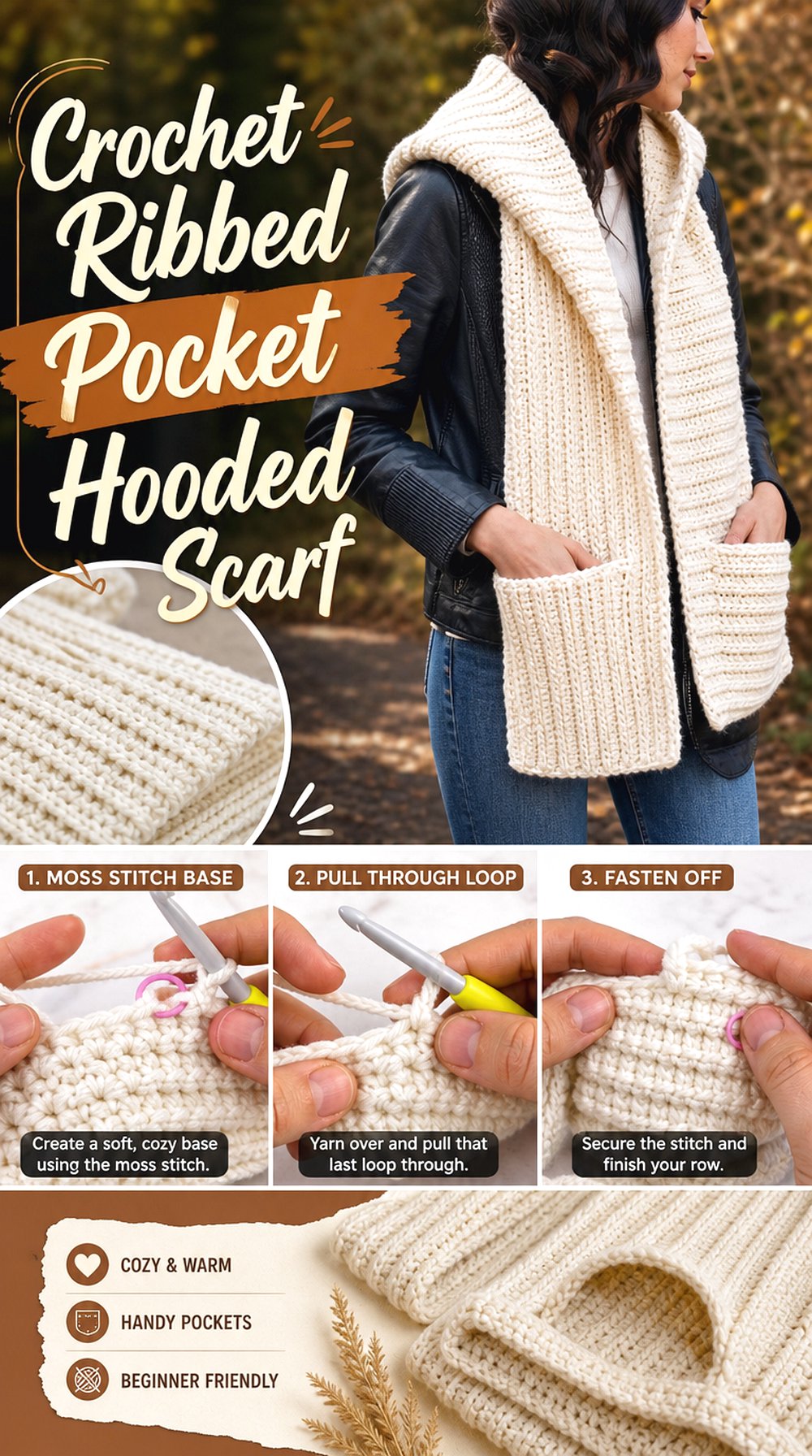
Winding Road Crochet’s hooded scarf combines pockets with a fabric built from simple stitches and back-loop work, producing a strong linear texture rather than motifs. The vertical or rib-like visual effect makes this one feel particularly compatible with corduroy, ribbed sweaters, and other textural poetcore layers.
Compared with a plush novelty-yarn pocket scarf, this option keeps the structure readable. It can be made quietly monochromatic, allowing the hood, pockets, and textured rows to define the finished piece without needing additional surface decoration.
Ribbing Direction Influences the Silhouette
Linear texture encourages the eye to follow the scarf length, which can make long tails look even more elongated. If you prefer that dramatic vertical line, avoid interrupting it with several contrasting bands. If you want a softer effect, choose a heathered yarn that reduces the contrast between individual ridges.
Folded Pockets Need Clean Corners
Because the pocket shape comes from the scarf ends, uneven folds or stretched seams will be noticeable. Position the pockets while the scarf is lying flat, then try the piece on before securing everything permanently. Check that both pockets sit at comparable heights and that using them does not pull the hood uncomfortably forward.
Creator: Winding Road Crochet
14. Crochet Double Wrap Infinity Hooded Scarf

Kay Krochets’ Trailhead construction combines an attached hood with a double-wrapped infinity scarf instead of loose hanging ends. That makes it a useful solution for anyone who likes enveloping poetcore layers but dislikes managing two long scarf tails.
The infinity section creates more volume around the neck and chest, so the finished accessory can become a major part of an outfit rather than a narrow accent. In a tweedy brown, muted gray, or natural cream, it can look especially effective over a simple coat where the continuous loop remains visible.
Infinity Construction Changes How You Put It On
A looped scarf is less adjustable than two independent tails. Before altering the length, think about how many wraps you actually want and how the hood behaves once the scarf is positioned. The loop should be easy enough to arrange without pulling awkwardly across the face or creating excessive pressure at the neckline.
Bulky Yarn Can Quickly Increase Neck Volume
The tutorial uses a substantial scarf concept, so yarn substitution deserves caution. If you move to an even thicker yarn without recalculating dimensions, the double wrap may become much larger than expected. Make a sample and physically fold it into two layers around the neck; a fabric that feels fine in one layer can feel completely different when doubled.
Creator: Kay Krochets
15. Crochet Faux Fur Trim Pocket Hooded Scarf
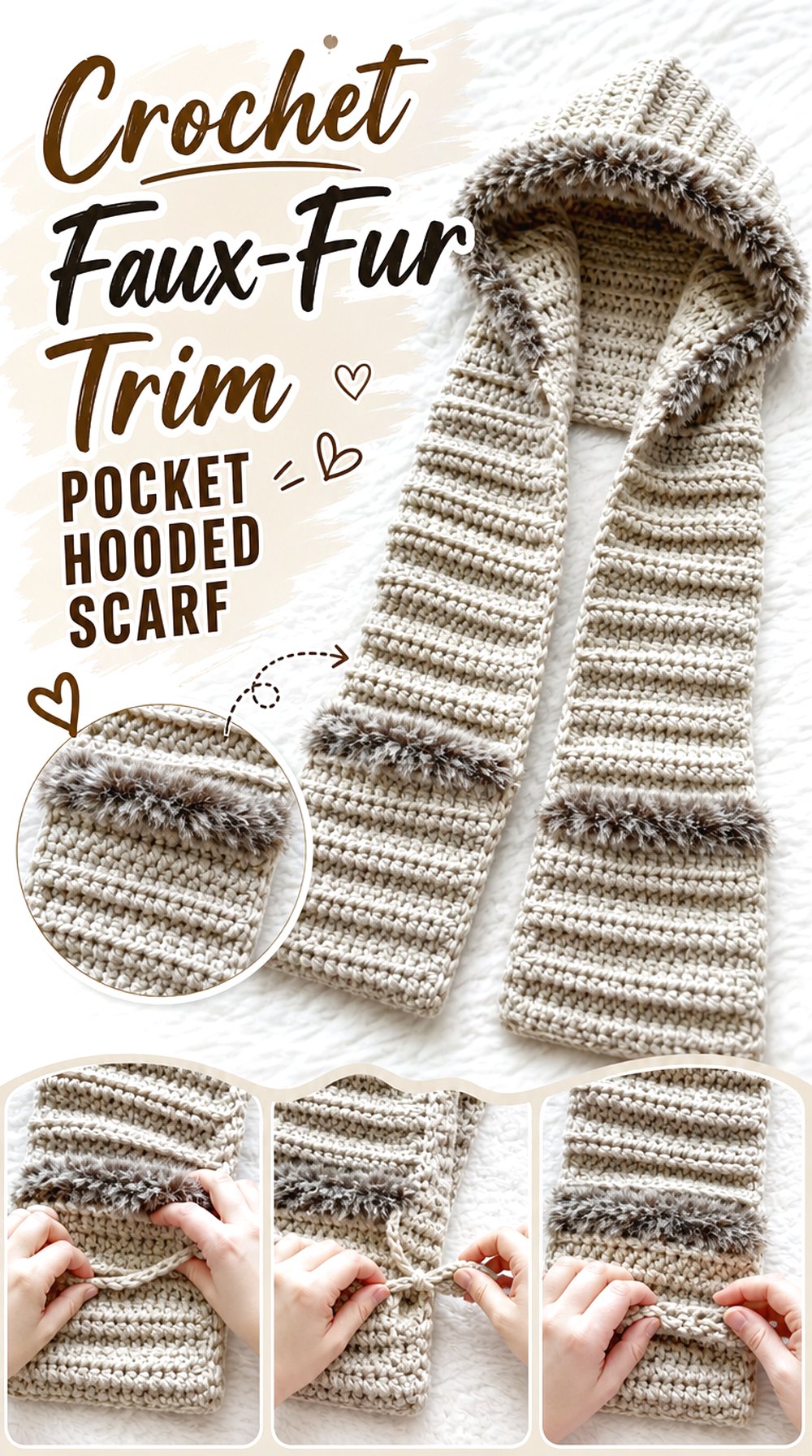
The Phantom Faux design from CreationsMisfit uses a hooded pocket-scarf form with faux-fur yarn as a visible accent. This is a stronger statement than the plain pocket versions, but it can still work within poetcore if the trim stays subdued.
Think of the fur-like texture as the equivalent of an old winter-coat collar rather than a novelty embellishment. A brown, charcoal, cream, or muted black combination can give the hood a weathered, dramatic frame while the long scarf and pockets remain practical.
Place Faux Fur Where It Has a Clear Purpose
Novelty texture is most effective when it defines an edge, hood opening, or another intentional area. Scattering it across several unrelated sections can make the design feel visually fragmented. Before attaching trim, pin or loosely position it around the hood and view the entire scarf from a distance to make sure the trim supports rather than overwhelms the silhouette.
Fuzzy Yarn Can Hide Stitch Placement
Faux-fur yarn is harder to visually read than smooth yarn because the fibers can obscure the underlying loops. If you are unfamiliar with it, practice on a small sample first and rely on consistent placement and touch rather than expecting every stitch to remain visible. Do not judge the final edge solely by how it looks stretched flat; check it in the position in which it will actually be worn.
Creator: CreationsMisfit
16. Crochet Striped Rounded Hooded Scarf
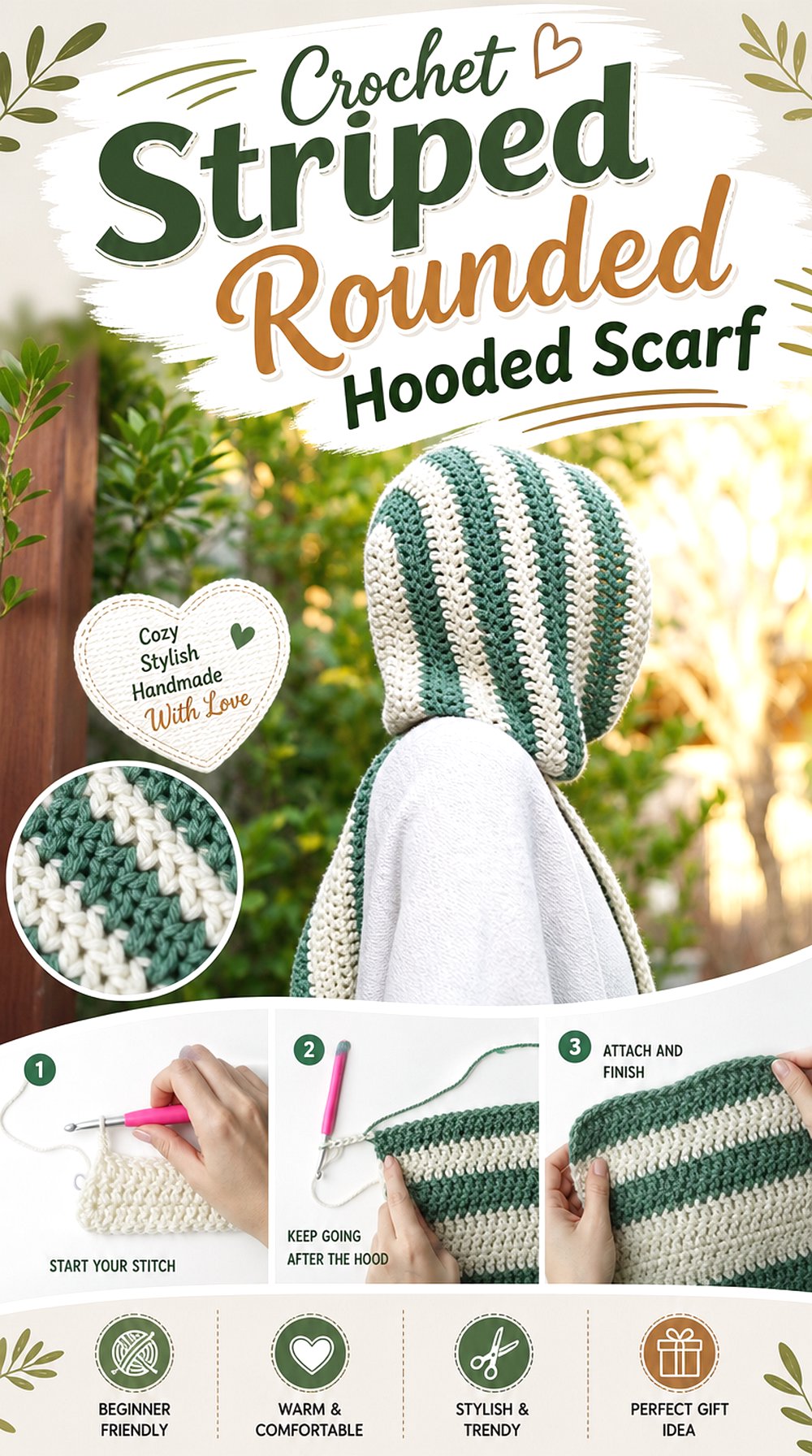
VivCrochets’ scoodie combines a rounded hood with continuous scarf sections and specifically demonstrates a striped version. It is a useful choice if you like stripes but want something visually calmer than square-by-square color changes.
For poetcore, narrow or low-contrast bands can evoke old university scarves without turning the project into a literal collegiate accessory. Cream with sage, brown with camel, charcoal with faded blue, or burgundy with rust can keep the stripes visible while preserving a softened palette.
Repeat Width Matters as Much as Color
Wide stripes become large graphic blocks across the hood; narrower stripes create more rhythm. Decide which effect suits the finished piece before crocheting far into the project. If you want the hood to remain the primary feature, avoid a stripe sequence that places the strongest contrast exactly at the crown unless that emphasis is intentional.
A Rounded Hood Keeps Stripes From Forming a Point
Striping can exaggerate construction lines. On a pointed hood, those lines often direct attention toward the back corner. A rounded crown spreads them more gently around the head. When changing colors, check both side and back views so the stripe flow still looks balanced once the fabric curves.
Creator: VivCrochets
17. Crochet Faux Fur Snood Hood Scarf
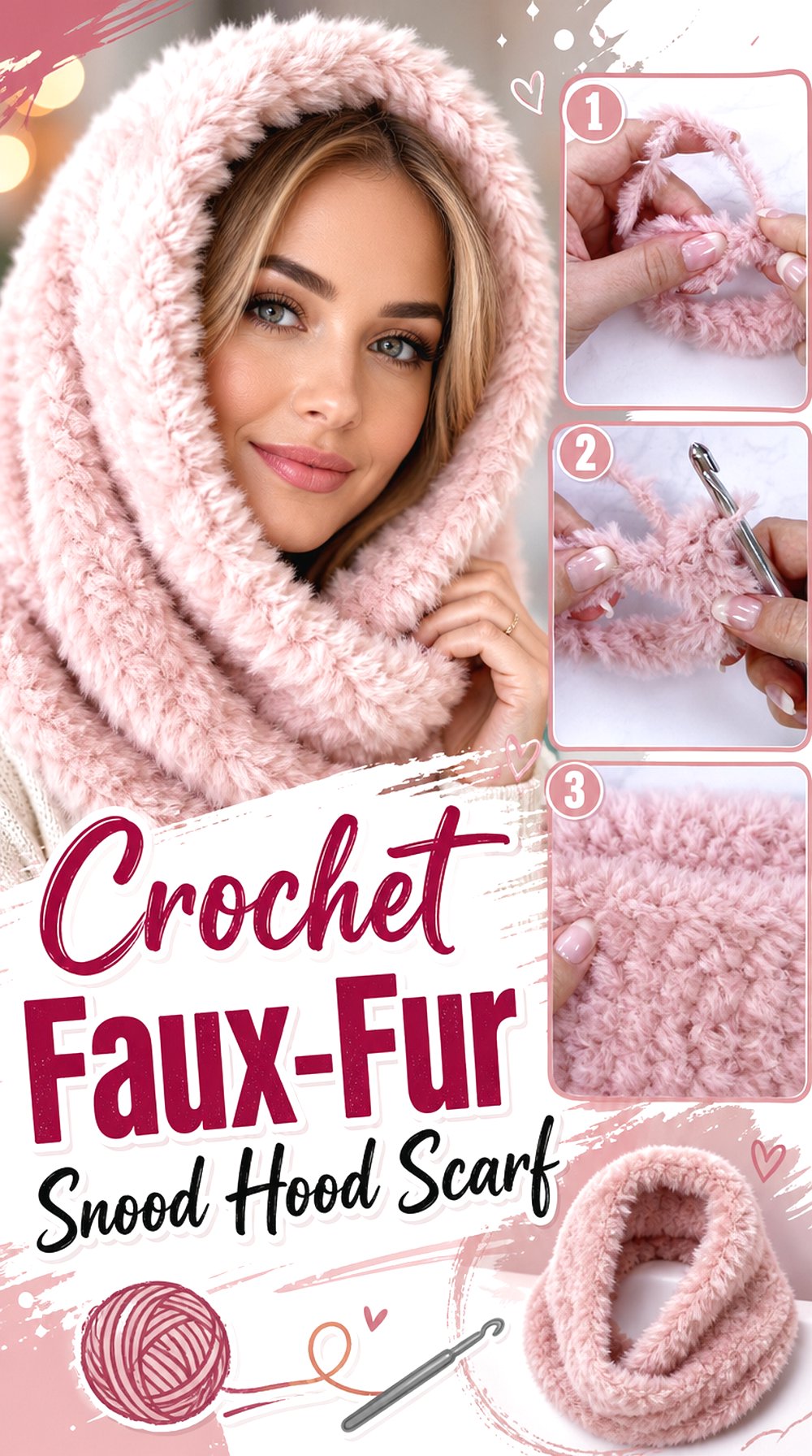
Nicki’s Homemade Crafts takes the hooded accessory in a different direction by using faux-fur yarn for a convertible snood-style hooded cowl. There are no traditional long scarf tails, so the visual focus stays high around the face and neckline.
This works for a more dramatic winter poetcore outfit where a long coat, skirt, trousers, or satchel already supplies the vertical lines. The soft tubular form can be worn closer to the neck or pulled upward as a hood, giving it a different function from the attached-hood scarves elsewhere in the list.
A Snood Is Better When You Want Contained Volume
Choose this construction if loose scarf ends tend to get in your way. The fabric remains concentrated around the head and neck, which can be convenient with crossbody bags or long outerwear. The trade-off is less styling flexibility at the front: you cannot independently drape, knot, or pocket two scarf tails.
Faux Fur Hides Crochet Structure on Purpose
Unlike a crisp star square or ribbed scarf, this project is about surface softness rather than visible stitch architecture. That can be an advantage when you want the accessory to resemble a plush vintage winter piece. Choose the yarn for its finished texture and comfort, not because you expect individual stitches to become a decorative feature.
Creator: Nicki’s Homemade Crafts
18. Crochet Moss Stitch Chilly Day Hooded Scarf
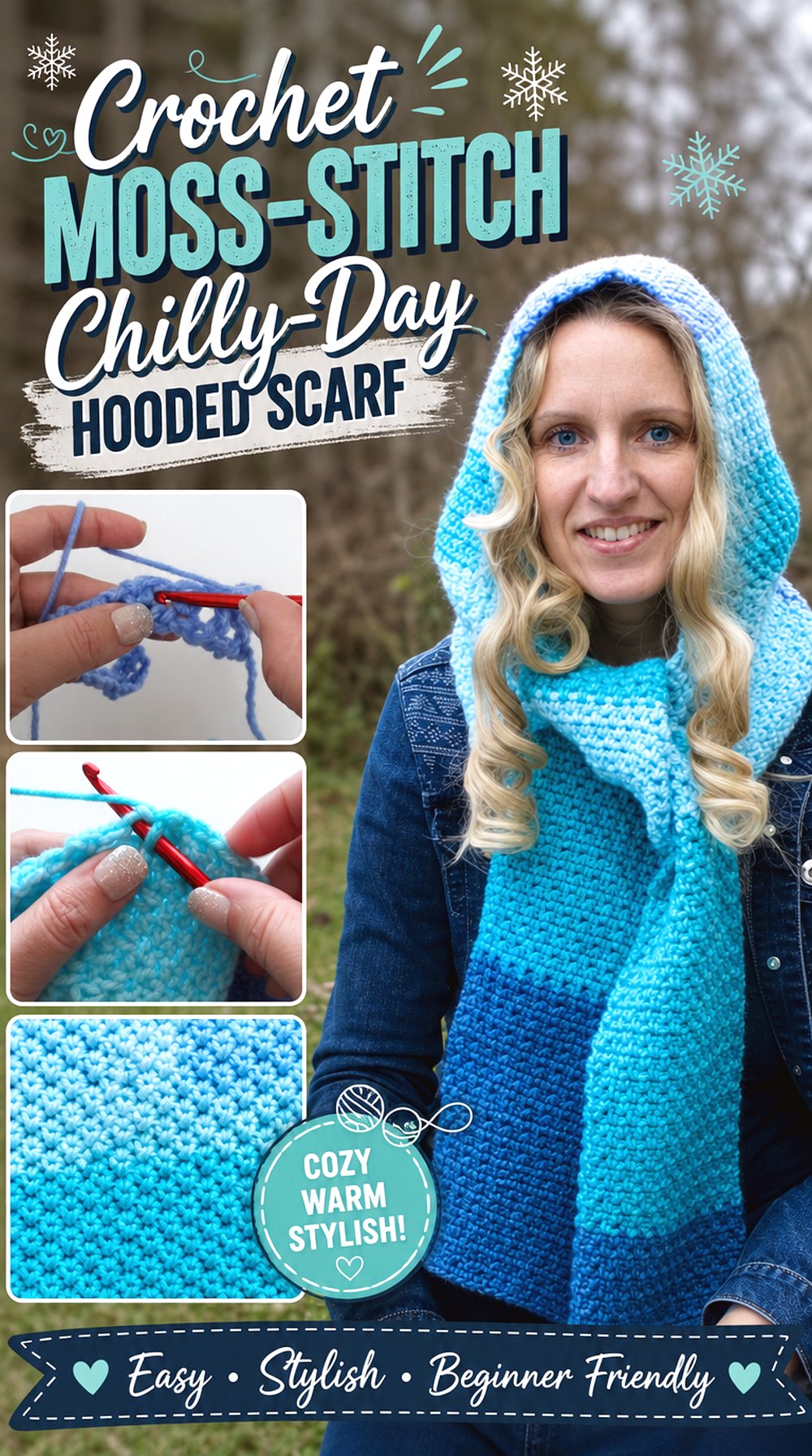
Naztazia’s Chilly Day Hooded Scarf uses moss stitch, giving the piece a small-scale woven-looking texture rather than raised ribs or granny clusters. It is one of the easiest silhouettes here to imagine beside tweed, corduroy, or a vintage blazer because the surface does not compete heavily with patterned outerwear.
Moss stitch can also handle subtle color changes without creating the strong visual blocks of granny squares. A muted multitone yarn or narrow academic-style stripe can provide depth while keeping the overall scarf relatively quiet.
Small-Scale Texture Pairs Well With Patterned Coats
If your outerwear already contains plaid, herringbone, or another visible pattern, a large crochet motif may produce too many competing grids. Moss stitch creates texture at a smaller scale, allowing the scarf to add depth without introducing another large motif. Bring a swatch next to the coat when choosing colors rather than selecting the yarn in isolation.
Watch the Fabric Width Around the Neck
Even a low-profile stitch can become bulky if the scarf is very wide and wrapped several times. Decide whether you want a decorative drape or substantial neck coverage. When modifying width, remember that the hood and scarf need to remain visually proportional; an extremely narrow scarf attached to a deep hood can look unbalanced.
Creator: naztazia
19. Crochet Draped Infinity Hooded Scarf
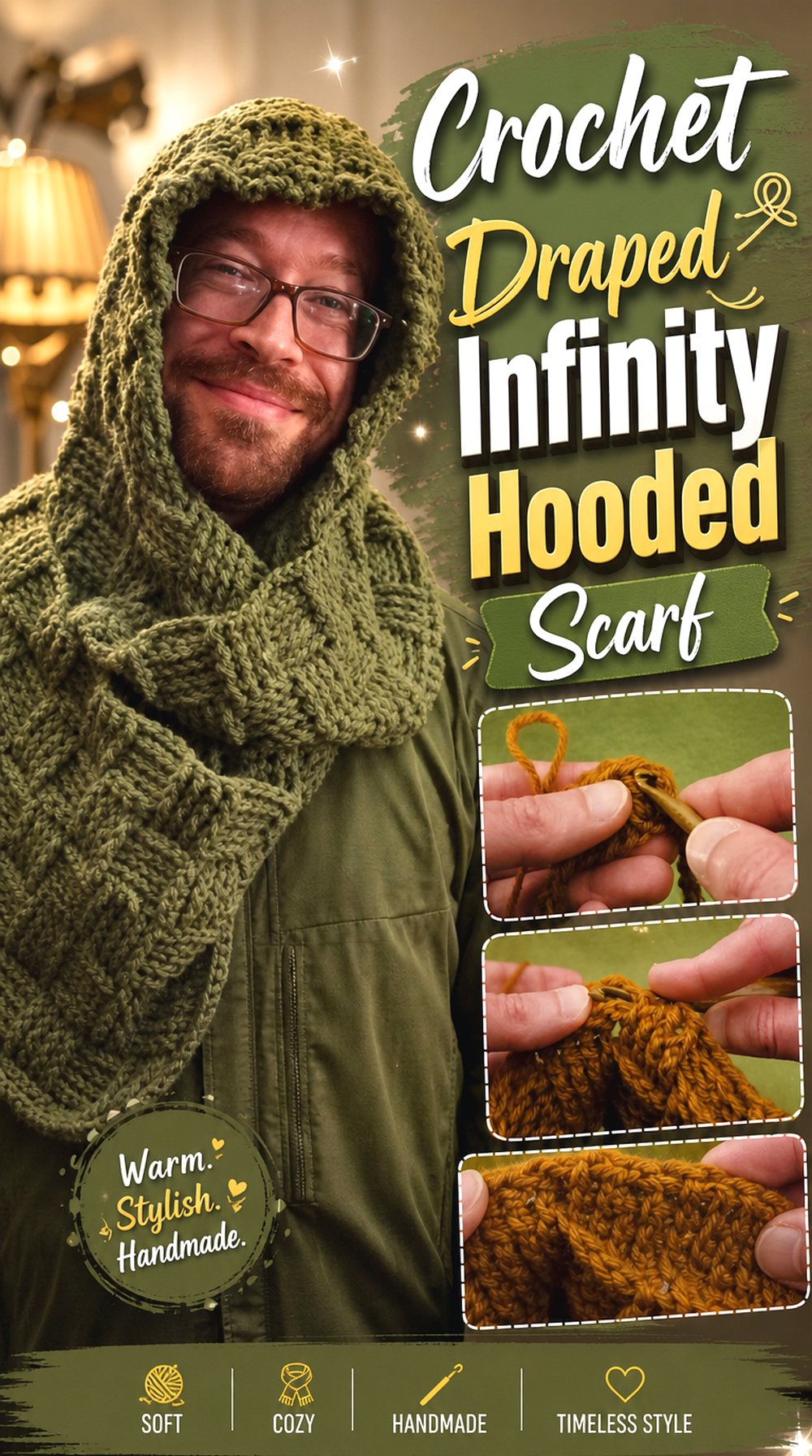
Fiber Spider’s hooded infinity scarf constructs a continuous scarf loop and then forms an attached hood section. It differs from the double-wrapped Trailhead option in how the hood is built into the infinity concept, making it worth considering if you prefer a contained neckline but still want a clearly defined hood.
For a poetcore adaptation, keep the yarn understated and let the generous loop act like a soft collar. A smoky neutral, deep forest, or worn-looking brown can make the scarf feel less sporty and more like an intentional layer over sweaters and long coats.
Treat the Loop as Part of the Collar
When the hood is down, an infinity scarf remains visible around the neck rather than becoming two hanging tails. That makes the lower section function almost like a large collar. Check how the loop sits with your favorite coat lapels; too much bulk can hide them completely, while a softer drape can allow both pieces to remain visible.
Hood Placement Matters on a Continuous Ring
A conventional scarf can slide side to side without much consequence. With an attached hood on an infinity loop, the relationship between the hood and scarf section matters more. Before finishing, identify the true center back and make sure the hood sits there naturally when the loop is arranged as intended.
Creator: Fiber Spider
20. Crochet Two Panel Harley Hooded Scarf
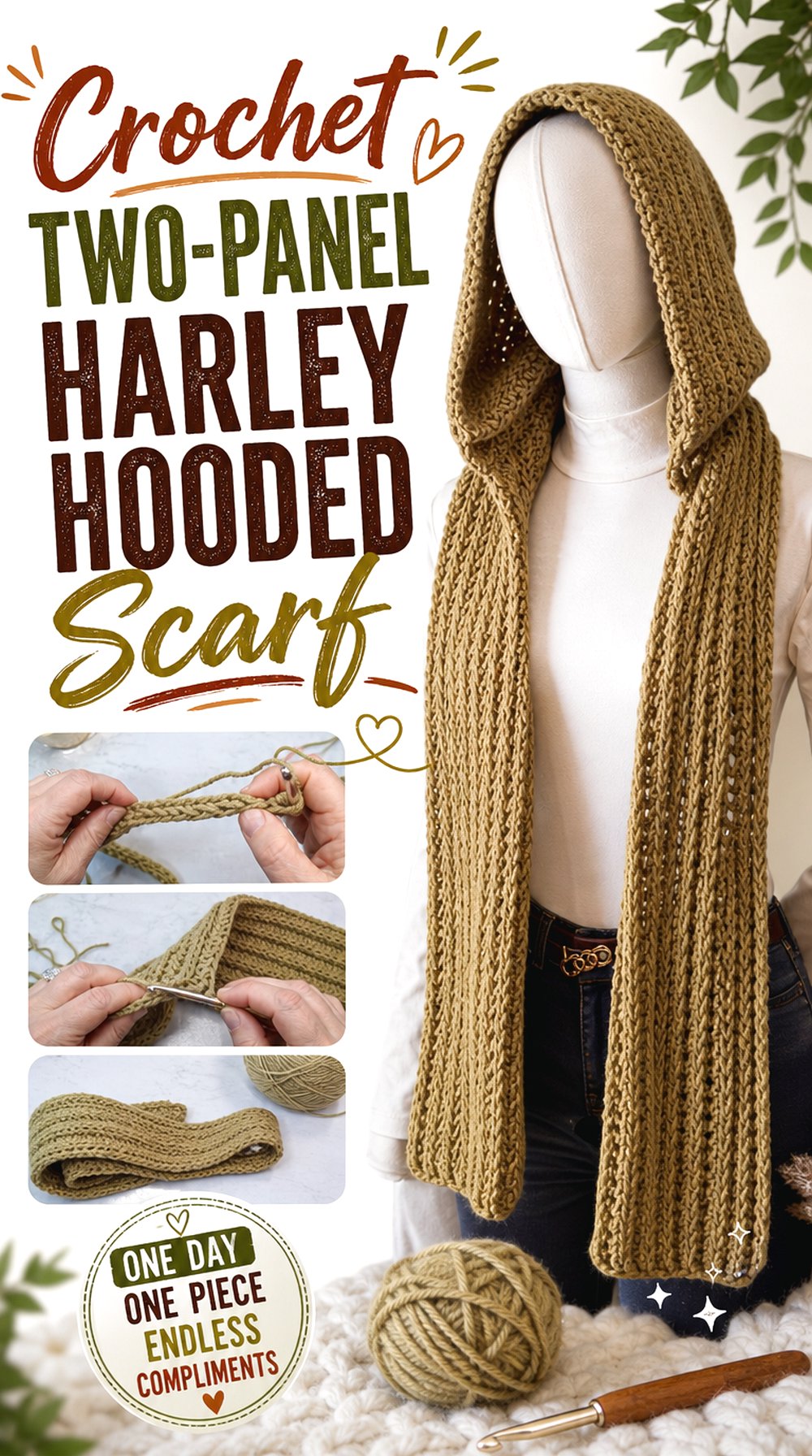
BDD Patterns’ tutorial presents an all-in-one hooded scarf, described by the creator as a Harley hoodie scarf, and builds the design around matching panels. The resulting shape gives this final option a different construction route from granny motifs, pocket scarves, and infinity loops.
A panel-based scarf is useful when you prefer repeating fabric rather than managing many motifs. In poetcore colors, the clean shape can take on a quietly vintage feeling without needing additional decoration. It also offers a good reminder that construction method can be a more meaningful difference between projects than another change of yarn color.
Match the Two Panels Before Assembly
Two-panel designs depend on corresponding pieces. Compare their length, width, and stretch before joining them. If one panel has gradually become tighter, forcing the edges together can make the finished hood twist or pull. Small corrections made before assembly are less conspicuous than trying to compensate during the final seam.
Use the Seam as a Fit Checkpoint
The join is where two flat pieces become a three-dimensional hood. Before permanently finishing the seam, position the scarf around the head and shoulders and check the crown depth. This is the point to notice whether the hood feels too close, too loose, or pulled backward by the scarf sections.
Creator: BDD Patterns
How to Choose Among These Poetcore Hooded Scarf Shapes
For the strongest patchwork statement, the Hearthside, Library Patchwork, and Celestial Star-Square options make the crochet construction visible from across the room. The rounded block-stitch and striped scoodies retain handmade texture but sit closer to conventional winter accessories.
If romantic drape matters most, the Triangle Hooded Wrap and tapered Sophie-style scarf are the clearest contrasts: one spreads outward across the shoulders, while the other deliberately reduces bulk. Pocket versions make more sense when long scarf tails are part of the appeal, whereas the two infinity designs and faux-fur snood keep loose ends contained.
For a quieter poetcore wardrobe, the moss-stitch, minimalist, and simple panel constructions leave more room for a tweed blazer, patterned coat, satchel, or other literary-looking layer to carry the outfit.
Conclusion
The most convincing crochet poetcore hooded scarf does not need a literal literary motif. Shape and texture can do the work. Choose granny squares or stars when you want obvious handcraft, a triangle wrap for romantic shoulder coverage, a Sophie-style hood for lighter layering, pockets for long functional tails, or an infinity construction when you prefer a contained neck section.
Then use color and yarn to move the construction toward your version of poetcore—subdued, textured, slightly nostalgic, or dramatically wintery. Before substituting yarn or changing proportions, check how the hood, neck, and scarf sections interact as a complete wearable. Use the original tutorials near each idea for their exact construction details.
Frequently Asked Questions
What colors work well for a crochet poetcore hooded scarf?
Pinterest’s official Poetcore examples emphasize vintage, writer-inspired wardrobe pieces rather than prescribing one fixed color palette. For crochet, cream, camel, espresso, charcoal, moss, faded navy, burgundy, muted rust, and parchment-like neutrals are practical starting points. You can also use restrained stripes or heathered yarn. The more decorative the construction—such as stars or granny squares—the less color contrast you may need.
Which hood shape works best with a blazer or long coat?
A rounded hood or slimmer Sophie-style scarf usually creates less visual and physical bulk than a broad shawl or double-wrapped infinity design. That does not make it universally better; it depends on the coat collar and how much fabric you enjoy around the neck. Try the developing piece with the actual outerwear you plan to use rather than fitting it only over a T-shirt.
Can I turn any granny-square hooded scarf into a poetcore version?
Usually the aesthetic can be shifted through palette, motif distribution, styling, and yarn texture without changing the underlying construction. The important technical issue is square compatibility. If you substitute a different granny-square design, compare its blocked dimensions with the tutorial’s layout before joining. A beautiful replacement motif that finishes noticeably larger or denser can alter hood depth, scarf width, and the way neighboring squares align.
Is a pointed hood or rounded hood more suitable for poetcore?
Both can work, but they create different impressions. A pointed hood leans more romantic, historical, or storybook, which may suit an intentionally dramatic poetcore outfit. A rounded crown feels more familiar as everyday winter clothing and may integrate more easily with modern coats. Choose based on the silhouette you want from the back as well as the face-framing view from the front.
What should I check before substituting a thicker yarn?
First determine whether the tutorial relies on gauge, stated measurements, motif size, or a made-to-measure approach. Thicker yarn can increase hood depth, scarf width, stiffness, and total bulk at the neck, even when the stitch pattern still looks correct. Make a swatch or sample motif and compare its actual dimensions before assuming you can follow the same project layout unchanged.
Are pocket hooded scarves or infinity hooded scarves more practical?
They solve different problems. Pocket scarves give long ends an extra function and provide a strong vertical silhouette, but the pockets add weight. Infinity scarves eliminate loose tails and stay contained around the neck, but they provide fewer ways to drape the ends independently. Choose according to how you normally wear outerwear and bags rather than deciding from the scarf’s flat appearance alone.


