
12 Crochet Fall Bandana Ideas
A crochet bandana can shift into fall without becoming a heavy winter accessory. The biggest differences come from construction: some designs use open granny stitches or mesh, while others rely on joined motifs, textured shells, graphic checks, floral lace, or decorative edging. Those choices affect coverage, drape, visual weight, and how much attention the bandana adds to an outfit.
The 12 ideas below focus on genuinely different finished looks rather than simple color changes. Some of the original tutorials were presented as summer accessories, but their constructions translate well to autumn styling when paired with colors such as rust, moss, ochre, burgundy, cream, or brown. Use each creator’s tutorial for the exact construction and material details, then decide which shape and texture make the most sense for the way you want to wear yours.
Quick List
- Crochet Leaf-Pattern Fall Bandana
- Crochet Autumn Breeze Granny Bandana
- Crochet Flower Granny Square Fall Bandana
- Crochet Checkered C2C Fall Bandana
- Crochet Beautiful Shells Fall Bandana
- Crochet Scalloped-Edge Fall Bandana
- Crochet Filet Triangle Fall Bandana
- Crochet Open Mesh Fall Bandana
- Crochet Lacy Floral Fall Bandana
- Crochet Textured Picot Fall Bandana
- Crochet Daisy Fall Bandana
- Crochet Minimal Triangle Fall Headscarf
Choose the Construction Before the Fall Color Palette
Rust or mustard yarn can make almost any bandana look seasonal, but construction determines how the accessory actually behaves. A joined granny-square design creates visible seams and distinct motifs. C2C checks make color placement part of the structure. Mesh and filet designs leave more open space, while shell and picot designs put more visual emphasis on texture.
For a wearable accessory, useful comparison points include fit, drape, motif placement, edging, and tie construction—not color alone. If you want an understated bandana for everyday outfits, start with a simple triangle or granny design. For a stronger statement, look at leaf motifs, checks, flowers, or pronounced edging.
Yarn, Drape, and Coverage Change the Finished Look
Bandanas sit directly against the head, so a fabric that looks attractive while lying flat may feel very different when tied. Softer, more flexible fabric generally follows the curve of the head more easily, while a firmer fabric can make stitch texture and graphic motifs stand out more clearly.
Open granny, filet, lace, and mesh constructions also expose more hair than compact fabrics. That can be useful when the goal is decorative layering rather than substantial coverage. Motif-based designs need another checkpoint: compare the finished dimensions of every blocked motif before joining. Small differences multiply across a row of squares and can make the top edge or ties sit unevenly.
Check Fit by Triangle Depth, Width, and Ties
A useful bandana fit is not determined by head circumference alone. Look at how far the triangle drops at the back, how much of the top of the head it covers, and where the two upper corners reach before the ties begin.
Before committing to the final edging, place the unfinished piece over the head or compare it with a bandana you already like. A deeper triangle creates more back coverage; a shallower shape gives a smaller kerchief effect. Tie length also matters because a design that looks wide enough when flat may still feel restrictive once knots or bows use part of that length. Follow the original tutorial whenever it provides its own sizing method.
1. Crochet Leaf Pattern Fall Bandana
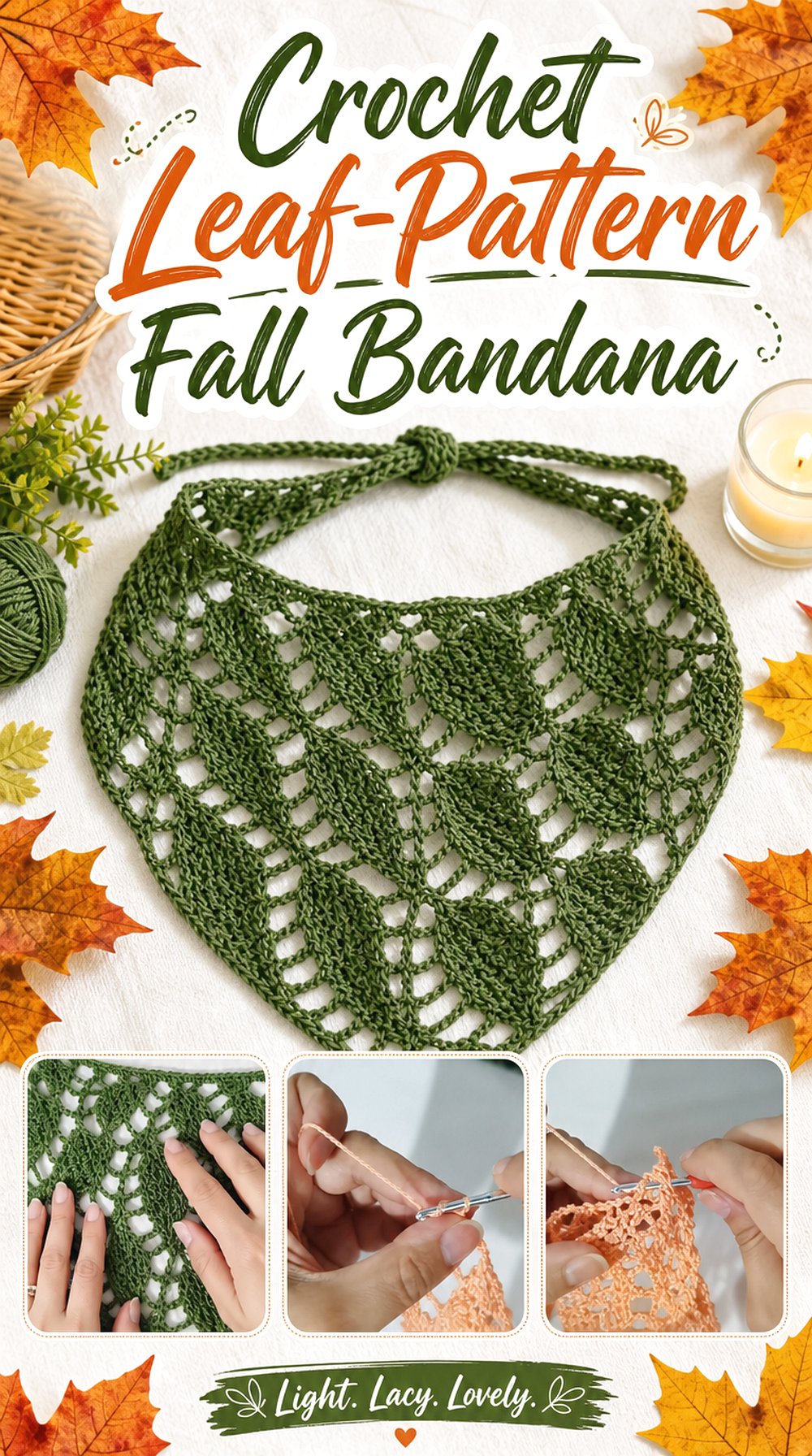
A leaf-pattern bandana is one of the most direct ways to bring an autumn theme into the actual crochet design instead of relying on yarn color alone. Nanda Pedreira Crochet’s tutorial shows a triangular bandana with a recognizable leaf-based pattern, making it a strong choice for moss, olive, rust, copper, or other nature-inspired palettes.
Because the motif itself is the focal point, this idea works especially well when the rest of an outfit is simple. It also offers a noticeably different surface from granny clusters, mesh, and modular squares elsewhere in this collection.
Let the Leaves Stay Visually Clear
Highly variegated yarn can compete with a directional stitch motif. If the leaves are the feature you want people to notice, a solid or gently tonal yarn can make their outlines easier to read. Before settling on a fall palette, look at a small section from normal viewing distance rather than judging the yarn only in the skein.
Check the Lower Point Before Adding More Length
A leaf design can become visually busy if the triangle grows much deeper than you intended. Periodically compare its depth against the amount of hair coverage you want. If you are adapting yarn or hook size, rely on the actual fabric rather than assuming the tutorial’s finished proportions will remain unchanged.
Creator: Nanda Pedreira Crochet
2. Crochet Autumn Breeze Granny Bandana

The classic granny triangle becomes particularly suited to a fall wardrobe when the yarn is kept light enough to drape rather than behaving like a small winter shawl. HayHay Crochet’s Autumn Breeze Bandana uses a granny-style triangle and was specifically introduced as a fall bandana design. The creator also discusses using finer yarn for the look and drape she wanted.
For an autumn version, consider one solid earthy shade for a quiet accessory or alternating muted colors for more of a vintage feel. The open granny structure keeps the design visually lighter than many solid-texture options in this list.
A Finer Granny Fabric Changes the Mood
Granny stitch does not automatically have to look chunky. A finer yarn can make the repeated clusters look more delicate and reduce the visual weight around the head. If substituting materials, watch how the fabric folds at the side of the head; that tells you more about suitability than yarn weight terminology alone.
Keep the Top Edge Comfortable Under a Knot
The body can drape nicely while the tie area still feels bulky. Before finishing both ties, temporarily secure the bandana and check where the top corners sit. If you plan to wear it under loose hair, a flatter knot may matter more than extra-long decorative ties.
Creator: HayHay Crochet
3. Crochet Flower Granny Square Fall Bandana

This option turns the bandana into a small patchwork accessory. Kylie Katsuit’s tutorial features flower granny squares with an eight-petal puff-style flower, giving the finished piece far more motif definition than a continuous granny triangle.
For fall, the flower does not have to read as springtime. Try thinking in terms of marigold, sunflower, dried-flower, or woodland colors: ochre petals, brown centers, cream borders, or rust backgrounds can change the mood substantially. The modular construction also makes this idea useful when you want each motif to contribute a separate color accent.
Block the Flower Motifs Before Judging the Layout
Puff-style centers and granny-square borders can relax differently after blocking. Lay every finished square together before joining so you can spot a motif that is noticeably larger or smaller. Correcting the mismatch early is much easier than trying to flatten a wavy joined bandana afterward.
Plan Repetition Before You Crochet Every Square
A three-color palette can produce many different layouts depending on which shade appears in the flower, surrounding round, and joining area. Arrange a few color combinations on paper or with yarn scraps first. This prevents an accidental cluster of dark or high-contrast motifs on just one side.
Creator: Kylie Katsuit
4. Crochet Checkered C2C Fall Bandana

Checks give a fall bandana a retro, graphic quality that is difficult to achieve with a plain triangle. Just Be Crafty’s tutorial uses corner-to-corner crochet to produce a checkered triangle hair scarf, so the color pattern is built directly into the construction rather than added only at the border.
This design is particularly effective with two colors that have clear separation—cream and chestnut, mustard and brown, burgundy and blush, or moss and oatmeal, for example. Compared with delicate lace or mesh, the blocks create a stronger geometric statement and make the scarf easier to coordinate with simple denim, jackets, or solid knitwear.
Contrast Controls How Strong the Checkerboard Looks
Two colors with similar values can create a quieter plaid-like effect, while dark-versus-light pairing makes every block more obvious. Decide which result you want before making the full triangle. A quick photo converted to grayscale can help reveal whether your chosen shades have enough contrast.
C2C Benefits From Careful Blocking
The stepped geometry is part of this design’s appeal. If the fabric pulls unevenly, the checkerboard and outer triangle can look less crisp. The creator’s accompanying pattern specifically discusses blocking the finished scarf, which is worth noting if you want the grid to read cleanly.
Creator: Just Be Crafty
5. Crochet Beautiful Shells Fall Bandana
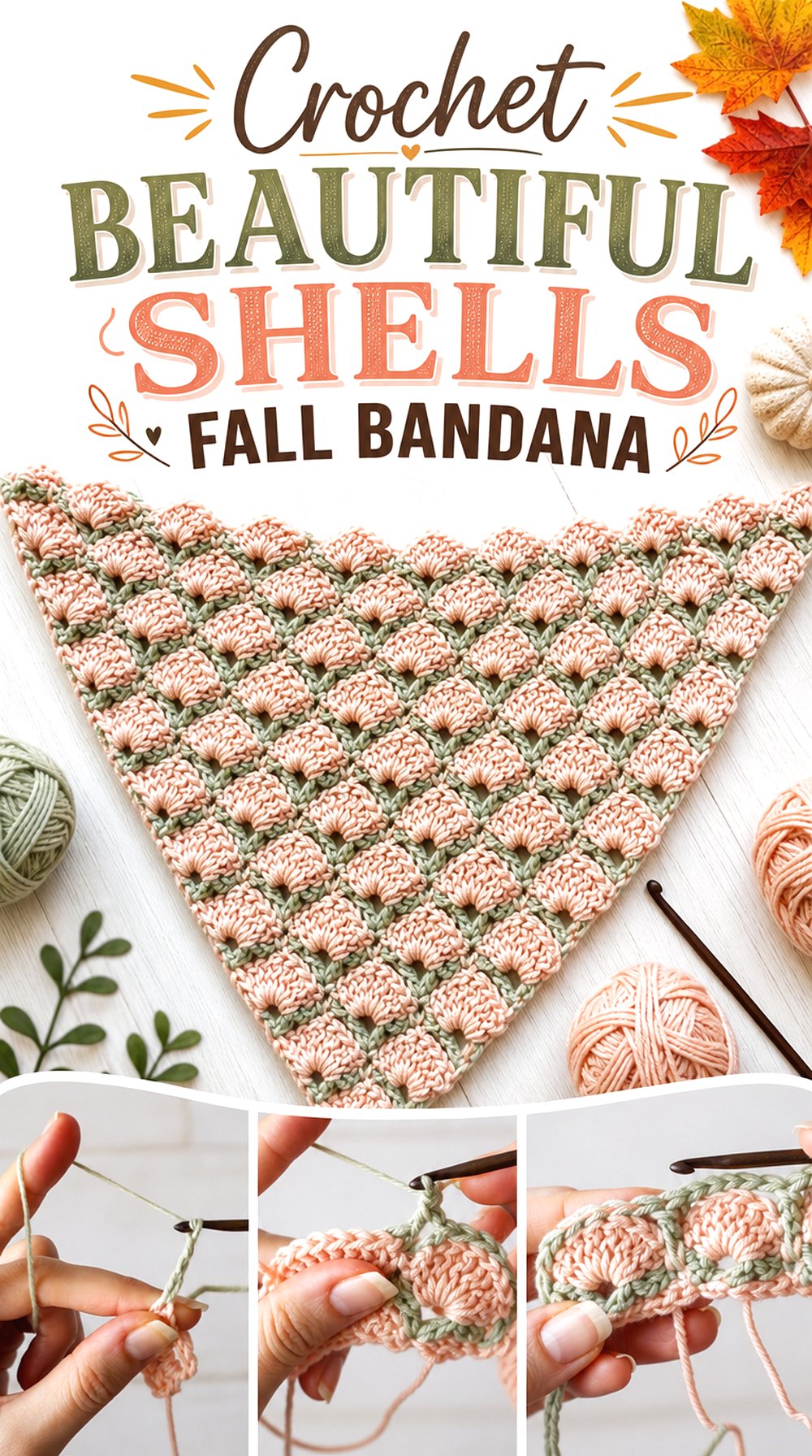
The Beautiful Shells Bandana from The Snugglery creates a much more sculpted surface than a basic granny or mesh scarf. The design alternates shell-focused rows with the framework that supports them, and the original version also demonstrates color changes within that texture.
For fall styling, the shell shape works well with warm two-color combinations because the color shifts reinforce the curved stitch pattern. Think cream with cinnamon, sage with oatmeal, or burgundy with dusty rose. The result has enough detail to work as a focal accessory without requiring separate granny-square motifs.
Use Color Changes to Emphasize the Shell Rhythm
Alternating shades can make the raised shell sections easier to distinguish. If you prefer a quieter bandana, one color lets shadows from the stitch texture do more of the visual work. The important choice is whether you want color or texture to take the lead.
Watch the Fabric at the Side Corners
Highly textured rows may behave differently from open framework rows when the triangle is tied. Check that the upper corners fold comfortably instead of flaring outward. If you change yarn from the tutorial, evaluate this before assuming the original size will produce the same fit.
Creator: The Snugglery
6. Crochet Scalloped Edge Fall Bandana

A scalloped edge changes the silhouette without requiring a motif-heavy main fabric. VivCrochets’ scalloped bandana tutorial builds on a previous bandana concept but replaces picot detailing with a visibly rounded scalloped border.
That makes this an appealing fall option when you want a softer, vintage-inspired finish rather than strong geometric checks or large flower motifs. A solid rust, plum, moss, or cream yarn keeps the curves easy to see, while a contrasting edge can make the scallops more pronounced. The border also draws attention to the lower sides of the triangle, so neat finishing matters.
The Scallops Should Frame Rather Than Overwhelm
Before committing to a high-contrast edging color, compare it with the body yarn from a few feet away. If the border becomes the only thing you notice, a tonal shade may produce a more balanced accessory. Strong contrast works better when you deliberately want the outline to dominate.
Check for Rippling Along the Finished Sides
Decorative borders add fabric to an existing edge. If the finished side begins to flare or ripple, the problem may be edging tension rather than the triangle itself. Lay the work flat before fastening off so you can identify an uneven border while it is still practical to correct.
Creator: VivCrochets
7. Crochet Filet Triangle Fall Bandana

Filet crochet uses negative space as part of the design, which gives this bandana a cleaner, more geometric type of openness than granny clusters. DIYGuru’s tutorial demonstrates a filet crochet triangle scarf presented as a bandana, making it a useful option for readers who like repeated open-and-solid areas.
A dark fall shade such as forest green, wine, espresso, or charcoal can make the open grid especially visible against the hair. Compared with a dense bandana, however, filet provides less visual coverage, so it suits styling where the crochet pattern itself matters more than fully covering the head.
Negative Space Is Part of the Motif
With filet work, the openings are not merely gaps between stitches; they create the visual rhythm. Very busy multicolor yarn can make that structure harder to see. A solid or gently tonal color usually gives the open grid more room to register.
Blocking Can Make the Geometry Easier to Read
If the open sections pull into inconsistent shapes, the finished motif may look less intentional. Check the triangle flat before adding final styling details, and use a blocking method appropriate for the fiber you selected rather than assuming every yarn should be treated the same way.
Creator: DIYGuru
8. Crochet Open Mesh Fall Bandana

The mesh bandana from knottyverse is the airiest option in this collection. Instead of relying on dense texture or separate motifs, it uses an open net-like triangle that makes the finished accessory look light and relaxed.
For fall, that openness works well as a transitional accessory rather than something intended to provide substantial head coverage. Deep olive, cocoa, pumpkin, charcoal, or muted gold can make the simple mesh feel seasonal without adding visual heaviness. It is also a good contrast to the shell, checkered, flower-square, and picot options.
Decide How Much Hair You Want Visible
Mesh can look very different depending on hair color, hairstyle, and the size of the openings. Before making the triangle much larger, drape the work over your head and evaluate the balance between crochet and visible hair. More size does not necessarily mean a more substantial-looking accessory when the fabric is highly open.
Think About Snagging When Styling
Large open spaces can catch more easily on hair clips, earrings, or rough jacket hardware than a compact fabric. If you regularly wear those accessories, pay attention to how the bandana sits around them rather than selecting mesh solely for its appearance.
Creator: knottyverse
9. Crochet Lacy Floral Fall Bandana

Carley Rose Studio’s lacy floral bandana combines openwork with a recognizable flower-inspired design, creating a more delicate look than the puff-flower granny-square version earlier in the list. The tutorial presents it as a lightweight lacy bandana with a floral pattern.
For fall, this construction can lean toward a vintage or romantic direction in muted plum, antique gold, dusty rust, cream, or deep green. It is a useful choice when you want flowers without the pronounced seams and patchwork appearance of joined granny squares.
Give the Floral Openwork Enough Contrast
Fine lace details can disappear visually when the yarn color and hair beneath it are very similar. If the flower effect is important, consider how the finished fabric will look against the background where it will actually be worn—not just on a light worktable.
Keep the Lace From Becoming Too Stiff
A lacy pattern depends on open spaces retaining their shape while the whole triangle still bends comfortably. If substituting yarn, make a small section first and check whether the fabric folds softly around the head. A beautiful lace motif is less useful if it feels board-like once tied.
Creator: Carley Rose Studio
10. Crochet Textured Picot Fall Bandana

The Turtle Trunk’s Picot Bandana puts texture at the center of the design. The pattern combines a textured body with a pointed border and is offered by the creator in multiple sizes, making it particularly useful when coverage is an important part of choosing a bandana.
In a fall palette, the small raised details can make a solid color such as mustard, brick, teal, burgundy, or taupe look more interesting without requiring stripes or motifs. Compared with the scalloped option, its outline feels sharper and more pointed rather than softly rounded.
Texture Shows Best When the Yarn Is Not Fighting It
Fuzzy or highly variegated yarn may hide the small picot details. If those raised points are the reason you chose the design, prioritize visible stitch definition. A smoother yarn can make the texture easier to appreciate even from a distance.
Choose Coverage Before Choosing the Size Label
The creator provides different size options, but the same size can create different visual coverage on different heads. Look at where you want the lower point and side edges to sit rather than treating a label such as small, medium, or large as the only decision.
Creator: The Turtle Trunk
11. Crochet Daisy Fall Bandana

A daisy bandana can move surprisingly well into fall when the flower palette shifts away from bright spring colors. The cosybearcrochet tutorial demonstrates a crochet daisy bandana using multiple yarn colors, providing a clear floral focal point for the finished accessory.
For a seasonal interpretation, imagine ochre petals with brown centers, cream flowers against olive, or muted gold with rust accents. This gives the piece a sunflower or dried-flower feel without changing the underlying tutorial. It is a playful alternative to the more abstract leaf, shell, filet, and checkerboard designs.
Use the Flower Centers to Anchor the Palette
The center is a small area, but repeating the same dark or warm shade there can tie several colors together. If the petals and surrounding fabric already use contrasting shades, keeping the centers consistent can prevent the design from looking unnecessarily scattered.
Judge the Motif From Wearing Distance
A daisy that looks highly detailed at hook distance may read simply as a light-and-dark spot from several feet away. Lay the developing piece on a neutral surface and step back periodically. That helps you decide whether additional color changes improve the motif or merely make it busier.
Creator: cosybearcrochet
12. Crochet Minimal Triangle Fall Headscarf

Not every fall bandana needs a motif or decorative border. The lilthings ♡ tutorial focuses on a crochet headscarf/bandana format, making it a useful reference for a simpler accessory where the triangle silhouette and fit can take priority over an elaborate theme.
This approach works well if your autumn wardrobe already includes patterned jackets, plaid shirts, textured sweaters, or statement earrings. A quiet neutral such as camel, cream, deep brown, charcoal, or muted olive can make the handmade texture visible without competing with everything else you are wearing.
Let the Silhouette Do the Work
With a restrained design, uneven triangle proportions become more noticeable because there are fewer decorative elements to distract the eye. Check that the center point hangs where you want it and that the two sides look balanced before finishing the ties.
Neutral Does Not Have to Mean Flat
If you want a simple color but still need visual interest, compare several yarn textures before choosing. The stitch pattern, fiber surface, and yarn twist can affect how much light and shadow the fabric shows even when the entire bandana is worked in one shade.
Creator: lilthings ♡
Which Crochet Fall Bandana Style Should You Choose?
For strong autumn imagery, start with the leaf-pattern design or reinterpret the daisy and flower-square bandanas in marigold, rust, brown, and moss shades.
For graphic structure, the C2C checkered bandana stands apart. The filet and mesh options move in the opposite direction, using open space for a lighter appearance.
If texture matters more than colorwork, compare the Beautiful Shells, scalloped-edge, and Picot Bandanas. The shell design puts texture throughout the body, the scalloped version emphasizes its border, and the picot design combines surface texture with a pointed outline. For the most understated result, the Autumn Breeze granny triangle or minimal triangle headscarf gives the yarn color more room to set the fall mood.
Conclusion
The most useful way to choose among these 12 crochet fall bandana ideas is to decide what you want people to notice first. Pick leaves, daisies, or flower squares for an obvious motif; checks for graphic colorwork; shell, scallop, or picot designs for texture; and filet or mesh when you prefer a more open accessory. The Autumn Breeze granny and minimal triangle options are easier to coordinate with busier fall outfits because their overall shapes stay visually simple.
Once you choose the construction, test your yarn for drape, check the triangle depth and tie placement, and plan the autumn palette around the stitch pattern. Refer to the original tutorials near the end of each idea for exact construction details.
Frequently Asked Questions
What colors work well for a crochet fall bandana?
Rust, moss, olive, mustard, burgundy, cream, camel, brown, charcoal, and muted gold can all create a fall direction, but the stitch design should influence the palette. Strong motifs such as leaves or flowers often need enough contrast to remain visible, while shell or picot texture can look effective in one solid shade. Choose colors based on the clothing you actually plan to wear with the bandana rather than using every autumn color at once.
Is cotton or acrylic better for a fall crochet bandana?
Neither is automatically better. Fiber choice affects softness, structure, stretch, surface texture, care, and how clearly stitches appear. Some tutorials specify their own yarn, and changing fiber or yarn weight can change the finished dimensions and drape. If you substitute, crochet a small sample and bend it around a curved surface to see whether it feels comfortable enough for a head accessory. Always follow the yarn manufacturer’s care instructions for the fiber you actually use.
How can I make a crochet bandana fit better?
Check three things separately: the width across the top, the depth from that edge to the center point, and the usable length of the ties. A triangle can be wide enough yet hang too deeply, or have good coverage but ties that feel too short after knotting. Try the piece on before the final border whenever the construction permits, and use the tutorial’s sizing instructions rather than relying on a universal bandana measurement.
Should crochet granny squares be blocked before making a bandana?
Blocking before joining is useful when the construction depends on several motifs lining up cleanly. Compare all squares after blocking so differences in width or corner shape are visible before assembly. The exact blocking method depends on the fiber, so check the yarn care information rather than applying heat automatically. This is particularly relevant to flower granny-square bandanas, where multiple small discrepancies can affect the top edge.
Which crochet bandana ideas provide less hair coverage?
Mesh, filet, floral lace, and open granny constructions generally leave more visible space within the fabric than compact or heavily textured designs. However, overall coverage also depends on triangle dimensions. A large openwork bandana may cover a bigger area of the head than a small dense one. Look at both the openness of the stitches and the actual depth and width of the finished triangle before deciding.
How do I stop a crochet bandana border from looking wavy?
First determine whether the waviness is coming from the main triangle or only from the edging. A decorative border can flare when its tension or stitch distribution does not match the underlying edge. Lay the bandana flat before fastening off and compare both sides. If you changed yarn, hook size, or the number of repeats from the tutorial, do not assume the original border will behave identically; make adjustments based on the fabric in front of you.


