
10 Crochet Lace Collar Ideas for Vintage-Inspired Style
A crochet lace collar can be a small detachable accent, a broad statement piece, a motif-based accessory, or a decorative neckline worked directly onto a garment. That difference in construction matters as much as the lace itself. A narrow rounded collar layers very differently from an oversized design that reaches toward the shoulders, while a floral or geometric motif collar needs more layout planning than a continuous lace edge.
These 10 crochet lace collar ideas cover distinct shapes, scales, textures, and uses. The comparisons below focus on what changes the finished look: neckline fit, outer spread, yarn definition, motif placement, closures, and blocking. Each idea also includes an original YouTube tutorial so you can refer to the creator for the exact construction.
Quick List
- Crochet Rounded Peter Pan Lace Collar
- Crochet Delicate Lace Accent Collar
- Crochet Irish Rose Motif Lace Collar
- Crochet Oversized Statement Lace Collar
- Crochet Vintage Pelerine Lace Collar
- Crochet Geometric Pentagon Lace Collar
- Crochet Compact Vintage Lace Collar
- Crochet Shell-Stitch Lace Collar
- Crochet Fine-Thread Buttoned Lace Collar
- Crochet Baby Cardigan Lace Collar
Choose the Collar Shape Before the Stitch Detail
The outer lace may grab your attention first, but start by comparing the basic silhouette. A Peter Pan collar stays relatively close to the neckline and gives a blouse or sweater a defined frame. Oversized and pelerine-style collars occupy more of the upper chest and shoulders, so their scale becomes part of the outfit rather than a small trim.
Motif collars create another decision. Individual flowers or geometric pieces have to form a convincing inner curve while keeping the decorative outer edge balanced. For any style, compare the intended neckline with the collar before committing to the final width. A collar that looks balanced over a crew neck may sit very differently over a wide or V-shaped neckline.
Yarn, Blocking, and Fastening Change the Finished Collar
Lace needs enough stitch definition for openings, shells, petals, and motif edges to remain visible. A smooth yarn or crochet thread can emphasize intricate details, while a thicker or fuzzy yarn can make the same general scale appear heavier and soften smaller openings. The right choice depends on whether you want crisp vintage lace or a bolder textile accessory.
Blocking also matters because curved collars can ripple, cup, or pull inward when the inner and outer edges are not settling evenly. Check the shape before attaching a final button, tie, loop, or other closure. For detachable collars, try the piece over the garment you expect to wear most often rather than judging fit only while it lies flat.
1. Crochet Rounded Peter Pan Lace Collar

A rounded Peter Pan collar is one of the most adaptable ways to use crochet lace as a wardrobe accent. Its curved shape frames the neckline without taking over the entire shoulder area, making it suitable for layering over plain dresses, blouses, and sweaters. This option is especially useful when you want the collar itself to provide the decorative finish rather than adding a large motif arrangement.
The main planning issue is not simply making the inner edge long enough. The collar also needs enough outward expansion to lie flat without turning into a ruffle or pulling upward around the neck.
The Rounded Edge Needs to Lie Flat at the Neckline
Check the collar on a curved neckline rather than stretching it into a straight line on the table. If the outer edge gathers into waves, the flare may be greater than you want for a flat Peter Pan shape. If the collar cups upward instead, it may not have enough room to spread. Blocking can improve a minor shape issue, but it should not be expected to correct a major mismatch in the underlying curve.
A Detachable Shape Gives You More Layering Options
A separate collar can move between garments, but the neckline underneath will influence how it looks. A high crew neck creates a different frame than a blouse with an open neckline. Before finalizing the closure, test where the two front ends naturally meet over the clothing you plan to use. This helps prevent a collar that technically fits the neck but looks too narrow or too wide on the garment.
Check the Inner Edge Before Adding More Width
It is tempting to judge progress by the decorative outer edge, yet the inner neckline determines whether the finished collar stays in position. Check that edge early, especially if you are adapting the idea to another size. Changing yarn or hook size can affect both circumference and collar depth, so do not assume that enlarging the entire piece will preserve the same proportions.
Creator: Crochet Lovers
2. Crochet Delicate Lace Accent Collar

This design direction treats the crochet collar almost like textile jewelry. Instead of creating a broad shoulder-covering piece, the focus stays on decorative lace that can give an otherwise simple neckline more detail. It is a useful choice when you want a noticeable handmade accent without the volume of an oversized collar.
Because a smaller collar has less surface area, individual stitch shapes and the finish along the outer edge become more prominent. Uneven tension, an indistinct border, or a closure that sits off-center can therefore attract more attention than it might on a larger, busier design.
Let the Lace Be the Main Focal Point
If the collar already has a detailed outer edge, it usually does not need several additional decorative ideas competing with it. Think about the garment underneath as part of the composition. A relatively plain neckline gives intricate crochet more visual room, while a heavily patterned blouse can make small lace details harder to read. This is a styling decision rather than a crochet rule, so compare the finished combination before adding extra embellishment.
Fine Detail Can Disappear in a Fuzzy Yarn
When small openings and narrow decorative edges define the collar, clear stitch visibility becomes important. A very textured or haloed yarn can soften those details. If you want the lace pattern itself to stay visually crisp, compare a small swatch in the intended yarn before starting the entire collar. That simple check tells you more than choosing fiber by color alone.
Blocking Should Define, Not Distort, the Outer Lace
Decorative lace often looks more organized after blocking, particularly where several small points or curves repeat along the edge. Pin or shape those features consistently rather than pulling individual sections farther simply because they can stretch. The goal is an even outline that follows the collar’s intended curve, not the largest possible finished dimensions.
Creator: Jayda InStitches
3. Crochet Irish Rose Motif Lace Collar

An Irish-inspired rose motif collar changes the project from continuous edging into a composition of decorative elements. The flowers become the main visual feature, so spacing, orientation, and the relationship between motifs matter just as much as the individual crochet work.
This approach suits readers who want a more ornamental collar with obvious floral structure rather than an evenly repeated shell or scallop. It also offers room to adapt the visual balance: flowers can read as a continuous floral band or as distinct focal points depending on how closely the motifs sit together. The important checkpoint is making the assembled collar behave like one curved accessory instead of a row of unrelated motifs.
Motif Matching Matters More Than Making Them Quickly
Small differences between repeated flowers can accumulate around a collar. Before committing to the final arrangement, compare the motifs after they have settled into their finished shape. If one is noticeably larger or denser, moving it to another position may not hide the mismatch. Consistent motif dimensions make joining cleaner and reduce the risk of the collar developing unexpected waves.
Rose Placement Controls the Visual Weight
A floral collar can appear heavier where motifs cluster closely together. Lay the pieces around a neckline before permanently connecting them and look at both the center front and shoulder areas. If every large feature lands in one section, the collar can feel visually unbalanced even when its physical dimensions are correct. Adjusting orientation during layout is easier than trying to disguise an awkward concentration after joining.
Plan the Fastening Around the Floral Layout
The closure should not interrupt the strongest motif unless that interruption is intentional. Decide early whether the collar will meet at the front, back, or another practical point supported by the tutorial. A clean joining area gives hooks, loops, ties, or other fastening methods somewhere to sit without crushing a flower or making the last motif appear incomplete.
Creator: Tiara Lace Crochet
4. Crochet Oversized Statement Lace Collar
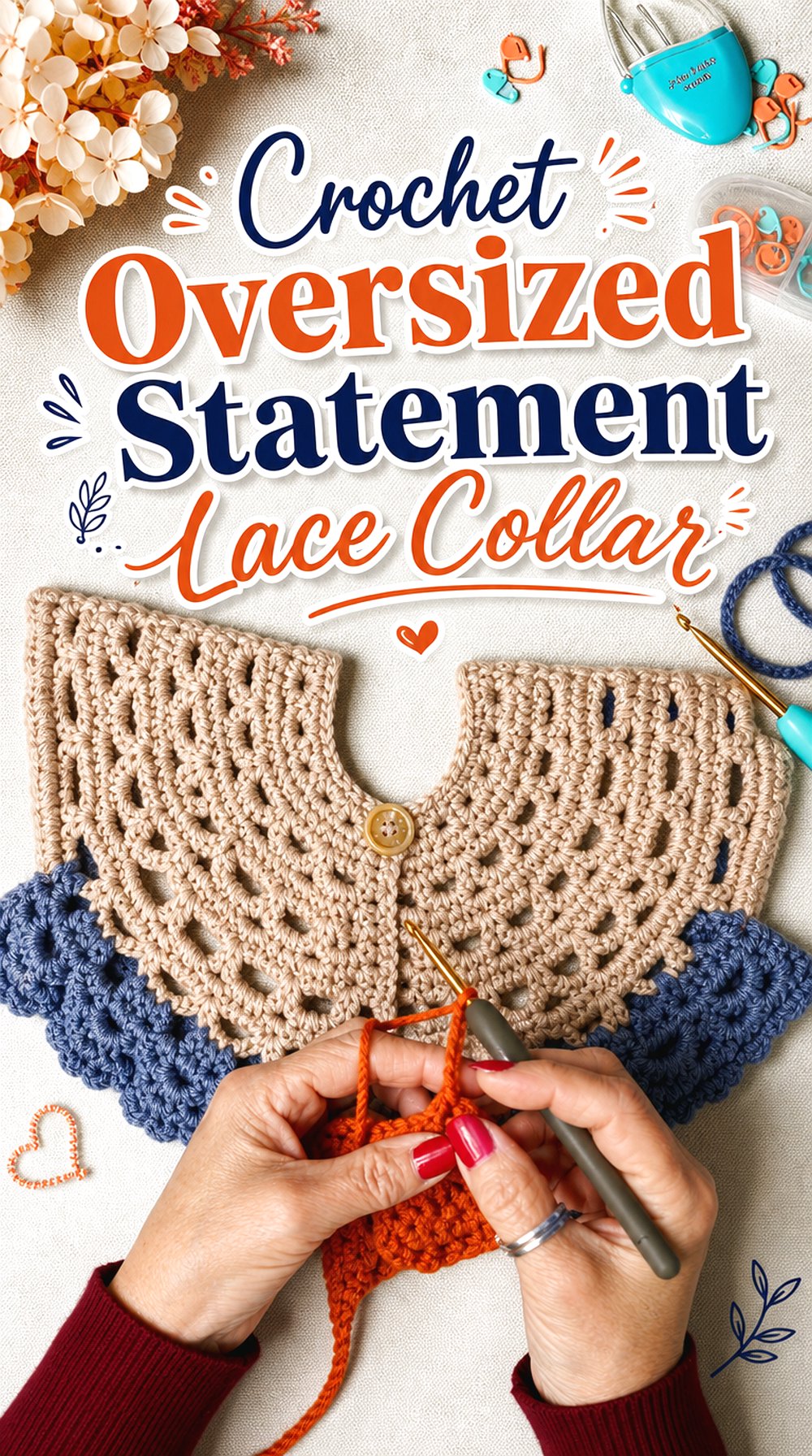
An oversized crochet collar shifts the accessory from a neckline trim to a major part of the outfit. The extra width can extend noticeably across the shoulders and upper chest, creating a silhouette closer to a statement fashion piece than a narrow vintage edging.
That larger footprint gives you more room to appreciate texture, but it also makes proportion more important. The collar should relate to shoulder width, garment neckline, and the thickness of the clothing underneath. This style can work especially well over a plain top or cardigan where the outer edge has enough open space to remain visible rather than disappearing into other details.
Oversized Width Changes the Shoulder Line
A narrow collar mostly frames the neck. A large one interacts with the shoulders, so check where its widest section lands when worn. If you are adapting the tutorial, do not judge scale from neckline circumference alone. Collar depth matters too. A design that grows much deeper may need different drape and shaping considerations than simply making a small collar longer around the neck.
Fastening Choice Affects How the Collar Sits
A large collar has more fabric extending away from the neckline, which makes the meeting point important. Try the fastening position while the collar is on the intended garment. If the two sides overlap too much, the front may become bulky; if they pull apart, the outer edge can shift. The tutorial demonstrates fastening options, making this a useful point to inspect before finishing.
Bolder Yarn Can Increase the Visual Scale
Oversized does not have to mean bulky. Yarn thickness and surface texture can make an already large collar appear even more substantial. If the goal is a broad shape that still reads as lace, swatch enough of the decorative fabric to see whether openings remain visible. For a more graphic statement, a heavier-looking fabric may be exactly what you want—the trade-off is simply different.
Creator: Loopy Mabel Crochet
5. Crochet Vintage Pelerine Lace Collar

A pelerine-style crochet collar creates a broader vintage silhouette that spreads across the upper body rather than staying close to the neck. That extra coverage makes it an interesting middle ground between a conventional lace collar and a small decorative shoulder cape.
Choose this direction when the shape itself is part of the look. The wider footprint can frame dresses and simple tops dramatically, but it needs enough drape to settle over the shoulder area instead of standing away from the body. When comparing it with an oversized Peter Pan collar, pay attention to the way the fabric travels around the shoulders rather than looking only at the outer decorative edge.
A Pelerine Shape Needs Room Across the Shoulders
The neckline is only one measurement affecting this style. The fabric also has to spread over a larger curved area. When adapting the scale, check the collar while it is resting on the shoulders instead of measuring only the inner opening. This makes it easier to spot sections that bunch near the neck or pull too tightly across the upper back.
Drape Matters More Here Than on a Tiny Collar
A compact collar can tolerate a relatively structured fabric because very little material extends beyond the neckline. A wider pelerine exposes more of the fabric’s behavior. If the crochet is extremely stiff, the outer sections may not follow the body naturally. Make a useful swatch and handle it after blocking before committing to a yarn substitution.
Try It Over the Garment You Will Actually Wear
A broad collar will sit differently over a thin dress than over a thick sweater. Test the developing piece with the intended layer beneath it, particularly before deciding that the neckline or closure needs adjustment. This is also a good time to check whether the outer points or lace edge fall where you expected instead of being hidden by sleeves, lapels, or other garment details.
Creator: Fuad Azmat / YARNutopia by Nadia
6. Crochet Geometric Pentagon Lace Collar

Pentagon motifs give a crochet lace collar a geometric structure that feels very different from flowers, continuous shells, or smooth rounded rows. The repeated five-sided units make the joins visible, turning construction lines into part of the finished design.
This option is worth considering when you enjoy motif work and want the collar to have an architectural look. Instead of concentrating only on stitch tension across one long piece, you need to think about consistency from motif to motif and how those shapes form a comfortable neckline. The geometric outer edge can become a strong feature, but the inner edge still needs to read as one continuous curve when the motifs are assembled.
Pentagon Joins Become Part of the Design
With motif crochet, joining is not merely hidden construction. The spaces and seams between shapes influence the rhythm of the finished collar. Before connecting everything permanently, arrange the pentagons in their intended order and examine the negative space between them. A consistent join usually looks intentional; irregular gaps can distract from otherwise neat motif work.
Block the Motifs to Comparable Dimensions
Motifs that look similar straight from the hook may settle differently after shaping. Compare them before assembly. If one pentagon is wider or more relaxed than the others, the difference can shift the outer edge and make the neckline harder to control. Correcting motif consistency first is usually cleaner than trying to force an uneven collection into one smooth finished collar.
The Inner Curve Still Has to Feel Continuous
Geometric shapes naturally create points and angles, but the part closest to the neck should not feel like a random sequence of corners. During layout, concentrate on how the inner edges connect. If the collar is adapted to another size, adding or changing motifs affects the entire circumference, so plan the arrangement rather than treating each pentagon as an independent decoration
Creator: Ravella Design
7. Crochet Compact Vintage Lace Collar

A compact vintage collar keeps the decorative effect close to the neck, making it easier to pair with everyday clothing than a large shoulder-spreading piece. The smaller silhouette can give a plain sweater or dress a defined edge without covering much of the garment underneath.
This is a useful direction when you like vintage-inspired crochet but want the accessory to remain relatively restrained. Because there is less fabric, the relationship between the inner neckline and outer border becomes especially noticeable. Keep an eye on symmetry at the two front ends and on whether the collar naturally follows the garment instead of twisting or lifting.
A Compact Shape Is Easier to Layer
Smaller collars leave more of the garment visible and are less likely to interfere with sleeves, lapels, or broad shoulder details. That makes them practical for experimenting with several outfits. Still, test the collar over different necklines before assuming it will sit identically on all of them. A high sweater neckline can support the shape differently from a blouse with a wider opening.
Keep the Neck Edge Stable
The inner edge acts as the anchor for the entire accessory. Excessive stretch there can allow the collar to migrate outward or lose its intended front placement. When choosing a substitute yarn, consider not just softness but how much the fabric relaxes after handling. Checking the inner edge after blocking is more useful than relying only on its unblocked measurement.
Use Contrast Carefully on a Small Collar
A contrast border can make a narrow collar look more defined because the outer edge occupies a large share of the visible design. That can be effective, but it also emphasizes uneven scallops or changes in tension. If using more than one color, lay the unfinished collar against the intended garment before committing to the final contrast so the accessory does not visually overpower its smaller dimensions.
Creator: Lululoves Crochet
8. Crochet Shell Stitch Lace Collar

A shell-stitch collar gets much of its character from the repeated fan-like edge rather than separate motifs. The repetition creates a predictable rhythm around the neckline and can make the collar feel decorative without introducing flowers or geometric joins.
This is a strong option for readers who prefer continuous crochet and want the outer border to do most of the visual work. The key planning point is how the shells spread as the collar moves away from the neck. If that expansion is balanced, the shells can open cleanly. If it is not, the border may begin to crowd or ripple before the collar reaches its finished shape.
Shell Spacing Controls the Outer Rhythm
Look across several repeats rather than judging a single shell. The eye notices inconsistent spacing quickly when the same feature is repeated around an entire collar. If one area starts crowding while another spreads widely, check your tension and the way the fabric is curving before continuing. A regular visual rhythm often matters more here than making individual shells unusually large.
Soft Yarn Can Blur the Shell Definition
A very soft or fuzzy fiber can make adjacent stitches merge visually, especially in a small-scale shell. If the repeated fan shape is the feature you want to emphasize, compare the yarn against a small sample of the actual texture. You may prefer a smoother yarn for crisp outlines or deliberately choose softer definition for a gentler, less graphic look.
Watch for Rippling as the Collar Widens
Shells add visual and physical width to the outer edge. Place the work flat periodically without stretching it. Gentle shaping can settle during blocking, but pronounced waves can signal that the outer edge is expanding more quickly than the inner curve supports. Catching that issue while the piece is still in progress is easier than trying to flatten a heavily ruffled finished collar.
Creator: Crochet with GG
9. Crochet Fine Thread Buttoned Lace Collar

A fine-thread lace collar creates a distinctly delicate finish, with small openings and narrow stitch details carrying more of the visual interest than yarn bulk. The DoilyDreams tutorial presents a lace collar made with fine cotton and includes a buttoned finish, making this direction useful for readers attracted to traditional thread-crochet accessories.
This type of collar rewards consistent tension because small differences remain visible across the openwork. It also makes yarn substitution more consequential: moving to a much thicker material may alter not only size but the visual density of the entire piece. Treat the stated material as part of the design rather than assuming every yarn will produce the same effect.
Thread Crochet Makes Tension Changes More Visible
Fine crochet creates clear stitch definition, which means irregular sections can also stand out. If your tension changes during long sessions, compare the newest section with earlier lace before finishing the entire collar. You do not need to chase absolute perfection, but catching a noticeable change early can prevent one side from looking denser or shorter than the other.
The Button Needs a Clean Meeting Point
A button closure draws attention to where the two collar ends meet. Before sewing it permanently, position both ends on the intended neckline and check whether they sit level without twisting. The button should support the finished alignment rather than forcing two misaligned edges together. This matters especially with delicate lace, where pulling the closure too tightly can distort nearby openwork.
Choose the Finished Depth Before Changing Yarn
A thicker yarn can enlarge both the neck edge and the distance from the neckline to the outer border. If you substitute materials, do not evaluate only whether the collar goes around the neck. Also look at how deep it falls on the chest or shoulders. A small change in stitch scale repeated across several lace sections can noticeably change the final proportions.
Creator: DoilyDreams
10. Crochet Baby Cardigan Lace Collar

A lace collar worked as part of a baby cardigan or romper serves a different purpose from a detachable adult accessory. Here, the crochet has to coordinate with the garment neckline itself, so placement and compatibility are more important than styling the collar separately. The BabyCrochetDesigns tutorial specifically presents a lace collar option for a cardigan and notes its potential use on another cardigan neckline.
This idea is useful when you want lace to look integrated into the garment rather than added afterward as an independent accessory. Plan it around the actual neckline shape and finished garment construction rather than treating it as a one-size decorative strip.
The Collar Must Match the Garment Neckline
When lace is attached to clothing, the neckline becomes the foundation. Check that the garment is at the right stage of construction before deciding where the collar should begin and end. An attached collar that is slightly too long can flare away from the garment, while one that is too short can pull the neckline inward. Compatibility is more important than copying dimensions from an unrelated project.
Baby Garments Need Secure Finishing
Keep finishing appropriate for the intended wearer. Weave in ends securely and be cautious about adding loose beads, charms, or other detachable embellishments that are not part of the original design. If you introduce a new closure or decoration, consider whether it can be pulled loose during normal handling. Decorative detail should not come at the expense of secure garment finishing.
Check the Collar After the Garment Is Assembled
A lace edge may look flat on its own but behave differently once the cardigan or romper has its full structure. Recheck the neckline after assembly and before making any optional embellishment decisions. Look for sections where the collar rolls, pulls, or falls unevenly. This final garment-level check is more meaningful than judging the lace only while it is lying flat.
Creator: BabyCrochetDesigns
Which Crochet Lace Collar Style Should You Choose?
For a small accessory that can work with several outfits, start with the rounded Peter Pan, delicate accent, compact vintage, or shell-stitch collars. They keep most of the garment visible and make the neckline the main focus.
Choose the oversized or pelerine collar when you want the crochet to occupy more of the shoulder area and become a major part of the silhouette. These styles deserve extra attention to drape and overall depth.
The Irish rose and pentagon collars suit makers who prefer motif-based construction and enjoy arranging individual elements before final joining. For especially delicate stitch definition, the fine-thread collar puts the lace itself at center stage. The baby cardigan collar is the most appropriate option here when the lace needs to become part of a garment rather than remain detachable.
Conclusion
These crochet lace collar ideas range from compact neckline accents to oversized shoulder-spreading pieces, so the most useful starting point is shape rather than decoration. Pick a Peter Pan or shell collar for a smaller layered accessory, a pelerine or oversized design for greater visual coverage, and a rose or pentagon version when motif arrangement is part of the appeal. Fine thread emphasizes lace detail, while an attached baby collar requires closer attention to the garment neckline.
Once you know which construction suits your intended use, compare yarn behavior, collar depth, fastening, and blocking before making major adaptations. Use the original tutorials linked with each idea for the creators’ exact construction details.
Frequently Asked Questions
How can I stop a crochet lace collar from becoming too ruffled?
First check whether the outer edge is expanding much faster than the inner neckline. Lay the collar down without pulling it into shape and look for repeated waves. Minor unevenness may settle with appropriate blocking, but strong ruffling usually should not be treated as a blocking problem alone. If you are adapting a tutorial, changes to yarn, hook size, or proportions can alter the way the collar spreads.
Should I block a crochet lace collar before adding the final closure?
Usually it is useful to establish the finished shape before fixing a permanent closure position. Blocking can change how the two ends meet and how far the collar spreads across a neckline. After the collar is dry and settled, try it over the intended garment and check the meeting point. Then position a button, loop, hook, or other closure according to the design you are following.
What type of yarn works well when I want crisp lace details?
Look for a yarn or crochet thread that lets the openings and stitch shapes remain clearly visible. Smooth materials tend to show small lace details more distinctly than heavily fuzzy yarns. That does not make one fiber universally correct; the desired effect matters. Make a small sample in the yarn you are considering and compare its definition, drape, and behavior after blocking before changing materials in a detailed collar tutorial.
Can I resize a motif-based crochet collar simply by adding another motif?
Not always. Adding one rose, pentagon, or other motif changes the total neckline circumference by a relatively large amount, and the new arrangement also has to form a convincing curve. Measure or compare the finished motifs after blocking, lay them around the intended neckline, and inspect the gaps before joining. You may need a different arrangement rather than assuming that one extra motif automatically creates the next usable size.
Can a detachable crochet lace collar be sewn permanently to clothing?
It may be possible when the collar shape and garment neckline are compatible, but check them together first. Pin or temporarily position the finished collar around the neckline and inspect whether it lies flat without stretching either piece. A detachable collar designed for one curve may not automatically fit another garment. If permanent attachment is the goal, alignment at the shoulders, center front or back, and neckline edge all deserve checking first.
How do I decide between a narrow and an oversized crochet collar?
Consider how much of the upper garment you want the crochet to cover. A narrow Peter Pan or compact vintage collar mainly frames the neck and is easier to combine with several outfits. An oversized or pelerine design reaches farther toward the shoulders and becomes a stronger part of the overall silhouette. Compare collar depth as well as neckline circumference, especially when adapting a tutorial to a different yarn or garment.


