
8 Crochet Flower Brooch Ideas
Crochet flower brooches can be tiny flat accents, deeply layered blooms, clustered sprays, or sculptural flowers that stand away from the fabric. That difference matters: a sunflower gives a broad graphic shape, a rolled rose creates more depth, while forget-me-nots produce a lighter cluster with several smaller focal points.
This collection covers eight distinct approaches so you can compare more than flower color. Look at petal structure, visual weight, dimensionality, backing, and where you intend to wear the finished piece. Each idea also points to an original YouTube tutorial for the actual construction details, while the guidance here focuses on choosing, adapting, and finishing a brooch that suits its intended garment or accessory.
Quick List
- Crochet Rolled Rose Brooch
- Crochet Sunflower Brooch Pin
- Crochet Remembrance Poppy Brooch
- Crochet Forget-Me-Not Cluster Brooch
- Crochet Vintage Layered Flower Brooch
- Crochet Pansy Brooch
- Crochet Zinnia Flower Brooch
- Crochet Daffodil Flower Brooch
Choose a Brooch by Silhouette, Not Just Flower Name
The biggest practical difference between these projects is the finished silhouette. A flatter sunflower or poppy spreads its color across the garment without creating as much projection. Roses, zinnias, and some layered flowers build more depth, making them stronger focal points but also giving the pin more volume to support.
Clustered flowers create another effect. Instead of one centered bloom, several smaller flowers can form an irregular outline that works well when you want the brooch itself to look like a miniature arrangement.
Before choosing a tutorial, decide where the brooch will sit. A compact flower may suit a collar or small bag panel, while a more dimensional design can make more sense on a jacket, scarf, or other surface with enough room around it.
Yarn, Scale, and Petal Structure Affect How the Pin Sits
Changing yarn can alter more than color. A finer yarn can give small petals greater visual delicacy, while a thicker substitution can increase the overall scale and make layered sections feel more prominent. That does not mean every tutorial can simply be enlarged or reduced without consequences.
Pay particular attention to flowers with several layers or multiple components. Increasing the scale can also increase the amount of fabric collected around the brooch center. If you want crisp petal definition, compare your yarn with the material used by the creator rather than choosing solely by shade.
For a wearable pin, make a practical check before final assembly: hold the finished flower against the intended jacket, scarf, bag, or hat. The proportion should look intentional rather than overwhelming the area where it will be attached.
Check the Back Before Wearing a Crochet Flower Brooch
The reverse side is easy to overlook because it disappears once the brooch is worn. It still determines whether the flower sits straight and whether the pin hardware is positioned sensibly.
Before securing the brooch finding, check the flower’s visual center and decide which direction should face upward. This is particularly useful for asymmetric pansies, daffodils, leaves, and flower clusters. A pin placed without considering orientation can leave the finished flower rotating or hanging at an unintended angle.
Also test the hardware on the type of fabric you plan to use. A heavy dimensional flower may behave differently on a sturdy jacket than on a lightweight blouse. Pin hardware can also leave holes or catch delicate textiles, so test an inconspicuous area when the fabric is easily marked.
1. Crochet Rolled Rose Brooch
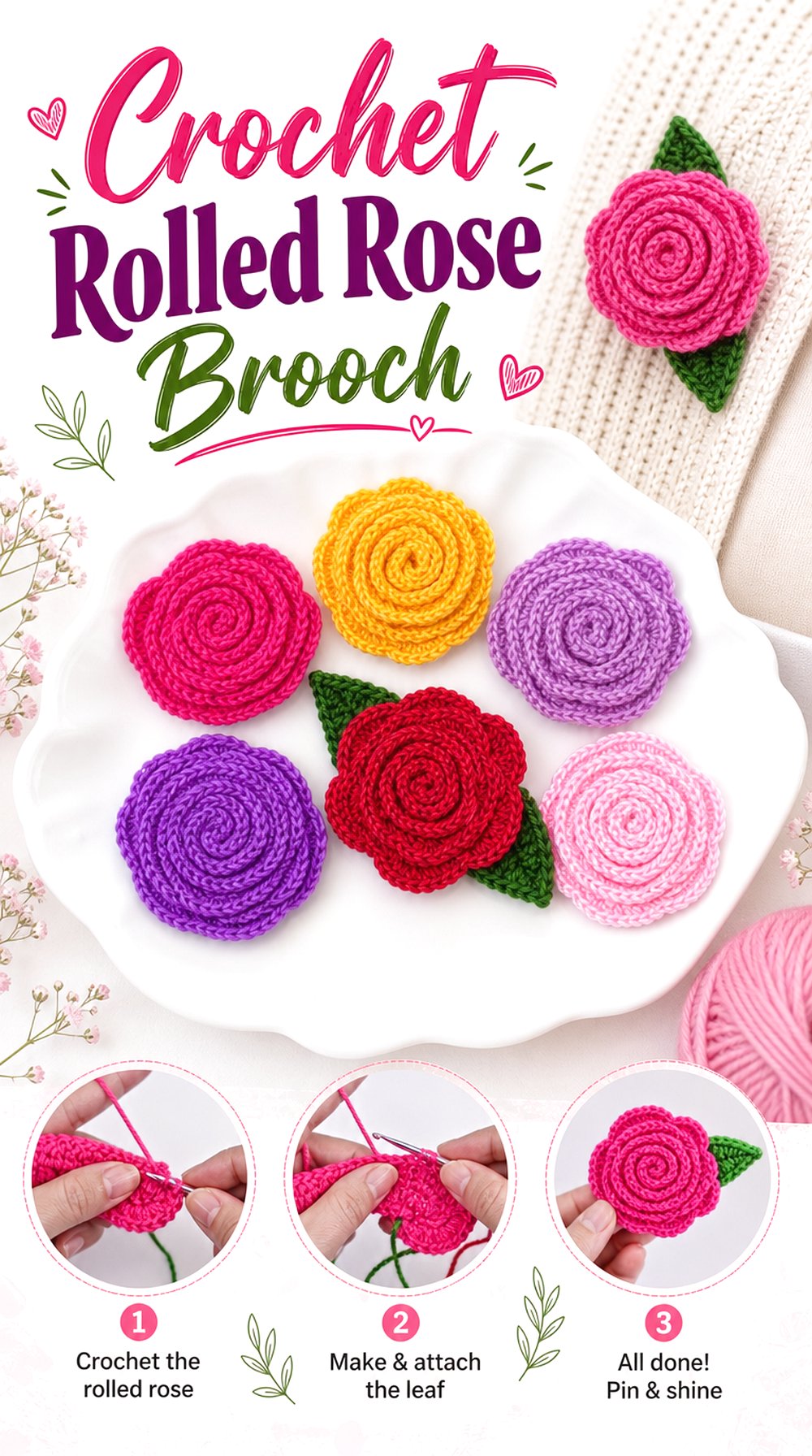
A rolled crochet rose creates a noticeably different brooch from a flat flower motif. Its petals build upward and around the center, producing the recognizable depth of a small rose rather than a single-level floral disk. The Cro La La tutorial is specifically presented as a crochet rose or flower brooch, and the creator also shows the rose as an embellishment that can be used beyond clothing.
This version makes sense when you want one flower to act as the main focal point. It can work on a lapel, scarf, bag, or other accessory where the raised petals have enough space to remain visible.
The Rolled Shape Makes Depth Part of the Design
Unlike a broad daisy or sunflower, the rose concentrates much of its visual detail around the center. That gives it a more compact, dimensional appearance.
Consider that depth when choosing its placement. A rose that looks balanced on a structured jacket may feel more prominent on thin fabric. Before attaching the pin permanently, hold the completed flower against its intended surface and view it from both the front and side.
Petal Definition Matters More Than Perfect Symmetry
A rose does not need to read as a perfectly circular flower. The overlap and changing direction of the petals are what create its recognizable shape.
When selecting yarn, think about whether the finished fabric will allow those layers to remain distinct. If the petals collapse into one another, much of the rose effect disappears. Conversely, an extremely rigid material can make a small wearable flower feel bulky. Compare the appearance of your fabric with the creator’s finished rose before deciding whether a substitution is working.
Decide the Upright Position Before Adding Hardware
A dimensional rose may look slightly different depending on which section is placed at the top. Choose the most attractive orientation first, then mark the intended back before installing the brooch hardware.
This is especially useful if leaves or other asymmetric details are added. Otherwise, you may finish the pin and discover that the flower naturally hangs in a direction you did not intend.
Creator: Cro La La
2. Crochet Sunflower Brooch Pin

The sunflower option trades the rose’s compact depth for a wider, strongly defined face. A contrasting center surrounded by radiating petals gives the finished brooch a clear outline that remains recognizable even when viewed from farther away. Lilyrosycrafts presents the project specifically as a sunflower brooch and flower pin tutorial.
This makes it a useful choice when you want the flower shape itself to carry most of the design. It can become a bright jacket or bag accent without requiring a cluster of separate blooms. The broad silhouette also makes petal consistency more visible, so spacing and final shaping deserve attention before the pin is attached.
A Broad Flower Needs a Well-Centered Pin
A sunflower spreads its petals around a central point, so a visibly off-center attachment can make the whole flower appear tilted.
Before fixing the hardware, place the brooch face down and identify the actual visual center rather than simply choosing an available stitch. Then check how the flower hangs when the pin is horizontal. This small test is more useful than discovering the imbalance after the backing has been secured.
Keep the Petals Visible Around the Entire Edge
The appeal of a sunflower comes partly from its radial outline. If several petals become trapped behind the center or fold beneath neighboring petals, the flower can look uneven even when the crochet itself is correct.
Arrange the finished piece on a flat surface before wearing it and check the outline from a short distance away. Minor shaping can often improve the presentation without changing the construction.
Contrast Helps the Sunflower Read Clearly
The tutorial’s finished concept relies on a distinct flower center and surrounding petals. If you adapt the colors, maintain enough visible separation for the two areas to remain readable.
They do not have to copy natural sunflower colors. A stylized palette can work, but colors that visually blend together may reduce the graphic center-and-petal effect that makes this brooch different from the layered flowers elsewhere in the collection.
Creator: Lilyrosycrafts
3. Crochet Remembrance Poppy Brooch

A crochet poppy provides a softer, more open flower shape than the tightly layered rose or zinnia. The Crafting Happiness Crochet tutorial is specifically for a remembrance poppy brooch, making it a strong match when the finished item’s symbolic flower identity matters as much as its decorative use.
The broad petals allow the brooch to make an impact without relying on many raised layers. That can be appealing when you prefer a flower with a clearer profile against clothing. If you are making the poppy for a commemorative context, keep the intended use in mind when choosing colors and accompanying details rather than treating it only as a generic floral embellishment.
A Softer Outline Changes How the Brooch Falls
Poppy petals are visually different from the evenly radiating sunflower. Their more organic outline means slight movement or variation can suit the flower rather than making it appear incorrectly centered.
Still, check the finished brooch while it is actually pinned to fabric. A petal that looks well positioned on a table may fold differently when worn vertically.
Keep Decorative Additions From Obscuring the Flower
Because the poppy already has a distinctive central area and petal silhouette, added beads, leaves, or other embellishments can quickly change its visual balance.
If you customize the project, add extras selectively and compare the brooch from normal viewing distance. The flower should remain recognizable rather than becoming a collection of competing details.
Creator: Crafting Happiness Crochet
4. Crochet Forget Me Not Cluster Brooch

Instead of enlarging one flower, this idea creates interest by bringing several small forget-me-not flowers together. TinyLimeCraft’s tutorial specifically covers crocheting the flowers and assembling them into a brooch, so the final result has the character of a miniature floral cluster rather than a single centered bloom.
That makes this option especially different from the sunflower and rose. The eye moves across several smaller flower centers, giving the brooch a lighter, more detailed appearance. It can suit a lapel or accessory where you want something floral but less dominated by one large circular shape.
Cluster Spacing Controls the Finished Outline
With several small flowers, the spaces between individual blooms become part of the design. Pack them too tightly and the separate flower shapes can become difficult to distinguish; spread them too far apart and the cluster may lose visual unity.
Before securing the final arrangement, place the components together and look at the overall silhouette rather than judging one flower at a time.
Small Components Make Finishing More Visible
A clustered brooch has several individual pieces competing for attention at close range. Loose tails, bulky connection points, or unevenly positioned flowers can therefore stand out more than they might on a single large motif.
Take time to inspect both the front and back before the brooch hardware covers part of the reverse. The goal is not to make every flower identical, but to keep the arrangement deliberate.
Think About Direction Before Final Assembly
A flower cluster does not have to be perfectly circular. In fact, a slightly elongated or angled arrangement can help it resemble a small spray.
That also means orientation matters. Decide which end should point upward or outward when worn, then position the pin accordingly. Testing the arrangement on the intended garment before completing the backing can prevent an awkward sideways result.
Creator: TinyLimeCraft
5. Crochet Vintage Layered Flower Brooch

This vintage-style flower is a good alternative when you want a decorative bloom without matching one botanical flower as closely as the sunflower, pansy, or daffodil. Loopy Mabel Crochet presents the tutorial specifically as a vintage-style crochet flower brooch.
Its appeal comes from the layered flower treatment and accessory-like presentation rather than strict realism. That gives you more freedom to use coordinated or contrasting colors based on the garment where it will be worn. It can work particularly well as a statement lapel detail because the layered construction gives the finished piece texture even when the palette is restrained.
Layering Lets You Control Visual Contrast
A layered flower gives you several places to distribute color. Instead of changing only the center, you can use neighboring shades for a quieter look or stronger contrast to emphasize each level.
Before committing to a palette, place the yarns beside the garment or bag you plan to decorate. Colors that look distinct in separate skeins can appear much closer once they are compressed into a small brooch.
The Center Should Unite the Layers
When multiple petal sections radiate around one point, the center becomes a visual anchor. If it looks misplaced, the entire flower can appear uneven even when the individual layers are attractive.
Check the flower from directly above before completing the finishing. This makes it easier to judge whether the layers appear centered and whether one section is pulling noticeably to one side.
Vintage Styling Can Come From Palette, Not Extra Decoration
You do not necessarily need beads, lace, buttons, or additional trim to make a flower feel vintage-inspired. A carefully chosen palette can create much of the effect while keeping the brooch lighter and visually cleaner.
If you do add another material, check its weight and attachment carefully. The embellishment should support the flower rather than hiding the crochet texture that gives this design its character.
Creator: Loopy Mabel Crochet
6. Crochet Pansy Brooch

A pansy introduces an asymmetric petal arrangement and multiple color areas, immediately separating it from round radial flowers. Moara Crochet’s tutorial is specifically a crochet pansy pattern, and the creator describes using the finished flower as a brooch.
This style suits readers who want more visual detail within a single flower rather than adding many separate blooms. Because the pansy’s character depends on its petal relationships and color placement, it is worth studying the finished example before substituting yarns. The finished brooch can become a small statement piece on a lapel, hat, scarf, or bag where its face remains unobstructed.
Pansy Color Placement Defines the Flower
With a pansy, color is more structural than it is on a simple one-color rose. Different areas of the flower help create the familiar pansy face.
If you prefer an unconventional palette, compare the colors side by side before crocheting all the components. Enough contrast should remain for the individual petal areas to be readable when the brooch is viewed at normal size.
An Asymmetric Flower Needs an Intentional Top Edge
The pansy has a stronger sense of direction than a perfectly radial flower. That makes the position of the brooch pin especially important.
Place the finished flower in the orientation you want to see on the garment, then mark the reverse. Attaching the pin first and deciding orientation afterward can force the flower into an angle that does not show its petal arrangement well.
Avoid Hiding the Face Under Heavy Finishing
A decorative center can enhance the pansy, but an oversized embellishment may cover the very color changes that distinguish the flower.
Judge any additions in proportion to the finished crochet rather than in isolation. The best checkpoint is simple: from a short distance, the piece should still read first as a pansy and only second as an embellished accessory.
Creator: Moara Crochet
7. Crochet Zinnia Flower Brooch
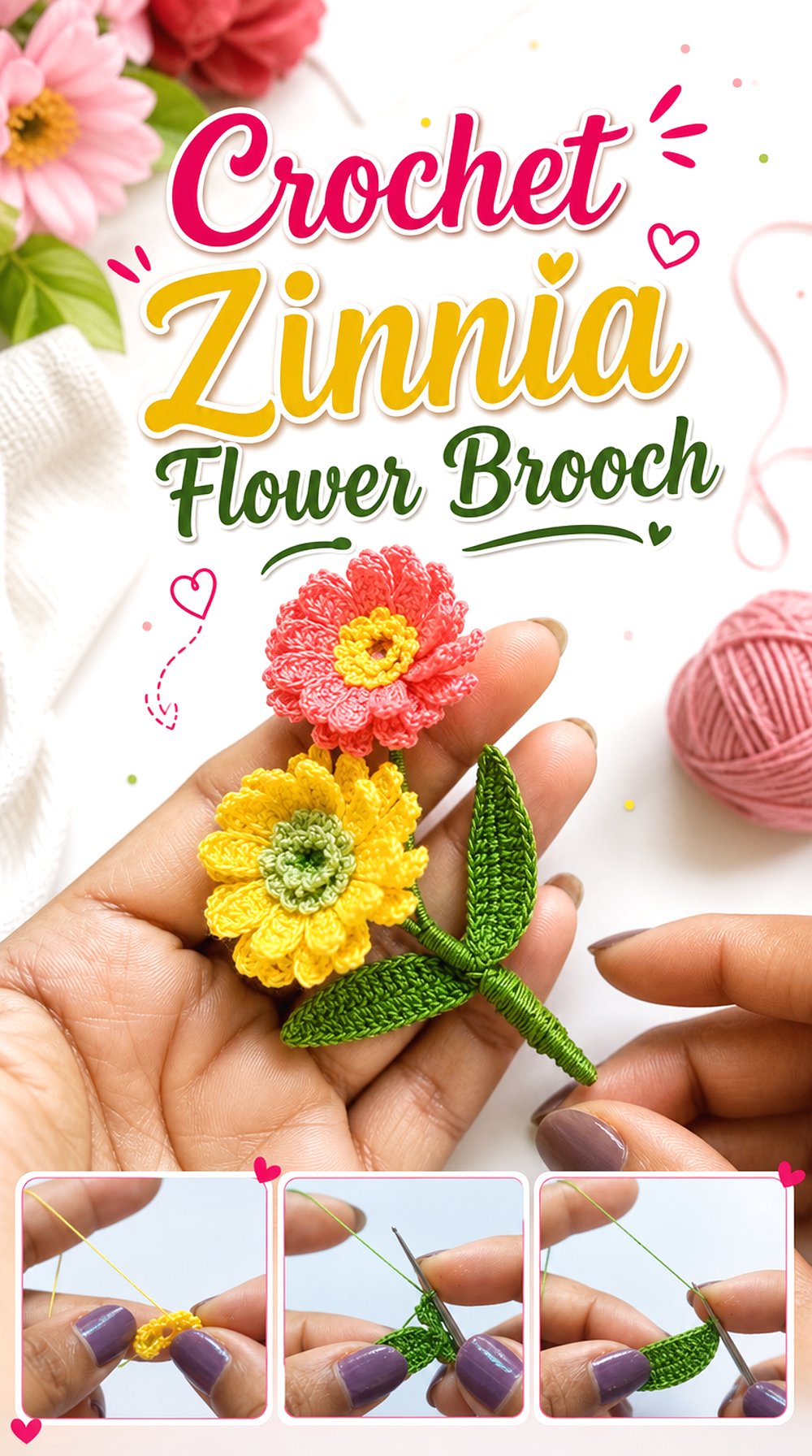
The zinnia option is all about repeated petal texture. Compared with the broad, open poppy, this flower gives the center of the brooch a denser and more intricate appearance. Adishka Crafts presents the tutorial specifically as a crochet zinnia flower brooch pin.
That density makes the design useful when you want a relatively compact flower to carry plenty of surface detail. It can stand alone without requiring leaves or several companion flowers. Because so much of the visual effect comes from the repeated petals, yarn choice and final shaping can noticeably change whether the brooch looks crisp, soft, or overly crowded.
Dense Petals Benefit From Clear Stitch Definition
A zinnia has many visual edges close together. If the yarn is very fuzzy or the fabric becomes overly loose, those edges may merge and reduce the layered flower effect.
When substituting yarn, make a small comparison with the tutorial’s finished appearance. You are not trying to reproduce the creator’s exact materials unless specified; you are checking whether your own fabric still shows the texture that drew you to this design.
More Texture Can Mean More Visual Weight
Even a small zinnia can look substantial because there is little empty space between its petals. Keep that in mind when choosing where to wear it.
On a plain jacket or bag, the dense texture can become an effective focal point. On fabric that already has a busy print or heavy surface texture, the flower may compete rather than stand out. Test the combination before committing the hardware.
Shape the Outer Edge Before Judging the Flower
With repeated petals, the outer silhouette can initially distract from the detailed center. Arrange the finished piece gently and inspect it from above before deciding whether the flower looks balanced.
Look for obvious areas where several petals have folded beneath neighboring sections. Correcting the presentation at this stage can make the brooch appear more even without altering its crochet construction.
Creator: Adishka Crafts
8. Crochet Daffodil Flower Brooch

The daffodil has the most sculptural profile in this group. Instead of relying only on flat petals or stacked circular layers, the recognizable flower combines an open outer form with a projecting center. Snowdonia Stitches has a dedicated tutorial for a crochet daffodil flower brooch.
That makes this idea a strong choice if you want the pin to look noticeably three-dimensional from the side as well as from the front. The distinctive form can make a single brooch feel complete without a cluster of extra flowers. It also rewards careful orientation because the center and surrounding petals are meant to remain clearly visible when worn.
The Projecting Center Needs Room to Stay Visible
A daffodil is not a flower you want flattened beneath a coat lapel, bag strap, or tightly wrapped scarf. Its central feature contributes heavily to the finished shape.
Before choosing placement, think about what may press against the brooch during normal use. A more open location on a jacket, hat, or decorative bag panel will show the dimensional structure more clearly.
Petal and Center Colors Can Work as Separate Decisions
The daffodil naturally offers two strong visual zones: the outer flower and the projecting center. That creates useful room for color adaptation.
You can keep the areas closely related for a quieter result or separate them more strongly for emphasis. Before crocheting, place the two yarn colors together in the lighting where the brooch is likely to be worn; subtle differences sometimes disappear once the finished flower becomes small.
Check the Side View Before Attaching the Pin
Most brooches are judged from the front, but the daffodil benefits from a side-view check because its projection is part of the design.
Hold the completed flower vertically against fabric and make sure the center is not being pulled downward by the way the backing sits. If necessary, reconsider the hardware position before securing it permanently rather than trying to correct the orientation afterward.
Creator: Snowdonia Stitches
Which Crochet Flower Brooch Style Should You Choose?
For a broad, graphic flower, start with the sunflower. Its centered shape makes the entire silhouette easy to see. The poppy offers a similarly open profile but with a softer, less regular outline.
Choose the rose or zinnia when you want more concentrated texture. The rose emphasizes depth and overlapping petals, while the zinnia creates detail through a dense flower face.
The pansy and daffodil stand out when botanical shape and orientation matter. Neither reads as a simple circular flower, so both create a more distinctive profile.
For something lighter and more arrangement-like, the forget-me-not cluster spreads attention across several small blooms. The vintage layered flower sits between these approaches, offering decorative texture without requiring a strongly realistic flower shape.
Conclusion
These eight crochet flower brooch ideas cover very different wearing effects, so the right choice depends on more than your favorite bloom. Pick the sunflower or poppy for a broader profile, the rose or zinnia for concentrated dimension, the pansy or daffodil for a distinctive botanical shape, or the forget-me-not design when you prefer a small clustered arrangement. The vintage flower is a flexible option when color and accessory styling matter more than realism.
Whichever style you choose, check the flower’s final orientation, backing, and behavior on the fabric before securing the hardware permanently. Use the credited original tutorials for exact construction details and creator-specific materials or finishing instructions.
Frequently Asked Questions
What type of yarn should I use for a crochet flower brooch?
Start with the yarn recommended by the tutorial when that information is available, especially if the flower relies on small defined petals. A smoother yarn can make individual stitches and edges easier to see, while a softer or fuzzier yarn changes the surface appearance. Thickness also affects scale, so changing yarn weight can make a brooch noticeably larger or smaller. If you substitute, compare the developing flower with the creator’s finished proportions rather than assuming every yarn will behave the same way.
How can I keep a crochet flower brooch from drooping when worn?
First check whether the flower itself is balanced around the pin. A large dimensional bloom can tip forward if the hardware sits too low or far from its center of mass. Test the completed flower on the intended fabric before permanently fixing the backing. A sturdy jacket and a lightweight blouse will support the same brooch differently. If additional backing or reinforcement is appropriate, use a method compatible with the tutorial and your chosen brooch hardware rather than hiding a structural problem with extra decoration.
Can crochet flower brooches be attached to bags and hats?
They can be used as accessory decorations when the pin and fabric are compatible. A bag panel or hat may provide more support for a dimensional rose, zinnia, or daffodil than lightweight clothing, but check what is behind the fabric before pushing a pin through it. Avoid locations where the brooch will constantly rub against straps or other surfaces. If the material is delicate, coated, or easily marked, test carefully before making holes with brooch hardware.
Should I block a crochet flower before turning it into a brooch?
It depends on the flower’s construction. A flatter motif may benefit from shaping if the edges need to lie evenly, while a dimensional rose or daffodil should not automatically be treated like a flat square or appliqué. Follow any finishing guidance provided by the original creator. If the tutorial does not specify blocking, assess the actual finished flower first and avoid forcing raised petals into a flat form simply because blocking is common in other crochet projects.
Can I make one of these crochet flower brooches larger or smaller?
Changing yarn thickness or hook choice can alter scale, but it can also change fabric density, petal stiffness, and the proportion of the flower to its pin hardware. For that reason, resizing is not always as simple as choosing a different hook. Make the change deliberately and evaluate the flower as it develops. If a particular final size is important, check whether the creator provides dimensions, gauge information, or resizing guidance rather than relying on an estimated result.
Are crochet flower brooches suitable for baby or young-child clothing?
A conventional brooch includes a pointed pin and small hardware, so it should not be treated like an ordinary soft crochet embellishment for unsupervised baby use. For items intended for babies or very young children, avoid loose, sharp, or detachable components that could create an injury or choking concern. A sewn-on crochet flower may be a more appropriate concept for some children’s items, but its construction and attachment still need to be suitable for the specific use.


