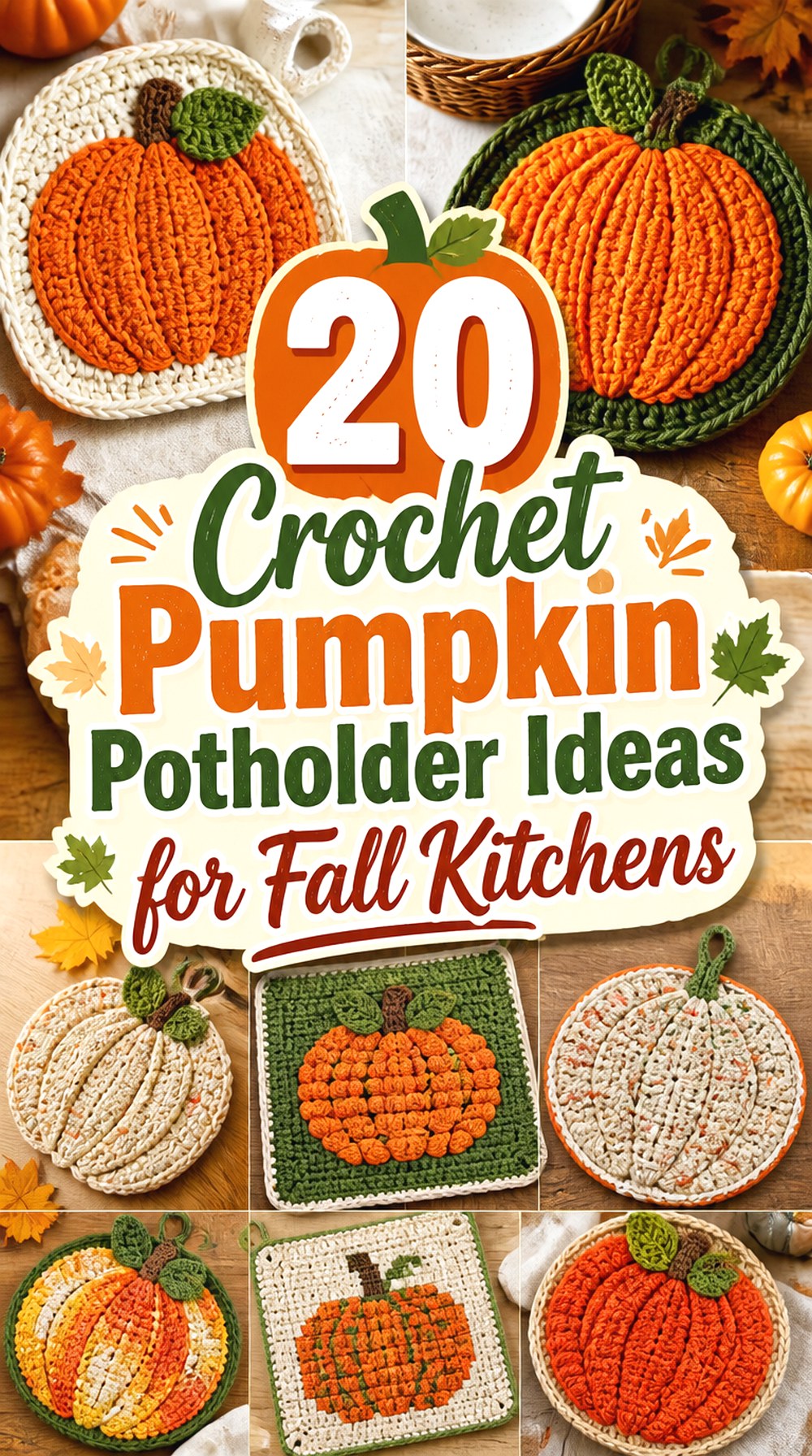
20 Crochet Pumpkin Potholder Ideas for Fall Kitchens
Pumpkin potholders can take surprisingly different forms. Some tutorials create a recognizable pumpkin silhouette with a stem and vine, others keep the working surface flatter with tapestry colorwork, and several turn the idea into pumpkin pie, jack-o’-lantern, or trivet-style kitchen pieces. Those differences matter when you want more than seasonal decoration.
This collection compares 20 approaches by shape, thickness, surface detail, storage, and intended use. Most of the linked tutorials are specifically pumpkin, pumpkin-pie, or jack-o’-lantern kitchen projects. A few are clearly identified as adaptation routes: they teach a useful potholder or pie construction that could be combined with a compatible pumpkin color plan or motif rather than pretending the source itself is a pumpkin pattern. Always follow the original creator for exact construction details and verify the yarn and heat-use guidance before putting handmade crochet against hot cookware.
Quick List
- Crochet Double-Layer Classic Pumpkin Potholder
- Crochet Round Ribbed Pumpkin Potholder
- Crochet Stem-and-Vine Pumpkin Hot Pad
- Crochet Two-Stem Pumpkin Potholder
- Crochet Pumpkin Pie Hot Pad
- Crochet Reversible Pumpkin and Jack-o’-Lantern Trivet
- Crochet Halloween Jack-o’-Lantern Potholder
- Crochet Fall-O-Ween Pumpkin Hot Pad
- Crochet Pumpkin Pie Coaster-and-Hot-Pad Set
- Crochet Wide Pumpkin Placemat Potholder
- Crochet Sculpted Pumpkin Pan-Rest Potholder
- Crochet Pumpkin Pie Grip Potholder
- Crochet Pumpkin-Shaped Trivet Potholder
- Crochet Pumpkin Pie Hot-Pad and Coaster Set
- Crochet Classic Pie-Style Pumpkin Potholder
- Crochet Flat Pumpkin Pie Potholder
- Crochet Tapestry Pumpkin Potholder
- Crochet Ridged Pumpkin Hot Pad
- Crochet Thermal-Stitch Pumpkin Potholder
- Crochet No-Sew Double-Thick Pumpkin Potholder
Decide Whether the Pumpkin Is for Heat or Decoration First
A pumpkin shape does not automatically make a crochet piece suitable for handling hot cookware. Fiber choice, fabric density, thickness, and openings all matter. Sara Sach specifically distinguishes decorative use from an actual hot pad and recommends a double-thickness approach with cotton or a cotton blend for the latter. Raffamusa Designs likewise recommends cotton for its tapestry potholders and cautions against synthetic fibers around high temperatures.
That makes intended use the first comparison to make. A decorative pumpkin with dimensional vines or facial features may be perfect for hanging on a cabinet. A flatter, denser design can make more sense beneath a dish. For anything expected to protect hands from hot cookware, follow the tutorial’s material and construction guidance rather than assuming a thicker-looking yarn is heat appropriate.
Shape and Surface Details Change How a Potholder Works
Shaped pumpkin potholders emphasize the seasonal silhouette, but the curves around their edges can reduce the amount of continuous flat surface compared with a square or round hot pad. Pumpkin-pie designs reverse that priority: their broader circular or pie-like surfaces often provide a more conventional resting area while keeping the fall theme.
Also notice what sits on top of the crocheted fabric. Stems, leaves, curls, faces, and dimensional toppings can make a project much more decorative, yet raised details may matter if you want a pan to sit level. Before choosing a design, decide whether it will mainly hang on display, sit under serving dishes, help grip cookware, or switch between several jobs. That decision can be more useful than choosing by color alone.
1. Crochet Double Layer Classic Pumpkin Potholder
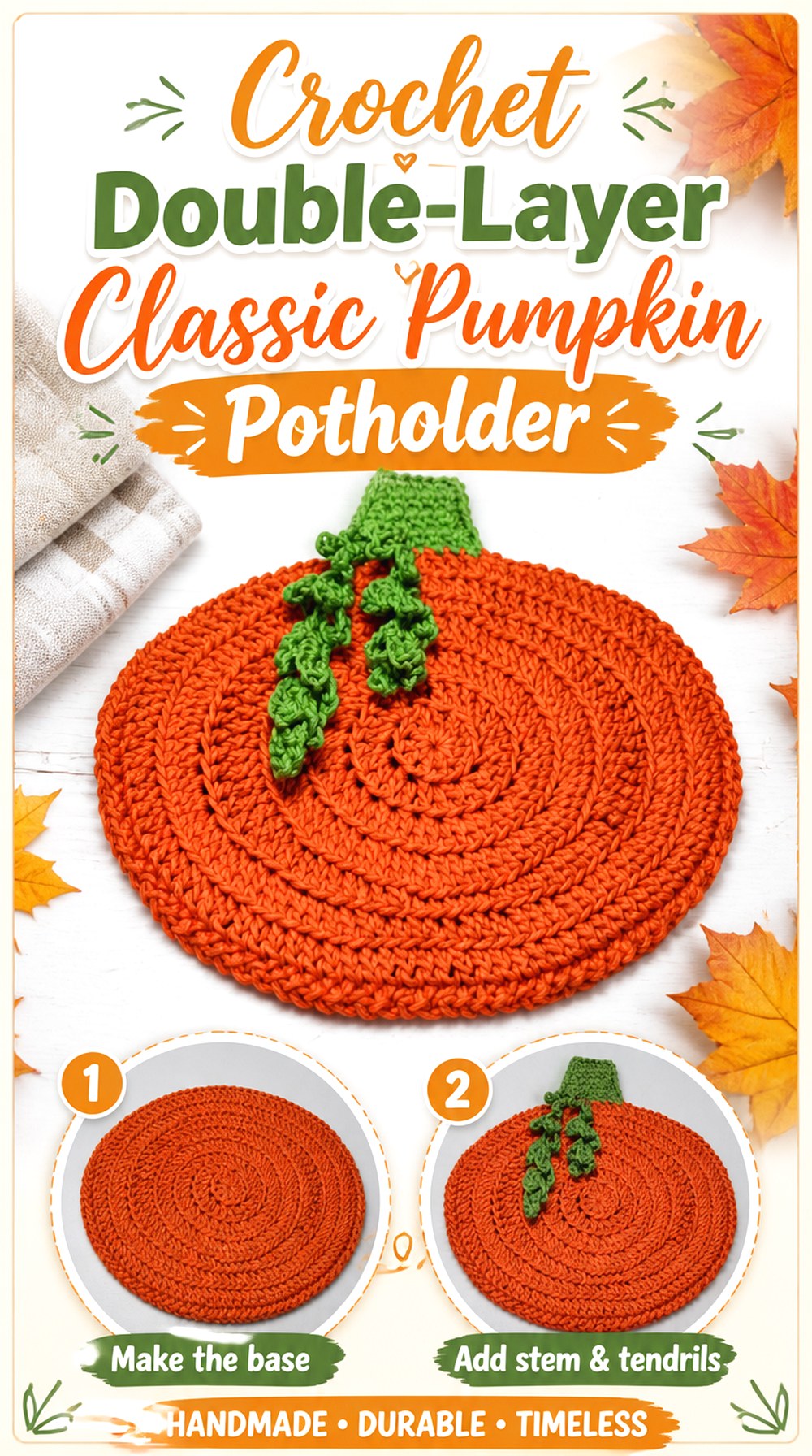
This classic pumpkin design from Creative Grandma combines a clearly recognizable rounded pumpkin front with a separate potholder back, plus a stem and curled leaf details. The extra assembly makes it a useful choice for readers who prefer a more finished, layered object instead of a single decorative motif. The tutorial visibly separates the pumpkin body, back, leaves, and final assembly, so you can see how the ornamental face and functional backing relate before committing to the project.
The Separate Back Is the Key Design Difference
A backing changes more than the appearance. It gives the decorative pumpkin front another layer rather than asking one shaped motif to do every job. When comparing this with flatter one-piece pumpkins, pay attention to how the finished layers align, especially around the curved outer edge where mismatched tension could make the piece ripple.
Curled Leaves Should Stay Out of the Main Contact Area
The leaf and curling details give this version its unmistakable fall character, but decorative pieces are most useful when they do not interfere with the central working surface. Before final assembly, look at where the embellishments sit relative to the area you expect to grip or place beneath cookware.
2. Crochet Round Ribbed Pumpkin Potholder
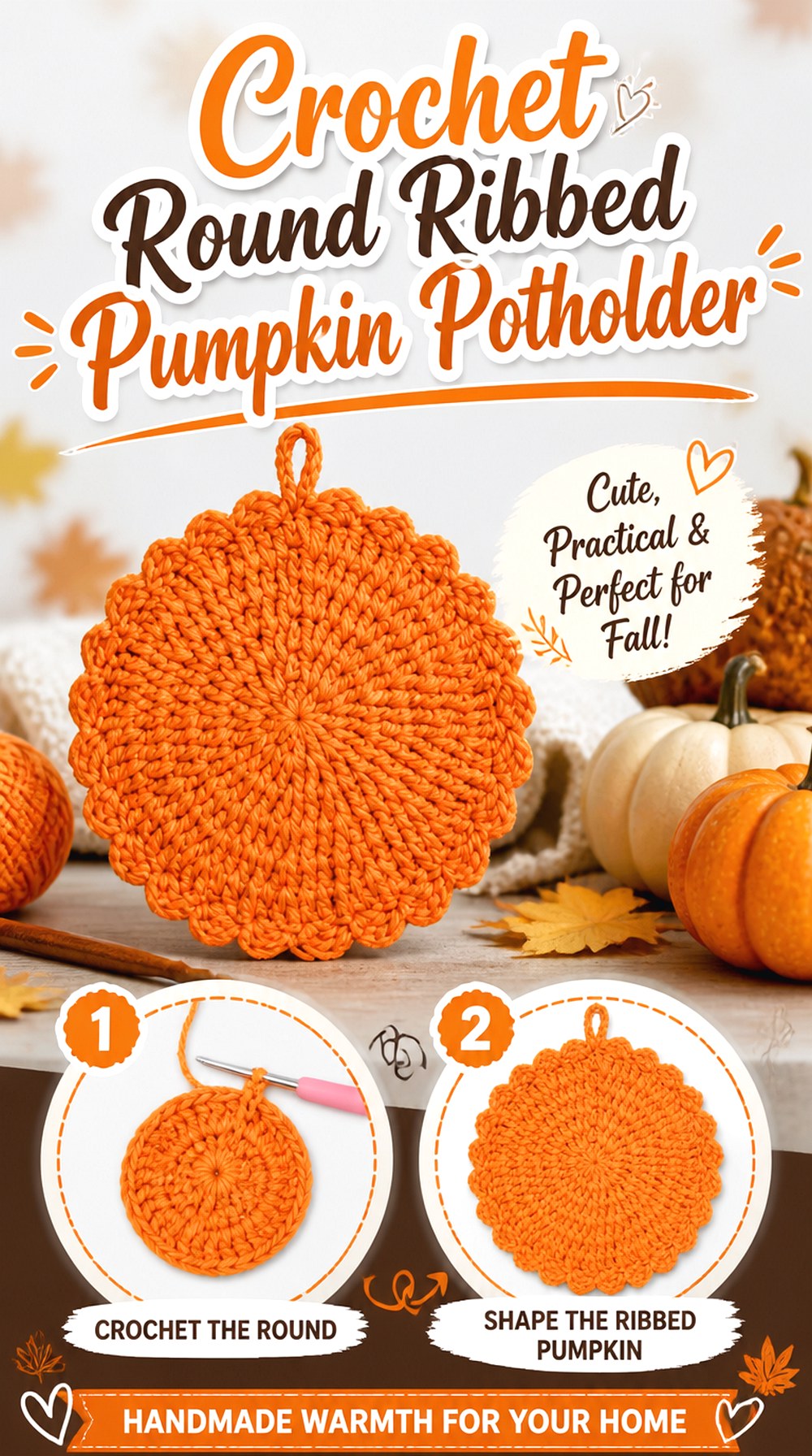
Raji’s Craft Hobby offers a flatter, rounded pumpkin that works well for readers who want the pumpkin outline to remain obvious without adding a large amount of dimensional decoration. The project is presented both for table-setting use and seasonal display, and the source specifies cotton yarn for the demonstrated design. Its radiating stitch texture helps divide the round body visually into pumpkin-like sections while keeping the overall form compact.
Radiating Texture Creates the Pumpkin Shape Visually
This design relies heavily on stitch direction and surface texture rather than separate stuffed ridges. That can be useful when you want the pumpkin effect without attaching many extra pieces. Check that your tension stays consistent around the body, because uneven sections can make a symmetrical round pumpkin look lopsided.
Think About Table Use Before Changing the Scale
The source notes that the project can be customized in size, but increasing diameter also changes the amount of fabric and the relationship between the stem and body. If you resize it, judge the result against the cookware or table setting you actually plan to use rather than enlarging it only for visual impact.
Original Tutorial and Creator Credit
Creator: Raji’s Craft Hobby
3. Crochet Stem and Vine Pumpkin Hot Pad
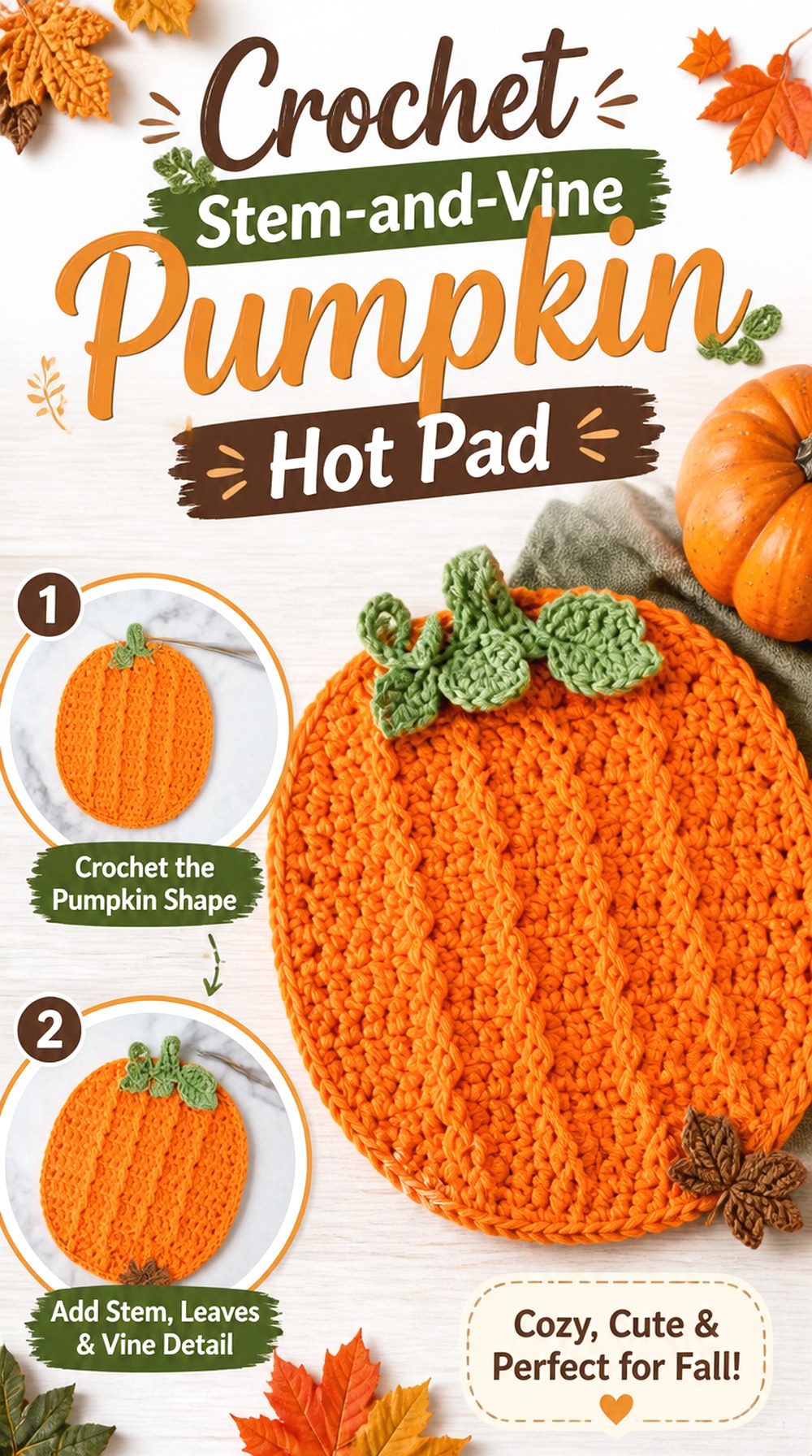
Sara Sach Crochet Designs uses a classic pumpkin body accented with a stem, leaf, and curled vine, but this project stands out because the creator explicitly discusses the difference between decorative use and an actual hot pad. The design can be made with one or two thicknesses, giving readers a clear reason to think about function before deciding how much finishing the project needs.
One Layer and Two Layers Serve Different Intentions
The creator specifically recommends the thicker approach when the piece will be used as a hot pad. That distinction is worth carrying into any pumpkin potholder project: do not treat a visually complete single layer as automatically equivalent to a heat-handling kitchen tool. Follow the source’s construction choice for your intended use.
The Vine Makes the Display Side Easy to Identify
The stem, leaf, and curl create a strong decorative side. That is useful when the potholder hangs between uses, because it reads immediately as seasonal décor. When using it on a work surface, keep the more dimensional details positioned so they are not forced directly beneath a flat pan.
Original Tutorial and Creator Credit
Creator: Sara Sach Crochet Designs
4. Crochet Two Stem Pumpkin Potholder
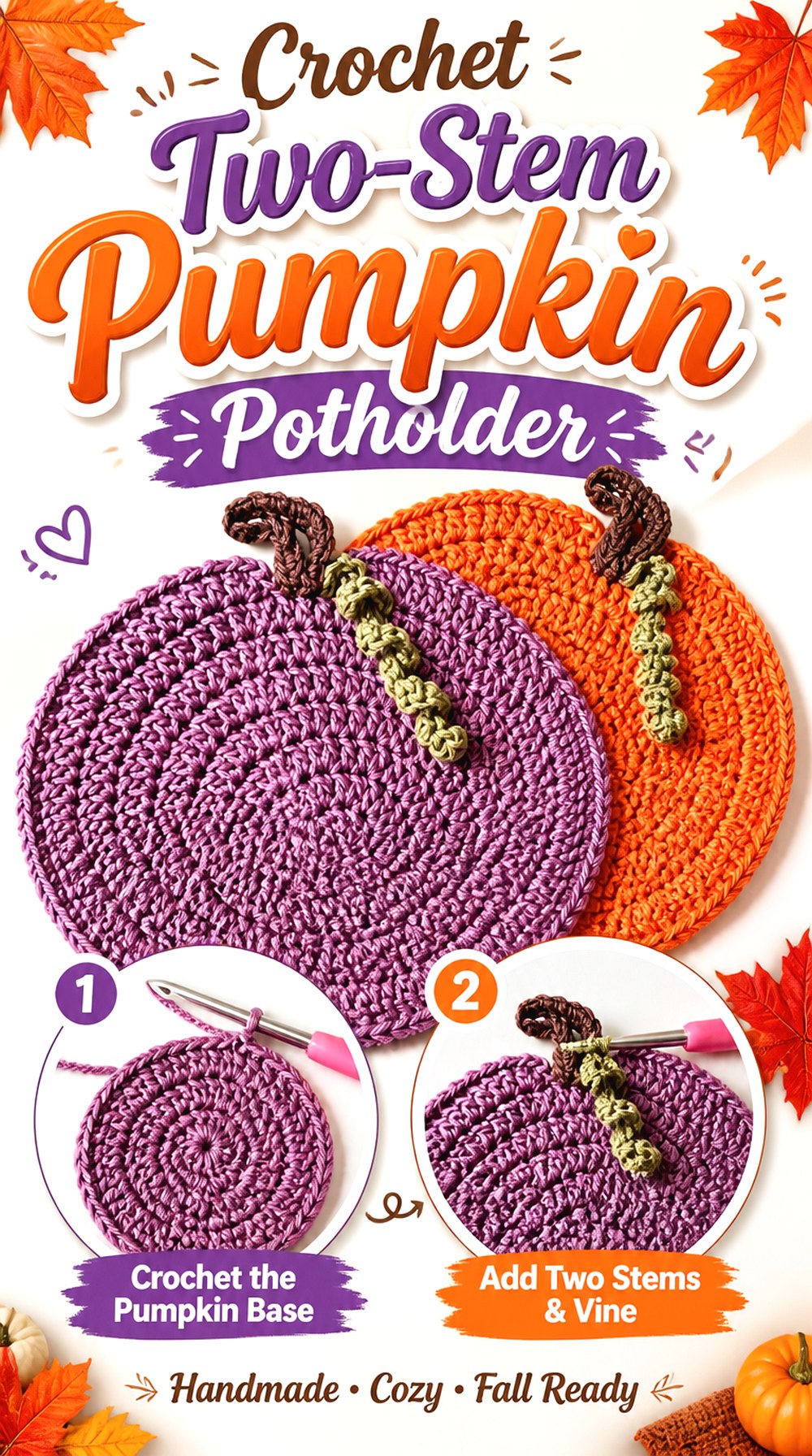
Crochet, Garden, Repeat presents two pumpkin potholder designs in the same tutorial, with different stem treatments giving the finished pieces noticeably different personalities. That makes this source useful for anyone planning a matching pair without wanting both potholders to look completely identical. The body remains recognizably pumpkin-shaped while the upper finishing becomes the point of variation.
Choose the Stem Before Planning a Matching Set
When two versions share the same general theme, a small construction feature can create enough contrast to make a coordinated kitchen set more interesting. Compare both finished stem options before choosing yarn colors so the pair looks intentional rather than like two unrelated experiments.
Keep Pair Thickness Consistent
If you plan to use both potholders for the same kitchen job, match their finished density and thickness even if the decorative stem treatments differ. A pair is easier to use interchangeably when the working portions feel similar in the hand and sit at comparable heights on the counter.
Original Tutorial and Creator Credit
Creator: Crochet, Garden, Repeat
5. Crochet Pumpkin Pie Hot Pad
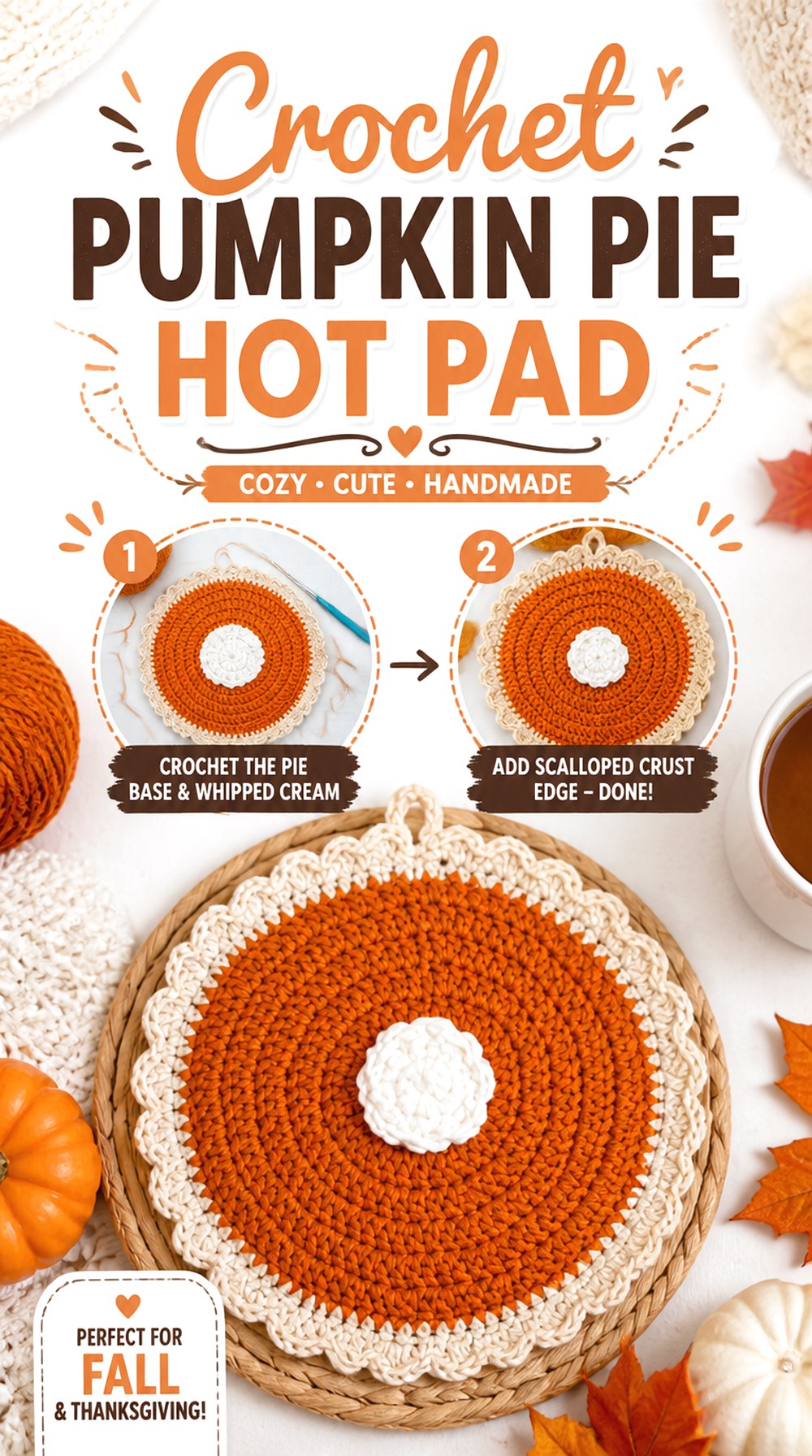
Kelli’s Purpose shifts the theme from a whole pumpkin to the food most associated with it: pumpkin pie. A pie-style hot pad gives you a rounder, broader working surface and can blend into Thanksgiving table décor without looking like a standard pumpkin silhouette. The tutorial is specifically presented as a pumpkin pie hot pad, making it a strong option for readers who want seasonal kitchen crochet rather than a hanging pumpkin ornament.
A Pie Shape Gives You More Continuous Surface
Compared with deep lobes around a pumpkin outline, a round pie-inspired shape can provide a simpler area beneath a dish. That can make the concept appealing for serving-table use. Before adding any decorative topping, consider which side will actually face cookware and keep that contact area as practical as possible.
Decorative Toppings Affect Flatness
The details that make crochet pie recognizable can also make the top surface less level. Decide whether the project will primarily sit under cookware, decorate a table, or hang between uses. If the tutorial includes raised details, do not assume they belong between a heavy dish and the countertop.
Original Tutorial and Creator Credit
Creator: Kelli’s Purpose
6. Crochet Reversible Pumpkin and Jack o’ Lantern Trivet
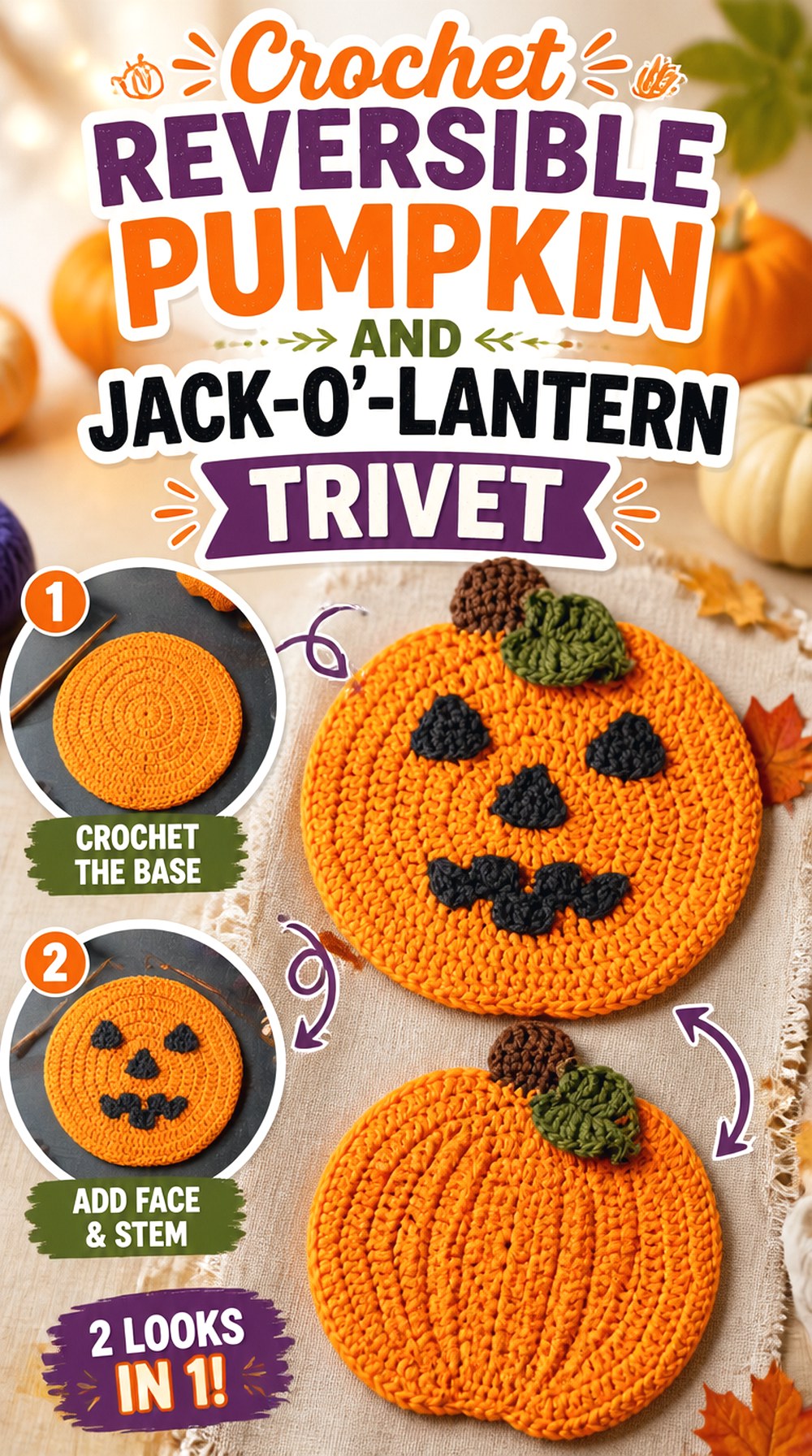
Granny Bee Crochets presents a design that can read as either a plain pumpkin or a jack-o’-lantern, which gives one project more seasonal range than a permanently Halloween-specific face. The source identifies it as a hotpad/trivet and explains that the design can be used without the face for a fall version. That makes it a practical choice if you want décor that can appear before Halloween and remain appropriate through Thanksgiving.
The Face Determines How Long the Design Feels Seasonal
A plain pumpkin can work throughout the fall, while a jack-o’-lantern face immediately pushes the look toward Halloween. If you want longer display time, keep the facial treatment optional or position the project so the plain side can remain visible after October.
A Trivet Needs a Relatively Even Resting Area
When a project may sit beneath a pot, dimensional facial pieces deserve extra scrutiny. A flat colorwork face behaves differently from raised appliqués or hard additions. Check the tutorial’s finished surface and avoid adding embellishments that could make cookware unstable.
Original Tutorial and Creator Credit
Creator: Granny Bee Crochets
7. Crochet Halloween Jack o’ Lantern Potholder
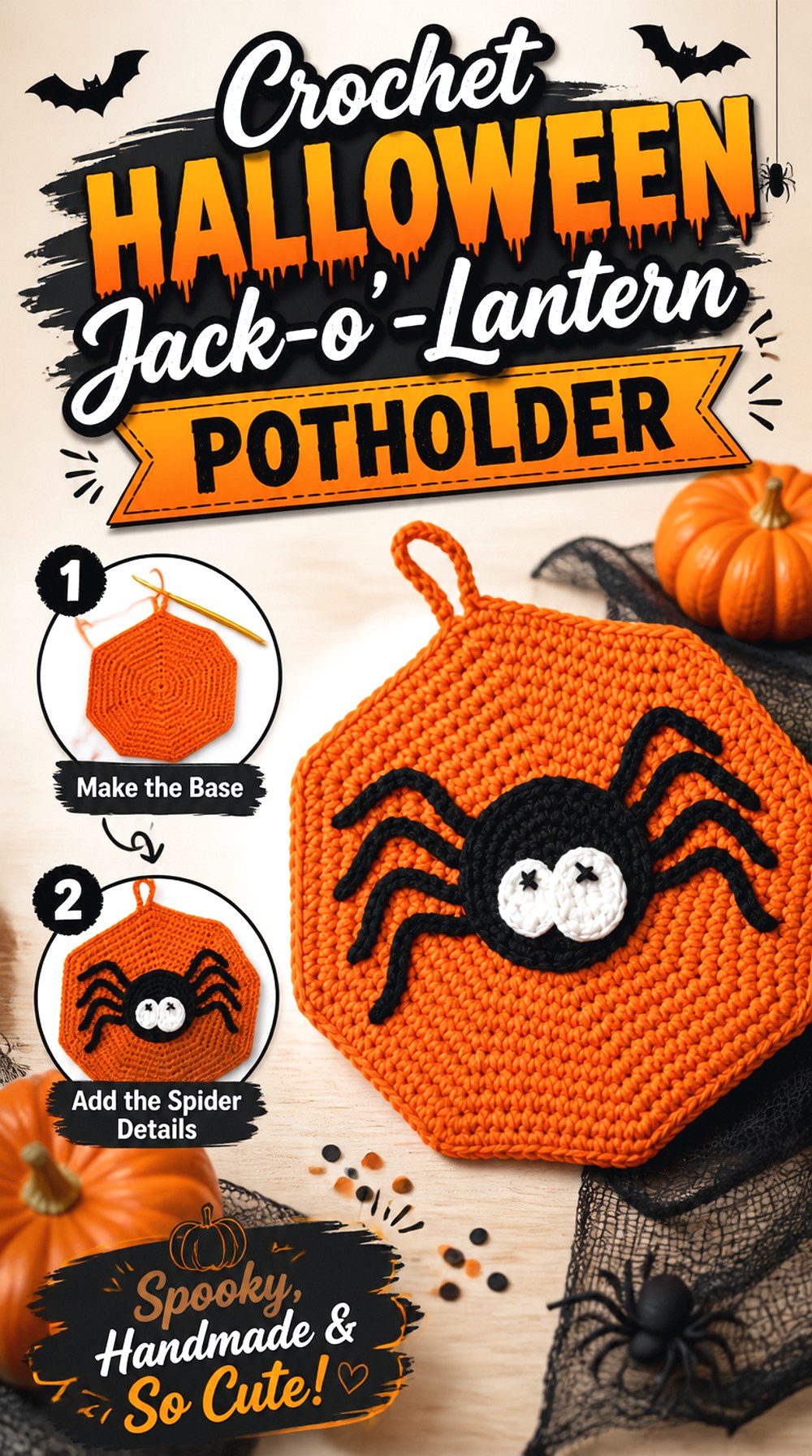
DIY 100 Ideas includes a jack-o’-lantern within a Halloween potholder tutorial collection. This option suits readers who want their pumpkin to read as unmistakably Halloween rather than harvest décor. The face becomes the primary visual feature, so the silhouette does not need as much extra foliage, curling vines, or dimensional finishing to communicate the theme.
Facial Contrast Matters More Than Extra Decoration
For a jack-o’-lantern, the expression carries most of the visual identity. Strong contrast between the pumpkin body and facial features can keep the design readable from across a kitchen. If you change colors, preserve enough contrast that the eyes and mouth do not disappear into the background.
Check How the Face Is Added
A face worked into the fabric behaves differently from pieces attached afterward. For a potholder that will actually contact cookware, inspect the tutorial carefully and consider whether any added details create bumps, loose edges, or snag points on the working surface.
Original Tutorial and Creator Credit
Creator: DIY 100 Ideas
8. Crochet Fall O Ween Pumpkin Hot Pad
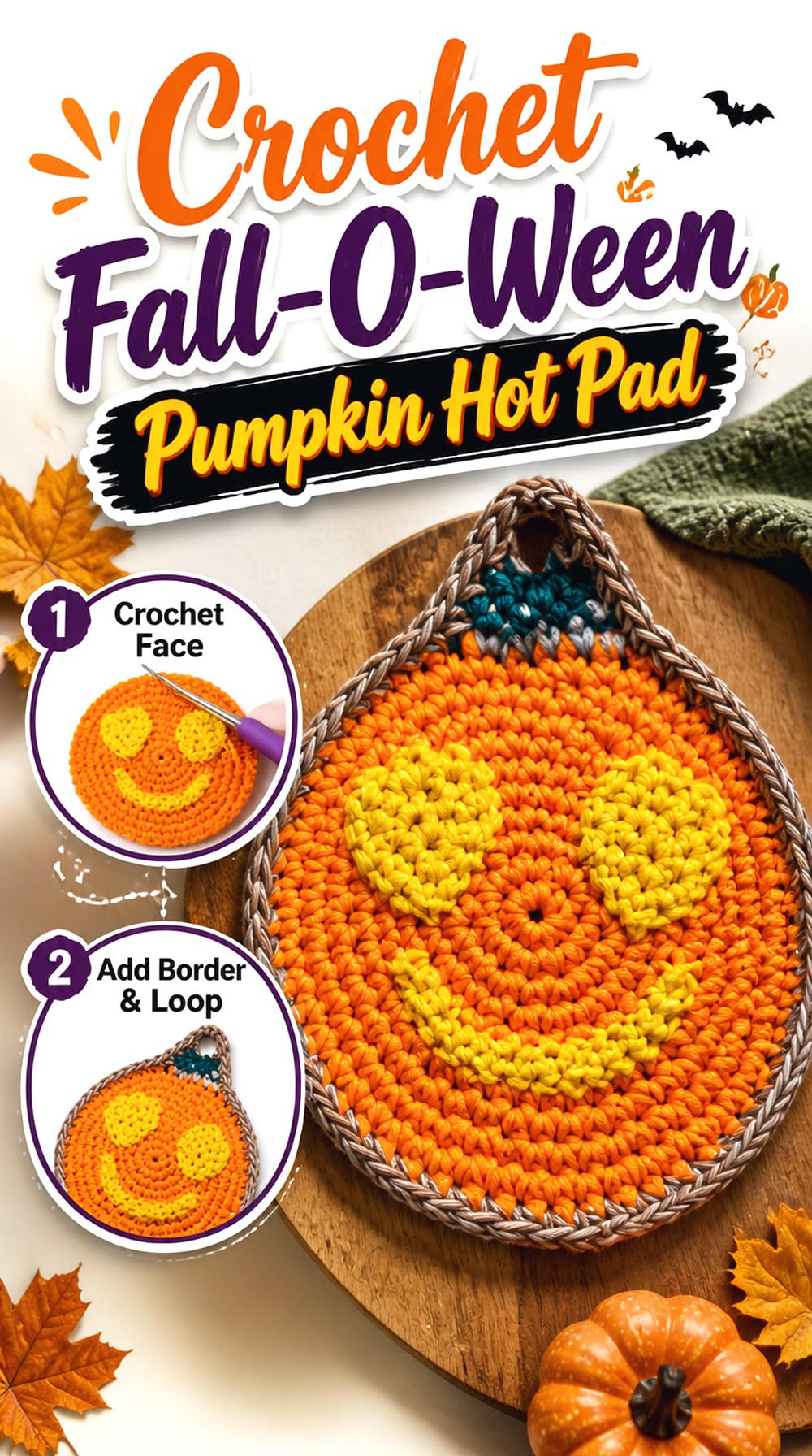
Rhonda Gage’s Creations combines fall and Halloween styling in a jack-o’-lantern project described as a hot pot or coaster. That dual description makes this a useful project for readers who like multipurpose seasonal table pieces, but it also means the intended scale and use deserve attention before you begin. A coaster-sized piece and a cookware hot pad solve very different problems.
Decide Which Scale You Actually Need
Do not select size only because one finished version looks attractive on screen. If your goal is a hot pad, compare the finished footprint with the cookware you intend to place on it. If you want a mug mat or coaster, a smaller scale may be much more convenient.
Let the Jack-o’-Lantern Be the Focal Point
This version works best when the face remains visually dominant. Too many added vines, leaves, or hanging embellishments could compete with the expression and make a relatively compact project busier than necessary.
Original Tutorial and Creator Credit
Creator: Rhonda Gage’s Creations
9. Crochet Pumpkin Pie Coaster and Hot Pad Set
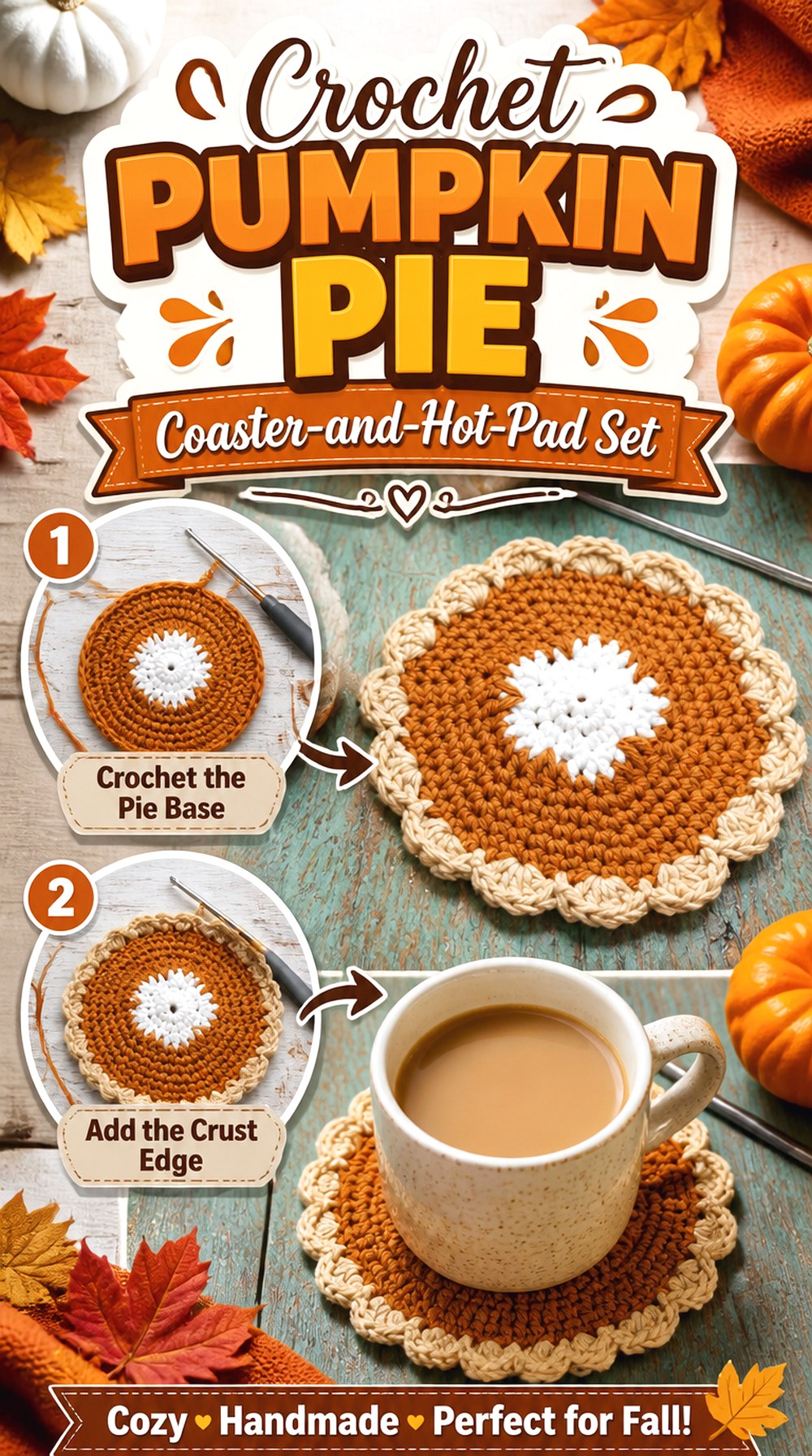
Rachels Lovely Stitches presents a pumpkin pie project specifically as a coaster/hot pad, making it well suited to a coordinated fall table where you may want similar-looking pieces in more than one role. Instead of relying on the outline of a whole pumpkin, the dessert theme brings the seasonal identity through pie colors and finishing.
A Coordinated Set Needs Clear Size Separation
If you make both coaster and hot-pad versions, make the size difference deliberate enough that family members can identify each piece quickly. A barely larger coaster can be inconvenient beneath cookware, while an oversized mug mat may take up more table space than you want.
Keep the Functional Side Easy to Recognize
Pie details tend to draw attention to the decorative face. If one side is flatter or more appropriate for resting beneath a dish, make that orientation obvious during finishing so the piece is not routinely used upside down.
Original Tutorial and Creator Credit
Creator: Rachels Lovely Stitches
10. Crochet Wide Pumpkin Placemat Potholder
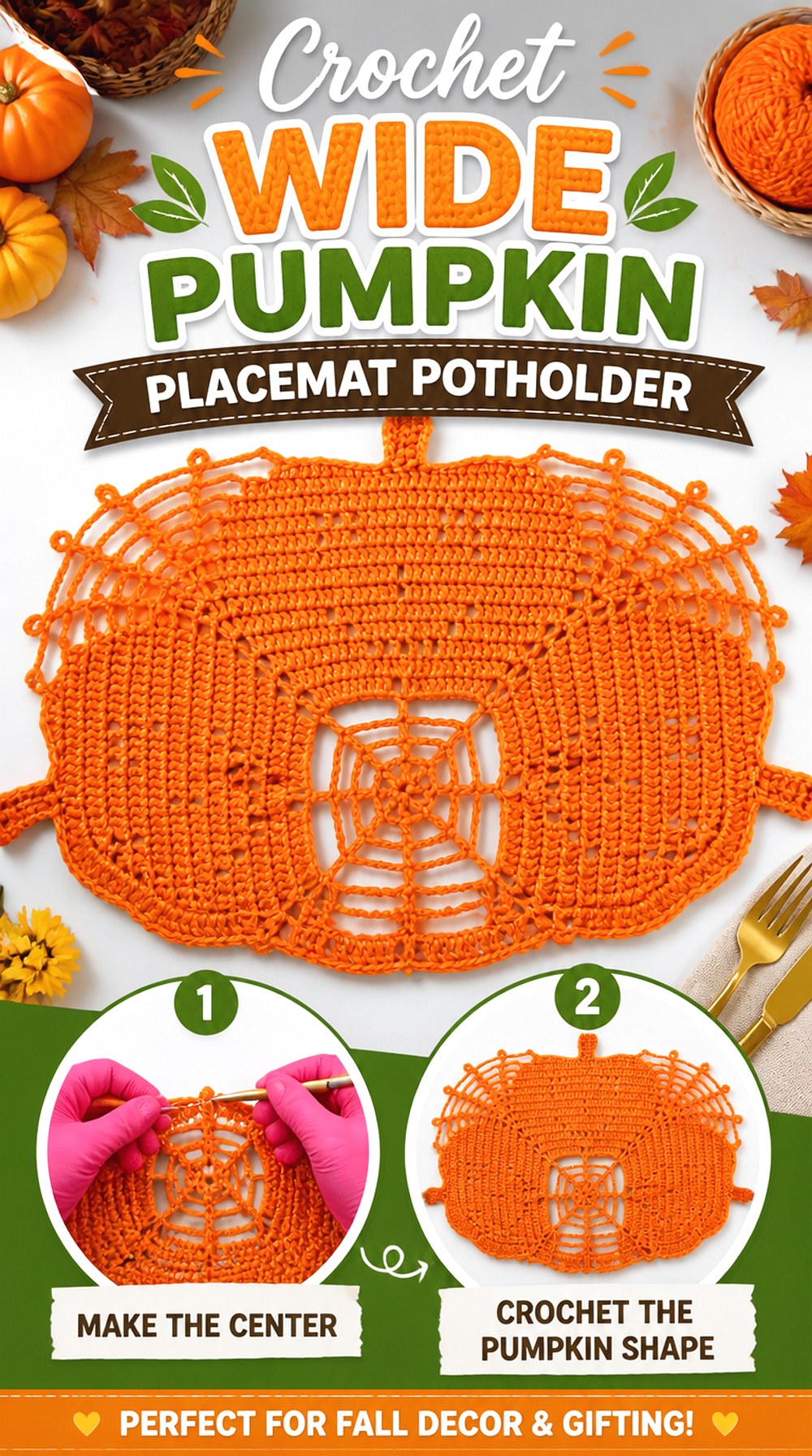
Hooks And Stitches presents a pumpkin project with several possible identities, including doily, Halloween décor, placemat, and potholder. Its broader format makes it quite different from compact hand-grip potholders and may suit readers who want a seasonal piece that spends more time protecting or decorating a tabletop.
A Wider Format Favors Table Protection
When a crochet piece grows toward placemat proportions, it becomes more practical beneath serving pieces than as something you constantly pick up to grip pan handles. Think about where it will live most often and choose the final scale accordingly.
Multifunctional Labels Require Careful Heat Decisions
A doily, placemat, and potholder are not automatically interchangeable simply because the same design can be described several ways. If you plan to use this version with heat, verify that your material and finished construction match that purpose rather than relying on the decorative label.
Original Tutorial and Creator Credit
Creator: Hooks And Stitches
11. Crochet Sculpted Pumpkin Pan Rest Potholder
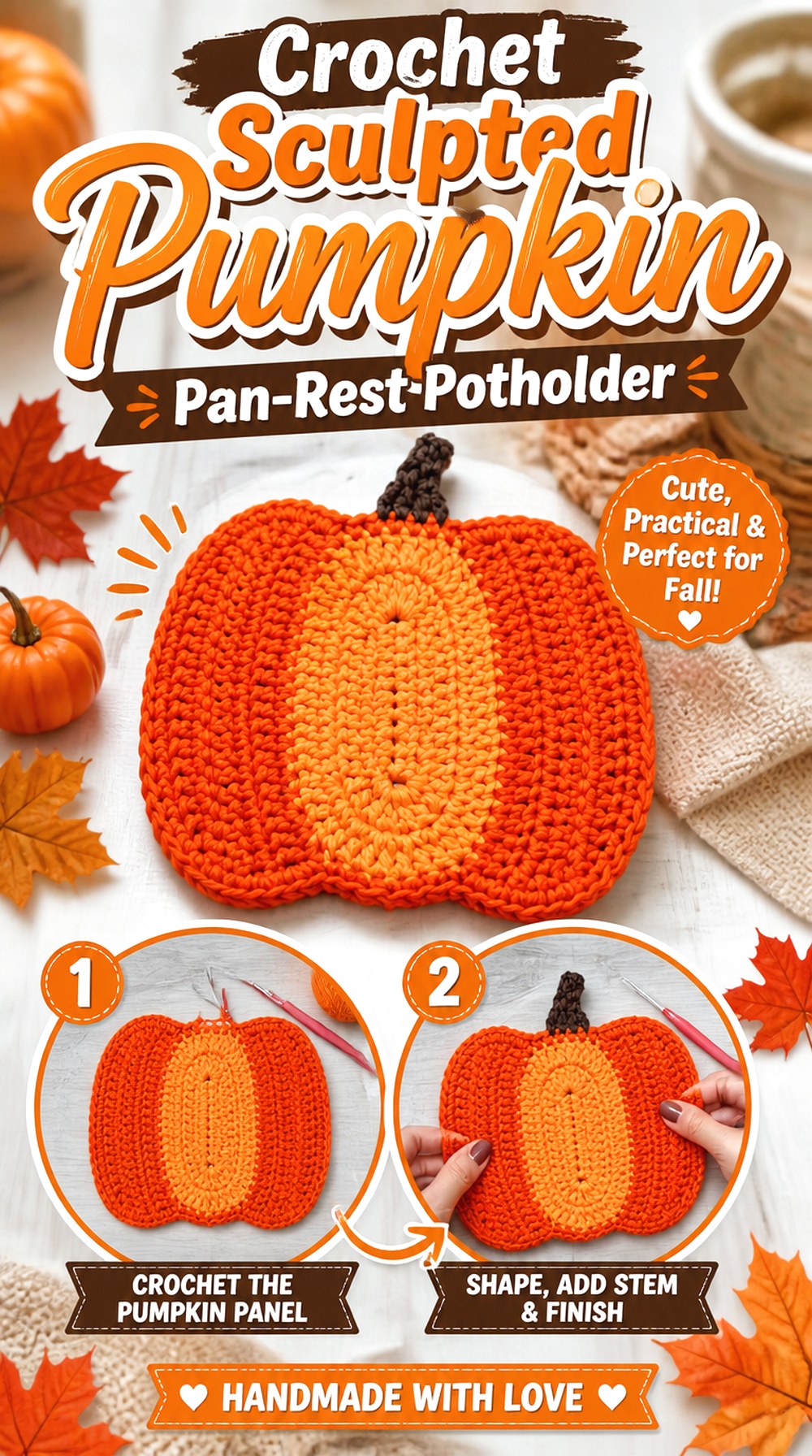
Carine Strieder’s Portuguese-language tutorial focuses on a pumpkin-shaped pan rest, giving the collection a visually sculpted option created specifically around kitchen placement. A pan-rest orientation puts more emphasis on the overall footprint than on a hanging loop or gripping edge, so it is worth considering if most of your potholders actually spend their time under serving dishes.
Judge the Outline Against Your Cookware
An attractive pumpkin silhouette can still leave parts of a larger pan extending beyond the crocheted surface. Before changing the tutorial’s scale, compare the usable center area—not just the widest outer lobes—with the base of the dishes you normally serve.
Language Does Not Prevent Visual Verification
Because this tutorial is in Portuguese, readers who do not speak the language should first decide whether the visual demonstrations are clear enough for their skill level. Avoid guessing at material or construction instructions you cannot confirm; use the creator’s shown information and available translation tools where needed.
Original Tutorial and Creator Credit
Creator: Carine Strieder – Crochet Designer
12. Crochet Pumpkin Pie Grip Potholder
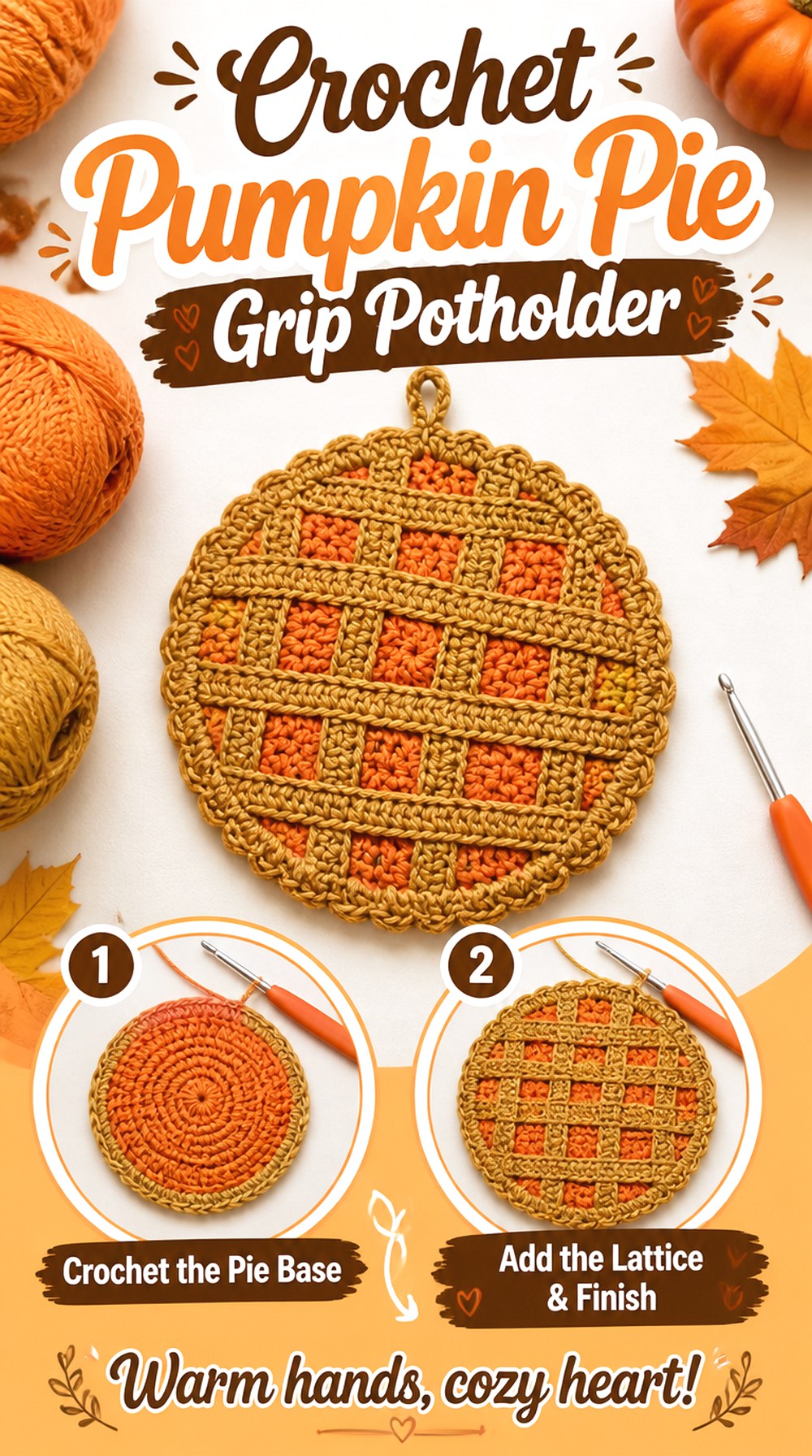
Bananitas MG offers a Spanish-language pumpkin pie potholder tutorial described for handling hot kitchen items. The food-inspired shape gives it a different character from pumpkin silhouettes while keeping a direct Thanksgiving connection. This can work particularly well when you want a potholder that looks coordinated with dessert-table décor without needing a jack-o’-lantern face or leafy pumpkin top.
Grip Comfort Matters More Than Decorative Scale
A potholder intended to help hold hot kitchen items needs to feel manageable in the hand. If you alter the tutorial’s size or yarn, check whether the result still folds and grips comfortably instead of becoming so large or rigid that it behaves more like a trivet.
Pie Details Should Not Create Loose Edges
Food-themed crochet invites decorative layers, but loose toppings or edges can catch when the potholder is moved quickly. Inspect all finishing points and keep the gripping area secure rather than adding embellishments simply because there is visual space for them.
Original Tutorial and Creator Credit
Creator: Bananitas MG
13. Crochet Pumpkin Shaped Trivet Potholder
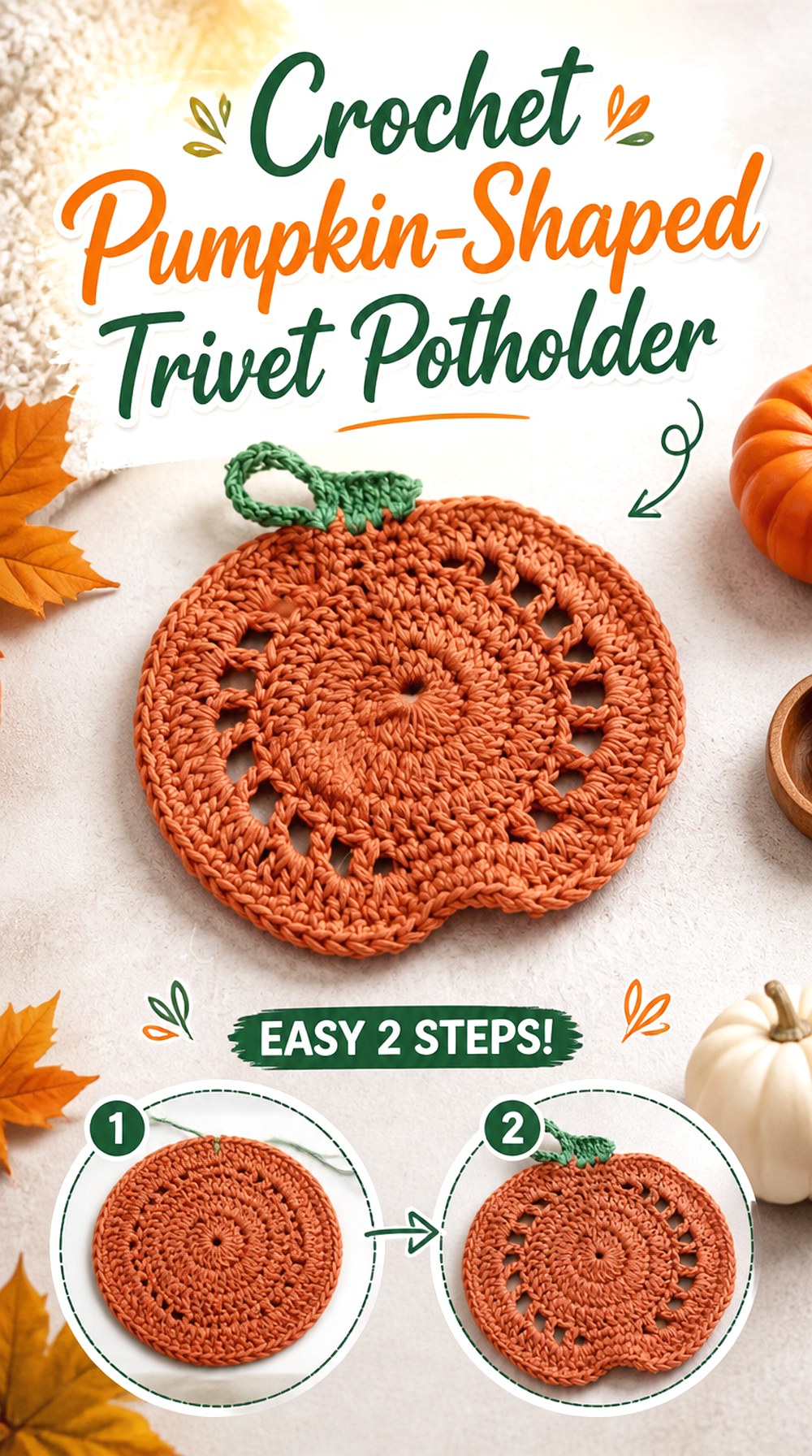
Si può fare con alida presents a pumpkin-shaped crochet piece that can be interpreted as a potholder, trivet, or smaller keychain depending on how the concept is used. For this roundup, the trivet/potholder direction is the relevant one because it preserves enough surface area for kitchen use while retaining the strongly shaped pumpkin outline.
Do Not Confuse the Keychain Version With the Kitchen Version
A miniature decorative pumpkin and a functional potholder may share a construction idea, but their final requirements are different. Follow the larger kitchen-oriented version when heat contact is intended and do not assume that simply enlarging a tiny decorative project creates equivalent protection.
The Strong Silhouette Works Without a Face
This is a useful option if you want a pumpkin that reads as autumn rather than strictly Halloween. The shape itself supplies the seasonal identity, leaving room for restrained color choices and avoiding the extra surface elements of a jack-o’-lantern.
Original Tutorial and Creator Credit
Creator: Si può fare con alida
14. Crochet Pumpkin Pie Hot Pad and Coaster Set
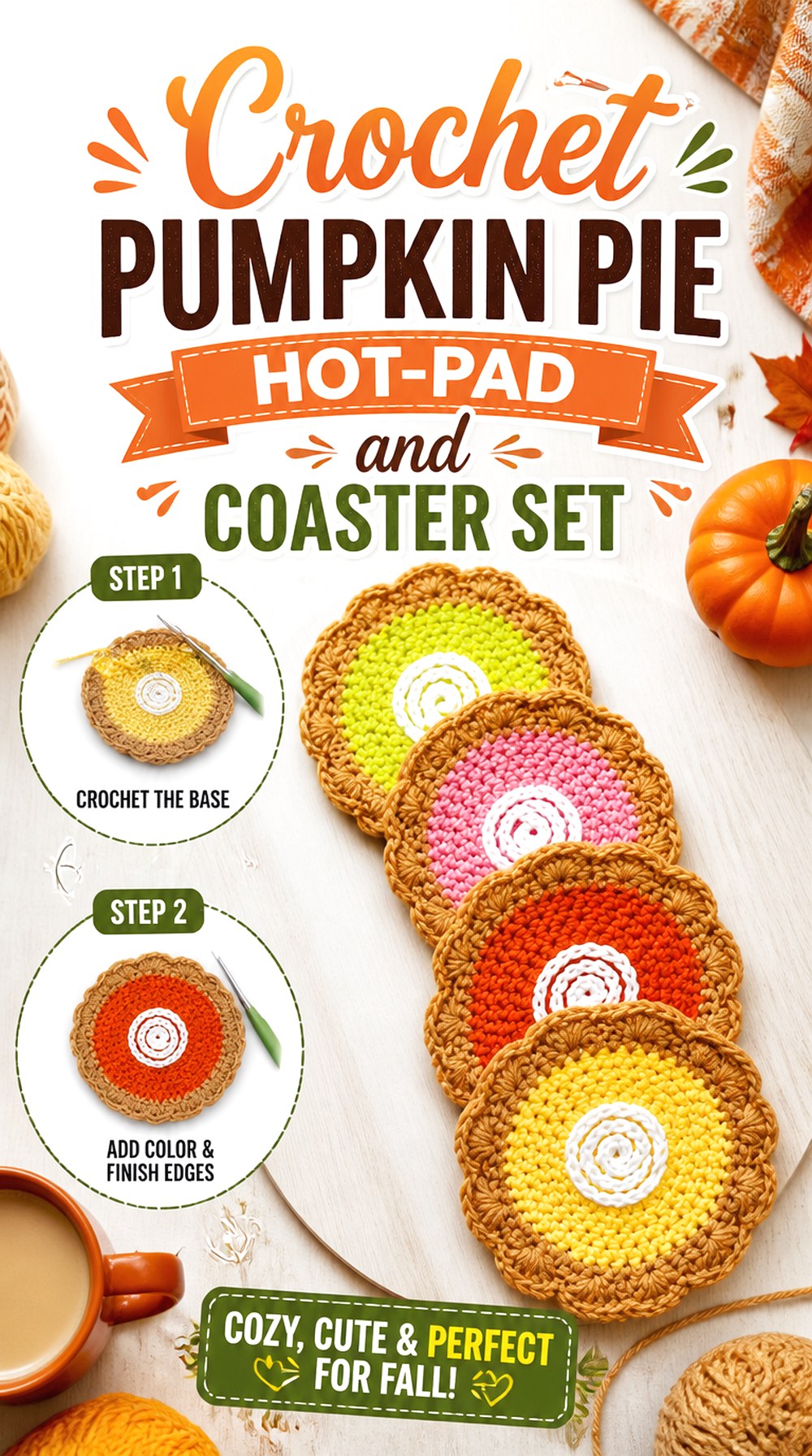
Cleopatra’s Crochet teaches a pie-themed coaster that includes a pumpkin-pie color option, while the associated pattern information also covers a hot-pad-and-coaster concept. The important distinction is that the linked video itself demonstrates the smaller coaster format rather than serving as a complete standalone pumpkin hot-pad tutorial. Treat it as a coordinated-design reference and use the creator’s appropriate hot-pad information for any larger heat-use version.
The Video Is a Scale Reference, Not Permission to Guess
Scaling a coaster up does not by itself establish appropriate hot-pad thickness, material, or performance. If the larger potholder is your goal, consult the creator’s corresponding hot-pad information instead of improvising solely from the coaster video.
This Works Well for a Matching Dessert Table
The strength of this idea is coordination. Smaller pumpkin-pie coasters can repeat the same visual language as a larger table piece without forcing every item to be identical in size. Keep each object’s purpose obvious so the coaster is not mistaken for a heat-handling potholder.
Original Tutorial and Creator Credit
Creator: Cleopatra’s Crochet
15. Crochet Classic Pie Style Pumpkin Potholder
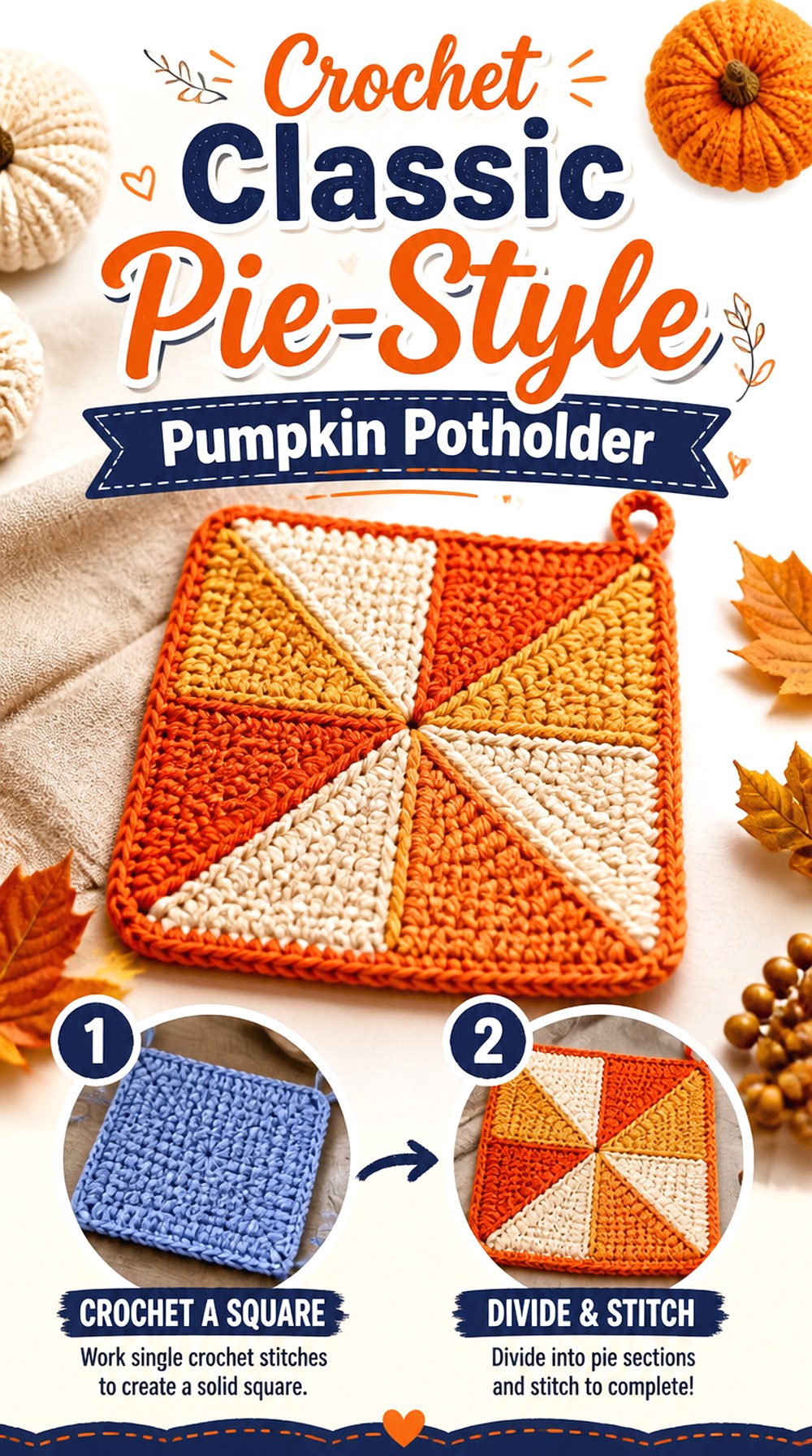
This Pixie Creates provides a complete pie potholder construction that can serve as an adaptation route for a pumpkin-pie version. The linked tutorial is a general pie potholder rather than a pumpkin-specific pattern, so the useful value here is its construction and finished food shape. A pumpkin color palette can shift the visual theme, but any change should preserve the tutorial’s functional fabric rather than replacing structural choices with decorative guesswork.
Use Color as the Adaptation, Not a New Construction
The safest editorial adaptation is visual: keep the creator’s potholder construction and change only aesthetic choices that do not require reconstructing the pattern. Avoid inventing a new topping, thickness, or assembly method and presenting it as though the tutorial supplied those directions.
Pie Potholders Suit Thanksgiving Better Than Halloween
A pie shape reads naturally at a Thanksgiving table and can sit beside serving dishes without the stronger Halloween association of a jack-o’-lantern. Choose this route when you want autumn food imagery that remains appropriate through the later part of the season.
Original Tutorial and Creator Credit
Creator: This Pixie Creates
16. Crochet Flat Pumpkin Pie Potholder
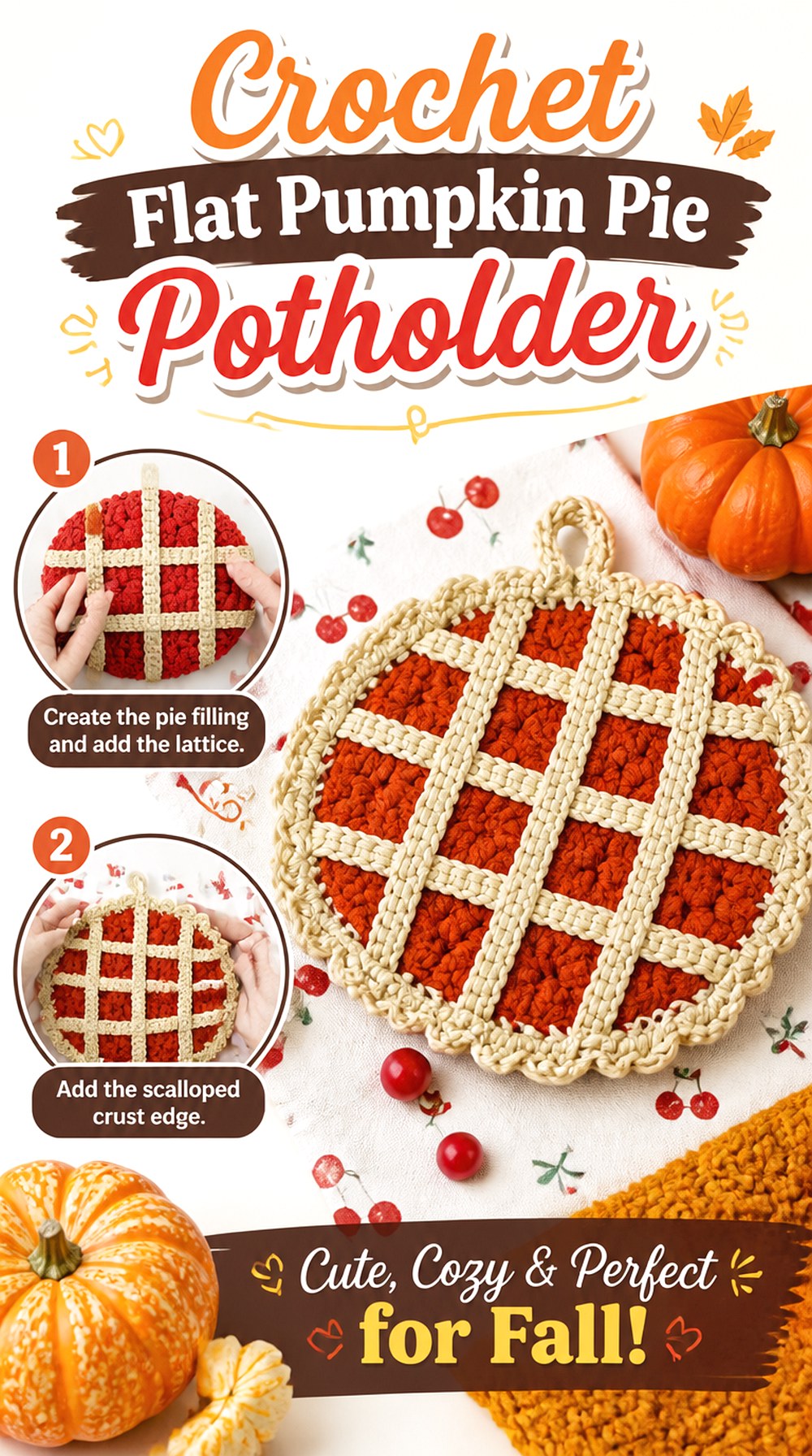
Cherry Fairy Tale Blog also offers a general crochet pie potholder tutorial rather than an exact pumpkin-pie source. It earns a separate place here because a flatter pie construction can provide a different starting point from sculpted pumpkin bodies or facial potholders. Use the tutorial for the actual potholder architecture and let a restrained pumpkin-inspired palette carry the fall theme.
Flat Construction Keeps the Theme Subtle
Not every fall kitchen piece needs an obvious stem, leaf, or face. A pie-shaped potholder in warm pumpkin-inspired tones can fit Thanksgiving décor without looking like a novelty object, which may make it easier to keep in regular rotation after the holiday.
Do Not Add Bulky “Toppings” Without Considering the Surface
When adapting a basic pie into a pumpkin-pie look, it can be tempting to add dimensional cream or crust details. If the piece will rest beneath cookware, keep its working surface in mind before adding anything raised that the original tutorial did not require.
Original Tutorial and Creator Credit
Creator: Cherry Fairy Tale Blog
17. Crochet Tapestry Pumpkin Potholder
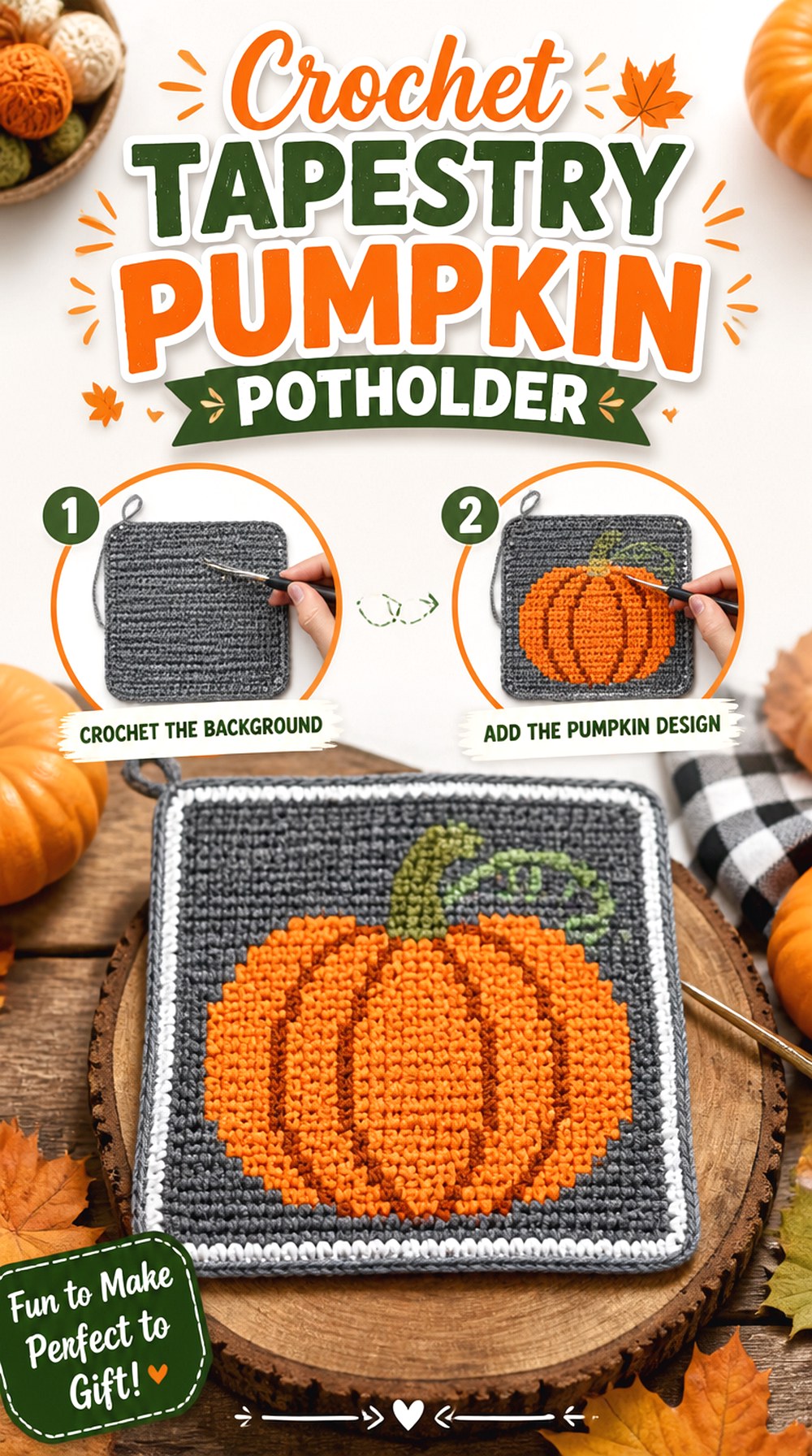
Raffamusa Designs has an exact Pumpkin Potholder within its Farmhouse tapestry collection. The linked YouTube lesson teaches the tapestry-crochet method used for the collection rather than functioning as a pumpkin-only video, so readers should pair the technique tutorial with the creator’s pumpkin design page. The resulting format is rectangular, compact, and visually flatter than most shaped pumpkins.
Tapestry Colorwork Keeps the Pumpkin Inside the Fabric
Because the image is created through colorwork rather than a separately shaped body, the outside edges remain regular. That makes this approach useful for anyone who prefers a conventional potholder outline with the pumpkin appearing as a graphic motif instead of controlling the entire silhouette.
Color Changes Need Consistent Tension
Tapestry crochet carries more than one strand through the fabric, so inconsistent tension can distort a geometric rectangle or make the picture uneven. The linked video is valuable specifically because it demonstrates the collection’s color-change technique and border treatment rather than leaving readers to infer those mechanics.
Original Tutorial and Creator Credit
Creator: RaffamusaDesigns – Crochet Patterns and Tutorials
18. Crochet Ridged Pumpkin Hot Pad
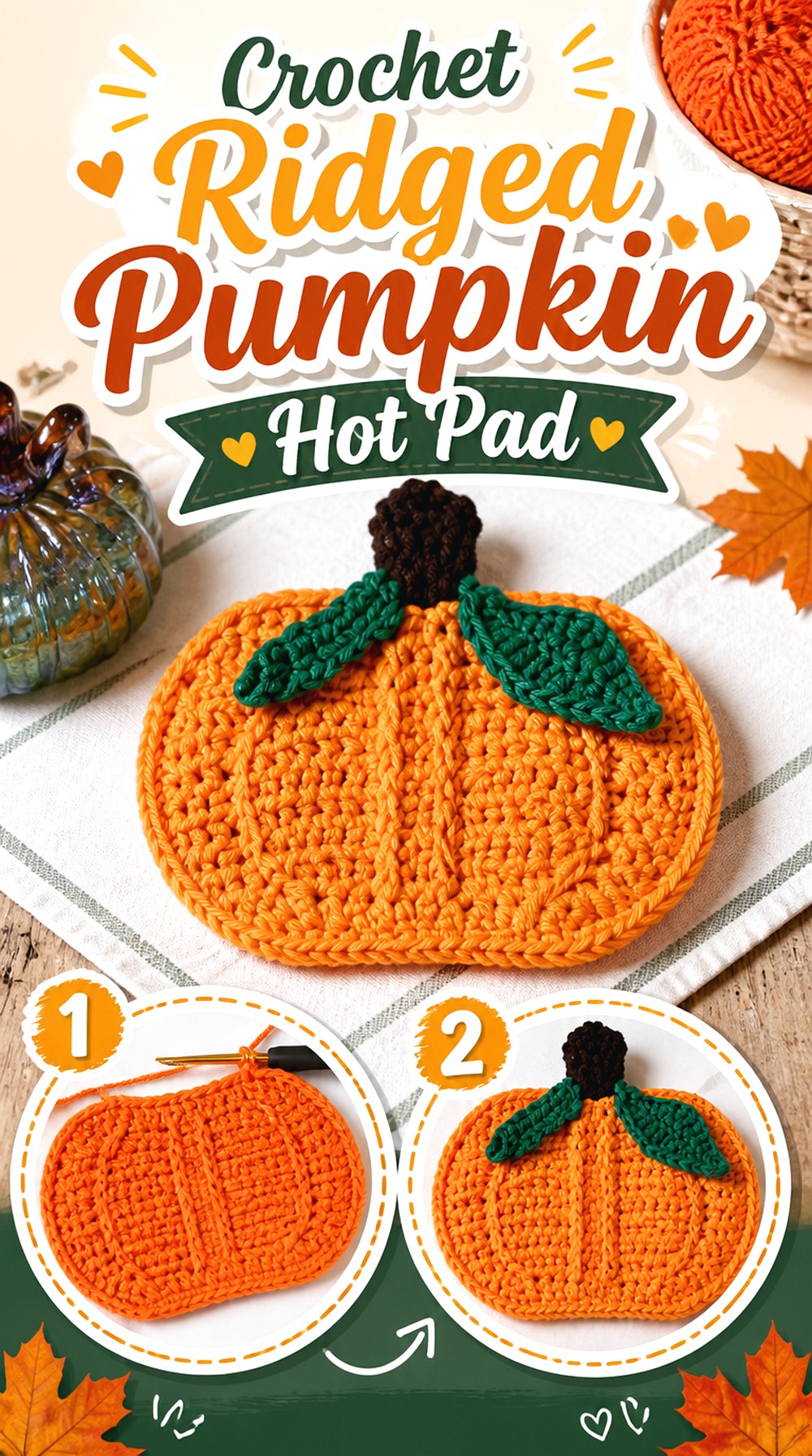
HelenMay Crochet’s pumpkin hot pad uses pronounced vertical texture to suggest the natural ribs of a pumpkin, giving it more surface definition than a flat colorwork design. The creator offers versions with and without a braided cable; the linked video begins the non-braided version and is explicitly identified as Part 1 of a three-part tutorial.
Raised Ribs Do the Decorative Work
Instead of relying on a face or elaborate appliqués, this pumpkin gains character from its textured body. That gives readers a more traditional autumn look and allows the silhouette and stitch relief to remain the main visual features.
Know That the Tutorial Continues Beyond One Video
This is the one source in the roundup where the linked watch page begins a multipart instructional sequence. Do not assume Part 1 contains the entire project. Follow the creator’s remaining tutorial parts for completion rather than filling missing construction details from another pattern.
Original Tutorial and Creator Credit
Creator: HelenMay Crochet
19. Crochet Thermal Stitch Pumpkin Potholder
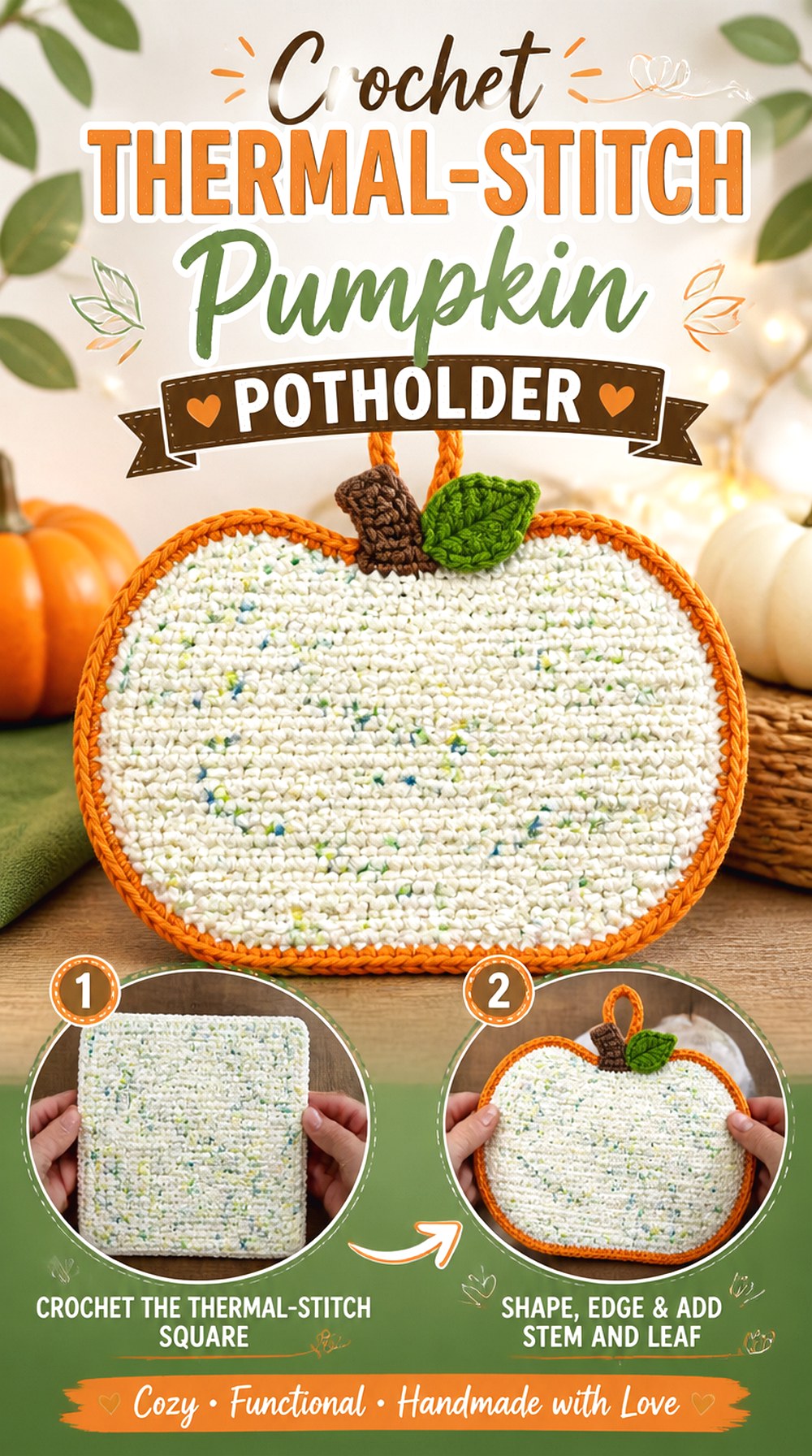
The Crochet Architect’s thermal-stitch potholder is a construction adaptation rather than a pumpkin pattern. It belongs here for readers who want thickness and a conventional square working surface first, then seasonal styling second. The tutorial teaches a thick cotton potholder and also points viewers toward tapestry thermal-stitch possibilities, creating a logical route for a compatible pumpkin colorwork concept without pretending the video supplies an exact pumpkin chart.
Build the Functional Base Before Adding a Pumpkin Theme
If your priority is a substantial potholder, start with the demonstrated construction exactly as intended. A pumpkin palette, simple stripe arrangement, or separately verified compatible colorwork chart can provide the seasonal appearance later. Avoid altering the thermal structure just to make the motif easier.
A Square Base Is Easier to Store and Stack
Shaped pumpkins have decorative charm, but a square potholder can hang, fold, and stack with everyday kitchen linens more predictably. This is a good route when you want seasonal color without sacrificing the familiar footprint of a standard potholder.
Original Tutorial and Creator Credit
Creator: The Crochet Architect
20. Crochet No Sew Double Thick Pumpkin Potholder
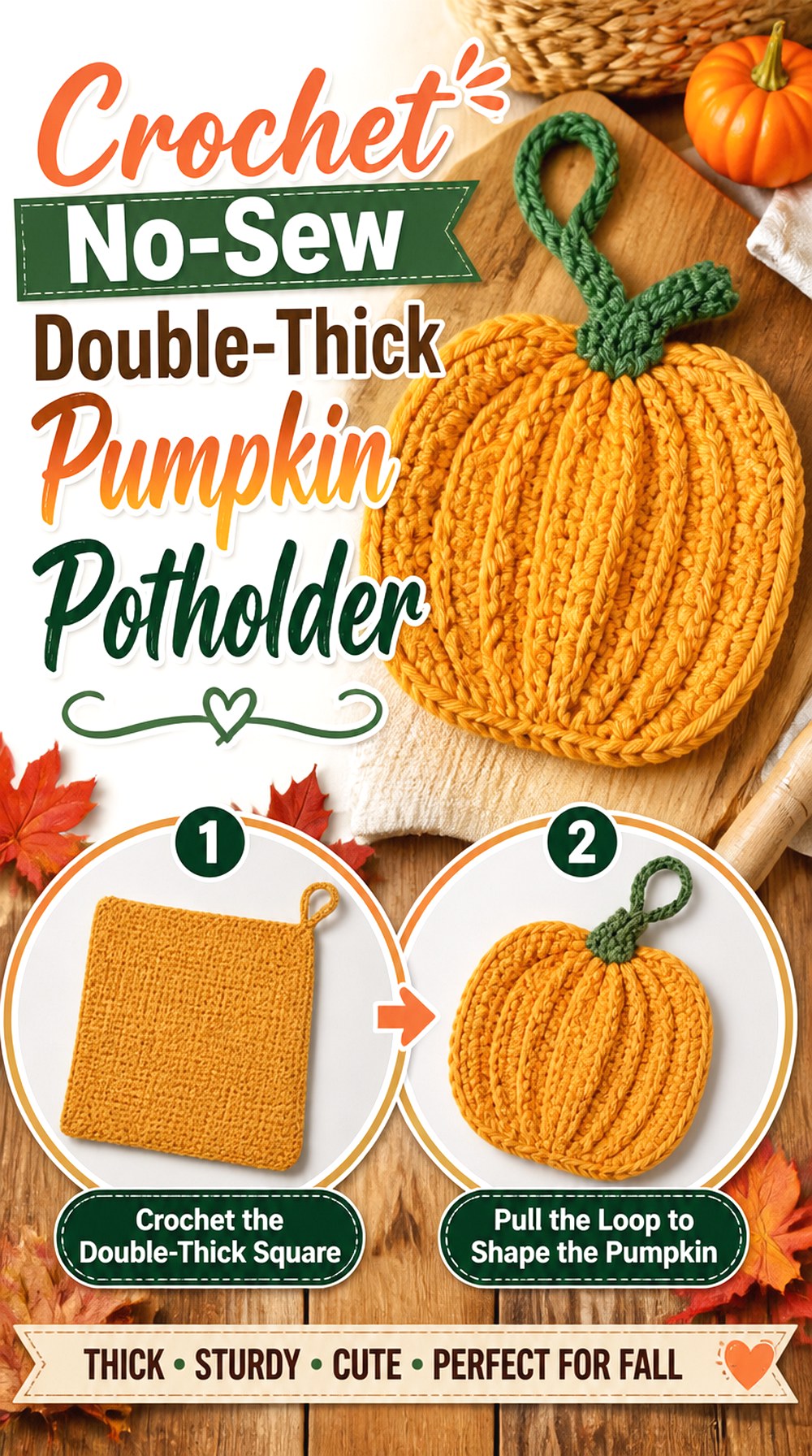
Snufflebean Yarn’s tutorial is another clearly labeled adaptation route. The source teaches a double-thick potholder made in one piece with minimal sewing, making it appealing when you want a practical foundation without assembling separate front and back panels. The video itself is not pumpkin-specific, so keep the adaptation simple: use fall or pumpkin-inspired colors rather than claiming the tutorial contains a pumpkin motif it does not teach.
One-Piece Construction Reduces Assembly
If sewing two separate potholder faces together is the part you tend to avoid, this format offers a different workflow from the layered pumpkin projects earlier in the list. That can also make it useful as a base when you want the seasonal effect to come mostly from color.
Let the Color Scheme Carry the Pumpkin Reference
A burnt-orange main color with a restrained contrasting edge can evoke pumpkin season without adding bulky decorative pieces to a working surface. If you want a literal pumpkin image instead, use a separately verified compatible motif rather than improvising structural changes to this tutorial.
Which Crochet Pumpkin Potholder Style Should You Choose?
Choose a shaped pumpkin if the finished silhouette and hanging display matter most. The Creative Grandma, Raji’s Craft Hobby, Sara Sach, Carine Strieder, and Si può fare con alida projects make the pumpkin itself the outline of the piece.
For a flatter working surface, look toward Raffamusa Designs’ tapestry rectangle or the thermal-stitch and double-thick adaptation bases. Pumpkin-pie potholders make the most natural fit for Thanksgiving tables, while jack-o’-lantern versions from Granny Bee Crochets, DIY 100 Ideas, and Rhonda Gage’s Creations lean more strongly toward Halloween.
If you need the piece to contact hot cookware, let the creator’s heat-use instructions, fiber guidance, thickness, and surface construction outweigh purely decorative considerations.
Conclusion
These 20 crochet pumpkin potholder ideas cover much more than twenty versions of the same orange shape. A classic layered pumpkin works well when you want recognizable fall décor, tapestry colorwork keeps the edges flat and regular, pumpkin-pie hot pads fit naturally into Thanksgiving table settings, and jack-o’-lantern faces make Halloween the focal point. Thermal and one-piece constructions provide alternative routes when practical potholder structure matters more than a shaped outline.
Before choosing, decide whether your finished piece will mainly grip cookware, sit beneath dishes, or hang as seasonal décor. That one decision will narrow the list quickly. Use the original tutorials for exact construction and material details, especially whenever the finished crochet will be used around heat.
Frequently Asked Questions
What yarn should I use for a crochet pumpkin potholder that will touch hot cookware?
Follow the specific tutorial’s material guidance rather than substituting yarn based only on color. Multiple sources in this collection recommend cotton for functional potholders, and Raffamusa Designs specifically warns against synthetic yarns around high temperatures. Sara Sach also distinguishes material and thickness choices for an actual hot pad versus decoration.
Should a crochet pumpkin potholder be one layer or two?
There is no universal answer because the tutorials use different constructions. Some creators intentionally add a back or second thickness, while others build a dense structure in another way. If a tutorial specifies a particular thickness for heat use, keep that functional requirement intact. Do not remove a layer simply because the single-layer pumpkin already looks finished.
Are shaped pumpkin potholders less practical than square ones?
Not necessarily, but they behave differently. Deep curves around a pumpkin outline can reduce the amount of continuous surface beneath a large dish, while square tapestry or thermal-stitch potholders provide more regular edges. A shaped version may be preferable for display and gripping; a square version may be easier to stack and position beneath cookware.
Can I turn a crochet pumpkin coaster into a potholder just by making it larger?
Size alone is not enough. A coaster tutorial may use a construction or material chosen for cups rather than hot cookware. The Cleopatra’s Crochet entry is intentionally labeled this way: the video demonstrates a smaller pie coaster, while separate creator information addresses a hot-pad version. Verify fiber, thickness, density, and construction instead of simply enlarging a coaster.
How can I keep a pumpkin potholder flat when it has leaves, vines, or pie toppings?
Treat the central working area differently from the decorative perimeter. Stems, leaves, curls, and toppings can add character when they sit away from the main cookware contact zone. If a raised addition would sit directly beneath a pan, consider whether the piece is better used for gripping or display rather than as a flat trivet.
Can I use a general potholder tutorial for a pumpkin design?
Yes, as a clearly planned adaptation. The thermal-stitch and one-piece projects in this article are intentionally presented as construction bases rather than exact pumpkin tutorials. Preserve the creator’s functional construction and use color, or a separately verified compatible motif, to add the pumpkin theme. Do not imply that the original tutorial includes a pumpkin chart when it does not.
Which pumpkin potholder style works best for Thanksgiving instead of Halloween?
Pumpkin-pie designs and plain pumpkins without faces usually make the easiest transition into Thanksgiving décor. Jack-o’-lanterns read more specifically as Halloween, while tapestry pumpkins, ribbed pumpkins, and warm fall-colored potholders can remain visually appropriate through the broader harvest season.