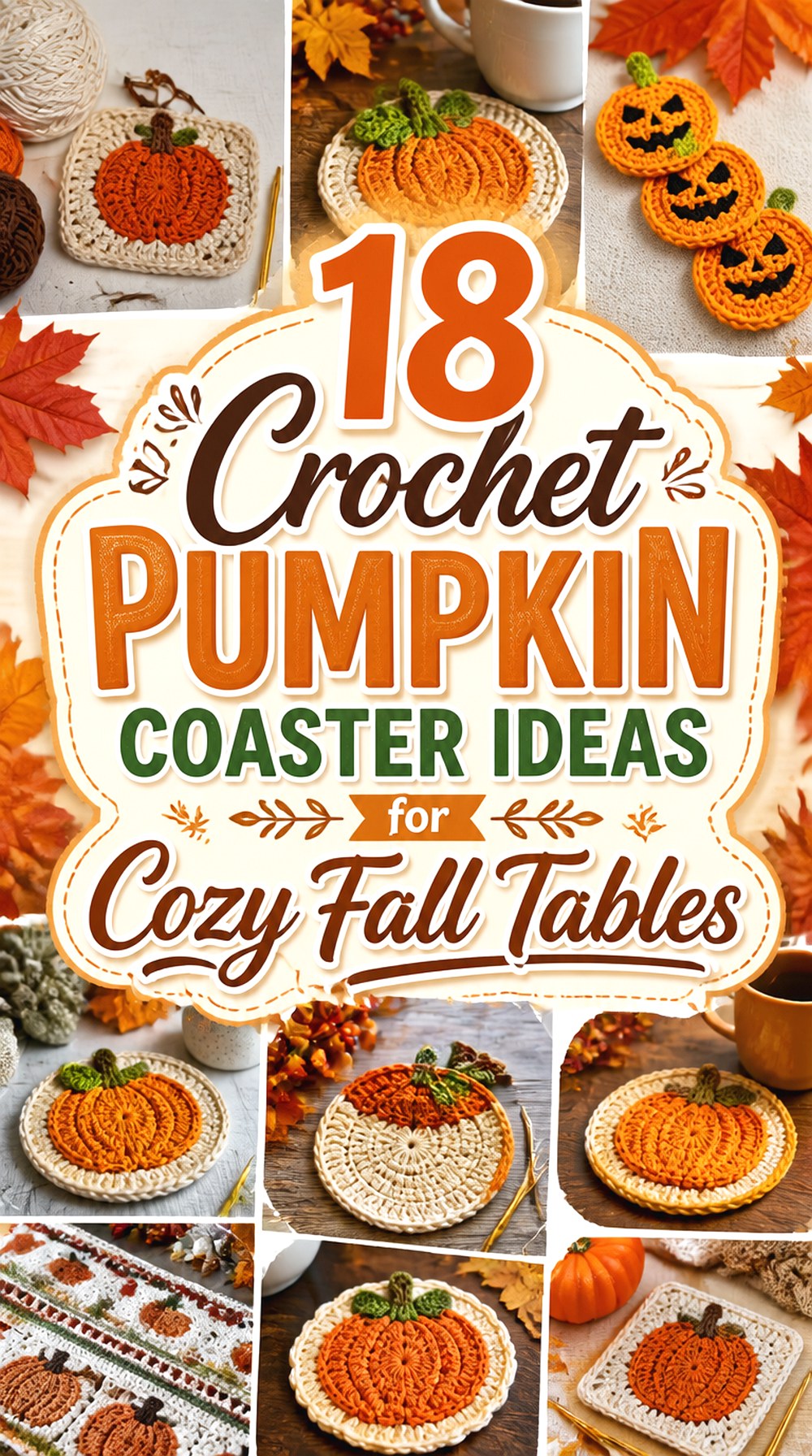
18 Crochet Pumpkin Coaster Ideas for Cozy Fall Tables
Pumpkin coasters can look surprisingly different once you move beyond the basic orange circle. Some designs emphasize a recognizable pumpkin silhouette, while others use texture, colorwork, granny-square framing, dimensional stitches, or even pumpkin-shaped storage. There is also a pie-slice option for a more Thanksgiving-focused table.
These 18 crochet pumpkin coaster ideas are organized around those practical differences. Along with the finished look, consider how flat the center stays under a mug, where stems and leaves sit, how the yarn handles condensation, and whether the project is primarily functional or decorative. A few tutorials teach flat pumpkin motifs rather than coasters specifically; those are clearly identified as adaptations so you can check the finished size and cup stability before using them on a table.
Quick List
- Crochet Two-Shape Pumpkin Coaster Pair
- Crochet Puff-Texture Pumpkin Coaster
- Crochet Rounded Pumpkin Drink Coaster
- Crochet Textured Pumpkin Table Coaster
- Crochet Classic Pumpkin Silhouette Coaster
- Crochet Cotton Pumpkin-and-Leaf Coaster
- Crochet Compact Pumpkin Mug Coaster
- Crochet No-Magic-Ring Pumpkin Coaster
- Crochet Minimal Pumpkin Tea Coaster
- Crochet Pumpkin Pie Slice Coaster
- Crochet Pumpkin Patch Coaster-and-Pot Set
- Crochet Hidden-Leaf Pumpkin Coaster Holder
- Crochet Mosaic Pumpkin Square Coaster
- Crochet Cotton Pumpkin Granny Square Coaster
- Crochet Round Pumpkin Motif Coaster
- Crochet Appliqué-Style Pumpkin Coaster
- Crochet Jack-o’-Lantern Flat Pumpkin Coaster
- Crochet 3D Pumpkin Stitch Coaster
Choose Flatness Before Decorative Detail
A coaster has to do more than look like a pumpkin. The central area should give your usual mug, glass, or cup a reasonably level place to sit. Pronounced ridges, thick knots, raised appliqués, or bulky joins can look attractive but become awkward when they fall directly under the drink.
Before making an entire set, finish one sample and put the cup you actually use on it. Check for rocking, curling edges, and a stem that pushes against the cup base. A coaster can extend well beyond the mug without causing trouble; uneven height beneath the base is usually the more important issue. If a design is primarily decorative, consider reserving it for cool drinkware, a coffee-bar display, or seasonal table accents instead of assuming it will suit every vessel.
Yarn Choice Changes Absorbency, Shape, and Care
Cotton is common in coaster projects because it can absorb condensation and usually gives small tabletop pieces useful stitch definition. Some verified tutorials in this collection specifically use cotton, while others use different fibers or do not make fiber choice central to the design. Follow the creator’s material guidance when you want the closest result.
When substituting yarn, think beyond color. A springy or stretchy yarn may change the final footprint, while a very soft yarn can reduce the crispness of pumpkin lobes and corners. Make one coaster first, let it settle or block as appropriate for the fiber, and compare it with your cup before multiplying the design. Also check the yarn label for washing instructions rather than assuming all handmade coasters can be cared for the same way.
Keep Stems, Leaves, and Faces Outside the Cup Zone
Small stems and leaves are what turn a plain orange shape into a recognizable pumpkin, but their placement affects function. A detail that sticks upward from the outer edge usually causes less trouble than a bulky embellishment placed beneath the mug.
The same principle matters for jack-o’-lantern faces. Flat colorwork or low-profile embroidery is easier to accommodate than buttons, thick felt layers, beads, or glued pieces under the drink. Decorative additions can also change how a coaster washes or dries. None of these yarn projects should automatically be treated as a heat-resistant trivet for cookware; follow the yarn manufacturer’s guidance and use the project for the purpose supported by the tutorial.
1. Crochet Two Shape Pumpkin Coaster Pair
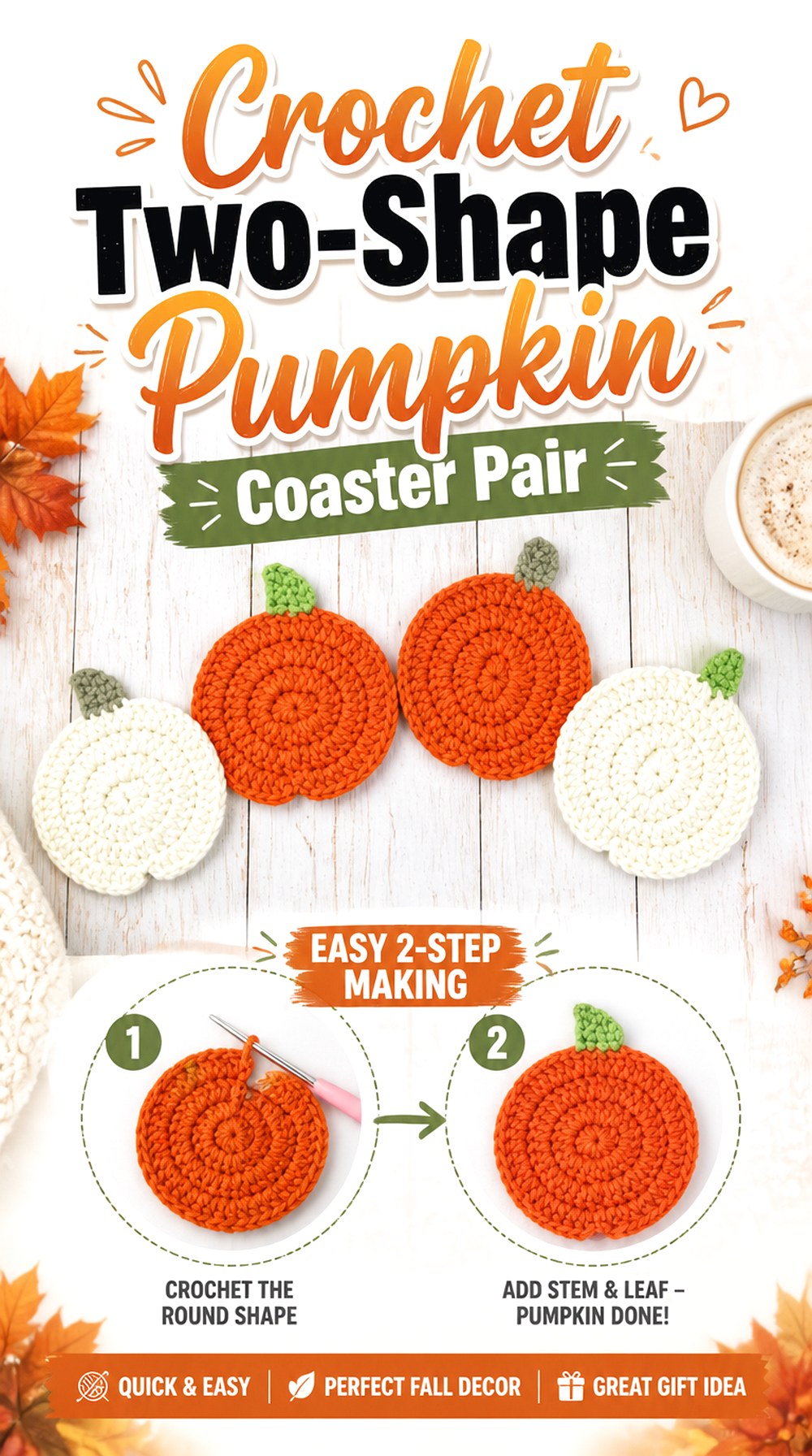
This idea is useful when you want a coordinated coaster set without making every pumpkin identical. Desert Blossom Crafts demonstrates two finished forms in the same tutorial: a short, fuller pumpkin and a taller pumpkin. That gives a table arrangement more variety while keeping the overall style connected.
The difference is more than cosmetic. A wider pumpkin can create a broader-looking base around a mug, while the taller version leaves more of the pumpkin visible above and below a centered cup. Make one of each before choosing which shape you want to repeat across a larger set.
Compare the Cup Footprint With Both Silhouettes
Put the same mug on the two finished shapes and look at how much crochet remains visible around the base. The wider pumpkin may read more clearly from the sides, while a narrow design can show more strongly at the top and bottom. That simple check helps you decide whether a mixed set or one repeated silhouette suits your table better.
Stem Placement Changes the Orientation
These pumpkins are directional rather than perfectly round coasters. Decide whether you want every stem facing the same direction at a dining table or rotated toward the person using each coaster. A consistent orientation gives a formal place-setting look, while mixed directions feel more casual on a coffee table.
Blocking Matters More When Shapes Need to Match
The tutorial references blocking materials, which is especially relevant when making the two silhouettes as a coordinated set. Compare the finished pieces after they have settled rather than judging them only as they come off the hook. Small differences in edge shape are much more noticeable when multiple pumpkins are displayed together.
2. Crochet Puff Texture Pumpkin Coaster

For a coaster that puts stitch texture ahead of a plain pumpkin outline, the Tuba Crochet version is a useful contrast to smoother designs. The project uses layered decorative areas and a defined border, giving the finished surface more visual movement than a simple flat orange disc. The associated project information identifies puff-style texture within the design.
That makes it a strong choice for a fall coffee station where the coaster stays visible even when no drink is present. For everyday use, however, check the center with your own cup and make sure the texture does not cause rocking.
Let Texture Frame the Mug Instead of Fighting It
Raised texture is most useful when the cup base can still settle evenly. After finishing the first coaster, place a flat-bottomed mug at the center and lightly press around the rim. If the mug shifts, examine whether the decorative relief is concentrated beneath the base or mainly outside it.
Color Contrast Can Clarify the Pumpkin Shape
A textured design already has significant visual information, so it does not necessarily need many unrelated colors. Strong contrast between the pumpkin sections, border, and green details can help the shape read clearly. A quieter palette can work too, but check that the texture remains visible rather than disappearing into one indistinct surface.
Original Tutorial and Creator Credit
Creator: Tuba Crochet
3. Crochet Rounded Pumpkin Drink Coaster
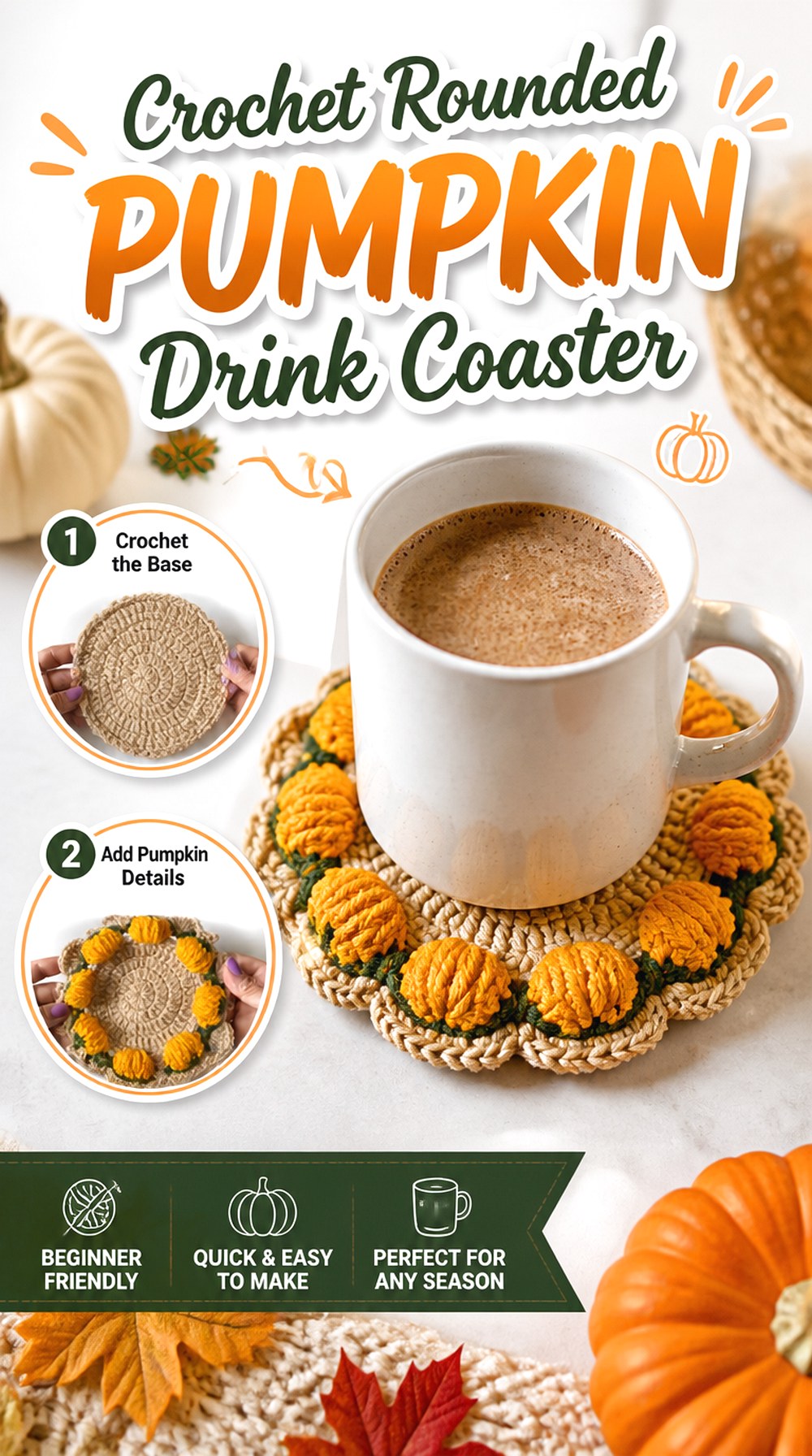
Crochet Mili’s tutorial focuses directly on making a pumpkin-shaped coaster, making it a straightforward option when you want the seasonal image to remain immediately recognizable. The rounded body suits mugs and glasses because the useful portion of the coaster is concentrated around the center instead of extending into long points.
This version works well as the quieter member of a mixed fall coaster set. Pair it with more graphic square, pie-slice, or mosaic designs when you want variation without every piece competing for attention.
A Simple Center Makes Cup Placement Easier
With a rounded design, the practical test is whether the center remains flat as the outer pumpkin shape develops. Check your first finished coaster from table level. If the middle cups upward or the outer edge ripples, correct that sample before repeating the same result several times.
Use the Silhouette to Carry the Seasonal Theme
Because the pumpkin outline already communicates fall, color can be more restrained. Rust, cream, muted orange, mustard, or earthy brown can still feel seasonal without requiring a bright Halloween palette. When changing yarn, remember that a different fiber or weight can also change the finished size and firmness.
Original Tutorial and Creator Credit
Creator: Crochet Mili
4. Crochet Textured Pumpkin Table Coaster

Knitting Love’s pumpkin coaster provides another texture-led option, with the tutorial description highlighting basic crochet techniques, color changes, and visible texture. The result can work well when you want the coaster itself to contribute noticeable autumn detail to a tray or coffee table.
Texture does bring one extra decision: decide whether appearance or a perfectly smooth cup platform matters more. A small amount of relief around the pumpkin can add definition; too much directly beneath a narrow mug base can make the coaster less practical.
Check the Texture From the Side
A top-down photograph can make raised stitches look flatter than they actually are. Once the first coaster is finished, place it on a hard table and look across it horizontally. This quickly reveals any high areas, curled sections, or center bulges that may affect a cup.
Repeat Color Changes Consistently Across a Set
If you make several pieces, decide where each contrasting shade belongs before starting the second coaster. Consistent placement makes the collection feel intentional. If using scrap yarn, keep at least the stem and main pumpkin relationship similar so the pieces still read as one set even when individual shades vary.
Original Tutorial and Creator Credit
Creator: Knitting Love
5. Crochet Classic Pumpkin Silhouette Coaster

Claudetta Crochet’s project keeps the focus firmly on a recognizable pumpkin coaster rather than turning the motif into a square, holder, or dimensional object. That makes it a useful reference for readers who want a traditional flat seasonal accent that can be repeated around a dining table.
A classic silhouette is also easier to combine with patterned dishes than some of the busier colorwork options later in this list. The pumpkin remains visible around the cup without adding a second strong geometric frame.
Judge the Shape With a Mug Already in Place
A pumpkin that looks obvious when uncovered can become almost circular once a large mug hides the center. Place your normal cup on the sample and check whether enough of the lobed edge and stem remain visible. That matters if the coaster is meant to function as decor during actual use.
Keep the Outer Edge From Becoming the Weak Point
Decorative lobes can become floppy when the outer stitches are much looser than the center. When following the tutorial, watch your tension through the shaping areas and examine the finished edge before making multiples. A tidy outline makes a simple design look more deliberate.
Original Tutorial and Creator Credit
Creator: Claudetta Crochet
6. Crochet Cotton Pumpkin and Leaf Coaster

Little Bitty Noggins uses cotton yarn and includes both stem and leaf finishing in this pumpkin coaster tutorial. That combination makes the design especially suitable for readers who want more botanical detail than a stem-only pumpkin while still keeping the body of the project recognizably coaster-shaped.
The leaf adds character when the coaster is uncovered, but it also creates an asymmetrical top edge. Consider how the coaster will sit next to a plate, laptop, or neighboring place setting rather than judging it only in isolation.
Cotton Changes the Practical Feel
The creator specifically lists cotton yarn for the project. Cotton can be appealing where condensation is expected, but the yarn label should still guide washing and drying. If substituting another fiber, make a single sample first because stretch, surface feel, and stitch definition may change.
Give the Leaf Enough Space Beside the Cup
The leaf helps identify the pumpkin, so hiding the entire detail beneath a large mug defeats much of its visual purpose. Before making a set, check where the leaf sits relative to your widest cup base. Ideally the main drinking vessel rests on the pumpkin body while the decorative top remains visible.
Match Leaf Direction for Formal Place Settings
For a dining table, repeated coasters look more organized when stems and leaves follow one orientation. At a casual coffee station, alternating them can feel more like a scattered pumpkin patch. Decide before finishing the whole set so you do not discover afterward that the pieces seem randomly rotated.
Original Tutorial and Creator Credit
Creator: Little Bitty Noggins
7. Crochet Compact Pumpkin Mug Coaster

Sponnie Handiworks offers a direct pumpkin coaster tutorial that works well as a compact seasonal mug accent rather than a larger mug rug or framed square. A smaller-looking format is useful on side tables, narrow desks, and trays where an oversized decorative mat would take up unnecessary space.
The trade-off is straightforward: compact coasters leave less margin around wide drinkware. Make the first piece before committing to a full set and compare the usable center with the cups you intend to place on it.
Small Coasters Need a Real Cup Test
Do not judge suitability from the pumpkin’s total width alone. The stem and outer lobes contribute to the visual measurement but may not support the mug. What matters is whether the flat central area extends beneath the cup base without forcing it onto an uneven edge.
A Compact Format Makes Sets Easier to Display
Several smaller pumpkins can be stacked in a basket, arranged around a drink tray, or distributed across a narrow table without overwhelming the setting. If you make multiple colors, repeat one detail—such as the same stem shade—to keep the collection visually connected.
Original Tutorial and Creator Credit
Creator: Sponnie Handiworks
8. Crochet No Magic Ring Pumpkin Coaster

If the usual center-start technique is the part that makes you hesitate, Curlyzhed offers a pumpkin coaster tutorial specifically designed without a magic ring. The video identifies itself as a step-by-step project for beginners and makes the alternative starting method the central learning feature.
That gives this idea a clear reason to choose it over another rounded pumpkin. The attraction is not a radically different color scheme; it is a different entry point into the construction, which can make the project more approachable for crocheters who prefer to avoid an adjustable loop.
Inspect the Center After the Alternative Start
Any alternative starting method still needs to produce a center that behaves well beneath a drink. Once the coaster is complete, check whether the starting area lies as flat as the surrounding fabric and whether there is an obvious opening that affects appearance or stability.
Choose This for the Starting Method, Not Just the Pumpkin
If you already enjoy magic-ring projects, another tutorial may offer a more distinctive texture or silhouette. This one earns its place because it solves a specific learning preference. That makes it particularly useful when you want a pumpkin coaster while also practicing a different way to begin circular crochet.
Original Tutorial and Creator Credit
Creator: Curlyzhed
9. Crochet No Magic Ring Pumpkin Coaster

Caro-stitched presents a fast, simple pumpkin coaster concept with a clean seasonal form. This version suits a tea tray or small autumn coffee setup where you want the pumpkin identity without a storage holder, square frame, complicated colorwork, or dimensional surface becoming the main attraction.
A visually simple design also gives you more freedom to coordinate the yarn with existing dishes. Instead of adding extra embellishments, let the outline and stem provide the seasonal reference.
Restraint Helps on a Busy Table
Patterned mugs, printed napkins, and fall centerpieces can quickly make a table visually crowded. A simpler coaster acts as a quieter layer beneath those pieces. If your tableware is plain, reverse the strategy and use a stronger pumpkin shade to make the coaster the accent.
Keep Adaptations to One Variable at First
If you want to change color, yarn, and scale, do not change all three on the first sample. Begin with one adjustment and check the finished footprint. That makes it easier to understand whether a size or flatness difference came from the yarn substitution rather than the original construction.
Original Tutorial and Creator Credit
Creator: Caro-stitched
10. Crochet Pumpkin Pie Slice Coaster

A pumpkin pie coaster changes the theme from “pumpkin patch” to “fall dessert table.” OkieGirlBling’n’Things demonstrates a set of pumpkin pie slice coasters, replacing the familiar rounded pumpkin silhouette with a wedge-shaped piece.
That distinction makes this option particularly well suited to Thanksgiving coffee, dessert service, or a pie-themed gathering. Several wedges can also create a playful group arrangement when they are not in use. Because the outline is directional, however, the cup footprint deserves more attention than it would on a conventional round coaster.
The Wide End Is the Important Support Area
When testing the finished piece, look at how your mug sits relative to the triangular form. A cup that reaches too far toward the narrow tip may have less fabric underneath it than expected. Use the finished tutorial dimensions rather than assuming every pie-slice shape will accommodate every mug.
Repetition Creates the Pie Effect
One wedge reads as a slice. Several similarly shaped pieces can suggest portions of a whole pie when arranged together. If that display idea appeals to you, keep the overall dimensions and finishing tension consistent so the slices align visually when grouped.
Dessert Styling Is More Specific Than General Fall Decor
This design has a stronger Thanksgiving and food-table association than a plain pumpkin coaster. That is useful if you want a themed dessert station, but readers wanting a coaster that stays out throughout the entire fall season may prefer one of the simpler pumpkin silhouettes.
Original Tutorial and Creator Credit
Creator: OkieGirlBling’n’Things
11. Crochet Pumpkin Patch Coaster and Pot Set

Brunaticality’s concept pushes the coaster beyond an individual table piece by pairing the pumpkin coasters with a pot-style storage display. The designer describes it as a plant pot that turns into coasters, and the YouTube tutorial covers the pumpkin coaster component.
This makes the set useful when you dislike loose seasonal coasters scattered in a drawer. When stored together, the pieces become part of the fall decor; when needed, they separate for drinks. It is a more involved choice than a single coaster, but the storage idea gives the extra work a functional purpose.
Storage Changes the Project From Flat to Dimensional
The coasters may be the working pieces, but the holder determines how the set looks when not in use. Think about where the completed pot will sit before committing to it. A coffee bar, sideboard, or open shelf gives the holder a reason to remain visible between gatherings.
Keep Every Coaster Similar Enough to Nest
When multiple pieces are stored together, noticeable size differences become more obvious. Compare each coaster with the first completed sample as you work. Consistent tension helps the stack sit more neatly and makes the holder feel like an integrated set rather than a container of unrelated pieces.
Separate Display Materials From Drink-Surface Priorities
The holder and coasters do not necessarily need the same structural qualities. A storage pot benefits from shape retention; a drink coaster needs a comfortable, reasonably flat surface. Follow the creator’s material information for the intended result rather than assuming one yarn substitution will behave equally well in both parts.
Original Tutorial and Creator Credit
Creator: Brunaticality
12. Crochet Hidden Leaf Pumpkin Coaster Holder

Briana K takes the storage idea in a very different direction: the pumpkin itself becomes the holder, while the usable coasters are leaf-shaped pieces concealed inside. The creator’s tutorial explicitly presents pumpkin fall decor with hidden leaf coasters.
This is ideal for someone who wants an object that looks like fall decor before anyone realizes it is a coaster set. It is also a good reminder that “pumpkin coaster” can describe a coordinated pumpkin-themed system rather than requiring every drink mat to have a pumpkin outline.
The Leaves Are the Functional Surfaces
Evaluate the leaf pieces as coasters separately from the decorative pumpkin holder. Their edges, thickness, and finished footprint determine how well they work beneath a drink. The holder solves storage, but it cannot compensate for a coaster that is poorly matched to your cup.
The Pumpkin Needs a Dedicated Display Spot
Unlike a stack of flat coasters that can disappear into a drawer, this design is meant to remain visible. Plan shelf or tabletop space for it before choosing the project. It can be especially useful on a coffee station where coasters need to stay within reach without looking like loose tabletop accessories.
Storage Fit Is Part of the Final Check
The leaf coasters must function when removed and still fit back into the pumpkin as intended. If you change yarn substantially, test that relationship with one completed component before making all the leaves. Changing thickness can affect both coaster feel and how neatly the pieces nest.
Original Tutorial and Creator Credit
Creator: Briana K
13. Crochet Mosaic Pumpkin Square Coaster

HanJan Crochet uses overlay mosaic crochet to place a pumpkin motif inside a square coaster and finishes the piece with an envelope-style border. This is one of the strongest choices in the list if you prefer graphic colorwork over a coaster whose entire outside edge is pumpkin-shaped.
The square format also gives the drink a predictable geometric surface. The visual challenge shifts to color contrast: the pumpkin needs enough separation from the background for the mosaic image to remain readable once a mug covers part of it.
Mosaic Contrast Carries the Pumpkin Image
Lay the yarn choices next to each other before starting. Colors that look different in separate skeins can become surprisingly close once worked into small stitches. A clearer light-dark distinction usually makes a graphic motif easier to read than several shades of similar value.
A Square Border Helps Control the Finished Outline
The envelope border is part of what distinguishes this project from a raw colorwork swatch. Watch the corners and compare opposite sides after finishing. If the border pulls too tightly or flares, the coaster may no longer sit as squarely on the table.
This Motif Can Coordinate With Other Fall Graphics
HanJan Crochet developed the pumpkin as part of a broader autumn motif collection that also includes other seasonal imagery. That makes this a strong direction when you prefer a mixed fall coaster basket rather than six identical pumpkins.
Original Tutorial and Creator Credit
Creator: HanJan Crochet
14. Crochet Cotton Pumpkin Granny Square Coaster

The crochetcakes tutorial places a pumpkin inside a traditional square framework and specifically uses worsted-weight cotton for the demonstrated granny square. Used as a coaster, the square corners create a very different tabletop outline from the free-form pumpkins earlier in the list.
This option is useful if you already enjoy granny-square construction or want a coaster that could later inspire a larger coordinated project. The key planning issue is scale: a square intended for another purpose is only a useful coaster when its finished footprint suits your actual drinkware.
Block the Square Before Judging Its Function
Granny-square corners and edges can look uneven before the piece has settled. Finish and block according to the yarn’s needs, then check the final shape on a flat surface. This gives you a more meaningful size and cup-stability assessment than measuring an unfinished motif.
Center the Pumpkin Under the Cup Deliberately
A mug can hide most of the central motif, especially if the coaster is only slightly larger than the cup. Decide whether you care more about seeing the pumpkin while the drink is in place or revealing it when the mug is lifted. Either can work, but the visual result is different.
Original Tutorial and Creator Credit
Creator: crochetcakes
15. Crochet Round Pumpkin Motif Coaster

Repeat Crafter Me’s pumpkin coaster began as part of a pumpkin granny-square concept, but the coaster stops before the surrounding square is added. The result is a rounded pumpkin motif that can function independently as a coaster, appliqué, or seasonal garland element.
That makes this idea different from the full granny-square version above. Choose it when you like motif-based construction but want the final table piece to retain the pumpkin’s organic outline instead of adding square corners.
Stopping Before the Square Changes the Visual Weight
A surrounding granny-square field makes a pumpkin motif feel graphic and framed. Removing that outer area leaves a lighter-looking object with more negative space around it. Compare the two approaches if you are deciding between a rustic scattered-pumpkin table and a more orderly square coaster set.
The Vine Detail Can Stay Visible Beside a Mug
Repeat Crafter Me includes a separate green vine detail with the pumpkin. Treat that as an outer accent rather than part of the supporting cup area. After finishing, arrange the vine so it does not bunch underneath the mug or create an unnecessary raised spot.
Original Tutorial and Creator Credit
Creator: Repeat Crafter Me
16. Crochet Appliqué Style Pumpkin Coaster

Naztazia’s source tutorial teaches a flat pumpkin appliqué rather than presenting the project specifically as a drink coaster. That distinction matters. The motif can inspire a coaster when its finished size, thickness, and flatness suit your cup, but those functional checks are your adaptation rather than a promise made by the creator.
This is a useful route when you want a flatter, motif-like pumpkin and enjoy projects that can serve more than one decorative role. Make the pumpkin first, then decide whether it is better as a coaster, garland piece, or appliqué based on the actual finished result.
Verify Scale Before Calling It a Coaster
An appliqué only needs to look good on another surface; a coaster needs to support drinkware. Put the completed motif on a table and compare the central area with the cup you intend to use. If the mug extends well beyond the usable body, keep the project in its original decorative role.
Avoid Bulky Additions Beneath the Cup
If you customize the appliqué with extra facial or botanical details, keep the coaster use in mind. Flat embroidery is less intrusive than raised buttons or other dimensional pieces. If decorations make the surface uneven, use the pumpkin as seasonal decor instead of forcing it into a functional role.
Original Tutorial and Creator Credit
Creator: naztazia
17. Crochet Jack o’ Lantern Flat Pumpkin Coaster

KooKoo Crochet’s tutorial makes a flat Halloween pumpkin and then demonstrates decorative uses, including adding a face. The original project is not presented as a drink coaster, so this idea is another deliberate adaptation.
Its advantage is Halloween specificity. A simple pumpkin works throughout fall, while a jack-o’-lantern immediately shifts the table toward October parties and spooky drink stations. If adapting it for coaster use, keep the face low-profile and confirm the finished pumpkin gives your mug enough stable central space.
Keep the Face Flat for Drink Use
The source includes separate decorating materials for creating the final Halloween character. For a coaster adaptation, bulky felt, glue buildup, clips, or other raised components can interfere with a mug. Consider a flat yarn-based face treatment instead, or leave the central cup area plain.
Halloween Specificity Can Be an Advantage
This is not the most versatile option for September-through-November decorating, but it can be one of the clearest choices for a Halloween party. Pairing several face variations around a drink station can create personality without needing to alter the underlying flat-pumpkin construction.
Check the Project Before Changing Its Purpose
The tutorial’s intended uses are decorative. Once you finish the crochet portion, test it on the table before adding anything permanent. If it is too small or uneven beneath your cups, preserve it as the flat pumpkin decoration it was designed to be.
Original Tutorial and Creator Credit
Creator: KooKoo Crochet
18. Crochet 3D Pumpkin Stitch Coaster

Mushyy Crochet takes the pumpkin theme in the most texture-focused direction in this collection. The project is specifically categorized as a pumpkin coaster and uses the creator’s dimensional Pumpkin Stitch concept, producing a more sculptural surface than a standard flat silhouette.
This is a good choice when the stitch effect itself is what you want to showcase. It is also the design where cup stability deserves the most deliberate testing: dimensional texture may be visually impressive, but the finished coaster still needs to suit the base of the drinkware you plan to place on it.
Dimensional Texture Needs a Stability Check
Finish one coaster before committing to a set and place different cups on the center. A broad mug base may bridge textured areas differently from a narrow glass. Choose the vessels that sit most comfortably rather than assuming the coaster will behave identically under everything.
Strong Stitch Definition Is Part of the Design
When texture is the main visual feature, yarn that obscures stitch definition can change the character of the finished piece. If substituting materials, compare a small sample with the creator’s finished appearance and decide whether you still get the dimensional pumpkin effect you wanted.
Let This Be the Statement Coaster
A strongly textured coaster does not need many additional embellishments. Keeping stems, color changes, and surrounding table decor restrained can let the raised crochet surface carry the theme. This works particularly well with simple mugs that do not compete with the stitch detail.
Which Crochet Pumpkin Coaster Style Should You Choose?
For the clearest traditional pumpkin shape, start with the Desert Blossom Crafts, Crochet Mili, Claudetta Crochet, Little Bitty Noggins, Sponnie Handiworks, or Caro-stitched options. The no-magic-ring design from Curlyzhed is useful when the starting technique matters to you.
Choose the pie slice for Thanksgiving-specific styling, or the KooKoo Crochet adaptation for a stronger Halloween look. The crochetcakes and HanJan Crochet squares make more geometric table accents, with HanJan’s option standing out for mosaic colorwork. Brunaticality and Briana K are the better choices when storage should become part of the fall display. For maximum surface interest, compare Tuba Crochet’s decorative texture with Mushyy Crochet’s more dimensional Pumpkin Stitch approach.
Conclusion
The right crochet pumpkin coaster depends on what you want to notice first. Choose a simple pumpkin silhouette for an adaptable fall table, a pie slice or jack-o’-lantern for a more specific holiday theme, a granny or mosaic square for cleaner geometry, or a dimensional stitch design when texture should be the focal point. The coaster-holder projects are especially useful when seasonal storage matters as much as the individual pieces.
Whichever direction you choose, make one sample before committing to a full set and check it with your actual drinkware for flatness, scale, and detail placement. Use the original tutorials linked with each idea for the creators’ exact construction instructions.
Frequently Asked Questions
What yarn should I use for crochet pumpkin coasters?
There is no single fiber that every tutorial in this list requires. Cotton is specifically used in some projects and is popular for drink coasters because it can handle condensation well, while other designs use different yarns for their particular construction or texture. If you substitute yarn, check the finished size, firmness, care instructions, and cup stability before making an entire matching set.
How can I stop a crochet pumpkin coaster from curling?
First identify where the distortion appears. A center that cups, an outer edge that ripples, and a stem that twists are different problems. Compare your tension and finished shape with the source tutorial rather than automatically adding stitches or an extra border. Appropriate blocking may help some fibers and constructions, but always follow the care guidance for the yarn you actually used.
Can a crochet pumpkin appliqué be used as a coaster?
Sometimes, but not automatically. A flat pumpkin appliqué can work as a coaster only if the completed motif is large enough, lies reasonably flat, and provides stable support for your cup. The Naztazia and KooKoo Crochet entries in this list are presented as adaptations for that reason. Finish the original motif first and test it before deciding on its final use.
Are crochet pumpkin coasters safe to use under very hot cookware?
Do not assume a crochet drink coaster is a heat-resistant trivet. Fiber content, thickness, construction, and the temperature of the object all matter. A tutorial showing the piece beneath a mug does not automatically establish that it is appropriate beneath hot pans, baking dishes, or cookware. Use an item designed and rated for that purpose when substantial heat protection is required.
How do I make a set of pumpkin coasters look consistent?
Make one finished coaster your reference rather than comparing every new piece only with the pattern photo. Check overall width, stem direction, edge shape, color placement, and how the coaster lies after finishing. For granny-square or mosaic versions, compare the corners as well. Small variations are normal in handmade work, but checking each piece as you go prevents differences from accumulating across a large set.
Which pumpkin coaster style is easiest to coordinate with other fall decor?
A simple flat pumpkin silhouette is usually the most flexible because the shape carries the seasonal theme without demanding a specific Halloween or Thanksgiving setting. Cream, rust, muted orange, brown, mustard, and earthy green can broaden the look beyond bright Halloween colors. Pie slices and jack-o’-lantern faces make a stronger holiday statement, while square mosaic designs work particularly well with graphic or modern fall decor.


