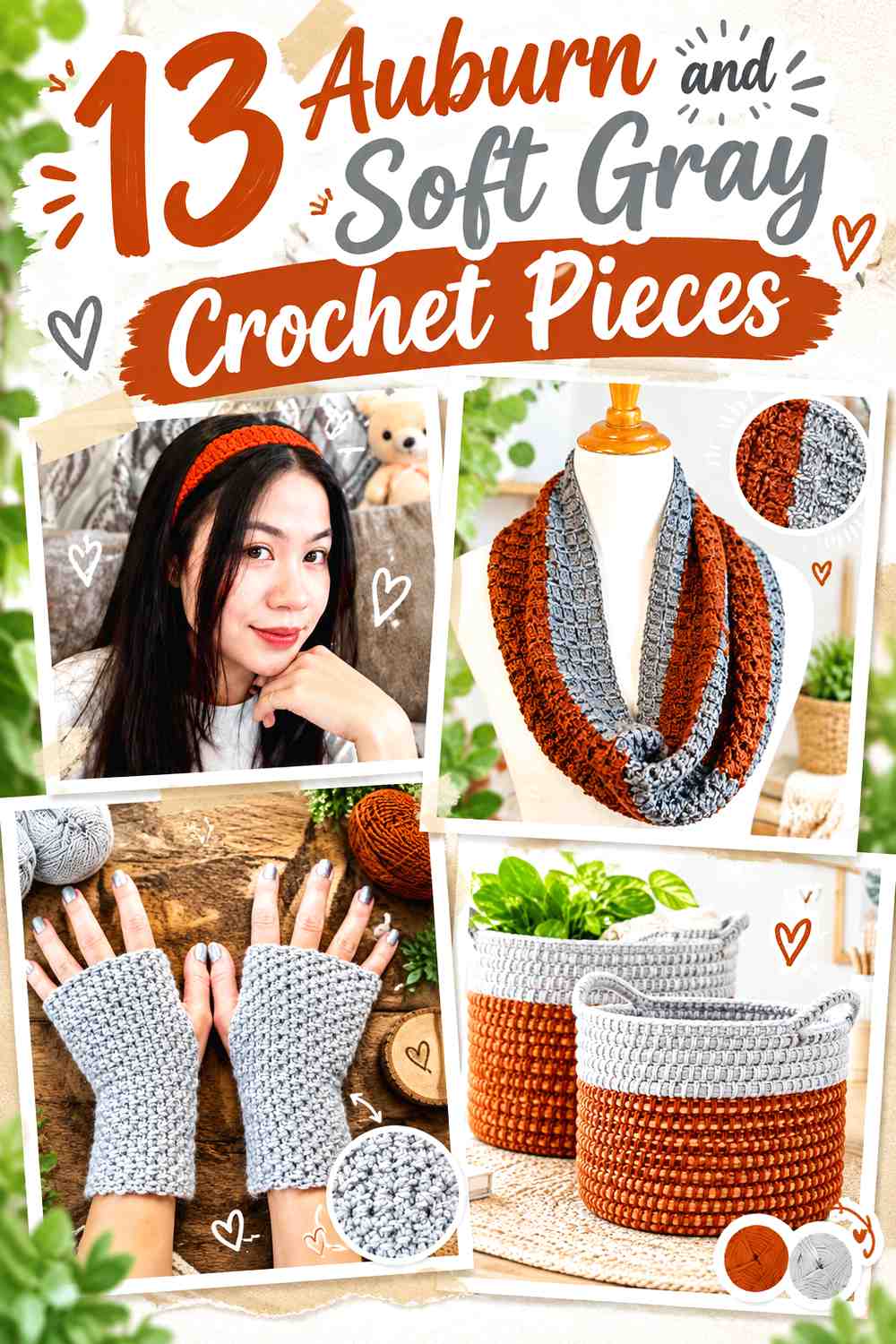
13 Auburn and Soft Gray Crochet Pieces
Auburn and soft gray create a useful crochet pairing because the two shades can take very different visual roles. Auburn supplies the warmer and usually stronger color presence, while soft gray can open up the design, separate textured areas, or keep a large crochet surface from becoming too dark.
The balance does not need to stay the same from project to project. Auburn can dominate a cardigan while gray defines the cuffs, but the same palette can be reversed on a pillow, basket, or hat. On smaller pieces, dividing the colors into clear blocks often works better than using many narrow changes.
These 13 crochet pieces explore different ways to distribute auburn and soft gray across garments, accessories, motifs, and home decor without introducing unnecessary extra colors.
Quick List
- Auburn And Soft Gray Crochet Cardigan
- Auburn And Soft Gray Crochet Cushion Cover
- Auburn And Soft Gray Crochet Tote Bag
- Auburn And Soft Gray Crochet Scarf
- Auburn And Soft Gray Crochet Beanie
- Auburn And Soft Gray Crochet Basket
- Auburn And Soft Gray Crochet Shawl
- Auburn And Soft Gray Crochet Vest
- Auburn And Soft Gray Crochet Fingerless Gloves
- Auburn And Soft Gray Crochet Crossbody Bag
- Auburn And Soft Gray Crochet Cowl
- Auburn And Soft Gray Crochet Beret
- Auburn And Soft Gray Crochet Headband
Decide Whether Auburn or Soft Gray Should Lead the Crochet Piece
Auburn usually attracts more attention when paired with a quiet gray, so it does not always need half of the surface to feel important. A gray-dominant piece with auburn cuffs, borders, straps, or motif centers can still read clearly as an auburn-and-gray design.
For a richer result, reverse the hierarchy. Let auburn cover the main cardigan panel, scarf length, pillow face, or hat crown, and reserve soft gray for structural details. This keeps the palette warm without losing separation between sections.
Before starting a larger piece, place the actual yarns side by side. If your auburn and gray are close in lightness, use larger blocks rather than relying on tiny details that may merge from a distance.
Use Soft Gray to Separate Auburn Crochet Texture
Gray is especially useful around areas where crochet texture needs breathing room. An auburn cable-like texture, raised motif, ribbed section, or cluster pattern can become visually dense if every surrounding area uses the same strong shade.
Soft gray borders, joins, cuffs, or neighboring panels can create separation without introducing a bright competing color. The reverse can also work: an auburn border around a broad gray field creates a clear frame while leaving most of the piece visually quiet.
1. Auburn And Soft Gray Crochet Cardigan
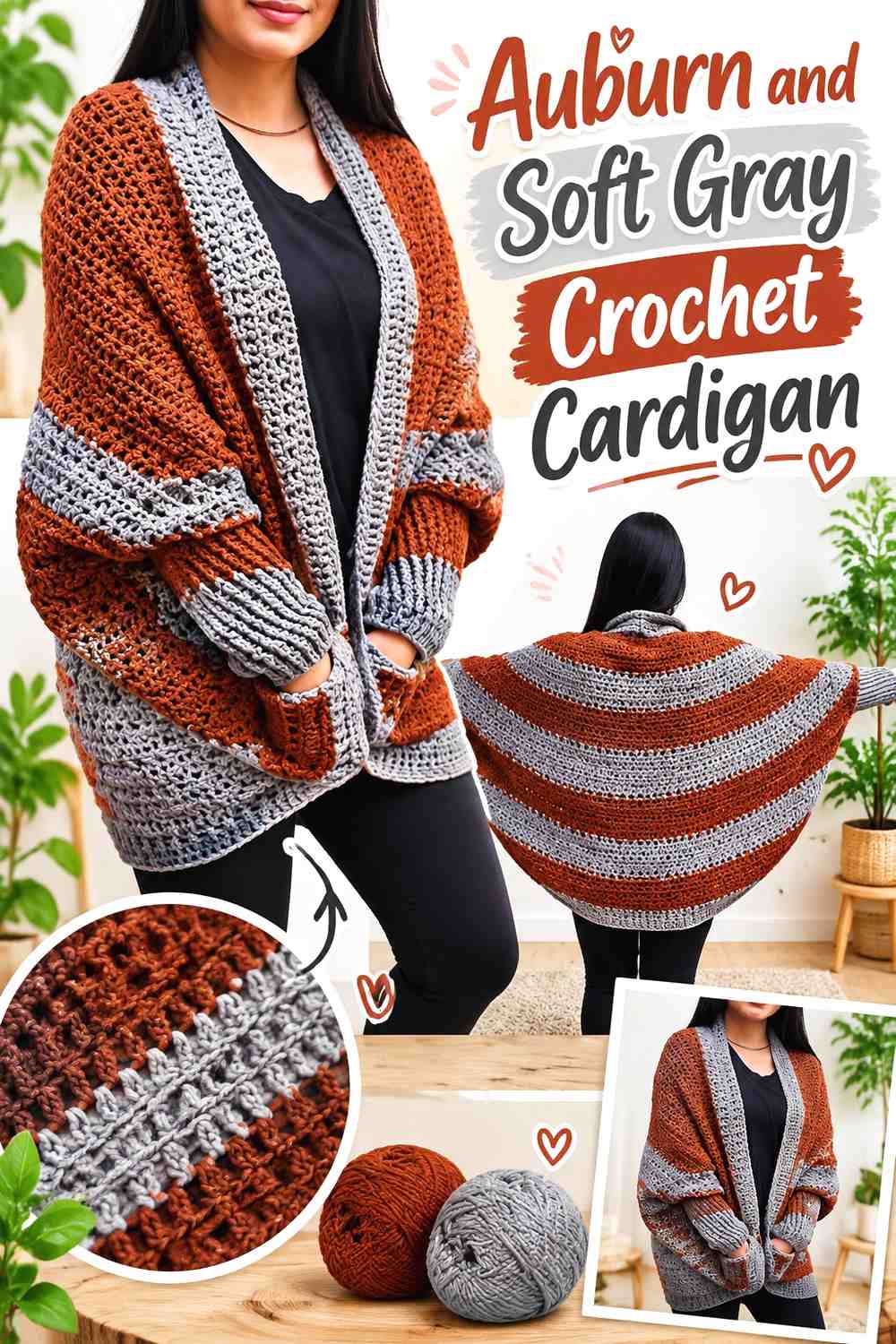
A cardigan gives auburn enough room to become the unmistakable main color while soft gray handles the finishing details. Auburn can cover the back and front panels, with gray appearing on cuffs, neckline edging, and the lower hem. For a lighter version, reverse the balance and use auburn only where the garment changes structure.
Let Auburn Carry the Main Crochet Cardigan Panels
Keeping auburn continuous across the back and most of the front creates one strong visual field. This approach is especially useful when the cardigan already contains noticeable stitch texture because frequent color changes could make the body look fragmented.
Before finishing, place the cardigan panels together and check how much auburn remains visible once the edging is added.
Use Soft Gray to Define Auburn Crochet Cardigan Cuffs and Edges
Soft gray works well on cuffs because it creates a quieter transition at the end of an auburn sleeve. Repeating gray around the neckline or front opening connects the sleeve detail to the body.
Keep the gray edging narrower if auburn is meant to remain clearly dominant.
Creator Credit: Nirvana Crochet
2. Auburn And Soft Gray Crochet Cushion Cover

A cushion can handle a more balanced split because the broad front face keeps both colors visible. Auburn can form the central field while soft gray creates geometric lines or an outer frame. Alternatively, gray can dominate the face with auburn appearing in concentrated interlocking sections.
Keep Auburn Broad Enough on the Crochet Cushion Face
If auburn is your focal color, give it more than a few narrow lines. A substantial center or repeating auburn block keeps the warmer color visible once the cushion is placed among other furnishings.
Large auburn areas can also prevent complicated stitch texture from becoming visually broken by too many color changes.
Let Soft Gray Separate Auburn Crochet Cushion Geometry
Soft gray can sit between auburn sections to make geometric or interlocking texture easier to distinguish. If your two yarns have similar value, increase the size of the gray areas rather than relying on very thin outlines.
A gray outer edge can also frame the warmer center without adding a third neutral.
Creator Credit: Blue Star Crochet | Veronika Cromwell
3. Auburn And Soft Gray Crochet Tote Bag
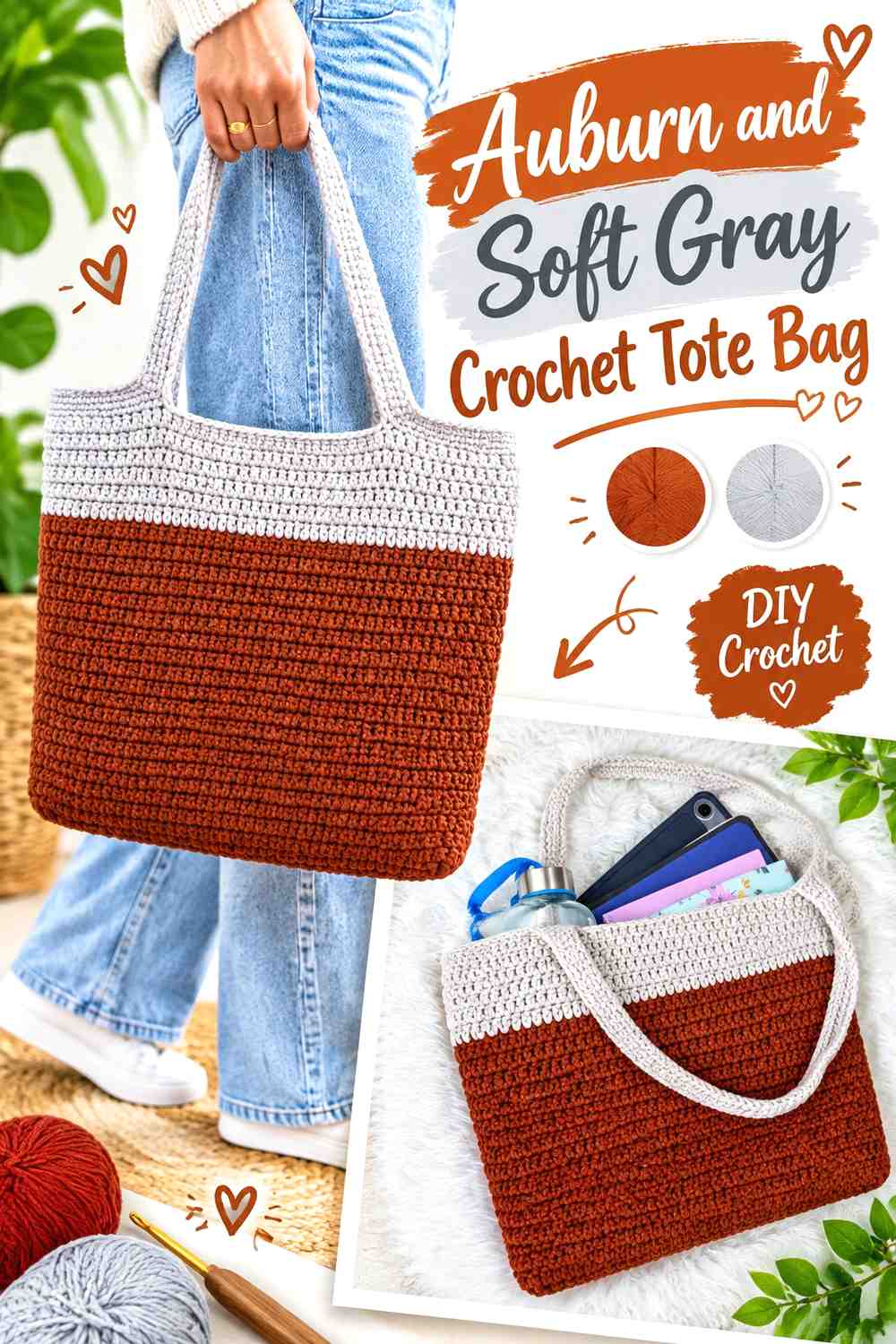
A tote offers natural color zones at the base, body, handles, and upper edge. Soft gray can cover most of the body while auburn forms the base and handles, giving the stronger shade two repeated structural roles.
Let Soft Gray Open Up the Crochet Tote Body
A broad gray body creates a quieter field for visible crochet texture. It also gives auburn handles or lower sections more contrast than they would have against another warm shade.
If the body includes openwork, check the gray against anything likely to show through the fabric before committing to the final arrangement.
Connect Auburn Crochet Tote Handles With an Auburn Base
Repeating auburn at the top and bottom of the tote keeps the warm shade distributed instead of concentrating it in one isolated spot.
If the base is mostly hidden when the bag is carried, repeat a small auburn band near the opening so the palette remains visible from the front.
Creator Credit: Hopeful Turns
4. Auburn And Soft Gray Crochet Scarf
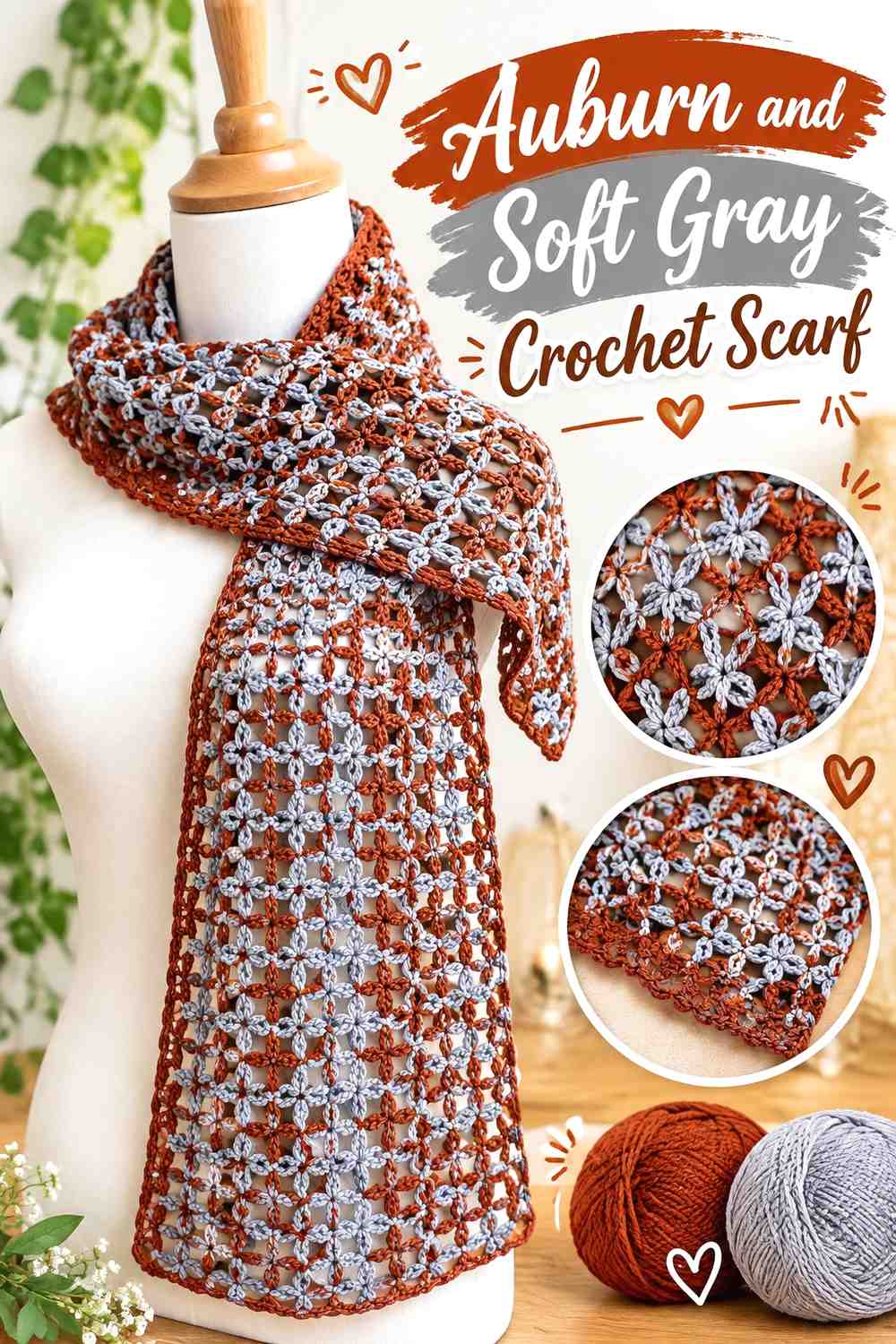
A scarf provides enough length for large-scale blocking. Auburn and soft gray can alternate in broad sections, or auburn can carry most of the length while gray appears near the ends. Wide blocks usually show the relationship more clearly than many narrow stripes.
Stretch Auburn Through Most of the Crochet Scarf
A long auburn center keeps the scarf warm-looking and visually continuous. It also allows textured stitches to repeat without being interrupted by constant color changes.
When the scarf wraps around the neck, some sections disappear from view, so make the auburn area long enough to remain visible in several arrangements.
Use Soft Gray at the Auburn Crochet Scarf Ends
Gray ends give the scarf a clear finish and prevent the darker warm shade from occupying the entire visible length.
For stronger repetition, use similar amounts of gray at both ends. If you prefer asymmetry, make the difference deliberate enough to look planned.
Creator Credit: Handwork diy
5. Auburn And Soft Gray Crochet Beanie
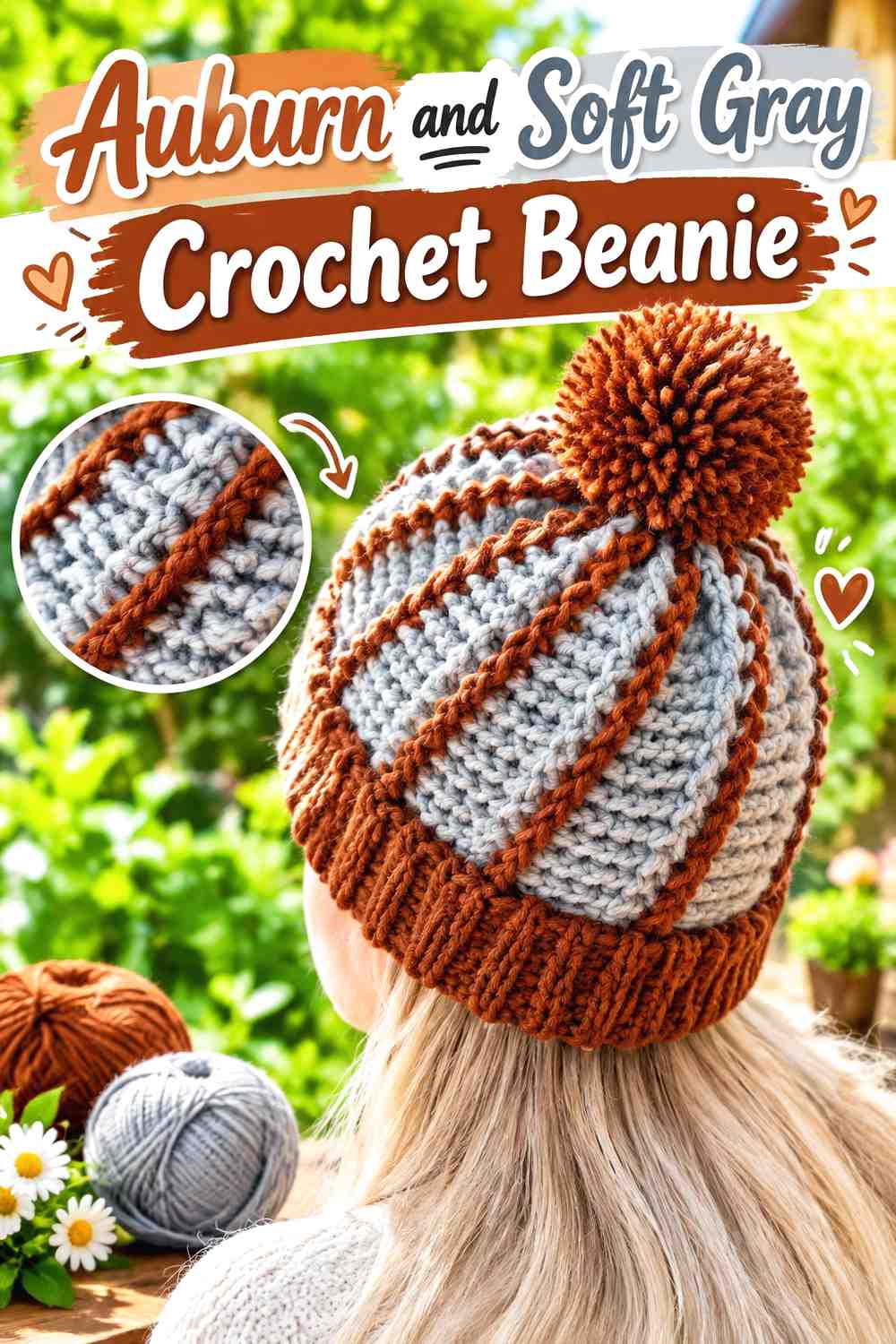
A beanie has limited space, making a simple two-part arrangement useful. Auburn can cover the crown and main body while soft gray sits around the lower band. The color division follows the shape of the hat rather than creating unnecessary stripes.
Keep Auburn Across the Crochet Beanie Crown
Using auburn from the crown through most of the body establishes it as the main shade from every viewing angle.
If the hat contains raised or ribbed texture, a continuous auburn field gives that texture more visual consistency than alternating narrow bands.
Use Soft Gray Around the Auburn Crochet Beanie Edge
A soft gray lower section creates a quieter finish around the face and clearly separates the band from the auburn crown.
If the lower portion folds upward, make sure enough gray is used for the color to remain visible after folding.
Creator Credit: Di’s Handicrafts (Crochet and Knitting)
6. Auburn And Soft Gray Crochet Basket
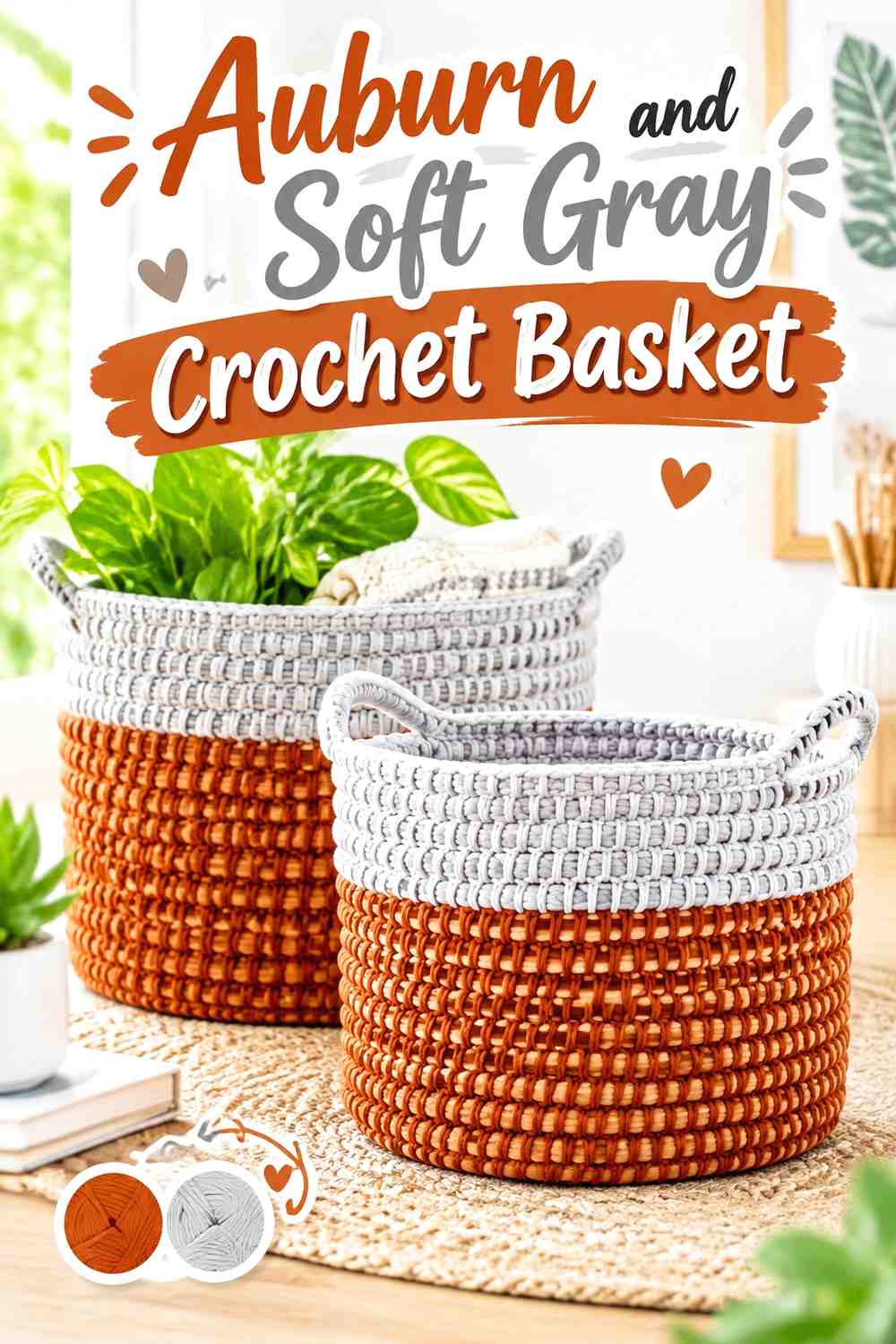
A basket can reverse the usual hierarchy by placing soft gray across the largest wall area while auburn creates one strong lower band. The arrangement keeps the piece neutral-heavy but still gives auburn enough space to define the shape.
Build the Crochet Basket Wall in Soft Gray
Gray across most of the side wall lets the basket’s stitch texture remain the main surface detail. It also makes the basket easier to coordinate with surrounding neutral decor without claiming the color will suit every room.
Avoid adding extra gray variations unless a tonal effect is intentional. One soft gray keeps the two-color concept clearer.
Ground the Soft Gray Crochet Basket With Auburn
An auburn base or lower band creates visual weight near the bottom. Because auburn is the more assertive color in this pairing, it can remain a minority shade and still be noticeable.
If the auburn section begins to dominate, move the color transition lower rather than adding more gray elsewhere.
Creator Credit: One Dog Woof
7. Auburn And Soft Gray Crochet Shawl

A shawl can move gradually from one color to the other. Soft gray can begin near the neckline and give way to a broader auburn outer section, creating more warmth as the piece expands.
Begin the Crochet Shawl With Soft Gray Near the Center
Starting with gray keeps the smaller central portion quiet and allows later auburn sections to become increasingly noticeable.
This arrangement also helps when the central stitchwork is detailed, since gray provides a softer visual background for texture.
Expand Auburn Across the Crochet Shawl Outer Sections
As the shawl widens, auburn can occupy progressively larger areas. The stronger color then appears across the most expansive part of the finished piece.
If the shawl has decorative edging, decide whether auburn should continue through that detail or whether a final gray edge would create better separation.
Creator Credit: Bag-O-Day Crochet
8. Auburn And Soft Gray Crochet Vest
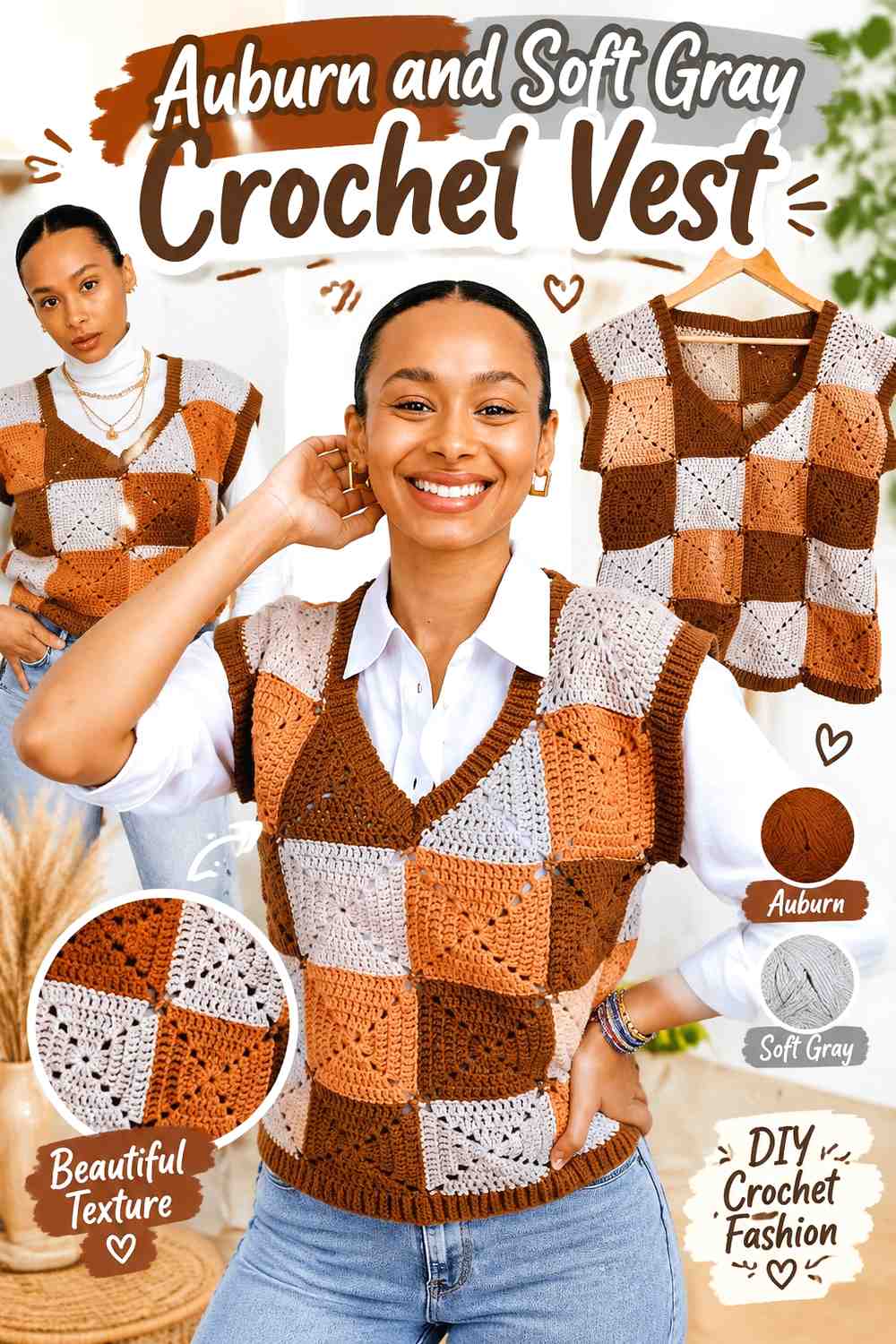
A vest gives the palette several placement options because there are no sleeve cuffs competing for accent color. Auburn can dominate the torso, while gray defines the neckline, armholes, or lower edge.
Let Auburn Cover the Main Crochet Vest Body
Auburn across the torso gives the vest a clear warm direction. Keeping the larger panel areas one color also prevents borders around the armholes and neckline from becoming visually lost.
If motifs are involved, repeat auburn consistently rather than allowing its proportion to vary dramatically from square to square.
Use Soft Gray Around Auburn Crochet Vest Openings
Gray can frame the neckline and armholes, connecting separate edges through one consistent finishing color.
Keep the border width similar around related openings unless you intentionally want one area to carry more visual weight.
Creator Credit: Crochet With Aisha
9. Auburn And Soft Gray Crochet Fingerless Gloves

Fingerless gloves divide naturally between cuffs and hand sections. Auburn can cover the hand while soft gray defines the wrists, creating an easy-to-repeat layout across the pair.
Keep Auburn on the Crochet Glove Hand Section
Using auburn across the larger upper portion makes it the obvious lead color. It also gives textured stitches enough uninterrupted space to remain noticeable.
Compare both gloves as you work so the auburn coverage stays visually consistent across the pair.
Give Auburn Crochet Gloves Soft Gray Cuffs
Gray cuffs create a defined boundary at the wrists without competing heavily with the warmer hand section.
If the cuffs are texturally different from the rest of the glove, the gray reinforces that structural shift. Avoid adding another gray section unless it serves a clear balancing purpose.
Creator Credit: naztazia
10. Auburn And Soft Gray Crochet Crossbody Bag

A crossbody bag can make the strap part of the color design. Soft gray can dominate the bag body while auburn appears in motif centers, joining lines, edging, and the strap.
Use Soft Gray Across the Crochet Crossbody Bag Body
A gray-majority body gives repeated motifs or texture room to show without making the accessory too color-dense.
If several motifs are joined together, keep the gray placement consistent so the individual pieces read as one bag rather than unrelated squares.
Carry Auburn Through the Soft Gray Crochet Crossbody Strap
An auburn strap creates a long line of warm color beyond the gray bag itself. Repeat auburn somewhere on the body so the strap does not look visually disconnected.
Motif centers, an upper edge, or controlled joining details can provide enough repetition without turning the bag auburn-dominant.
Creator Credit: MJ’s Off The Hook Designs
11. Auburn And Soft Gray Crochet Cowl
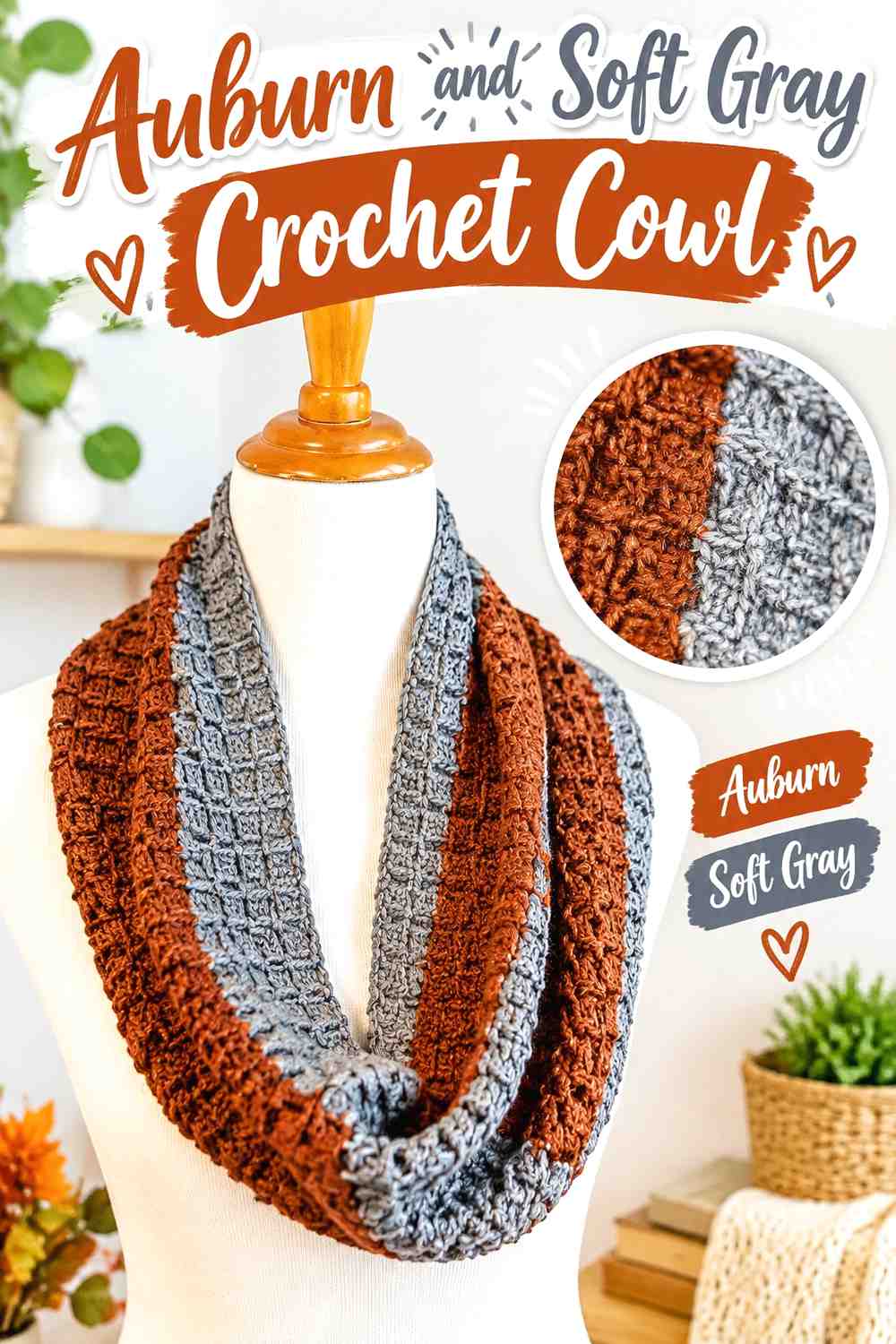
A cowl works well with two broad horizontal zones. Auburn can occupy the lower portion while gray sits closer to the upper edge, or the colors can be reversed depending on which one you want to emphasize.
Keep Soft Gray Visible on the Crochet Cowl Upper Section
A generous gray area near the top keeps the softer shade visible even if the fabric folds or bunches when worn.
Avoid making the gray section so narrow that it disappears completely once the cowl settles around the neck.
Give Auburn a Broad Crochet Cowl Base
A substantial auburn lower section gives the accessory enough warm color to balance the gray above it.
Because the cowl is compact, two large blocks usually communicate the palette more clearly than repeated thin auburn-and-gray stripes.
Creator Credit: Fiber Flux
12. Auburn And Soft Gray Crochet Beret
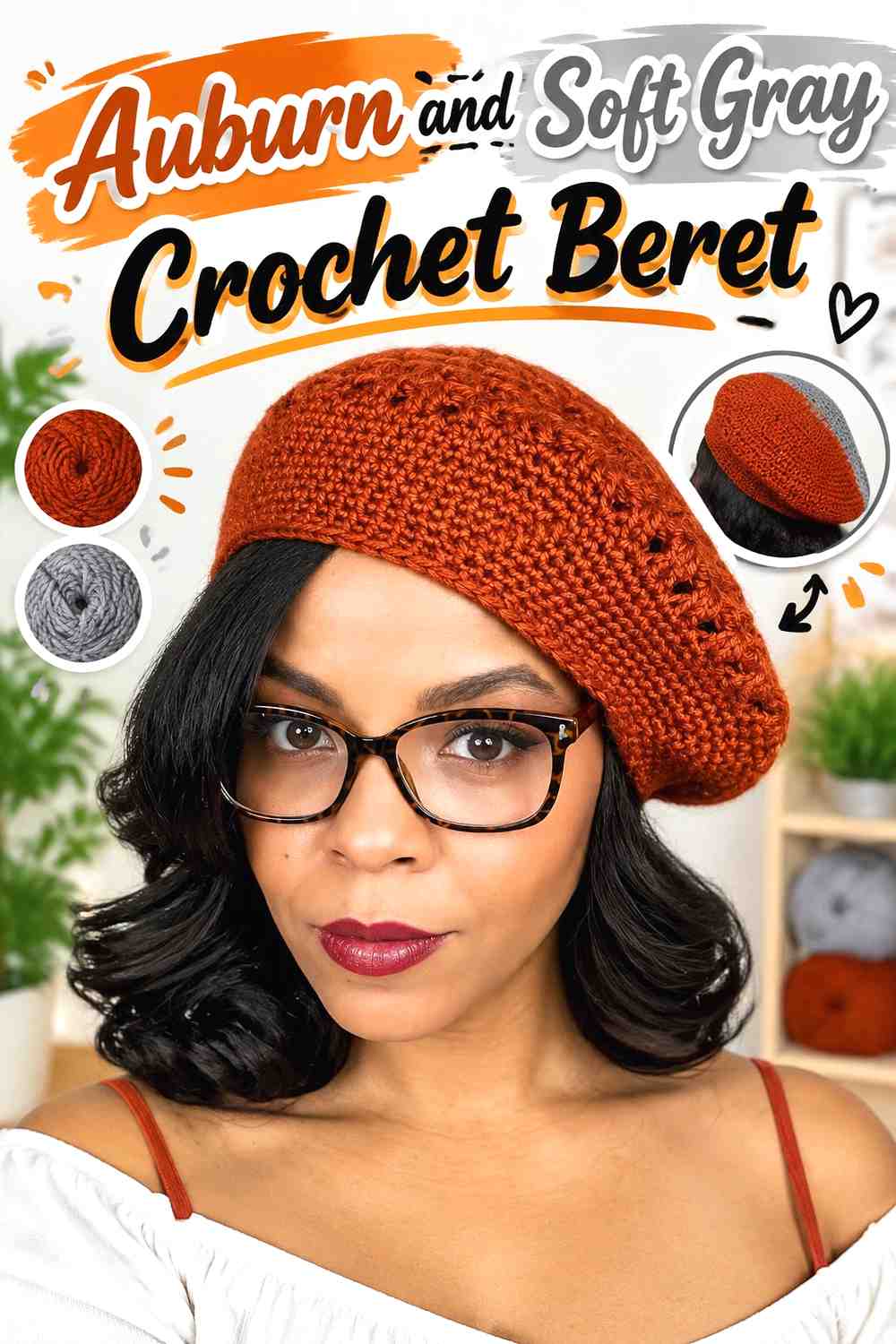
A beret provides a broad crown and narrower lower band, making color roles straightforward. Auburn can occupy most of the crown while soft gray frames the fitted edge.
Spread Auburn Across the Crochet Beret Crown
Auburn across the wide upper portion ensures the main color remains visible from the front, side, and top.
This placement is especially effective when the crown contains repeated stitch texture because one consistent color prevents the surface from becoming overly busy.
Finish the Auburn Crochet Beret With a Soft Gray Band
A gray band forms a quiet edge around the stronger auburn crown. Since the band encircles the entire hat, only a modest amount of gray is needed for it to look intentional.
Keep the transition clean rather than inserting several alternating rows unless a striped effect is specifically desired.
Creator Credit: Littlejohn’s Yarn
13. Auburn And Soft Gray Crochet Headband

A headband has the smallest surface in this collection, so the palette benefits from restraint. Soft gray can dominate the band while auburn appears at a center overlap, twist, border, or single color block.
Let Soft Gray Lead the Crochet Headband Surface
A gray-majority band gives ribbing or other texture enough uninterrupted room to show. It also prevents a small accessory from becoming visually crowded.
If gray is meant to dominate, use it across most of the circumference rather than splitting the band into many equal blocks.
Concentrate Auburn at the Soft Gray Crochet Headband Focal Point
Use auburn around a center feature or other structural detail to create one controlled warm accent.
Because the headband is narrow, a small auburn area can have more impact than expected. Add more only if the first accent becomes difficult to see once the piece is worn.
Creator Credit: Molina DIY
Comparing Auburn and Soft Gray Crochet Color Placement
For auburn-dominant pieces, the cardigan, scarf, beanie, vest, gloves, and beret provide broad surfaces where the warm shade can stay uninterrupted. Soft gray works most effectively around structural boundaries such as cuffs, necklines, borders, bands, and hems.
For gray-dominant pieces, the basket, crossbody bag, tote, and headband allow auburn to become a smaller but still noticeable accent. Concentrating auburn in bases, straps, handles, motif centers, or focal sections prevents the quieter gray field from looking disconnected from the stronger color.
The cushion, shawl, and cowl can support a more balanced relationship. Their broad or repetitive surfaces give both shades enough room to remain visible without requiring frequent color changes.
Conclusion
Auburn and soft gray work particularly well when each color has a clear visual role.
Choose an auburn-dominant layout when you want the crochet piece to retain a warmer overall appearance. Use gray for cuffs, edges, bands, borders, or other structural breaks that need definition without adding another strong color.
Choose a soft-gray-dominant layout when you want auburn to function as the focused accent. Straps, handles, motif centers, basket bases, borders, and focal sections provide enough space for auburn to remain noticeable without covering most of the project.
Whichever balance you choose, compare the actual yarns before committing to a large piece. Preserving clear color roles and useful placement matters more than matching one exact interpretation of “auburn” or “soft gray.”
Frequently Asked Questions
Should auburn or soft gray dominate a crochet piece?
Either can dominate. Auburn creates a warmer, stronger overall color field, while soft gray produces a quieter base that lets smaller auburn details become focal points. Choose the hierarchy according to the finished item rather than automatically dividing the colors equally.
Where should soft gray go in an auburn crochet garment?
Cuffs, necklines, armhole borders, hems, front edging, and other structural boundaries are useful locations. These areas give gray a clear purpose while leaving the larger auburn panels uninterrupted.
How can I keep auburn and soft gray crochet from looking flat?
Use differences in placement as well as color. Let one shade cover the main field and use the other around texture changes, motif centers, borders, cuffs, or joins. If your yarns are similar in value, larger color areas may provide clearer separation.
Can auburn and soft gray work equally in one crochet piece?
Yes, particularly on cushions, cowls, shawls, and geometric motif projects. Use deliberate blocks or repeated sections so the equal balance looks planned rather than randomly distributed.
What can replace soft gray in this crochet palette?
Choose another restrained neutral that preserves the relationship you want with auburn. If gray is supposed to be the quieter or lighter shade, keep that role intact when selecting a substitute.
What can I use instead of auburn?
A muted rust, warm reddish brown, deep terracotta, or similar warm shade can fill the same role if it keeps enough distinction from the soft gray. Compare the yarns directly rather than relying only on their color names.
How do I check whether auburn and soft gray have enough contrast?
Place the yarns side by side under normal lighting and view them from a short distance. A grayscale photo can also help reveal their light-and-dark relationship. If the values are very close, use larger blocks instead of tiny motifs or narrow outlines.


