15 Cinnamon and Cool Blue Crochet Aesthetic Ideas
Cinnamon and Cool Blue bring opposite temperature directions into the same crochet palette. Cinnamon contributes an earthy orange-brown warmth, while Cool Blue adds a calmer blue counterpoint. Used together, they can create anything from a Cinnamon-led autumn look to a blue-dominant scheme with restrained warm accents.
The main decision is not simply whether the colors coordinate, but how much visual area each one receives. Cinnamon can define borders, cuffs, motif centers, straps, or broad garment panels. Cool Blue can become the main field, separate warmer sections, or highlight stitch texture when a quieter background is useful.
These 15 ideas change the dominance, supporting neutrals, and placement of Cinnamon and Cool Blue across different crochet items. The linked tutorials support the construction concepts; the proposed color schemes are independent palette adaptations.
Quick List
- Cinnamon Cool Blue And Cream Crochet Blanket
- Cinnamon And Cool Blue Crochet Cardigan With Oatmeal
- Cool Blue Cinnamon And Ivory Crochet Granny Square Bag
- Cinnamon And Cool Blue Crochet Textured Pillow With Stone
- Cool Blue And Cinnamon Crochet Beanie With Charcoal
- Cinnamon And Cool Blue Crochet Scarf With Mist Gray
- Cool Blue And Cinnamon Crochet Cowl With Camel
- Cinnamon And Cool Blue Crochet Hooded Vest With Ecru
- Cool Blue And Cinnamon Crochet Tank Top With Warm White
- Cinnamon And Cool Blue Crochet Hexagon Cardigan With Cream
- Cool Blue And Cinnamon Crochet Market Bag With Sand
- Cinnamon And Cool Blue Crochet Textured Headband With Oatmeal
- Cool Blue And Cinnamon Crochet Storage Basket With Clay
- Cinnamon And Cool Blue Crochet Mittens With Soft Gray
- Cool Blue And Cinnamon Crochet Textured Sweater With Slate
Decide Whether Cinnamon or Cool Blue Should Lead
The same two yarn colors can create very different finished pieces depending on their proportions. A cardigan with large Cinnamon body panels and Cool Blue cuffs reads primarily warm, while a Cool Blue sweater with narrow Cinnamon edging places the warm color in an accent role.
For larger projects, decide on the dominant shade before starting major panels or motif batches. This prevents the palette from gradually becoming equal parts Cinnamon and blue simply because both yarns are available.
Smaller items benefit from even clearer roles. On a beanie, headband, or pair of mittens, one broad main color plus one concentrated supporting area is often easier to read than numerous narrow color changes.
Use Neutrals to Control Cinnamon and Cool Blue Contrast
Cinnamon and Cool Blue already differ in hue and temperature, but a third neutral can change how strongly that contrast appears. Cream, ivory, oatmeal, and warm white produce a clearer light break, while gray, slate, camel, and stone create more gradual transitions.
Place a light neutral where the crochet structure needs clarification. Granny-square joins, textured pillow borders, cardigan edging, and narrow motif rounds are useful locations because a small amount of contrast can separate larger colored areas.
A third shade should solve a visual problem. If Cinnamon and Cool Blue already look clear and balanced together, adding another color simply to increase the palette can make the project busier without improving it.
Check Cinnamon and Cool Blue in the Actual Crochet Texture
Yarn balls only give a partial idea of how colors will behave after crocheting. Raised stitches create shadows, openwork exposes the background, and narrow stripes visually mix more than large blocks.
Make a small sample when the project depends on detailed texture or frequent color changes. Look at it from several feet away as well as close up. If Cinnamon and Cool Blue remain distinct at both distances, the contrast is likely doing its job.
If they look muddier than expected, increase the size of the color blocks, introduce a light separator, or assign the colors to different structural areas instead of alternating them frequently.
1. Cinnamon Cool Blue And Cream Crochet Blanket
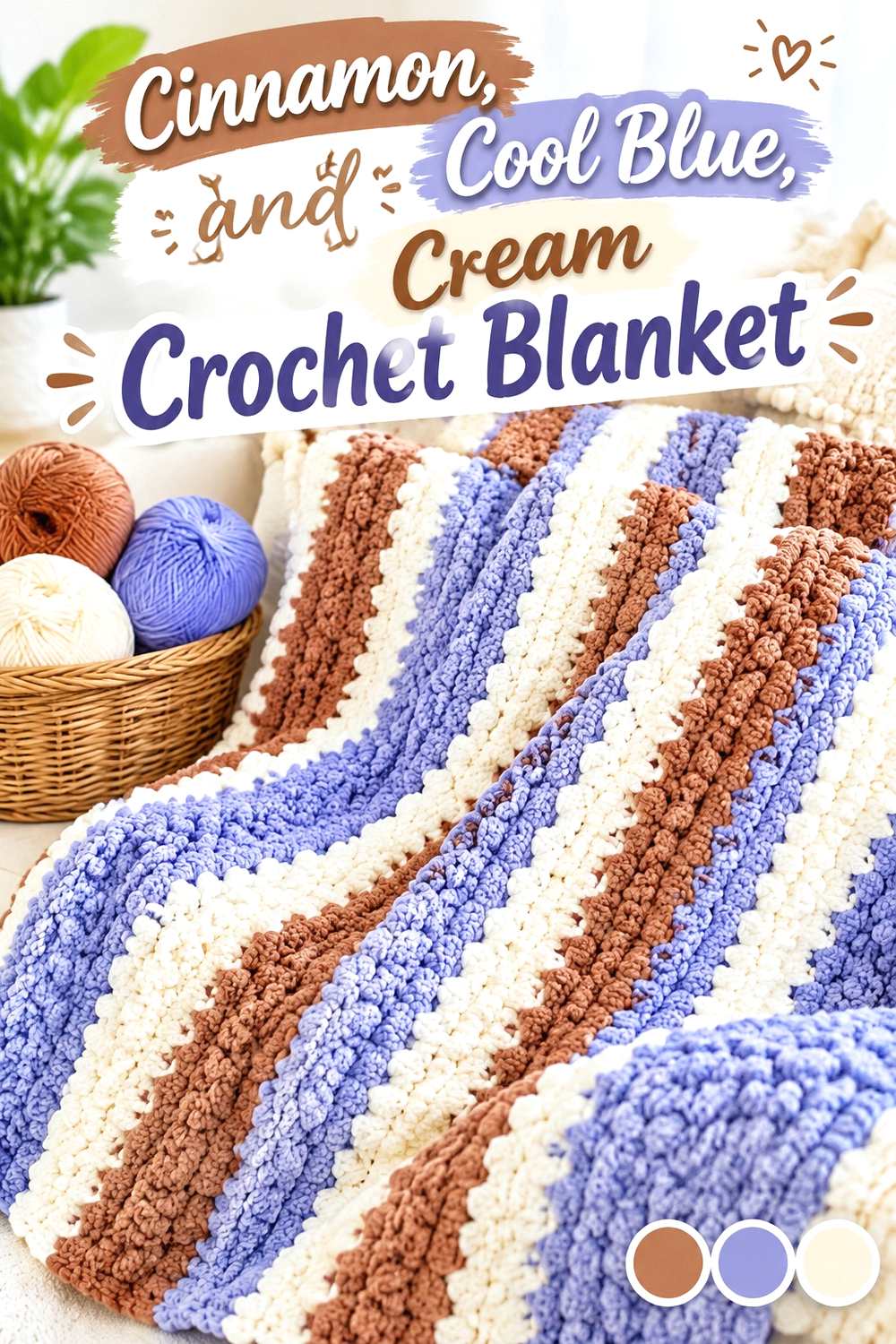
A blanket offers enough surface area to let both core colors develop without competing in every row. Cool Blue can cover many of the broader sections, Cinnamon can return as repeated warm bands, and cream can sit between selected transitions. This creates a cooler overall field with concentrated earthy warmth.
Cool Blue Gives Cinnamon Crochet Blanket Bands More Breathing Room
Use Cool Blue in wider areas between Cinnamon sections rather than switching colors at every opportunity. The larger blue field makes each Cinnamon return more noticeable and prevents the blanket from feeling evenly divided into two competing colors.
If the blanket has visible stitch texture, keeping several consecutive sections Cool Blue can also make the texture easier to follow than a design with constant color interruption.
Cream Can Separate Cinnamon From Cool Blue at the Crochet Blanket Edge
Cream is useful before a Cinnamon border when the final interior section is Cool Blue. The lighter transition distinguishes the warm outer frame from the cooler blanket body.
Keep cream narrower than the two main colors if you want the project to remain recognizably Cinnamon-and-blue. A very large cream field will change the palette hierarchy.
Creator Credit: Bella Coco
2. Cinnamon And Cool Blue Crochet Cardigan With Oatmeal
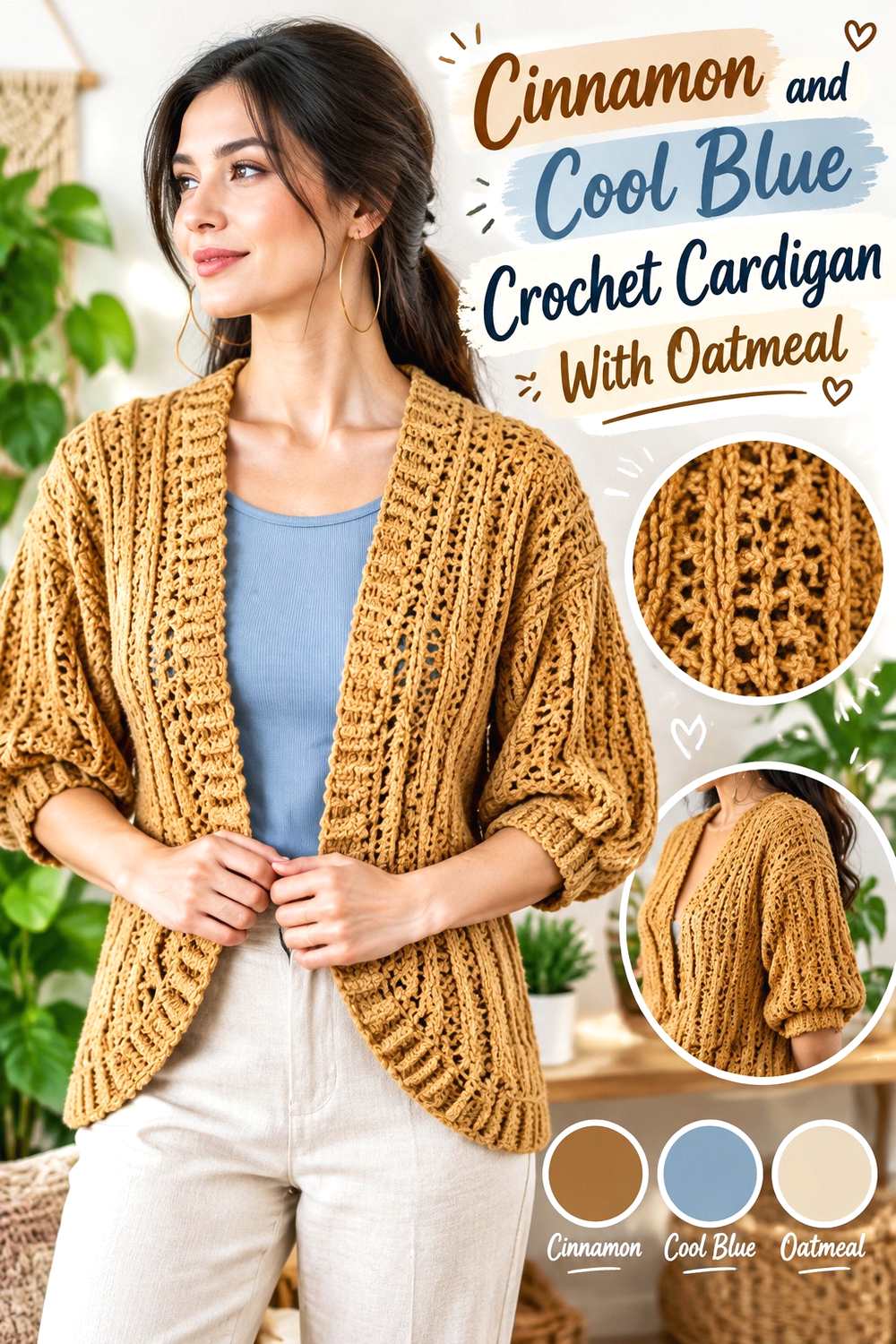
Cinnamon can lead across the cardigan body while Cool Blue appears on sleeves, cuffs, or front bands. Oatmeal provides a quieter neutral bridge where the temperature shift between warm brown-orange and blue feels strongest.
Cinnamon Can Carry the Main Crochet Cardigan Panels
Broad front and back panels give Cinnamon enough room to establish the cardigan’s warm direction. Keeping the largest structural areas consistent also prevents the garment from looking segmented.
Cool Blue can then repeat at both cuffs or along the front opening. Repetition across multiple garment edges makes a smaller amount of blue look intentional.
Oatmeal Can Separate Cinnamon and Cool Blue Crochet Cardigan Edging
Use oatmeal between Cinnamon body sections and Cool Blue trim when you want a softer transition. A narrow oatmeal line around cuffs or front bands can prevent the temperature contrast from looking abrupt.
Choose an oatmeal that remains lighter than Cinnamon. If it is too brown or dark, it may visually blend into the warm main color rather than providing separation.
Creator Credit: TCDDIY
3. Cool Blue Cinnamon And Ivory Crochet Granny Square Bag

Granny squares give each color a specific location inside repeated motifs. Cool Blue can dominate the outer square sections, Cinnamon can mark the centers, and ivory can separate them or become the joining color.
Cinnamon Centers Can Anchor Cool Blue Crochet Granny Squares
Repeating Cinnamon in the centers creates a warm focal point inside each Cool Blue motif. Keeping that placement consistent makes the bag feel organized once multiple squares are assembled.
Before joining, arrange all the finished motifs in the approximate bag layout. Check whether Cinnamon centers accidentally cluster too heavily on one side.
Ivory Joins Can Keep Cinnamon and Cool Blue Crochet Motifs Distinct
Ivory is especially useful between squares because the joining lines remain visible after the motifs become a three-dimensional bag.
Carrying ivory into a narrow upper edge or strap detail can connect the join color with the finished bag. Otherwise, it may look like a purely functional addition rather than part of the palette.
Creator Credit: VivCrochets
4. Cinnamon And Cool Blue Crochet Textured Pillow With Stone
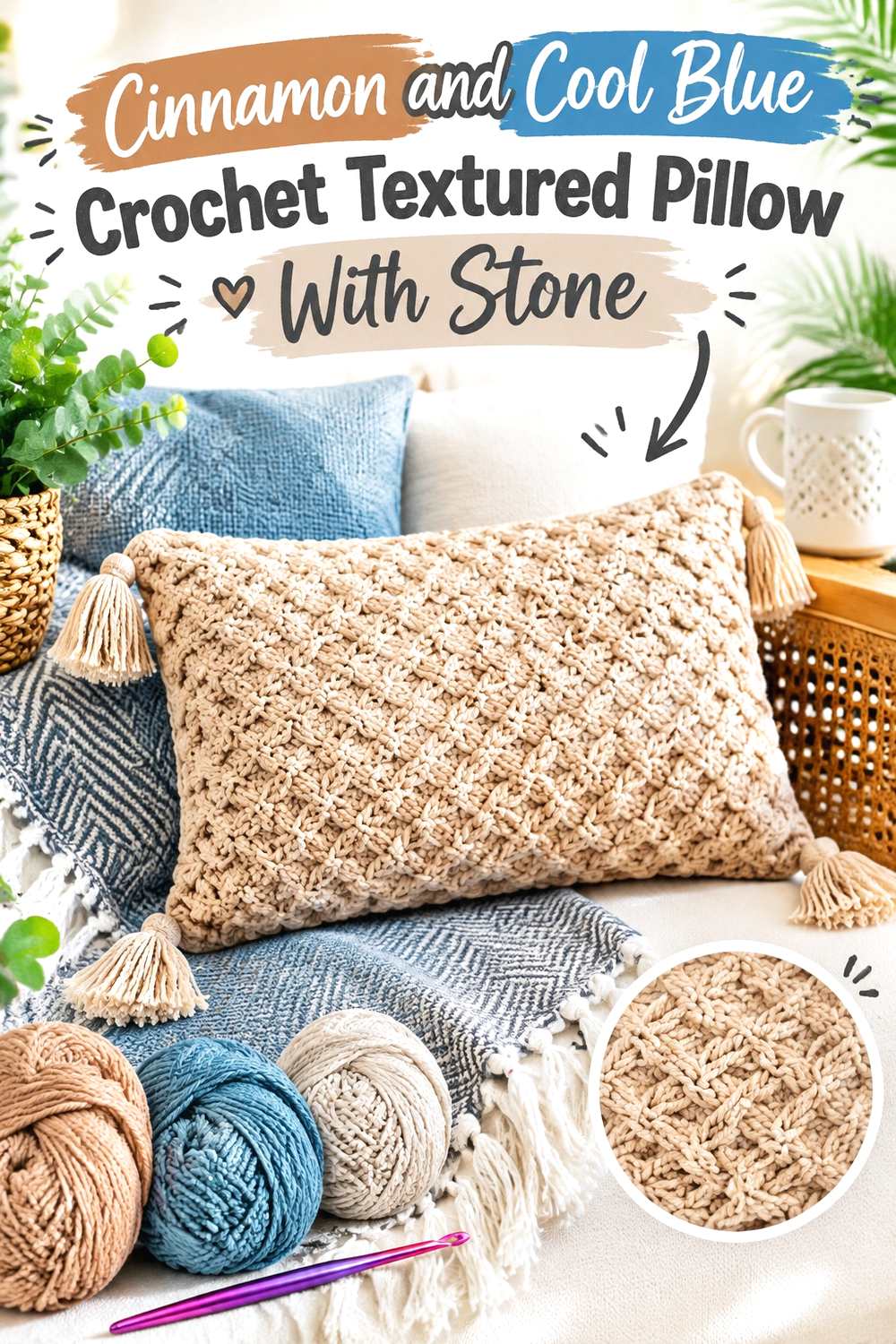
A textured pillow can use Cinnamon as the focal surface color while Cool Blue frames or interrupts selected areas. Stone gives the palette a neutral place to rest and can make raised crochet texture easier to distinguish.
Cinnamon Can Highlight the Main Crochet Pillow Texture
Place Cinnamon across the largest raised or woven-looking section of the pillow face rather than breaking that texture into many small colors. A continuous warm surface lets shadows contribute additional visual depth.
If your Cinnamon yarn is quite dark, make a small textured sample first. Some stitch relief may be easier to see in a medium Cinnamon tone than in a very deep brown-orange.
Cool Blue and Stone Can Frame Cinnamon Crochet Pillow Details
Use Cool Blue for an outer border or a secondary surface section, then introduce stone only where extra separation is necessary. This creates a cooler frame around the warm center.
Stone is particularly useful between Cinnamon and Cool Blue if their values are closer than expected. It should clarify the boundary rather than compete for equal coverage.
Creator Credit: MJ’s Off The Hook Designs
5. Cool Blue And Cinnamon Crochet Beanie With Charcoal
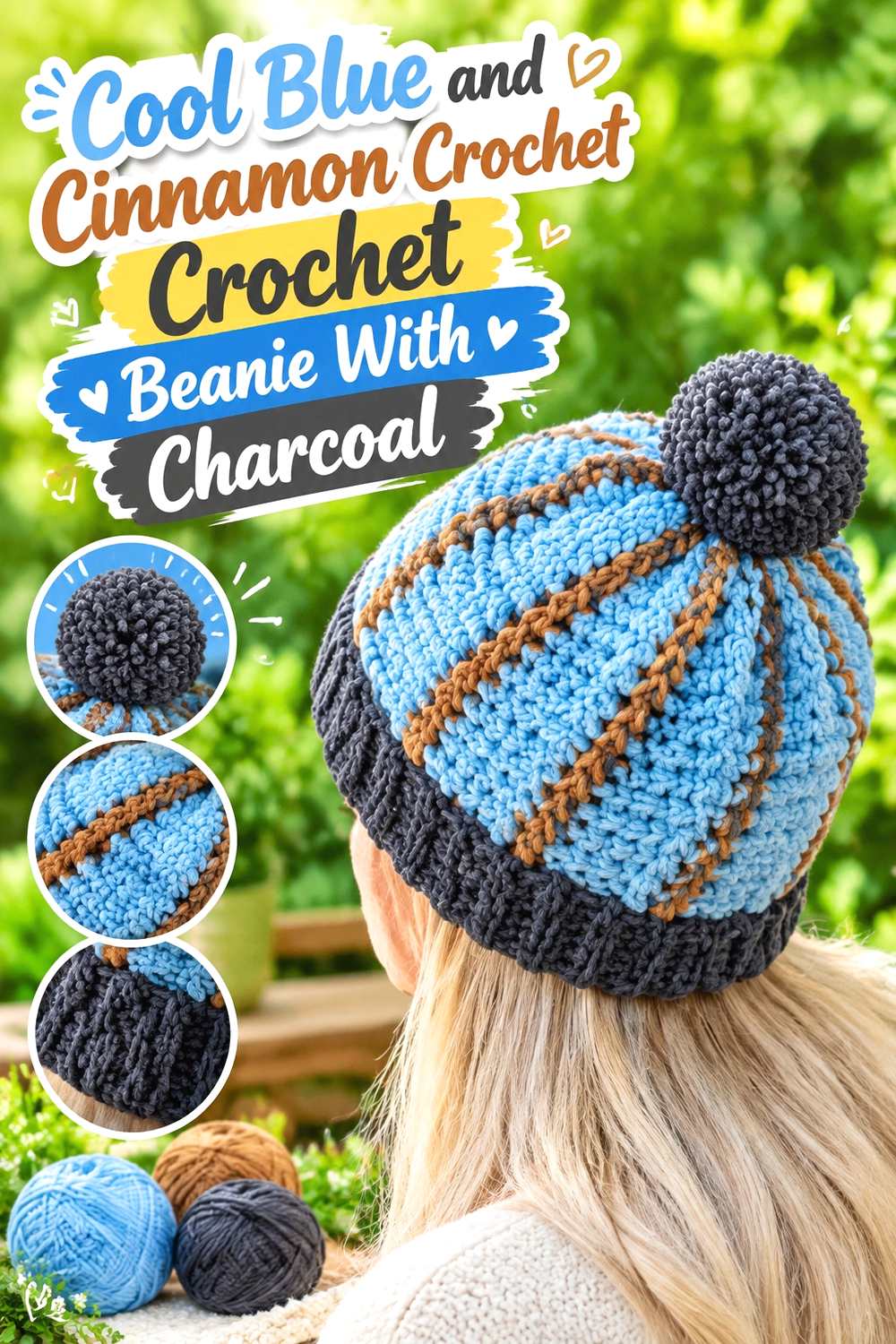
A beanie has limited room for three colors, so Cool Blue can cover most of the crown and body while Cinnamon defines the ribbed lower edge. Charcoal works best as a restrained additional accent.
Cinnamon Can Give a Cool Blue Crochet Beanie a Warm Ribbed Edge
A Cinnamon band around the lower edge creates a concentrated warm section without interrupting the entire Cool Blue hat.
Because the band circles the full beanie, it already has significant visual presence. Additional Cinnamon stripes may not be necessary unless you want a more evenly balanced two-color result.
Charcoal Should Stay Secondary to Cool Blue and Cinnamon on the Crochet Beanie
Charcoal can deepen a small top detail or narrow transition, but extensive charcoal may make the blue side of the palette feel too dark.
Compare all three yarns in grayscale. If charcoal and Cool Blue are almost identical in value, keeping charcoal minimal will preserve clearer color roles.
Creator Credit: Di’s Handicrafts (Crochet and Knitting)
6. Cinnamon And Cool Blue Crochet Scarf With Mist Gray

A long scarf gives Cinnamon and Cool Blue space to appear in substantial blocks rather than quick alternating stripes. Cinnamon can occupy the ends, Cool Blue can dominate the middle, and Mist Gray can soften the transitions.
Cinnamon Crochet Scarf Ends Can Balance a Cool Blue Center
Using Cinnamon at both ends distributes the warm color across the full length without requiring it around the neck. Cool Blue through the center then becomes the dominant shade when the scarf is wrapped.
Check the balance while draping the scarf, not just while it lies flat. The ends may overlap or sit at different heights when worn.
Mist Gray Can Soften Cinnamon and Cool Blue Crochet Transitions
Insert Mist Gray between large Cinnamon and Cool Blue blocks if you want a less abrupt temperature shift.
The gray should remain clearly neutral. A heavily blue-gray yarn may visually become another Cool Blue section rather than functioning as a transition.
Creator Credit: Hooked by Robin
7. Cool Blue And Cinnamon Crochet Cowl With Camel
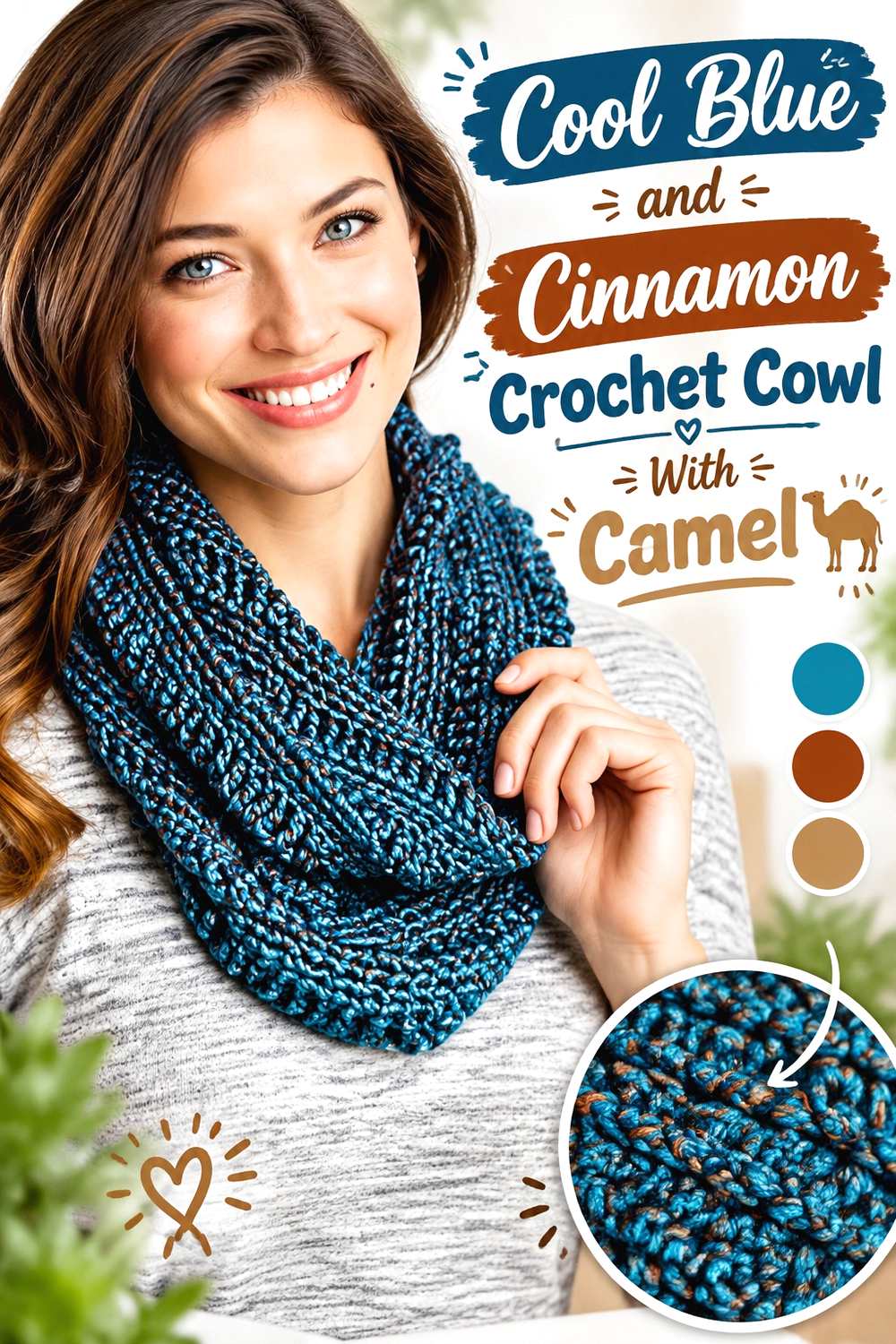
A cowl folds around itself, which can make narrow bands overlap unpredictably. Use Cool Blue across the largest central area, Cinnamon along one prominent edge, and camel only as a transition if needed.
Cool Blue Can Dominate the Crochet Cowl While Cinnamon Frames the Edge
A broad Cool Blue body creates a consistent main field even when the cowl is folded or doubled. Cinnamon at the upper or lower edge gives the warm color a continuous line around the neck.
If both edges are Cinnamon, keep the central Cool Blue area broad enough to preserve its dominant role.
Camel Can Connect Cinnamon to Cool Blue on a Crochet Cowl
Camel offers a warm neutral step between orange-brown Cinnamon and Cool Blue. A narrow camel band can make the transition look more gradual.
If Cinnamon and Cool Blue already have a pleasing boundary, leave camel out. This palette works better when the third color has a clear job rather than appearing solely for variety.
Creator Credit: The Crochet Crowd
8. Cinnamon And Cool Blue Crochet Hooded Vest With Ecru
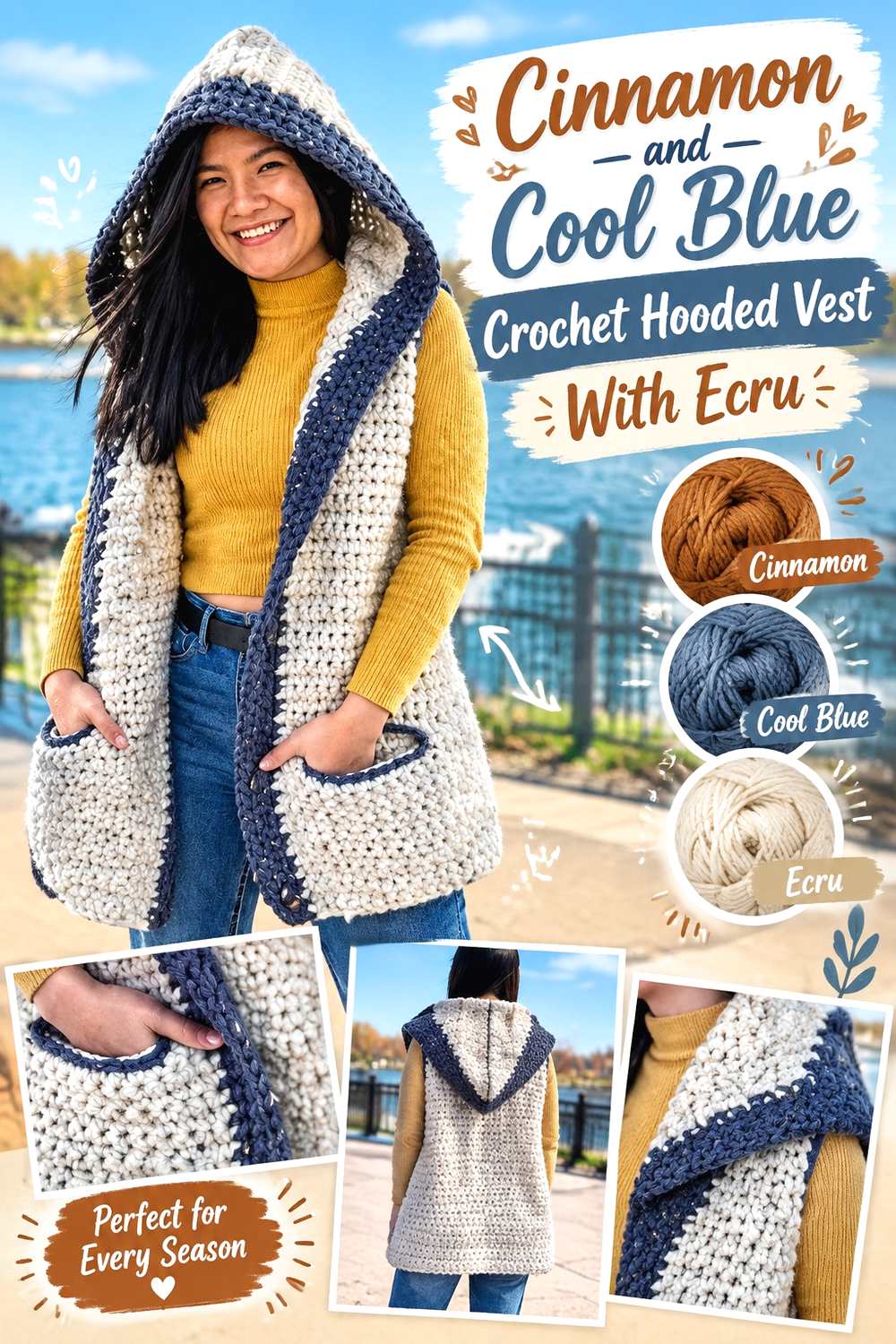
A hooded vest creates several independent color zones, including the body, hood, front edges, and pockets. Cinnamon can dominate the broad body panels, while Cool Blue concentrates around the hood and smaller structural features.
Cinnamon Can Keep the Crochet Vest Body Warm and Continuous
Use Cinnamon across most of the main vest panels to avoid chopping the torso into multiple horizontal color sections.
Cool Blue can then become more concentrated around the hood, pockets, or front edging. Repeating blue in at least two locations connects those accents across the garment.
Ecru Can Separate Cool Blue Hood Details From Cinnamon Crochet Panels
A narrow ecru transition around the hood opening or front edge can stop Cool Blue and Cinnamon from meeting across every boundary.
Keep the ecru placement controlled. If it spreads through the main body, the vest may shift from a two-color warm-cool aesthetic toward a neutral-led three-color design.
Creator Credit: KnitcroAddict
9. Cool Blue And Cinnamon Crochet Tank Top With Warm White
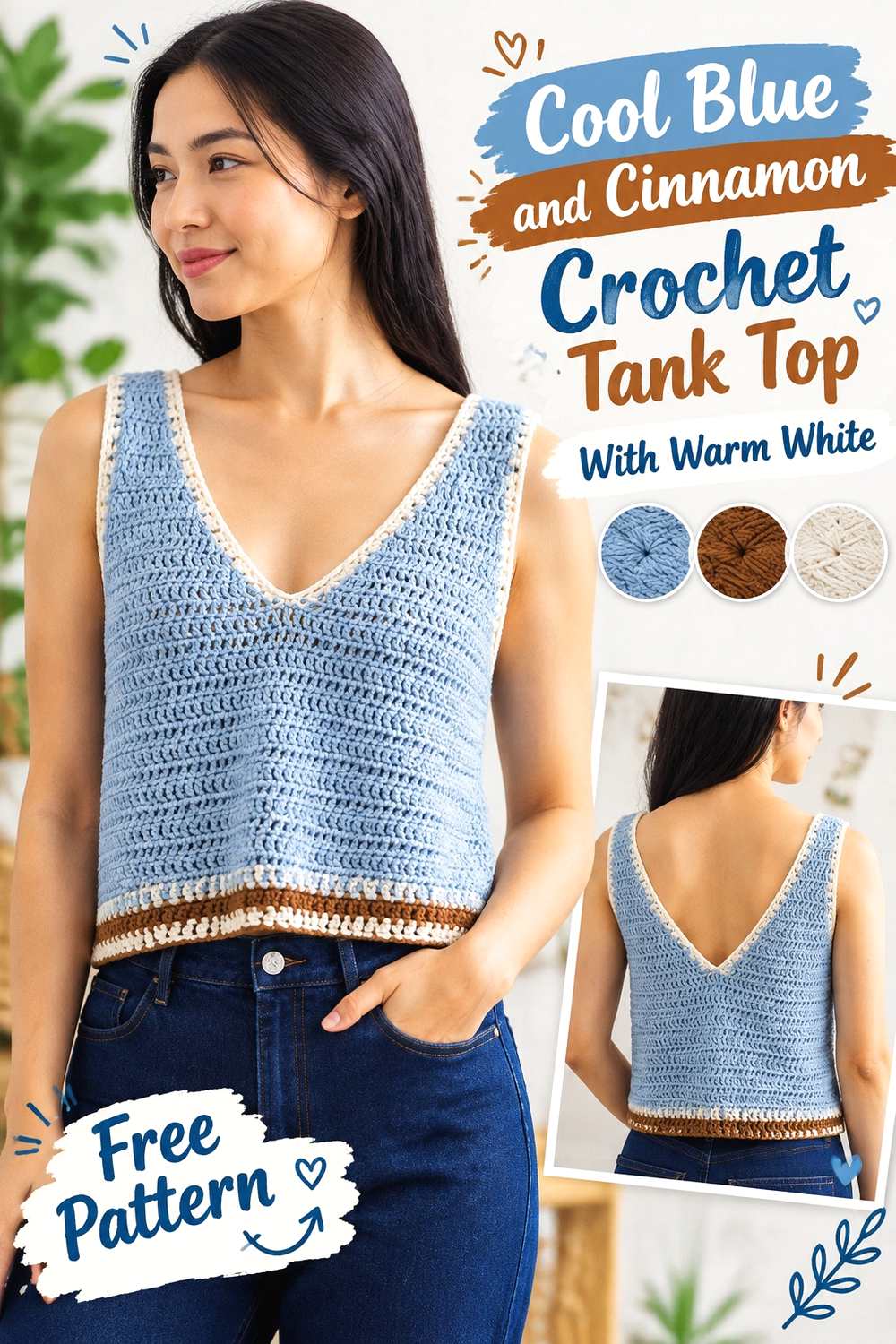
A tank top has fewer structural zones than a cardigan, making a straightforward hierarchy useful. Cool Blue can cover the body, Cinnamon can define the lower edge or straps, and Warm White can provide light separation around the neckline.
Cool Blue Can Give the Cinnamon Crochet Tank Top a Calm Main Field
Use Cool Blue over most of the torso so the garment reads primarily blue. Cinnamon straps or a lower band can then introduce warmth without cutting the central body into many colored sections.
The contrast is especially clear when Cinnamon is repeated in more than one edge detail rather than appearing in a single isolated spot.
Warm White Can Keep Cinnamon Crochet Tank Top Edging Clear Against Cool Blue
A slim Warm White line can separate Cinnamon straps or trim from the main Cool Blue field.
Keep the white amount modest if you want the warm-cool relationship to remain the dominant visual story. Wider white panels would move the project toward a neutral-led palette.
Creator Credit: forthefrills
10. Cinnamon And Cool Blue Crochet Hexagon Cardigan With Cream
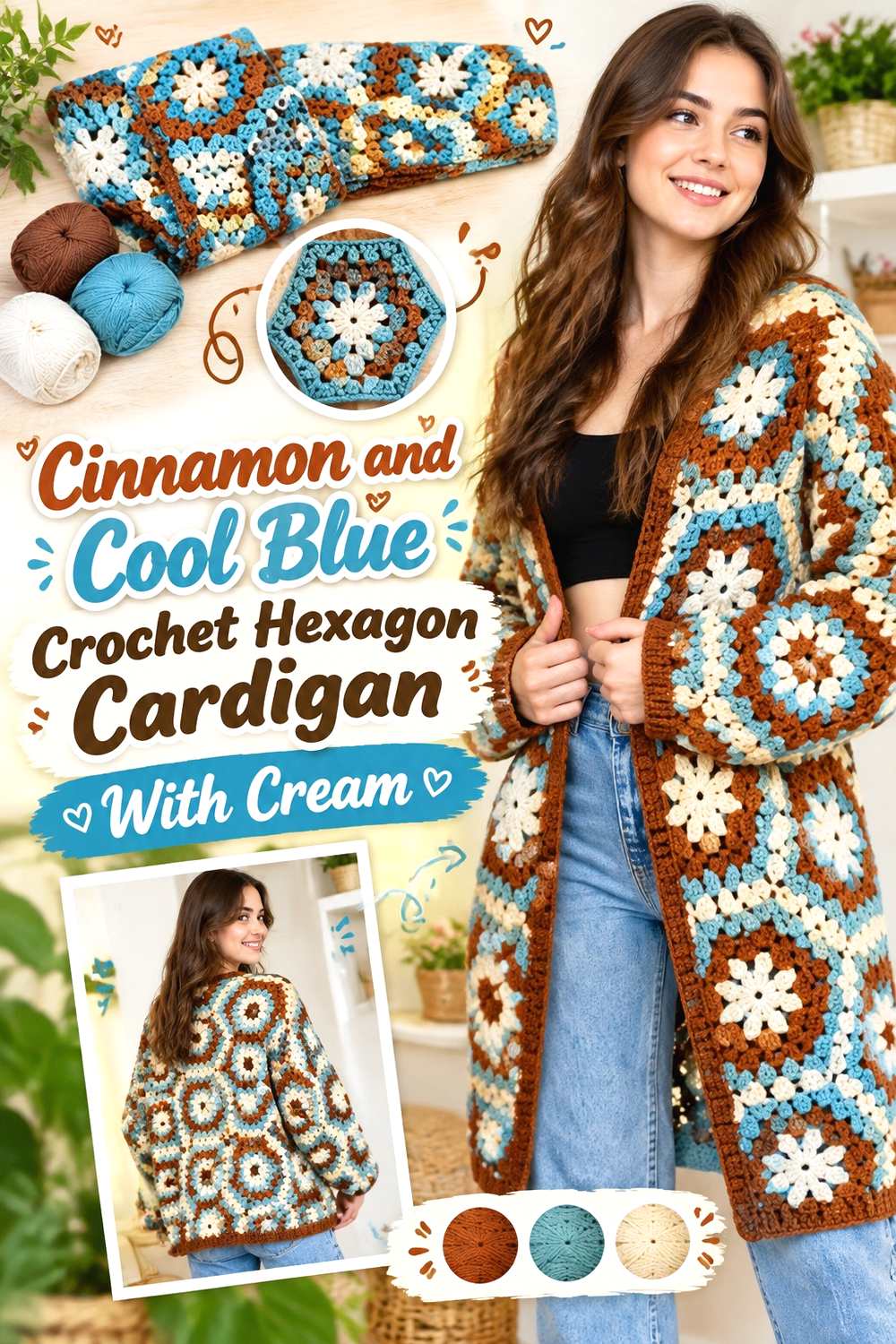
A hexagon cardigan gives the palette a rhythmic format because colors appear in expanding sections. Cinnamon can form wider warm bands, Cool Blue can repeat more frequently in narrower areas, and cream can interrupt the sequence where stronger separation is useful.
Cinnamon Needs Consistent Placement Across Both Cool Blue Crochet Hexagons
Plan both cardigan halves together rather than completing one color sequence independently. Similar Cinnamon placement on each side helps the finished back and sleeves look coordinated.
The bands do not have to mirror exactly, but large differences become very noticeable once the hexagons meet.
Cream Can Stop Cinnamon and Cool Blue Crochet Cardigan Bands From Looking Busy
Use cream after several colored sections instead of inserting it between every Cinnamon and Cool Blue band. This gives the palette an occasional visual pause without making cream an equal third color.
Cream can also return at the cuffs or front border, tying the internal color sequence to the finished garment edges.
Creator Credit: PassioKnit Kelsie
11. Cool Blue And Cinnamon Crochet Market Bag With Sand
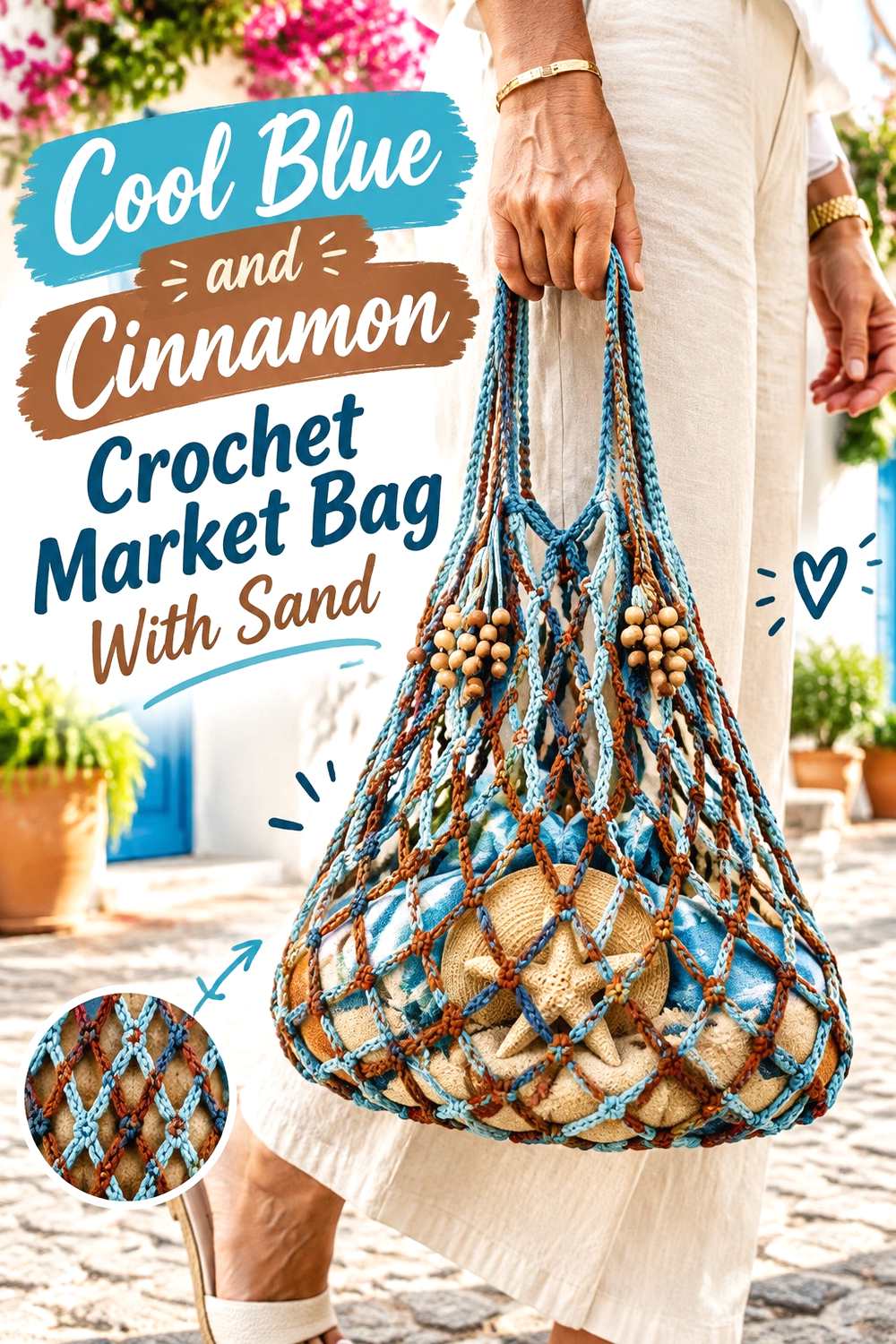
Openwork changes the way colors appear because the contents or background can show through the stitches. Cool Blue can carry most of the mesh body, Cinnamon can define the handles and base, and sand can provide a lighter transition.
Cool Blue Keeps Cinnamon Crochet Market Bag Openwork Visually Light
A Cool Blue body allows the open structure to remain the main visual feature. Concentrating Cinnamon at the edges means the warm shade defines the bag without filling every mesh section.
Evaluate the palette with the bag empty and with a neutral object behind it. Background colors can noticeably alter openwork.
Cinnamon Handles Can Anchor a Cool Blue Crochet Market Bag
Cinnamon handles provide a strong warm line at the top of the bag. Repeating the same shade at the base creates a useful top-and-bottom connection.
Sand can appear in a narrow body band if the jump between those warm structural areas and the Cool Blue mesh feels too strong.
Creator Credit: Home Handwork Diy
12. Cinnamon And Cool Blue Crochet Textured Headband With Oatmeal
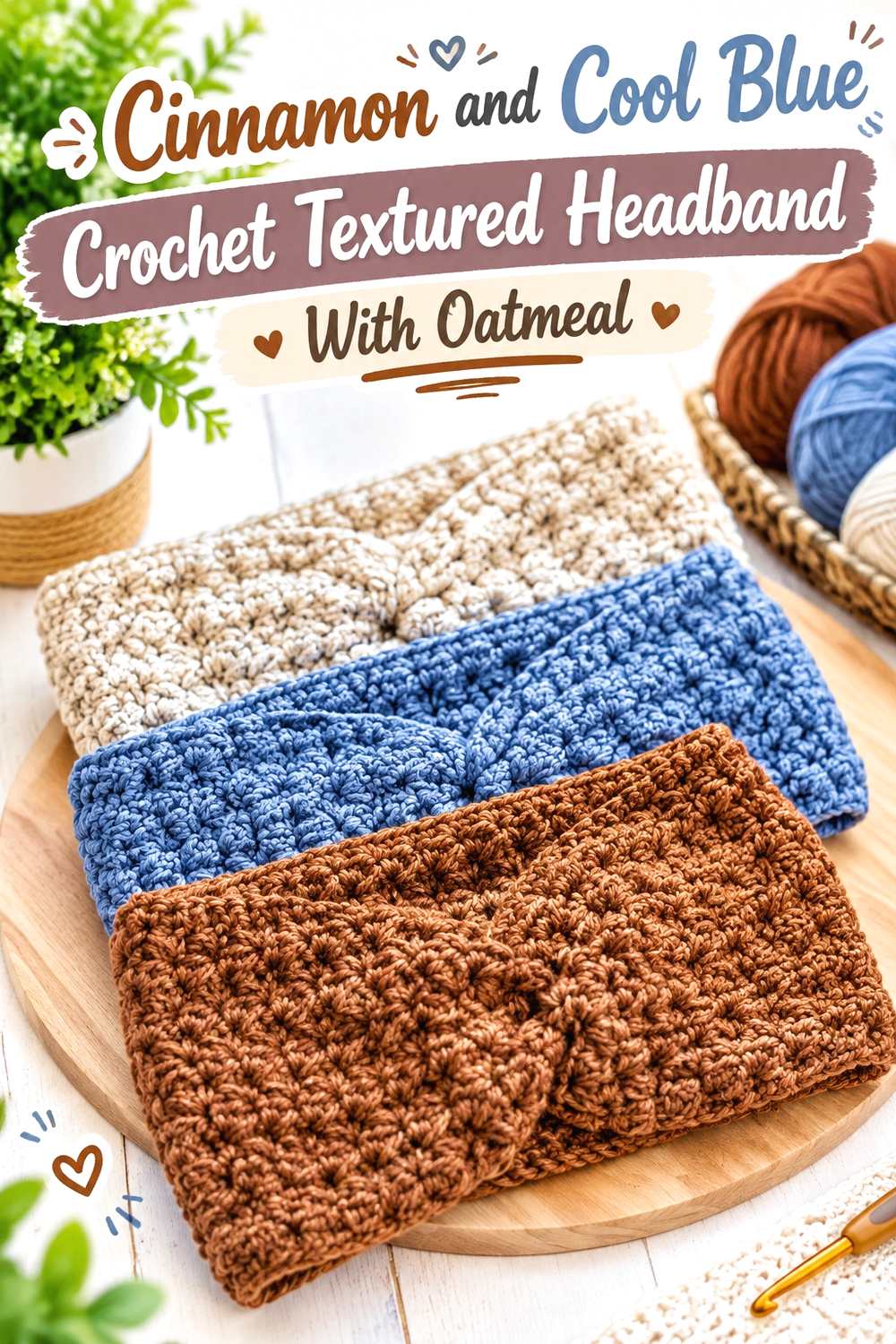
A textured headband benefits from a restrained palette because the surface itself already provides visual movement. Cinnamon can occupy the main front section, Cool Blue can define an edge or secondary block, and oatmeal can provide a small light accent.
Cinnamon Can Carry the Main Crochet Headband Texture
Use Cinnamon across the most visible textured area so the stitch pattern stays continuous rather than being repeatedly divided by color changes.
If the yarn is very dark, make a short sample first. Raised details often depend on shadows, and an extremely deep Cinnamon may conceal some of the texture.
Cool Blue Can Define Cinnamon Crochet Headband Edges Without Taking Over
A Cool Blue edge, back section, or twist detail introduces a distinct temperature contrast within the small accessory.
If oatmeal is added, place it only where additional definition is needed. Three similar-width bands would compete with the headband’s texture.
Creator Credit: Rich Textures Crochet
13. Cool Blue And Cinnamon Crochet Storage Basket With Clay
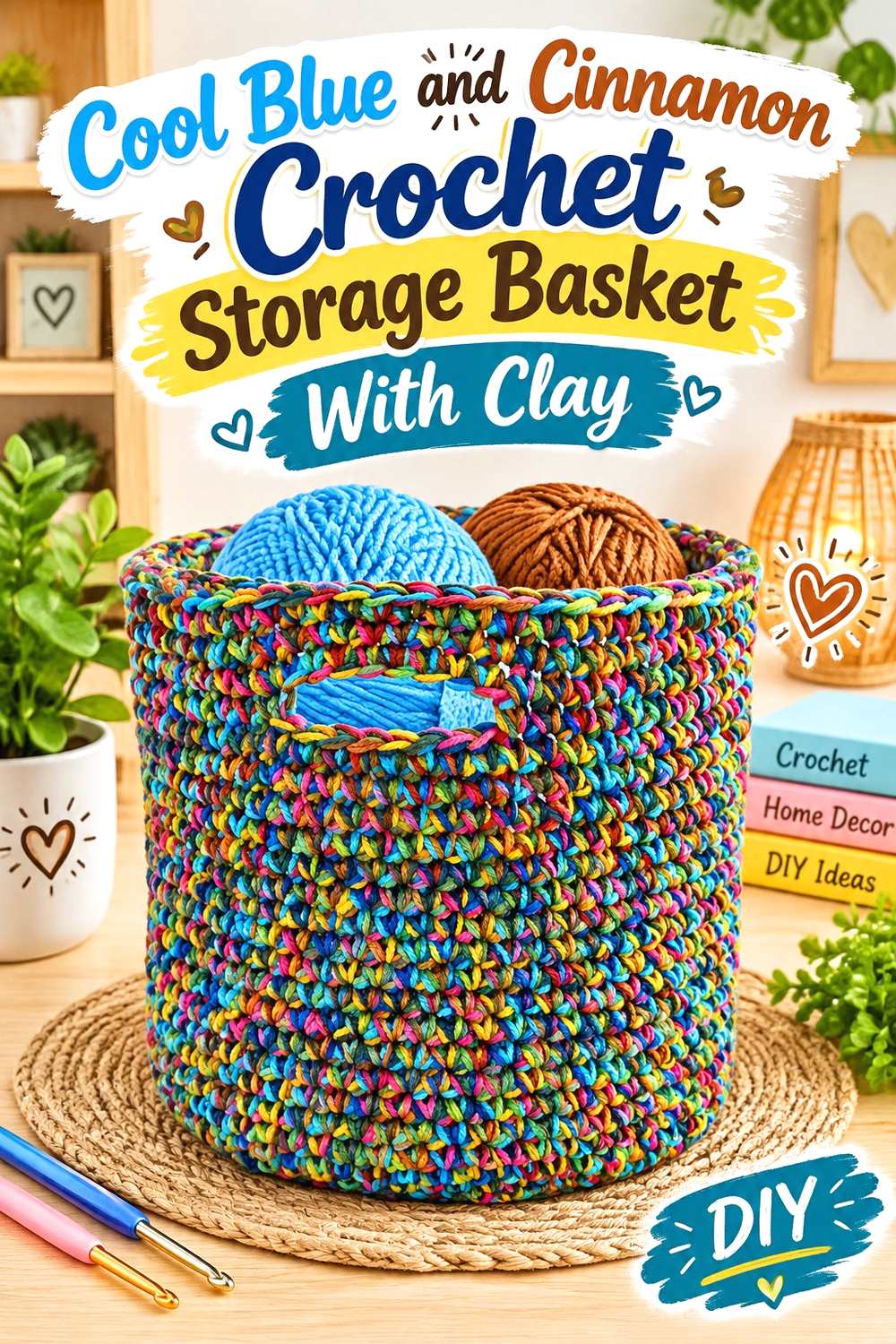
A storage basket offers clear color-blocking zones: base, body, rim, and handles. Cool Blue can cover most of the vertical body, Cinnamon can frame the top, and muted clay can provide a subtle warm transition near the base.
Cool Blue Can Keep the Cinnamon Crochet Basket Body Visually Calm
Use Cool Blue across the broadest vertical section so stitch texture remains readable without several competing color bands.
Cinnamon around the rim creates a strong boundary at the top. Carrying the same color into any handle area can reinforce that structural role.
Cinnamon Can Repeat at the Base of a Cool Blue Crochet Basket
A Cinnamon base connects the lower edge to the rim and gives the basket a clear warm frame.
If that creates too much Cinnamon coverage, substitute muted clay at the base and reserve true Cinnamon for the rim. The related warm tones keep the palette connected while reducing the darkest warm area.
Creator Credit: Jayda InStitches
14. Cinnamon And Cool Blue Crochet Mittens With Soft Gray

Mittens have compact placement zones, making the hands, cuffs, and thumbs useful areas for controlled color distribution. Cinnamon can cover the hand, Cool Blue can define the cuffs, and Soft Gray can appear as a restrained transition.
Cinnamon Can Give the Crochet Mitten Hands a Strong Warm Field
Using Cinnamon continuously across the hand section creates a clear main color and prevents small accessories from becoming overly striped.
Repeat the same distribution on both mittens. Color placement differences are especially obvious when a pair is viewed together.
Cool Blue Cuffs Can Balance Cinnamon Crochet Mittens
Cool Blue around both cuffs gives the pair an immediate cooler counterpoint. Because cuffs wrap around the wrist, they can remain relatively narrow while still having enough visual presence.
Soft Gray can sit between cuff and hand if the Cinnamon-to-blue transition feels too abrupt, but it is not necessary when the two colors already look clearly separated.
Creator Credit: Briana K
15. Cool Blue And Cinnamon Crochet Textured Sweater With Slate
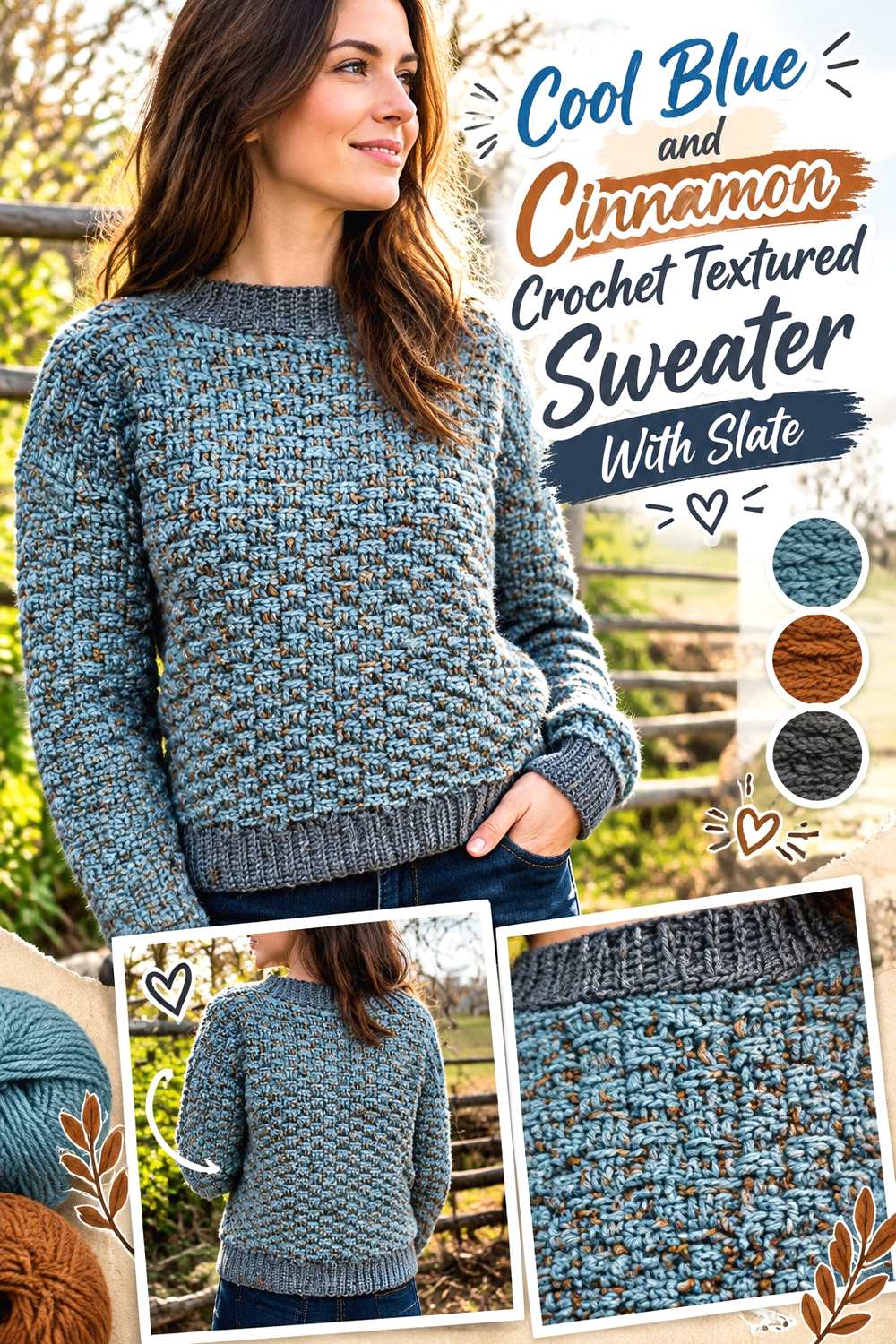
This sweater direction makes Cool Blue the dominant garment color and uses Cinnamon around repeated edge details. Slate adds depth without introducing another warm shade, keeping the final palette cooler than most of the other ideas.
Cool Blue Can Show Crochet Sweater Texture Across Broad Panels
Use Cool Blue continuously across the front and back textured panels so stitch shadows remain uninterrupted.
A medium Cool Blue can make raised texture particularly easy to notice because the surface is neither extremely pale nor very dark. Still, test your actual yarn because texture visibility varies with shade and lighting.
Cinnamon Can Warm Cool Blue Crochet Sweater Cuffs and Hem
Cinnamon cuffs and a lower band place warmth around the garment edges without interrupting the main textured panels.
Slate can appear around the neckline or as a narrow separator between Cinnamon and Cool Blue. Keep it smaller than both main colors so the sweater remains recognizably centered on the original pair.
Creator Credit: Crochet with Carrie
Comparing Cinnamon and Cool Blue Crochet Aesthetics
For the clearest warm-versus-cool contrast, use Cinnamon and Cool Blue in large neighboring areas. Blankets, scarves, cardigans, and bags provide enough surface for each color to establish itself without requiring constant alternation.
If you want a lighter look, add cream, ivory, warm white, oatmeal, or ecru. These shades are particularly helpful around granny-square joins, textured pillow details, garment edging, and other locations where the boundary between the main colors needs more definition.
For a softer, more subdued aesthetic, use sand, camel, stone, Mist Gray, or Soft Gray. These supporting colors reduce the sharpness of the Cinnamon-and-blue transition without removing the difference between warm and cool.
Darker additions such as charcoal and slate work best in small amounts. Because Cool Blue can already move toward a medium or deep value, adding too much dark gray may pull the palette away from Cinnamon and make the cooler side visually heavier.
Conclusion
Cinnamon and Cool Blue can support both warm-led and cool-led crochet aesthetics. Cinnamon can dominate broad cardigan panels, pillow texture, mitten bodies, or scarf ends, while Cool Blue provides cuffs, borders, openwork, and quieter supporting fields. Reverse those proportions and the same pair creates an entirely different finished project.
Use light neutrals when clear separation matters, especially around motifs, joins, or detailed texture. Choose gray, sand, stone, or camel when you want a gentler transition instead. Dark slate or charcoal can add depth, but they work most effectively when they remain secondary.
Before committing to a large project, decide which color should dominate and where the second shade will repeat. That simple placement plan makes it much easier to preserve the Cinnamon-and-Cool-Blue aesthetic as the crochet grows.
Use the linked creator tutorials for exact construction details, then apply the color distribution that fits your preferred warm-cool balance.
Frequently Asked Questions
Do Cinnamon and Cool Blue work together in crochet?
Yes. They provide a clear warm-cool contrast, with Cinnamon bringing an earthy orange-brown direction and Cool Blue supplying a cooler counterpoint. The strength of that contrast depends on the exact yarn shades and how much surface area each receives.
Should Cinnamon or Cool Blue dominate a crochet project?
Either can lead. Cinnamon-dominant projects tend to look warmer and earthier, while Cool Blue-dominant projects feel cooler with concentrated warm accents. Consider the crochet item too: borders and cuffs can make a supporting color noticeable even when it occupies much less area.
What neutral colors work with Cinnamon and Cool Blue crochet?
Cream, ivory, oatmeal, ecru, warm white, stone, sand, and gray can all work in different roles. Pale neutrals provide stronger separation, while gray, stone, camel, and sand create gentler transitions.
How can I keep Cinnamon and Cool Blue crochet from looking too busy?
Reduce the frequency of color changes. Broader blocks, a clear dominant color, and consistent placement at borders, cuffs, straps, or motif centers usually create a more organized palette than numerous narrow alternating stripes.
Can Cinnamon and Cool Blue work in granny-square crochet?
Yes. Assigning consistent roles helps: Cinnamon can repeat in motif centers while Cool Blue occupies outer rounds, or the arrangement can be reversed. A pale joining shade such as ivory can provide additional separation when both main colors are medium or dark.
What should I preserve when replacing a Cinnamon yarn?
Preserve its warm, earthy relationship to the Cool Blue. A replacement can lean slightly more brown, terracotta, or muted orange, but it should still be clearly warmer than the blue and maintain the intended light-dark contrast.
Can I use only Cinnamon and Cool Blue without adding a neutral?
Yes. A two-color version can be particularly effective when each shade has a clear role. Try a Cool Blue sweater with Cinnamon cuffs, a Cinnamon cardigan with blue edging, or a blanket with broad alternating blocks. Add a third color only when it improves separation, transition, or placement.