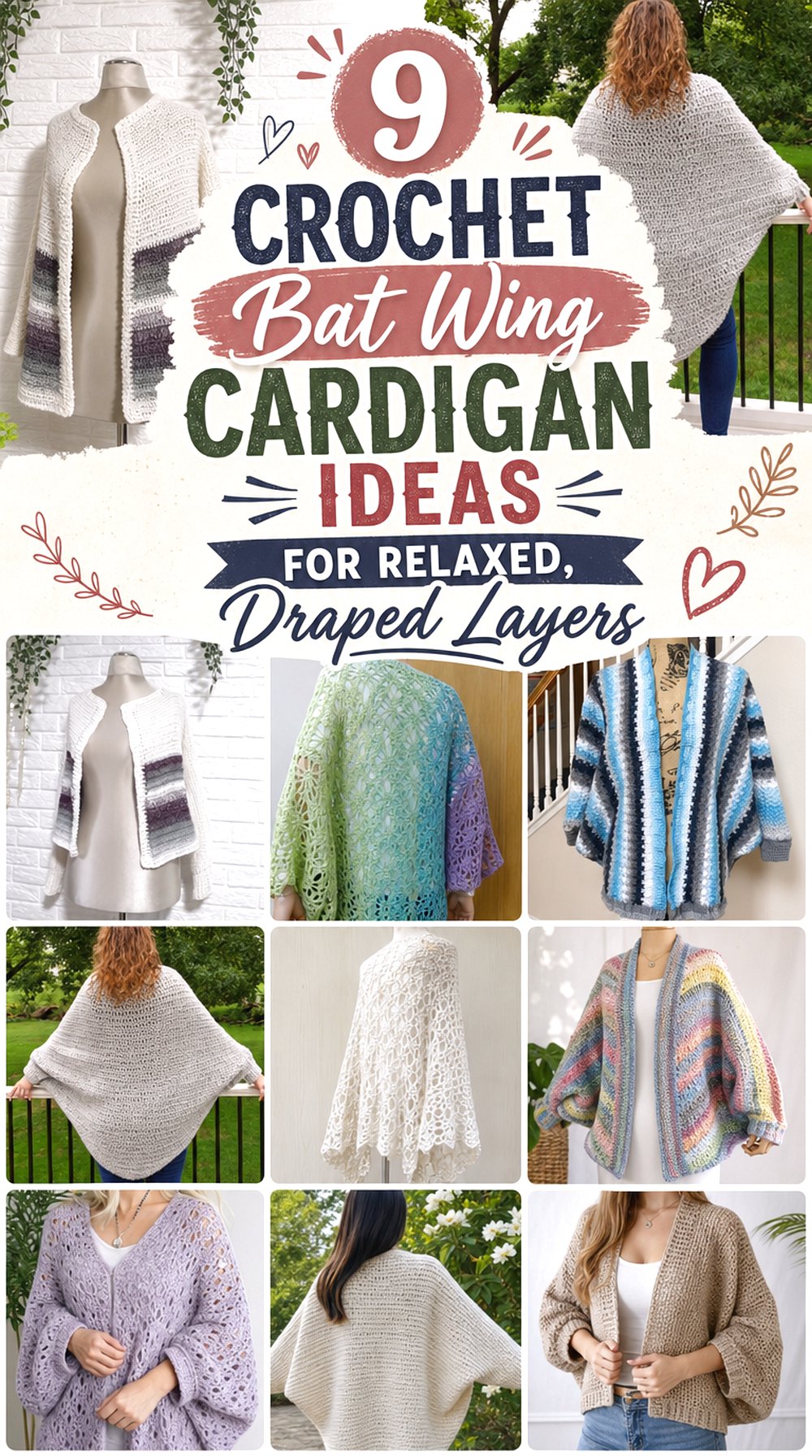
9 Crochet Bat Wing Cardigan Ideas for Relaxed, Draped Layers
A crochet bat wing cardigan can range from a cropped layer with pronounced dolman sleeves to a loose cocoon cardigan formed from a folded square or rectangle. That difference matters: some designs concentrate volume beneath the arms, while others spread the extra fabric across the entire back and front opening. The result can feel sleek, dramatic, airy, or deliberately oversized.
These nine ideas cover several distinct approaches, including textured cropped cardigans, pocketed batwing shapes, floral openwork, simple panel construction, corner-to-corner fabric, decorative back motifs, and fuzzy cold-weather layers. The comparisons below focus on the choices that affect wearability most—sleeve depth, cuff fit, fabric weight, drape, body length, and construction—so you can choose a tutorial that matches the silhouette you actually want.
Quick List
- Cropped Crochet Bat Wing Cardigan with Textured Ribbing
- Two-Panel Crochet Bat Wing Cardigan with Tapered Cuffs
- Pocketed Crochet Bat Wing Cardigan with Textured Fabric
- Dense-Stitch Crochet Bat Wing Jacket Cardigan
- Floral Openwork Crochet Dolman Cardigan with Ruffled Edging
- Summer Crochet Momonga Bat Wing Cardigan
- Corner-to-Corner Crochet Cocoon Bat Wing Cardigan
- Back-Motif Crochet Cocoon Bat Wing Cardigan
- Fuzzy Ribbed Crochet Cocoon Bat Wing Cardigan
What Changes the Fit of a Crochet Bat Wing Cardigan?
A conventional set-in sleeve has a relatively clear armhole, shoulder, and sleeve line. Batwing and dolman shapes blur those boundaries. Extra width often begins much closer to the body, which creates the characteristic fabric drop between the torso and wrist.
That means bust measurement alone does not tell you how a batwing cardigan will feel. Before choosing a tutorial, look at the finished garment with the wearer’s arms lowered as well as extended. Notice where the lowest part of the underarm falls, how firmly the cuff holds the wrist, and whether the cardigan hem stays near the waist or drops when the arms move.
Cocoon versions work differently again. Their sleeve effect often comes from folding a large square or rectangle and leaving openings for the arms. They can provide generous back coverage while giving less conventional shoulder shaping than a true dolman cardigan.
Drape and Yarn Weight Matter More with Wide Sleeves
Batwing construction places more fabric below the arms than many standard cardigan shapes. A yarn and stitch combination that produces a firm, heavy fabric can therefore make the sleeve area feel substantially different from an airy openwork version.
For a flowing silhouette, compare the tutorial’s finished fabric rather than choosing yarn only by color. Open stitches and softer fabric can let the underarm section fall in folds. Dense texture produces a more defined outline but may also give the garment greater visual and physical weight. Bulky or highly textured yarn can make a cocoon cardigan particularly cozy, while lace or floral openwork can turn the same broad silhouette into a lighter warm-weather layer.
Whenever substituting yarn, make a fabric sample and compare its drape with the creator’s finished cardigan before committing to the full garment.
Choose the Construction Before You Choose the Look
The nine tutorials below do not reach the batwing silhouette in the same way. Some use broad cardigan panels that incorporate sleeve width. Others begin with a square or rectangle that becomes a cocoon when folded and seamed. HanJan Crochet’s design, for example, uses a lace corner-to-corner square, while the Dream Catcher Cardi concentrates a decorative lace motif on the back.
This affects more than assembly. Panel-based batwing cardigans can give you a clearer front-cardigan shape and more control around cuffs or openings. Cocoon designs emphasize the back and draped opening, often with the fabric wrapping forward from a large central panel. Decide which silhouette you prefer first; stitch texture and color are much easier to change than the basic geometry.
1. Cropped Crochet Bat Wing Cardigan with Textured Ribbing
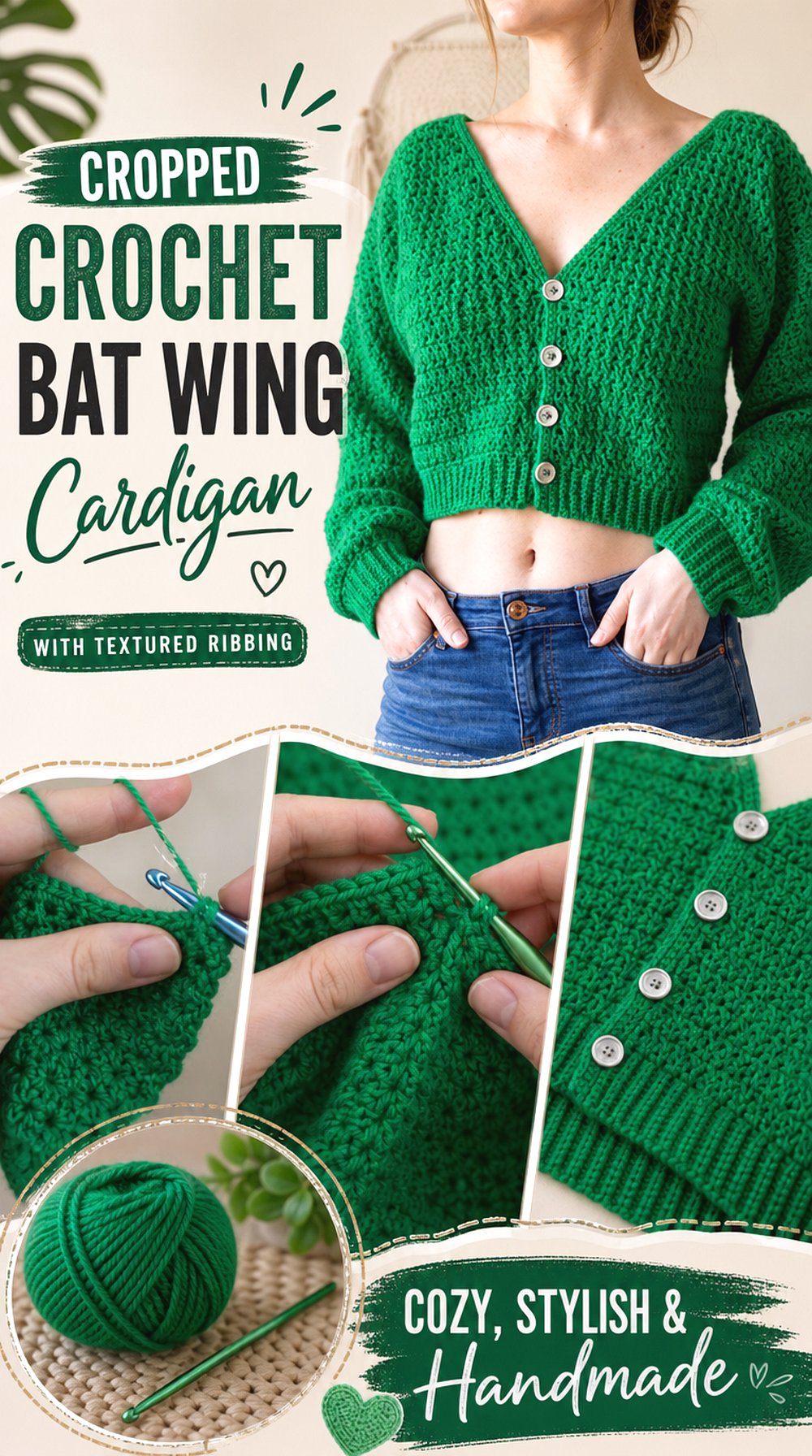
This cropped option keeps the dramatic sleeve volume while reducing the amount of fabric below the waist. Madeleine Shirley’s finished cardigan has a relaxed batwing shape and a textured appearance, so it reads as a substantial layering piece without requiring the long body of a coat-style cardigan. The shorter proportion also puts more visual emphasis on the broad sleeves and fitted edging.
Choose this direction if you want a batwing silhouette that works naturally with high-rise pants, skirts, or dresses. Because the body is shorter, check where the finished hem is intended to sit on your own torso instead of judging fit solely from sleeve width.
Cropped Length Makes Sleeve Proportion More Noticeable
On a cropped batwing cardigan, the horizontal width can become the dominant visual feature because there is less vertical body length balancing it. Before committing to your final dimensions, compare the intended hem position with the lowest point of the underarm fabric.
If you lengthen the body considerably, the finished garment may start to resemble a conventional oversized cardigan rather than the compact silhouette shown in the tutorial. If you shorten it, confirm that lifting your arms will not expose more of the layer underneath than you want.
Ribbing Can Control an Otherwise Loose Silhouette
Defined cuffs and edging are especially useful when the body is deliberately relaxed. A fitted wrist finish visually separates the wide batwing section from the hand and prevents the entire sleeve from reading as one uninterrupted block of fabric.
When substituting yarn, pay attention to how much the ribbing rebounds after stretching. A body fabric with good drape and a cuff that loses its shape quickly can produce very different proportions after wear. Comparing your blocked sample with the tutorial’s finished fabric is more useful than relying on fiber name alone.
Check the Cardigan with Your Arms Lowered
A batwing cardigan can look particularly dramatic when photographed with the arms extended, but most of its wear time happens with the arms down. That position tells you whether the fabric gathers attractively at the sides, whether the hem is pulled upward, and how much bulk sits beneath the arm.
Before final finishing, try the garment over the type of shirt or dress you expect to wear underneath. A silhouette that feels roomy over a fitted tank may behave differently over another sweater.
Creator: Madeleine Shirley
2. Two Panel Crochet Bat Wing Cardigan with Tapered Cuffs
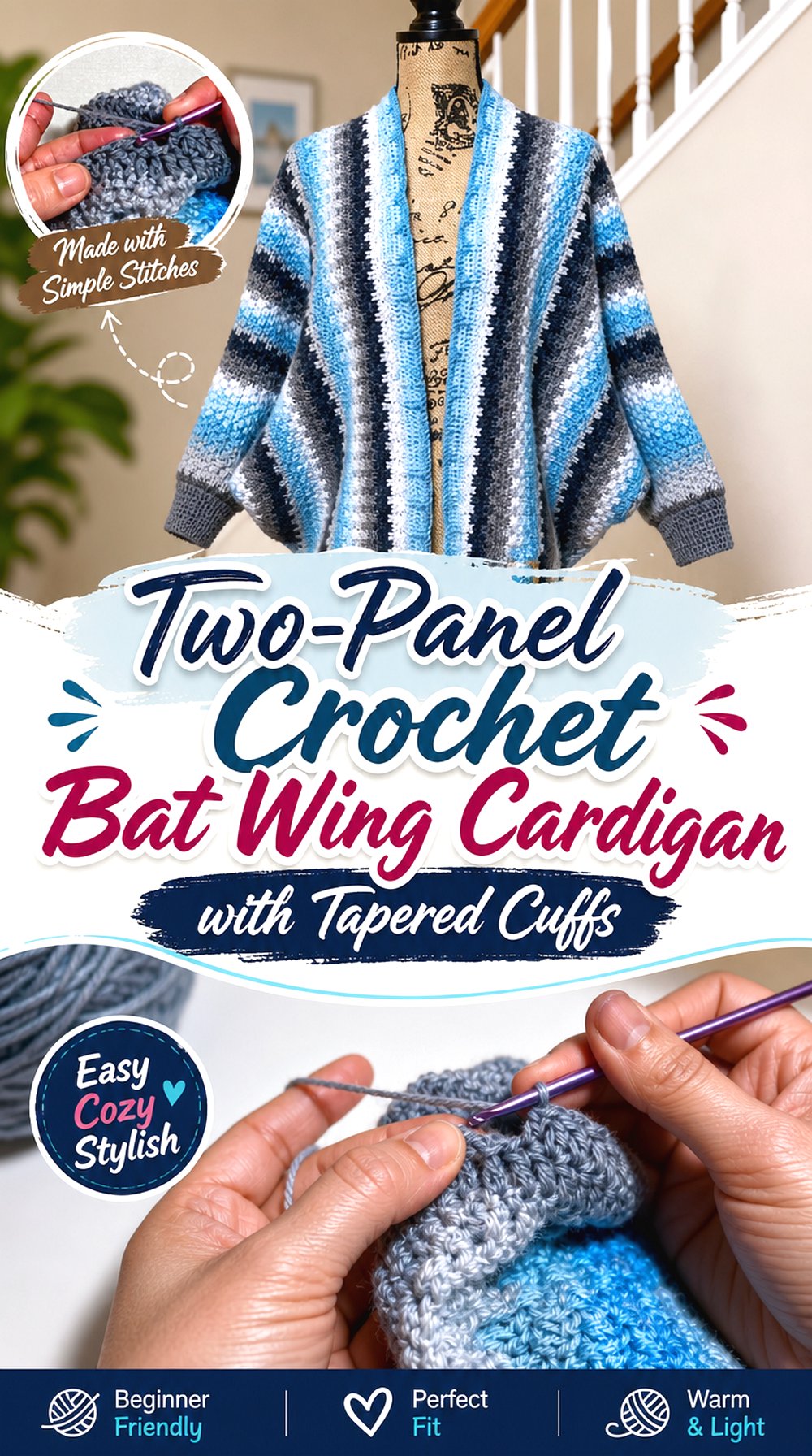
Crafting Shed’s cardigan creates its batwing character through broad panels rather than treating the sleeves as narrow pieces added to a standard body. The tutorial describes a two-panel construction with bat wing sleeves, followed by finishing around the cuffs and cardigan opening.
This is a useful concept if you want the wide sleeve line to feel integral to the cardigan rather than attached afterward. Compared with a folded cocoon, the two-panel approach also gives the front opening a clearer garment-like structure. The important planning issue is symmetry: if corresponding panel dimensions or tension drift apart, the discrepancy can become visible at the center, cuffs, or hem.
Matching the Two Panels Is the Main Checkpoint
When two large pieces create most of a garment, small differences can accumulate over a long edge. Measure the panels in a relaxed state and again after any blocking you intend to use before joining them permanently.
Do not rely only on row counts when substituting yarn or hook size. Two pieces can technically contain matching counts but still differ because of tension changes. Comparing actual width and length at several points is a better safeguard against one sleeve hanging lower than the other.
Cuffs Give the Batwing Somewhere to Taper
The transition from a broad underarm section to a narrower wrist is one of the features that makes this silhouette read as batwing rather than simply oversized. Check cuff comfort before finishing both sleeves.
A very firm cuff can make the fabric above it bunch more dramatically; a looser one produces a smoother transition but offers less control at the wrist. Neither result is universally better. Choose according to whether you prefer a pronounced gathered sleeve or a softer continuous drape.
The Front Band Changes How the Cardigan Hangs
Finishing around an open front is not purely decorative. If that edging is substantially tighter than the body fabric, the front can pull upward or lose some of the intended drape. If it is noticeably looser, the edge may ripple.
Lay the cardigan flat and check both front sides before completing the entire border. For a wide-sleeved garment, an even opening helps keep attention on the sleeve shape instead of on an uneven center front.
Creator: Crafting Shed
3. Pocketed Crochet Bat Wing Cardigan with Textured Fabric
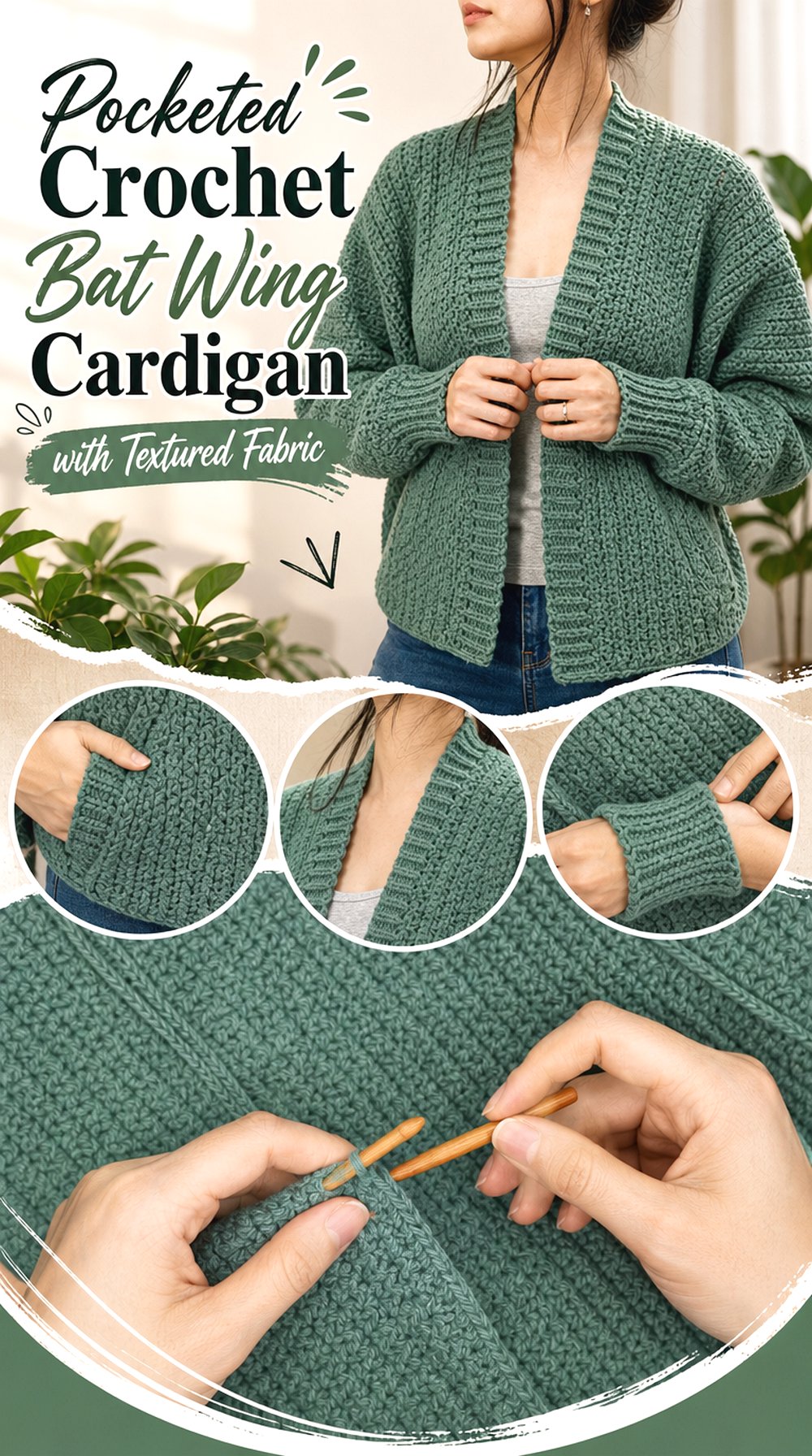
Pockets give this batwing cardigan a more practical, substantial identity. TCDDIY’s tutorial shows a textured open-front cardigan with batwing shaping and pockets, offering a different balance from the shorter or more purely decorative options in this collection. The associated design information identifies Suzette stitch texture in the cardigan.
This idea suits readers who want the loose sleeve line but still expect their cardigan to function as an everyday outer layer. Pockets, however, introduce both weight and visual focus near the lower front. Their placement should be considered as part of the garment’s proportions rather than treated as a finishing detail.
Pocket Weight Can Affect a Draped Front
A pocket on a soft crochet cardigan does not hang independently of the surrounding fabric. The pocket itself, plus anything placed inside it, can pull on an already relaxed front panel.
Before securing placement, pin or baste the pockets temporarily and try the cardigan on. Check whether the fronts remain balanced and whether the pockets sit flat when empty. If you plan to carry more than very light items, pay particular attention to how much the fabric stretches rather than assuming decorative-looking pockets provide rigid storage.
Texture Makes the Wide Sleeve Look More Substantial
Batwing sleeves create a large visible fabric area, so a textured stitch pattern has more visual impact here than it might on a narrow sleeve. That can be an advantage when you want a cozy, defined surface.
The trade-off is that texture can also increase apparent bulk. If your priority is fluid movement, compare a sample of your substitute yarn with the original finished fabric. A yarn that makes the texture too rigid may change the way the sleeve folds beneath the arm.
Decide Where You Want the Cardigan to Carry Visual Weight
This design combines wide sleeves, textured fabric, and pockets, so several features compete for attention. A restrained color can emphasize construction and surface texture, while high-contrast pockets or edging would make the lower front much more prominent.
Before choosing color placement, view the cardigan as a complete silhouette. If the sleeves are your favorite feature, keeping the pocket treatment visually integrated with the body may preserve that emphasis.
Creator: TCDDIY
4. Dense Stitch Crochet Bat Wing Jacket Cardigan
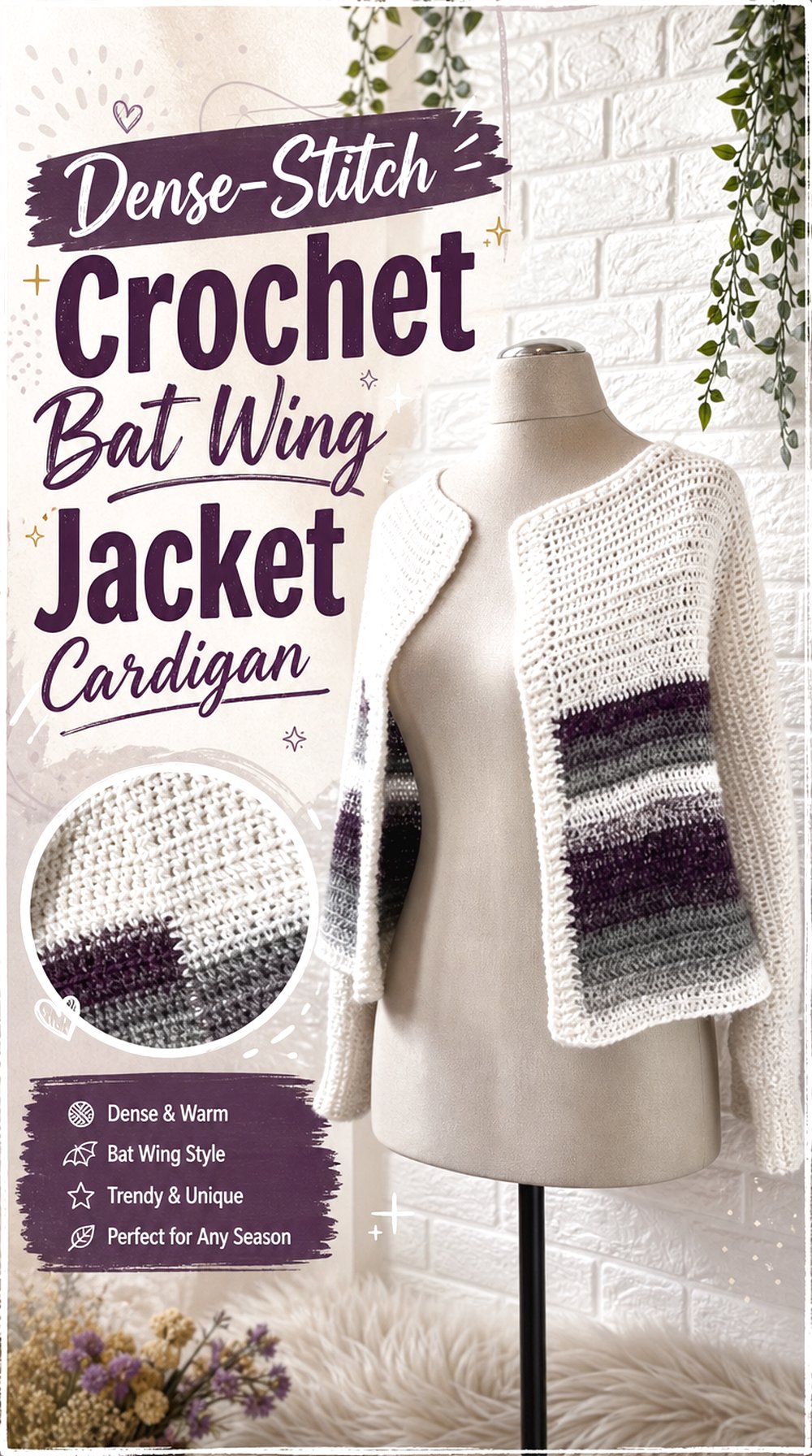
The Rhea design from Sharons Häkel Atelier – Crochet & Knitting takes the batwing concept in a denser, jacket-like direction. The creator describes it as a close-knit batwing cardigan intended as a warmer layer, making it a strong contrast to the lace and summer options later in the list.
Its appeal is the clearer, more substantial garment outline. Rather than relying on large areas of openwork to create flow, the fabric itself carries more visual presence. That makes fabric behavior especially important: too much stiffness can exaggerate the underarm area, while sufficient flexibility allows a dense cardigan to retain the characteristic batwing drop.
Dense Fabric Needs Enough Flexibility to Fold
Batwing shapes depend on fabric being able to collapse into folds when your arms are down. If a substituted yarn creates an unusually stiff fabric, the underarm section may project outward rather than falling toward the body.
Make a generously sized sample rather than a tiny swatch when evaluating this kind of cardigan. Hold it vertically, fold it, and observe whether it bends smoothly. Gauge matters for fit, but drape tells you whether the finished silhouette will behave like the garment you selected.
A Jacket-Like Look Puts More Emphasis on Edges
With a denser surface, irregular cuffs, hems, or front borders tend to be more noticeable because openwork is not visually distracting from them. Check corners and transitions before weaving in every end.
If the two front edges hang differently, correct the underlying tension issue before adding decorative finishing. Extra edging rarely solves a structural imbalance. A cleaner perimeter helps this version retain its more tailored, substantial appearance despite the wide sleeve construction.
Plan This Version Around the Layer Underneath
A dense cardigan may occupy more physical space than an airy dolman layer. When checking fit, wear the type of clothing you intend to place underneath it.
The key question is not simply whether the cardigan closes around the torso. Make sure the batwing area still drops comfortably when your arms are relaxed and that a thicker inner sleeve does not crowd the tapered part near the wrist.
Creator: Sharons Häkel Atelier – Crochet & Knitting
5. Floral Openwork Crochet Dolman Cardigan with Ruffled Edging
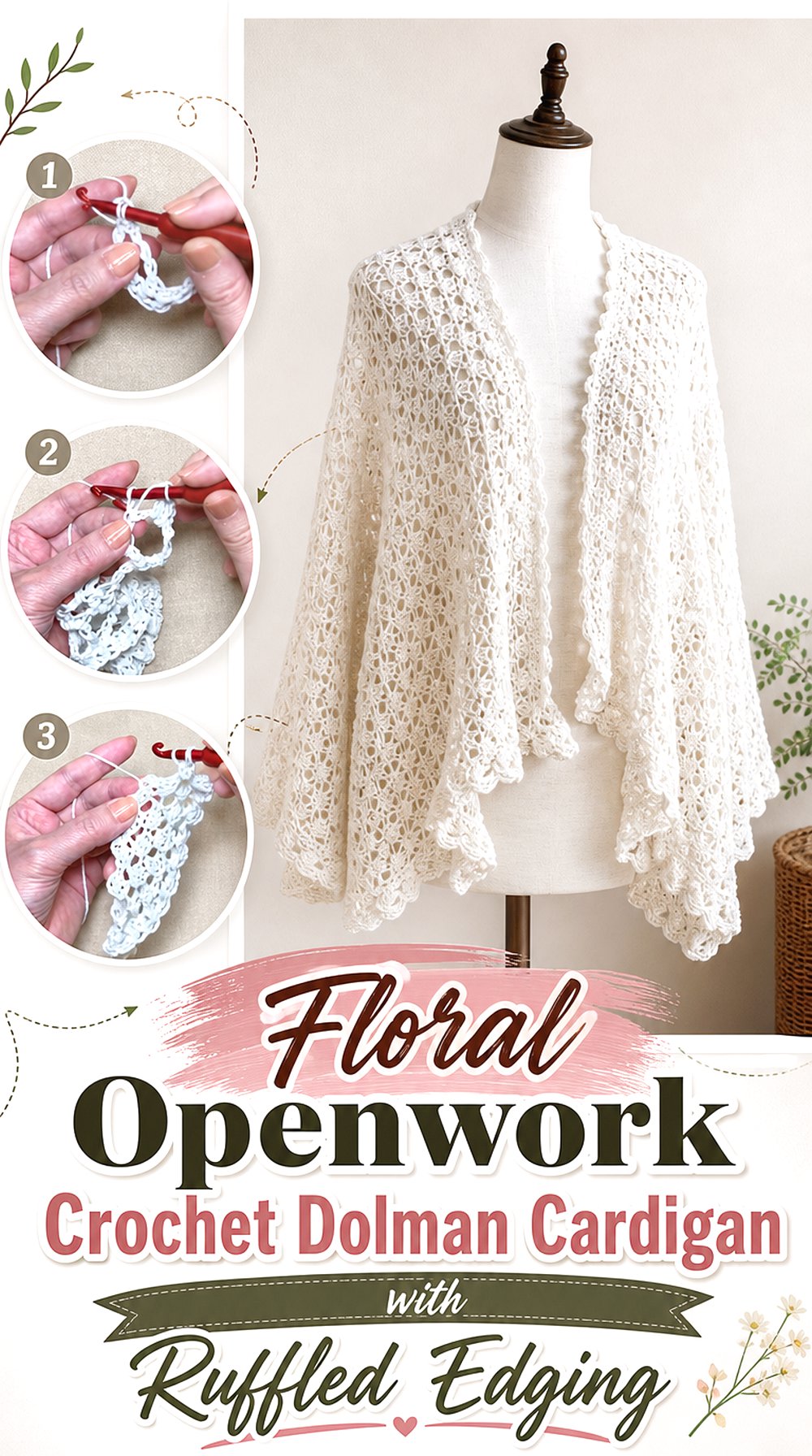
Kiriko Crochet’s floral-patterned dolman cardigan moves in the opposite direction: the finished fabric is airy and decorative, with open floral patterning and a ruffle-style edge. The creator presents it as a fresh warm-weather cardigan rather than a heavy outer layer.
This is a useful choice when you like batwing width but want negative space to reduce the visual density of the garment. The floral fabric also changes how color reads; instead of seeing one uninterrupted field of yarn, the eye notices the pattern of open and solid areas. Because the edging is part of the design, border tension and the way it frames the front deserve as much attention as sleeve width.
Openwork Reduces Visual Mass Without Removing Width
A dolman cardigan can be very broad from wrist to wrist, yet it does not have to look heavy. Floral openings break up the surface and let the clothing underneath become part of the finished look.
That makes layering color an important styling decision. Before settling on yarn color, picture the cardigan over both light and dark garments. High contrast emphasizes every opening in the stitch pattern; lower contrast makes the lace effect subtler.
Ruffled Edging Needs to Look Intentional
A decorative ruffle and an accidentally wavy border can look similar when the garment is lying flat. The difference becomes clearer when worn.
As you work the finishing section, periodically let the cardigan hang naturally rather than evaluating the edge only on a table. If the border becomes much more flared than the creator’s finished result, recheck your tension and the tutorial before continuing. The goal is a deliberate frame around the dolman shape, not uncontrolled rippling.
Use the Sleeve Opening as a Fit Checkpoint
Openwork makes a garment visually light, but the wrist or lower sleeve still determines how securely it sits on the arm. Compare the sleeve opening with your own preferred fit before completing both sides.
A slightly wider opening reinforces the breezy, relaxed character. A closer one creates more contrast between the loose underarm and wrist. Either can work, but modifying the opening may change how far the sleeve slides toward the hand.
Creator: Kiriko Crochet
6. Summer Crochet Momonga Bat Wing Cardigan
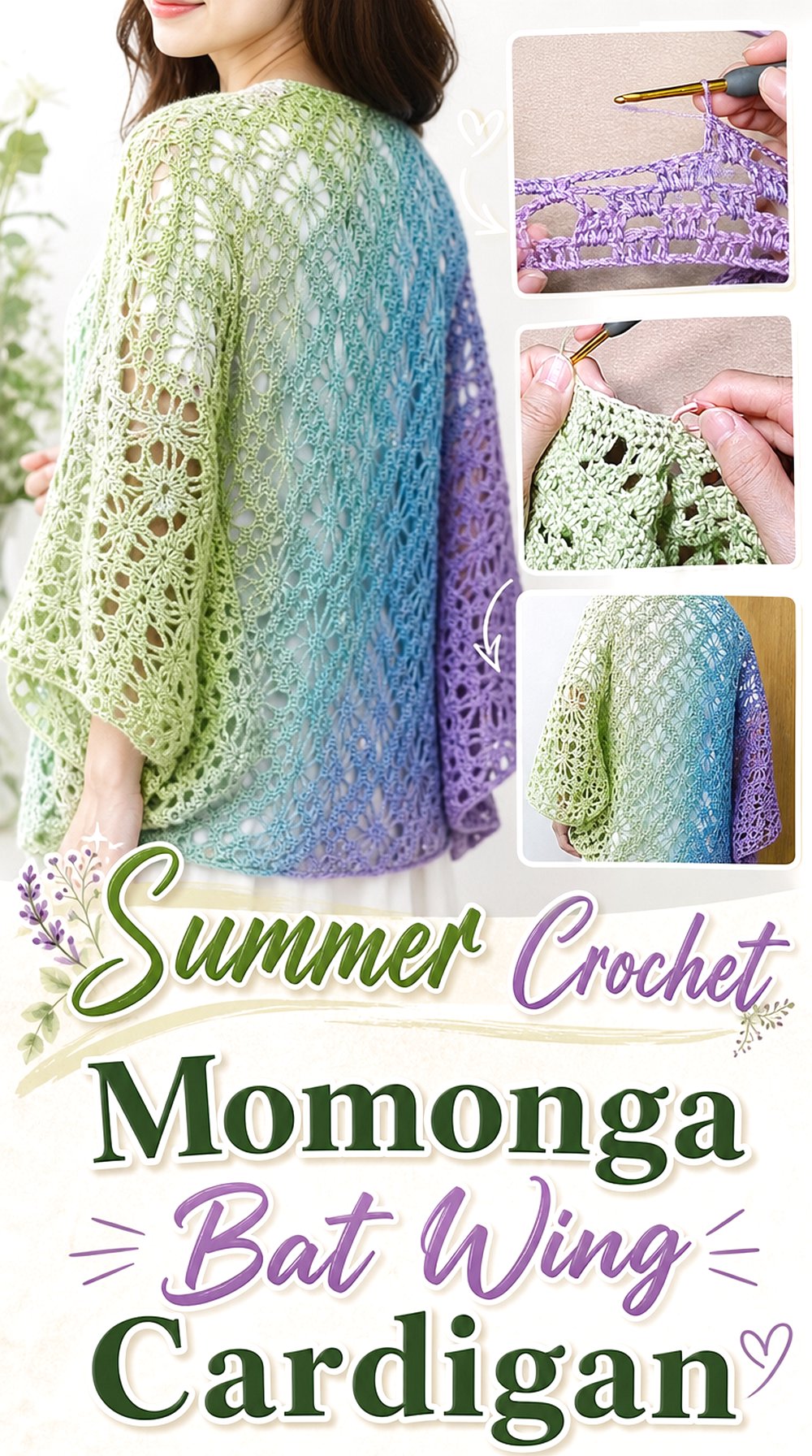
This summer Momonga cardigan from ミカの編み物活動 combines a broad batwing-style form with floral openwork. The tutorial’s finished garment emphasizes width and lightness rather than the dense, cocooned feeling of a winter cardigan.
The result is closer to a dramatic wrap-like summer layer, particularly useful when you want the sleeve span itself to be a design feature. Openwork allows that large surface area to remain visually breathable. Because so much of the final character comes from proportion, avoid assuming that increasing every dimension equally will give the same look in another size. Width, body depth, and sleeve opening each affect the silhouette differently.
Preserve the Relationship Between Width and Depth
The distinctive Momonga look depends on a broad horizontal span paired with a comparatively relaxed body. If you add substantial body length without considering width, the garment can begin to hang more like a conventional long cardigan.
When adapting dimensions, sketch the proposed outline or hold a similarly sized piece of fabric against your body first. This simple visual check helps you decide whether you want more back coverage, more sleeve reach, or both.
Floral Openwork Benefits from Careful Blocking
A repeating lace surface can appear uneven while it is still being worked. Blocking may help the finished openings settle into a more consistent arrangement, but the appropriate method depends on the fiber you choose.
Check the yarn’s care instructions before applying heat or aggressive stretching. The goal is to even the fabric while preserving the intended measurements, not to stretch the cardigan until the sleeve span becomes larger than planned.
Think of This as a Layer, Not a Standalone Top
Large open spaces make the clothing underneath visible, especially across the torso and arms. Plan the cardigan with that interaction in mind.
A simple fitted layer will keep attention on the floral crochet. A printed or highly textured garment underneath can create a busier result because both patterns remain visible. This is one of the easiest batwing ideas to change stylistically without altering the crochet construction itself.
Creator: ミカの編み物活動
7. Corner to Corner Crochet Cocoon Bat Wing Cardigan
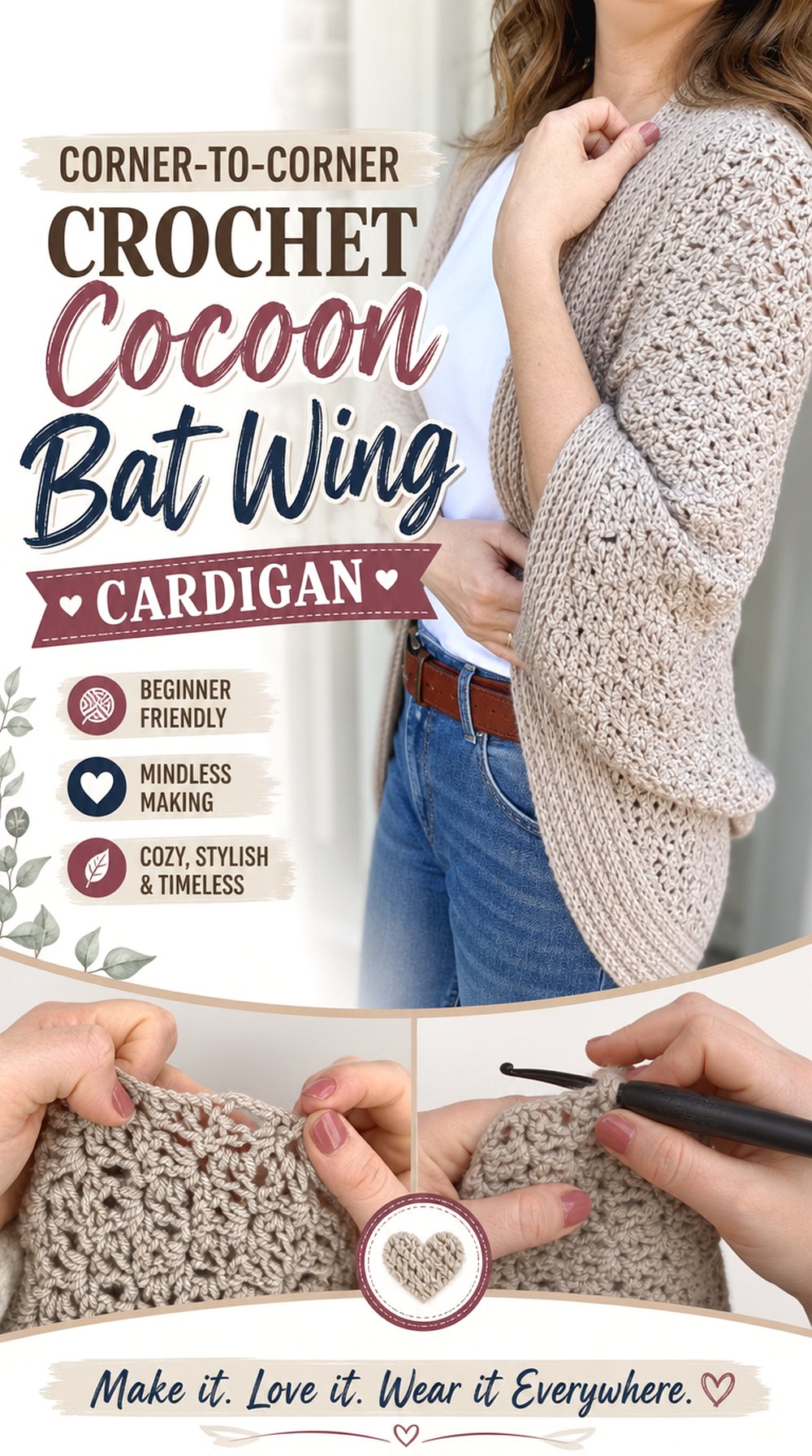
HanJan Crochet’s Theory Cocoon Cardigan starts from a different geometry altogether. Its main body is a lace corner-to-corner square that is folded and seamed to create arm openings, with finishing added afterward. The published pattern supports adult sizing from XS through 5XL.
This is not a shaped dolman sleeve in the conventional sense, but the finished cocoon creates the same broad underarm volume many readers want from a bat wing cardigan. It is especially useful if you enjoy making a large flat piece before transforming it into a garment. The central decision is square size: that measurement influences back coverage, opening depth, and where the cocoon sits on the arms.
Square Size Controls Several Fit Points at Once
In a cocoon cardigan, changing the main square is not the same as lengthening one isolated body panel. Increasing it can affect width, back length, and the amount of fabric folding around the arms simultaneously.
Use the tutorial’s sizing information rather than simply making the square “a little bigger.” If you adapt it, compare the planned square dimensions with your shoulder-to-back coverage and desired sleeve position before finishing the entire piece.
C2C Fabric Has a Distinct Visual Direction
Corner-to-corner construction gives the fabric a diagonal visual flow. Once that square is folded into a cardigan, the direction of the stitches becomes part of the garment’s appearance.
Before seaming, arrange the blocked square in the intended orientation and inspect it from the back. If you use color changes, this checkpoint becomes even more important because diagonal bands or gradients may land differently across the shoulders than they appeared while the piece was flat.
Armhole Seaming Determines How Open the Cocoon Feels
The fold may create the basic cardigan shape, but the amount of side closure influences how freely the piece sits around the upper arm and how much front drape remains.
Follow the tutorial’s construction guidance first. If you plan a personal adjustment, test the seam position temporarily before making it permanent. A small change in the opening can alter both comfort and how far the cardigan wraps toward the front.
Creator: HanJan Crochet
8. Back Motif Crochet Cocoon Bat Wing Cardigan
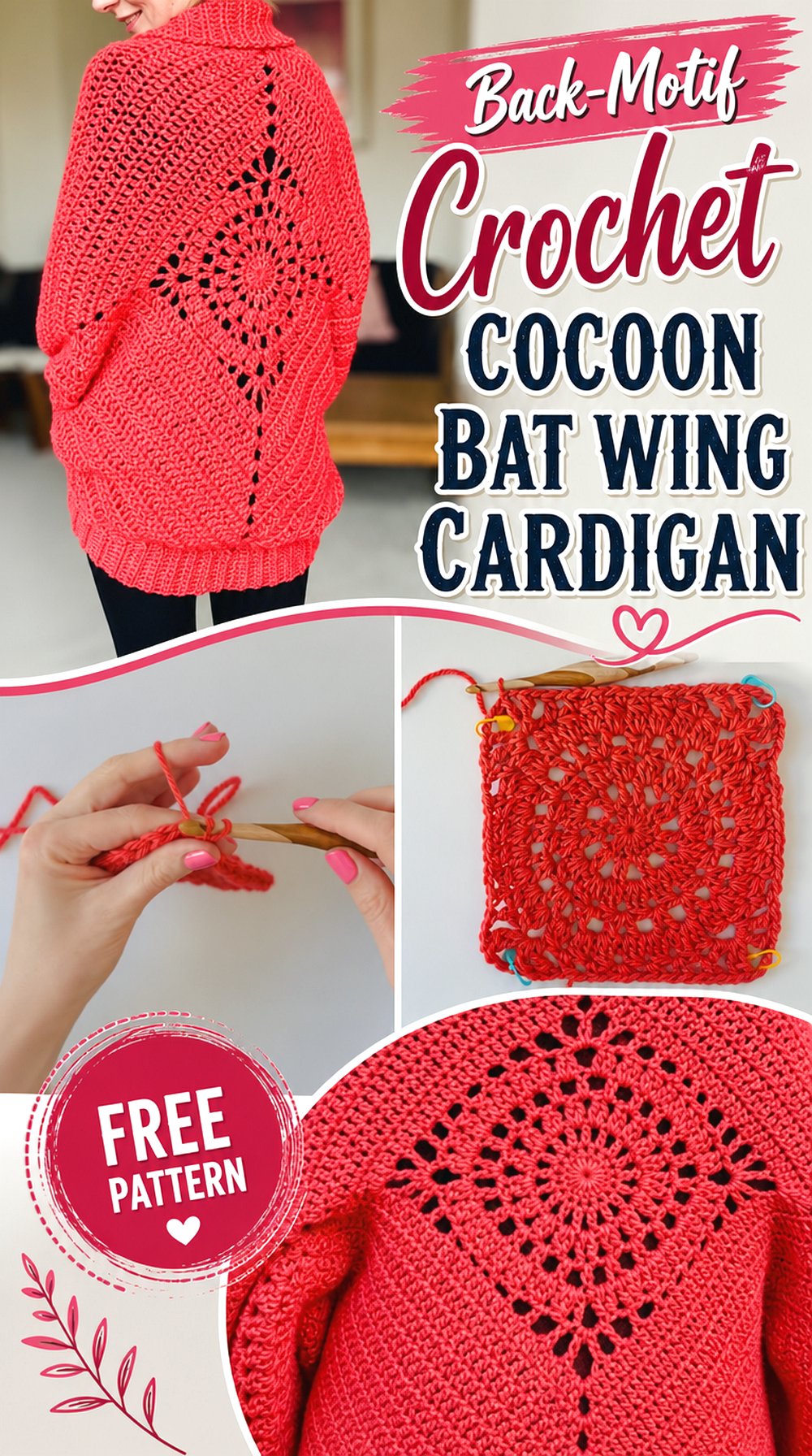
The Dream Catcher Cardi from Ned & Mimi makes the back panel the focal point. It is a cocoon-style cardigan featuring a prominent lace motif at the back, so the garment offers broad drape while still having a clearly defined decorative center.
This is a strong option if a plain rectangle feels too minimal but you still like cocoon construction. The motif introduces orientation: unlike an all-over repeat that can look similar from many directions, this cardigan has a visual center that needs to sit convincingly across the back. That also makes color planning more consequential because contrast can either emphasize the motif or let it blend into the rest of the fabric.
Center the Motif Before Judging the Overall Fit
When one large design anchors the back, even a comfortable cardigan can look visually off-balance if that motif appears shifted. Before completing final finishing, hang or wear the piece and inspect it from behind.
Check the decorative center relative to your spine rather than relying entirely on the outer edges. Cocoon fabric naturally wraps forward, so the garment can look asymmetrical on a table even when it hangs correctly on the body.
Motif Scale Changes the Character of the Whole Cardigan
A large lace feature makes this cardigan read differently from a uniform stitch pattern. If you substitute yarn and the motif grows or contracts significantly, the change affects more than fit—it changes how dominant the design appears on the back.
For that reason, gauge and blocked dimensions are particularly important. Confirm that the finished motif-to-body relationship still resembles the look you selected before proceeding with a major yarn substitution.
Keep the Front Simple if the Back Is the Feature
A decorative back benefits from some visual breathing room. Adding strong stripes, contrasting borders, or unrelated embellishments to the front can make the garment feel much busier.
If customization is your goal, consider changes that reinforce the existing focal point, such as a restrained border or a tonal color shift. View the cardigan from both front and back before deciding; a cocoon shape exposes different portions of the fabric as you move.
Creator: Ned & Mimi
9. Fuzzy Ribbed Crochet Cocoon Bat Wing Cardigan
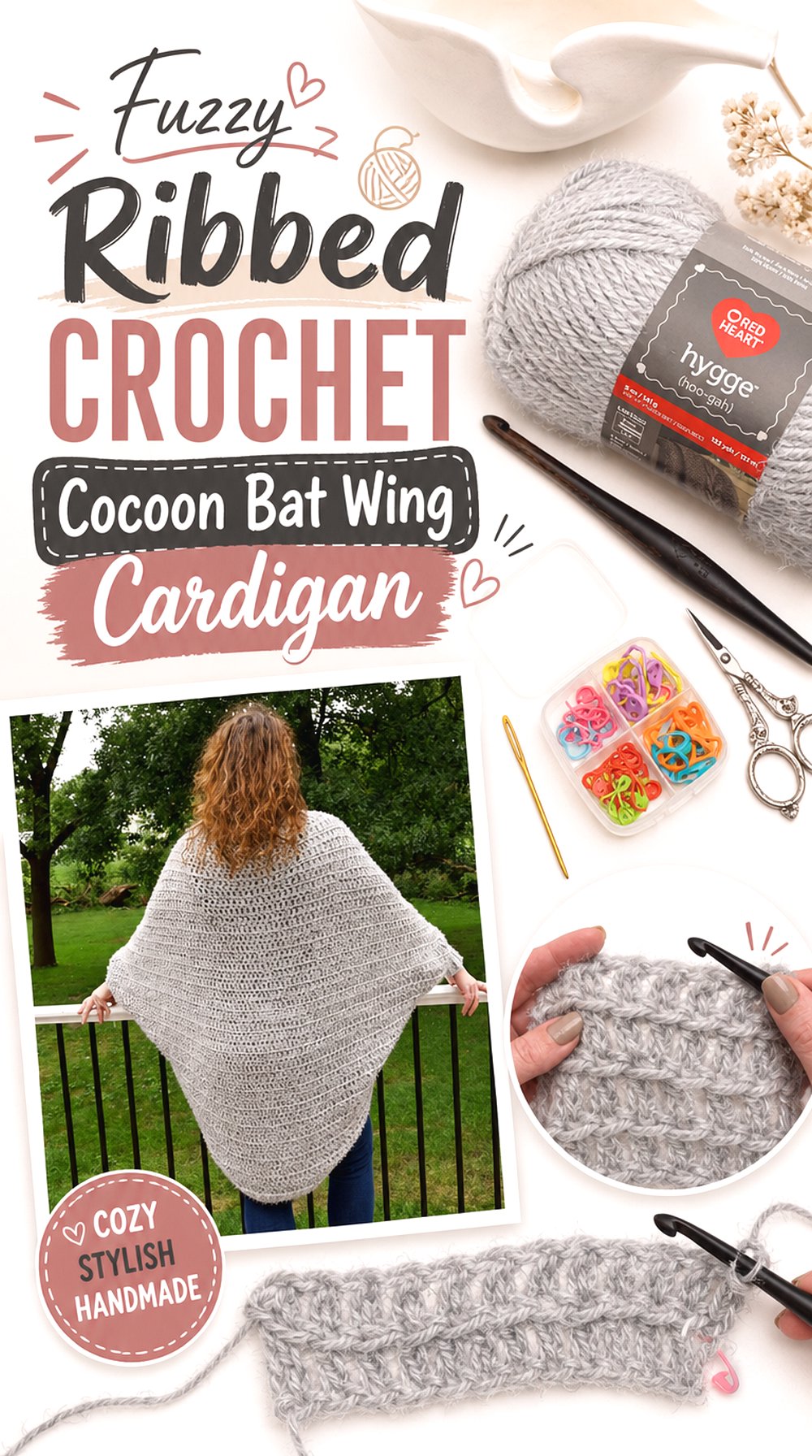
Tamara Kelly’s Hygge Cocoon Cardigan uses an oversized cocoon shape with prominent ribbed sleeves and highly textured yarn. The published design is intentionally roomy and uses folded construction to create the body before the sleeve and finishing details define the final shape.
This version is useful when the priority is softness and cold-weather layering rather than lace definition. The textured yarn changes the project visually: individual stitches are less prominent, while the overall surface and silhouette become more important. That means consistent tension still matters even when every stitch is not sharply visible. The ribbed sleeves provide a valuable counterpoint to the broad cocoon body.
Textured Yarn Can Hide Stitches but Not Fit Problems
A fuzzy yarn may disguise small variations in stitch appearance, but it will not hide a body panel that is significantly too large or a sleeve opening that sits in the wrong place.
Measure the fabric during construction even if counting individual stitches feels less visually straightforward. Once a large cocoon body has been assembled, fixing overall dimensions is much more disruptive than correcting them while the piece is still flat.
Ribbed Sleeves Balance the Oversized Body
The fitted-looking ribbed sleeve treatment gives the eye a clear endpoint after the large underarm area. That contrast prevents the entire garment from appearing uniformly loose.
If you substitute a fiber with much less elasticity, check whether the ribbing still behaves as expected before completing both sleeves. A cuff can match the intended dimensions initially yet feel different after repeated stretching, particularly in a heavier garment.
This Shape Needs a Storage Plan
Oversized crochet garments can stretch when their own weight is concentrated on a narrow hanger, especially when the fabric is soft. A cocoon cardigan has a large body area, so long-term hanging may not always be the most supportive storage method.
Check the yarn care instructions and consider folded storage if the finished cardigan begins to lengthen on a hanger. Before washing, also confirm the fiber’s recommended cleaning method rather than assuming a fuzzy yarn can be treated like another cardigan yarn.
Creator: Tamara Kelly – Moogly
Which Crochet Bat Wing Cardigan Shape Should You Choose?
For the clearest true batwing or dolman sleeve line, start with the Madeleine Shirley, Crafting Shed, TCDDIY, Rhea, Kiriko Crochet, or Momonga options. They make the wide sleeve relationship a major part of the garment’s identity.
For a simpler folded construction with generous underarm drape, the HanJan, Dream Catcher, and Hygge cocoon cardigans are stronger matches. HanJan emphasizes a C2C square, Dream Catcher adds a statement back motif, and Hygge places more emphasis on cozy texture and ribbed sleeves.
For warmer weather, prioritize openwork and lighter-looking fabric. For a substantial cold-weather layer, dense or highly textured fabric creates a noticeably different result.
Conclusion
The right crochet bat wing cardigan depends on which part of the silhouette matters most to you. Choose a cropped design when you want sleeve width to dominate, a panel-based cardigan for a clearer open-front garment shape, or a pocketed version when everyday function matters. Floral dolman and Momonga styles give broad sleeves a lighter appearance, while C2C and motif-backed cocoons shift the emphasis toward relaxed back drape. The fuzzy Hygge version moves furthest toward a cold-weather cocoon.
Before choosing yarn or color, compare construction, underarm depth, cuff treatment, and body length. Those decisions determine how the cardigan actually hangs. Use the original tutorials near each idea for the creators’ exact construction and finishing details.
Frequently Asked Questions
What is the difference between a crochet bat wing cardigan and a cocoon cardigan?
A true batwing or dolman cardigan usually creates sleeve width as part of the body’s shaping, so the fabric flows continuously from the torso toward the wrist. A cocoon cardigan often starts as a large square or rectangle that is folded and partially seamed to create arm openings. Both can produce deep underarm drape, but the shoulder, back, and front-opening geometry can look quite different.
How do I know whether a batwing cardigan will have too much fabric under the arms?
Look at the finished garment with the wearer’s arms lowered. Notice how far the lowest underarm point drops and how much fabric gathers against the torso. If you are working from a tutorial, compare those proportions with a garment you already find comfortable. Changing width, body depth, or armhole placement can all affect the amount of underarm fabric, so avoid adjusting one dimension without considering the others.
Can I use a different yarn for a crochet bat wing cardigan?
Yes, but matching yarn category alone does not guarantee the same result. Batwing cardigans are especially sensitive to drape because a large amount of fabric may hang beneath the arms. Make a sample and compare gauge, flexibility, weight, and stitch definition with the tutorial’s fabric. If your sample is much stiffer or heavier, expect the finished sleeve folds and overall hang to change.
Are openwork bat wing cardigans better for summer?
Openwork can make a broad cardigan feel and look lighter because the fabric contains more negative space, as seen in the floral dolman and Momonga examples. However, seasonal comfort also depends on fiber, yarn thickness, layering, climate, and the amount of fabric in the garment. Treat stitch openness as one factor rather than a guarantee that a cardigan will feel cool.
How should I check the fit before finishing the cuffs and border?
Try the cardigan on over the type of clothing you expect to wear beneath it. Lower your arms naturally, reach forward, and check whether the body rides up or the underarm section feels restrictive. Then look at wrist placement and front-edge balance. If the cardigan is a cocoon construction, temporarily secure seams where possible before finishing so you can evaluate the arm openings and wrap.
Can I make a cocoon cardigan longer without changing the sleeves?
It depends on the construction. With a square- or rectangle-based cocoon, enlarging the main piece can change several dimensions at once, including back coverage and arm position. HanJan Crochet’s cardigan, for example, derives its body from a C2C square, so the main geometry affects more than a conventional hemline. Check the creator’s sizing or modification guidance before treating extra length as an isolated adjustment.