
13 Crochet Blind Bag Amigurumi Ideas for a Mystery Mini Collection
Crochet blind bags work best when the surprise is bigger than a simple color change. A good mystery collection can mix round creatures, upright characters, flat-tailed animals, dangling tentacles, seasonal shapes, and even tiny food-inspired amigurumi while still looking like one coordinated set.
The 13 ideas below range from a one-piece bear and tiny whale to a jellyfish, frog, ghost, dinosaur, apple, and boba tea character. Some minimize sewing, while others use extra details that could make them useful as special or less-common designs within a collection. Each project points back to an original creator tutorial rather than reproducing its pattern. You’ll also find guidance for keeping your minis visually consistent, choosing materials sensibly, and handling small parts when the finished surprise may be given to children.
Quick List
- Crochet Star Bear Mystery Mini
- Crochet Tiny Whale Pocket Plush
- Crochet Mini Octopus Surprise Toy
- Crochet Jellyfish Pocket Amigurumi
- Crochet Two-Tone Mini Cat
- Crochet Axolotl Bag-Charm Mini
- Crochet No-Sew Mini Turtle
- Crochet Tiny Bumblebee Plush
- Crochet Micro Frog Collector Figure
- Crochet Mini Ghost Mystery Character
- Crochet Tiny Dinosaur Pocket Toy
- Crochet Mini Apple Amigurumi
- Crochet Mini Boba Tea Character
How to Make a Blind Bag Collection Feel Like One Set
Consistency does not require thirteen nearly identical shapes. In fact, silhouette variety makes the reveal more interesting. Instead, choose two or three unifying decisions: a limited yarn family, similar facial styling, a repeated accent color, or a general finished-size range.
Before making multiples, crochet one sample from each tutorial you plan to use and compare them side by side. Designers use different yarn weights, hook sizes, proportions, and construction methods, so two patterns described as “mini” may not actually finish at comparable scales. When necessary, consider using a thinner or thicker yarn with an appropriately matched hook, but remember that substitutions can also alter stiffness, stitch definition, and how securely stuffing is contained.
A collection might also benefit from visual tiers: simple rounded characters as the core group, unusual silhouettes as secondary surprises, and one or two detail-heavy designs as special reveals.
Yarn, Stuffing, and Finishing Matter More at Small Scale
Tiny amigurumi gives every stitch more visual importance. Loose fabric can expose stuffing, while excessive stuffing can stretch small bodies out of the shape the designer intended. Aim for an even, dense fabric and add stuffing gradually rather than forcing a miniature piece completely full.
Yarn choice also changes the personality of a blind-bag set. Smooth cotton or acrylic can make facial embroidery and color changes easier to see, while chenille creates a softer plush appearance but can obscure tiny shaping details. Do not assume that a yarn substitution will preserve the tutorial’s finished dimensions.
For a coordinated collection, decide how faces will be handled before producing multiples. Embroidered eyes create a different look from plastic eyes, and switching between them randomly can make otherwise coordinated characters feel unrelated.
Small-Part Safety and Mystery Packaging
Blind-bag amigurumi is often appealing to children, so intended use matters. Plastic safety eyes, beads, charms, keychain fittings, detachable hats, wings, or other small components require additional consideration if a toy may reach babies or toddlers. Embroidered facial features may be a more appropriate option in some situations, but construction and recipient age still need to be considered.
Check each original tutorial before changing how parts are attached, and inspect seams and embellishments before gifting a finished piece. Packaging also deserves attention: avoid loose small accessories for young recipients, and do not assume that handmade packaging or a particular eye style creates a certified age or safety rating.
If you plan to sell mystery minis, also review the individual designer’s finished-item permissions rather than assuming one tutorial’s terms apply to the entire collection.
1. Crochet Star Bear Mystery Mini
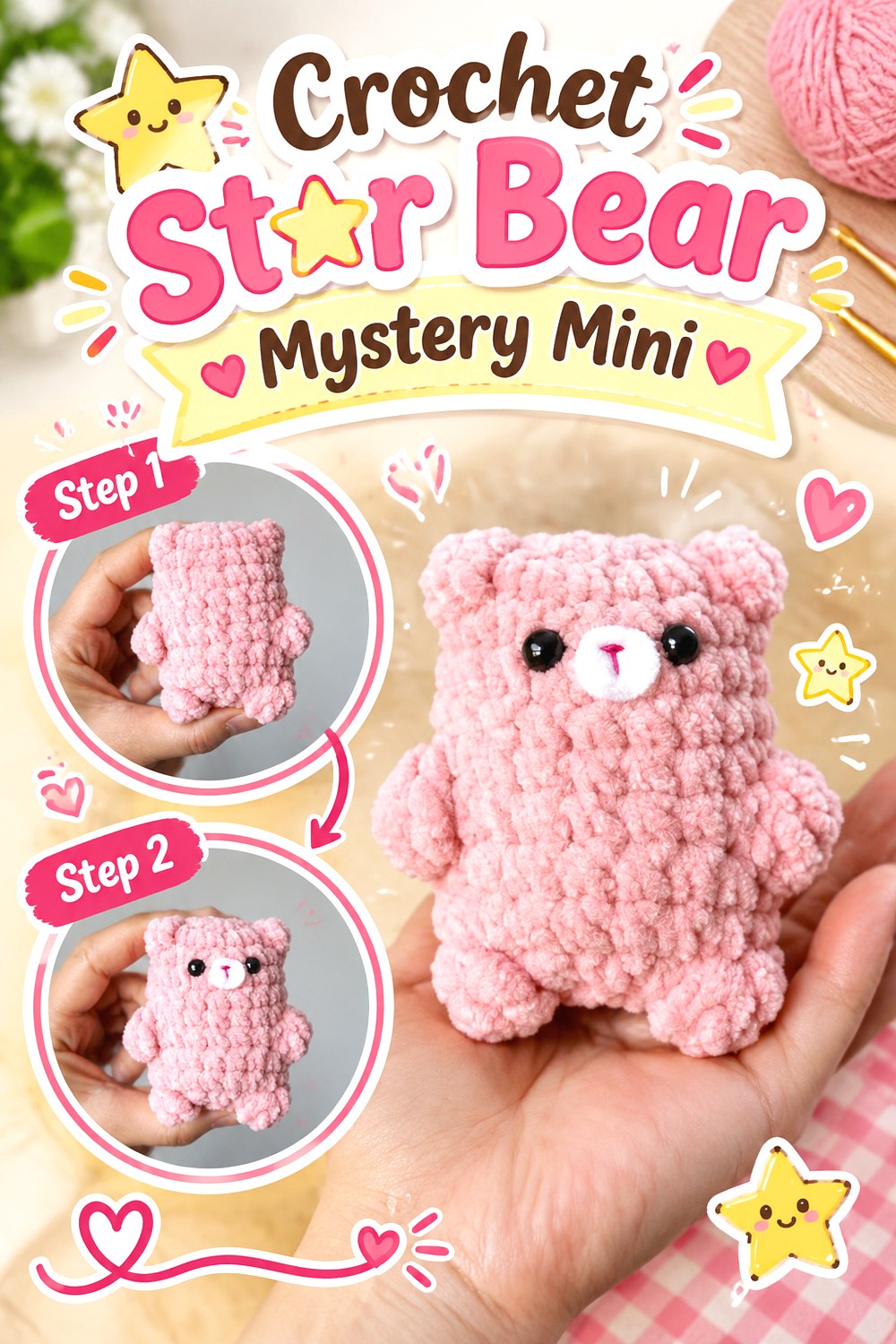
This compact bear is a natural starting point for a blind-bag series because its recognizable ears, stubby limbs, and rounded body create a complete character without an elaborate silhouette. Sweet Softies presents the Star Bear as a small, one-piece no-sew amigurumi and shows multiple color-customization possibilities, making the underlying design especially suitable for a coordinated family of bears.
Rather than making every bear a simple recolor, reserve different color layouts for recognizable subtypes within the collection. A mostly solid bear, two-color outfit version, and high-contrast variation can share the same general proportions while still making individual reveals visually distinct.
Keep the Face Consistent Across Variants
Because the body is deliberately compact, a small shift in eye or muzzle placement can noticeably change the expression. If you make several bears, decide whether the whole collection will use the tutorial’s facial treatment or an appropriately secured embroidered alternative.
Consistency is particularly useful when color is the main variable. It lets the different bears read as members of one character family instead of unrelated experiments.
Use Color as a Collection System
Color works best when it communicates a deliberate category. You might create a neutral group, a pastel group, and one contrasting special version rather than selecting every yarn randomly.
If you change yarn type as well as color, make a sample first. A smooth yarn and plush chenille can produce noticeably different apparent proportions even when the same underlying design is followed.
Original Tutorial and Creator Credit
Creator/Site: Sweet Softies
2. Crochet Tiny Whale Pocket Plush

A horizontal whale immediately changes the shape language of a collection dominated by upright animals. PlanetJune’s Tiny Whale is designed to sit in the palm and is crocheted as one piece, giving it a streamlined body with the tail providing most of the recognizable silhouette.
For a blind bag, that low, rounded form can make the whale feel substantially different when revealed even if you maintain the same yarn palette used elsewhere. It can also provide an ocean-themed anchor if you want to include the octopus and jellyfish later in the set. Pay particular attention to keeping the body evenly stuffed so the tail remains visually distinct instead of disappearing into an over-rounded form.
Preserve the Whale Silhouette
With such a compact animal, the relationship between body and tail matters more than adding decorative extras. Excess stuffing near the back can make a small tail appear undersized, while uneven filling may twist the body.
Shape the finished piece gradually and compare both sides before closing it completely. The goal is a recognizable whale profile from more than just the front.
Coordinate Without Making an Ocean Set Monotonous
The whale does not need to match the octopus or jellyfish exactly. Consider giving each ocean creature a different silhouette and one recurring accent color instead.
That approach provides cohesion without turning the blind-bag assortment into three variations of the same blue plush. It also makes individual characters easier to recognize through packaging photographs or collection checklists.
Original Tutorial and Creator Credit
Creator/Site: PlanetJune
3. Crochet Mini Octopus Surprise Toy

The mini octopus brings a completely different outline: a rounded head over a ring of short legs. MohuMohu’s original Mini Octopus Amigurumi Pattern includes both the written pattern and an accompanying video version, with the creator noting that the design was updated from an earlier version of the project.
In a blind-bag collection, an octopus provides strong visual payoff without requiring a tall figure. It also offers a useful color opportunity because the body can carry one clear dominant shade. If you make a group of them, check the lower edge carefully; uneven leg tension can make one side appear heavier or prevent the figure from sitting the way you expect.
Let the Legs Create the Character
The octopus already has a busy lower silhouette, so it rarely needs many extra embellishments to read clearly. Keeping decoration restrained can make the legs and facial expression the focal points.
If you experiment with yarn thickness, make a prototype before committing to the collection. Very fuzzy yarn may soften the individual leg shapes enough that the octopus loses some of its graphic clarity.
Watch for Twisting at the Base
Small repeated elements can magnify tension inconsistencies. If the base begins pulling noticeably to one side, check your stitch tension and orientation rather than trying to force the finished toy flat with stuffing.
For a blind-bag series, a stable lower profile is useful because it makes several characters easier to photograph or display together.
Original Tutorial and Creator Credit
Creator/Site: MohuMohu
4. Crochet Jellyfish Pocket Amigurumi
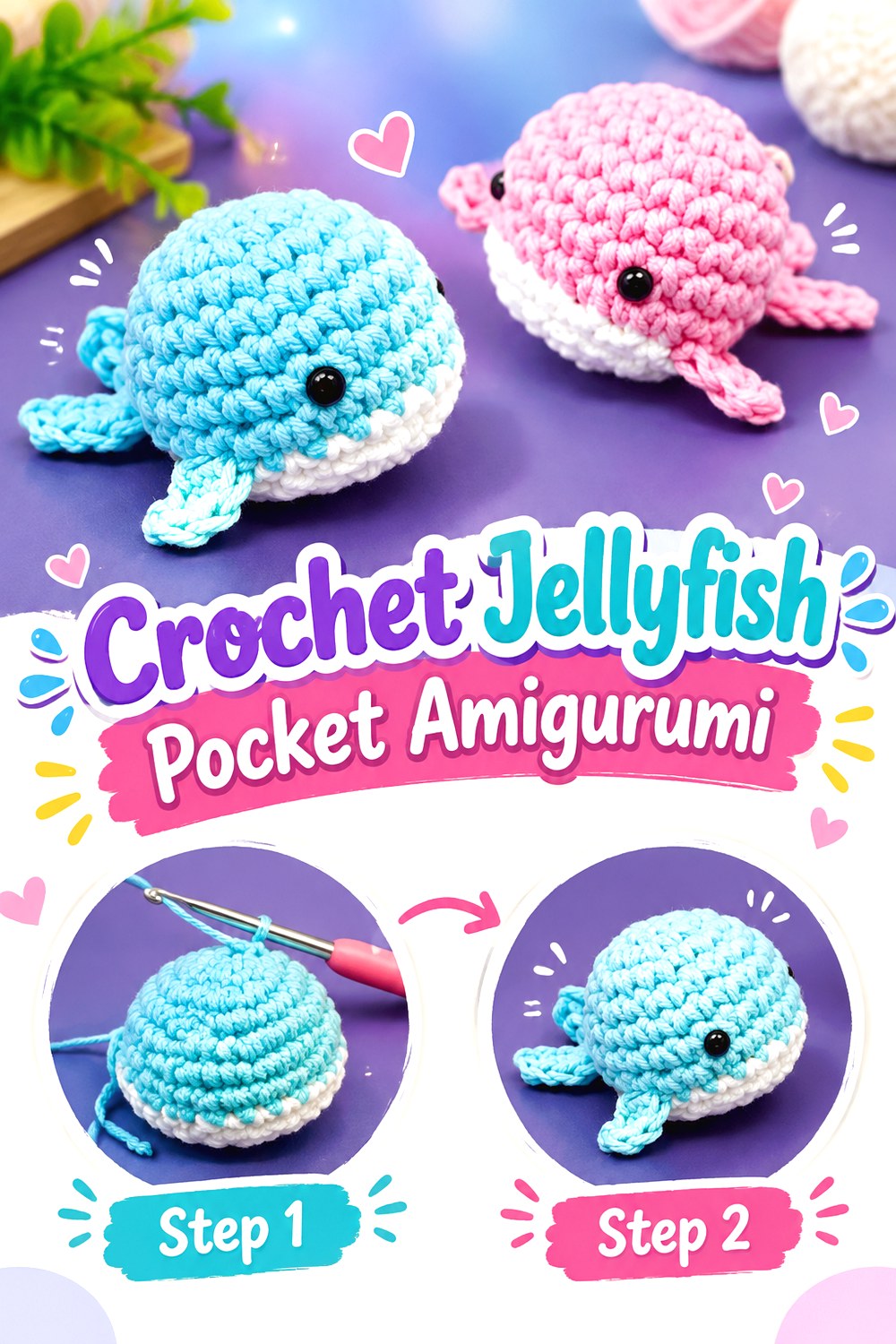
The jellyfish is the first character here that introduces movement through hanging, curled elements rather than limbs. Club Crochet’s Jellyfish Minigurumi uses a compact stuffed head with curling tentacles and is presented as a no-sew miniature design.
That makes it useful for breaking up the solid, rounded shapes in a mystery collection. The tentacles can also make a tiny figure appear more substantial without requiring a large stuffed body. For packaging, however, those curls should have enough space that they are not crushed into a permanent tangle. If you are standardizing bag dimensions, test the jellyfish early because its hanging shape may require a different interior arrangement from bears or frogs.
Protect the Curled Tentacles
Curled crochet can compress more readily than a stuffed body. If a jellyfish will spend time inside opaque packaging, avoid forcing it into a packet that is barely large enough.
A small amount of extra room helps preserve the visible curl pattern. It can also reduce the amount of reshaping needed after the mystery bag is opened.
Use It as a Silhouette Break
When several blind-bag figures share similar round heads and short legs, the jellyfish creates contrast immediately. That makes it a good candidate for a less-common assortment slot even without complicated colorwork.
You can reinforce the difference with a color that appears elsewhere only as an accent, creating a special reveal while keeping the overall palette connected.
Original Tutorial and Creator Credit
Creator/Site: Club Crochet / Louie’s Loops
5. Crochet Two Tone Mini Cat

A cat introduces recognizable ears and facial personality without needing a tall or complex animal body. ETM’s Studio’s video specifically demonstrates mini cats in both one-color and two-color versions and includes separate attention to eye placement, ears, and finishing details. Watch on YouTube
For mystery bags, the two-color option creates more design space than simply producing thirteen solid cats. Patches can make individual characters identifiable, but extremely small color areas can be harder to reproduce consistently across a batch. Decide whether your collection needs precise matching or intentionally varied markings. Either approach can work; inconsistency only becomes distracting when it looks accidental.
Plan Markings Before Starting a Batch
Two-color cats benefit from a visual plan. Sketch or photograph the first successful combination and use it as a reference if you want repeatable variants.
If each cat is meant to be different, keep one constant—such as face style or ear color treatment—so the series still feels related.
Avoid Overloading a Tiny Face
Ears, eyes, muzzle details, and patches already compete for limited space. Adding bows, beads, or other embellishments can quickly make a miniature cat visually crowded.
For a blind-bag version, one strong color marking often creates more character than several small additions. This also reduces the number of components that need checking after assembly.
Original Tutorial and Creator Credit
Creator: ETM’s Studio
6. Crochet Axolotl Bag Charm Mini

The axolotl has one of the most distinctive outlines in the collection because the side gills create instant recognition. Heather Corinne Crochets’ tutorial is specifically for a mini no-sew axolotl bag charm and separates its visual construction into the body, face, gills, and tail. Watch on YouTube
That combination makes this a strong candidate for a standout mystery character. The gills add more visual detail than the smoother whale or bear, while the tail keeps the silhouette directional. If you plan to attach bag hardware, treat it as an optional adaptation rather than assuming every recipient needs a charm. A plain stuffed version may suit a general mystery collection better.
Make the Gills the Focal Detail
The side gills are what separate an axolotl from a generic small aquatic creature. Strong contrast can help them stay visible, but too many extra colors may compete with that feature.
When substituting yarn, check whether the chosen texture keeps the small protrusions distinct. Very fluffy yarn can visually merge close-set details.
Decide Whether Hardware Belongs in the Bag
A keyring or clasp changes the item from a small plush into an accessory and introduces additional hard components. That can be useful for older recipients who want backpack charms, but it is not necessary to preserve the character.
If you offer both formats, distinguish them clearly rather than hiding unexpected metal hardware inside otherwise soft mystery toys.
Original Tutorial and Creator Credit
Creator: Heather Corinne Crochets
7. Crochet No Sew Mini Turtle

A turtle gives the collection a wide, low shape that reads differently from upright bears, cats, and frogs. OkieGirlBling’n’Things’ mini turtle is designed as a no-sew project, with the head and legs incorporated as the work progresses rather than attached as separate pieces afterward.
The contrast between the shell and body also creates a useful built-in color scheme. Instead of making every turtle a random combination, consider assigning shell families—earth tones, brights, or pastels—while keeping the body more consistent. That gives you controlled variety without requiring additional accessories. Because the shell creates the dominant shape, keep stuffing and tension balanced so it does not become visibly lopsided.
Treat the Shell as the Main Design Surface
A turtle already provides a natural two-part color layout. That makes the shell a better place for controlled variation than adding unnecessary decorative pieces.
A special-edition turtle could use a contrasting shell palette while retaining the same face and body treatment as the common versions. This changes the reveal without altering the underlying construction.
Check the Four-Sided Balance
Small legs or flippers positioned around a compact body can look uneven if tension changes noticeably from one section to another. View the finished turtle from above before final shaping.
If one side appears compressed, adjust stuffing distribution gently rather than stretching a single limb. Balanced proportions will make the shell read more cleanly.
Original Tutorial and Creator Credit
Creator/Site: OkieGirlBling’n’Things
8. Crochet Tiny Bumblebee Plush

A striped bee adds graphic contrast to the collection. Hooked by Robin’s Tiny Bee combines a rounded striped body with separate wings and is supported by both a written pattern and full video tutorial.
The strong body bands make this character visually effective even at a very small scale. Unlike a solid-colored bear or whale, however, uneven color transitions may be more noticeable because the stripes become part of the silhouette. If you are batching several bees, pay attention to keeping their bodies similarly shaped rather than obsessing over making every facial detail identical. Handmade variation can be appealing, but clearly uneven body proportions may stand out in a collection display.
Keep the Stripes Visually Clean
When color changes form horizontal bands, abrupt tension differences can create bumps or narrowing at the transition. Maintain the same working tension when switching colors.
Before stuffing completely, turn the bee and look at the stripe alignment from several angles. A clean banded body provides most of the visual impact without needing many embellishments.
Wings Need Secure Finishing
The wings are separate elements in this design, so attachment quality matters if the bee will be handled rather than displayed. Check both attachment points after finishing and again before packaging.
For recipients where small detachable pieces are a concern, review whether the original construction and intended use suit the situation rather than making unsupported safety assumptions.
Original Tutorial and Creator Credit
Creator/Site: Hooked by Robin
9. Crochet Micro Frog Collector Figure

Supergurumi’s frog is notably small: the designer shows a seated miniature made with fine yarn and a small hook, producing a compact figure with a clear frog profile. That scale makes it an interesting contrast to plush-yarn mystery minis, although switching the frog into thicker yarn would change its finished dimensions.
The seated pose is the feature worth preserving. It makes the frog feel more like a tiny collectible figure than a rounded ball animal, and its legs create a broader base. For a coordinated set, you do not have to force every source into exactly the same yarn. Instead, first determine whether you want a deliberately micro-scale collection or a softer, chunkier one, then adapt only after making comparison samples.
Protect the Seated Pose
A small frog can lose its identity if overstuffing turns the body into a generic sphere. Use enough filling to support the shape while allowing the legs and body proportions to remain visible.
After finishing, set the frog beside other minis rather than evaluating it alone. That makes scale mismatches easier to spot.
Scale Changes Can Be Dramatic
Moving from fine yarn to a much heavier plush yarn does more than make the frog larger. It can soften small shaping transitions and alter how clearly limbs separate from the body.
If your goal is a uniform blind-bag assortment, make one substituted sample first and compare height, width, and visual weight with the rest of the planned collection.
Original Tutorial and Creator Credit
Creator/Site: Supergurumi
10. Crochet Mini Ghost Mystery Character

A ghost provides a simple seasonal or fantasy silhouette without ears, tails, or separate legs. The Loopy Lamb’s mini ghost tutorial is a no-sew amigurumi design, and the creator also includes a witch-hat option that can be treated separately from the main ghost.
That optional accessory suggests an obvious blind-bag strategy: keep the plain ghost as the standard version and reserve a securely attached or separately disclosed hat version as a special variation. The design is also useful when a collection needs a calmer shape between more intricate animals. Since the lower edge creates the ghostly outline, stuffing should support the body without making the bottom so rounded that the silhouette disappears.
Turn the Hat Into a Deliberate Variant
A removable accessory changes both the look and the handling characteristics of a mini. If you use the hat, decide whether it is decorative, permanently attached, or intentionally removable.
Do not package a loose accessory without considering the recipient. For a general collection, the plain ghost can remain visually strong without an additional part.
Maintain the Floating Shape
The ghost works because the lower edge differs from the feet-and-body structure of most amigurumi animals. Avoid forcing it to imitate the same standing posture as the bear or dinosaur.
When arranging collection photography, let the ghost’s different outline show. Variety in base shapes makes a mystery series more visually interesting.
Original Tutorial and Creator Credit
Creator/Site: The Loopy Lamb
11. Crochet Tiny Dinosaur Pocket Toy
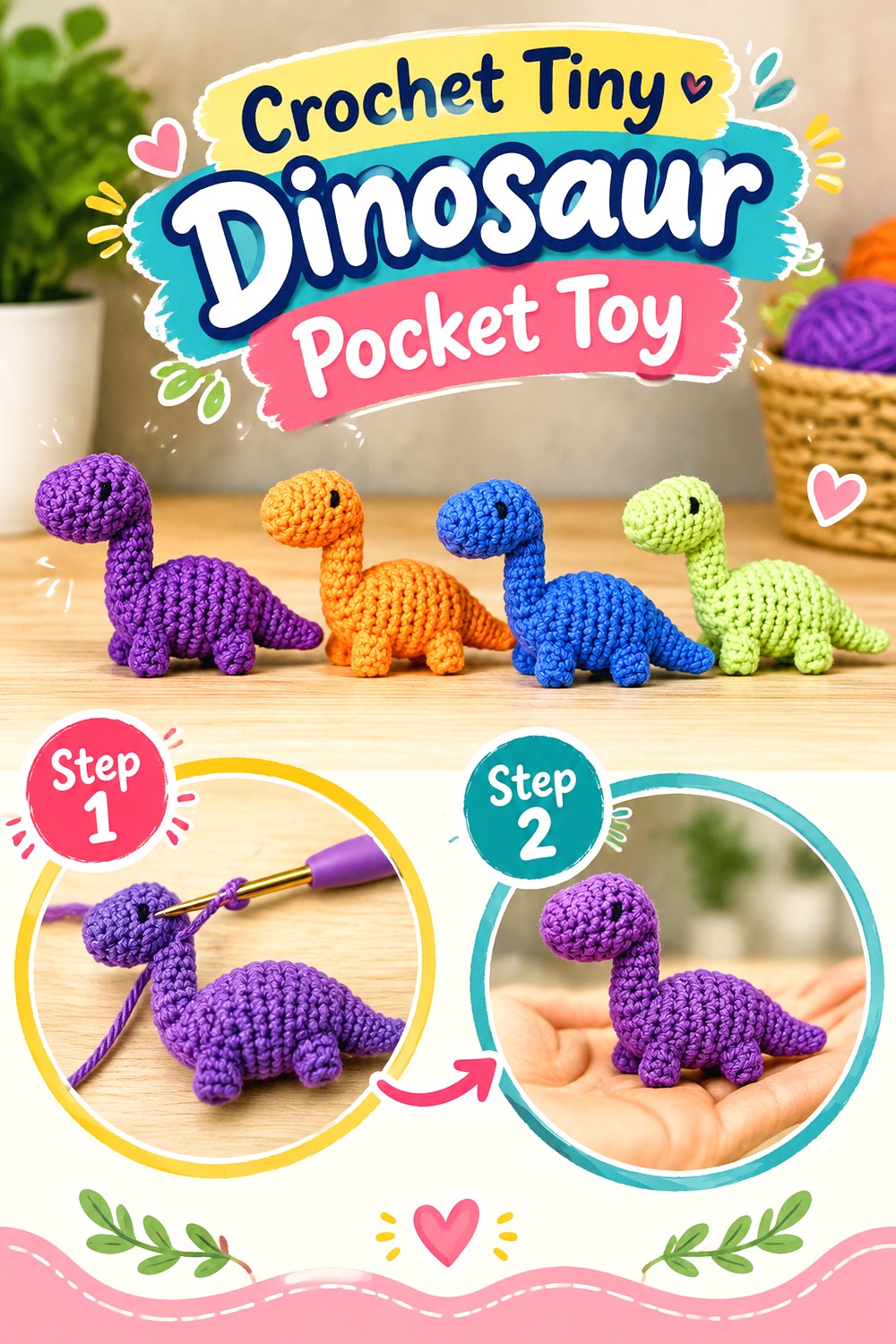
Green Fox Farms Designs’ Tiny Dinosaur began with the idea of a keychain-sized character, and the original project uses a compact upright dinosaur form with recognizable prehistoric shaping. It brings a longer, more directional silhouette to the collection than the round bear, frog, or apple.
A dinosaur also gives you an opportunity to introduce a character that feels slightly more substantial without abandoning the mystery-mini theme. If the finished tutorial size is larger than your other choices, compare yarn and hook alternatives rather than automatically scaling every other project upward. What matters most is that the dinosaur still has enough definition for its neck, limbs, and body to remain recognizable.
Keep the Dinosaur Readable in Profile
Some characters are recognizable mainly from the front; dinosaurs often benefit from a clear side view. When stuffing and shaping, regularly check the profile.
If a substituted yarn is too fluffy, narrow features may visually merge into the torso. A smoother yarn may preserve definition better when the goal is a particularly small version.
Use This as a Size Benchmark
Because an upright dinosaur can occupy more vertical and horizontal space than a compact sphere, it is useful for testing your maximum blind-bag dimensions.
Build or fold one sample package before producing a full set. A container that comfortably fits the dinosaur is more likely to accommodate the lower-profile whale and turtle without crushing their details.
Original Tutorial and Creator Credit
Creator/Site: Green Fox Farms Designs
12. Crochet Mini Apple Amigurumi
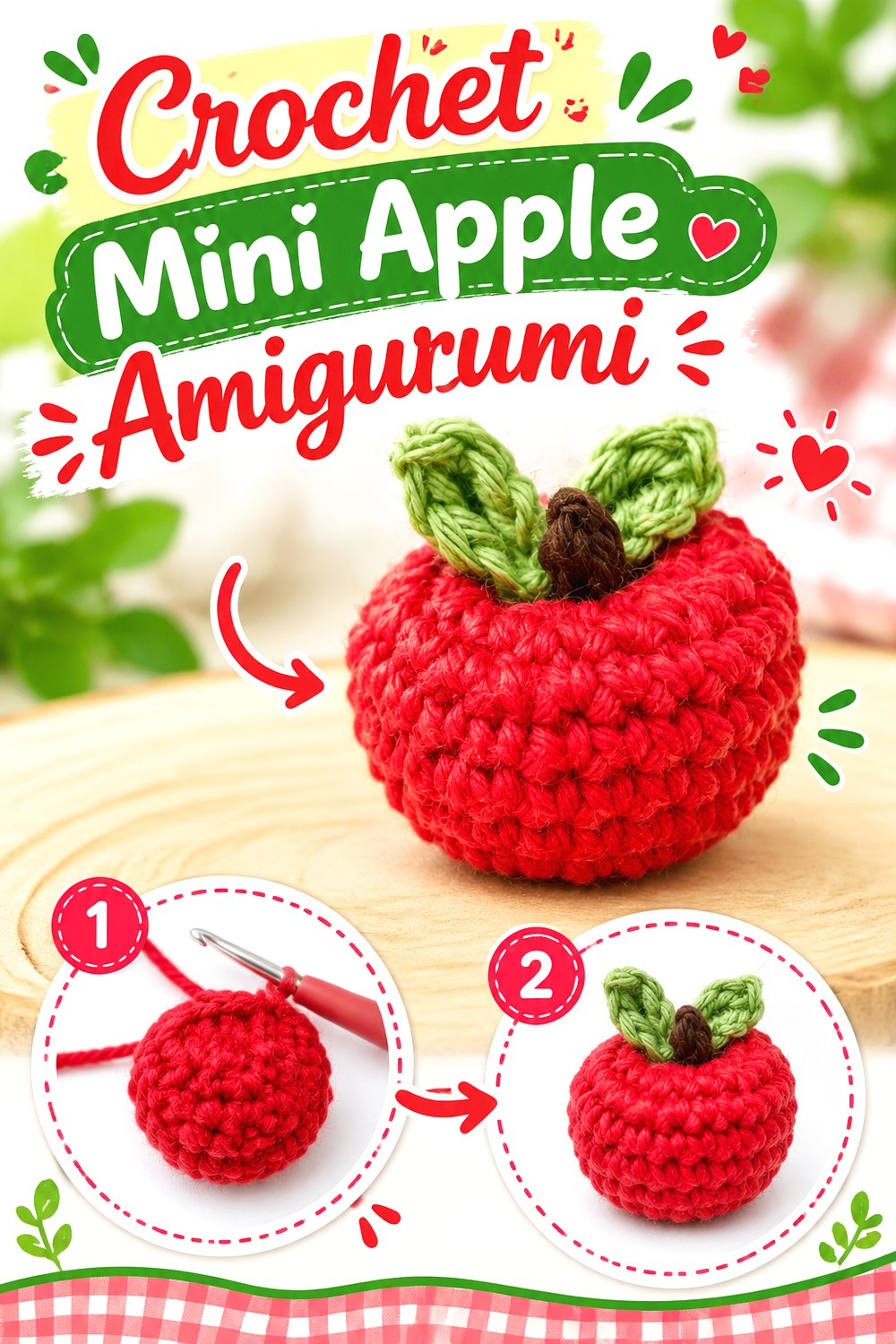
Not every mystery character has to be an animal. Stella’s Yarn Universe’s mini apple uses a rounded fruit body with a stalk and leaf, creating a compact shape that remains recognizable through color and a few clear details. The creator also provides an accompanying video tutorial.
Adding one or two food-inspired designs can keep a thirteen-piece assortment from feeling like a conventional zoo set. An apple also provides easy visual categories: red, green, or other deliberately stylized colorways. Because the stem and leaf are relatively small details, they should stay proportionate to the body rather than becoming oversized merely to make them more visible.
Use Fruit as a Palette Break
The apple creates an opportunity to introduce brighter colors without making the animal characters inconsistent. If most animals use muted shades, one vivid fruit can become a deliberate visual accent.
You could repeat that apple color elsewhere only in small details—such as a cat marking or bear outfit—to connect the collection without making every project identical.
Check the Stem and Leaf Before Packaging
Small protruding pieces can flatten or bend when compressed against tight packaging. Give the finished apple enough room that the top details are not constantly folded against the body.
If the intended recipient is very young, small attached details also deserve the same safety consideration you would give wings, keyrings, or removable accessories.
Original Tutorial and Creator Credit
Creator/Site: Stella’s Yarn Universe
13. Crochet Mini Boba Tea Character

A boba cup makes a strong final “chase” style character because its cylindrical drink shape differs from every animal in the collection. Loops & Love Crochet’s Mini Boba Tea Amigurumi is specifically designed as a small drink character and is shown in multiple color combinations.
The cup format makes color customization particularly easy to understand visually: the main drink color can change while the overall silhouette remains recognizable. It is also a useful character for anyone building a broader cute-object collection rather than a strictly animal-based series. Because the face, cup details, and top treatment all occupy a relatively small area, avoid adding too many extra decorations that make the drink harder to read.
Create “Flavors” With a Controlled Palette
Different drink colors naturally suggest a collectible series without requiring structural changes. Choose a small set of coordinated shades and repeat them elsewhere in the blind-bag collection.
If you want one rare-looking boba, consider a contrasting color treatment rather than adding loose beads, charms, or other unnecessary small parts.
Keep the Cup Shape Crisp
A boba character needs to look like a cup rather than an overstuffed ball. Add stuffing evenly and keep an eye on the sides as the piece fills.
Yarn substitution matters here because very elastic fabric can bulge noticeably. If you switch yarn type, make one sample and compare its side profile with the designer’s finished result before producing multiples.
Original Tutorial and Creator Credit
Creator/Site: Loops & Love Crochet
Choosing a Balanced Mix for Your Blind Bag Set
You do not need to make equal quantities of all 13 designs. A more interesting collection can combine several simple core silhouettes with a smaller number of distinctive shapes.
| Collection role | Good options | Why they differ |
|---|---|---|
| Compact core characters | Star Bear, Mini Cat, Micro Frog | Recognizable faces and compact bodies |
| Low or horizontal shapes | Tiny Whale, Mini Turtle, Mini Octopus | Break up a lineup of upright figures |
| High-silhouette surprises | Jellyfish, Axolotl, Dinosaur | Tentacles, gills, tails, and directional forms stand out |
| Simple themed contrast | Tiny Bumblebee, Mini Ghost | Strong stripes or a clean seasonal silhouette |
| Non-animal specials | Mini Apple, Mini Boba Tea | Add food/object characters without relying on another animal recolor |
This is an editorial way to organize a collection rather than a rarity system supplied by the tutorial creators. Adjust the mix according to your own audience, production time, and intended use.
Conclusion
A strong crochet blind bag assortment comes from contrast: a one-piece bear beside a low whale, a tentacled jellyfish beside a seated frog, and familiar animals balanced with a tiny apple or boba drink. That variety creates a real surprise without requiring every character to use a completely different visual language.
Choose a consistent yarn approach, facial style, and approximate scale, then prototype the shapes that are most likely to challenge your packaging dimensions. Pay particular attention to detachable details and intended recipients when the minis will be gifted or sold. Once you have chosen your collection lineup, use the original tutorials linked above for exact construction details rather than trying to infer the pattern from finished photos.
Frequently Asked Questions
How small should crochet blind bag amigurumi be?
There is no single correct measurement because “mini” means different things across designers, yarn weights, and hook sizes. A better approach is to decide on the maximum dimensions your packaging and display system can accommodate, then crochet sample characters and compare them physically. If one design is substantially larger, check whether the original creator discusses using another yarn weight or hook before making changes.
Can I use the same yarn for all 13 projects?
Possibly, but do not expect identical results. Patterns originally designed for smooth cotton, acrylic, or fine yarn may lose small details when converted to thick chenille. Conversely, a plush-yarn design made in much thinner yarn may become fiddly. Using one yarn family can improve visual consistency, but prototype each design first and choose a hook that produces suitably dense amigurumi fabric.
Are safety eyes appropriate for blind bag amigurumi?
That depends on the intended recipient and the construction. Plastic eyes and other small hard components deserve particular caution around babies and toddlers, and a blind bag should not conceal unexpected loose components. Embroidered features can reduce reliance on plastic eyes but do not automatically make a toy suitable for every age. Inspect the finished construction and follow the original creator’s relevant guidance.
How can I keep different tutorial designs close to the same size?
Start by comparing the creators’ stated dimensions and materials where those details are provided. Then make a sample instead of scaling by guesswork. Using a thinner yarn usually reduces the finished size, while a thicker yarn generally increases it, but the change is not perfectly predictable because tension and construction also matter. The goal can be a visually balanced range rather than thirteen pieces with mathematically identical measurements.
Can I sell blind bags made from these crochet tutorials?
Check every designer’s current usage terms individually. Some creators allow sales of handmade finished objects with attribution or other conditions, while others may impose different limitations. Permission to access a free pattern does not automatically mean permission for every commercial use, and one designer’s terms do not cover projects by another creator. Also use your own product photography and packaging rather than copying tutorial images or creator branding.
How can I make rare or special versions without changing the pattern?
Use changes that do not require reconstructing the designer’s instructions: a controlled alternate color palette, a contrasting shell or drink color, an embroidered expression, or a carefully planned accessory when appropriate. Keep the core character recognizable. For younger recipients, avoid turning “rare” versions into a reason to add loose charms, beads, or other small components that create additional handling concerns.


