
17 Crochet Dollhouse Miniature Ideas for Tiny Rooms and Details
Crochet can bring an unusually soft, handmade layer to a miniature interior. Instead of limiting a dollhouse to conventional wood, resin, or fabric furnishings, you can introduce tiny crocheted rugs, seating, bedding, baskets, tabletop pieces, accessories, and even recognizable furniture and appliance shapes.
The biggest challenge is not finding something small to crochet—it is choosing a project whose proportions, fabric density, and visual weight suit the miniature scene you are building. The 17 ideas below cover several scales and room types, including explicitly labeled 1:12 and 1:8 projects as well as fashion-doll designs. Each idea is paired with an original creator tutorial so you can compare the finished concept first, then visit the source for exact construction details.
Quick List
- Crochet Checkerboard Runner Rug
- Crochet Tiny Storage Basket
- Crochet Tufted Miniature Armchair
- Crochet Granny-Square Dollhouse Throw
- Crochet Round Accent Cushion
- Crochet Dollhouse Bedspread
- Crochet Lace Dollhouse Tablecloth
- Crochet Miniature Handbag
- Crochet One-Inch-Scale Shawl
- Crochet Miniature Sofa
- Crochet Dollhouse Bed
- Crochet Dollhouse Side Table
- Crochet Dollhouse Lamp
- Crochet Dollhouse Refrigerator
- Crochet Bear-Shaped Miniature Carpet
- Crochet Bunny Nursery Blanket
- Crochet Miniature Baby Bottle
Match the Crochet to Your Dollhouse Scale First
Miniature crochet can become visually oversized surprisingly quickly. A stitch that looks delicate beside a fashion doll may resemble a heavy cable beside a 1:12 chair, so scale should be checked before committing to the whole project. Some tutorials in this collection explicitly identify their intended scale: Julie Warren’s granny-square throw and HelgaRo’s tablecloth are presented for 1:12 settings, while Lanzagurumi Canarias identifies the bunny blanket and baby bottle tutorials as 1:8 projects. Daring Daisy’s runner is intended for a Barbie-scale space.
When adapting any design, compare the first meaningful piece of fabric with nearby furniture rather than relying only on the yarn label. The important question is whether the finished object looks proportionate in the scene. Changing thread, hook size, or tension can alter dimensions, but it can also change stiffness and stitch definition, so resizing is not always a simple percentage reduction.
Think About Drape Versus Structure
Miniature textiles and miniature furniture ask very different things from crocheted fabric. A bedspread, shawl, throw, or tablecloth usually benefits from fabric that settles naturally around tiny edges. A refrigerator, sofa, bed, lamp, or side table needs a recognizable silhouette and therefore may depend more heavily on firm fabric, shaping, internal construction, or finishing choices shown by the designer.
This distinction becomes particularly important when substituting materials. A thicker yarn may make a small blanket look too heavy, while a very fine or slippery thread may make a structural object less defined. Instead of assuming that finer is always better, judge the material against the job it needs to perform.
Before changing yarn or thread from a tutorial, check how the creator achieves the final shape. For structural pieces, also confirm whether the original design relies on stuffing, inserts, assembly, or another shaping method before deciding how far you can safely alter the materials.
Plan the Room Before Making the Small Details
A convincing dollhouse usually benefits from variation in visual weight. If the sofa, bed, rug, blanket, baskets, lamp, and accessories all use similarly thick yarn and highly textured stitches, a small room can become crowded even though every individual piece looks appealing.
Start with one dominant crocheted element, such as an armchair, sofa, bed, or patterned rug. Then use flatter or smaller projects—perhaps a cushion, handbag, shawl, basket, or tablecloth—as supporting details. Tiny props are also useful for giving a miniature room a purpose: a shawl suggests a bedroom or dressing area, a baby bottle strengthens a nursery scene, and a small bag can make an entryway or bedroom feel occupied.
For display pieces accessible to young children or pets, remember that tiny crocheted accessories and detachable components can present swallowing or entanglement concerns. Treat miniature crochet primarily as display work unless the individual project has been specifically designed for another use.
1. Crochet Checkerboard Runner Rug

A narrow checkerboard rug is an effective way to introduce crochet without allowing fiber texture to dominate an entire miniature room. Daring Daisy’s source project is designed as a runner-style rug for a Barbie space, miniature kitchen, or dollhouse scene, making it especially useful for longer floor areas rather than a centered living-room arrangement. The contrasting squares give it considerably more visual energy than a plain mat.
This idea works particularly well beside a bed, beneath a narrow table, or through a miniature kitchen. Because the tutorial is aimed at a fashion-doll environment, anyone building a smaller traditional dollhouse should compare the proposed dimensions and materials against their own furniture before beginning.
Judge the Pattern at Viewing Distance
Checkerboard designs rely on clear repetition. In a miniature setting, that means the squares need to read distinctly without becoming so large that only a few fit into the room. Before continuing a resized version, place the developing fabric beside the furniture and judge the overall pattern rather than inspecting only individual stitches.
A finer material can create more visual detail, but it may also require greater control to keep the squares consistent.
Keep Fringe in Proportion
Fringe can help a miniature rug look intentionally textile-based, yet overly long ends can make a tiny runner appear shaggy or oversized. If you adapt the project to another scale, evaluate the fringe separately from the body dimensions.
The finished ends also affect placement. A runner positioned beneath furniture needs enough open floor around it for the fringe to remain visible instead of disappearing beneath chair or table legs.
Original Tutorial and Creator Credit
Creator: Daring Daisy
2. Crochet Tiny Storage Basket

A miniature basket adds function to a scene without requiring a large piece of furniture. LittleMaggieShop’s tutorial focuses specifically on a tiny crocheted dollhouse basket that can hold miniature accessories, which gives the finished piece more purpose than a purely decorative ornament.
Use this concept on a shelf, beside a chair, near a changing area, or as part of a craft-room display. Several baskets can also establish a storage theme, although keeping different basket sizes proportional to one another matters more than simply changing colors. Because the tutorial also references fashion-doll spaces, confirm the finished scale against your own room before making a coordinated set.
Decide What the Basket Will Hold
Miniature storage looks more believable when the basket and its contents belong to the same scale. A basket intended for folded blankets should read larger than one holding tiny sewing or nursery accessories.
Choosing the contents first also prevents you from spending time on a basket that eventually looks too deep, too wide, or visually too heavy for its intended shelf or floor position.
Watch the Rim for Flare
Small crocheted containers can lose their basket silhouette if the upper edge becomes noticeably wider than the base. Material choice and tension may influence how firmly the sides stand.
Check the profile while the piece is still developing. If you substitute yarn, compare the resulting stiffness with the source project rather than assuming the same dimensions will automatically produce the same shape.
Original Tutorial and Creator Credit
Creator: LittleMaggieShop
3. Crochet Tufted Miniature Armchair
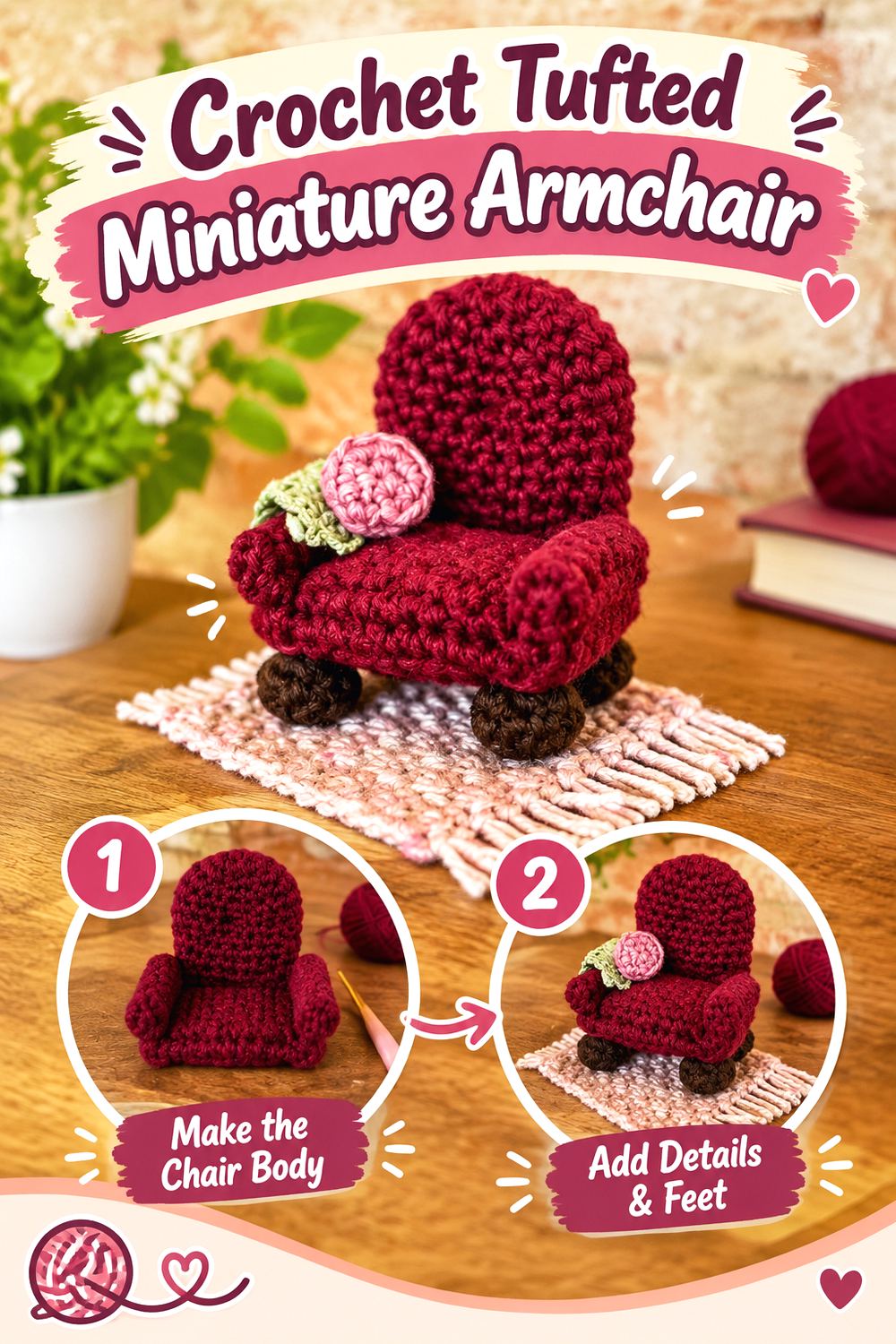
A fully dimensional armchair makes crochet a focal point rather than a supporting textile. Wind Rose Fiber Studio’s Easy Chair tutorial shows a miniature upholstered-style chair with a separate seat form, arms, feet, and a tufted back detail. The creator also shows versions made at different finished sizes, demonstrating how strongly material choice affects the miniature result.
This is a good anchor for a living room, reading corner, bedroom, or cozy study scene. Unlike a flat rug or blanket, an armchair has to remain recognizable from several angles, so its proportions deserve more attention than decorative color choices. Pairing it with very delicate surrounding accessories can also help the chair remain the visual center.
Check Seat-to-Back Proportions
When resizing miniature seating, compare the relationship among seat depth, back height, arm height, and the intended doll. A chair can technically fit inside the room while still looking oversized for its occupant.
Before completing all the finishing details, position the main chair forms near the intended doll or adjacent furniture. This visual checkpoint is more useful than judging an isolated measurement.
Preserve the Tufted Effect
Tufting gives the chair an upholstered character, but the detail can disappear if the substituted yarn is too fuzzy or the finished fabric is extremely small. Conversely, very bulky stitches can overpower the indentation.
If this feature is important to your version, make sure stitch definition remains clear enough for the tuft to read as an intentional furniture detail.
Keep the Base Visually Stable
A dimensional crochet chair should look as though it is resting on the miniature floor rather than leaning or floating. Uneven assembly, soft stuffing, or inconsistent shaping can make the silhouette tilt.
View the piece from the front and side before final display. Small adjustments to how the finished components sit can noticeably improve the realism of miniature furniture.
Original Tutorial and Creator Credit
Creator: Wind Rose Fiber Studio
4. Crochet Granny Square Dollhouse Throw

Tiny granny squares bring recognizable full-size crochet language into a dollhouse without requiring a large furniture build. Julie Warren’s tutorial is specifically designed for a 1:12 crocheted throw or afghan and demonstrates how individual miniature squares can form a colorful bed or room accent.
This project suits a bed, sofa, chair back, or folded linen display. Its main advantage is visual flexibility: changing the arrangement of colors can completely alter the room’s mood while preserving the same basic miniature textile idea. The motif construction also gives readers a useful opportunity to assess scale early because a single completed square can be placed beside the intended furniture before an entire throw is committed.
Make One Motif Your Scale Test
For motif-based miniature crochet, the first square provides valuable information. Place it on the dollhouse bed or sofa and ask whether several motifs could fit naturally across the surface.
If one square already dominates the furniture, simply continuing with fewer squares may not create a convincing blanket. A finer-material version may be worth considering instead, provided you can maintain consistent tension.
Control Bulk at the Joins
A full-size granny blanket can tolerate substantial joining texture. In a tiny afghan, thick joins may become a much larger percentage of the total fabric.
Watch how the assembled motifs bend over a mattress or chair arm. If the joined areas are disproportionately stiff, the miniature throw may look more like a mat than a textile, particularly when displayed folded or draped.
Let Color Support the Room
Because every motif creates another point of contrast, a miniature granny-square throw can become the busiest item in a room. That can be desirable when the surrounding furnishings are restrained.
If the room already contains patterned wallpaper, rugs, or upholstery, consider a tighter palette so the blanket contributes texture without competing with every other miniature surface.
Original Tutorial and Creator Credit
Creator: Julie Warren
5. Crochet Round Accent Cushion

A round cushion breaks up the many square and rectangular forms commonly found in dollhouse interiors. Julie Warren’s tutorial focuses specifically on a crocheted round cushion for miniature settings, making it a natural companion to angular chairs, beds, or sofas. The creator also notes that the crocheted circles can work as miniature doilies, which makes the underlying form useful beyond one display role.
For a finished cushion, think about proportion before decoration. A strongly textured circular pillow can become a statement accessory on a plain chair, while a smaller, quieter version can sit among other bedding. This is also one of the easier ideas to move between rooms because it does not visually lock the scene into a specific function.
Keep the Circle Truly Round
Uneven tension can become surprisingly visible in a very small circular object. If the edge waves, cups, or develops an obvious flat spot, the final cushion may look distorted once placed against straight furniture.
Check the circle on a flat surface before finishing. Minor irregularities that seem inconsequential in your hand may become much more noticeable when surrounded by precisely scaled furniture.
Match Cushion Depth to the Seat
Stuffing or internal volume changes the apparent size as much as the diameter does. A generously filled miniature cushion can project far forward from a shallow chair or sofa.
Compare the cushion with its intended seat before deciding how full you want the finished shape to appear. For purely decorative displays, a slightly flatter profile can sometimes preserve scale more convincingly.
Original Tutorial and Creator Credit
Creator: Julie Warren
6. Crochet Dollhouse Bedspread
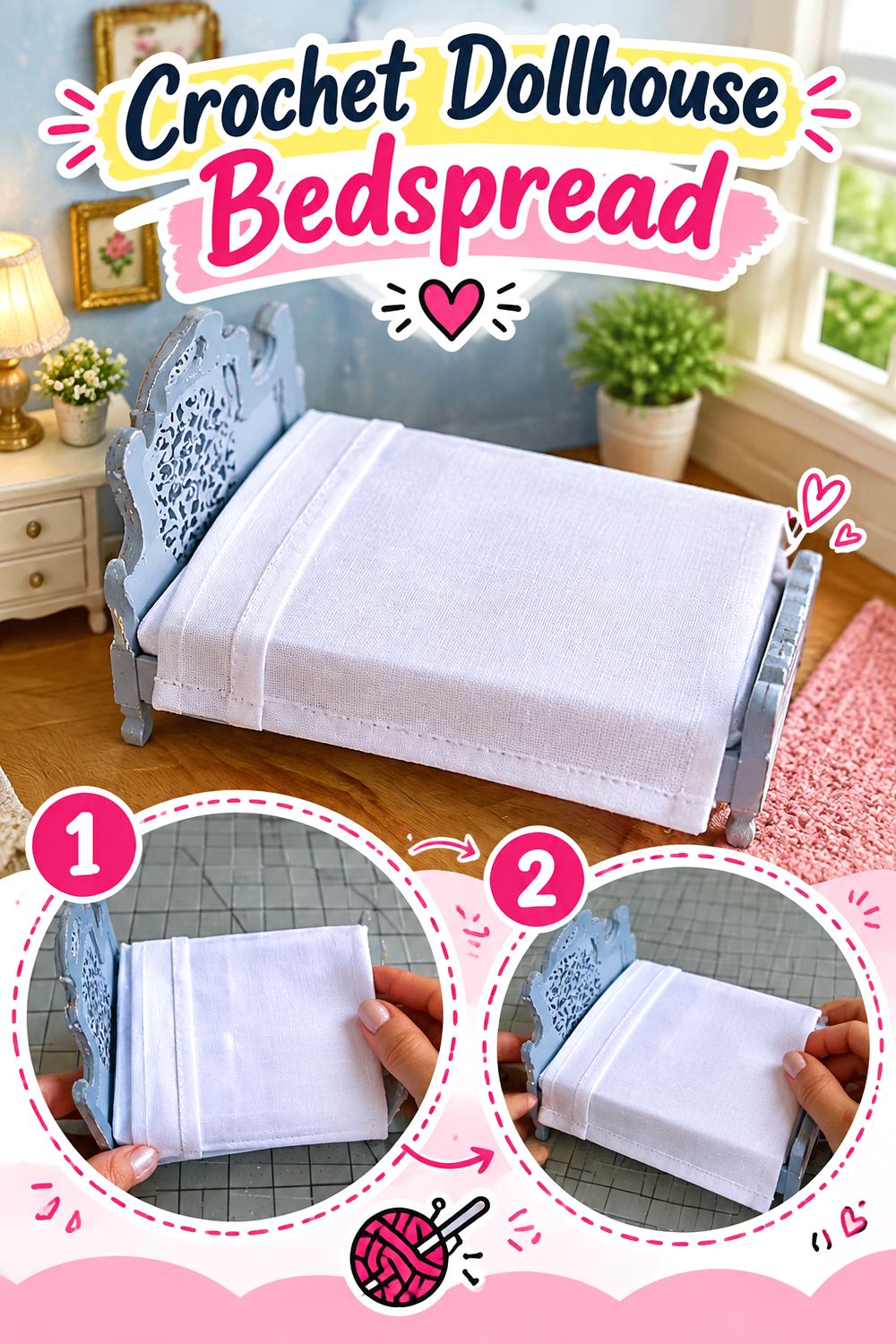
A bedspread covers enough surface area to establish the color and textile character of an entire miniature bedroom. Loy Dollhouse’s tutorial is specifically devoted to a crocheted miniature bedspread or blanket for a dollhouse, giving this project a more traditional bedroom role than the smaller throw and cushion ideas.
The key choice is how much of the miniature bed you want to cover. A spread that falls toward the floor creates a more formal, fully dressed look; a smaller textile reveals more of the bed frame. Yarn thickness also affects how naturally those edges settle. Before committing to decorative finishing, check the developing fabric directly on the intended bed rather than judging it flat on your work surface.
Test the Side Drop Early
A miniature bedspread can reach its target width yet still look too bulky around the mattress. Place the work over the bed as soon as enough fabric exists to evaluate the side drop.
This lets you see whether the crochet bends naturally at the mattress edge and whether the apparent thickness suits the bed frame rather than hiding its shape.
Prevent the Cover from Looking Rigid
The fabric needs enough flexibility to suggest bedding. Dense stitches and thicker materials can make a small cover hold itself away from the mattress.
If you are substituting materials, make a sample and bend it over a similarly narrow edge. The result should help you decide whether the new fabric behaves more like cloth or like a structural panel.
Coordinate Without Matching Everything
A bedspread can carry the strongest color in the room, but matching the rug, cushions, curtains, and accessories exactly can flatten the scene visually. Repeating one or two colors in smaller items often looks more deliberate.
Use the bedspread as the anchor, then allow surrounding crochet pieces to vary in texture, motif, or proportion.
Original Tutorial and Creator Credit
Creator: Loy Dollhouse
7. Crochet Lace Dollhouse Tablecloth

A miniature tablecloth introduces fine textile detail without taking up floor space. HelgaRo’s tutorial is explicitly presented as a 1:12 crochet dollhouse tablecloth, making it particularly relevant to traditional one-inch-scale dining rooms, tea settings, and period interiors.
This idea depends more on drape and edge proportion than on structural firmness. A tiny dining table can quickly disappear beneath fabric if the cloth is too large, while a piece that barely covers the top may read as a placemat instead. Decide whether you want a formal overhang or only a decorative surface covering before adjusting the project. Open spaces in fine crochet can also let a wood tabletop remain visible, which may be useful in an already detailed room.
Balance Lace Against the Tabletop
Fine openwork can look intricate at miniature scale, but the table should still be recognizable beneath it. Compare the density of the crochet with the size and finish of the furniture.
If the stitches visually swallow the tabletop, a finer thread or a less expansive cloth may suit the scene better than simply reducing the number of repeats in an established design.
Shape the Finished Edges Carefully
Flat miniature textiles show small irregularities clearly, particularly when their edges align with straight furniture. Blocking or gentle shaping may help depending on the chosen fiber and the creator’s guidance.
Always follow the care requirements of the actual thread or yarn. Avoid assuming that a miniature piece can tolerate heat, aggressive wet blocking, or other finishing methods simply because a larger crochet item could.
Original Tutorial and Creator Credit
Creator: HelgaRo
8. Crochet Miniature Handbag

A tiny crocheted bag can make a dollhouse bedroom, closet, boutique, or entryway look inhabited without adding another piece of furniture. Nala Mini’s tutorial centers on a miniature crochet bag intended for a dollhouse setting, giving you a compact accessory that can be displayed on a chair, hook, bed, or shelf.
Unlike a functional full-size bag, a dollhouse version is judged mostly by silhouette. The relationship among body width, opening, and handle therefore matters more than capacity. Before resizing the source design, decide whether your miniature is supposed to be a doll’s handbag, a shopping bag, or a room prop; the believable scale can differ significantly among those uses.
Make the Handle Match the Doll
A tiny bag may look convincing by itself but oversized when placed in a doll’s hand. Use the intended doll as the main reference point for handle length and bag width.
If the accessory is only going on a shelf, you have more freedom. For a worn or carried bag, compatibility with the doll should guide any resizing decision.
Avoid Excessive Handle Stretch
Narrow crocheted handles can change shape when repeatedly handled, especially if made from a soft or stretchy fiber. That matters even in miniature because a small amount of elongation represents a large percentage of the total size.
For a display piece, limit unnecessary pulling. If you change materials, check whether the new yarn creates a noticeably softer handle than the source version.
Original Tutorial and Creator Credit
Creator: Nala Mini
9. Crochet One Inch Scale Shawl
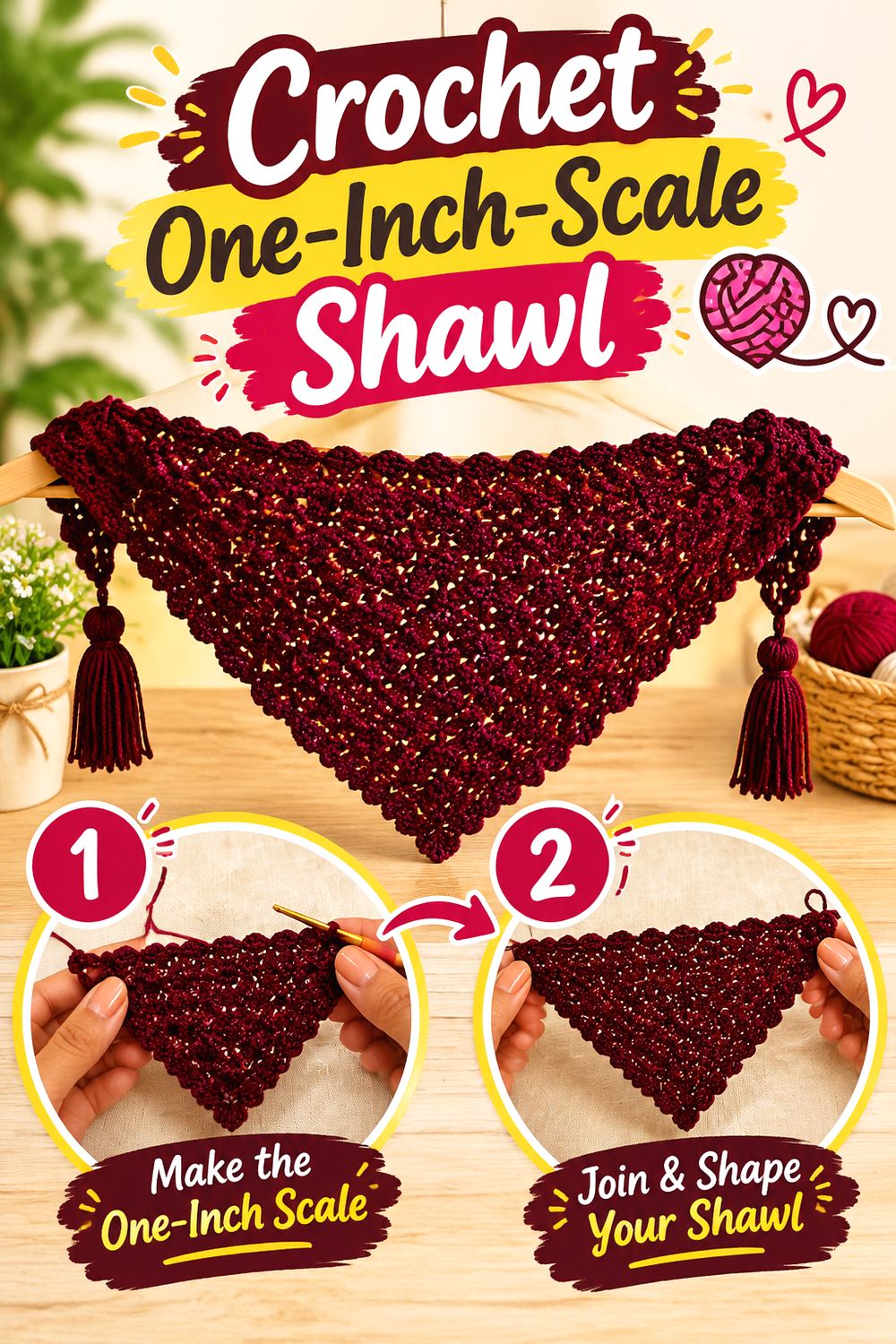
A shawl is a subtle miniature storytelling piece. Loy Dollhouse specifically presents this project as a crochet shawl for a dollhouse in 1:12, or one-inch, scale. That makes it useful for a bedroom, dressing area, coat rack, chair-back display, or a miniature figure when the fit is appropriate.
Because a shawl should appear lighter than a rug or structural piece, fabric behavior matters greatly. It needs to suggest something that could fold or wrap rather than a rigid decorative triangle. A delicate material can help, but reducing yarn size alone does not guarantee correct proportions. Compare both the width and apparent thickness against the intended doll before deciding whether an adaptation is successful.
Check Shoulder Coverage, Not Just Width
When a miniature shawl is meant to be worn, the useful measurement is how it sits around the doll rather than how wide it looks lying flat.
Different dolls within broadly similar scales can have different shoulder widths and arm positions. Test the developing piece against the actual figure whenever possible, particularly if you want the shawl to appear naturally draped.
Use Draping as Part of the Scene
A miniature shawl does not need to be worn to communicate its purpose. Folding it over a chair, placing it at the end of a bed, or arranging it beside a handbag can create a lived-in detail.
Avoid forcing sharp folds into a crochet fabric that naturally springs open. Let the material determine a plausible display position.
Original Tutorial and Creator Credit
Creator: Loy Dollhouse
10. Crochet Miniature Sofa

A sofa is one of the strongest ways to establish an all-crochet miniature living room. Lanzagurumi Canarias provides a dedicated dollhouse sofa tutorial, allowing the finished seating piece to function as the central furnishing rather than a textile accessory.
The larger silhouette also creates opportunities for layering: a separate miniature throw, handbag, or round cushion from elsewhere in this list can be displayed on or beside it. Before combining projects, however, compare their scales carefully. A sofa from one tutorial and a cushion from another may each look convincing individually while appearing mismatched together. Furniture proportion should therefore be established first, with accessories selected afterward.
Establish the Sofa as the Scale Anchor
If you plan a room with several crocheted pieces, use the sofa’s finished height and width as a reference for the smaller accessories around it.
A rug should extend beyond the seating rather than disappear beneath it, and a cushion should occupy only part of the seat or back. Working outward from one anchor helps prevent mixed tutorial scales from becoming obvious.
Maintain a Clear Seating Silhouette
Soft crochet furniture can lose definition where the seat, back, and arms meet. If those transitions become too rounded, the object may read more like a block-shaped plush than a sofa.
Follow the source construction closely where shaping is concerned, and be cautious about substituting significantly different yarn until you understand how the original material contributes to the form.
Consider Display Handling
Dimensional miniature furniture may receive more handling than a flat rug because people naturally want to reposition it. Repeated squeezing or pulling can alter soft structural pieces.
Handle the sofa by its larger body sections rather than small projecting details whenever practical. If the display will be frequently rearranged, durability may deserve more weight than extremely delicate surface texture.
Original Tutorial and Creator Credit
Creator: Lanzagurumi Canarias
11. Crochet Dollhouse Bed

A crocheted bed shifts the craft from miniature bedding into miniature furniture construction. Lanzagurumi Canarias offers a project devoted specifically to a dollhouse bed, giving readers a foundation that can later be paired with a separate bedspread, granny-square throw, or cushion.
Because several layers may eventually sit on the bed, avoid judging the frame in isolation. The proportions should leave visual space for a mattress or covering rather than becoming overwhelmed once textiles are added. This is also a project where yarn substitution should be approached cautiously: a material that works nicely for a blanket may not give a furniture form the same definition as the designer’s version.
Leave Room for the Bedding
If the finished bed will hold several crochet textiles, consider their combined bulk when evaluating the furniture scale. Thick bedding can make a correctly proportioned bed look too small.
Test at least one representative textile on the structure before designing the entire bedroom around it. The goal is for the bed frame and coverings to remain individually readable.
Check the Bed from Eye Level
Miniature furniture is often inspected from the front rather than directly above. A bed that seems even on a worktable may reveal leaning or uneven proportions when viewed at dollhouse eye level.
Place it on a flat surface and inspect the side profile as well as the foot and head ends before permanently arranging the surrounding room.
Separate Structural and Decorative Choices
Color, edging, and coordinated bedding can all be changed relatively freely, but the elements that establish the bed’s shape deserve more caution.
When adapting the tutorial, distinguish decoration from construction. Verify the creator’s method before altering any component that appears responsible for keeping the miniature bed upright or proportionate.
Original Tutorial and Creator Credit
Creator: Lanzagurumi Canarias
12. Crochet Dollhouse Side Table

A crochet side table is an unusual alternative to conventional miniature wood furniture. Lanzagurumi Canarias has a dedicated tutorial for this dollhouse furnishing, allowing crochet to provide the small hard-furniture silhouette beside a bed, sofa, or chair.
This project works best when the table remains visibly distinct from softer pieces nearby. If every element has rounded edges and identical yarn texture, the room can lose hierarchy. A compact side table paired with a larger sofa and very fine tabletop accessory creates clearer scale relationships. It is also worth deciding in advance whether the table will stand empty or support a lamp or prop, because the visual load can affect how substantial the finished table needs to appear.
Check the Top Before Adding Props
A miniature lamp, book, or basket can quickly occupy most of a side table. Place the intended object over the developing tabletop to judge whether the pairing makes sense.
The prop should not look as though it could topple the table simply because its footprint or apparent weight dominates the crocheted base.
Watch for Leaning Legs or Base
Any narrow supporting elements become visually important on a small table. If the piece leans slightly, the error is easy to spot against vertical dollhouse walls.
Assess the table on a reliably flat surface. If you change the original yarn or stuffing strategy, verify that the finished construction still provides enough definition before adding decorative objects.
Keep the Surface Visually Quiet
A side table is often most useful as support for another focal item. Heavy multicolor texture can compete with a lamp, plant, book stack, or other tiny prop.
A restrained table can provide contrast when the room already contains a patterned rug, granny-square blanket, or other strongly textured crochet feature.
Original Tutorial and Creator Credit
Creator: Lanzagurumi Canarias
13. Crochet Dollhouse Lamp

A miniature lamp creates a vertical accent that contrasts nicely with low rugs, bedding, and seating. Lanzagurumi Canarias provides a crochet dollhouse lamp tutorial, making this a decorative furniture accessory rather than an improvised adaptation of a full-size crochet object.
Treat the crocheted version as a miniature lamp form unless the original creator specifically provides instructions for another function. Do not assume that crocheted components are suitable around hot bulbs, flames, or improvised electrical parts. In a dollhouse, the recognizable silhouette alone can be enough to complete a reading corner, bedside table, or living-room arrangement.
Prioritize the Shade-to-Base Ratio
The shade usually provides much of a lamp’s visual identity. If it becomes too wide or tall relative to the base, the lamp can dominate the small table beneath it.
Judge the complete silhouette against both the supporting furniture and the room height. A miniature object can be individually attractive yet still feel oversized once placed inside a low dollhouse room.
Treat Lighting Additions Separately
A crochet lamp tutorial should not automatically be interpreted as an electrical-lighting tutorial. Fibers have different heat behavior, and miniature electrical components introduce considerations beyond ordinary crochet.
If you want an illuminated version, use only components and construction specifically suited to that purpose and follow the relevant manufacturer’s guidance. Otherwise, keep the crocheted lamp purely decorative.
Original Tutorial and Creator Credit
Creator: Lanzagurumi Canarias
14. Crochet Dollhouse Refrigerator
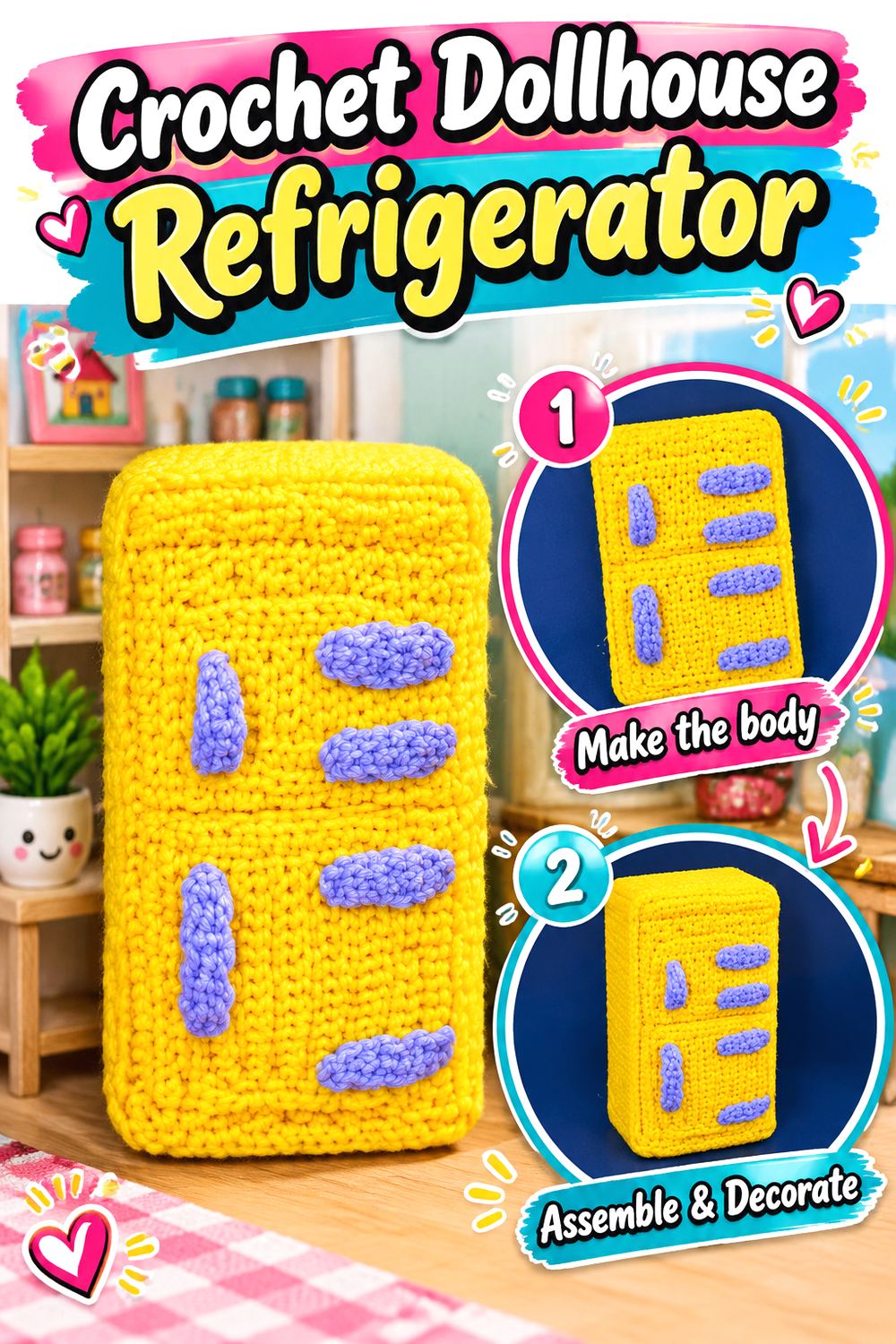
A refrigerator is a playful example of crochet imitating a normally rigid household object. Lanzagurumi Canarias has a tutorial dedicated to a dollhouse fridge, so this idea can become the vertical anchor in a miniature kitchen rather than another soft furnishing.
Its appeal comes largely from contrast: yarn texture is unexpected on an appliance silhouette. For that reason, shape clarity is more important than drape. Pairing it with smaller kitchen textiles or accessories can reinforce the setting without making the whole room equally bulky. If you change the tutorial’s materials, pay close attention to whether the resulting fabric still creates straight enough edges for the object to be immediately recognizable.
Keep the Appliance Profile Crisp
A refrigerator relies on a tall, relatively regular outline. Uneven stuffing or soft edges can change that silhouette quickly at miniature scale.
View the project against a straight dollhouse wall during finishing. That background makes bulges and leaning easier to detect than when the piece is held alone in your hand.
Leave Practical Floor Clearance
Before making several kitchen pieces, check how much floor area the refrigerator consumes compared with tables, counters, or dolls. Dollhouse rooms can become congested much faster than full-size layouts.
A slightly smaller appliance may serve the scene better than a technically impressive piece that blocks sightlines or leaves no space for the miniature figures.
Use Details Selectively
Small contrasting details may help the appliance read clearly, but too many additions can overwhelm a tiny surface. Choose features that support the refrigerator identity rather than decorating every available area.
If you add anything beyond the source design, make sure it does not interfere with the shape or introduce detachable pieces inappropriate for the way the display will be handled.
Original Tutorial and Creator Credit
Creator: Lanzagurumi Canarias
15. Crochet Bear Shaped Miniature Carpet

A bear-themed carpet adds a clearly decorative floor feature that suits a nursery, child’s room, playroom, or whimsical bedroom. Lanzagurumi Canarias provides a dollhouse tutorial specifically titled around a bear carpet, which makes this idea more character-driven than the geometric checkerboard runner earlier in the list.
The main choice is how much visual attention you want the rug to take. An animal-inspired floor piece can become the room’s focal point, particularly when surrounding furniture is plain. That makes it a useful alternative to heavily patterned bedding. Before adapting its size, position an outline or approximate sample in the room so the distinctive floor motif does not disappear beneath the furniture.
Give the Motif Breathing Room
A novelty rug loses much of its impact if the sofa, bed, or table covers the recognizable part of the design. Plan the surrounding furniture after deciding where the carpet will sit.
Some overlap can make the room feel realistic, but the feature that distinguishes the bear design should remain visible from the normal viewing angle.
Keep Floor Pieces Flat
Curling or raised edges are especially noticeable on miniature flooring. Material, tension, and finishing can all affect whether a crocheted carpet settles evenly.
Follow the creator’s construction and the care guidance for your chosen fiber. If additional shaping is necessary after substitution, use only techniques appropriate for that material rather than assuming every yarn responds to blocking identically.
Original Tutorial and Creator Credit
Creator: Lanzagurumi Canarias
16. Crochet Bunny Nursery Blanket

A bunny-themed miniature blanket introduces a clear nursery identity without requiring an entire crocheted room. Lanzagurumi Canarias presents this project as a miniature dollhouse item and identifies the tutorial as designed for a 1:8 dollhouse. That scale detail matters if the rest of your collection is 1:12.
Use the source proportions directly for a compatible 1:8 scene, or study the construction before deciding whether a smaller adaptation is realistic. Because the project already carries a recognizable nursery theme, surrounding accessories can stay simple. A plain crocheted bed, subtle floor covering, and tiny bottle can provide context without competing with the blanket’s character.
Do Not Assume 1:8 Fits 1:12
The numerical difference between two miniature scales affects both overall dimensions and the apparent size of individual stitches. Simply placing a 1:8 textile in a 1:12 room can make it look intentionally oversized.
If you want to adapt the project, compare an early sample against the actual 1:12 bed and confirm whether both dimensions and fabric thickness look convincing.
Build the Nursery Around One Theme
A bunny blanket already gives the scene a strong visual cue. Repeating animal faces or motifs on every rug, pillow, basket, and wall accessory can make the room feel crowded.
Consider using the blanket as the themed piece and letting the remaining crochet items contribute mostly color, texture, and scale. This keeps the nursery recognizable without making each object compete for attention.
Original Tutorial and Creator Credit
Creator: Lanzagurumi Canarias
17. Crochet Miniature Baby Bottle

A crochet baby bottle is much smaller than the furniture projects, but it can communicate the purpose of a nursery immediately. Lanzagurumi Canarias provides a dedicated miniature baby-bottle tutorial for a 1:8 dollhouse, giving this idea a clear scale and scene context.
The finished prop can be displayed near a crib or bed, on a side table, or with a miniature basket. Because it is so small, proportion matters more than elaborate decoration. A bottle that becomes too large can quickly read as a vase or container instead. It is also an item to treat cautiously around young children: miniature crochet pieces are display objects unless specifically designed and assessed for another purpose.
Compare It with the Doll’s Hand
A familiar household object is easy to recognize partly because viewers already understand its expected size. Put the developing bottle beside the intended miniature doll or nursery furniture.
That comparison will reveal scale errors more clearly than measuring the bottle alone. For a 1:12 adaptation of this 1:8 source project, verify proportions before completing fine decorative details.
Treat Tiny Props as Display Pieces
Small crochet accessories can be easy to lose and may be inappropriate where babies, toddlers, or pets can reach them. Attached embellishments can create additional concerns.
Keep miniature bottles and similarly sized props in secure display settings when necessary. If the dollhouse itself is intended for active children’s play, choose components based on that use rather than assuming collector-scale accessories are suitable.
Original Tutorial and Creator Credit
Creator: Lanzagurumi Canarias
How to Choose Between These Crochet Dollhouse Miniatures
The most useful starting point depends on what your room currently lacks. For an immediate floor-level change, the checkerboard runner or bear carpet can establish color without adding bulky furniture. The granny-square throw, bedspread, tablecloth, shawl, and cushion work well when you already own miniature furniture and mainly want textile detail.
For a room where crochet should define the construction itself, the armchair, sofa, bed, side table, lamp, and refrigerator make a much stronger statement. Smaller baskets, bags, and nursery props are better for storytelling and finishing a scene.
Scale deserves the final decision. Several sources explicitly target 1:12, others 1:8, and the checkerboard runner is designed around a Barbie-scale environment. When a tutorial does not clearly state a compatible scale, compare the creator’s finished piece with your furniture before committing to a full coordinated set.
Conclusion
These 17 crochet dollhouse miniature ideas show how differently yarn can function inside a tiny room. It can lie flat as a rug, fold as bedding, drape as a shawl, hold a three-dimensional cushion shape, or become the structure of a sofa, bed, table, lamp, and refrigerator.
Choose the project according to the role your room needs filled rather than simply selecting the smallest design. Fine textile pieces depend heavily on believable drape, while miniature furniture benefits from stronger shape definition. Most importantly, check scale before combining projects from different designers. Once you have chosen a concept, use the linked original tutorials for the creator’s exact construction, materials, proportions, and finishing details.
Frequently Asked Questions
What yarn is best for crochet dollhouse miniatures?
There is no single yarn or thread that works for every miniature. Fine textiles generally need a material that produces believable stitch scale and enough flexibility to drape, while three-dimensional furniture may need greater structure. Follow the tutorial’s specified materials when possible, particularly for your first version. If substituting, make a small sample and compare it directly with the dollhouse furniture rather than choosing solely by yarn-weight category.
Can I resize a 1:8 crochet dollhouse project to 1:12?
Potentially, but switching to a smaller hook and thread does not guarantee an exact scale conversion. Stitch proportions, fabric thickness, stuffing, shaping, and structural elements can all change. The bunny blanket and baby bottle sources in this article are explicitly identified as 1:8 projects, so a 1:12 builder should treat them as adaptation candidates rather than automatically compatible pieces. Make an early component or sample first and compare it with the intended furniture.
How can I keep miniature crochet from looking too bulky?
Judge the apparent size of the stitches as well as the overall measurements. A blanket can technically fit a 1:12 bed while still looking as though it were made from extremely thick full-size yarn. Finer thread and a suitably small hook may improve scale, but overly stiff or difficult-to-control fabric creates a different problem. Aim for a balance between believable stitch size, usable fabric behavior, and the amount of detail you can work consistently.
Should miniature crochet furniture be stuffed?
That depends entirely on the individual construction. Some three-dimensional crochet furniture designs may use stuffing or other methods to develop their shape, while another design could rely on different structural techniques. Do not add or remove structural components simply because a similar amigurumi project uses them. Check the original creator tutorial first, especially for beds, sofas, armchairs, tables, appliances, and other objects whose final silhouette depends on assembly.
Does miniature crochet need blocking?
Some flat textiles may benefit from careful shaping, but the correct approach depends on the fiber, construction, and creator guidance. Cotton thread and synthetic yarn, for example, do not necessarily respond to the same treatment. Never invent a heat or washing method simply because the item is small. Check the yarn or thread label and the original tutorial, then use the least aggressive finishing method that achieves the needed shape.
Are crochet dollhouse miniatures suitable for children’s play?
Do not assume collector-scale miniatures are toys simply because they are crocheted. Tiny bottles, bags, baskets, furniture details, embellishments, and other small components can present concerns for young children, and miniature construction may not be designed for repeated pulling or chewing. If a dollhouse is intended for active play, choose projects and materials specifically appropriate for the intended user and avoid small detachable components where they could present a hazard.


