
12 Crochet Fall Bandana Ideas for Autumn Color and Texture
Crochet bandanas can shift easily into a fall wardrobe, but the most useful differences go beyond choosing pumpkin orange or olive green yarn. Construction changes how much hair the bandana covers, openwork changes the visual weight, decorative borders affect the silhouette, and ties or button closures change how the finished piece sits around the head.
These 12 crochet fall bandana ideas range from airy mesh and lace to granny stitches, checkerboard colorwork, flowers, sunflower motifs, shell texture, and a more substantial buttoned kerchief. Some original tutorials were designed with warmer seasons in mind, so the fall angle here focuses on thoughtful color and material adaptation rather than pretending every source was created specifically for autumn. Use the comparisons below to choose the form that works with your preferred coverage, texture, and styling.
Quick List
Crochet Rustic Granny-Stitch Tie Bandana
Crochet Open-Mesh Autumn Kerchief
Crochet Fall Flower Bandana
Crochet Scalloped Granny-Edge Bandana
Crochet Textured Picot Triangle Bandana
Crochet Patchwork Art-Motif Hair Bandana
Crochet Shell-Lace Fall Bandana
Crochet Sunflower Granny-Motif Bandana
Crochet Button-Closure Wool Kerchief
Crochet Airy Lace Triangle Bandana
Crochet Daisy-Granny Patchwork Bandana
Crochet Checkerboard Tie Kerchief
Choose the Bandana Construction Before the Fall Color Palette
A fall color combination cannot compensate for a shape that does not suit how you want to wear the finished bandana. Continuous granny triangles are useful when you prefer simple shaping and a clear center point. Mesh and lace designs create a lighter-looking layer, while modular flower or granny-square constructions put much more emphasis on motif placement and joining.
Closure matters too. Most of these projects use ties, which offer room to adjust how snugly the bandana sits. The buttoned kerchief is structurally different and worth considering if you want a more scarf-like fall accessory. Checkerboard and patchwork projects introduce additional color-management decisions, while scallops, picots, and shell stitches move visual interest toward the border or surface texture.
Yarn, Drape, and Coverage Matter More in Cooler-Weather Styling
Fall does not automatically mean using the thickest yarn available. A bandana that must curve over the head still benefits from fabric that can bend rather than standing stiffly away from the hair. An open mesh made in a thicker yarn may feel visually heavier even though the stitch pattern contains large spaces, while a finer yarn can make granny clusters or lace look more delicate.
Before substituting yarn, compare the tutorial’s fabric with a small sample of your intended yarn and hook combination. Check whether it folds comfortably, whether the edge curls, and whether the ties feel flexible enough to knot. Rust, camel, moss, cream, burgundy, chocolate, muted gold, and deep green can create a fall effect without changing a tutorial’s construction.
Check Fit at the Head Edge, Point, and Ties
A triangle can be wide enough across the forehead yet still feel too shallow at the back, so do not judge fit from one measurement alone. Before finishing the edging, hold the longest edge where you expect to wear it and look at the depth of the point as well as the position of the two side corners.
For motif bandanas, blocked dimensions are especially important because several small differences can accumulate across a joined layout. For tie styles, confirm that the strings give you enough room for your preferred knot without leaving far more length than you want. If you are changing yarn weight from the tutorial, rely on the developing fabric and your own fit check rather than assuming the original row or motif count will transfer unchanged.
1. Crochet Rustic Granny Stitch Tie Bandana

A classic granny-stitch triangle gives you a clean base for an autumn bandana without requiring a complicated motif layout. The tutorial from Maddy Marie demonstrates a granny-stitch bandana that grows into a triangular form and finishes with ties, making the overall shape easy to understand visually.
For fall, this construction is particularly useful when color is meant to do much of the styling. A solid rust or olive version will emphasize the repeated cluster texture, while narrow changes between cream, brown, mustard, and burgundy can make the rows more visible. Because the shape itself is uncomplicated, pay most attention to finished width, point depth, and the flexibility of the ties.
Granny Clusters Make Color Changes Highly Visible
The spaces between granny clusters give each row a recognizable rhythm. That means contrasting fall shades can look much stronger here than they would in a dense solid fabric. Decide whether you want the triangle to read as one calm color field or as obvious stripes before starting frequent changes. Too many similarly strong colors can compete with the cluster texture instead of supporting it.
Test the Triangle Before Adding Final Ties
Do a fit check while the triangle can still be enlarged. The longest edge should reach the placement you want around the head, but also inspect how far the point falls over the hair. Adding more fabric solely to gain width also changes depth. If the original tutorial dimensions are not your target, let your own head placement determine when the body is large enough.
Keep the Fall Version Flexible
Using a cooler-season palette does not require turning a hair accessory into a stiff winter fabric. If you substitute a different fiber or yarn weight, make a small sample and fold it over your hand. A fabric that resists folding can stand away from the head. Adjust yarn or hook choice before completing the whole triangle if drape matters to your preferred look.
2. Crochet Open Mesh Autumn Kerchief

This version replaces clustered fabric with a much more open mesh, giving the finished bandana a lighter visual footprint. ElyseCrochets demonstrates a mesh bandana with shaping, a border, and picot edging in the tutorial.
That openness creates an interesting fall option when you want autumn color without a dense head covering. Deep brown, forest green, plum, or burnt orange can look substantial in color while the mesh keeps the overall piece visually airy. The holes also make tension consistency especially noticeable, so an even mesh is more important to the final appearance than hiding small differences inside a heavily textured stitch pattern.
Mesh Size Changes the Character of the Bandana
Loose, open spaces make a bandana appear delicate and show more hair underneath. Tighter mesh creates more visual coverage and may alter the way the triangle drapes. If you change the yarn or hook, look at the actual holes in your sample rather than only comparing yarn labels. The balance between open space and solid yarn is a defining feature of this design.
Picot Edging Adds Detail Without Filling the Fabric
The tutorial includes a picot finish, which creates small points around an otherwise simple mesh body. This works well when you want the border to remain noticeable against dark fall hair or clothing. If you prefer a quieter look, consider how strongly the edging contrasts with the open body before choosing multiple colors.
Watch for Stretch Along the Head Edge
Mesh can behave differently from a dense stitch fabric when pulled around the head. Before completing the project, hold the bandana where you plan to wear it and apply only the tension you would use when tying it. If the top edge lengthens significantly under tension, account for that real-world stretch rather than sizing only from the relaxed piece on a table.
Original Tutorial and Creator Credit
Creator: ElyseCrochets 💌
3. Crochet Fall Flower Bandana

A flower bandana brings the motif itself into the center of the design rather than relying only on a decorative border. Crochet by Amrita’s tutorial shows a finished flower bandana and teaches the project as a complete wearable accessory.
For an autumn interpretation, floral does not have to mean spring pastels. Try thinking in terms of dried-flower colors: muted gold, brick, cream, brown, dusty rose, or deep red. The most important planning decision is whether you want the flower shapes to remain the strongest visual feature. High contrast between the flower and background makes the motif immediately obvious; neighboring earthy shades create a softer, more blended fall effect.
Decide How Bold the Flowers Should Read
A flower design can become either the focal point or a subtle texture depending on color contrast. Cream petals against chocolate or burgundy will stand out dramatically, while ochre against rust produces a more tonal look. Make that decision before buying several colors so the finished bandana does not become visually busier than intended.
Motif Definition Depends on Clean Color Boundaries
Where a flower relies on separate color areas, untidy transitions can make the shape harder to read. When changing colors, keep an eye on the front of the fabric as well as the reverse. Secure and manage ends carefully enough that they do not pull one area tighter than another, particularly where several colors meet in a small space.
Check the Finished Fabric Against Your Hair
A motif can look very different lying flat on a pale surface than it does over hair. Before committing to the final border or ties, place the developing bandana against the background where it will actually be worn. This quick check can reveal whether open spaces disappear visually or whether a low-contrast flower needs a stronger outline.
Original Tutorial and Creator Credit
Creator: Crochet by Amrita
4. Crochet Scalloped Granny Edge Bandana

This bandana shifts attention toward the perimeter. VivCrochets’ tutorial combines granny-style fabric with a scalloped edge and works the bandana in rows rather than using the typical growing granny triangle construction described by the creator.
The scallops make an attractive fall detail because the outline remains visible even with a single yarn color. A warm cream version can emphasize shadows between the curved edges, while dark olive, wine, or cocoa can make the silhouette look stronger. Compared with picots, scallops read as broader and softer, so this option suits readers who want decorative edging without lots of tiny pointed details.
Scallops Need Room to Sit Flat
Decorative curves can lose their shape if the edge is too tight or if too much fullness is packed into the border. Lay the bandana flat before weaving in every end and inspect whether the scallops spread evenly. A small amount of blocking may help the edge settle, but obvious rippling is better addressed before treating blocking as a cure for structural tension problems.
The Border Has More Visual Weight Than Picots
A scalloped finish uses larger repeated curves than a tiny picot edge, so it becomes part of the bandana’s overall silhouette. If you plan a contrasting border color, expect it to attract attention. For a subtler autumn look, keeping the body and scallops in one color lets stitch shadow create the contrast instead.
Compare Coverage Before and After the Edge
Decorative edging can make the finished triangle appear larger even when it does not add much usable head coverage. Check the main body fit before assuming a border will solve a triangle that feels too small. The bandana should already sit where you want it before the scallops are treated as the finishing detail.
Original Tutorial and Creator Credit
Creator: VivCrochets
5. Crochet Textured Picot Triangle Bandana

he Turtle Trunk’s Picot Bandana emphasizes surface texture and a pointed edging rather than open granny clusters or large floral motifs. The tutorial is presented in three sizes and uses a textured body with picot detailing.
That makes it a strong fall option when you want a mostly solid fabric that still has visible stitch interest. Earthy yarn colors can show texture through light and shadow without requiring frequent color changes. Because the fabric is more visually continuous than a mesh design, it also provides a different look against hair. Choose this route if texture is more important to you than transparency or modular motifs.
Solid Texture Benefits From Good Stitch Definition
When the design depends on raised or visible stitch texture, fuzzy yarn can soften those details. That is not necessarily wrong, but it changes the effect. Compare a smooth yarn and a haloed yarn if you are undecided. Smooth fibers generally make individual stitch lines easier to see, while fuzzier yarn can create a softer and less graphic fall surface.
Use the Sizing Options as a Starting Point
The creator provides three sizes, but actual fit still depends on your tension and yarn. Choose the size that most closely matches your desired coverage, then compare the developing piece with how you plan to wear it. A securely tied hair bandana may need a different feel from one worn loosely as a decorative head scarf.
Picots Look Stronger in High Contrast
Small pointed edging can disappear visually in a low-contrast setup, especially over textured hair or patterned clothing. A contrasting fall border can highlight every picot, while a single-color finish keeps the attention on body texture. Decide which feature deserves priority instead of automatically adding another color just because the edging allows it.
Original Tutorial and Creator Credit
Creator: The Turtle Trunk
6. Crochet Patchwork Art Motif Hair Bandana

Jaslyn Lim’s bandana uses granny squares and triangular pieces in a layout inspired by Starry Night, making it fundamentally different from a triangle created row by row. The tutorial covers the motifs, their arrangement, joining, sides, and strings.
For fall, the same modular construction can support an entirely different palette without copying the original artwork concept. Think moss, amber, dark navy, rust, cream, and muted gold arranged across the separate pieces. The key challenge is consistency: once several motifs are joined, even small dimension differences can cause the overall head edge to wave or the point to skew.
Block Motifs Before Judging the Layout
Separate squares and triangles make sizing easier to inspect before assembly. Arrange the finished motifs in their intended order after blocking and compare edges that will be joined. If one piece is visibly smaller, correcting it before assembly is much easier than trying to force mismatched edges together and hoping the border will hide the difference.
Color Placement Can Create Direction
Modular construction gives you more control over where each color appears than a continuous triangle does. Put stronger colors near the center if you want the eye drawn toward the back point, or repeat a dark shade along the head edge for a more defined frame. Lay every motif out before joining so accidental clusters of one color do not dominate one side.
Joining Becomes Part of the Design
In patchwork crochet, the join is not merely hidden construction. Its thickness and color can create visible lines between motifs. Decide whether you want those lines to disappear into the palette or act like a graphic outline. Whatever method the original tutorial demonstrates, keep your joining tension consistent so the assembled fabric can still curve naturally over the head.
Original Tutorial and Creator Credit
Creator: Jaslyn Lim
7. Crochet Shell Lace Fall Bandana

Selina Veronique Crochet’s tutorial centers on shell stitch, producing a bandana with a lacy, repeated surface rather than square motifs or checkerboard blocks. This makes it a good choice when you want recognizable texture but still prefer a relatively delicate overall appearance.
For fall styling, shell stitch works well in quiet neutrals because the curved stitch groups already supply visual movement. Cream, camel, cinnamon, muted wine, or deep green can make the pattern feel seasonal without additional decoration. If you substitute yarn, remember that the clarity of the shell shapes is part of the appeal, so test whether your chosen fiber lets those curves remain visible.
Shell Repeats Need Consistent Tension
Repeated fan or shell shapes are easy to compare with one another visually. A noticeably tighter section can interrupt the rhythm even when the stitch count is correct. Periodically spread the fabric flat and compare several neighboring repeats. Catching tension changes early is more useful than discovering near the finish that one side looks denser.
Fine Texture Can Become Heavy With the Wrong Yarn
A stitch pattern that appears delicate in the tutorial can change dramatically if recreated with a substantially thicker or stiffer yarn. If you want more fall warmth, consider color and fiber feel before simply increasing yarn thickness. Preserve enough drape for the piece to curve around the head rather than turning the shell texture into a rigid triangular mat.
Let the Stitch Pattern Replace Extra Decoration
Shells already create a pronounced surface. Adding a highly contrasting edge, several colors, and extra embellishments can compete with that repeat. For an understated autumn version, use one warm shade and allow the shell shadows to provide most of the detail. Save stronger contrast for the ties or a narrow edge if the body needs a visual frame.
Original Tutorial and Creator Credit
Creator: Selina Veronique Crochet
8. Crochet Sunflower Granny Motif Bandana

A sunflower motif gives fall color a natural starting point. Maheen’s tutorial presents a sunflower bandana as a full crochet project, so the flower is integral to the finished accessory rather than a separate appliqué suggestion.
Mustard petals and a dark center are an obvious autumn combination, but you can push the palette further with burnt orange, ochre, olive, chocolate, cream, or muted brown. Because the motif is recognizable, even a restrained color scheme still reads as decorative. The main planning question is whether the flowers should dominate the entire bandana or sit within a quieter surrounding color.
Sunflower Contrast Controls Motif Clarity
A dark center against golden petals makes the flower easy to identify from a distance. Tonal browns and ochres create a subtler result but may reduce the definition between sections. Before making all required components, finish one complete motif in your intended palette and view it from several feet away to see whether the flower reads as clearly as you want.
Repeated Flowers Need Similar Finished Dimensions
If the design uses repeated flower units, compare them after they have relaxed or been blocked. One motif with tighter tension can pull against neighboring pieces and make the joined surface uneven. Rather than relying only on stitch counts, place motifs directly on top of one another to check whether the outer edges align closely.
Use Supporting Colors to Keep the Palette Balanced
A strong sunflower yellow can dominate a small accessory quickly. Olive, cream, charcoal, espresso, or muted rust can give the brighter flower color somewhere to rest. Plan the full bandana rather than choosing each motif independently, especially if the border and ties will introduce another visible shade.
Original Tutorial and Creator Credit
Creator: Maheen 💌
9. Crochet Button Closure Wool Kerchief

This project changes both material impression and closure. Crochet Bits’ companion pattern uses bulky wool and a button closure, while the channel’s public tutorial demonstrates the Crochet Kerchief (Bandana). That makes it one of the most distinctly cool-weather options in this collection.
Unlike long ties, a buttoned design asks you to pay close attention to where the closure overlaps and whether the finished circumference feels comfortable. The more substantial fabric also makes this kerchief visually closer to a small scarf or head covering than an airy lace accessory. It is a useful route for readers who want their fall crochet bandana to feel intentionally seasonal rather than simply recolored.
Button Placement Controls the Final Fit
A button closure provides less continuous adjustment than long ties. Before securing the button permanently, hold the finished kerchief in the intended wearing position and test the overlap. The ideal location is personal, so do not assume that copying placement from a sample will automatically suit a different head circumference, yarn substitution, or tension.
Bulky Fabric Changes How the Point Falls
Heavier fabric can create a more pronounced point and more volume around the head than fine lace. Consider whether you want that substantial look before substituting an even thicker yarn. If the fabric already feels bulky at folds or overlaps, increasing thickness may make the closure area uncomfortable or visually crowded.
Check the Button Against the Crochet Openings
The closure must function with the finished fabric rather than only matching it aesthetically. Confirm that the selected button works with the intended opening or closure construction and does not slip through too easily. If you substitute a different button size from the source, verify the fit directly instead of assuming any decorative button will work.
Original Tutorial and Creator Credit
Creator: Crochet Bits
10. Crochet Airy Lace Triangle Bandana
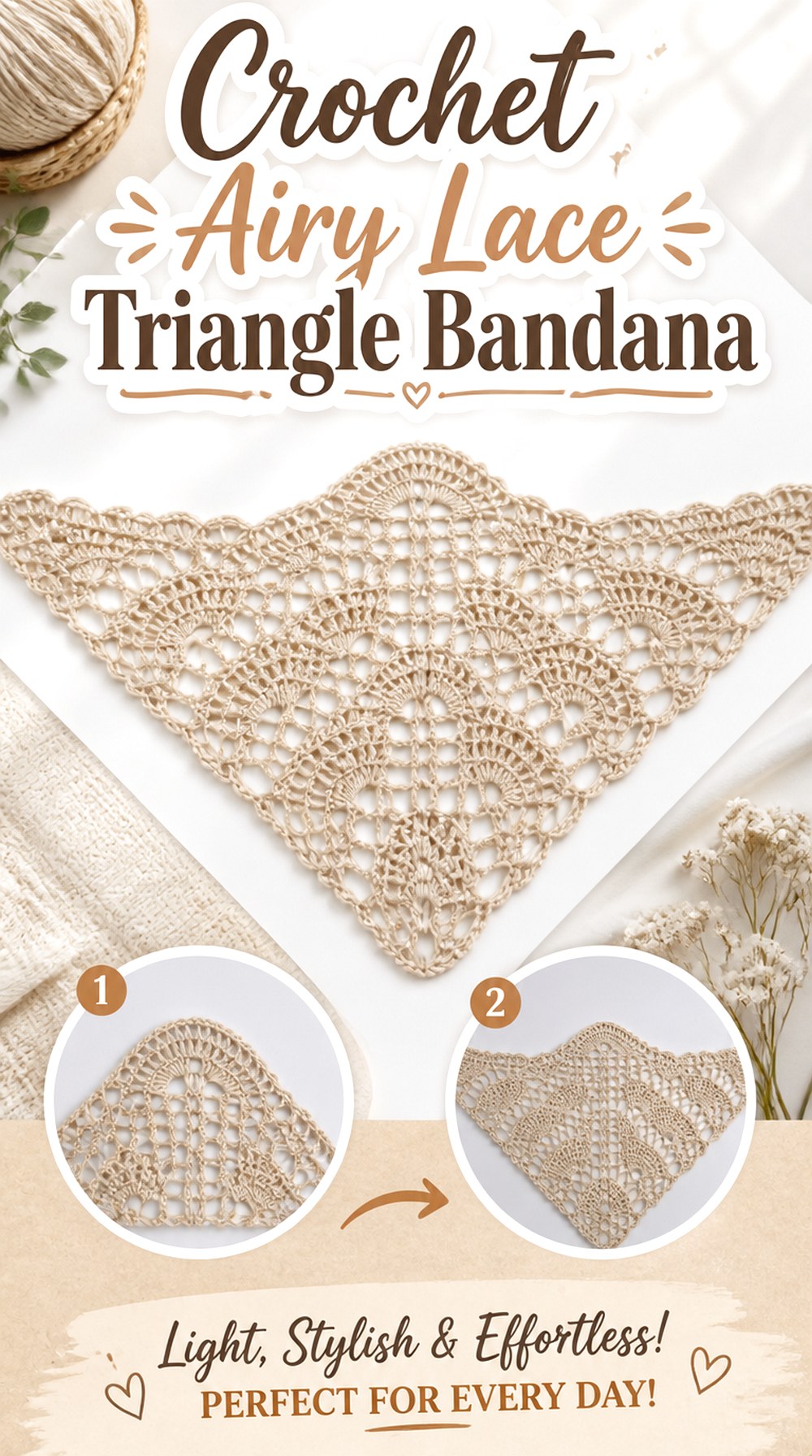
Openwork can still become stiff if the yarn and hook combination is too tight. Make a sample section and gently curve it rather than judging it only while flat. The goal is not maximum looseness; it is fabric that follows the head without the individual lace openings collapsing or the edges standing sharply away.
Dark Fall Colors Can Hide Fine Stitch Detail
Very deep yarn colors can make small lace features harder to see, especially indoors. If stitch definition is important, inspect your yarn under the lighting where the bandana will usually be worn. A medium olive, warm rust, or camel may show the lace structure more clearly than black or very dark brown.
Captioned Learning May Require More Visual Checking
Because the tutorial’s spoken language may differ from yours, use the visible crochet work as an additional checkpoint. Pause at major shaping changes and compare the silhouette of your piece with the demonstration. Auto-translated captions can be helpful, but visual agreement between your fabric and the tutorial is valuable when terminology is not perfectly translated.
Original Tutorial and Creator Credit
Creator: Tuğba Kahcevioğlu
11. Crochet Daisy Granny Patchwork Bandana
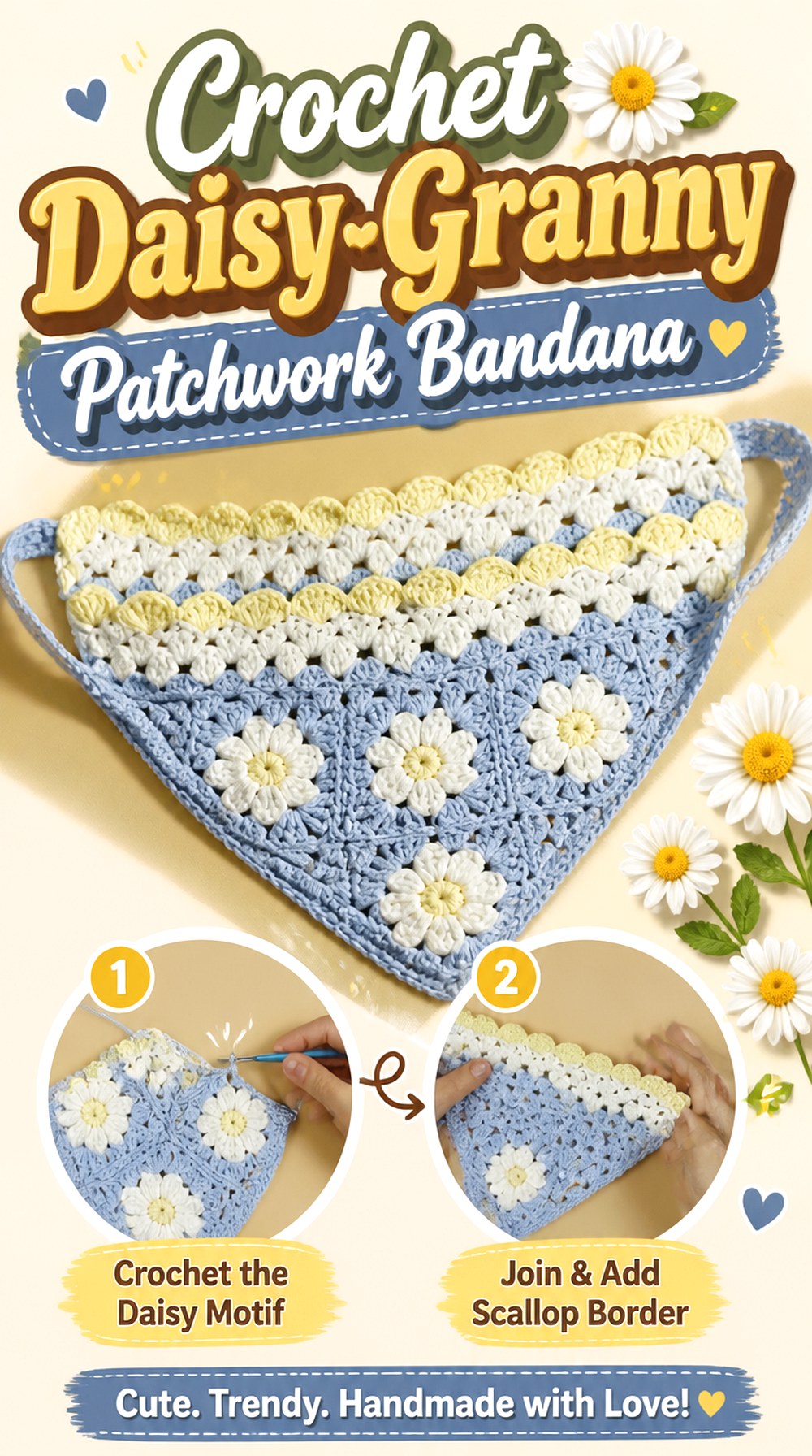
Chenda DIY’s daisy bandana introduces a recognizable flower motif through granny-style components, creating a more graphic floral look than a continuous shell or mesh fabric. The project can be adapted for fall by changing the familiar white-and-bright flower idea into cream, rust, mustard, burgundy, or muted gold.
The advantage of a daisy motif is that the individual flowers remain easy to identify even when you use only a few colors. The trade-off is that repeated motifs require careful consistency. Treat the first finished flower unit as a reference sample before producing the rest, particularly if you are changing the yarn from the source.
A Muted Daisy Palette Feels Less Spring-Like
Daisies do not have to stay white and yellow. Cream petals with rust centers, ochre petals with chocolate centers, or muted gold against olive can push the design toward autumn while preserving the flower shape. Make one test motif first because some tonal combinations look appealing as yarn balls but blend too much once crocheted.
Keep Every Granny Unit at the Same Scale
Motif joins expose dimensional differences quickly. Compare finished units before assembling them, and correct tension inconsistencies rather than stretching one small square aggressively to meet a larger neighbor. A layout made from similarly sized pieces will usually lie more evenly and make the border easier to finish cleanly.
Plan the Flower Direction Before Joining
If the motifs have an obvious face or orientation, lay the entire bandana out before attaching anything permanently. Check how flowers appear near the center point, along both sides, and near the ties. A few minutes spent arranging pieces can prevent an accidental directional mismatch that becomes much harder to change after joining.
Original Tutorial and Creator Credit
Creator: Chenda DIY
12. Crochet Checkerboard Tie Kerchief

The checkerboard bandana from Bloodimaryart Crochet uses deliberate color blocks to create a strong geometric surface and is presented as an intermediate-level project by the creator. It provides the clearest graphic contrast in this collection and offers a completely different route from floral, lace, and granny-cluster designs.
A fall checkerboard can be bold—burgundy and cream, mustard and brown—or restrained, such as olive paired with camel. Since alternating blocks are the main feature, color selection matters as much as stitch texture. This is a good choice when you want the bandana to read as intentional colorwork from a distance rather than as a mostly solid accessory.
Checker Size Determines the Visual Rhythm
Large blocks create a bold, simplified effect, while smaller checks can look busier. Follow the source construction rather than altering the colorwork repeat casually, because changes may affect shaping as well as appearance. If you want a different look without changing the structure, adjust the contrast between the two colors instead.
Carrying Contrast Makes Tension More Noticeable
Colorwork can expose tension changes where one shade switches to another. Stop periodically and spread the bandana flat. If one section begins narrowing or puckering, correct the tension issue before continuing through many more blocks. Consistent shaping is more important than making every color change as tight as possible.
Two Fall Colors Are Often Enough
Checkerboard already supplies repetition, contrast, and movement. A third or fourth shade can make the design harder to read unless you have a clear placement plan. For a controlled autumn look, start with one darker anchor shade and one lighter companion. Burgundy and oatmeal or moss and camel can create strong definition without overcrowding the pattern.
Which Crochet Fall Bandana Style Should You Choose?
For the simplest visual structure, start with the Rustic Granny-Stitch Tie Bandana and let an autumn yarn color create most of the seasonal effect. Choose the Open-Mesh or Airy Lace versions when you want your hair to remain visible through the fabric, or the Shell-Lace version when you prefer texture with less emphasis on separate motifs.
The Sunflower and Daisy options suit readers who want recognizable fall-friendly imagery, while the Patchwork Art-Motif design offers the most freedom for arranging several colors. Choose the Checkerboard Kerchief for strong geometric contrast. If decorative edging matters most, compare the broader Scalloped Granny-Edge Bandana with the smaller pointed details of the Textured Picot design. For a more substantial cool-weather accessory, the Button-Closure Wool Kerchief stands apart from the tie-on options.
Conclusion
The right crochet fall bandana depends on what you want the fabric itself to do. Granny stitches make color changes easy to see, mesh and lace keep the look light, flowers and patchwork turn motifs into the focal point, while checkerboard colorwork creates a much stronger graphic statement. Scallops and picots are useful when you want detail concentrated along the edge, and a buttoned wool kerchief offers a more substantial alternative to lightweight tie styles.
Before choosing, compare coverage, fabric drape, closure style, and how much color management you want to handle. Once you have selected the construction that suits you, use the original tutorials for the creators’ exact crochet instructions and finishing details.
Frequently Asked Questions
What yarn colors work well for a crochet fall bandana?
Rust, mustard, moss, olive, burgundy, cream, camel, chocolate, muted gold, and deep green can all create an autumn feel. You do not need to use several colors at once. A single warm neutral can show off shell, picot, or scalloped texture particularly well, while checkerboard and modular flower projects benefit from a more deliberate contrast plan.
Should a fall crochet bandana use thicker yarn?
Not necessarily. Yarn thickness affects the fabric as well as the seasonal appearance. A very thick yarn can make a small head accessory stiff or bulky, particularly in dense stitches. If a tutorial uses a finer yarn, test any substitution before committing. Fall color, fiber feel, texture, and styling can make a bandana feel seasonal without drastically increasing its thickness.
How do I know when a crochet triangle bandana is large enough?
Place the developing triangle where you intend to wear it and check both the longest head edge and the depth of the back point. The side corners should reach a comfortable position for the planned ties or closure. Do not rely only on a tutorial’s row count when your yarn, hook, tension, or preferred coverage differs from the source.
Are mesh crochet bandanas practical for fall?
They can be, particularly as decorative hair accessories. Mesh provides less visual and physical coverage than a dense stitch fabric, but that can be useful during mild fall weather or when layering is mainly about style. If warmth is the priority, compare an open mesh design with a denser textured or buttoned kerchief before deciding.
How can I make flower or daisy bandanas look more autumnal?
Change the palette before changing the motif. Cream, ochre, rust, brown, muted gold, burgundy, and olive can move a floral design away from a spring look. Test one complete motif first. You want enough contrast for the flower shape to remain clear without introducing so many strong colors that the small bandana becomes visually crowded.
Should granny-square motifs be blocked before joining a bandana?
Blocking or otherwise allowing the motifs to settle before assembly can make dimensional differences easier to see. Compare pieces that will sit next to one another and correct major inconsistencies before joining them. This matters because small differences in several motifs can accumulate across the head edge and create puckering, uneven joins, or an asymmetrical finished triangle.
What is the main difference between scalloped and picot bandana edging?
Scallops create broader rounded curves and usually have more visual weight along the bandana edge. Picots create smaller pointed details that can appear more delicate. If the border is meant to be the strongest decorative feature, scallops may have more impact. If the body texture or motif should remain dominant, a smaller picot edge can provide definition without taking over the silhouette.14 Crochet Horse Motif Bag Ideas


