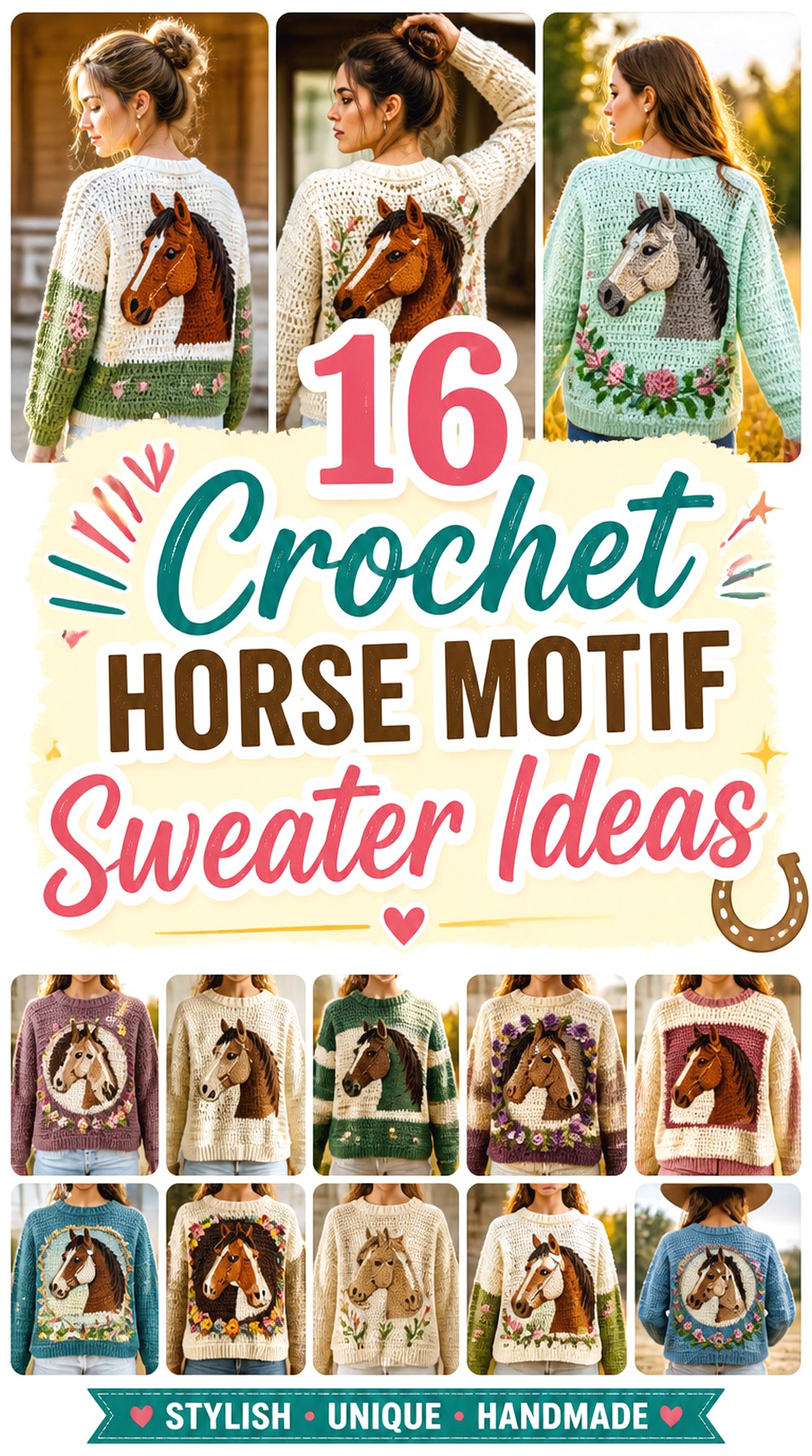
16 Crochet Horse Motif Sweater Ideas
A crochet horse motif sweater can range from a clean pullover with one bold horse silhouette to a patchwork garment built from dozens of decorative squares. The biggest differences are not simply color. Motif scale, sweater construction, fabric density, placement, neckline shape, sleeve style, and how the horse image is added can completely change the finished garment.
The ideas below use verified crochet videos as construction or motif references. Most of the tutorials do not make an exact horse sweater; instead, they provide a sweater, colorwork, granny-square, or horse-appliqué technique that can support the adaptation described here. That distinction matters because a horse square or graph should be measured against the finished garment before you substitute it. Use the original tutorials for their exact construction details and treat the horse variations here as planning directions rather than reconstructed patterns.
Quick List
- Crochet Pixel Horse Chest Pullover
- Crochet Horse Appliqué Crewneck Sweater
- Crochet Repeating Horse Tile Motif Sweater
- Crochet Patchwork Horse Block Sweater
- Crochet Oversized Horse Medallion Granny Sweater
- Crochet Scattered Horse Accent Granny Sweater
- Crochet Bulky Horse Silhouette Drop-Shoulder Sweater
- Crochet Tonal Horse Badge Classic Sweater
- Crochet Horse Motif Yoke Granny Sweater
- Crochet Four-Panel Horse Statement Sweater
- Crochet Large Horse Profile Colorwork Sweater
- Crochet Cropped Horse Appliqué Balloon-Sleeve Sweater
- Crochet Chunky Horse Square Mosaic Sweater
- Crochet Diagonal Horse Granny Sweater
- Crochet Horse Chest-Band Raglan Sweater
- Crochet Western Horse Two-Granny Sweater
Choose the Horse Motif Method Before the Sweater Shape
A horse image can be incorporated through graph-based colorwork, tapestry-style color changes, a separate appliqué, or a modular square. Those methods behave differently. A flat appliqué can be positioned after the sweater is made, which gives you more freedom to test placement. A graph worked directly into a panel must be planned before or during construction because its width and height become part of the garment fabric.
Modular horse squares introduce another issue: compatibility. Before replacing a tutorial’s original granny square with a horse motif, compare the blocked dimensions, edge stitch distribution, and fabric density. A horse square that finishes larger or stiffer than its neighboring squares can distort the joined panel. If exact compatibility is unknown, make and block one sample before committing to an entire sweater.
Plan the Motif Against the Finished Garment
A horse motif that looks balanced on a flat square may sit too high, too low, or too close to an armhole once that square becomes clothing. Use the sweater’s major landmarks—neckline, shoulder line, underarm, waist, and center front—to decide where the image should sit.
For example, a large horse profile generally needs uninterrupted space, so a broad front panel or oversized granny square gives it room to read clearly. Smaller repeating horses can tolerate seams because each motif remains independent. Sleeves are another possibility, but putting dense imagery near the elbow can make the design harder to read as the arm bends.
When adapting any tutorial, temporarily pin or baste a completed appliqué or paper-sized motif reference to the garment before making the placement permanent.
Yarn, Contrast, and Drape Can Change the Horse Image
Horse motifs depend on recognizable edges, so contrast matters more than the number of colors. A dark horse against a noticeably lighter ground usually reads more clearly from a distance than two closely related mid-tones. Highly variegated yarn behind a detailed horse can compete with the silhouette, especially when the motif contains small ears, legs, or facial shaping.
Fabric behavior matters too. Dense colorwork can feel firmer than the surrounding sweater, while an added appliqué creates a second layer of crochet. On a very drapey garment, a large heavy motif may pull the front downward. Granny-square designs distribute that weight differently because the motif becomes part of a modular grid. Swatch and block any unfamiliar yarn combination before assuming two fabrics will behave the same way.
1. Crochet Pixel Horse Chest Pullover
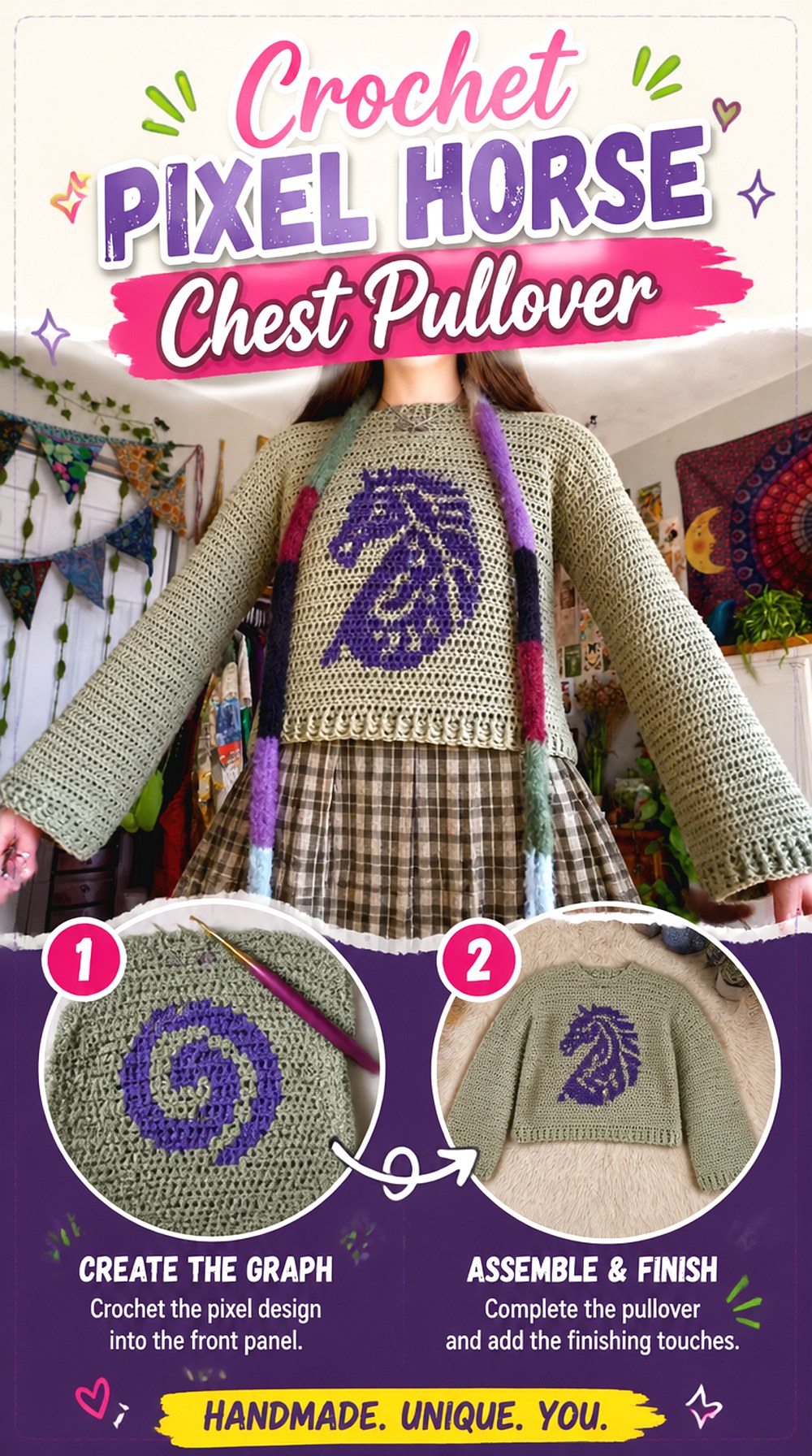
A large pixel-style horse across the center front creates one of the clearest statement versions of a crochet horse sweater. Rather than scattering small motifs, this design gives the horse most of the visual attention and keeps the back comparatively simple. It works especially well with a broad pullover front where the image can remain uninterrupted by buttons or an open front.
Hannah Drapinski’s graph-sweater tutorial demonstrates the broader idea of turning a graph into a crocheted sweater panel, making it a useful construction reference for this adaptation. A horse graph would need to be independently sourced or designed and then checked against the planned panel dimensions.
Center the Horse Before Finalizing Panel Width
The image should be treated as part of the front-panel layout rather than decoration added mentally at the end. Compare the graph width with the usable area between the side seams, then consider how much plain background you want around the horse. Leaving breathing room around the ears, nose, tail, and legs generally helps the silhouette remain readable once the sweater curves around the body.
Color Changes Affect More Than Appearance
A graph with many tiny isolated color sections can create more yarn management than a simple two-color silhouette. For a first picture sweater, a recognizable horse profile with larger uninterrupted areas may be easier to control visually. Whatever graph you choose, swatch its colorwork technique first because noticeably tighter colorwork can make the picture section narrower or firmer than the plain sweater fabric.
Check the Image After Blocking
Crochet stitches can relax or spread during blocking, changing the proportions of a graph. Before assembling the entire sweater, compare the blocked picture panel with your intended garment dimensions and inspect the horse from several feet away. If the outline only makes sense at very close range, increasing contrast or simplifying the image may give a stronger finished result.
2. Crochet Horse Appliqué Crewneck Sweater
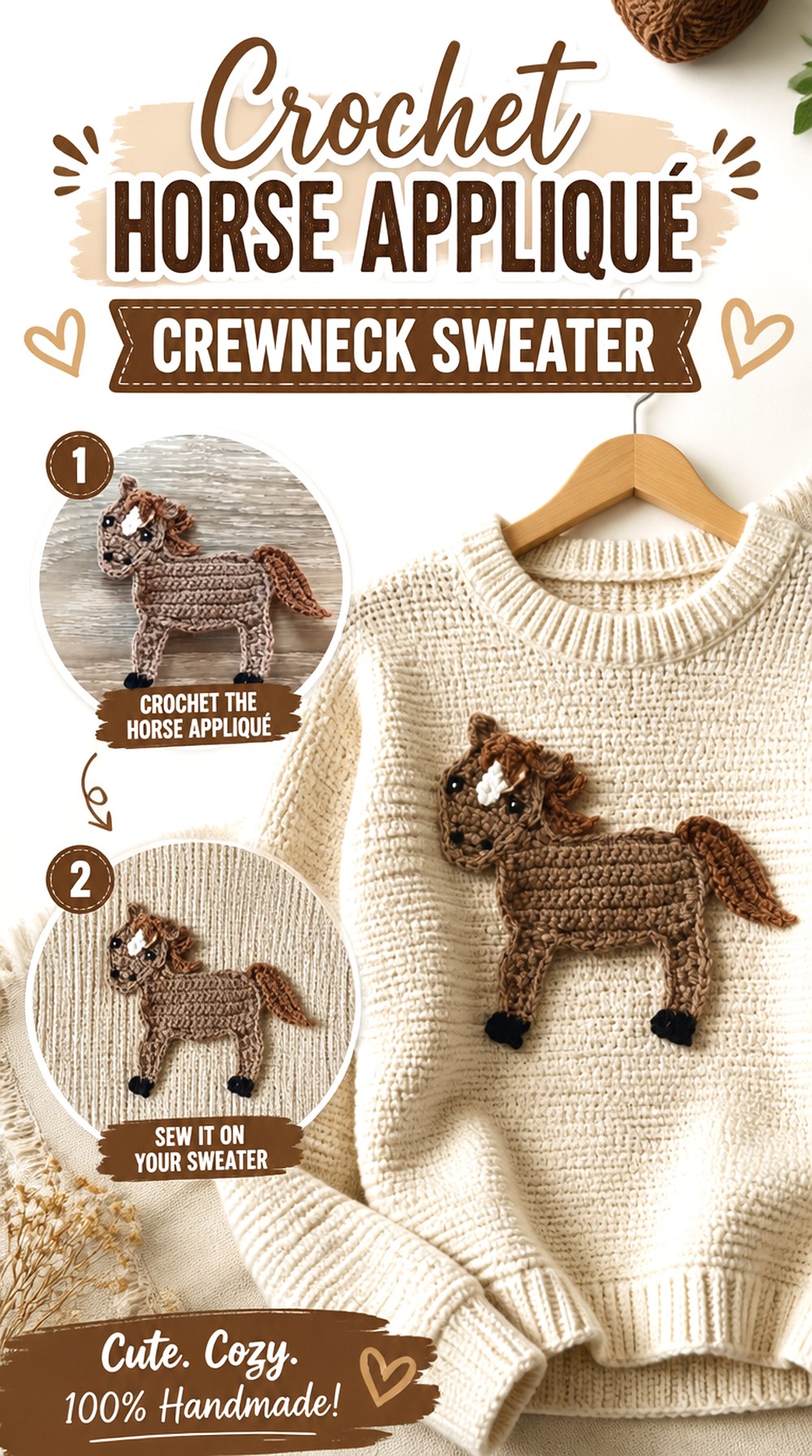
An appliqué route is useful when you want an unmistakable horse without rebuilding the sweater around a graph. Make the sweater as a plain crewneck first, then position a separate crochet horse on the chest after you can see the actual fit. Kerri’s Crochet provides a dedicated horse appliqué tutorial, so the horse component itself has a clear visual reference.
This approach suits a clean, understated sweater because the appliqué becomes the focal point. It also gives you more placement flexibility than integrated colorwork. The main limitation is thickness: a large appliqué adds another layer of yarn, so scale and attachment deserve attention.
Try the Sweater On Before Sewing the Horse Down
Flat-table placement can be misleading. Put the finished sweater on, mark the visual center of the chest, and temporarily pin or baste the horse in place. Check it from the front and side before attaching it permanently. This is particularly helpful on oversized sweaters, where the fabric may drop lower on the body than expected.
Keep the Appliqué Flexible Enough to Move
A very dense appliqué attached to a softer sweater can behave like a stiff patch. If the horse is large, avoid pulling the sewing stitches so tightly that the surrounding sweater puckers. Secure the important outer edges and internal points appropriately while allowing the garment fabric to retain its normal movement.
Original Tutorial and Creator Credit
Creator: Kerri’s Crochet
3. Crochet Repeating Horse Tile Motif Sweater
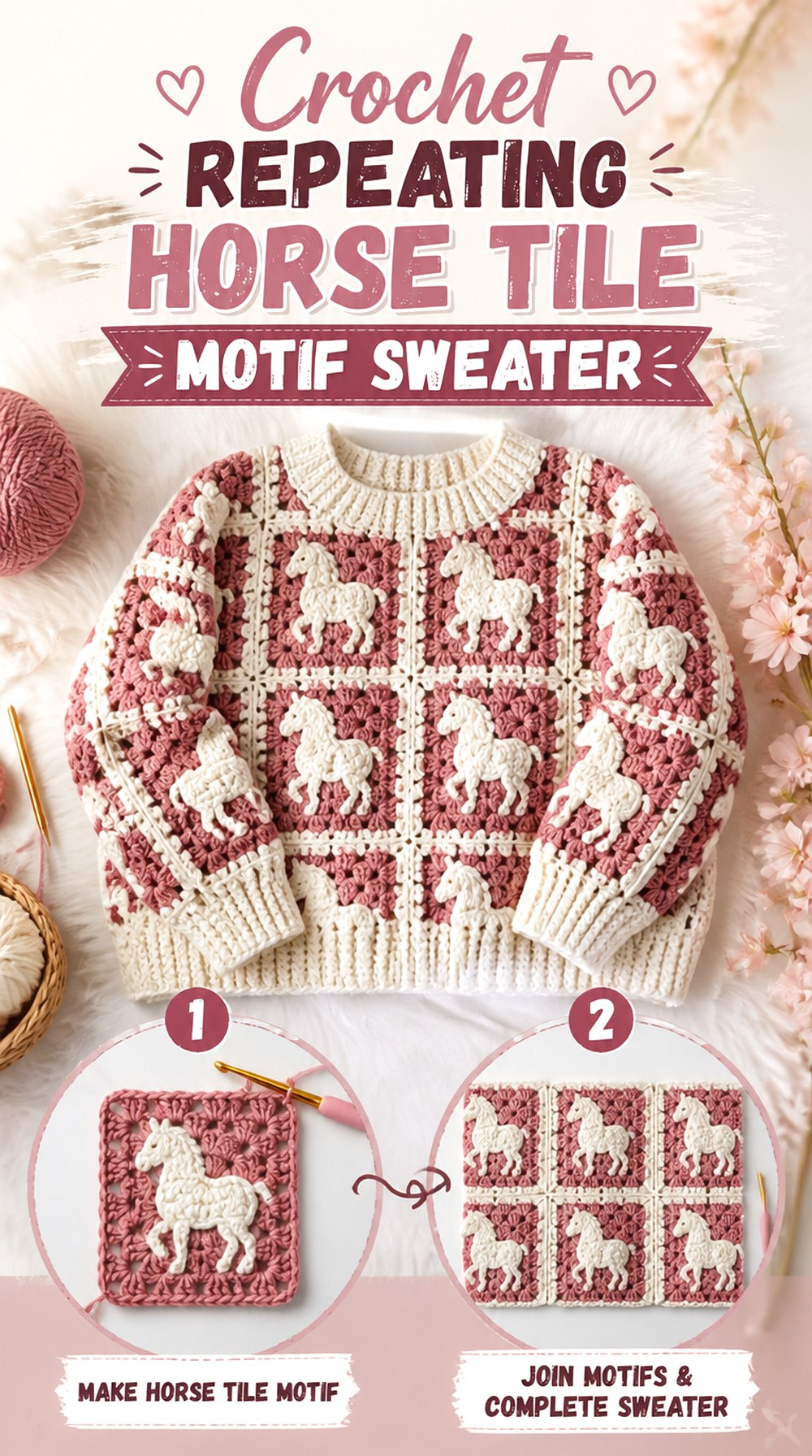
Instead of one oversized horse, this version treats the animal as a repeating modular theme. Small horse squares could alternate with simpler filler motifs across the body, leaving sleeves calmer so the sweater does not become visually crowded. The result feels more like a patterned textile than a single graphic sweatshirt.
The referenced motif-sweater tutorial from kurusakiznur demonstrates a garment built by joining motifs into front and back sections before completing the sweater. For a horse adaptation, the crucial step is not copying the original motif but ensuring your chosen horse block behaves like the sweater’s modular units.
Match Blocked Square Dimensions First
Never assume two crochet squares with similar round counts will finish at the same size. Different stitch densities, appliqués, borders, and yarn changes can alter the dimensions substantially. Block one horse square and one proposed filler square, then place them edge to edge. If their sides do not align without stretching, solve that mismatch before producing the full set.
Alternate Detail With Quiet Space
Repeating a detailed horse on every square can make the sweater visually dense and increase finishing work. Alternating horse motifs with solid, striped, or simpler geometric squares gives each animal more separation. This also lets you place the most detailed motifs where they remain visible, such as the front torso, rather than losing them under the arms.
Joining Becomes Part of the Pattern
With modular clothing, the join is visible design information. A contrasting join can frame every horse like a tile, while a matching join allows the motifs to flow together. Whichever route you choose, make a small joined sample because a bulky seam can change how the sweater hangs and can become uncomfortable if concentrated at shoulders or underarms.
Original Tutorial and Creator Credit
Creator: kurusakiznur
4. Crochet Patchwork Horse Block Sweater
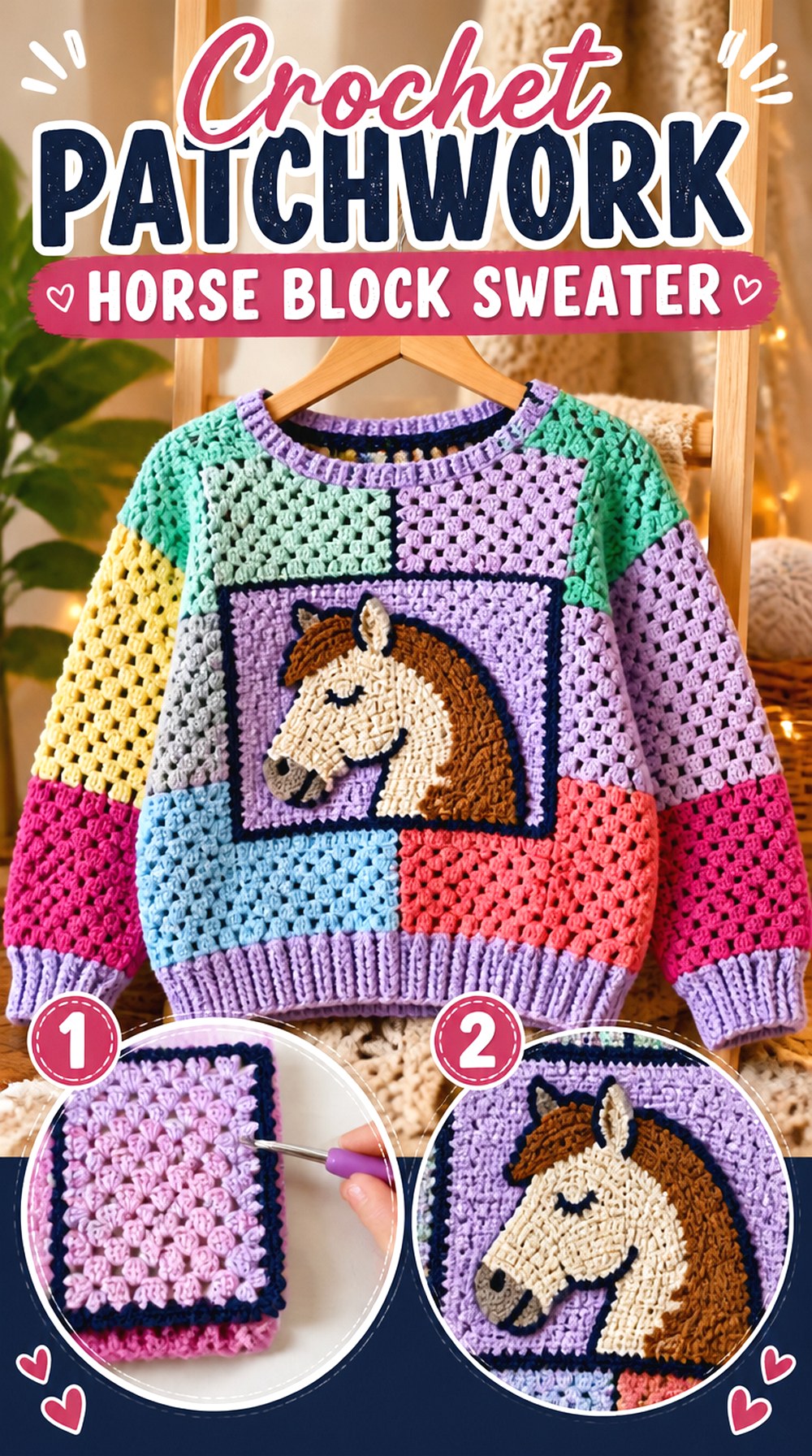
A patchwork horse sweater can mix equestrian imagery with plain blocks instead of making every square identical. Think of the garment as a planned grid: a horse-head square near one shoulder, a smaller horse silhouette lower on the opposite side, and quieter blocks filling the remaining spaces. That asymmetry creates a more contemporary patchwork look.
Katarsis Crochet’s sweater tutorial focuses on a patchwork-style garment assembled from crochet blocks and demonstrates decorative joining as part of the finished design. It makes a useful structural reference when you want the seams between horse blocks to remain visually important.
Decide Where Seams May Cross the Design
A horse image should generally stay inside a single block unless you deliberately design a multi-square graph. Splitting a face, eye, or muzzle across a bulky join can make the animal harder to recognize. Before crocheting a full set, draw a simple block map of the front and back so important images do not accidentally disappear into side seams or underarm areas.
Shoulder Blocks Need More Restraint
Dense or dimensional horse blocks are better kept away from areas that bear more garment weight unless their fabric matches the surrounding squares well. Shoulder sections benefit from relatively even thickness because they support the rest of the sweater. Save heavier appliqué-style horse squares for flatter torso areas where they can sit without affecting the shoulder line.
Let the Join Support the Western Look
A strong visible join can resemble the framing of a patchwork quilt or saddle blanket, which suits an equestrian theme. A subtle join creates a softer effect. Test both with spare squares before committing because the join changes not only the appearance but also the flexibility and total size of the finished grid.
Original Tutorial and Creator Credit
Creator: Katarsis Crochet
5. Crochet Oversized Horse Medallion Granny Sweater
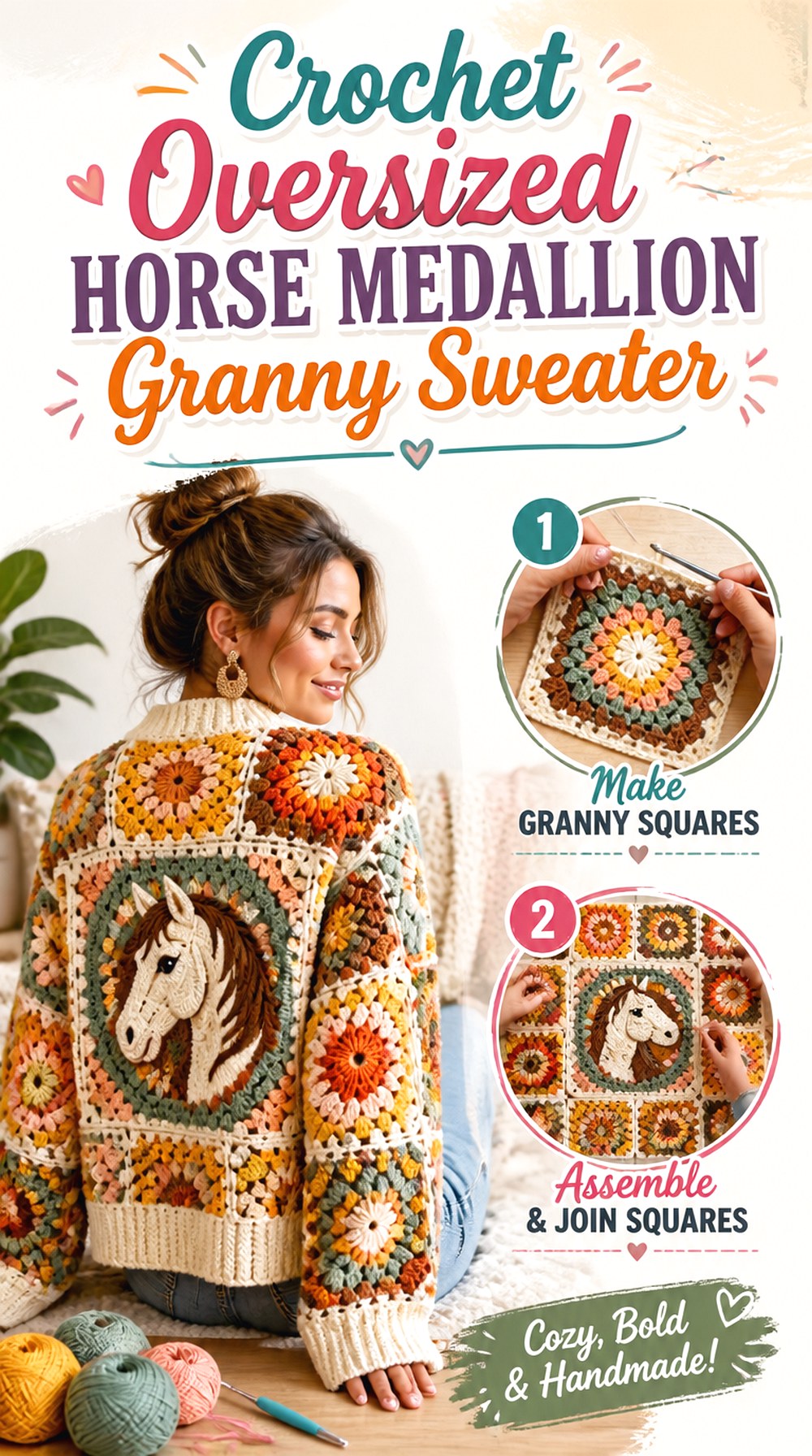
This direction uses the visual impact of a large granny-square sweater but gives the front square an equestrian center. A horse-head appliqué, simple horse silhouette, or compatible horse-square center could sit inside the expanding granny structure, creating a medallion effect rather than a conventional rectangular graph.
Sasser House demonstrates a sweater made from prominent granny-square construction, giving this idea a relaxed, handmade silhouette with plenty of room for a central statement. The horse detail should remain proportional to the expanding square so it does not become visually lost once more rounds are added.
Scale the Horse for the Final Square, Not the Starting Center
A motif that fills the first few rounds can become tiny once the granny square expands to sweater scale. Estimate the final square dimensions first, then choose the horse size accordingly. If you are adding the horse afterward, a paper template can help you judge whether the image feels deliberate rather than undersized.
Watch the Square Corners Around the Body
Large granny-square sweaters naturally create strong diagonal lines from their corners. Those lines already attract attention, so the horse should work with them rather than compete with them. A centered head or profile usually handles this geometry better than a long horizontal running-horse composition that presses against the diagonal edges.
Original Tutorial and Creator Credit
Creator: Sasser House
6. Crochet Scattered Horse Accent Granny Sweater
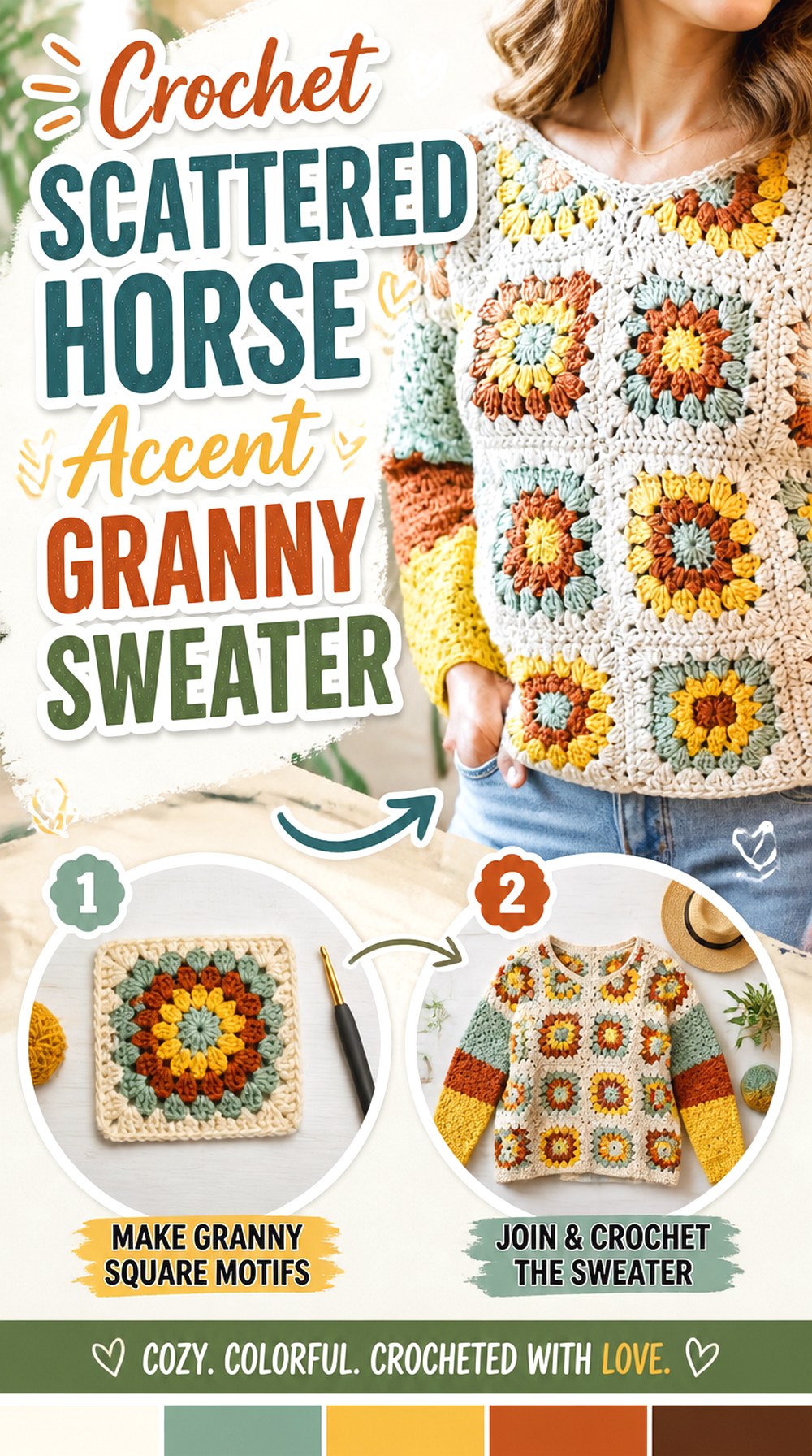
A scattered-accent sweater is a better choice if you like horse imagery but do not want the entire garment dominated by it. Build most of the garment from regular granny motifs, then replace selected squares with compatible horse blocks. One horse near the upper front, another at the lower back, and perhaps a small equestrian accent on one sleeve can create a collected, story-like arrangement.
TL Yarn Crafts’ Joan Granny Sweater tutorial shows how motifs, triangles, joining, sleeves, and finishing work together in a wearable. That makes it a practical reference for deciding where substituted horse motifs might fit into a more complex modular layout.
Use Horse Squares as Visual Anchors
If every square has equal detail, the eye has nowhere to rest. Treat the horse blocks as anchors and let neighboring squares support them through simpler color arrangements. Repeating one background shade across horse and non-horse squares can also help the substitutions look intentional rather than added later.
Compare Edge Structure Before Substituting
A replacement square must do more than measure correctly. Its edge should provide a reasonable joining surface compatible with the rest of the garment. If a horse block finishes with a completely different stitch rhythm, you may need an additional neutral border to make the sides easier to align without forcing or gathering.
Sleeves Can Carry Smaller Equestrian References
The torso is the best place for a recognizable horse face, while sleeves can handle reduced imagery such as a small horse head, horseshoe-inspired geometry, or a single accent square. This prevents the design from becoming top-heavy while still allowing the horse theme to appear from different viewing angles.
Original Tutorial and Creator Credit
Creator: TL Yarn Crafts
7. Crochet Bulky Horse Silhouette Drop Shoulder Sweater
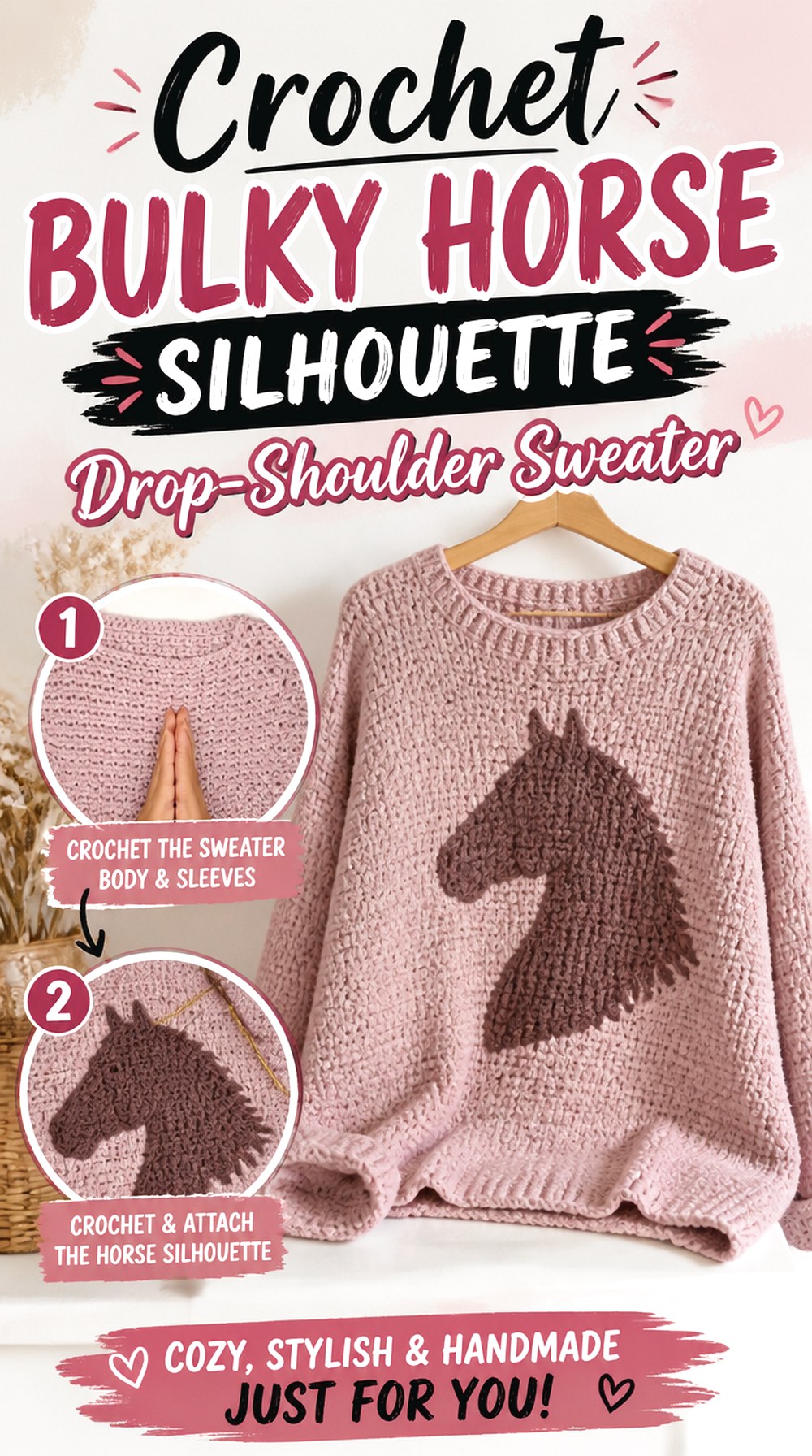
A bulky drop-shoulder sweater gives a horse motif a relaxed, sweatshirt-like setting. Keep the body mostly plain and add one simple horse silhouette to the front after the main panels are complete. Because bulky yarn produces larger stitches, intricate pixel details can become difficult to read; a simplified head, standing horse, or broad running-horse outline is likely to suit the scale better.
KnitcroAddict’s tutorial uses a four-piece sweater construction worked flat and then assembled, providing a straightforward base for this type of customization. The separately made front panel also makes it easier to assess horse placement before final seaming.
Bulky Fabric Calls for a Simpler Horse
Small facial details, thin legs, and tiny color changes can become visually blocky when each stitch occupies more space. Reduce the design to its most recognizable features and view the swatch from a distance. A clean silhouette often communicates “horse” more successfully than a complicated image squeezed into too few stitches.
Finish the Front Panel Before Committing to Placement
When the front exists as a separate flat piece, use that opportunity to test the image. Mark the neckline and approximate underarm level, then move a paper template or finished appliqué around the panel. A design that appears centered geometrically may need to sit slightly higher visually once ribbing and the neckline are included.
Original Tutorial and Creator Credit
Creator: KnitcroAddict
8. Crochet Tonal Horse Badge Classic Sweater
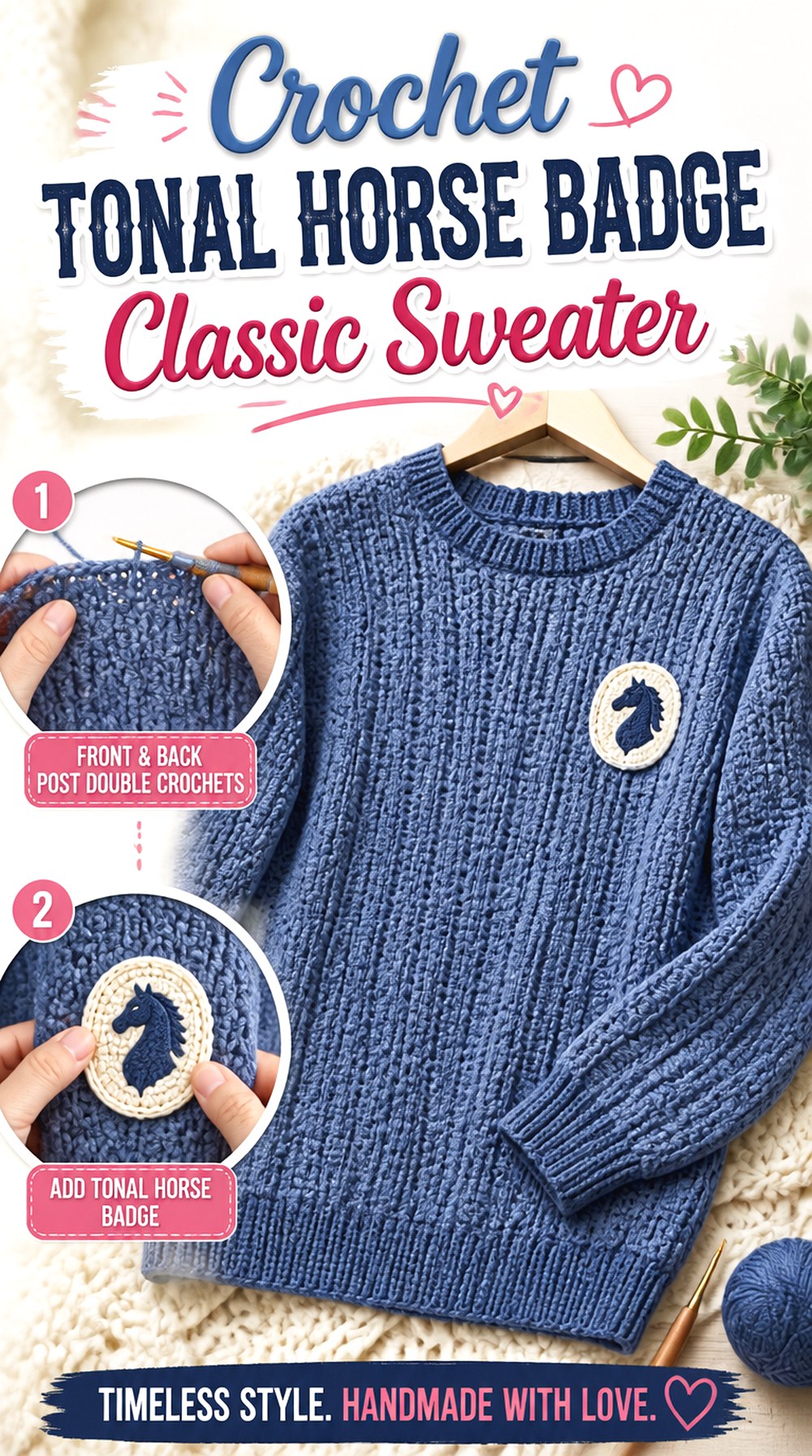
Not every horse motif needs high-contrast Western colors. A tonal badge can use two related shades—a medium brown horse over camel, charcoal over gray, or cream over oatmeal—for a quieter equestrian look. Keep the horse compact and position it like an oversized emblem on the upper chest rather than filling the whole front.
TCDDIY’s classic sweater tutorial uses a traditional panel-based pullover construction, which works well as a neutral base for a separately planned badge or appliqué. This is a useful route when you want the garment silhouette to remain classic while the horse detail supplies the personality.
Tonal Contrast Still Needs to Be Visible
Two colors can coordinate beautifully yet merge at normal viewing distance. Before making the full badge, crochet a small sample with both shades and photograph it in indoor and natural light. If the boundary disappears, increase either the light-dark difference or the amount of background surrounding the horse.
Texture Can Compete With Fine Outlines
The sweater tutorial uses visible stitch texture, so an overly delicate horse may get lost against the fabric. A bolder appliqué or solid-edged emblem gives the eye a stronger boundary. Avoid adding excessive surface detail to both the sweater and horse at once; one should remain visually quieter.
Keep the Badge Clear of the Neckline
An upper-chest horse looks intentional when there is enough plain fabric between the image and collar. If the ears or mane crowd the neckline, the motif can appear squeezed. Temporarily position it after the front and neckline shaping are complete, then check the sweater vertically rather than relying only on measurements.
Original Tutorial and Creator Credit
Creator: TCDDIY
9. Crochet Horse Motif Yoke Granny Sweater
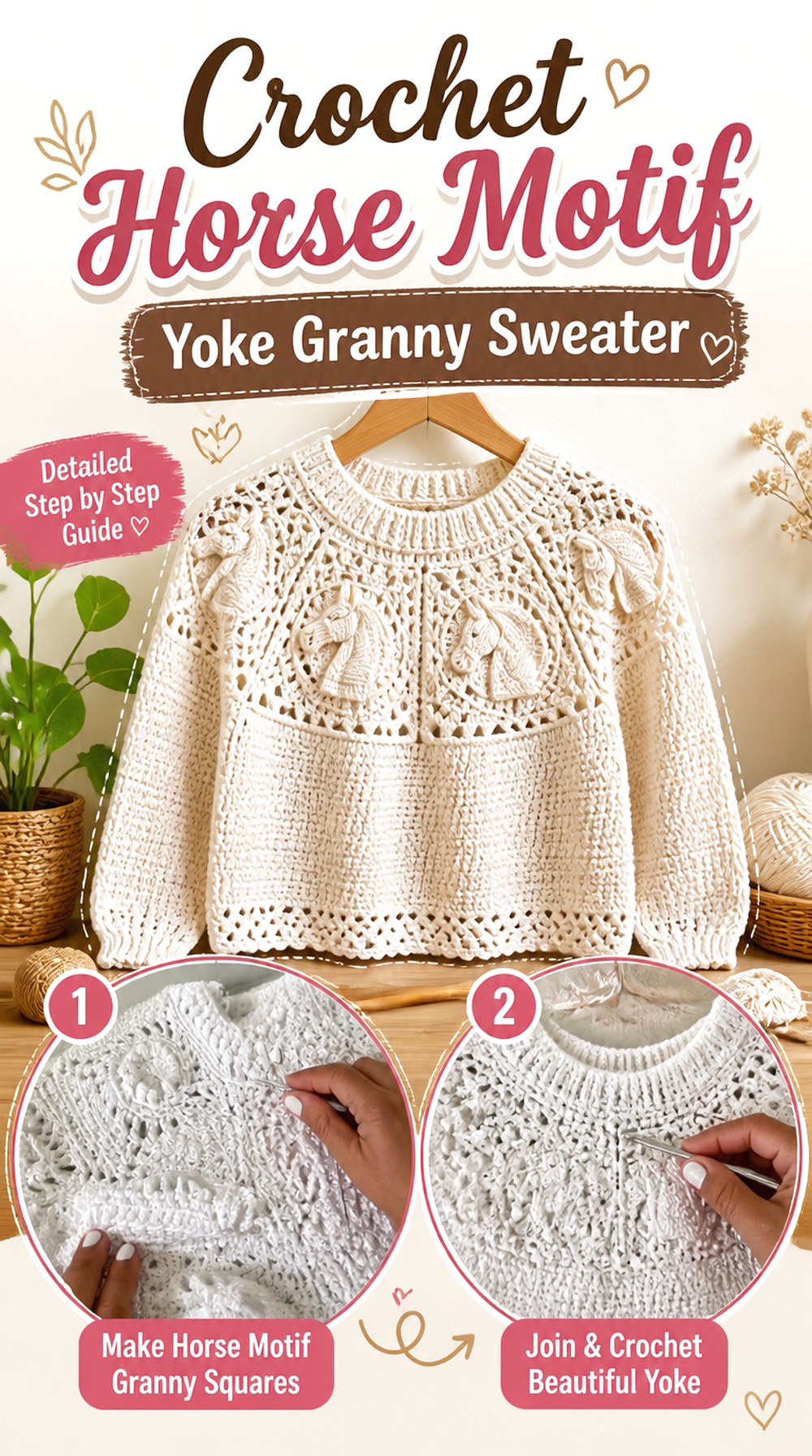
A yoke-focused horse sweater concentrates the theme near the shoulders rather than covering the whole torso. Several small horse-inspired squares could form part of the upper motif band, while the lower body stays mostly plain. This creates an equestrian detail that frames the face and neckline but still leaves the sweater easy to style.
Lakeside Loops’ Isla Granny Square Sweater uses separately created squares combined with additional garment sections, providing a useful reference for a design where motifs occupy specific structural zones instead of the entire sweater. Any replacement horse square should be blocked and compared carefully before joining.
Yoke Motifs Need Consistent Height
A mismatch of even one noticeably taller square can distort the neckline or shoulder line because the motifs are concentrated near a fitted structural area. Test your horse square beside the tutorial’s intended square before making multiples. Adding or removing a neutral border is generally easier at the sampling stage than correcting an uneven completed yoke.
Keep the Horse Upright Around the Shoulder Line
Motif orientation becomes more obvious near the neckline. Decide whether every horse should face the same way, mirror across the center front, or alternate intentionally. Randomly rotated horse heads can make a polished yoke look accidental, particularly when the animals have a strong directional profile.
Original Tutorial and Creator Credit
Creator: Lakeside Loops
10. Crochet Four Panel Horse Statement Sweater
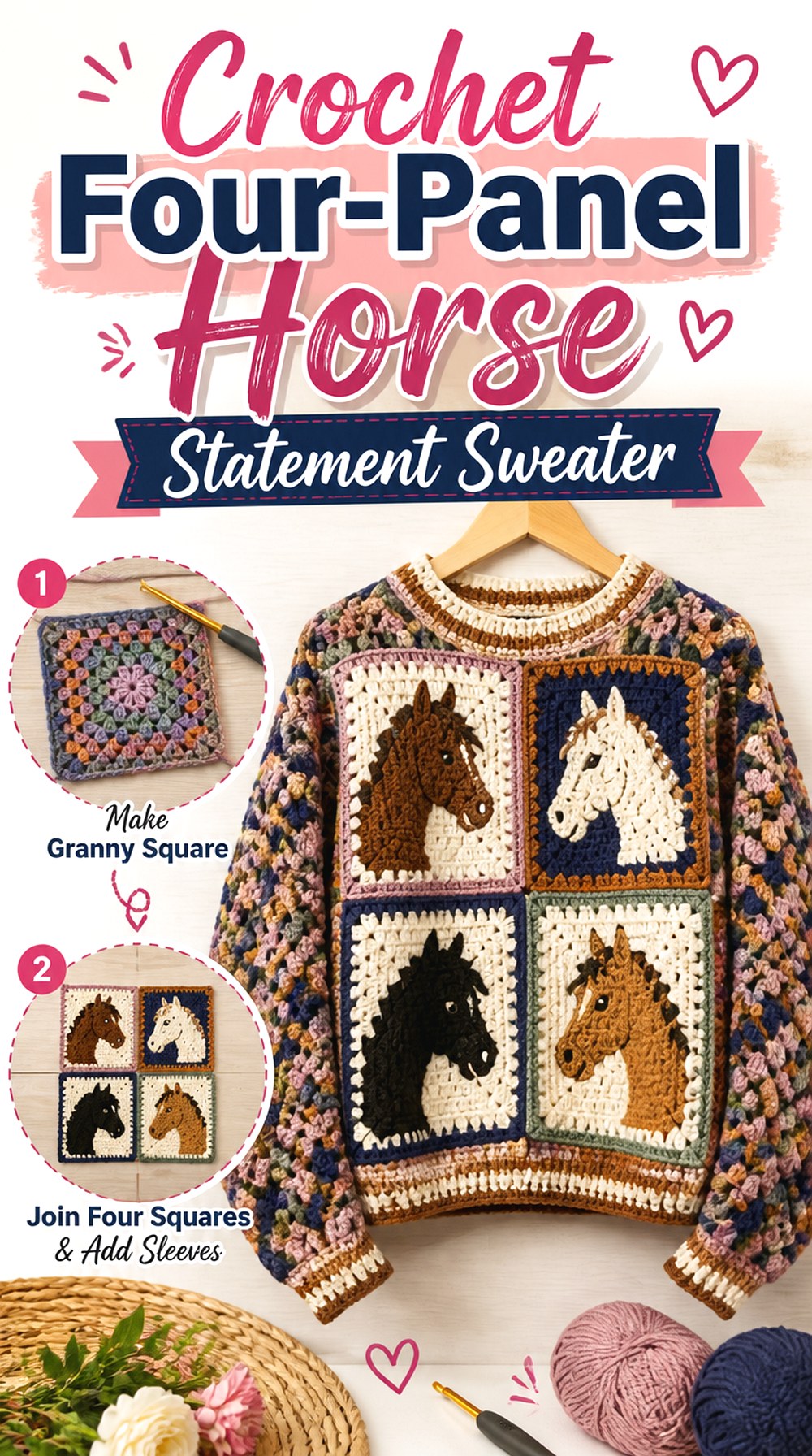
This construction makes each major sweater piece visually important, which opens the door to treating the horse motif differently on the front, back, and sleeves. The front could carry a large horse profile, the back a simpler coordinated center, while the sleeve squares use only matching colors. The idea is less about repeating horses everywhere and more about using one oversized modular piece as a canvas.
Fiber Flux’s Four Granny Square Sweater is built from four prominent granny squares—front, back, and sleeves—making the tutorial an unusually direct structural reference for this concept.
Make the Front Square the Hero
When all four garment sections begin as squares, using a detailed horse on every piece can become overwhelming. Reserve the strongest horse treatment for the front and repeat only selected colors elsewhere. This also reduces the risk that a motif becomes distorted when a sleeve square wraps around the arm.
Sleeve Squares Need Different Visual Expectations
A square that looks perfectly balanced flat will bend once it becomes a sleeve. Large horse faces or full bodies may become partly hidden from most angles. Use simpler companion graphics or plain color arrangements on the sleeves so the sweater still looks deliberate when worn.
Check Weight Across All Four Sections
Adding extra layers or dense colorwork to one giant square can make it noticeably heavier than the other three. Compare the hand and flexibility of the front square with the back before assembly. If the horse is an appliqué, consider keeping it broad but relatively flat rather than highly dimensional.
Original Tutorial and Creator Credit
Creator: Fiber Flux
11. Crochet Large Horse Profile Colorwork Sweater
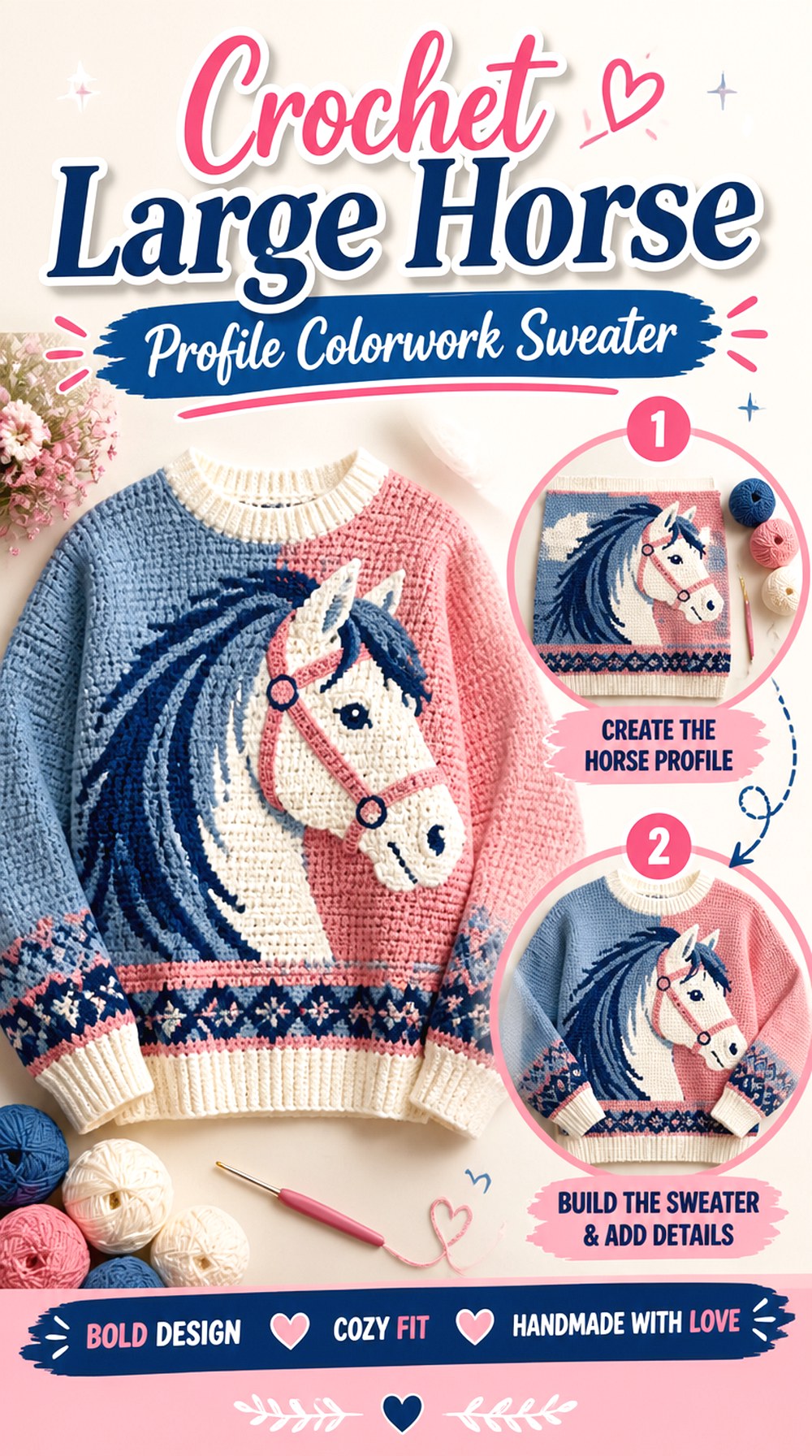
A horse profile worked directly into the front creates a graphic sweater with cleaner edges than a separate sewn-on patch. This version works best when the horse occupies a large central field and the rest of the garment uses only a few supporting colors. A side-facing head with mane detail can be especially readable because it does not require the narrow legs of a full-body horse.
Chenda DIY’s heart sweater demonstrates a sweater built around a prominent contrasting picture motif, so it provides a useful visual reference for planning a large image as part of the garment rather than adding small decoration afterward.
Use a Horse Image With a Strong Outer Contour
When a motif is large, its silhouette determines whether it reads instantly. Ears, forehead, muzzle, neck, and mane should remain distinguishable without relying on tiny interior details. Test a reduced paper version or digital preview before translating the design into crochet so you can spot ambiguous edges early.
Measure the Motif Against the Wearer’s Torso
A picture that spans nearly the entire panel can wrap around the sides on a narrower fit, while a tiny design can look lost on an oversized sweater. The safest planning reference is the intended finished front width rather than the number of stitches in someone else’s garment. Keep the important facial features comfortably inside the central viewing area.
Separate the Horse From Busy Sleeves
The large front picture already supplies substantial visual information. Solid or simply striped sleeves can frame it more effectively than additional competing motifs. Repeating one or two of the horse colors at the cuffs is enough to connect the design without turning every surface into colorwork.
Original Tutorial and Creator Credit
Creator: Chenda DIY
12. Crochet Cropped Horse Appliqué Balloon Sleeve Sweater
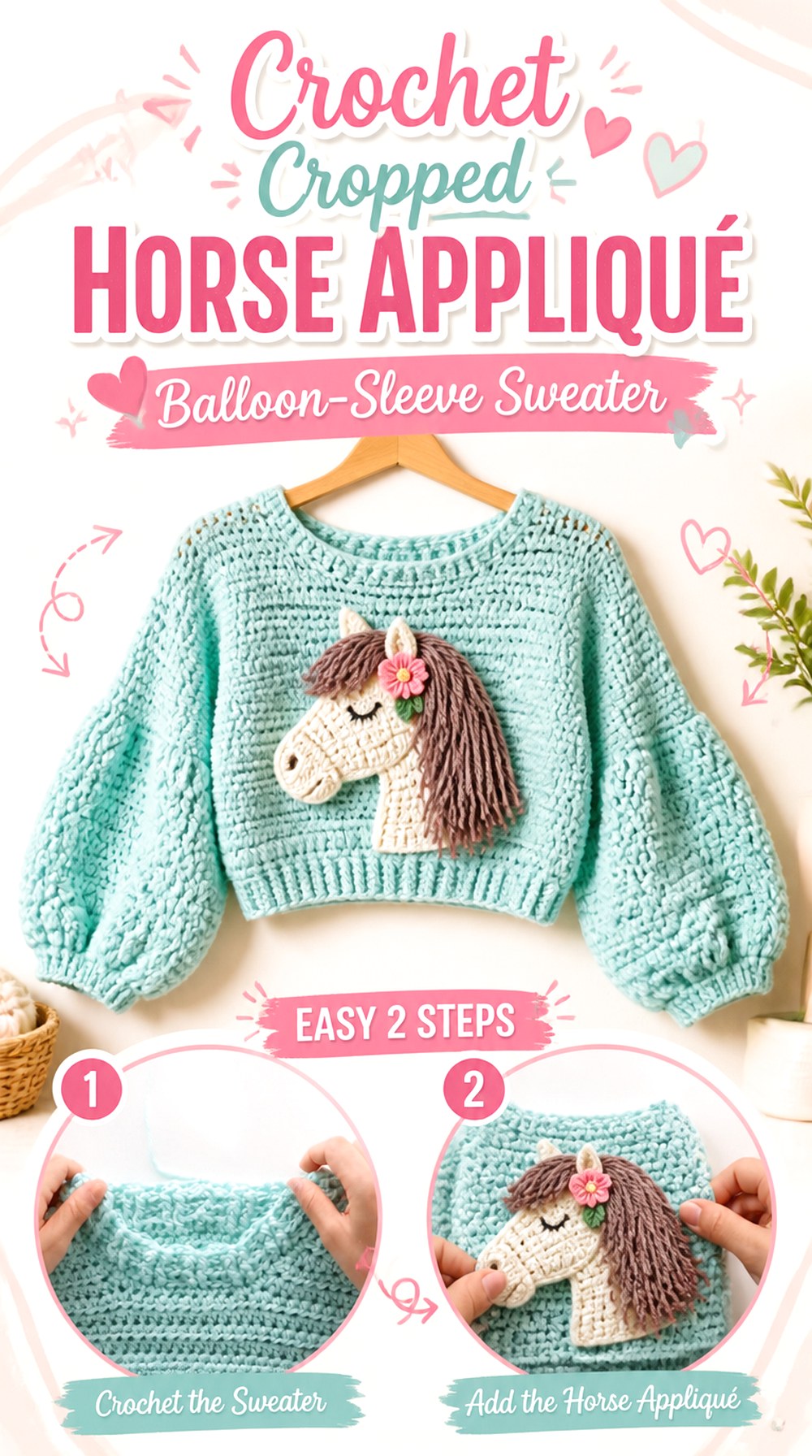
A cropped, boxy sweater gives the horse motif less vertical room, so this idea uses a compact chest appliqué rather than a tall full-body image. Pair that smaller motif with slightly fuller sleeves and a clean body for a playful proportion: the horse remains visible without overwhelming the shorter torso.
The Someday Sweater tutorial from forthefrills demonstrates a boxy cropped pullover with slight balloon sleeves and adjustable body length. It works well as a construction base when you want the silhouette itself to feel different from the longer and more modular horse sweaters in this collection.
Shorter Bodies Need Tighter Motif Proportions
On a cropped sweater, the space between neckline and hem disappears quickly. A tall horse can collide visually with both. Choose a compact head, bust-style horse portrait, or small running silhouette and test its placement after the sweater length has been established rather than selecting the appliqué size first.
Balloon Sleeves Balance a Small Front Graphic
Fuller sleeves create enough visual interest that the chest motif does not need to be huge. Keep sleeve decoration minimal so their volume provides the contrast. Repeating the horse color at the cuffs can link the elements without adding another image.
Original Tutorial and Creator Credit
Creator: forthefrills
13. Crochet Chunky Horse Square Mosaic Sweater
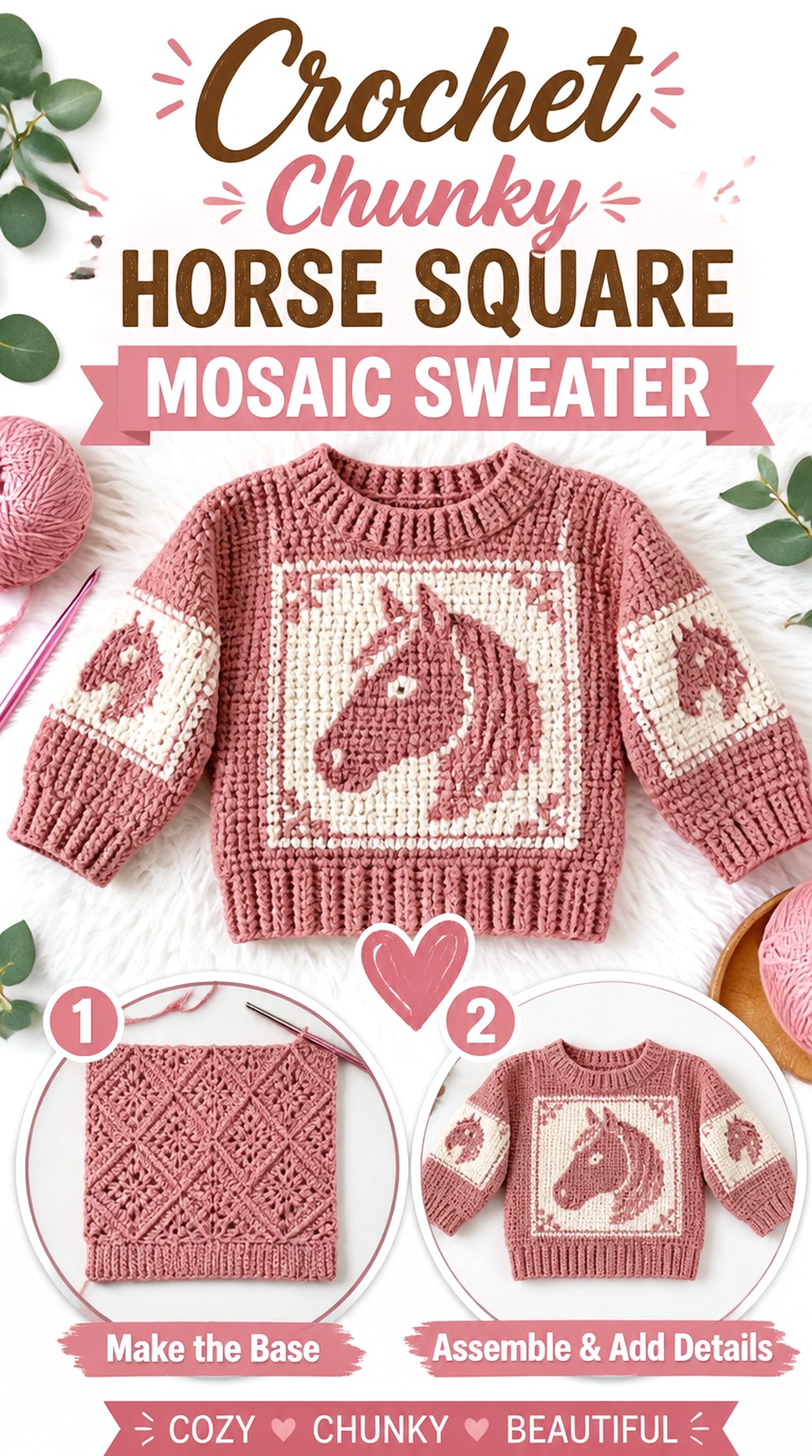
A chunky mosaic-style sweater combines large decorative squares and triangles with selected equestrian blocks. Rather than shrinking a detailed horse into every motif, use only a few strong horse squares and let textural filler motifs occupy the rest of the garment. The heavier visual scale can suit rustic palettes inspired by tack rooms, blankets, leather, and natural wool tones without copying any particular textile.
Wilma Westenberg’s Tulip Square Sweater tutorial demonstrates a chunky garment assembled from squares and triangular elements with separate sleeves and finishing. That mixed-shape construction makes motif compatibility especially important.
A Chunky Horse Square Needs a Bold Design
Thicker yarn exaggerates every stitch, so simplify the horse to a broad face, head silhouette, or highly reduced standing shape. Fine nostril, bridle, or mane details can be added only if they remain clear at the finished scale. A successful motif should still look equestrian when viewed from several feet away.
Triangles Should Support, Not Compete
Because the sweater construction already includes non-square shapes, keep triangular sections visually calmer. Repeating the horse-square background color in the triangles creates continuity and prevents the garment from looking like several unrelated motif collections joined together.
Plan the Heaviest Motifs Away From Stress Points
If the horse squares are denser than the original motifs, avoid concentrating all of them at the shoulders. Spread additional weight across the torso and compare the blocked flexibility of every substitute piece. The garment should not require one stretchy square to compensate for a rigid neighbor.
Original Tutorial and Creator Credit
Creator: Wilma Westenberg
14. Crochet Diagonal Horse Granny Sweater
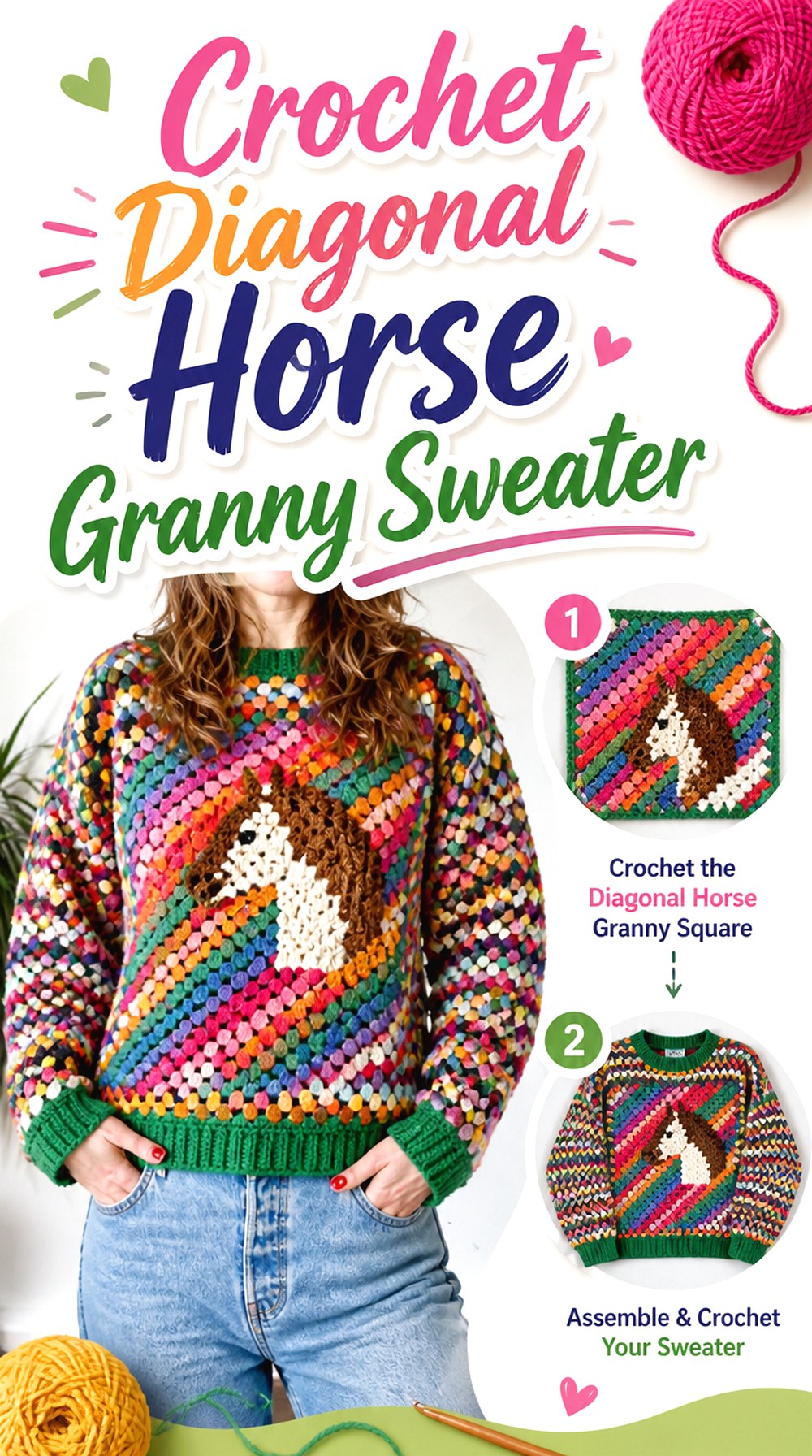
Turning granny squares on the diagonal gives a horse motif a completely different presentation. Instead of aligning every animal with a horizontal grid, place one or two horse squares like diamonds and let the surrounding motifs lead the eye toward them. The effect feels more graphic and less like a traditional tiled blanket translated into clothing.
Zeens And Roger Crochet demonstrates an adaptable granny-square sweater with shaping, sleeves, ribbing, and sizing discussion. For a horse version, the key design choice is whether the horse itself stays upright inside a diamond-positioned square or rotates with the square.
Decide Whether the Horse or Square Controls Orientation
Rotating a finished horse square forty-five degrees can make the animal look as though it is tipping sideways. If you want a diamond-shaped block with an upright horse, the motif must be designed for that final orientation. Mock up the full front panel before crocheting multiples so you do not discover the problem during assembly.
Diagonal Lines Can Broaden the Visual Shape
Large diamonds naturally pull the eye outward toward their corners. If you prefer a calmer silhouette, place the strongest contrast toward the center and use quieter colors near the side seams. This lets the horse remain the focal point instead of letting the grid dominate the garment.
Original Tutorial and Creator Credit
Creator: Zeens And Roger Crochet
15. Crochet Horse Chest Band Raglan Sweater
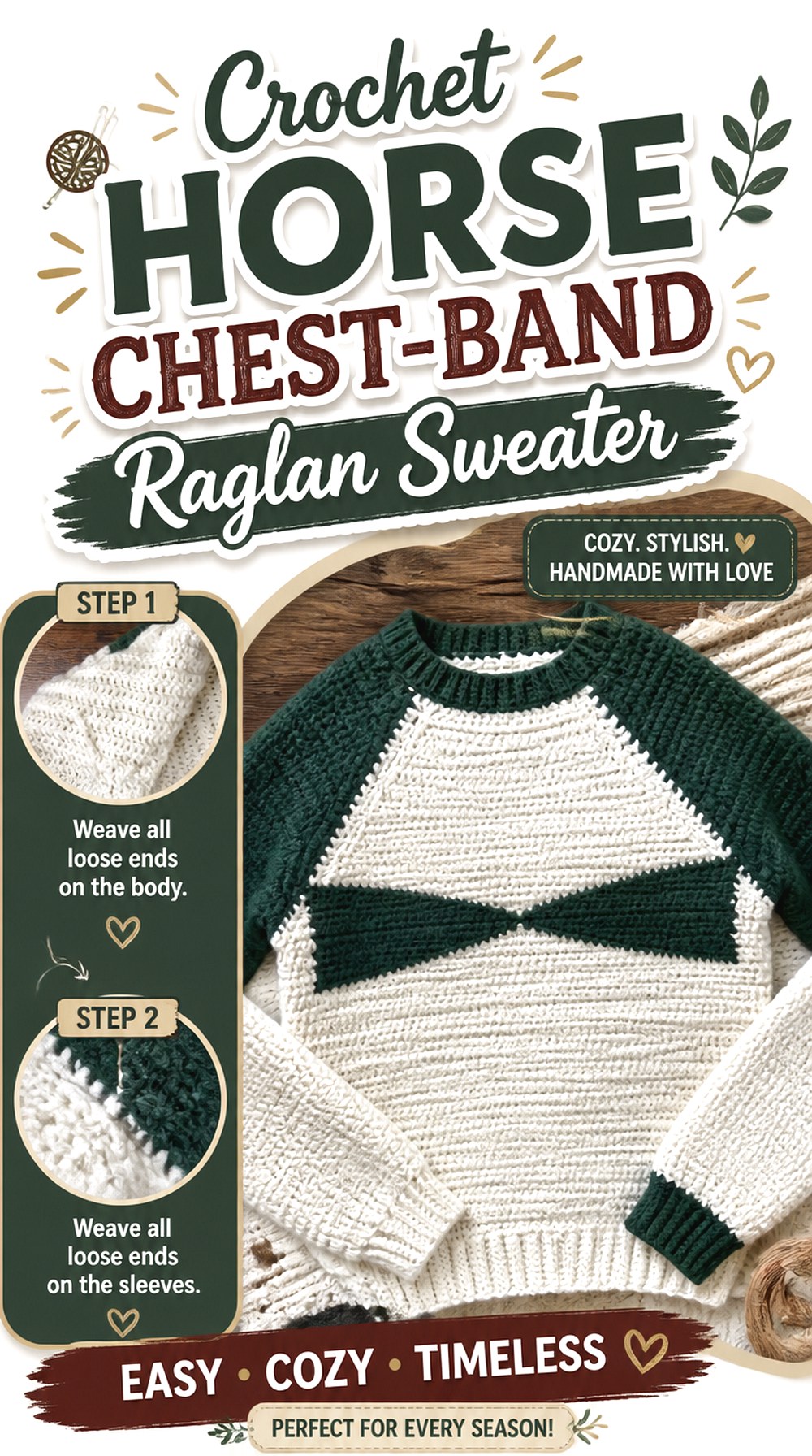
A top-down raglan offers a clean alternative to square-based horse sweaters. Keep the upper yoke simple, then introduce an equestrian band once the body has separated from the sleeves. The band could use repeating small horse silhouettes, a restrained horse-head sequence, or a single centered motif framed by horizontal color changes.
VivCrochets’ tutorial demonstrates a no-sew raglan sweater worked from the yoke through the body and sleeves. Because the sweater grows from the neckline downward, this route is useful when you want to evaluate the fit before deciding exactly where the horse band should begin.
Keep the Motif Away From Raglan Increase Lines
The diagonal raglan shaping is already visually active near the shoulders. Adding detailed horses inside that area can make both the shaping and imagery harder to read. Let the yoke establish itself first, then place the strongest equestrian design on the straighter torso section below.
Repeating Horses Must Wrap Cleanly
A chest band travels around a three-dimensional body, so calculate whether your chosen repeat can finish without an awkward partial horse near a side or back transition. If an exact repeat is inconvenient, use a centered front horse with simpler geometric filler toward the sides instead of forcing identical animals around the entire circumference.
Try the Raglan On Before Choosing Band Height
The same number of rounds can sit at different body points depending on gauge and fit. Try the sweater on after separating the sleeves and mark where you want the image to appear. This avoids accidentally placing the horse band directly across the underarm or too low on the torso.
Original Tutorial and Creator Credit
Creator: VivCrochets
16. Crochet Western Horse Two Granny Sweater
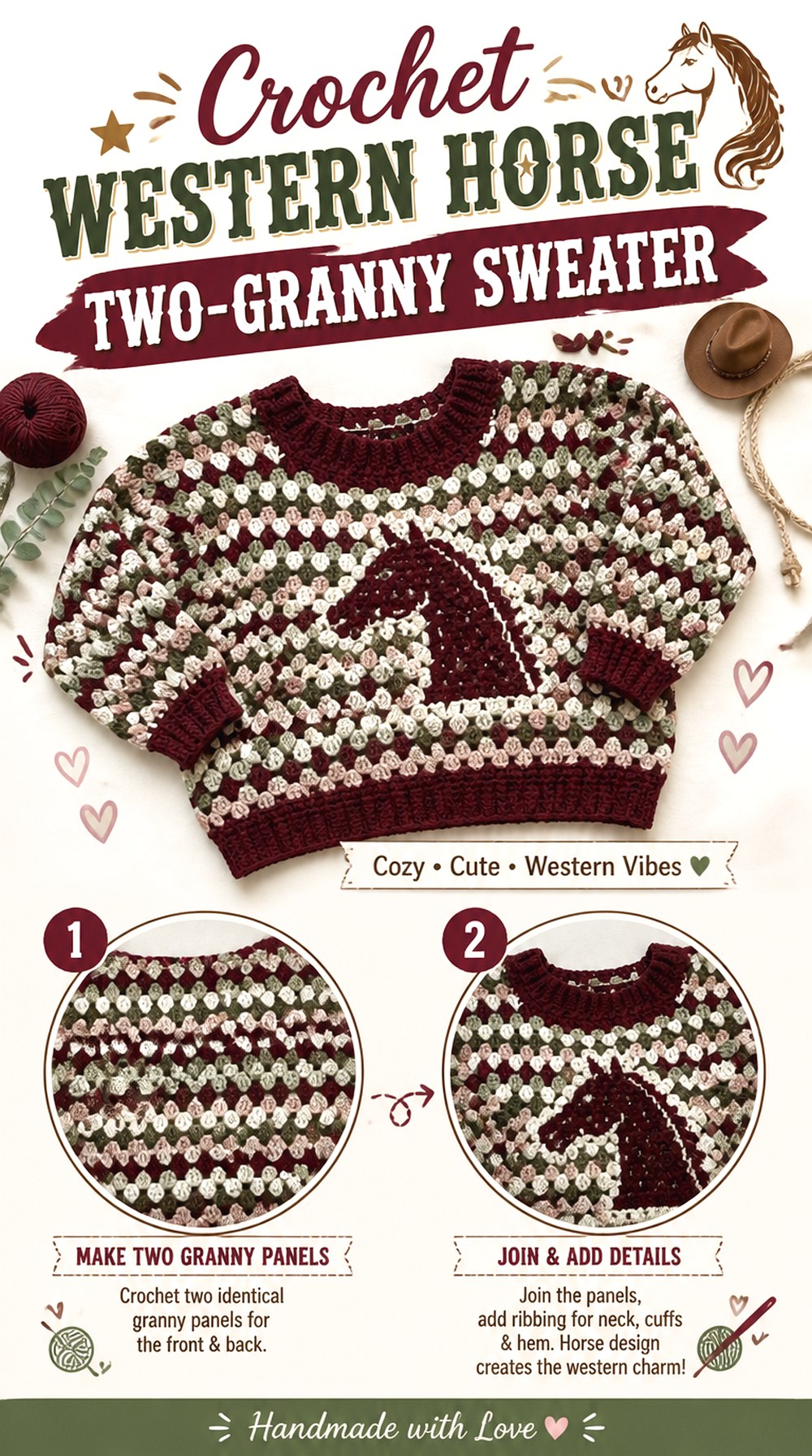
This final idea leans into an intentionally rustic Western look using two dominant granny sections as the sweater body. A large horse appliqué can sit in the center of the front square, while earthy stripes, cream edging, and a coordinated back square provide the surrounding structure. Because the front begins as one large visual field, the horse can be substantial without crossing multiple seams.
Hooked on Homemade Happiness demonstrates a sweater construction centered on two granny squares, followed by neckline shaping, sleeves, seaming, and ribbed finishing. That makes it a practical base for a bold medallion-style horse adaptation.
Build the Palette Around the Horse
Choose the horse shade first, then select granny-square colors that give it sufficient contrast. If the horse is dark brown, placing equally dark stripes immediately behind it can erase the silhouette. A lighter or quieter center zone gives the appliqué a natural visual frame.
Keep the Horse Clear of Granny Color Transitions
Strong concentric color changes already create movement across a large square. A complicated horse placed over several high-contrast rings may become harder to read. One solution is to make the center rounds relatively restrained and introduce stronger striping farther from the image.
Ribbing Can Make the Western Theme Feel Finished
A solid collar, cuffs, and hem can visually contain a colorful granny body. Repeating one of the horse or background colors in the ribbing creates a more deliberate finish than adding another unrelated shade. Check the sweater’s actual construction tutorial for the exact finishing method rather than treating this adaptation as a substitute pattern.
How These Horse Motif Sweater Routes Compare
For the most graphic result, the Pixel Horse Chest Pullover or Large Horse Profile Colorwork Sweater gives the animal uninterrupted space. If you want easier placement control, an appliqué-based crewneck or cropped sweater lets you complete the garment before committing to the image.
The modular designs make more sense when you enjoy repeating motifs and joining. The scattered-accent, patchwork, yoke, and chunky mosaic sweaters can incorporate horse blocks selectively rather than forcing them into every square. For fit flexibility, the raglan route avoids a block-based torso altogether and allows the horse design to be positioned after the upper body has taken shape. The two-granny and four-panel ideas sit between those extremes, offering very large decorative surfaces with comparatively simple visual planning.
Conclusion
The strongest crochet horse motif sweater is the one where the motif method and garment construction work together. Choose graph colorwork when you want the horse built directly into the fabric, an appliqué when placement flexibility matters, and compatible motif squares when you prefer a modular patchwork look. Large horse images need uncluttered space, while smaller repeating motifs benefit from careful orientation and consistent blocked dimensions.
Before committing to a full sweater, test the yarn, motif scale, contrast, and finished placement on a sample or completed panel. Then follow the original tutorials for exact sweater construction, shaping, joins, and finishing details. That keeps the equestrian adaptation creative without sacrificing fit or structure.
Frequently Asked Questions
Can I replace any granny square with a crochet horse square?
Not automatically. The replacement horse square should be compared with the original square after both have been blocked. Check width, height, edge structure, and fabric thickness. Even two squares made with the same yarn can behave differently if one contains dense colorwork or an added appliqué. If the horse square is smaller, a compatible border may help, but confirm the result before making the full sweater set.
Is an appliqué or graph better for a crochet horse sweater?
Choose based on how much flexibility you want. A graph becomes part of the sweater fabric and can produce a clean integrated picture, but its placement and size must be planned early. An appliqué is made separately and can be moved around the completed sweater before sewing. The trade-off is that it adds another layer, which may feel thicker or heavier than integrated colorwork.
How large should the horse motif be on the front of a sweater?
There is no universal size because sweater widths and motif proportions differ. Compare the horse with the usable center-front area between the neckline, underarms, side seams, and hem. A paper template is a useful planning tool. Pin it to the sweater or panel, view it from several feet away, and adjust before committing yarn to a large motif.
Should I block horse motifs before joining them into a sweater?
For modular garments, blocking first is particularly useful because you need to know the actual dimensions of every square. It also helps reveal differences in tension and edge shape before assembly. If a horse block and filler block only match when one is stretched aggressively, joining them that way may distort the finished sweater. Correct the mismatch before permanent joining whenever possible.
What yarn colors make a crochet horse motif easier to see?
Prioritize contrast between the horse and its immediate background. A dark horse on a light ground or a light silhouette against a dark field generally reads more clearly than two similar values. Color itself is secondary to visibility. If you want a tonal palette, make a small swatch and photograph it from a distance to see whether the outline remains recognizable.
Can I put horse motifs on the sleeves as well as the body?
Yes, but consider how sleeves curve and bend. Large detailed horses can disappear around the arm or become distorted visually at the elbow. Small motifs, simplified silhouettes, or one accent square near the upper sleeve usually tolerate movement better. If the sweater already has a large horse on the front, quieter sleeves can also keep the overall design from becoming too busy.