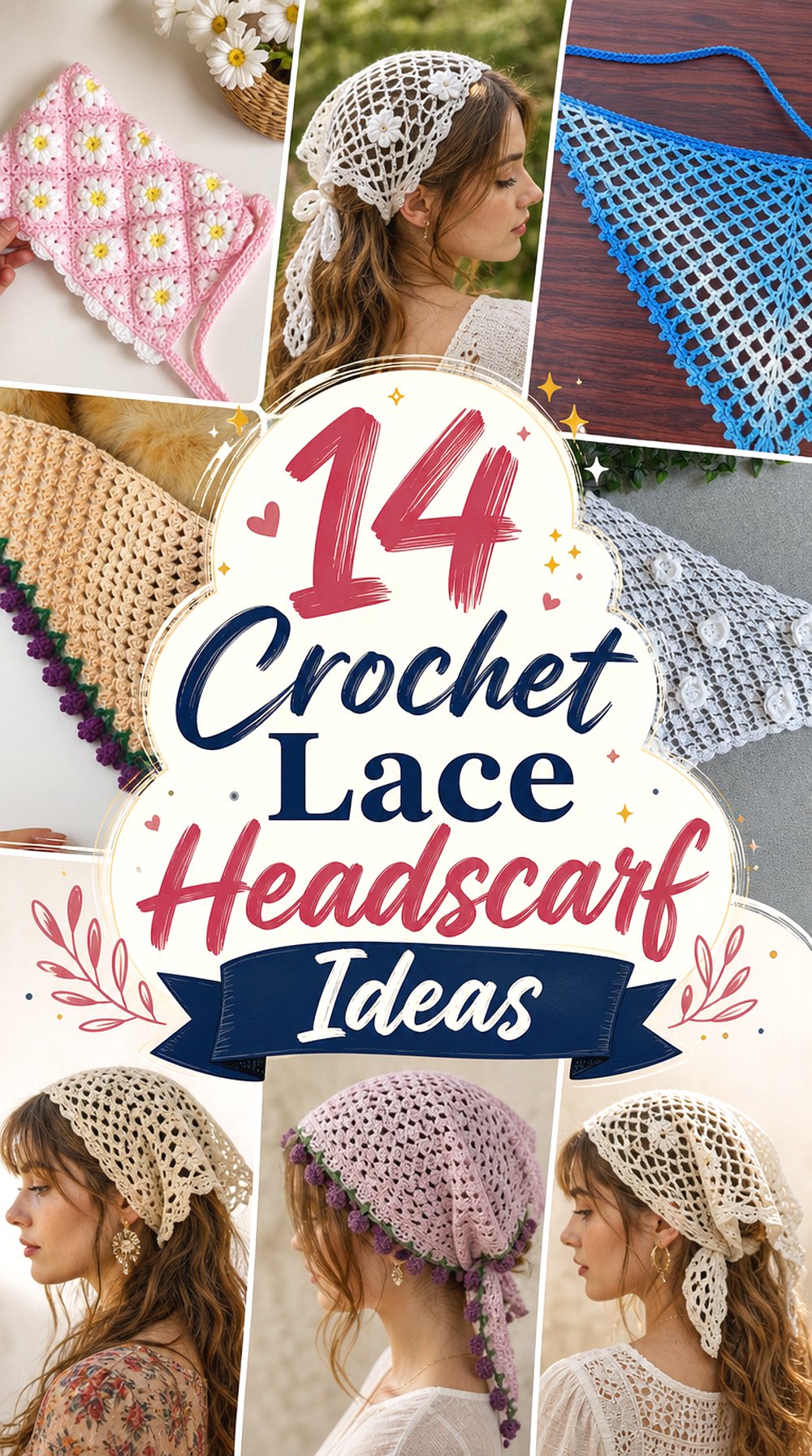
14 Crochet Lace Headscarf Ideas
A crochet lace headscarf can range from a barely-there mesh kerchief to a fuller triangle covered in floral motifs or granny-style openwork. The difference is more than decorative. Lace density changes coverage and drape, the border can affect how smoothly the scarf sits around the hairline, and narrow ties behave differently from wider crocheted straps.
These 14 ideas cover mesh, diamond lace, flowers, daisy motifs, shell edging, granny squares, scalloped borders, and simpler open triangles. Some make the lace itself the main feature, while others use an open construction as a base for a stronger border or motif. The notes below focus on choosing among those differences, checking fit, and adapting the look without reproducing the creators’ patterns.
Quick List
- Crochet Picot Mesh Triangle Headscarf
- Crochet Floral Lace Shell-Edge Bandana
- Crochet Diamond Openwork Tie Headscarf
- Crochet Daisy Motif Patchwork Kerchief
- Crochet Boho Scrap-Mesh Bandana
- Crochet Caribbean Shell-Edge Lace Headscarf
- Crochet Tulip Lace Multi-Wear Hair Scarf
- Crochet Granny Square Patchwork Headscarf
- Crochet Scalloped Granny-Lace Bandana
- Crochet Retro Triangle Lace Headscarf
- Crochet One-Piece Granny-Lace Kerchief
- Crochet Minimal Tie-Back Triangle Headscarf
- Crochet Fine-Thread Lace Bandana
- Crochet Classic Pointed Bandana Headscarf
Choose Lace Density for Drape, Coverage, and Hair Grip
The most open design is not automatically the most practical one. Large mesh spaces give a light, summery look and reduce visual bulk, but they also expose more hair and may feel less substantial around the crown. Denser floral, granny, or shell-based lace provides more coverage while still keeping the fabric visually open.
Think about how you expect to wear the scarf. A decorative kerchief tied over loose hair can work beautifully with large open spaces. If you want more coverage around a bun, braids, or the back of the head, compare the depth and side width of the finished triangle rather than judging the center motif alone.
Blocking can also change the apparent openness of lace, so evaluate dimensions on the finished fabric whenever possible instead of assuming an unblocked piece represents its final drape.
Check the Headscarf Shape Before Focusing on the Border
Two triangular headscarves can behave very differently. A deep center point creates more fabric at the back of the head, while a shallower triangle reads more like a hair band or narrow kerchief. Motif-based scarves add another variable because joined squares or triangles create their own fixed geometry.
Before adapting a tutorial, check where the upper edge is meant to sit and whether the ties reach from the corners or are integrated into the border. If you need more crown coverage, increasing only the tie length will not solve the problem; the body of the scarf must provide enough width and depth first.
For motif designs, compare the blocked dimensions of every motif before joining. Small differences can become much more noticeable along a straight hairline edge.
Match Yarn and Edging to the Way You Want to Wear It
Fine yarn can emphasize tiny lace openings and reduce bulk around a knot, while thicker yarn gives the same general shape more presence. Fiber behavior matters too: a very soft fabric may drape attractively but provide less structure, while a firmer fabric can keep scallops, points, and geometric openings more visible.
Borders deserve equal attention. Picots produce tiny decorative points, shells make the edge more prominent, and a simpler straight border can keep the focus on an elaborate center motif. Wide or substantial ties can also balance a heavier scarf body better than extremely delicate cords.
If substituting yarn, make a small sample and check both the openwork and the edge after finishing. What matters is not matching a generic headscarf measurement but achieving the coverage, knot bulk, and drape you actually want.
1. Crochet Picot Mesh Triangle Headscarf
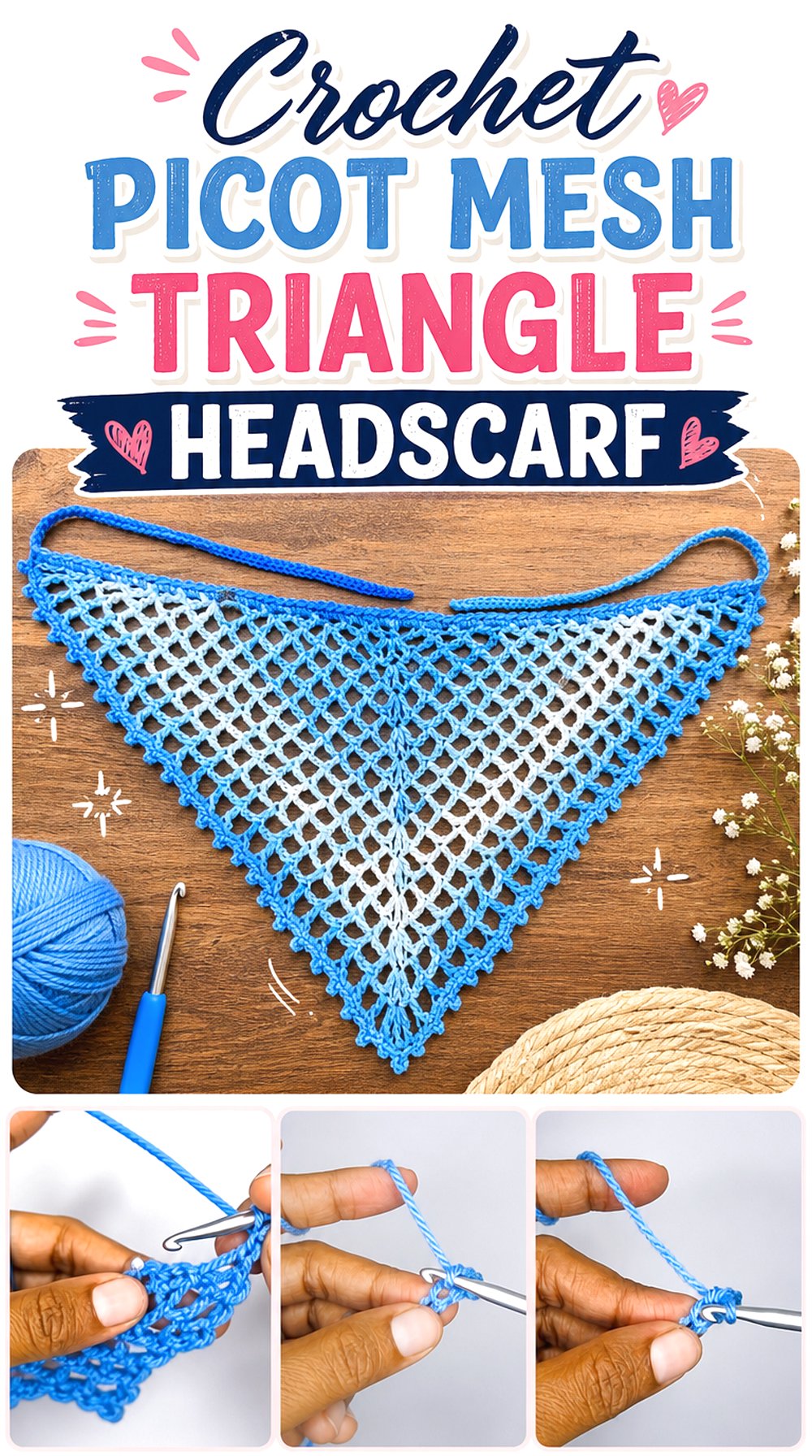
This headscarf centers on an airy mesh triangle with a small picot treatment adding definition around the edge. The open fabric keeps the overall look light, so it is a useful direction when you want obvious lace without floral motifs competing for attention. The pointed shape also makes it easy to see how increasing the triangle changes back-of-head coverage.
Compared with motif-heavy scarves later in the list, this version has a more continuous visual rhythm. That makes it especially adaptable for solid yarns, subtle tonal changes, or a contrasting border without making the scarf look crowded. The source tutorial specifically presents a mesh triangle bandana and picot border.
Large Mesh Openings Put Coverage in Focus
Because the openings are a major part of the design, decide how much hair you actually want visible. A very open mesh can look delicate over loose hair but may not provide the same visual coverage as a denser lace repeat. Before finishing the whole scarf, hold the developing fabric against the intended position on your head and judge the spaces in context rather than on a table.
Picots Make the Outer Edge More Noticeable
Tiny points can turn an otherwise simple mesh triangle into a much more decorative accessory. They also draw the eye directly to the scarf outline, so even tension along the border matters. If the edge starts rippling or pulling inward, correct the tension issue before continuing rather than relying on the decorative points to disguise it.
Keep the Tie Area Less Bulky Than the Center
An airy center can lose some of its appeal if the corners become thick and stiff. When considering substitutions or added edging, compare the bulk at the tie point with the lace body. The scarf should still be comfortable to knot without creating a large lump behind or beneath the hair.
Creator: Hopeful Turns
2. Crochet Floral Lace Shell Edge Bandana
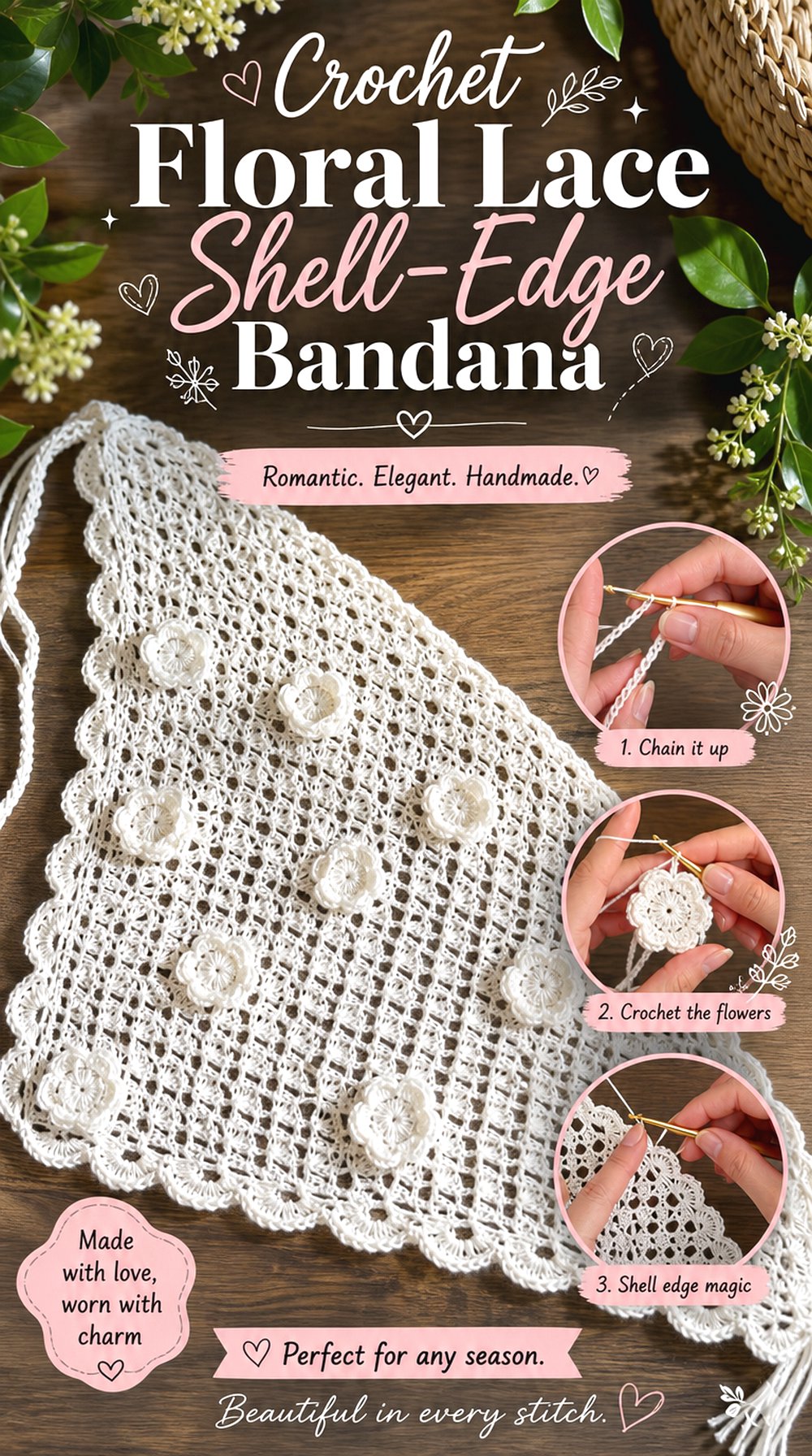
This version combines open lace with more decorative floral detail, giving it a softer, ornamented look than the geometric mesh option above. The flowers become focal points rather than simply repeating the same opening across the whole scarf, while a shell-style edge adds another layer of texture around the perimeter.
That combination makes the headscarf appealing when the finished border is just as important as the center fabric. It can also work as a styling accessory where part of the triangle remains visible rather than disappearing entirely beneath the hair. The source video specifically presents a lace floral bandana and includes both a shell border and added flowers.
Floral Details Need Enough Visual Breathing Room
Flowers can disappear into a highly variegated background or compete with an already busy lace repeat. If you want the motifs to remain recognizable, think about contrast and spacing rather than adding more decoration automatically. A quieter main fabric lets individual floral elements do more of the visual work.
The Shell Border Adds Weight at the Perimeter
A pronounced shell edge can make the outline look fuller than a picot or plain border. That may be exactly what you want around the face, but it also means border tension becomes important. Check whether the shells lie naturally when the scarf curves around the head; a border that looks flat on a table can behave differently when worn.
Multi-Wear Styling Changes the Fit Priorities
A decorative scarf that can be styled in more than one way benefits from flexible ties and a body that is not excessively stiff. If you hope to adapt a headscarf for another styling position, check where the widest section lands and whether the floral embellishments remain comfortable rather than pressing into the knot.
Creator: petpetcrochets
3. Crochet Diamond Openwork Tie Headscarf
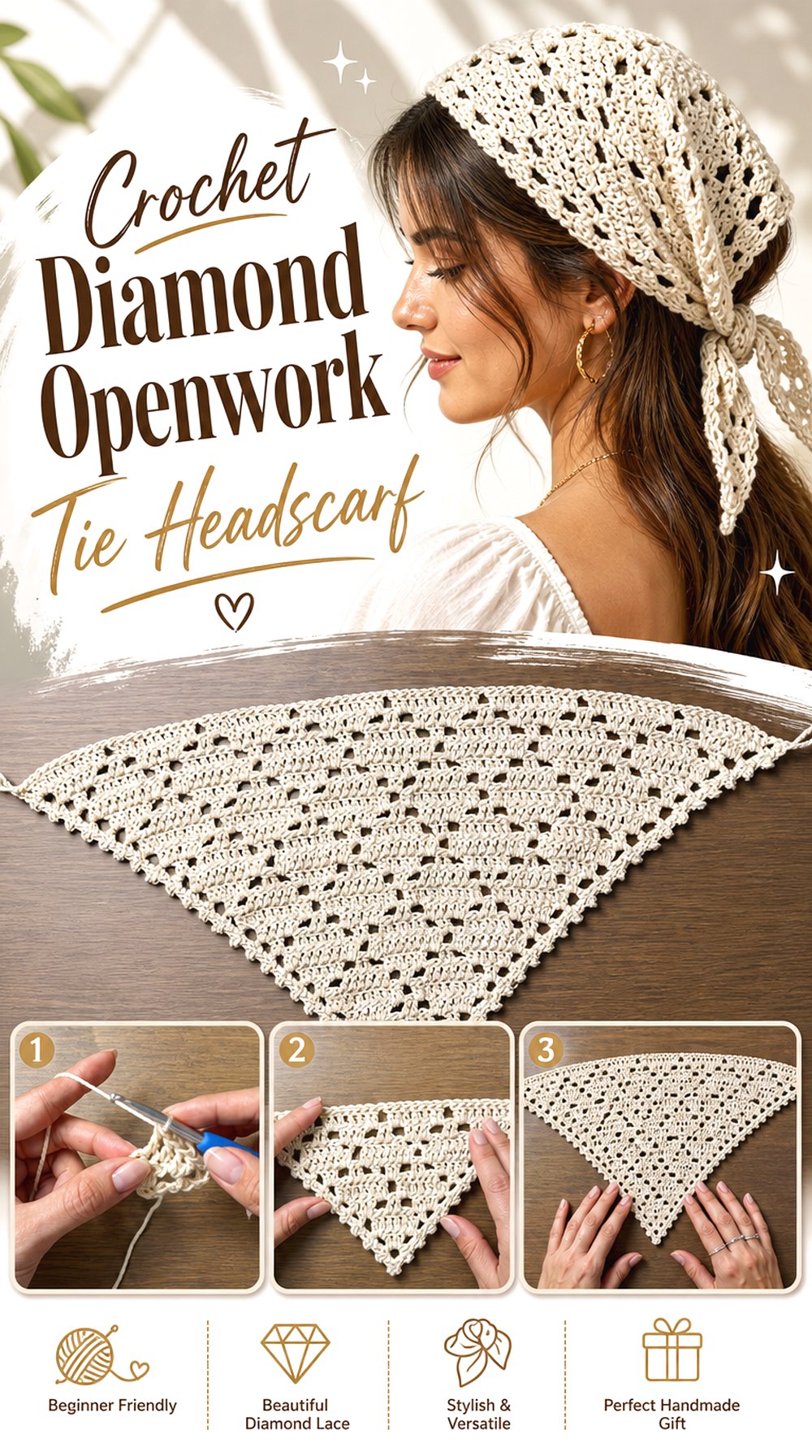
Diamond openings give this scarf a noticeably more geometric character. Instead of scattered mesh or rounded floral shapes, the negative space itself forms a repeating design, so the lace remains easy to recognize even in a single color. Optional picot detailing in the source design can make the perimeter more decorative without changing the central diamond theme.
This is a strong choice for someone who likes lace but wants a cleaner, less botanical look. The repeating geometry also makes consistency especially visible: uneven openings can interrupt the entire diamond pattern. That makes the fabric itself the feature, with color and embellishment playing supporting roles.
Diamond Shapes Reveal Tension Changes Quickly
Geometric lace is unforgiving of sudden tension shifts because adjacent openings are expected to look related. If the first part of your scarf seems compact and later sections spread dramatically, compare the fabric before adding the border. Blocking can refine lace, but it should not be treated as a cure for major inconsistencies.
Decorative Points Can Echo the Geometry
Picots and other small pointed edge details suit diamond lace because they repeat the angular feeling of the center fabric. If you customize the edging, avoid making it so deep that the border overtakes the diamond pattern. A restrained outline keeps the open geometry recognizable from a distance.
Check the Diamonds While the Scarf Is Curved
A diamond that appears perfectly open when stretched flat may compress once the scarf wraps over the crown. Before deciding the lace is too dense or too open, place the fabric in its intended curved position. That gives a more realistic view of both coverage and pattern definition.
Creator: VivCrochets
4. Crochet Daisy Motif Patchwork Kerchief
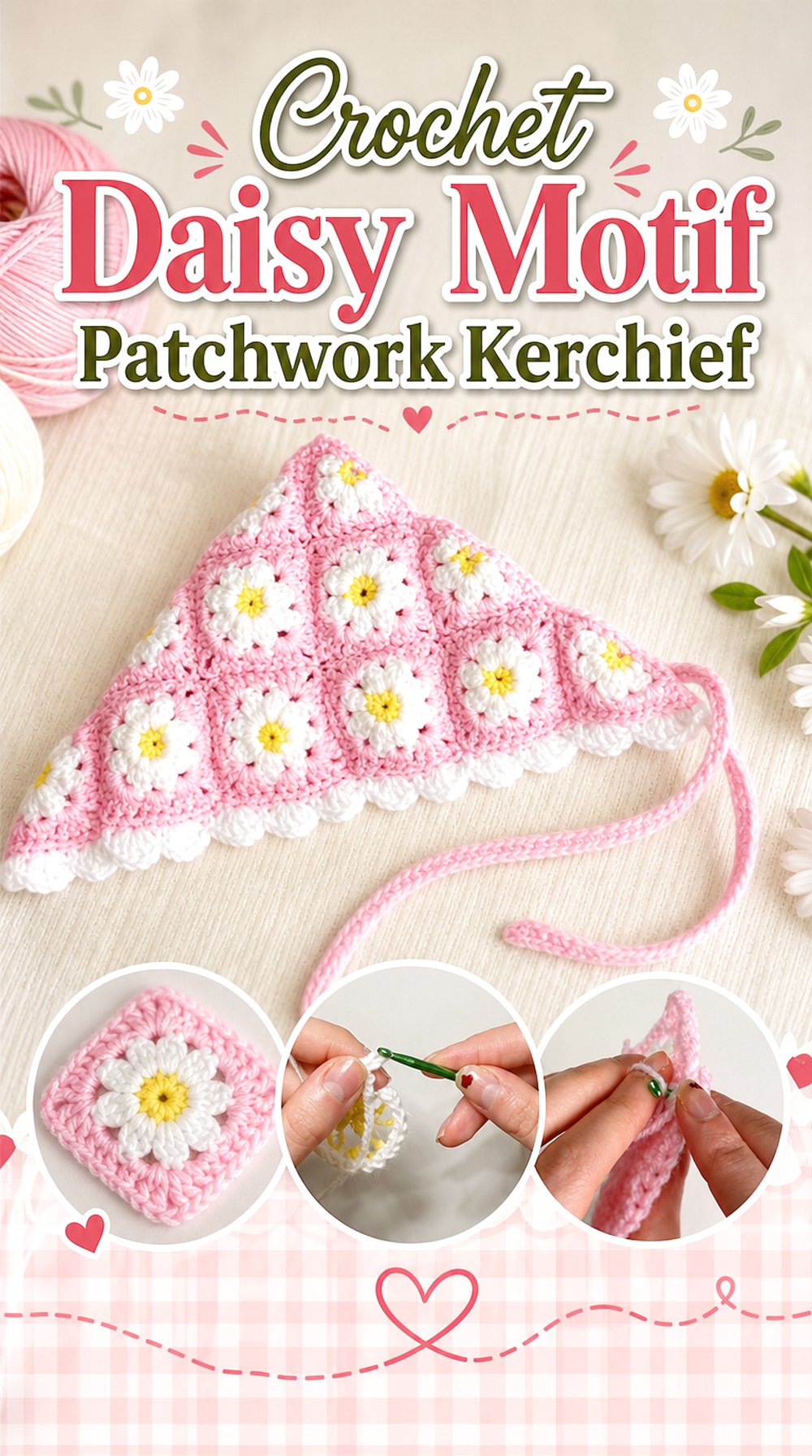
Instead of building the entire headscarf as one expanding lace triangle, this design direction uses recognizable daisy motifs as construction elements. The source tutorial combines daisy squares and triangular pieces before moving into assembly, edging, and straps.
That modular approach gives the scarf a patchwork quality that feels very different from continuous mesh. Individual flowers remain visually framed, and joins become part of the finished design. It is a useful option when you want the headscarf to read as a collection of crochet motifs rather than a single lace stitch pattern. The trade-off is that motif consistency matters: slightly different pieces can affect the final outer edge.
Match Motif Dimensions Before Final Assembly
A joined headscarf depends on its pieces fitting together predictably. Compare the finished, preferably blocked, dimensions of repeated squares and triangles before committing to the final join. If one motif is noticeably larger, forcing it into place can create puckering that becomes especially obvious along the hairline.
Daisy Placement Controls Where the Eye Goes
Large floral centers naturally attract attention. Think about whether you want a flower centered at the back, repeated evenly across the scarf, or positioned to show from the side. Motif orientation is easier to correct before joining than after a complete triangular layout has been assembled.
Joins Are Part of the Surface Design
With open motifs, the joining area can either blend quietly into the fabric or become an extra visual line. Before choosing a contrasting joining color or prominent method, look at the scarf as a whole. Too many competing outlines can make individual daisies harder to read.
Creator: cosybearcrochet
5. Crochet Boho Scrap Mesh Bandana
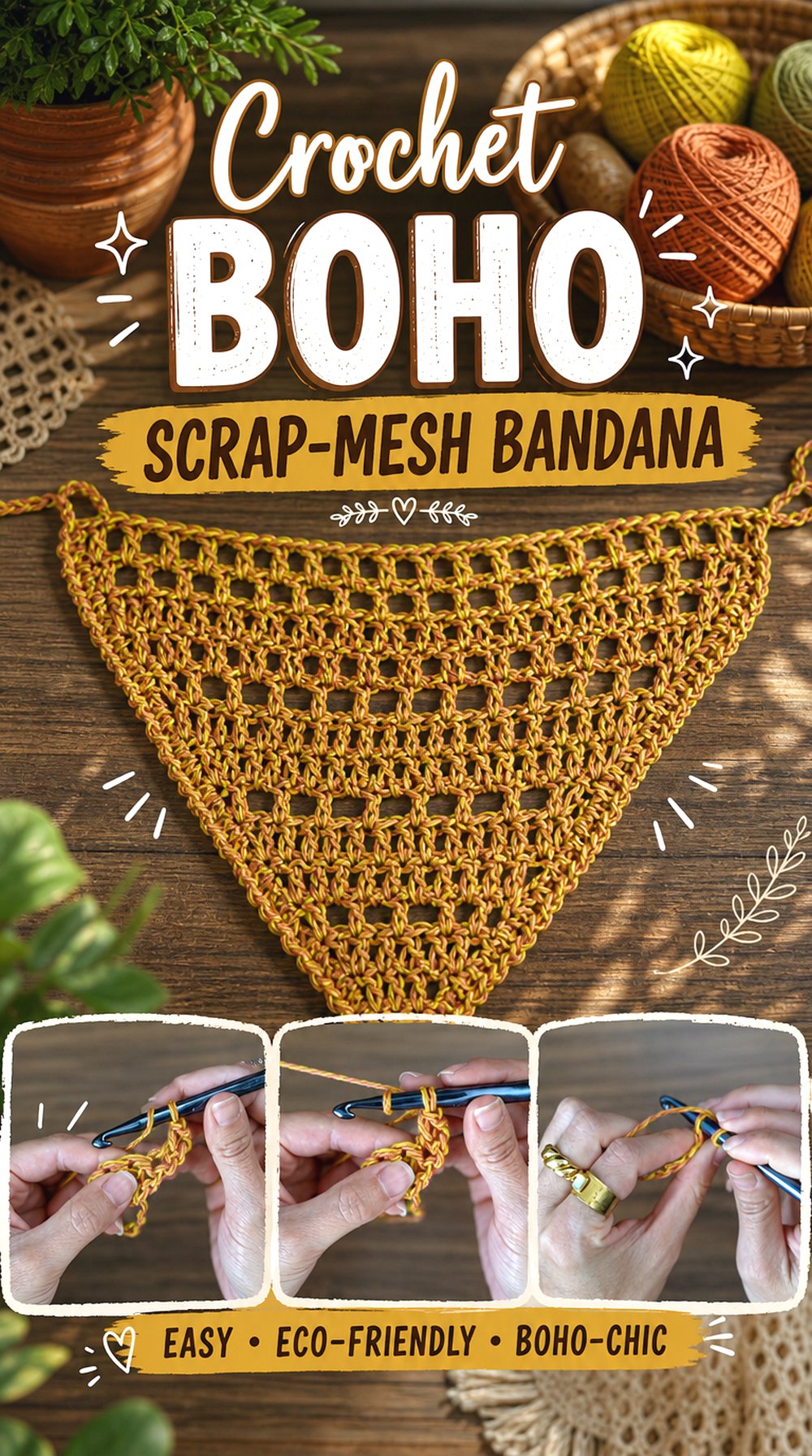
This boho-style option keeps the construction visually light with an open mesh section, then uses trim and ties to give the scarf a finished outline. The tutorial is also presented as a scrap-yarn project, making the concept particularly interesting for intentional color changes rather than a single uninterrupted shade.
The real distinction is how casual the lace feels. Where diamond lace looks orderly and daisy motifs look planned, mesh paired with changing yarn colors can feel looser and more eclectic. That makes this idea well suited to a festival, vacation, or relaxed summer-accessory look, provided the colors still allow the lace openings to remain visible.
Scrap Yarn Works Better With a Color Plan
Using leftovers does not have to mean random placement. Sort potential yarns by thickness and general behavior first, then decide whether you want gradual changes, repeated accents, or obvious blocks. If the yarns vary too dramatically in thickness, the mesh can change size even when your tension stays consistent.
Trim Gives the Loose Mesh a Visual Boundary
An open boho fabric often benefits from a defined outer edge because the border keeps the triangle from looking unfinished. If you use several colors in the body, a more unified trim can also visually connect them. Compare the border against the whole scarf rather than evaluating it in isolation.
Tie Comfort Matters With Mixed Fibers
Scrap projects may combine yarns that feel different against the skin or hair. Save softer, smoother choices for areas that will be pulled into a knot when possible, and check that decorative textures are not uncomfortable where the ties cross behind the head.
Creator: it’s erin b.
6. Crochet Caribbean Shell Edge Lace Headscarf
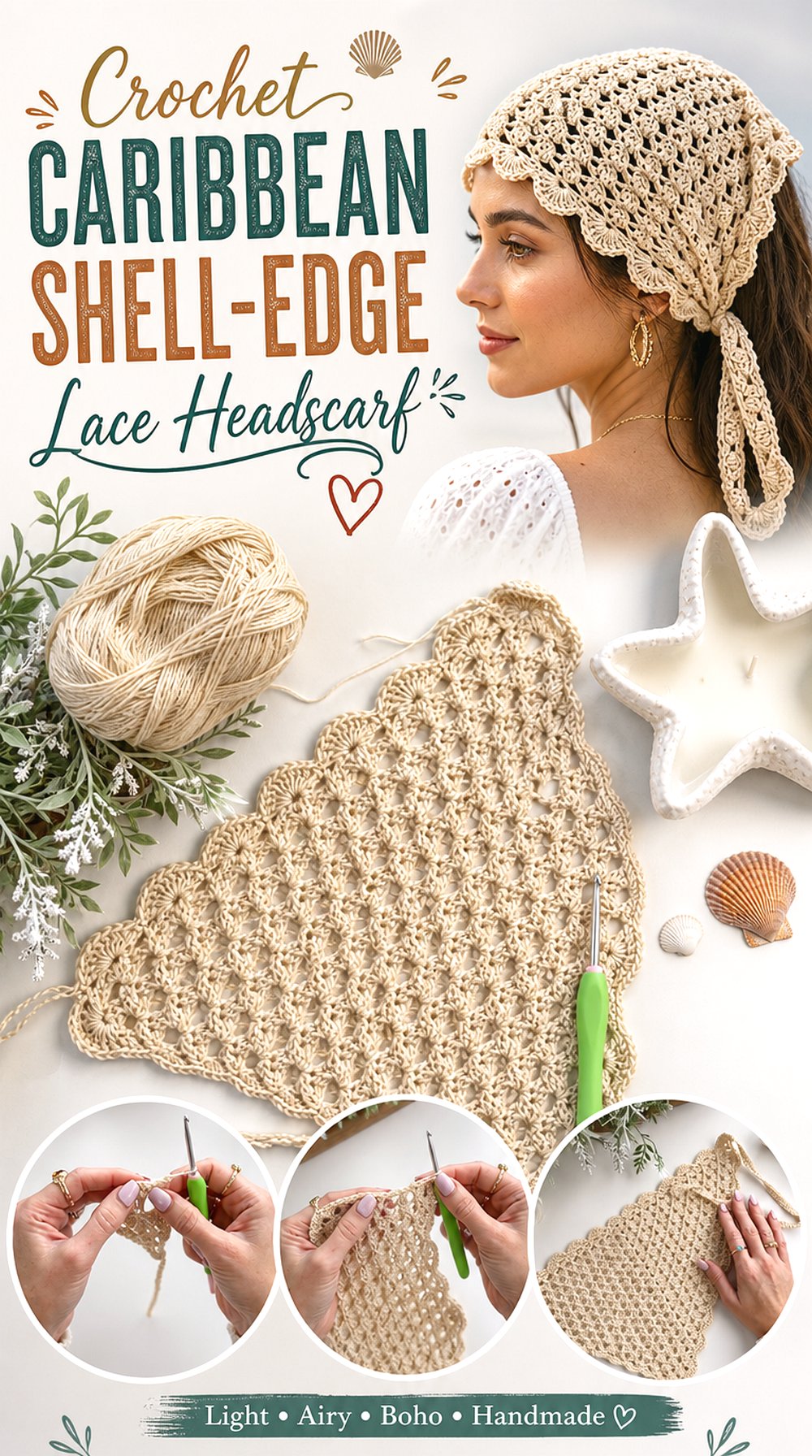
A shell-edged bandana gives lace a more polished, rhythmic border. The source design uses a triangular shape, shell-stitch edging, and integrated ties, with a lighter yarn construction that helps preserve the airy appearance.
Compared with the floral appliqué scarf, this idea gets its decorative character from the edge itself rather than added motifs. That can make it easier to pair with printed clothing because there is one strong crochet detail instead of several competing elements. It also makes the transition from triangle to ties visually important: an integrated treatment can create a cleaner line than attaching a very different strap afterward.
Shells Create a Softer Silhouette Around the Face
Rounded shells visually soften the straight lines of a triangle. If you like a decorative edge but find sharp picots too pointed, this is a useful alternative. Check that the border follows the curve of the scarf naturally; too much fullness may cause the shells to flare away from the head.
Lighter Yarn Keeps the Border From Feeling Heavy
A substantial edging adds fabric at the perimeter, so yarn thickness has a noticeable effect on the finished balance. If substituting a thicker yarn, make a short border sample before assuming the same visual proportions will carry over. A bulky shell can overshadow delicate lace surprisingly quickly.
Integrated Ties Keep the Outline Cohesive
When the ties visually grow from the scarf edge, they can make the whole piece look more continuous. If you modify their length, consider knot placement and bulk rather than treating length as purely decorative. A longer tie may offer more styling options but also leaves more fabric hanging after the knot.
Creator: MJ’s Off The Hook Designs
7. Crochet Tulip Lace Multi Wear Hair Scarf
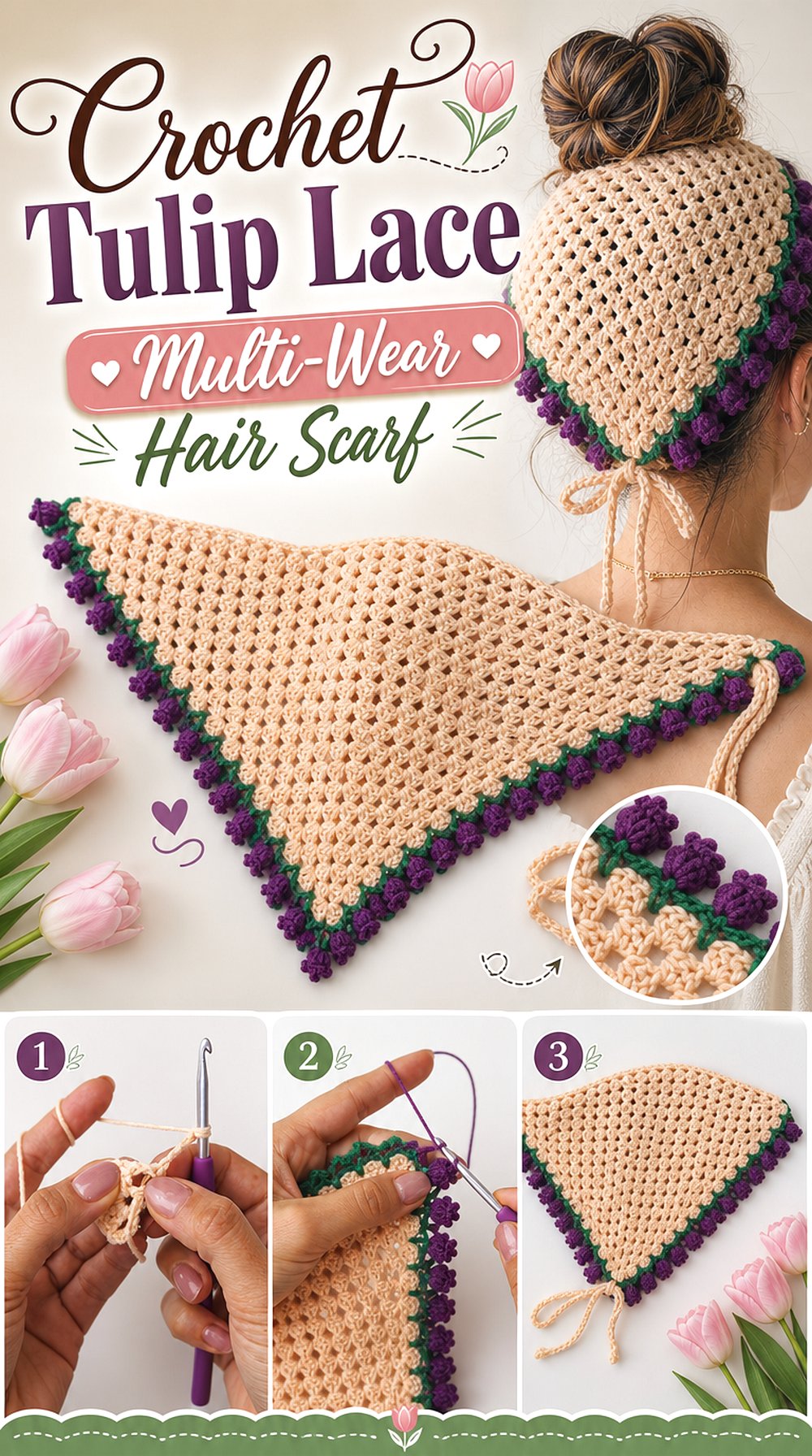
Tulip-inspired crochet gives a floral effect without relying on separate sewn-on flowers. The source tutorial presents the piece as a tulip bandana that can also be worn in other ways, giving this idea a narrower, styling-focused character compared with the deeper kerchiefs in the collection.
This is worth considering if you want the scarf to act partly like decorative hairwear rather than maximum head coverage. The motif adds enough identity that a single color can still look detailed, while the multi-wear concept rewards a flexible fabric that can bend and tie without feeling rigid.
Tulip Detail Should Remain Visible After Tying
A pretty motif is less useful if it disappears entirely beneath the hair or inside the knot. Before deciding on final placement, position the unfinished scarf where you plan to wear it and notice which area remains exposed. That is the best place for the strongest floral detail.
A Narrower Scarf Prioritizes Styling Over Coverage
Multi-wear pieces often depend on having less fabric than a deep traditional kerchief. Decide which function matters more. If you enlarge the body substantially for extra hair coverage, it may no longer wrap or drape as neatly when used in another styling position.
Soft Drape Makes Repositioning Easier
A scarf intended for multiple styling arrangements should bend without creating bulky folds. If your yarn substitution produces a firm sample, consider whether that structure helps the tulip definition enough to justify reduced flexibility. The best balance depends on how often you expect to retie or reposition it.
Creator: Sirin’s Crochet
8. Crochet Granny Square Patchwork Headscarf
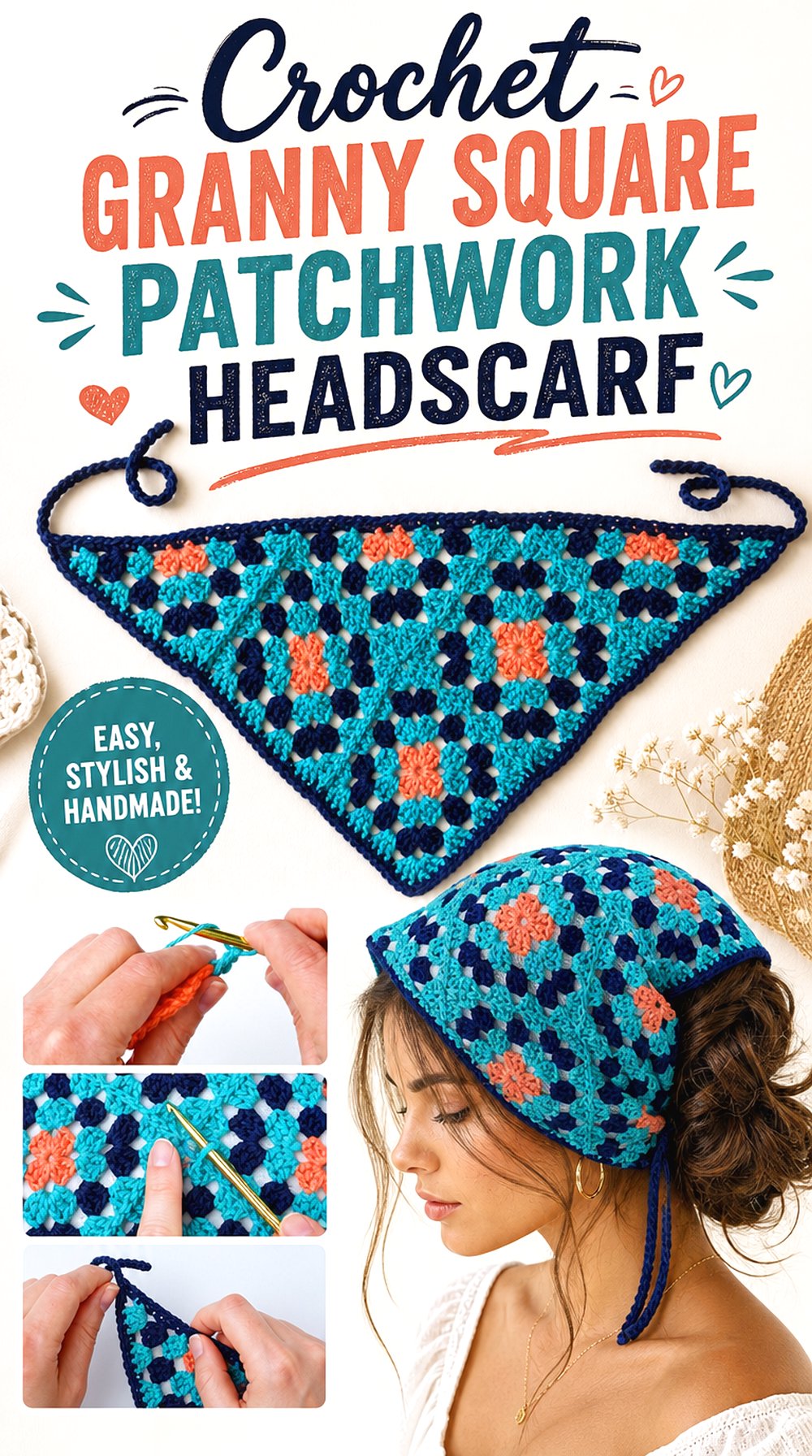
This headscarf takes the modular route using granny-square geometry rather than a continuously increased triangle. The source specifically presents a granny-square bandana and notes the possibility of substituting different compatible granny squares, which opens the door to changing the visual character while keeping a patchwork approach.
The main attraction is customization. A traditional open granny motif already has a lace-like quality, but floral, geometric, or two-tone squares can push the finished scarf in very different directions. Because the pieces are joined, however, motif dimensions and corner placement become more important than they are in a one-piece design.
Square Substitutions Must Match in Finished Size
A new motif is not automatically interchangeable just because it is also square. Compare blocked width, corner shape, and border structure with the original pieces before planning the whole scarf. A beautiful substitute that finishes noticeably larger can distort the triangular arrangement.
Patchwork Lets Color Follow the Construction
Unlike continuous lace, modular scarves give each square a natural color boundary. You can keep every motif identical for a calmer look or distribute accent colors across the triangle. Sketching the placement first helps prevent one side from becoming visually heavier than the other.
The Hairline Edge Needs a Clean Join
The upper edge sits in a visually prominent position and may also take tension when the scarf is tied. Check that joined motifs create a reasonably smooth line rather than alternating bumps or stretched corners. Minor irregularities that seem harmless in a blanket can be much more obvious on a headscarf.
Creator: Yarn Stash with Marching North
9. Crochet Scalloped Granny Lace Bandana
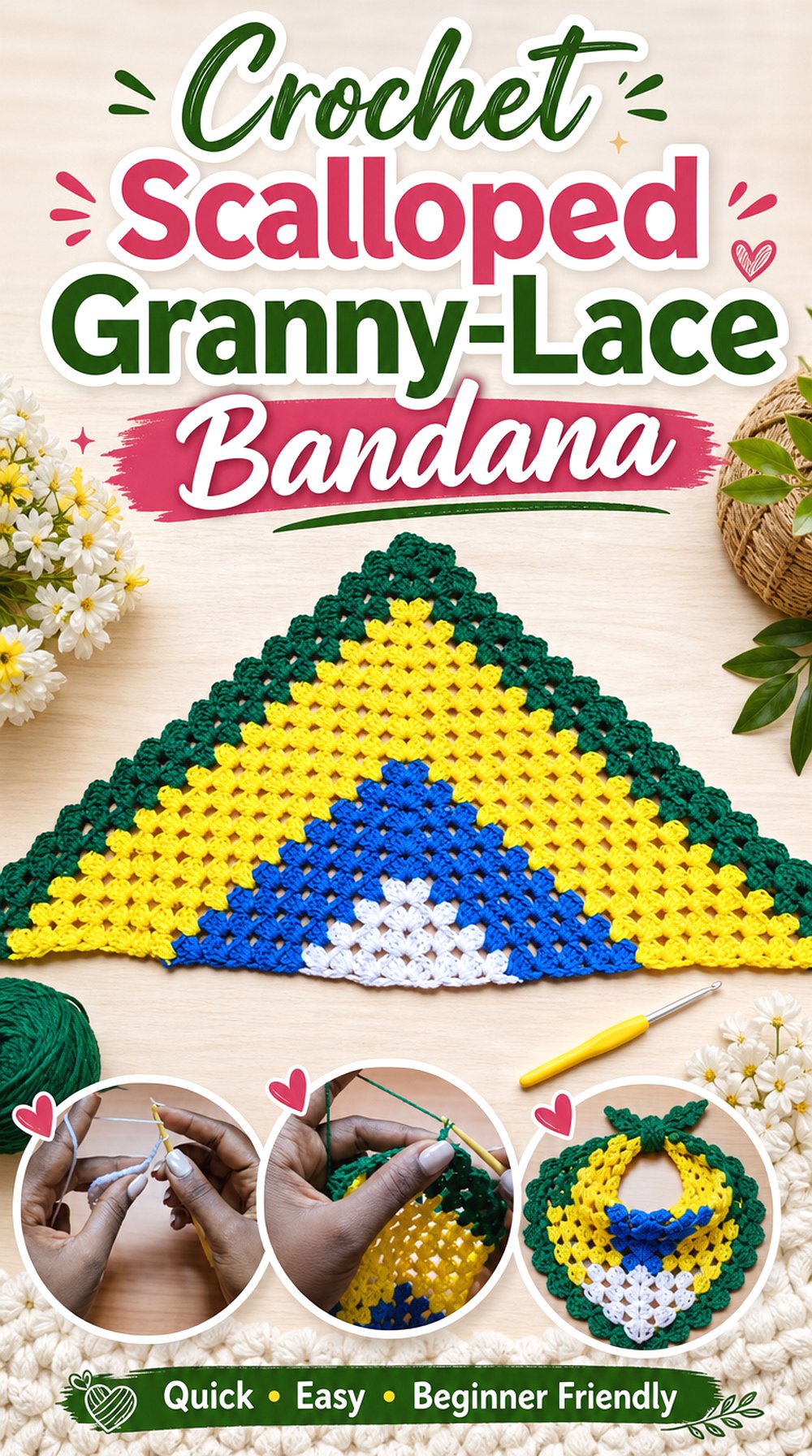
This option combines the familiar openness of granny-style crochet with a more decorative scalloped edge and substantial ties. The source tutorial describes a granny-stitch bandana with a delicate scalloped finish and thicker straps, giving the finished piece more border definition than a plain granny triangle.
It is a useful middle ground between highly decorative floral lace and the simplest open triangle. The repeating granny spaces keep the center relaxed, while the scallops clearly frame the scarf. Thicker ties can also visually anchor that edge, especially if the center fabric is very open.
Scallops Can Make a Simple Center Look Finished
A repeating granny fabric does not need another complex motif to feel complete. A shaped edge gives the eye a clear stopping point and adds movement around the triangle. If you change yarn thickness, check whether the scallops remain proportional instead of becoming so large that they dominate the center.
Substantial Straps Shift the Weight Toward the Corners
Thicker ties may feel more secure and be easier to handle, but they also add bulk where the scarf is knotted. If you have thick hair or prefer a small knot, compare the strap thickness with the center fabric before deciding whether to adapt them.
Granny Openings Make Color Changes Very Visible
Because granny-style clusters create repeated blocks, even simple color changes can produce stripes or bands that are easy to read. If adding several shades, decide whether the scalloped border should match the last body color or provide a deliberate contrast. Either choice changes how strongly the triangle outline appears.
Creator: Shyler crochets
10. Crochet Retro Triangle Lace Headscarf
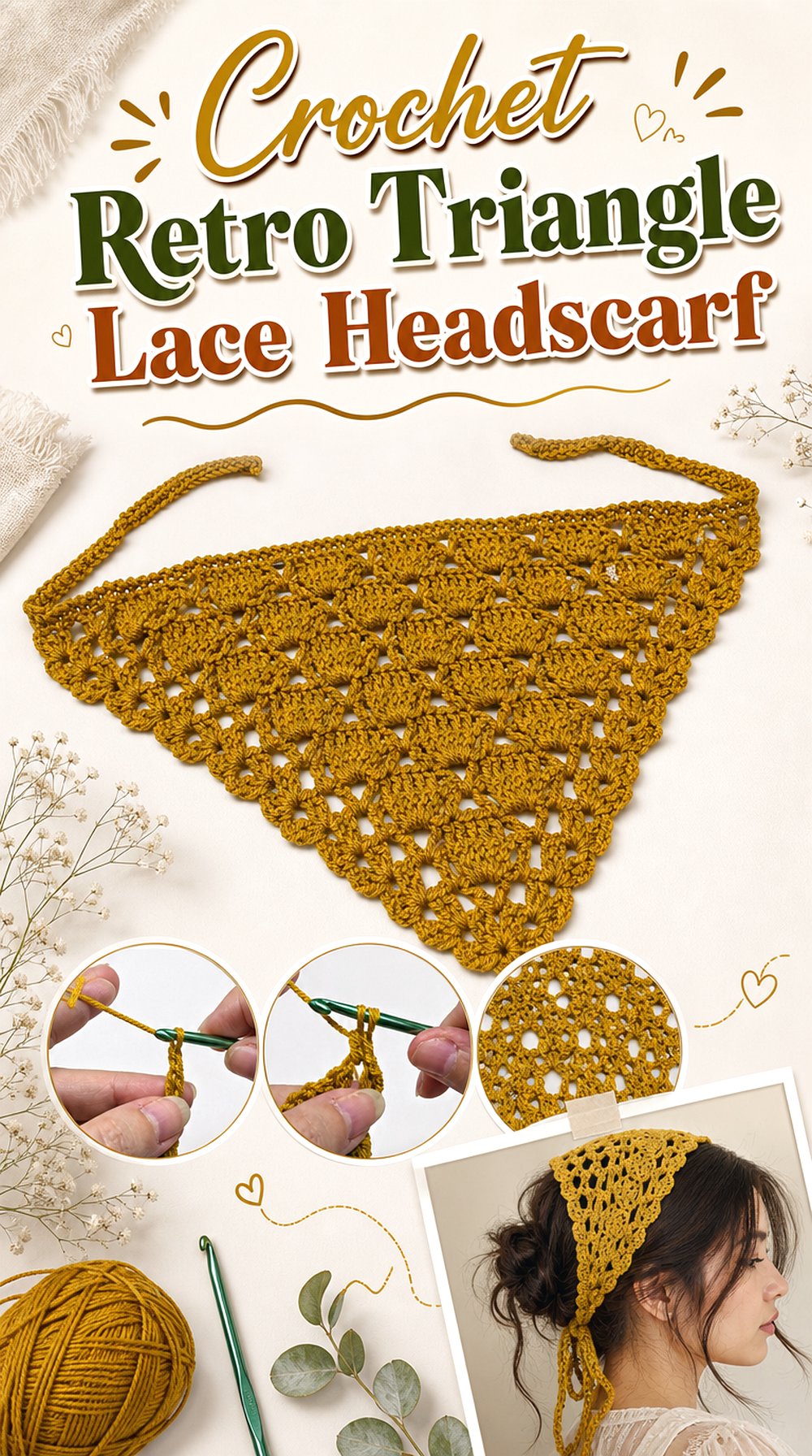
A classic triangular bandana can still fit a lace-focused wardrobe without depending on a dramatic floral motif. This tutorial from Bag-O-Day Crochet offers a straightforward bandana construction that works well as inspiration for a retro-style headscarf where the overall silhouette and open crochet texture are the main attraction.
This idea makes sense when you want something visually quieter than daisies or tulips but more obviously handmade than a plain fabric kerchief. It is also a useful styling direction for bold yarn colors because the scarf shape does not introduce too many competing decorative elements.
Let the Triangle Silhouette Carry the Retro Look
When the center is relatively simple, proportion becomes more noticeable. A long point creates a stronger kerchief effect, while a shallower triangle feels closer to a hair wrap. Compare the body depth with your intended hairstyle before making color or edging the main decision.
Strong Color Does Not Require More Decoration
A saturated or high-contrast yarn can already provide plenty of visual impact. If the fabric has a clear open crochet texture, adding flowers, fringe, and a complex border at the same time can obscure the simple vintage-inspired character. Choose one dominant feature rather than making every area compete.
Check Where the Top Edge Sits on the Hair
A triangle that is wide enough on a flat surface can still shift when tied over smooth hair. Test the placement before assuming longer ties will fix slipping. The relationship between upper-edge width, knot position, and hairstyle affects how the scarf feels in actual use.
Creator: Bag-O-Day Crochet
11. Crochet One Piece Granny Lace Kerchief
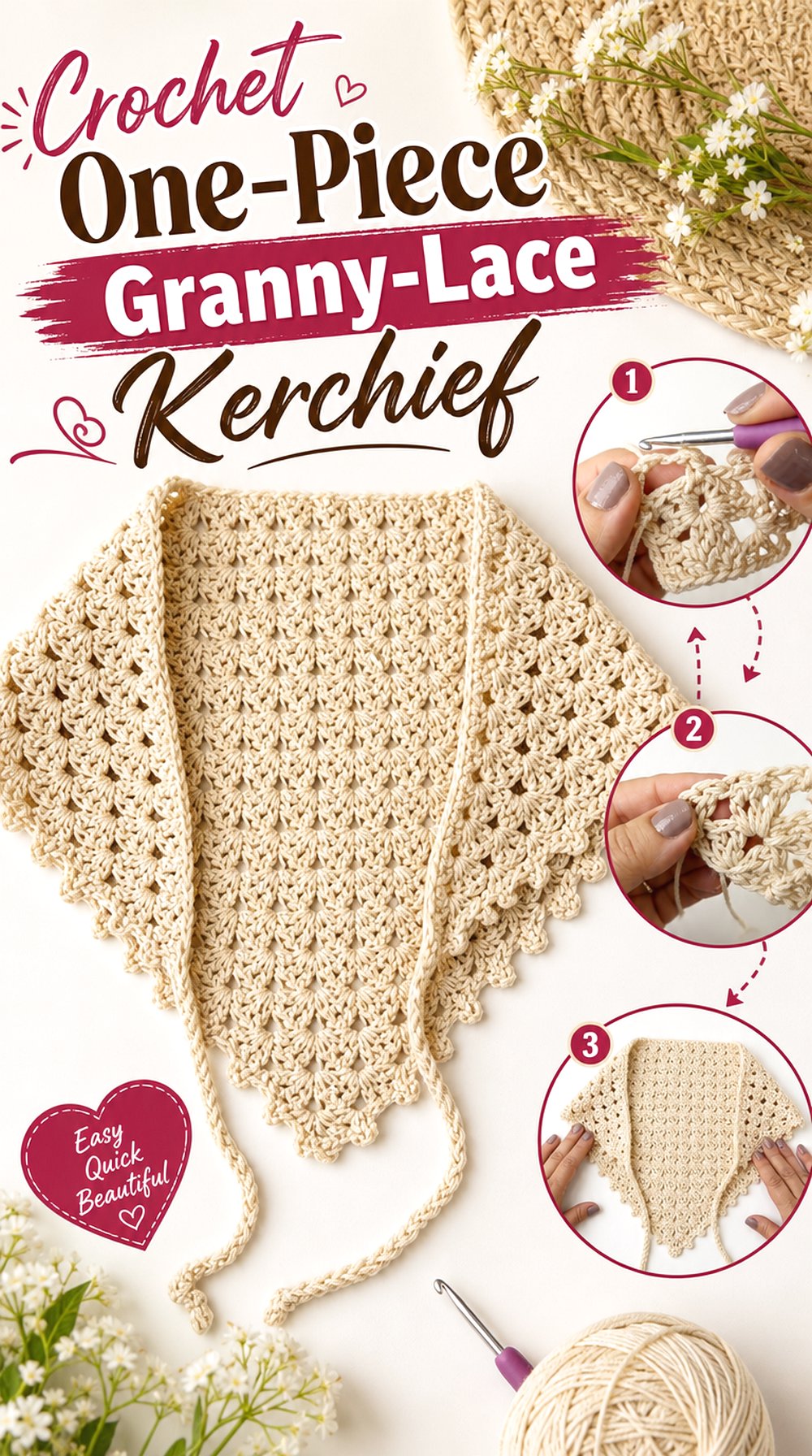
This design keeps the granny-inspired openness but removes the separate-motif assembly of the patchwork version. The source tutorial presents a one-piece granny bandana completed with its own border and straps, so the scarf grows as one connected fabric rather than a collection of squares.
That difference matters if you like the visual rhythm of granny crochet but do not want motif joins across the body. Continuous construction also keeps color placement flexible: stripes can run through the whole triangle instead of being confined to individual squares.
One-Piece Fabric Avoids Motif Alignment Problems
There are no separate squares to match, but consistent expansion still matters. Lay the scarf flat occasionally and check whether the triangle remains balanced from side to side. A developing lean is easier to notice and address before the border visually locks in the shape.
Granny Spaces Produce Airiness Without Tiny Lace Detail
This style is useful if you like open fabric but do not want to rely on intricate floral or diamond motifs. The negative space is larger and rhythmically repeated, so yarn color and texture remain easy to see. A very fuzzy yarn, however, can soften those openings and reduce definition.
A Neat Border Can Calm a Busy Color Scheme
If the triangle uses several colors, a single-color finish can act as a frame around the entire piece. Conversely, a contrasting edge emphasizes the outline more strongly. Compare both effects before finishing, especially when the body already has multiple stripes.
Creator: Crochet con Sole
12. Crochet Minimal Tie Back Triangle Headscarf
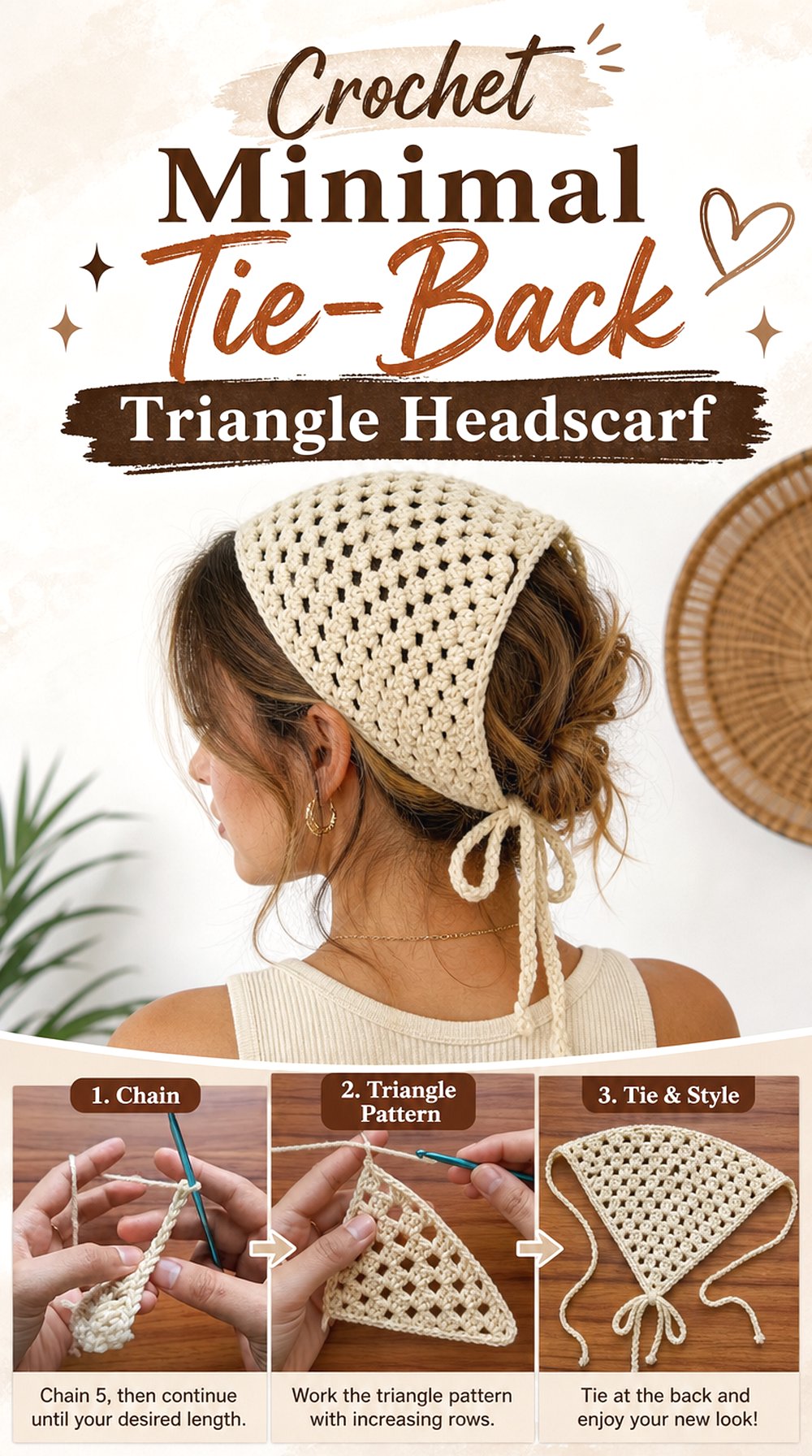
Not every lace headscarf needs an elaborate stitch motif. A simple triangular crochet bandana can serve as the quieter option in a collection, especially when the fabric retains enough openness to feel light around the hair. The Needle Magic by Ria tutorial focuses on a straightforward bandana made with basic crochet techniques rather than a complicated motif layout.
The advantage is styling flexibility. A simpler body gives you more freedom to emphasize color, coordinate the scarf with patterned clothing, or add only one subtle finishing feature. It also provides a useful contrast to the joined-motif designs, where construction lines form a major part of the finished appearance.
Simplicity Makes Uneven Edges Easier to Notice
With fewer decorative elements to distract the eye, the outer triangle line becomes important. Check both sides periodically to make sure one edge is not becoming noticeably tighter or longer. A clean silhouette is often what makes a minimal headscarf look intentional.
Use One Finishing Detail Rather Than Several
A restrained bandana can support a small picot, a slim contrast edge, or a decorative tie treatment without losing its minimalist character. Adding multiple borders and embellishments changes the concept entirely. Decide whether you want the interest concentrated at the perimeter or in the yarn itself.
Creator: The Needle Magic by Ria
13. Crochet Fine Thread Lace Bandana
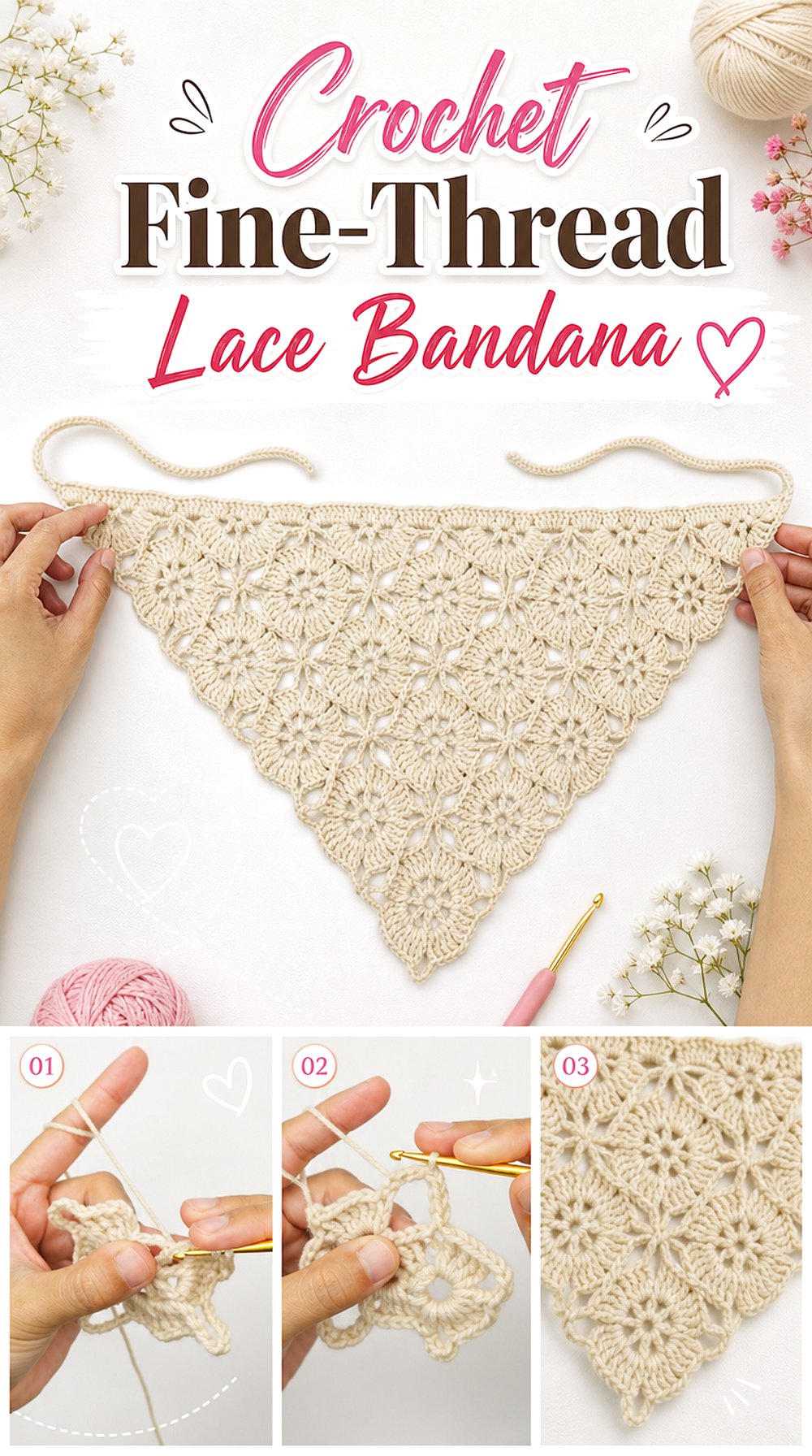
This design puts delicacy first. The source is explicitly presented as a lace bandana and uses a relatively fine yarn setup, helping the crochet openings and small-scale stitch definition become the main visual feature.
A finer headscarf can feel less bulky at the tie and can create a more intricate-looking surface without requiring oversized motifs. The trade-off is that small irregularities may be easier to see, and changing to a much thicker yarn can alter both the scale of the lace and the final proportions. This is one of the strongest options in the collection if your idea of a lace headscarf is delicate rather than rustic or patchwork.
Fine Yarn Changes the Scale of Every Opening
Moving to a substantially thicker substitute does more than make the scarf heavier. It can enlarge the lace pattern and cause the same number of repeats to cover a very different area. Compare your fabric against the intended head coverage instead of assuming a direct yarn swap will preserve proportions.
Delicate Fabric Benefits From Careful Edge Handling
A lightweight lace body can look unbalanced beside a very thick or rigid border. Keep the visual weight of the finishing edge in proportion to the center. If experimenting, make a small section of the intended border first and see whether it supports the lace or overwhelms it.
Knot Bulk Is One of Fine Yarn’s Practical Advantages
When several layers meet in a tie, yarn thickness becomes obvious. A finer fabric can create a neater knot than a similarly shaped scarf made in heavier yarn. If you prefer long ties or a bow, that reduction in bulk may be as important as the delicate appearance.
Creator: The Crochet Channel
14. Crochet Classic Pointed Bandana Headscarf
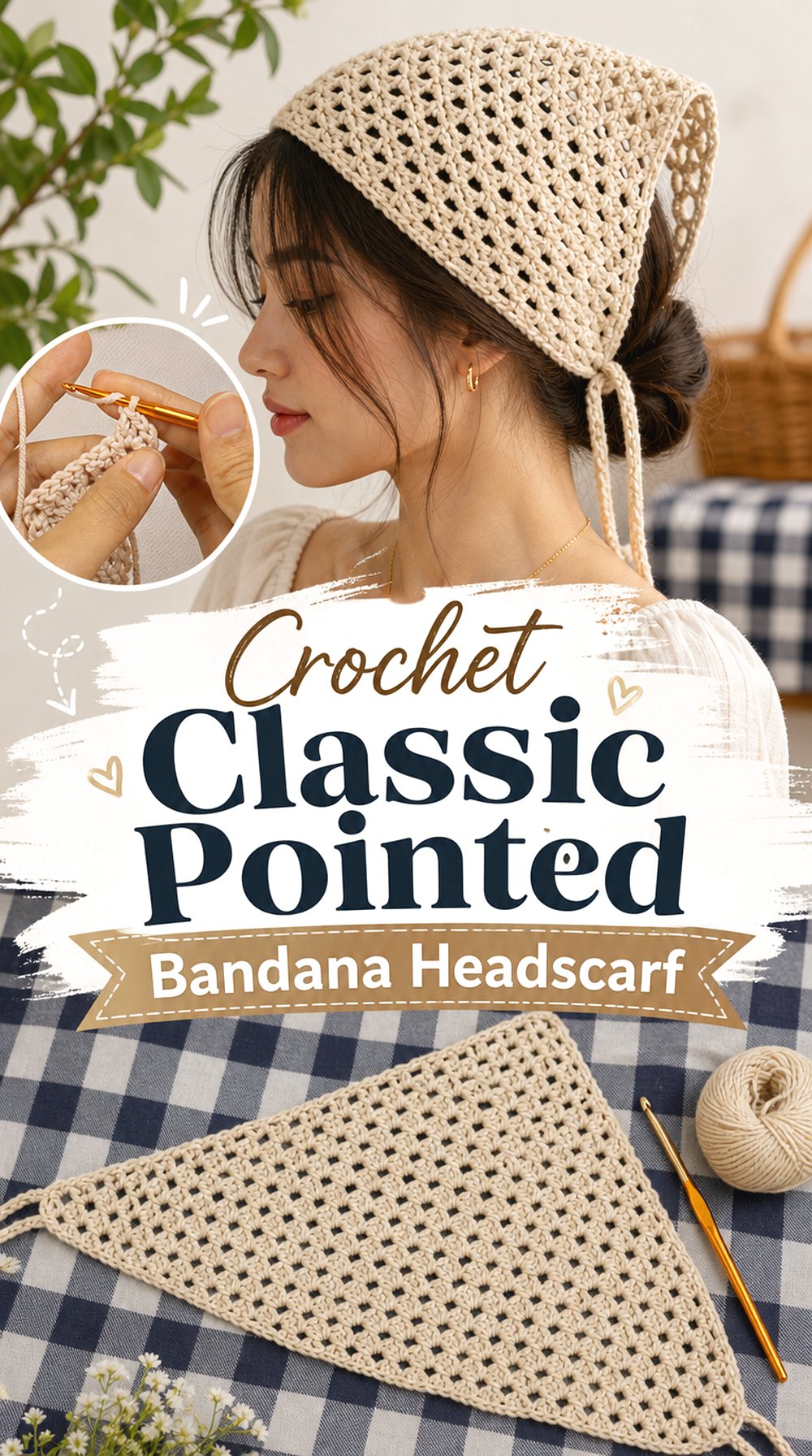
The final idea returns to a clean pointed bandana shape. Chenda DIY’s tutorial offers a simple crochet bandana reference, making this a practical foundation for readers who prefer a recognizable triangular silhouette rather than flowers, joined squares, or a highly decorative edge.
Within a lace-headscarf collection, this type of simple base is valuable because you can let an open crochet texture and the point itself provide the handmade character. It also gives you room to personalize with color or a restrained border while keeping the overall shape easy to read. Compared with the fine-thread lace option, this concept is more about classic form than intricate surface detail.
A Clear Center Point Defines the Kerchief Shape
The pointed back is the feature that makes the scarf read immediately as a bandana. When checking fit, look at how far that point falls once the upper edge is positioned where you want it. Extending ties cannot compensate for a body that is shallower than your desired coverage.
Keep Custom Edging Compatible With the Corners
If you add a different border, pay attention to all three corners. Decorative repeats that lie neatly on a straight edge may crowd around a point. Plan how the edging turns before committing to a treatment that could distort the triangle.
A Simple Base Makes Yarn Texture More Important
Without flowers or complex geometry, the yarn surface becomes more visible. Smooth yarn highlights individual openings and edges clearly, while fuzzy fibers can create a softer outline. Neither is universally better; choose according to whether you want crisp lace definition or a gentler, more blended texture.
Creator: Chenda DIY
Which Crochet Lace Headscarf Style Should You Choose?
For the lightest visual effect, start with the Picot Mesh, Diamond Openwork, or Fine-Thread Lace designs. Their negative space is the main attraction rather than a dense motif arrangement.
Choose the Floral Lace, Daisy Patchwork, or Tulip options when you want recognizable flowers to be part of the finished design. The Granny Square Patchwork version offers the most obvious modular construction, while the One-Piece Granny-Lace and Scalloped Granny-Lace ideas preserve granny-style openness without the same square-by-square appearance.
For a quieter accessory that can work with busier outfits, the Minimal Tie-Back, Retro Triangle, and Classic Pointed designs keep the silhouette more important than elaborate surface decoration. If edging is your favorite detail, compare the picot, shell, and scalloped options first.
Conclusion
The most useful way to choose among these 14 crochet lace headscarf ideas is to start with the feature that affects how you will actually wear the piece. Mesh and fine lace give the lightest appearance, floral and daisy designs make the scarf more decorative, granny constructions add stronger geometric rhythm, and simpler triangles leave more room for color or subtle customization.
After narrowing the style, compare the triangle depth, upper-edge width, tie bulk, border treatment, and yarn behavior rather than choosing from the center motif alone. Blocking and a quick fit check can reveal issues that are difficult to judge while the fabric is still developing. Use the original tutorials linked above for each creator’s exact construction details.
Frequently Asked Questions
Can I use any lace stitch for a crochet headscarf?
Not automatically. A lace stitch may look attractive in a flat swatch but behave differently when shaped into a triangle and curved over the head. Check whether the repeat adapts cleanly to the intended construction, whether the fabric provides enough coverage, and whether the edge can remain stable. If adapting a completely different lace motif, it is safer to treat the tutorial as construction inspiration rather than assume the stitch patterns are interchangeable.
How can I keep an openwork headscarf from becoming too loose?
Start by checking the fabric itself rather than immediately tightening the ties. Large lace openings, a very stretchy fiber, loose tension, or a scarf body that is too wide can all affect how the piece sits. Compare the scarf after finishing or blocking with your intended wearing position. If the body already fits, a more secure tie arrangement may help; if it is oversized, changing the ties alone will not correct the excess fabric.
Should a crochet lace headscarf be blocked before I judge the fit?
For many lace fabrics, checking the finished or blocked fabric gives a more realistic picture because openwork can relax and become more defined after finishing. Follow the appropriate care method for the actual fiber you are using rather than applying one blocking approach universally. For motif scarves, blocking the repeated pieces before final assembly can also make it easier to compare dimensions and identify pieces that do not align.
What yarn qualities work well for a lightweight lace headscarf?
Look for a yarn that gives clear stitch definition at the scale you want while remaining comfortable around the hairline and knot. Finer yarn can reduce tie bulk and emphasize delicate openings, while a somewhat firmer yarn can make geometric or scalloped edges easier to see. Fiber content also affects drape and stretch, so make a small sample instead of selecting yarn solely by appearance.
How can I give a lace headscarf more hair coverage?
Focus on the body dimensions rather than just extending the straps. A wider upper edge covers more from side to side, while a deeper triangle provides more fabric toward the back of the head. In motif-based designs, additional coverage may require changing the overall layout rather than adding a border indiscriminately. Any adaptation should still preserve a comfortable hairline edge and manageable tie placement.
Can granny-square bandanas count as crochet lace headscarves?
They can when the motifs have enough open negative space to create a lace-like appearance. Traditional granny-style clusters naturally produce openings, although the finished look is more geometric and patchwork-oriented than fine floral lace. The main planning difference is construction: joined granny motifs require compatible blocked dimensions and careful placement, while a continuous lace triangle depends more heavily on consistent shaping and tension throughout the fabric.