
10 Crochet Phone Case Ideas for Sleeves, Pouches, and Crossbody Bags
A crochet phone case can be as simple as a close-fitting sleeve or as functional as a small crossbody bag with a strap and secure opening. The biggest differences are not just decorative. Fabric density affects stretch, an open mesh changes what can slip through the pouch, a flap or zipper changes access, and dimensional motifs can add bulk around a compact device.
These 10 crochet phone case ideas cover fitted covers, granny square construction, textured pouches, decorative cases, and hands-free carriers. Each option is paired with an original YouTube tutorial from a different creator. Use the comparisons and checkpoints below to decide which construction suits your phone, protective case, carrying habits, and preferred finish before following the creator’s exact instructions.
Quick List
- Crochet Zippered Crossbody Phone Bag
- Crochet Airy Mesh Phone Carrier
- Crochet Granny Square Phone Bag
- Crochet Flap-Front Phone Pouch
- Crochet Bow-Accent Phone Case
- Crochet Bean-Stitch Textured Phone Pouch
- Crochet No-Sew Phone Pouch
- Crochet Mushroom-Flap Phone Carrier
- Crochet Spike-Stitch Phone Pouch
- Crochet Striped Fitted Phone Sleeve
Measure the Phone You Actually Plan to Carry
Measure the phone in the condition in which it will normally go into the crochet case. If you use a protective shell, grip, or another permanently attached accessory, measuring the bare device can leave the finished pouch too tight. Height and width matter, but thickness also changes how much fabric must wrap around the sides.
Crochet fabric can relax or stretch after a device is inserted, so avoid judging fit only from an unfinished flat piece. A useful checkpoint is to test the phone before permanently finishing an opening, closure, or strap attachment. For granny square designs, compare the blocked motif dimensions with the required pouch dimensions before joining. The most useful phone-pouch decisions include stretch, opening width, closure, lining, strap behavior, and dense-versus-open fabric rather than color alone.
Decide How Much Structure and Coverage You Need
A close, dense crochet fabric creates a different case from mesh or loosely spaced motifs. Dense fabric generally provides more visual coverage and can keep small objects from passing through the stitch openings, while mesh creates a lighter-looking carrier and allows more flexibility in the body of the bag. Neither should be assumed to provide impact or water protection.
Also consider what else will share the pouch with the phone. If you intend to carry cards, earbuds, or other small objects, inspect the stitch openings and closure before relying on the design for them. A lining can be considered when you want a smoother interior, reduced stretch, or more separation between the phone and the crochet fabric, but it also changes the internal space available.
Match the Opening and Strap to How You Use Your Phone
An open-top sleeve gives fast access but offers less retention than a flap or zipper when the pouch is tilted. A flap creates an intermediate option, while a zipper gives the opening a defined closing point. Before choosing, consider whether you mainly want a cover for storage or a small bag you will wear while walking.
For crossbody and neck-style carriers, the strap deserves as much attention as the pouch. Long crochet straps can behave differently under the weight of a phone, especially when the stitch pattern or yarn stretches readily. Check the strap attachment areas before loading the pouch, and judge the finished length while the phone is actually inside. Reinforcement or a less-stretchy strap construction may be useful when elongation would make the carrier uncomfortable.
1. Crochet Zippered Crossbody Phone Bag

This version moves beyond a basic sleeve by combining a compact phone-sized body with a zippered opening and sling-style carrying format. The zipper makes it useful for readers who want the phone contained inside the pouch rather than exposed at an open top, while the strap turns it into a small hands-free accessory.
It is also a good option to compare against simpler sleeves because several fit decisions interact: the phone needs enough room inside the body, the opening must remain usable after the zipper is installed, and the strap attachments need to sit without pulling the bag out of shape. The result is closer to a miniature crossbody bag than a decorative phone cover.
The Zipper Makes the Opening the Critical Fit Point
A pouch can have enough internal width and still be awkward if the usable zipper opening is too restrictive. Test the phone at the opening before treating the body dimensions as final. Pay particular attention if your protective phone case has raised corners or a bulky camera area, since the widest point must pass comfortably through the opening rather than only fit once inside.
Strap Attachments Carry the Load of the Whole Bag
With a sling-style phone bag, the side or upper attachment points repeatedly take the phone’s weight. Inspect those areas for distortion after placing the device inside. If the body pulls upward sharply or the attachment area spreads, consider whether reinforcement is appropriate before regular use instead of focusing only on how the empty pouch hangs.
Dense Construction Helps a Zipper Sit More Predictably
A zipper is easiest to assess when the edge around it remains reasonably stable. Very stretchy fabric can change the shape of the opening as the bag is handled. Whatever yarn and stitch choice you use, compare the opening in its relaxed state and with the phone inside so the zipper does not become the only rigid part of an otherwise heavily stretching pouch.
Creator: Chompu Handicrafts
2. Crochet Airy Mesh Phone Carrier

A mesh phone carrier leaves noticeably more open space in the fabric than a solid crochet sleeve. That gives the pouch a lighter visual profile and makes the stitch pattern itself an important part of the design. It can suit someone who wants a small casual carrier rather than a fully covered phone pouch.
The trade-off is straightforward: openings that create the airy appearance also reduce containment for very small loose objects. Treat this primarily as a phone carrier unless you have separately checked whether any additional items can escape through the mesh. Because the body is visually open and potentially more flexible, the way the strap and top edge behave under load deserves particular attention.
Open Mesh Trades Coverage for a Lighter Look
Before choosing a mesh design, decide whether seeing portions of the phone through the fabric bothers you. A lighter-looking fabric may suit a casual crossbody carrier, but it does not provide the same continuous yarn surface as a solid sleeve. If your priority is a fully enclosed appearance or a barrier between the device and surrounding objects, another construction may make more sense.
Small Accessories Need Their Own Containment Check
A phone may be much larger than the openings in a mesh pouch, while an earbud, key, coin, or small accessory may not be. Do not assume that because the phone is secure, everything placed beside it will be. Test the actual objects you intend to carry, or reserve the pouch for the phone rather than turning it into a general-purpose mini bag.
The Strap Should Be Judged With the Phone Inside
An empty mesh carrier can hang differently from one loaded with a device. Insert the phone before deciding whether the strap length and attachment position feel right. If the body stretches downward substantially, the finished wearing position may be lower than expected. That makes loaded fit a more useful checkpoint than measuring the strap by itself.
Creator: Toh Handmade
3. Crochet Granny Square Phone Bag

A granny square phone bag brings motif construction into a very small accessory, making the individual squares a major part of both the shape and the finished appearance. Compared with a continuously crocheted pouch, the joins are visible design elements rather than hidden construction details.
This route is especially appealing when you enjoy arranging motifs or coordinating several colors, but square dimensions need attention before assembly. A small difference that seems insignificant in one motif can become noticeable when pieces are joined around a narrow rectangular object such as a phone. Plan from blocked motifs and the actual device rather than assuming any granny square can automatically replace another.
Block the Squares Before Judging Phone Fit
Motif dimensions can change once the fabric has settled and been blocked. Compare finished, prepared squares before committing to the pouch layout. If one square differs noticeably from another, forcing them together can create rippling or an uneven opening. Matching the motifs first is simpler than trying to correct an entire assembled phone bag later.
Joins Become Part of the Finished Width
Unlike a flat measurement taken across one motif, a completed pouch also includes joins and any finishing around the edges. That means two motifs whose combined widths look correct on paper may not produce exactly the same internal space after assembly. Place the phone against a sample layout and account for the thickness of the joined edges before finalizing the fit.
Motif Placement Controls the Front-Facing Design
With a small bag, there is little room for a motif to disappear into a larger layout. Decide which square or color arrangement you want facing outward before joining. If one motif has a particularly strong center, contrast, or directional feature, check its orientation with the phone held upright so the final design reads the way you intended.
Creator: Diving Ducks Crochet
4. Crochet Flap Front Phone Pouch

A flap-front pouch sits between a fully open sleeve and a zippered phone bag. The phone can remain relatively quick to reach while the extra fabric across the top gives the opening another layer of containment. Visually, the flap also creates a clear front and back, which can make the pouch feel more finished than a simple tube-style sleeve.
This style is worth considering when you prefer a soft crochet closure rather than adding zipper hardware. The important checks shift toward flap length, how neatly it folds over the loaded pouch, and whether any closure detail lands where it can be used comfortably without pressing awkwardly against the device.
The Flap Adds Retention Without a Full Zipper
A flap can help cover the opening when the phone is inside, but its effectiveness depends on how it sits once the pouch is loaded. Check whether it lies naturally across the top or gets pulled upward by a tight-fitting phone. If it barely reaches its intended closing position, the pouch body may need more attention before the closure is finalized.
Check Where the Closure Meets the Device
Buttons, loops, or other closure components should be evaluated with the phone in place, not on an empty pouch. A closure that looks centered on a flat piece may shift when the fabric wraps around the device. Also consider whether a raised decorative element will rub against a screen, camera area, or protective case when the pouch is handled.
Keep the Fold Area Flexible Enough to Move
The point where a flap folds experiences repeated movement. A heavily stiffened or bulky finishing treatment can make that area resist closing neatly, while an overly loose edge can lose definition. Before adding decorative finishing, fold the flap repeatedly over the actual phone and make sure the shape behaves naturally.
Creator: Crochet Craftsman
5. Crochet Bow Accent Phone Case
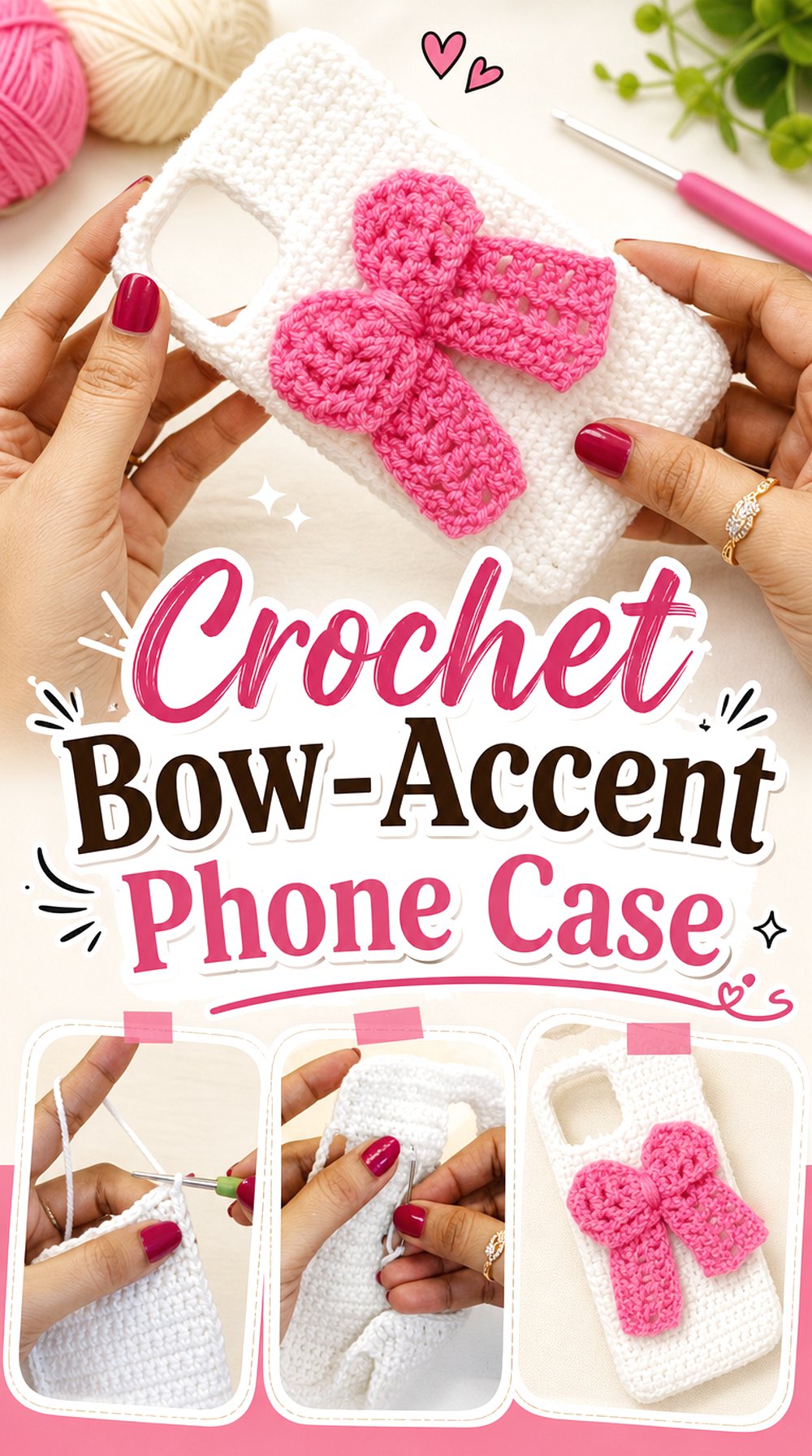
For a decorative phone case that still keeps a compact sleeve-like form, a bow gives the front a recognizable focal point without requiring an all-over motif. This idea makes sense when the case itself is meant to be seen rather than hidden inside another bag. The embellishment can also be changed in color or contrast without altering the underlying phone-cover concept.
The main decision is how much three-dimensional decoration is practical for your use. A prominent bow can look attractive on an exposed case but may catch when the phone pouch is pushed into a crowded handbag or narrow pocket. Placement and attachment therefore matter as much as the bow’s appearance.
The Bow Works Better When It Does Not Overwhelm the Case
A phone cover has a small surface area, so even a modest dimensional accent can dominate the front. Before attaching the bow permanently, place it against the finished body and check the overall proportions with the phone inside. A decoration that appears balanced on a flat swatch may seem much larger once the case wraps around the device.
A Snug Sleeve Still Needs an Accessible Top Edge
Decorative details should not distract from the basic fit test. You still need to insert and remove the phone without excessively stretching the opening. Check the top edge before positioning embellishments nearby, especially if the bow or its attachment points could reduce how freely the fabric expands while the device passes through.
Raised Decoration Can Catch on Other Items
If the finished case will spend most of its time inside a larger purse, consider how the bow interacts with zippers, keys, cables, or other contents. A flatter accent may be more practical in that setting. For a case worn or displayed on its own, you may have more freedom to use pronounced decorative volume.
Creator: Crochet by Tisha
6. Crochet Bean Stitch Textured Phone Pouch

Bean stitch gives this phone pouch a pronounced surface texture, making the fabric itself the visual feature instead of relying on a separate motif or closure. The raised texture can make a small accessory feel substantial and gives solid colors more visual depth than a smooth, flat stitch pattern.
That texture also changes the planning. A strongly dimensional fabric can be thicker than it appears when measured flat, and the phone will occupy additional internal depth. This is a useful project to choose when you like tactile crochet and defined stitches, but it is worth testing the device inside before assuming that exterior dimensions describe the usable interior space.
Raised Bean Texture Adds Thickness Quickly
When a stitch projects from the fabric surface, exterior width is not the only measurement that matters. Compare how the pouch feels empty and loaded, especially around the side edges. If the phone already has a thick protective case, a very close crochet fit may compress the textured fabric more than you want.
Stretch Can Change After the Phone Is Inserted
Textured fabric may open or flatten differently once it wraps around a solid object. Insert the actual phone and look for areas where the stitch definition becomes distorted or the sides pull unevenly. This check helps distinguish a comfortably fitted pouch from one that is relying on excessive stretch simply to accommodate the device.
Yarn Definition Matters More With a Raised Stitch
Because the texture is the main visual feature, consider how clearly your yarn displays individual stitches. Very fuzzy yarn can soften the appearance of a strongly textured pattern, while a yarn with clearer definition can make the raised surface easier to see. That is an aesthetic trade-off rather than a universal rule, so compare a small sample before committing.
Creator: Hanicrochet
7. Crochet No Sew Phone Pouch

A no-sew phone pouch changes the construction decision rather than simply changing the surface design. For crocheters who dislike joining separate side pieces or finishing conventional seams, this format offers another way to create the pouch body while keeping the finished object compact.
“No-sew” does not remove the need for careful fit checking. The side shape, opening, and symmetry still determine whether the phone sits straight, and a continuous construction can make it more important to catch width problems early. This option is best viewed as a construction alternative to seamed pouches rather than automatically faster, simpler, or better for every device.
Fewer Seams Can Reduce Bulky Side Ridges
A phone pouch with prominent seams may gain extra thickness along the sides. A construction that avoids conventional sewn joins can produce a different edge profile, which may appeal if you want the case to remain visually compact. Check the finished side edges against the phone rather than assuming seam-free construction automatically produces a thinner pouch.
Continuous Construction Still Needs Symmetry Checks
Without separate panels to compare before joining, it can be easy to overlook gradual changes in width. Periodically lay the developing pouch flat and compare both sides. If one edge begins to lean or the opening twists, identifying that change before the pouch is complete is more useful than trying to disguise it with finishing.
Finalize the Opening Only After a Trial Fit
The top edge is often where a phone pouch feels either comfortable or frustrating. Put the device inside before making the final opening decisions. If removing the phone requires aggressive stretching, the fit may be too restrictive even if the body looks neat. Conversely, a very loose opening may not suit a pouch intended for carrying on the move.
Creator: Deisi Cardoso
8. Crochet Mushroom Flap Phone Carrier

This mushroom-themed phone pouch uses the top of the design as more than decoration. The mushroom form gives the carrier a playful silhouette while also creating a visually distinct upper section rather than the straight opening found on most basic sleeves. It is a strong choice when you want the phone pouch itself to function as a novelty accessory.
Because the theme introduces dimensional shaping, it deserves different checkpoints from a plain rectangular case. Look at how the decorative top interacts with access to the phone, whether the body remains balanced when worn, and whether any projecting details can handle normal handling without constantly folding or catching.
The Mushroom Top Combines Theme and Closure
A themed upper section has to perform two jobs: it should read clearly as part of the mushroom design while still allowing the phone to go in and out comfortably. Check the shape with the pouch loaded. If the decorative portion shifts dramatically when the phone is inserted, appearance and function may compete with each other.
Dimensional Details Need Secure Attachment
Decorative pieces on a frequently handled phone carrier experience more movement than similar details on shelf decor. Examine attachment points periodically, especially if the pouch is carried inside another bag where the embellishments can snag. If you adapt the design with extra charms or loose decorations, consider whether those additions are appropriate for the way you will actually use the carrier.
Keep the Novelty Shape From Blocking Access
A themed pouch is most useful when the visual idea does not make routine phone access awkward. Try removing the phone one-handed and with the bag hanging in its normal position. If decorative elements constantly fold into the opening, consider whether a simpler placement would preserve the mushroom character while making the carrier easier to use.
Creator: 365DaysOfDana
9. Crochet Spike Stitch Phone Pouch
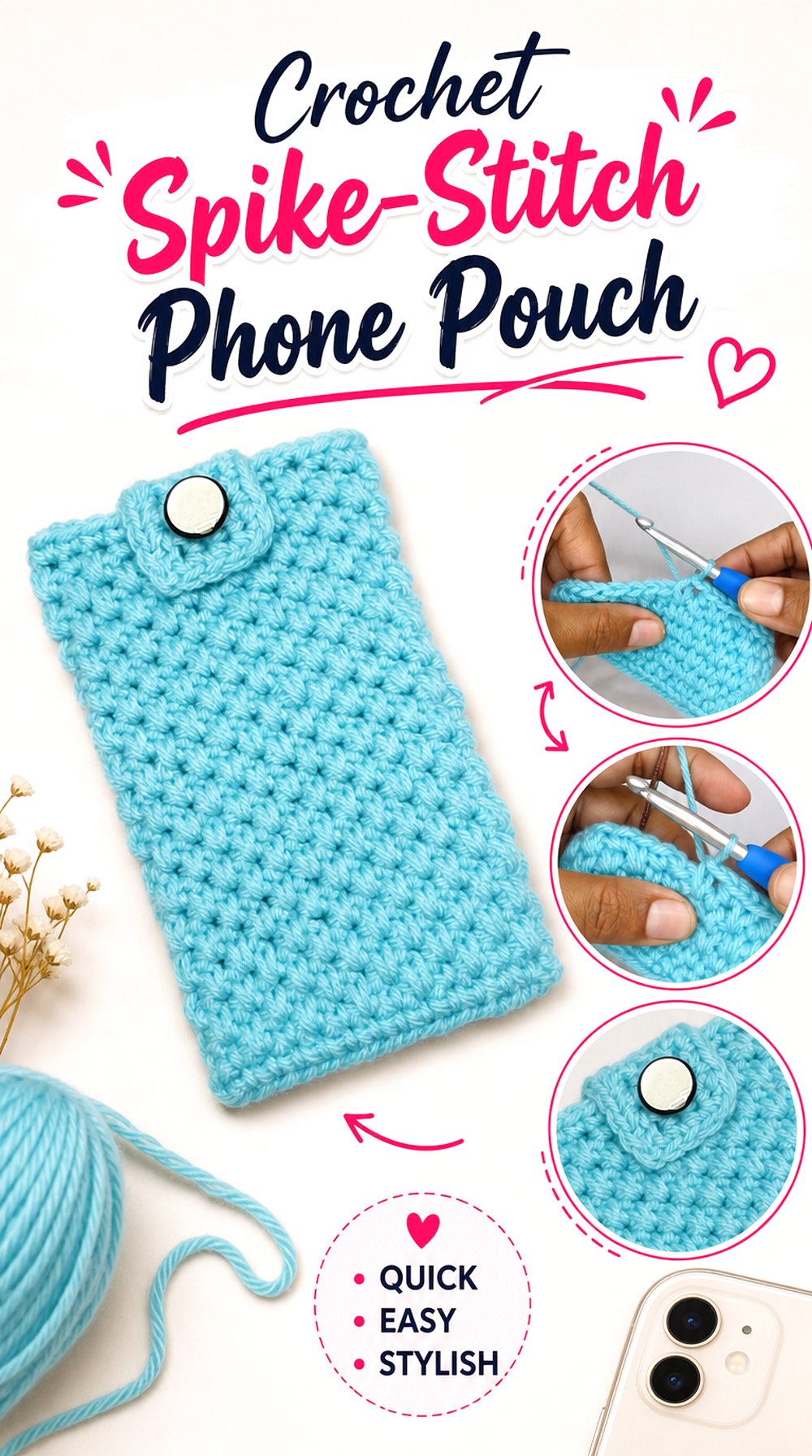
A spike-stitch phone pouch uses elongated stitch details to create vertical visual movement across an otherwise compact carrier. This makes it different from the rounded texture of bean stitch and from motif-based cases: the interest comes from how the surface pattern travels through the pouch rather than from separate pieces.
The design can be especially effective when contrasting yarns make those elongated stitches visible, but strong contrast also makes tension inconsistencies easier to notice. This option suits crocheters who want a patterned surface while retaining a relatively straightforward phone-pouch silhouette. Fit should still be based on your device rather than on an assumed universal phone size.
Spike-Stitch Contrast Can Reveal Uneven Tension
Longer stitch elements are visually prominent, particularly when worked in contrasting colors. If some pull more tightly than others, the fabric can appear irregular even when the overall pouch dimensions are correct. Examine the surface from a short distance as well as close up; repeated visual lines make inconsistencies easier to spot than they may be during individual stitch formation.
Custom Sizing Matters More Than Copying Dimensions
Phones and protective cases vary, so a dimension that suits another device is not automatically useful for yours. Compare the developing pouch directly with your own phone. The goal is enough space for insertion and removal without relying on extreme stretch, particularly if the textured surface begins to distort once the device is inside.
Add a Strap After Checking How the Body Hangs
If you adapt the pouch with a cord or carrying strap, first see how the completed body behaves with the phone inside. A narrow pouch that hangs neatly when empty can tilt once loaded if the attachment points are poorly balanced. Positioning those points after evaluating the loaded body gives you a more useful reference.
Creator: Hopeful Turns
10. Crochet Striped Fitted Phone Sleeve

A striped fitted sleeve is one of the most compact choices in this collection. Rather than adding a flap, zipper, separate motifs, or dimensional decoration, the design keeps attention on a simple phone-cover silhouette and uses color changes to create visual interest. It makes sense for someone who mainly wants a handmade layer around the device while it is stored or carried inside another bag.
The reduced construction also puts more pressure on fit. There is no large flap or roomy crossbody body to disguise excess width. The sleeve should release the phone without a struggle while still avoiding so much looseness that the device moves freely inside.
Horizontal Stripes Make Width Changes Easier to Notice
Repeated stripes create visual reference lines across the case. If the sides begin to flare or narrow, those horizontal bands can make the change more obvious. Use that to your advantage by checking the developing shape on a flat surface instead of waiting until the last color section to discover that the sleeve has changed width.
A Close Fit Should Still Release the Phone Easily
A fitted crochet cover should not require excessive pulling every time you need the device. Test insertion and removal with the same protective phone case you normally use. If the top edge is much tighter than the body, the phone may technically fit while still being inconvenient to access. Function is a better test than appearance alone.
Color Changes Add Finishing Decisions
Stripes introduce more color transitions than a solid sleeve, which means the neatness of those transitions can affect the final appearance. Consider where you want color-change areas to sit visually and how you plan to manage yarn ends without adding uncomfortable bulk inside a narrow case. The smaller the sleeve, the more noticeable a thick interior finishing area can become.
Creator: naztazia
Which Crochet Phone Case Style Suits Your Use?
For the smallest profile, the striped fitted sleeve keeps construction focused on the phone itself. The bean-stitch and spike-stitch pouches are better choices when surface texture should provide most of the visual interest.
If hands-free carrying is the priority, compare the zippered crossbody bag, mesh carrier, and any pouch you intend to adapt with a strap. The zippered option favors a more enclosed opening; mesh favors an airy appearance but requires more attention to small loose items.
The flap pouch sits between open and zippered designs, while the mushroom-flap carrier makes that upper closure area decorative. For motif lovers, the granny square phone bag emphasizes layout and joining. The bow case is the clearest option when you prefer an embellishment on a relatively compact cover.
Conclusion
The right crochet phone case depends more on how you carry your device than on which design looks most decorative. Choose a fitted sleeve when compact storage matters, textured or granny square pouches when the crochet surface should stand out, and a crossbody style when hands-free access is the priority. Flaps and zippers are worth comparing when you want more control over the opening, while mesh works better when an airy look outweighs full fabric coverage.
Whichever style you choose, check the fit with your actual phone and protective case before completing closures or straps. Use the original tutorials linked with each idea for their creators’ exact construction details.
Frequently Asked Questions
How should I size a crochet phone case if I use a protective phone cover?
Measure the phone with its everyday protective cover attached. Compare height, width, and thickness rather than using the bare phone’s published dimensions. Crochet fabric may also stretch after insertion, so test the device before permanently finishing the opening. If the phone goes in only by aggressively stretching the fabric, the pouch may be technically large enough but still inconvenient for daily use.
Does a crochet phone case replace a protective phone case?
Do not assume it does. A crochet sleeve or pouch can create a fabric layer between the phone and other objects, but that does not establish impact, drop, water, or screen-protection performance. If device protection is important, keep an appropriate protective phone case on the device and size the crochet pouch around that combination rather than relying on yarn alone.
Which type of crochet phone pouch is less likely to stretch?
There is no universal answer because stretch depends on yarn, stitch structure, tension, construction, and how the finished pouch is loaded. A dense, stable fabric may behave differently from open mesh, and straps can stretch differently from the pouch body. Make a sample when stretch matters and test the finished carrier with the actual phone before deciding that its dimensions or strap length are final.
Should I add a lining to a crochet phone pouch?
A lining can be worth considering if the crochet fabric is open, stretches more than you prefer, or will share space with small objects that could push through stitch openings. It can also create a smoother interior. However, lining takes up some internal room, so plan for it before making the crochet body extremely snug. It is optional rather than a requirement for every phone case.
Can I add a zipper to any crochet phone pouch?
Not every pouch is equally suited to a zipper. Check whether the opening is stable, wide enough for the phone, and shaped in a way that allows the zipper to sit without severe puckering. Adding a zipper also changes the usable opening, so test how the device passes through before installation. If a tutorial was designed as an open sleeve, adapting it may require more planning than simply sewing hardware across the top.
How can I reduce stretching in a crochet phone-bag strap?
Start by judging the strap with the phone inside the pouch, since an unloaded strap does not reveal how far it will lengthen in use. A more stable construction, a wider strap, or suitable reinforcement may help when stretching is noticeable. Also inspect the attachment points: even a stable strap will not solve the problem if the upper corners of the crochet pouch distort under the phone’s weight.

