15 Crochet Pumpkin Bag Charm Ideas for Fall Bags and Backpacks
A pumpkin charm can be as simple as a compact stuffed shape or as distinctive as a miniature pie, Halloween face, tiny storage pouch, or pumpkin-costumed character. That range matters when the finished piece will actually hang from a tote, backpack, purse, or key ring: a flat charm behaves differently from a rounded amigurumi pumpkin, while leaves, tendrils, faces, and textured stitches all affect bulk and snag potential.
The 15 crochet pumpkin bag charm ideas below focus on genuinely different silhouettes, textures, attachment approaches, and decorative details. Each one is paired with an original tutorial source so you can examine the creator’s exact construction rather than relying on a reconstructed pattern here. Along the way, you’ll also find practical guidance for choosing scale, positioning hardware, keeping embellishments manageable, and adapting a decorative pumpkin for everyday bag use.
Quick List
- Crochet Kawaii Pumpkin Face Bag Charm
- Crochet Puff-Stitch Mini Pumpkin Bag Charm
- Crochet Pumpkin Pie Bag Charm
- Crochet Smooth Amigurumi Pumpkin Bag Charm
- Crochet Jack-O’-Lantern Panel Bag Charm
- Crochet Ribbed Pumpkin Tassel Bag Charm
- Crochet Pumpkin Treat-Pouch Bag Charm
- Crochet Integrated-Strap Pumpkin Bag Charm
- Crochet Mini Pumpkin Face Keychain Charm
- Crochet Leaf-and-Tendril Pumpkin Bag Charm
- Crochet Striped Pumpkin Bag Charm
- Crochet Wheat-Stitch Pumpkin Bag Charm
- Crochet Cotton Pumpkin Keyring Bag Charm
- Crochet Pumpkin Bear Bag Charm
- Crochet Fine-Gauge Pumpkin Bag Charm
Choose Scale and Structure for the Way You Carry It
For a charm that will stay on an everyday backpack, compactness is usually more important than making the pumpkin visually dramatic. Flat-panel pumpkins and small, firmly shaped amigurumi pieces tend to project less from the bag, while deeply textured or heavily stuffed versions create a fuller seasonal statement.
Think about what shares space with the charm, too. A purse that frequently goes inside another tote benefits from fewer projecting leaves and curls. A decorative market bag has more room for dimensional shapes. Pouch-style charms add function, but whatever goes inside also adds weight.
Yarn substitution can change these proportions even when the same construction is followed. A thicker yarn generally produces a larger, heavier piece; a finer yarn can reduce scale but may also change the firmness of the fabric. Check the original tutorial before changing yarn or hook size significantly.
Plan the Attachment Before Finishing the Pumpkin
The hanging point should be treated as part of the design rather than an afterthought. Some tutorials use conventional key-ring hardware, while others build a crocheted loop or strap into the piece. An integrated loop can keep the top visually tidy, whereas removable hardware such as a clasp can make it easier to transfer the charm between bags.
Whatever attachment you choose, consider where the pull is going. A decorative stem may look like the obvious place for a ring, but a hanging point that relies only on a lightly attached embellishment can become a weak spot. Where the tutorial allows, connect the hardware through a structurally secure loop or reinforced area.
Before trimming ends, hold the charm from its intended attachment point. This simple check shows whether the pumpkin hangs upright, rotates sideways, or puts unexpected strain on leaves, stems, seams, or facial details.
Keep Faces, Leaves, and Other Small Details Practical
Pumpkin bag charms invite embellishment, but every added piece changes how the project behaves in use. A short leaf can give the top definition without much interference; a long curling vine is more noticeable but may catch on zippers or neighboring objects. Likewise, raised eyes and other attached features need more consideration than embroidered details.
Several tutorials in this list use or discuss small facial components. If the charm could be handled by a baby or young child, avoid assuming that plastic “safety eyes” make a project suitable for them. Embroidered facial details remove that particular detachable component, although the rest of the item still needs to be assessed for its intended use.
Care also depends on the yarn, stuffing, hardware, and embellishments chosen. Follow the yarn label and the original creator’s guidance rather than assuming every stuffed charm can be washed the same way.
1. Crochet Kawaii Pumpkin Face Bag Charm

This cheerful pumpkin design uses a paneled form rather than relying on a plain round ball. Spin a Yarn Crochet’s original project includes a recognizable little face, stem and vine, plus surface detailing that visually divides the pumpkin into sections. The result reads clearly as a character-style pumpkin even at charm scale.
It suits readers who want their fall accessory to feel more illustrative than minimalist. Because the facial details and surface lines do much of the visual work, keeping those elements balanced matters more than adding extra decoration. For a bag charm, check that any vine or projecting top detail sits where it will not constantly rub against a zipper.
Why the Flat-Paneled Form Works on a Tote
A panel-built pumpkin can give you a broad front surface for the expression without making the charm equally bulky in every direction. That is useful on a tote or backpack where you want the face to remain visible.
Before attaching hardware, decide which panel should face outward while the bag is being carried. If the attachment point twists the pumpkin ninety degrees, the character effect can disappear even though the crochet itself is correct.
Face Details Need a Recipient Check
The tutorial includes facial components, so consider who will handle the finished charm before choosing how to reproduce that expression. For an adult’s seasonal tote, raised details may be an intentional part of the look.
For a charm likely to end up in a small child’s hands, embroidered eyes and mouth are worth considering instead of detachable plastic components. Keep any adaptation visually simple enough that it does not crowd the pumpkin’s surface detailing.
Keep the Surface Ridges Visible
The surface lines help distinguish this design from a plain stuffed circle. If yarn substitution makes those ridges disappear into fuzzy fibers, much of the project’s graphic effect may be lost.
A smoother yarn generally makes surface crochet and facial placement easier to read, but use the creator’s recommended materials as your reference point before substituting. Also check the ridges after stuffing or assembly so they remain visually even from the front.
Original Tutorial and Creator Credit
Creator/Site: Spin a Yarn Crochet
2. Crochet Puff Stitch Mini Pumpkin Bag Charm
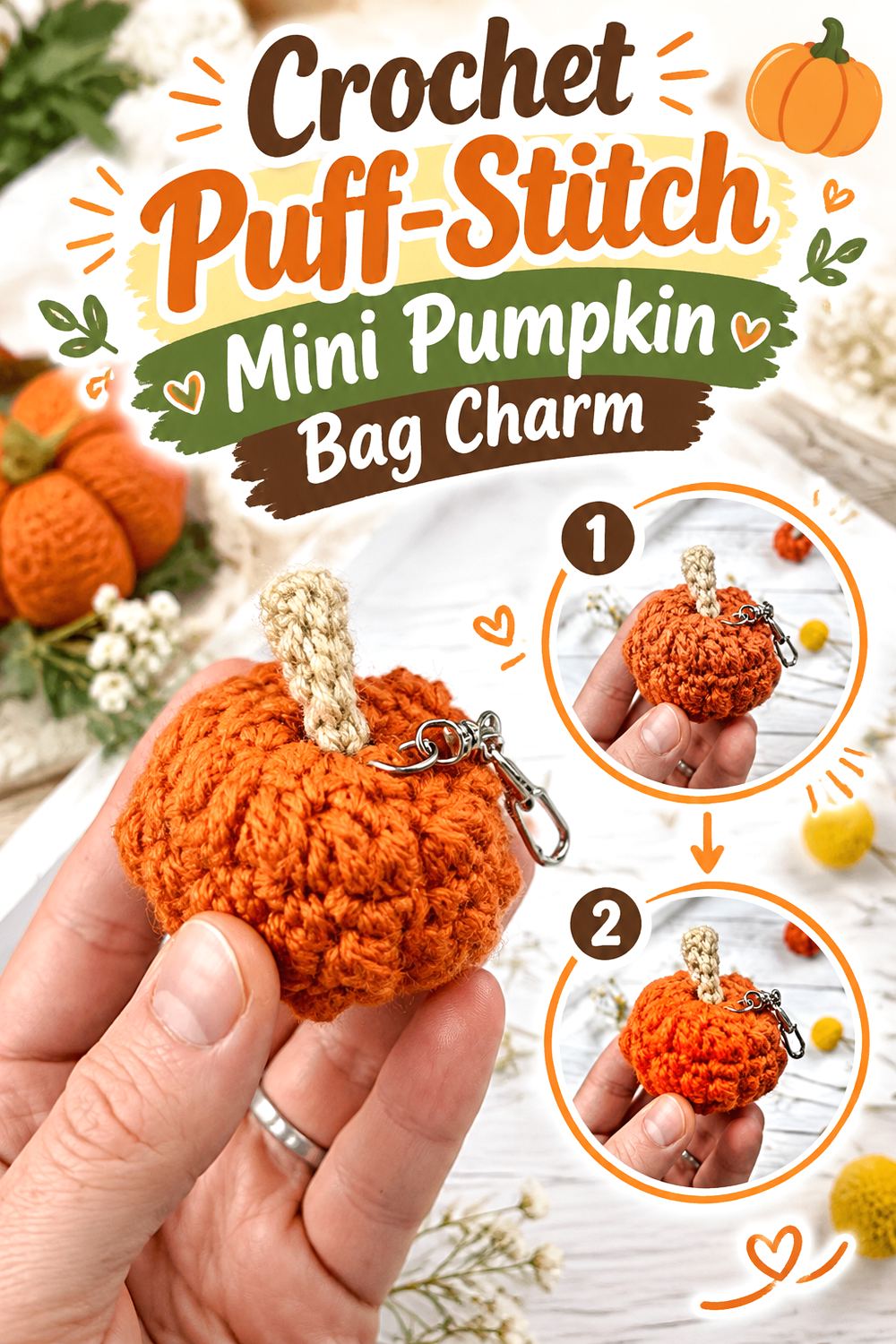
For a pumpkin that gets most of its character from texture, this Desert Blossom Crafts design takes a different route. The project uses pronounced puff-like texture to create a plump seasonal surface and is presented in more than one size, with keychain use among the possibilities described by the creator.
That makes it a useful choice when you want dimensional stitches to replace extra appliqués or facial pieces. The texture gives the pumpkin enough visual interest to work in a single yarn color, although the fuller stitch structure can make it feel more substantial than a flat charm. Decide whether you want the pumpkin to sit quietly beside a zipper pull or become the main decorative object hanging from the bag.
Puff Texture Changes the Silhouette
Raised stitches create shadow and depth, so this pumpkin can look fuller without requiring a complicated collection of separate decorations. The trade-off is that pronounced texture can also increase apparent bulk.
When selecting a version for a frequently used handbag, compare the finished scale shown by the creator with the area around your bag handle or zipper. A decorative tote can accommodate more projection than a bag that is regularly packed tightly.
Choose Size With the Hardware in Mind
Because the source provides size options, think of the key ring or clasp as part of the overall proportion. Very large hardware can visually overwhelm a small pumpkin, while tiny lightweight hardware may look lost against a fuller version.
You do not need an exact mathematical ratio. Simply hold the intended ring beside the work before final assembly and check whether the combination looks balanced and whether the attachment point can comfortably accommodate it.
Original Tutorial and Creator Credit
Creator/Site: Desert Blossom Crafts
3. Crochet Pumpkin Pie Bag Charm

A miniature pumpkin pie breaks up a list of round pumpkins immediately. Pixeled Peach’s project is a crocheted pie that can be worked with pumpkin-colored filling and adapted for keychain use, with the finished design including the recognizable crust-and-filling structure of a tiny pie.
This option works especially well for someone who likes fall food motifs but wants something less literal than another pumpkin silhouette. It also has a more directional front and top than a spherical charm, so hanging orientation becomes important. Attach it where the recognizable pie surface can remain visible rather than letting the charm constantly turn edge-on against the bag.
Food-Shaped Charm Versus Classic Pumpkin
The advantage of a pie motif is visual variety. It suggests pumpkin season through the filling and dessert shape rather than requiring a stem, face, or deeply segmented pumpkin body.
That also means color substitutions have a larger effect on identity. If you move far away from pumpkin-like tones, the charm may begin to read as another fruit or dessert—which can be a feature if you want to reuse the construction outside fall.
Support the Pie Without Making It Rigid
A small food charm benefits from enough shape that the crust and filling remain recognizable. If the fabric or filling is too loose, the pie can collapse into an indistinct form when hanging.
On the other hand, excessive stuffing or a very stiff insert can distort edges and create more bulk than expected. Follow the creator’s construction guidance, then assess the finished profile before deciding whether any additional internal support is appropriate.
Let the Attachment Preserve the Front View
Because the charm has a clear display face, the ring position matters. Temporarily clip your hardware to the intended attachment area and hold the piece vertically before securing everything permanently.
If the pie keeps turning backward, a short connecting loop or different style of clasp may improve its orientation. Any hardware adaptation should remain securely anchored to the crocheted structure rather than to a decorative surface element alone.
Original Tutorial and Creator Credit
Creator/Site: Pixeled Peach
4. Crochet Smooth Amigurumi Pumpkin Bag Charm

Amivui Studio’s tiny amigurumi pumpkin offers a cleaner alternative to highly textured versions. Its recognizable orange pumpkin body and green top details keep the seasonal theme direct, while the small stuffed form is specifically presented as a keychain project.
This is a useful starting point when you want the pumpkin silhouette itself to carry the design rather than a face, stripes, or novelty motif. A smooth surface also gives you room to customize color without competing with complex stitch texture. For bag use, the main decisions are firmness and attachment placement: the pumpkin needs enough shaping to remain recognizable, but overfilling can make a small charm unexpectedly round and bulky.
Use the Simple Form as a Color-Neutral Base
Because this design is visually straightforward, color changes can alter its mood without requiring structural changes. Traditional orange reads immediately as autumn, but muted rust, cream, brown, or other seasonal shades can make it easier to coordinate with a particular bag.
Treat those colors as styling adaptations rather than source-specific recommendations. If you change yarn as well as color, check whether the new fiber produces comparable stitch definition and firmness.
Shape Before Adding the Hardware
Small stuffed pumpkins can look symmetrical on the table yet tilt once they are suspended. Finish the body shaping first, then hold it from the proposed top attachment point.
If one side appears heavier or the stem is pulled off-center, correct the balance before final hardware installation. This avoids relying on the key ring to disguise a shaping problem that becomes more obvious once the charm is hanging.
Original Tutorial and Creator Credit
Creator/Site: Amivui Studio
5. Crochet Jack O’ Lantern Panel Bag Charm

Jennifer Noelle’s jack-o’-lantern design brings a stronger Halloween direction to the pumpkin theme. The source uses a two-panel construction and shows different approaches to the facial features, including embroidered options as well as dimensional eye components. The finished project is designed as a keychain with dedicated attachment hardware.
Compared with a softly rounded pumpkin, the flatter front makes the face the focal point and keeps the seasonal message graphic. This is a particularly good candidate for a backpack zipper area where a broad front can be seen easily. The main planning decision is how elaborate you want the face to be, because facial construction affects both appearance and the suitability of the charm for different recipients.
Embroidered Features Can Simplify the Front
An embroidered face keeps the front relatively flat and eliminates the projection created by separate eye pieces. That can be helpful on a bag that brushes against coats, car seats, or other packed items.
It also allows you to control the expression without adding another material. If you change the original face treatment, keep the eyes and mouth sufficiently separated so the jack-o’-lantern expression stays readable at the finished charm scale.
Panel Edges Need Even Joining
On a two-panel piece, the outside contour is visually important. Uneven joining can make one side bulge more than the other or pull the top out of alignment.
Check the front and back together before completing the entire perimeter. If one panel has stretched differently, redistribute the fabric rather than forcing the final section to absorb all the mismatch. The goal is a balanced outline when the charm is viewed head-on.
Match the Clasp to Halloween Use
A seasonal charm may be moved between a purse, candy tote, backpack, and key set over a relatively short period. A removable clasp can make those changes more convenient than permanently tying the pumpkin to one handle.
Whatever hardware you select, test whether it opens easily enough for the intended bag attachment while still closing completely. Decorative hardware is only useful if the connection itself remains dependable.
Original Tutorial and Creator Credit
Creator/Site: Jennifer Noelle
6. Crochet Ribbed Pumpkin Tassel Bag Charm

Jayda InStitches presents a small ribbed pumpkin that can serve as a keychain or another dangling accessory, with the tutorial also discussing an optional bell for an alternate use. The strong vertical ribbing gives this pumpkin a different visual rhythm from smooth amigurumi designs.
For a bag charm, the ribbed texture is the main attraction: it creates pumpkin-like segmentation without a face or separately applied stripes. This makes the design easy to coordinate with other fall accessories while still looking deliberately seasonal. Keep the dangling length in mind, especially if you add anything below or around the pumpkin; a short, contained charm is less likely to swing into zippers or neighboring ornaments.
Ribbing Adds Definition Without Extra Appliqué
The ridges do much of the decorative work. That is useful when you prefer a pumpkin that remains tactile and recognizable without eyes, beads, or multiple sewn-on motifs.
Ribbing can change appearance substantially with yarn choice, however. Very fuzzy yarn may soften the groove definition, while a crisp yarn can emphasize it. Compare the yarn you want to use with the visual effect in the source before committing.
Optional Sound Needs Careful Use
A bell can be amusing on some accessories, but it is not automatically desirable on a handbag. Consider noise, potential scratching against hardware, and whether the charm may be handled by a child or pet.
For an ordinary purse or backpack, leaving the bell out preserves the pumpkin’s visual function without adding a hard moving component. If you do incorporate one, follow the creator’s intended placement and assess the finished item for your actual use.
Original Tutorial and Creator Credit
Creator: Jayda InStitches
7. Crochet Pumpkin Treat Pouch Bag Charm

Kukkacrochet By Putri turns the pumpkin charm into something more functional: the tutorial presents a pumpkin bag charm that also works as a small pouch. Leaf and curling top details reinforce the pumpkin look, while the opening gives the design a job beyond decoration.
That extra function makes this one of the most distinctive choices in the list. It could hold a very small lightweight item, but its usefulness depends on maintaining the pouch shape and not asking the crocheted charm to carry more than its structure and attachment were designed for. Consider it a decorative micro-pouch rather than a substitute for a load-bearing coin purse unless the original tutorial specifically supports your intended use.
Tiny Storage Changes the Charm’s Job
Once a charm has an opening, closure and interior space become practical considerations. Ask what you genuinely intend to keep inside and whether losing that object would matter if the pouch opens unexpectedly.
Small decorative contents are a lower-stakes use than valuables. The important point is to match the pouch’s role to its construction rather than assuming every crocheted pocket is secure storage.
Don’t Overload a Decorative Pouch
Weight pulls on the strap, attachment point, opening, and crocheted fabric at the same time. Even if the pouch physically holds several objects, that does not mean carrying them all is sensible.
Before regular use, hang the finished pouch with the intended lightweight contents and check for sagging, stretching, gaping, or distortion. If those appear, reduce the load instead of trying to compensate by tightening the closure.
Check the Strap and Opening Together
A pouch can hang beautifully while empty and tilt once something is placed inside. Test the finished orientation from the actual strap or ring, not just while holding the pumpkin body in your hand.
Also make sure decorative leaves or curls do not obstruct access to the opening. The best arrangement lets the topper remain visible without turning the functional part of the charm into a struggle to use.
Original Tutorial and Creator Credit
Creator: Kukkacrochet By Putri
8. Crochet Integrated Strap Pumpkin Bag Charm

Knotty Loops offers a pumpkin charm with a particularly useful construction distinction: the hanging strap is integrated into the crocheted piece rather than simply being treated as separate hardware added afterward. The tutorial also discusses modifying the pumpkin’s size.
This approach can make the top of the charm look less crowded, especially if you prefer yarn to remain the dominant material. It is also a good option for readers who dislike a cluster of jump rings and connectors directly above the pumpkin. Because the loop itself becomes part of how the project carries weight, pay attention to its firmness and inspect the point where the loop meets the pumpkin before regular use.
An Integrated Strap Reduces Top Bulk
A crocheted hanging loop can create a clean transition from pumpkin to bag, particularly on casual totes and backpacks. There is less visible hardware competing with the stem area.
The trade-off is that a fabric loop can behave differently from a rigid metal ring. Depending on yarn and tension, repeated pulling may cause some stretch. Check the creator’s construction and avoid enlarging the loop casually without considering how the extra length may move in use.
Test the Hanging Orientation Before Finishing
Integrated straps limit your ability to rotate the charm later with an extra connector, so alignment is worth checking early. Hold the piece by its loop and confirm that the most attractive side naturally faces outward.
If you adapt the pumpkin’s size as the source discusses, reassess the strap proportion too. A loop that looks balanced on the original scale may feel visually too short or too long on a larger version.
Original Tutorial and Creator Credit
Creator: Knotty Loops
9. Crochet Mini Pumpkin Face Keychain Charm

Krafty Station’s mini pumpkin tutorial includes keychain hardware and offers facial detailing as an optional part of the project. That gives you two distinct styling routes from one construction: a plain seasonal pumpkin or a more character-like version with a face.
For a bag charm, that flexibility is useful because the plain version can work with a more understated purse, while facial features suit playful backpacks or Halloween accessories. Avoid letting the small scale tempt you into crowding the surface. A miniature pumpkin generally benefits from one clear focal idea—shape, expression, or topper—rather than trying to accommodate every possible decorative element at once.
Optional Eyes Change the Audience
Adding a face can transform a simple pumpkin into something much more playful, but it also introduces extra components. Consider whether the finished piece is intended only for your own bag or might be handled regularly by a young child.
Where detachable parts are inappropriate, embroidery can provide expression without plastic eyes. This is an adaptation choice, so keep the creator’s original design visible as your construction reference.
Keep the Mini Shape From Becoming Top-Heavy
On a small pumpkin, the stem, ring, clasp and decorative parts can collectively look almost as large as the body. Lay the hardware beside the crocheted piece before attaching it.
If the top feels visually overloaded, simplify the connector or omit optional embellishments rather than trying to enlarge the pumpkin purely to compensate. A small charm is most convincing when its hardware supports rather than dominates the motif.
Original Tutorial and Creator Credit
Creator: Krafty Station
10. Crochet Leaf and Tendril Pumpkin Bag Charm

The Amigurumi_Joys tutorial distinguishes its pumpkin with a developed topper: the source includes a stem, tendril, and leaf rather than stopping at a basic stuffed pumpkin body. Those details create a more botanical look and make the upper portion a major part of the design.
This works well when you want a bag charm that feels decorative from several angles instead of relying on a front-facing expression. The trade-off is snag potential. A leaf usually lies relatively close to the surface, while a curling tendril projects farther and can catch more easily on zipper teeth, open-weave bags, or other keychains. Decide whether your bag is primarily decorative or heavily used before making the top details especially prominent.
Balance the Leaf and Tendril
Asymmetry can make the pumpkin look natural, but too much weight or volume on one side may cause the entire charm to hang crooked. Before securing the final hardware, suspend the pumpkin and observe where the leaf and curl naturally fall.
If you are changing yarn or enlarging those details, reassess the balance rather than assuming the original placement will behave identically at a new scale.
Watch Curly Details for Snagging
A tendril that looks charming on a shelf experiences a different environment on a daily backpack. It may brush against clothing, zippers, seat belts, or other hanging accessories.
For heavy-use bags, consider keeping the curl compact rather than extending it farther for drama. This preserves the botanical character while reducing the amount of yarn exposed to repeated pulling.
Original Tutorial and Creator Credit
Creator: Amigurumi_Joys
11. Crochet Striped Pumpkin Bag Charm

Crochet Craftsman’s tutorial presents a striped amigurumi pumpkin keychain, using color contrast as a major design feature rather than relying only on shaping to define the pumpkin. The project is explicitly intended as a small hanging accessory.
This variation is worth considering if you want to work with multiple autumn shades or coordinate the pumpkin with a school bag, tote, or purse color. Stripes can make segmentation more noticeable from a distance, but they also make inconsistent color placement easier to spot. Plan the relationship between the stripes and the visible front of the charm before attaching the ring, especially if one side has cleaner transitions than the other.
Stripes Make Segmentation More Visible
Contrasting color bands can emphasize the pumpkin’s form even when viewed from farther away. That gives you a decorative effect without attaching additional appliqués or facial features.
The trade-off is visual busyness. If you are already using decorative hardware, a leaf, or a patterned bag, limiting the pumpkin palette may produce a cleaner combination. Color planning is an adaptation rather than a required part of the source.
Plan Color Transitions Around the Hardware
On a small object, yarn transitions that would disappear on a large project can become noticeable. Identify your preferred display side once the pumpkin is assembled.
Then position the hanging hardware so the cleanest side naturally faces outward where practical. This does not need to be flawless—handmade color changes are part of the object—but intentional orientation can improve the finished presentation.
Original Tutorial and Creator Credit
Creator: Crochet Craftsman
12. Crochet Wheat Stitch Pumpkin Bag Charm

Tuba Crochet’s version stands apart through stitch texture. The tutorial specifically uses a wheat-stitch look for a pumpkin keychain, giving the surface a patterned quality rather than the smooth rounds, broad panels, or simple ribs seen elsewhere in this list.
This is a strong choice when the fabric itself is what you want people to notice. A textured stitch can make a single-color pumpkin feel detailed without a face or multicolor embellishment. For bag use, pay attention to the texture after stuffing and handling. If the stitches become stretched so far that the pattern loses definition, the finished charm may no longer have the same visual character that made you choose it.
Wheat Stitch Gives Texture Without Added Motifs
A distinctive stitch pattern can replace separate decorative components. That means fewer leaves, appliqués, beads, or facial parts are needed to keep the pumpkin visually interesting.
This makes the concept useful for a relatively clean bag charm, but it also places more importance on consistent tension. Uneven tension may be more visible in a repeated textured surface than on a plain amigurumi body.
Dense Texture Can Affect Bulk
Textured crochet can create a more substantial fabric than a comparatively smooth stitch pattern, depending on the yarn and hook combination. On a tiny charm, even a modest change in thickness affects the final profile.
If you substitute yarn, make a small assessment early and compare the fabric with the creator’s finished look. A pumpkin intended for a slim purse may need different scale priorities from one made for an open tote.
Original Tutorial and Creator Credit
Creator: Tuba Crochet
13. Crochet Cotton Pumpkin Keyring Bag Charm
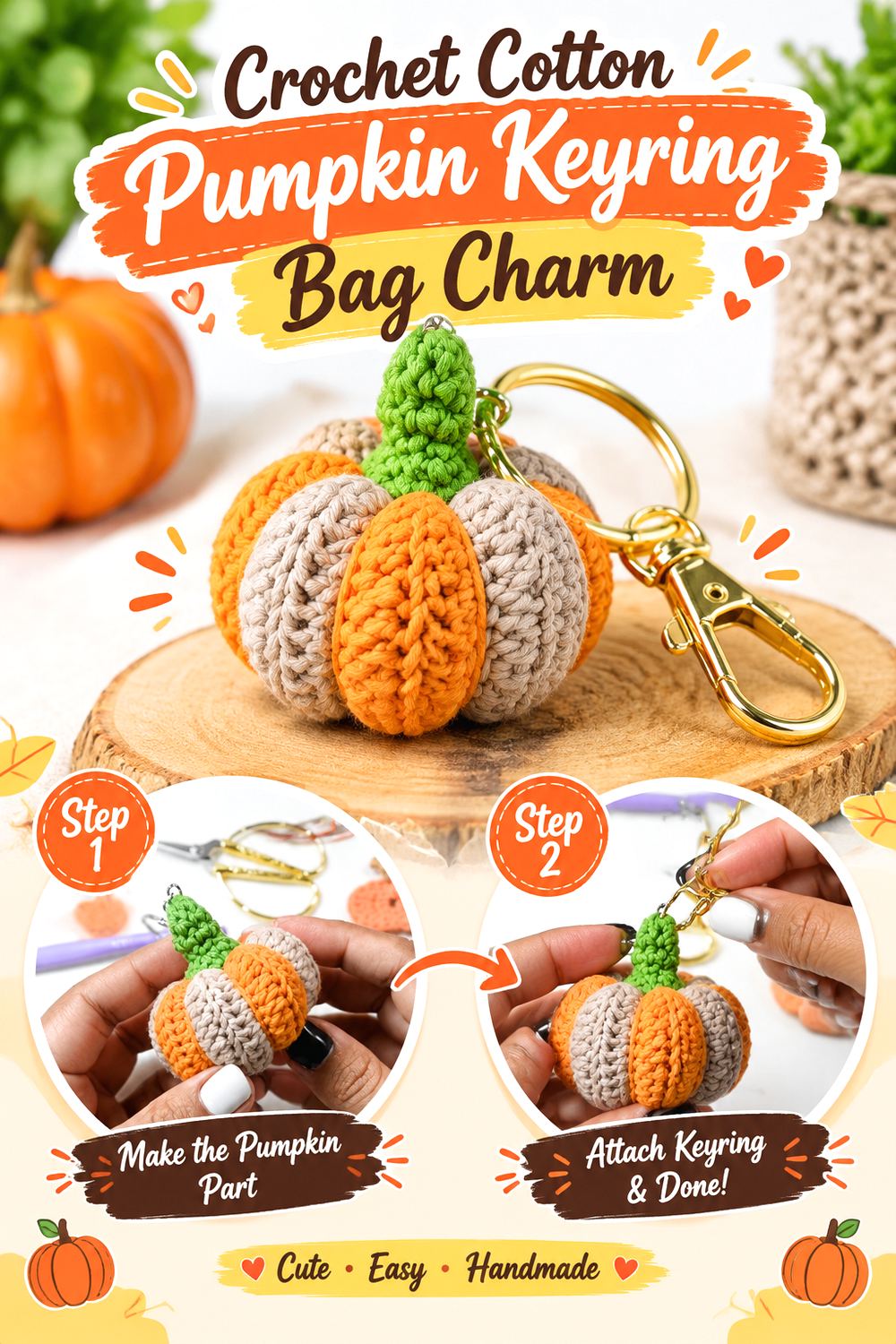
Jesuecrochet’s pumpkin keychain tutorial uses cotton yarn in the demonstrated project, giving this idea a useful material-focused distinction. The source presents the finished pumpkin specifically as a small keychain accessory rather than a full-size seasonal decoration.
Cotton can be appealing when you want the individual stitches to remain visually clear, though the exact feel depends on the yarn, tension and construction. Do not assume that switching any pumpkin pattern to cotton will produce the same result: fiber, yarn thickness and hook choice influence firmness and scale together. Here, it makes more sense to follow the source first and treat material changes as deliberate experiments afterward.
Cotton Puts Stitch Definition First
Many cotton yarns have less halo than fuzzy fibers, which can help small stitch details remain visible. That may be useful when the charm’s shape depends on crisp segmentation or neatly formed edges.
The trade-off can be a firmer hand, depending on the particular yarn and tension. If you substitute another cotton, compare thickness and fabric behavior rather than relying only on the fiber name printed on the label.
Reinforce the Hanging Point, Not the Stem
A stem is visually associated with the top of a pumpkin, but decorative appearance and structural strength are not the same thing. Inspect where the ring or loop actually transfers force into the crocheted body.
If you modify the hardware, keep the load on a securely constructed point rather than allowing every tug on the keys or bag to pull only against a decorative stem.
Original Tutorial and Creator Credit
Creator: Jesuecrochet
14. Crochet Pumpkin Bear Bag Charm

For a character option, byyynicolette combines the pumpkin theme with a bear keychain. Instead of decorating a conventional pumpkin, the project creates a recognizable autumn character in which the pumpkin concept and animal styling work together.
This is the choice for readers who want a charm with more personality and more visual information than a simple seasonal motif. It also introduces more components to position and secure, so finishing deserves additional attention. Check the ears, facial details, pumpkin elements, and hanging point as a complete composition before attaching the charm to a frequently used bag. A character can look balanced on a table yet tilt noticeably once suspended from one side.
The Pumpkin Theme Becomes a Character
A bear design makes the charm feel more like a miniature plush character than a piece of produce. That distinction is useful for backpacks, gift bags, or collections of amigurumi-style accessories.
Because several features contribute to the identity, avoid over-customizing all of them at once. Changing the pumpkin color may be enough personalization without also enlarging ears, adding extra appliqués, and changing the scale of the face.
More Parts Mean More Attachment Checks
Character charms often include multiple small crocheted or decorative elements. Each joining point is another place to inspect before the item starts bouncing around on a backpack.
Gently check ears and other projecting pieces as well as the main key-ring connection. If a component shifts noticeably under light handling, correct the finishing rather than assuming the bag itself will protect it.
Consider a Flatter Face for Young Recipients
If a child may handle the charm, think carefully about separate eyes, beads or other small components. An embroidered expression can preserve the character while eliminating some detachable facial pieces.
That does not automatically make the entire item suitable for every age; hardware, stuffing access and other components still matter. Treat intended recipient and use as a separate safety decision from the visual appeal of the pattern.
Original Tutorial and Creator Credit
Creator: byyynicolette
15. Crochet Fine Gauge Pumpkin Bag Charm

Lily’s Crochet demonstrates a pumpkin keychain using a fine crochet setup and cotton yarn, making this source useful when you want to study a smaller-scale approach rather than simply shrinking a larger home-decor pumpkin by guesswork. The project is specifically presented for use on items such as bags, keys, and backpacks.
A finer-gauge charm can be appealing where space is limited or where you want the pumpkin to sit beside other zipper pulls without dominating them. The trade-off is that small-scale shaping makes consistency more visible. Slight variations in tension, stuffing, or hardware placement can affect the silhouette proportionally more than they would on a large decorative pumpkin.
Fine Gauge Keeps the Visual Footprint Compact
A smaller hook-and-yarn combination can create a compact finished object, but copying a hook size without matching the intended yarn is not a reliable scaling method. Treat the creator’s demonstrated combination as a system.
If you substitute materials, compare the resulting fabric density before proceeding. A smaller hook alone can make fabric overly stiff if the yarn is not suited to it.
Small Hardware Still Needs a Strong Anchor
A tiny pumpkin does not eliminate attachment stress. Keys, zipper pulls and bag movement repeatedly tug on the same small area, and oversized hardware can distort the top visually.
Choose a ring that suits the actual attachment point, then inspect that connection periodically if the charm is used every day. Compact scale should reduce visual bulk, not reduce your attention to finishing.
Original Tutorial and Creator Credit
Creator: Lily’s Crochet
Which Crochet Pumpkin Bag Charm Style Should You Choose?
Start with the way the charm will be used. If minimizing bulk matters most, the flat-panel jack-o’-lantern, kawaii panel, or fine-gauge pumpkin gives you a sensible direction. For pronounced texture, compare the puff-stitch, ribbed, and wheat-stitch versions. The striped pumpkin adds contrast without requiring a character face, while the leaf-and-tendril design emphasizes botanical detail.
For novelty, the pumpkin pie and pumpkin bear move furthest from a conventional pumpkin silhouette. The treat-pouch version is the standout when you want a charm with a second function, while Knotty Loops’ integrated-strap approach is worth considering when you prefer less hardware around the pumpkin top. In every case, let the intended bag, attachment point, and amount of daily handling guide the final choice.
Conclusion
These 15 crochet pumpkin bag charm ideas show how much variation can fit inside one small seasonal accessory. You can keep the silhouette compact with a panel or fine-gauge pumpkin, highlight the fabric with puff, ribbed, striped, or wheat-stitch texture, add Halloween personality with a jack-o’-lantern, or move into novelty territory with pie, pouch, and bear designs.
Before choosing, consider where the charm will hang, how far it can project from the bag, whether decorative leaves or facial parts suit the intended use, and how securely the hardware connects to the crochet. Once you select a style, use the linked original tutorial for the creator’s exact construction details rather than relying on assumptions when changing yarn, scale, hardware, or finishing.
Frequently Asked Questions
What yarn works well for a crochet pumpkin bag charm?
There is no single yarn that is automatically best for every pumpkin charm. A compact accessory usually benefits from fabric that holds its shape and does not leave large gaps around stuffing, but the ideal yarn depends on the tutorial’s construction. Cotton can provide clear stitch definition, while other fibers may create a softer surface. When substituting, compare yarn thickness as well as fiber and follow the creator’s hook and material guidance as your starting point.
How can I attach a crochet pumpkin charm securely to a bag?
Use the attachment system shown in the original tutorial when possible, especially if the design includes an integrated strap or dedicated key-ring connection. If adapting the hardware, anchor it through a structurally secure crocheted loop or reinforced area rather than relying only on a decorative leaf or lightly attached stem. After assembly, hang the charm from the actual ring or clasp and gently check whether the connection stretches, tilts, or pulls the pumpkin out of shape.
Can I turn a larger crochet pumpkin pattern into a bag charm?
Potentially, but simply using a smaller hook does not guarantee a successful miniature. Yarn thickness, fabric density, stuffing, stem scale, decorative pieces, and hardware all affect the result. A scaled-down pumpkin may become too stiff, while loosely crocheted fabric may expose stuffing. For predictable results, a tutorial designed specifically as a keychain or bag charm is the safer starting point. If you experiment with scaling, make a small fabric check before committing to the entire project.
Are safety eyes suitable for crochet pumpkin bag charms?
They can work on decorative accessories intended for adults, but the term “safety eye” should not be treated as a guarantee that the finished object is appropriate for babies or young children. Small components can become a concern if they detach. If a child is likely to handle the charm, embroidered facial features remove that particular detachable part. Also consider the key ring, clasp, stuffing access, beads, bells, and other embellishments when assessing the complete finished item.
How do I help a stuffed pumpkin charm keep its shape?
Consistent fabric and balanced stuffing matter more than simply adding as much filling as possible. Too little stuffing can leave the pumpkin collapsed, while excessive filling can distort seams, flatten stitch texture, or widen gaps. Shape the pumpkin according to the source, then suspend it from the intended hanging point before final finishing. This reveals whether the weight is evenly distributed and whether the stem, ridges, panels, or decorative top remain positioned correctly.
Are long crochet vines and leaves practical on an everyday bag?
They can be, but usage matters. A decorative tote carried occasionally can accommodate more projecting detail than a backpack that is pushed under seats, zipped into compartments, or worn against clothing every day. Long curls and loose leaves have more opportunities to snag. If you love a botanical pumpkin design but expect heavy use, keeping those details relatively compact can preserve the visual effect while reducing interference with zippers and neighboring accessories.