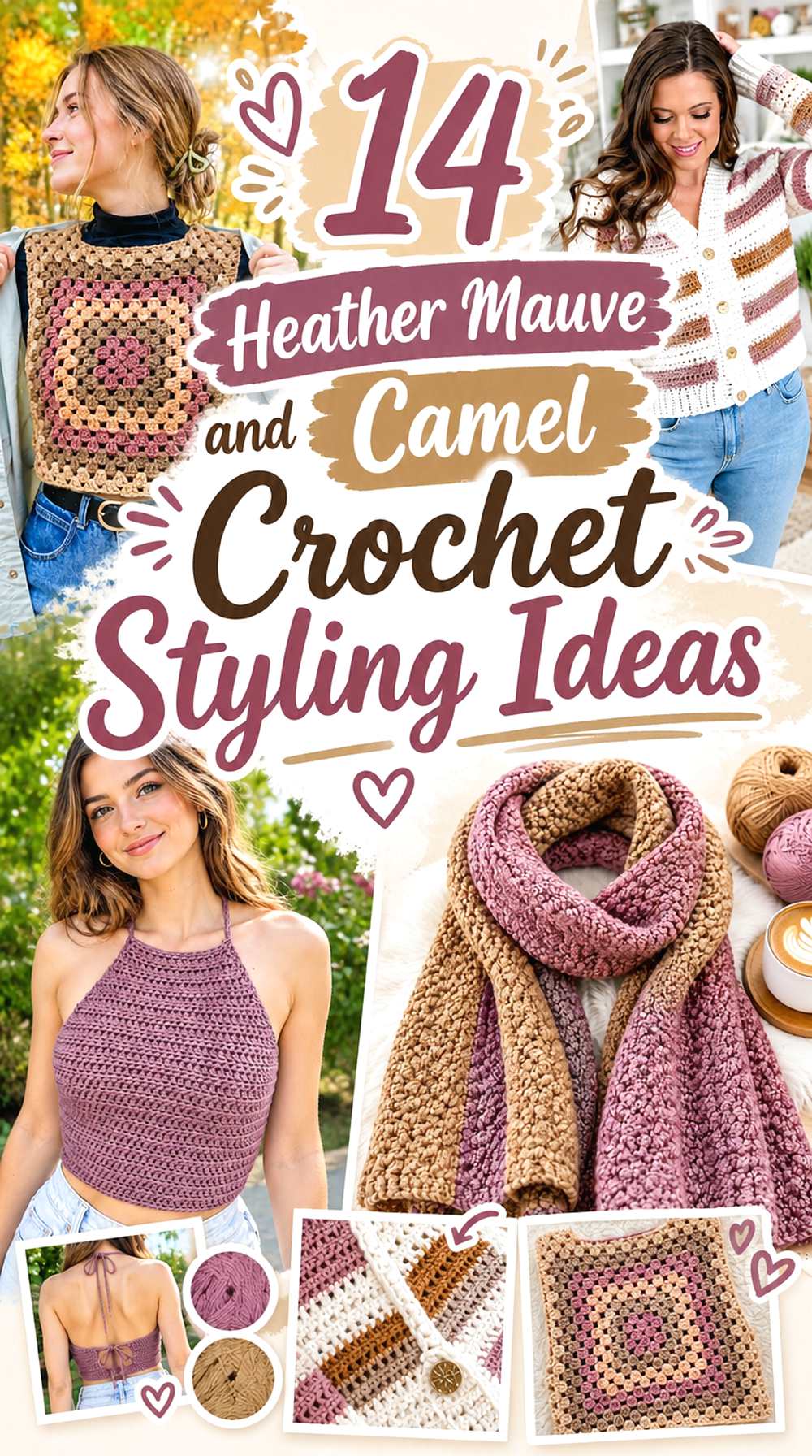
14 Heather Mauve and Camel Crochet Styling Ideas
Heather mauve and camel make a useful crochet pairing because both colors can feel muted without becoming visually identical. Heather mauve supplies the cooler rosy-purple direction, while camel brings a warmer neutral that can support larger garment areas, edging, ribbing, or accessories.
The balance matters more than splitting the colors equally. A camel cardigan can use heather mauve along cuffs and borders, while a heather mauve skirt can reserve camel for repeated bands. On smaller pieces such as halter tops and bags, one dominant color with a limited secondary accent usually keeps the styling clearer.
The tutorials below support the crochet garment or accessory concepts. The heather mauve and camel palettes are independent styling adaptations, so use the color-placement guidance to plan your version rather than assuming the tutorial creator used these exact shades.
Quick List
- Heather Mauve And Camel Cropped Lace Crochet Cardigan
- Camel And Heather Mauve Classic Crochet Cardigan
- Heather Mauve And Camel Crochet Sweater Vest
- Camel And Heather Mauve Crochet Poncho
- Heather Mauve And Camel Crochet Skirt
- Camel And Heather Mauve Crochet Scarf
- Heather Mauve And Camel Crochet Tote
- Camel And Heather Mauve Mesh Crochet Cardigan
- Heather Mauve And Camel Puff Sleeve Crochet Top
- Camel And Heather Mauve Crochet Bolero
- Heather Mauve And Camel Mesh Sleeve Crochet Bolero
- Heather Mauve And Camel Crochet Halter Top
- Camel And Heather Mauve Striped Crochet Cardigan
- Heather Mauve And Camel Granny Square Crochet Vest
Decide Whether Heather Mauve or Camel Should Lead the Crochet Styling
Camel can act like a warm neutral across broad cardigan panels, ponchos, or accessories, leaving heather mauve to create smaller focal areas. This direction works particularly well when the mauve yarn is noticeably darker or more saturated, because it can remain visible without occupying half of the project.
A heather-mauve-led project creates a different result. Using mauve across a top, skirt, or vest gives the crochet piece a stronger color identity, while camel can lighten borders, necklines, waistbands, or motif edges.
Compare the actual yarns before choosing the dominant shade. Heathered yarns can contain subtle tonal variation, so the finished contrast may look softer in crochet fabric than it does when two skeins are placed side by side.
Use Heather Mauve and Camel Where the Crochet Garment Naturally Changes Structure
Cuffs, waistbands, necklines, pockets, borders, front bands, motif rounds, and straps are useful places for the supporting color because those areas already create visual boundaries. Changing colors there can reinforce the garment construction instead of making the palette feel randomly divided.
This is especially important with textured crochet. If cables, ribbing, lace, shells, or mesh already create a strong surface pattern, too many short color changes can compete with the stitches. Larger heather mauve and camel areas usually make both the texture and the palette easier to read.
Style Heather Mauve and Camel Crochet Without Matching Everything
The crochet piece can carry both colors without requiring the rest of the outfit to repeat them exactly. A camel cardigan with heather mauve trim can sit over a simple cream, brown, denim, or similarly quiet layer. A heather mauve top can be the main colored piece while camel appears only in the crochet edging.
If you want stronger coordination, repeat one palette color elsewhere rather than both. A camel bag can connect with the trim on a mauve vest, for example, without turning every part of the outfit into a two-color combination.
1. Heather Mauve And Camel Cropped Lace Crochet Cardigan

A cropped lace cardigan gives heather mauve enough surface area to establish the color direction while camel can highlight the open front, sleeve edges, or ties. Because lace already introduces visual detail, broader color areas are usually easier to coordinate than alternating the shades through every openwork section.
Heather Mauve Keeps the Crochet Lace Cardigan Color-Focused
Use heather mauve across the main front, back, and sleeve areas when you want the cardigan to supply the outfit’s muted color statement. Keeping most of the lace in one shade also lets the negative space remain part of the design instead of competing with frequent color changes.
If your mauve is quite dark, view a swatch over the kind of top you expect to wear underneath. The background color showing through the lace can noticeably change how the heather mauve reads.
Camel Can Define Heather Mauve Crochet Cardigan Edges
Camel works naturally around shell-like edging, sleeve ends, or front ties because those details already mark the boundaries of the cardigan. A narrow camel finish can be enough if the two shades have strong light-and-dark separation.
Repeating camel in at least two related areas keeps it from looking like an isolated afterthought.
Creator Credit: Chenda DIY
2. Camel And Heather Mauve Classic Crochet Cardigan

A classic cardigan gives camel room to behave like a true wardrobe neutral. Let it cover the majority of the body and sleeves, then use heather mauve on ribbing, cuffs, the front band, or selected pocket details. The contrast can remain understated while still clarifying the garment’s structure.
Camel Works Well Across Large Crochet Cardigan Panels
A continuous camel body keeps the cardigan easy to combine with other clothing while allowing the crochet texture to remain visible. It also provides enough visual space for a smaller amount of mauve to look deliberate.
If your camel yarn is close in value to heather mauve, increase the size of the mauve finishing areas rather than adding many tiny accents.
Heather Mauve Can Outline Camel Crochet Cardigan Ribbing
Heather mauve at the cuffs and hem gives the darker or cooler shade a repeated structural role. Adding it along the front opening can connect those separate areas, but check the total proportion before using mauve on every edge.
A narrow ribbed accent can provide plenty of color contrast against a large camel surface.
Creator Credit: VivCrochets
3. Heather Mauve And Camel Crochet Sweater Vest
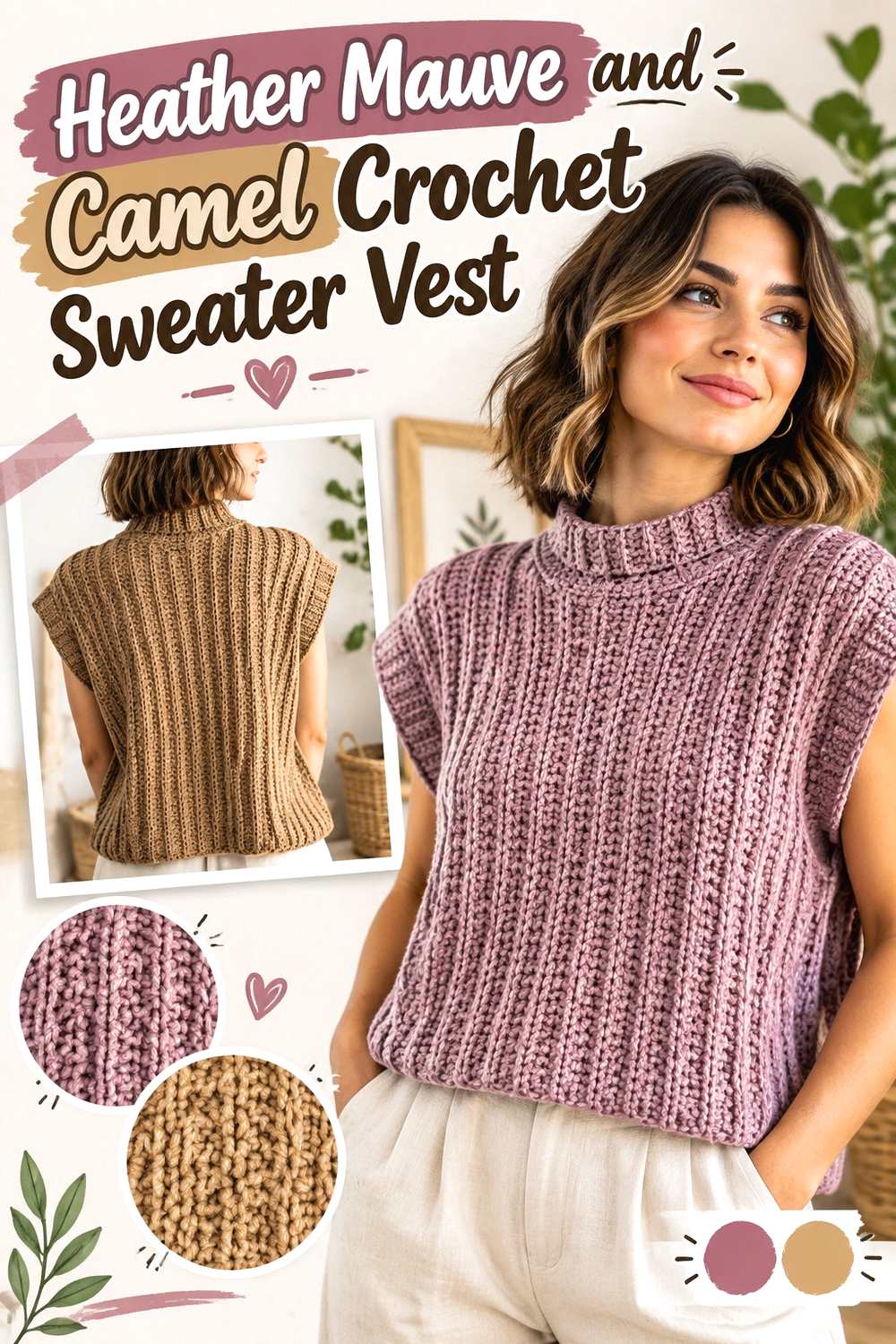
A sweater vest is especially useful for styling because the shirt underneath becomes part of the finished color composition. Heather mauve can dominate the crochet body, with camel at the neckline and arm openings. A camel-toned underlayer can then repeat the lighter shade without requiring more camel yarn across the vest itself.
Heather Mauve Gives the Crochet Sweater Vest a Clear Focal Color
Use heather mauve through the main front and back when the vest should be the outfit’s primary colored layer. Keeping that field relatively uninterrupted also makes ribbing and stitch texture easier to see.
The deeper color can be balanced by a lighter shirt underneath rather than by forcing equal camel coverage into the crochet.
Camel Ribbing Connects a Heather Mauve Crochet Vest to the Outfit
Camel around the neckline, hem, or arm openings can create a frame around the heather mauve body. If a camel or warm-neutral shirt sits underneath, those small crochet borders visually connect the vest with the rest of the outfit.
Choose two or three related trim areas rather than outlining every possible edge automatically.
Creator Credit: passtschon
4. Camel And Heather Mauve Crochet Poncho
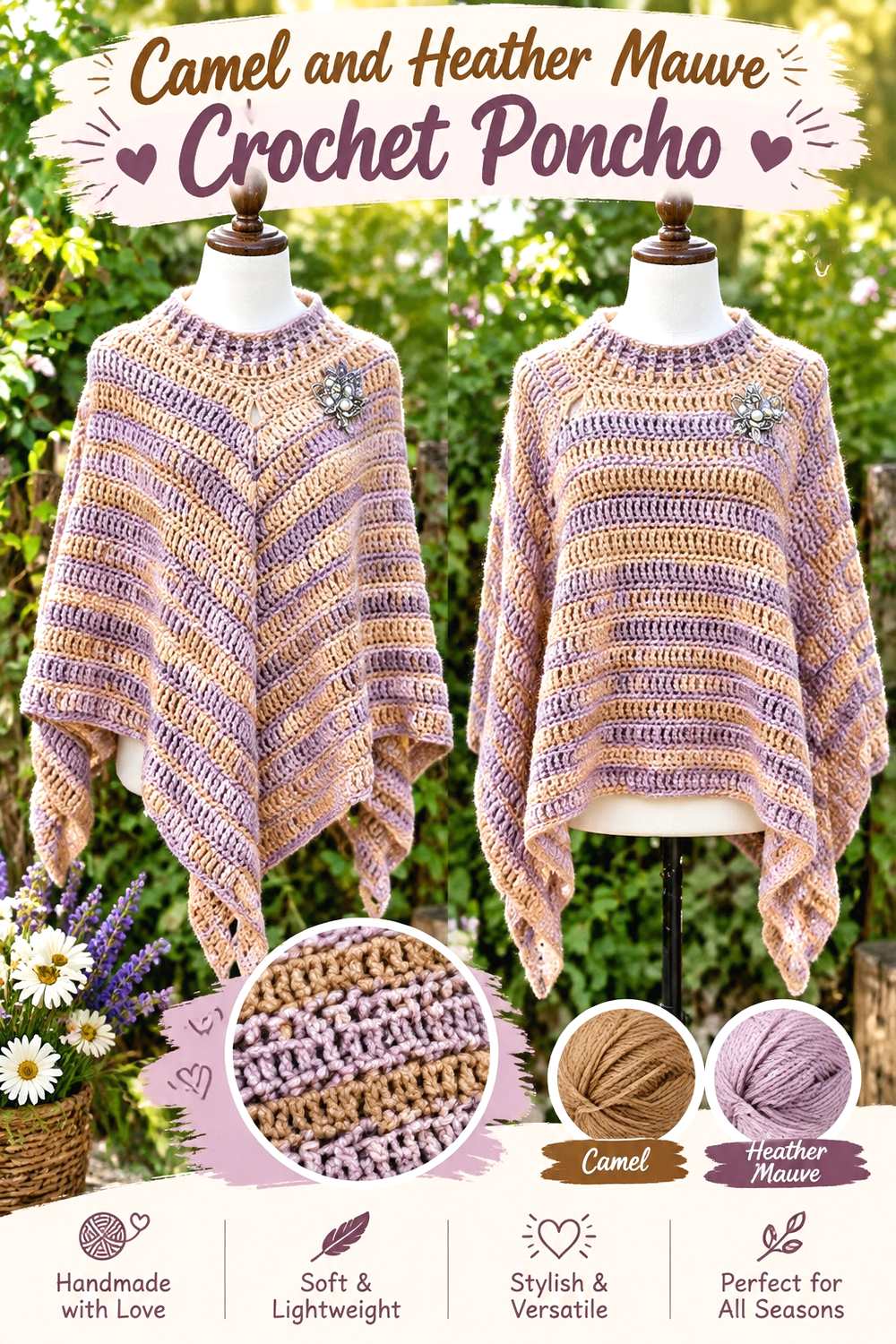
A poncho covers a large portion of an outfit, so the dominant color has substantial visual impact. Camel can keep the broad surface comparatively neutral, while heather mauve creates definition at the neckline, lower border, or a limited number of repeated sections.
Camel Keeps the Crochet Poncho Easy to Style Over Other Layers
Camel across most of the poncho allows the draped shape and crochet texture to remain central. The warm neutral also makes it unnecessary to repeat the exact palette throughout trousers, skirts, or tops underneath.
Because the garment is broad, avoid assuming that a narrow mauve section will disappear. Even a modest contrasting band can stretch across a large visual area.
Heather Mauve Gives the Camel Crochet Poncho a Clear Color Accent
Use heather mauve where the poncho naturally needs definition, such as around the neckline or toward the lower edge. Repeating it at both points can create balance without dividing the main camel field.
If the mauve is much darker than the camel, keep the border narrower when you want camel to remain dominant.
Creator Credit: Bag-O-Day Crochet
5. Heather Mauve And Camel Crochet Skirt

A crochet skirt offers long horizontal areas where color repetition becomes important. Heather mauve can carry the main skirt body, while camel appears in spaced bands, the waistband, or the lower edge. The goal is to make camel recur predictably rather than introducing one isolated stripe.
Heather Mauve Can Anchor the Main Crochet Skirt Body
Using heather mauve across most of the skirt creates a continuous color field that works well with textured or lace-like stitches. It also keeps the handmade piece as the outfit’s main colored element.
For styling, a simpler top allows the skirt’s crochet texture and mauve surface to remain clear instead of competing with another detailed garment.
Camel Bands Should Repeat Deliberately Across a Heather Mauve Crochet Skirt
Camel can divide the mauve surface into intentional sections, but spacing matters. One camel band near the waistband and another toward the hem can create more connection than a single contrasting stripe floating through the middle.
If the stitchwork is already visually complex, use fewer and broader camel areas.
Creator Credit: KnitcroAddict
6. Camel And Heather Mauve Crochet Scarf

A scarf allows the color hierarchy to change depending on how it is wrapped. Camel can form the main length while heather mauve appears in substantial end sections or repeated blocks. Think about the colors as they will look folded around the neck rather than only when the scarf is laid flat.
Camel Gives the Crochet Scarf a Flexible Main Styling Color
Using camel through most of the scarf makes it easier to layer over jackets and sweaters without introducing another large competing color. It also gives textured stitches a continuous neutral background.
If you prefer a quieter result, reserve heather mauve for the ends rather than carrying it through the full length.
Heather Mauve Should Appear Where the Camel Crochet Scarf Stays Visible
Place mauve sections where they are likely to remain visible after wrapping, such as toward the ends. A color change positioned only at the center may disappear behind the neck once the scarf is worn.
Try draping the unfinished scarf periodically to check whether the color balance still works in actual styling.
Creator Credit: Fiber Flux
7. Heather Mauve And Camel Crochet Tote
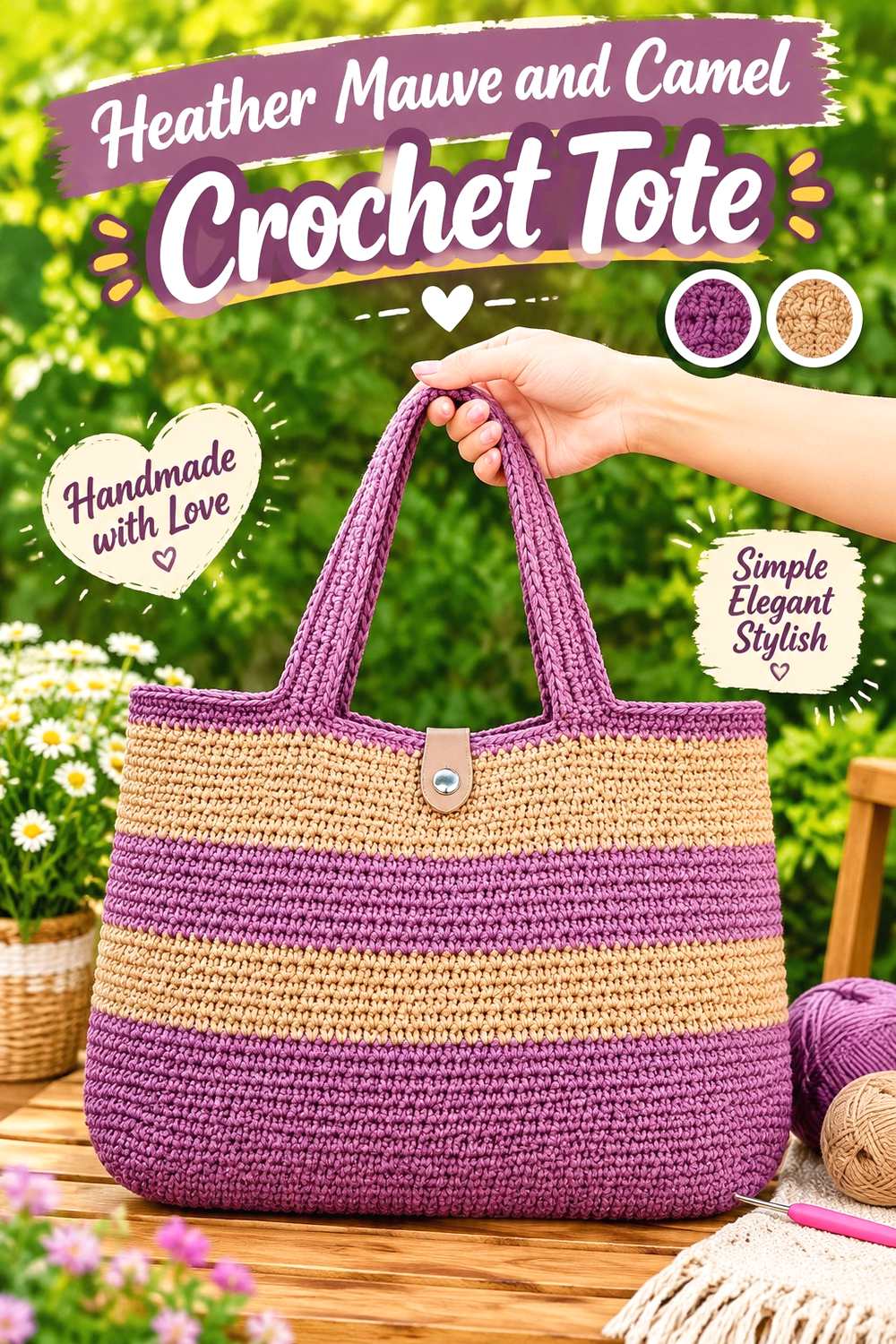
A tote can repeat the clothing palette without adding another garment. Heather mauve can cover the bag body, while camel defines the handles, upper edge, or base. Those structural zones make the two-color plan easy to read.
Heather Mauve Makes the Crochet Tote a Strong Outfit Accent
A mostly heather mauve tote works particularly well with outfits that already contain camel or other warm neutrals. Keeping the body one primary color also prevents the bag’s stitch texture from competing with numerous stripes.
If the tote has a visibly textured surface, check whether your mauve is light enough for shadows between stitches to remain noticeable.
Camel Handles Can Connect a Heather Mauve Crochet Tote to Neutral Clothing
Camel on the handles or upper band gives the neutral shade a functional-looking location. Repeating it around the base can visually frame the mauve center, although you do not need both placements if the contrast is already strong.
This is an easy way to echo camel clothing elsewhere without making the bag itself mostly neutral.
Creator Credit: naztazia
8. Camel And Heather Mauve Mesh Crochet Cardigan
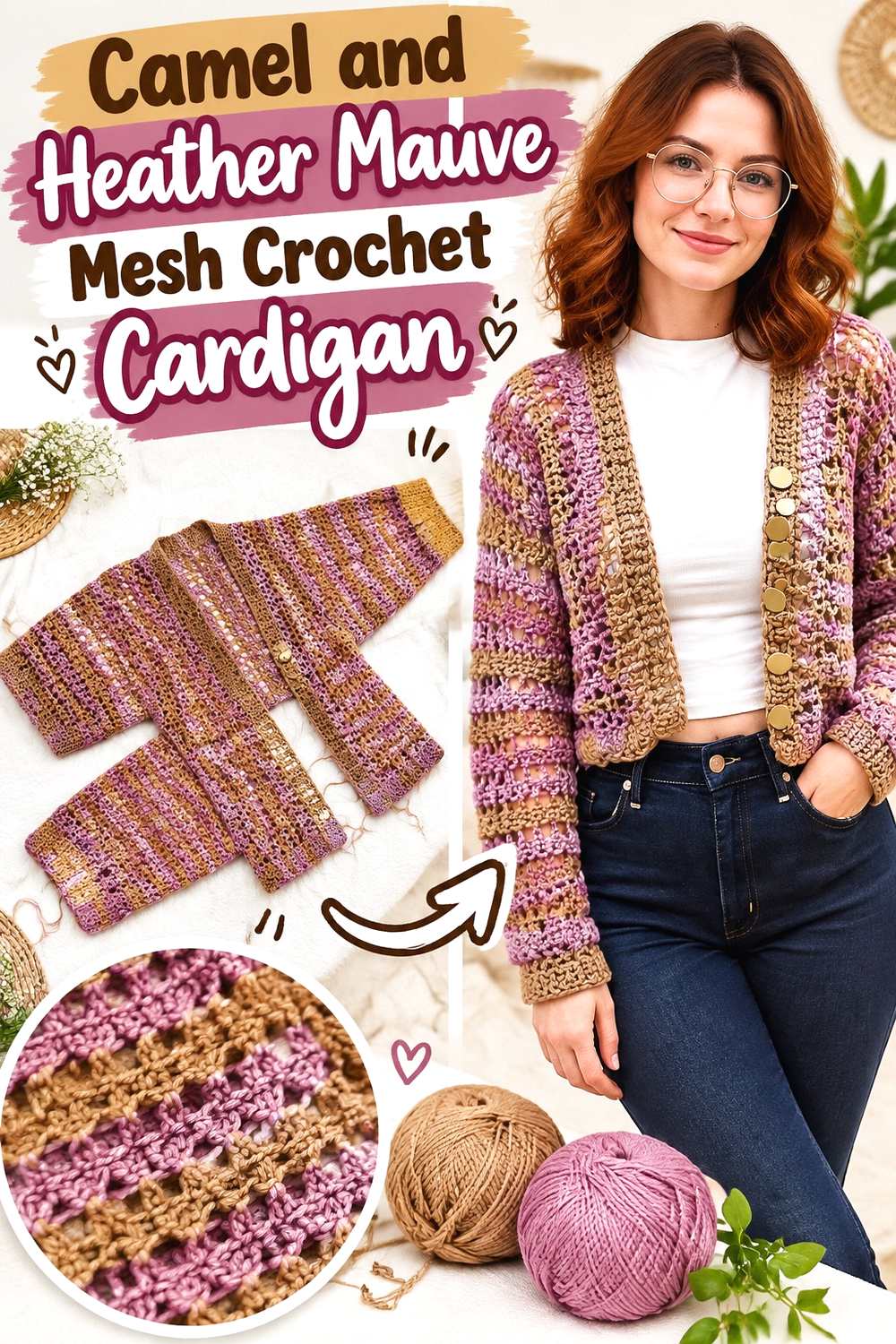
Mesh allows the clothing underneath to show through, making the base layer part of the color plan. Camel can dominate the open cardigan while heather mauve defines cuffs, front edging, or other more solid-looking finishes.
Camel Keeps the Crochet Mesh Cardigan Visually Light
Camel across the mesh creates a quieter layer that can sit over heather mauve, cream, brown, or other understated clothing. Because the openings reveal the background, judge the color while wearing it over a realistic underlayer.
A dark shirt beneath camel mesh will increase the apparent contrast of every opening.
Heather Mauve Can Frame Camel Crochet Mesh Without Filling It
Use heather mauve where the cardigan needs a stronger visual boundary rather than inserting it into every mesh repeat. Cuffs and front edging are particularly useful because they appear on opposite sides of the garment and naturally repeat.
A limited amount of mauve can provide plenty of definition against the open camel body.
Creator Credit: Brunaticality
9. Heather Mauve And Camel Puff Sleeve Crochet Top

Puff sleeves already create a strong silhouette, so the palette should support rather than compete with their volume. Heather mauve can establish the main torso color, while camel softens the sleeves, cuffs, or ruffled details.
Heather Mauve Anchors the Crochet Top Through the Torso
Using heather mauve across the body creates a deeper central area and lets the sleeve shape remain distinct. Keeping the torso mostly one color also prevents a detailed top from becoming visually fragmented.
Pairing the top with a simpler lower half can keep the handmade texture as the main feature.
Camel Can Lighten Heather Mauve Crochet Puff Sleeves
Camel through part of the sleeve or around the cuff can reduce the visual weight of a darker mauve top. If the sleeves already include substantial texture, use larger camel areas rather than narrow alternating stripes.
Repeating camel in a small neckline detail can help the sleeve color feel connected to the body.
Creator Credit: TCDDIY
10. Camel And Heather Mauve Crochet Bolero

A bolero occupies less visual space than a full cardigan, which makes color contrast more concentrated. Camel can cover the main sleeve and back areas, while heather mauve marks the cuffs or opening. The compact silhouette means even small mauve sections will remain noticeable.
Camel Lets the Crochet Bolero Work as a Neutral Layer
A camel body can sit over a heather mauve top without duplicating the darker color across the entire outer layer. This gives the two colors different outfit roles: camel becomes the crochet layer, while mauve can appear beneath it and in smaller crochet details.
Heather Mauve Cuffs Give a Camel Crochet Bolero Symmetry
Cuffs are useful accent locations because the mauve repeats naturally on both arms. That symmetry can be enough to establish the second color without adding additional stripes across the back.
If you add mauve around the opening too, keep its width in proportion to the relatively small garment.
Creator Credit: Shyler crochets
11. Heather Mauve And Camel Mesh Sleeve Crochet Bolero

A mesh-sleeve bolero gives the palette two visibly different surfaces to work with. Heather mauve can define the main sleeve areas, while camel appears closer to the body or along finishing edges. The open mesh will make mauve look less visually solid than it would in dense crochet.
Heather Mauve Changes Visually Across Crochet Mesh Sleeves
Because skin or clothing shows through open stitches, heather mauve may appear lighter or less concentrated in the finished sleeves. Check a swatch over the kind of layer you plan to wear underneath before deciding that the shade needs more contrast.
Keeping the sleeve mostly mauve avoids interrupting an already open texture.
Camel Can Give Heather Mauve Crochet Mesh a More Defined Finish
Camel around cuffs or the body-facing edge creates a stronger boundary between the open mauve fabric and the rest of the outfit. This is particularly useful if the two yarns are otherwise close in value.
Avoid adding camel to every mesh row; the construction already supplies enough visual movement.
Creator Credit: PastelCherryCrochet
12. Heather Mauve And Camel Crochet Halter Top
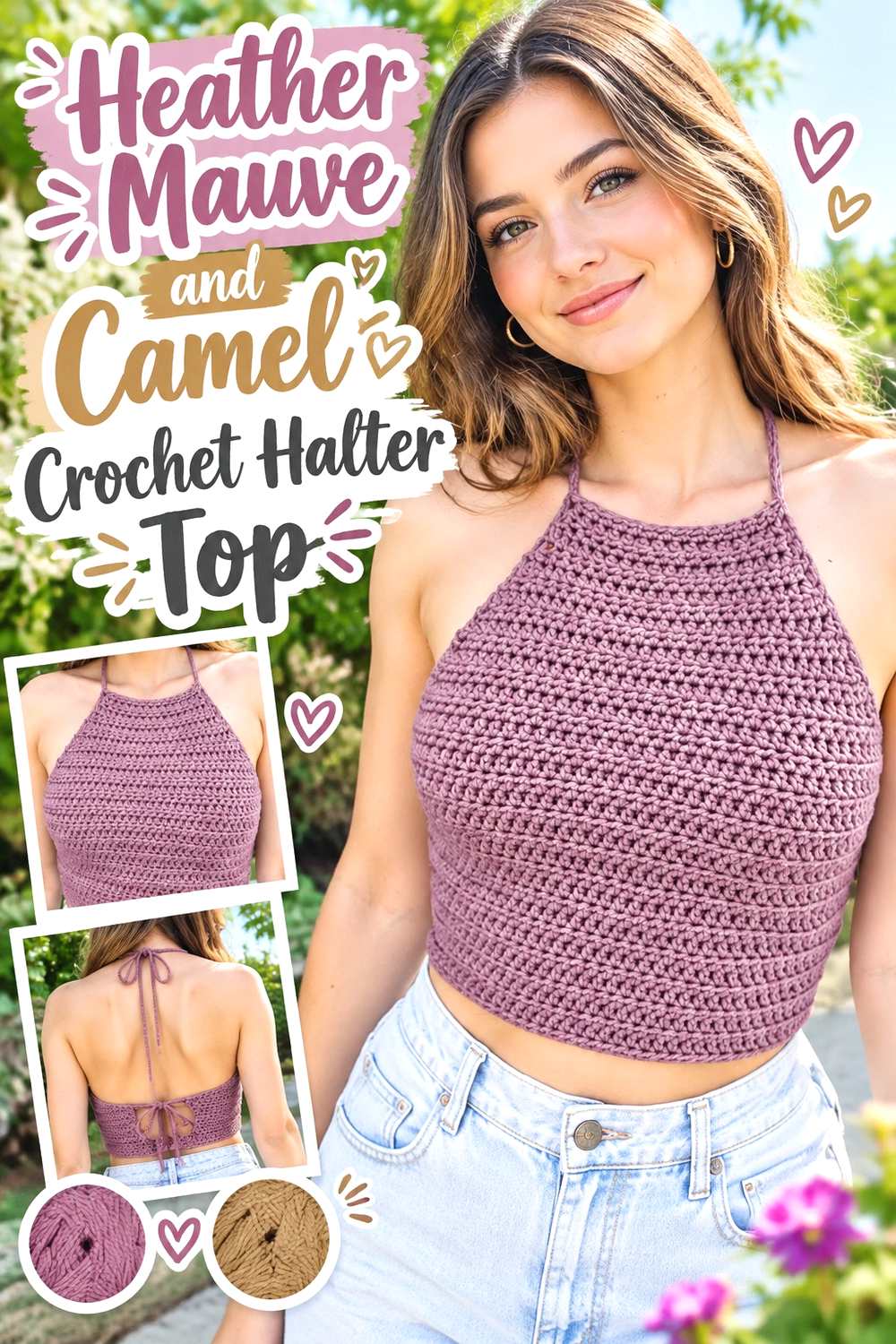
A halter top has relatively little surface area, so clear color roles matter. Heather mauve can dominate the body while camel highlights straps, the neckline, or the lower edge. Small accents become highly visible on a compact garment.
Heather Mauve Gives the Crochet Halter Top One Strong Main Field
Using heather mauve across the torso prevents the top from being divided into too many tiny sections. It also lets any shaping or stitch detail remain easier to read.
For a coordinated outfit, camel can appear in trousers, a skirt, or an accessory without needing to cover half of the crochet top.
Camel Can Separate Heather Mauve Crochet Halter Straps From the Body
Camel around the neckline or straps creates a clear upper boundary. Because those sections are narrow, a lighter camel can provide substantial contrast with very little yarn coverage.
If the top needs more balance, repeat camel along the lower edge rather than inserting additional accents through the center.
Creator Credit: Krystal Everdeen
13. Camel And Heather Mauve Striped Crochet Cardigan

A striped cardigan allows camel and heather mauve to share more of the surface than most ideas in this list. The important decision is stripe proportion. Equal narrow bands create a busier effect, while broad camel areas separated by narrower mauve sections keep the neutral color dominant.
Camel Can Control the Overall Weight of a Striped Crochet Cardigan
Give camel more visual space if you want the cardigan to remain easy to combine with other clothing. Broad neutral sections also give the eye a break between mauve stripes.
Consider how the stripe sequence moves across both the body and sleeves so the garment looks coordinated as a whole.
Heather Mauve Stripes Need Consistent Repetition Across Camel Crochet
Heather mauve will look more intentional when it returns at predictable intervals. If the color appears heavily on one sleeve but barely on the body, the cardigan may feel visually unbalanced once worn.
You do not need identical stripe widths everywhere, but maintaining a recognizable rhythm helps connect the sections.
Creator Credit: MJ’s Off The Hook Designs
14. Heather Mauve And Camel Granny Square Crochet Vest

A granny square vest is one of the easiest places to give both colors substantial roles. Heather mauve can lead through motif centers or larger outer rounds, while camel separates those sections and keeps the square geometry visible. Because outer rounds occupy more space than inner rounds, color placement matters as much as the number of rounds assigned to each shade.
Heather Mauve Makes the Crochet Granny Square Vest Center More Noticeable
Place heather mauve toward the motif center when you want the eye to move toward the middle of each panel. This approach lets the color repeat consistently across the front and back without covering the entire vest.
If mauve is much darker, even a relatively small central section can remain visually dominant.
Camel Can Expand Around Heather Mauve Crochet Granny Squares
Using camel through larger outer motif areas softens the transition between a strong mauve center and the garment edge. It can also help the vest coordinate with warm-neutral shirts or bottoms.
Remember that each successive outer round occupies more visual area, so camel may become the dominant color quickly even if mauve appears in several inner rounds.
Creator Credit: HayHay Crochet
Choosing Between Heather-Mauve-Led and Camel-Led Crochet Styling
Choose a heather-mauve-led direction when you want the crochet piece itself to supply the outfit’s main muted color. The skirt, puff-sleeve top, halter top, tote, sweater vest, and granny square vest all offer substantial surfaces where mauve can lead while camel handles finishing or separation.
Choose camel as the dominant shade when you want the crochet project to behave more like a warm neutral layer. Cardigans, ponchos, scarves, mesh garments, and boleros give heather mauve natural locations at cuffs, borders, stripes, and openings.
For the most balanced two-color look, the striped cardigan and granny square vest allow both colors to repeat throughout the garment. In those projects, focus on proportion and repetition rather than trying to force an exact 50/50 split.
Conclusion
Heather mauve and camel can move between subtle and color-focused crochet styling depending on where each shade is placed. Camel works especially well across broad cardigan panels, ponchos, scarves, and open mesh when you want a warm neutral base. Heather mauve can take over tops, skirts, vests, and accessories when you want the crochet piece to carry more visible color.
Use the garment’s construction to decide where the supporting shade belongs. Cuffs, waistbands, necklines, handles, borders, and motif rounds already divide a project visually, making them natural locations for contrast.
Most importantly, check your actual yarns together before finalizing the balance. A muted heather mauve and deep camel may produce a relatively tonal result, while a pale camel beside a darker mauve will create much stronger light-and-dark separation. Preserve the relationship you want instead of relying only on the shade names.
Frequently Asked Questions
Should heather mauve or camel dominate a crochet outfit?
Either can lead. Heather mauve makes the crochet garment more color-focused, while camel can make it function as a warm neutral layer. If the mauve is significantly darker, it may still attract more attention even when used in smaller areas.
Where should camel go on a mostly heather mauve crochet garment?
Camel works well around necklines, cuffs, hems, waistbands, straps, pockets, motif borders, and other areas where the construction already changes. These placements create contrast without interrupting the main mauve field randomly.
How can I use heather mauve on a mostly camel crochet cardigan?
Try heather mauve on cuffs, ribbing, front bands, pockets, or controlled stripes. Repeating the color in two or three connected locations usually looks more deliberate than placing one isolated accent on a large camel cardigan.
Do heather mauve and camel need strong contrast for crochet?
Not necessarily. Similar-value yarns can create a soft, tonal result, while stronger light-and-dark separation gives borders and motifs clearer definition. Decide whether you want blending or obvious separation before choosing the yarns.
How can I check heather mauve and camel contrast before starting?
Place the skeins beside each other and look at them from several feet away. A grayscale photo can also reveal whether the two colors have similar lightness. If they merge visually, larger color blocks may work better than tiny alternating details.
Can heather mauve and camel be used with a third color?
Yes, but give the third shade a specific role. A neutral can appear in a shirt worn underneath, a small trim area, or another outfit piece rather than dividing the crochet project equally among three colors.
What should I substitute if I cannot find exact heather mauve or camel yarn?
Preserve the color relationship. For heather mauve, choose a softened purple-pink or dusty mauve with similar depth. For camel, choose a warm tan or brown-neutral that maintains the intended contrast with the mauve. Matching their dominant and supporting roles matters more than finding an identical commercial shade.