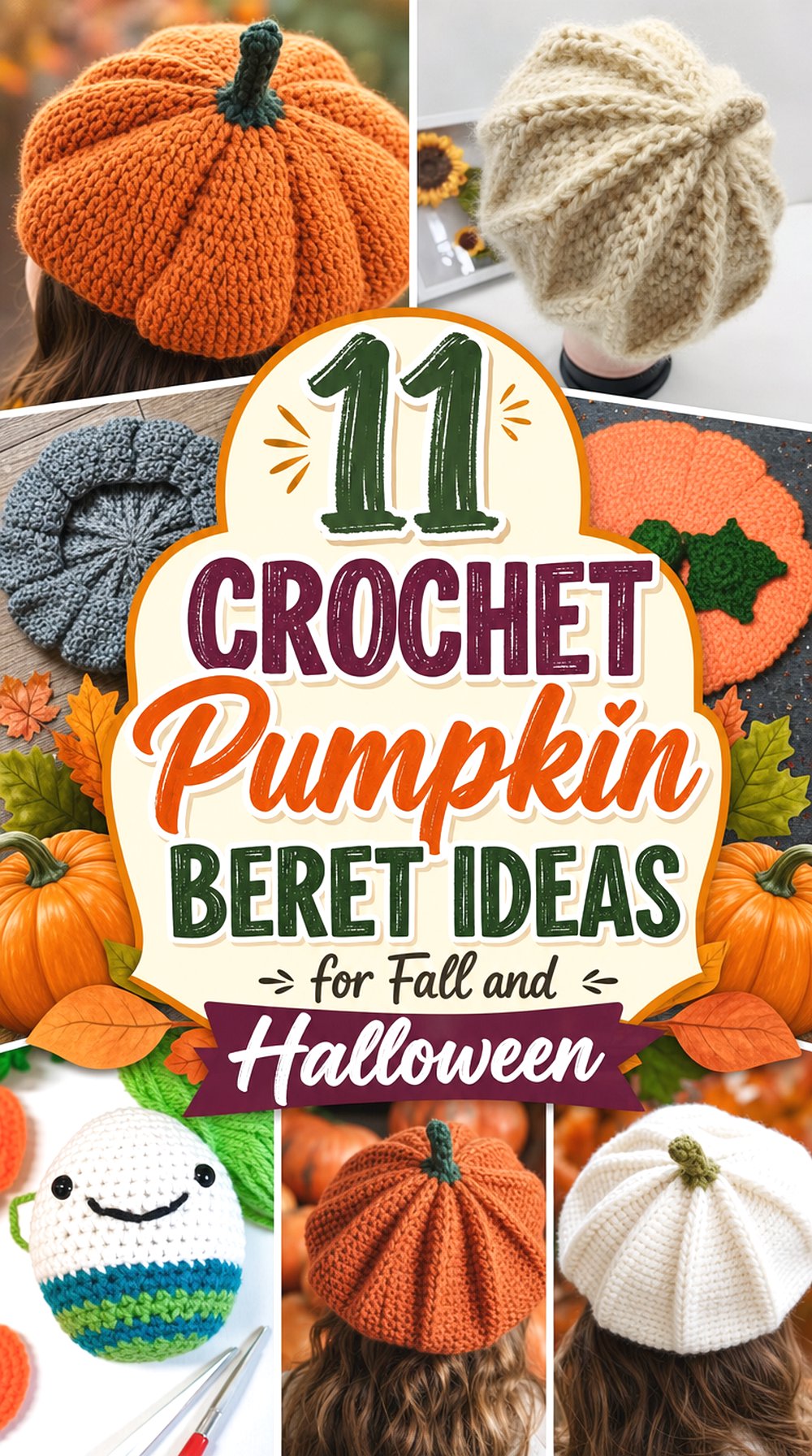
11 Crochet Pumpkin Beret Ideas for Fall and Halloween
Pumpkin berets can range from understated fall accessories to unmistakable Halloween costume pieces. The main differences are not just color: crown width, segment texture, slouch, brim fit, stems, facial details, and food-inspired decoration can completely change how a finished beret looks and wears.
This collection focuses primarily on human-size pumpkin berets, including classic, subtle, slouchy, jack-o’-lantern, and pumpkin-pie interpretations. The final two ideas intentionally move into miniature scale with a Barbie pumpkin beret and an amigurumi character hat. That makes them useful if you want a smaller seasonal project rather than another wearable. Each idea is paired with a different original YouTube creator so you can compare approaches and use the source tutorial for exact construction details.
Quick List
- Crochet Classic Pumpkin Beret with a Green Stem
- Crochet Subtle Ribbed Pumpkin Beret
- Crochet Jack-o’-Lantern Slouchy Pumpkin Beret
- Crochet Deeply Segmented Pumpkin Beret
- Crochet Pumpkin Pie Beret
- Crochet Pumpkin Beret with a Simple Halloween Silhouette
- Crochet Costume-Style Pumpkin Beret
- Crochet Left-Handed Pumpkin Beret
- Crochet Decorated Pumpkin Beret for Día de Muertos Season
- Crochet Barbie Pumpkin Beret
- Crochet Mini Humpkin Pumpkin Beret
How Pumpkin Shaping Changes the Look of a Crochet Beret
A normal beret depends on a crown that expands beyond the head before narrowing toward the opening. A pumpkin version has another visual job: that expanded crown needs to suggest the rounded sections of a pumpkin without losing the recognizable beret silhouette.
Pronounced vertical texture makes the pumpkin reference stronger, while smoother construction creates a subtler fall accessory. More crown volume can also emphasize the pumpkin shape, but it may produce more slouch. Before choosing a tutorial, decide whether you want the hat to read first as a beret or first as a pumpkin costume piece. That decision helps you choose between restrained ribbing, strong segmented texture, a jack-o’-lantern face, or a decorative stem-and-leaf finish.
Check Crown and Brim Fit Separately
For a wearable pumpkin beret, crown diameter and head opening solve different problems. A generous crown can create the rounded pumpkin profile, while the lower edge still needs to sit comfortably where you intend to wear it. Changing yarn, hook size, or tension can affect both dimensions, so substituting materials without checking the resulting fabric can change the silhouette.
Measure the intended wearer rather than relying only on a general age or “adult” label. If a tutorial does not clearly provide the finished dimensions you need, confirm its sizing information before committing to the full crown. Also consider how you wear berets: centered, pushed back, or tilted. A brim that feels suitable in one position may behave differently in another.
Choose Decoration According to How Often You Will Wear It
A plain orange pumpkin beret with a small stem can work beyond Halloween, especially in rust, cream, mustard, or muted green. A jack-o’-lantern face makes the theme much more explicit. Pumpkin-pie designs move in another direction altogether, turning the hat into novelty food-inspired fashion.
Think about removable versus permanent embellishment before finishing. If you want the same beret to move from general fall outfits into Halloween styling, keeping facial or extra decorative elements separate can preserve more options. Decorative weight matters too: a large stem, leaves, appliqués, or dimensional topping can pull on a soft crown. Check that the attachment area stays supported and that the decoration does not distort the way the beret sits.
1.Crochet Classic Pumpkin Beret with a Green Stem
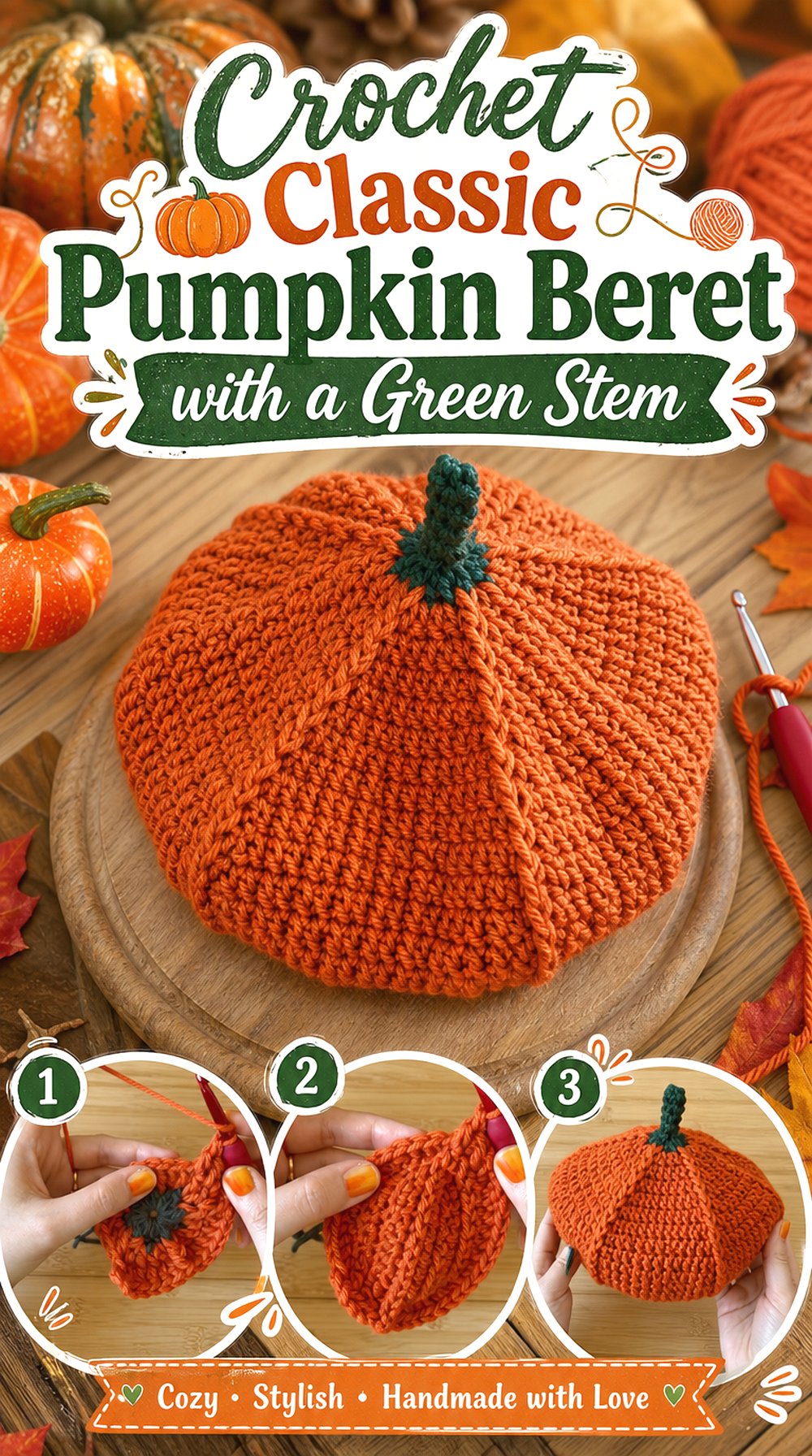
This is the most direct starting point if the phrase “pumpkin beret” makes you picture an orange rounded crown, defined pumpkin sections, and a contrasting green top. Jess And Her Crafts specifically presents the project as a pumpkin beret hat, making it a strong source for readers who want the seasonal theme built into the actual hat rather than added to an unrelated beret afterward.
Because the silhouette already carries the pumpkin idea, this version does not need a jack-o’-lantern face to make sense. That leaves more room to use it as a fall accessory rather than only as a Halloween costume.
Let the Crown Shape Do Most of the Decorating
If the crocheted sections already make the crown resemble a pumpkin, adding too many appliqués can compete with that structure. Consider finishing the main hat first and viewing it from the front, side, and top before deciding whether it needs leaves, vines, or additional decoration.
This approach is especially useful if you want a cleaner beret. A small contrasting stem can act as the focal point while the textured crown supplies the rest of the theme.
Judge the Brim After the Crown Has Full Volume
Do not evaluate a pumpkin beret only while the crown is still flat. A wide crown changes how the lower edge appears once the hat is worn and pushed into a beret shape.
When checking fit, arrange the crown the way you actually plan to wear it and then assess the opening. If it shifts excessively, the issue may be the lower fit rather than the overall crown size. If it feels tight, do not assume extra crown volume will compensate for the opening.
Yarn Color Can Make the Same Shape Feel Less Costume-Like
Bright orange and green create an immediately recognizable Halloween pumpkin. Rust, terracotta, cream, ochre, or deeper forest shades can make the same basic concept feel more like general autumn clothing.
Color changes do not correct fit or structure, however. Choose your palette after deciding whether you want strong stitch definition or softer visual blending, and confirm that any yarn substitution still produces a fabric appropriate for the tutorial.
Creator: Jess And Her Crafts
2. Crochet Subtle Ribbed Pumpkin Beret
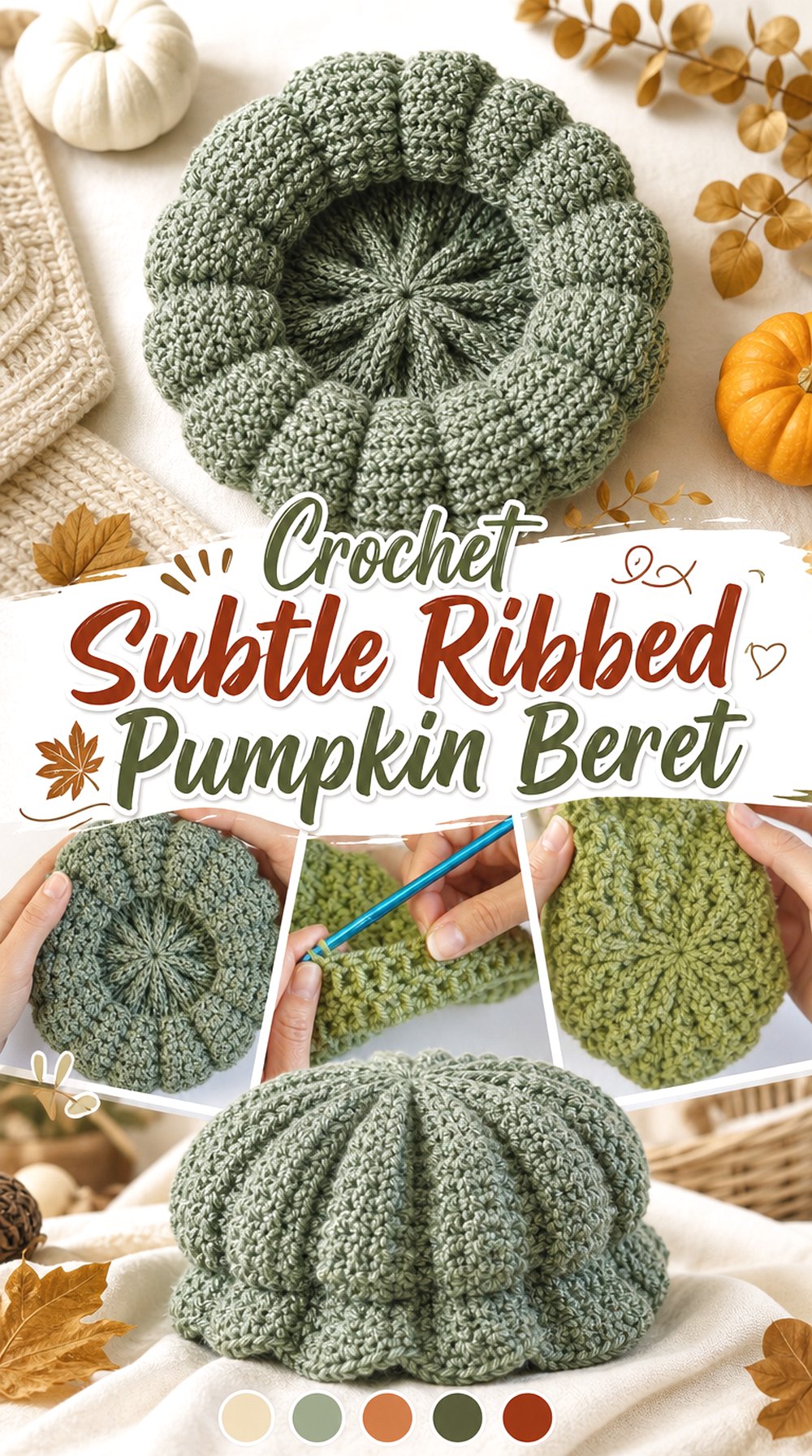
Not every pumpkin beret needs to look like a full Halloween costume. Slow Crochet’s tutorial is specifically titled as a subtle pumpkin beret, and its description identifies post-stitch texture as part of the construction. That makes this idea particularly relevant for someone who wants the segmented suggestion of a pumpkin without adding a face or heavily dimensional decorations.
The restrained approach also shifts attention toward the quality of the crown texture. Instead of relying on several embellishments to establish the theme, the stitch definition itself becomes important. This is a useful contrast to the more theatrical jack-o’-lantern option later in the list.
Rib Definition Matters More in a Restrained Design
When the pumpkin reference comes mainly from vertical relief, fuzzy or poorly defined fabric can soften the effect. If substituting yarn, make a small fabric sample and look at it in normal light rather than judging the strand in the skein.
The goal is not necessarily maximum stiffness. You still need enough flexibility for a beret to settle naturally, so compare stitch definition with drape instead of optimizing only one quality.
Use the Stem as an Accent, Not a Distraction
A subtle pumpkin crown can be overwhelmed by an oversized top detail. Before attaching a stem permanently, place it on the finished hat and view the proportions from several angles.
A more restrained topper keeps the emphasis on the segmented surface. If you want a dramatic leaf or curled vine instead, recognize that the finished hat will move away from understated fall styling and toward a more obvious novelty accessory.
Check Whether the Texture Changes Stretch
Raised texture and smoother crochet fabric do not always behave identically when stretched around the head. That matters most close to the opening, where comfort and recovery are more important than the appearance of the crown alone.
Use the tutorial’s sizing guidance rather than assuming a textured beret will fit like another hat made with the same yarn category. If you substitute materials, check the actual opening before finishing all ends.
Creator: Slow Crochet
3. Crochet Jack o’ Lantern Slouchy Pumpkin Beret
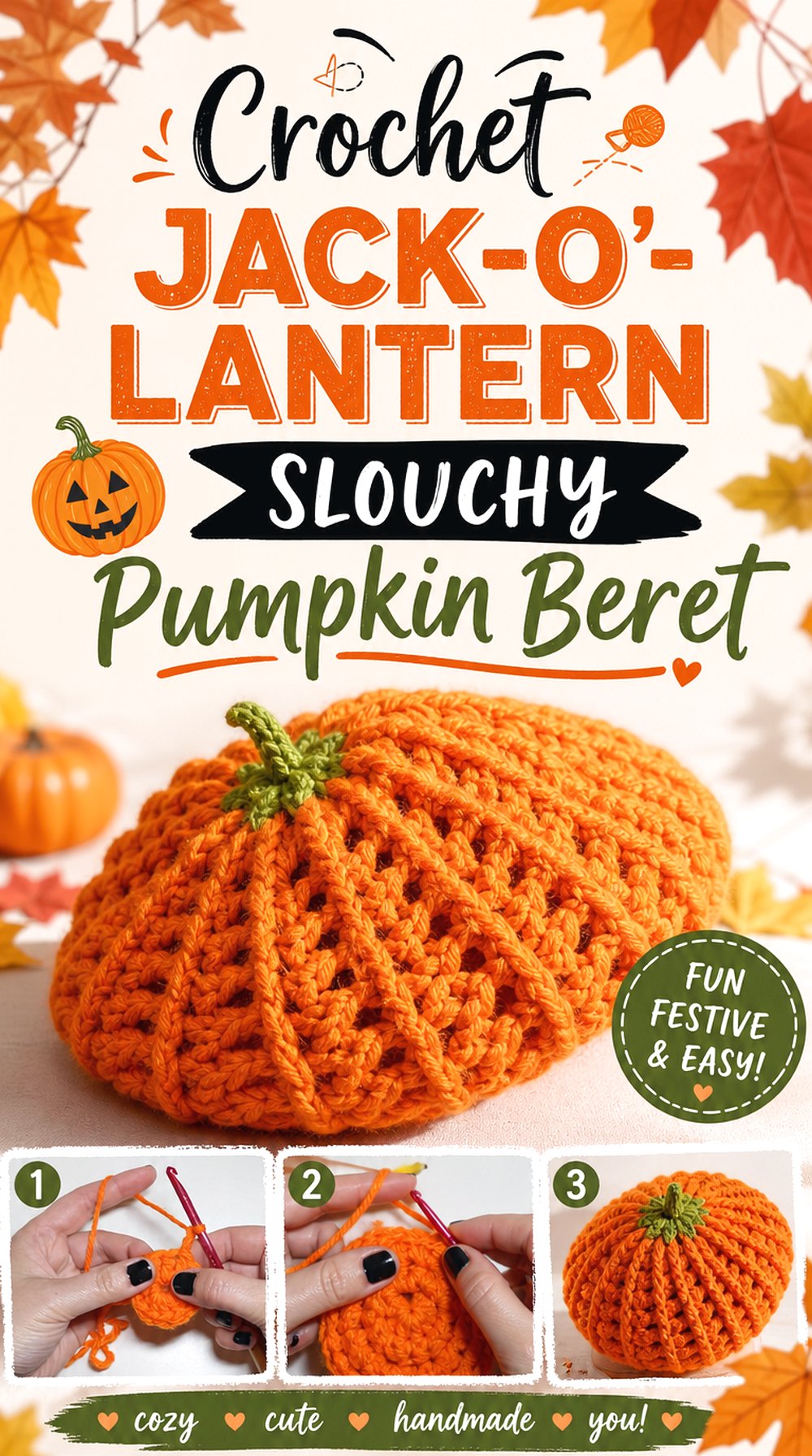
TwinkieChanTV takes the idea in a much more graphic direction with a pumpkin or jack-o’-lantern slouchy beret. The creator’s accompanying project page also notes the use of felt for the face, so this option clearly separates itself from pumpkin hats that depend only on orange yarn and a stem.
The extra slouch gives the crown room to read as a large rounded pumpkin, while the face turns it into a strong Halloween statement. Choose this route when you actually want the seasonal character to be obvious; it is less neutral than a texture-only pumpkin beret and therefore better suited to costumes, parties, or deliberately playful October outfits.
Place the Face Only After You Know How the Beret Sits
A facial motif that looks centered on a flat hat can shift once the crown is pushed backward or tilted. Arrange the finished beret on the wearer or an appropriately sized head form before deciding where permanent facial details should sit.
Mark the intended front and check it at eye level. This avoids a jack-o’-lantern expression that ends up noticeably off-center when the hat is worn in its natural slouch.
Slouch Gives You More Styling Room but More Fabric to Control
Extra crown volume creates the relaxed profile that distinguishes this design from a close-fitting pumpkin cap. It also means you need to decide where that volume should fall.
For a cleaner appearance, distribute the crown before leaving the house rather than simply pulling the hat straight down. If the fabric continually collapses in a direction you dislike, examine whether the issue is crown placement, opening fit, or the behavior of your substituted yarn.
Decide Whether the Halloween Face Should Be Permanent
A face is the strongest visual commitment in this collection. If you want a hat specifically for Halloween, permanent details make sense. If you want to reuse the orange beret throughout fall, consider whether your own adaptation should keep added decorations removable.
Whatever method you choose, secure embellishments according to how the hat will be worn and handled. A decorative attachment should not pull the crown out of shape.
Creator: TwinkieChanTV
4. Crochet Deeply Segmented Pumpkin Beret

The pumpkin beret from anxin_crochet gives you another dedicated wearable construction rather than a generic hat being labeled as seasonal because of its color. The channel’s pumpkin-beret tutorial appears alongside its broader collection of crochet beret instruction, making this a useful option for comparing how a pumpkin form relates to other rounded beret shapes.
For planning purposes, focus on the balance between the expanded top and the narrowed wearing edge. A pumpkin can look nicely rounded from above but still miss the classic beret impression if the crown does not settle around the head the way you expect. Treat silhouette and fit as separate checkpoints.
Compare the Top View With the Side View
Pumpkin segmentation is often easiest to notice from above, while beret slouch is more obvious from the side. Check both instead of judging the hat from one photograph or mirror angle.
If you are customizing the colors or topper, preserve enough visible structure that the pumpkin sections remain understandable after the crown is tilted. This is particularly important if you prefer wearing berets far back on the head.
A Smooth Lower Edge Can Visually Separate Crown and Brim
When a crown carries a lot of texture, a calmer lower section can prevent the entire hat from looking equally busy. That contrast can also help the rounded pumpkin portion read as a separate visual mass.
Before adding extra leaves or appliqués around the lower edge, consider whether they hide that distinction. A cleaner brim may make the segmented crown more noticeable than another decorative element would.
Confirm Sizing Before Copying the Look in Different Yarn
A change in yarn can alter both the diameter of the crown and the size of the head opening. That means simply matching the color of a reference hat is not enough.
If you use a substitute, compare your actual fabric with the measurements or sizing checks provided by the creator. Make adjustments through the tutorial’s own guidance rather than borrowing stitch counts from an unrelated beret.
Creator: anxin_crochet
5. Crochet Pumpkin Pie Beret
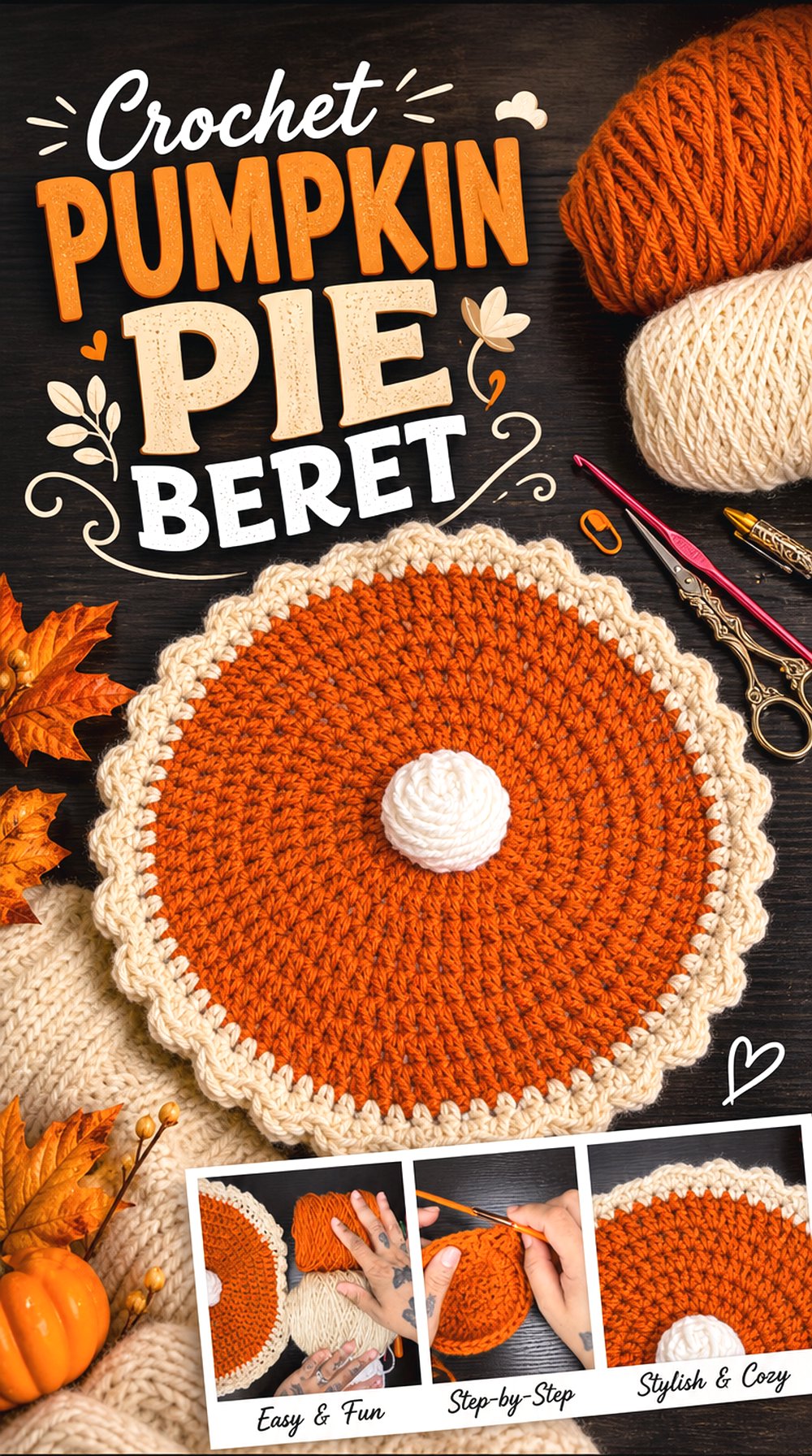
MarieMadeIt__ shifts the theme from a whole pumpkin to pumpkin or sweet potato pie. The source is explicitly a crochet beret tutorial, so this is not simply a pie appliqué attached to an unrelated accessory. It gives the collection a food-inspired option for Thanksgiving and fall styling without repeating another stem-topped orange pumpkin.
A pie beret also changes the visual priorities. Instead of vertical pumpkin segments, color boundaries and dessert-like finishing make the concept readable. It is a good choice if you prefer whimsical novelty fashion but want something different from a Halloween face.
Treat the “Crust” Color as Part of the Structure
In a food-inspired hat, contrasting shades can define different visual areas as strongly as the crochet texture itself. Put your orange, cream, tan, or brown yarns together before starting and make sure neighboring colors remain distinct.
If two shades are too similar, details intended to suggest a pie edge or topping may disappear at normal viewing distance. This is one project where deliberate color separation can matter more than producing a realistic pumpkin-orange shade.
Dimensional Toppings Need a Stable Attachment Point
A decorative topping can become the visual center of a pumpkin-pie beret. Before enlarging or adding your own dimensional detail, check how much weight the crown comfortably supports.
Soft beret fabric is supposed to move, so a heavy topper can create an unintended dip. Keep embellishments proportional to the hat and distribute attachment stitches over an appropriate area rather than pulling one small point of fabric.
This Theme Works Beyond Halloween
A jack-o’-lantern has a specific Halloween association, while pumpkin and sweet potato pie also connect naturally with later fall and Thanksgiving styling. That makes this a useful project if your seasonal wardrobe extends beyond October.
Pairing it with simple clothing lets the food-inspired hat remain the focal point. If you add more dessert details, evaluate the whole hat after each addition so novelty does not turn into visual clutter.
Creator: MarieMadeIt__
6. Crochet Pumpkin Beret with a Simple Halloween Silhouette
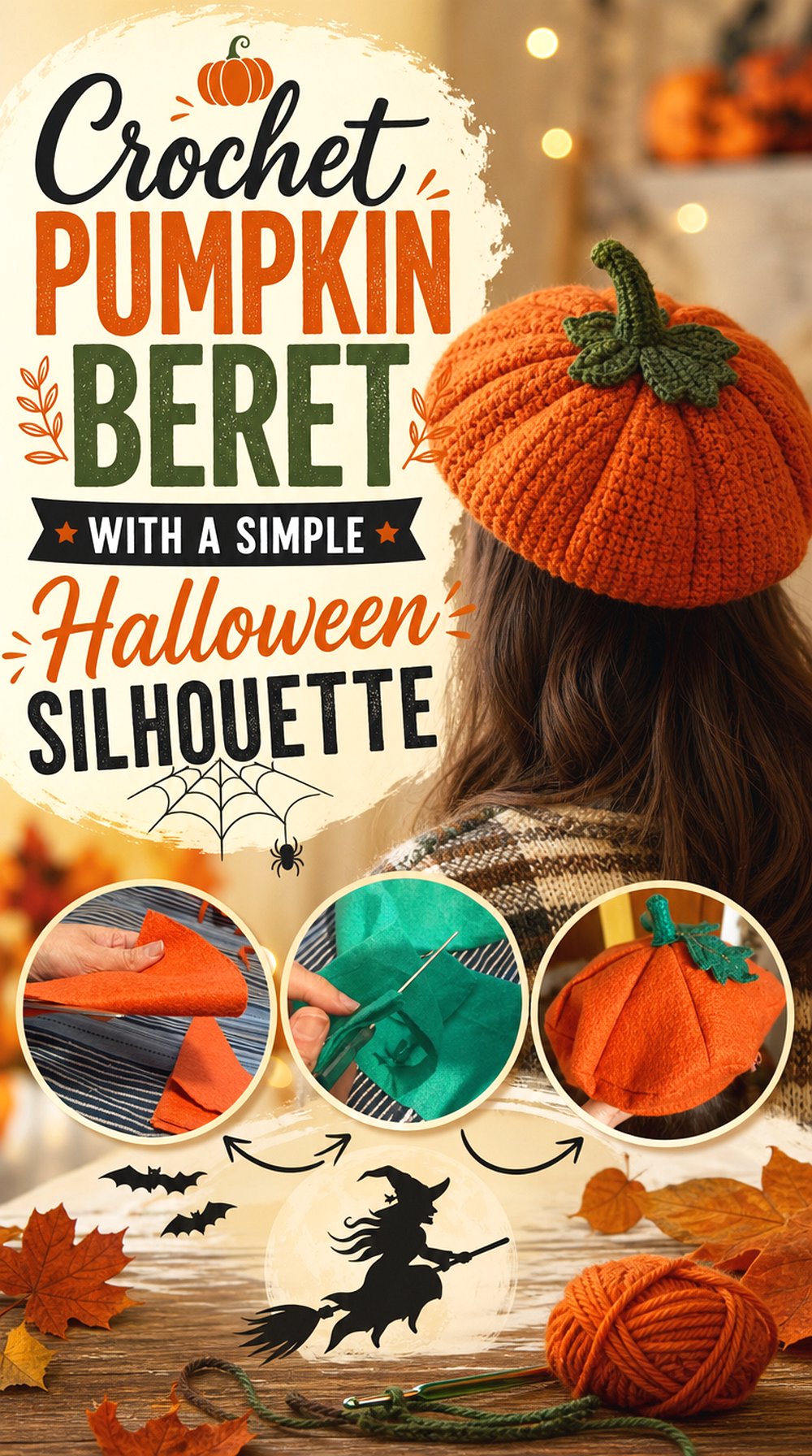
Hitzuji’s DIY boina de calabaza provides a Spanish-language pumpkin-beret option and clearly identifies the finished project as a pumpkin beret. The direct match makes it useful for readers who are comfortable learning visually or following Spanish instruction and want another interpretation of the same basic seasonal accessory.
Instead of treating this as interchangeable with every orange beret, compare the finished silhouette with the options above. Look at how much the top expands beyond the head opening, how strongly it resembles a pumpkin when worn, and how prominent the upper decoration is. Those visible differences should guide your choice more than language alone.
Use Visual Checkpoints When Following a Tutorial in Another Language
If you do not speak the tutorial language fluently, watch a section before crocheting along and identify where major shape changes occur. Visual instruction can be very effective, but guessing unfamiliar spoken details is not a reliable substitute for understanding them.
Pause at crown, opening, and finishing checkpoints and compare your fabric with the creator’s. If a critical sizing or material detail is unclear, confirm it from information supplied by the creator rather than inventing an equivalent.
Decide How Much Crown Overhang You Actually Want
A pumpkin beret can sit relatively neatly around the head or develop a wider, more theatrical crown. Neither is automatically better.
Think about your intended use before modifying the diameter. A larger-looking crown makes the pumpkin concept more noticeable; a restrained profile may integrate more easily with everyday fall clothes. Any size alteration should still preserve a wearable opening and the overall construction logic of the source tutorial.
Keep the Top Detail Proportional to the Beret
A stem is small compared with a real pumpkin, and the same visual relationship can work well on a hat. An extremely tall or heavy topper can shift attention away from the rounded crown.
Before securing it, pin or temporarily position the detail and view the hat from farther away. The goal is to make the top recognizable without allowing it to control the entire silhouette.
Creator: Hitzuji
7. Crochet Costume Style Pumpkin Beret
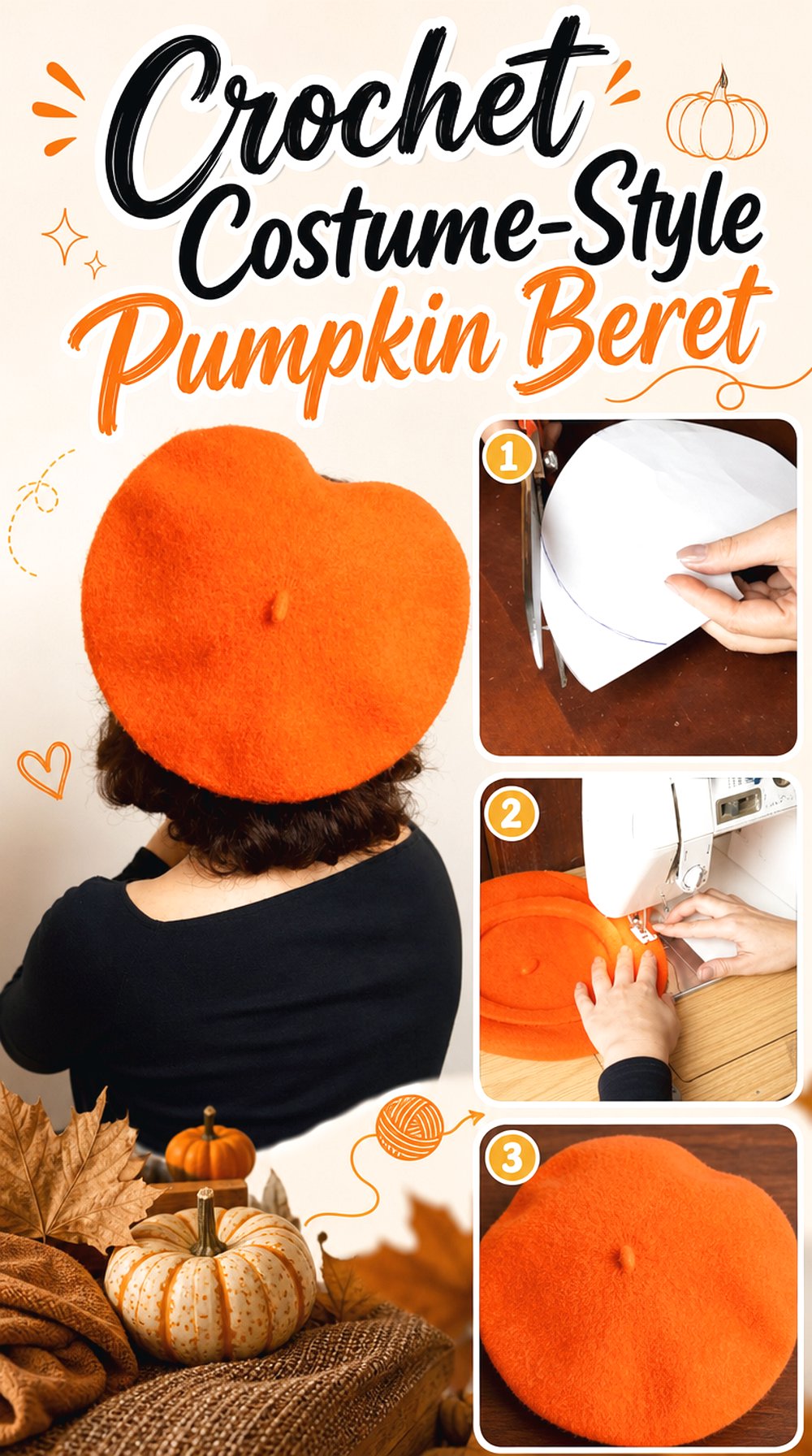
Kalypso’s tutorial explicitly describes making a beret in the shape of a pumpkin for Halloween, placing this idea firmly on the costume-oriented side of the collection. It is a useful counterpoint to the subtle ribbed design because the goal is not to hide the seasonal reference.
That makes proportion more important than trying to make the accessory neutral. A fuller pumpkin impression, noticeable contrast, and obvious seasonal styling can all make sense here. Before changing the creator’s concept, decide whether you want a costume piece that is recognizable across a room or a normal fall beret that only hints at a pumpkin.
Costume Visibility Changes the Design Priorities
Small details that look charming in a close-up photo can disappear when a hat is worn as part of a full outfit. If this is for a party or Halloween costume, evaluate the finished shape from several feet away.
The crown outline, main colors, and top decoration should establish the idea before tiny embellishments do. Add fine details afterward if they still improve the overall look rather than relying on them to explain the theme.
Coordinate the Beret With the Rest of the Outfit
A strong pumpkin hat already gives you a clear focal point. Repeating the same bright orange across every garment can make the shape less distinct, while contrasting neutrals or greens can give the beret more visual separation.
Lay out the intended outfit before choosing extra embellishments. This also helps decide whether a jack-o’-lantern face is necessary or whether the pumpkin-shaped crown is already enough.
Store the Crown Without Crushing the Top Decoration
Seasonal hats may spend much of the year in storage. Avoid compressing a dimensional stem or leaf beneath heavier items, especially if you want the beret ready to wear again the next fall.
Before storing it, make sure the hat is clean according to the fiber’s care information and fully dry. Support or loosely fill the crown if needed to help protect dimensional details without permanently stretching the opening.
Creator: Kalypso
8. Crochet Left Handed Pumpkin Beret
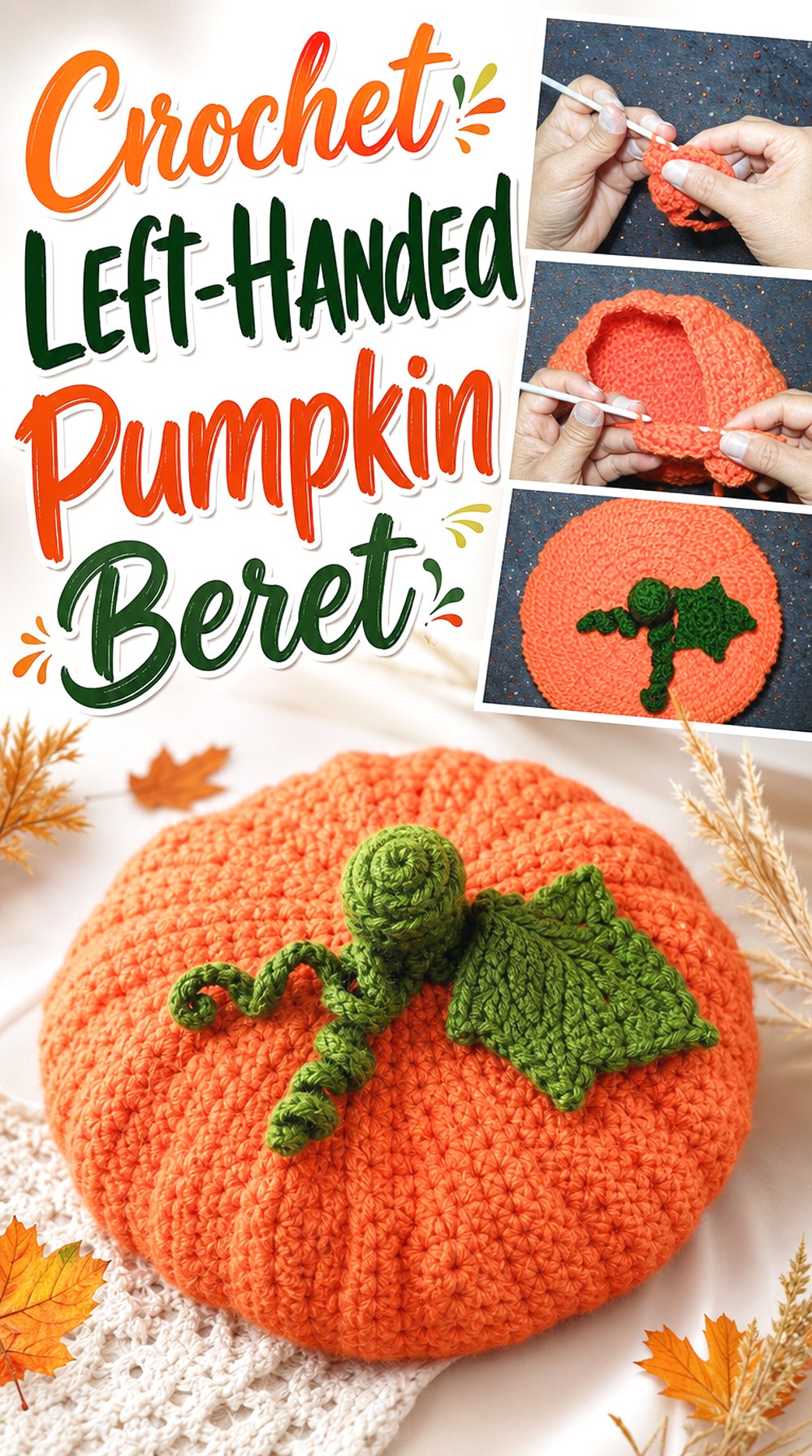
Nancy Magno’s pumpkin beret stands out because the verified tutorial is specifically presented for left-handed crocheting. The video description also identifies the project as a pumpkin beret and discusses adapting the size rather than limiting the concept to one decorative sample.
For a left-handed reader who dislikes mentally reversing a right-handed demonstration, that presentation can matter as much as the hat style itself. The finished-object decision remains the same, however: compare the crown width, opening, and pumpkin definition you want before assuming that a tutorial is suitable merely because the hand orientation is convenient.
Mirrored Instruction Can Reduce Unnecessary Translation
Following hand movements that match your own can make it easier to focus on shaping rather than constantly reversing direction mentally. That is particularly helpful when the crown changes size and the location of shaping matters visually.
Still follow the creator’s actual instructions rather than combining them with a different pumpkin-beret pattern. Two projects can look similar while using different construction logic, so mixing partial sequences may create a shape neither tutorial intended.
Measure the Wearer Before Choosing a Size
A statement that a design can be made in different sizes is not a reason to skip measuring. Head circumference, preferred wearing position, hair volume, and desired slouch all affect how a beret feels.
Check which measurements or adjustment method the creator supplies and use those rather than relying on a generic age chart. If the intended wearer likes a looser-looking crown, remember that crown volume and opening comfort still need separate evaluation.
Check the Stem From Both Front and Side
A top detail can look centered from above yet lean noticeably once the beret is worn at an angle. Temporarily position it before final attachment and arrange the crown as the wearer prefers.
This simple checkpoint is useful for any pumpkin beret, but especially one that will regularly be tilted. The stem should look intentional with the hat in its normal wearing position, not only when the crown is lying flat.
Creator: Nancy Magno
9. Crochet Decorated Pumpkin Beret for Día de Muertos Season
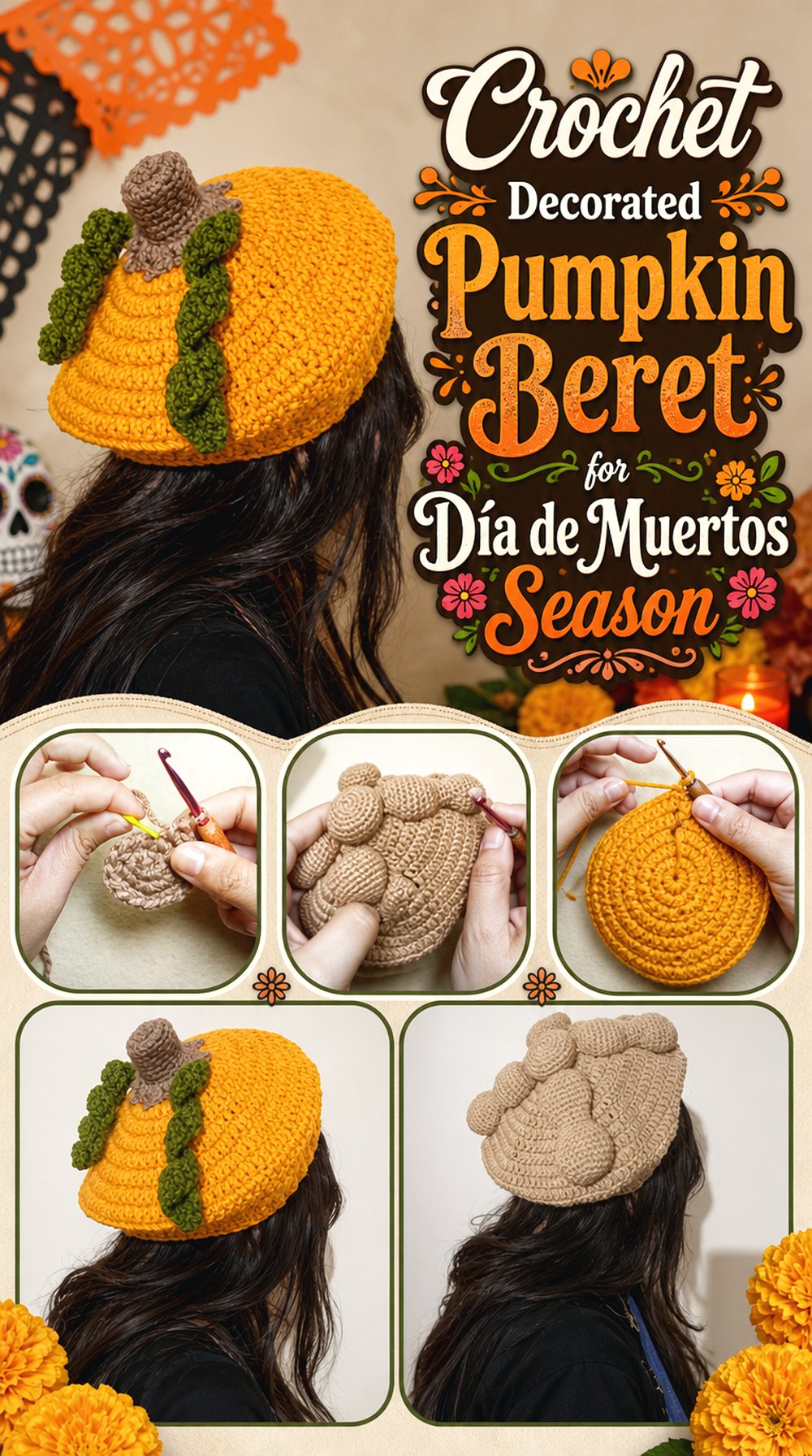
Alita Park’s video approaches the beret through seasonal customization, presenting pumpkin and pan de muerto-themed crochet berets together for Halloween and Día de Muertos. That emphasis makes this idea different from tutorials where the main focus is only building pumpkin-shaped texture into the crown.
Choose this direction if personalization is the part that interests you most. You can think about the plain beret as a base for a more developed seasonal composition, but avoid piling on decoration without a plan. Decide what the viewer should notice first, then arrange secondary details so they support rather than obscure the recognizable pumpkin theme.
Plan the Decoration on the Worn Hat
A flat beret gives you the wrong perspective for judging motifs that will later curve over the head. Arrange the hat in its intended wearing position, mark the visible front area, and use that as your design field.
This prevents an important motif from drifting toward the crown edge or disappearing behind the wearer’s head. It also helps you keep the decoration balanced when the beret is intentionally tilted.
Keep Cultural Themes Distinct and Intentional
The source video brings Halloween and Día de Muertos seasonal ideas into the same presentation. If you adapt that inspiration, be deliberate about which theme your individual beret represents instead of treating every seasonal symbol as interchangeable.
A focused visual concept usually reads more clearly than a collection of unrelated motifs. Use the creator’s tutorial for the intended project and make your own styling choices with respect for the cultural context of any additional imagery.
Leave Enough Plain Space Around Strong Motifs
Decorative crochet benefits from breathing room. If every available area of the crown contains a leaf, face, flower, vine, or appliqué, the pumpkin silhouette can disappear beneath the additions.
Arrange your largest feature first, then assess the remaining negative space before adding another. A smaller number of well-positioned elements can make the rounded beret shape easier to recognize.
Creator: Alita Park
10. Crochet Barbie Pumpkin Beret
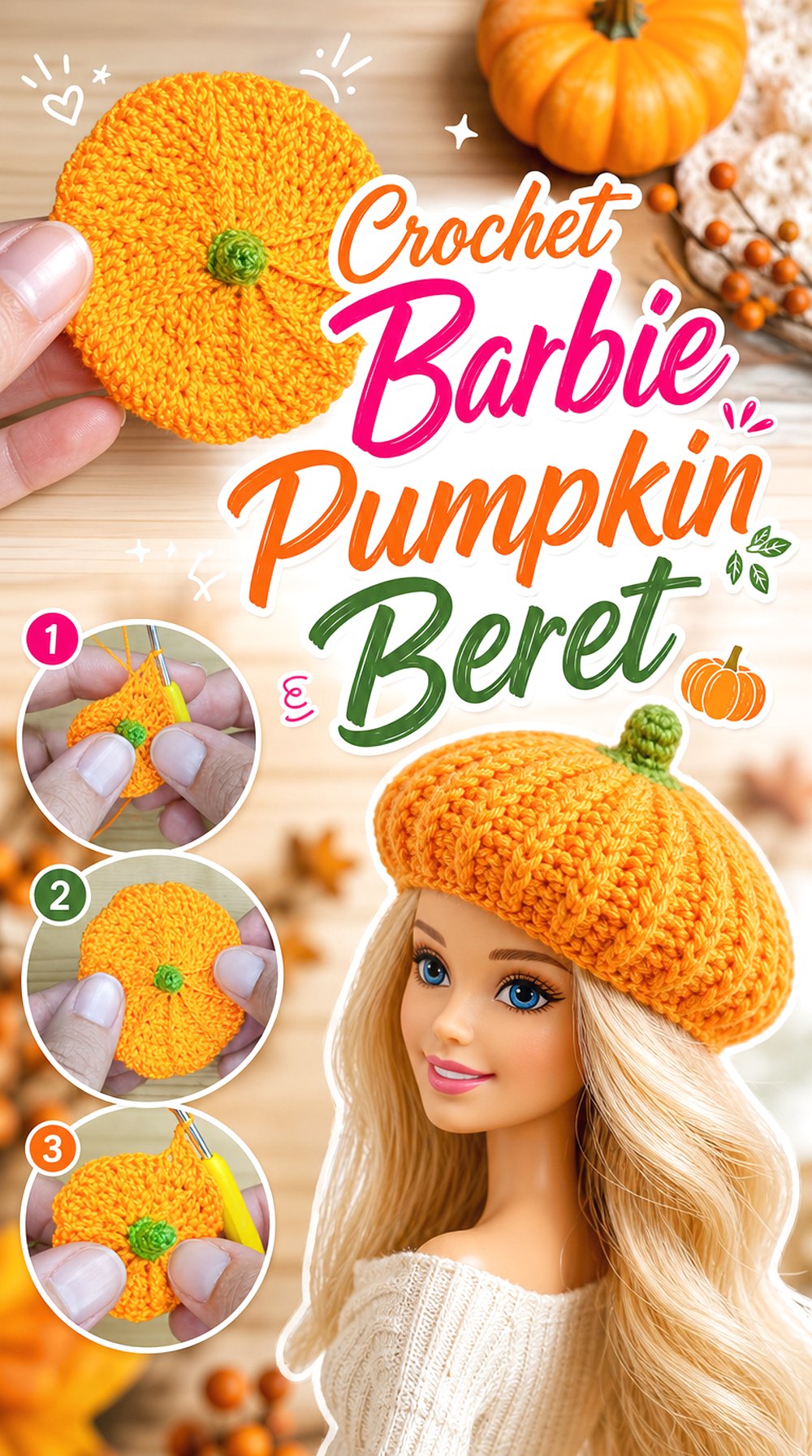
This project deliberately changes scale. Toffee Fields Dolls provides a tutorial specifically for a Barbie pumpkin beret, so it is a genuine miniature pumpkin-beret project rather than a human hat reduced through guesswork.
That makes it useful for doll collectors, miniature wardrobe makers, or anyone who wants a lower-material seasonal project. Small-scale crochet also magnifies proportion: a stem that is only slightly oversized can dominate a doll’s head, and bulky fabric can hide the intended beret shape. Instead of automatically using leftover yarn from an adult hat, consider whether the fiber and hook combination gives the crisp miniature fabric the project needs.
Miniature Proportions Need Their Own Decisions
Do not scale an adult embellishment concept visually without considering the doll. A leaf, stem, or facial detail that occupies a modest part of a human hat could cover much of a Barbie-scale crown.
After finishing the basic beret, place each decorative element next to it before attachment. If the topper becomes the first thing you see instead of the pumpkin-shaped hat, reducing the decoration may improve the finished proportions.
Avoid Assuming Doll Heads Are Interchangeable
Even fashion dolls with similar heights can have different head shapes, hairstyles, and hair volume. If you intend the beret for a doll other than the one demonstrated, test the opening rather than assuming universal compatibility.
Thick rooted hair or an updo can change the effective fit significantly. Make adaptation decisions from the actual doll and the source tutorial instead of using human hat sizing logic.
Creator: Toffee Fields Dolls
11. Crochet Mini Humpkin Pumpkin Beret
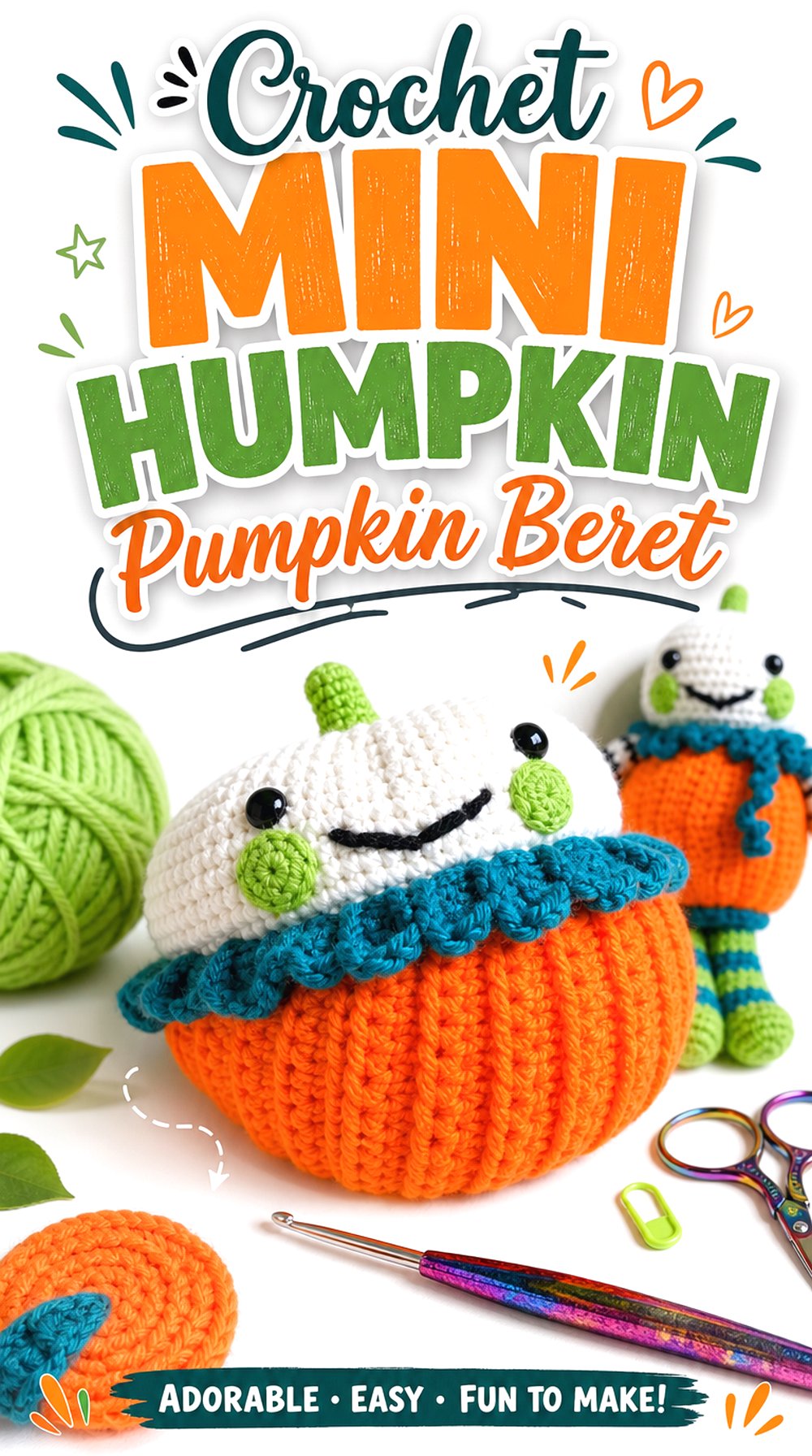
The final idea moves from doll fashion into amigurumi. Hookanory Crochet Club’s Humpkin tutorial includes the character’s little pumpkin beret as part of the finishing details, giving the collection a decorative character accessory with a completely different purpose from the wearable hats above.
This is a useful choice when you like pumpkin berets as a visual motif but do not necessarily want another hat for yourself. Because the beret belongs to a crocheted character, attachment, scale, and display matter more than human head comfort. Follow the source for the actual character construction rather than treating the miniature hat as a substitute set of instructions for a wearable version.
Decide Whether the Mini Beret Should Be Removable
A removable hat offers more display and styling options, while a secured hat is less likely to shift or disappear from the character. Your choice depends on whether the finished amigurumi is mainly for display or intended for regular handling.
If you alter the creator’s intended attachment, make sure the change does not distort the character’s head or the tiny beret. Small accessories can change position easily because there is very little weight holding them down.
Small Parts Need Extra Thought When Gifting
Miniature stems, facial details, or other attached pieces may not be appropriate for every recipient. If the finished character is intended for a young child or pet environment, evaluate loose or detachable components carefully rather than assuming an amigurumi accessory is automatically suitable.
For display pieces, the priorities are different: neat placement, secure finishing, and a proportion that looks convincing beside the character become more important.
Creator: Hookanory Crochet Club
Which Crochet Pumpkin Beret Style Should You Choose?
For a beret you can integrate into more fall outfits, start with the classic stemmed, subtle ribbed, or deeply segmented versions. Their pumpkin identity comes mostly from silhouette, texture, and color.
For Halloween, the jack-o’-lantern slouchy beret and costume-style pumpkin beret make a stronger visual statement. The pumpkin pie beret is the clearest alternative for Thanksgiving or food-inspired novelty fashion.
Choose the left-handed version when matching the demonstration to your working orientation is important. The Alita Park idea puts more emphasis on decorative personalization. For smaller seasonal projects, the Barbie pumpkin beret focuses on doll fashion, while Humpkin’s mini beret turns the idea into an amigurumi accessory.
Conclusion
The most useful way to choose among these 11 crochet pumpkin beret ideas is to decide how obvious you want the pumpkin theme to be. A subtle textured crown can work as general fall clothing, while a stemmed segmented hat is more recognizable and a jack-o’-lantern face pushes the design firmly toward Halloween. Pumpkin pie offers a playful Thanksgiving alternative, and the two miniature projects extend the idea into doll and amigurumi styling.
Once you have chosen the look, check fit, crown volume, yarn behavior, and decoration before making adaptations. Use the original tutorials linked above for each creator’s exact construction details rather than combining unverified stitch sequences from different designs.
Frequently Asked Questions
How do I make sure a crochet pumpkin beret still looks like a beret rather than a beanie?
Pay attention to the relationship between the crown and the head opening. A beret normally needs visible crown width or volume beyond the opening so the fabric can settle or slouch around the head. Pumpkin texture alone does not create that silhouette. Compare the finished shape in your chosen tutorial and check your crown before finishing the lower edge, especially if you changed the yarn or hook.
Should a crochet pumpkin beret fit tightly around the head?
The opening needs to stay securely in the wearing position without becoming uncomfortable, but that is different from making the entire hat close-fitting. The crown generally needs additional room to create the beret shape. Measure the wearer and use the selected tutorial’s sizing guidance. Hair volume and whether you wear the hat centered, pushed back, or tilted can also change the fit you prefer.
What yarn qualities work well when pumpkin ridges are an important feature?
Look for a fabric that shows the intended texture clearly while retaining enough flexibility for the crown to form a beret rather than a rigid disk. Very fuzzy yarn can visually soften relief, while an excessively stiff fabric may resist slouching. Because specific yarn requirements vary by tutorial, confirm the creator’s materials before substituting and make a sample if the appearance of the texture is uncertain.
Can I add a jack-o’-lantern face to any pumpkin beret?
Visually, many orange pumpkin berets can support a face, but placement matters. Arrange the finished hat in its actual wearing position before locating eyes or a mouth because crown slouch can move the apparent center. Also consider whether you want the face to be permanent. A plain stemmed pumpkin is easier to wear throughout fall, while a jack-o’-lantern immediately creates a Halloween-specific look.
Can I use a Barbie or amigurumi pumpkin beret tutorial to make a human-size hat?
Not reliably. Miniature projects are designed around different proportions, yarn behavior, and intended fit. Enlarging them by simply using thicker yarn or a larger hook does not guarantee a wearable adult opening or appropriate crown dimensions. Use the miniature tutorials for their intended objects and choose one of the human-size pumpkin-beret tutorials when you need wearable sizing.