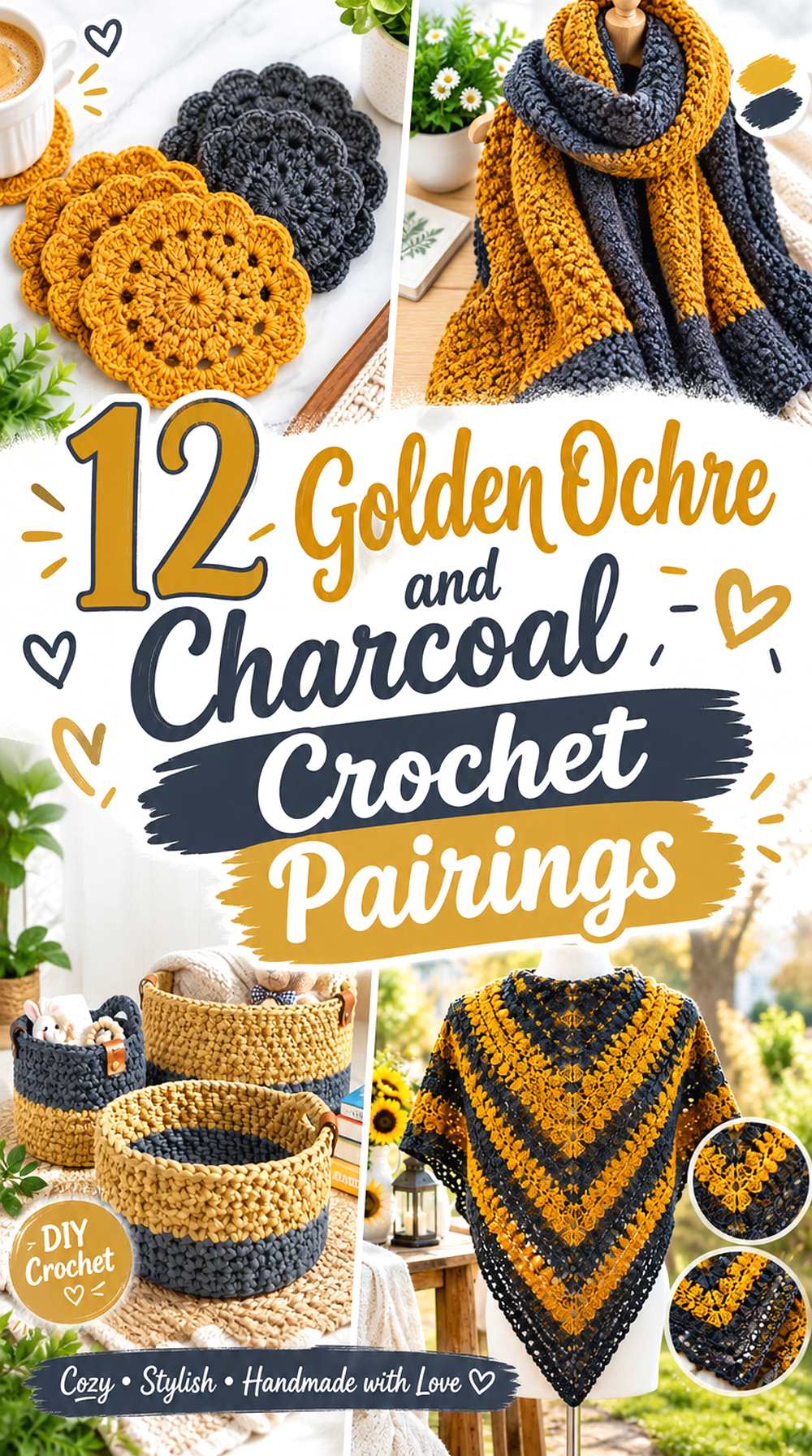
12 Golden Ochre and Charcoal Crochet Pairings
Golden ochre and charcoal create a crochet palette with an obvious light-and-dark hierarchy. Golden ochre brings the warmer color focus, while charcoal can provide definition around borders, cuffs, joins, handles, and other structural areas.
That contrast does not mean both colors need equal coverage. A blanket can use golden ochre inside motifs with charcoal joins, while a cardigan can let ochre cover most of the garment and reserve charcoal for ribbing. Reversing the proportions creates an entirely different result: a charcoal sweater with limited ochre trim puts much more emphasis on every warm-colored detail.
The tutorials below support the crochet project or construction concept. The golden ochre and charcoal combinations are independent color adaptations, so plan the palette around your own yarns rather than assuming the tutorial creators used these exact shades.
Quick List
- Golden Ochre And Charcoal Granny Square Crochet Blanket
- Golden Ochre And Charcoal Oversized Crochet Cardigan
- Charcoal And Golden Ochre Ribbed Crochet Beanie
- Golden Ochre And Charcoal Crochet Handbag
- Golden Ochre And Charcoal Crochet Shawl
- Golden Ochre And Charcoal Granny Square Crochet Vest
- Golden Ochre And Charcoal Crochet Nesting Baskets
- Charcoal And Golden Ochre Crochet Cowl
- Golden Ochre And Charcoal Textured Crochet Scarf
- Golden Ochre And Charcoal Crochet Coaster Set
- Charcoal And Golden Ochre Classic Crochet Sweater
- Golden Ochre And Charcoal Crochet Halter Top
Decide How Much Charcoal Your Golden Ochre Crochet Project Needs
Charcoal usually carries more visual weight than golden ochre, especially when the ochre yarn is medium or light in value. That means a narrow charcoal border, cuff, or join can have as much visual impact as a much larger ochre section.
Start by deciding which shade should define the project from a distance. If golden ochre should lead, give it the larger uninterrupted surfaces and keep charcoal around natural boundaries. If you want a darker result, reverse that relationship and treat ochre as the concentrated accent.
Use Charcoal to Define Golden Ochre Crochet Texture
Strong value contrast can help separate motifs, raised details, borders, and garment finishing. Charcoal is particularly useful beside golden ochre when you need to emphasize an outer edge or distinguish one crochet section from another.
However, putting charcoal around every detail can fragment the project. A textured golden ochre cardigan, for example, may only need charcoal cuffs and a hem rather than charcoal around pockets, neckline, sleeves, and every seam.
Keep Golden Ochre and Charcoal Repetition Intentional
On multicolor crochet, repetition makes the palette look connected. If charcoal appears on a bag base, consider repeating it at the handles or upper edge. If golden ochre appears in the center of granny squares, keep that placement consistent enough that the motifs form a recognizable rhythm.
This is especially important when working with only two colors. Each change is highly visible, so placement carries more weight than it would in a larger mixed palette.
1. Golden Ochre And Charcoal Granny Square Crochet Blanket
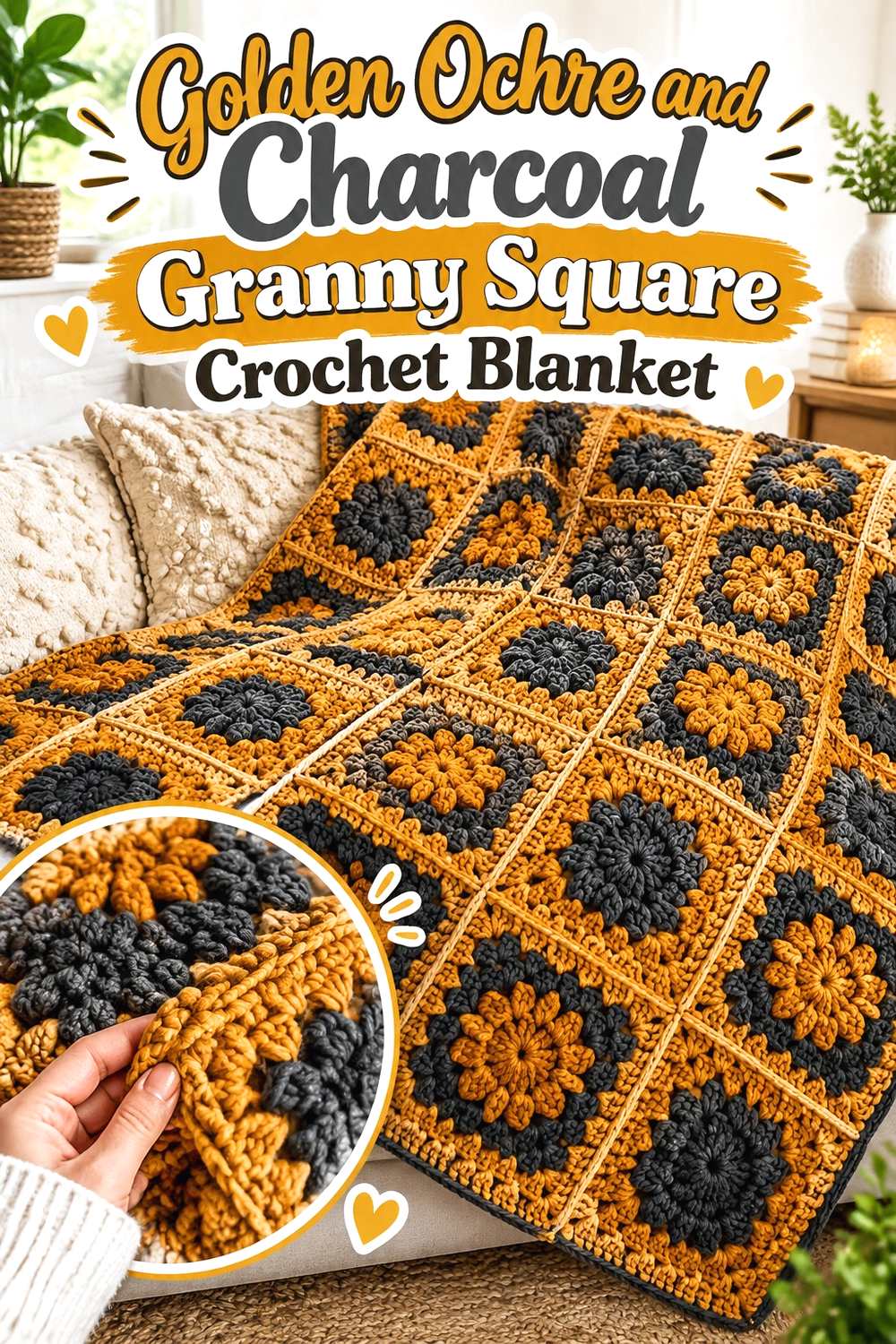
A granny square blanket gives golden ochre and charcoal distinct jobs. Golden ochre can create the main motif focus while charcoal surrounds, joins, or frames the squares. Using the darker shade consistently helps individual motifs read as one blanket instead of a collection of unrelated color blocks.
Golden Ochre Can Lead the Crochet Blanket Motif Centers
Place golden ochre near the center or across another substantial part of each square when you want warmth repeated throughout the blanket. Consistent ochre placement gives the eye a recognizable path across a large field of motifs.
If you vary the squares, keep enough golden ochre repetition that the overall blanket still looks connected.
Charcoal Joins Can Separate Golden Ochre Crochet Squares
Charcoal works particularly well between motifs because it creates a clear boundary without requiring another color. It can also continue into the outer border so the joins and blanket edge feel related.
A wide charcoal border will make the finished blanket considerably darker, so keep the width proportional if golden ochre is meant to remain dominant.
Creator Credit: Danii’s Ways
2. Golden Ochre And Charcoal Oversized Crochet Cardigan
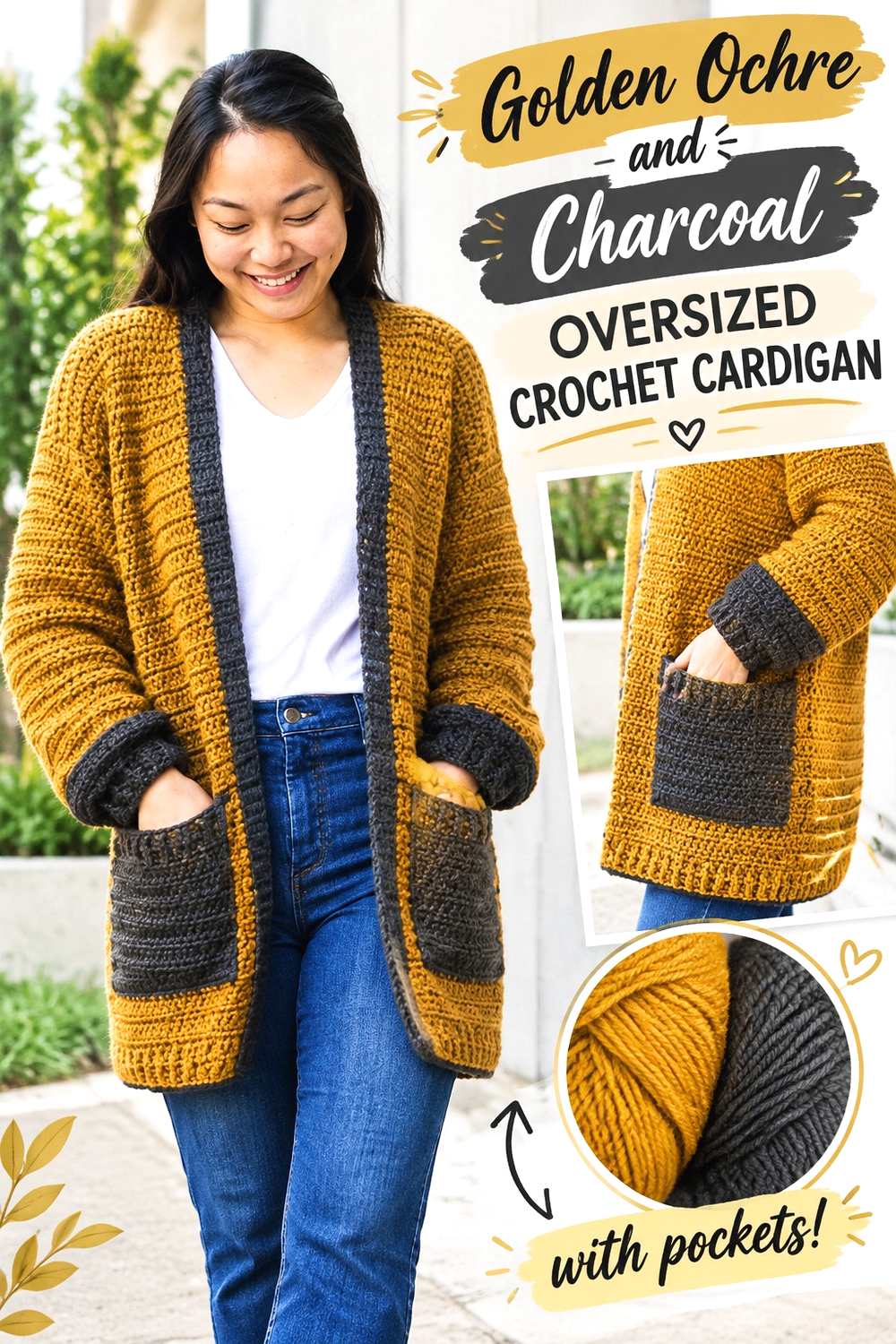
Large cardigan panels give golden ochre enough space to act as the main color, while charcoal can concentrate around cuffs, pockets, or ribbing. This keeps the warm shade continuous across the garment instead of breaking it into many competing sections.
Golden Ochre Works Across Large Crochet Cardigan Panels
Use golden ochre over the back, fronts, and much of the sleeves when you want the cardigan to remain visibly warm and color-led. A broad uninterrupted field also gives crochet texture more room to show.
If your golden ochre is particularly saturated, you may need very little charcoal to balance it.
Charcoal Can Ground Golden Ochre Crochet Cardigan Finishing
Charcoal cuffs and a lower hem create repeated dark boundaries without dividing the main body. Pockets are another possible location, but using charcoal on every finishing feature can quickly shift the cardigan toward a darker overall appearance.
Choose the structural areas that benefit most from definition and leave the rest in ochre.
Creator Credit: forthefrills
3. Charcoal And Golden Ochre Ribbed Crochet Beanie
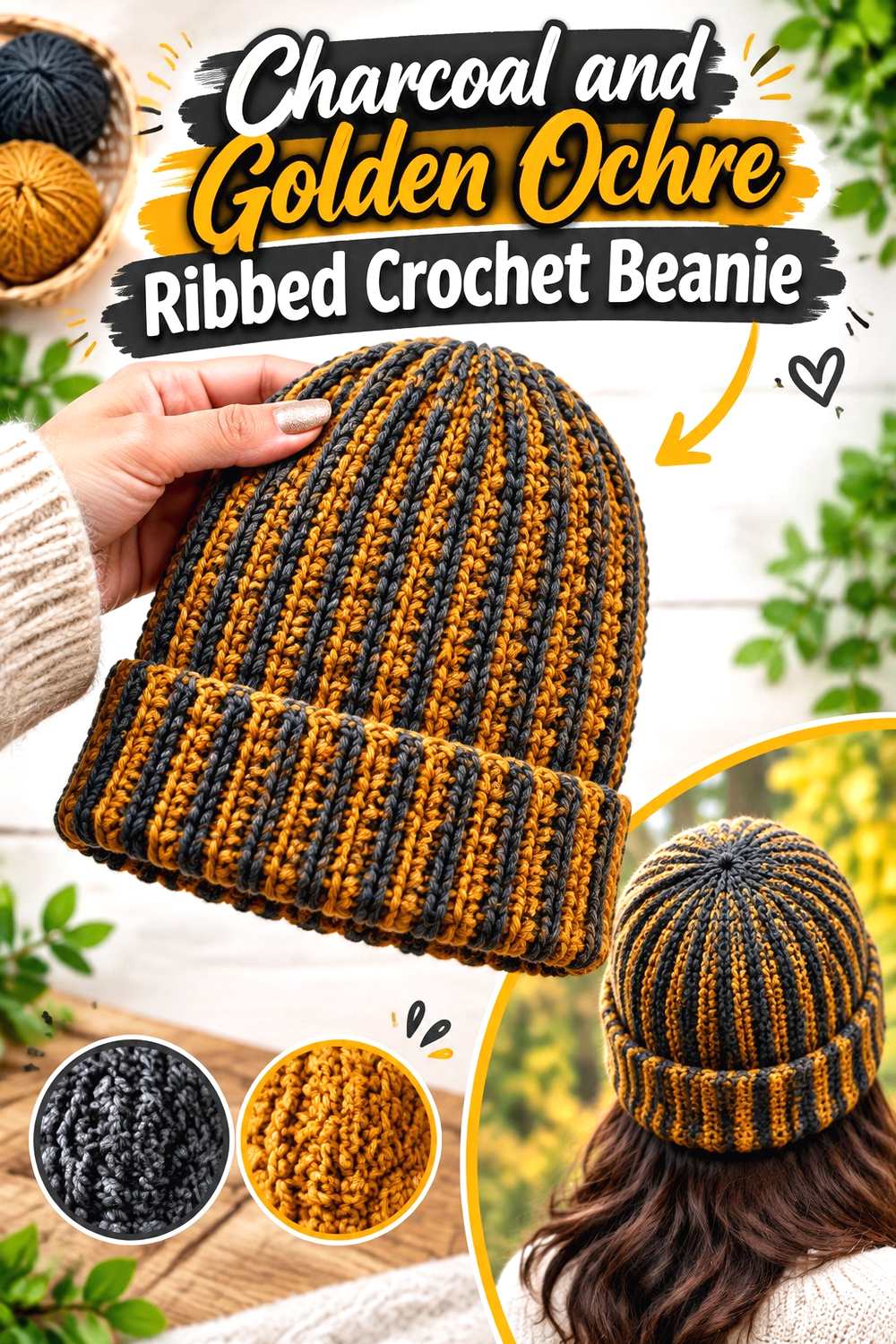
A beanie is compact enough that a charcoal-led palette can still leave plenty of room for golden ochre to register. Charcoal can cover the crown and main body while ochre defines the lower section or another substantial band.
Charcoal Keeps the Crochet Beanie Body Visually Strong
Using charcoal across most of the hat creates a dark base that can make even a modest amount of golden ochre look prominent. Keeping the main field one color also avoids interrupting ribbed texture with excessive color changes.
Check that the charcoal yarn still allows the ribbing to remain visible under typical lighting.
Golden Ochre Gives the Charcoal Crochet Beanie a Defined Brim
A golden ochre brim creates a clear warm band around the face instead of scattering ochre through small stripes. The larger uninterrupted section is especially helpful if the two yarns have very strong contrast.
For a subtler version, reduce the visual width of the ochre section rather than adding more colors.
Creator Credit: VivCrochets
4. Golden Ochre And Charcoal Crochet Handbag
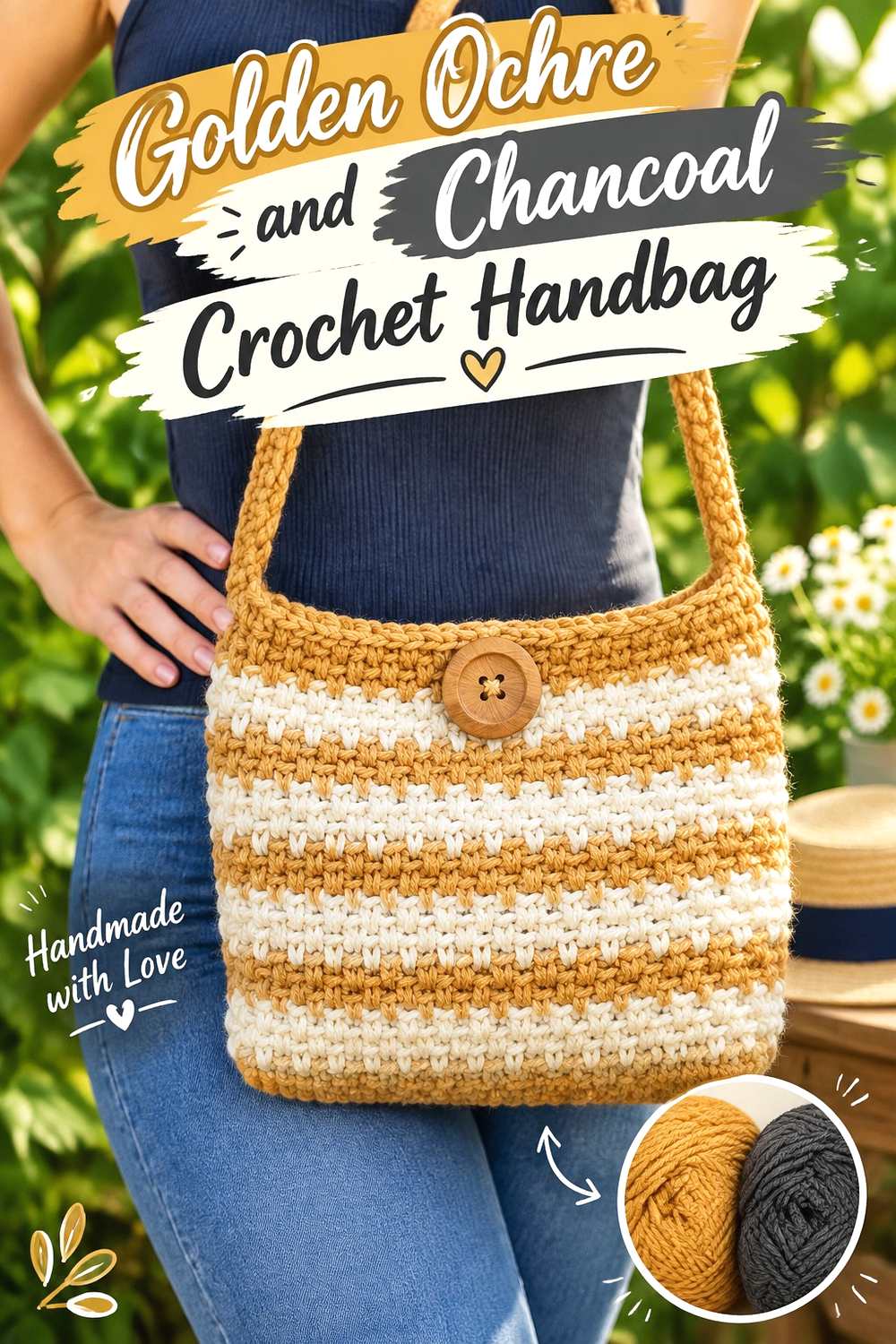
A handbag has obvious structural zones for a two-color palette. Golden ochre can dominate the body while charcoal takes over the base, upper edge, handles, or selected combination of those areas. This makes the contrast feel related to the bag’s construction.
Golden Ochre Can Carry the Main Crochet Handbag Surface
Use golden ochre across the largest body section when you want the bag to act as the brighter accessory. Keeping the surface relatively continuous also prevents texture from competing with frequent color changes.
If the bag has a strong stitch pattern, broad ochre coverage can make that texture easier to follow.
Charcoal Handles Can Frame a Golden Ochre Crochet Handbag
Charcoal handles create a strong outline at the top of an ochre bag. Repeating charcoal at the base can visually bracket the warmer body between two darker areas.
If that feels too heavy, keep the base golden ochre and use charcoal only for the handles and a narrow upper finish.
Creator Credit: naztazia
5. Golden Ochre And Charcoal Crochet Shawl
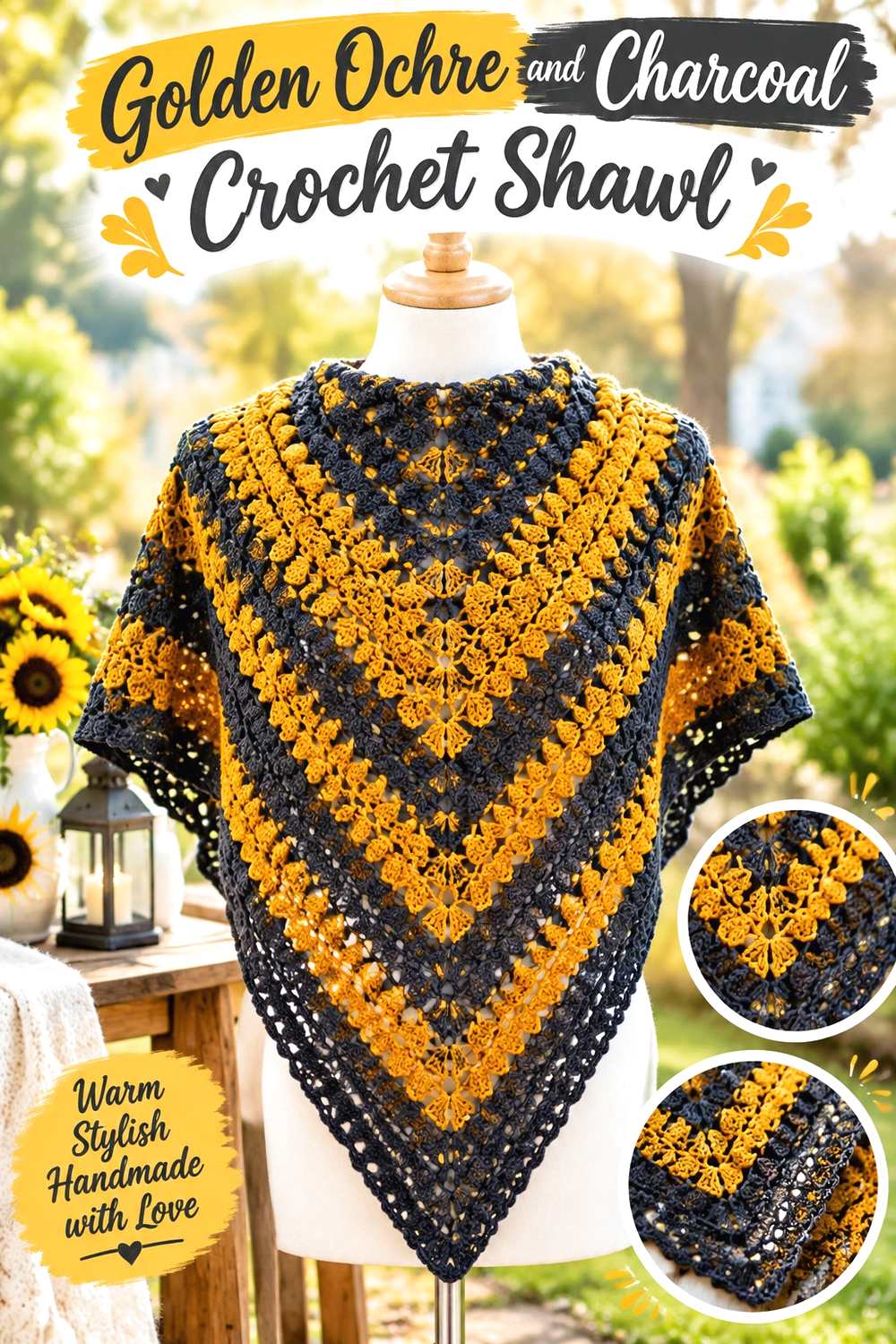
A shawl lets golden ochre occupy a broad central field while charcoal becomes increasingly visible toward the widest edge. Because outer sections cover more area, even a limited charcoal finish can have substantial visual weight.
Golden Ochre Keeps the Crochet Shawl Center Warm
Use golden ochre through most of the shawl when you want the color to remain dominant as the piece is wrapped. A continuous ochre field can also keep stitch texture from being interrupted by multiple narrow stripes.
Charcoal Creates a Strong Edge Around Golden Ochre Crochet
Adding charcoal toward the outer portion gives the shawl a distinct frame. This is useful when golden ochre is close in value to clothing worn underneath and needs a darker boundary.
Watch the border proportion as the shawl grows; a deep charcoal section can become more dominant than expected near the widest edge.
Creator Credit: Bag-O-Day Crochet
6. Golden Ochre And Charcoal Granny Square Crochet Vest
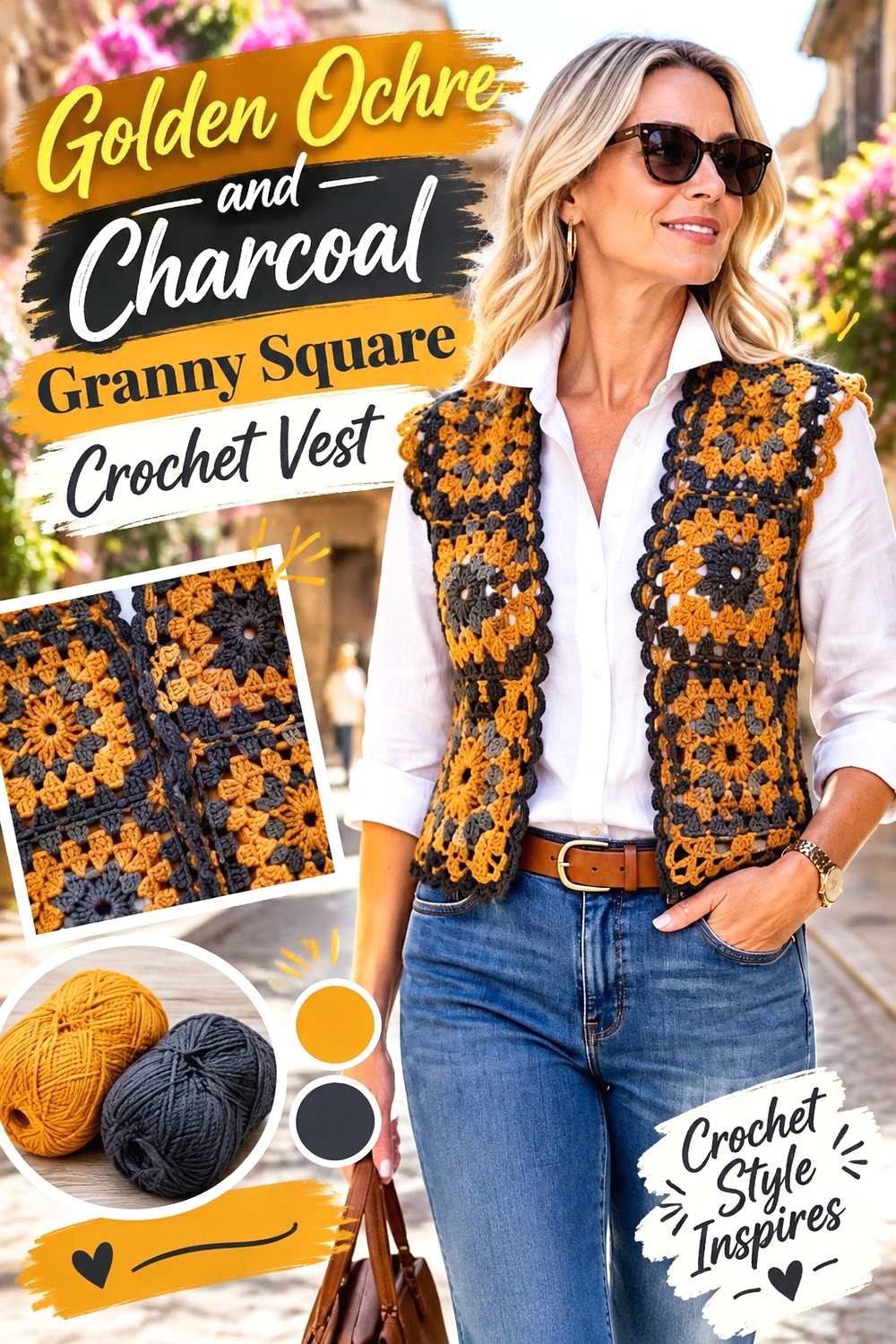
A granny square vest allows the two colors to repeat through every motif while still maintaining hierarchy. Golden ochre can focus attention near motif centers, with charcoal expanding around the outside and helping neighboring squares relate to one another.
Golden Ochre Gives the Crochet Vest Motifs a Warm Focal Point
Repeating golden ochre in similar positions across the vest keeps the front and back visually connected. Centers are particularly useful when you want ochre to remain noticeable without covering the majority of each square.
Charcoal Can Control Golden Ochre Crochet Granny Square Borders
Charcoal around the outer portions of motifs creates clear geometry and can make joining areas less visually fragmented. Remember that outer rounds occupy more surface than inner rounds, so charcoal may become the true dominant shade even if both colors appear equally often.
Creator Credit: Handwork diy
7. Golden Ochre And Charcoal Crochet Nesting Baskets
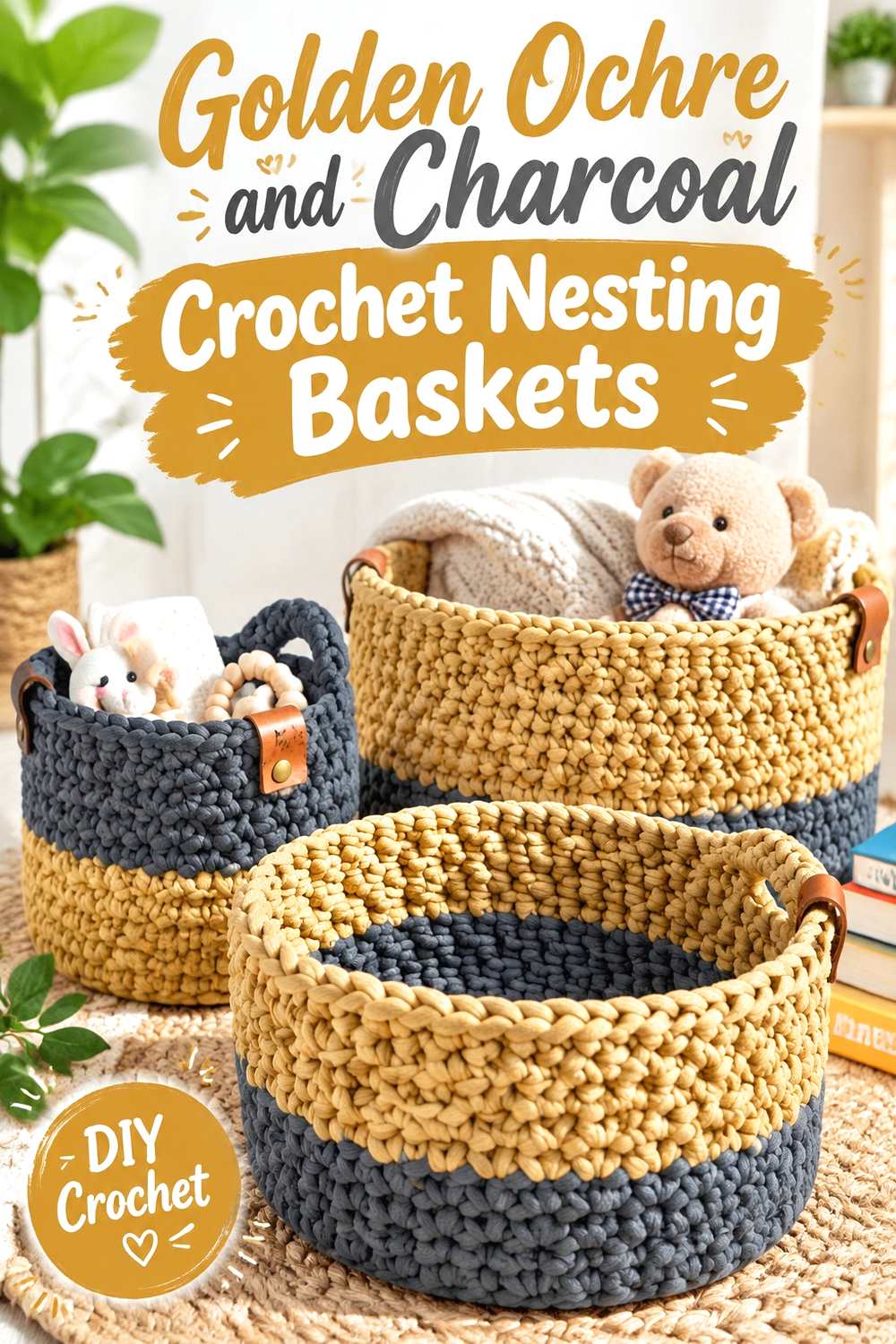
A basket set gives you the chance to change color proportions without losing coordination. One basket can be mostly golden ochre with a charcoal upper section, while another reverses the balance. The repeated two-color palette keeps the set connected.
Golden Ochre Can Differentiate the Crochet Baskets by Proportion
Instead of giving every basket the same color division, vary how much golden ochre appears on each size. The smallest basket might use it across most of the body, while a larger basket gives charcoal more space.
This creates variation without introducing extra shades.
Charcoal Works Well at the Base of Golden Ochre Crochet Baskets
A charcoal lower section creates a visually grounded base beneath a warmer ochre body. If you repeat charcoal at the top edge, make sure the middle still contains enough uninterrupted golden ochre to remain clearly dominant.
Creator Credit: MJ’s Off The Hook Designs
8. Charcoal And Golden Ochre Crochet Cowl
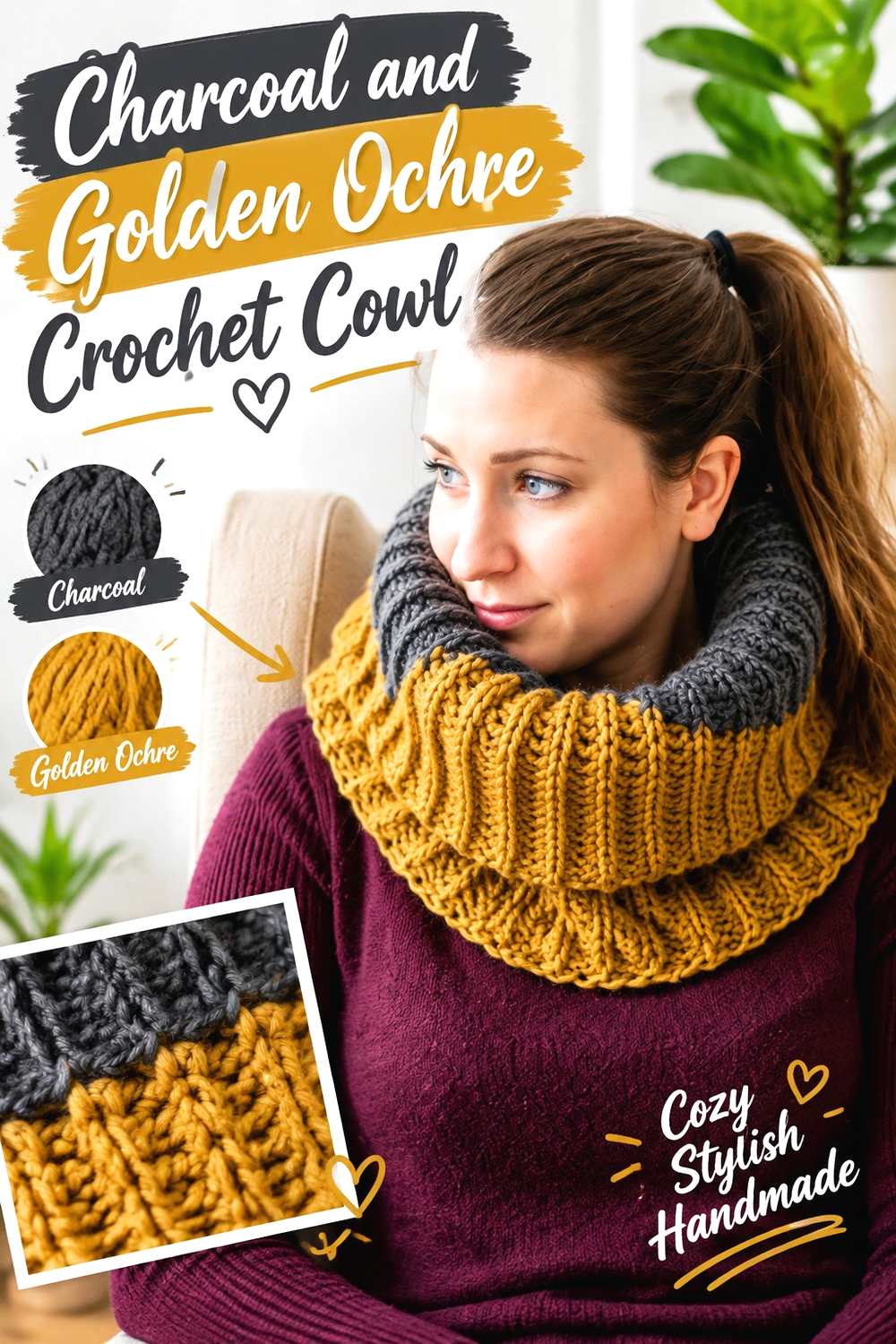
A cowl folds and overlaps when worn, so simple color areas are usually more dependable than a complicated stripe sequence. Charcoal can carry most of the surface while golden ochre appears in one or two broad bands that remain visible after the fabric is folded.
Charcoal Gives the Crochet Cowl a Dark Continuous Base
Using charcoal across the majority of the cowl makes the piece easy to layer with other colors. It also creates enough uninterrupted fabric for textured stitches to remain the main surface feature.
Golden Ochre Bands Need to Stay Visible on a Charcoal Crochet Cowl
Place golden ochre where it will remain visible when the cowl is folded or doubled over. A band positioned only at an area that rolls inward may disappear during wear.
Try arranging the unfinished piece in its expected worn shape before finalizing the color distribution.
Creator Credit: B.Hooked Crochet
9. Golden Ochre And Charcoal Textured Crochet Scarf
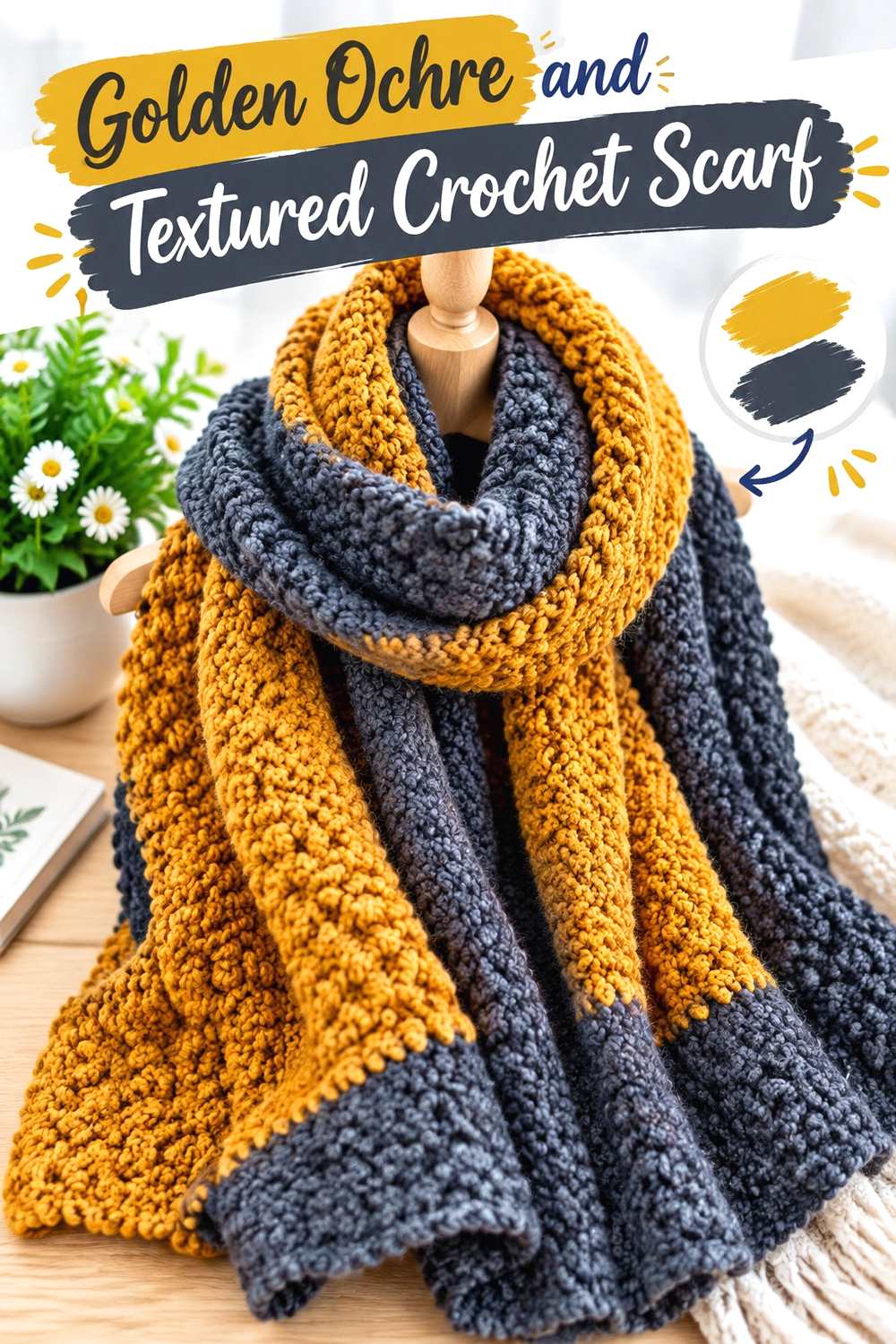
A long scarf gives the palette enough space for broad blocks rather than narrow alternating stripes. Golden ochre can dominate the middle and length of the scarf, while charcoal marks the ends or repeats in a few substantial sections.
Golden Ochre Lets Crochet Scarf Texture Stay Prominent
A large ochre field allows texture to continue without frequent color interruptions. If stitch definition is a major part of the scarf, check a swatch to make sure your chosen ochre is neither so dark nor so variegated that shadows disappear.
Charcoal Should Appear Where the Golden Ochre Crochet Scarf Is Seen
Charcoal end sections are useful because they stay visible when the scarf hangs down the front of an outfit. By contrast, a dark section placed only at the middle may disappear behind the neck when wrapped.
Consider the worn position before deciding where to make each change.
Creator Credit: Fiber Flux
10. Golden Ochre And Charcoal Crochet Coaster Set
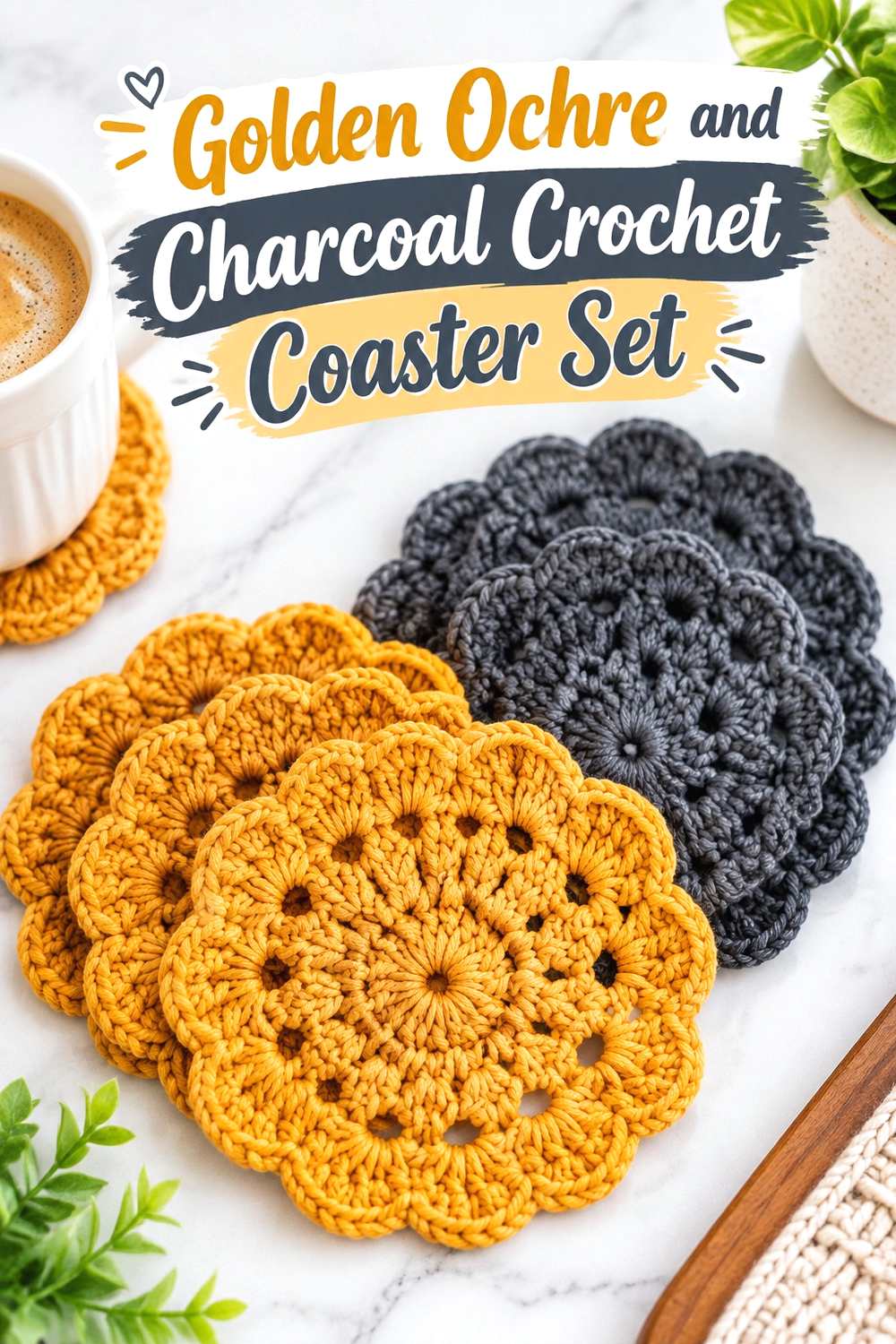
Coasters make it easy to reverse the palette from one piece to another. Some can use golden ochre centers with charcoal edges, while others place charcoal in the middle and let ochre finish the outside. Repeating the same two shades keeps the set coordinated despite the reversal.
Golden Ochre Centers Give Charcoal Crochet Coasters a Warmer Focus
Use golden ochre through the central area when you want the color to be most visible beneath cups or glasses. A charcoal outer section can then define the shape and distinguish each coaster against a lighter tabletop.
Charcoal Edges Can Unite a Golden Ochre Crochet Coaster Set
Keeping charcoal around the outer edge of every coaster is the more uniform option. You can vary the amount of golden ochre inside while retaining a repeated dark frame around the entire set.
Creator Credit: Bella Coco
11. Charcoal And Golden Ochre Classic Crochet Sweater
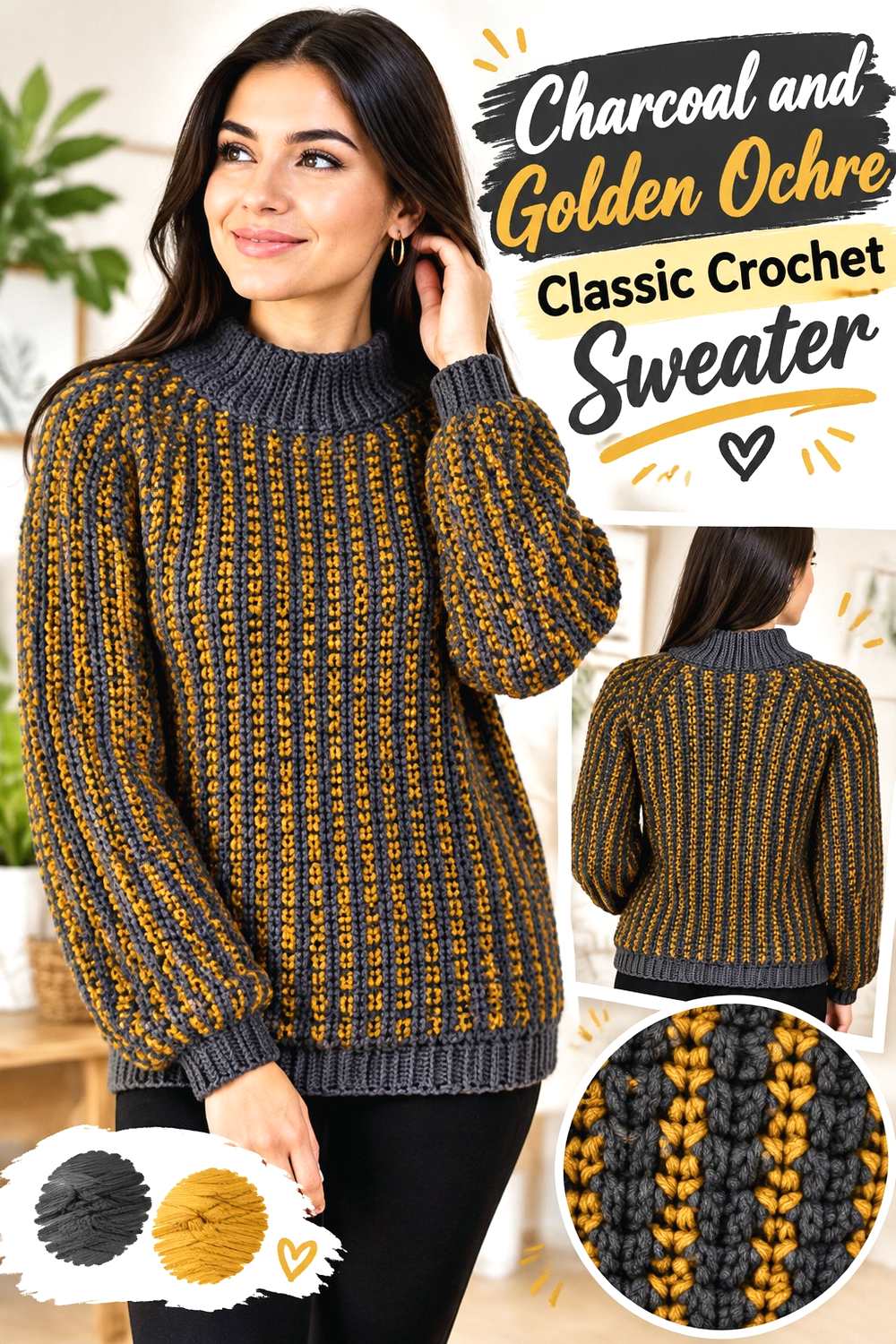
A sweater gives charcoal enough uninterrupted area to create a strong dark garment, while golden ochre can highlight the neckline, cuffs, or lower band. Because ochre contrasts strongly with the main surface, it does not need extensive coverage to remain important.
Charcoal Can Carry the Main Crochet Sweater Body
Use charcoal across the torso and sleeves when you want the sweater itself to act as a dark wardrobe anchor. Keeping these sections continuous also prevents a classic sweater silhouette from becoming unnecessarily divided.
Check textured stitches in your charcoal swatch before committing, since very dark yarn can make subtle surface changes harder to see.
Golden Ochre Can Clarify Charcoal Crochet Sweater Ribbing
Golden ochre around the cuffs or collar highlights the transition between the main sweater fabric and the finishing sections. If you use ochre at both points, you may not need it around the hem as well.
A limited number of repeated accents usually preserves the charcoal-led direction more effectively than outlining every edge.
Creator Credit: TCDDIY
12. Golden Ochre And Charcoal Crochet Halter Top
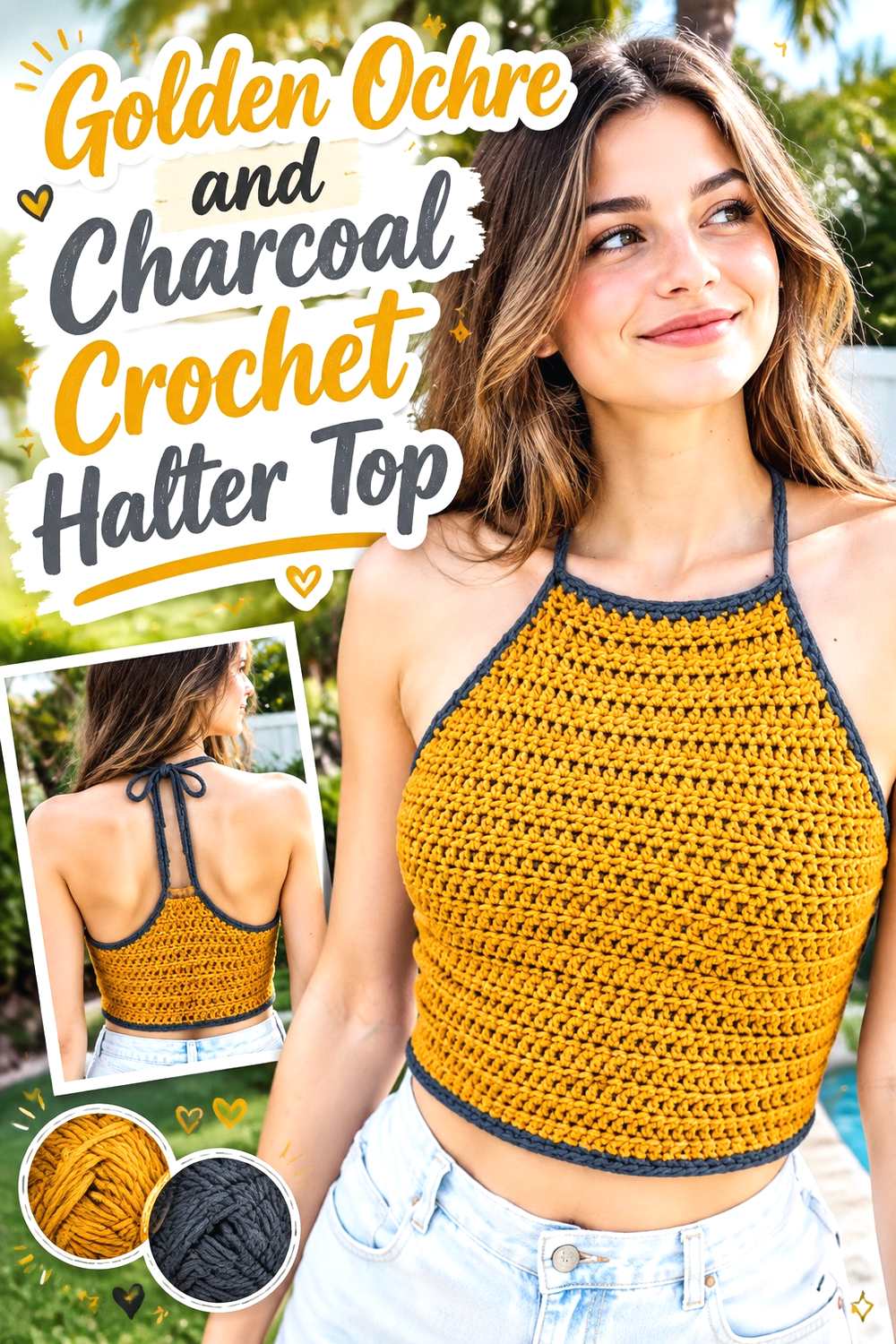
A halter top has relatively little surface area, so each color change becomes highly visible. Golden ochre can form the body while charcoal defines straps, the neckline, or the lower edge. Keeping the palette simple avoids breaking a compact garment into too many small sections.
Golden Ochre Works as the Main Crochet Halter Top Color
Use golden ochre over most of the torso when you want the top to carry the warm side of the palette. A continuous main field also leaves room for shaping and stitchwork to remain visible.
Charcoal Can Frame Golden Ochre Crochet Halter Straps and Edges
Charcoal straps create a sharp upper boundary and remain visible without taking over much surface area. Repeating charcoal once at the lower edge can connect the top and bottom of the garment.
If the contrast is particularly strong, the straps alone may already supply enough charcoal.
Creator Credit: Krystal Everdeen
Comparing Golden Ochre and Charcoal Crochet Pairings
For a golden-ochre-led result, the cardigan, handbag, shawl, scarf, halter top, and many blanket layouts give the warm shade plenty of uninterrupted surface. Charcoal works best in those projects when it is tied to a structural location such as an edge, cuff, handle, join, or border.
For a charcoal-led result, the beanie, cowl, and sweater show how relatively small golden ochre areas can remain visually important against a darker background.
The granny square vest, blanket, basket set, and coasters offer the most flexibility for reversing the color hierarchy. They divide naturally into motifs, rounds, or sections, making it easier to test different proportions before committing to a larger color field.
Conclusion
Golden ochre and charcoal work particularly well when each color has a defined role. Let golden ochre cover larger surfaces when you want warmth to lead, then use charcoal to sharpen borders, joins, handles, cuffs, bases, and other structural features.
Reverse the balance when you want something darker. A charcoal sweater, cowl, or beanie can use a relatively small amount of golden ochre and still make the warmer shade an obvious part of the design.
Before starting a large project, compare the actual yarns side by side and, when useful, work a small swatch. The important relationship is not the shade names but the amount of light-and-dark contrast, saturation, and visual weight your particular golden ochre and charcoal create together.
Frequently Asked Questions
Should golden ochre or charcoal dominate a crochet project?
Either can lead. Golden ochre works well when you want a warmer overall surface, while charcoal creates a darker, more grounded direction. Because charcoal often carries considerable visual weight, it can remain prominent even when used in smaller amounts.
Where should charcoal go on a mostly golden ochre crochet project?
Borders, joins, cuffs, ribbing, handles, bases, and outer motif rounds are useful locations. These areas already create structural boundaries, so charcoal can provide definition without interrupting the golden ochre surface randomly.
How can I stop charcoal from overpowering golden ochre crochet?
Reduce the amount of charcoal rather than adding more colors. Use it on narrow structural areas and give golden ochre larger uninterrupted fields. This is especially useful on garments and blankets where a dark border can otherwise occupy more visual space than expected.
Can golden ochre be used as a small accent on charcoal crochet?
Yes. Golden ochre can work on cuffs, necklines, motif centers, bands, or edging against a charcoal background. Strong value contrast means a relatively small ochre section can remain very visible.
How can I check the contrast between golden ochre and charcoal yarn?
Place the yarns beside each other and view them from a distance. A grayscale photograph can also help reveal their light-and-dark difference. If the contrast is extreme, broader equal-sized stripes may feel more graphic than you intended.
What can I substitute for golden ochre in this crochet palette?
Choose another warm, muted yellow, mustard, or yellow-brown that preserves the role you want. If golden ochre is meant to stand out against charcoal, make sure the substitute remains clearly lighter rather than matching an exact commercial shade name.
What can I substitute for charcoal without changing the whole crochet pairing?
Choose another deep neutral with similar visual weight, such as a softened very dark gray. Preserve the contrast relationship with golden ochre; moving to a much lighter gray will make the finished palette considerably softer.