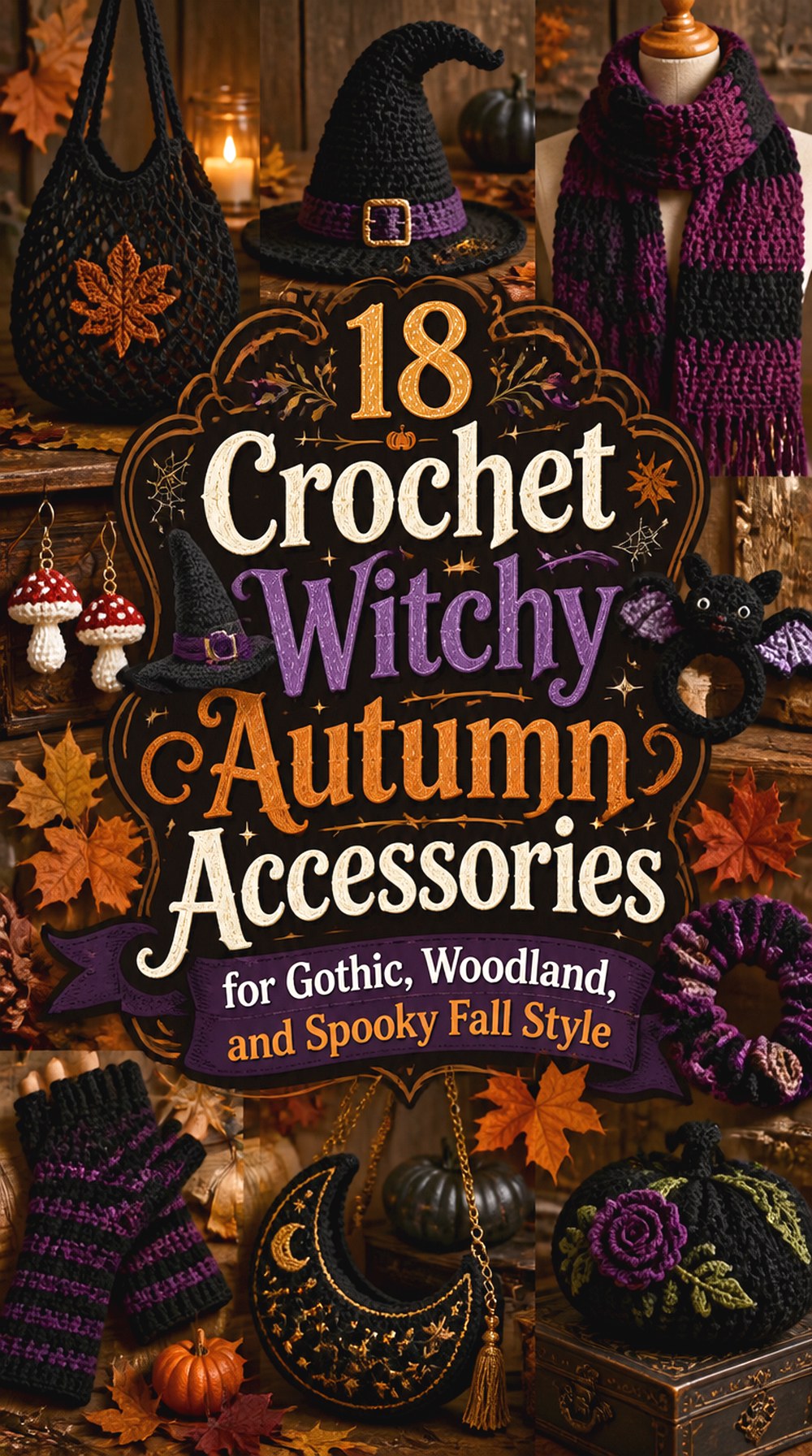
18 Crochet Witchy Autumn Accessories for Gothic, Woodland, and Spooky Fall Style
Witchy autumn crochet does not have to mean making an entire Halloween costume. A pointed hat can be theatrical, but a dark lace collar, leaf headband, moon-shaped bag, or pair of mushroom earrings can bring the same mood into everyday fall outfits. The projects below move between gothic, woodland, celestial, Victorian, and playful spooky styles, so there is real variety beyond simply changing yarn colors.
The practical differences matter too. Some accessories need structure to hold a recognizable silhouette, while others depend on drape, stretch, lace definition, or careful fit. This collection helps you compare those details before choosing a project, including where sizing deserves extra attention and which designs work better as subtle autumn pieces versus full statement accessories. Each idea also points to an original YouTube tutorial for the actual construction.
Quick List
- Crochet Pointed Witch Hat
- Crochet Spiderweb Bandana Head Scarf
- Crochet Subtle Pumpkin Beret
- Crochet Woodland Leaf Headband
- Crochet Shadowy Hooded Cowl
- Crochet Narrow Skull Scarf
- Crochet Victorian Lace Collar
- Crochet Beaded Gothic Choker
- Crochet Celestial Moon Bag
- Crochet Witch Drawstring Backpack
- Crochet Neo-Goth Fingerless Gloves
- Crochet Victorian Wrist Cuffs
- Crochet Dark Layering Arm-Warmer Sweater
- Crochet Flared Autumn Leg Warmers
- Crochet Lace-Up Corset Waist Belt
- Crochet Bat-Wing Scrunchie
- Crochet Autumn Leaf Earrings
- Crochet Woodland Mushroom Earrings
Choose the Witchy Effect Before You Choose the Accessory
Start by deciding how obvious you want the theme to be. A pointed hat, skull scarf, bat scrunchie, or spiderweb head covering reads as spooky almost immediately. A moon bag, lace collar, corset-style belt, or dark fingerless gloves can blend more naturally into everyday gothic clothing. Leaf and mushroom pieces lean woodland rather than Halloween-specific, making them useful well beyond October.
That distinction also helps with color planning. Black is not required for a witchy result. Rust, moss, bark brown, muted plum, charcoal, cream, and deep red can produce an autumnal mood while letting the shape or motif carry the theme. For projects with detailed lace or motifs, enough contrast between the yarn and the clothing underneath can matter more than choosing the darkest possible shade.
Match Yarn Behavior to Drape, Structure, and Skin Contact
Different accessories ask different things from their fabric. A hat brim, waist belt, or bag may benefit from fabric that keeps a recognizable shape, while a hood, scarf, or arm warmer usually needs enough flexibility to move comfortably. Open spiderweb and lace designs depend on clear stitch definition so the negative space remains visible.
Also consider where the item touches the body. Yarn that feels acceptable in a bag may feel irritating around the neck, wrists, ears, or forehead. Before substituting yarn, compare the tutorial’s yarn category with your alternative and check the fiber’s care information. A major change in yarn thickness can alter both scale and drape, which is especially important for fitted cuffs, hats, belts, collars, and leg warmers. When fit matters, use the finished fabric—not only the yarn label—as the deciding checkpoint.
Fit Checkpoints Matter More on Wearable Accessories
Witchy styling cannot rescue an accessory that constantly slips, pinches, twists, or restricts movement. For hats and headbands, compare the developing fit with the wearer’s head rather than assuming one standard size. For cuffs, gloves, arm warmers, and leg warmers, check both circumference and stretch because the narrowest opening is not always the only area that affects comfort.
Neck accessories deserve similar attention. A collar and a loose cowl behave very differently, and a choker needs a more deliberate fit than a scarf. Adjustable lacing gives a corset-style belt some flexibility, but it does not remove the need to plan the basic waist dimensions. When a tutorial does not provide the exact finished size you need, use its construction method as the guide and confirm where the creator explains customization before committing to the final fit.
1. Crochet Pointed Witch Hat
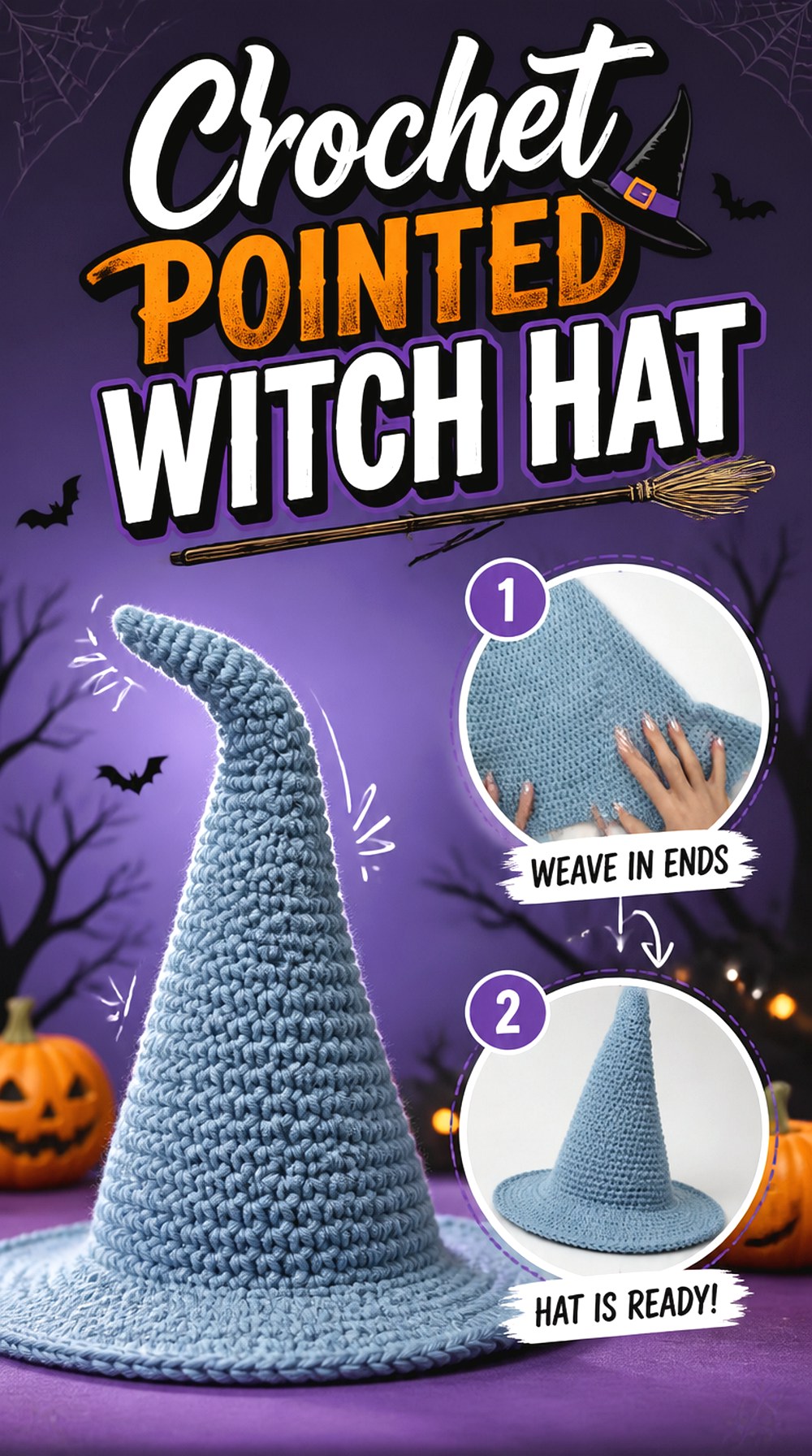
A tall pointed crochet hat is the most immediately recognizable witch accessory in the collection, and its strong silhouette makes it suitable for Halloween outfits, fantasy events, themed photos, or a deliberately theatrical autumn look. Unlike a simple beanie with spooky colors, the shape itself creates the theme before any embellishments are added.
The main planning decision is how exaggerated you want that shape to feel. A firm, pronounced point and visible brim create more drama, while softer fabric can make the hat look relaxed. If you plan to decorate it with leaves, charms, flowers, or a band, make those additions secondary to the hat’s fit and balance rather than loading one side with unnecessary weight.
Brim Shape Decides How Costume-Like It Feels
The brim changes the personality of a witch hat almost as much as the pointed crown. A broader or more sculptural brim can create a dramatic fantasy outline, while a less exaggerated brim is easier to combine with ordinary autumn layers. Before adding decorative elements, look at the hat from the front and side. If the brim already has plenty of visual movement, restraint elsewhere can keep the finished piece from becoming cluttered.
Keep the Crown Light Enough to Sit Where You Want
A tall crochet crown can lean, collapse, or pull differently depending on yarn behavior and fabric density. That does not automatically mean something is wrong; a deliberately floppy point can be part of the style. Decide which result you want before changing materials. If you substitute a noticeably heavier yarn, check the developing crown on the wearer so extra weight does not change the intended silhouette more than expected.
Check Head Fit Before Final Finishing
Treat the hat opening as a real wearable measurement rather than a decorative detail. Crochet fabric can stretch differently according to fiber, stitch structure, and tension, so a circumference calculation alone may not predict comfort. Try the hat on before permanently attaching optional trim. It is easier to correct the basic fit first than to remove a decorative band or embellishments after discovering that the opening is too loose or restrictive.
Original Tutorial and Creator Credit
2. Crochet Spiderweb Bandana Head Scarf
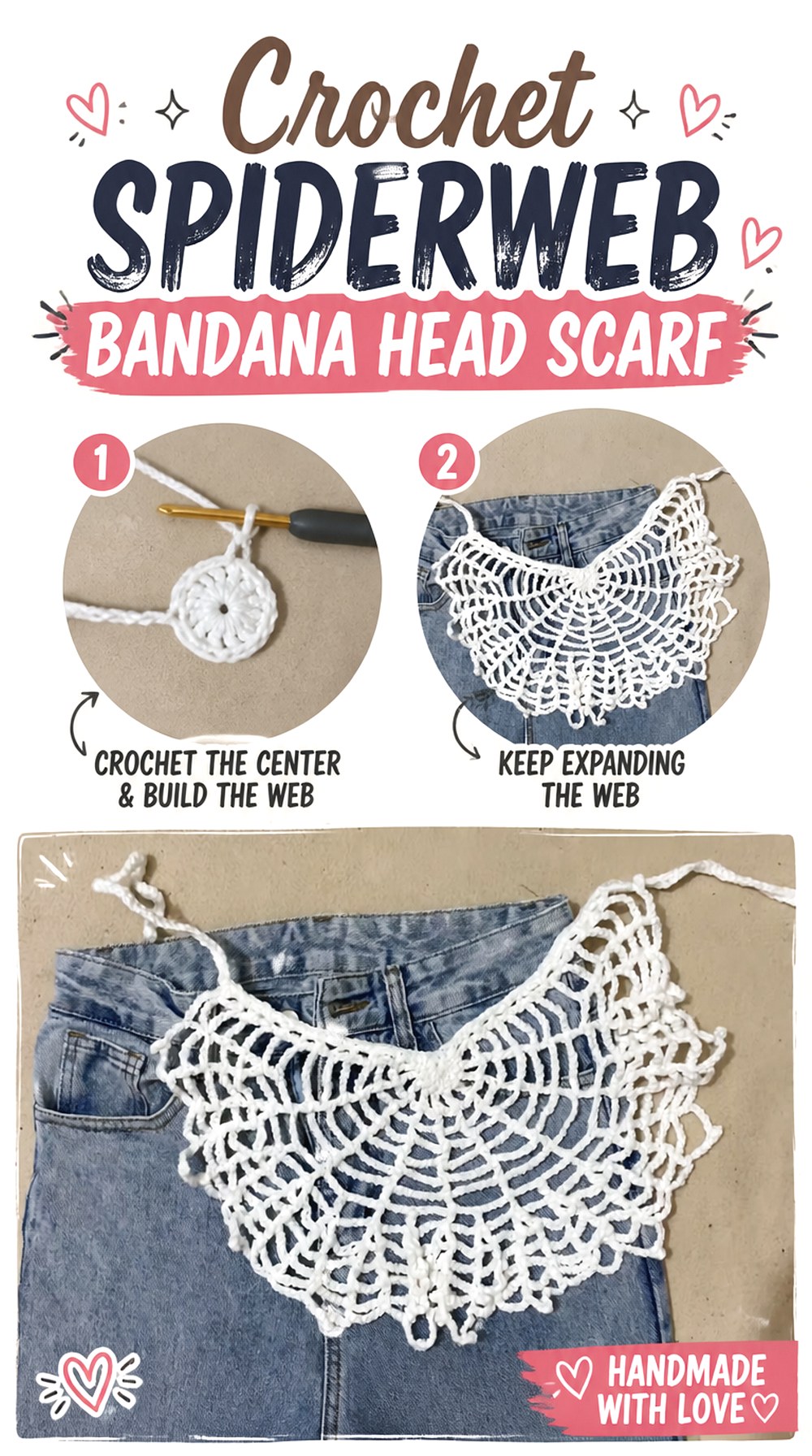
A spiderweb bandana places the spooky motif directly into the structure of the accessory instead of relying on appliqués. The open web pattern gives it a much lighter appearance than a solid hat, making it an appealing option when you want gothic detail without covering the entire head.
Because the design is worn against hair or another layer, the empty spaces are part of the visual effect. Dark yarn against lighter hair can make the web obvious, while similar tones create something subtler. It can work with casual fall outfits, festival styling, or Halloween looks. Compared with the witch hat, this is less costume-like and easier to treat as an everyday statement piece.
Open Webbing Makes Blocking Part of the Look
A spiderweb motif depends on open spaces reading clearly. If the fabric bunches heavily, the geometry can disappear even when the stitches themselves are correct. Appropriate blocking for the chosen fiber can help the scarf settle into its intended outline and show the openwork more evenly. Follow the yarn’s care guidance rather than assuming every fiber should receive the same treatment, especially when working with heat-sensitive materials.
Tie Length Changes How the Bandana Sits
The main triangle is only part of the fit. Ties that are too short may limit how the scarf can be secured, while overly long ties can become more decorative than practical. Consider whether you want the ends hidden beneath the hair, tied visibly at the nape, or incorporated into the outfit. Test the wearing position before treating the finished tie proportions as purely aesthetic.
Original Tutorial and Creator Credit
Creator: Mahamakestuff
3. Crochet Subtle Pumpkin Beret
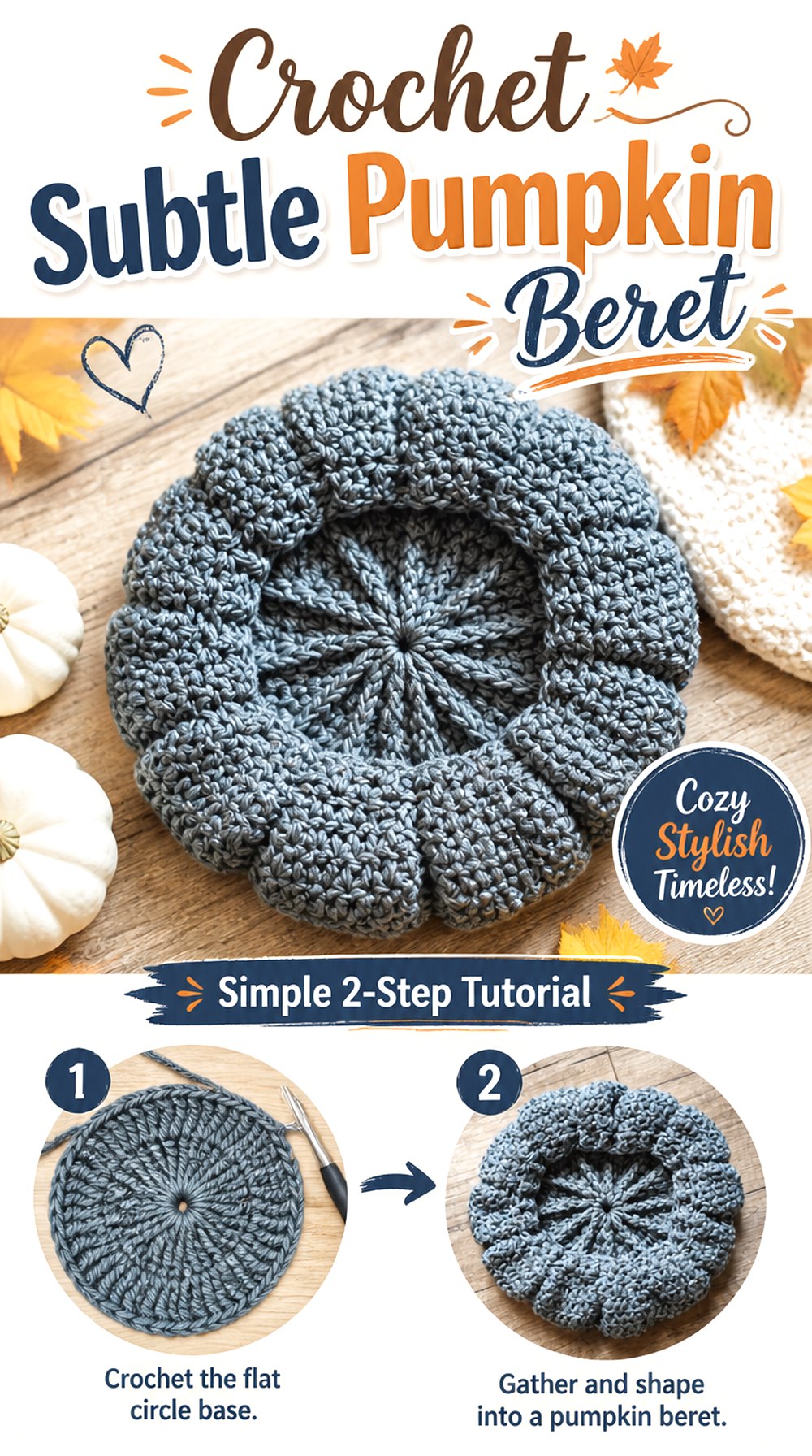
A pumpkin-inspired beret offers seasonal character without requiring a literal jack-o’-lantern face or novelty costume shape. Its rounded form can suggest pumpkin segmentation while still functioning as a recognizable beret, making it one of the easier pieces in this collection to wear throughout the broader autumn season.
This is a useful choice for readers who like witchy or harvest styling but want something softer than skulls, bats, and webs. Pairing the texture with rust or orange makes the pumpkin association stronger, while brown, burgundy, green, or another muted shade can push the same form toward vintage fall headwear instead.
Pumpkin Texture Can Read Subtle or Playful
Color determines only part of the effect. Strongly defined ridges and a traditional pumpkin palette make the seasonal reference obvious, whereas a quieter shade lets the beret shape take priority. Decide whether you want people to notice “pumpkin” first or simply see a textured autumn hat. That choice can also guide whether you add further seasonal styling around it or let the crochet texture remain the only theme.
Follow the Creator’s Numbering Correction Before You Start
The creator notes in the video description that some displayed round numbers are duplicated and provides corrected numbering information there. That makes the description worth checking before following the visual labels mechanically. It is a good example of why the watch page matters: corrections and clarifications can be as important as the footage itself when working from a video tutorial.
Test the Band Before Committing to Crown Fullness
A beret needs enough difference between the fitted band and fuller crown to create its characteristic shape, but comfort at the head opening still comes first. Yarn substitution or unusually tight tension can change that relationship. Check the band against the intended wearer and notice how the fuller section distributes around the head before assuming additional volume will automatically improve the silhouette.
Original Tutorial and Creator Credit
Creator: Slow Crochet
4. Crochet Woodland Leaf Headband
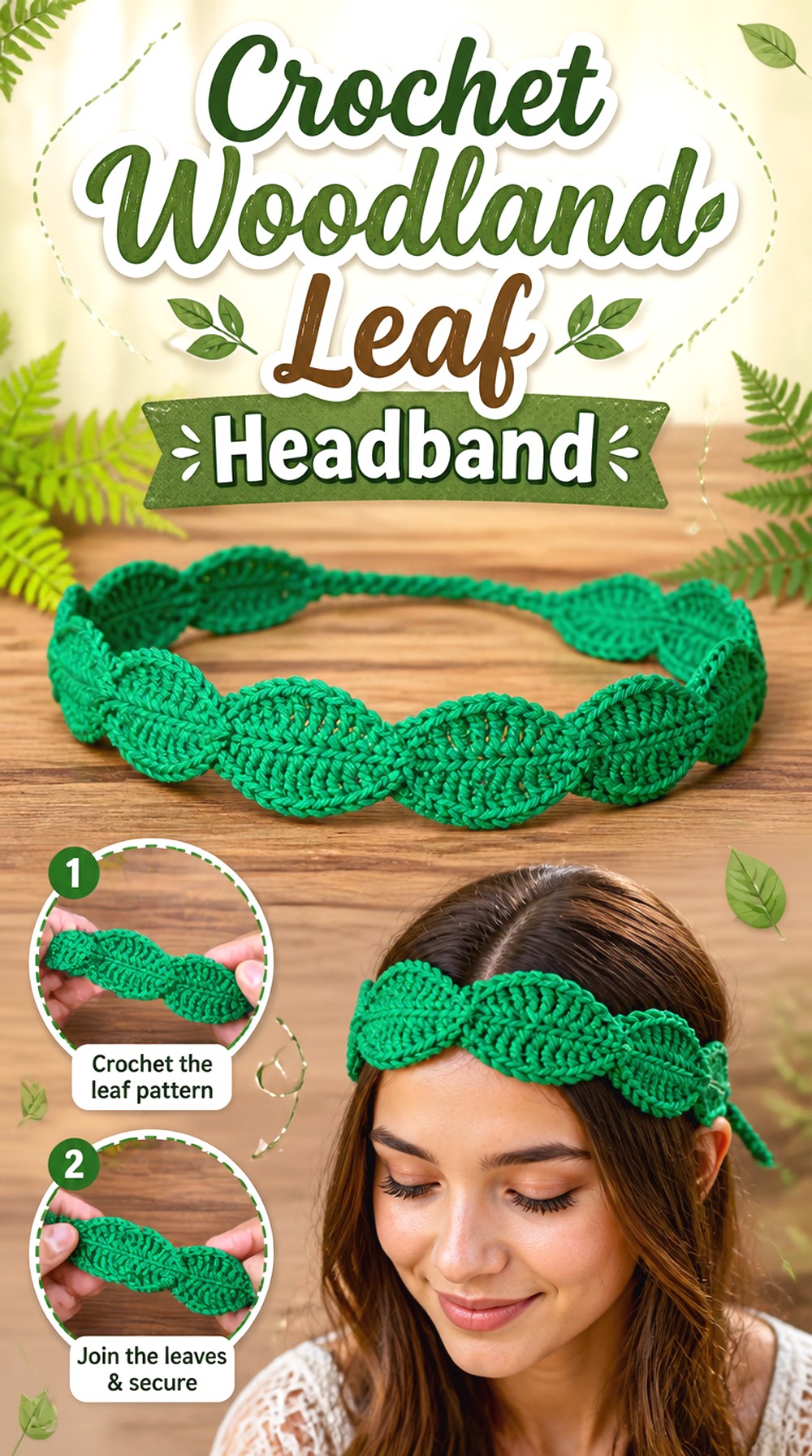
A crochet leaf headband brings the collection toward forest-witch and botanical styling. Instead of treating leaves as tiny appliqués scattered over a larger accessory, this project makes the foliage itself the visual focus. That creates a piece that can work with autumn outfits, woodland costumes, festival clothing, or nature-inspired photo styling.
The headband is also comparatively lightweight in visual scale, so it can introduce the theme without competing with a patterned sweater, cape, or dramatic jewelry. Autumn colors make the seasonal connection obvious, but green or neutral foliage can extend its usefulness beyond fall.
Leaf Scale Should Match the Intended Hair Placement
Before multiplying a leaf motif, consider how much of the head you want the foliage to occupy. Larger or more densely arranged leaves create a crown-like effect, while a narrower arrangement behaves more like a conventional headband. Check the piece against the wearer’s hairstyle as well as head circumference; thick curls, braids, and updos can change how much of the crochet remains visible.
Smooth Yarn Keeps the Leaf Edges Readable
Leaf motifs rely on recognizable outlines and surface detail. Highly fuzzy yarn can soften those edges until the botanical shape becomes less distinct, especially on small motifs. When substituting materials, compare a sample leaf with the intended styling distance rather than judging it only from a few inches away. Clear definition is usually more important here than adding extra texture to an already detailed shape.
Original Tutorial and Creator Credit
Creator: knitting workshop
5. Crochet Shadowy Hooded Cowl
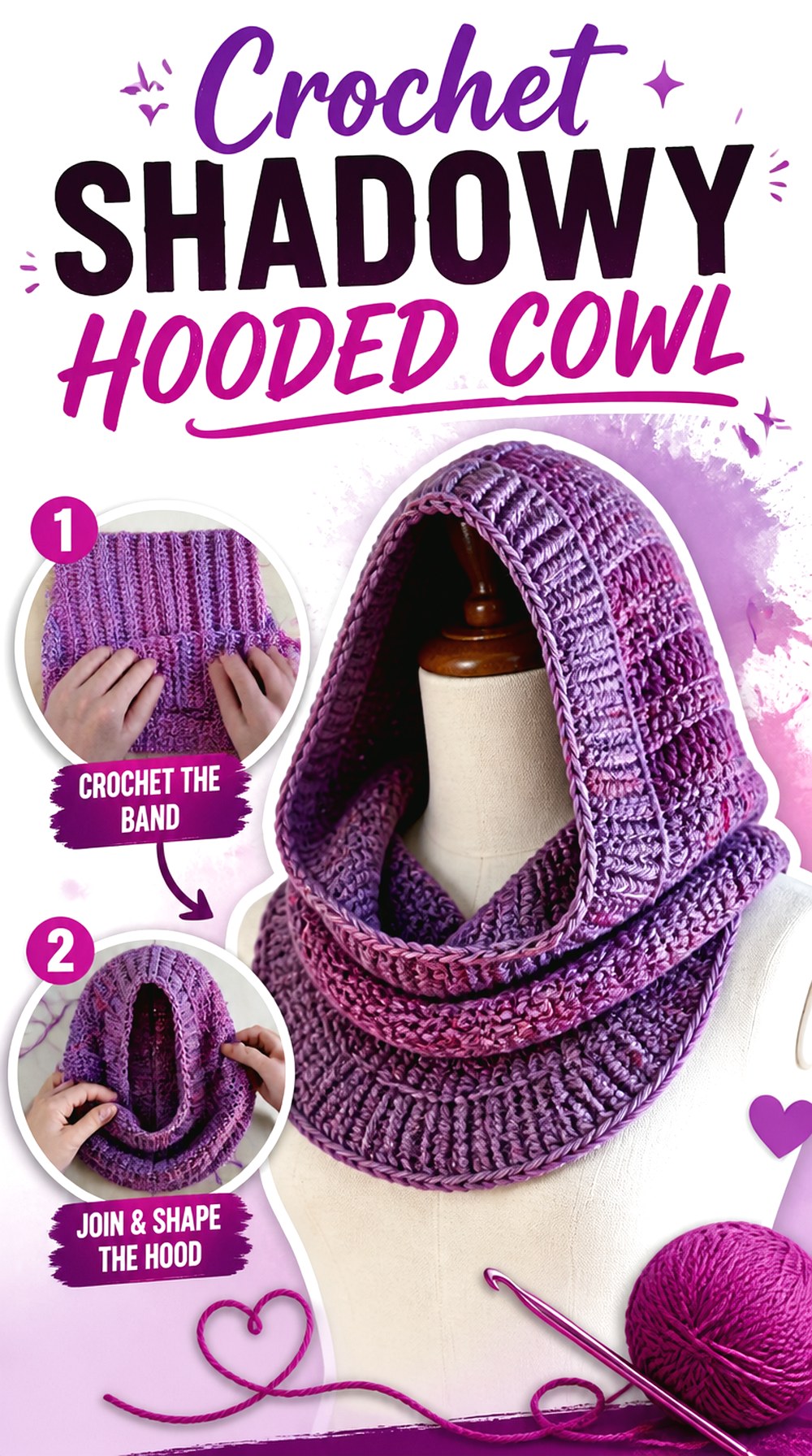
A hooded cowl sits between a neck warmer and a dramatic fantasy hood, which makes it particularly useful for autumn witch styling. Unlike a separate scarf and hat, the connected shape frames the face while adding coverage around the neck. In black, charcoal, deep green, plum, or brown, it can feel gothic or woodland-inspired without needing any literal Halloween motif.
The practical advantage is layering. It can sit over a top or sweater and under some outerwear, while the hood can be worn up for a more mysterious silhouette or down when you want the cowl portion to take over visually.
Hood Depth Changes the Whole Silhouette
A close-fitting hood and a deep, draped hood create very different effects even when the neckline is similar. More depth can produce a storybook or fantasy appearance, but excessive fabric may fall forward or bunch around the shoulders. Think about whether the hood needs to frame the face, accommodate hair, or sit over another head covering, and evaluate those needs during fitting rather than after finishing.
A Cowl Base Gives More Coverage Than a Loose Hood
A hood that connects to a substantial neck section behaves differently from a decorative hood attached by narrow ties. The cowl portion can reduce gaps around the neckline and creates a more integrated cold-weather accessory. That also means bulk matters. If you plan to wear it beneath a jacket, test the neckline with that jacket before deciding that more volume automatically means a better result.
Check How It Layers Under a Coat
A beautiful hood can become uncomfortable if the lower section competes with a high coat collar or thick lapels. Try the developing accessory with the outerwear you expect to use most often. If the crochet fabric is already substantial, you may prefer a smoother base layer underneath rather than stacking several bulky neck pieces and hiding the hood’s shape.
Original Tutorial and Creator Credit
Creator: Kiri Kiri
6. Crochet Narrow Skull Scarf
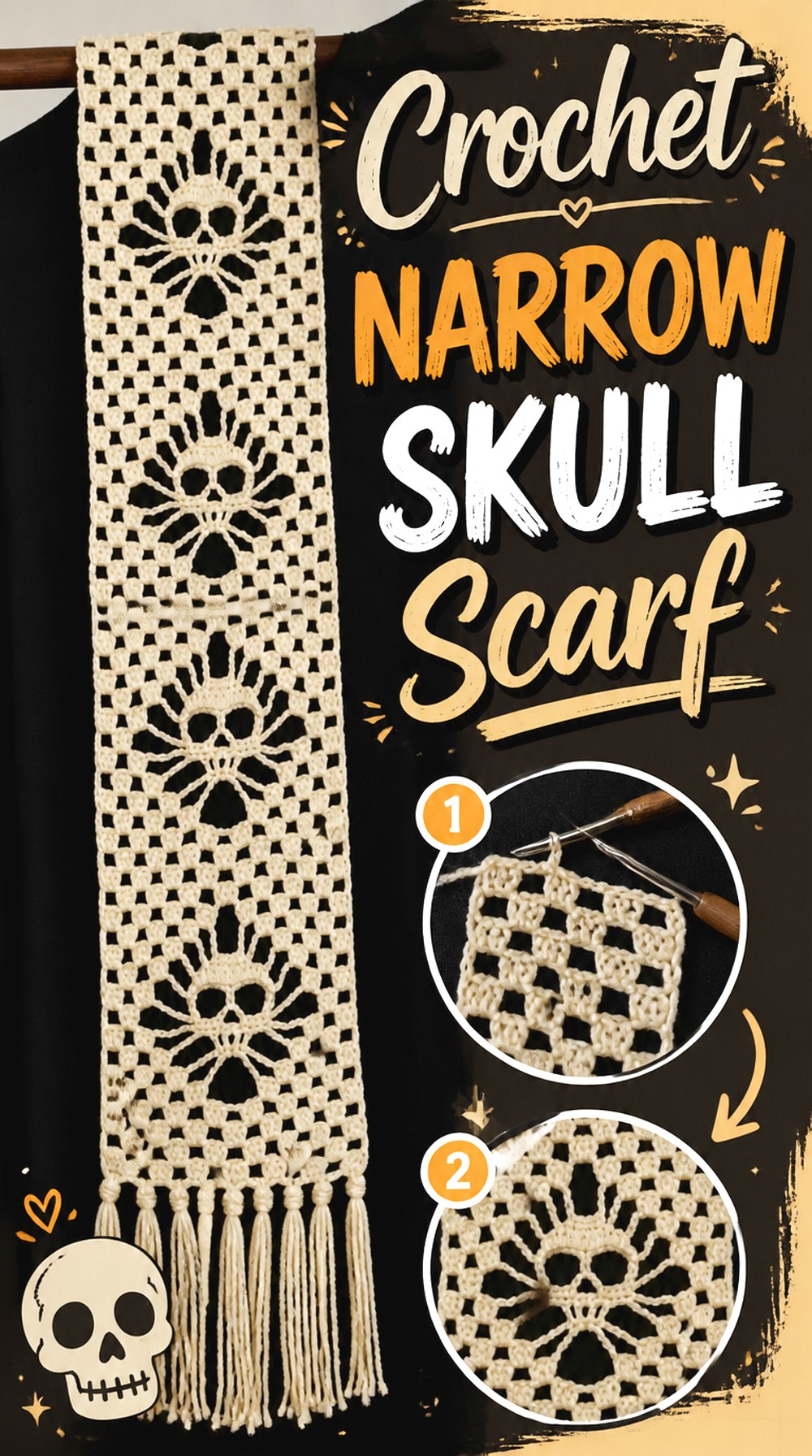
The skull scarf brings unmistakably gothic imagery into a long, wearable accessory without needing three-dimensional embellishments. Because the skulls are worked into the fabric design, the motif remains part of the scarf rather than sitting on top as decoration.
Its narrow proportion keeps the accessory visually focused and gives the skull pattern room to repeat without creating the bulk of a wide winter wrap. It can be styled over a plain coat, dark dress, or sweater where the motif has enough contrast to remain visible. This is a stronger Halloween and goth statement than the hooded cowl, but it still functions as conventional neckwear.
Skull Motifs Need Enough Contrast to Stay Visible
Intricate imagery can disappear when the scarf, background clothing, and surrounding layers are all visually similar. If showcasing the skulls matters, consider how the yarn color will read against the clothing beneath it. Contrast does not have to mean black and white; a pale neutral over burgundy or a dark skull scarf over camel outerwear can define the motif just as effectively.
Scarf Length and Weight Should Stay in Balance
A narrow scarf may look lightweight, but repeated crochet fabric can still accumulate weight. Heavier yarn substitutions can make a long accessory pull more noticeably at the neck and may change how the ends hang. Before extending or modifying the design, drape the developing scarf around the wearer and consider whether the additional length improves styling enough to justify the extra fabric.
Directional Motifs Affect the Finished Presentation
When recognizable motifs appear along a scarf, their direction can influence how polished the two hanging ends look. The Fiber Spider tutorial demonstrates Karin Kaufmann’s narrow skull scarf design in video form, so readers should follow the source for the actual construction and motif orientation rather than trying to reconstruct it from a finished photograph.
Original Tutorial and Creator Credit
Creator: Fiber Spider
7. Crochet Victorian Lace Collar
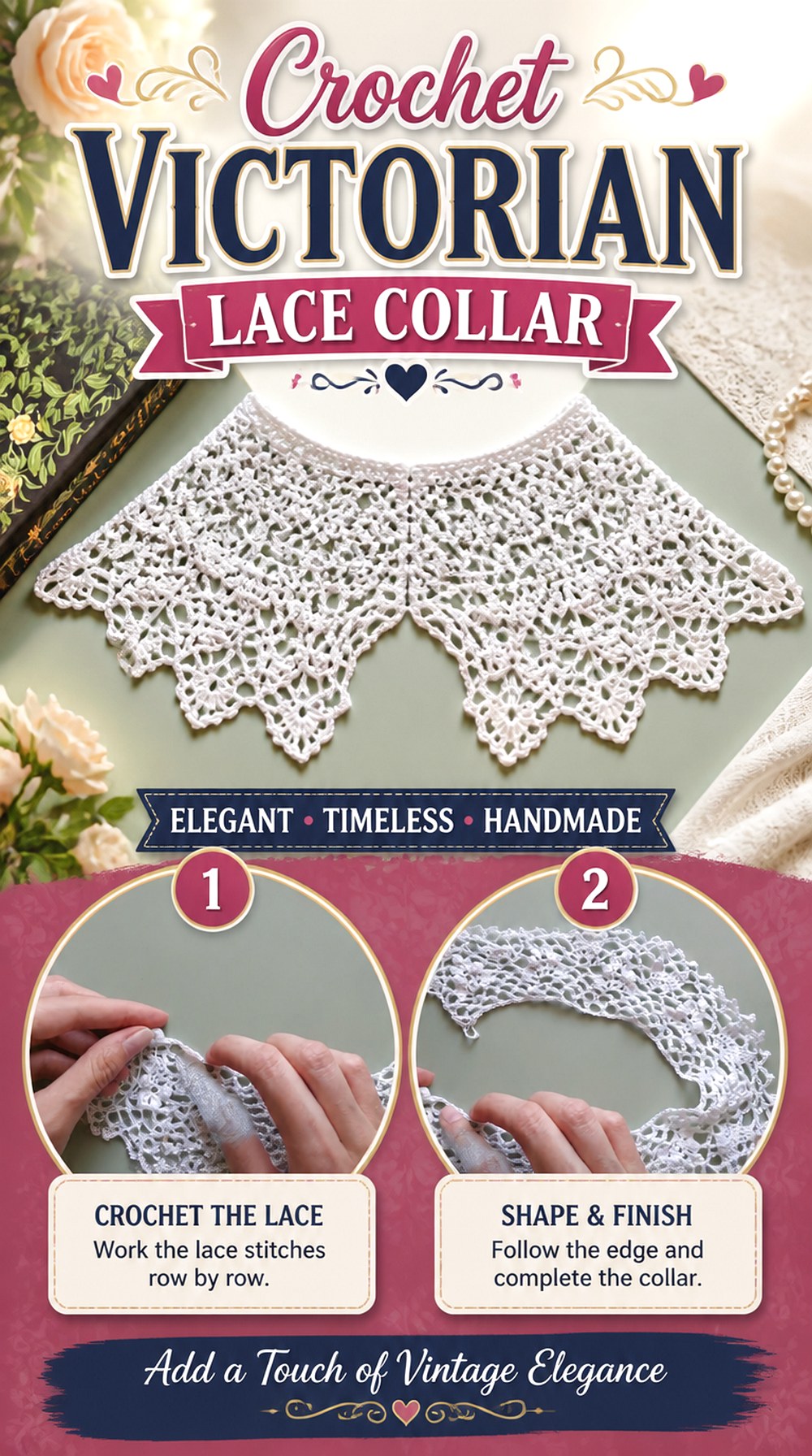
A removable lace collar can make an ordinary dark dress, blouse, or sweater feel distinctly Victorian or romantic-goth without altering the garment itself. Its shape frames the neckline rather than adding warmth, so this is primarily a styling accessory rather than a cold-weather layer.
That distinction makes the collar particularly useful for indoor fall outfits or for wearing under coats that would hide a larger shawl. Cream can create an antique contrast over black clothing, while black, wine, or another dark tone gives the collar a quieter gothic effect. Because the lace sits close to the neck and shoulders, proportion and finishing are more important than simply making the motif larger.
Neckline Fit Matters More Than Outer Lace Width
A generous outer edge can look dramatic, but the inner neckline determines whether the collar actually sits where intended. If the inner edge is too loose, the collar may shift or drop unevenly; too tight, and it can feel restrictive. Compare the developing neckline with the garment you plan to wear underneath, since a high-neck blouse and an open dress neckline can position the same collar differently.
Crisp Stitch Definition Helps the Collar Hold Its Edge
The creator demonstrates the collar with a fine, smooth-looking material that allows the lace pattern to remain visible. If you substitute a much fuzzier yarn, the finished piece may look softer but lose some of that precise edge definition. A small sample can reveal whether the lace openings and outer contours still read clearly before you commit to the full accessory.
Choose the Closure Before the Final Fit Check
A removable collar needs a practical way to remain positioned around the neckline. Whatever closure approach you use, include its effect in the final fit rather than treating it as an afterthought. A closure that pulls the two ends too tightly can distort the front edge; one with too much slack can leave the collar sitting unevenly. Check both appearance and comfort with the collar actually fastened.
Original Tutorial and Creator Credit
Creator: DoilyDreams
8. Crochet Beaded Gothic Choker
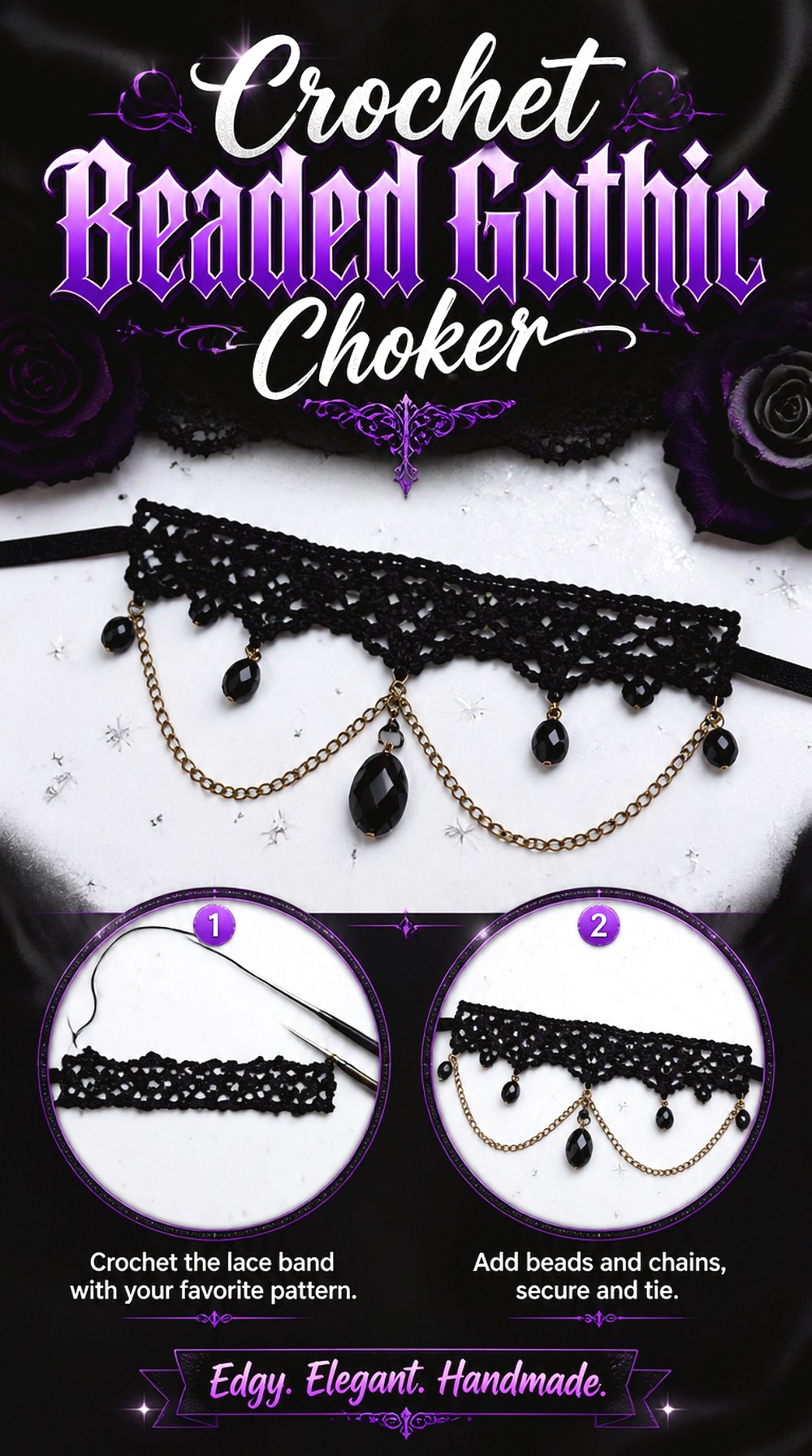
A crochet choker concentrates the gothic effect into a much smaller area than a scarf or collar. Lace around the neck creates the textile base, while jewelry findings and a focal bead can push the finished accessory toward Victorian, masquerade, or Wednesday-inspired styling.
Because it sits closely around the neck, this is one project where comfort should carry as much weight as appearance. It is also more mixed-media than many projects in the collection: the cited tutorial incorporates jewelry hardware in addition to crochet. That makes it a useful choice for someone who wants crochet to function as part of a finished jewelry piece rather than as the entire object.
Jewelry Hardware Is Part of the Crochet Decision
The tutorial’s materials include jewelry components such as a chain, clasp, jump rings, and decorative elements. Check that you are comfortable attaching and using those findings before choosing the project solely for its crochet lace. Hardware can affect adjustability and how the choker closes, so it deserves the same planning attention as the yarn portion.
Keep the Focal Bead Proportional to the Lace
A large bead or charm can create a strong central point, but it can also pull delicate lace downward if its visual or physical weight overwhelms the crochet. If you change the embellishment, hold it against the completed or sampled lace before permanently attaching it. The best scale is one that remains noticeable without hiding the structure that makes the choker look crocheted.
Make Neck Comfort the Final Check
A choker should be evaluated in normal movement, not only while standing still in front of a mirror. Turn your head, look down, and notice whether the edge or hardware rubs uncomfortably. If the closure provides adjustment, use it to find a secure position without treating an extremely tight fit as necessary for the gothic look.
Original Tutorial and Creator Credit
Creator: Crocket Crochet
9. Crochet Celestial Moon Bag
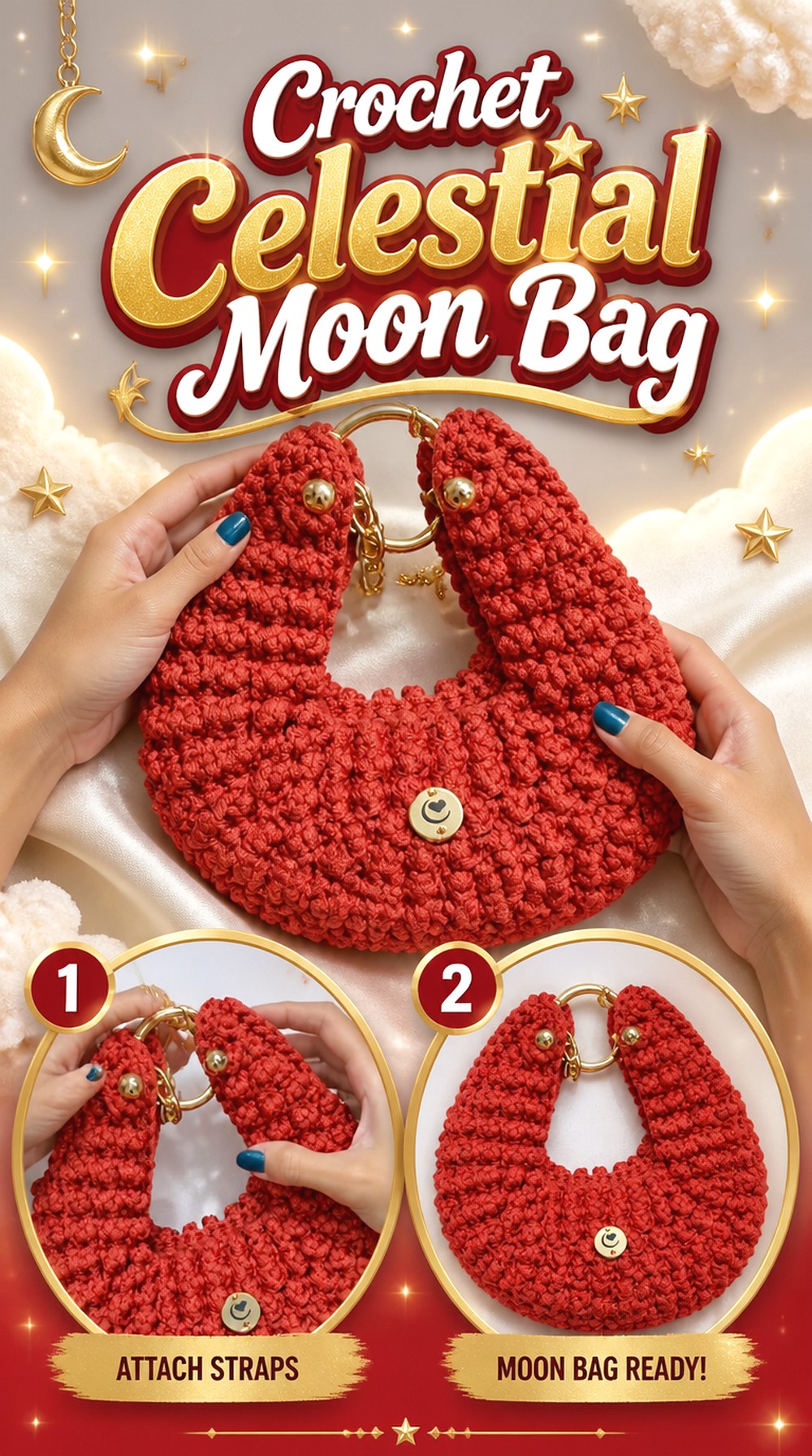
A moon-shaped crochet bag introduces celestial imagery without printing or embroidering a moon onto an ordinary rectangle. The curved body makes the silhouette itself the focal feature, giving the accessory a witchy identity even in a single solid color.
This design works particularly well when you want the themed piece to remain functional. It can accompany fall outfits rather than sitting in storage as seasonal decor, and the crescent-like shape separates it clearly from the drawstring witch bag later in the list. Before choosing it, think about the items you realistically carry because an unusual outer silhouette does not always provide the same interior space as a conventional tote.
Crescent Shape Can Steal Usable Interior Space
Curved bags look distinctive precisely because they do not use a standard rectangular body. That can mean narrow areas inside are less useful for bulky objects. Instead of judging capacity from the widest visible point, think about the actual shapes of your phone, wallet, keys, or other essentials. If those items require a flat rectangular area, compare them with the finished bag shape shown in the tutorial before committing.
Strap Attachment Deserves Reinforcement
A strap concentrates pulling force into relatively small attachment areas. Crochet fabric can stretch, especially when the bag carries weight, so inspect how the tutorial connects the strap and avoid assuming any decorative attachment will automatically be suitable for heavy contents. If you adapt the strap style, make sure the attachment remains compatible with the bag’s curved body rather than placing all tension on a fragile edge.
Decide Whether You Need a Lining
A lining can be useful when the crochet fabric has openings large enough for small objects to poke through or when you want to limit some stretching, but it adds a separate finishing task. Do not assume the tutorial includes one unless the creator explicitly shows it. Decide based on what you intend to carry and the density of your own finished fabric rather than adding lining automatically to every crochet bag.
Original Tutorial and Creator Credit
Creator: Art Luna Crochê
10. Crochet Witch Drawstring Backpack
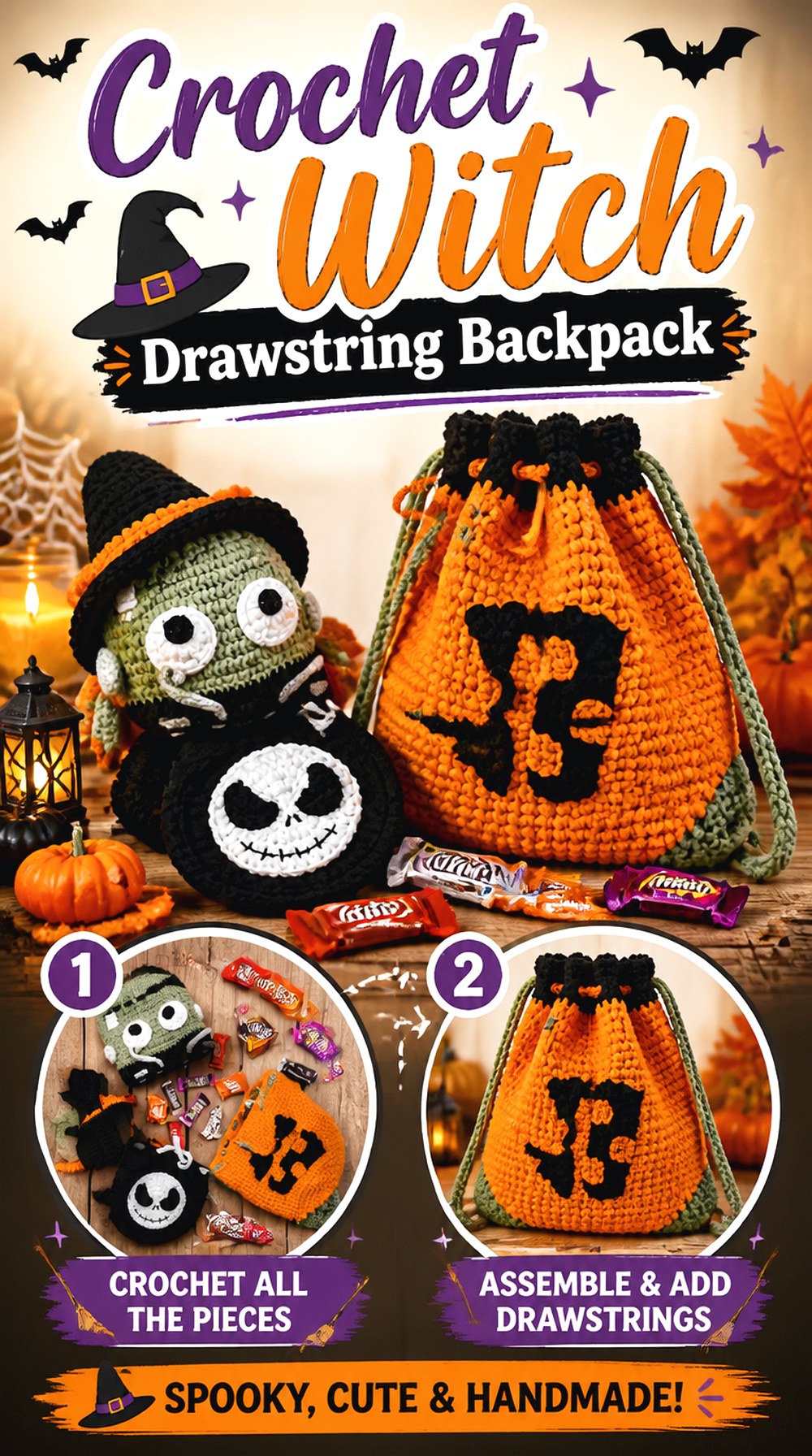
A drawstring witch bag combines a practical pouch-style body with a much more literal Halloween character theme. The creator’s related witch trick-or-treat bag material uses the drawstring bag construction as the foundation for the themed design, making this a stronger novelty option than the moon bag.
The drawstring opening and wearable straps also make the format useful for carrying lightweight personal items or seasonal treats. Because the character details sit on a functioning bag, they should enhance the theme without interfering with the opening, drawcord movement, or strap attachment.
The Drawstring Opening Prioritizes Access Over Security
A drawstring can be convenient because it opens across much of the top and closes without a zipper, but it does not behave like a rigid, fully sealed closure. Think about where the bag will be used and what will go inside. Small valuables that need a highly secure compartment may call for an internal pouch or a different bag style rather than expecting the decorative drawstring design to perform like luggage.
Character Details Should Not Obstruct the Closure
Witch-themed facial or decorative elements are most successful when they remain clear of the working parts of the bag. Before attaching optional features, operate the drawstring several times and observe where the fabric gathers. Decorative pieces placed directly in a high-fold area may twist or disappear when the bag closes, so position them with the bag’s actual movement in mind.
Strap Length Needs to Match the Wearer
A wearable drawstring bag can sit differently on a child, teen, or adult, and overly long cords can create unnecessary dangling length. The cited Part 1 tutorial includes the bag, drawstring, and strap construction, while the creator’s related Halloween material identifies the witch version of the project. Follow the original source when determining the appropriate construction and fit.
Original Tutorial and Creator Credit
Creator: Sigoni Macaroni
11. Crochet Neo Goth Fingerless Gloves
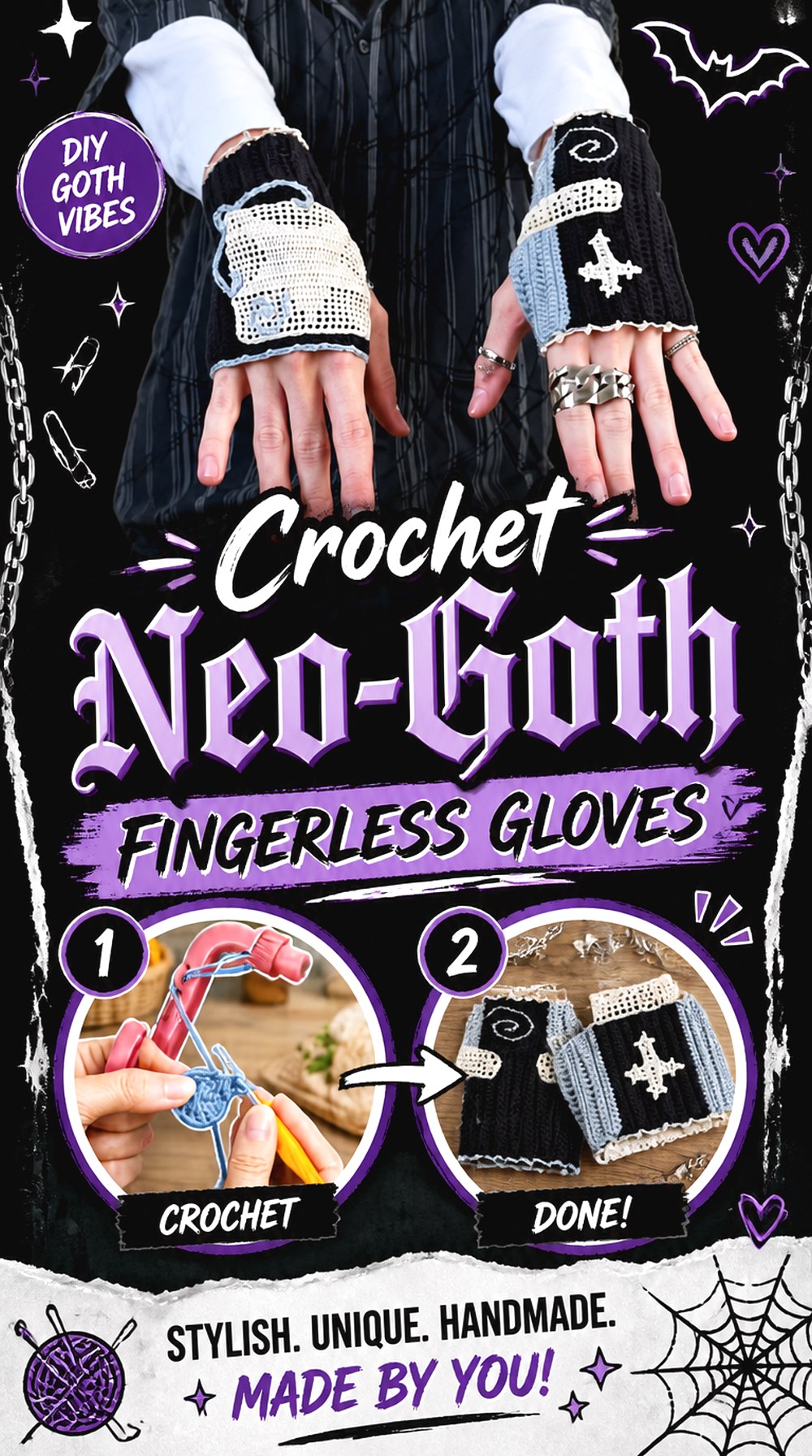
Fingerless gloves give you a dark layered look while leaving the fingers available for everyday tasks. The featured tutorial uses a Wednesday-inspired alternative aesthetic with lace and filet-style details, so the witchy effect comes from both the color treatment and the openness of the fabric rather than from an attached Halloween motif.
This makes them easier to pair with jackets, long sleeves, dresses, or layered black outfits than a heavily embellished costume glove. They also occupy a useful middle ground: more substantial than decorative wrist cuffs but less enclosing than full mittens.
Filet and Lace Details Need Clear Contrast
Open motifs become easier to recognize when there is some visual separation between the glove and the skin or sleeve beneath it. If you plan to wear the gloves over another layer, test that combination before choosing both pieces in nearly identical textures. A detailed black glove over a smooth lighter sleeve will read differently from the same glove over a heavily patterned knit.
Thumb Opening Placement Controls Comfort
Fingerless gloves can technically fit around the hand while still feeling awkward if the thumb opening sits too high, low, or tight. Fit the developing piece on the intended hand and move the thumb normally before finishing. Yarn substitutions that change stretch may also change how that opening behaves, so use the tutorial’s construction as your reference rather than copying dimensions from another pair of gloves.
Stretch Changes With Fiber and Tension
The wrist and hand need enough stability to keep the glove positioned, but overly rigid fabric may make it uncomfortable to put on. Conversely, a very elastic substitute can loosen with wear. Before making both gloves, evaluate the first one’s recovery after being stretched over the hand. Matching the second glove to an already successful first one is more useful than relying on an assumed universal fit.
Original Tutorial and Creator Credit
Creator: divyne crochet
12. Crochet Victorian Wrist Cuffs
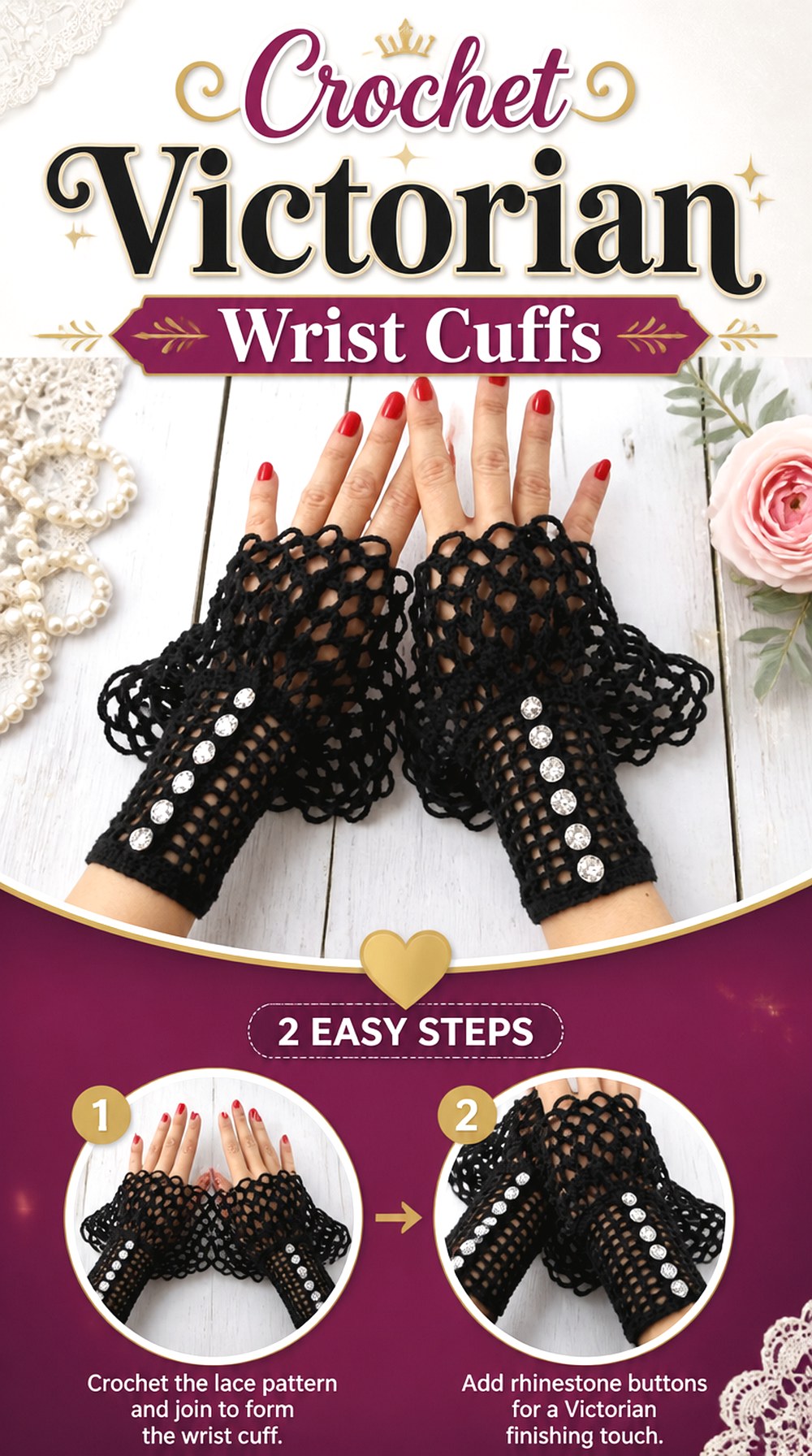
Victorian-style crochet cuffs are smaller and more decorative than fingerless gloves. They concentrate lace around the wrist and lower hand area, making them useful for adding a vintage-goth detail beneath jacket sleeves or beside a long-sleeved dress.
Because they do not need to provide full hand coverage, these cuffs can focus on ornamental edging and silhouette. That makes them a good option when you want a dramatic old-fashioned detail without committing to a larger wearable. They can also help visually connect a Victorian collar or choker with the rest of an outfit without repeating the exact same accessory.
These Cuffs Are Decorative Before They Are Warm
Treat the cuffs as styling pieces rather than assuming open lace will provide the same warmth as dense wrist warmers. That distinction can guide yarn choice and layering. If cold-weather function is important, you can wear the decorative cuff with a more practical sleeve underneath rather than trying to force one lightweight lace accessory to perform every job at once.
Sleeve Pairing Changes the Victorian Effect
The same cuff can look delicate against bare skin, dramatic beneath a black fitted sleeve, or softer beside a cream blouse. Test it with the garment you plan to wear because sleeve width can also affect how the cuff sits. A bulky cuff layered over an already wide sleeve may lose its definition, while a cleaner sleeve line gives the crochet edging more visual space.
Original Tutorial and Creator Credit
Creator: Zero Crafts
13. Crochet Dark Layering Arm Warmer Sweater
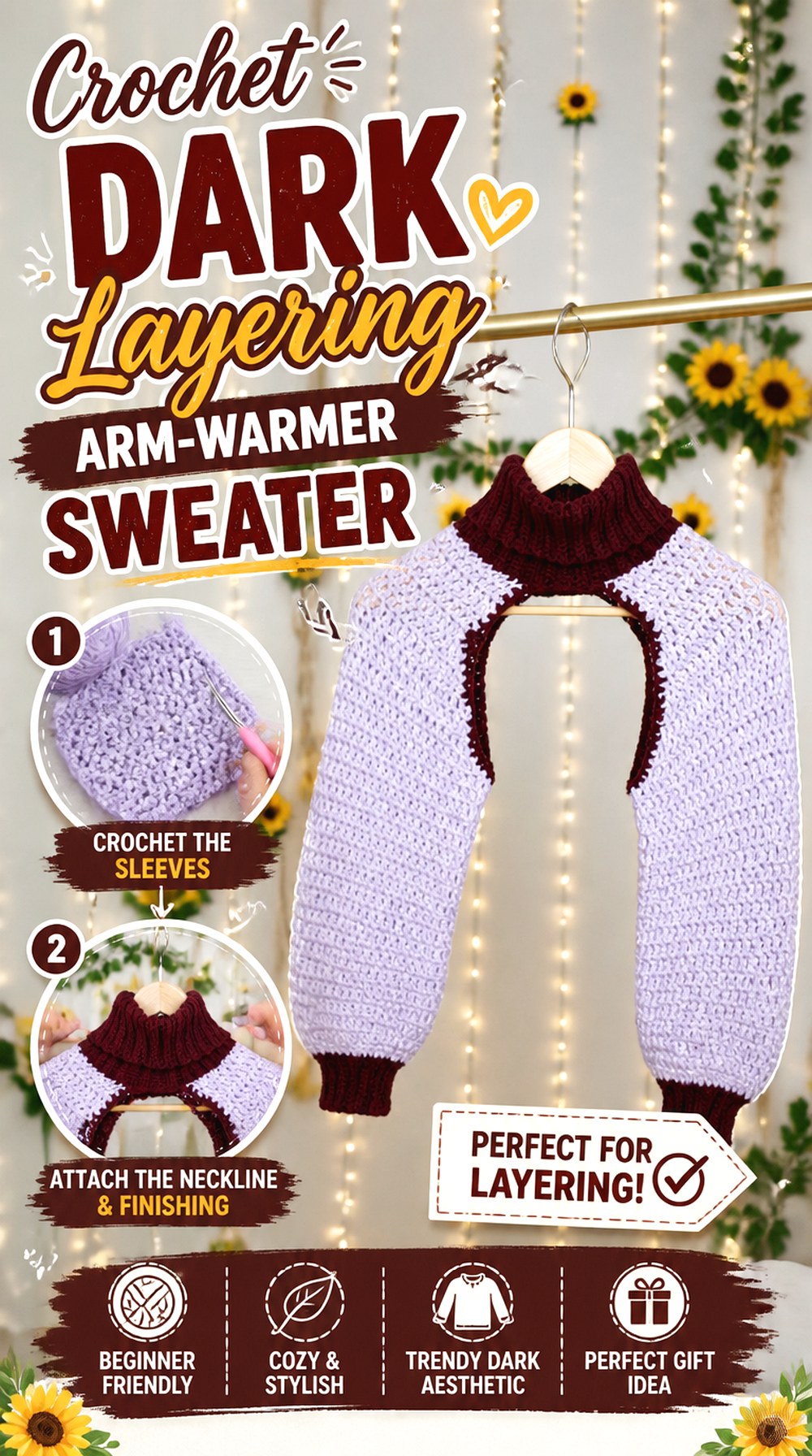
An arm-warmer sweater connects long sleeves across the upper body while leaving most of the torso uncovered. That unusual shape makes it more architectural than separate wrist warmers and gives it strong layering potential over fitted tops, dresses, or high-neck garments.
For witchy autumn styling, it can add texture and sleeve volume without hiding an entire outfit beneath a conventional sweater. It is also one of the projects where fit is interconnected: changing the sleeve length or width can affect the way the connecting section sits across the shoulders. The cited Brunaticality tutorial demonstrates this bodiless sweater format as a complete wearable.
Shoulder Span Matters More Than Wrist Fit Alone
Separate cuffs can be adjusted independently, but a connected arm-warmer design must also travel comfortably across the shoulders. If that span is too short, the sleeves may pull inward when the arms move; excessive length can let the upper section shift. Try the piece with the arms relaxed, lifted, and reaching forward so you judge mobility rather than fit in a single static pose.
Yarn Weight Changes How the Sleeves Hang
Long sleeves accumulate more fabric than small gloves, so a heavier yarn substitution may alter both drape and how much the garment pulls at the upper connection. If you want a soft, slouchy sleeve, that may be desirable. If you want crisp fitted lines, it may not be. Compare the tutorial’s fabric character with your yarn rather than substituting solely because the colors match.
Layer It Over a Base Garment During Fit Checks
Since this accessory is designed for layering, fitting it over bare skin can give an incomplete picture. A fitted turtleneck, dress sleeve, or other base garment adds thickness beneath the crochet and can affect comfort through the arms. Use the layer you expect to wear most often when checking the finished fit, particularly before making irreversible finishing decisions.
Original Tutorial and Creator Credit
Creator: Brunaticality
14. Crochet Flared Autumn Leg Warmers
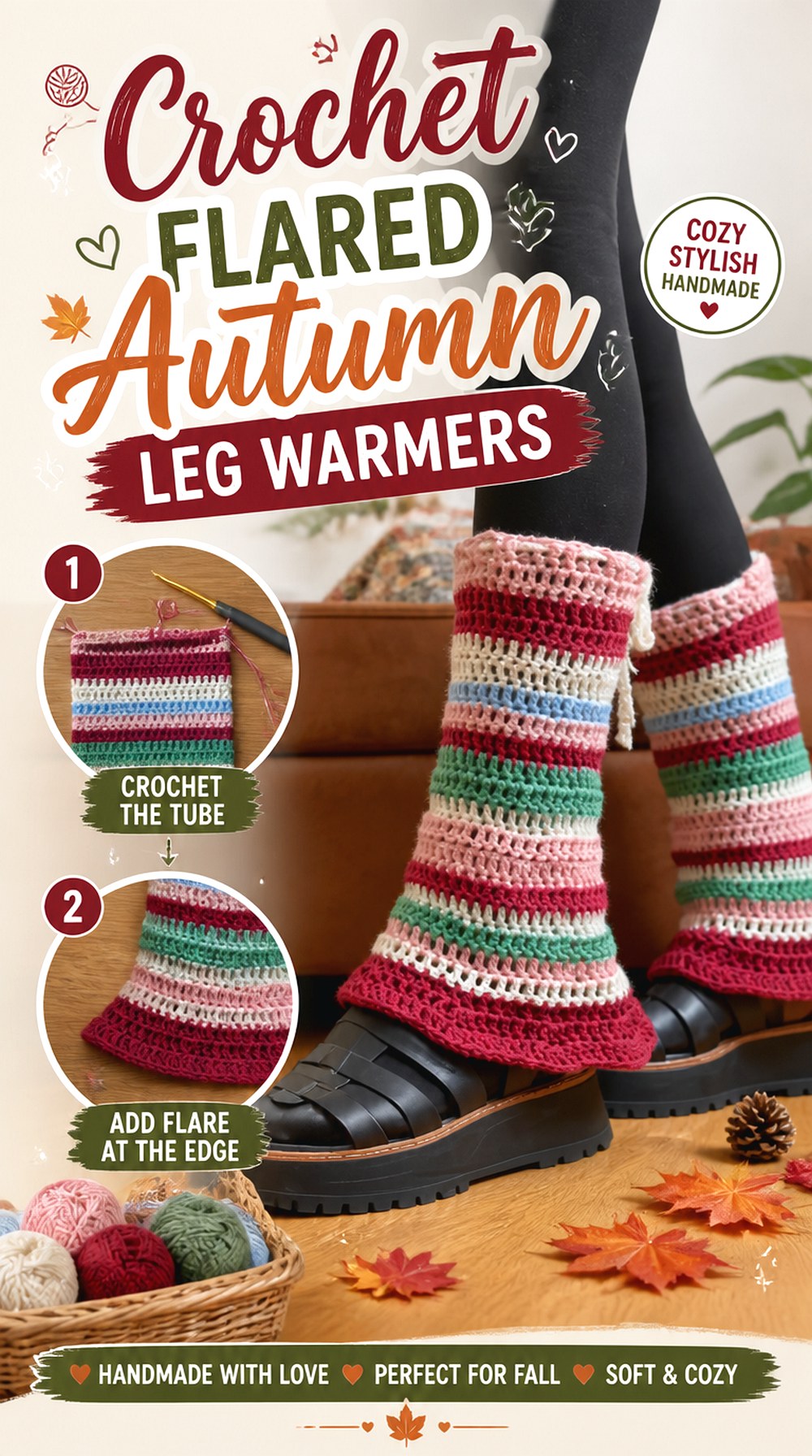
Flared leg warmers add shape around the lower leg instead of following one straight tube from top to bottom. That makes them useful for a witchy or fairy-grunge autumn outfit where silhouette matters as much as warmth. They can frame boots or shoes, extend the look of tights and skirts, or bring volume to an otherwise fitted outfit.
Compared with cuffs and gloves, these pieces need to balance two very different fit goals: the upper section must stay where intended while the lower flare needs freedom to open. The cited tutorial specifically demonstrates a flared leg-warmer construction.
Calf Fit and Flare Need Different Amounts of Ease
If every section fits as closely as the calf, the lower portion may not create a visible flare. If the whole piece is loose, it can slide. Think of the fitted and flared areas as serving different functions and evaluate them separately while following the creator’s method. Stretch at the upper opening is especially important because it has to hold without creating uncomfortable pressure.
Boot Pairing Should Be Tested Before Final Length
Leg warmers that end neatly above one shoe can bunch against the shaft of a taller boot. If you have a specific pair in mind, try them together before deciding the finished proportion looks right. A wider flare may sit outside a boot, while a narrower lower section may work better above it. The intended footwear is therefore part of the fit decision rather than an afterthought.
Match Both Legs as You Go
Small tension changes can become noticeable when two long accessories are worn side by side. Compare the developing second warmer with the first at several points instead of waiting until both are complete. Focus on overall length, where the flare begins visually, and how each piece sits on the leg rather than relying only on counting or assuming identical tension.
Original Tutorial and Creator Credit
Creator: Belcin
15. Crochet Lace Up Corset Waist Belt
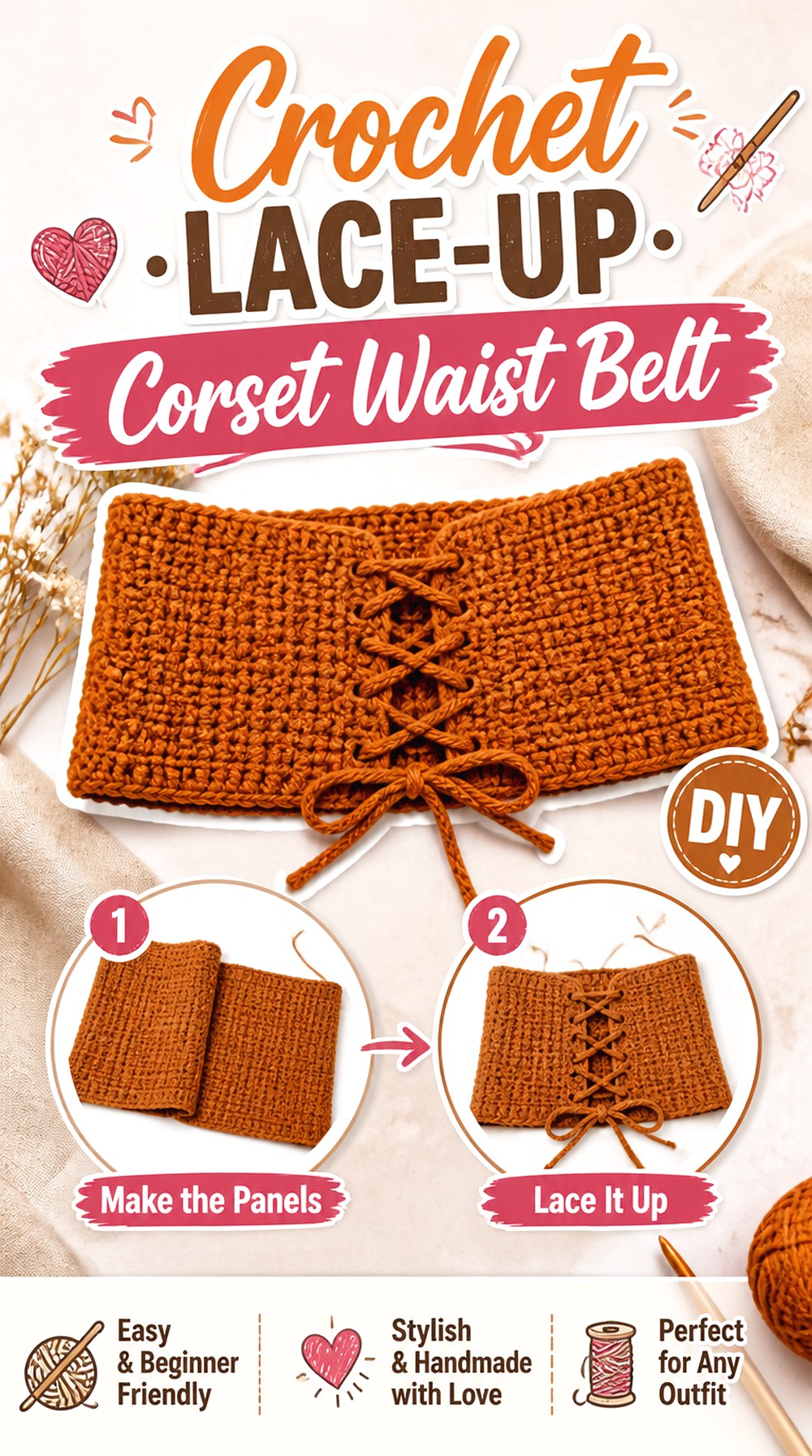
A crochet corset-style waist belt creates definition through a wide body and lace-up detail without turning the project into a full corset garment. Worn over a dress, blouse, oversized shirt, or layered skirt outfit, it can immediately shift the silhouette toward romantic goth, fantasy, or witch-inspired styling.
Its usefulness comes partly from being removable. You can change the look of several garments with one accessory rather than building the shaping into each outfit. The tutorial covers measurement planning and lacing-related construction, making fit one of the central decisions instead of a decorative afterthought.
Lacing Gives Adjustment but Not Unlimited Fit
A lace-up opening can accommodate some variation, but it should not be expected to correct a belt body that is fundamentally the wrong size. Decide how much visible gap you want at the lacing area and check the main section against the intended waist placement. If the belt only closes when the cords are pulled excessively tight, the fabric and edging may distort.
A Firm Fabric Creates a Cleaner Waistline
A very drapey fabric may fold or collapse instead of maintaining the broad waist-belt look. On the other hand, extremely rigid crochet can feel uncomfortable when sitting or bending. When substituting yarn, test a sample for both flexibility and recovery. The goal is enough body to maintain the accessory’s shape without turning the belt into an inflexible band.
Place the Belt Where the Outfit Actually Needs Shape
Natural waist, high waist, and lower waist placements can change both comfort and appearance. Try the belt over the garment you intend to wear rather than choosing placement while wearing a thin base layer. Thick sweater fabric adds bulk, while a lightweight dress may need less room. Fit the actual outfit combination instead of expecting one lacing position to suit every layer.
Original Tutorial and Creator Credit
Creator: Kemunto crochets
16. Crochet Bat Wing Scrunchie
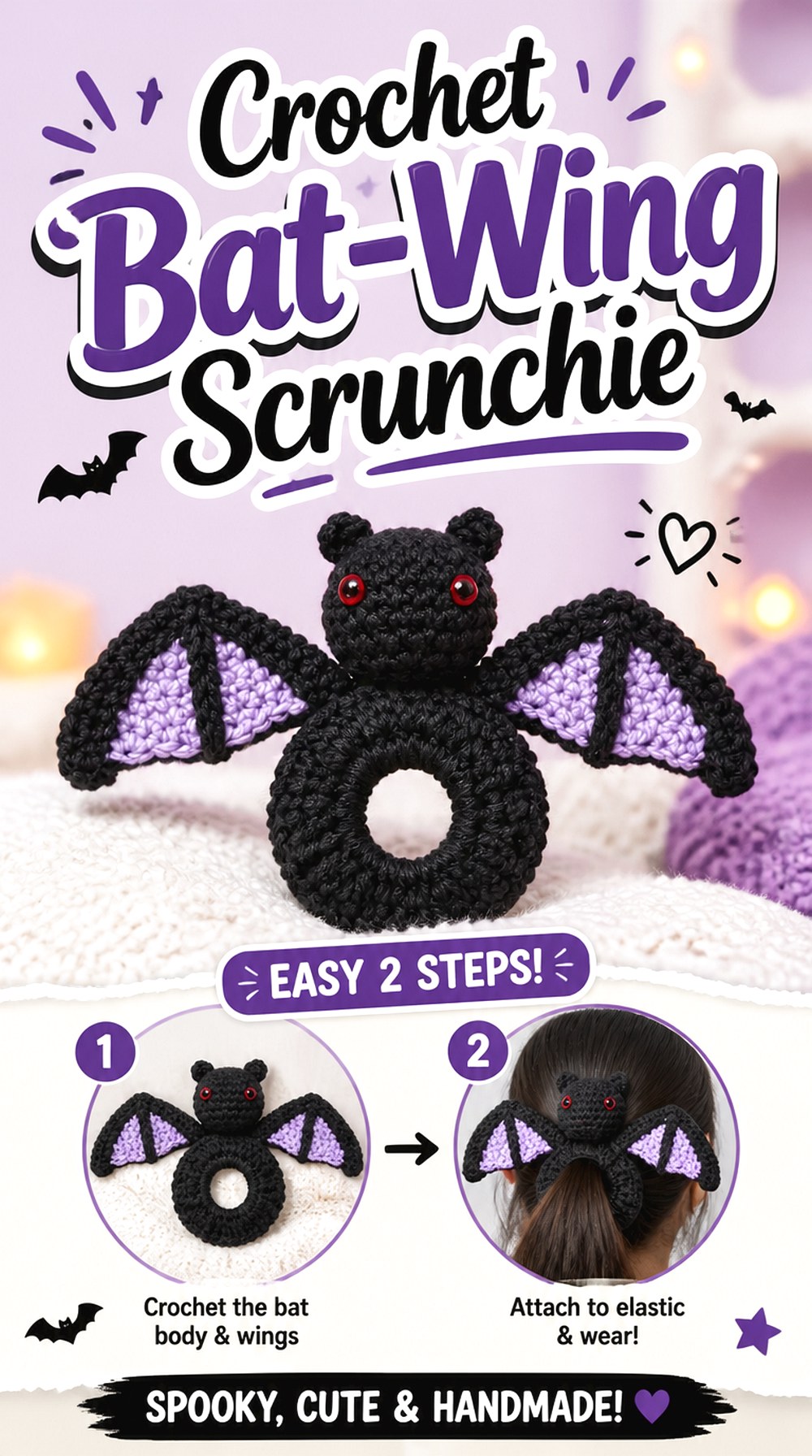
A bat scrunchie turns a basic hair elastic into a small but unmistakably spooky accessory. The wings create the theme without requiring a full hat or head covering, which makes this one of the easiest pieces in the collection to add to an ordinary autumn outfit.
It also occupies a different visual scale from the leaf headband and spiderweb bandana. Instead of framing the whole head, the bat detail appears around a ponytail or bun. Dark gray, black, purple, burgundy, or another shadowy shade can emphasize the silhouette, but the recognizable wing shape does most of the thematic work.
Bat Wings Add Bulk Around the Hair Tie
Decorative wings need enough presence to read as bats, yet excessive fabric can crowd the elastic or hide the hairstyle. Consider how much hair the scrunchie needs to hold and how the wings sit once the elastic is stretched. A proportion that looks balanced while lying flat may change around a thick ponytail, so judge the finished piece in use.
Keep Both Wings Balanced Around the Center
Symmetry is especially noticeable with paired bat wings. Before securing the decorative parts permanently, spread the scrunchie around the hair tie and compare their positions. If both wings sit on the same side after the elastic twists, the intended silhouette can disappear. Placement that accommodates the scrunchie’s movement is more useful than arranging it perfectly only for a flat photograph.
Original Tutorial and Creator Credit
Creator: Crochet Crafters
17. Crochet Autumn Leaf Earrings
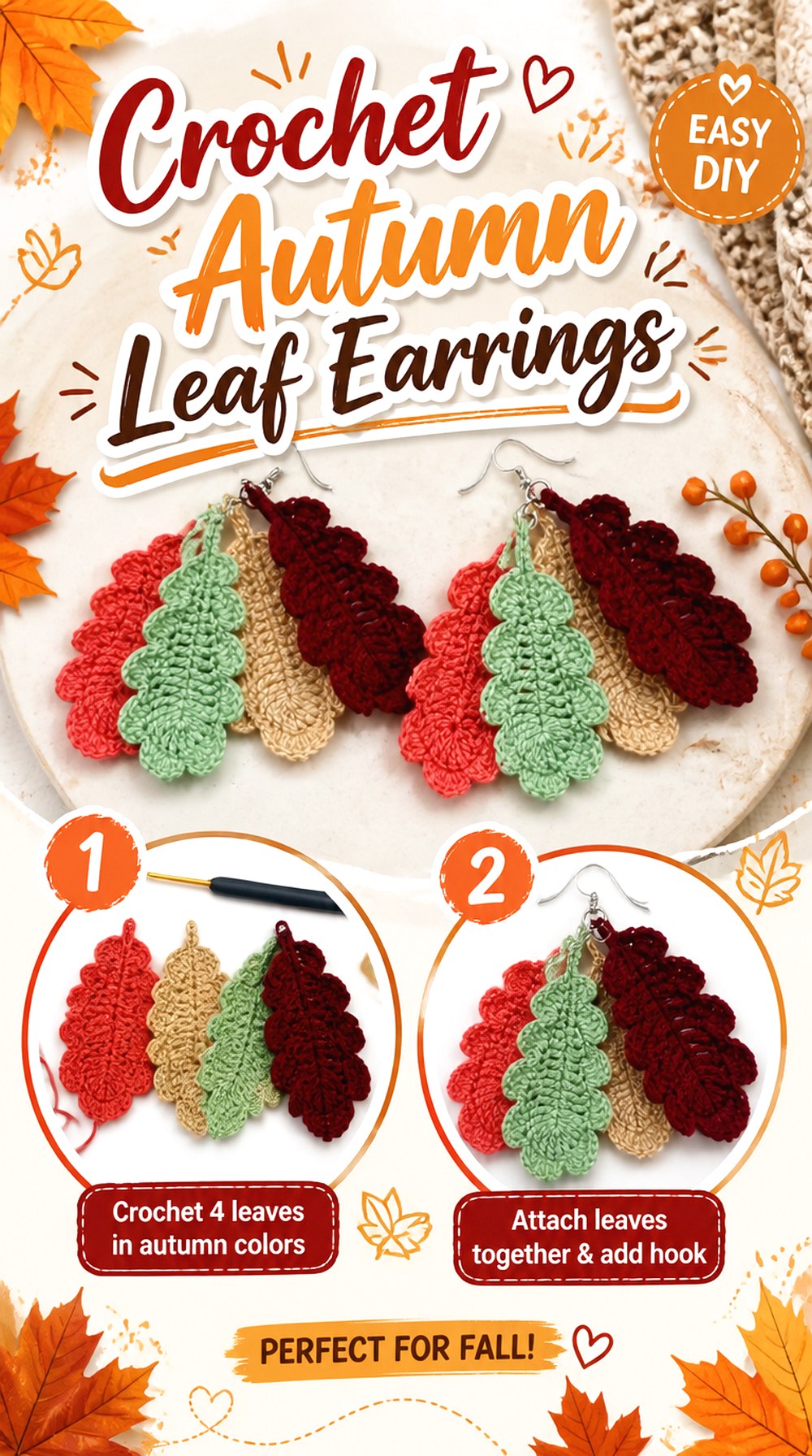
Leaf earrings capture the autumn theme at jewelry scale, making them one of the most understated projects in the roundup. The silhouette can suggest fallen leaves without requiring a costume, so they work with sweaters, scarves, dresses, or everyday fall clothing.
Unlike the leaf headband, earrings need to remain comfortable while hanging from a small attachment point. That makes yarn thickness and embellishment choices more consequential than they may appear. The tutorial is specifically presented as a fall-inspired leaf earring project, making it a direct seasonal match rather than a generic motif adapted after the fact.
Earring Weight Matters More Than Motif Size Alone
A large-looking crochet leaf can still be lightweight, while dense yarn, beads, or heavy findings can make a smaller earring less comfortable. If you change materials, assess the completed weight before making the second earring or adding extra decoration. Jewelry worn comfortably for a few minutes should also be considered over the longer period you actually expect to wear it.
Autumn Color Works Best When the Leaf Shape Still Reads
Rust, ochre, brown, burgundy, and olive can strengthen the fall association, but color should not disguise the motif’s outline. A variegated yarn with dramatic changes may compete with a small leaf’s details. Hold a sample at normal viewing distance and check whether it still reads as a leaf before deciding that a complex colorway automatically adds more seasonal interest.
Original Tutorial and Creator Credit
Creator: HiruHandmade Crochet
18. Crochet Woodland Mushroom Earrings
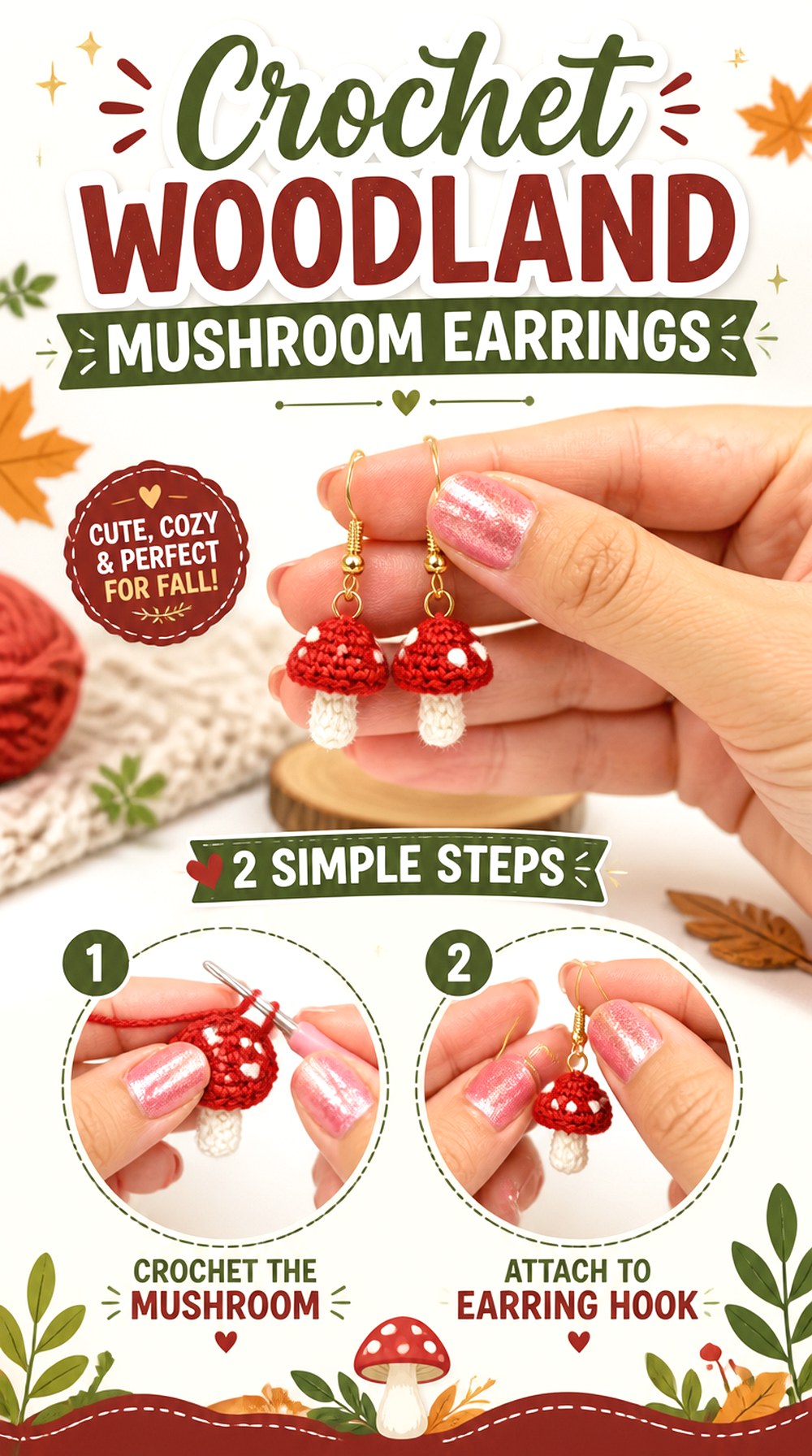
Mushroom earrings finish the collection with a woodland-witch accessory that feels autumnal without depending on pumpkins, bats, or spiderwebs. Their dimensional fungi shape creates more visual volume than the flatter leaf earrings, making them a good choice when you want small jewelry that still has a playful focal point.
The cited tutorial is presented specifically as a fall crochet mushroom earring project. That direct relationship between motif and finished accessory is useful because jewelry proportions matter: simply shrinking an unrelated mushroom plush would not necessarily produce an earring that hangs or balances appropriately.
Stuffing Changes the Mushroom Silhouette
If the design uses dimensional construction, the amount and distribution of filling can influence whether the mushroom looks rounded, distorted, or uneven. Avoid assuming that more stuffing automatically creates a better-defined shape. The important checkpoint is whether the cap and stem remain recognizable and whether the finished piece is still appropriate for hanging as jewelry rather than behaving like a miniature heavy plush.
Match Both Earrings Before Adding Findings
With a pair of dimensional motifs, small differences in stuffing, shape, or attachment position can become obvious once both pieces hang beside the face. Compare the two mushrooms before completing the jewelry hardware. Look at overall length, cap shape, and where each hanging point sits so the pair reads as intentional even if handmade variations remain.
Conclusion
For the strongest unmistakable witch look, start with the pointed hat, spiderweb bandana, skull scarf, witch drawstring bag, or bat scrunchie. The moon bag, Victorian collar, gothic choker, corset belt, and fingerless gloves work better when you want the mood without wearing an obvious Halloween accessory. For softer woodland autumn styling, the pumpkin beret, leaf headband, leaf earrings, and mushroom earrings are easier to carry beyond October.
Whichever direction you choose, compare fit, fabric behavior, and intended use before focusing on color alone. The original tutorials linked with each project should remain your source for exact construction details, while these comparisons can help you decide which accessory makes sense before you begin.
Frequently Asked Questions
Can witchy crochet accessories work without black yarn?
Yes. The silhouette and motif often establish the theme more strongly than color. Rust, charcoal, moss green, cream, deep plum, burgundy, brown, and muted gold can all suit an autumn-witch palette. A crescent moon bag or spiderweb bandana will still carry recognizable imagery in another shade. Consider contrast as well: intricate lace, skulls, leaves, and webs need enough visual definition to remain readable against the clothing or hair beneath them.
Which witchy autumn accessories need the most careful fit checking?
The corset waist belt, hats, headband, fingerless gloves, arm-warmer sweater, leg warmers, collar, choker, and cuffs deserve the most attention because their comfort depends on specific areas of the body. The hooded cowl is more forgiving but still needs enough room around the head and neck. Bags and earrings have less body-fit complexity, although strap length and jewelry weight can still affect how comfortably they are used.
Can I use a different yarn weight than the YouTube tutorial?
Possibly, but changing yarn thickness can change much more than appearance. It may alter the finished scale, fabric stiffness, drape, weight, and stretch. That matters especially for fitted hats, gloves, cuffs, belts, leg warmers, and jewelry-scale motifs. Check whether the creator discusses substitution or sizing, make a sample when appropriate, and compare the developing dimensions with the intended wearer or use rather than assuming a direct substitution will behave identically.
Should a crochet moon bag or drawstring witch bag be lined?
It depends on your finished fabric and what you plan to carry. Open or stretchy crochet can allow small objects to poke through or can change shape under load, so lining may be useful in some cases. Dense fabric used only for light items may not need it. First check whether the original tutorial includes lining; if it does not, treat lining as a separate adaptation rather than assuming it is part of the creator’s construction.
How can I make spiderweb and lace accessories look more defined?
Start with yarn that allows the open spaces and edges to remain visible, then use a blocking method appropriate for that fiber. Blocking can help lace settle into a more deliberate outline, but different fibers respond differently to water, steam, and heat. Check the yarn’s care instructions first. Contrast with the layer underneath also matters: beautifully worked dark lace can disappear visually when placed over another equally dark, highly textured fabric.
Which projects are easiest to style as subtle everyday autumn accessories?
The pumpkin beret, leaf headband, hooded cowl, moon bag, Victorian collar, leaf earrings, and mushroom earrings can all suggest autumn or witchy style without immediately reading as Halloween costume pieces. The corset belt and dark fingerless gloves also work well in gothic wardrobes throughout the cooler season. The pointed witch hat, skull scarf, bat scrunchie, spiderweb bandana, and character bag make the theme more explicit when that is the effect you want.