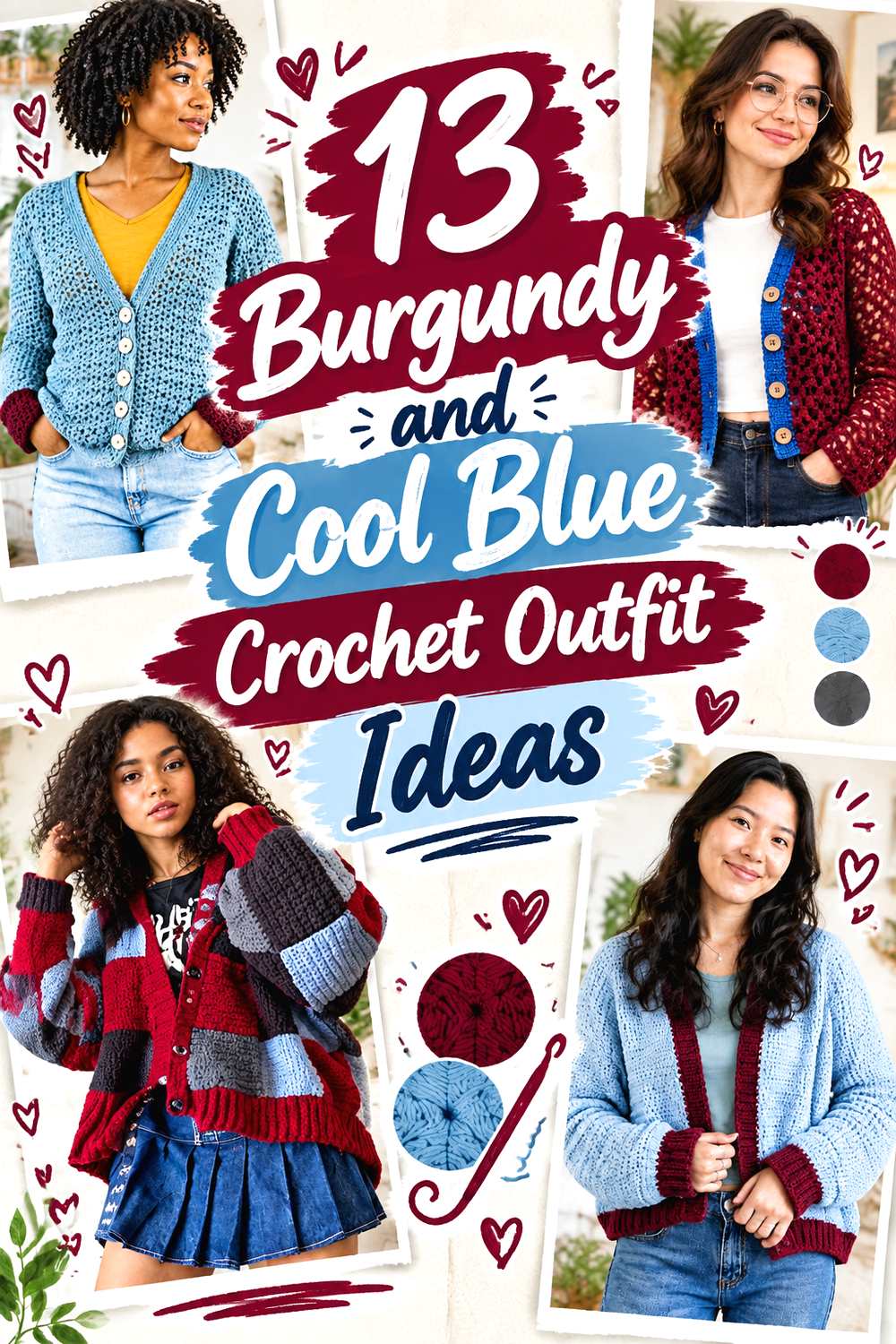
13 Burgundy and Cool Blue Crochet Outfit Ideas
Burgundy and cool blue create a useful crochet pairing because the colors bring different visual weights to an outfit. Burgundy usually reads as the deeper, heavier shade, while a clear cool blue can introduce separation around edges, motifs, cuffs, necklines, or smaller garment sections. The combination can be dramatic when both colors are dark, or much clearer when the blue is several steps lighter than the burgundy.
The main decision is not simply whether to use both colors, but how much space each should occupy. A burgundy cardigan with cool blue edging creates a very different outfit from a cool blue sweater with burgundy cuffs. Granny squares, patchwork panels, ruffles, mesh, and ribbing also change how much of each color the eye sees, so placement deserves as much attention as the palette itself.
Quick List
- Burgundy Open Cardigan With Cool Blue Trim Crochet Outfit
- Cool Blue V Neck Sweater With Burgundy Cuffs Crochet Outfit
- Burgundy And Cool Blue Granny Square Vest Crochet Outfit
- Cool Blue Tank With Burgundy Edging Crochet Outfit
- Burgundy Ruffle Skirt With Cool Blue Waist Detail Crochet Outfit
- Cool Blue And Burgundy Granny Dress Crochet Outfit
- Burgundy Wide Leg Pants With Cool Blue Waistband Crochet Outfit
- Cool Blue Bolero With Burgundy Sleeve Edging Crochet Outfit
- Burgundy And Cool Blue Granny Hexagon Cardigan Crochet Outfit
- Cool Blue Drop Shoulder Cardigan With Burgundy Ribbing Crochet Outfit
- Burgundy Mesh Cardigan With Cool Blue Button Band Crochet Outfit
- Cool Blue V Neck Button Cardigan With Burgundy Cuffs Crochet Outfit
- Burgundy And Cool Blue Patchwork Crochet Cardigan Outfit
Balance Burgundy and Cool Blue Across a Crochet Outfit
When burgundy and cool blue cover similar amounts of a garment, both colors compete for attention. That can work especially well in patchwork and granny-square projects, where repetition gives the two shades a deliberate rhythm. On smoother sweaters, tanks, or dresses, choosing one dominant color usually makes the color plan easier to read.
Think about the whole garment rather than deciding color section by section. If burgundy already covers the body, repeating it across both sleeves, cuffs, neckline, and edging may leave very little room for cool blue to influence the finished look. Moving cool blue to two or three clearly connected areas—such as cuffs and neckline or waistband and hem—can make the supporting color feel intentional.
Use Burgundy and Cool Blue Value Contrast to Protect Crochet Detail
Burgundy and cool blue can be different hues while still being close in lightness. When that happens, small stripes, granny-square centers, textured borders, and narrow trims may blend together from a distance.
Place the yarns side by side before committing to a detailed color layout. A grayscale photo can also help reveal whether the two colors have enough light-and-dark separation. If they merge, choose a lighter or clearer blue, deepen the burgundy, or give the two shades more physical space instead of alternating them in tiny areas.
Coordinate Burgundy and Cool Blue Crochet Pieces Without Making the Outfit Busy
A burgundy-and-blue crochet garment already carries a strong color story, so the rest of the outfit does not need to repeat both shades everywhere. Denim, charcoal, cream, soft gray, or another quiet neutral can give the crochet texture more room to show.
For multigarment crochet looks, repeat one color rather than duplicating the exact same color ratio. A burgundy-heavy cardigan can sit over a cool blue crochet tank, for example, while simple neutral bottoms keep the two handmade pieces from competing.
1. Burgundy Open Cardigan With Cool Blue Trim Crochet Outfit
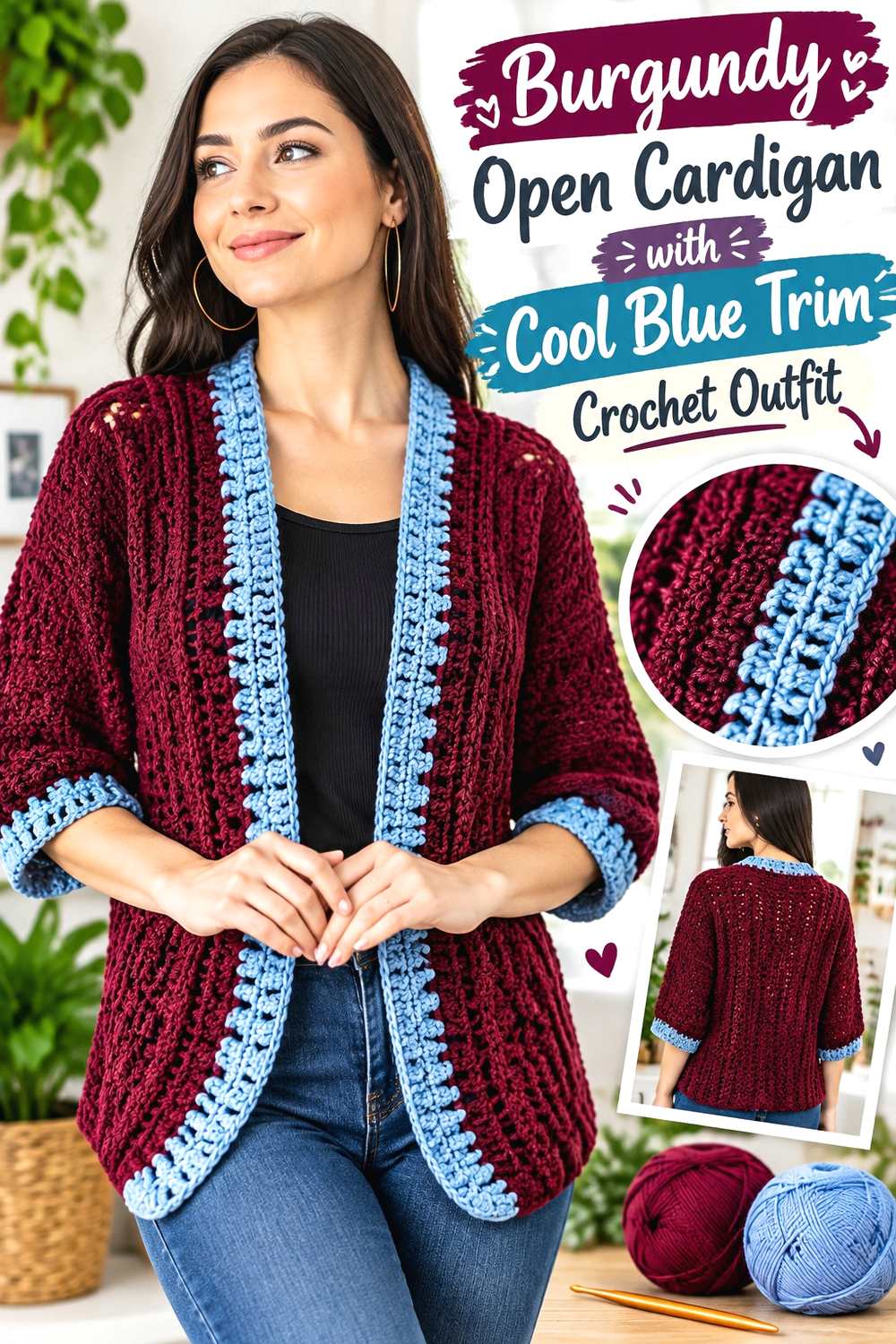
Let burgundy cover most of this open cardigan so the garment has one clear visual base. Cool blue can then trace the front opening, cuffs, or lower edge, where a smaller amount is enough to define the cardigan’s shape. This distribution works particularly well for an open layer because the trim remains visible even when another garment is worn underneath.
Burgundy Can Keep the Crochet Cardigan Body Visually Unified
Using burgundy across the main front and back sections avoids breaking the cardigan into too many competing color blocks. It also gives stitch texture a continuous field. If the cardigan is already heavily textured, this simpler burgundy surface lets cool blue perform the more focused job of outlining the garment.
Cool Blue Can Define Burgundy Cardigan Edges
Use cool blue where the eye naturally follows the cardigan’s outline: the front band, cuffs, or possibly the hem. Repeating blue in at least two of those areas helps it look connected rather than like an unrelated finishing color. If the blue is similar in darkness to the burgundy, consider choosing a lighter blue so narrow edging remains visible.
Creator Credit: TCDDIY
2. Cool Blue V Neck Sweater With Burgundy Cuffs Crochet Outfit
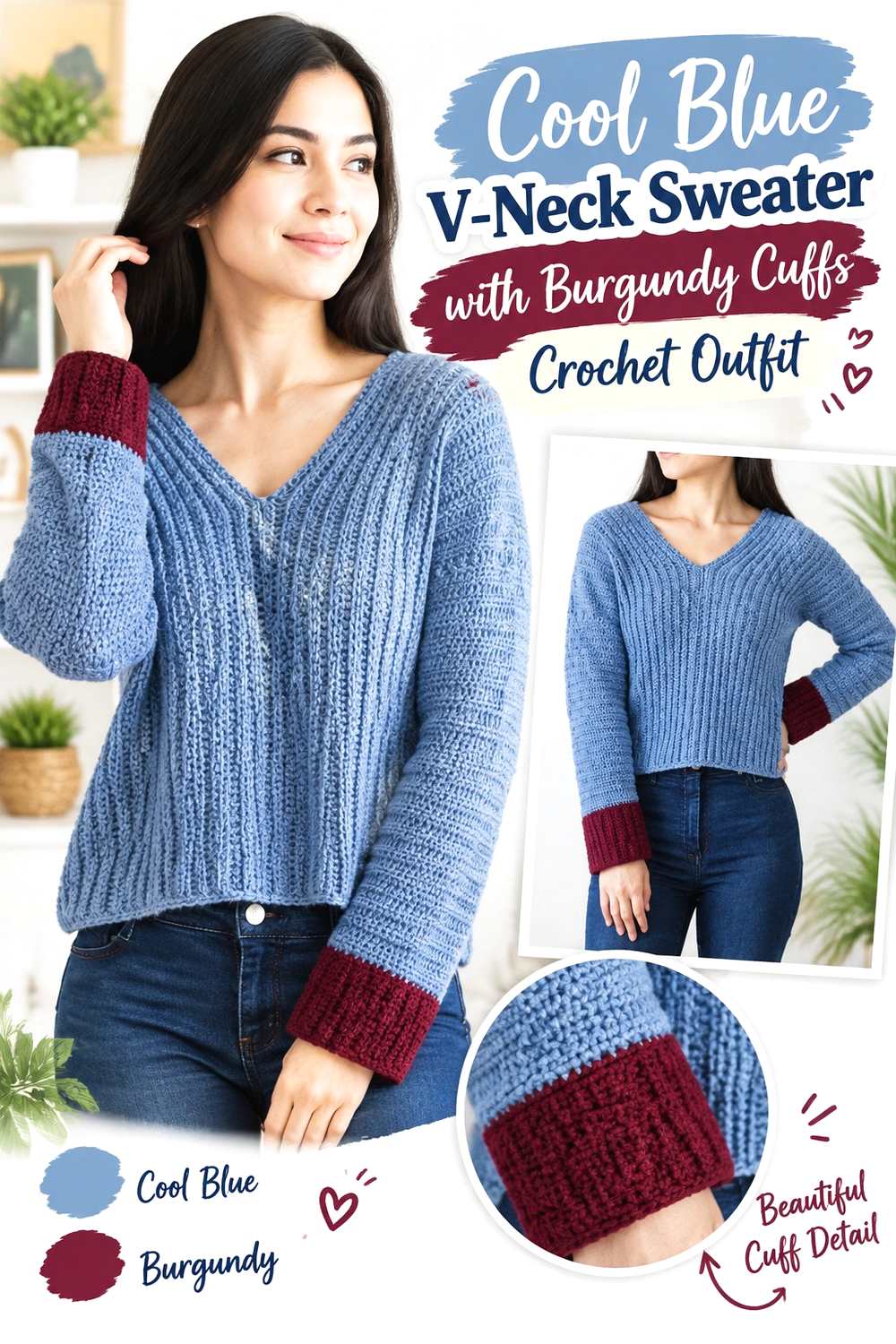
A cool blue body gives this sweater a lighter overall direction, while burgundy can frame selected finishing areas. The V-neck is particularly useful for a two-color plan because the neckline creates a strong shape that can either remain blue or receive a narrow burgundy accent. Burgundy cuffs then provide a second repeat without taking over the entire sweater.
Cool Blue Keeps the Crochet V-Neck Sweater Surface Consistent
Let cool blue continue across the front, back, and most of the sleeves if you want the sweater to remain clearly blue-led. Because the V-neck already interrupts the upper front visually, additional large burgundy panels may make the sweater feel more divided than intended.
Burgundy Cuffs Can Anchor a Cool Blue Crochet Sweater
Burgundy works effectively at the wrists because cuffs occupy a controlled amount of visual area. If the cuffs look isolated, repeat burgundy narrowly at the neckline or lower edge. That small repetition can connect the accents without turning the sweater into equal burgundy-and-blue color blocking.
Creator Credit: forthefrills
3. Burgundy And Cool Blue Granny Square Vest Crochet Outfit
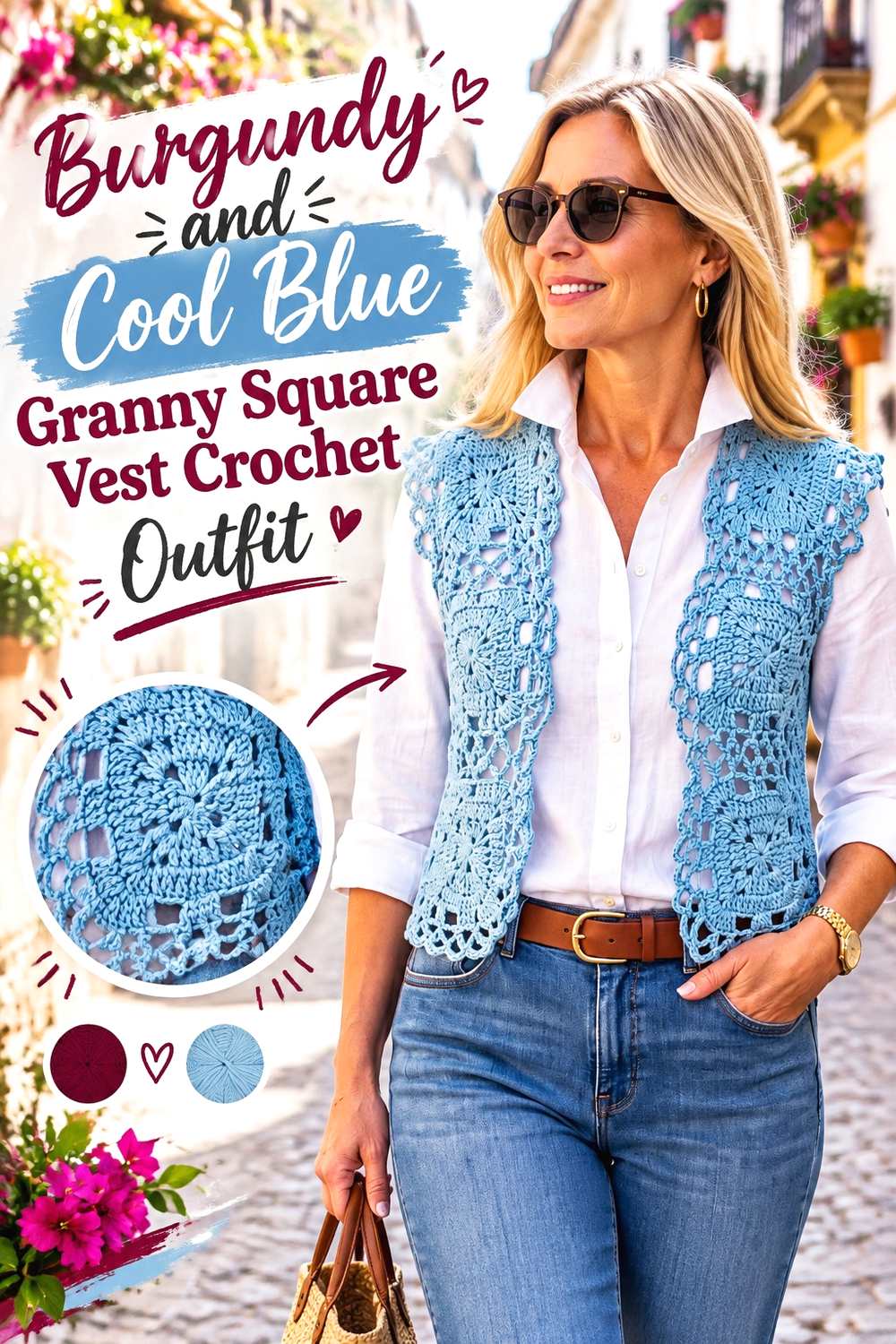
Granny squares make it possible to distribute burgundy and cool blue repeatedly rather than assigning each shade to one large section. Burgundy can form the darker square centers or selected full motifs, while cool blue provides lighter surrounding rounds or alternating squares. The important step is planning the complete vest layout before joining so the darkest burgundy areas do not accidentally cluster on one side.
Burgundy Can Give Cool Blue Granny Squares a Strong Center
When burgundy sits near the center of a motif and cool blue expands around it, the darker shade creates a clear focal point without covering most of the vest. This is useful if you want burgundy to remain noticeable but prefer a cooler overall garment.
Cool Blue Can Separate Repeated Burgundy Crochet Motifs
If several burgundy-centered squares sit beside one another, cool blue borders can create breathing room between them. Check the layout from the front, back, and sides before joining; a balanced flat arrangement can look different once the vest wraps around the torso.
Creator Credit: Handwork diy
4. Cool Blue Tank With Burgundy Edging Crochet Outfit

A tank gives you less surface area than a cardigan or dress, so the color hierarchy should remain simple. Cool blue can dominate the body while burgundy marks the neckline and straps or appears along the lower edge. Narrow accents are enough here because they sit close to highly visible garment boundaries.
Cool Blue Works Well Across the Main Crochet Tank Body
Keeping the tank body cool blue creates an uninterrupted surface that works easily with neutral trousers, denim, or a burgundy outer layer. It also prevents the relatively small garment from being visually divided into too many short sections.
Burgundy Can Sharpen Cool Blue Crochet Tank Edges
A burgundy neckline or strap treatment places the darkest shade where it can create clear definition. Avoid adding burgundy separately to every available edge unless you want a strongly outlined effect. Two connected accent areas usually give the small garment enough repetition.
Creator Credit: Taylor xavier croche
5. Burgundy Ruffle Skirt With Cool Blue Waist Detail Crochet Outfit
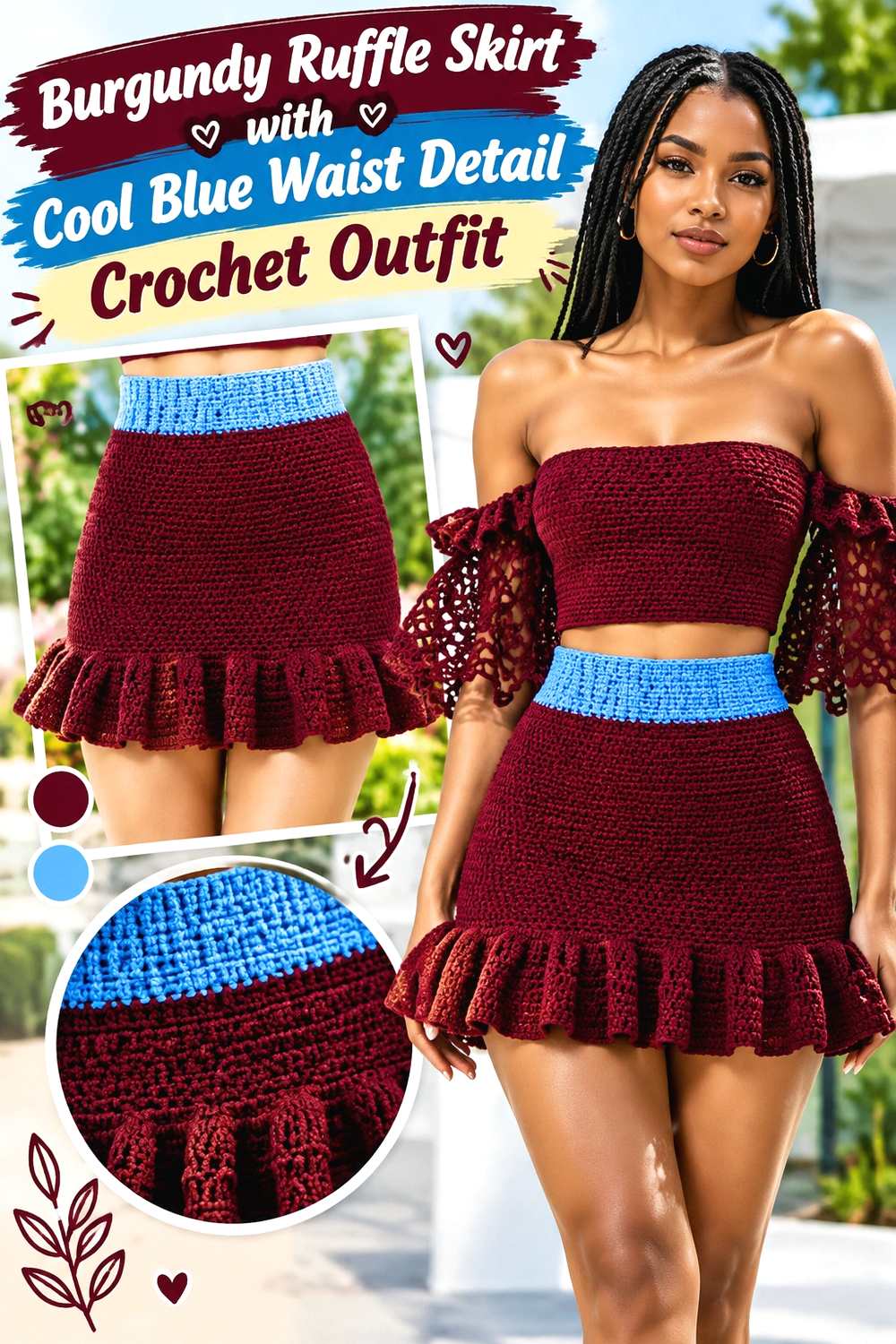
Burgundy can carry the skirt body and ruffles, creating a continuous lower-half color statement. Cool blue works better as a controlled waistband or narrow transition than as another equally large ruffle color if you want the tiers themselves to remain the main visual feature.
Burgundy Keeps Crochet Ruffles From Becoming Too Color-Busy
Ruffles already create repeated horizontal lines and extra texture. Keeping most of them burgundy allows their structure to remain readable without adding a color change at every tier. If you want more blue, use it on one selected ruffle rather than alternating every section automatically.
Cool Blue Can Separate the Burgundy Crochet Skirt From the Top
A cool blue waistband can create a useful break between a burgundy skirt and the garment worn above it. If the top also contains cool blue, this repeat can connect the outfit vertically. Check that the blue is visible enough against burgundy; a very dark navy-like blue may produce a subtler transition than a medium or lighter cool blue.
Creator Credit: AC Crochets
6. Cool Blue And Burgundy Granny Dress Crochet Outfit
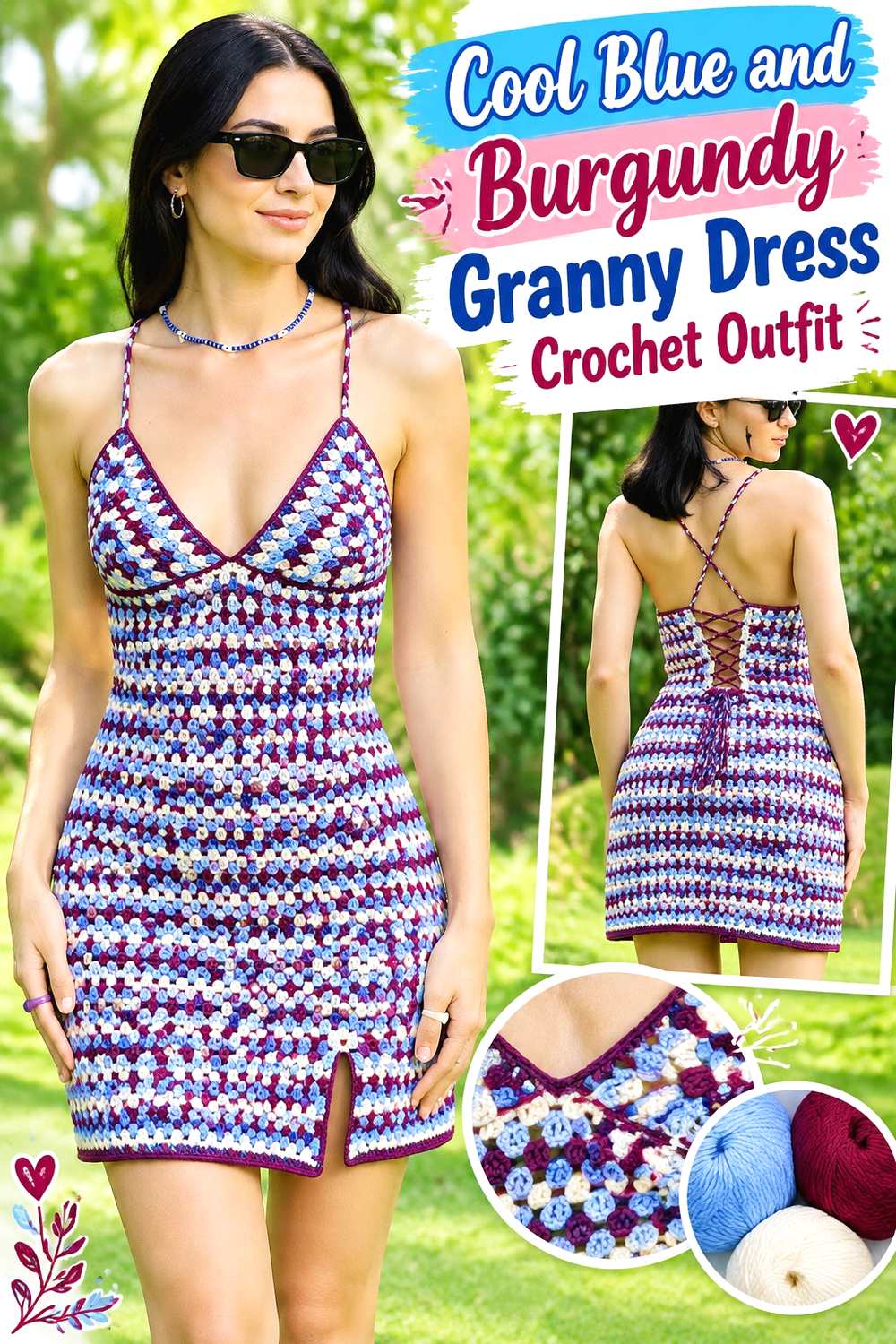
A granny-style dress gives both colors substantial room, but equal distribution is not the only option. Cool blue can dominate the background or larger motif areas while burgundy repeats through selected centers, horizontal bands, or the lower part of the dress. Planning where the darker shade appears is important because repeated burgundy blocks can visually concentrate weight in one section.
Cool Blue Can Keep the Crochet Dress From Feeling Too Dark
Using more cool blue through the upper body or surrounding rounds gives burgundy motifs greater separation. This is especially useful when the burgundy is deep and the dress contains many repeated crochet clusters.
Burgundy Can Create a Repeated Line Through a Cool Blue Crochet Dress
Instead of scattering burgundy randomly, repeat it at a consistent motif position or in a planned band. That lets the eye follow the color through the dress. Before joining or extending the layout, step back and check whether the burgundy forms unintended heavy patches around the waist, hips, or hem.
Creator Credit: Chenda DIY
7. Burgundy Wide Leg Pants With Cool Blue Waistband Crochet Outfit
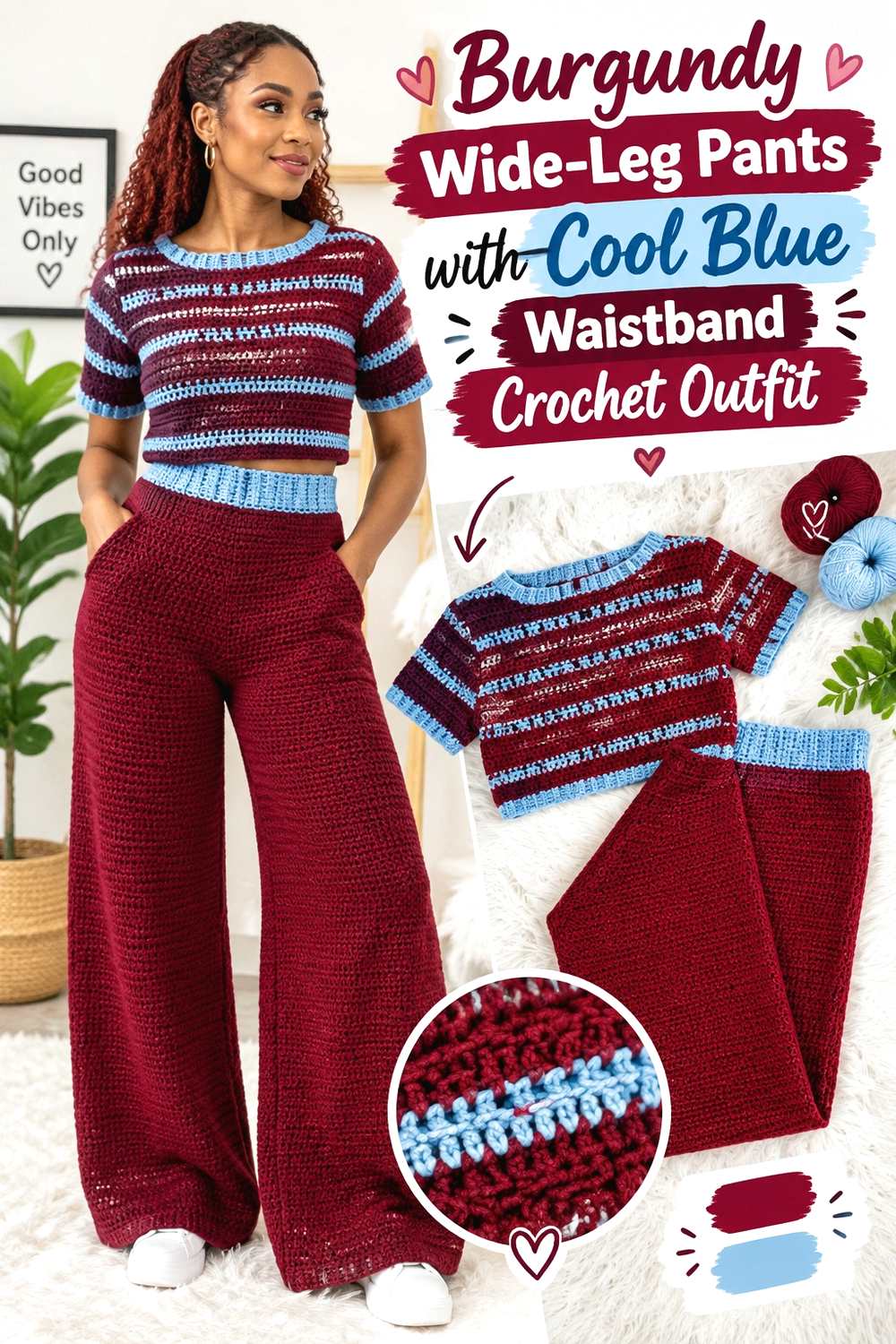
Wide-leg crochet pants provide a large uninterrupted area for color, so burgundy can make a strong base without needing complicated striping. Cool blue is most effective when it controls a smaller structural-looking area such as the waistband or a narrow side detail.
Burgundy Can Give Crochet Pants a Continuous Vertical Line
Using burgundy down most of both legs avoids chopping the silhouette into multiple horizontal bands. If you introduce cool blue farther down the legs, consider a narrow repeated detail rather than a large block unless strong color blocking is the goal.
Cool Blue Can Give Burgundy Crochet Pants a Clear Waist Break
A cool blue waistband distinguishes the top of the pants and gives you an obvious color to repeat in a tank, sweater, or bolero. This is a useful strategy for building a coordinated outfit without crocheting both garments in the same dominant color.
Creator Credit: Kali’s Threads
8. Cool Blue Bolero With Burgundy Sleeve Edging Crochet Outfit
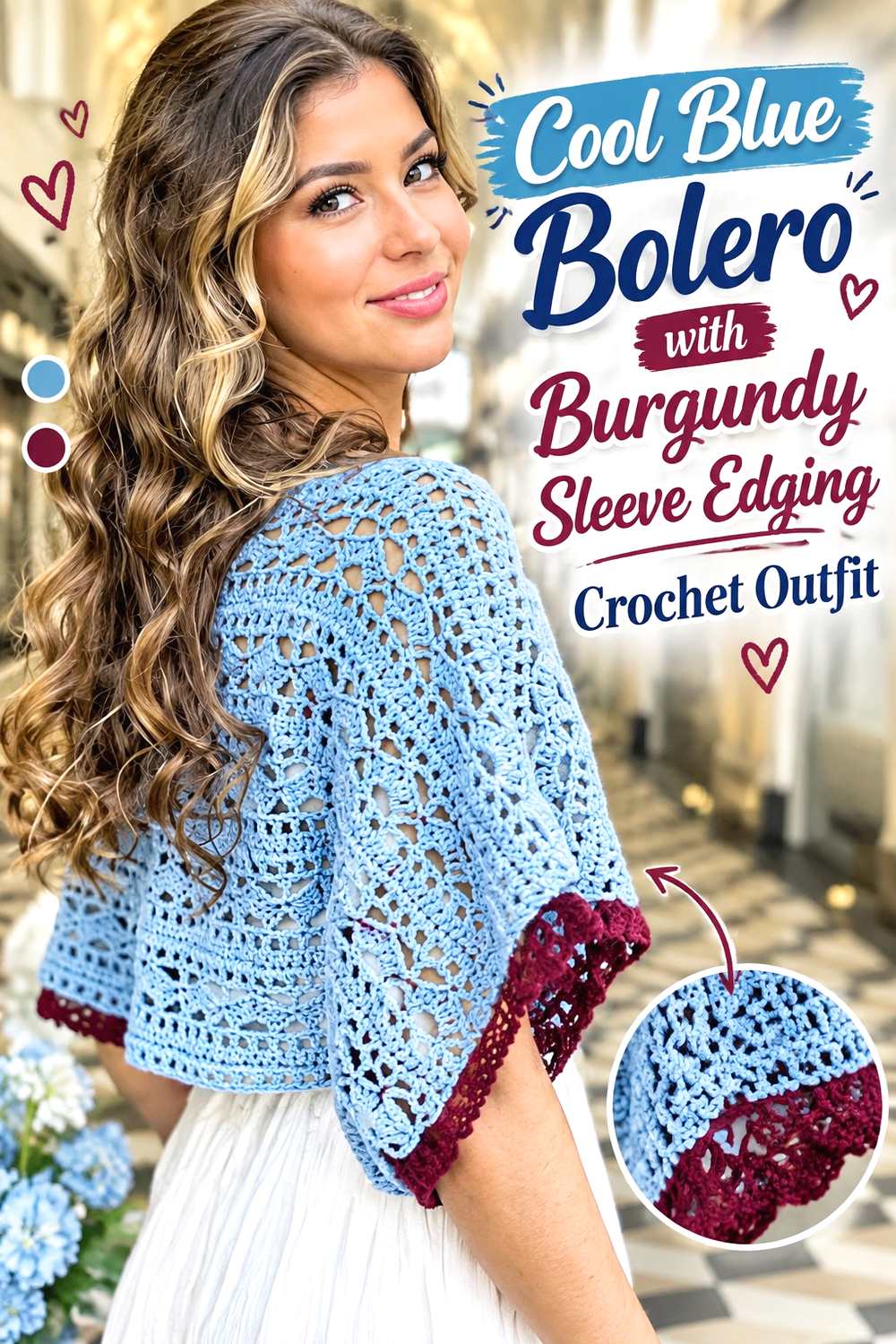
A bolero covers a relatively small section of an outfit, so cool blue can remain the main color without overwhelming what is worn underneath. Burgundy placed at the sleeve edges or opening gives the layer enough contrast to register as a deliberate two-color piece.
Cool Blue Lets the Crochet Bolero Act as a Lighter Layer
Keeping the main bolero cool blue makes it easier to place over a burgundy dress, tank, or neutral base. Because the garment is short, a large burgundy body section could make the palette feel closer to a half-and-half split than a supporting accent.
Burgundy Sleeve Edging Can Frame a Cool Blue Crochet Bolero
Use burgundy where the sleeves end or along a small portion of the opening if you want the dark shade to define the silhouette. Repeating the same burgundy edging treatment on both sleeves creates enough rhythm that an additional large color block is unnecessary.
Creator Credit: Ophelia Talks Crochet
9. Burgundy And Cool Blue Granny Hexagon Cardigan Crochet Outfit
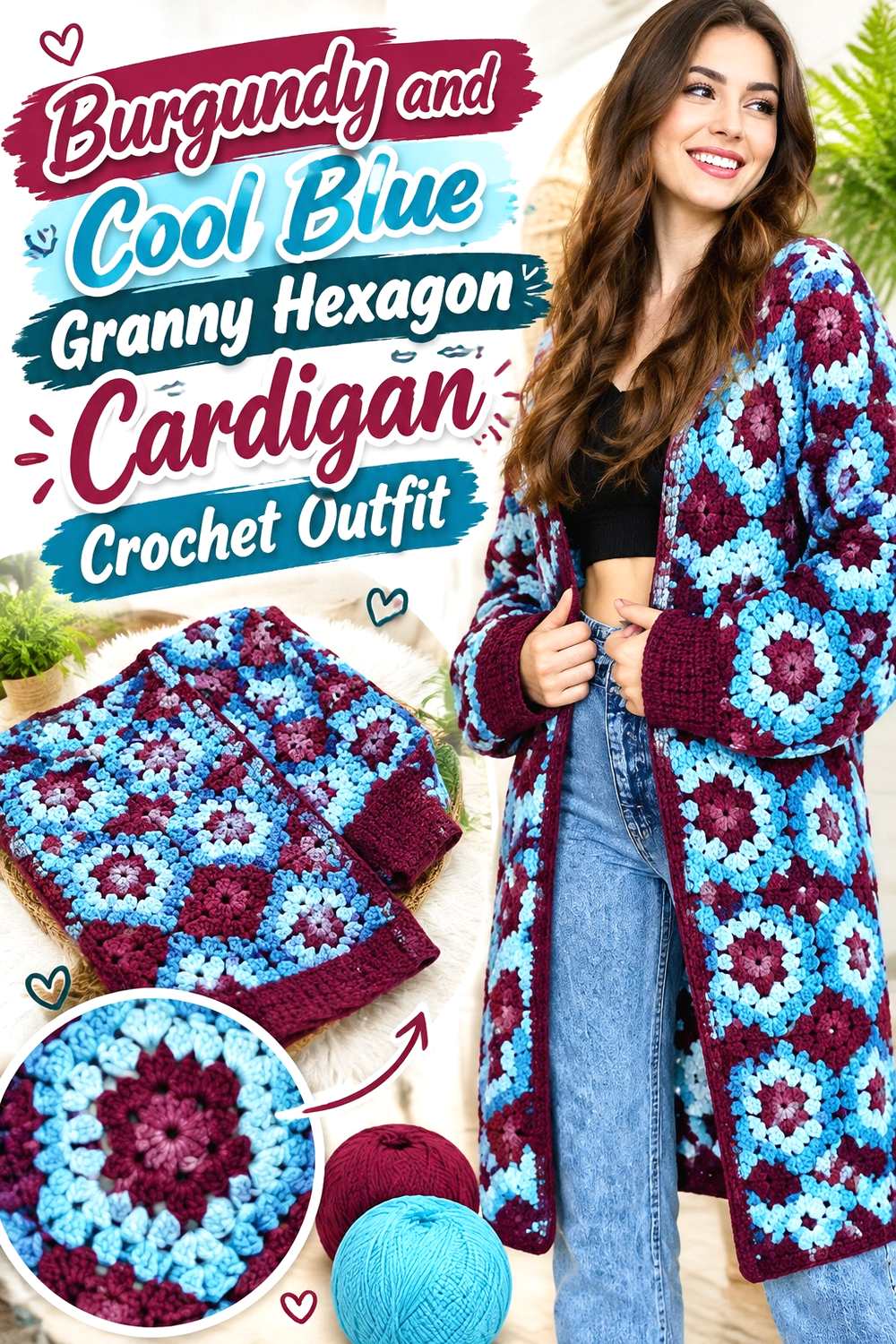
A hexagon cardigan naturally suits repeated color changes, making burgundy and cool blue easy to alternate in larger bands. The main decision is whether you want both halves to match or whether each side should emphasize a different color.
Burgundy Bands Can Add Weight to a Cool Blue Crochet Hexagon Cardigan
If cool blue covers more rounds overall, intermittent burgundy bands can break up the larger blue field. Keep the burgundy sequence deliberate across both halves so sleeve and body areas feel related after the shapes are joined.
Cool Blue Can Keep Burgundy Crochet Hexagon Sections Distinct
Cool blue placed between burgundy bands prevents several dark sections from merging visually. Before finishing the cardigan, fold the developing pieces into their wearable shape and assess the colors there; the final position of a band may be different from what the flat hexagon suggests.
Creator Credit: PassioKnit Kelsie
10. Cool Blue Drop Shoulder Cardigan With Burgundy Ribbing Crochet Outfit
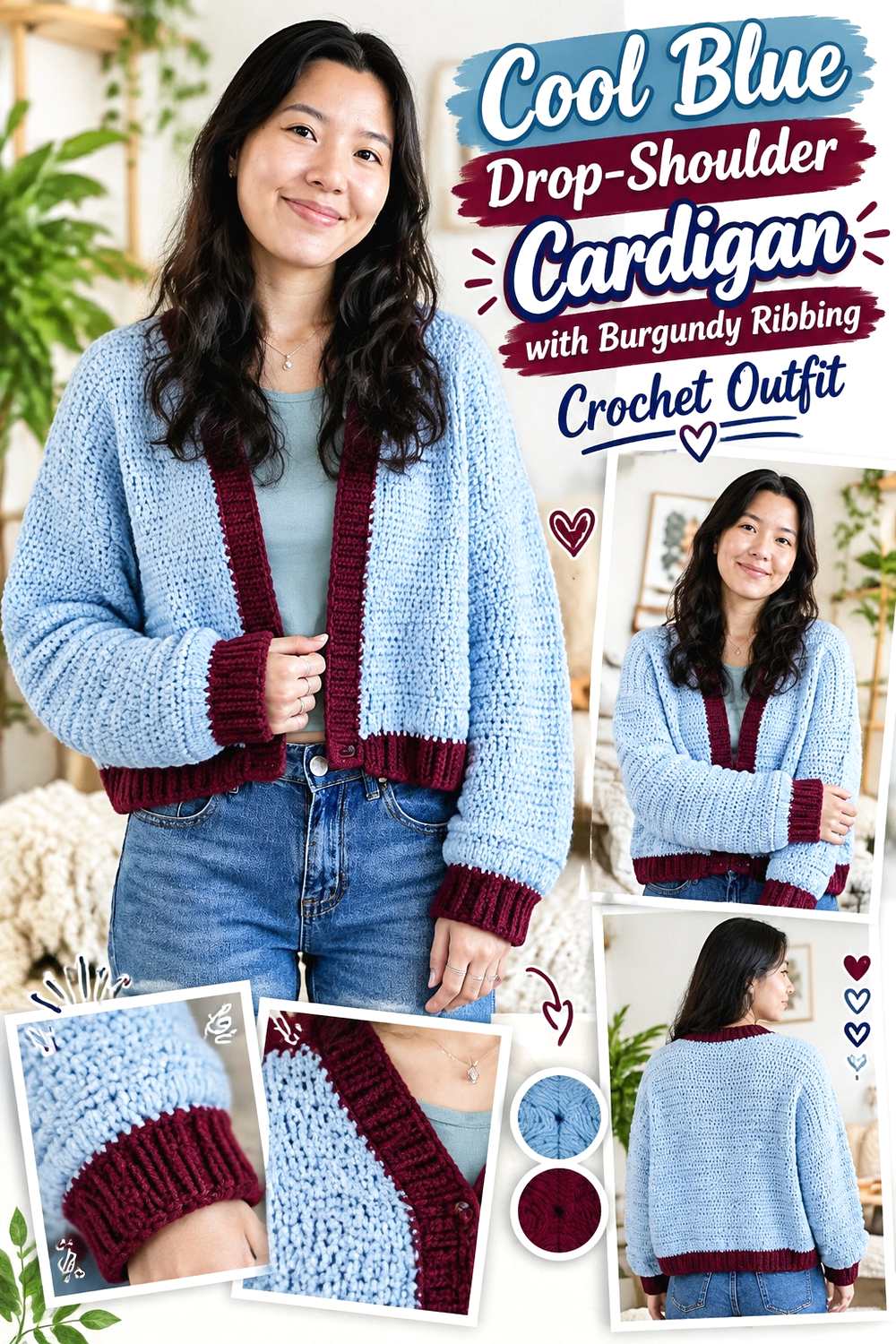
A drop-shoulder cardigan gives you broad body sections that suit a single dominant color. Cool blue can cover those sections, while burgundy ribbing defines the cuffs and lower edge. Because ribbing already has strong linear texture, the contrasting shade receives plenty of attention without needing much surface area.
Cool Blue Keeps the Crochet Drop-Shoulder Body Calm
Carry cool blue across the front, back, and upper sleeves to preserve one continuous field around the dropped shoulder line. This makes the relaxed silhouette easier to read and leaves burgundy free to emphasize the finishes.
Burgundy Ribbing Can Give Cool Blue Crochet Panels a Defined Finish
Burgundy works well on cuffs and the lower band because those areas naturally frame the garment. If you also add burgundy around the front opening, compare the total amount before finishing; several dark borders can shift the cardigan from blue-led to nearly equal color distribution.
Creator Credit: VivCrochets
11. Burgundy Mesh Cardigan With Cool Blue Button Band Crochet Outfit
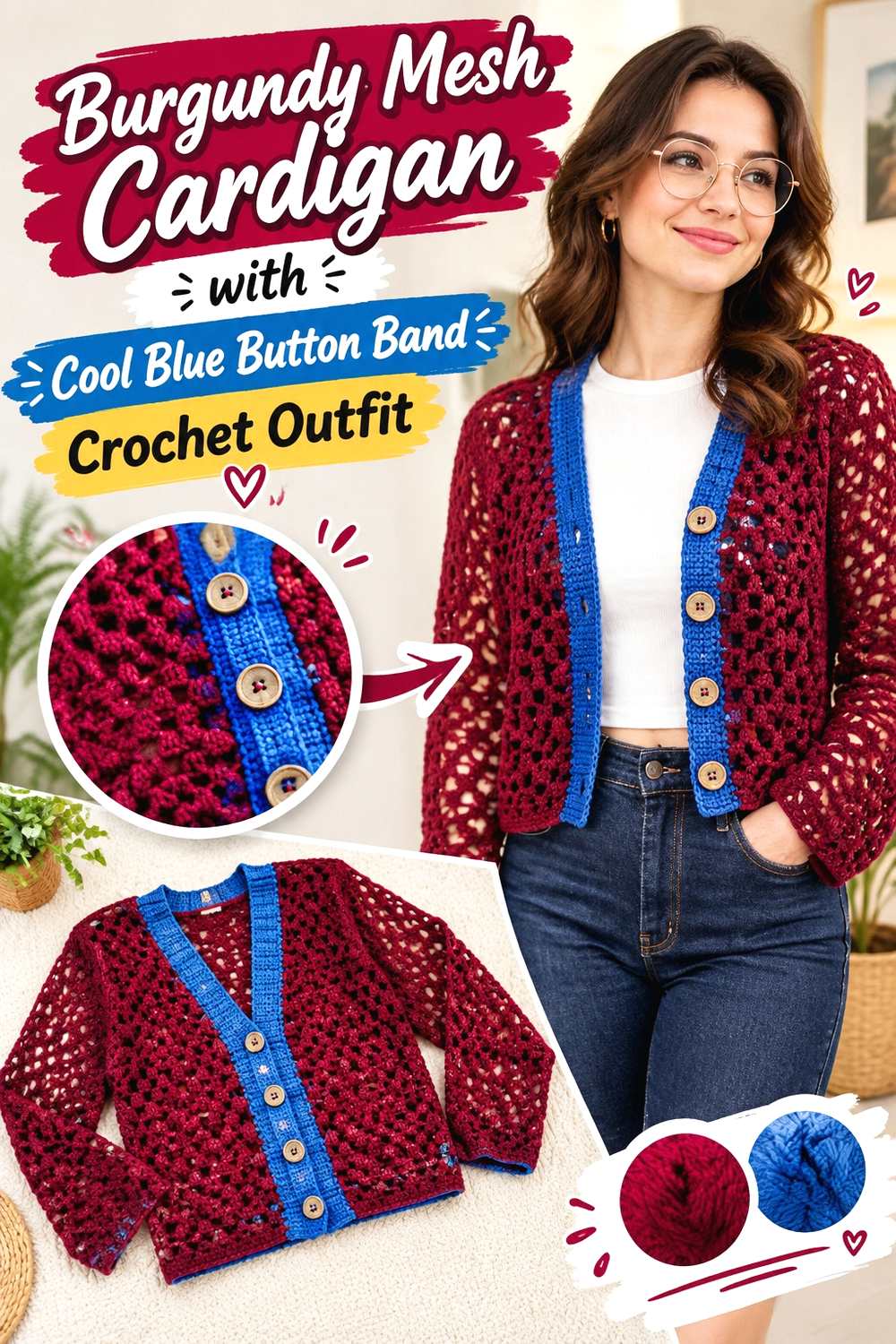
Mesh exposes the layer underneath, so the apparent palette includes more than the cardigan yarn itself. Burgundy mesh can become the dominant crochet color while a cool blue button band or edging gives the open structure a clearer outline.
Burgundy Mesh Can Look Different Over Cool Blue Clothing
A cool blue tank or dress visible through burgundy mesh effectively turns the base layer into part of the cardigan’s color scheme. Test the colors together before finishing because open spaces make the underlying garment far more influential than they would be beneath solid crochet fabric.
Cool Blue Can Define a Burgundy Crochet Mesh Opening
A cool blue front band can create a clean vertical boundary against burgundy mesh. Because the surrounding fabric is visually open, even a modest amount of solid blue trim may appear stronger than expected. Check the width before repeating blue around every edge.
Creator Credit: Brunaticality
12. Cool Blue V Neck Button Cardigan With Burgundy Cuffs Crochet Outfit
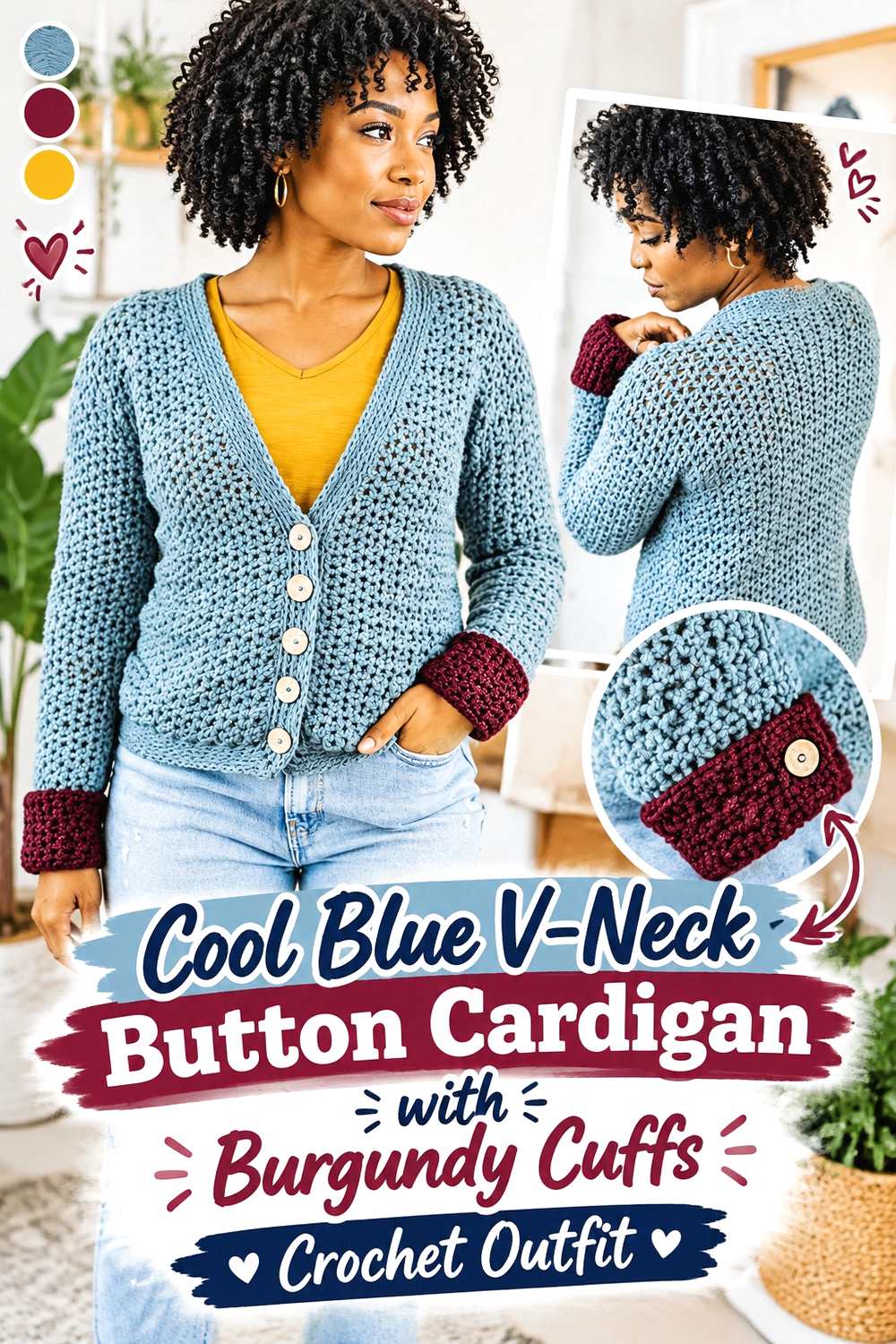
This version uses cool blue as the main cardigan color while reserving burgundy for the cuffs and selected finishing details. A buttoned V-neck already brings attention to the center front, so the burgundy does not need to appear in large blocks to remain visible.
Cool Blue Gives the Crochet V-Neck Cardigan a Clear Main Color
Continue cool blue through the body and most of the sleeves so the button line and neckline shape stay easy to read. If you want burgundy near the front, keep it narrow enough that it supports rather than competes with the V-shaped opening.
Burgundy Cuffs Can Balance a Cool Blue Buttoned Crochet Front
Burgundy cuffs place the darker shade on both sides of the body, helping the palette feel balanced rather than center-heavy. A very small burgundy repeat near the button band can connect the cuffs to the front, but it is not necessary if the contrast at the wrists already reads clearly.
Creator Credit: TL Yarn Crafts
13. Burgundy And Cool Blue Patchwork Crochet Cardigan Outfit

Patchwork gives burgundy and cool blue more freedom than almost any other garment in this list. You can alternate complete squares, use mixed-color squares, or introduce a neutral between them. The key is deciding the layout before assembly instead of choosing the next square color as you go.
Burgundy Patchwork Squares Need Planned Spacing
Deep burgundy squares can appear heavier than cool blue squares of the same size. Spread them across the fronts, sleeves, and back rather than clustering most of them in one area unless deliberate asymmetry is part of the design.
Cool Blue Can Connect Burgundy Crochet Patchwork Sections
Use cool blue repeatedly rather than only once or twice. A recurring blue square, ribbing section, or collar treatment creates a visual route through the cardigan. Photographing the complete square layout before joining is a simple way to preserve the intended color balance.
Creator Credit: ikoxun
Choosing Between These Burgundy and Cool Blue Crochet Outfit Ideas
For a burgundy-heavy outfit, the open cardigan, ruffle skirt, wide-leg pants, mesh cardigan, and wrap top keep the deeper color across most of the visible crochet surface. Cool blue then works as trim, a waistband, ties, or an underlying layer.
For a cooler and lighter direction, start with the blue V-neck sweater, tank, bolero, drop-shoulder cardigan, or button cardigan. Burgundy can remain concentrated at cuffs, necklines, borders, and other finishing areas.
The granny square vest, granny dress, hexagon cardigan, and patchwork cardigan provide the most freedom for near-equal color distribution. With these projects, layout matters more than simply deciding which color is dominant. Arrange the complete color repeat before final joining whenever possible so burgundy and cool blue remain balanced across the finished garment.
Conclusion
Burgundy and cool blue can produce several very different crochet outfit directions without changing the core palette. Burgundy-dominant garments create a deeper visual base and benefit from blue at edges, waistbands, or closures. Cool-blue garments can use burgundy to define cuffs, necklines, motif centers, or other small areas where a darker accent has more impact.
If you prefer orderly color placement, start with a tank, sweater, wrap top, skirt, or ribbed cardigan. If you want more freedom to move the colors around, granny squares, patchwork, and hexagon construction give you more opportunities to adjust the balance before assembly. Use the linked creator tutorials for the exact construction details, then plan the burgundy-and-cool-blue palette around the finished garment shape.
Frequently Asked Questions
Should Burgundy or Cool Blue Be the Dominant Color in a Crochet Outfit?
Either can lead. Choose burgundy when you want a darker, richer overall garment and cool blue when you want the outfit to read lighter or cooler. The garment shape also matters: large cardigans and pants give the dominant color much more visual area than a tank or bolero.
How Can I Tell Whether Burgundy and Cool Blue Have Enough Contrast?
Place the yarns beside each other and look at them from a short distance. A grayscale photo can help reveal whether their lightness values are too similar. If small burgundy details disappear against blue, choose a lighter blue, a deeper burgundy, or use the colors in larger separate areas.
Where Should Cool Blue Go on a Mostly Burgundy Crochet Outfit?
Useful placements include cuffs, waistbands, borders, ties, neckline edging, granny-square rounds, and selected patchwork panels. Repeat cool blue in more than one connected area when possible so the accent feels intentional.
Can I Add a Neutral to Burgundy and Cool Blue Crochet Outfits?
Yes. Cream, gray, charcoal, or another restrained neutral can separate the two colors, especially in motifs and patchwork. Keep the neutral’s role clear so a two-color idea does not become three equally competing dominant shades.
How Can I Substitute a Different Burgundy Shade?
Preserve its role rather than trying to match an exact commercial color. If burgundy is the darkest shade in the original plan, choose another muted deep red or wine-toned color that remains darker than the cool blue.
How Can I Substitute a Different Cool Blue Shade?
Choose a blue with a similarly cool direction and preserve the intended contrast with burgundy. If the original idea relies on a noticeably lighter blue, replacing it with a very dark navy can reduce separation around borders, motifs, and cuffs.
Should Burgundy and Cool Blue Be Used in Equal Amounts?
Not necessarily. Equal distribution works particularly well in patchwork, granny-square, and striped constructions. For solid sweaters, tanks, skirts, pants, and simple cardigans, a clear dominant color with a smaller supporting color often makes the garment easier to read.