
16 Jade and Cream Crochet Decor Inspiration
Jade and cream make a useful crochet decor pairing because the two colors can play very different roles. Jade can provide the stronger visual anchor, while cream can open up textured stitches, separate motifs, soften borders, or keep a large project from becoming too dark. The balance can also be reversed when you want a lighter room with smaller jade accents.
The most important decision is not simply choosing the two colors. It is deciding where each belongs on the finished crochet piece. A jade pillow behaves differently from a cream pillow with jade edging, just as a jade-centered placemat creates a different table setting from one with a wide cream field.
These 16 ideas use different home decor formats so you can see how the same two-color family can be adapted across seating areas, walls, tables, floors, storage, plant displays, and seasonal accents.
Quick List
- Jade And Cream Crochet Cushion Cover
- Jade And Cream Crochet Storage Basket
- Jade And Cream Crochet Flower Wall Hanging
- Jade And Cream Crochet Coaster Set
- Jade And Cream Crochet Placemat
- Jade And Cream Crochet Table Runner
- Jade And Cream Crochet Plant Hanger
- Jade And Cream Crochet Plant Pot Cover
- Jade And Cream Crochet Spiral Rug
- Jade And Cream Crochet Throw Blanket
- Jade And Cream Crochet Tissue Box Cover
- Jade And Cream Crochet Doily
- Jade And Cream Crochet Wreath
- Jade And Cream Crochet Mandala Wall Hanging
- Jade And Cream Crochet Wall Organizer
- Jade And Cream Crochet Garland
Decide Whether Jade or Cream Should Lead the Crochet Decor
A coordinated jade-and-cream room does not require every crochet item to use both colors equally. Repeating a rigid 50/50 split can actually make separate pieces look more repetitive.
Instead, choose a dominant shade for each object. A large throw might be cream-led with jade stripes, while a nearby basket could reverse the balance with a jade body and narrow cream edging. Keeping the same two colors but changing their proportions creates connection without making every project look identical.
For small decor, stronger jade coverage can give a coaster, plant cover, or motif enough definition to remain visible. On larger surfaces such as blankets and rugs, increasing the amount of cream can prevent jade from becoming visually heavy.
Use Jade and Cream Contrast Where Crochet Texture Needs Definition
Crochet texture is easiest to appreciate when neighboring sections have enough light-and-dark separation. Before committing to a large project, place the jade and cream yarns next to each other and look at them from a distance. A grayscale photo can also help reveal whether their values are clearly separated.
Use the lighter cream around details you want to isolate, such as motif centers, raised flowers, pocket edges, or a dark jade border. If your jade is relatively light, the contrast may be softer, so larger blocks of color may read more successfully than tiny alternating details.
Repeat Jade and Cream Differently Across a Room
Repetition works better when the palette is consistent but the placement changes. Jade might appear as the main color on a cushion, a narrow outline on a table runner, alternating motifs on a wall hanging, and a small accent on a cream throw.
That approach keeps the room connected without turning every handmade piece into a matching set. It also lets the function and scale of each crochet item determine how much color it needs.
1. Jade And Cream Crochet Cushion Cover

A cushion gives jade enough surface area to become the main visual color without needing a complicated palette. Use jade across most of the front if you want the pillow to act as a stronger accent, then introduce cream around motifs, seams, edging, or a contrasting center panel. For a quieter sofa arrangement, reverse the balance and keep jade to a smaller decorative area.
Jade Works Well Across the Main Crochet Cushion Surface
Using jade over the largest part of the cushion creates a defined color block that can hold its own beside neutral upholstery. If the cushion has noticeable stitch texture, avoid breaking the surface into too many tiny color changes. A larger jade field allows the crochet structure to read before the eye moves to the cream details.
Cream Can Separate Jade Crochet Cushion Details
Cream is particularly useful around raised motifs, flower centers, geometric sections, or the outside edge of a jade cushion. The light break gives small details clearer boundaries. If jade already covers most of the face, keep the cream placement intentional rather than scattering small cream sections everywhere.
Creator Credit: Crochet MC
2. Jade And Cream Crochet Storage Basket
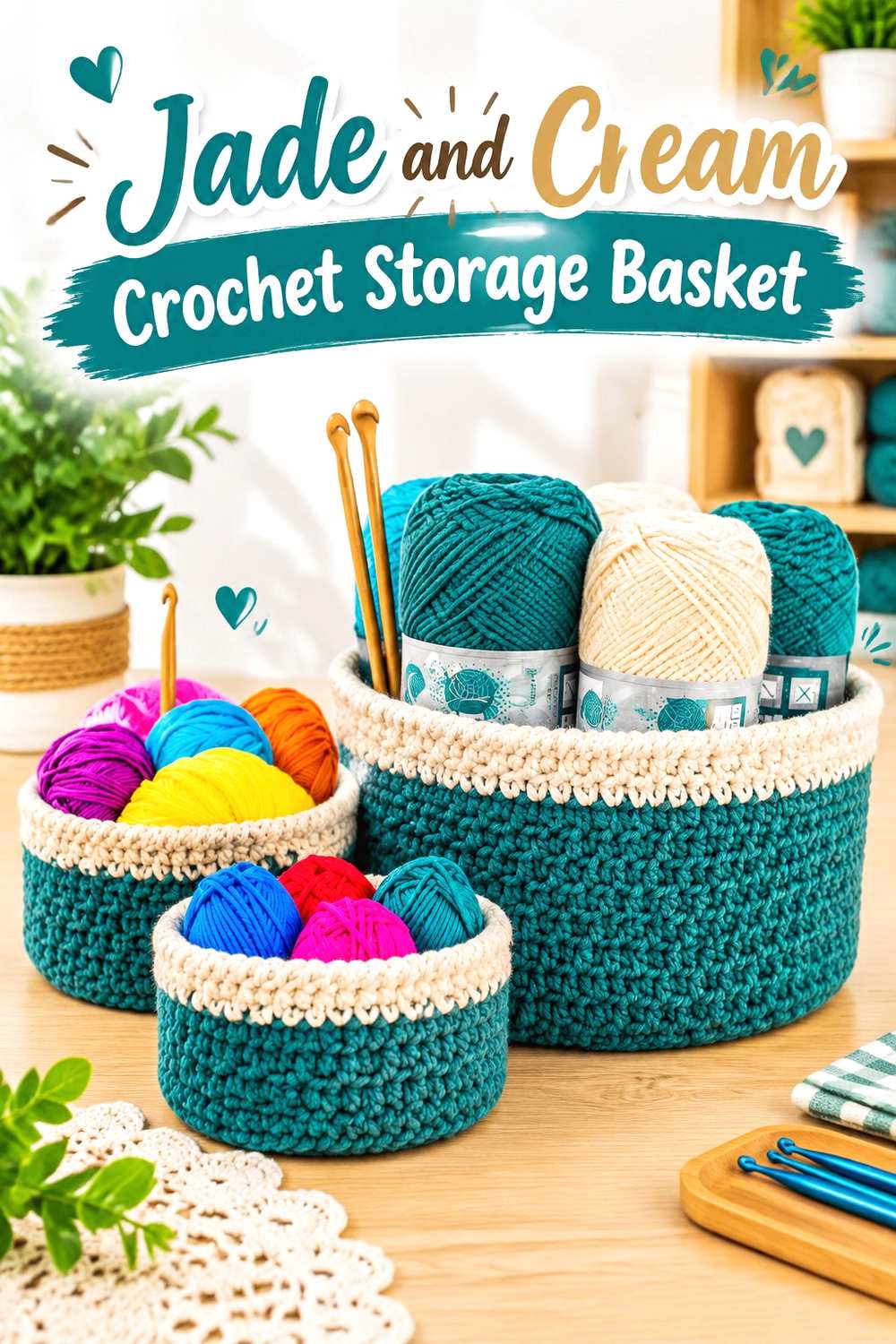
A crochet basket benefits from a clear visual hierarchy because its shape already creates several natural color zones: base, body, rim, and handles. Jade can dominate the body while cream defines the upper edge, or cream can cover most of the basket with jade concentrated near the base where a darker band gives the shape more visual weight.
Jade Can Ground the Lower Half of a Crochet Basket
Placing jade around the base or lower body makes the bottom of the basket look more defined against a light floor, shelf, or cabinet. This is especially effective when cream occupies the upper section. Keep the color change aligned with an obvious structural area instead of introducing an isolated stripe with no visual connection to the basket shape.
Cream Keeps a Jade Crochet Basket From Looking Too Heavy
If you prefer jade across most of the basket, use cream around the rim, handles, or another repeated upper detail. The lighter color creates a stopping point for the jade field and makes the opening easier to distinguish. Repeating cream in more than one small area can also keep a narrow cream accent from feeling accidental.
Creator Credit: naztazia
3. Jade And Cream Crochet Flower Wall Hanging
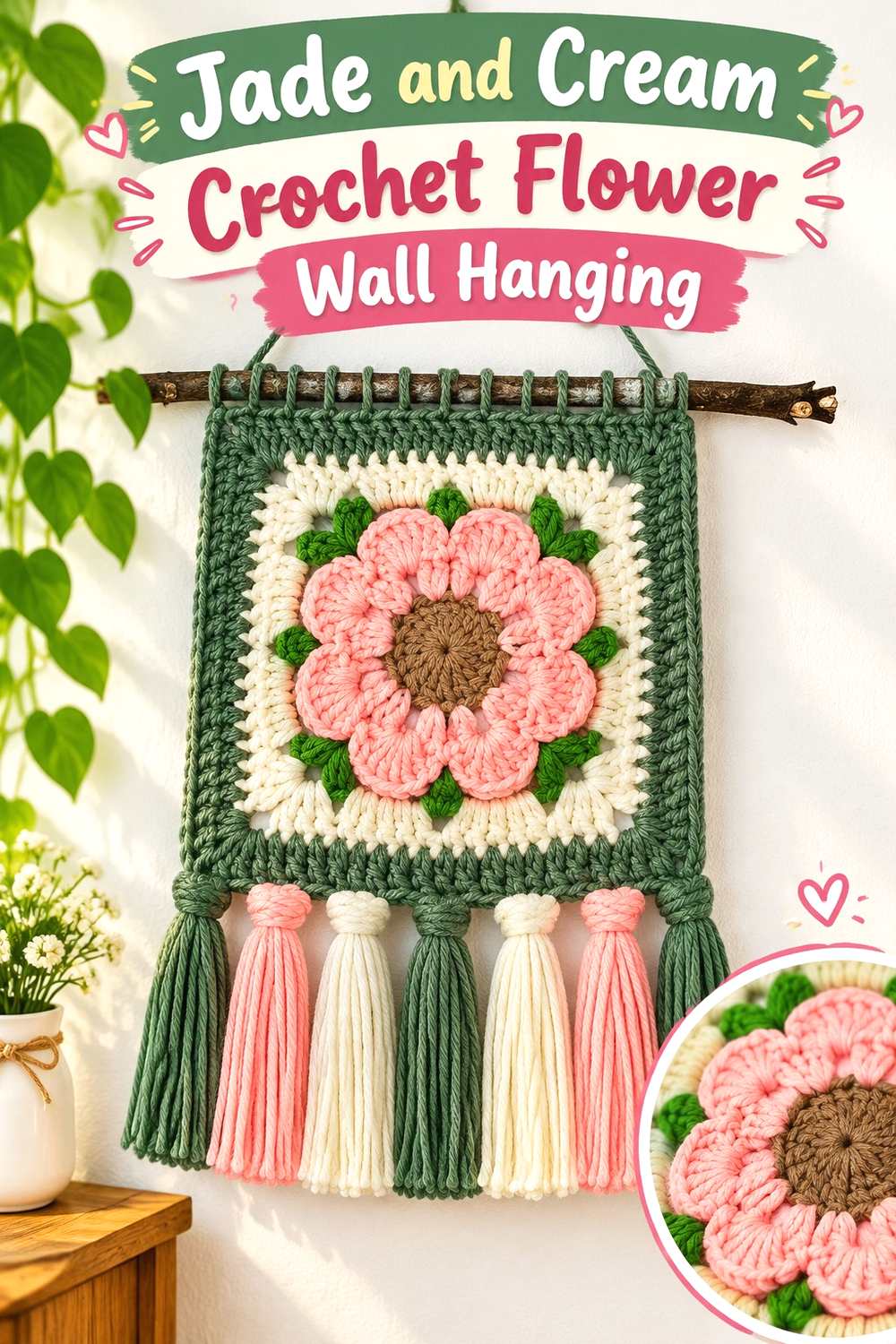
A flower wall hanging offers several separate color zones, making it easy to control how much jade appears. Jade can form petals, leaves, or surrounding granny-square sections, while cream provides breathing room around the floral shape. Because the piece is viewed vertically and often from several feet away, strong separation between the flower and background matters more than tiny color details.
Jade Gives Crochet Flower Motifs a Clear Wall Presence
Use jade on the part of the floral motif you want viewers to notice first. On a cream or neutral wall, a jade flower or jade outer square creates enough visual weight to stop the hanging from disappearing into its surroundings. Repeating jade in several motifs also creates a rhythm across a larger hanging.
Cream Can Frame Jade Crochet Flowers Without Competing
Cream works well as a surrounding square, connecting section, or lighter outer round because it gives the jade flower a quieter backdrop. If both colors appear inside every small part of the motif, the flower shape can become fragmented. Keeping larger cream spaces around the jade feature makes the motif easier to recognize from across the room.
Creator Credit: Hopeful Turns
4. Jade And Cream Crochet Coaster Set
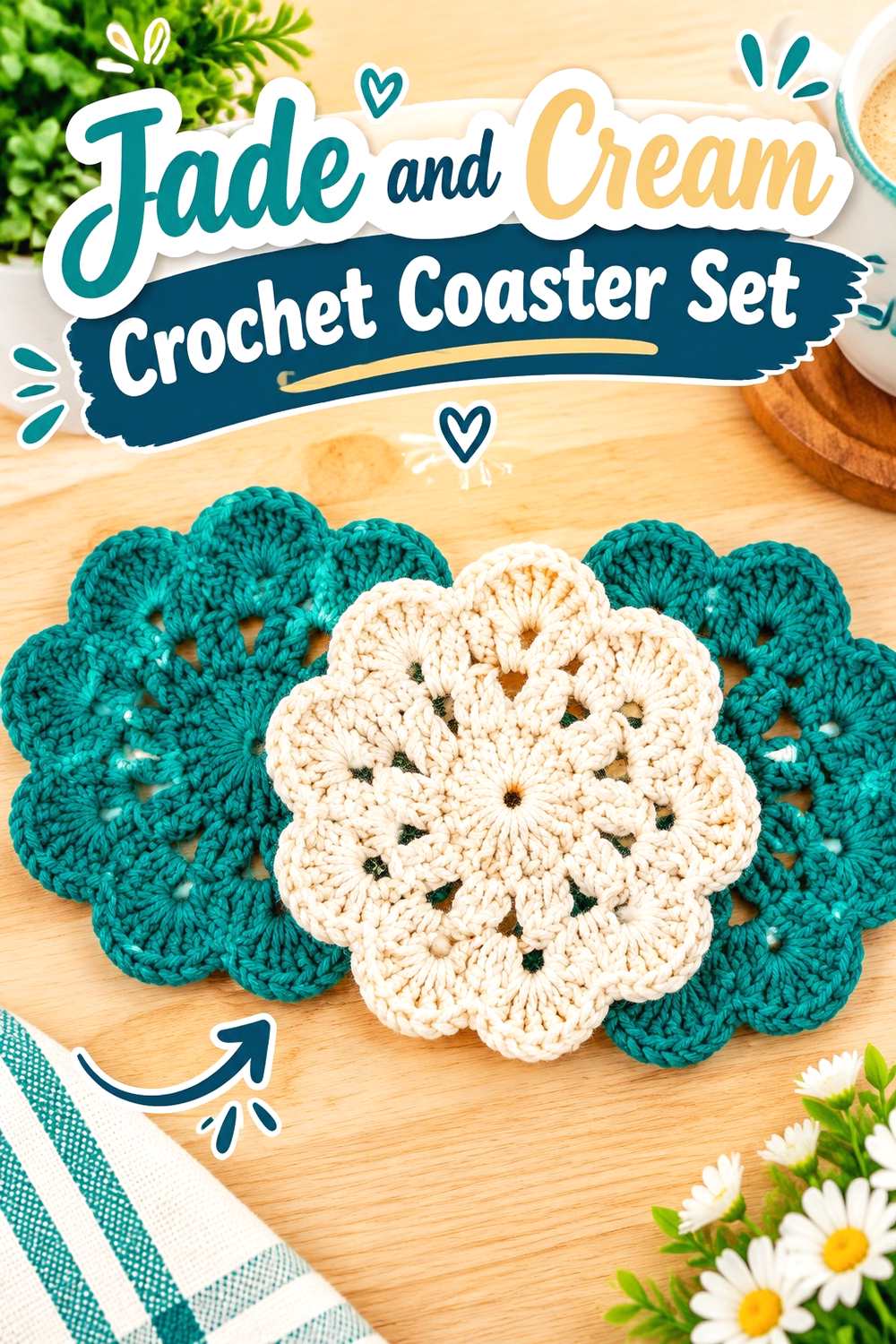
Coasters are small enough that complicated jade-and-cream placement can quickly become busy. A strong approach is to choose one color for the center and the other for the outer rounds or border. You can then reverse that arrangement on alternating coasters while keeping the entire set coordinated.
Jade Centers Give Cream Crochet Coasters More Definition
A jade center creates a visible focal point without requiring the dark color to cover the entire coaster. Surrounding it with cream expands the lighter visual area and makes the finished piece easier to coordinate with a neutral tabletop. Keep the jade center large enough to look deliberate rather than like a tiny isolated spot.
Cream Borders Can Clarify the Shape of Jade Crochet Coasters
When jade occupies most of a coaster, a cream outer edge can make the final outline easier to see, particularly on darker tables. The border also gives several jade-heavy coasters a shared finishing detail. If you reverse the palette on some pieces, repeat the same cream edging to keep the set connected.
Creator Credit: Diving Ducks Crochet
5. Jade And Cream Crochet Placemat
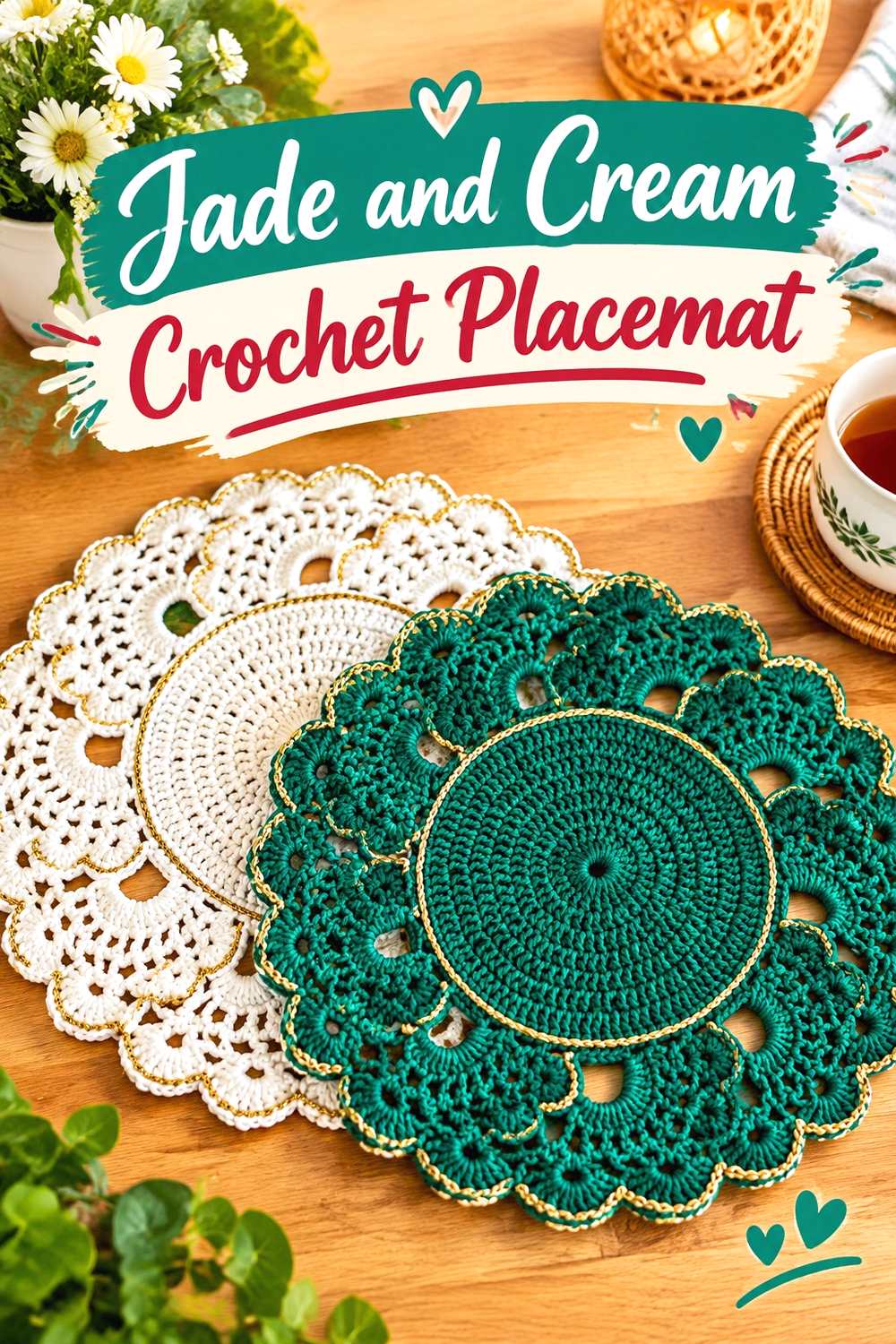
A placemat has more visual area than a coaster, so jade and cream can be divided into broader zones. Jade can anchor the center beneath the plate while cream opens up the outer section, or a cream center can keep the table setting light while jade defines the perimeter.
Jade Can Anchor the Center of a Crochet Placemat
A jade center places the strongest color directly beneath the dinnerware and keeps the outer cream section from carrying all the visual interest. This arrangement works especially well when the plate itself is light. Make sure the cream section is substantial enough to read as a planned second field rather than a narrow afterthought.
Cream Around Jade Can Lighten the Crochet Table Setting
If several placemats are used together, large jade surfaces can create a strong block of color across the table. Increasing the cream area around each jade center gives the individual pieces more separation. You can then repeat jade in a runner or centerpiece detail without making the full table overwhelmingly green.
Creator Credit: Mah Oliveira Crochê
6. Jade And Cream Crochet Table Runner
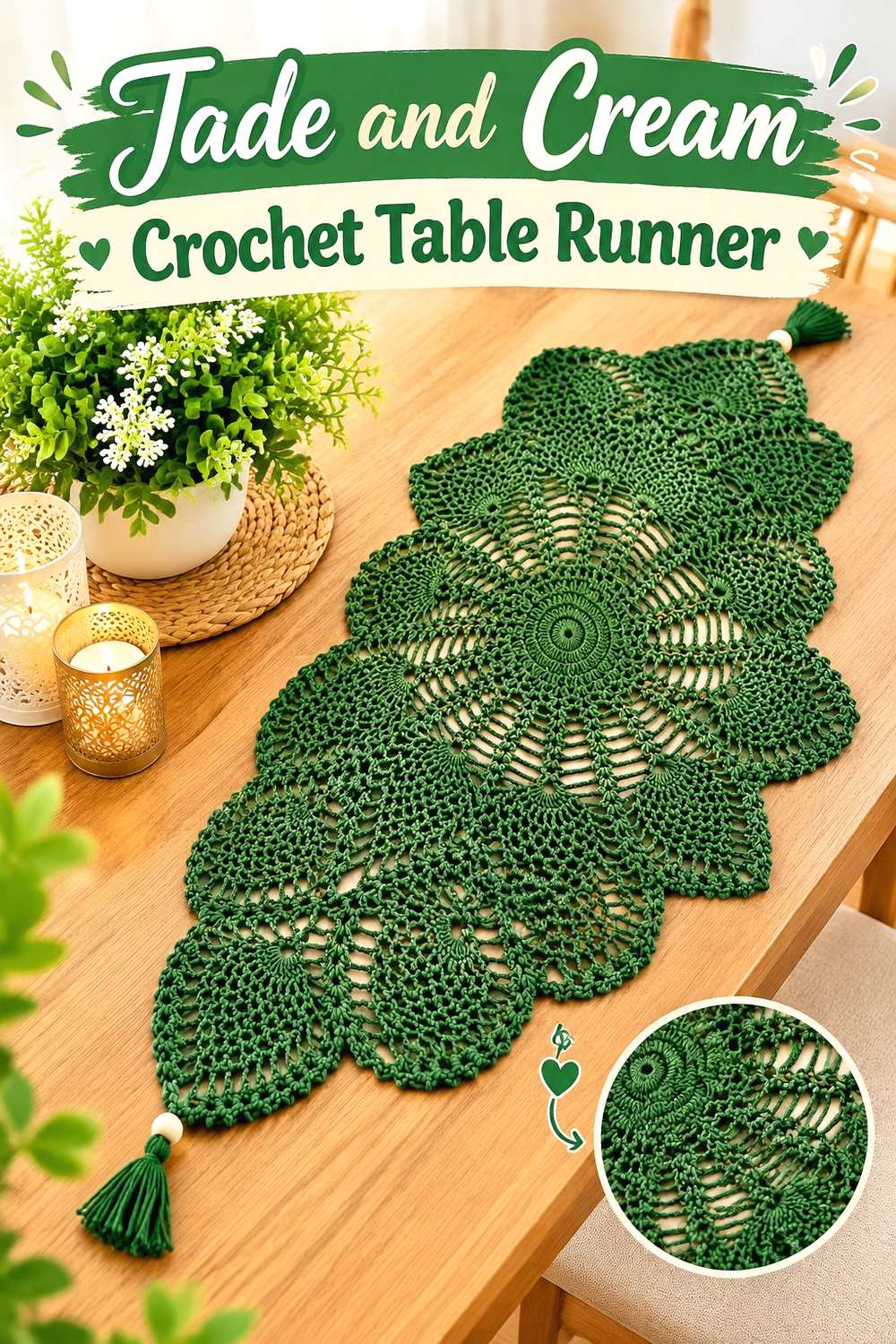
A table runner naturally pulls the eye along its length, making color repetition especially important. Jade can appear in repeated motifs or end sections while cream connects them, or a long jade center can be edged with cream for a more continuous appearance.
Jade Repetition Can Guide the Eye Along a Crochet Table Runner
Instead of placing one isolated jade section in the center, repeat jade at measured visual intervals. Repeated motifs, bands, or end details make the color feel integrated from one side of the table to the other. Cream can occupy the connecting spaces so the jade repetition stays visible rather than blending into one solid strip.
Cream Can Keep a Jade Crochet Runner Open and Light
A runner with intricate openwork or decorative edges often benefits from cream in the areas where you want the pattern itself to remain noticeable. Reserve jade for stronger shapes, border lines, or repeated sections. If both colors alternate too frequently, the stitch pattern and color pattern can compete for attention.
Creator Credit: Crochet by Glau
7. Jade And Cream Crochet Plant Hanger
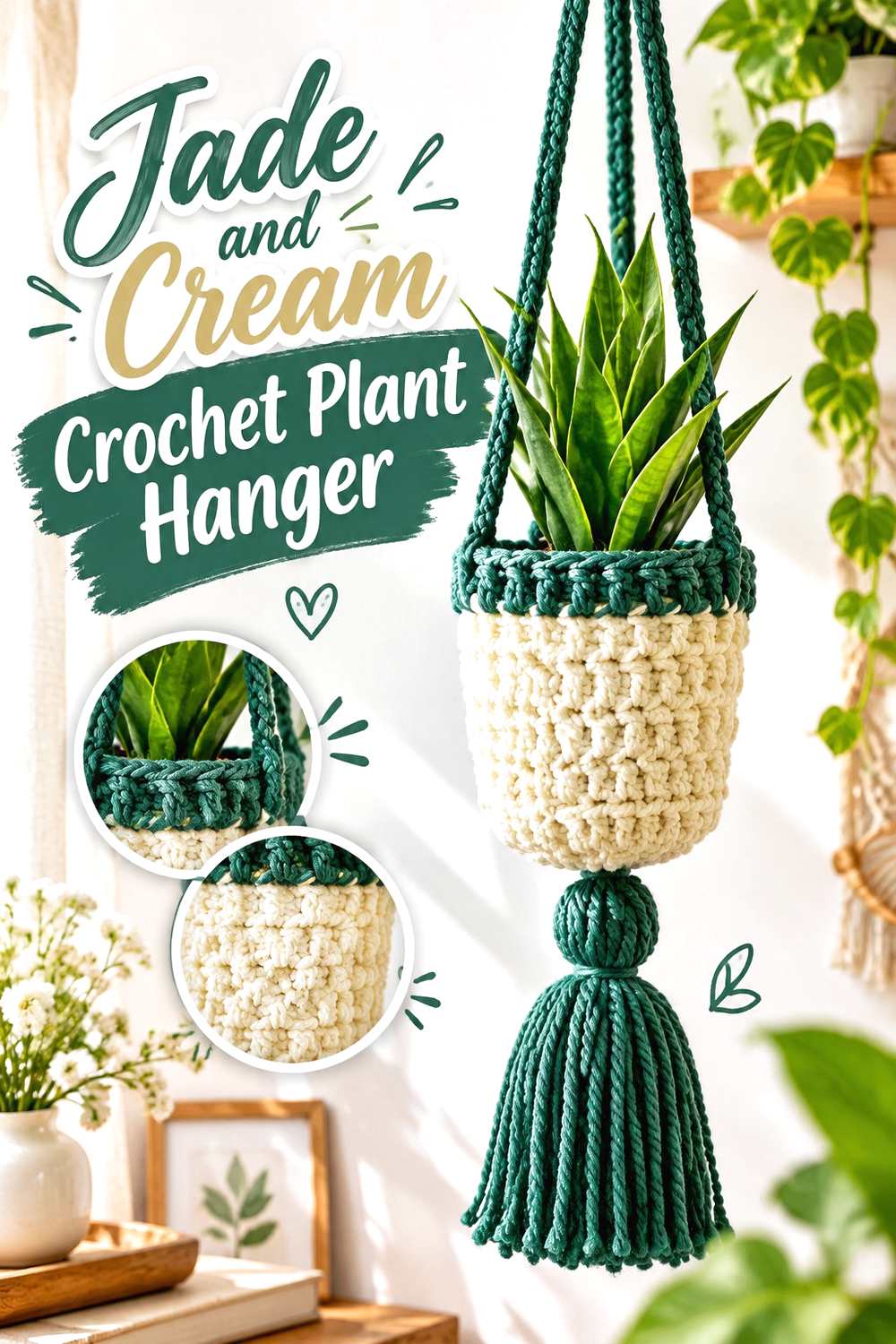
A hanging planter is seen as a vertical outline around the pot, so color placement needs to remain clear even when leaves overlap the crochet. Jade can visually connect the hanger with the plant, while cream can separate the straps, rim, or lower basket from dense green foliage.
Jade Can Connect a Crochet Plant Hanger With Greenery
A jade body gives the hanger a botanical direction and lets the crochet become part of the plant display instead of a completely separate accent. If the plant has dense leaves, however, too much similar green around the upper portion may reduce definition. That is where cream becomes useful.
Cream Can Keep Jade Crochet Hanger Straps Visible
Use cream on straps, upper loops, or another section that crosses in front of leaves. The lighter value can prevent the suspension structure from visually disappearing against greenery. Repeating a little cream lower on the hanger makes the upper color change feel connected to the rest of the piece.
Creator Credit: Bella Coco
8. Jade And Cream Crochet Plant Pot Cover
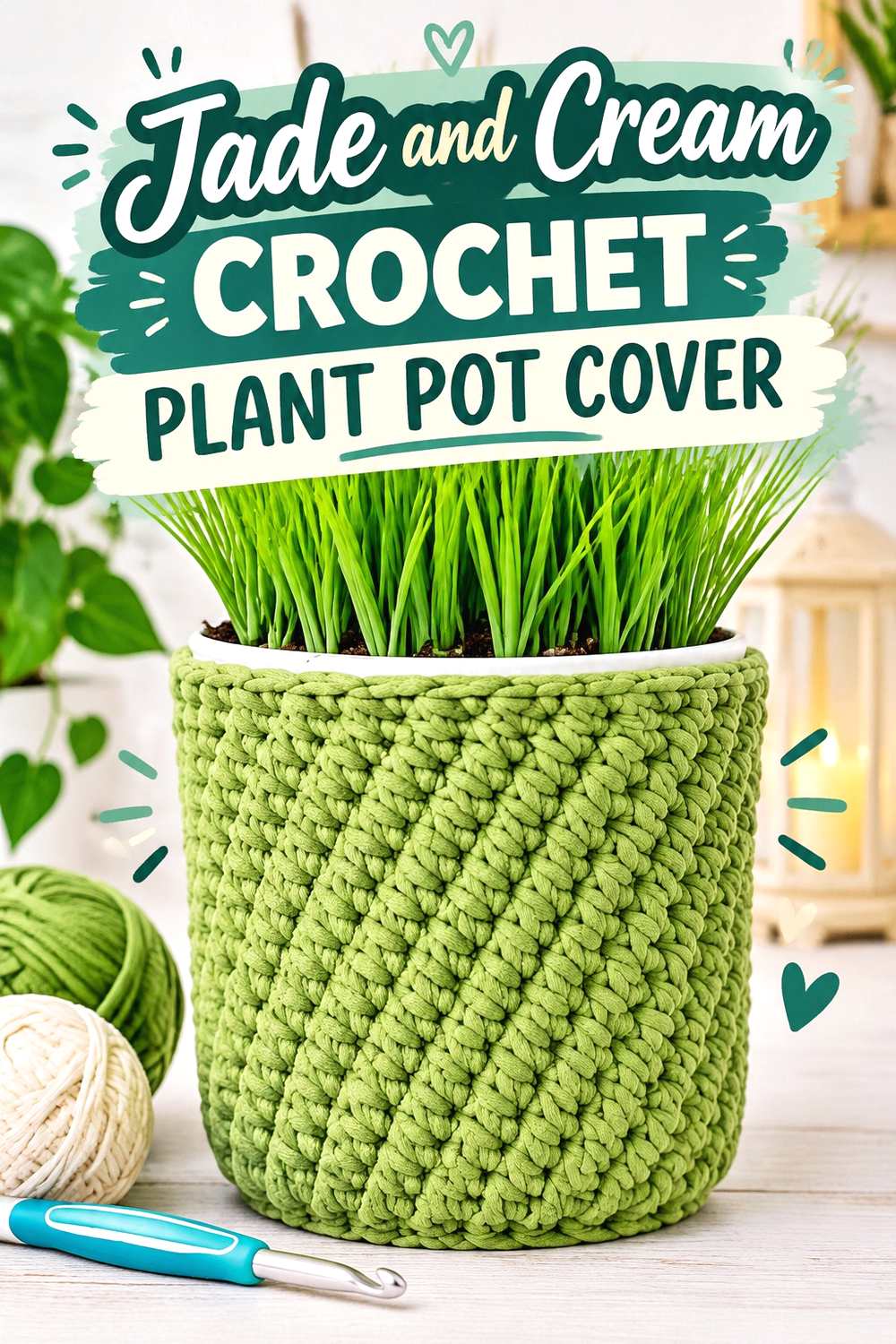
A pot cover gives the palette a compact cylindrical surface. Jade can make the pot a stronger accent among light furniture, while cream can define the top edge or introduce a quieter section near the plant. Because the cover sits directly beneath foliage, avoid placing all the darkest jade only at the top if the leaves are already visually dense.
Jade Works Well Around the Base of a Crochet Plant Pot Cover
Concentrating jade near the lower part of the cover gives the planter a stable visual base. It also creates separation from a light shelf or windowsill. Cream can then take over higher on the cover, providing a transition between the dark base and the plant.
Cream Can Break Up a Large Jade Crochet Pot Surface
If jade is the main body color, use cream as a meaningful band, textured section, or rim rather than a very thin line. A larger cream area remains visible when the pot is viewed from across the room and keeps the cover from becoming one uninterrupted dark cylinder.
Creator Credit: First The Coffee Crochet
9. Jade And Cream Crochet Spiral Rug

A rug is a large color commitment compared with smaller accessories, so proportion matters. Jade can create the spiral path while cream opens the surrounding areas, giving the movement of the design enough contrast to remain visible at floor level.
Jade Should Form a Clear Crochet Rug Spiral
A spiral depends on uninterrupted visual movement. Keep jade consistent along the section that creates the main curve instead of changing colors too often within the same visual line. This allows the spiral to remain recognizable when furniture or shadows partially cover the rug.
Cream Gives a Jade Crochet Rug More Floor-Level Contrast
Cream can make the darker jade path easier to follow, especially when the rug sits on medium or dark flooring. If the floor is already very light, test the cream against it before committing; you may want jade to occupy the outer edge so the entire rug has a stronger boundary.
Creator Credit: Crochet School
10. Jade And Cream Crochet Throw Blanket
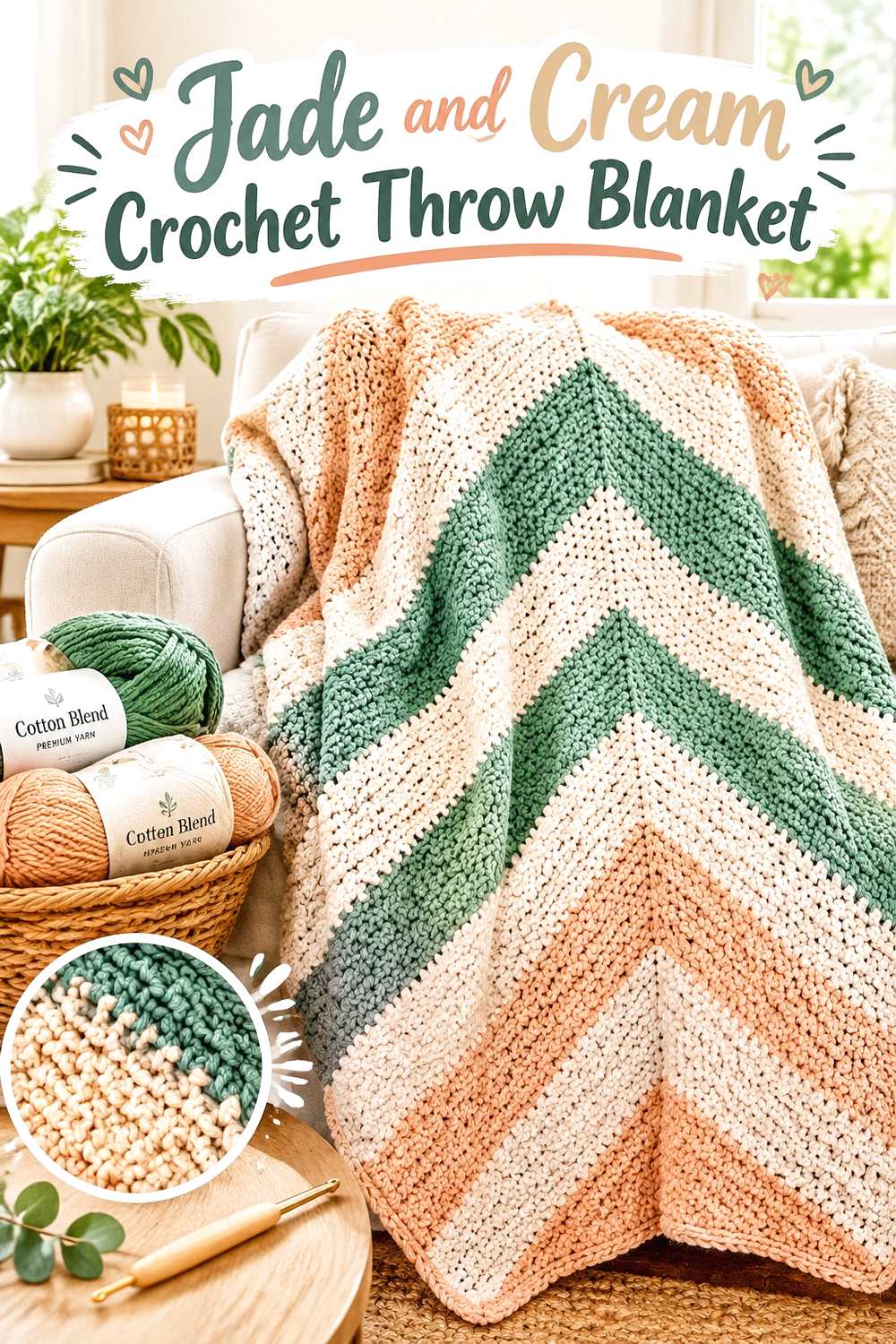
A throw provides enough surface area to explore a much wider range of jade-and-cream proportions. For a lighter living room, cream can carry most of the blanket while jade appears in broader bands or repeated sections. For a deeper statement piece, reverse the arrangement and use cream strategically around textured areas and the edge.
Jade Bands Can Give a Cream Crochet Throw Stronger Structure
On a mostly cream blanket, wider jade bands are usually easier to read than many tiny stripes. Space the jade sections so they create an intentional rhythm across the throw. This keeps cream dominant while giving the eye several strong points of reference.
Cream Can Reveal Texture Across a Jade Crochet Throw
If the stitch pattern creates raised areas or noticeable surface texture, cream can be placed where you want that texture to remain especially visible. A cream border around a jade-dominant blanket can also lighten the perimeter and connect the throw with other neutral furnishings.
Creator Credit: TL Yarn Crafts
11. Jade And Cream Crochet Tissue Box Cover
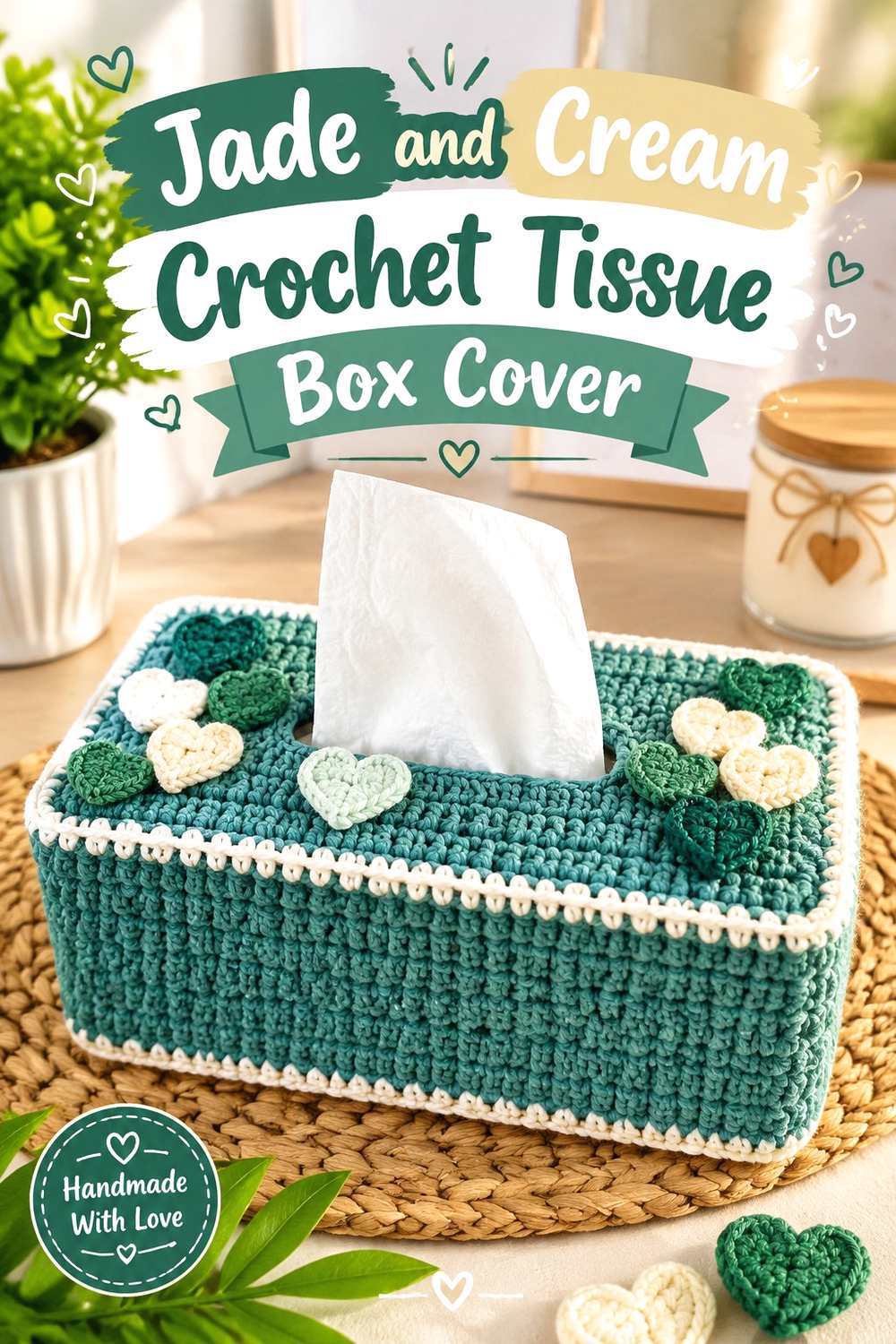
A tissue box cover occupies a small but noticeable surface on a side table, bathroom counter, or dresser. Because the rectangular form has clear sides and a top opening, the palette can follow the object rather than being distributed randomly.
Jade Can Define the Sides of a Crochet Tissue Box Cover
Using jade on the vertical faces makes the cover read as a strong decor accent while keeping the top available for cream. This is useful when the tissue itself is white because a cream top creates a softer transition around the opening instead of placing bright white directly against dark jade.
Cream Can Outline the Opening of a Jade Crochet Tissue Cover
Cream around the top opening helps separate that functional area from the jade body. Repeating cream along the bottom edge or another small trim can make the upper accent feel purposeful. Avoid adding several unrelated cream bands if the box shape already provides enough visual divisions.
Creator Credit: Ginaz Kr8tion
12. Jade And Cream Crochet Doily
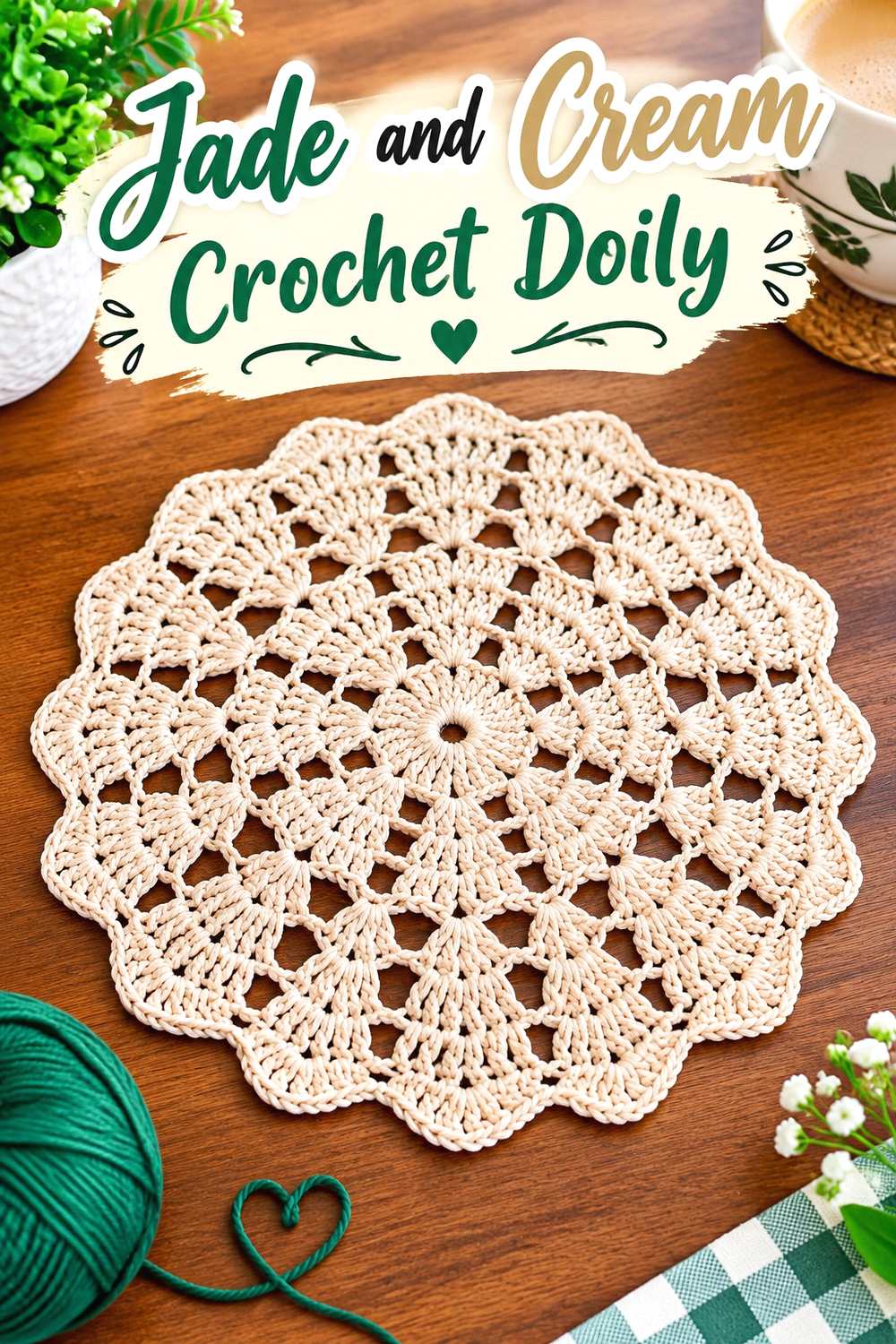
A crochet doily depends heavily on negative space and repeated detail, so overly frequent color changes can distract from the lace structure. Jade and cream work better when each shade controls a recognizable group of rounds or a clearly defined center-and-border relationship.
Jade Can Strengthen the Center of a Cream Crochet Doily
Using jade through the center rounds gives the eye a clear starting point before the design opens into cream. This arrangement works particularly well on a light tabletop when a fully cream doily might have very little contrast with the surface underneath.
Cream Lets Jade Crochet Lace Expand Without Becoming Too Dense
Moving into cream toward the outer rounds can make a detailed doily feel visually lighter as it grows. If jade returns at the final edge, keep that outer accent narrow enough that it frames the cream lace rather than overpowering it.
Creator Credit: NotikaLand crochet and knitting
13. Jade And Cream Crochet Wreath
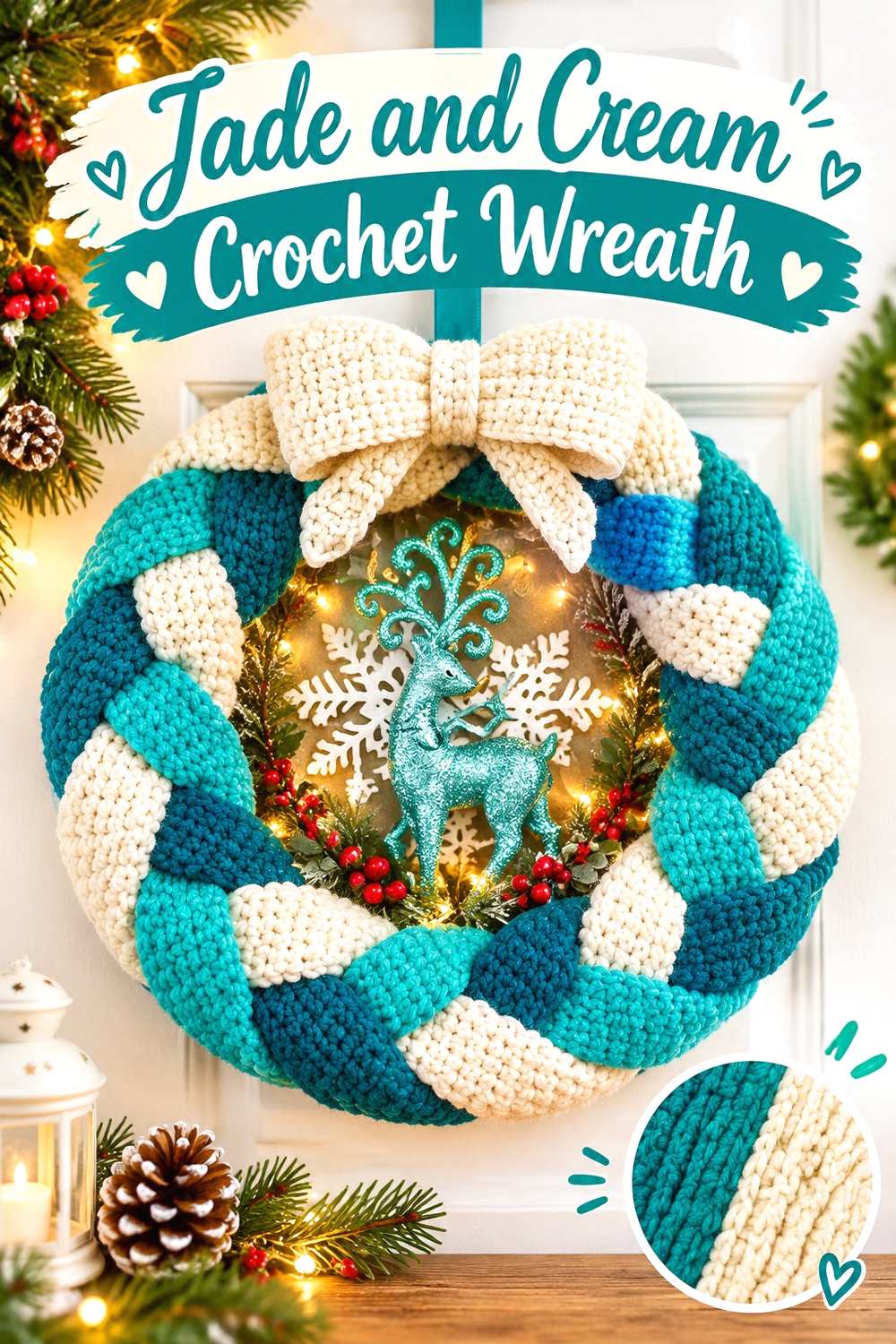
A wreath is viewed as one complete circle, so color balance around the circumference matters. Jade can create the main wrapped or crocheted base, while cream appears in a bow, decorative sections, flowers, or repeated accents. Another option is alternating broad jade and cream areas while maintaining a clear circular rhythm.
Jade Can Give a Crochet Wreath a Strong Outer Shape
A jade-dominant base creates a clear silhouette on cream, white, or pale walls and doors. If additional crocheted decorations are attached, keep some areas of the jade base visible so the wreath still reads as a circle instead of becoming a collection of unrelated embellishments.
Cream Can Break Up Jade Around the Crochet Wreath
Distribute cream in more than one location if you want it to feel integrated. A single cream feature can become the focal point, but repeated cream sections create a more balanced two-color wreath. Keep enough jade between those sections to preserve the stronger green framework.
Creator Credit: Be Crafty With Megan
14. Jade And Cream Crochet Mandala Wall Hanging

A mandala naturally creates concentric color zones, making jade and cream especially adaptable. You can build contrast by moving from a dark jade center into cream, alternating wider sections, or using cream where the stitchwork becomes more open.
Jade Can Anchor the Center of a Crochet Mandala
A jade center gives the wall hanging a strong visual core. As the pattern expands outward, cream can create separation around the central motif and prevent every ring from having equal visual weight. That hierarchy makes a two-color mandala more readable from a distance.
Cream Can Highlight Open Space Around Jade Crochet Mandala Sections
Where the mandala becomes more open, cream can help the stitch structure remain visible against a darker wall or background. If the wall itself is cream, reverse the outermost area and finish with enough jade to create a clear boundary between crochet and wall.
Creator Credit: mum2makes
15. Jade And Cream Crochet Wall Organizer

A wall organizer needs its pockets to be visually understandable as well as decorative. Jade and cream can help separate the background panel from the storage areas without requiring additional colors. One color should clearly dominate the base while the second identifies pockets, edging, or the hanging area.
Jade Can Define the Pockets on a Cream Crochet Wall Organizer
Jade pockets on a cream panel create immediate separation between storage areas and the background. This can be especially useful when several pockets sit close together. Repeating jade at the top hanging section or outer edge prevents the pocket color from appearing isolated.
Cream Can Keep a Jade Crochet Organizer From Becoming One Flat Block
If jade covers the main panel, use cream to distinguish pocket openings or pocket faces. The lighter areas make the organizer’s structure easier to read on the wall. Avoid narrow cream lines everywhere; larger purposeful sections generally provide clearer organization.
Creator Credit: Happy Heartsy
16. Jade And Cream Crochet Garland

A garland is less about large color fields and more about repetition. Jade and cream can alternate from motif to motif, appear together within each motif, or divide into a cream connecting strand with jade decorative elements. The strongest version is usually the one with an obvious repeating rule.
Jade Motifs Can Create Rhythm Along a Cream Crochet Garland
Use jade for repeated motifs and cream for the connecting strand when you want every decorative shape to remain easy to identify. The cream line becomes a quiet background element while jade carries the visual rhythm from one end of the display to the other.
Cream Can Separate Jade Crochet Garland Motifs
If several jade motifs sit close together, add cream between them or inside their centers so they do not merge into one continuous green band from a distance. Consistent spacing and repeated cream details matter more here than adding more colors.
Creator Credit: Crochet with Tuula Maaria
Choosing Between These Jade and Cream Crochet Decor Ideas
For a lighter room, start with cream-dominant pieces such as the throw blanket, doily, table runner, or wall organizer and use jade to outline important features. This keeps the handmade texture visible while introducing green in controlled amounts.
For stronger color, the cushion, basket, plant cover, wreath, or rug can carry much more jade because each has a compact, recognizable shape. Cream then becomes a framing and separation color rather than the main surface.
The wall hanging, mandala, placemat, coaster set, and garland sit between those two approaches. Their repeated shapes allow you to adjust the jade-to-cream ratio without changing the basic construction concept.
Conclusion
Jade and cream crochet decor becomes more effective when each color has a defined job. Jade can anchor a rug, pillow, basket, motif, or plant cover, while cream can reveal texture, separate details, lighten large surfaces, and connect handmade pieces with neutral surroundings.
You also do not need to use the same jade-to-cream ratio throughout the room. A jade-heavy cushion can sit beside a cream-heavy throw, while smaller tabletop and wall projects repeat both shades in different proportions. That variation keeps the palette coordinated without making every piece look copied from the same color plan.
Use the original tutorials for the construction of each project, then plan the jade and cream placement according to the size, texture, surroundings, and visual role you want the finished decor to have.
Frequently Asked Questions
Should jade or cream be the dominant color in crochet home decor?
Either can lead. Jade creates a stronger color statement, while cream usually gives the finished piece a lighter visual footprint. For large objects such as blankets and rugs, consider how much surface area the dominant color will cover. Smaller accessories can usually carry a higher proportion of jade without dominating the whole room.
How can I tell whether jade and cream have enough contrast for crochet motifs?
Place the yarns beside each other before starting and look at them from several feet away. You can also photograph them in grayscale. If the two shades become difficult to distinguish in grayscale, use broader color sections rather than relying on tiny details that need strong value contrast.
Where should cream go in a jade crochet project?
Cream is useful around motif edges, borders, openings, raised details, pocket sections, stripes, or other areas that need separation. On a jade-heavy project, putting cream near detailed stitchwork can help those areas remain easier to see.
Can I use different shades of jade across several crochet decor pieces?
Yes. They do not need to be identical, but keeping the greens reasonably related in depth, temperature, or muted quality will make coordination easier. If one jade is much brighter or darker than the others, repeat it intentionally rather than letting it appear on only one unrelated item.
What can I substitute if I cannot find the exact jade shade I want?
Choose another medium-to-deep green that preserves the contrast relationship with cream. Pay attention to lightness and saturation rather than the shade name alone. If the replacement green is considerably lighter, the finished palette will have softer contrast and small cream details may become less pronounced.
How do I stop jade and cream crochet decor from looking overly matched?
Change the proportions and placement from piece to piece. Use jade as the main shade on one project, cream as the main shade on another, and equal repetition only where the construction benefits from it. The shared palette will provide continuity even when the color distribution changes.