15 Rust and Dusty Rose Crochet Home Accents
Rust and dusty rose bring two different kinds of warmth to crochet home decor. Rust has the deeper, earthier visual weight, while dusty rose introduces a lighter, softened color that can keep large crocheted surfaces from becoming too dark. Together, they can create anything from a rust-led accent with subtle pink details to a dusty-rose centerpiece framed by darker terracotta-brown tones.
The placement matters as much as the pairing. Rust can define pillow borders, basket bases, rug edges, and table-runner ends, while dusty rose can open up textured centers and decorative motifs. Reversing those roles creates a different result: a dusty rose border can soften a rust cushion, and small rust details can give a pale table accent more definition.
The tutorials below support the crochet construction of each home accent. The rust-and-dusty-rose color plans are independent palette adaptations rather than claims about the colors used by the original creators.
Quick List
- Rust And Dusty Rose Crochet Cushion Cover
- Rust And Dusty Rose Crochet Storage Basket
- Rust And Dusty Rose Crochet Table Runner
- Rust And Dusty Rose Crochet Plant Pot Cover
- Rust And Dusty Rose Crochet Plant Hanger
- Rust And Dusty Rose Crochet Tissue Box Cover
- Rust And Dusty Rose Crochet Coaster Set
- Rust And Dusty Rose Crochet Area Rug
- Rust And Dusty Rose Crochet Placemats
- Rust And Dusty Rose Crochet Wall Hanging
- Rust And Dusty Rose Crochet Hanging Basket
- Rust And Dusty Rose Crochet Floor Pouf
- Rust And Dusty Rose Crochet Garland
- Rust And Dusty Rose Crochet Decorative Doily
- Rust And Dusty Rose Crochet Mandala
Decide Whether Rust or Dusty Rose Should Lead the Room Accent
Rust carries more visual weight than many dusty rose shades, so an equal amount of each color may not look perfectly balanced. If you want a deeper, autumnal direction, let rust cover the largest surface and use dusty rose for borders, raised details, or repeated inserts.
For a lighter home accent, reverse the proportion. Dusty rose can carry the main cushion face, table surface, or decorative motif while rust outlines the edges. This often gives the darker shade more impact because a smaller rust border or center stands clearly against the softer background.
Use Rust and Dusty Rose to Separate Crochet Texture
Texture is especially important in home accents because pillows, baskets, rugs, and wall pieces are often viewed from farther away than small accessories. If rust and dusty rose are switched too frequently inside a highly textured stitch pattern, the color changes can compete with the crochet surface.
Instead, consider placing the color transition where the object itself changes: the border of a cushion, the base of a basket, the outer rounds of a coaster, or the fringe of a wall hanging. This lets color reinforce the structure rather than interrupt it.
1. Rust And Dusty Rose Crochet Cushion Cover
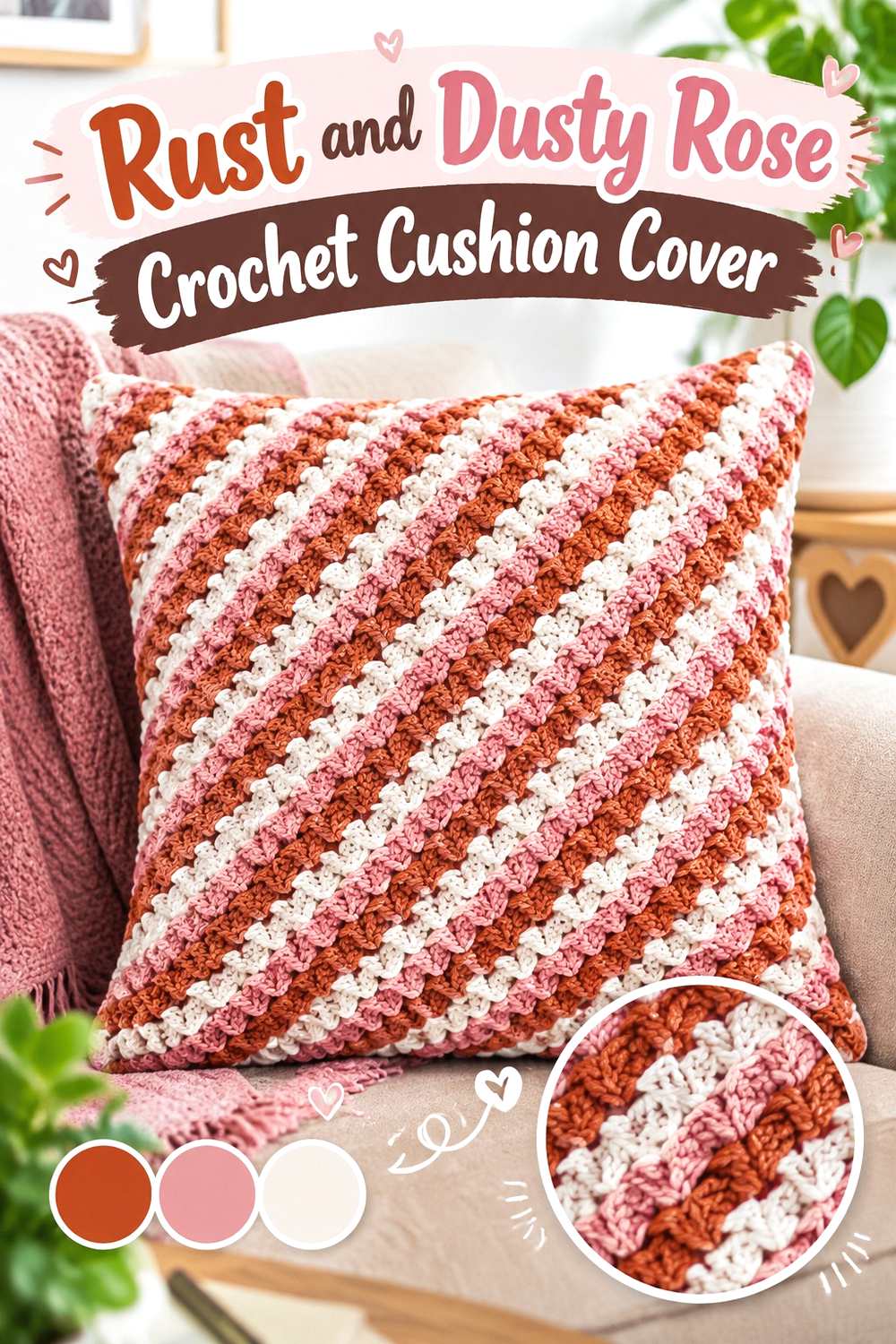
A cushion cover gives this palette a large front-facing surface, making color proportions immediately noticeable. Dusty rose can occupy the textured center while rust forms a darker outer frame, or the arrangement can be reversed for a warmer, more saturated pillow.
Dusty Rose Can Keep the Rust Crochet Cushion From Feeling Too Heavy
Use dusty rose across most of the cushion face when the stitch pattern includes ridges, raised stitches, or other texture you want to remain visible. The softer color gives the center a lighter visual field, while rust can be concentrated at the edges.
If you want more rust without covering the center, repeat it in a narrow inner border before returning to dusty rose.
Rust Can Give a Dusty Rose Crochet Cushion a Defined Border
A rust border creates a clear frame around a dusty rose center and can make the square or rectangular pillow shape look more deliberate.
Keep the rust border proportionate to the pillow face. A very wide dark frame can reduce the visual impact of the dusty rose center more than expected.
Creator Credit: Crochet MC YouTube tutorial
2. Rust And Dusty Rose Crochet Storage Basket
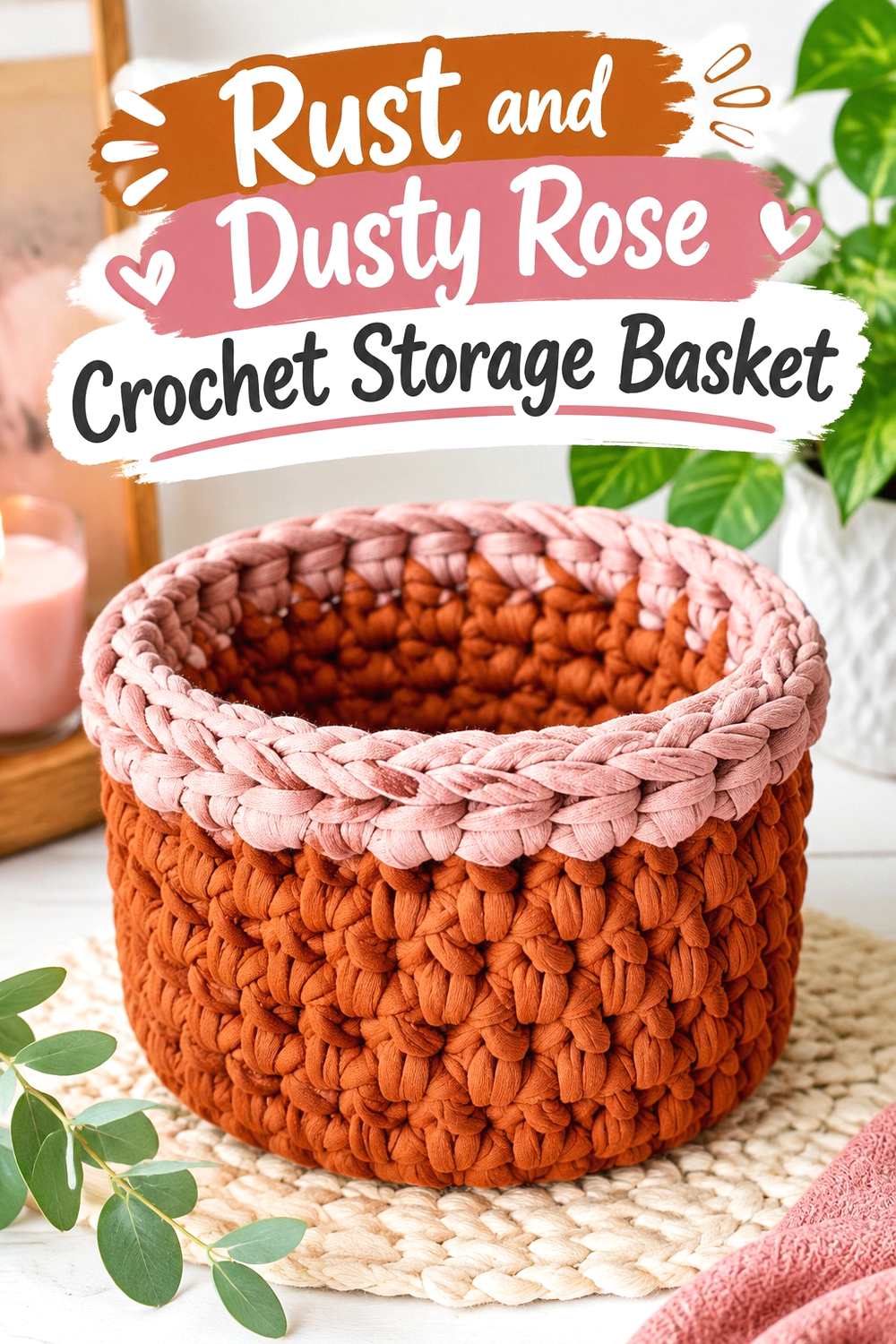
A basket naturally divides into a base, wall, upper rim, and sometimes handles. That makes it useful for controlled two-color placement without relying on repetitive stripes.
Rust Can Anchor the Dusty Rose Crochet Basket Base
Use rust at the base when you want the darkest shade concentrated near the bottom. Continue dusty rose through most of the walls so the basket does not become visually heavy from top to bottom.
Repeating a small amount of rust at the rim can reconnect the base color with the upper part of the basket.
Dusty Rose Can Soften a Rust Crochet Basket Rim
If rust already covers most of the basket walls, a dusty rose rim creates a lighter break around the opening. Dusty rose can also be repeated on handles when the construction includes them.
Avoid using the lighter shade in one tiny isolated section. Repetition at the rim and handles makes the dusty rose placement look planned.
Creator Credit: Lallaulab YouTube tutorial
3. Rust And Dusty Rose Crochet Table Runner
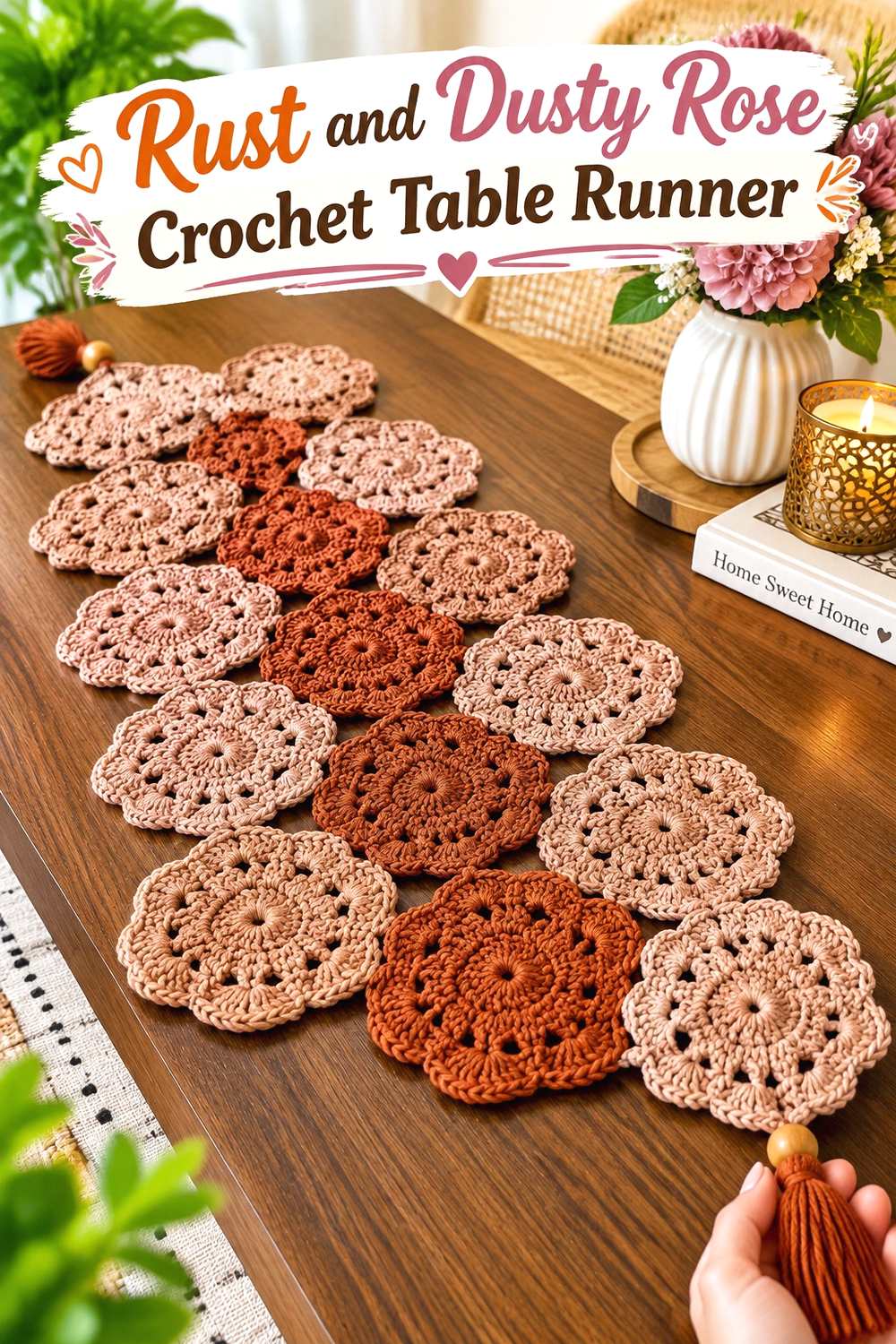
A table runner gives both colors enough length for broad blocks, repeated motifs, or a darker border running around the entire piece. Because it is viewed horizontally, the ends are particularly useful locations for concentrated contrast.
Dusty Rose Can Carry the Main Rust Crochet Table Runner Field
Use dusty rose through the center when you want the runner to remain relatively light across the table. Rust can then appear in wider end sections or along the outer edge.
This arrangement keeps rust noticeable without allowing the darkest shade to cover the entire long surface.
Rust Can Define the Dusty Rose Crochet Table Runner Ends
Rust sections at both ends create visual symmetry and give the runner two clear anchors. This can be more cohesive than inserting many small rust stripes through a decorative stitch pattern.
If the center already contains repeated rust motifs, consider a narrower rust end treatment to avoid concentrating too much dark color at the perimeter.
Creator Credit: Crochet by Glau YouTube tutorial
4. Rust And Dusty Rose Crochet Plant Pot Cover

A plant pot cover has a compact cylindrical surface where even small color changes are noticeable. Rust can cover the lower portion while dusty rose lightens the upper section near the plant.
Rust Can Ground a Dusty Rose Crochet Plant Pot Cover
A rust base visually anchors the pot cover and places the deeper shade near the bottom of the arrangement. Let dusty rose take over farther up if you want the cover to become lighter toward the foliage.
The transition can be one clear color block rather than several narrow stripes, especially when the crochet fabric already has strong texture.
Dusty Rose Can Separate the Rust Crochet Pot Rim From the Plant
Dusty rose around the upper edge creates a softer boundary between a rust body and the plant above it. It can also make a ribbed or folded rim easier to distinguish.
If dusty rose occupies only the final round, it may have very little visual impact. Give it enough depth to read as a deliberate upper section.
Creator Credit: Made by Lunda YouTube tutorial
5. Rust And Dusty Rose Crochet Plant Hanger
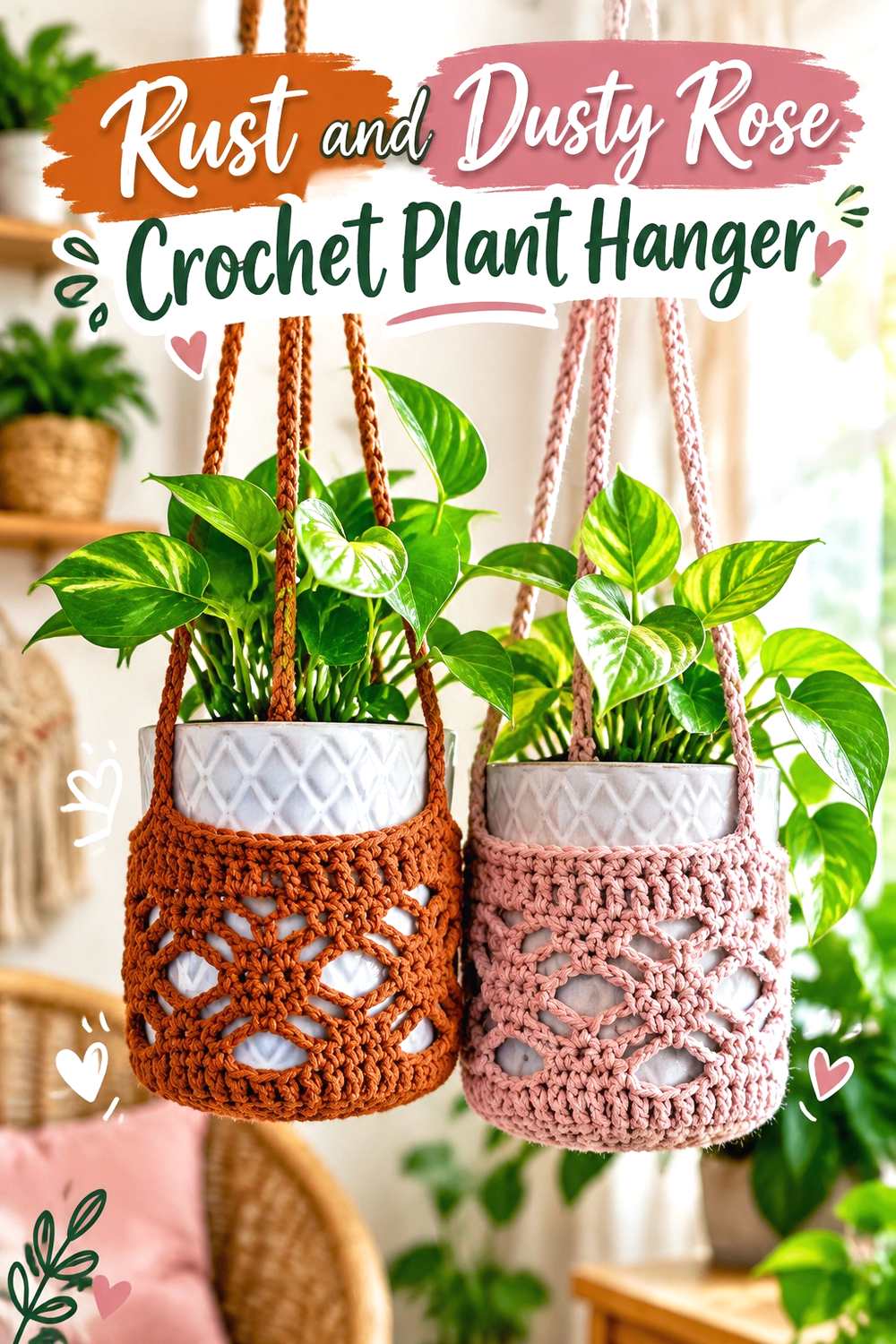
A plant hanger combines an open holder with long hanging straps, so color does not need to be distributed evenly. One shade can carry the pot section while the other defines the cords or upper edge.
Dusty Rose Can Keep the Rust Crochet Plant Holder Visually Light
Use dusty rose around the main holder when the crochet includes open lattice or decorative spaces. A lighter field can prevent the pot section from appearing too dense beneath the plant.
Rust can then be introduced where the holder transitions into the hanging structure.
Rust Straps Can Frame a Dusty Rose Crochet Plant Hanger
Rust hanging straps create long, narrow lines that visually connect the plant holder to the hanging point above it. Because these lines extend beyond the main body, rust remains noticeable even if dusty rose occupies more actual fabric.
Check the finished placement from a distance before adding extra rust details to the holder itself; the straps may already provide enough contrast.
Creator Credit: Heart Hook Home YouTube tutorial
6. Rust And Dusty Rose Crochet Tissue Box Cover
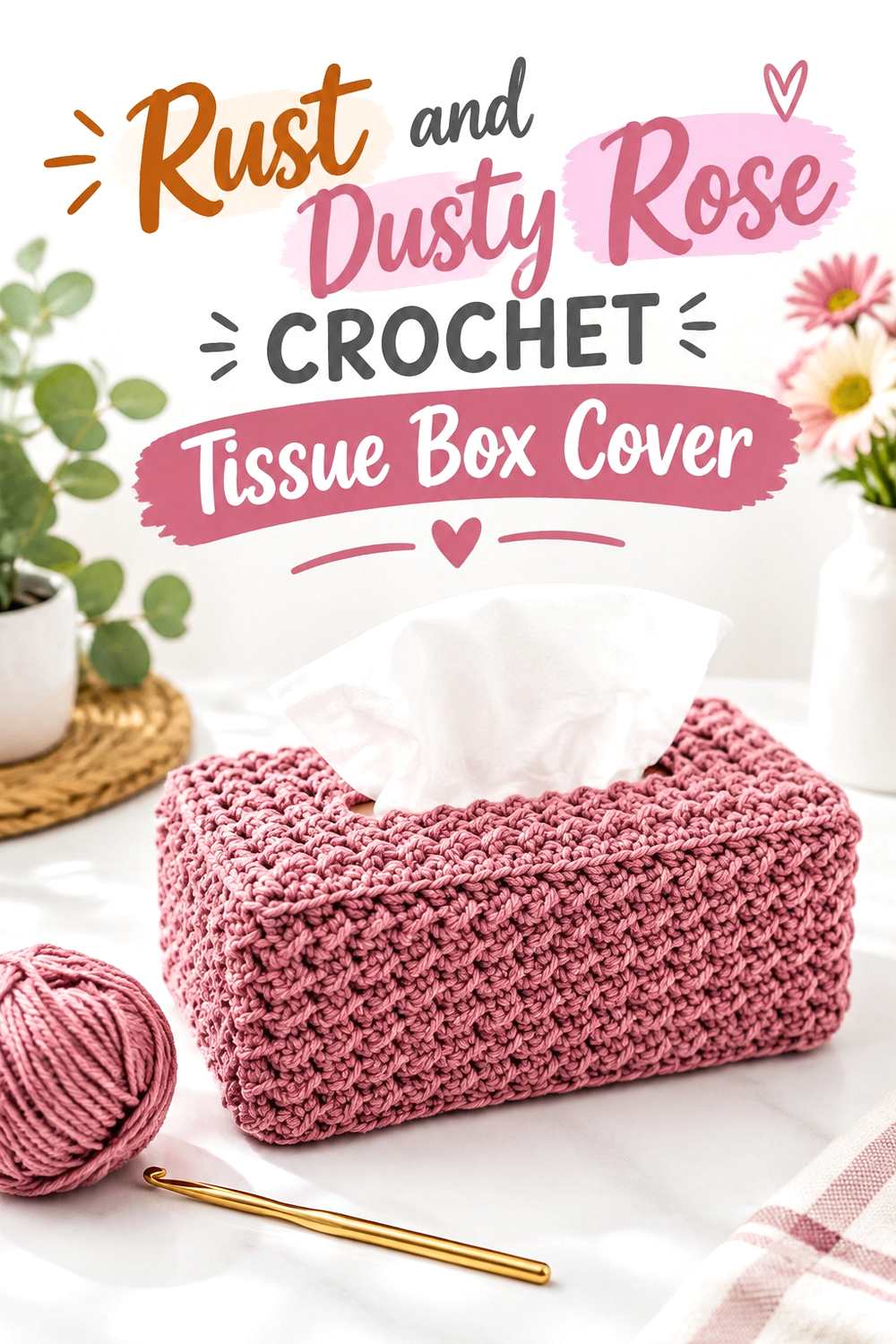
A tissue box cover has distinct top and side surfaces, making color blocking easy to organize. Rust can define the top opening while dusty rose covers the sides, or the darker shade can form the main body with a lighter top panel.
Dusty Rose Can Give the Rust Crochet Tissue Box Sides a Softer Field
Use dusty rose on the larger side panels when you want the cover to look lighter on a shelf or table. The broad uninterrupted areas also give textured stitches room to show.
Rust can then be concentrated near the top, where it visually emphasizes the opening.
Rust Can Outline a Dusty Rose Crochet Tissue Box Top
A rust border around the top opening creates a clear focal point without requiring dark stripes around every side.
Repeat a small amount of rust near the bottom edge if the top looks visually disconnected from the rest of the cover.
Creator Credit: Jo to the World Creations YouTube tutorial
7. Rust And Dusty Rose Crochet Coaster Set

Coasters are small enough to support stronger repetition between the two colors. Alternating rust and dusty rose between centers and borders can create a coordinated set without making every coaster identical.
Rust Centers Can Give Dusty Rose Crochet Coasters More Definition
A rust center creates a strong focal area that can be surrounded by dusty rose outer rounds. Because the project is small, a little rust can have substantial visual impact.
For a coordinated set, keep the same general color hierarchy across the coasters even if you reverse one or two designs.
Dusty Rose Borders Can Soften Rust Crochet Coaster Motifs
Dusty rose around a rust center creates a softer perimeter than finishing with the darkest color. This is useful when several coasters will be displayed together and you do not want multiple dark outlines dominating the tabletop.
If the center and outer round need more separation, introduce the color switch earlier rather than adding a third shade.
Creator Credit: Crochet Jewel YouTube tutorial
8. Rust And Dusty Rose Crochet Area Rug
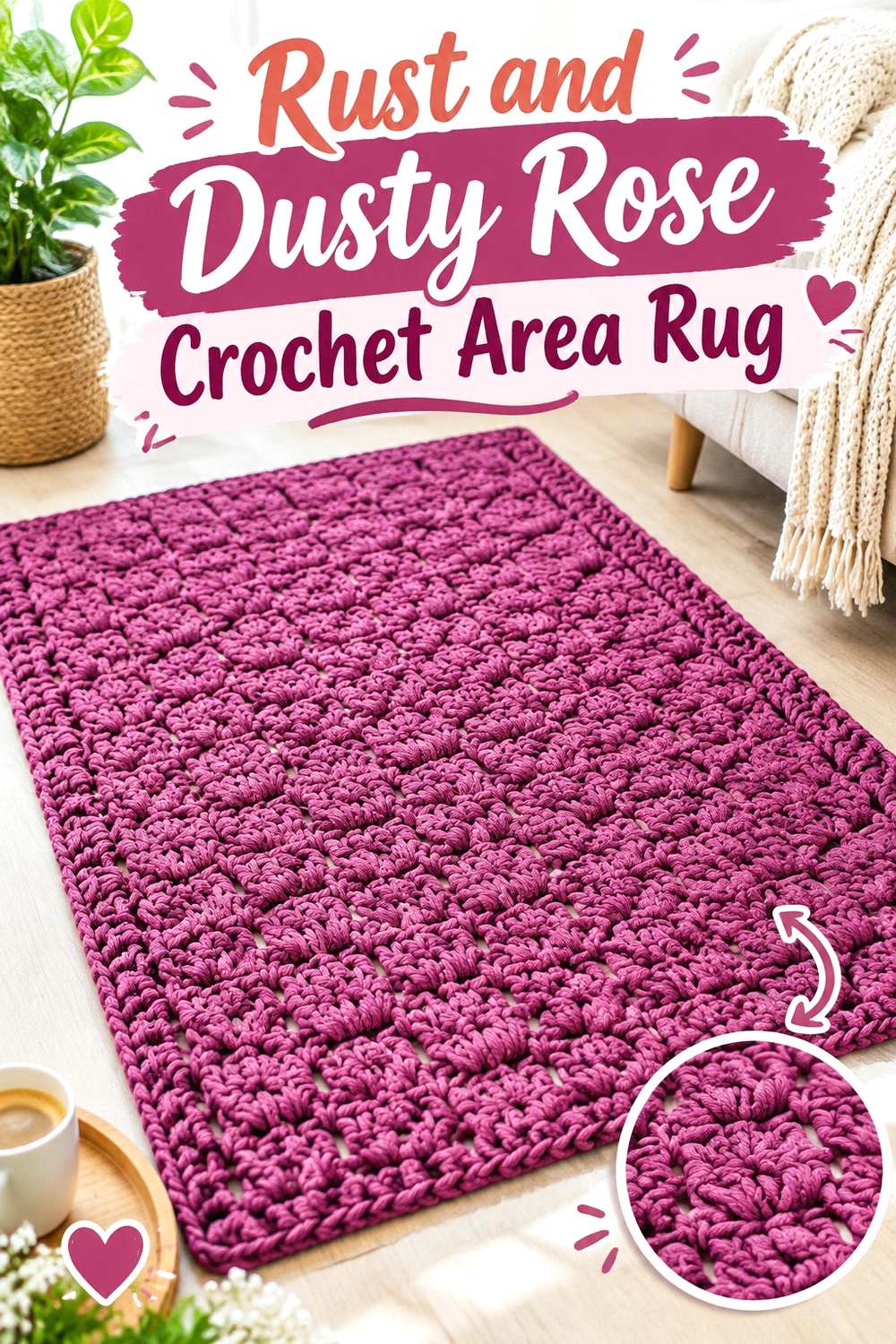
A rug occupies enough visual area that narrow alternating stripes can quickly become busy. Broad rust and dusty rose zones give the palette more structure and make the outer shape easier to read.
Rust Can Give a Dusty Rose Crochet Rug a Strong Outer Frame
Let dusty rose cover most of the central field and introduce rust through the outer portion. Because the perimeter extends around the whole rug, even a relatively narrow rust border can carry considerable visual weight.
Check the balance before making the dark border wider than planned.
Dusty Rose Can Open Up a Rust Crochet Rug Center
If you want rust to dominate, keep it around the edge and selected interior areas while reserving dusty rose for the center. This prevents a large rug from turning into one uninterrupted dark field.
A lighter center can also make concentric construction easier to see from across the room.
Creator Credit: Aprendendo Crochê YouTube tutorial
9. Rust And Dusty Rose Crochet Placemats
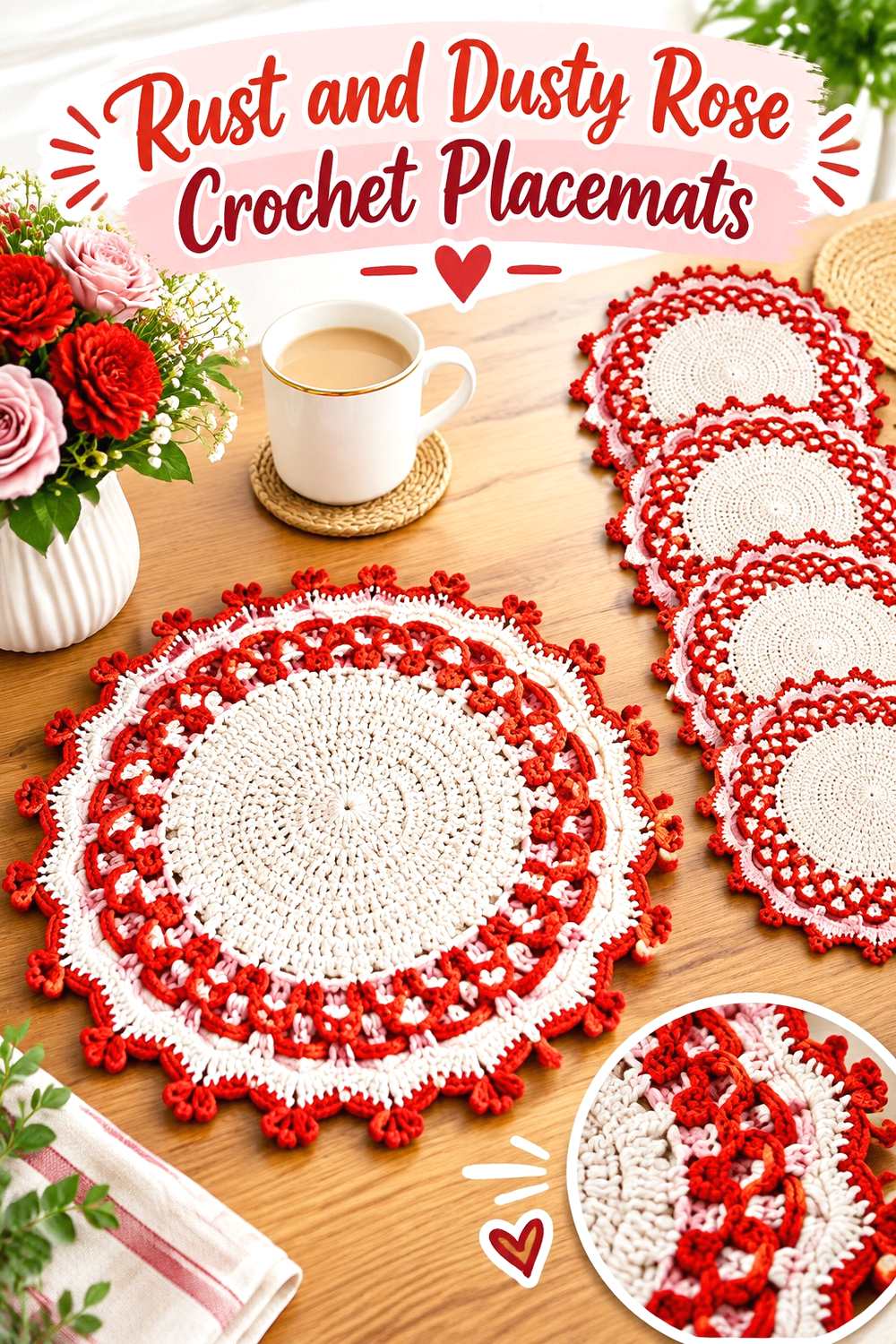
Placemats work well with a clear center-and-border approach because the color relationship repeats at every place setting. A dusty rose field with rust edging creates one direction; reversing the arrangement creates a richer table accent.
Dusty Rose Can Keep Rust Crochet Placemats From Dominating the Table
Use dusty rose through the broad center when several placemats will be visible at once. Repetition multiplies the effect of any dark color, so a rust-dominant mat can look much stronger when four or six are grouped together.
A dusty rose center gives each mat more visual breathing room.
Rust Borders Can Connect a Dusty Rose Crochet Placemat Set
Use the same rust border treatment on every placemat to create consistency across the table. The dark edge makes each individual mat easy to distinguish while the dusty rose centers keep the overall set softer.
If rust is also used inside the center, keep the border narrower so it does not compete with the internal detail.
Creator Credit: Mariie Crochet YouTube tutorial
10. Rust And Dusty Rose Crochet Wall Hanging
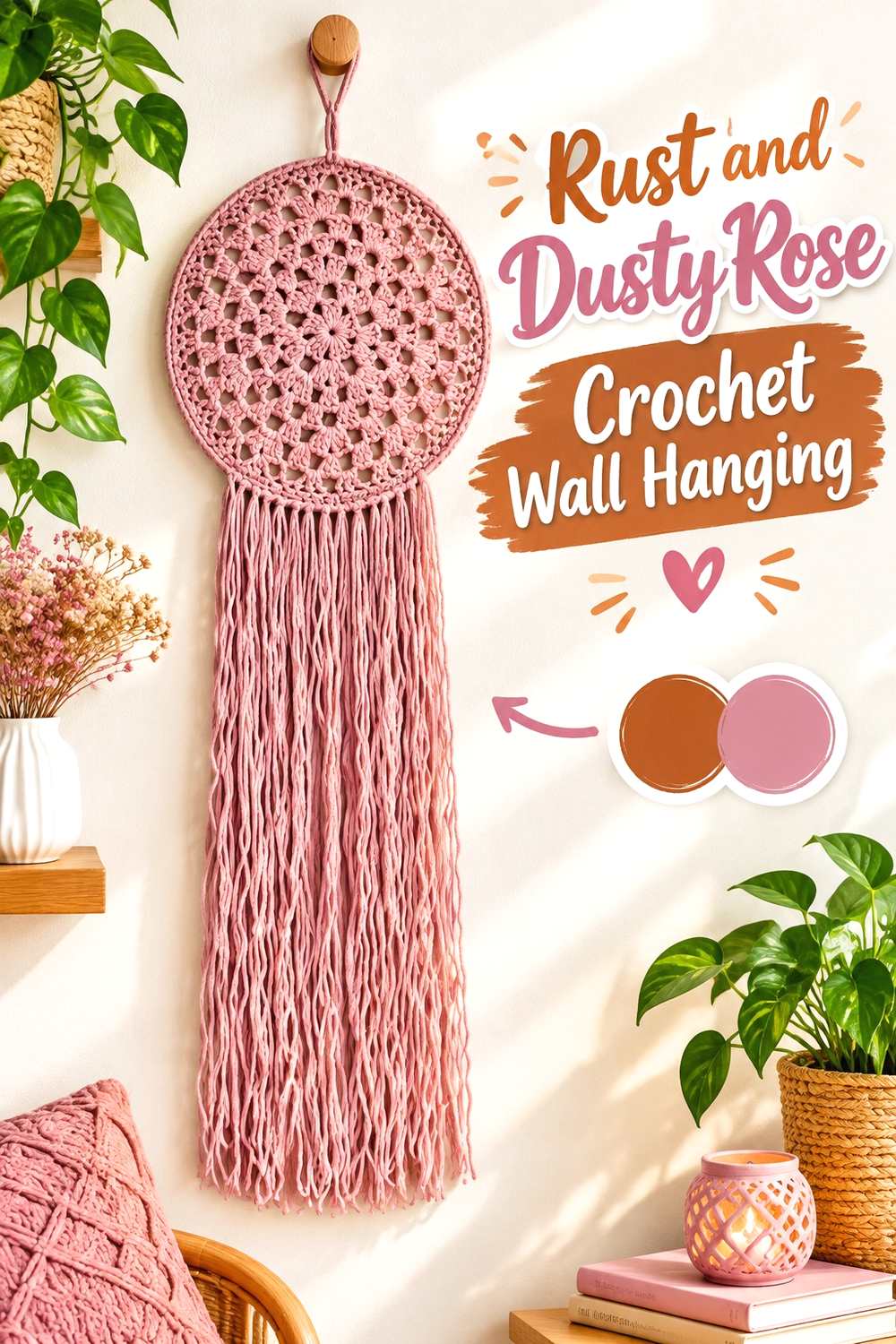
A wall hanging can use color more dramatically because it does not need to function like a tabletop or storage piece. Rust and dusty rose can be distributed between the central crochet motif, outer rings, and fringe.
Rust Can Give a Dusty Rose Crochet Wall Hanging a Strong Focal Center
Use rust in the center when you want the eye to move toward the middle of the hanging. Surrounding it with dusty rose expands the design without making every section equally dark.
This is especially useful for radial or circular motifs where the colors naturally move outward.
Dusty Rose Fringe Can Soften a Rust Crochet Wall Hanging
If the main motif contains substantial rust, dusty rose fringe provides a lighter finish below it. The vertical strands also extend the lighter color beyond the dense crochet portion.
For stronger continuity, repeat dusty rose somewhere within the central motif rather than using it only in the fringe.
Creator Credit: Crochet with Clare YouTube tutorial
11. Rust And Dusty Rose Crochet Hanging Basket
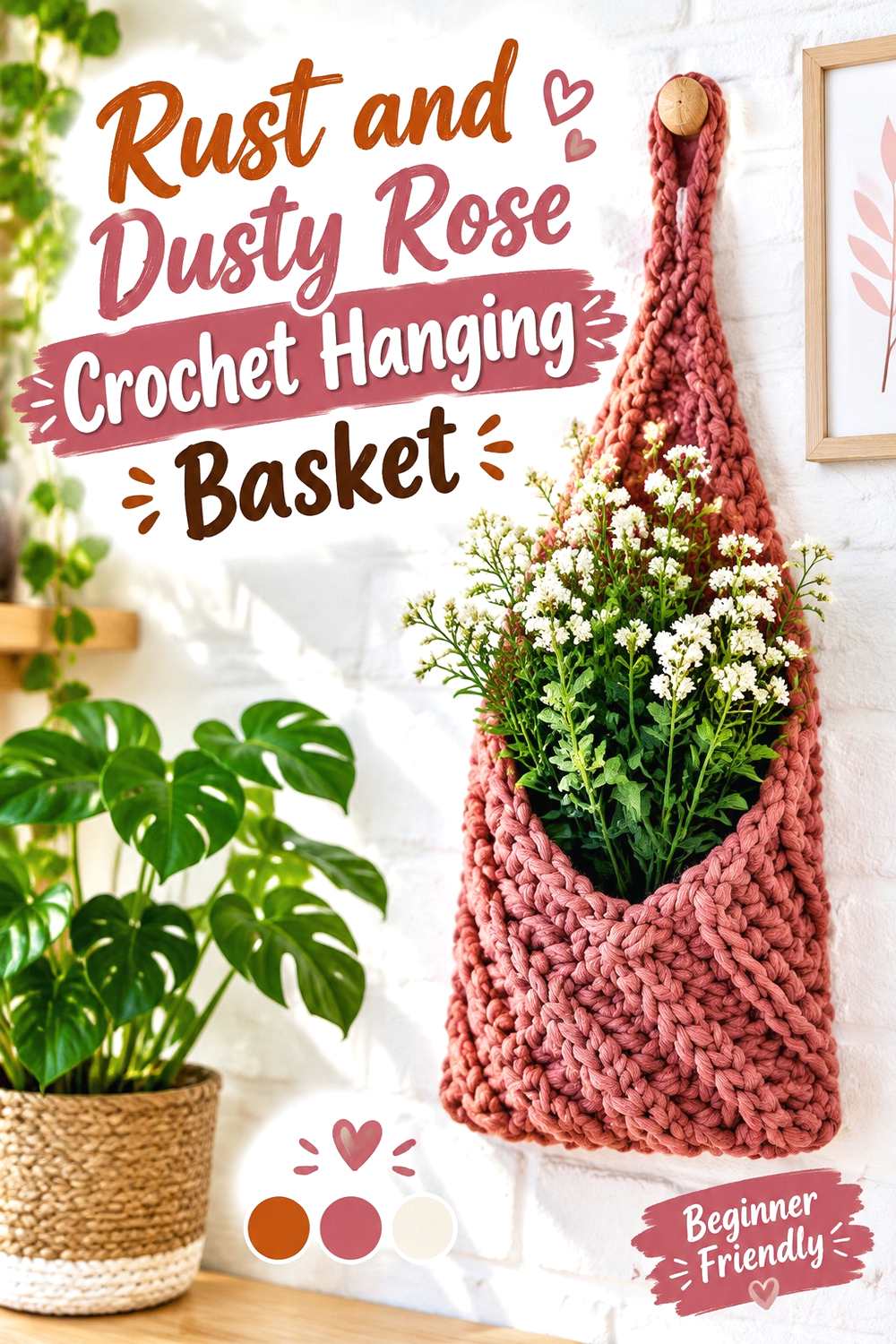
A hanging basket has both a storage body and a hanging loop, giving each color a clear structural role. Rust can form the basket itself while dusty rose highlights the opening or hanging section.
Rust Can Give the Crochet Hanging Basket a Strong Storage Body
Keep most of the basket rust when you want it to act as the darker grounding accent on a light wall. A continuous body also lets the shape read clearly without frequent color changes.
Dusty rose can then be reserved for the top section where it will remain visible.
Dusty Rose Can Define a Rust Crochet Hanging Basket Opening
Use dusty rose around the rim or upper fold to separate the opening from the rust body. Repeating dusty rose in the hanging loop can connect the upper details.
If both areas are narrow, the lighter color remains an accent rather than changing the basket into an equal two-color design.
Creator Credit: Sierra Fontaine YouTube tutorial
12. Rust And Dusty Rose Crochet Floor Pouf
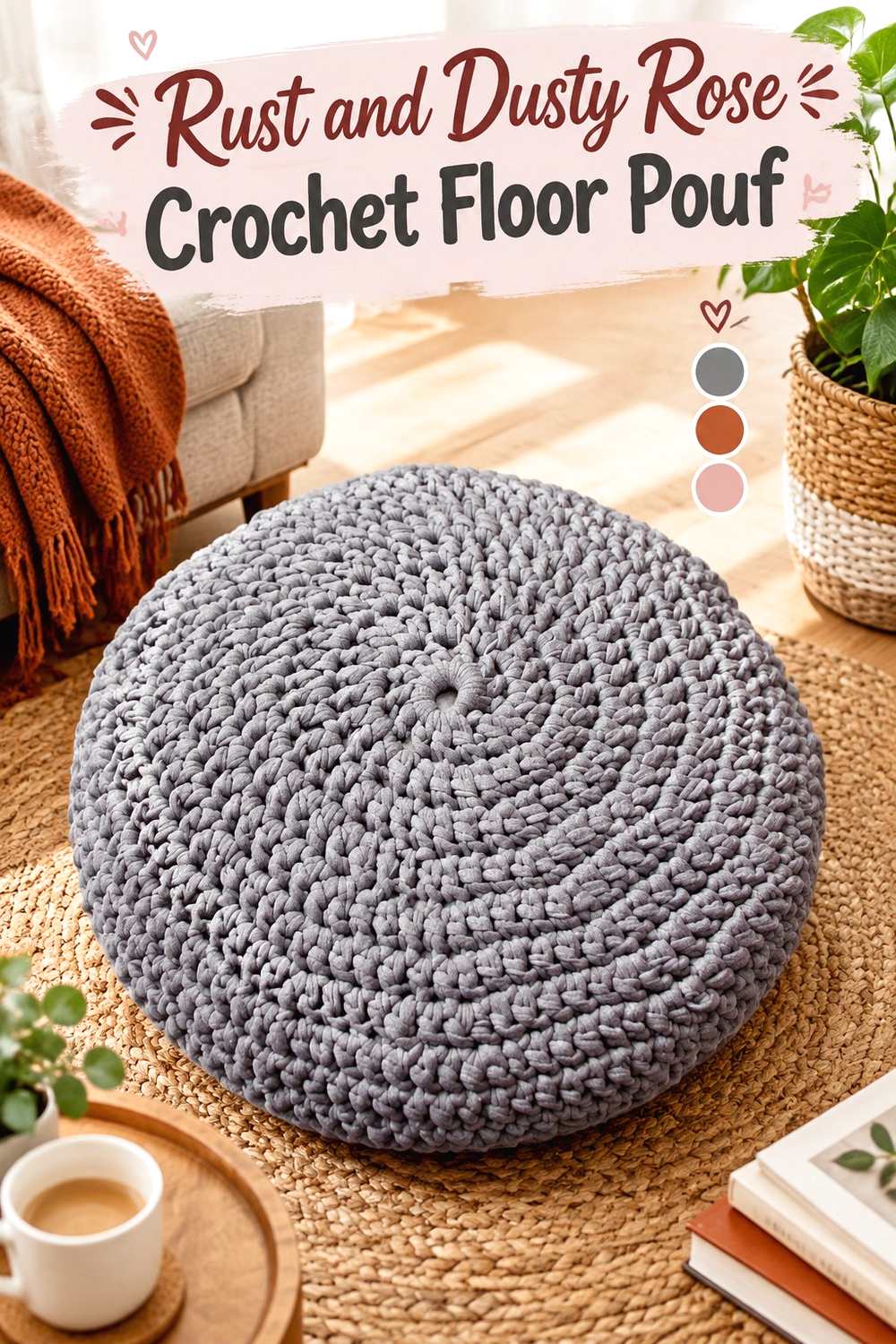
A floor pouf is one of the largest home accents in this collection, so the palette needs simple organization. Large color blocks work better here than many tiny changes, especially when the crochet fabric already has a chunky surface.
Dusty Rose Can Keep a Large Rust Crochet Pouf From Looking Too Dense
Let dusty rose cover most of the upper or central surface when the pouf will already occupy substantial visual space. Rust can wrap around the sides or lower portion to add depth.
This division keeps both colors visible without creating a heavily striped piece.
Rust Can Anchor a Dusty Rose Crochet Pouf Near the Floor
Rust around the lower side section creates a darker base beneath a dusty rose upper surface. Because this color sits close to the floor, it visually grounds the shape.
If you use rust on both top and bottom, leave a substantial dusty rose middle section so the palette does not become rust-dominant unintentionally.
Creator Credit: WoolyWondersCrochet YouTube tutorial
13. Rust And Dusty Rose Crochet Garland
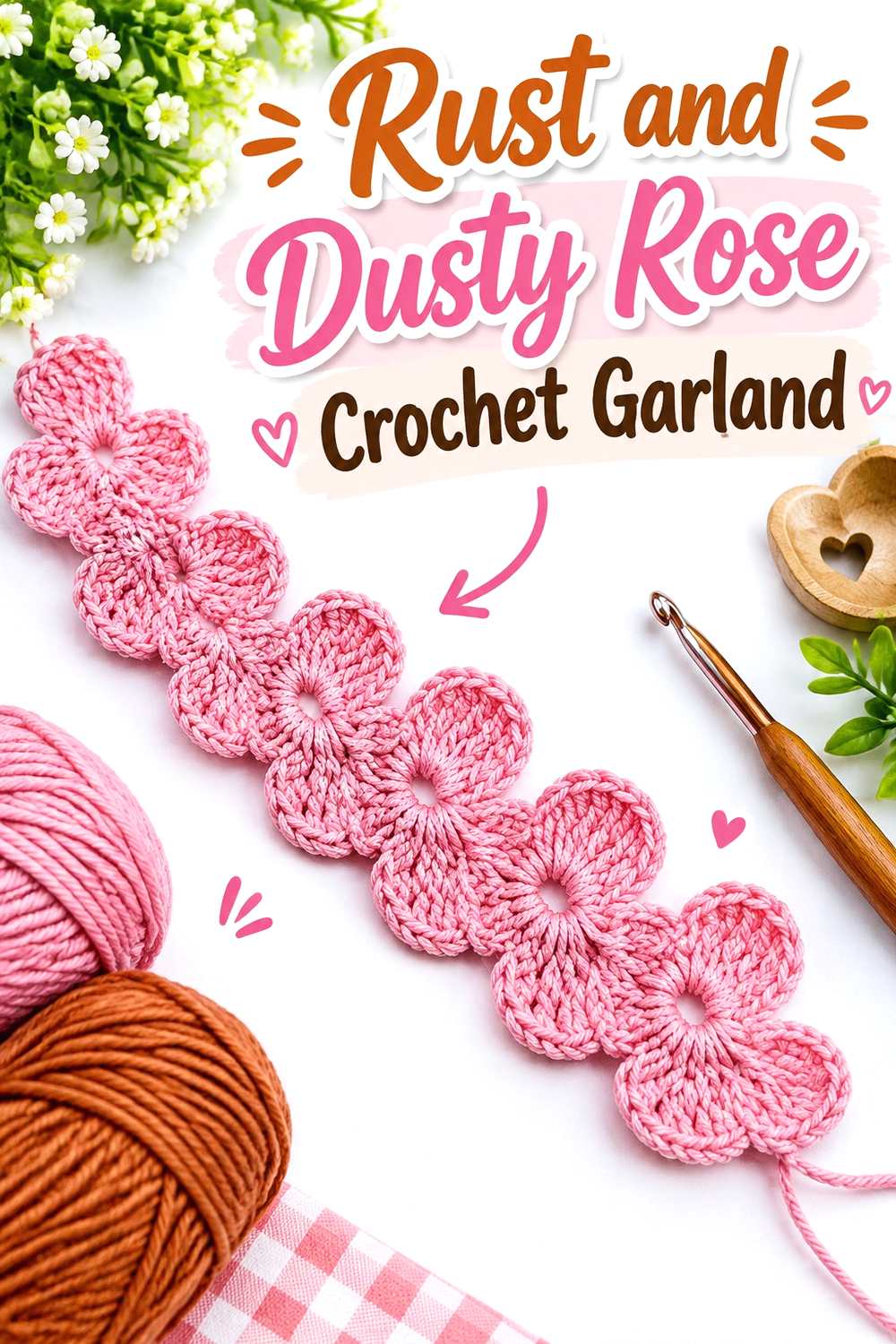
A garland benefits from repetition rather than one large color field. Alternating rust and dusty rose motifs can work well because the empty space between them prevents the two warm colors from merging into one continuous surface.
Rust Motifs Can Give a Dusty Rose Crochet Garland a Repeating Rhythm
Alternate rust motifs with dusty rose ones rather than grouping all of one color together. Regular repetition helps the eye follow the garland from one end to the other.
If one color needs to dominate, use two dusty rose motifs for every rust motif rather than shrinking the rust elements.
Dusty Rose Can Break Up Rust Crochet Garland Clusters
When rust motifs are placed close together, dusty rose can act as the lighter visual pause between them. This is particularly useful when the garland contains flowers or other small repeated shapes.
Check the arrangement before joining the motifs permanently so neither color accidentally collects at one end.
Creator Credit: HiruHandmade Crochet YouTube tutorial
14. Rust And Dusty Rose Crochet Decorative Doily
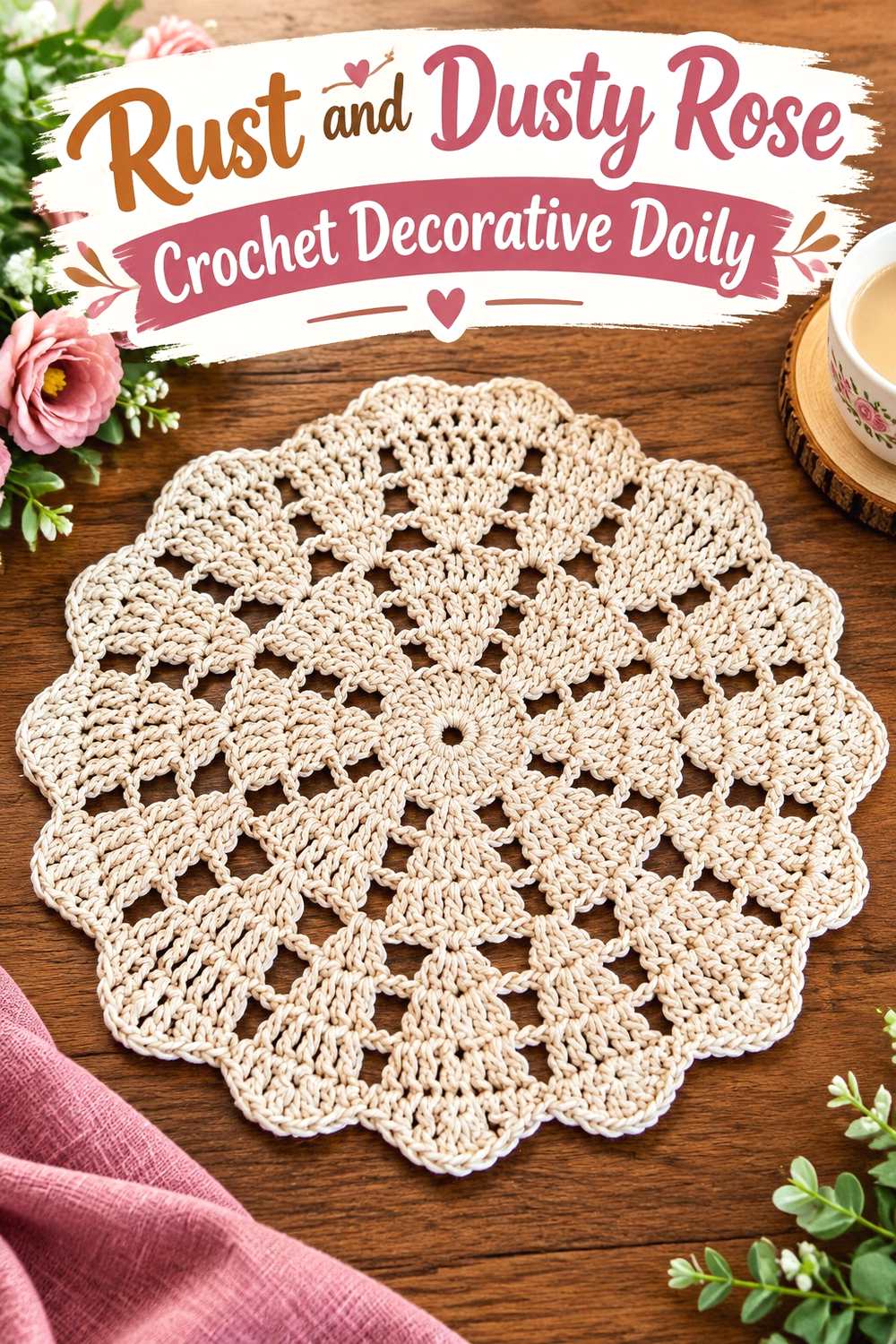
A doily contains detailed openwork, so value contrast needs more attention than on a solid basket or cushion. Rust can emphasize selected outer areas while dusty rose keeps delicate interior sections from becoming visually heavy.
Dusty Rose Can Keep Rust Crochet Doily Openwork Visually Airy
Use dusty rose through the detailed center when you want the lace structure to remain the focus. The softer field can make small openings easier to distinguish than an entirely dark surface.
Introduce rust only after the central motif has established its shape.
Rust Can Define the Dusty Rose Crochet Doily Outer Rounds
Moving into rust toward the perimeter gives the doily a darker frame and emphasizes its final outline.
Because the outer rounds often cover increasing circumference, rust can become dominant quickly. Use fewer dark rounds if you want dusty rose to remain the main color.
Creator Credit: NotikaLand crochet and knitting YouTube tutorial
15. Rust And Dusty Rose Crochet Mandala
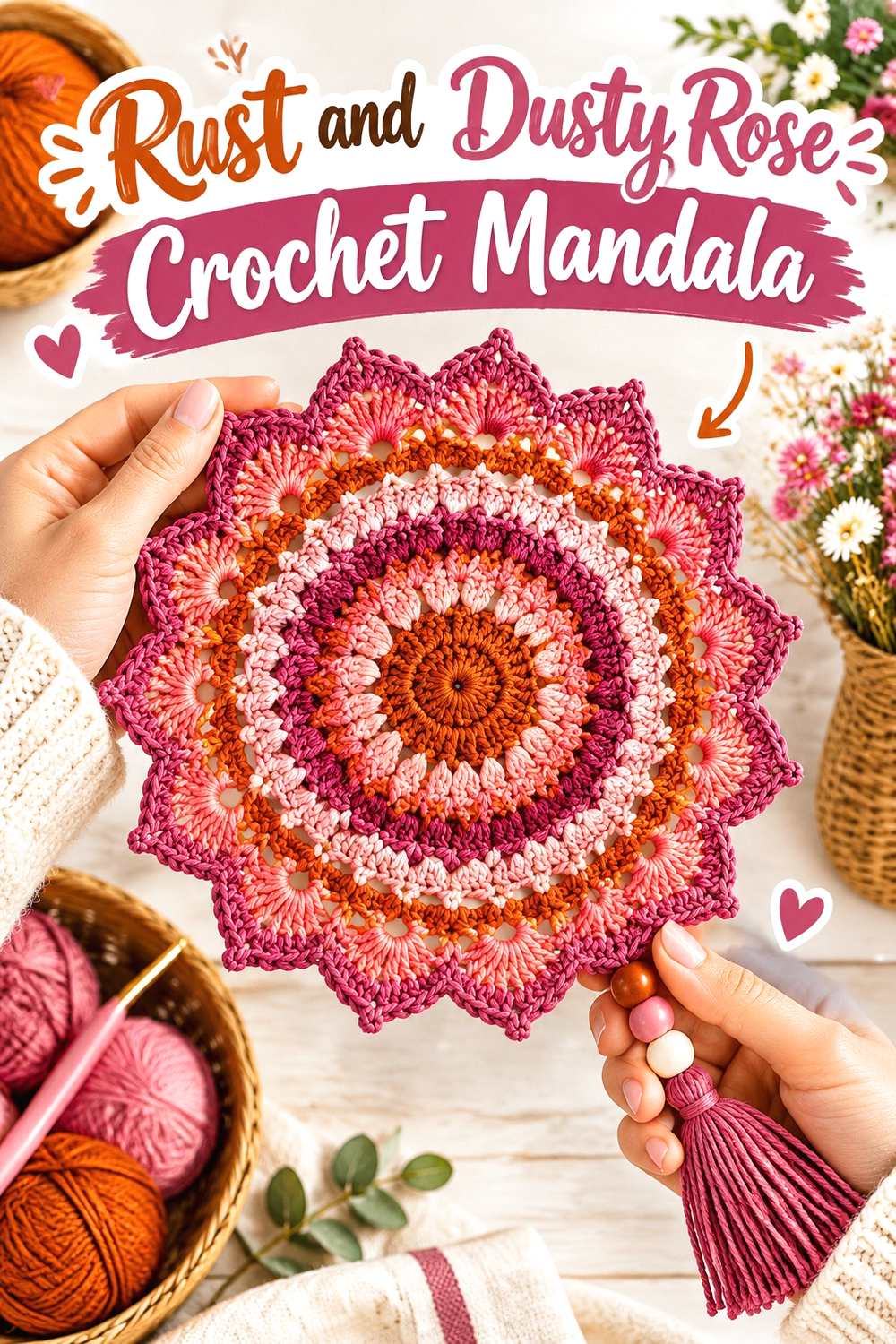
A crochet mandala lets the palette shift through concentric sections instead of simple straight stripes. Rust can create strong focal rings while dusty rose provides lighter transitions between them.
Rust Rings Can Give a Dusty Rose Crochet Mandala More Depth
Use rust in selected concentric sections instead of every alternate round. Concentrating the dark color in a few intentional bands creates clearer focal points.
This also leaves more room for dusty rose to carry detailed stitchwork between those stronger rings.
Dusty Rose Can Separate Rust Crochet Mandala Sections
Dusty rose is useful between two rust areas because it prevents the dark sections from visually merging into one broad band.
If the mandala will hang on a wall, step back periodically while planning the colors. Fine differences that look obvious at close range can become much less noticeable once the finished piece is displayed.
Creator Credit: Örgü Blog YouTube tutorial
Comparing Rust and Dusty Rose Crochet Home Accent Directions
For a lighter, dusty-rose-led room accent, start with the cushion, table runner, rug, placemats, doily, or pouf. These projects give dusty rose enough uninterrupted surface to establish the overall look while rust handles framing and definition.
For a deeper rust-led direction, the basket, hanging basket, pot cover, wall hanging, and tissue-box cover can carry more of the darker color without losing the dusty rose entirely.
Small accents such as coasters, garlands, and mandalas can support a more even division because the colors repeat in compact sections. The important checkpoint is consistency: decide what rust is doing and what dusty rose is doing before distributing the colors around the piece.
Conclusion
Rust and dusty rose work especially well for crochet home accents because their balance can be adjusted without introducing another color. Rust can ground baskets, frame rugs, define pillow edges, or create strong motif centers. Dusty rose can lighten broad surfaces, separate darker sections, and keep detailed crochet from appearing overly dense.
Choose the proportion according to the object. Larger accents usually benefit from one clear dominant color, while coasters, garlands, doilies, and mandalas can support more frequent switching.
Before starting a large accent, test the actual yarns together. Rust can range from orange-brown to deeper brick tones, and dusty rose can range from pale muted pink to mauve. Preserving enough visible difference between your particular shades matters more than matching a color name exactly.
Frequently Asked Questions
Do rust and dusty rose work together for crochet home decor?
Yes. Both are warm, muted colors, but rust usually supplies greater depth while dusty rose provides a lighter contrast. The result depends heavily on the exact shades and on which one occupies the larger surface.
Should rust or dusty rose dominate a crochet home accent?
Use rust as the dominant color when you want a deeper, earthier result. Let dusty rose dominate when you want the room accent to look lighter. Borders, bases, rims, fringe, and motif centers are useful places for the supporting color.
How can I keep rust and dusty rose from blending together?
Compare the yarns side by side before starting. If their light-dark values are very similar, small color changes may be difficult to see. A grayscale photo can help you judge whether detailed motifs or narrow borders have enough separation.
Is rust a good crochet border color around dusty rose?
Rust can create a strong frame around dusty rose cushions, rugs, placemats, and table runners. It does not always need to be the border, though. A dusty rose edge can soften a rust-dominant project when the interior already contains plenty of dark color.
Can I use equal amounts of rust and dusty rose?
Yes, particularly for coasters, garlands, mandalas, and repeated motifs. On larger items, equal physical amounts may still look rust-heavy because the darker color can carry more visual weight.
What can replace dusty rose in this crochet palette?
Choose another muted pink or softened mauve that remains visibly lighter than the rust if you want to preserve a similar relationship. A stronger or brighter pink will change the character of the palette even if the basic color family remains similar.
What can replace rust without losing the earthy crochet palette?
A muted terracotta, brick, or warm reddish brown can fill a similar role if it remains darker and stronger than the dusty rose. Compare the substitute directly with your pink yarn rather than relying only on the shade name.