
10 Burgundy and Oatmeal Crochet Cable Stitch Ideas
Burgundy and oatmeal are especially useful together when crochet cables need both depth and definition. Burgundy supplies the darker visual weight, while oatmeal can open up the surface around raised cable work so the twists remain easy to distinguish.
The important decision is not simply whether to use both colors, but where each one belongs. A burgundy cable against an oatmeal field creates stronger separation, while oatmeal cables surrounded by burgundy make the raised texture the lighter focal point. You can also reserve one shade for cuffs, borders, straps, or other framing details instead of dividing the project evenly.
These 10 ideas use that two-color relationship in different ways, from concentrated cable accents to larger textured surfaces.
Quick List
- Burgundy Cable Band And Oatmeal Crochet Beanie
- Oatmeal Cable Panel And Burgundy Crochet Scarf
- Burgundy And Oatmeal Alternating Crochet Cable Blanket
- Oatmeal Center Cable And Burgundy Crochet Pillow
- Burgundy Cable Panels And Oatmeal Crochet Cardigan
- Burgundy Center Cable And Oatmeal Crochet Headband
- Oatmeal Cable Panel And Burgundy Crochet Tote Bag
- Burgundy Cable Accent And Oatmeal Crochet Sweater
- Oatmeal Cables And Burgundy Crochet Fingerless Gloves
- Burgundy Cable Braid And Oatmeal Crochet Ear Warmer
Decide Whether Burgundy or Oatmeal Should Carry the Cables
With only two colors, the cable placement becomes one of the strongest visual decisions. Burgundy cables on oatmeal produce a dark raised feature surrounded by a lighter field. Reversing the arrangement makes oatmeal cables look brighter against a deeper burgundy background.
For projects with extensive cable work, consider keeping large uninterrupted cable sections in one color rather than changing colors repeatedly through the twists. The cable texture already creates plenty of visual movement, so the second color can often do more useful work on borders, cuffs, side panels, or plain sections.
Check Burgundy and Oatmeal Contrast Around Small Cable Details
Burgundy and oatmeal usually create an obvious dark-light relationship, but the actual yarns still need to be compared before committing to a layout. “Burgundy” can cover a range of dark reds, and “oatmeal” can range from pale cream-beige to deeper natural brown.
Place the yarns side by side and look at them from a distance. A grayscale photo is another useful check when you want to know whether the light/dark separation is strong enough for a small cable motif. This matters most when one color will appear in narrow lines or small raised details.
Use Burgundy and Oatmeal Repetition to Connect Cable Details
A two-color cable project does not need a 50/50 split. One shade can cover most of the piece while the second appears only at deliberate intervals.
For example, an oatmeal cardigan can use burgundy on cable panels and repeat burgundy at the cuffs. A burgundy pillow can place oatmeal on its center cable and repeat oatmeal around the edge. Repetition gives the smaller color a reason to be present without letting it compete with the dominant shade.
1. Burgundy Cable Band And Oatmeal Crochet Beanie
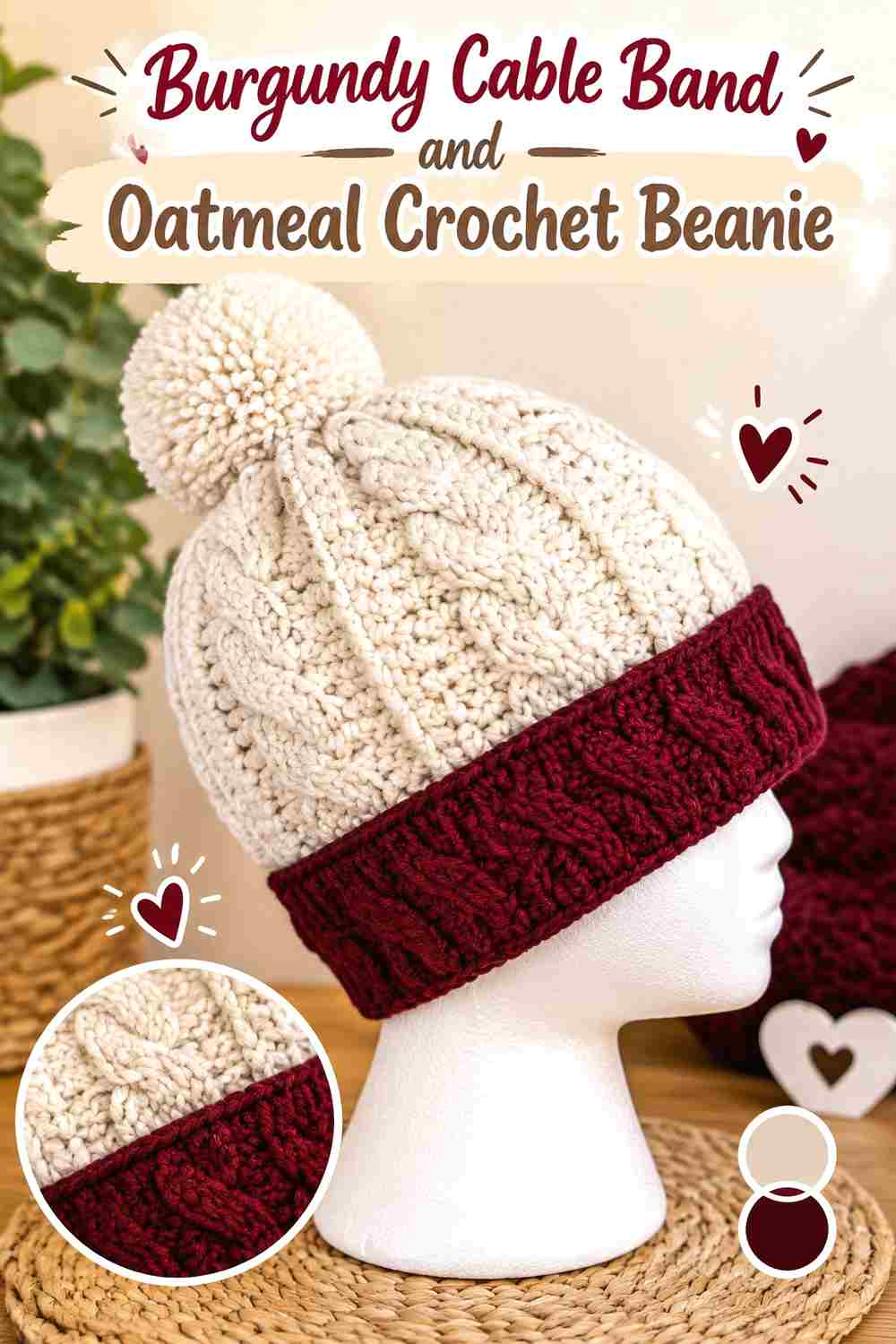
Use oatmeal across most of the beanie and place burgundy where the cable texture becomes the focal feature. This arrangement keeps the lighter neutral dominant while concentrating the darkest color around the most detailed part of the hat. It is a useful direction when you want the cable work to read as a deliberate band rather than having two colors compete across the entire crown.
Burgundy Makes the Crochet Cable Band the Visual Anchor
A burgundy cable band creates a clear break from an oatmeal body. Because the darkest shade sits directly on the raised detail, the eye is drawn toward the cable area rather than toward every stitch on the hat.
Keep the burgundy concentrated if that focal effect is the goal. Adding scattered burgundy sections throughout the crown would reduce the distinction between the cable band and the quieter oatmeal surface.
Oatmeal Keeps the Crochet Beanie Crown Visually Lighter
Oatmeal works well for the larger plain or subtly textured area because it gives the hat breathing room around the darker cable band. The contrast also prevents the burgundy cable section from disappearing into an equally dark background.
If your oatmeal yarn is relatively deep or brown-toned, compare it with the burgundy before starting. You want enough value difference to preserve the band effect.
Burgundy Can Return at the Crochet Beanie Edge
A narrow burgundy repeat at an edge or finishing detail can connect the lower cable feature to the rest of the beanie without requiring another large burgundy block.
If the cable band already occupies substantial visual space, however, an oatmeal edge can be the cleaner choice. Treat the second burgundy appearance as a balancing option rather than a requirement.
Creator Credit: CraftSea Creations
2. Oatmeal Cable Panel And Burgundy Crochet Scarf
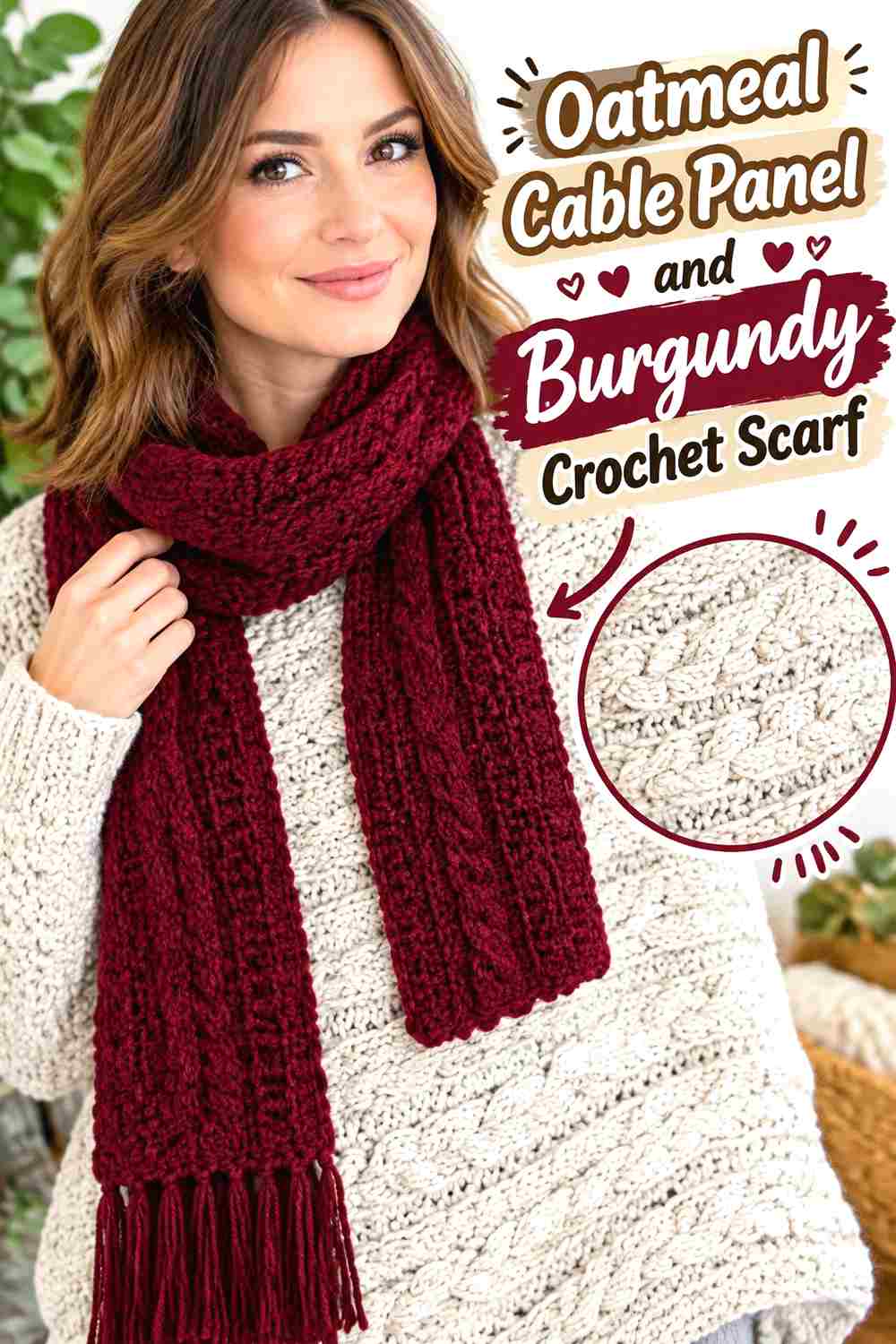
Reverse the hierarchy for a long scarf by allowing burgundy to form the main field and oatmeal to identify the cable section. On a long accessory, this gives the lighter color a continuous route through the design instead of scattering small oatmeal accents over a large burgundy surface.
Oatmeal Makes the Crochet Scarf Cable Easier to Follow
A continuous oatmeal cable panel can stand apart clearly from a burgundy background. That separation is particularly useful on a scarf because the cable remains recognizable as the fabric folds, wraps, and changes orientation when worn.
Keep enough oatmeal around the complete cable shape to make the color placement look intentional rather than like an isolated stripe.
Burgundy Gives the Crochet Scarf a Strong Main Field
Let burgundy occupy the less complicated sections beside the cable. The dark field frames the oatmeal feature while preventing the lighter neutral from dominating the entire scarf.
This approach also avoids splitting two strong visual features—color contrast and cable texture—across every part of the scarf at once.
Oatmeal Fringe or Burgundy Ends Need a Clear Connection
If the scarf design includes end details, decide whether they should reinforce the oatmeal cable or disappear into the burgundy body. Oatmeal end details continue the light accent beyond the cable, while burgundy keeps attention on the cable itself.
Avoid introducing a third unrelated neutral solely for the ends. Burgundy and oatmeal already provide enough separation for a clear two-color finish.
Creator Credit: Crazy Cool Crochet
3. Burgundy And Oatmeal Alternating Crochet Cable Blanket
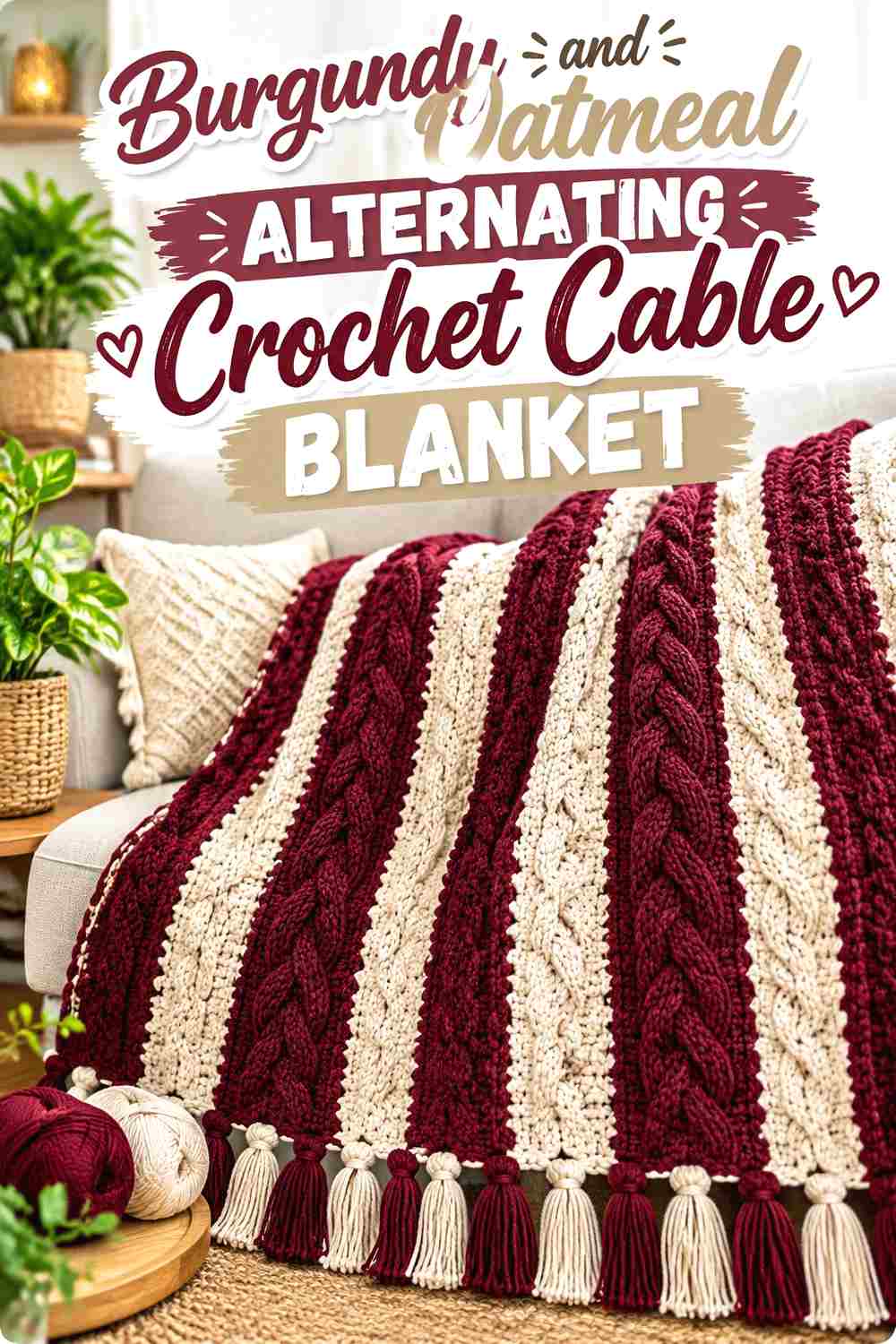
A blanket provides enough surface area to give burgundy and oatmeal substantial roles without forcing them into equal proportions. Consider alternating larger color sections while keeping the cable rhythm consistent. The repeated texture connects the two shades even when their visual weights are very different.
Burgundy Gives the Crochet Blanket Its Darker Cable Sections
Burgundy can define selected cable sections and create visual weight across the blanket. Instead of placing all the burgundy at one end, repeat it through the layout so the dark color does not make one side appear disproportionately heavy.
Spacing matters more here than exact symmetry. Look at the entire blanket layout rather than judging each cable section independently.
Oatmeal Creates Rest Between Burgundy Crochet Cables
Oatmeal can separate burgundy sections and prevent a heavily textured blanket from becoming visually dense. A lighter field also makes shadows around raised stitches easier to notice.
If the blanket already contains numerous cable motifs, larger oatmeal areas can be more effective than thin oatmeal stripes. They provide a genuine visual break rather than another narrow element competing with the texture.
Burgundy and Oatmeal Need a Planned Crochet Blanket Border
A burgundy border gives the lighter portions a dark outer frame, while oatmeal produces a quieter transition from the body to the edge. Choose according to the existing balance.
If burgundy already occupies much of the blanket, an oatmeal border can keep the finished piece from becoming too dark around its perimeter. If oatmeal dominates, burgundy can give the edge clearer definition.
Creator Credit: The Crochet Crowd
4. Oatmeal Center Cable And Burgundy Crochet Pillow
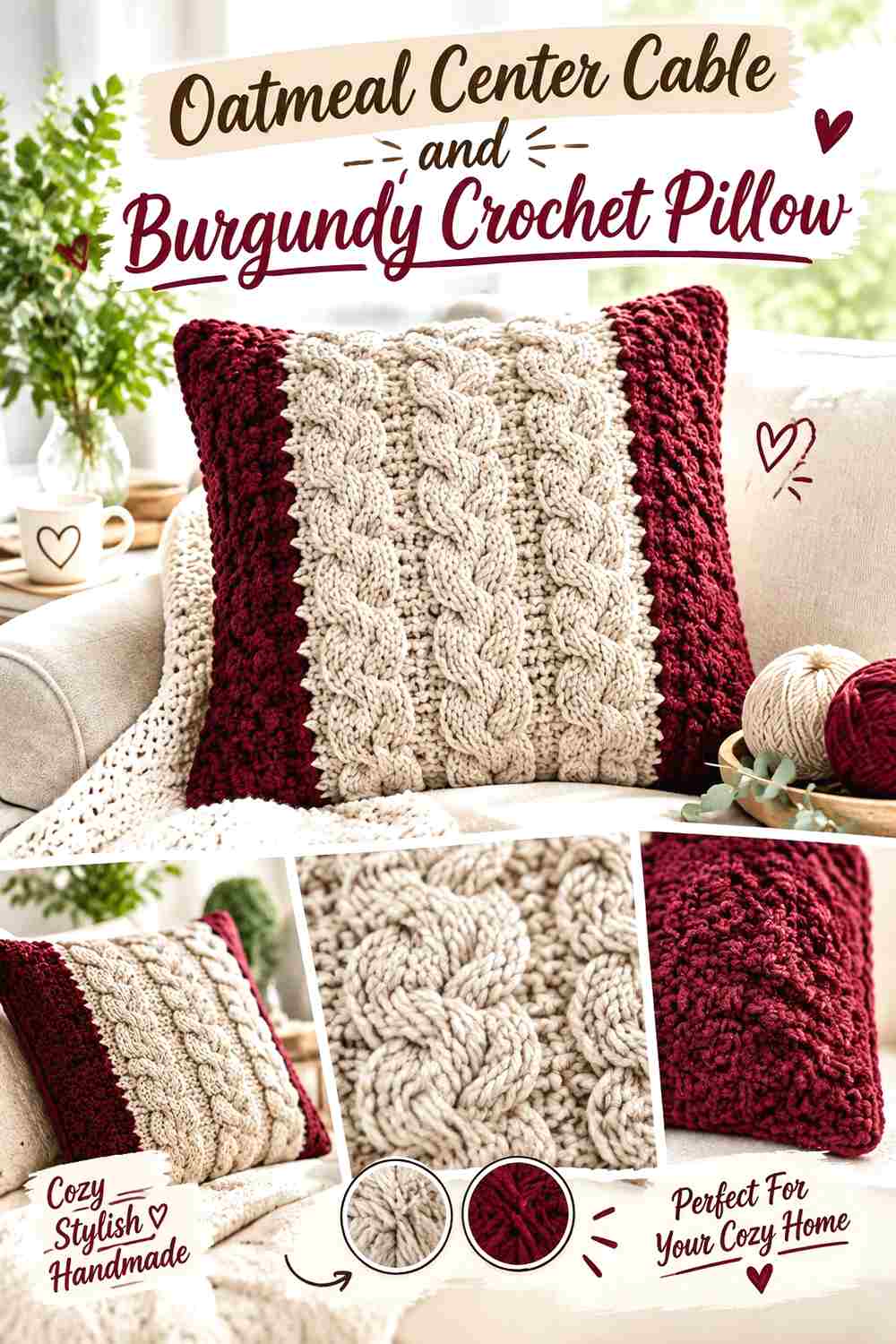
A pillow is a good place to make one cable the obvious centerpiece. Use burgundy over most of the pillow face and oatmeal for the central raised cable. The concentrated light accent gives the front a defined focal line without requiring a complicated multicolor arrangement.
Oatmeal Pulls the Crochet Pillow Cable Forward
Placing oatmeal directly on the central cable distinguishes both its color and its texture from the burgundy background. On a pillow, that concentrated contrast is useful because the front is normally viewed as one complete decorative surface.
Keep the oatmeal centered on the feature you actually want emphasized. Expanding it too far into the surrounding field can weaken the cable’s focal role.
Burgundy Gives the Crochet Pillow Face a Consistent Background
A broad burgundy field makes the oatmeal cable feel intentional rather than decorative color added at random. It also lets the darker shade establish most of the pillow’s appearance when coordinated with surrounding decor.
If you want a less burgundy-heavy result, use oatmeal on the back or outer edging rather than breaking the front into many small alternating sections.
Oatmeal Can Define the Burgundy Crochet Pillow Edge
Repeating oatmeal at the outer edge connects the center cable with the pillow perimeter. That creates two light reference points—the center and frame—with burgundy between them.
For a more restrained version, keep the border burgundy and allow the oatmeal cable to remain the only light focal point.
Creator Credit: MJ’s Off The Hook Designs
5. Burgundy Cable Panels And Oatmeal Crochet Cardigan
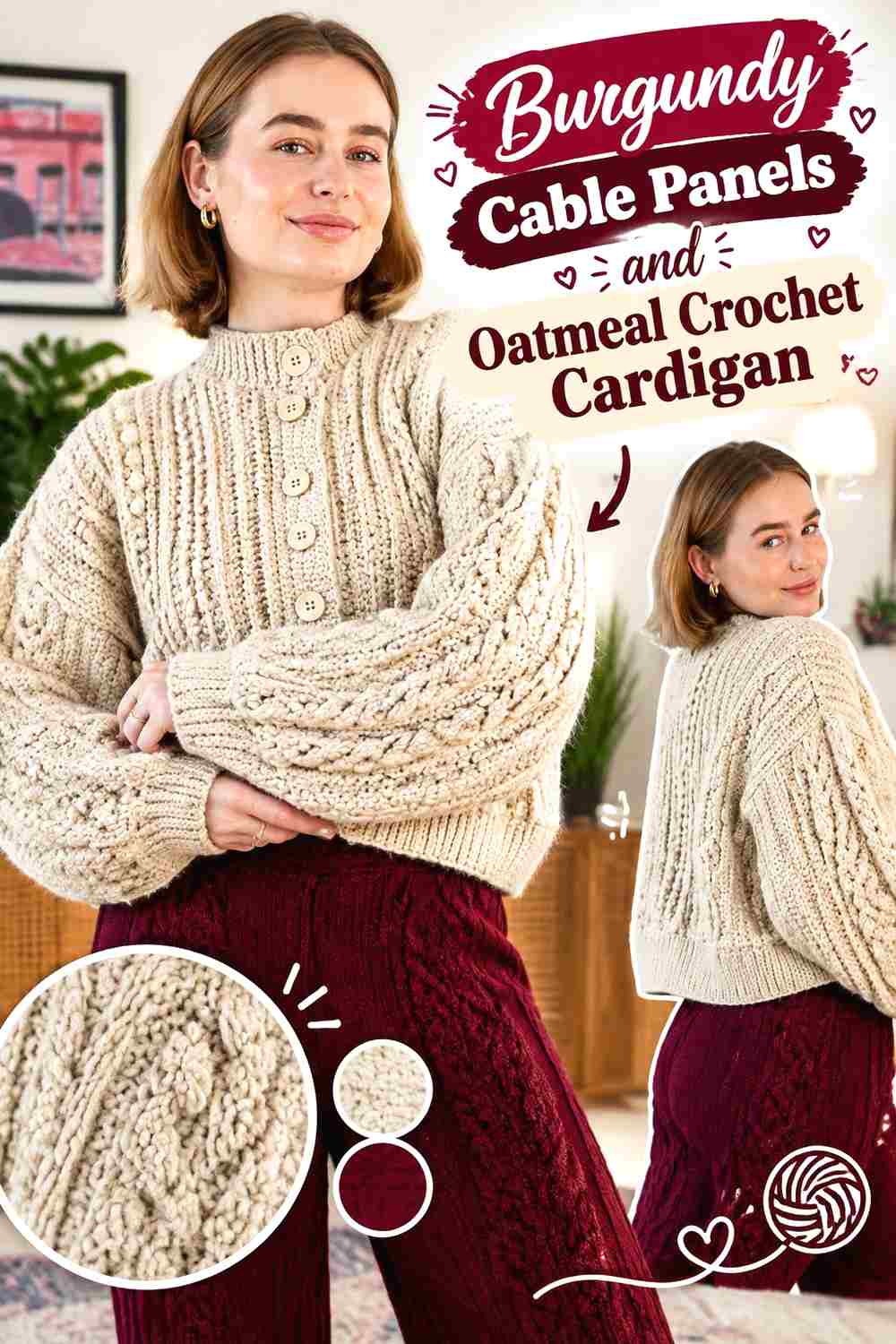
An oatmeal cardigan with burgundy cable panels uses color to clarify the garment’s vertical structure. Oatmeal can cover the larger body and sleeve areas, while burgundy identifies selected cable panels. This gives the deeper shade a strong role without letting it visually overwhelm the entire wearable.
Burgundy Can Emphasize Vertical Crochet Cardigan Panels
Burgundy cable panels naturally create strong vertical lines. Keeping those panels continuous is usually more coherent than switching repeatedly between burgundy and oatmeal inside the same cable.
Before committing, look at the front and back as a complete garment. A very dark panel on only one isolated area can feel disconnected unless burgundy appears elsewhere.
Oatmeal Gives Burgundy Crochet Cables More Separation
Use oatmeal around burgundy cable sections when you want the panel boundaries to remain clear. The lighter surrounding color prevents the dark cable texture from merging with adjacent areas.
This is particularly useful where several textured panels meet. Color can separate those structures without requiring every panel to use a different stitch or additional shade.
Burgundy Cuffs Can Repeat the Crochet Cardigan Cable Color
Burgundy cuffs or restrained edging can bring the cable color onto the sleeves and lower edges. That repetition makes the panel color feel integrated into the whole cardigan.
If the cardigan already contains many burgundy cable panels, oatmeal cuffs may give the garment better balance. Repeat burgundy where it solves a distribution problem, not simply because an accent must appear everywhere.
Creator Credit: Katie Joslin
6. Burgundy Center Cable And Oatmeal Crochet Headband
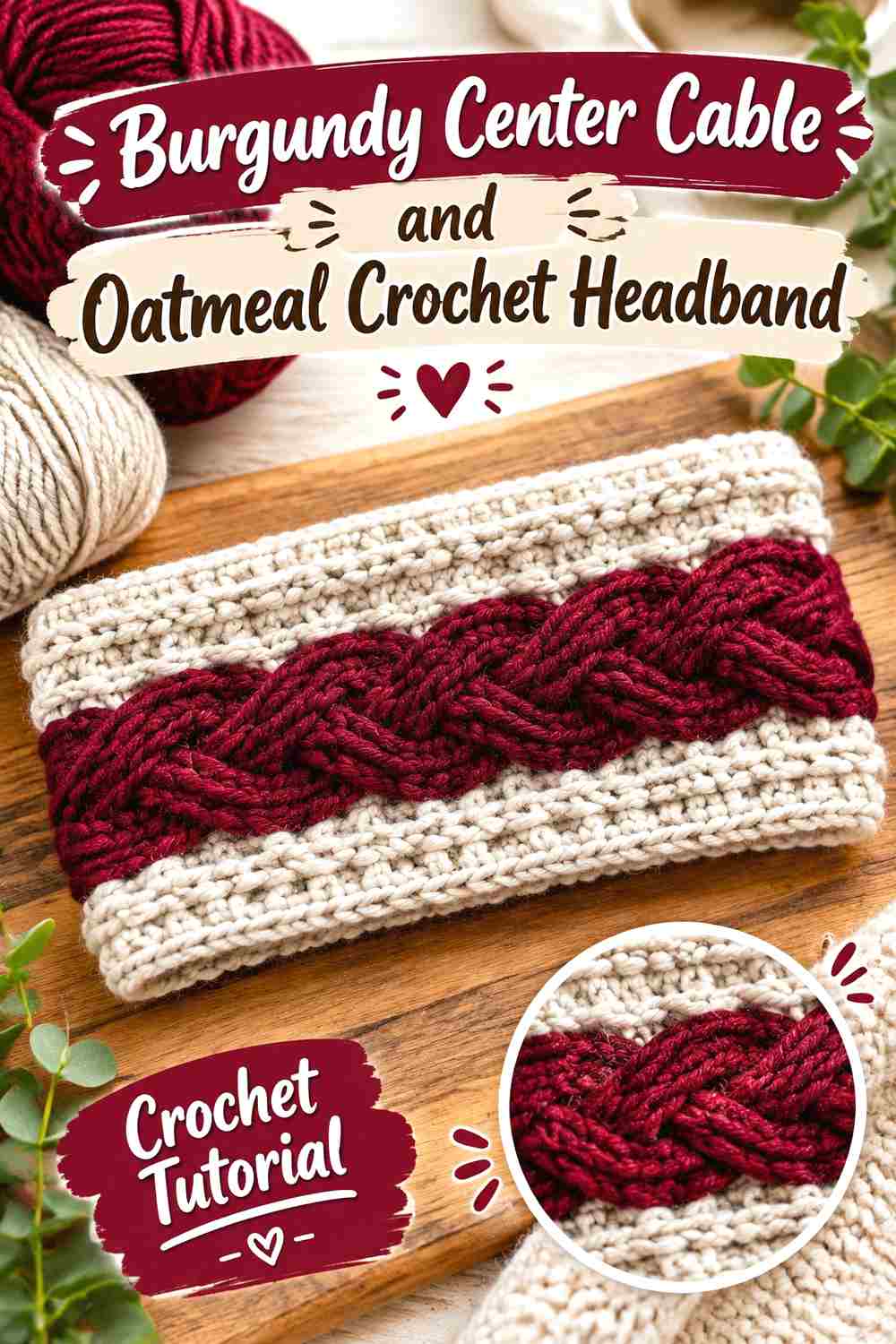
A narrow headband does not have enough surface area for complicated color blocking, so concentrate burgundy on the cable and let oatmeal support it. This keeps the cable easy to identify while preserving a simple two-color structure.
Burgundy Gives the Crochet Headband Cable Enough Definition
Place burgundy where the cable crosses are most visible. Because a headband is narrow, even a relatively small burgundy cable can account for a significant portion of the finished surface.
Avoid adding several unrelated burgundy stripes beside it. They can compete with the cable and make the headband look more segmented than intended.
Oatmeal Frames the Burgundy Crochet Cable
Oatmeal on both sides of a burgundy cable creates a lighter frame around the raised center. The color placement helps separate the cable from the edges, especially when the surrounding stitches are less dimensional.
Compare the widths visually before making the entire piece. If the oatmeal sides become too narrow, the design can read as almost entirely burgundy rather than as a centered cable accent.
Burgundy and Oatmeal Should Meet Cleanly at the Crochet Headband Finish
The closure area is worth considering before assigning colors. If oatmeal is the dominant background, continuing oatmeal through the less visible joining area can keep the burgundy cable uninterrupted as the front feature.
Alternatively, a burgundy edge can frame the entire piece, but it will create a stronger, darker outline.
Creator Credit: Sierra Fontaine
7. Oatmeal Cable Panel And Burgundy Crochet Tote Bag
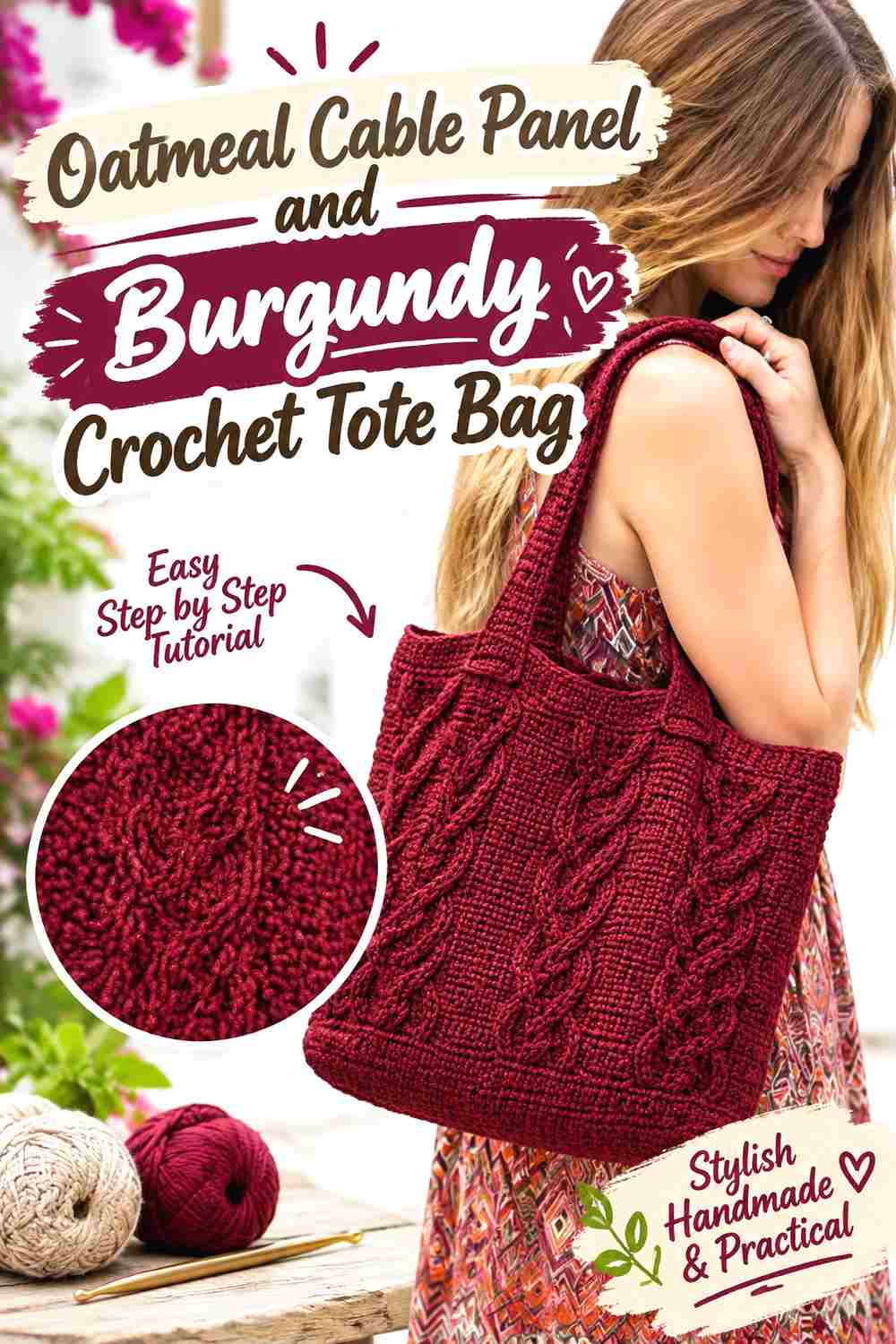
For a tote, let burgundy provide the main bag body while oatmeal marks the cable panel. This creates a practical visual hierarchy: the larger surface stays consistent, while the cable feature receives the lightest color and therefore becomes easier to locate on the front of the bag.
Oatmeal Makes the Crochet Tote Cable a Clear Front Feature
Use oatmeal on the principal cable area rather than distributing tiny oatmeal accents across the entire bag. A larger light panel creates a stronger relationship between color and texture.
Before repeating the same treatment on every side, decide whether the tote needs one obvious front or a continuous cable treatment. One oatmeal focal panel will look different from an all-around repeated layout.
Burgundy Can Ground the Crochet Tote Base
Keeping the base burgundy visually connects it to the main body and avoids placing the lightest shade in the lowest section. It also allows the oatmeal cable to remain the primary contrast feature.
If oatmeal already occupies a large cable area, there is little need to add another wide oatmeal block at the base.
Burgundy Straps Can Connect With the Crochet Tote Body
Burgundy straps extend the dominant body color upward and keep the oatmeal cable contained within the bag face. Oatmeal straps would instead pull the light color beyond the cable and give it a much larger role.
Choose between those treatments based on whether you want the cable panel or the overall two-color split to attract more attention.
Creator Credit: Life and Yarn
8. Burgundy Cable Accent And Oatmeal Crochet Sweater
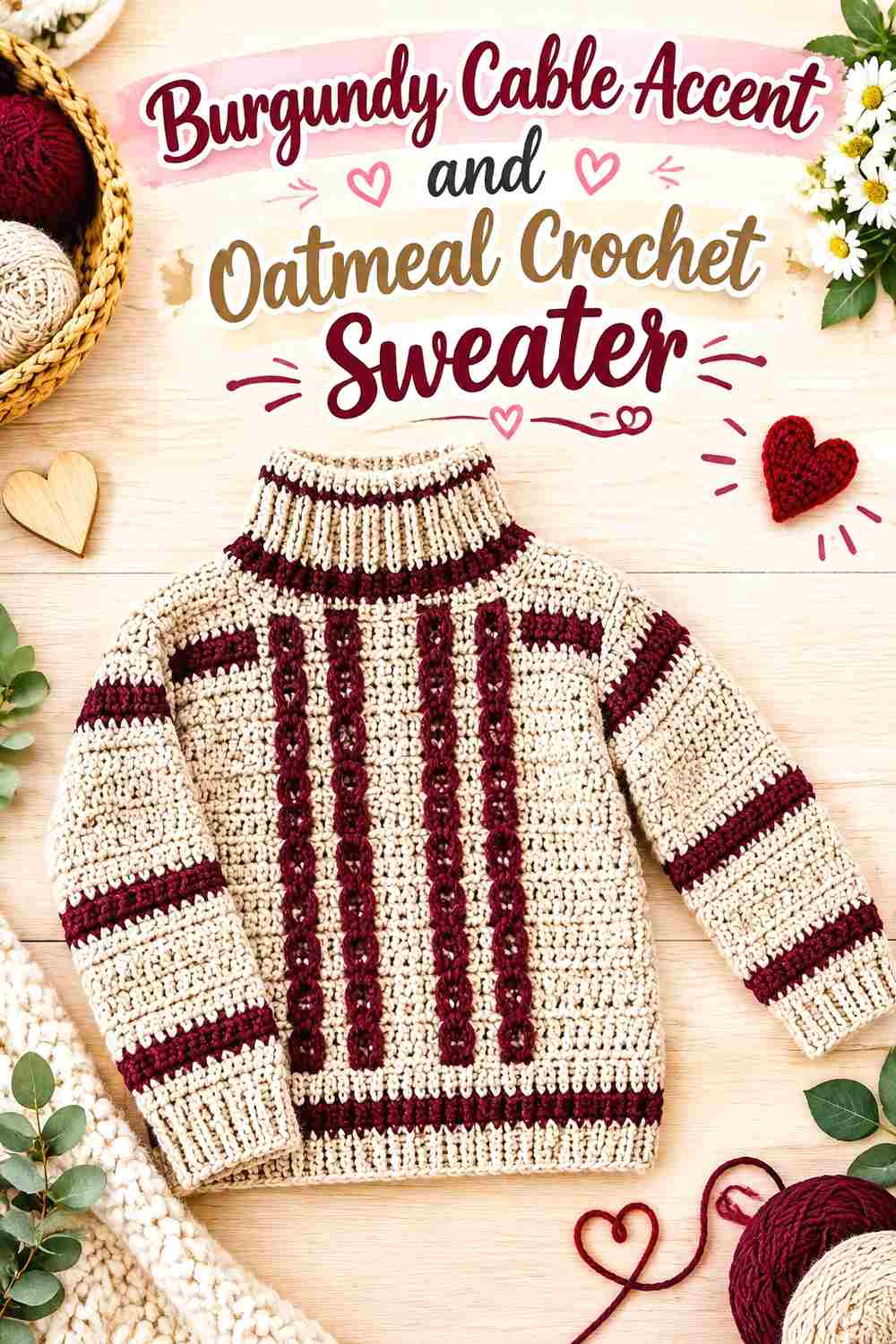
An oatmeal-led sweater gives burgundy room to work as a controlled cable accent. Rather than dividing the garment into equal color blocks, use the darker red where you want the cable structure emphasized and allow oatmeal to connect the larger body and sleeve areas.
Burgundy Can Concentrate Attention on the Crochet Sweater Cable
A burgundy front cable becomes a strong focal line against oatmeal. Keeping that color concentrated around the cable makes both the stitch texture and placement easy to read from a distance.
If you extend burgundy into large unrelated sections, the cable loses some of its special status because the eye begins reading burgundy as a general body color instead.
Oatmeal Keeps the Crochet Sweater Body Unified
Using oatmeal across the broader body creates continuity around a contrasting burgundy feature. It can also help multiple textured sections read as one garment instead of separate color blocks.
When substituting the neutral, preserve the value difference. A deeper beige that approaches the burgundy in darkness will create a softer, less distinct cable effect.
Burgundy at the Crochet Sweater Cuffs Can Balance the Front
A restrained burgundy repeat at the cuffs can distribute the accent beyond the torso without taking over the sleeves. This is particularly useful when the central cable is the only other burgundy area.
For a quieter sweater, leave the cuffs oatmeal. The burgundy cable can function successfully as a single statement feature when the surrounding color is consistent.
Creator Credit: Crochet Maniak
9. Oatmeal Cables And Burgundy Crochet Fingerless Gloves

Fingerless gloves offer a smaller surface where light oatmeal cables can stand out against burgundy without needing extra colors. Keep burgundy around the hand and cuff while using oatmeal selectively on the raised cable area.
Oatmeal Highlights the Crochet Glove Cable Texture
A narrow oatmeal cable can create enough contrast to remain visible even on a small accessory. This is more controlled than alternating the two colors repeatedly around the entire glove.
Keep the oatmeal placement consistent between the pair. Because gloves are viewed together, uneven color distribution can be more noticeable than on a single accessory.
Burgundy Keeps the Crochet Fingerless Gloves Visually Connected
Use burgundy for the larger body sections so the pair reads primarily as burgundy gloves with an oatmeal cable feature. That hierarchy prevents the small project from becoming visually fragmented.
The dark field also gives the oatmeal feature clear boundaries, which is useful when the cable itself contains several raised crossings.
Burgundy or Oatmeal Cuffs Change the Crochet Glove Balance
Burgundy cuffs continue the dominant color and leave oatmeal concentrated on the cable. Oatmeal cuffs create a second light block and make the two-color treatment more obvious.
If the cable already covers much of the hand, burgundy cuffs can provide the cleaner balance. If the oatmeal cable is narrow, repeating oatmeal at the cuff can keep the lighter shade from looking isolated.
Creator Credit: Blue Star Crochet | Veronika Cromwell
10. Burgundy Cable Braid And Oatmeal Crochet Ear Warmer
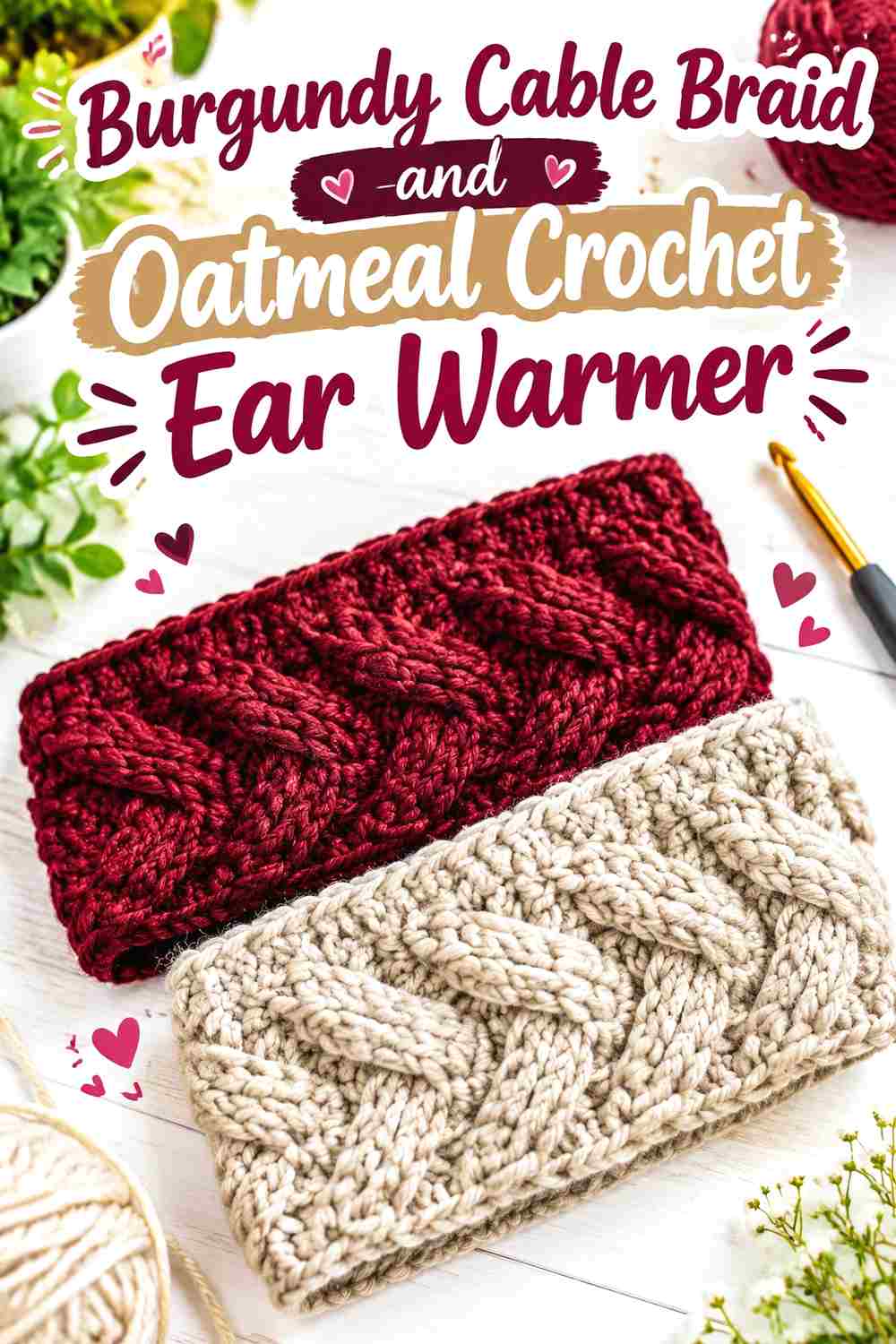
Finish with a more concentrated burgundy-led cable idea. An oatmeal ear warmer can carry a central burgundy braid, giving the small accessory a clear front feature while allowing the lighter neutral to frame it from both sides.
Burgundy Makes the Crochet Ear Warmer Braid the Main Feature
Keep burgundy on the raised cable path when the goal is a clearly defined central braid. The dark red becomes both the color accent and the texture accent, so there is little need for additional decorative color changes.
This treatment works particularly well for a narrow project because the cable can remain prominent without requiring a large amount of burgundy.
Oatmeal Gives the Burgundy Crochet Cable Breathing Room
Oatmeal on the surrounding surface separates the burgundy braid from the outer edges. Leaving a noticeable oatmeal margin helps the center cable look intentional rather than simply forming a dark stripe across the whole piece.
If the margin is extremely narrow, consider reversing the colors instead and making oatmeal the cable accent.
Burgundy and Oatmeal Proportions Matter on a Narrow Crochet Ear Warmer
Check the color balance with a short sample before committing to the full accessory. A cable that occupies most of the width will make burgundy function as the dominant color even when the background is technically oatmeal.
That is not necessarily a problem, but it changes the finished palette. Reduce the burgundy cable’s visual share or increase the oatmeal surrounding area when you want oatmeal to remain dominant.
Creator Credit: The Unraveled Mitten
Comparing Burgundy and Oatmeal Crochet Cable Placements
For the strongest dark-on-light cable contrast, consider the beanie, cardigan, headband, or ear warmer, where burgundy is concentrated directly on cable details and oatmeal surrounds it.
For the reverse effect, the scarf, pillow, tote, and fingerless gloves use oatmeal as the lighter cable feature against burgundy. These ideas make the cable itself visually lighter rather than heavier.
The blanket gives both shades more room to repeat, while the sweater offers a restrained wearable option where burgundy can remain a focused accent instead of covering large sections.
Conclusion
Burgundy and oatmeal can produce several distinctly different crochet cable looks even when no third color is added. The key is deciding whether the cable should be the darkest feature, the lightest feature, or part of a larger alternating layout.
Choose burgundy cables against oatmeal when you want darker texture with clear definition. Reverse the colors when you want the cable to lift away from a deeper background. For large projects such as blankets and cardigans, repeat the smaller color in deliberate places so it feels connected across the finished piece.
Before starting the full project, compare the actual yarns in normal light and work a small sample when color placement affects the cable itself. Once the contrast and hierarchy look right, use the credited tutorial for the exact construction details of the project.
Frequently Asked Questions
Is burgundy or oatmeal better for showing crochet cable stitches?
Either can work. What matters is the relationship between the cable color and its surroundings. Burgundy cables on oatmeal create a dark raised feature, while oatmeal cables on burgundy create a lighter focal point. Choose according to which part of the project you want to emphasize.
Should burgundy or oatmeal dominate a crochet cable project?
That depends on the finished effect. Oatmeal-dominant projects usually give burgundy a concentrated accent role, while burgundy-dominant pieces make oatmeal an effective way to brighten specific cables, panels, borders, or cuffs. An equal split is not necessary.
How can I check whether burgundy and oatmeal have enough contrast?
Place the actual yarns side by side and look at them from different distances. You can also photograph them and view the image in grayscale. If they remain clearly different in lightness, small cable details are more likely to stay visually separated.
Can I use burgundy and oatmeal inside the same crochet cable?
You can, but frequent color changes may compete with the crossings that create the cable texture. For a cleaner result, consider keeping the main cable in one color and placing the second color in the background, neighboring panel, border, cuff, or other defined area.
What can replace oatmeal in a burgundy crochet cable palette?
Look for another light, softened neutral that maintains noticeable value contrast with the burgundy. Cream, beige, or a natural neutral may give a related effect, but compare the actual yarns because the darkness and warmth of each shade can vary.
What can replace burgundy without losing the dark crochet cable effect?
Choose another deep shade that remains clearly darker than the oatmeal if preserving the dark-on-light structure is the priority. The replacement does not need to match burgundy exactly; maintaining the dominant/supporting roles and light-dark separation is more important.
Should a burgundy and oatmeal crochet border match the cable color?
Not automatically. Matching the border to the cable repeats the focal color and can create a stronger frame. Using the dominant background color keeps attention on the cable itself. Check how much of each color already appears before deciding which shade needs repetition at the edge.


