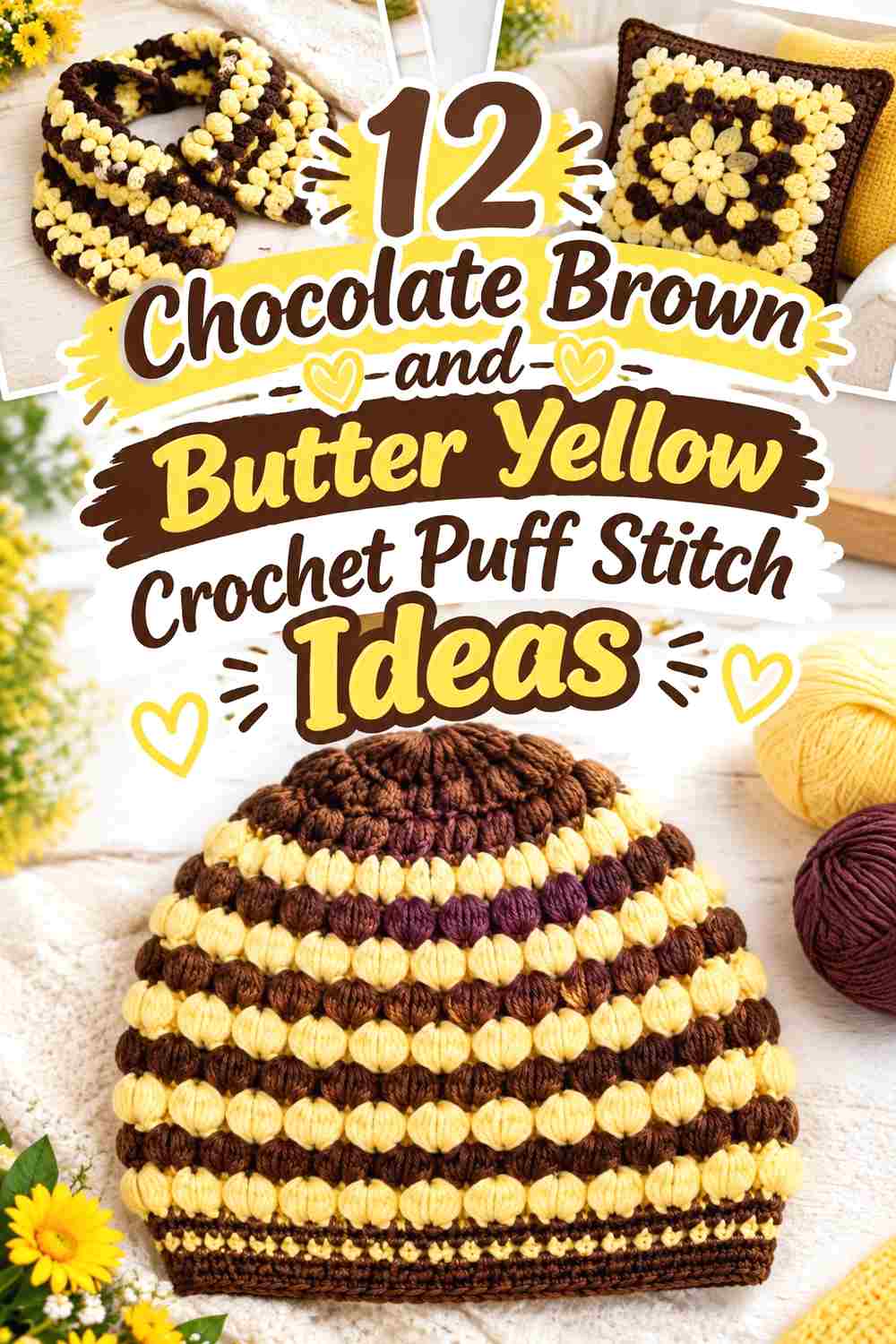
12 Chocolate Brown and Butter Yellow Crochet Puff Stitch Ideas
Chocolate brown and butter yellow create a useful light-and-dark pairing for crochet puff stitches. Chocolate brown has enough visual weight to frame raised texture, while butter yellow can bring individual puffs forward when it is used on motifs, rows, panels, or smaller accents.
The palette becomes more interesting when the colors are not divided equally. A chocolate brown background with butter yellow puffs produces a very different result from a butter yellow surface interrupted by chocolate brown puff rows. You can also let one shade handle the puff texture while the other defines cuffs, borders, straps, edges, or surrounding stitches.
These 12 ideas explore those different arrangements across home decor, accessories, and wearables.
Quick List
- Butter Yellow Puff Rows And Chocolate Brown Crochet Hat
- Chocolate Brown Puff Panels And Butter Yellow Crochet Cardigan
- Butter Yellow Puff Motifs And Chocolate Brown Crochet Granny Square
- Chocolate Brown Puff Texture And Butter Yellow Crochet Shawl
- Butter Yellow Puff Rows And Chocolate Brown Crochet Baby Blanket
- Chocolate Brown Puffs And Butter Yellow Crochet Mittens
- Butter Yellow Puff Panel And Chocolate Brown Crochet Bag
- Chocolate Brown Puff Rows And Butter Yellow Crochet Scarf
- Butter Yellow Puffs And Chocolate Brown Crochet Cushion
- Chocolate Brown Puff Texture And Butter Yellow Crochet Headband
- Butter Yellow Puff Bands And Chocolate Brown Crochet Vest
- Chocolate Brown Puff Braids And Butter Yellow Crochet Cowl
Decide Which Color Should Carry the Crochet Puff Stitches
Puff stitches already create strong surface texture, so color does not need to compete with them everywhere. One effective approach is to assign the puffs to one shade and use the second shade for calmer surrounding areas.
Butter yellow puffs against chocolate brown create the strongest light-on-dark effect in this palette. Reversing the arrangement produces darker dots, clusters, or rows on a lighter surface. Neither arrangement is automatically better; the useful question is whether you want the puff texture to appear lighter or heavier than the background.
Keep Chocolate Brown and Butter Yellow From Becoming Too Evenly Divided
A strict half-brown, half-yellow split can make color compete with puff texture. Instead, decide which shade should establish the identity of the finished item.
For example, a chocolate brown bag can use butter yellow only on its puff panel, while a butter yellow cardigan can reserve chocolate brown for selected puff sections and edging. This creates a dominant/supporting relationship and makes every color change easier to understand visually.
Check Chocolate Brown and Butter Yellow Around Dense Puff Texture
Raised puff stitches create highlights and shadows of their own. That means a yarn color can look somewhat different once it is worked into a heavily textured surface than it does in the skein.
Place the actual chocolate brown and butter yellow yarns together before starting. If the yellow is deeper or more muted than expected, check whether it still separates clearly from the brown. A grayscale photo can help you judge light/dark contrast independently from hue.
1. Butter Yellow Puff Rows And Chocolate Brown Crochet Hat
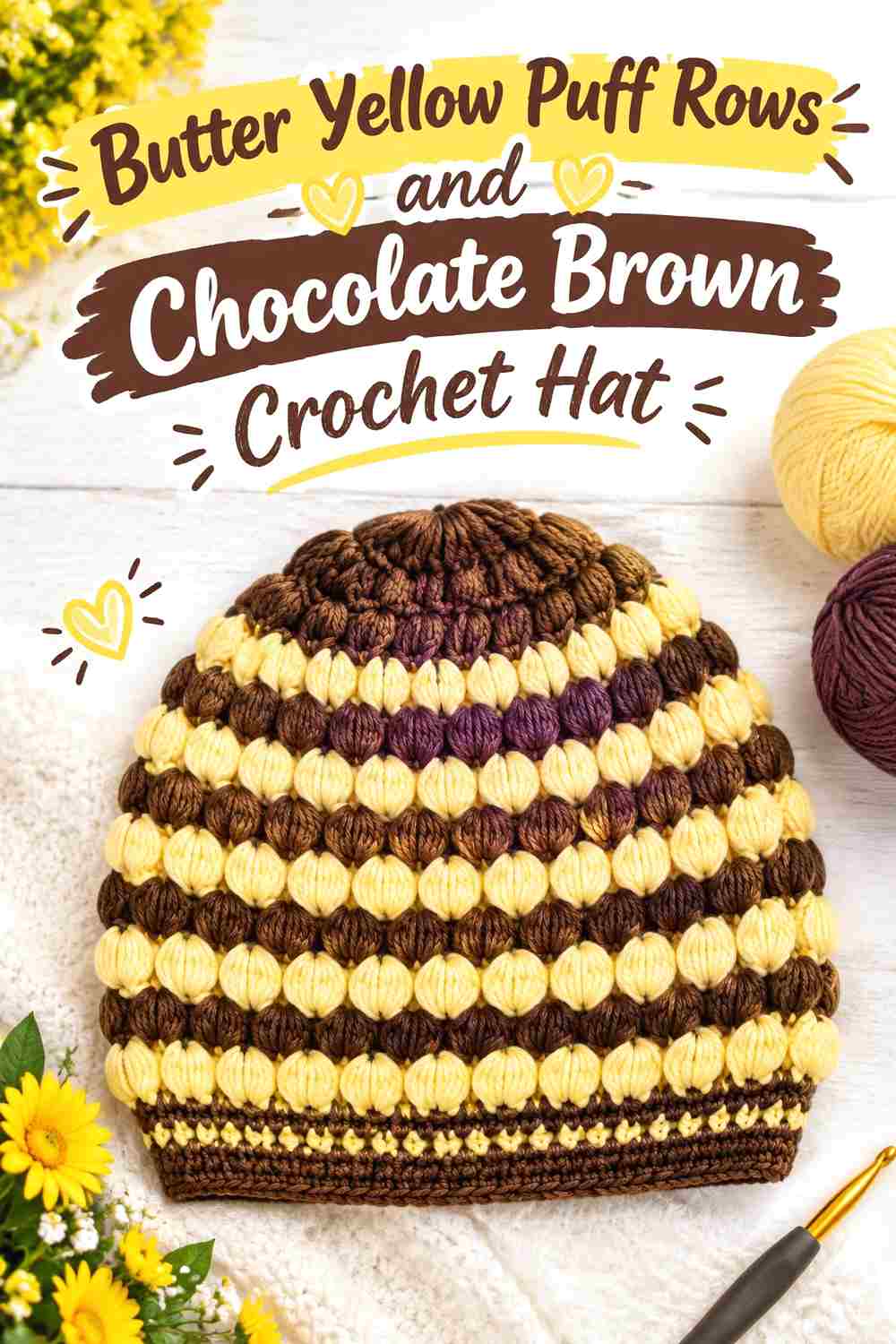
Make chocolate brown the main hat color and let butter yellow identify selected puff rows. Because a hat has limited surface area, concentrated yellow texture can provide enough contrast without requiring alternating colors across every round.
Butter Yellow Makes the Crochet Hat Puffs Easy to Identify
Place butter yellow where you want the raised puff texture to become the obvious feature. The lighter shade separates the puffs from a chocolate brown field, so both color and dimension point toward the same area.
Keep the yellow sections deliberate. Too many isolated yellow puffs can make the surface look scattered instead of structured.
Chocolate Brown Gives the Butter Yellow Crochet Hat a Strong Base
Chocolate brown can cover the quieter portions of the hat and give the yellow texture a consistent background. This works particularly well when the puff rows already create substantial visual movement.
If butter yellow begins occupying most of the surface, the palette will read differently—as a yellow hat with brown support rather than a brown hat with yellow puff accents.
Chocolate Brown Can Keep the Crochet Hat Edge Connected
Continue chocolate brown through the lower edge when you want the butter yellow to remain focused on the puff texture. A butter yellow edge would expand the accent color and produce a more evenly divided two-color look.
Creator Credit: B.Hooked Crochet
2. Chocolate Brown Puff Panels And Butter Yellow Crochet Cardigan

A butter yellow cardigan gives chocolate brown puff texture plenty of room to function as a structured accent. Use the brown selectively on panels or repeated textured areas rather than dividing every garment section into alternating colors.
Chocolate Brown Can Define the Crochet Cardigan Puff Panels
Chocolate brown puff panels create darker vertical or horizontal areas against a butter yellow body. Keeping a panel continuous gives the texture a stronger visual purpose than scattering individual brown puffs throughout unrelated sections.
Look at the whole cardigan before deciding how many brown panels to include. Too many can shift chocolate brown from an accent into the dominant shade.
Butter Yellow Keeps Chocolate Brown Crochet Texture Separated
Butter yellow surrounding the brown puff work gives the darker texture a clear boundary. This can be particularly helpful when several garment sections contain raised stitches.
Use larger butter yellow areas between textured brown features when you want each puff section to remain distinguishable.
Chocolate Brown Cuffs Can Repeat the Crochet Cardigan Puff Color
Chocolate brown cuffs or restrained edging can repeat the puff color away from the main panel. That repetition makes the darker shade feel integrated rather than confined to one isolated section.
If the cardigan already contains extensive brown texture, butter yellow cuffs can provide the better visual break.
Creator Credit: Calluna Crochet
3. Butter Yellow Puff Motifs And Chocolate Brown Crochet Granny Square

A puff-stitch granny square gives you a compact place to test the entire palette before committing to a larger project. Chocolate brown can form the darker framework while butter yellow concentrates attention on puff centers or another repeated motif area.
Butter Yellow Can Highlight the Crochet Granny Square Puff Center
A butter yellow center draws attention inward and gives the dimensional puff stitches a lighter focal point. Surrounding that feature with chocolate brown creates clear separation between the motif center and its outer structure.
This treatment is particularly useful when the square will be repeated because the yellow centers can create a secondary pattern across the finished layout.
Chocolate Brown Can Frame the Butter Yellow Crochet Motif
Use chocolate brown farther from the center when you want each butter yellow puff area to remain individually recognizable. The darker framework can visually separate adjacent motifs once several squares are placed together.
Before joining many squares, arrange a few side by side to see whether the overall layout becomes too brown-heavy.
Butter Yellow Repetition Can Connect Chocolate Brown Crochet Squares
When several chocolate brown squares are combined, repeated butter yellow puff areas can create continuity across the larger project. Keep the yellow placement consistent if you want a regular visual rhythm.
For a less uniform layout, rotate or alternate the color emphasis while preserving enough repetition to make the palette feel connected.
Creator Credit: Hope Corner Farm Crochet
4. Chocolate Brown Puff Texture And Butter Yellow Crochet Shawl

Use butter yellow for the broader shawl field and chocolate brown where selected puff-stitch sections need extra weight. A shawl offers more room than a small accessory, so the dark accent can repeat at measured intervals without taking over the whole piece.
Chocolate Brown Gives Butter Yellow Crochet Puff Sections More Weight
Chocolate brown puff sections become strong visual markers against a butter yellow field. Instead of inserting brown at every opportunity, reserve it for areas where you want the texture to interrupt the lighter surface.
This keeps the color changes aligned with the shawl’s texture rather than creating an unrelated stripe pattern.
Butter Yellow Can Carry the Larger Crochet Shawl Surface
Allowing butter yellow to occupy the larger area keeps the overall piece lighter while chocolate brown supplies definition. It also gives repeated brown puff sections enough space to remain distinct from one another.
If your butter yellow is relatively deep, compare the yarns first to make sure the brown sections still provide adequate value contrast.
Chocolate Brown Can Give the Butter Yellow Crochet Shawl a Defined Edge
A chocolate brown outer edge can connect the repeated puff accents and give the lighter body a darker finish. If brown already occupies substantial space, however, continuing butter yellow through the edge may keep the color balance more restrained.
Creator Credit: JasmineTea
5. Butter Yellow Puff Rows And Chocolate Brown Crochet Baby Blanket

A blanket offers enough surface for butter yellow puff rows to repeat across a chocolate brown field without appearing isolated. The key is to establish a clear rhythm rather than distributing the two shades randomly.
Butter Yellow Puff Rows Can Break Up the Chocolate Brown Crochet Field
Use butter yellow puff rows as lighter intervals through a predominantly brown blanket. The combination of raised texture and lighter color makes these sections visually distinct.
Consider the spacing of the yellow areas across the entire blanket. Several evenly considered repetitions usually create a clearer relationship than placing most of the yellow near one end.
Chocolate Brown Gives Butter Yellow Crochet Puffs a Dark Background
Chocolate brown between yellow puff sections provides a strong visual reset. Larger brown areas can be especially useful when the puff texture itself is dense because they prevent every section from competing for attention.
The blanket does not need equal quantities of both colors for the palette to feel complete.
Butter Yellow or Chocolate Brown Can Control the Crochet Blanket Border
A chocolate brown border reinforces the dominant background and creates a dark frame. A butter yellow border instead connects the outer edge with the lighter puff rows.
Choose after viewing the finished main field. The border can correct an imbalance if one shade appears underrepresented.
Creator Credit: Amanda Crochets
6. Chocolate Brown Puffs And Butter Yellow Crochet Mittens
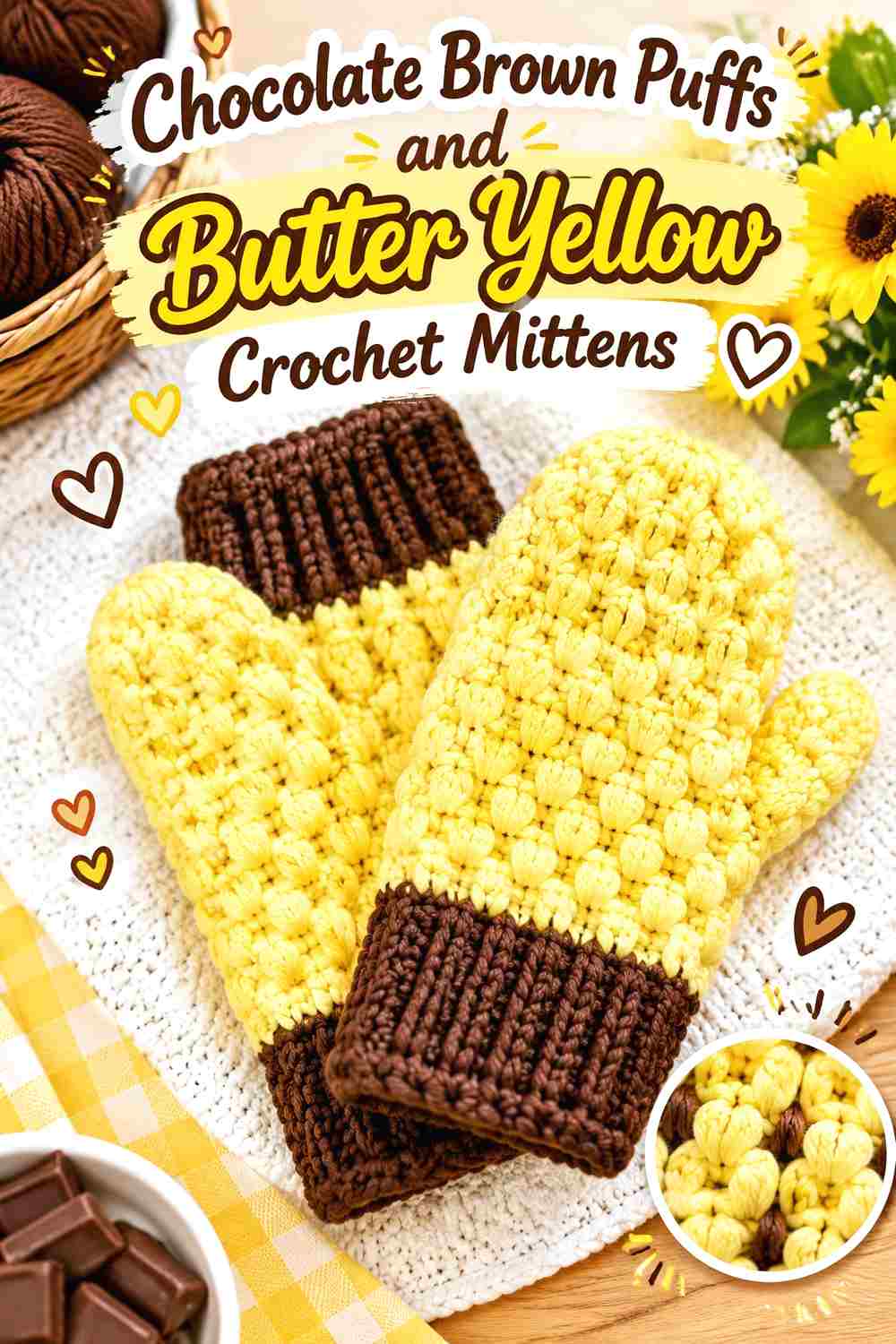
For mittens, keep the color plan compact. Butter yellow can establish the main hand area while chocolate brown is reserved for the puff texture and possibly one finishing detail.
Chocolate Brown Keeps the Crochet Mitten Puffs Clearly Defined
Dark brown puff stitches on a butter yellow field give the small raised details enough visual weight to remain noticeable. Because mittens have relatively little surface area, a modest amount of brown can already create a strong effect.
Keep the puff placement consistent across the pair so the color distribution reads as intentional.
Butter Yellow Connects the Chocolate Brown Crochet Mittens as a Pair
Using butter yellow across the larger background areas keeps both mittens visually unified. The brown puffs then operate as a repeated feature instead of turning each mitten into several small color blocks.
If the puff coverage is extensive, consider limiting brown elsewhere to preserve this hierarchy.
Chocolate Brown Cuffs Can Repeat the Crochet Puff Color
Chocolate brown cuffs provide a second substantial dark area and connect naturally with brown puffs above them. Butter yellow cuffs create a lighter, more continuous background instead.
Choose based on how much brown is already visible on the hand section.
Creator Credit: Hobby Crochet
7. Butter Yellow Puff Panel And Chocolate Brown Crochet Bag

Chocolate brown works well as the visual base of a bag while butter yellow identifies a textured puff panel. Concentrating the light color on the front keeps the puff work easy to locate without requiring the handles, base, and every side to change color.
Butter Yellow Turns the Crochet Bag Puff Panel Into the Focal Area
Use butter yellow across the principal puff-stitch section so texture and color reinforce one another. A larger continuous panel will generally look more intentional than many tiny yellow puff accents spread around the bag.
Decide whether the panel should appear only on the front or repeat elsewhere before planning the color distribution.
Chocolate Brown Can Connect the Crochet Bag Body and Base
Keeping the main body and base chocolate brown gives the bag a consistent dark foundation around the yellow feature. It also prevents the bottom section from competing visually with the puff panel.
This arrangement is especially useful when you want the front texture to establish the bag’s visual identity.
Chocolate Brown Handles Keep Butter Yellow Focused on the Crochet Puffs
Brown handles continue the dominant body color upward and leave yellow concentrated on the textured feature. Butter yellow handles would create a more obvious two-color split and increase the visual share of yellow considerably.
Creator Credit: CrocheTUBEVAVIg
8. Chocolate Brown Puff Rows And Butter Yellow Crochet Scarf
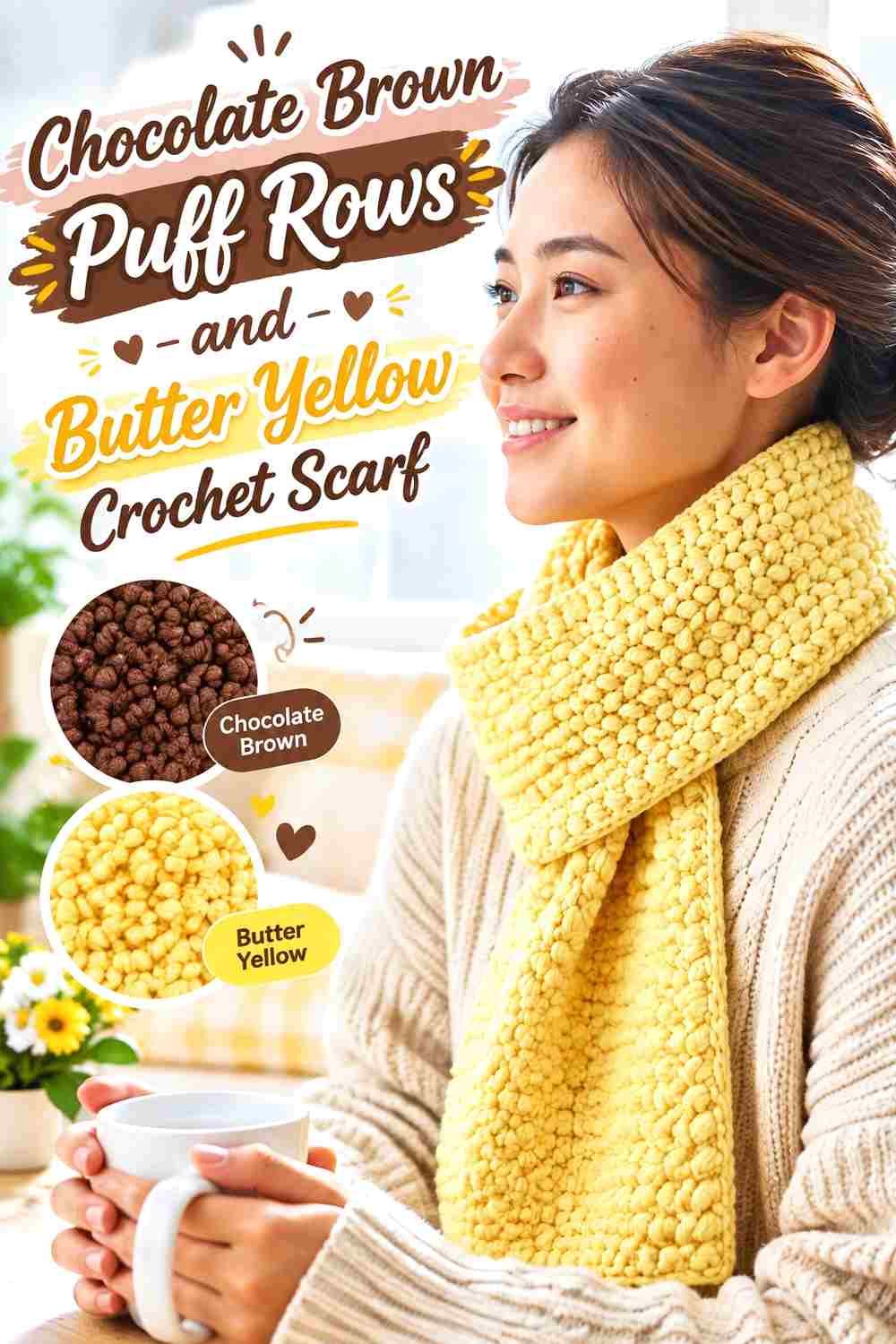
A butter yellow scarf can use chocolate brown puff rows as repeated dark markers along its length. Because scarves create a long visual line, repeating the brown texture periodically can be more cohesive than concentrating all the brown at one end.
Chocolate Brown Gives the Crochet Scarf Puff Rows Clear Rhythm
Repeat brown puff sections at deliberate intervals so the darker shade guides the eye along the scarf. The puff texture makes each color change more noticeable than a flat stripe would be.
Avoid introducing too many differently sized brown sections unless an irregular layout is intentional.
Butter Yellow Creates Space Between Chocolate Brown Crochet Puffs
Larger butter yellow sections give the dark puff rows enough separation to remain distinct. This also prevents the raised texture from covering the entire scarf surface.
If you want a softer color effect, increase the butter yellow share rather than adding another neutral.
Chocolate Brown Ends Can Anchor the Butter Yellow Crochet Scarf
Chocolate brown end sections can visually bookend the lighter scarf and repeat the puff color. Keeping the ends butter yellow instead places all emphasis on the internal brown puff rows.
Either approach works; choose according to whether the ends should frame the design or remain quiet.
Creator Credit: Tasty Dumpling Living
9. Butter Yellow Puffs And Chocolate Brown Crochet Cushion

A cushion gives puff stitches a broad decorative surface where contrast can be viewed all at once. Use chocolate brown for the main face and place butter yellow on the puff texture you want emphasized.
Butter Yellow Brings Crochet Cushion Puffs Forward
Butter yellow puffs create small light points across a dark chocolate brown field. This works particularly well when the puff arrangement itself forms a recognizable repeated surface pattern.
Keep enough brown visible between the yellow features so individual puffs do not merge into one large yellow area.
Chocolate Brown Gives the Butter Yellow Crochet Cushion a Stable Background
A predominantly chocolate brown pillow face lets the puff texture carry the accent color. This avoids making both the background and raised details equally busy.
For a less dark finished cushion, consider using more butter yellow on the reverse rather than interrupting the front’s puff arrangement.
Butter Yellow Edging Can Connect the Crochet Cushion Perimeter With the Puffs
A butter yellow edge repeats the puff color at the outside of the cushion and creates a light frame. A chocolate brown edge produces the opposite effect, keeping the yellow contained inside the decorative face.
Choose the edge only after judging how much yellow the puff pattern already contributes.
Creator Credit: CrochetHooksYou
10. Chocolate Brown Puff Texture And Butter Yellow Crochet Headband
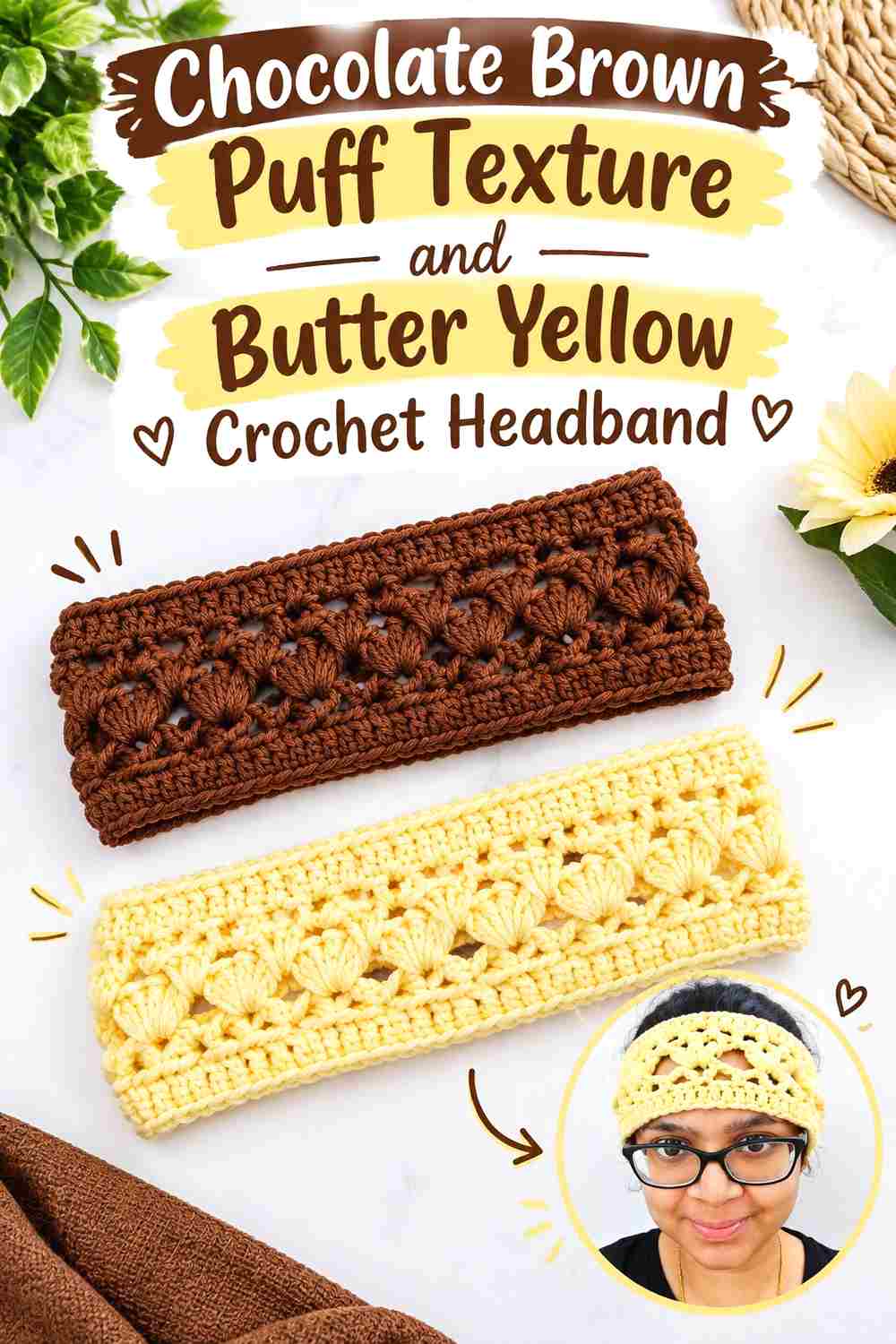
A narrow headband benefits from a simple hierarchy. Let butter yellow establish the background and chocolate brown identify the puff texture rather than trying to alternate the two colors across every small section.
Chocolate Brown Makes the Crochet Headband Puffs More Pronounced
Brown puff stitches create darker dimensional points against the yellow field. On a narrow accessory, even a relatively small textured section can become the main feature.
Keep the brown concentrated around the puffs if you want color and texture to remain linked.
Butter Yellow Prevents the Chocolate Brown Crochet Headband From Looking Too Dark
Butter yellow around the puff sections creates lighter visual space and keeps chocolate brown from covering most of the narrow surface.
Check the proportions early. If the puff stitches occupy most of the width, brown may become visually dominant despite being intended as an accent.
Chocolate Brown Edging Can Frame the Butter Yellow Crochet Headband
A narrow brown edge can connect with the puff color and define the headband perimeter. Leaving the edge yellow creates a softer boundary and keeps brown limited to the raised texture.
Creator Credit: Let’s All Crochet
11. Butter Yellow Puff Bands And Chocolate Brown Crochet Vest

A chocolate brown vest can use butter yellow puff bands to interrupt the darker body without turning the garment into equal color blocking. Place the lighter shade where the raised texture can create a purposeful feature across the wearable.
Butter Yellow Can Separate Puff Texture From the Chocolate Brown Crochet Vest
Butter yellow makes a puff band immediately distinct from the darker body. This is useful when the texture should function as a visible design feature rather than blend into the surrounding stitches.
Keep the yellow aligned with meaningful garment areas instead of inserting narrow color changes wherever space is available.
Chocolate Brown Can Carry the Larger Crochet Vest Panels
Using chocolate brown across the main panels gives the garment a consistent base. The lighter puff sections can then repeat without competing with additional large yellow blocks.
Look at the front and back together before deciding whether the yellow feature needs to appear on both.
Butter Yellow Edging Can Repeat the Crochet Vest Puff Color
Butter yellow around selected edges can connect the puff bands with the garment outline. For a more brown-dominant result, keep the edging chocolate brown and allow the yellow to remain limited to texture.
The amount of yellow already present should guide that decision.
Creator Credit: La Manualidades
12. Chocolate Brown Puff Braids And Butter Yellow Crochet Cowl
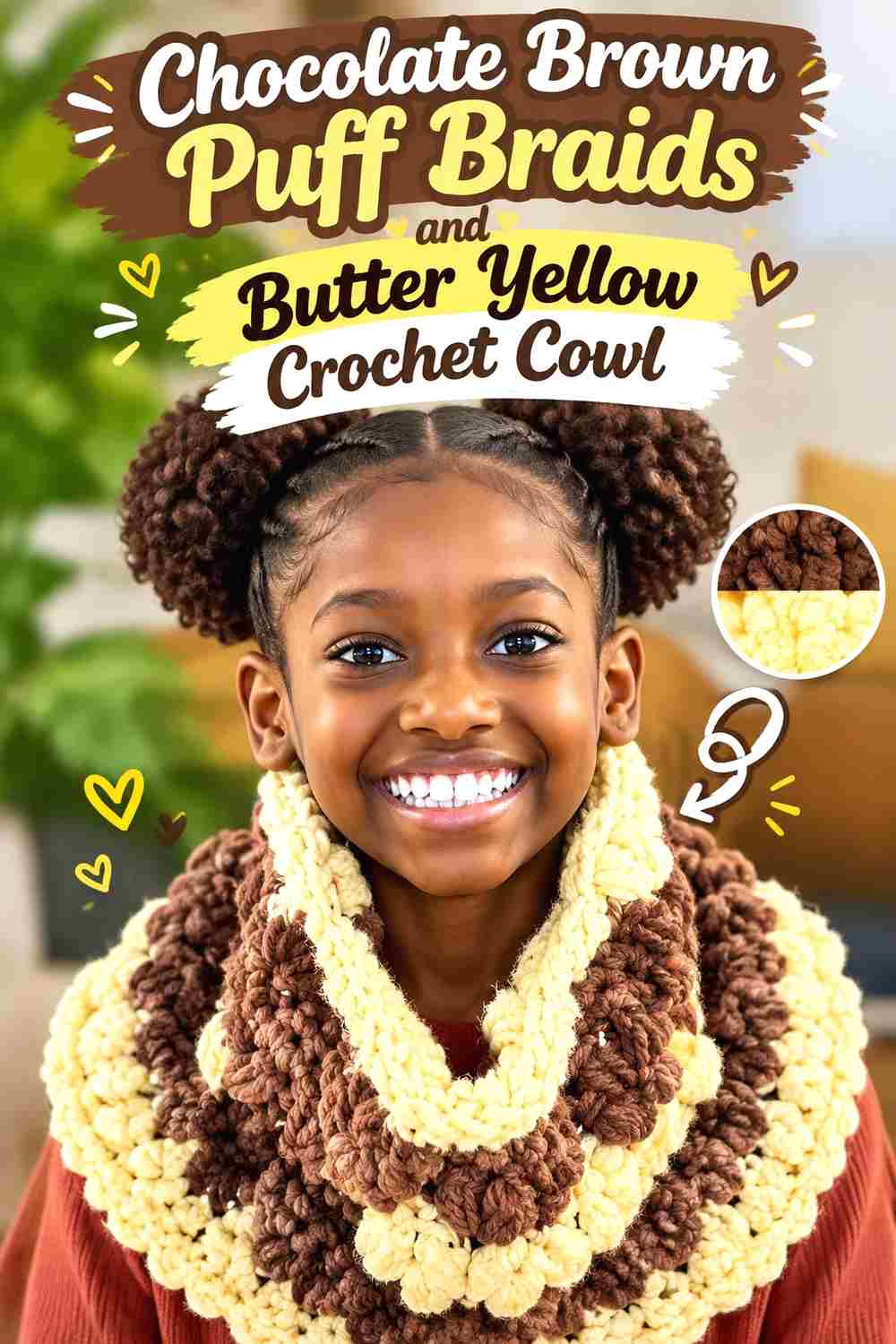
A cowl provides enough width for chocolate brown puff texture to become a substantial feature without needing many additional color changes. Butter yellow can form the main field, giving the darker braided or clustered puff sections clear separation.
Chocolate Brown Gives the Crochet Cowl Puff Texture Visual Weight
Chocolate brown works well on raised puff sections when you want the dimensional stitches to appear heavier than the surrounding fabric. Keep the brown texture continuous enough that the eye can follow its shape.
Breaking it into too many tiny fragments can weaken both the puff pattern and the color hierarchy.
Butter Yellow Frames the Chocolate Brown Crochet Puff Sections
Butter yellow surrounding the darker texture prevents the cowl from becoming one dense brown surface. The light field also creates a useful boundary around raised details.
If the chosen yellow is particularly muted or deep, compare it directly with the brown before deciding how narrow those surrounding sections can be.
Chocolate Brown Edges Can Finish the Butter Yellow Crochet Cowl
Repeating brown at an edge can visually contain the lighter center and connect with the puff texture. Butter yellow edges instead leave the brown concentrated entirely within the dimensional stitchwork.
For a cowl with substantial brown puff coverage, the yellow edge can provide the more balanced finish.
Creator Credit: Jonah’s Hands
Comparing Chocolate Brown and Butter Yellow Crochet Puff Stitch Placements
The hat, granny square, blanket, bag, and cushion make butter yellow the lighter puff feature against chocolate brown. These directions emphasize individual puffs because the raised stitches receive the lighter color.
The cardigan, shawl, mittens, headband, and cowl reverse that relationship by putting chocolate brown on some or all of the textured areas. The result gives puff stitches greater visual weight instead of brightness.
The scarf and vest are useful when you prefer repeated bands rather than one central puff feature. In those projects, spacing between color changes becomes as important as the colors themselves.
Conclusion
Chocolate brown and butter yellow can support very different puff-stitch layouts without needing a third shade. For maximum light-dark separation, put butter yellow directly on selected puffs and surround them with chocolate brown. For a lighter overall project with deeper texture, reverse the hierarchy and use brown for the puff sections.
On larger pieces, repeat the smaller color in a controlled way rather than trying to distribute both shades equally. On hats, mittens, headbands, and other compact accessories, one concentrated puff feature may provide enough contrast by itself.
Most importantly, check the actual yarns together before committing to a large layout. Chocolate brown and butter yellow can vary considerably in depth, so preserving the intended light-dark relationship is more useful than trying to match an exact shade name. Use the credited tutorials for each project’s construction while adapting the color placement to the direction you prefer.
Frequently Asked Questions
Should chocolate brown or butter yellow be the main color in puff stitch crochet?
Either can lead. Chocolate brown as the dominant shade creates a darker project where butter yellow puffs become bright focal details. Butter yellow as the dominant shade creates a lighter surface where chocolate brown puffs add visual weight and definition.
Do butter yellow puff stitches show clearly against chocolate brown?
They can create strong separation when the actual butter yellow yarn is noticeably lighter than the chocolate brown. Compare the yarns side by side because both color names cover a range of values.
Can I alternate chocolate brown and butter yellow on every puff row?
You can use frequent alternation, but first consider whether it helps the specific project. Puff stitches already produce a busy textured surface, so larger repeated color sections can sometimes give the eye clearer places to rest.
How can I make chocolate brown and butter yellow puff stitch crochet look less busy?
Give one shade substantially more visual area than the other. You can also restrict the secondary color to puff rows, motif centers, borders, cuffs, panels, or another clearly defined feature rather than changing colors throughout the entire surface.
What can replace butter yellow in a chocolate brown puff stitch palette?
Choose another light, warm, softened shade if you want to preserve a similar contrast relationship. More important than matching the exact hue is keeping the replacement noticeably lighter than chocolate brown when the light-on-dark effect is central to the design.
What can replace chocolate brown while keeping the puff stitches dark?
Look for another deep shade that maintains clear value separation from butter yellow. Compare the substitute directly with the yellow yarn rather than relying only on the shade name.
Should the crochet border be chocolate brown or butter yellow?
Use the border to correct or reinforce the existing balance. Chocolate brown can give a butter-yellow-heavy project a defined dark frame. Butter yellow can lighten the perimeter of a brown-dominant piece or repeat yellow puff accents at the outer edge.