11 Cool Blue and Silver Crochet Star Stitch Ideas
Cool blue and silver suit crochet star stitch particularly well when you want the clustered star shapes to remain the main visual feature. Cool blue can provide a deeper field around the stars, while silver introduces a lighter neutral that can separate star rows, frame panels, or brighten smaller textured sections.
The key is deciding whether color should follow the star stitch or simply frame it. Silver star rows against cool blue create a light-on-dark effect, while cool blue stars surrounded by silver carry more visual weight. For projects with extensive star stitch, keeping complete star sections in one color can also prevent the surface from becoming overly segmented.
These 11 ideas use those different arrangements across blankets, wearables, bags, and smaller accessories.
Quick List
- Silver Star Rows And Cool Blue Crochet Blanket
- Silver Star Stitch Body And Cool Blue Crochet Beanie
- Cool Blue Star Panels And Silver Crochet Cardigan
- Silver Star Stitch And Cool Blue Crochet Crossbody Bag
- Cool Blue Star Rows And Silver Crochet Headband
- Silver Star Stitch And Cool Blue Crochet Fingerless Gloves
- Cool Blue Star Bands And Silver Crochet Cowl
- Silver Star Rows And Cool Blue Crochet Baby Blanket
- Cool Blue Star Stitch And Silver Crochet Shoulder Bag
- Silver Star Panels And Cool Blue Crochet Wrap
Decide Whether Cool Blue or Silver Should Carry the Crochet Stars
Star stitch creates clustered shapes with noticeable texture, so changing color directly around the stars can strongly affect their visibility. Silver stars on a cool blue field produce a lighter focal texture. Cool blue stars against silver create the opposite effect, giving the clustered stitches more visual weight.
You do not need to alternate colors constantly. A complete star-stitch panel can stay cool blue while silver appears only on cuffs or borders. This is often cleaner when the star texture already covers most of the finished item.
Keep Cool Blue and Silver Star Rows Visually Connected
When using both colors inside the star-stitch field, think in complete visual sections rather than isolated color changes. Repeating a silver star band several times across a blue blanket, for example, creates a clearer rhythm than inserting small silver areas at unrelated points.
The supporting rows around star stitches also matter visually. Consider the complete star unit when planning a color transition so the shapes do not appear unintentionally divided.
Check the Value Difference Between Cool Blue and Silver
“Cool blue” and “silver” can describe yarns with very different depths. A pale icy blue beside medium silver may produce relatively soft contrast, while a deeper blue and pale silver can create much stronger separation.
Compare your actual yarns before deciding that small stars should change color. A grayscale photo is a simple way to see whether the two shades remain distinct without relying on hue alone.
1. Silver Star Rows And Cool Blue Crochet Blanket
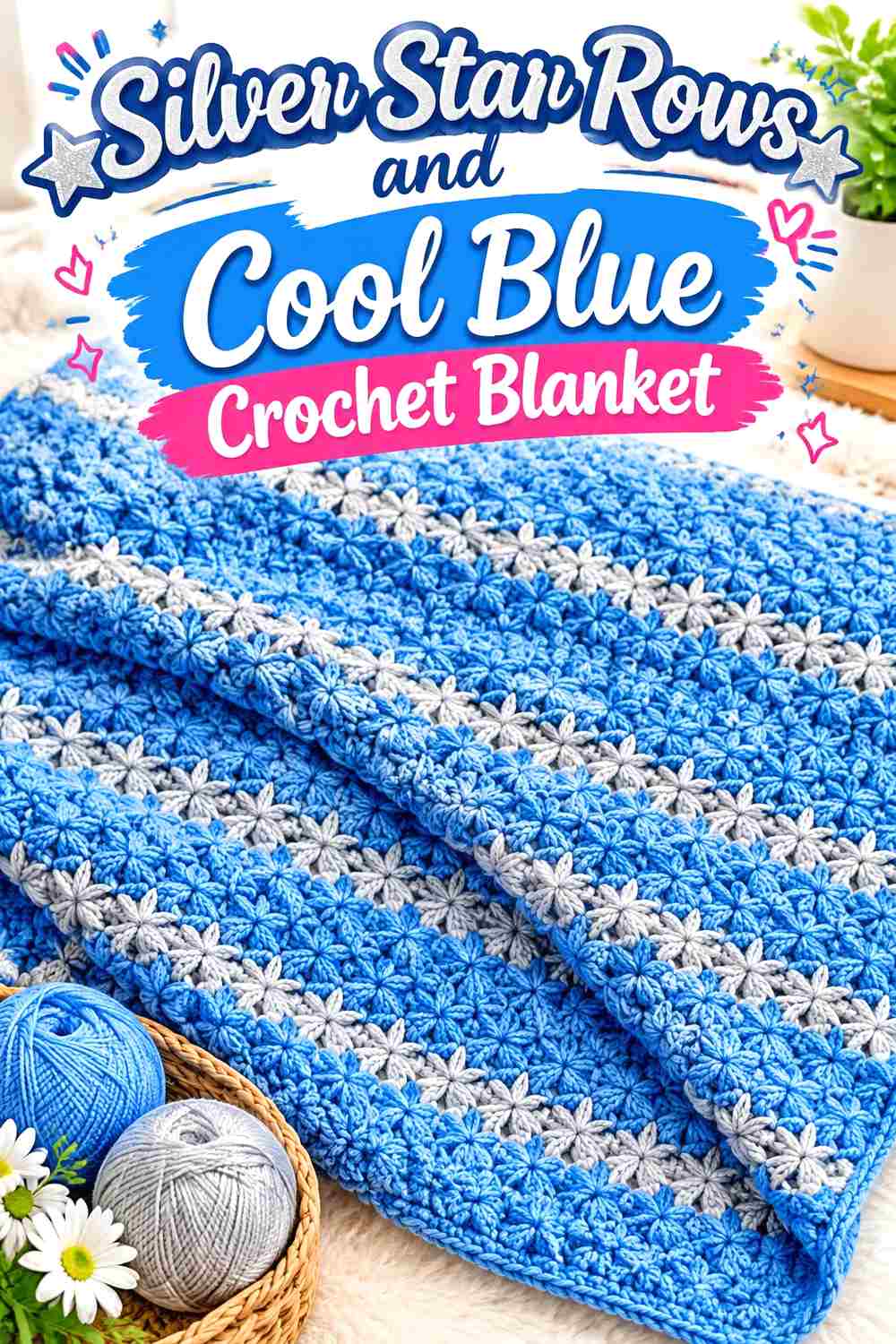
Let cool blue cover most of the blanket and use silver on selected star-stitch rows. The larger blue areas create continuity, while the lighter silver texture becomes a repeated feature rather than competing with every section of the blanket.
Silver Makes Crochet Blanket Star Rows Easier to Distinguish
Place silver directly on selected star sections when you want those rows to become the lighter focal points. Because star stitch already has a clustered appearance, the color change can make each textured band especially noticeable.
Leave enough cool blue between silver sections to preserve that distinction.
Cool Blue Creates Space Between Silver Crochet Stars
Cool blue can carry the larger areas between the light star rows. This gives the blanket a clear dominant color and prevents silver from turning into a series of narrow competing stripes.
If silver already appears frequently, increase the uninterrupted blue areas rather than introducing a third color.
Silver Can Give the Cool Blue Crochet Blanket a Lighter Border
A silver border repeats the lightest shade at the perimeter and connects it with the internal star rows. A cool blue border keeps silver contained inside the design.
Choose the border after assessing how much silver the main field already contains.
Creator Credit: Raji’s Craft Hobby
2. Silver Star Stitch Body And Cool Blue Crochet Beanie

A silver star-stitch body gives a beanie a light textured surface, while cool blue can define the lower edge or other framing details. Because the project is compact, even a narrow blue section can noticeably change the palette.
Silver Keeps the Crochet Beanie Star Texture Light
Using silver across the principal star-stitch area allows shadows between clustered stitches to supply much of the visual definition. It also gives the beanie one continuous textured field instead of splitting every star row between two colors.
Cool Blue Can Ground the Silver Crochet Beanie Edge
A cool blue lower edge creates a darker stopping point beneath the silver texture. This makes the second color easy to identify without interrupting the stars themselves.
If the edge occupies substantial visual space, blue may become closer to a co-dominant color.
Cool Blue Should Support the Silver Crochet Stars, Not Crowd Them
On a small beanie, repeated blue accents can quickly reduce the amount of visible silver star stitch. Keep blue concentrated when silver is intended to remain the main field.
Creator Credit: Sirin’s Crochet
3. Cool Blue Star Panels And Silver Crochet Cardigan
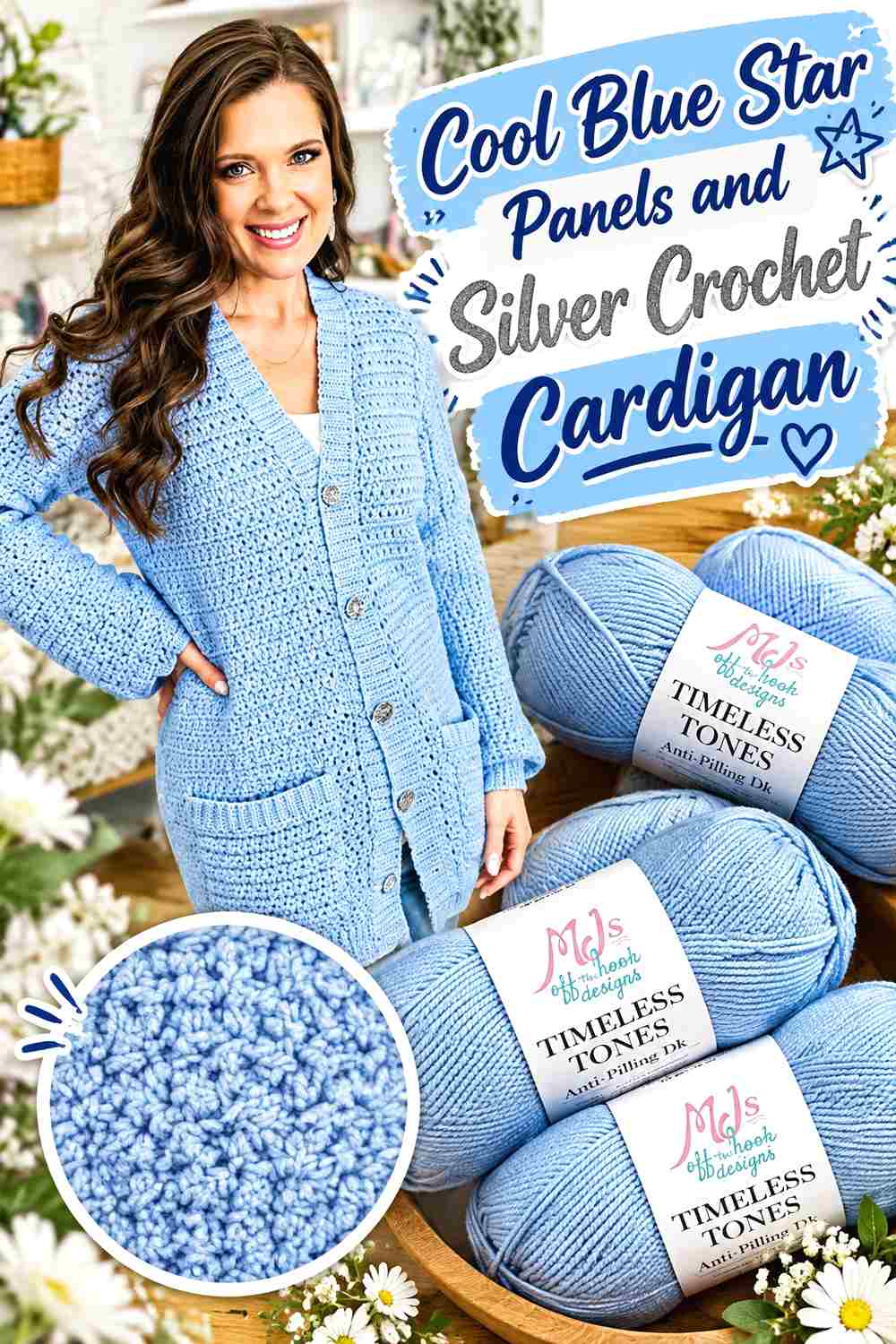
A silver cardigan can use cool blue star-stitch panels as stronger textured features. The light neutral connects the larger garment sections, while blue gives selected panels clear boundaries.
Cool Blue Can Define the Crochet Cardigan Star Panels
Keep the star panel blue from one end of the feature to the other when you want a strong vertical or horizontal line. A continuous color makes the panel easier to recognize than frequent switching inside the stars.
Consider the front, back, and sleeves together before deciding how many blue panels the garment needs.
Silver Separates Cool Blue Crochet Star Texture
Silver surrounding the blue panels creates lighter visual space and prevents several textured sections from merging together.
This can be particularly useful on a cardigan because large garment surfaces give both color and texture plenty of room to repeat.
Cool Blue Cuffs Can Repeat the Crochet Cardigan Star Color
Blue cuffs or restrained edging can connect the star-panel color with the sleeves. If the cardigan already contains extensive blue star sections, silver cuffs can instead provide a quieter finish.
Creator Credit: MJ’s Off The Hook Designs
4. Silver Star Stitch And Cool Blue Crochet Crossbody Bag
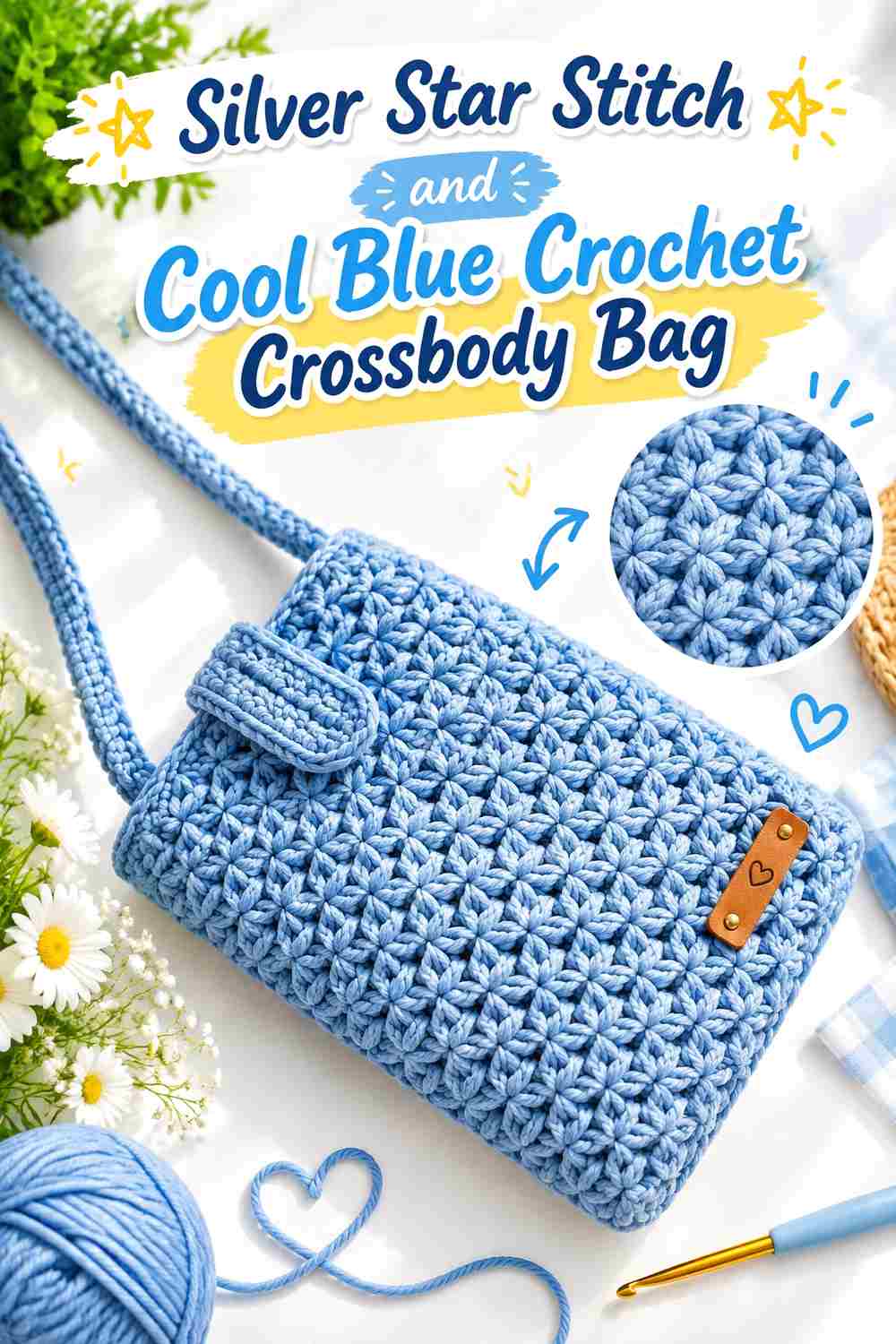
A cool blue bag can place silver across its main star-stitch panel, making the lighter texture the obvious front feature. Keeping the base and strap blue gives the stronger color a structural-looking role around the silver surface.
Silver Makes the Crochet Bag Star Stitch the Focal Panel
Use silver continuously across the primary textured area when you want the star shapes to stand apart from the rest of the bag.
A larger connected silver panel usually reads more clearly than isolated silver stars scattered across several bag sections.
Cool Blue Can Ground the Silver Crochet Crossbody Bag
Keeping the lower area cool blue creates a darker visual base beneath the silver texture. It also prevents the lighter shade from spreading across every structural part of the bag.
Cool Blue Straps Keep Silver Focused on the Crochet Stars
A blue strap repeats the body or base color and leaves silver concentrated on the star panel. A silver strap gives the neutral a much larger role and produces a more evenly divided palette.
Creator Credit: Adel handmade
5. Cool Blue Star Rows And Silver Crochet Headband
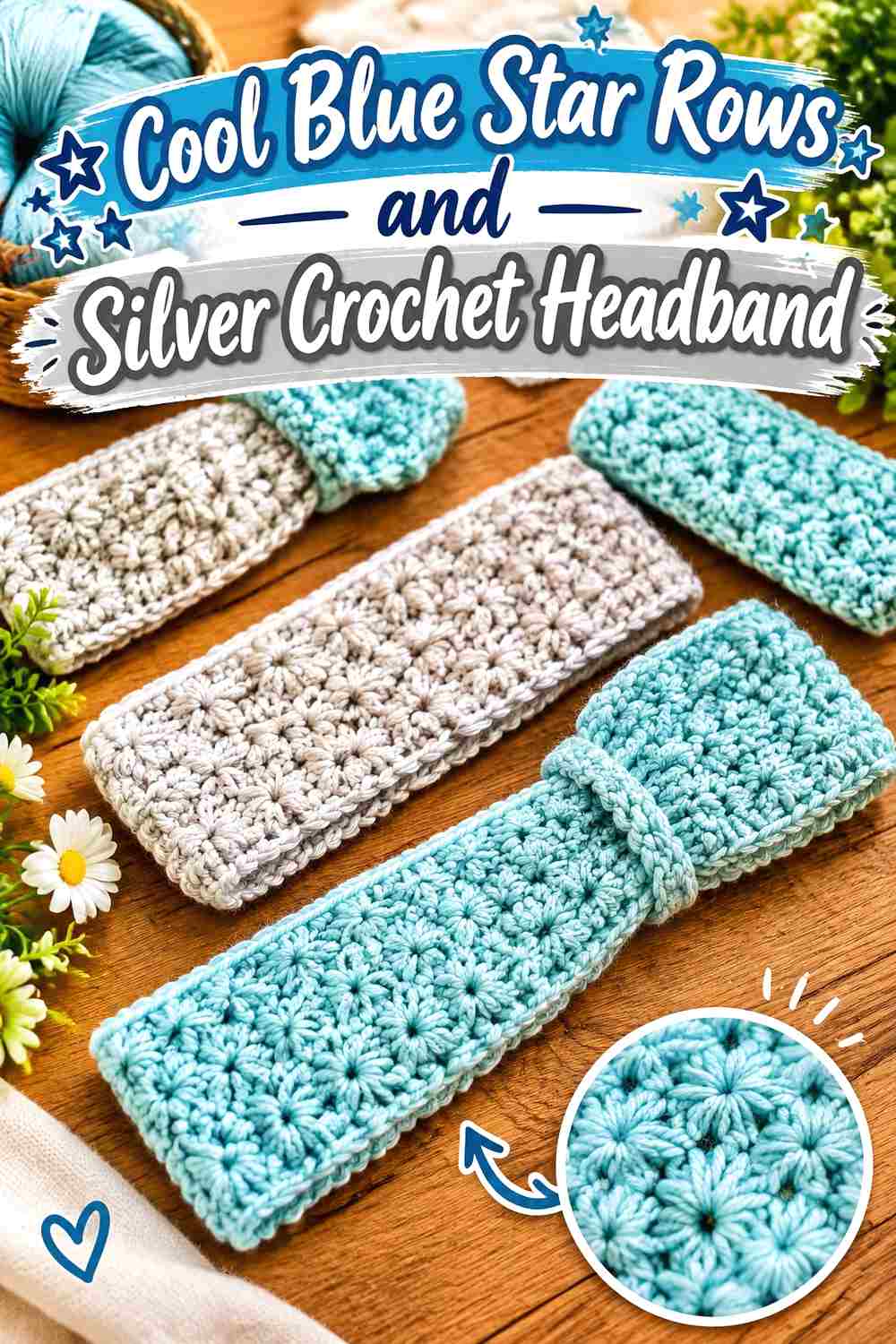
A narrow silver headband can use cool blue directly on its star rows. The small surface does not need extensive color blocking; concentrating blue on the texture provides enough distinction.
Cool Blue Gives the Crochet Headband Stars Strong Definition
Place cool blue where the star shapes are most visible so the darker shade and clustered texture reinforce one another.
Because the headband is narrow, a relatively small blue section may already account for much of the finished surface.
Silver Frames the Cool Blue Crochet Star Stitch
Silver around the star section provides a lighter boundary and prevents the blue texture from visually reaching every edge.
Check the proportions early. If silver becomes too narrow, the finished headband may read as blue-dominant rather than silver-led.
Silver Edges Can Keep the Cool Blue Crochet Headband Balanced
Continuing silver through the edges maintains the lighter frame. Cool blue edging would connect directly with the star color and create a stronger dark outline.
Creator Credit: Yarn Enchantment
6. Silver Star Stitch And Cool Blue Crochet Fingerless Gloves

Use silver for the star-stitch body of the gloves and cool blue for the cuffs or smaller framing details. This keeps the textured area light while giving the pair a repeated darker anchor.
Silver Keeps the Crochet Glove Stars Visually Connected
A continuous silver star field avoids breaking the small hand area into too many color sections. This is useful on fingerless gloves because the available surface is limited.
Keep the silver placement consistent across both gloves so the pair reads as one coordinated design.
Cool Blue Cuffs Can Anchor Silver Crochet Star Stitch
Blue cuffs create a darker section beneath the silver hand area and give the second shade a substantial but controlled role.
If blue is repeated elsewhere, keep those additional accents small enough that the silver star field remains dominant.
Cool Blue Edging Can Repeat Across the Silver Crochet Gloves
A restrained blue finishing detail can connect the top of the glove with the cuff color. Leaving the upper edge silver creates a simpler division: blue cuff and silver stars.
Creator Credit: Bruxita Crochet
7. Cool Blue Star Bands And Silver Crochet Cowl
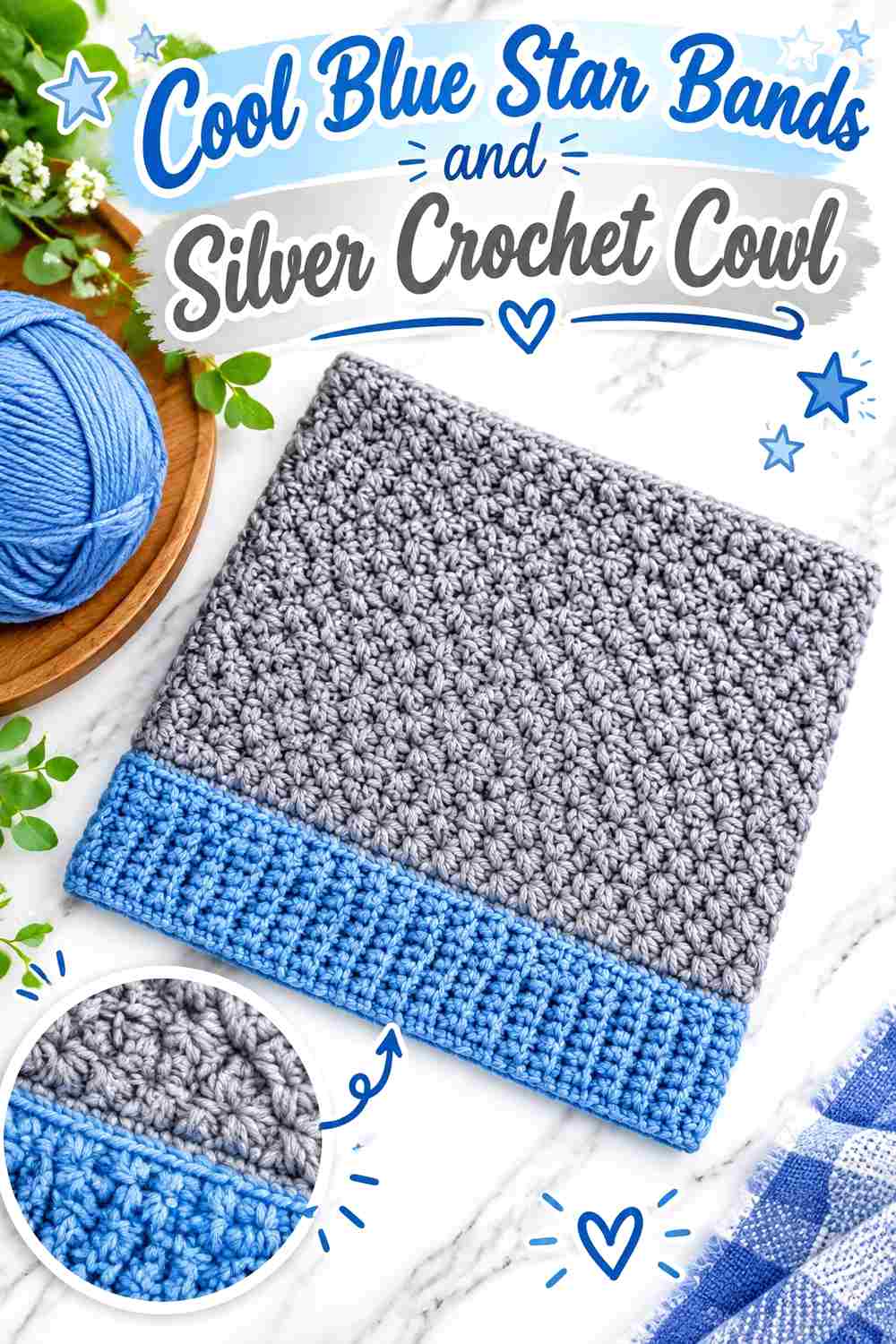
A silver cowl can use repeated cool blue star-stitch bands to create darker intervals around the accessory. Larger silver spaces between them keep the star sections distinct.
Cool Blue Star Bands Give the Silver Crochet Cowl Rhythm
Repeat blue star sections at deliberate intervals rather than changing color on every available row. The clustered texture makes each blue band substantial enough to act as a visual marker.
Silver Creates Breathing Room Around Cool Blue Crochet Stars
Silver sections between blue star bands keep the cowl from becoming a continuous dark textured surface.
If several blue bands sit close together, increasing the silver spacing can make each star section easier to distinguish.
Cool Blue Edging Can Connect the Silver Crochet Cowl Bands
Blue edging repeats the star-band color at the perimeter and increases its overall visual share. Silver edging keeps the blue contained within the internal texture.
Choose according to how much blue the existing bands already contribute.
Creator Credit: CAAB Crochet
8. Silver Star Rows And Cool Blue Crochet Baby Blanket

Make cool blue the connecting field and repeat silver star rows throughout the blanket. This approach lets the neutral texture recur without requiring a strict half-blue, half-silver split.
Silver Star Rows Lighten the Cool Blue Crochet Blanket
Silver star sections provide light interruptions across a blue field. Keep their spacing deliberate so the neutral repeats across the blanket rather than collecting heavily in one area.
Cool Blue Connects Repeated Silver Crochet Stars
Cool blue between star sections acts as the continuous color that holds the layout together. Larger blue areas are particularly useful when the silver star rows already create strong texture.
Silver or Cool Blue Can Finish the Crochet Baby Blanket Border
Silver edging connects the perimeter with the lighter star rows. Cool blue edging reinforces the dominant field and creates a more contained look.
If one shade appears underrepresented after the main blanket is complete, the border is a useful place to rebalance it.
Creator Credit: Crochet Crosia
9. Cool Blue Star Stitch And Silver Crochet Shoulder Bag

Reverse the previous bag hierarchy by making cool blue the star-stitch surface and silver the framing color. This gives the clustered texture more visual weight while allowing silver to define edges, handles, or another quieter section.
Cool Blue Makes the Crochet Shoulder Bag Stars the Main Surface
Use blue across a broad star-stitch panel when you want the texture itself to establish the bag’s identity. Keeping the stars in one color also prevents the clustered surface from becoming excessively segmented.
Silver Can Frame the Cool Blue Crochet Bag
Silver around the upper edge or another clearly defined section creates a lighter break from the blue star field.
Keep the silver placement connected to recognizable bag features instead of scattering small neutral patches throughout the textured surface.
Silver Handles Can Balance the Cool Blue Crochet Star Stitch
Silver handles give the neutral a second substantial role and create a lighter top to the bag. Blue handles produce a more continuous, blue-dominant result.
Creator Credit: Kelsey Jane Designs
10. Silver Star Panels And Cool Blue Crochet Wrap

A wide cool blue wrap provides enough room for silver star-stitch panels to repeat without taking over the entire surface. Unlike thin stripes, broader star panels give the neutral enough space for the clustered stitch shapes to remain recognizable.
Silver Star Panels Break Up the Cool Blue Crochet Wrap
Use silver on substantial star-stitch sections rather than narrow isolated rows. This lets both the color and the individual stars register across a wide wearable.
Leave enough cool blue between silver panels to maintain clear separation.
Cool Blue Connects the Silver Crochet Star Sections
A continuous blue field between panels makes multiple silver areas feel like parts of one design. Without that connecting color, a wide wrap can become visually fragmented.
Silver Ends Can Extend the Crochet Wrap Star Color
Silver ends increase the neutral share and connect the outer edges with the internal star panels. Cool blue ends keep the wrap more strongly blue-dominant and reserve silver for the texture.
Choose after comparing the color coverage across the entire width and length.
Creator Credit: WoolyWondersCrochet
Comparing Cool Blue and Silver Crochet Star Stitch Placements
For a cool-blue-dominant project with lighter star accents, the blanket, crossbody bag, baby blanket, and wrap provide useful directions. Silver is concentrated on textured rows or panels while blue connects the larger surface.
For a silver-led project with darker star texture, the scarf, cardigan, headband, and cowl reverse that relationship. Cool blue becomes the stronger star feature against a lighter neutral field.
The beanie and fingerless gloves show another option: keep the entire star-stitch field silver and move cool blue to edges or cuffs. This is useful when you want the star shapes to remain uninterrupted by internal color changes.
Conclusion
Cool blue and silver can make star stitch look quite different depending on which shade carries the clustered texture. Silver stars on cool blue create lighter focal areas, while cool blue stars against silver give the stitch more visual weight.
For small accessories, one uninterrupted star-stitch color plus a contrasting cuff, edge, or strap is often enough. Blankets, wraps, and cardigans provide more room for repeated star panels, but leaving substantial areas in one connecting color can keep the overall design coherent.
Compare your actual blue and silver yarns before planning small color changes. If their values are similar, larger panels may show the palette more clearly than individual contrasting star details. The credited sources provide the underlying star-stitch project or construction concept; the cool-blue-and-silver arrangements here are independent color adaptations.
Frequently Asked Questions
Should cool blue or silver dominate a crochet star stitch project?
Either can lead. Cool blue produces a stronger colored field where silver can brighten star rows or panels. Silver creates a lighter overall surface where cool blue can give the star texture more visual weight.
Do silver crochet stars show clearly against cool blue?
They can when the silver yarn is noticeably lighter than the blue. Compare the actual yarns because a pale cool blue and darker silver may have much softer value contrast than their names suggest.
Should I change between cool blue and silver on every crochet star row?
Not necessarily. Star stitch already creates a detailed clustered surface. Larger color sections, repeated star bands, or a single-color star field with contrasting borders can be easier to read than frequent alternation.
How can I make a cool blue and silver star stitch blanket look less busy?
Choose one shade as the connecting field and repeat the second color only at deliberate intervals. Increasing the amount of uninterrupted background between contrasting star rows can also give the texture more breathing room.
What can replace silver in a cool blue crochet star stitch palette?
Choose another light, cool-leaning neutral if you want to preserve a similar relationship. The replacement should remain sufficiently distinct from the blue when it is being used for small stars or narrow textured bands.
What can replace cool blue while keeping the crochet palette cool?
Another blue with a comparable depth can preserve the basic direction. Pay attention to value as well as hue: if the original blue was darker than silver, keep that darker role when strong star definition is important.
Should a cool blue and silver crochet border match the star rows?
It does not have to. Matching the border to the star color repeats the textured accent around the perimeter. Matching the dominant background keeps attention inside the project and gives the edge a quieter finish.