15 Wasabi and Charcoal Crochet Spike Stitch Ideas
Wasabi and charcoal give crochet spike stitch a strong light-and-dark relationship that can make its elongated stitches especially noticeable. Charcoal creates a deep neutral field, while wasabi can travel downward through that field as bright vertical spikes. Reverse the colors, and charcoal spikes become darker marks cutting into a fresher wasabi background.
That vertical movement is what makes color planning important with spike stitch. Unlike an ordinary stripe, a contrasting spike reaches into a previous row, visually connecting two color areas. You can emphasize that effect with repeated contrasting spikes, soften it by using wider solid-color sections, or restrict the technique to a panel, border, or smaller feature.
These 15 ideas explore those different arrangements across home decor, accessories, and practical crochet projects.
Quick List
- Charcoal Spike Panel And Wasabi Crochet Pillow
- Wasabi Spike Rows And Charcoal Crochet Crossbody Bag
- Charcoal Spikes And Wasabi Crochet Baby Blanket
- Wasabi Granny Spikes And Charcoal Crochet Scarf
- Charcoal Spike Bands And Wasabi Crochet Cowl
- Wasabi Spike Texture And Charcoal Crochet Basket
- Charcoal Spikes And Wasabi Crochet Potholder
- Wasabi Spike Rows And Charcoal Crochet Table Runner
- Charcoal Spike Border And Wasabi Crochet Throw
- Wasabi And Charcoal Crochet Spike Stitch Dishcloth
- Charcoal Spike Panel And Wasabi Crochet Backpack
- Wasabi Spike Motifs And Charcoal Crochet Granny Squares
- Charcoal Spike Texture And Wasabi Crochet Wrap
- Wasabi Spike Bands And Charcoal Crochet Cushion
Let Wasabi and Charcoal Emphasize the Length of Spike Stitches
Spike stitches are worked into stitches or spaces below the current working row, creating elongated vertical marks. A contrasting color makes that downward reach easier to see.
Wasabi spikes over charcoal create the brightest version of this effect. The lighter green visually extends into the dark field. Charcoal spikes over wasabi reverse the relationship and create darker vertical interruptions.
The important decision is not simply which color you prefer. Decide whether the spikes themselves should be lighter or darker than the surrounding rows.
Avoid Turning Wasabi and Charcoal Spike Stitch Into Ordinary Stripes
If both colors change in broad horizontal bands but the spike stitches remain the same color as their surrounding rows, much of the visual advantage of the technique can disappear.
Instead, consider placing the color transition where the elongated stitches cross into the previous color. This allows wasabi to reach into charcoal—or charcoal into wasabi—so the boundary becomes jagged, pointed, or interlocked rather than completely straight.
You can still use broad solid sections. The goal is to make at least some color changes work with the spike construction instead of simply sitting behind it.
Check Wasabi and Charcoal Contrast Before Using Small Spikes
Wasabi can range from a pale yellow-green to a deeper muted green. Charcoal can also range from medium gray to nearly black. That means the amount of contrast depends on your actual yarns.
Place the two colors together and view them from a distance. If you plan to use individual contrasting spikes, a grayscale photo can help confirm that the stitches remain distinguishable by value as well as hue.
1. Charcoal Spike Panel And Wasabi Crochet Pillow
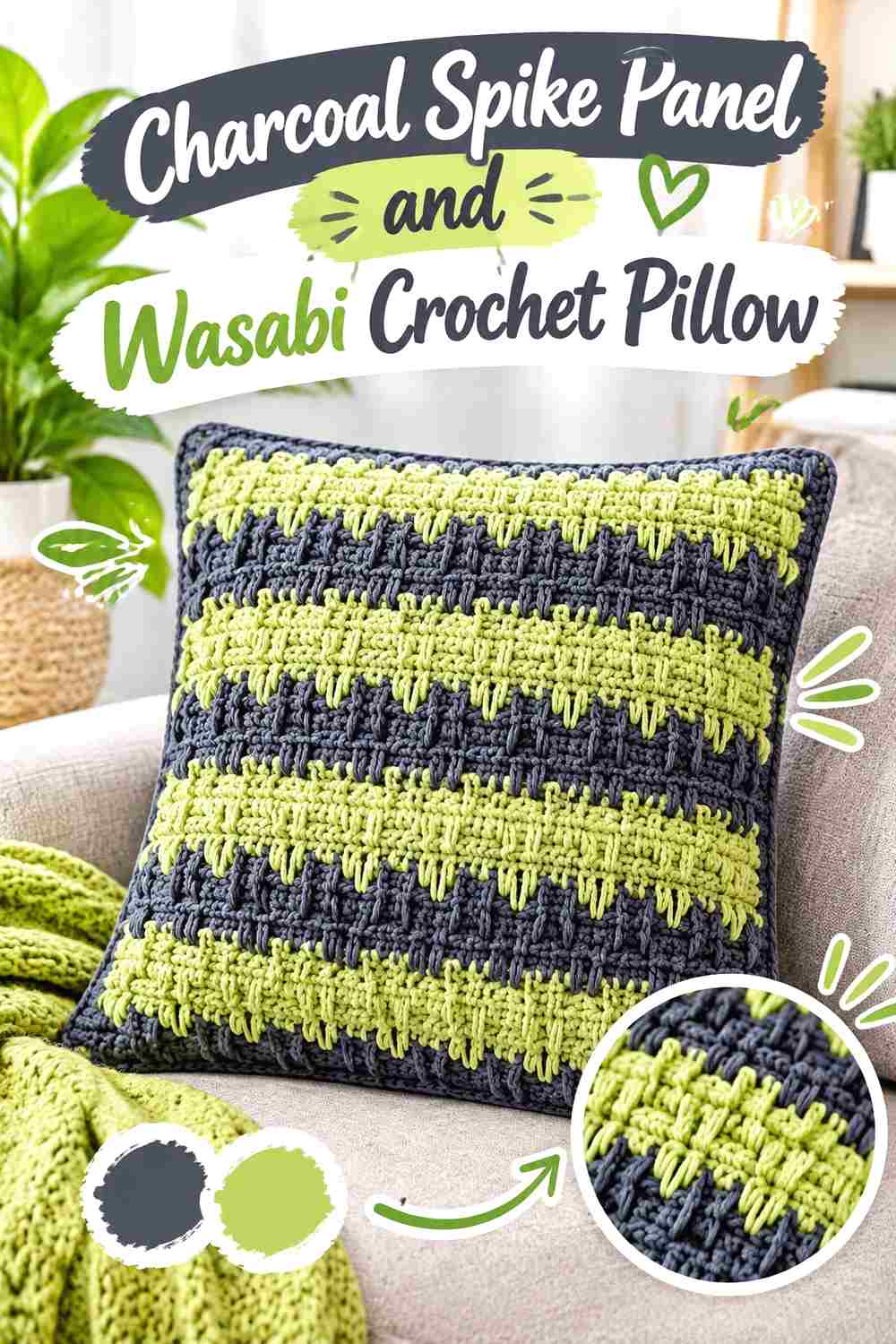
A wasabi pillow face can use charcoal spike stitch in one concentrated panel. This creates a darker vertical feature without breaking the entire cushion into alternating green and gray rows.
Charcoal Gives the Wasabi Crochet Pillow a Defined Spike Panel
Keep the charcoal spikes together in a recognizable area rather than scattering isolated dark stitches across the whole face.
A concentrated panel gives the elongated texture enough repetition to become a genuine design feature.
Wasabi Creates Space Around Charcoal Crochet Spikes
Use wasabi across the surrounding pillow surface so the dark panel has clear boundaries.
If the wasabi is relatively deep, compare it with the charcoal first. Small dark spikes need enough value separation to remain recognizable.
Charcoal Can Frame the Wasabi Crochet Pillow Edge
A charcoal edge repeats the spike-panel color and gives the pillow a dark outer frame. A wasabi edge leaves charcoal concentrated in the center feature.
Creator Credit: The Crochet Crowd
2. Wasabi Spike Rows And Charcoal Crochet Crossbody Bag
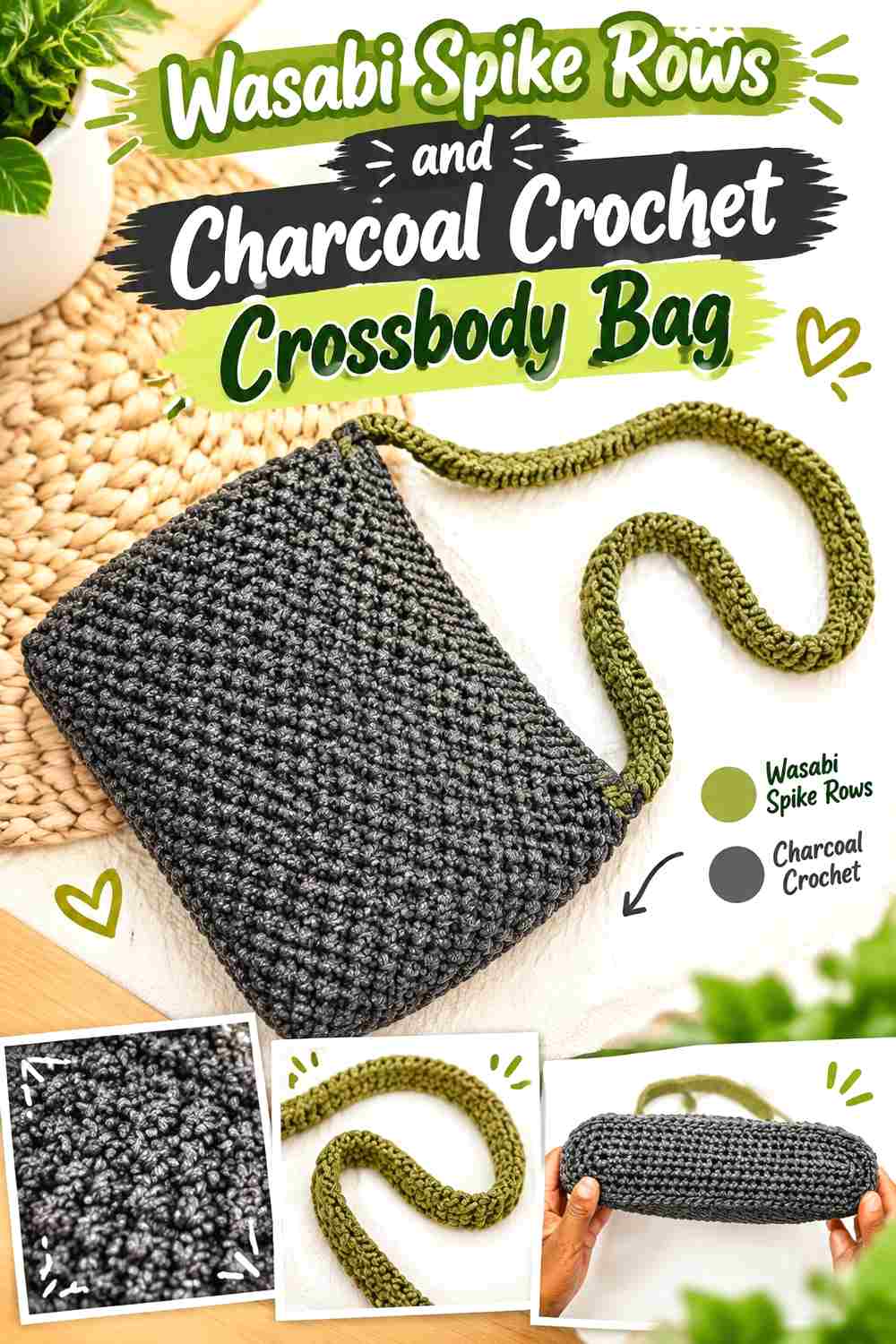
A charcoal crossbody bag can place wasabi spike rows across its main face. Keeping the base and strap charcoal allows the brighter color to remain associated with the elongated texture.
Wasabi Gives the Charcoal Crochet Bag a Clear Spike Pattern
Use wasabi where the spikes extend into the charcoal row below. This creates a more distinctive transition than placing an ordinary green stripe across the bag.
Repeat the treatment consistently if several spike bands appear on the same face.
Charcoal Can Ground the Wasabi Crochet Crossbody Bag
Keeping the lower area charcoal provides a dark visual base and prevents wasabi from spreading into every structural part of the project.
This also keeps attention on the spike-stitch surface rather than the bag hardware or strap area.
Charcoal Straps Keep Wasabi Focused on the Crochet Spikes
A charcoal strap continues the main background color upward. A wasabi strap would substantially increase the green share and make the palette more evenly divided.
Creator Credit: MirrymasCrafts
3. Charcoal Spikes And Wasabi Crochet Baby Blanket
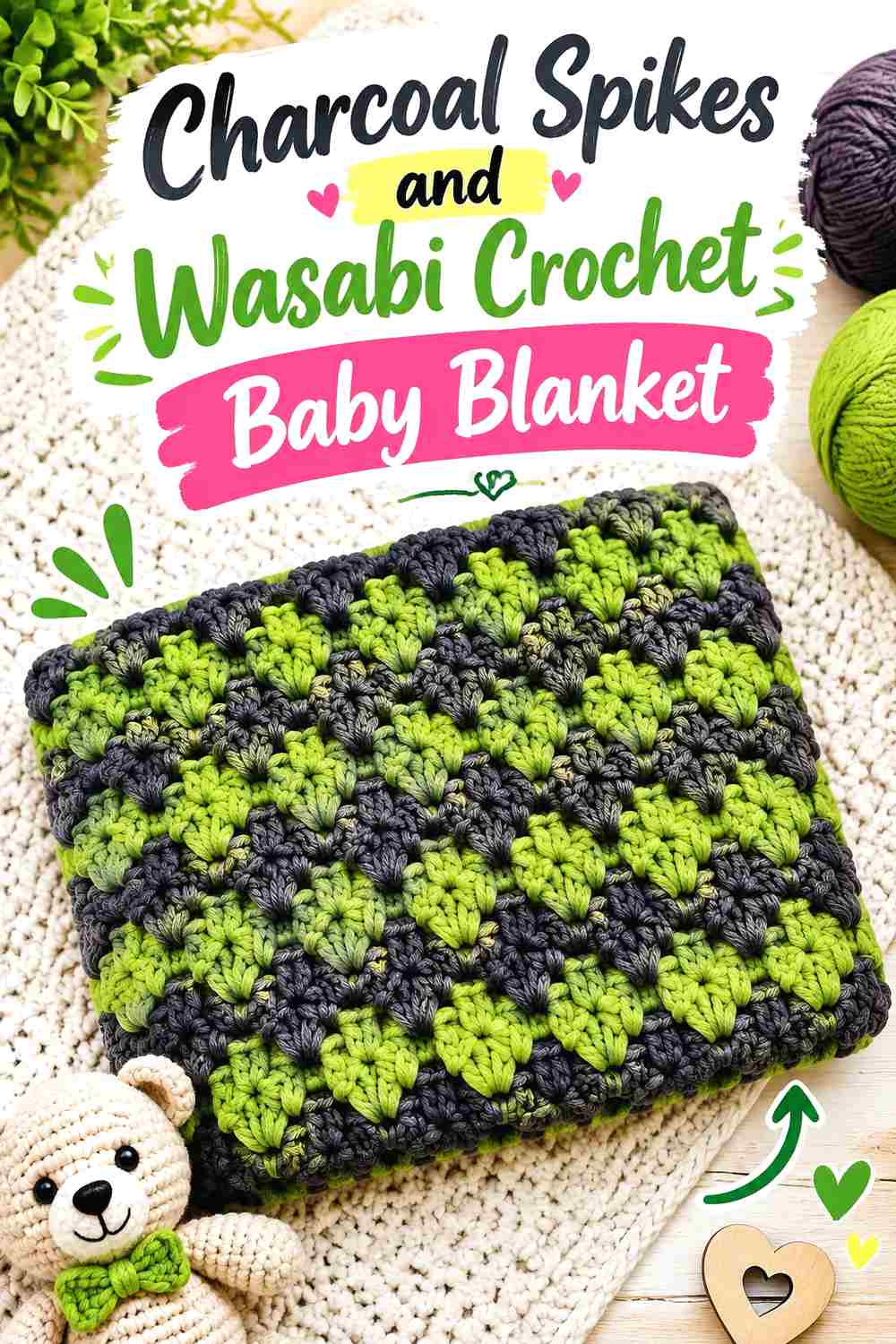
Reverse the usual contrast by making wasabi the broader field and using charcoal for selected spike sections. The darker elongated stitches can create strong vertical marks without requiring large charcoal blocks.
Charcoal Creates Dark Marks Across the Wasabi Crochet Blanket
Place charcoal on spike rows when you want the stitch depth to appear stronger rather than brighter.
Because charcoal carries substantial visual weight, relatively small amounts can influence a much larger wasabi field.
Wasabi Separates Repeated Charcoal Crochet Spikes
Allow enough green space between dark spike sections to keep them individually readable. Closely packed charcoal rows can quickly change the blanket from wasabi-led to dark-dominant.
Charcoal Can Define the Wasabi Crochet Baby Blanket Edge
A charcoal border repeats the darker spikes and contains the green field. Wasabi edging produces a softer continuation of the dominant color.
Creator Credit: Crochet Me Lovely
4. Wasabi Granny Spikes And Charcoal Crochet Scarf

Granny spike stitch gives a scarf broader clusters rather than isolated elongated single stitches. Wasabi can highlight those extended sections while charcoal provides a dark connecting field along the length.
Wasabi Makes Granny Spikes Visible on the Charcoal Crochet Scarf
Use wasabi on the rows where the elongated granny elements reach downward. This makes the color transition part of the stitch pattern instead of creating a simple horizontal stripe.
Charcoal Gives Wasabi Crochet Granny Spikes More Separation
Charcoal rows between green sections allow each wasabi transition to remain distinct. Increasing the dark spacing creates a more charcoal-dominant scarf.
Wasabi Ends Can Repeat the Charcoal Crochet Scarf Spikes
Wasabi ends give the brighter shade a second role and visually bookend the scarf. Charcoal ends keep green concentrated entirely on the spike pattern.
Creator Credit: Sunflower Cottage Crochet
5. Charcoal Spike Bands And Wasabi Crochet Cowl

Use wasabi for the broader cowl surface and charcoal on selected spike bands. A cowl’s repeating circumference allows the dark texture to recur without requiring many unrelated color changes.
Charcoal Gives the Wasabi Crochet Cowl Strong Spike Bands
Place charcoal where the elongated stitches reach into the green below. This creates a jagged transition that emphasizes the construction of the stitch.
Avoid adding separate charcoal stripes that do not relate to the spike pattern unless a more striped result is intentional.
Wasabi Creates Breathing Room Between Charcoal Crochet Spikes
Broader wasabi areas keep multiple charcoal bands separated. This is especially important on a cowl because closely spaced dark sections can merge visually when the accessory is worn.
Charcoal Edging Can Connect the Wasabi Crochet Cowl Bands
A charcoal edge repeats the darker spike color at the perimeter. Keeping the edge wasabi produces a greener overall result and leaves charcoal within the texture.
Creator Credit: Posh Pooch Designs
6. Wasabi Spike Texture And Charcoal Crochet Basket

A charcoal basket body provides a strong backdrop for wasabi spikes wrapping around the sides. Concentrating the green on the elongated texture keeps the basket visually organized.
Wasabi Can Circle the Charcoal Crochet Basket in Spike Rows
Repeat wasabi spikes around the body so the bright color forms a continuous textured band rather than several disconnected marks.
The spike effect becomes clearer when the green visibly reaches into a charcoal section below.
Charcoal Can Keep the Wasabi Crochet Basket Base Visually Grounded
Continue charcoal through the base and lower body when you want wasabi to remain a decorative feature rather than a co-dominant color.
This creates a clear division between the main structure and the spike accent.
Wasabi or Charcoal Can Finish the Crochet Basket Rim
A wasabi rim connects the top edge with the brighter spike bands. A charcoal rim returns attention to the dominant dark body.
Choose after judging how much green already appears around the basket.
Creator Credit: Simply Made by Erin Crochet
7. Charcoal Spikes And Wasabi Crochet Potholder
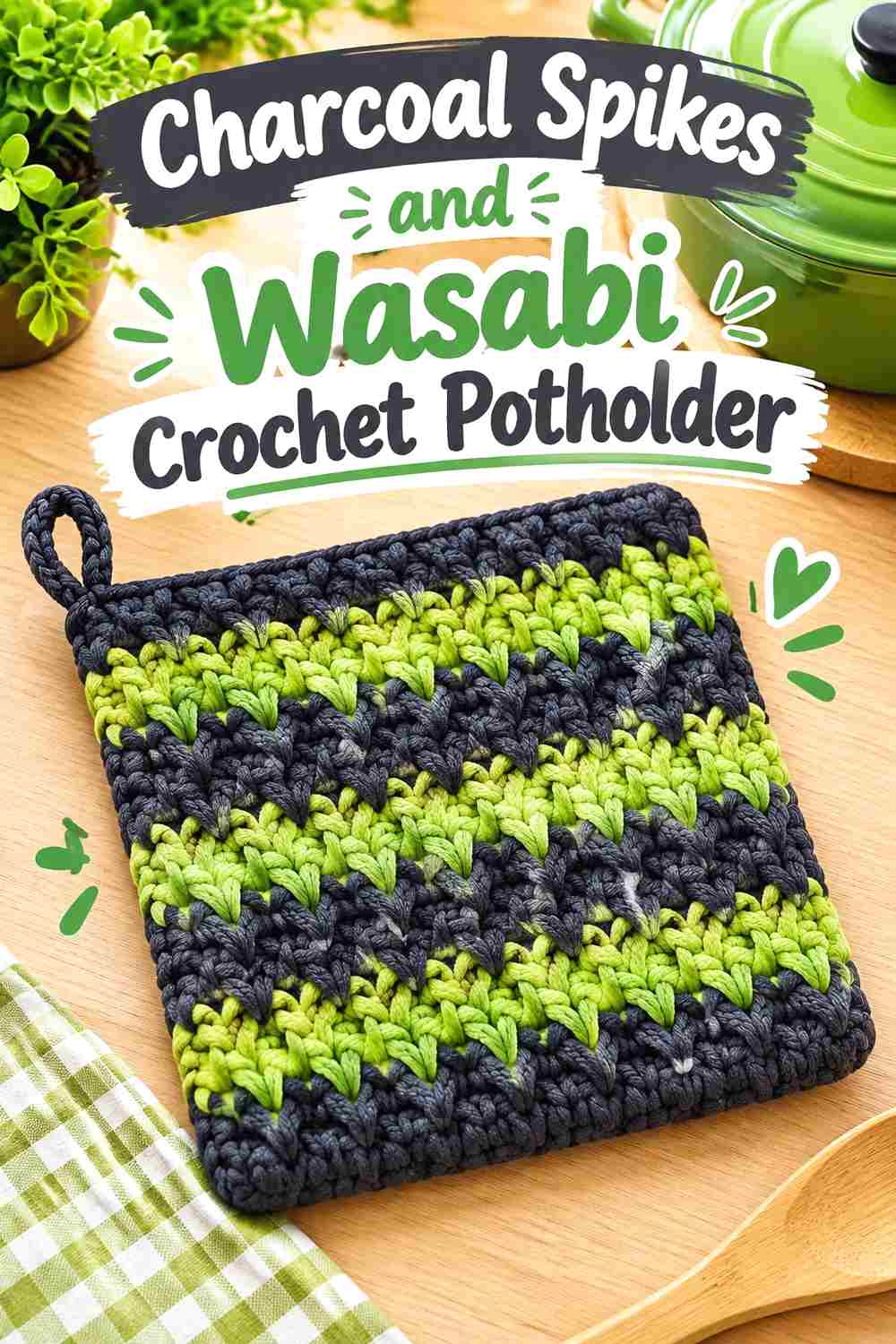
A small potholder provides enough room for charcoal spikes to create a repeated dark pattern across a wasabi field. Because the surface is compact, avoid adding several unrelated accent treatments.
Charcoal Makes the Wasabi Crochet Potholder Spikes Easy to Track
Keep charcoal directly associated with the elongated stitches. A consistent spike arrangement creates a clearer pattern than placing isolated charcoal stitches randomly across the surface.
Wasabi Can Remain the Main Crochet Potholder Field
Allow green to occupy the larger surrounding areas if you want the finished project to remain wasabi-dominant.
Since charcoal is considerably darker, it does not need equal coverage to remain noticeable.
Charcoal Edging Can Repeat the Wasabi Crochet Potholder Spikes
A charcoal outer edge ties the perimeter back to the spike color. A wasabi edge keeps the dark details contained inside the surface pattern.
Creator Credit: This Pixie Creates
8. Wasabi Spike Rows And Charcoal Crochet Table Runner
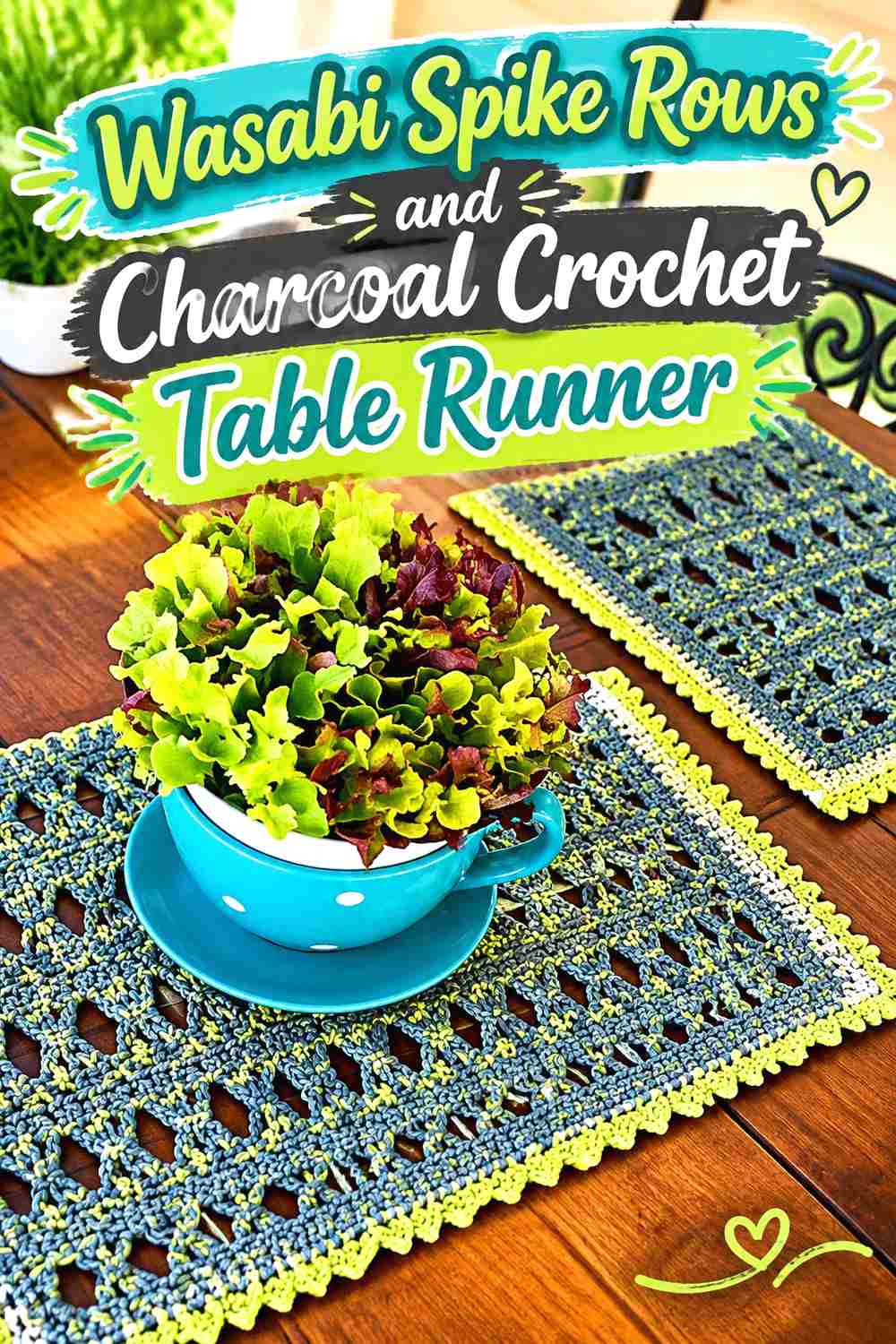
A long charcoal table runner gives wasabi spike rows room to repeat at deliberate intervals. Wider charcoal sections between the green features keep the elongated texture from turning into a dense stripe pattern.
Wasabi Can Mark Intervals Along the Charcoal Crochet Table Runner
Place wasabi spike sections at planned points along the runner so the bright color guides the eye from one end to the other.
The vertical spike effect creates more movement at each transition than a straight-edged stripe would.
Charcoal Connects Separate Wasabi Crochet Spike Sections
Use charcoal as the continuous field between brighter areas. This keeps several wasabi spike bands connected within one overall color direction.
Wasabi Ends Can Balance the Charcoal Crochet Table Runner
Wasabi end sections can repeat the spike color at both ends. Charcoal ends preserve a darker, more restrained finish.
Creator Credit: Posh Pooch Designs
9. Charcoal Spike Border And Wasabi Crochet Throw
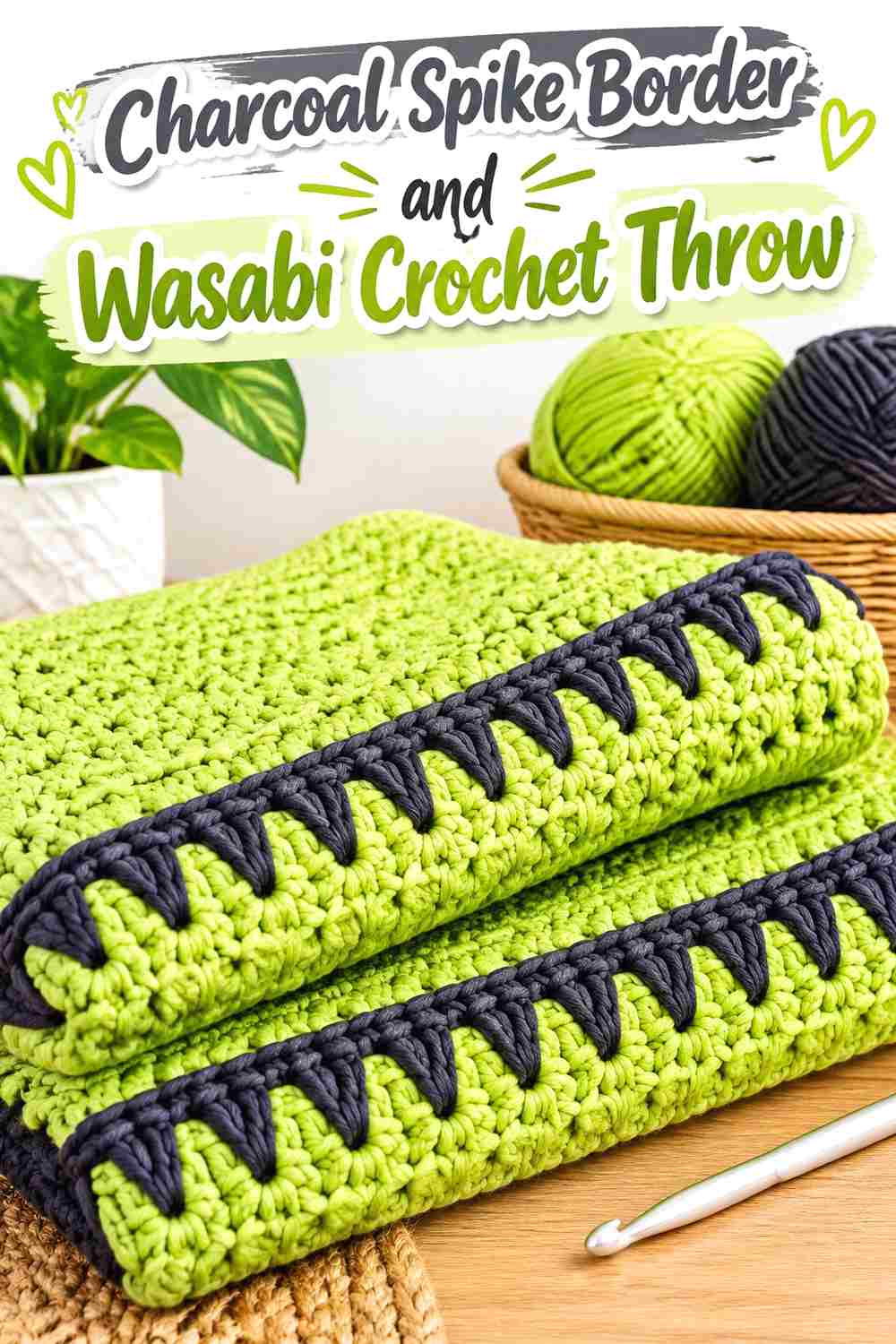
Instead of putting contrasting spikes throughout the entire throw, keep the main surface wasabi and concentrate charcoal spike stitch at the perimeter. This makes the border itself the main two-color feature.
Charcoal Turns the Wasabi Crochet Throw Border Into a Feature
Use charcoal where elongated border stitches reach into the lighter field. This creates an interlocking transition rather than a simple dark line around the edge.
Wasabi Keeps the Charcoal Crochet Spike Border Distinct
An uninterrupted wasabi center gives the darker border a clear starting point. If charcoal is also scattered throughout the main field, the border may lose some of its visual independence.
Charcoal Should Stay Proportional to the Wasabi Crochet Throw
A very broad dark border can visually compress the green center. Decide whether charcoal is meant to frame the throw or become nearly co-dominant before expanding the edging.
Creator Credit: Hectanooga1
10. Wasabi And Charcoal Crochet Spike Stitch Dishcloth
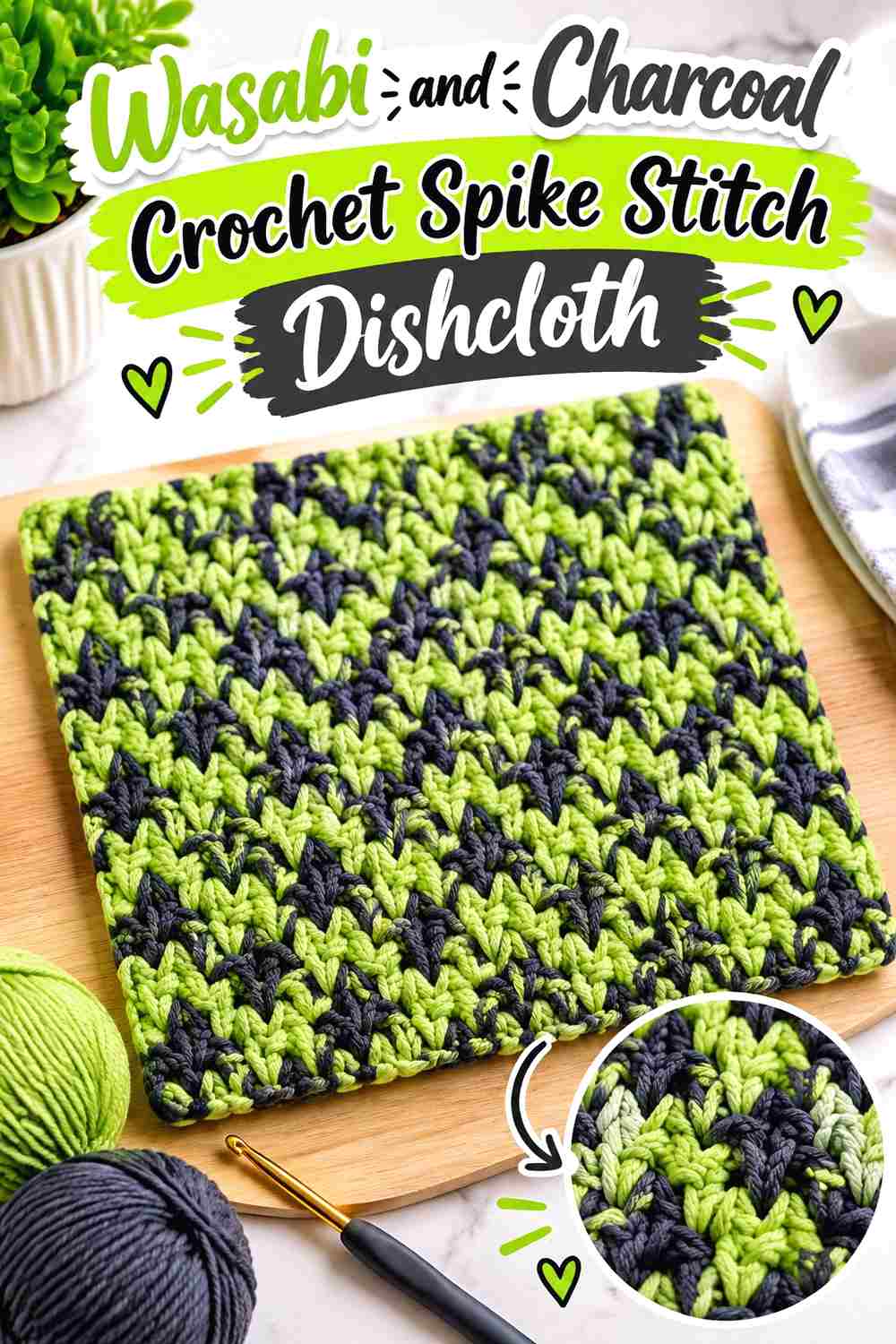
A dishcloth is a useful small format for experimenting with alternating spike colors. Use charcoal as the connecting field and wasabi on selected elongated stitches, or reverse the arrangement to compare the effect.
Wasabi Can Highlight Individual Charcoal Crochet Spike Rows
Wasabi spikes create bright vertical interruptions against charcoal. Keeping the green changes connected to spike rows prevents the small surface from becoming a collection of unrelated stripes.
Charcoal Gives Wasabi Crochet Spikes Strong Value Contrast
A dark background can make even narrow green spike details visible. If your charcoal is closer to medium gray, check whether the chosen wasabi still separates clearly.
Wasabi or Charcoal Edging Changes the Crochet Dishcloth Balance
Wasabi edging increases the bright color at the perimeter. Charcoal produces a darker frame and keeps green focused on the internal spikes.
Creator Credit: Heather’s Crochet Designs
11. Charcoal Spike Panel And Wasabi Crochet Backpack
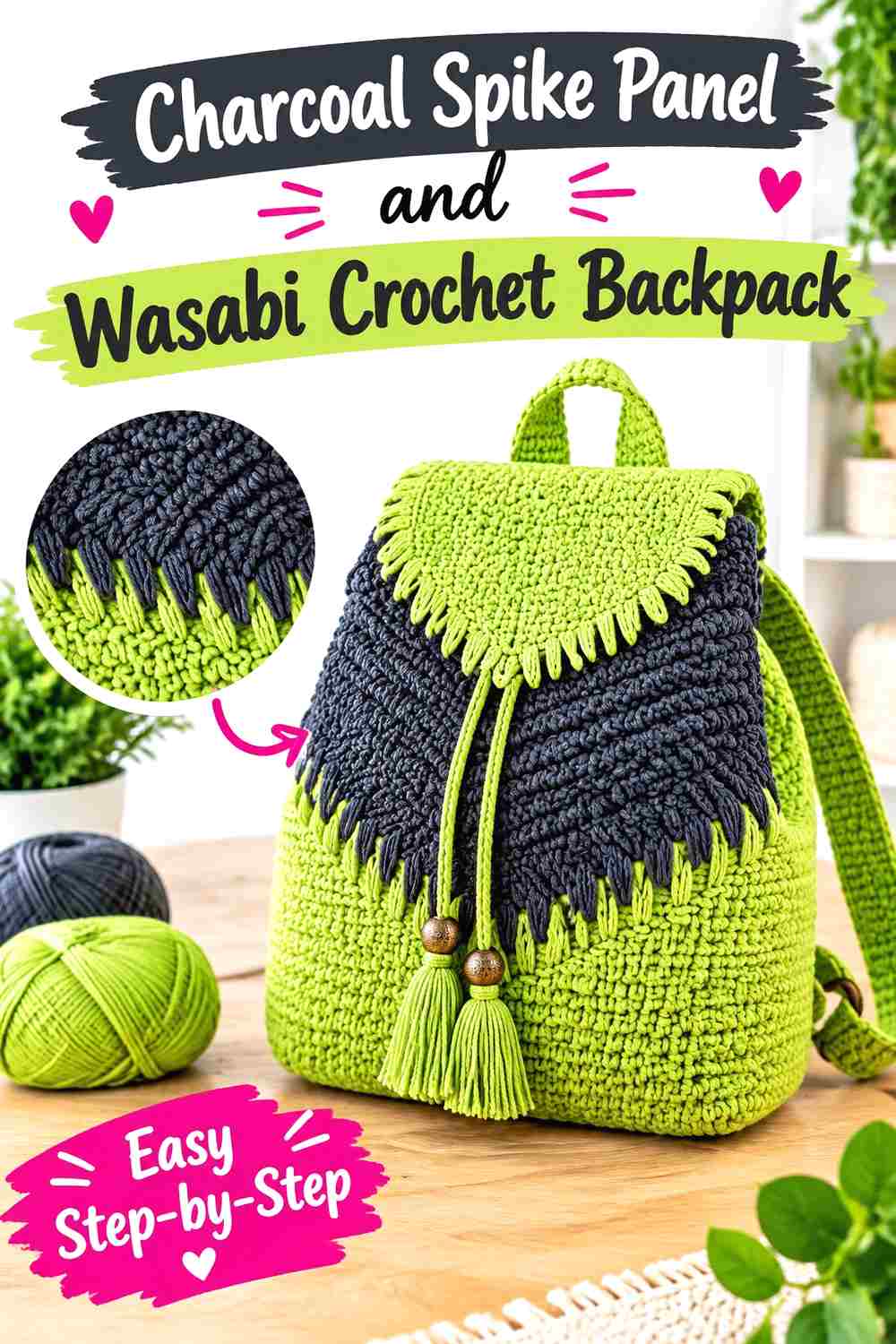
Make wasabi the larger backpack color and concentrate charcoal spike stitch on a front panel. This gives the dark shade a clear decorative purpose while leaving other structural areas visually connected.
Charcoal Can Define the Wasabi Crochet Backpack Front
A concentrated charcoal spike panel creates a stronger focal area than scattering dark stitches across the front, sides, and straps.
Let the elongated stitches create the transition between the dark panel and surrounding green.
Wasabi Frames the Charcoal Crochet Backpack Spikes
Use wasabi around the dark feature to give it a clear boundary. This is particularly useful when the spike panel contains several elongated stitch depths or a more complex arrangement.
Charcoal Details Can Repeat the Wasabi Crochet Backpack Panel
Small charcoal finishing details can connect visually with the front panel. Avoid making every strap and edge charcoal if you want wasabi to remain dominant.
Creator Credit: A Crocheted Simplicity
12. Wasabi Spike Motifs And Charcoal Crochet Granny Squares
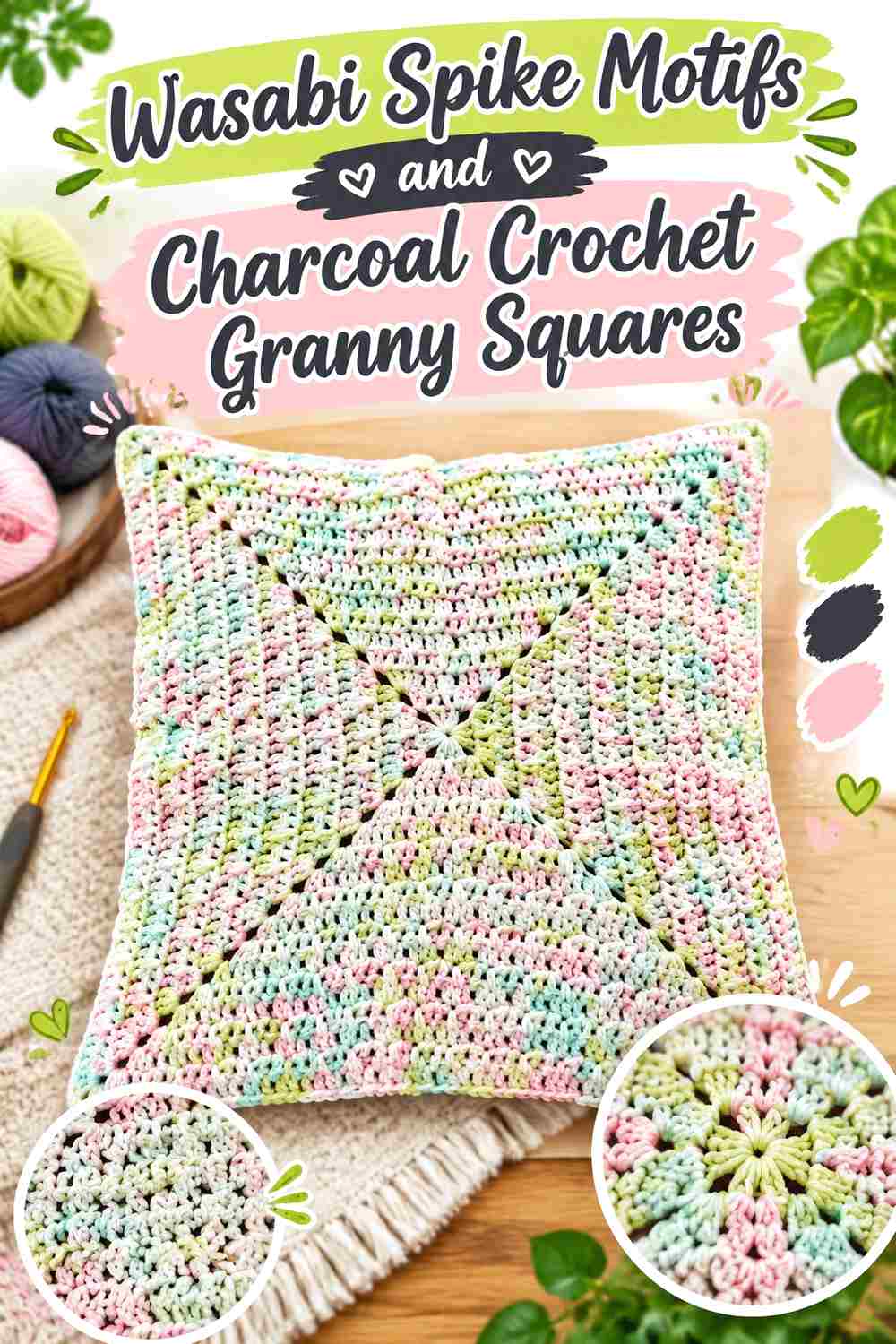
A spike-stitch granny square gives you a compact motif where wasabi can reach into surrounding charcoal rounds. When several squares are joined, those bright spike details can create repetition across the larger project.
Wasabi Can Give Charcoal Crochet Granny Squares Bright Spike Centers
Place wasabi on a central or selected spike section so each motif contains a recognizable green feature.
Repeating the same placement creates a regular pattern once several squares are arranged together.
Charcoal Frames Wasabi Crochet Spike Motifs
Use charcoal farther from the wasabi feature to separate neighboring motifs. The dark framework prevents bright spike sections from visually merging when squares sit beside one another.
Wasabi Joining Changes the Charcoal Crochet Granny Square Balance
A wasabi join would connect the green features across the complete layout. Charcoal joining keeps each green motif more isolated and preserves a darker framework.
Creator Credit: CrochetingSavvy
13. Charcoal Spike Texture And Wasabi Crochet Wrap
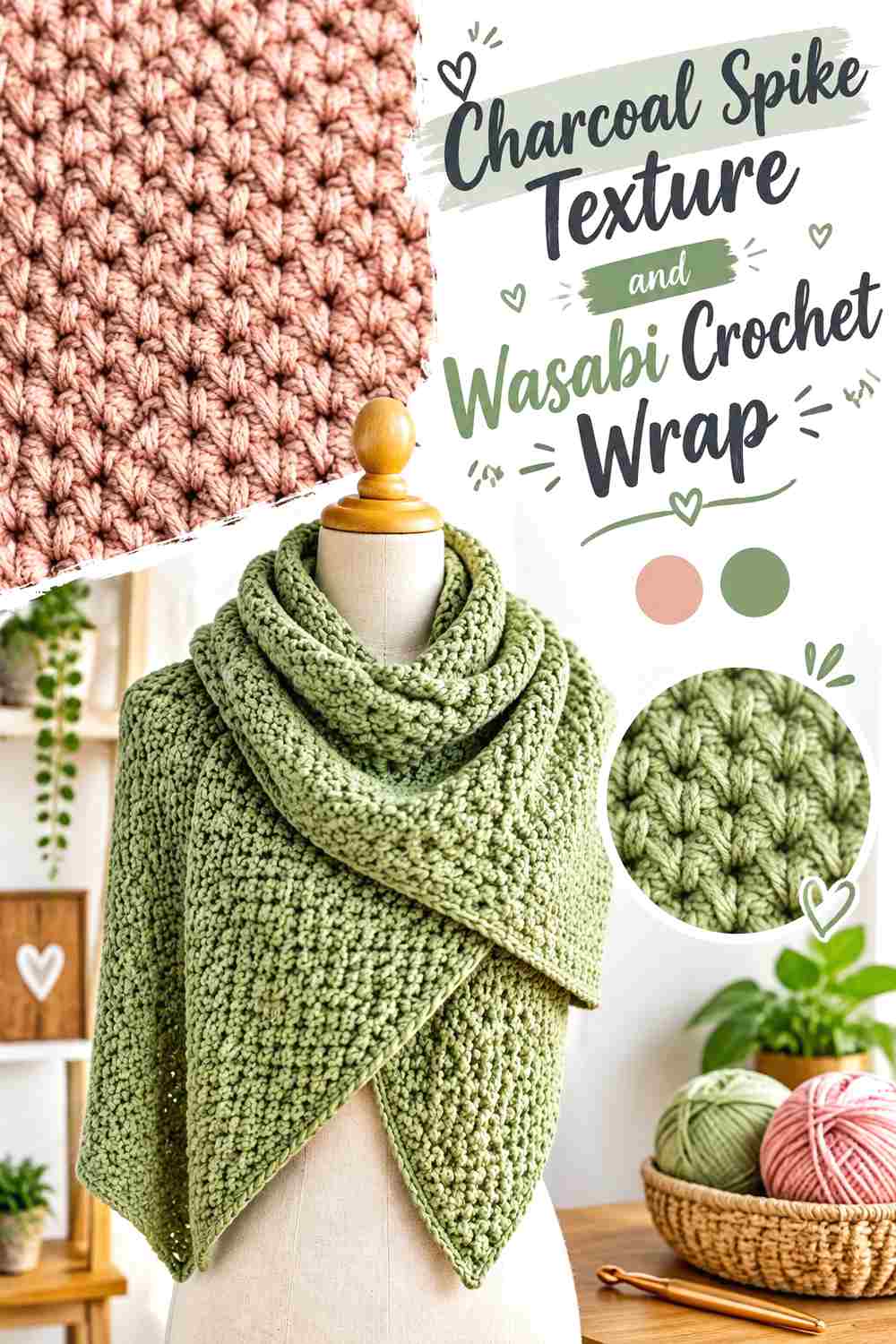
A broad wasabi wrap provides room for repeated charcoal spike sections without requiring constant color alternation. Use the darker stitches as measured interruptions across the larger green field.
Charcoal Spikes Give the Wasabi Crochet Wrap Darker Movement
Place charcoal on elongated stitch sections so the dark color visibly extends into wasabi rows. This creates more vertical interaction than an ordinary charcoal stripe.
Wasabi Connects Repeated Charcoal Crochet Spike Sections
Allow broad green areas to run between dark features. Wasabi then acts as the continuous field that connects the entire wrap.
Charcoal Ends Can Anchor the Wasabi Crochet Wrap
Charcoal end sections give the darker spike color a larger repeat at each side. Keeping the ends wasabi creates a lighter finish and restricts charcoal to the elongated texture.
Creator Credit: Wool n Gather
14. Wasabi Spike Bands And Charcoal Crochet Cushion

For the final idea, use charcoal as the main cushion color and introduce wasabi through several spike-stitch bands. The pillow’s broad face makes it easy to see how the elongated green stitches break into the darker rows below.
Wasabi Spike Bands Can Break Up the Charcoal Crochet Cushion
Use wasabi in substantial textured bands rather than numerous tiny green stripes. This gives the spike shape enough space to become visible across the cushion face.
Charcoal Separates Wasabi Crochet Spike Texture
Larger charcoal sections between the green bands keep each feature distinct. This also preserves the cushion’s darker overall identity.
Wasabi Edging Can Connect the Charcoal Crochet Cushion Bands
A wasabi edge repeats the bright spike color at the perimeter. A charcoal edge keeps the green contained within the face and produces a stronger dark frame.
Creator Credit: Happy Hearts Yarn
Comparing Wasabi and Charcoal Crochet Spike Stitch Placements
For the strongest light-on-dark spike effect, use wasabi directly on elongated stitches surrounded by charcoal. The blanket, crossbody bag, scarf, basket, table runner, dishcloth, granny-square, and cushion directions all make use of that relationship.
For a darker-on-light effect, reverse the colors. The baby blanket, cowl, potholder, backpack, and wrap demonstrate ways charcoal spikes can interrupt a wasabi field without requiring equal amounts of both shades.
The throw offers a more restrained alternative by moving the contrasting spike effect to the border. This is useful when you like the two-color interaction but want the main field to remain visually simple.
Conclusion
Wasabi and charcoal are especially effective for crochet spike stitch when the color transition emphasizes the elongated construction of the stitch. Wasabi reaching into charcoal creates bright vertical points, while charcoal reaching into wasabi creates deeper, heavier marks.
You do not need equal amounts of both colors. On a blanket or wrap, repeated spike bands can connect distant sections. On a bag, pillow, or backpack, one concentrated spike panel may provide enough contrast. For a quieter project, keep the main fabric in one shade and use the spike effect only around the border.
Before starting a large project, work a small sample with the actual yarns and check both the color contrast and the visibility of the elongated stitches. The credited tutorials provide the underlying spike-stitch project or construction reference; the wasabi-and-charcoal arrangements here are independent color directions.
Frequently Asked Questions
Does wasabi show clearly against charcoal in crochet spike stitch?
It can create strong contrast when the wasabi is noticeably lighter than the charcoal. Because spike stitches extend into previous rows, that value difference can make the elongated portion especially visible.
Should wasabi or charcoal dominate a crochet spike stitch project?
Either can dominate. Charcoal creates a dark field where wasabi spikes become bright accents. Wasabi creates a fresher overall surface where charcoal spikes add deeper vertical definition.
Should I change between wasabi and charcoal on every crochet spike row?
Not necessarily. Frequent changes create a busy, highly patterned surface. Wider sections of the dominant color with occasional contrasting spike rows can make the elongated stitch shape easier to appreciate.
How can I make wasabi and charcoal spike stitch look less like ordinary stripes?
Place the color transition where the spike stitches extend into a previous row. That lets one color visibly reach into the other, creating an interlocking or pointed boundary rather than a straight horizontal stripe.
Can I use wasabi only for individual crochet spike stitches?
Yes. Concentrating wasabi on selected elongated stitches can produce small bright vertical accents across a charcoal field. Make sure the two yarns have enough contrast for those isolated details to remain visible.
What can replace wasabi in a charcoal crochet spike palette?
Choose another yellow-green or similarly fresh medium-to-light shade if you want to preserve the original color relationship. More important than matching wasabi exactly is maintaining enough contrast with charcoal for the spikes to remain distinct.
What can replace charcoal while keeping the crochet spike effect dark?
A deep gray or another very dark neutral can fill the same visual role. Compare it directly with the wasabi yarn to make sure the replacement still provides the intended light-dark separation.
Should the border of a wasabi and charcoal crochet project use the spike stitch?
It can, particularly when you want the color interaction concentrated at the perimeter. A spike-stitch border lets one shade extend visually into the other without adding contrasting spike rows throughout the entire project.