13 Crochet Acorn Basket Ideas
Crochet acorn baskets can range from small lidded containers that closely copy an acorn silhouette to larger storage baskets that use autumn colors, textured “caps,” handles, or acorn embellishments. That difference matters because a basket meant to hold tiny seasonal decorations needs different structure and access than one designed for yarn, gifts, or shelf storage.
The first three ideas below are supported by tutorials that specifically make acorn-shaped baskets or boxes. The remaining projects use strong basket tutorials as construction references and show ways to adapt those forms into an acorn theme without suggesting that the original creators made acorn versions. This gives you more useful choices in shape, size, portability, structure, and display style while keeping the original tutorial credit clear.
Quick List
- Crochet Glass-Jar Acorn Basket
- Crochet Chunky Cord Acorn Storage Basket
- Crochet Soft Lidded Acorn Box Basket
- Crochet Acorn Trinket Basket with Removable Cap
- Crochet Handled Acorn Gathering Basket
- Crochet Nesting Acorn Basket Set
- Crochet Hanging Acorn Wall Basket
- Crochet Wooden-Base Acorn Display Basket
- Crochet Small Acorn Vanity Basket
- Crochet Square Acorn Shelf Basket
- Crochet Striped Acorn Yarn Basket
- Crochet Two-Tone Acorn Gift Basket Set
- Crochet Upcycled T-Shirt Yarn Acorn Bowl Basket
Decide How Strongly the Basket Needs to Look Like an Acorn
An acorn basket does not need the same silhouette at every scale. A small container can use a rounded lower body, fitted lid, and stem so the whole object immediately reads as an acorn. That becomes harder with a large household basket because extreme tapering may reduce usable storage space or make the opening inconvenient.
For larger baskets, an acorn theme can come from a contrasting textured upper section, a removable cap-style cover, woodland colors, or a restrained acorn appliqué rather than forcing the entire basket into a narrow nut shape. Decide first whether recognizable seasonal decoration or everyday storage is the priority. The more functional the basket needs to be, the more useful it is to preserve a generous opening and stable base.
Match Basket Structure to What You Want to Store
Soft baskets and rigid baskets behave very differently. Thick cord, doubled yarn, T-shirt yarn, wooden bases, or an internal container can help a basket maintain a defined shape. Softer yarn can produce a lighter, more collapsible container that is easier to store between seasons but may not display a precise acorn silhouette as clearly.
Also consider the opening. A fitted cap works well when you want concealed storage, while an open handled basket is more practical for yarn or frequently used supplies. Hanging baskets save horizontal space but should stay relatively light unless the tutorial and hanging setup are designed for more demanding use. Never assume a decorative crochet basket has a particular weight capacity; consider the fiber, construction, mounting method, and intended contents separately.
Plan the Acorn Details After the Basket Shape Is Chosen
It is easier to adapt a proven basket form when the decorative acorn features are treated as a second design layer. First establish whether your chosen tutorial creates a round, square, oval, hanging, or handled basket. Then decide how much of that structure should change visually.
A round basket may suit a cap-like lid, while a square basket can use an acorn-colored body with a textured contrasting band rather than pretending to have a natural acorn silhouette. For a handled basket, keep embellishments away from areas that bend or take repeated handling. If adding a separate motif, compare its scale with the finished basket before attaching it. A tiny appliqué can disappear on a large basket, while an oversized dimensional decoration may interfere with the opening.
1. Crochet Glass Jar Acorn Basket

This compact basket uses a recycled glass jar as an internal form, making it especially interesting when you want a small acorn container with a clearly defined silhouette. The tutorial separates the basket body from the acorn lid and stem, so the finished object reads as seasonal decor rather than simply a brown storage cup. Because a rigid jar sits inside the crochet covering, this version is better suited to small-item storage than a completely soft basket. The creator specifically presents it as an acorn basket made around a recycled glass jar.
The Jar Gives the Lower Half a Fixed Shape
A glass insert prevents the sides from collapsing inward and gives the crochet fabric a consistent form. That can be useful for shelf or tabletop storage where appearance matters. The trade-off is that the insert also determines much of the usable interior space, so replacing it with another jar is not simply a color change. Check the actual container against the tutorial before assuming a different diameter or height will fit the same crocheted covering.
A Separate Cap Makes the Acorn Silhouette Clearer
The contrasting lid is doing substantial visual work in this design. If you change the body color, keep enough contrast between the nut and cap for the acorn shape to remain readable. A fitted lid is also more useful for small loose items than a decorative topper that merely rests on the opening. Follow the creator’s tutorial when determining how the original lid and body relate rather than guessing at the construction.
Original Tutorial and Creator Credit
Creator: Kangumi Crochet
2. Crochet Chunky Cord Acorn Storage Basket

For a more substantial acorn container, this tutorial uses braided cord to create an acorn storage basket with a separate lid and stem. The finished form is larger and visually heavier than the jar-based option, making the acorn shape itself part of the room decor rather than a small accent. The creator also distinguishes the basket body and lid during the tutorial, which makes this a strong reference when your priority is a genuinely acorn-shaped storage piece rather than a conventional basket decorated with motifs.
Braided Cord Changes the Basket’s Presence
Cord creates a more architectural look than soft, fine yarn because the individual stitches and edges appear substantial. That is useful when you want the basket to stand out on a shelf, console, or seasonal display. If substituting another material, do not assume it will produce the same stiffness. Compare the thickness, flexibility, and surface texture first, since a softer substitute may change both the silhouette and how securely the lid sits.
The Lid Should Work With the Opening, Not Fight It
A pronounced acorn cap can look attractive, but storage still needs to be accessible. Before changing the height or proportions, consider whether you want the basket opened frequently or mainly displayed. A tall decorative top may be perfectly reasonable for occasional seasonal storage but less convenient beside a chair where you reach inside repeatedly.
Scale Matters More With a Statement Basket
The larger an acorn form becomes, the more obvious uneven shaping can look. Check the basket on a flat surface as the form develops and notice whether the walls appear symmetrical rather than relying only on measurements. If a modified material causes the sides to flare or soften, correcting the structure early is usually preferable to trying to disguise the problem with the cap.
Original Tutorial and Creator Credit
Creator: TLC Crochet Designs
3. Crochet Soft Lidded Acorn Box Basket

This acorn box offers another direct acorn-basket route but with a softer yarn-based appearance. The tutorial shows a separate body and lid, making the finished container suitable for decorative storage while retaining the rounded nut-and-cap relationship that defines an acorn. Compared with a cord basket, this approach can visually feel softer and more textile-focused. The creator identifies the finished item as both an acorn-shaped basket and box, so it is a particularly relevant source for readers who want a lidded container rather than an open storage basket.
Softer Fabric Can Change How Crisp the Form Looks
A yarn basket may not behave like cord or a jar-supported cover. If you substitute yarn, pay attention to whether the finished fabric holds the rounded body cleanly. The most attractive fiber is not automatically the best structural choice. When an acorn silhouette is important, stitch definition and shape retention often matter as much as color.
Treat the Lid as Part of the Overall Proportion
A cap that is visually too small can make the basket look like a generic bowl with a topper, while an oversized cap can overwhelm the usable container. Rather than adding decorative bulk after the basket is complete, judge the body and lid together as one object. Use the original tutorial for its actual construction details before attempting any proportion changes.
4. Crochet Acorn Trinket Basket with Removable Cap

A traditional lidded crochet basket can become a useful starting point for an acorn-inspired trinket container when you want functional storage without copying a strongly tapered nut shape. GS Crochet’s source tutorial teaches a basket with a separate lid; it is not presented as an acorn project. For an acorn adaptation, keep the underlying basket construction intact and let the seasonal identity come from the relationship between a warm-toned lower basket and a darker lid, with any added stem treated as an independent decorative choice.
A Conventional Lid Gives You More Interior Space
A straighter-sided basket often provides more usable space than an aggressively tapered novelty shape. That makes this direction sensible for stitch markers, wrapped treats, hair accessories, or other lightweight small objects. If storage efficiency matters more than realism, keep most of the original basket profile and reserve the acorn effect for the lid and color blocking.
The Cap Does Not Need Extreme Texture
A heavily raised cap may look woodland-inspired, but added texture can also make a lid bulkier and harder to handle. Decide whether you want a sculptural display piece or a container that opens easily. A simpler dark lid can still suggest an acorn when paired with the right lower-body proportions.
Keep Adaptations Separate From the Source Construction
Because the original tutorial teaches a general lidded basket, use it for the basket itself rather than assuming it covers acorn shaping or decoration. Add your theme only after understanding the creator’s finished form. This keeps the adaptation flexible without turning the source into something it does not claim to be.
Original Tutorial and Creator Credit
Creator: GS Crochet
5. Crochet Handled Acorn Gathering Basket

A handled basket creates a very different acorn project because it is designed to be carried rather than opened like a lidded container. Mad4Macrame’s tutorial shows a sturdy crochet basket with handles and a wooden base; the source itself is not an acorn design. For an autumn adaptation, the acorn theme can come from a nut-brown body, darker upper band, or removable surface decoration while retaining the practical handle placement shown in the original project.
Handles Should Remain the Functional Priority
Avoid placing dimensional acorn decorations where hands repeatedly grip the basket. Even a small embellishment can become uncomfortable or distort with frequent handling. If you want a statement motif, the front center of the basket usually gives it more visual space without competing directly with the handles.
The Wooden Base Creates a Different Kind of Structure
A pre-made base gives the bottom a fixed footprint rather than relying entirely on crocheted fabric. That can make the basket useful for display arrangements where a predictable base shape matters. It also means that changing the base is a construction decision, not simply a decorative adjustment, so confirm compatibility with the source tutorial before substituting one.
An Open Top Works Better for Frequent Access
This idea suits yarn, seasonal craft supplies, or a fall gift arrangement better than tiny objects that need to stay enclosed. If you want the appearance of an acorn cap, consider keeping that detail visually suggested around the upper wall instead of adding a cover that interferes with the handles.
Original Tutorial and Creator Credit
Creator: Mad4Macrame
6. Crochet Nesting Acorn Basket Set

One acorn basket can be decorative; a coordinated nesting group adds a storage system. The Crochet Crowd tutorial demonstrates multiple nesting baskets made with T-shirt-style yarn rather than acorn-shaped containers. To turn the concept into an acorn collection, use coordinated nut-and-cap color relationships across the set while keeping each basket’s practical nesting function. This approach is particularly useful if you want seasonal decor that takes up less storage space once autumn is over.
Nesting Depends on More Than Matching Colors
The baskets need compatible dimensions and wall behavior if you expect them to fit inside one another. Adding thick appliqués, oversized stems, or bulky exterior trims can interfere with that relationship. If compact off-season storage matters, keep the acorn details low-profile or removable.
Repeating the Theme at Several Scales Adds Cohesion
A set does not need identical decoration. The smallest basket might use the strongest acorn cues, while larger ones rely on cap-colored upper sections. This helps the collection feel coordinated without making every piece visually repetitive. Scale each decorative element to its own basket rather than making one motif size and applying it everywhere.
Thick Yarn Can Make a Small Set Visually Heavy
The source uses a substantial T-shirt-style yarn. A collection made from thick material can become visually dominant when all pieces are displayed together. If your room already contains many fall decorations, restrained color blocking may work better than adding dimensional acorns to every basket.
Original Tutorial and Creator Credit
Creator: The Crochet Crowd
7. Crochet Hanging Acorn Wall Basket

A hanging acorn basket uses vertical space instead of sitting on a table or shelf. Learning to Crochet by Anna Sakhno demonstrates a hanging crochet basket intended for small objects or decorative use; it is not an acorn-specific project. The acorn theme can be introduced through autumn color blocking or a flat acorn motif while keeping the hanging shape recognizable and functional. This is a useful direction for an entryway, craft corner, or seasonal display where surface space is limited.
Keep the Hanging Point Clear of Heavy Decoration
The upper section carries both visual and physical importance. A large decorative cap or cluster of motifs near the suspension point can make the design crowded and may interfere with how the basket hangs. Place stronger acorn detailing lower on the body if the top needs to remain flexible and unobstructed.
Wall Baskets Need a Different Storage Mindset
A hanging basket is generally more convenient for lightweight, frequently reached objects than for bulky household storage. The attachment point, wall hardware, yarn, and finished construction all affect what is appropriate to put inside. Do not infer a safe load from appearance alone.
The Profile Matters From the Side
A tabletop basket is normally viewed from above and around the room. A wall basket is often seen mostly from the front and side. Check whether an added acorn motif remains readable in that viewing position instead of placing detail where it disappears against the wall.
Original Tutorial and Creator Credit
Creator: Learning to Crochet by Anna Sakhno
8. Crochet Wooden Base Acorn Display Basket

A wooden-base basket creates a clean, firm foundation for a more modern acorn-inspired storage piece. Crochet with Tuula Maaria demonstrates a basket using chunky yarn and a ready-made wooden base; the tutorial is for a general basket rather than an acorn shape. This makes it a strong choice when you want autumn color and acorn detailing without sacrificing a regular, stable footprint. The wooden element can also complement a woodland palette without requiring the whole basket to imitate a literal nut.
The Base Fixes the Footprint Before Crocheting Begins
Unlike an all-yarn base that can potentially change with tension or fiber choice, a wooden base establishes the starting dimensions. That is useful when the basket must fit a particular display area. Measure the intended shelf or surface before choosing a base rather than adapting the basket after the walls are already made.
Let Natural Materials Carry Part of the Theme
An acorn basket does not require multiple decorative motifs when the combination of wood, warm brown yarn, and a contrasting textured upper section already creates a woodland character. A restrained approach can make the basket easier to use throughout autumn rather than limiting it to one holiday display.
Check Yarn Compatibility With the Base
The holes and spacing in a commercial base are part of the construction system. Changing to a dramatically different yarn thickness may affect how comfortably the material attaches and how the first section of the wall behaves. Use the tutorial’s guidance as the starting point and verify substitutions rather than assuming any chunky yarn will behave identically.
Original Tutorial and Creator Credit
Creator: Crochet with Tuula Maaria
9. Crochet Small Acorn Vanity Basket

A smaller open basket can carry the acorn theme without needing a lid. L’angolo di Criss demonstrates a compact crochet storage basket as part of a bathroom-set concept rather than an acorn project. For a fall version, a rounded brown body with a darker textured rim can hint at an acorn while preserving an open top for easy access. This scale works particularly well when the visual goal is a small seasonal accent rather than a statement storage piece.
Small Baskets Benefit From Restraint
On a compact basket, several dimensional acorns, leaves, and textured borders can quickly overwhelm the useful opening. One clear color transition or a single small motif is often enough to establish the theme. Before attaching anything, place the decoration temporarily and check whether the basket still looks usable.
Open Storage Makes Contents Part of the Display
Because this design has no lid, anything inside contributes to the finished look. It can work for wrapped items, notions, or small accessories, but a visually busy collection of contents may compete with the acorn styling. If the basket is primarily decorative, consider what will actually be visible from normal viewing height.
Match the Detail Scale to the Container
A motif that looks modest on a yarn basket may dominate a small vanity basket. Compare the width of your planned decoration with the visible front panel rather than choosing embellishments independently. Flat details generally preserve more usable space than stuffed or heavily raised elements.
Original Tutorial and Creator Credit
Creator: L’angolo di Criss
10. Crochet Square Acorn Shelf Basket

Not every acorn basket needs to be round. Ophelia Talks Crochet demonstrates a square storage basket with a practical household-organizing shape. An acorn adaptation can preserve those straight sides while using a warm nut-colored lower section, darker upper edging, or a carefully positioned acorn appliqué. This is a sensible option when the basket needs to fit neatly against other boxes or along a shelf and storage efficiency matters more than a literal acorn silhouette.
Square Corners Favor Storage Efficiency
Straight-sided baskets can use shelf space differently from rounded containers. If the basket will live beside books, craft boxes, or other organizers, the square footprint may matter more than creating a novelty shape. Let the acorn concept come from surface design rather than reshaping corners that are central to the basket’s function.
Place a Motif Where the Basket Has a Clear Front
A square organizer may be viewed from one primary direction. Choose that face before attaching an acorn motif so the decoration does not end up against the wall or hidden by adjacent containers. If the basket is frequently rotated, a simpler color-blocked design may be more practical than one large directional motif.
Watch for Bowing Along Flat Walls
Flat sides make distortion more noticeable than it is on a rounded basket. If a substitute yarn produces soft walls, adding more surface decoration will not solve the structural issue. Evaluate the basic basket first and adjust your material choice if necessary before investing time in the acorn details.
Original Tutorial and Creator Credit
Creator: Ophelia Talks Crochet
11. Crochet Striped Acorn Yarn Basket

The Brecken Basket tutorial from The Turtle Trunk uses bold contrasting stripes and two side handles, giving this adaptation a different visual rhythm from the solid-brown acorn containers. Rather than hiding the striping, an acorn version could use related woodland shades so the basket still feels seasonal while retaining the graphic construction that makes the source project distinctive. Its larger handled format is better suited to visible household storage than a miniature trinket basket.
Stripes Can Suggest the Theme Without a Literal Cap
Use the darkest band strategically near the upper portion if you want a subtle reference to an acorn cap. The effect does not need to reproduce a natural acorn exactly. Keeping the stripes intentional also prevents the basket from turning into a generic brown container with unrelated embellishments added afterward.
Side Handles Change Where Decoration Belongs
The handle openings interrupt the upper wall, so a wide continuous decorative band may need more planning than it would on a handle-free basket. Before choosing motif placement, view the basket from the front and sides and identify areas that stay visually uninterrupted.
Larger Storage Needs a Stronger Visual Hierarchy
A large basket has enough surface area for several decorative ideas, but that does not mean all of them should be used. Pick one dominant acorn cue—color blocking, appliqué, or cap-like texture—and let the stripes and handles remain secondary. Too many competing details can make the functional shape harder to read.
Original Tutorial and Creator Credit
Creator: The Turtle Trunk
12. Crochet Two Tone Acorn Gift Basket Set

MJ’s Off The Hook Designs provides a two-toned nesting basket concept in multiple coordinated sizes. The original design is a general home-storage and gift-basket project, not an acorn basket. Its color-blocked construction makes it a natural adaptation candidate, however, because a warm lower shade and darker upper shade can suggest the relationship between an acorn nut and cap without adding bulky ornamentation.
Two-Tone Color Blocking Keeps the Theme Practical
Color can do most of the decorative work. That matters on gift baskets because bulky three-dimensional additions may snag on wrapping, tissue paper, or contents. A simple nut-and-cap palette allows the basket to feel autumnal while keeping the opening clear and the sides easy to handle.
Different Sizes Can Serve Different Gift Types
A coordinated set gives you more flexibility than enlarging one basket indiscriminately. Choose the size according to the contents rather than assuming a larger basket always creates a better presentation. Too much empty space can make a gift look unfinished, while an overfilled small basket can distort its walls.
Preserve the Nesting Feature When Adding Details
If you want the baskets to store inside one another later, test any tags, appliqués, or raised cap textures before permanently attaching them. Exterior bulk can prevent clean nesting. Removable seasonal accents are worth considering when compact storage is one of the reasons you chose this construction.
Original Tutorial and Creator Credit
Creator: MJ’s Off The Hook Designs
13. Crochet Upcycled T Shirt Yarn Acorn Bowl Basket
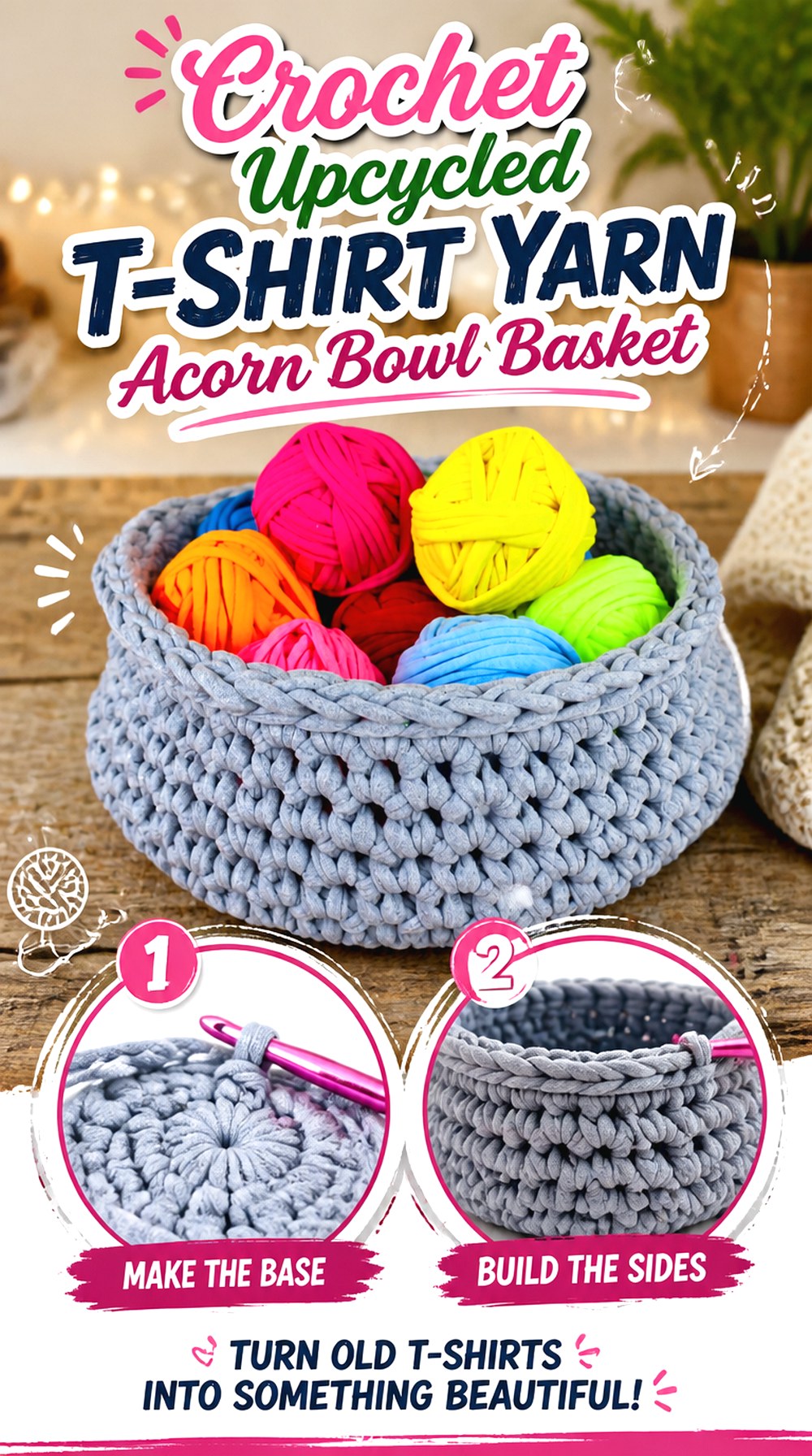
Naztazia’s tutorial combines making T-shirt yarn with crocheting it into a basket, bowl, container, or vase form. That makes this idea distinctly different from the polished cord and standard-yarn baskets above. An acorn-inspired version could use compatible brown T-shirt material or a contrasting upper section while keeping the open bowl shape. The result is better viewed as an acorn-themed storage bowl than a realistic lidded acorn, which is useful when you want the seasonal reference without sacrificing a wide opening.
Upcycled Material Creates Its Own Texture
Homemade T-shirt yarn can look different from commercial cord because the source fabric, strip consistency, stretch, and joins can vary. Those characteristics become especially visible in a small basket. If a crisp acorn silhouette is your priority, inspect the yarn before committing; if a casual handmade texture appeals more, those variations can become part of the finished look.
A Bowl Shape Keeps the Project Versatile
Without a fitted lid or pronounced stem, this version can stay useful outside fall. Remove any detachable seasonal decoration and the container can return to general storage. That is a practical advantage if you have limited space for decor that serves only one season.
Which Crochet Acorn Basket Style Should You Choose?
For the strongest literal acorn shape, start with the glass-jar, chunky-cord, or soft lidded acorn designs because their source tutorials actually make acorn containers. The chunky version creates the most substantial decorative presence, while the jar-supported basket is better for a smaller rigid container.
For practical storage, the square shelf basket, striped handled basket, wooden-base basket, or two-tone nesting set provides more conventional interior space. Choose the hanging basket when saving horizontal space matters, and consider the T-shirt-yarn bowl when you want a casual container that can remain useful after fall.
The main trade-off is simple: the closer the silhouette gets to a realistic acorn, the more the decorative form can influence opening size, capacity, and everyday accessibility.
Conclusion
The most useful crochet acorn basket is the one whose structure matches its job. A small lidded acorn container works well when the seasonal shape is the main attraction, while handled, square, hanging, and wooden-base versions make more sense when storage comes first. Nesting baskets are particularly practical if you want several coordinated sizes without dedicating permanent shelf space to them.
Use color, texture, and carefully placed motifs to bring an acorn identity to standard basket constructions rather than forcing every design into the same rounded shape. For exact construction, materials, and techniques used in each source project, follow the original tutorials credited with the individual ideas above.
Frequently Asked Questions
Do all crochet acorn baskets need a lid?
No. A lid is useful when you want the basket itself to resemble a whole acorn, because a contrasting top can visually represent the cap. An open basket can still carry an acorn theme through color blocking, a textured upper band, or a surface motif. Open designs are often more convenient for yarn, frequently used supplies, and gift arrangements because the contents remain immediately accessible.
What type of yarn helps a crochet acorn basket hold its shape?
There is no single fiber that automatically guarantees a rigid basket. Yarn thickness, stretch, stitch density, tension, basket size, and supporting materials all affect the result. The tutorials in this collection demonstrate approaches including braided cord, chunky yarn, T-shirt-style yarn, wooden bases, and an internal glass jar. If structure is important, choose your tutorial first and avoid assuming that a much softer or thinner substitute will behave the same way.
Can I add an acorn motif to any crochet basket tutorial?
Often you can use an acorn motif as independent decoration, but placement and scale still matter. Check that the motif does not cover a handle, interfere with a lid, prevent nesting, or make a hanging basket awkward against the wall. If combining separately sourced designs, compare the finished motif size with the basket before attachment rather than assuming that two projects using similar yarn labels will automatically match.
How can I make a regular basket look acorn-inspired without reshaping it?
Color blocking is the least disruptive option. A warm brown or rust body with a deeper brown upper section can suggest a nut and cap while preserving the basket’s original construction. You can also consider a small flat appliqué or restrained surface texture. This is particularly useful for square, handled, or wooden-base baskets where aggressively changing the silhouette could undermine the reason you chose that functional shape.
Should an acorn basket be stiff or soft?
That depends on how it will be used. A display container or basket holding small objects may benefit from a defined silhouette, especially if the acorn shape is important. A soft basket can be useful when you want something collapsible or easy to store between seasons. Before choosing, decide whether shape retention, portability, nesting, or compact storage matters most rather than treating stiffness as universally better.
How do I keep an acorn basket from becoming too decorative to use?
Start with the opening, handles, and storage area and treat those as fixed functional zones. Keep bulky stems, leaves, and dimensional acorns away from places that need to bend, open, nest, hang, or be gripped. One strong seasonal cue is usually more useful than several competing ones. If you want elaborate decor, removable accents can preserve the basket’s everyday function after autumn.
Can I enlarge a small acorn basket tutorial into a large storage basket?
Do not assume that simply continuing the same shaping will produce a stable larger basket. Increasing scale changes wall height, weight, opening proportions, material requirements, and how strongly the fabric must support itself. A safer planning approach is to choose a tutorial already designed for the approximate type of storage you need, then adapt its surface styling to the acorn theme rather than extrapolating an unverified large version from a miniature container.