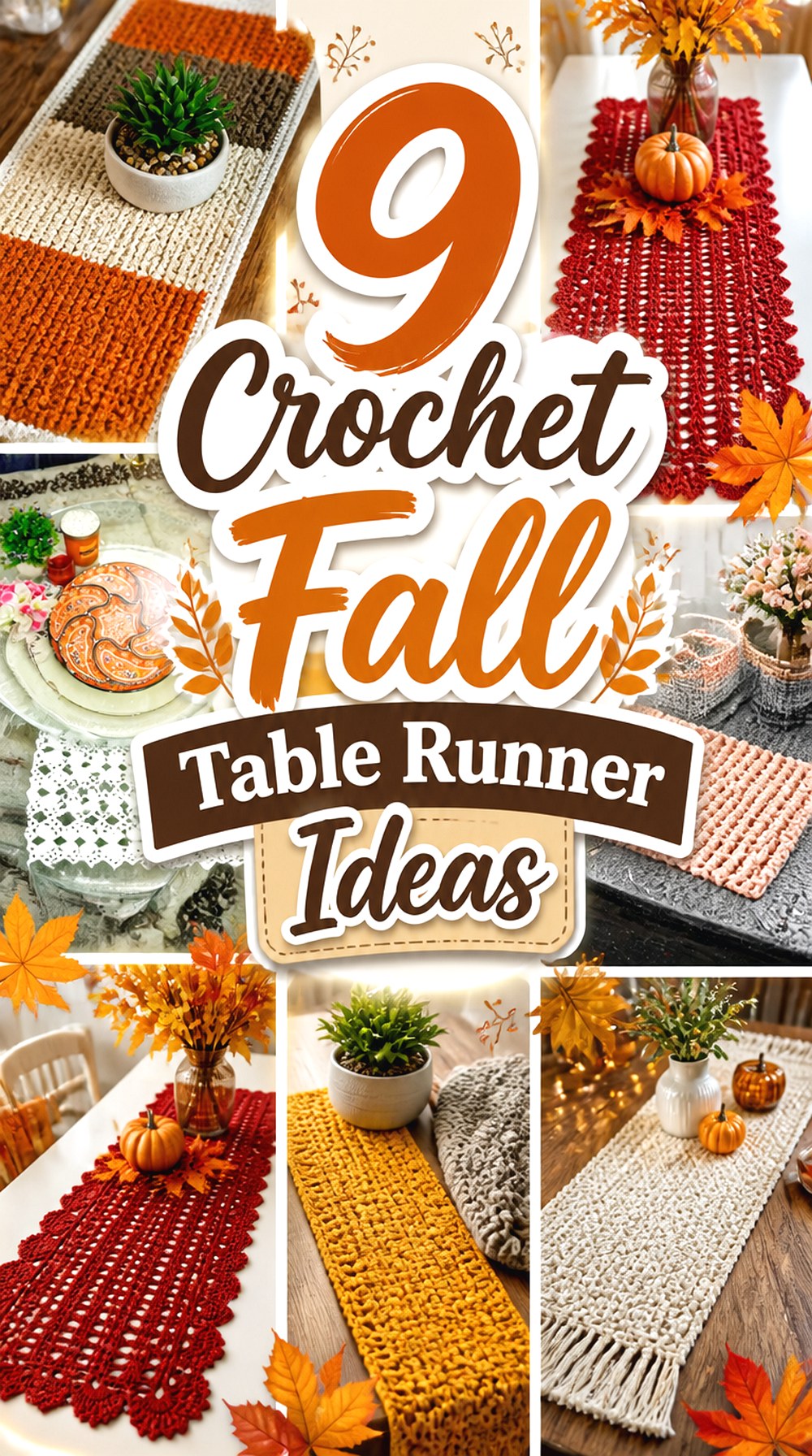
9 Crochet Fall Table Runner Ideas
A crochet fall table runner can set the mood for an autumn table without requiring the entire room to follow a seasonal theme. The nine ideas below range from unmistakable leaf motifs to joined granny squares, zigzag construction, quiet textured fabric, framed farmhouse styling, and decorative tassels. That gives you choices for both formal dining tables and smaller everyday surfaces.
Some of the featured tutorials were created specifically with leaves or fall styling in mind, while others provide versatile table-runner constructions that can be adapted with rust, amber, cream, olive, brown, or other colors that suit your decor. The focus here is not simply changing yarn color. You will also find practical ways to compare length, visual weight, motif placement, edging, drape, blocking, and how much detail you actually want beneath your centerpiece.
Quick List
- Crochet Filet Fall Leaves Table Runner
- Crochet Drop-Leaf Texture Table Runner
- Crochet Leaf-Silhouette Statement Runner
- Crochet Joined Granny Square Harvest Runner
- Crochet Zigzag Granny Stitch Fall Runner
- Crochet Moss-Stitch Fringe Table Runner
- Crochet Farmhouse Bordered Fall Runner
- Crochet Minimal Festival Table Runner
- Crochet Long Tassel Harvest Table Runner
Match the Runner Shape to the Way You Use Your Table
Start with the usable tabletop rather than an assumed “standard” runner size. A long runner that hangs beyond both ends creates a more formal dining-table look, while a shorter piece can act as a foundation for a vase, pumpkin arrangement, or serving display. If your table normally holds placemats, check how much width remains through the center before choosing a broad motif.
Shape matters too. A narrow rectangle leaves predictable space around plates. Joined motifs or zigzag sides introduce more visual movement, and an entire leaf-shaped runner behaves more like a statement centerpiece than a neutral textile. Before extending any repeat, lay a measuring tape down the center of the actual table and decide where you want the crochet to start and stop.
Yarn, Drape, and Surface Use Affect the Finished Look
For table decor, the fiber and fabric density influence how neatly a runner lies beneath dishes and decorations. Cotton is common in several of the selected tutorials because it can produce clear stitch definition, but that does not make every cotton yarn interchangeable. Yarn weight, twist, hook choice, and stitch pattern can all change thickness and drape.
Open filet or granny construction usually creates more negative space than a closely worked textured runner. Heavier fabric can feel visually substantial but may also create more height beneath objects. Whatever fiber you choose, check its care label before washing or blocking. A decorative runner should also not be treated as a trivet simply because it is crocheted; do not assume heat resistance from fiber appearance alone.
Plan Fall Color Around the Construction, Not Against It
Autumn color works best when it supports what the crochet is already doing. A filet leaf design often needs strong contrast so the leaf shapes remain readable, while a raised or clustered leaf texture may already have enough visual activity without frequent color changes. Modular granny squares give you more freedom to distribute several shades deliberately.
Before buying multiple colors, decide where the eye should land. One rust or mustard accent repeated at measured intervals can feel more controlled than changing colors in every available section. For variegated yarn, make a sample large enough to see whether the color changes reveal or obscure the texture. If you are combining separate motifs, compare their blocked dimensions before committing to the full layout.
1. Crochet Filet Fall Leaves Table Runner
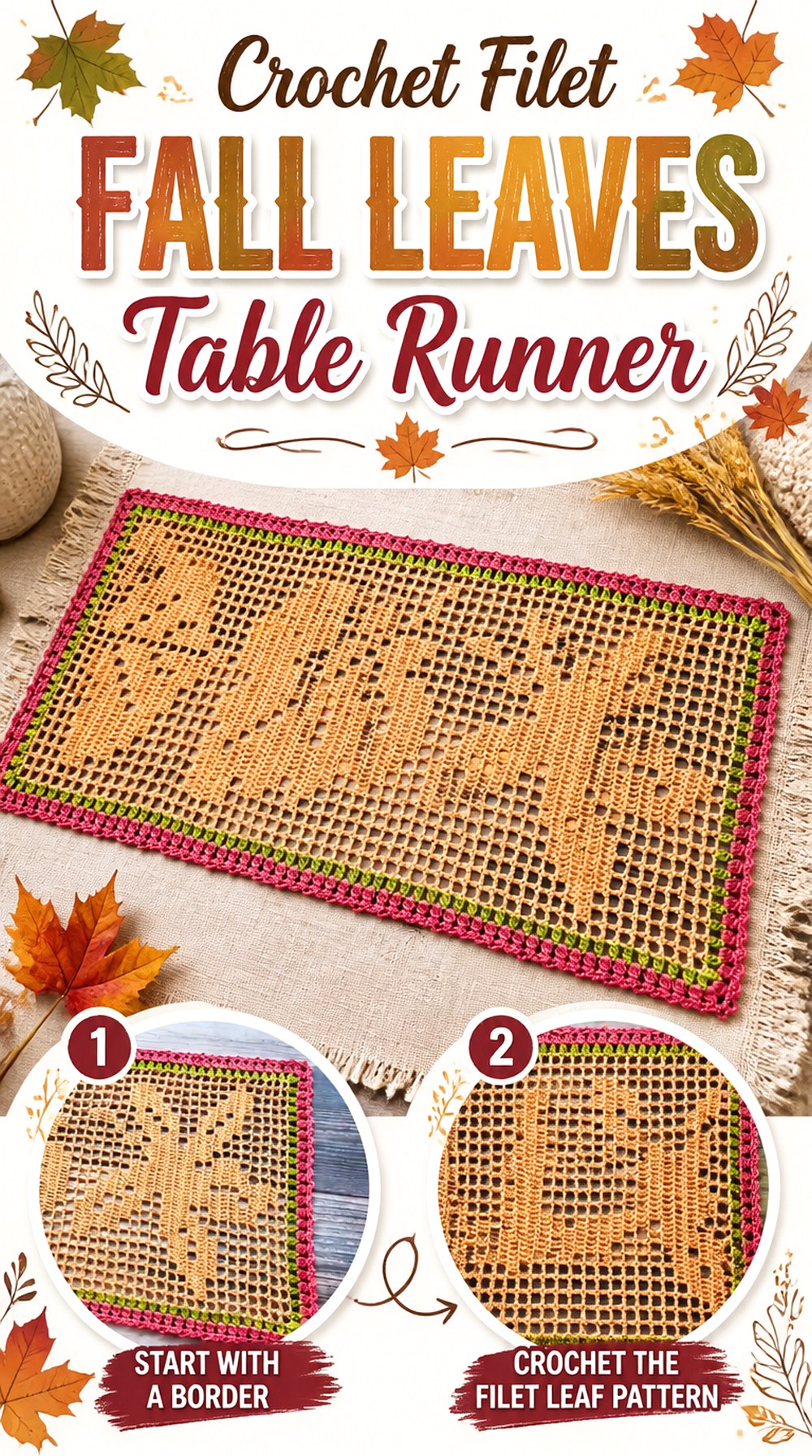
This Crochet Filet Fall Leaves Table Runner is one of the most literal autumn choices in the collection. Rather than relying on attached appliqués, the leaf imagery is built into an airy filet-crochet field, so the seasonal motif remains part of the runner’s overall fabric. The result suits a table where you want recognizable fall imagery without a bulky three-dimensional centerpiece.
Because filet crochet depends on the relationship between open and filled areas, color and blocking matter more here than they would on a heavily textured runner. It is also a strong option for readers who prefer one continuous decorative panel instead of joining multiple motifs after crocheting them.
Filet Mesh Makes Color Contrast Important
A detailed leaf can disappear visually if the yarn and tabletop are too similar. Before settling on a color, place a small yarn sample against the surface where the runner will actually be used. Cream on dark wood, rust on a pale tabletop, or another contrasting combination can make the open-and-solid geometry easier to read.
If the table itself is patterned, consider whether a simpler runner color would keep the leaf design from competing with the background.
Let the Finished Length Support the Leaf Repeat
With a pictorial runner, shortening or extending the piece is not always as simple as adding arbitrary rows. The leaf arrangement is part of the composition. Decide whether you want the entire design centered on the tabletop or extended toward the ends, then use the creator’s original instructions when determining where repetition can occur safely.
This is especially important when adapting a decorative filet design because changing the wrong part of the repeat can affect the proportions of the motif.
Blocking Is Part of the Graphic Finish
Open crochet can look uneven immediately after the final stitch even when the construction is correct. Blocking can help straighten the runner and open the mesh so the leaf shapes read more consistently. Use a method appropriate for the actual fiber rather than assuming one blocking technique suits every yarn.
Measure the piece during finishing so you do not unintentionally stretch one portion more than another, particularly around long edges and leaf-shaped sections.
2. Crochet Drop Leaf Texture Table Runner
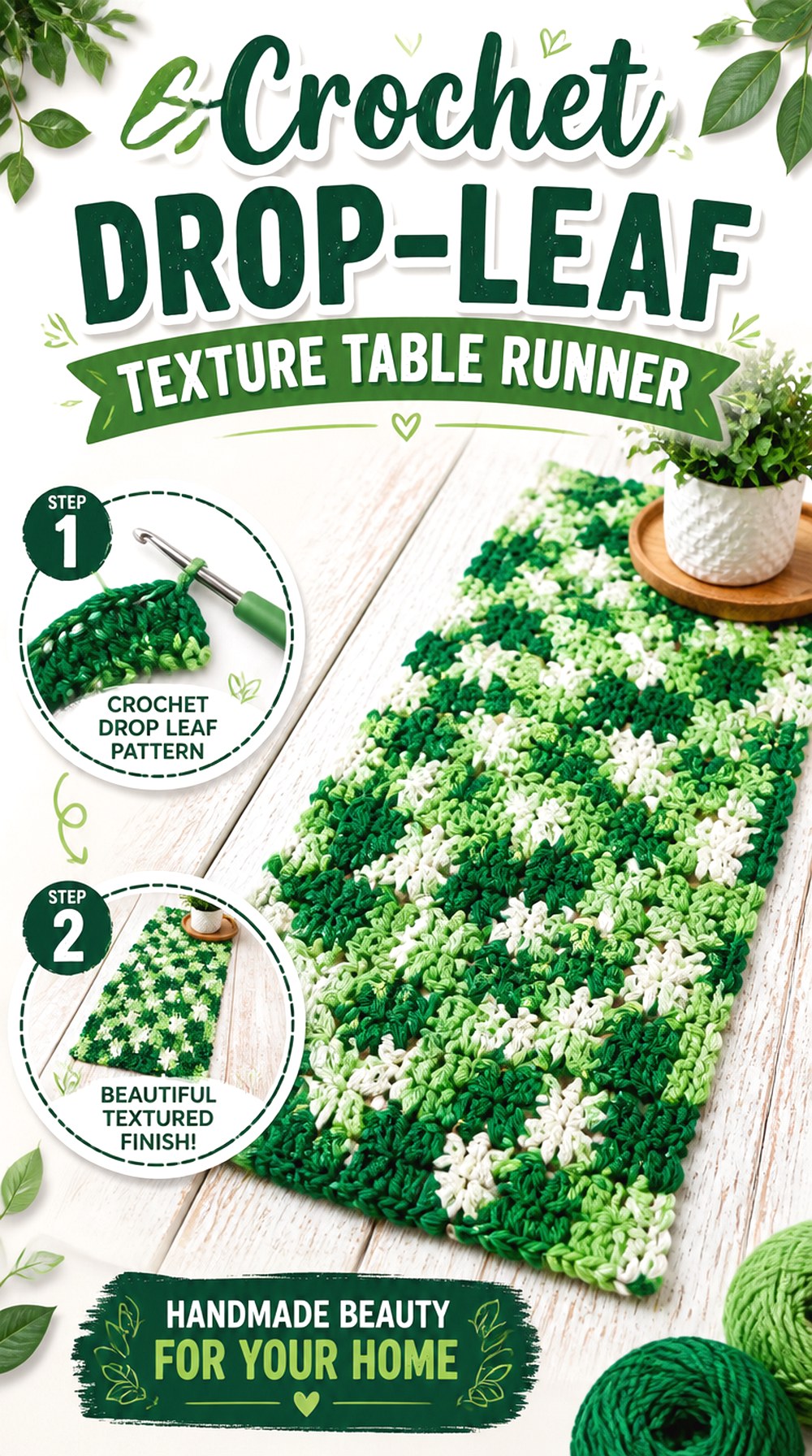
The Crochet Drop-Leaf Texture Table Runner takes a different route to autumn imagery. Instead of forming a large outlined leaf in mesh, it creates repeated leaf impressions through clustered texture across a rectangular runner. That makes it easier to style as an everyday table textile while still giving the surface an obvious seasonal reference.
The source tutorial specifically presents the design as adaptable for fall colors and demonstrates it with variegated yarn. This construction is worth considering when you want the runner itself to provide texture but still need a predictable rectangular footprint for dishes, candles, or a low centerpiece.
Variegated Yarn Can Change How the Leaves Read
Color changes can emphasize a raised repeat, but they can also divide one leaf visually across several shades. If the leaf texture is your main reason for choosing this project, crochet a sample and view it from normal table distance rather than only close up.
A solid autumn shade can make the stitch relief more consistent. Variegated yarn creates more movement. Neither is automatically better; the useful question is whether you want the texture or the color changes to be noticed first.
Keep Raised Texture Clear of Crowded Place Settings
A textured runner works well beneath decorative items, but think about where glasses, narrow candleholders, or other small-footed objects will sit. A pronounced stitch surface may be less forgiving than a very flat fabric.
Lay out your typical centerpiece before deciding how wide you want the runner. If the central decoration already includes pumpkins, leaves, and multiple colors, a single-color textured runner can provide seasonal character without adding another visually busy layer.
Test the Repeat Before Extending the Runner
The tutorial describes the base and length as customizable, which is helpful for adapting the piece to different tables. That flexibility still benefits from a sample first. Measure after the fabric has relaxed or been finished in the same way you plan to treat the completed runner.
Use that real repeat measurement to estimate how additional sections will affect the final length instead of assuming the dimensions will scale identically with different yarn or tension.
Original Tutorial and Creator Credit
Creator: Raji’s Craft Hobby
3. Crochet Leaf Silhouette Statement Runner
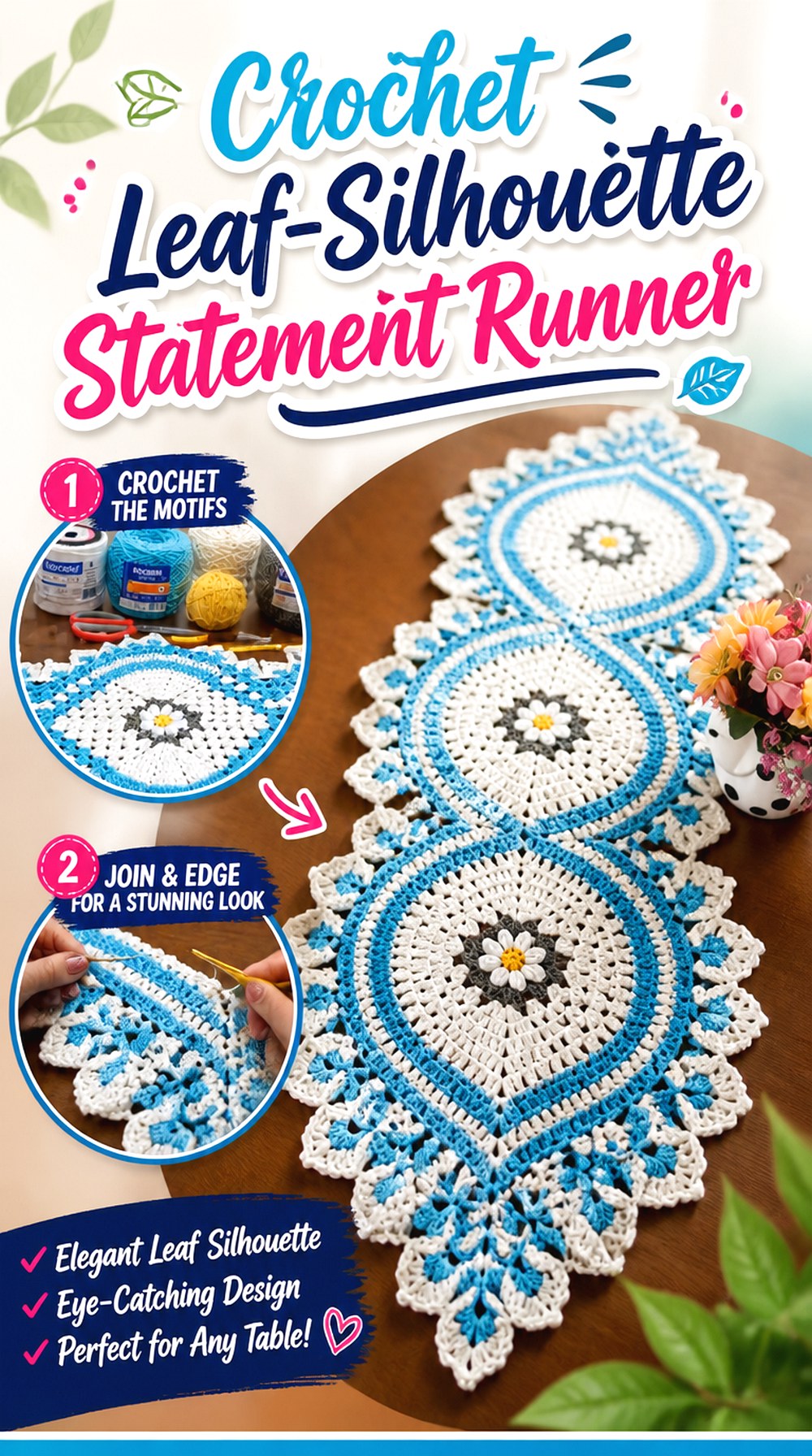
A Crochet Leaf-Silhouette Statement Runner changes the entire outline of the table decoration rather than placing leaves inside a conventional rectangle. Carmem Crochê’s tutorial shows a runner built around a large leaf-shaped form, making this the strongest choice in the list when you want the crochet itself to function as the centerpiece.
The creator gives a finished example measuring 43 cm wide by 1.21 meters long, so it is clearly more substantial than a small leaf appliqué. Treat those measurements as information about the tutorial sample, not as a universal size for every table.
A Leaf Silhouette Behaves More Like Centerpiece Decor
Because the outer edges contribute so much to the design, this runner will not visually disappear beneath dinnerware the way a simple rectangle might. It is better suited to situations where much of the crochet remains visible.
Before starting, decide whether the leaf will sit alone, support a central bowl, or share the table with other fall decorations. If you cover most of its outline with a large centerpiece, you may lose the feature that makes this option distinct.
Balance the Pointed Ends Before Adding Decorations
A strong leaf outline directs the eye along the length of the table. When styling it, keep the visual center close to the middle rather than loading one pointed end with several heavy-looking decorations and leaving the other empty.
You can test the balance without committing to anything: place the finished runner, add the objects you normally use, then view the table from the doorway and both ends. Small adjustments often matter more with an asymmetrical or organic silhouette.
Choose Placement Before Choosing the Final Color
A large leaf shape already makes an obvious seasonal statement. If it will sit on richly grained wood, a quieter neutral or muted autumn tone may let the shape carry the design. On a pale, simple table, deeper green, brown, rust, or gold can create stronger contrast.
The goal is not to reproduce the tutorial colors automatically. Look at the room, centerpiece, and table surface together so the large silhouette remains readable rather than becoming one more competing element.
Original Tutorial and Creator Credit
Creator: Carmem Crochê
4. Crochet Joined Granny Square Harvest Runner
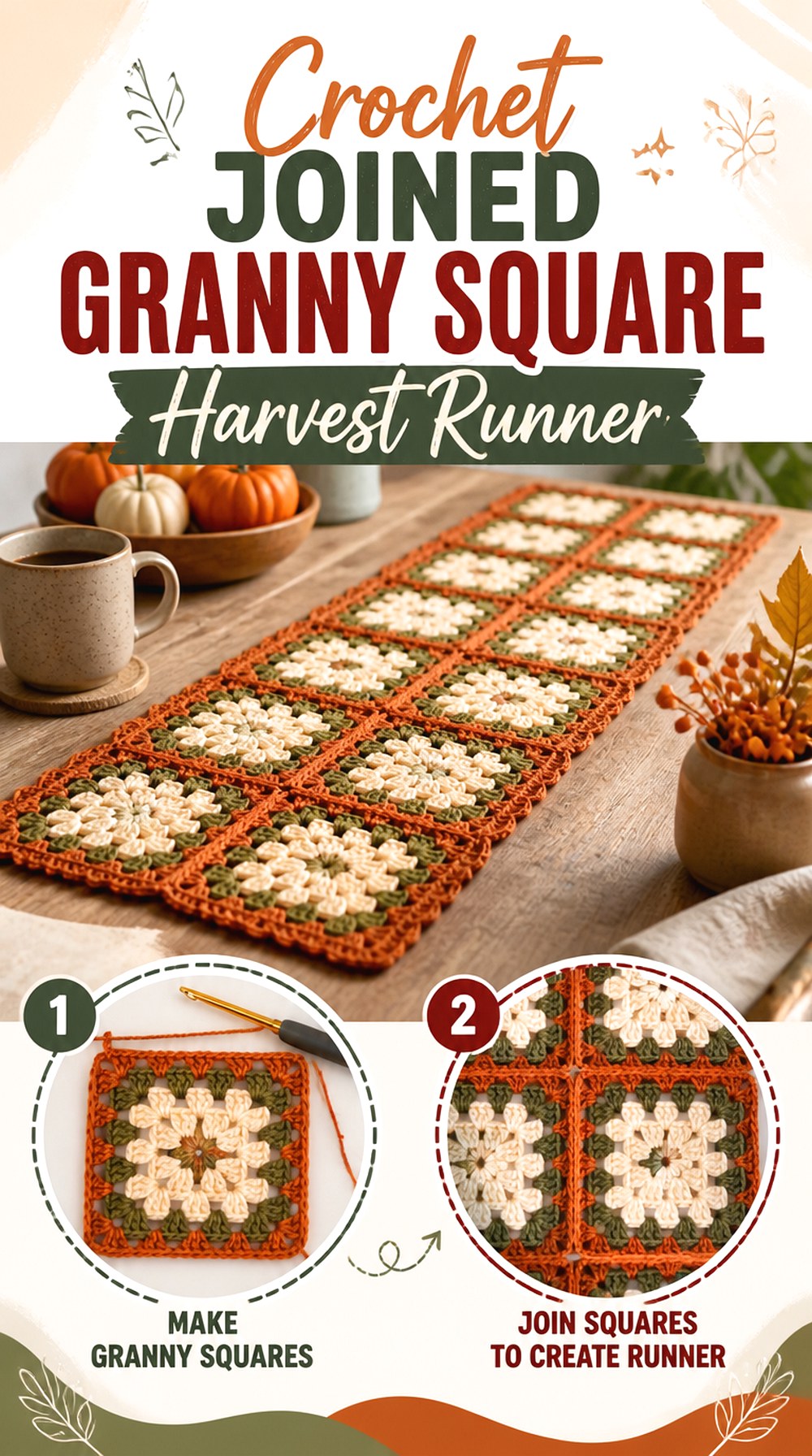
The Crochet Joined Granny Square Harvest Runner brings modular construction into the fall table. Individual granny squares are created separately and connected, allowing the runner’s length and color distribution to be planned motif by motif rather than row by row. The American Crochet Association tutorial uses a join-as-you-go approach, so the joins become part of the construction instead of being saved entirely for the end.
For autumn decor, this format gives you a natural place to alternate pumpkin, rust, wheat, cream, brown, or olive shades. It can also work in one restrained color if you want the square geometry to stand out more than the palette.
Joined Squares Make Length Visually Modular
A motif runner is useful when you prefer to see the eventual scale developing in clear units. Before making a large stack of squares, crochet and finish one sample motif, then place repeated paper or yarn markers along the table at that approximate size.
This gives you a practical sense of how many visual sections the table can carry. Remember that joins and finishing may influence the total span, so motif width alone should not be treated as the final runner measurement.
Blocked Squares Need to Agree Before Joining
Small differences in tension are much easier to correct before the motifs become one long piece. Compare the finished dimensions of several squares rather than assuming that identical stitch counts will automatically produce identical shapes.
If one square is noticeably smaller or skewed, investigate tension, yarn variation, or finishing before adding it to the runner. Consistent motifs help the side edges remain orderly and prevent one section of the table runner from pulling against its neighbors.
Let the Joining Color Participate in the Palette
The joining yarn does not have to disappear. A contrasting join can outline every square and create a patchwork effect, while a matching join makes the motifs flow together more quietly.
For a fall runner with several colors, choose the join only after arranging the finished squares on the table. Seeing them in their final order makes it easier to judge whether another contrasting shade adds welcome definition or simply makes an already colorful design busier.
Original Tutorial and Creator Credit
Creator: American Crochet Association
5. Crochet Zigzag Granny Stitch Fall Runner
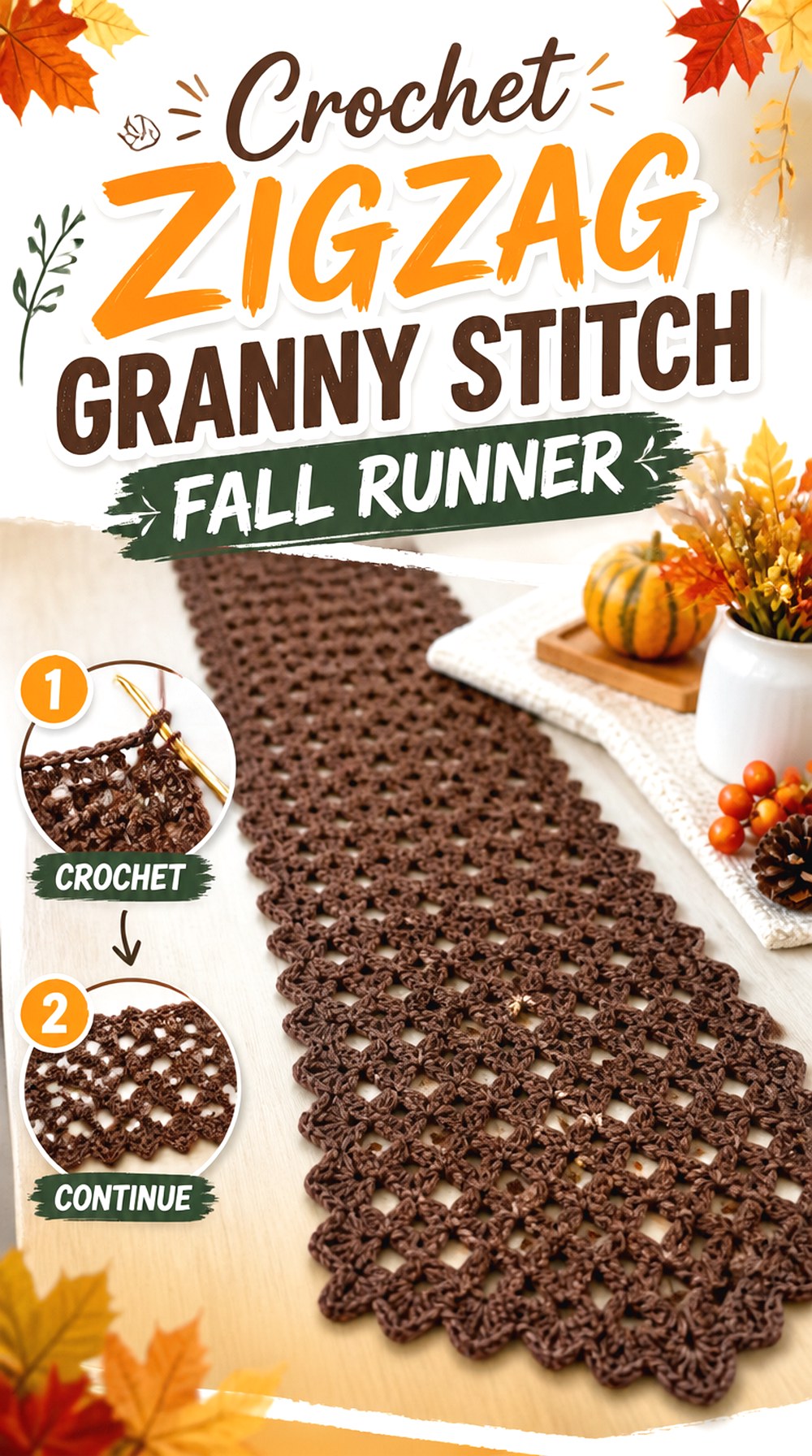
This Crochet Zigzag Granny Stitch Fall Runner uses granny-style clusters without constructing a chain of separate squares. CJ Design’s runner develops as a continuous zigzag fabric, creating pointed movement along the edges and a much different finished silhouette from the modular granny-square option above. The creator describes the design as a zigzag granny-stitch table runner and shows fringe as part of the finish.
For fall styling, the peaks and valleys can add enough detail that even a single warm neutral color has visual interest. It is a useful middle ground between a plain rectangle and a highly pictorial leaf design.
Zigzag Edges Need Intentional Table Placement
A straight-sided runner creates a predictable border down the center of a table. Zigzag sides behave differently because some sections project farther toward the place settings than others.
Before deciding on width, think about the narrowest clearance you need between the runner and your plates. If the table is compact, a dramatic edge may look better as a coffee-table or console accent than squeezed between closely arranged dinner settings.
Granny Clusters Reduce the Need for a Busy Palette
The alternating solid clusters and open spaces already make the fabric visually active. A restrained fall color—such as warm beige, terracotta, olive, or brown—can therefore look seasonal without striping every section.
If you do want several colors, plan changes around visible portions of the zigzag so the palette reinforces the geometry. Randomly changing shades may interrupt the peaks and valleys rather than highlighting them.
Fringe Is a Styling Choice, Not the Main Construction
Fringe can soften the pointed runner and emphasize its length, especially on a table where the ends are visible. It can also compete with ornate chair backs, table legs, or other hanging decor.
Before adding it, look at the runner in place without fringe. If the zigzag edge already provides enough movement, a cleaner finish may suit your room better. When fringe is used, trim and arrange it consistently so it looks intentional rather than uneven.
Original Tutorial and Creator Credit
Creator: CJ Design
6. Crochet Moss Stitch Fringe Table Runner
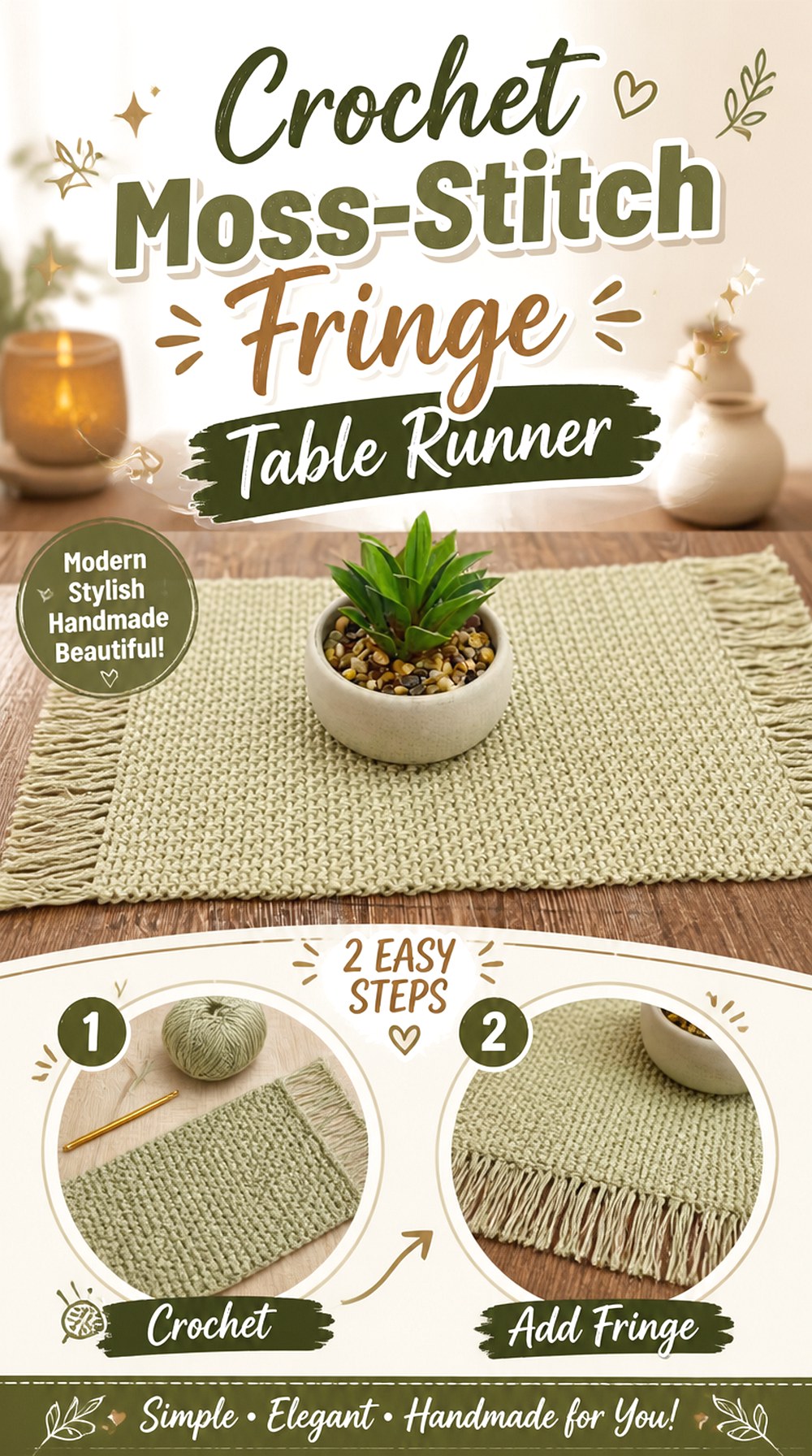
The Crochet Moss-Stitch Fringe Table Runner is the quietest option among the more decorative fall ideas. Jo to the World Creations uses a simple repeating moss-stitch fabric and finishes the runner with fringe, producing a long rectangular piece that can take on seasonal character mainly through yarn choice and styling. The tutorial’s straightforward surface makes this a useful foundation when the table already has patterned dishes, pumpkins, floral arrangements, or other strong autumn details.
Instead of competing with those items, the runner can provide texture and a controlled band of color through the middle of the table.
Moss Stitch Lets the Centerpiece Stay Dominant
A relatively even stitch texture can be an advantage when you want the crochet to support rather than lead the tablescape. Use a solid or gently varied color if the centerpiece already includes several materials and shades.
This approach is especially useful for fall decorating that stays in place for weeks rather than one special meal. The runner can remain understated while pumpkins, candles, dried stems, or serving pieces change around it.
Fringe Changes the Runner’s Visual Length
The crocheted body is not the only part that affects how long a fringed runner appears. Tassels extending beyond each end can make a piece feel substantially longer when viewed on the table.
Measure the desired overall look before assuming the crochet body itself should reach the table edge. If you want fringe to hang freely, also check that it will not constantly brush chairs, drawers, pets, or a heavily used walkway around the table.
Straight Side Edges Deserve Early Attention
Long, simple runners make uneven edges easier to notice because there is no complex motif to distract the eye. Periodically lay the work flat and check whether the sides remain reasonably straight.
If the width begins changing, correct the underlying counting or tension issue early rather than expecting blocking to solve a major shape difference at the end. Blocking can refine a runner, but it should not be used to hide a construction problem that continues for many rows.
Original Tutorial and Creator Credit
Creator: Jo to the World Creations
7. Crochet Farmhouse Bordered Fall Runner
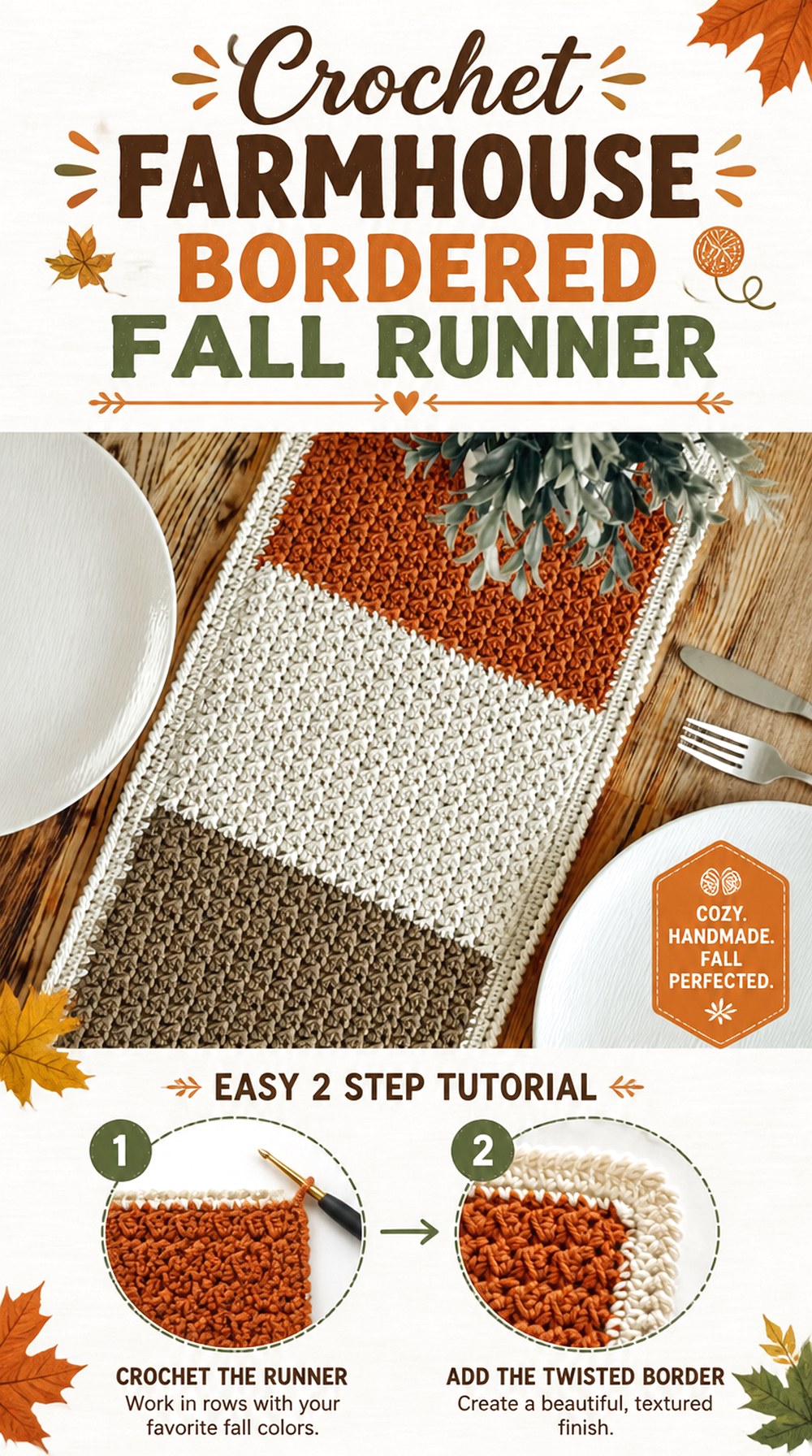
A Crochet Farmhouse Bordered Fall Runner is a good alternative when you like restrained texture but want a clearer frame around the finished piece. The Turtle Trunk’s tutorial combines even moss stitch with a crab-stitch border and presents a sample measuring 12 by 56 inches, while also noting that the size can be adjusted. The creator specifically mentions solid colors, two-tone versions, stripes, holiday colors, and neutrals as options.
For fall, that makes the border especially useful: the center can stay neutral while rust, brown, mustard, or another seasonal shade defines the perimeter.
The Border Gives the Runner a Strong Visual Frame
A contrasting border can make a runner look more deliberate against the tabletop, particularly when the body color is close to the wood or tablecloth underneath it. Think of the edging as part of the color plan rather than an afterthought.
For example, a cream center with a warm brown frame will read differently from an all-rust runner even if the construction is identical. Place the two yarns side by side on the actual table before deciding which should dominate.
Two Colors Can Separate Texture from Seasonal Styling
Using one color for the body and another for the border lets you keep the main fabric flexible across seasons. A neutral center may work beyond fall, while the edging provides the stronger autumn cue.
If you prefer a more permanent seasonal piece, reverse that balance and make the body the prominent fall shade. Either way, avoid adding extra colors simply because the construction allows it; two well-chosen shades can create a cleaner result than a crowded palette.
Watch Border Tension Before It Travels Around the Piece
The creator specifically notes that a border can become wavy and suggests changing hook size when that happens. That is a useful checkpoint before completing the entire perimeter.
After working a representative section, lay it flat and look for rippling or pulling. Address the tension while the problem is still localized. A border should frame the runner rather than force the main fabric into a new shape.
Original Tutorial and Creator Credit
Creator: The Turtle Trunk
8. Crochet Minimal Festival Table Runner
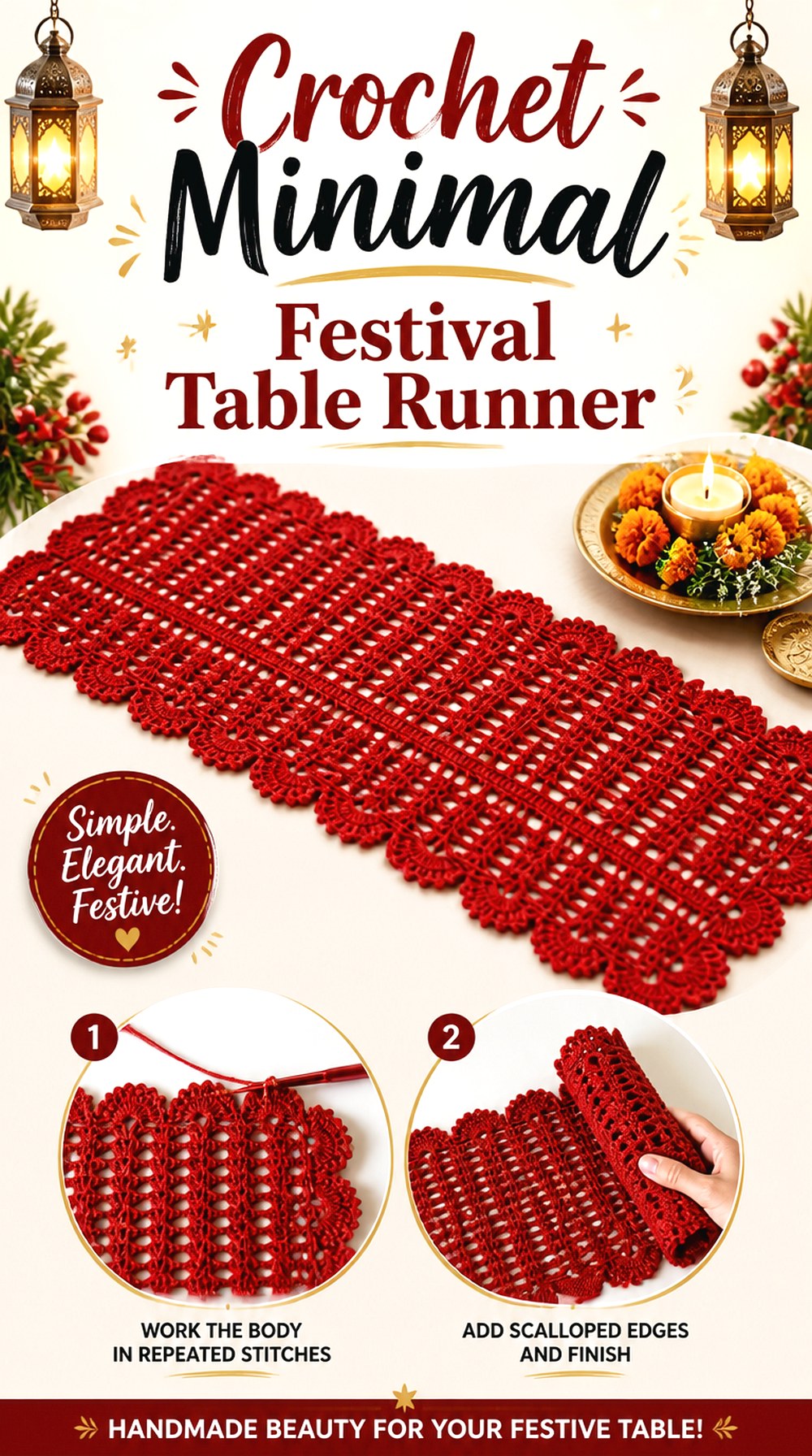
The Crochet Minimal Festival Table Runner is for readers who want seasonal color without an overt pumpkin, leaf, or granny-square theme. Crochetnaari presents the project as a lightweight, modern table runner suitable for festive decoration and shows a sample measuring 94 by 28 cm. The creator also explains that the length can be customized within the pattern structure.
That makes this a practical fall option for rooms where autumn decor is subtle rather than rustic. Use the construction as a neutral framework, then bring in the season with yarn color, a small centerpiece, or the surrounding place settings instead of adding more motifs to the crochet.
Minimal Crochet Gives Fall Accessories More Room
If your table already has patterned dishes, brass candleholders, pumpkins, dried foliage, or a floral arrangement, a quieter runner can prevent the setting from feeling overloaded.
Choose the yarn after assembling a few of the objects you plan to display. The runner does not need to repeat every color in the centerpiece. One shade drawn from the arrangement—or a neutral that makes those colors stand out—can create a more cohesive table.
Use the Tutorial Size as a Reference, Not a Rule
The video’s 94-by-28-cm sample gives you a useful sense of the creator’s finished proportions, but your table may need something quite different.
Measure the surface and decide whether you want the runner contained entirely on top or extending toward the ends. Then use the creator’s customization guidance rather than changing the foundation arbitrarily. Yarn, hook choice, and personal tension can all change the actual dimensions.
Keep Seasonal Color Changes Deliberate
A minimal runner can lose its calm appearance if too many short color sections are introduced. If you want more than one autumn shade, consider larger color areas or a clearly repeated sequence rather than frequent changes.
Another option is to keep the crochet in one color and let removable table decor provide the seasonal variation. That makes the runner easier to reuse when the pumpkins and leaves are put away.
Original Tutorial and Creator Credit
Creator: Crochetnaari
9. Crochet Long Tassel Harvest Table Runner
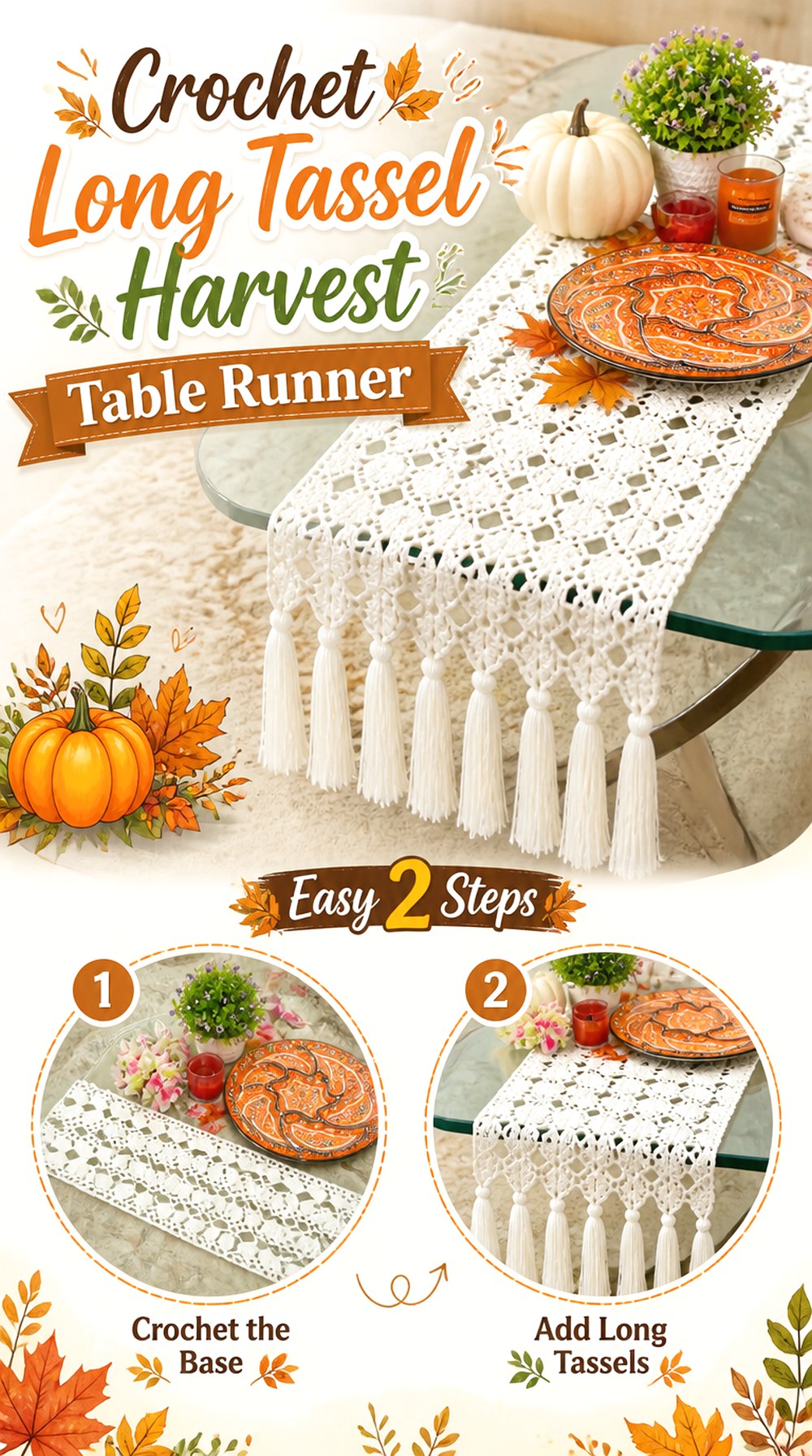
The Crochet Long Tassel Harvest Table Runner puts more emphasis on decorative ends. Crochet Arena’s tutorial uses cotton yarn and shows a runner whose stated length is 56 inches including the tassels. The creator also links separate blocking demonstrations, making finishing an especially relevant consideration for this design.
For an autumn version, the elongated format would work well in one rich harvest shade or a restrained neutral that lets the tassels and stitch texture provide the decoration. It is a useful option for a long surface where you specifically want the runner ends to remain visible rather than disappearing under a centerpiece.
Tassels Count Toward the Overall Display Length
The creator’s stated 56-inch measurement includes the tassels, which is an important distinction when comparing this runner with designs measured only across the crocheted body.
When planning your version, decide how much of the tassel you want on top of the table and how much, if any, should hang beyond the edge. Measure the complete display area rather than calculating from the solid crochet alone.
Cotton Can Keep Decorative Detail Visually Clear
The tutorial uses cotton yarn, but that does not mean every cotton yarn will produce the same fabric. Different yarn weights and constructions can create noticeably different thickness, stiffness, and stitch definition.
If you substitute yarn, make a sample and compare how the fabric hangs and how clearly the decorative edge appears. A runner that feels ideal for a dresser or console may behave differently on a dining table where dishes need a stable surface around it.
Choose a Blocking Method for the Actual Fiber
The creator provides additional resources for steam and starch blocking, but finishing should still be matched to your chosen yarn and intended result.
Before applying heat, starch, or another treatment to the completed runner, check the fiber-care information and test when appropriate. The goal is to improve the shape and presentation without changing the yarn in an unintended way. Long edges and tassel placement are useful areas to inspect once the piece is dry.
Which Crochet Fall Table Runner Style Should You Choose?
For the clearest autumn imagery, start with the filet leaves, textured drop leaves, or full leaf silhouette. They approach the same season from three very different directions: a graphic mesh motif, repeated surface texture, and an organic outer shape.
Choose the joined granny squares when modular color placement matters most, or the continuous zigzag granny runner when you want open cluster texture without assembling individual squares.
For quieter seasonal decorating, the moss-stitch, farmhouse, minimal festival, and tassel runners let yarn color and table styling carry more of the fall theme. They are especially useful when the centerpiece already provides pumpkins, foliage, candles, or other strong autumn details.
Conclusion
The right crochet fall table runner depends on how much seasonal detail you want the crochet itself to provide. Choose filet or textured leaves for recognizable autumn imagery, the full leaf silhouette for a statement centerpiece, joined squares for modular color planning, or the zigzag granny design for a more graphic edge. Moss stitch, farmhouse framing, minimal construction, and long tassels offer quieter ways to introduce fall color.
Whichever direction suits your table, measure the actual surface, consider the space needed around place settings, and test how the yarn behaves before extending a large repeat. Use the original tutorials linked with each idea for exact construction, stitch counts, and creator-specific finishing details.
Frequently Asked Questions
How long should a crochet fall table runner be?
There is no single correct length because tables, centerpieces, and styling preferences differ. Decide first whether the runner should remain fully on the tabletop or extend beyond the ends. Then measure the usable center area and account for fringe or tassels separately. For a motif design, also consider where a complete leaf, square, or repeat will end so you do not have to interrupt the visual pattern simply to hit a predetermined measurement.
Should a fall table runner be wider than the centerpiece?
Usually the more useful question is whether the runner leaves enough clear space for your normal place settings and serving items. A broad runner can work beneath a narrow centerpiece, while a slimmer runner may suit a table that holds placemats on both sides. Lay the intended dishes and centerpiece on the bare table first. Measure the remaining center strip, then choose a project whose proportions can fit that space without crowding glasses or plates.
Is cotton the only good yarn for a crochet table runner?
No. Cotton appears in several table-runner tutorials because it can give crochet clear definition, but the right fiber depends on the look, care requirements, and fabric you want. Check the yarn label for washing and finishing instructions, and make a sample when substituting fiber or weight. Also remember that a decorative table runner is not automatically heat-safe. Do not use it as protection for hot cookware unless the materials and intended use are specifically suitable.
How can I stop a crochet table runner from looking wavy?
First determine whether the waviness comes from construction, border tension, uneven motif sizes, or finishing. Lay the work flat periodically instead of waiting until the project is complete. For joined squares, compare blocked motif dimensions before joining. For bordered runners, inspect the edging after a representative section. Blocking can improve presentation, but it is better to correct persistent counting or tension problems during the project rather than trying to stretch them away afterward.
Can I combine a fall leaf motif with a granny-square table runner?
Potentially, but treat it as a layout adaptation rather than assuming every square is interchangeable. Make and block the leaf motif and the filler granny square first, then compare their dimensions, edge structure, and density. If one is substantially smaller, heavier, or shaped differently, the finished join may distort the runner. A compatible border can sometimes help motifs reach similar dimensions, but use your own samples to make that decision rather than relying on nominal yarn or hook sizes alone.
Should a crochet table runner hang over the ends of the table?
It can, but it does not have to. Overhanging ends emphasize length and can show off fringe or tassels, while a shorter runner keeps decorative fibers away from chairs, drawers, pets, and busy walkways. A contained runner can also work better as a centerpiece mat on a small table. Before choosing, arrange a measuring tape or strip of fabric at the proposed length and live with the placement briefly; that simple visual check is more useful than following a universal overhang rule.