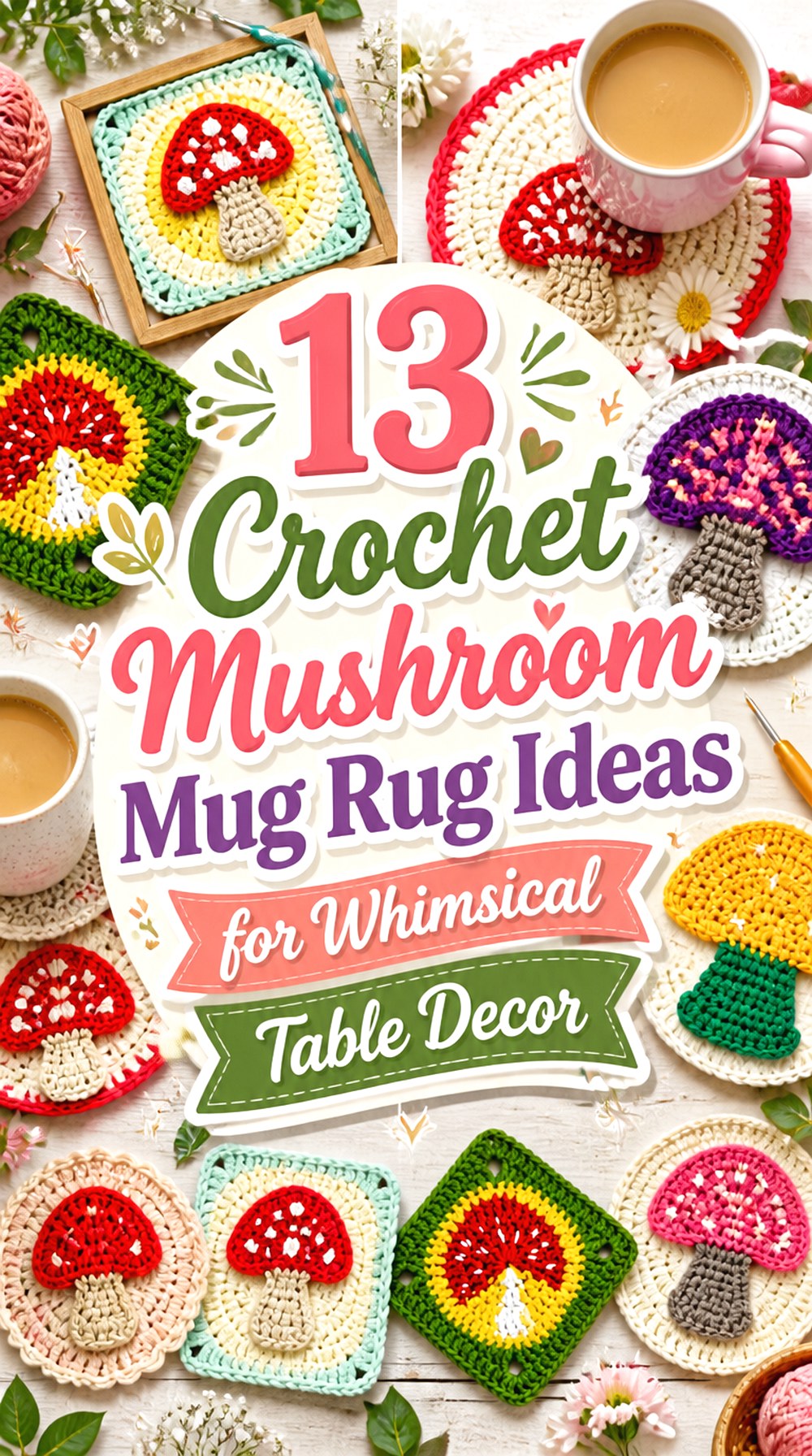
13 Crochet Mushroom Mug Rug Ideas for Whimsical Table Decor
A crochet mushroom mug rug can be much more than a red-and-white toadstool placed under a coffee cup. The strongest designs use noticeably different formats: rectangular tapestry pieces, picture-like woodland scenes, mushroom-shaped coasters, roomy potholder-scale mats, C2C blocks, and granny squares with either flat or dimensional motifs.
Those differences matter when the piece will actually sit under a drink. A compact shape may be enough for one mug, while a wider rectangle can leave room for a spoon or snack. Raised spots and appliqués create more texture, whereas graphed colorwork generally keeps the drinking surface flatter. The 13 ideas below are connected to original creator tutorials, with notes on footprint, surface stability, finishing, and adaptation so you can choose a design for more than its mushroom colors alone.
Quick List
- Crochet Pixel-Duo Mushroom Mug Rug
- Crochet Woodland Landscape Mushroom Mug Rug
- Crochet Oversized Farmhouse Mushroom Mug Rug
- Crochet Retro Shaped Mushroom Mug Rug
- Crochet Flat Felt-Spot Mushroom Mug Rug
- Crochet Embroidered-X Mushroom Mug Rug
- Crochet All-Yarn Mushroom Coaster Mug Rug
- Crochet Framed Mushroom Granny-Square Mug Rug
- Crochet Mini C2C Mushroom Block Mug Rug
- Crochet Layered Mushroom Granny-Square Mug Rug
- Crochet Integrated Mushroom Granny-Square Mug Rug
- Crochet Mushroom-Appliqué Granny-Square Mug Rug
- Crochet Single-Mushroom Graph Mug Rug
Choose a Mushroom Mug Rug Construction That Stays Flat
Start with the part the cup will touch. Flat graphed colorwork, tapestry crochet, and relatively low-profile square motifs give a mug a broad, predictable resting area. C2C creates a more visibly textured surface, while separate spots, appliqués, knots, or other embellishments can add relief. A shaped mushroom also changes the usable footprint because the cap may be much wider than the stem.
Before committing to a set, compare the source’s finished dimensions with the base of the mug you expect to use. Some projects here are coaster-sized, while the Raffamusa and Lion Brand potholder designs are substantially larger and can be considered roomy mug-rug alternatives without requiring you to invent a resizing formula.
Match Yarn and Embellishments to the Intended Use
Several source designers choose cotton or cotton-based yarn for coaster and kitchen projects, but that does not make one fiber universally correct for every mug rug. The yarn label, the tutorial, the drink temperature, and any additional materials all matter. The Caffeinated Snail, for example, combines crocheted fabric with felt spots and adhesive, while Loopara’s layered granny-square tutorial includes hot-melt adhesive.
For a frequently used drink mat, examine the entire finished surface rather than just the yarn. Raised details should not make the cup rock, and glued or mixed-material embellishments may affect laundering. Never assume a decorative crochet piece is suitable for contact with very hot cookware simply because a similar project is called a potholder. Follow the creator’s intended-use guidance and the care or heat information supplied with your chosen materials.
1. Crochet Pixel Duo Mushroom Mug Rug

This rectangular idea is for readers who like recognizable mushroom imagery without turning the outer edge into a mushroom silhouette. Divine Debris presents a graphed colorwork mug rug measuring approximately 3.7 by 5 inches after blocking, with a distinctly pixel-like, retro appearance. The designer also discusses using different color-management approaches, including floats or bobbins.
As a mug rug, the rectangular format is useful because the cup does not have to sit directly over the motif’s narrowest point. It also makes this option visually different from the later single-mushroom square and scenic landscape: here, the repeated mushroom imagery is the main event.
Let the Rectangle Do the Practical Work
A longer rectangle gives you more freedom to decide which side holds the mug and which part remains visible. Before making several, compare the finished width with your own cup rather than assuming every mug will occupy the same proportion of the rug. A wide mug may cover more of the artwork, while a narrower cup can leave the mushroom pair visible beside it.
Keep Colorwork Thickness Consistent
The source specifically discusses floats and bobbins as color-management options. Whichever approach you follow, avoid pulling unused yarn so tightly that the fabric puckers or allowing carried strands to create bulky areas. Consistency matters on a small mat because distortion that seems minor during stitching can become obvious when the finished rectangle is placed beside straight tabletop edges.
Use Contrast to Protect the Pixel Effect
Pixel-style motifs depend heavily on neighboring colors remaining distinguishable. If you substitute the palette, compare the cap, spots, stems, and background before beginning the full piece. Two attractive yarn colors can still merge visually when they have similar value. A small swatch or side-by-side yarn check can prevent the mushrooms from becoming difficult to read from normal table distance.
Original Tutorial and Creator Credit
Creator/Site: Divine Debris
2. Crochet Woodland Landscape Mushroom Mug Rug

Instead of repeating separate mushrooms, this version treats the rug like a tiny piece of landscape artwork. Divine Debris’s Mushroom Landscape design is a rectangular graphed coaster or mug rug measuring approximately 3.6 by 5 inches after blocking. Its multiple colors form a small scenic composition rather than an isolated icon.
That makes it a good choice when the mushroom theme should feel more woodland-inspired than graphic. The rectangular dimensions still provide a familiar drink-mat footprint, but the design reads more like a miniature textile picture when it is not covered by a cup. It could work especially well on a desk, reading table, or coffee station where the rug remains visible between uses.
Treat the Surface Like a Tiny Textile Picture
A scenic graph benefits from looking balanced both with and without a mug on it. Before choosing the cup position, look at which part of the finished scene you want to remain visible. Placing the cup slightly to one side can preserve more of the mushroom landscape, provided the base still rests entirely on a stable portion of the fabric.
Straight Edges Matter More on Scenic Designs
The source recommends blocking for this colorwork project. A rectangular picture motif can make uneven sides or waviness more noticeable because the scene itself creates strong horizontal and vertical visual cues. Use only a blocking method appropriate for your chosen fiber, and judge the result on a flat surface before considering the piece finished.
Plan More Colors Before Starting
This source uses a larger palette than the earlier Cute Mushrooms design. More colors can produce richer scenery, but they also mean more yarn changes and ends to manage. If you simplify the palette, check that the mushroom, background, and landscape layers still separate clearly. Reducing colors is most successful when contrast is preserved rather than when several visual areas collapse into one similar shade.
Original Tutorial and Creator Credit
Creator/Site: Divine Debris
3. Crochet Oversized Farmhouse Mushroom Mug Rug

Raffamusa Designs approaches the mushroom as bold tapestry crochet rather than a small spotted toadstool. The original project is a farmhouse-style potholder measuring about 6.7 by 7.3 inches and uses two contrasting colors, a border, and a hanging loop. That larger footprint also makes it an interesting oversized mug-rug concept when you want room around a drink.
No resizing is necessary to get that extra surface area; you can simply consider the existing finished scale for table use. The limited palette creates a quieter, more graphic mushroom than the multicolor landscape designs, while the near-square body makes the piece feel substantial enough for a mug plus a small accompanying item.
Extra Area Changes How the Rug Can Be Used
The source dimensions are noticeably larger than the compact coasters elsewhere in this list. That can be useful when you want a cup and perhaps a spoon or small snack to stay on the same crocheted surface. Before choosing it, make sure that extra width suits your table or desk; a generous mat may feel crowded on a narrow bedside shelf.
Dense Tapestry Fabric Rewards Even Tension
The potholder is worked as tapestry crochet with the nonworking color carried through the fabric. General crochet logic applies here: if that carried yarn is tensioned too tightly, the square can contract or pucker; if it is excessively loose, the fabric may look uneven. Check the width periodically against the source’s gauge and finished proportions rather than waiting until the entire motif is complete.
Decide How the Hanging Loop Fits Table Use
Raffamusa’s original design includes a hanging loop because it is a potholder. As a mug rug, that loop becomes optional in function even if you follow the source construction. You might appreciate it for hanging the mat when it is not in use, or simply treat it as part of the original silhouette. Consider where it will lie so it does not interfere with nearby objects.
Original Tutorial and Creator Credit
Creator/Site: Raffamusa Designs
4. Crochet Retro Shaped Mushroom Mug Rug

Lion Brand Yarn’s Mushroom Potholder removes the rectangular background completely and lets the mushroom itself define the outer edge. The original pattern describes a retro-style mushroom potholder and gives a finished size of about 8½ inches, making this one of the largest choices in the list.
Used as mug-rug inspiration, that scale turns a whimsical silhouette into a noticeable tabletop accent. The broad cap supplies the dominant visual area, while the narrower stem makes the footprint quite different from a conventional square. It suits someone who wants the mushroom shape visible immediately, even from across a table, rather than hidden inside a graph or border.
A Silhouette Changes the Best Cup Position
A shaped rug does not provide the same usable area at every point. The broad cap will generally offer more room than the narrower stem, so check your mug against the completed outline before deciding how to display it. The design can remain decorative even when part of the mushroom extends beyond the cup.
Large Scale Makes the Motif a Table Accent
At approximately 8½ inches, the source project is considerably larger than a standard small coaster. That can be an advantage on a coffee table or breakfast tray where you want the crochet itself to remain prominent. On a crowded work desk, however, the same generous scale may occupy more space than you want.
Keep Potholder and Mug-Rug Uses Distinct
The source is explicitly written as a potholder pattern. If you intend to use your finished piece around hot cookware rather than simply beneath a mug, follow Lion Brand’s material and use guidance rather than assuming that any yarn substitution will perform the same way. A tabletop drink mat and a heat-handling kitchen accessory are different use cases.
Original Tutorial and Creator Credit
Creator/Site: Lion Brand Yarn
5. Crochet Flat Felt Spot Mushroom Mug Rug

The Caffeinated Snail’s mushroom coaster combines crochet with white felt spots rather than crocheting every dot as a raised appliqué. Designer Kimberly Arenas specifically explains that the felt creates a flatter surface, and the finished coaster is approximately four inches across.
That mixed-material choice gives this idea a practical distinction from the all-yarn mushroom coasters. Visually, it retains the familiar spotted cap, but the details are deliberately low profile. This is better suited to readers who like the shaped toadstool look yet are concerned that dimensional crochet spots could sit directly under the foot of a mug.
Flat Spots Address a Real Cup-Stability Question
The source deliberately chooses felt because it keeps the decorative circles flatter beneath a cup. That is worth noticing when comparing mushroom designs: a spot that looks charming in a photograph may still be inconvenient if it creates a prominent ridge. After assembly, place the intended mug on the finished coaster and check for rocking before regular use.
Mixed Materials Change the Care Decision
Yarn, felt, and adhesive may not have identical laundering requirements. The tutorial uses both felt and hot glue, so do not apply a generic crochet washing routine without checking how every component should be treated. For a frequently washed set, that maintenance trade-off may matter just as much as the attractive flat detailing.
Original Tutorial and Creator Credit
Creator/Site: Kimberly Arenas / The Caffeinated Snail
6. Crochet Embroidered X Mushroom Mug Rug

Speedy Crochet takes another route to keeping the decoration comparatively simple: the mushroom has a half-circle main shape, a small attached stem, and embroidered X-shaped spots. The source gives a finished size of about four inches tall by five inches wide.
The embroidered marks create a very different surface treatment from round felt spots or layered granny-square motifs. They also give the mushroom a playful folk-art quality without filling the cap with separate circles. Because the cap is wider than the stem, this project still reads immediately as a shaped mushroom while providing a broader area for the drink.
Embroidery Adds Detail Without Separate Spot Pieces
The X marks are decorative surface stitches rather than individual round appliqués. That reduces the number of separate decorative components you need to position. When embroidering any drink mat, keep the stitches secure and avoid creating unnecessarily bulky knots where the mug is likely to rest.
The Broad Cap Is the Functional Zone
The source describes a half-circle base with the stem attached afterward. That makes the cap the widest part of the coaster and therefore the most obvious place to compare against your cup’s base. Before making a matching set, finish one piece and confirm that your everyday mug fits comfortably within the intended area.
Original Tutorial and Creator Credit
Creator/Site: Speedy Crochet
7. Crochet All Yarn Mushroom Coaster Mug Rug

Shauna Mather’s Yarn Under video offers another shaped mushroom coaster, but its supporting pattern information lists yarn as the primary material rather than the felt-and-glue combination used by The Caffeinated Snail. The YouTube source is a full mushroom coaster tutorial, and Yarn Under’s pattern listing specifies cotton aran yarn in two colors.
That makes this a useful option when you want a compact, recognizable mushroom made through crochet rather than a mixed-media surface treatment. Because the primary source is video, it also suits readers who prefer to see the developing shape demonstrated rather than interpreting a color graph.
Use the Video to Judge the Finished Footprint
The YouTube listing does not provide the same detailed finished-size information as some written sources in this article. Instead of inventing a measurement, watch the completed coaster in the tutorial and compare its proportions with your intended mug. If precise dimensions are important for a gift set or tray, verify them from the creator’s linked pattern before starting.
All-Yarn Does Not Automatically Mean Completely Flat
Removing felt and glue simplifies the material list, but crochet itself can still create texture. After finishing, place the actual cup on the coaster and check whether decorative areas or shaping cause any rocking. That physical checkpoint is more reliable than assuming that an all-yarn project will automatically behave like a flat rectangle.
Original Tutorial and Creator Credit
Creator: Shauna Mather (@yarnunderr)
8. Crochet Framed Mushroom Granny Square Mug Rug

VETKA’s mushroom granny square places the toadstool inside a true square frame rather than drawing it across a rectangular graph. The designer notes that size depends on yarn and gauge; the photographed sample is about 4.5 inches square.
That footprint makes one completed block a plausible standalone mug rug without joining it to anything else. The surrounding square creates a tidy visual boundary around the mushroom, which can make it easier to coordinate a set even when cap or background colors vary. Compared with the later C2C option, this design is built as a motif-focused granny square rather than a diagonal pixel block.
One Square Can Be the Finished Object
Granny-square tutorials are often presented as components for blankets or bags, but a block close to coaster scale can stand alone. VETKA specifically notes that the final dimensions depend on gauge and yarn, so make one complete square before committing to a set. A yarn substitution may change both the footprint and the thickness under the cup.
Corners Are an Immediate Finishing Checkpoint
When a single granny square becomes the finished mug rug, its corners and edges are no longer hidden inside joins. Lay the block on a hard flat surface and check whether the corners lift, the sides bow, or the center domes. If the source and fiber permit blocking, use it to refine shape rather than attempting to force an unsuitable fiber with excess heat.
Contrast Around the Motif Does More Than Extra Color
A clear frame helps the mushroom read as the focal point. If you personalize the palette, give special attention to contrast between the mushroom and the surrounding square. Adding more colors will not necessarily make the design clearer; a restrained background that separates cleanly from the cap and stem can produce a stronger result.
Original Tutorial and Creator Credit
Creator/Site: VETKA (vetkaknit)
9. Crochet Mini C2C Mushroom Block Mug Rug

Melissa Hassler of Lovable Loops uses mini corner-to-corner crochet for this mushroom square. The finished sample is about five inches square, and the design is worked as a C2C colorwork block with a finishing border.
That technique gives this mug rug a noticeably different texture from tapestry single crochet or a traditional granny square. The diagonal block structure creates a chunky pixel appearance well suited to the mushroom motif, while the five-inch square leaves the full design readable as a small standalone table mat. Choose this one when the stitch texture itself is part of the visual appeal.
C2C Texture Feels Different Under a Cup
Corner-to-corner blocks create small stitch clusters rather than a smooth field of closely packed single crochet. That texture is part of the charm, but it is worth checking with the mug you actually plan to use. A broad, flat cup base may behave differently from a narrow-footed ceramic mug on a more textured crochet surface.
Judge the Footprint After the Border
The source’s completed sample measures about five inches square and includes a border. If you substitute yarn or alter finishing, wait until the entire block is complete before deciding whether its size suits your table. Borders can change both the visual frame and the final dimensions.
Plan Colorwork Ends Before They Crowd the Back
Small C2C images can involve frequent changes between colors. On a mug rug, the reverse side remains exposed to the tabletop, so bulky unsecured ends are more noticeable than they might be inside a lined project. Follow the creator’s instructions for the actual design, and take time with finishing so the back does not become the weak point of an otherwise tidy square.
Original Tutorial and Creator Credit
Creator/Site: Lovable Loops by Melissa Hassler
10. Crochet Layered Mushroom Granny Square Mug Rug
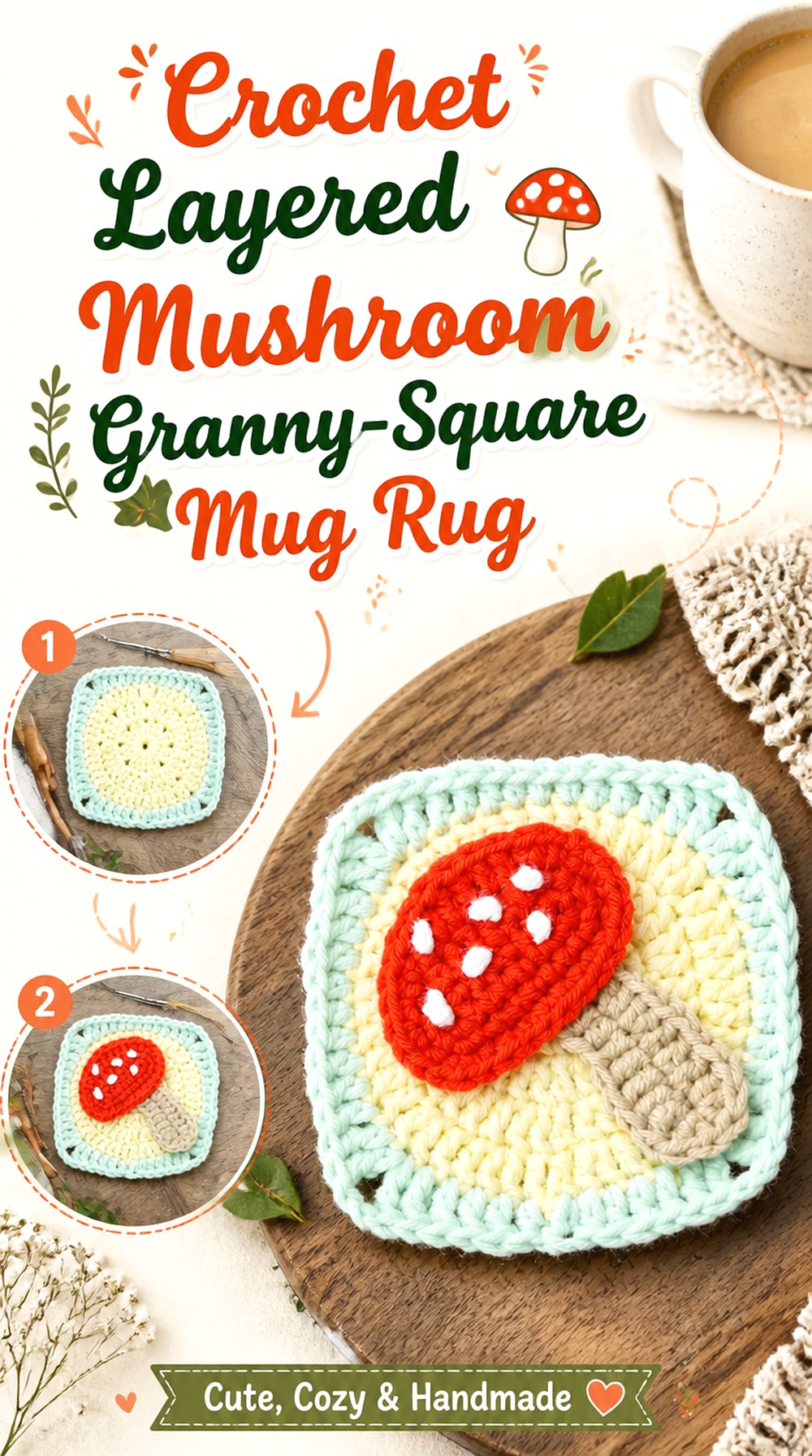
Loopara’s mushroom granny square is the most dimensional square in this collection. The tutorial describes a roughly three-inch finished square that can be used as a standalone coaster and constructs separate mushroom elements that are attached to the base with hot-melt adhesive. The central mushroom is intentionally textured.
Those features make it better viewed as a decorative, compact mug-rug option than as a substitute for a completely flat colorwork coaster. It is also a useful comparison point: not every mushroom square creates its motif inside the same fabric layer. Here, the layered construction itself is the defining feature.
Relief and Cup Stability Compete for Space
A textured mushroom can look striking while the mug is removed, but dimensional detail also takes up physical space. Before regular use, place your intended cup on the completed square and confirm that the base is fully supported. If the cup lands directly on substantial relief, this may work better as a decorative coaster for smaller items than as your primary everyday drink mat.
Adhesive Changes the Care Question
The source materials include hot-melt adhesive, and the tutorial specifically attaches mushroom pieces to the base. That means care cannot be decided by yarn fiber alone. Check the yarn label and consider the adhesive manufacturer’s limitations before washing, soaking, ironing, or exposing the piece to high temperatures.
Compact Scale Requires a Real-Mug Check
Loopara gives an approximate finished size of three inches. That is notably smaller than the five-inch C2C square and the larger potholder designs. A small teacup may fit differently than a wide mug, so verify the footprint instead of assuming that “coaster” automatically means suitable for every drink vessel.
Original Tutorial and Creator Credit
Creator/Site: Loopara
11. Crochet Integrated Mushroom Granny Square Mug Rug

VivCrochets builds the mushroom directly into the developing granny square rather than attaching a completed three-dimensional mushroom to a separate background. The published sample measures approximately 3.54 inches square, and white spot details are added with yarn and a needle after the main square is formed.
That produces a compact square with a relatively integrated visual structure. It is particularly useful for readers who like the framed granny-square aesthetic but want fewer separate layered pieces than the Loopara design. Because it is a small block, this choice makes most sense when paired with a correspondingly compact cup or used as part of a coordinated set.
Integrated Construction Keeps the Motif Connected
The mushroom colors are developed as part of the square itself before the final spot detailing is added. From a mug-rug perspective, that means the main silhouette is not a separately glued component. The practical advantage is not a guarantee of perfect flatness, but it reduces one source of bulky layering compared with a mounted appliqué.
Keep Spot Details Low Enough for the Cup
The source adds the spots with a yarn needle after the square is crocheted. When finishing, avoid creating large knots or excess thickness on either face. A useful final check is to run your fingers across the cup zone and then set the mug down to confirm that the embellishment remains decorative rather than disruptive.
Small Squares Favor Compact Drinkware
At approximately 3.54 inches square in the source sample, this is among the smaller projects in the roundup. If you use a much wider mug, changing yarn weight might alter the size, but it could also affect drape and stitch definition. Follow the designer’s guidance rather than assuming a heavier yarn is an automatic scaling solution.
Original Tutorial and Creator Credit
Creator/Site: VivCrochets
12. Crochet Mushroom Appliqué Granny Square Mug Rug

The Bumbling Busy Bee offers an original mushroom granny-square video in which the mushroom begins as an appliqué concept and is developed into a granny square. Supporting information for designer Elizabeth Goddard’s pattern describes both the mushroom appliqué and the process of turning it into a square, with a square version around four inches across.
This makes the project conceptually different from a graph: the mushroom begins as its own recognizable shape before the surrounding block becomes part of the finished design. For a mug rug, that structure puts visual emphasis squarely on the centered toadstool while still giving you a regular outer footprint.
The Appliqué Is the Visual Anchor
Because the mushroom is treated as a distinct motif before becoming part of the square, it naturally commands more attention than a tiny pixel image. When choosing colors, judge the mushroom and square together rather than selecting each palette independently. Too little contrast around the appliqué can make its edges disappear into the background.
Check Relief Before Calling the Block a Coaster
An appliqué-based square may have a different surface profile from one formed entirely through flat color changes. The exact result depends on the creator’s construction and your tension, so finish one square and perform a cup-stability check. If the motif projects noticeably, the block can still work as decorative table crochet even when you prefer a flatter design for everyday drinks.
Square Size Is Only One Compatibility Test
The supporting pattern information places the standard granny-square version around four inches, but a matching footprint does not automatically mean two unrelated coaster designs will behave the same. Compare thickness, edge shape, and surface relief as well as width if you plan to combine several mushroom styles into one coordinated table set.
Original Tutorial and Creator Credit
Creator: The Bumbling Busy Bee 🐝
13. Crochet Single Mushroom Graph Mug Rug

For a clean midpoint between the rectangular double-mushroom rug and the granny-square options, Divine Debris also offers a nearly square graphed mushroom coaster. The blocked sample is approximately 4.4 by 4.6 inches, with one central mushroom rendered through colorwork and an optional border.
The single graphic keeps the surface visually focused and avoids the dimensional layers of appliqué designs. It also differs from the Mushroom Landscape rug because there is no broad scenic composition to preserve around the cup. This option is especially suited to someone who wants a compact, flat-looking colorwork piece where the mushroom itself is the sole focal image.
A Centered Motif Gives the Set a Simple Rhythm
Repeating one centered mushroom across several coasters can create a more orderly table set than using multiple scenic layouts. If you vary the colors, preserve enough contrast between mushroom and background that each piece still reads as the same design family. The nearly square proportions also make the orientation less visually directional than a long landscape rug.
Colorwork Finishing Matters on Both Faces
Because this is a small standalone coaster, there is no lining to hide untidy yarn management. Keep color changes and ends controlled according to the source’s guidance, particularly if the reverse face will be visible when the coaster is picked up. The goal is not to reproduce the designer’s graph from this article but to use the original source for exact construction.
Blocking Can Refine the Nearly Square Outline
The designer suggests blocking for the pattern, and the published blocked dimensions are about 4.4 by 4.6 inches. If your yarn substitution permits blocking, use the appropriate method to settle the colorwork and edges. Do not force the piece to match the sample dimensions if your fiber, gauge, or tension differs.
Original Tutorial and Creator Credit
Creator/Site: Divine Debris
Which Mushroom Mug Rug Style Should You Choose?
For the flattest-looking graphic approach, start with the Pixel-Duo, Woodland Landscape, Farmhouse Tapestry, or Single-Mushroom Graph designs. The Retro Shaped, Felt-Spot, Embroidered-X, and All-Yarn coasters put more emphasis on the mushroom’s outer silhouette instead of a rectangular background.
Choose the Mini C2C block when stitch texture is part of the appeal. Among granny-square options, VETKA offers a framed block, Loopara emphasizes layered relief, VivCrochets integrates the motif into a compact square, and The Bumbling Busy Bee builds outward from a mushroom-appliqué concept. For maximum table coverage without designing a larger version yourself, the Raffamusa and Lion Brand potholder-scale projects provide the roomiest verified source dimensions in this collection.
Conclusion
These 13 crochet mushroom mug rug ideas show why construction matters as much as the toadstool motif. A graph-based rectangle gives you a broad, comparatively uninterrupted surface; shaped coasters make the mushroom silhouette part of the function; C2C adds pronounced stitch texture; and granny-square designs range from integrated motifs to deliberately layered decoration.
Choose according to the mug footprint, desired surface relief, available table space, finishing method, and how often the piece will be washed—not simply whether you prefer a red or brown cap. When adapting yarn or intended use, confirm how that change may affect size and stability first. Use the credited original tutorials for exact construction details, measurements, stitch information, and source-specific finishing rather than treating these project summaries as substitute patterns.
Frequently Asked Questions
What yarn should I use for a crochet mushroom mug rug?
There is no single yarn that is correct for every design. Several coaster and potholder sources here specify cotton or cotton-based yarn, but the best choice still depends on the tutorial, intended temperature exposure, required absorbency, and care needs. Follow the source and yarn-label guidance, especially if you are substituting fiber or expect the piece to encounter substantial heat.
Can I use a crochet mushroom coaster pattern as a mug rug?
Yes, when its finished footprint suits your mug and intended use. “Mug rug” is often used for a coaster-like mat, but some readers expect enough extra space for a spoon or snack. Make one sample and compare it with your cup. If you want considerably more room, a verified larger design such as the Raffamusa or Lion Brand potholder may be preferable to improvising an untested resizing method.
How can I stop a crochet mushroom mug rug from curling?
First check tension and whether the stitch count and construction match the original tutorial. Borders and appropriate blocking may help certain designs; Divine Debris suggests blocking for its graphed projects, for example. Always choose a blocking method compatible with the yarn. If severe curling remains, investigate the underlying tension or shaping problem rather than stretching the finished piece aggressively.
Are raised mushroom spots practical beneath a mug?
They can be, but the cup should remain stable. A heavily raised spot positioned directly beneath a narrow mug base may create more rocking than a low-profile detail. The Caffeinated Snail specifically uses felt spots to keep its surface flatter, while other designs use embroidery or integrated colorwork. Whichever method you choose, test the completed rug with the actual mug before regular use.
Can I enlarge a mushroom granny square or C2C block for a bigger mug?
Only after checking how the original designer handles sizing. Changing yarn or hook can alter the final footprint, but it may also change thickness, drape, motif clarity, and cup stability. VETKA explicitly notes that square size varies with gauge and yarn. Avoid inventing extra rounds or scaling a color graph unless you understand how that change affects the complete construction.
How should I wash a crochet mushroom mug rug?
Use the yarn-label instructions together with any care guidance from the original tutorial. Mixed-material projects need extra attention: felt, adhesive, appliqués, embroidery, or other embellishments may not tolerate the same treatment as the crocheted base. Loopara and The Caffeinated Snail both use adhesive in their featured designs, so a generic machine-washing recommendation would be inappropriate.


