
14 Crochet Black Cat Bag Charm Ideas for Bags, Backpacks, and Keys
A black cat bag charm can be as understated as a tiny embroidered face or as dimensional as a stuffed cat with paws, a tail, and its own scarf. The 14 ideas below cover noticeably different shapes, including mochi cats, loaf silhouettes, portrait heads, full-body amigurumi, a paw charm, a chunky blanket-yarn version, and a glow-yarn option.
The linked tutorials do not all use black as their displayed main color. Where that happens, the black version is presented here as a color adaptation rather than as a feature claimed by the original designer. You can therefore compare the underlying construction first, then decide how much contrast, texture, hardware, and embellishment you want. Each source is included for the creator’s exact construction details rather than reproducing the pattern here.
Quick List
- Crochet Black Mochi Cat Bag Charm
- Crochet Black No-Sew Scarf Cat Bag Charm
- Crochet Black Cat Face and Dangling Tail Charm
- Crochet Black Bow Kitty Head Bag Charm
- Crochet Black Cat Loaf Bag Charm
- Crochet Solid-Black Mini Cat Bag Charm
- Crochet Black Cat Portrait Keyring Charm
- Crochet Long-Body Black Kitty Bag Charm
- Crochet Compact Black Cat Amigurumi Charm
- Crochet Chunky Black Cat Ball-Chain Charm
- Crochet Black Cat Paw Bag Charm
- Crochet Glow-Accent Black Cat Bag Charm
- Crochet Chubby Black Cat Bag Charm
- Crochet Velvet Black Cat Head Bag Charm
Choosing Yarn and Details That Stay Visible on a Black Cat
Black yarn gives these charms their strong silhouette, but it can also hide stitch texture, facial embroidery, and small shaping details. When the tutorial shows a lighter-colored cat, think about which features would disappear after a black substitution. Pale eyes, a contrasting nose, colored inner ears, a tiny collar, or a restrained embroidered highlight can preserve the cat expression without overwhelming the dark body.
Yarn texture matters too. Smooth cotton or cotton-blend yarn can make small stitches and embroidery easier to distinguish, while chenille, blanket, or velvet yarn creates a softer silhouette but may visually soften fine details. Those are general crochet trade-offs rather than requirements from every source. If you substitute yarn, use the tutorial’s own construction as your starting point and confirm whether its eye size, hook choice, stuffing level, or hardware needs changing with the new material.
Make the Attachment Point as Deliberate as the Cat
A bag charm gets handled differently from a shelf amigurumi. It swings, rubs against fabric, catches on zippers, and repeatedly pulls against one attachment point. Before finishing, inspect where the clasp, ring, loop, or ball chain will transfer that load into the crochet fabric. A decorative loop that looks neat is not automatically the strongest choice for daily use.
Several tutorials below already include keychain hardware, while others emphasize particular straps, rings, or attachment methods. Follow the creator’s construction where provided rather than improvising blindly. For an adaptation, avoid fastening hardware through only one loose strand of yarn. Also consider the bag itself: a compact loaf or head charm is less likely to snag than a cat with long limbs or a projecting tail. If plastic eyes, bells, beads, or other small pieces are used, check them periodically and consider embroidered details when detachable parts are undesirable.
1. Crochet Black Mochi Cat Bag Charm

The mochi-cat silhouette is a good choice when you want a recognizable animal without a long body or several dangling pieces. Monua DIY’s keychain has a rounded body, integrated little-cat proportions, ears, facial embroidery, and optional stripe or two-color detailing. The tutorial includes a solid-color version, which makes an all-black adaptation especially straightforward conceptually.
In black, the broad rounded body becomes the main graphic feature. This style suits bags where you want a soft dimensional charm but do not want legs and a long tail moving independently. Contrast can come from the face alone, or you can keep the expression subtle for a nearly monochrome look.
Keep the Face From Disappearing
On a dark mochi body, black facial stitching can vanish even when it looked clear on the source color. Decide on the eye, nose, and mouth treatment before closing the project. A small amount of cream, gray, gold, green, pink, or another contrasting embroidery color can provide definition without changing the overall black-cat identity.
If you prefer a fully dark palette, texture rather than color may provide the contrast. Slightly thicker embroidery or carefully placed highlights can help, but avoid adding so much bulk that the small face becomes crowded.
Rounded Shapes Need Even Stuffing
The appeal of a mochi cat comes largely from its smooth, compact silhouette. Uneven stuffing can create bumps that are much more obvious on a simple shape than on an animal with many separate limbs. Add stuffing gradually and check the cat from the front, side, and back before closing.
For a bag charm, overstuffing can also make the piece firmer and heavier than expected. The goal is enough support to preserve the silhouette without turning the attachment point into the weak link.
2. Crochet Black No Sew Scarf Cat Bag Charm

This version has much more character movement than the mochi cat. SnapS Tools teaches a no-sew cat keychain in which the ears, arms, legs, and tail are incorporated into the main construction, then finishes the character with embroidered facial details and a small scarf. The source also uses shaping wire for the tail and spring-hook hardware.
A black adaptation lets the scarf become the strongest color accent. Because the cat has several recognizable body features, it reads as a tiny character rather than simply a cat-shaped token. It is a good candidate for a backpack or larger tote where the longer silhouette has enough room to hang without constantly catching on nearby zippers.
Decide Whether a Shaped Tail Fits Your Bag
A shaped tail gives the charm a more expressive outline, but any projecting element can receive more friction during everyday use. The original tutorial includes shaping wire, so watch the creator’s treatment carefully before deciding whether that construction matches how you plan to use the charm.
A charm attached to a display tote experiences different wear from one attached to a school backpack. If your bag is regularly pushed under seats or into crowded storage, a more compact cat may be the more practical choice.
Let the Scarf Do the Color Work
A bright scarf can solve one of the main design problems with black amigurumi: keeping the silhouette dark without losing all visual separation. Red, mustard, teal, lavender, or cream can frame the face and visually divide head from body.
Keep the accent proportional to the cat. An oversized or heavy embellishment can pull the body sideways when the charm hangs. After adding the scarf and hardware, suspend the cat from the actual clasp and check whether it still faces the direction you intended.
Check Every Integrated Feature Before Closing
Low-sew construction reduces the number of separately attached parts, but placement still matters. Before the body becomes difficult to access, compare the arms, feet, ears, and tail from several angles. Small placement differences can make the finished cat twist or appear asymmetrical when suspended.
That checkpoint is especially useful with black yarn because stitch landmarks can be harder to see. Strong overhead lighting and a light-colored work surface make counting and alignment considerably easier.
Original Tutorial and Creator Credit
Creator: SnapS Tools
3. Crochet Black Cat Face and Dangling Tail Charm

Ngochan Crochet’s design takes an unusual middle ground between a head-only charm and a full amigurumi. The primary form is a cat face, but a dangling tail extends below it, creating movement without requiring an entire body. The tutorial specifically presents the finished piece as a keychain or backpack charm and demonstrates the face and tail as defining features.
Worked in black, this can become one of the cleanest graphic options in the collection. The face stays compact against the bag while the tail supplies the feline silhouette. It also leaves room to play with contrasting embroidery instead of relying on several body pieces to create visual interest.
Balance the Tail Against the Head
A dangling tail changes how the charm hangs. If the tail is relatively dense or heavy, it can pull the face downward; if it is very light, it may curl or move more freely. Follow the tutorial’s construction before changing yarn weight, because a substitution can alter that relationship.
Once assembled, hang the piece for a few minutes rather than judging it flat on a table. That reveals whether the face stays upright and whether the tail falls in a pleasing direction.
Use Contrast Where the Viewer Actually Needs It
Because the body is absent, the eyes, nose, whiskers, and ear outline carry most of the cat expression. On black yarn, choose facial details with enough contrast to remain visible at bag-viewing distance rather than only close up.
You do not need several bright colors. One light eye color plus a restrained nose or whisker treatment can be enough. If you prefer embroidered eyes instead of plastic components, check how the chosen thread sits on the source fabric before committing to both sides.
Original Tutorial and Creator Credit
Creator: Ngochan Crochet
4. Crochet Black Bow Kitty Head Bag Charm

A bow changes a simple cat head into a styled accessory, which makes Yarn Symphony’s design useful when you want the charm to coordinate with a handbag rather than look like a miniature toy. The tutorial covers a kitty head started without a magic ring, no-sew ears, a hanging strap, a crochet bow, and facial details.
For the black-cat version, the bow can become the focal color while the head remains understated. This is a compact format for smaller handbags because there are no full-size legs or long body to swing against the bag. The strap also creates a distinctly different hanging profile from a metal ring fixed directly to the top of a stuffed cat.
Match the Bow to the Bag, Not Just the Cat
The bow is the easiest element to coordinate with hardware, lining, or the bag’s accent color. A muted neutral produces a more polished accessory, while a saturated bow gives the black head stronger visual contrast.
Before choosing yarn, consider scale. A thick bow yarn can dominate a small head even when the color is attractive. Keeping the bow light enough to sit cleanly against the cat will also reduce its tendency to rotate the charm while hanging.
Inspect the Strap Under Real Tension
The tutorial includes a crocheted strap, which means the yarn itself is part of the suspension system. Crochet loops can stretch differently depending on fiber, stitch density, and how much the finished charm weighs.
After finishing the strap, attach the charm to the intended clasp or bag loop and apply gentle hand tension before regular use. Look for widening stitches, twisting, or a connection point that pulls out of shape. Reinforcement should be based on the tutorial’s structure rather than added where it might distort the head.
Original Tutorial and Creator Credit
Creator: Yarn Symphony
5. Crochet Black Cat Loaf Bag Charm

The cat-loaf shape is instantly different from a standing amigurumi. ETM’s Studio describes the pose as a cat sitting in a loaf position, where the limbs are not visibly projecting, and specifically notes that a keychain ring can be attached to use the finished piece as a cat keychain. The tutorial also covers the body, ears, tail, facial details, and a multicolor variation.
In black, the result can look almost like a tiny rounded shadow-cat hanging from the bag. The tucked-in silhouette is useful when you want dimensional crochet without several appendages. A tail still communicates the animal from the side and back, while the face prevents the compact black form from becoming visually anonymous.
A Loaf Benefits From a Clean Silhouette
Because the limbs are visually tucked away, the outer contour matters more than on a standing cat. Inconsistent tension can make one side appear flatter or wider. Rotate the work regularly while crocheting and assess the form before final closure.
Black yarn can hide small surface irregularities from a distance, but it can also make the overall silhouette more noticeable. Good shaping therefore matters more than adding many decorative details.
Think About Where the Tail Will Sit
The tail adds identity to a loaf cat, yet it also determines how neatly the charm rests against a bag. Before permanently finishing the hardware, see whether the tail points toward the bag fabric, away from it, or sideways.
If the intended bag has open-weave fabric, decorative chains, or many zipper pulls, a projecting tail may encounter more snags. For a smooth leather-look or tightly woven fabric bag, the same feature may be less troublesome.
Original Tutorial and Creator Credit
Creator: ETM’s Studio
6. Crochet Solid Black Mini Cat Bag Charm

If you specifically want a tutorial that acknowledges a black-cat version rather than adapting a different displayed color, Chizora Crochet is a strong match. The video includes a chapter labeled “Solid-color (Black Cat or Siamese)” before moving into embroidered details, ears, and additional bicolor and tricolor cat variations.
That makes this a useful reference for a classic mini black cat rather than a themed variation. The silhouette is small enough for keychain or bag use, but there is still enough surface area to personalize facial embroidery. It also provides a useful comparison point if you are deciding whether you want a pure black cat or a tuxedo-style version with a contrasting area.
Decide How Solid “Solid Black” Should Be
A black body does not require every detail to disappear into the same shade. Eyes, whiskers, ear accents, or a nose can be used strategically while the fur remains solid black.
Start with the finished expression you want. A high-contrast face reads clearly from across the room; subtler dark-gray embroidery feels more understated. Neither approach changes the main body color, but they create very different bag-accessory effects.
Use the Variations as a Comparison Tool
The source also includes multiple color-layout options, which can help you decide whether an all-black cat actually gives you the look you want. Watching where other color blocks appear can clarify which areas could accept a small white chest, muzzle accent, or other intentional contrast if you later change direction.
Do not transplant stitch-by-stitch color changes from this article. Use the original tutorial for the actual placement and construction of any variation you choose.
Original Tutorial and Creator Credit
Creator: Chizora Crochet 🧶
7. Crochet Black Cat Portrait Keyring Charm
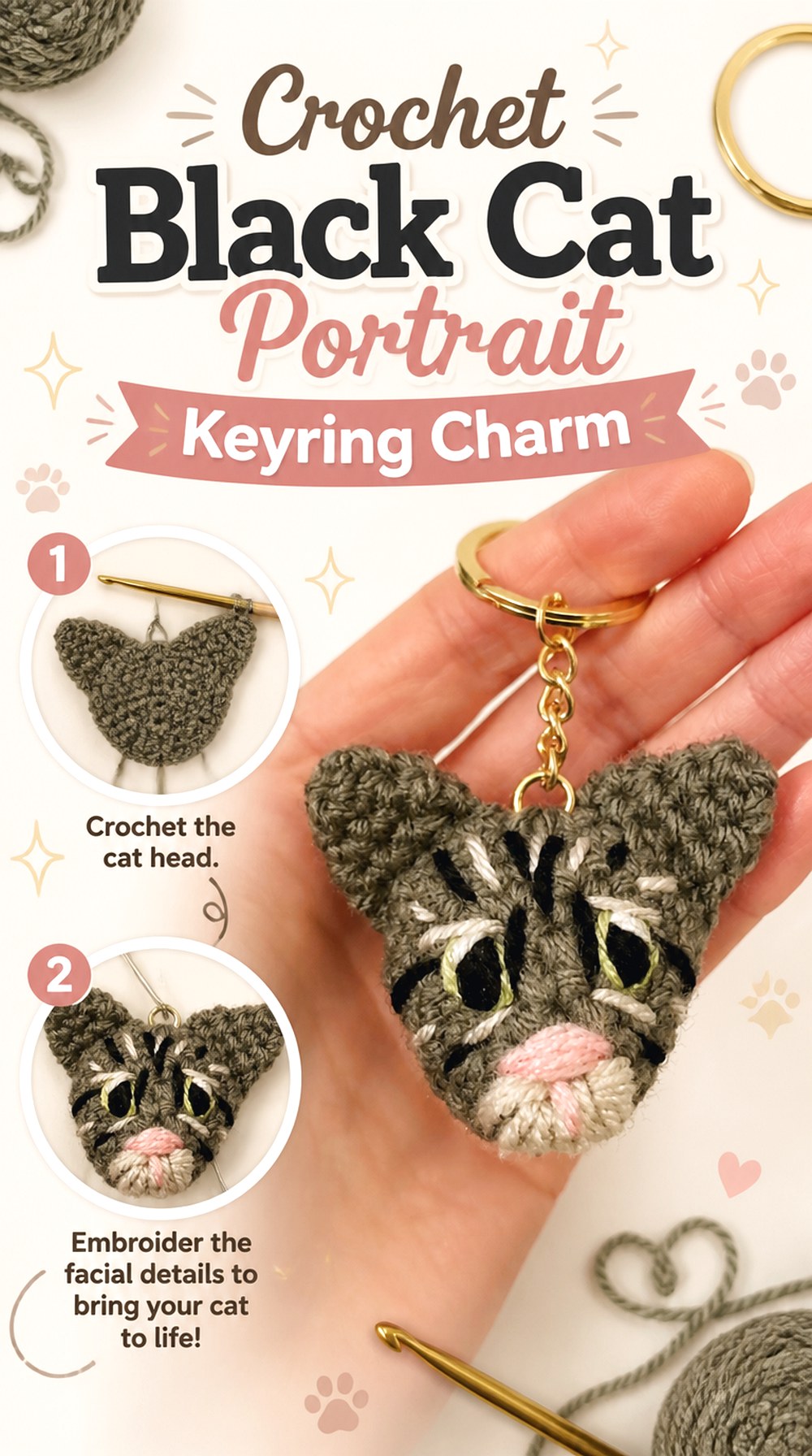
Yorkshire Knitter’s cat keyring is more portrait-like than the simple ball-shaped heads elsewhere in this list. The written tutorial shapes a forehead and muzzle, adds separate ears, secures a keyring at the top, and uses embroidery to develop the nose and eyes. The designer also encourages creative variation in the facial features.
That makes the design especially appealing if the goal is to evoke a particular black cat rather than make a generic feline mascot. A distinctive eye color, muzzle expression, or ear positioning can supply identity while the main yarn stays black. The charm is still compact, but the facial shaping gives it a more sculpted character.
Plan the Expression Before Embroidering
On a portrait-style charm, a few millimeters of visual placement can noticeably change the expression. Before committing to embroidery, use removable markers or short contrasting yarn scraps to preview eye and nose positions.
This is particularly helpful on black crochet because it can be difficult to see where the center of the face falls. Compare both sides from normal viewing distance, not only while holding the work close to your eyes.
Treat the Top Join as a Structural Detail
Yorkshire Knitter specifically discusses attaching the keyring securely with multiple stitches at different angles. That is relevant to a bag charm because the top connection takes repeated pulling as the charm moves.
When adapting the colors, avoid letting decorative choices interfere with that structural join. After attachment, gently rotate the ring in several directions and observe whether the head deforms or the securing yarn shifts.
Customize Without Pretending It Is an Exact Pet Replica
Eye color, embroidery, and ear presentation can suggest a favorite black cat, but a tiny crochet portrait has limited space for markings. Choose one or two recognizable traits rather than forcing every feature into a small surface.
That restraint usually produces a clearer charm. If exact resemblance matters, compare a front-facing photo of the cat with the finished crochet face before weaving in the final embroidery ends.
Original Tutorial and Creator Credit
Creator/Site: Yorkshire Knitter
8. Crochet Long Body Black Kitty Bag Charm

BuddyRumi’s kitty keychain provides a larger, more elongated character option than the compact heads and loaf cats. The original page describes the finished kitty as suitable for a purse, backpack, desk, or keys and gives an approximately 11 cm/4-inch finished length, with the project supported by a three-part video tutorial.
That extra length creates more visual presence on a large tote or backpack. A black version can stay monochrome through most of the body, allowing the face and hardware to supply the contrast. Because this charm occupies more vertical space than a cat head, it is worth comparing its finished scale with the exact location where you intend to clip it.
Match Scale to the Attachment Location
A charm that looks nicely proportioned on a backpack may appear oversized on a small shoulder bag. BuddyRumi provides a finished size for the source version, but any yarn substitution can alter that result.
Before starting, measure the empty space below your chosen bag ring or zipper pull. This simple check can prevent the finished kitty from hanging below the bag base or competing with handles and other accessories.
Watch for Rotation on a Longer Body
Longer charms can rotate more noticeably as you walk because more of the body sits below the attachment point. Once the hardware is attached, suspend the cat and see whether its face naturally points outward.
If it constantly turns sideways, first check the hardware orientation and top connection rather than adding weight elsewhere. A small change at the suspension point can matter more than altering the stuffed body.
Keep Added Decoration Light
A collar, tiny bow, or embroidered chest mark can look good against black, but larger attached accessories increase both weight and snag potential. Consider the charm’s longer silhouette before adding anything that projects outward.
If you plan to use it daily, prioritize securely embroidered decoration over loosely tied or heavily beaded additions. Care also depends on the yarn and embellishments chosen, so follow the yarn label and the source’s project guidance rather than assuming the finished charm is machine washable.
Original Tutorial and Creator Credit
Creator/Site: BuddyRumi
9. Crochet Compact Black Cat Amigurumi Charm

DIY Fluffies offers a more traditional small cat-plush keychain, making this a good choice when you want the complete animal rather than a stylized head or compressed loaf. The creator’s YouTube tutorial is specifically for a cat amigurumi keychain and is paired with a written pattern from DIY Fluffies.
A black version can feel classic and understated, particularly when paired with simple embroidered facial contrast. Compared with the chubby and chunky cats later in the list, this one is better treated as a compact conventional amigurumi silhouette. It suits readers who want their bag charm to look like a miniature crochet cat first and a fashion accessory second.
Smaller Crochet Magnifies Tension Differences
When the finished animal is compact, a slight difference between two ears, sides of the body, or facial placements can look proportionally larger. Stop occasionally and compare paired features rather than waiting until everything is attached.
Dark yarn increases that challenge. A pale towel or sheet of paper beneath your work can improve stitch visibility without changing the yarn itself, especially when counting near decreases or joins.
Keep the Hardware Proportional
Large lobster clasps can visually overwhelm a small amigurumi, while very delicate findings may not suit the intended bag. Compare hardware width with the finished cat before permanently attaching it.
The clasp should also open far enough to fit the actual bag ring or zipper hardware. That compatibility check is easy to overlook when focusing on the crochet, yet it determines whether the finished charm can be used where you planned.
Original Tutorial and Creator Credit
Creator: DIY Fluffies
10. Crochet Chunky Black Cat Ball Chain Charm

For a noticeably different scale and texture, My Fingers Fly publishes a cat keychain made with Bernat Blanket yarn and a ball-chain attachment. The original version is approximately four inches tall, uses stuffing optionally, and is explicitly suggested for keychains and backpack charms. The page also states that the cat color can be customized.
Worked in black, this is the substantial, plush-looking option of the roundup. It will have more visual weight than a smooth sport- or DK-weight keychain, so it suits a larger backpack, project bag, or tote where the chunky texture will not overwhelm the hardware.
Bulky Yarn Changes More Than Size
A thick yarn produces fewer visible stitches across a small feature, so facial details need to be judged at the scale of the finished fabric. Tiny embroidery that works on smooth cotton may disappear into blanket yarn.
The larger fibers can also change how firmly the body holds a shape. Follow the source construction first and resist shrinking or enlarging details independently unless you understand how those changes affect the overall proportions.
Ball Chain Needs Its Own Check
The original project uses ball chain rather than a conventional lobster clasp. That creates a different look and a different connection to the bag.
Before relying on it for frequent use, make sure the chain closes correctly and fits through the intended attachment point. Also check where the chain passes through the crochet so repeated movement is not concentrating friction on one visibly loose strand.
Original Tutorial and Creator Credit
Creator/Site: My Fingers Fly
11. Crochet Black Cat Paw Bag Charm

A paw charm gives you cat symbolism without making another full animal. Moon chet’s tutorial is devoted to a crochet cat-paw keychain, so the paw pad arrangement and compact keychain form become the main design rather than a secondary detail on an amigurumi.
For a black-cat version, use black as the dominant paw color and choose the pads according to the contrast level you want. Pink creates the familiar “toe bean” look, while gray, plum, or another muted shade can make the accessory feel less cartoon-like. This is also one of the lowest-profile choices for a small handbag because it has no tail, limbs, or stuffed head projecting in several directions.
Let the Pad Color Establish the Mood
On a black base, the paw pads become the obvious focal point. High-contrast pink feels playful; a darker accent feels more graphic and understated.
Lay the chosen yarns side by side before crocheting. Colors that appear different in separate skeins can look surprisingly similar once surrounded by black. If the pads need to remain clearly readable, test a small section or photograph the yarn combination from normal viewing distance.
A Paw Is Useful Where Snagging Matters
A simple paw shape has fewer projecting elements than a full cat, which can make it appealing for bags with multiple straps, decorative chains, or external pockets. That does not make it snag-proof, but it reduces the number of tails and limbs available to catch.
Pay particular attention to the top attachment point because the entire charm hangs from a relatively compact fabric area. Follow the tutorial’s hardware treatment rather than piercing an arbitrary stitch after the paw is finished.
Original Tutorial and Creator Credit
Creator: Moon chet
12. Crochet Glow Accent Black Cat Bag Charm
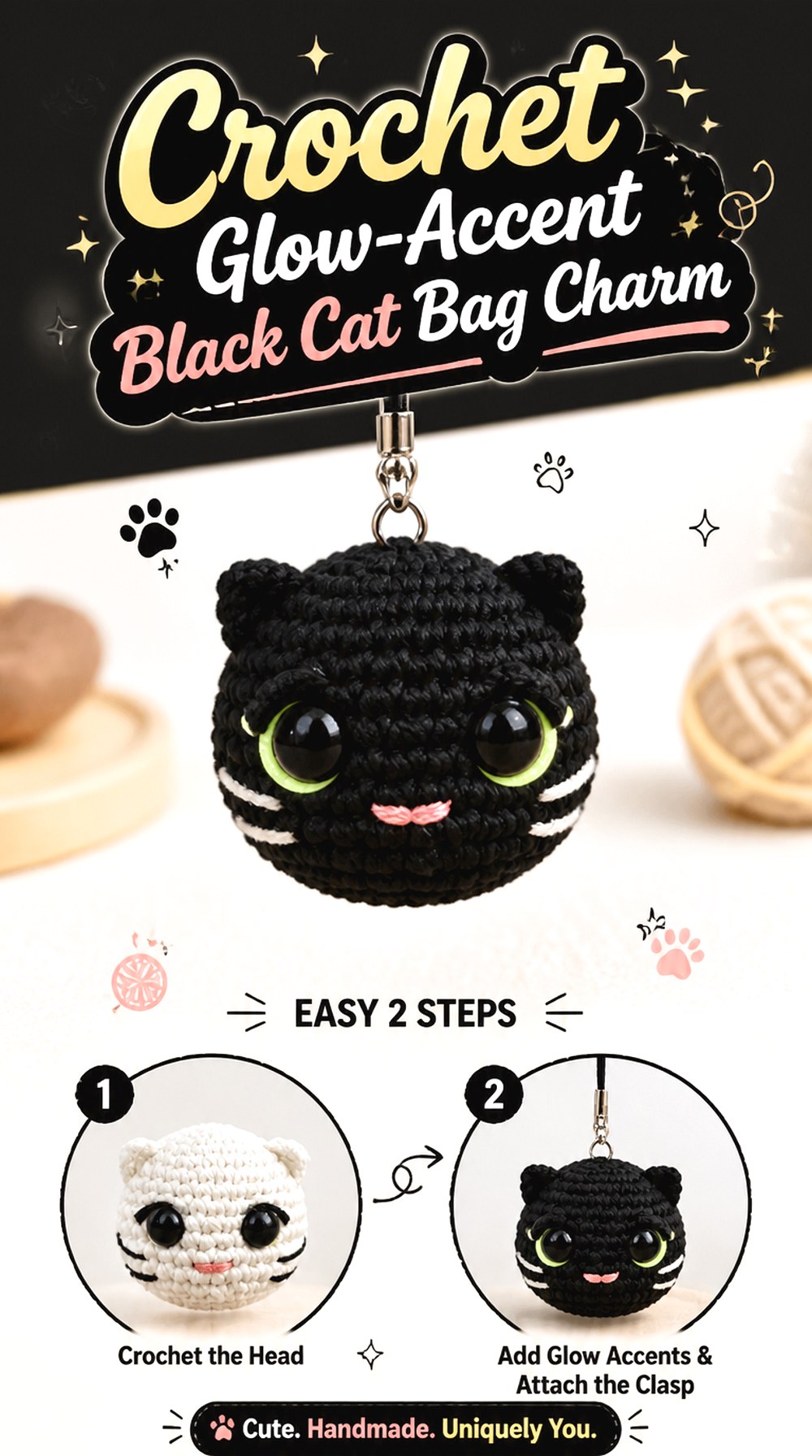
byOana’s cat keychain is an especially useful base for experimenting with yarn appearance. The original tutorial says different yarns and colors can be used, notes that cotton or a cotton blend works well, and shows a version made with glow-in-the-dark yarn. It also explains that finished measurements vary with the yarn and hook selected.
For this black-cat idea, keep black as the primary visual identity and use a glow yarn only where it suits your interpretation—or reverse the idea and make a black daylight version from a construction originally demonstrated with glow yarn. The important distinction is that the glow effect comes from material choice rather than a different cat silhouette.
Treat Novelty Yarn as a Material Change
Glow-in-the-dark yarn is not automatically interchangeable with every standard yarn. Thickness, firmness, fiber content, and surface texture can influence the size and feel of a small stuffed keychain.
byOana explicitly notes that finished measurements depend on yarn and hook choice. If you combine black yarn with a novelty accent, compare their thickness before starting so one area does not unexpectedly become denser or bulkier than another.
Keep the Effect Intentional
A small glow accent can create more visual impact than covering every feature. Consider whether you want the eyes, facial embroidery, a tiny collar detail, or the entire cat to react differently in low light.
The source uses glow-in-the-dark yarn for its example, but your black adaptation does not need to reproduce that exact color treatment. Use the original page for the cat construction and treat the black-and-glow palette as your own surface-design choice.
Original Tutorial and Creator Credit
Creator/Site: byOana
13. Crochet Chubby Black Cat Bag Charm

The chubby-cat silhouette from littlespot is broader and more rounded than a conventional miniature cat. The creator’s tutorial covers the body, ears, tail, and face and explicitly encourages makers to use different colors or mix and match them to create a favorite cat.
That makes solid black a natural color adaptation while preserving the source’s defining rounded shape. A chubby black cat has enough surface area for expressive eyes and whiskers, so it can remain readable even when the body itself is dark. Visually, it works especially well on a plain tote where the fuller silhouette can stand out rather than competing with a busy print.
Roundness Depends on Consistent Density
A chubby design looks intentional when both sides expand and taper evenly. Loose areas may become more visible after stuffing, while excessively tight sections can flatten the intended curves.
Check the body before final closure and redistribute stuffing rather than forcing extra filling into one area. If you substitute a very different yarn, remember that the same construction can produce a noticeably different amount of firmness and bulk.
Give the Tail Enough Clearance
The tail is part of what distinguishes the chubby cat from a plain stuffed oval. Once it is attached, check how the cat hangs against a vertical surface that approximates your bag.
If the tail becomes trapped between the cat and bag, it may disappear visually or receive constant friction. A different clasp orientation—not an arbitrary change to the pattern—may be enough to let the silhouette display more clearly.
Original Tutorial and Creator Credit
Creator: from littlespot
14. Crochet Velvet Black Cat Head Bag Charm

Amikara’s cat keychain uses velvet yarn and concentrates the design into a stuffed head with separate ears. The original pattern identifies the project as a bag-or-key accessory, uses size-4 velvet yarn, allows an optional inner-ear color change, and attaches the keychain at the top of the head.
A black velvet version would have a softer, plushier surface than the smooth portrait head earlier in the article. That texture is the main reason to choose this idea: it gives you a compact charm without sacrificing the tactile appeal associated with chenille-style amigurumi. A contrasting inner ear or embroidered feature can keep the black head visually defined.
Velvet Can Hide Fine Placement Cues
Plush yarn often makes individual stitch anatomy less obvious than smooth cotton. When working a dark velvet shade, that visibility challenge becomes even stronger. Use stitch markers generously wherever the original tutorial depends on accurate placement.
Also inspect the face before completely closing the head. If one eye or ear is slightly misaligned, the fuzzy surface can make it harder to relocate the correct stitch later without disturbing nearby fibers.
Check the Top Hardware Against the Plush Fabric
Amikara attaches the keychain at the top of the head, so that small area supports the full charm. Velvet is visually soft, but the hardware connection still needs to remain stable under movement.
After attaching it according to the tutorial, gently pull in several directions and watch the surrounding stitches. If the fabric visibly opens or the hardware shifts, revisit the creator’s attachment method before putting the charm on a frequently used bag.
Original Tutorial and Creator Credit
Creator/Site: amikara
Which Black Cat Bag Charm Style Should You Choose?
The best option depends less on which cat is cutest and more on how you want the charm to behave. For a compact accessory with fewer projecting parts, look at the mochi cat, loaf, portrait head, bow head, velvet head, or paw. If movement is part of the appeal, the dangling-tail face and longer full-body cats provide more of it.
Texture creates another useful dividing line. The chunky My Fingers Fly version and velvet amikara head make the yarn itself a major design feature, while the smoother mini-amigurumi options emphasize shape and embroidery. For unusual visual interest, byOana’s yarn-flexible project provides a route to glow accents. If an unmistakably black-cat source matters most, Chizora Crochet explicitly includes a solid-color black-cat section.
Conclusion
These 14 crochet black cat bag charm ideas cover much more than fourteen color variations of one amigurumi. You can choose a low-profile paw, sculpted portrait head, bow-wearing kitty, rounded mochi cat, tucked loaf, chubby body, chunky blanket-yarn cat, velvet head, dangling-tail face, or a longer full-body companion.
For everyday use, consider the relationship between size, projecting pieces, yarn texture, hardware, and the bag you plan to decorate. Black yarn also makes contrast and good lighting more important, so decide early how visible you want the face to be. Once you have chosen the silhouette, use the credited original tutorial for its exact construction, placement, and finishing details rather than trying to recreate those instructions from a roundup.
Frequently Asked Questions
Can I make a tutorial in black if the creator uses another cat color?
Usually, changing the main yarn color is a reasonable surface-level adaptation when it does not alter the construction, but check the original tutorial before assuming every color change is simple. Some designs include planned markings or contrasting sections. Sources such as littlespot and byOana explicitly allow color choice, while Chizora Crochet specifically includes a solid-color black-cat option.
How can I see my stitches more clearly when crocheting with black yarn?
Use strong neutral or daylight-style illumination and work over a pale, non-patterned surface. A light stitch marker can make the beginning of rounds easier to locate. Smooth yarn generally exposes stitch anatomy more clearly than fuzzy velvet or chenille, although the exact effect depends on the fiber and twist. Avoid relying on feel alone in shaping sections where accurate placement affects ears, feet, or facial alignment.
Should I use safety eyes or embroidered eyes on a bag charm?
Both can work visually, but they create different considerations. Plastic eyes provide a strong three-dimensional look, while embroidery removes a detachable facial component and can be easier to coordinate with a black body. Follow the chosen tutorial for any eye placement that affects construction. If the charm may be handled by a young child, or if small detachable parts are otherwise a concern, choose an appropriate construction and treat the item according to its intended use rather than assuming a bag charm is a child-safe toy.
What hardware works best for a crochet cat bag charm?
There is no single best fitting for every project. Lobster clasps, spring hooks, key rings, ball chains, and crocheted loops all behave differently and must also fit the hardware already on the bag. Start with the creator’s method when the tutorial includes one. Whatever you choose, inspect how the load is distributed into the crochet fabric and periodically check for stretched stitches, loosened yarn, or opening hardware.
Can I substitute chenille, blanket yarn, or velvet for smooth yarn?
Sometimes, but the result may change substantially in size, weight, stitch visibility, and firmness. A heavier finished cat also places more load on its attachment point. Rather than automatically keeping every other component unchanged, compare your substitute with the tutorial yarn and confirm whether the hook, eye size, stuffing, and hardware still make sense. If the source gives substitution advice, prioritize that guidance over a generic rule.
How do I keep a black cat charm from looking like an undefined dark shape?
Preserve one or two high-value visual cues. Pointed ears, a visible tail, contrasting eyes, a tiny nose, whiskers, inner-ear color, or a collar can be enough to make the silhouette immediately readable. More detail is not always better on a small charm. Hold the unfinished piece at roughly the distance from which someone would normally see it on a bag; if the face disappears, increase contrast selectively rather than covering the entire cat with embellishment.


