18 Crochet Upcycled Cardigan Ideas for Giving Old Fiber a New Life
An upcycled crochet cardigan can begin with very different raw materials. One maker might rescue an old granny-square blanket and reshape it into wearable fabric, while another might combine partial skeins, mismatched leftovers, or small yarn scraps into a completely new cardigan. Those starting points affect nearly every decision that follows, from fit and weight to color placement and finishing.
The 18 ideas below cover both approaches. You’ll find cardigans made from reclaimed blankets, patchwork scraps, hexagon constructions, stripes, floral motifs, pockets, textured panels, and even woven-in yarn remnants. Along with the original tutorials, each idea highlights practical considerations such as protecting cut crochet, matching scrap yarns, controlling garment weight, planning motif placement, and checking fit before irreversible changes.
Quick List
- Crochet Reclaimed Granny Blanket Bell-Sleeve Cardigan
- Crochet Thrifted Blanket Panel Cardigan
- Crochet Reinforced Vintage-Afghan Cardigan
- Crochet Unpicked Granny-Square Thrift Cardigan
- Crochet Two-Seam Blanket Cocoon Cardigan
- Crochet Scrap-Patch Pocket Cardigan
- Crochet Scrappy Blanket-Style Oversized Cardigan
- Crochet Solid-Hexagon Scrap Cardigan
- Crochet Textured Mixed-Skein Button Cardigan
- Crochet Framed Patchwork Button Cardigan
- Crochet Short-Sleeve Scrap Hexagon Cardigan
- Crochet Six-Color Granny-Square Cardigan
- Crochet Leftover-Yarn Flower-Square Cardigan
- Crochet Three-Color Stash-Buster Pocket Cardigan
- Crochet Bold-Stripe Scrap Cardigan
- Crochet Sculpted-Square Patchwork Cardigan
- Crochet Woven-Scrap Sleeveless Cardigan
- Crochet Slouchy Textured Scrap Cardigan
Choose What You Are Actually Upcycling
“Upcycled cardigan” can describe two substantially different projects. The first starts with an existing textile—often a thrifted granny-square blanket or an older crocheted afghan—and preserves as much finished fabric as possible. The second turns unused yarn into wearable fabric before those leftovers become waste. Both approaches appear in this list.
Existing crochet deserves extra inspection because weakened joins, felted areas, broken strands, or fragile edges can become structural problems once the textile carries the weight and movement of a garment. Cutting also requires more caution than simply separating motifs at their joins. Some of the featured creators deliberately reinforce crochet before cutting, while another approach unpicks existing seams instead.
With yarn scraps, the key question changes: can the leftovers behave consistently enough to become one comfortable fabric?
Match Scrap Yarn by Fabric Behavior, Not Just Color
A colorful pile of leftovers may look coordinated without crocheting consistently. Yarn weight, elasticity, fiber content, twist, and previous washing can all influence gauge and drape. A thick, springy scrap placed beside a thin, relaxed one can change motif dimensions or create uneven sections even when the colors work beautifully together.
For garments, sorting scraps into broadly compatible groups before choosing a design is usually more useful than sorting by color alone. Kiks + Jack Crochet, for example, specifically frames its scrap cardigan around leftover skeins that can work together in the same garment, while several motif-based projects give you smaller units in which to distribute limited colors.
When fibers differ, treat care instructions conservatively. Follow the requirements of the most delicate yarn or embellishment involved, and swatch questionable combinations before committing the entire stash.
Fit Checkpoints Matter More When Materials Are Reclaimed
Reclaimed materials can restrict where adjustments are possible. A blanket has a fixed width and motif layout; a handful of leftover skeins may run out before a symmetrical section is complete. That makes early fit checks especially valuable.
For blanket conversions, compare the available fabric with the wearer’s shoulder width, arm depth, intended body length, and desired overlap before making permanent cuts. If the construction allows it, pinning or loosely positioning the textile around the body first can reveal whether the finished cardigan is likely to feel bulky or restrictive. Heavy crochet can also lengthen under its own weight.
For scrap-built cardigans, periodically compare matching pieces and motifs rather than assuming equal stitch counts will always produce equal dimensions. Different leftover yarns can change gauge. Finished measurements—not merely the name of a size—are the safer checkpoint when substituting materials.
1. Crochet Reclaimed Granny Blanket Bell Sleeve Cardigan
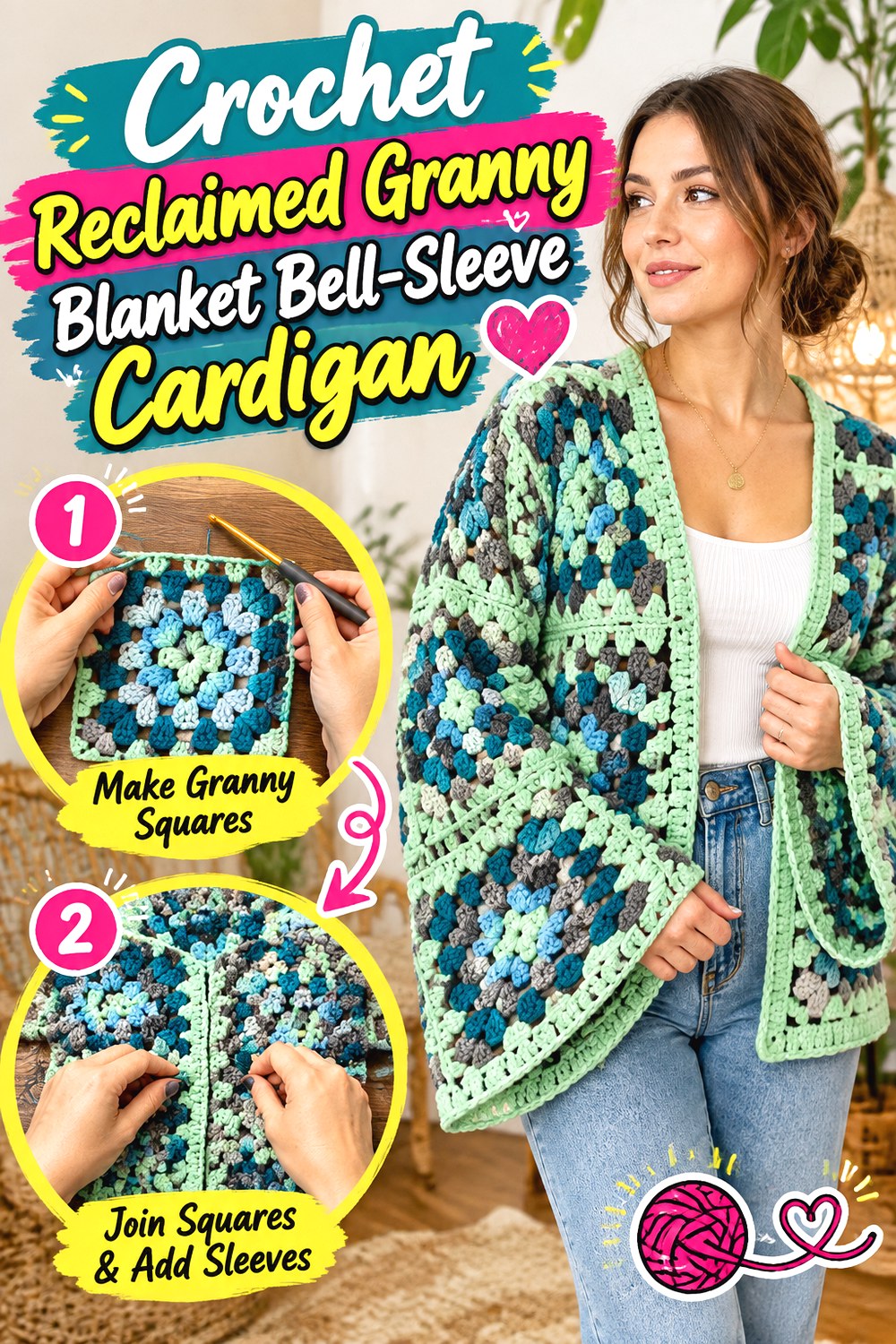
A thrifted granny-square blanket becomes the main fabric in this cardigan transformation from Confessions of a Refashionista. Instead of crocheting an entire sweater from new yarn, the project makes the existing motif field the visual centerpiece and reshapes it into a wearable layer. The creator also demonstrates a bell-sleeve variation, giving the reclaimed textile a more intentional garment silhouette rather than leaving it looking like a blanket simply folded around the shoulders.
This idea suits a blanket whose colors and motifs are already worth preserving. Before choosing it, look closely at the condition of the joins and decide which sections deserve the most visible placement on the finished cardigan.
Preserve the Strongest Blanket Sections
An older blanket may have experienced very different wear at its center, borders, and corners. Before deciding where the cardigan fronts, back, or sleeve areas will fall, inspect the crochet in good light. Loose joins and weakened yarn are better addressed before the textile starts flexing as clothing.
If one motif is damaged, repositioning the garment layout may be preferable to placing that weakness at an underarm or another high-movement area. Keep repair yarn compatible in weight and behavior when possible.
Treat Sleeve Weight as a Fit Issue
Bell sleeves create visual drama, but extra fabric toward the cuff also adds weight. With a substantial reclaimed blanket, that weight may pull differently from a cardigan crocheted in a lighter yarn.
Try to assess the blanket’s drape before committing to an exaggerated sleeve shape. If the original textile already feels dense or heavy, a less expansive sleeve may be more comfortable. The tutorial should remain the reference for the actual transformation method; any fit adaptation needs to respect how the original crochet is stabilized.
Original Tutorial and Creator Credit
Creator: Confessions of a Refashionista
2. Crochet Thrifted Blanket Panel Cardigan

Mel’s Yarniverse approaches upcycling with another thrift-store blanket transformation, but the finished effect reads more like deliberately reorganized garment panels. The original crochet supplies the decorative body of the cardigan, allowing an already completed textile to do much of the visual work rather than recreating similar motifs from scratch.
This option is worth comparing with the other reclaimed-blanket ideas because the available textile becomes a design constraint rather than merely a yarn source. Motif scale, border placement, and the blanket’s original dimensions can determine where the strongest visual sections land. A large graphic motif may work beautifully across the back, for example, while a badly placed border can make the two fronts feel unbalanced.
Plan the Blanket Before You Separate It
Photographing or sketching the blanket before altering it can help you evaluate the entire motif distribution at once. Pay particular attention to unusually strong border treatments, directional motifs, or sections where colors repeat heavily.
The goal is not necessarily perfect symmetry. Instead, decide which visual differences look intentional. Once an existing textile is divided, rearrangement becomes more limited, so the layout deserves more attention than it might in a cardigan built from individual new motifs.
Check Sleeve-to-Body Balance
A reclaimed body and newly formed sleeve area may not have identical drape. If one portion uses denser crochet, its visual and physical weight can dominate the finished piece.
Compare both sleeves against each other as you work, and check how their weight affects the shoulder line. General garment guidance favors assessing the cardigan while it is hanging naturally rather than only flat on a table, because gravity can reveal stretching that is difficult to predict beforehand.
Original Tutorial and Creator Credit
Creator: Mel’s Yarniverse
3. Crochet Reinforced Vintage Afghan Cardigan

This vintage-afghan conversion from Ashton Dodson stands out because it addresses one of the most consequential questions in crochet upcycling: what happens when you need to cut an existing crocheted textile? The project uses an old crochet throw and combines cutting, sewing, and additional crochet to turn it into a cardigan. The creator visibly reinforces the work around the altered areas rather than treating crochet like ordinary woven yardage.
That makes this a useful option for a blanket whose overall fabric is appealing but whose existing motif joins do not naturally separate into the garment shape you want. Cutting increases the stakes, however, because an unsecured crochet loop can continue unraveling beyond the intended edge.
Reinforce Before Irreversible Cuts
Crochet fabric is formed from interconnected loops, so cutting directly through it can release live structure. A tutorial specifically designed around cutting crochet is therefore much safer to follow than improvising from a sewing-only garment refashion.
Before altering a sentimental or irreplaceable afghan, practice any stabilization method on a disposable crochet swatch made with similar yarn. That lets you observe whether the yarn slips, frays, or separates when handled without putting the original textile at risk.
Support High-Stress Seams
A newly stabilized edge can still become a structural seam once the textile is worn. Underarms, shoulders, and sleeve attachment areas experience repeated movement, while a long cardigan body adds vertical weight.
Check these regions after the garment hangs for a while. If the edge begins to distort, the solution should preserve the secured crochet rather than placing extra strain directly on fragile loops. The creator’s construction sequence is the appropriate reference for how the cut sections are actually contained.
Original Tutorial and Creator Credit
Creator: Ashton Dodson
4. Crochet Unpicked Granny Square Thrift Cardigan

Not every blanket upcycle requires cutting through crochet. Creativebug presents an alternative in which an existing granny-square blanket is taken apart at its joins so the motifs can be reorganized for a sweater. The article specifically demonstrates the transformation using a thrifted blanket, making it a particularly direct example of textile reuse.
This approach can preserve more of each original granny square because the motifs themselves remain intact. It is especially appealing when the blanket consists of clearly separable squares with accessible joining yarn. The trade-off is time: carefully undoing joins may be slower than cutting, and older yarn can be stubborn or fragile where it has been seamed for years.
Unpick Joins When the Grid Allows
If the joining yarn can be identified separately from the motifs, controlled dismantling may give you cleaner reusable components. Work slowly rather than pulling aggressively; a strand that appears to belong only to a seam may also secure an edge or yarn tail.
Keep removed squares organized as you go. Once many similar motifs are loose, photographing their former position or grouping them by color can make the eventual cardigan layout easier to plan.
Use Existing Motifs as Your Sizing Unit
A reclaimed square already has a fixed dimension, so the motif itself becomes a practical unit for planning garment width and length. Before joining a large section, arrange the squares flat and compare the proposed panel dimensions with a cardigan that fits the intended wearer.
Do not assume you can simply add one square everywhere. Changing motif count can also affect neckline depth, armhole placement, and overall proportions. Refer back to the source construction rather than improvising isolated additions.
Original Tutorial and Creator Credit
Creator/Site: Creativebug
5. Crochet Two Seam Blanket Cocoon Cardigan

Hannah Cross of HanJan Crochet gives an existing crochet blanket a very different second life: a cocoon-style cardigan. Instead of reorganizing numerous motifs into conventional fronts, sleeves, and back panels, the blanket remains visually dominant and is shaped into a relaxed shrug-like layer.
This is an appealing direction when the original blanket works well as one large field of fabric. It also avoids forcing a strongly patterned textile into numerous small garment pieces. Because the silhouette wraps around the body rather than following a tailored cardigan structure, the finished drape is a major part of the look. A soft blanket can create an enveloping shape; a very stiff one may stand away from the body more than expected.
Let the Blanket Determine the Drape
Before converting a blanket into a cocoon shape, hold it around the shoulders and observe how readily it folds. Dense acrylic, loosely worked wool, cotton motifs, and mixed-fiber vintage blankets can all hang differently.
The blanket does not have to behave like commercial sweater fabric, but its natural drape should suit the silhouette. If it feels rigid when simply wrapped around the body, turning it into a cocoon cardigan will not automatically make it softer.
Keep a Cocoon Opening Comfortable
Cocoon constructions can look generous while still feeling restrictive if the openings land awkwardly around the upper arm. When possible, compare the proposed fold and seam locations against the intended wearer before finishing permanent joins.
Also consider what will normally be worn underneath. A cardigan intended for layering over long sleeves needs enough movement to avoid bunching at the upper arm, particularly when the reclaimed blanket is thick.
Original Tutorial and Creator Credit
Creator/Site: HanJan Crochet
6. Crochet Scrap Patch Pocket Cardigan

Nora’s creative corner moves from reclaimed textiles to reclaimed yarn, using scraps to build a patchwork cardigan with pockets. The block-based appearance lets very different colors become an intentional part of the design rather than something that needs to be disguised.
This style works particularly well when your leftovers are plentiful but fragmented: one color may be enough for only a small area while another can carry several sections. Patchwork also gives you opportunities to redistribute dominant shades across the front, back, and sleeves. Because the cardigan includes pockets, there is an additional functional layer to plan—the pockets should read as part of the patchwork rather than appearing accidentally attached afterward.
Sort Scraps by Weight First
Color can vary freely in a patchwork design, but large changes in yarn thickness may affect square size and garment texture. Group compatible yarns before assigning colors.
If a treasured scrap is substantially thinner, consider whether combining it with another strand would produce a compatible fabric—but confirm gauge first rather than assuming. For substantially thicker scraps, using them as small accents may still alter the surface, so compare the resulting patch with neighboring pieces before committing.
Plan Pockets as Part of the Layout
Pocket color and placement can influence the entire cardigan front. A strongly contrasting pocket becomes a focal point; one made from nearby colors blends into the patchwork.
Before attaching anything permanently, position both pockets while the cardigan is worn or displayed at approximately its finished length. Check not just symmetry but usability. A visually balanced pocket can still feel inconvenient if it sits too high or too close to an edge.
Manage End-Weaving Early
Scrap projects can create far more color changes than a single-yarn cardigan. Leaving every tail until the final day can make finishing unnecessarily difficult and may obscure areas that need inspection.
Secure ends periodically according to the stitch structure and yarn being used. This also makes it easier to identify whether you actually have enough of each remaining color for planned edges, cuffs, or matching details before the stash is depleted.
Original Tutorial and Creator Credit
Creator: Nora’s creative corner
7. Crochet Scrappy Blanket Style Oversized Cardigan

JolieKnots Handmade turns a broad collection of leftovers into a scrappy cardigan with the visual energy of a multicolored blanket. The tutorial explicitly centers on using yarn scraps, so the irregular color supply is part of the concept rather than a problem to solve.
A garment like this is a good candidate for numerous short and medium leftovers because repeated color changes contribute to the overall surface. It also shifts attention away from matching dye lots. The important planning issue is cohesion: a cardigan can contain many unrelated shades and still look deliberate when color is distributed across the whole garment rather than concentrated randomly in one region.
Build a Controlled Color Rhythm
Before crocheting, divide scraps broadly into light, medium, and dark values or into a few color families. You do not need a rigid sequence, but that overview can prevent one sleeve from becoming visually much heavier than the other simply because several dark leftovers happened to be used consecutively.
Occasionally view the cardigan from several feet away. Color balance is often easier to judge from a distance than while concentrating on individual stitches.
Watch Overall Garment Weight
Using up every compatible scrap sounds efficient, but the finished cardigan still needs to be wearable. Dense stitches, heavy yarn, long sleeves, and generous dimensions can combine into substantial weight.
As the body grows, hang or try on the work periodically if the construction allows. Watch especially for shoulder stretching. A cardigan that feels balanced halfway through may change once sleeves, borders, and other finishing sections are added.
Decide on Finish Before Scraps Run Out
Edges can visually unify an intentionally irregular body. If you want matching cuffs, a consistent front border, or another repeated finishing color, reserve sufficient yarn before distributing the entire stash across the main fabric.
The alternative is equally valid: a fully scrappy edge can reinforce the patchwork effect. The important point is to choose deliberately rather than discovering at the end that the yarn planned for finishing has already been consumed elsewhere.
Original Tutorial and Creator Credit
Creator: JolieKnots Handmade
8. Crochet Solid Hexagon Scrap Cardigan

A hexagon cardigan offers a different way to turn leftover yarn into clothing. Totally Stitchcraft – Sarah demonstrates a solid hexagon construction and specifically discusses using scrap yarn and adapting color, style, and yarn choices.
The attraction here is structural as much as visual. Instead of making a grid of many independent squares, the garment grows from two larger geometric units that fold into cardigan halves. That makes broad stripes, spontaneous color changes, or smaller leftover sections possible without producing a conventional patchwork grid. Because two major components must ultimately work together, however, differences in yarn thickness or tension can become obvious if one hexagon grows faster than the other.
Fold-and-Try-On Before Committing
Hexagon crochet can look surprisingly abstract while lying flat. Folding the pieces into their garment shape at intervals gives a much clearer view of sleeve depth, body width, and how the fronts are developing.
When scrap yarn is involved, this checkpoint becomes even more valuable because gauge can shift between color changes. Compare the two folded halves rather than relying solely on rounds or visual similarity.
Make Sleeve Shape Deliberate
A roomy hexagon sleeve and a more tapered sleeve produce noticeably different silhouettes. Think about what the cardigan will be layered over and how much fabric you want around the forearm.
If you alter sleeve shaping from what the tutorial demonstrates, make both sides together or record your adjustments carefully. Scrap-yarn color changes can make it harder to visually identify where shaping changed on the first sleeve later.
Keep the Two Hexagons Consistent
The two halves do not need identical colors, but their dimensions should cooperate. When changing scraps, periodically place them together and compare corresponding edges.
A slight gauge change that seems harmless within one section can compound as the hexagon grows. If one piece begins pulling ahead, investigate yarn thickness and tension before adding substantially more fabric; correcting an early discrepancy is usually less disruptive than trying to compensate during final joining.
Original Tutorial and Creator Credit
Creator: Totally Stitchcraft – Sarah
9. Crochet Textured Mixed Skein Button Cardigan

The Petra cardigan from Kiks + Jack Crochet is explicitly designed with scrap yarn in mind and presents a more unified alternative to obvious patchwork. Instead of making each leftover into a separate motif, related partial skeins can flow through larger textured garment sections. The design also includes ribbed finishing, a small collar, buttons, and pockets, so the scraps become part of a cardigan with clearly defined garment details.
This is useful when your leftovers belong to a reasonably compatible yarn family but vary in color or quantity. Because the design relies on continuous fabric, yarn substitutions need closer gauge attention than they might in individually adjustable motifs.
Swatch Mixed Skeins as One Fabric
Two skeins labeled with the same nominal yarn weight can still produce different gauge or density. If several leftovers will appear in the same panel, include more than one of them in the swatch.
Look for abrupt changes in width, stiffness, or transparency. A color transition should not inadvertently become a fit transition. When one yarn behaves differently, reserve it for a smaller decorative area or reconsider whether it belongs in the garment at all.
Reserve Yarn for Closures and Edges
A button band, collar, ribbing, or other repeated border often looks strongest when there is enough of one yarn to carry that detail consistently. Before using a large leftover in the body, decide whether it would be more valuable as a unifying finish.
This is both a design and inventory decision. Scraps are finite, and a color that seems abundant early in the project can disappear quickly once long front edges are involved.
Check Textured Panels for Bulk
Texture can disguise transitions between scrap colors, but it also affects fabric thickness. If a substitute yarn is already fuller than the others, placing it in a strongly textured section may magnify that difference.
Handle the fabric rather than judging only by appearance. The most attractive stitch definition is not necessarily the most comfortable choice at an underarm or beneath a coat, where excess bulk can affect layering.
Original Tutorial and Creator Credit
Creator/Site: Kiks + Jack Crochet
10. Crochet Framed Patchwork Button Cardigan
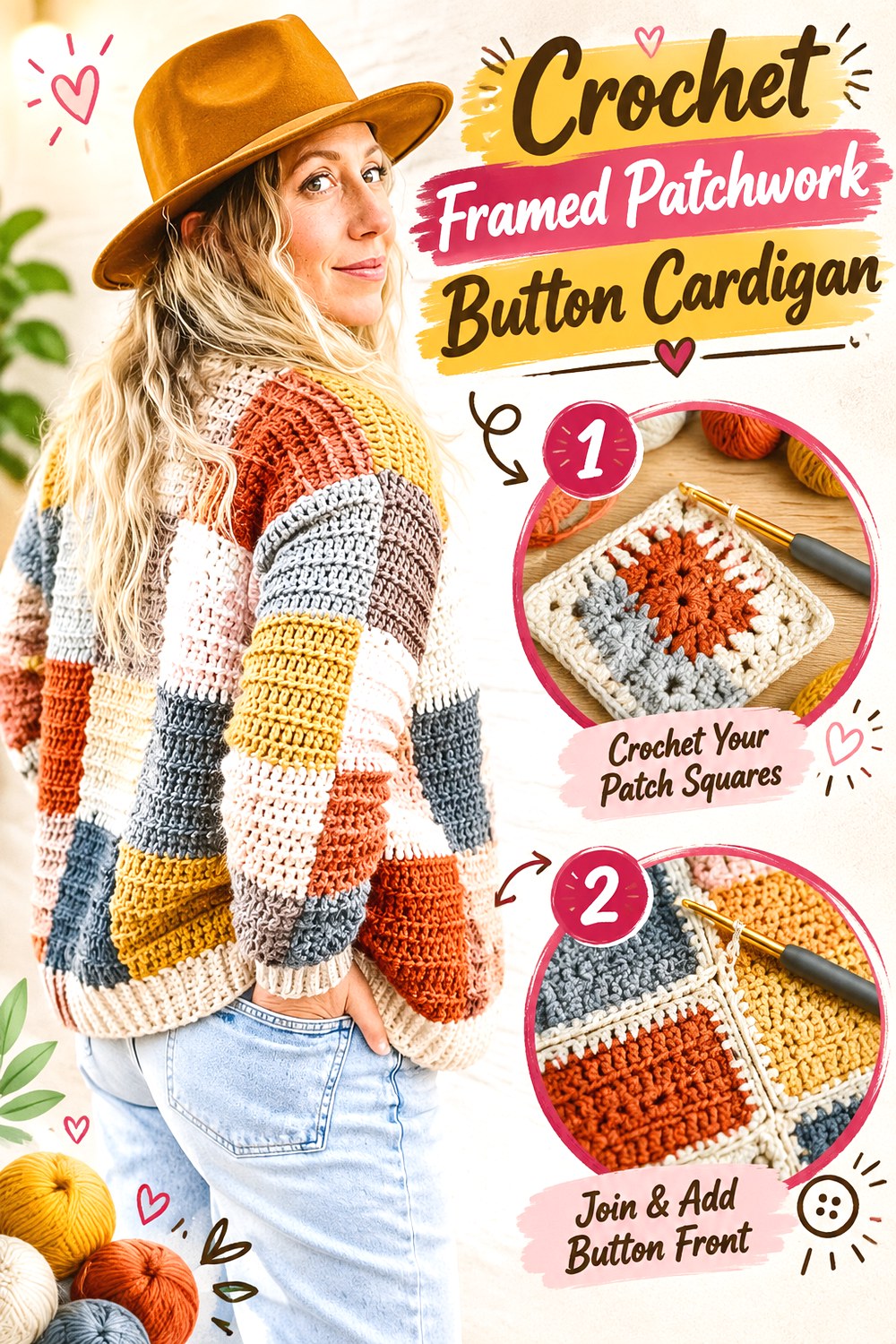
Make & Do Crew’s patchwork cardigan organizes motifs with strong framing and traditional cardigan details, creating a more structured visual system for leftover yarn. Jess Coppom’s tutorial also discusses using scraps when they meet the project’s yarn and gauge requirements.
This is a useful direction if you like multicolored squares but want the final garment to look deliberately bordered rather than fully random. A consistent joining or framing color can make small amounts of unrelated yarn feel as though they belong together. The cardigan’s buttoned front and pockets further distinguish it from loose, open patchwork layers.
Use the Frame Color Strategically
A repeated border color acts almost like grout between tiles: it separates individual patches while also connecting the whole composition. Dark framing can make bright scraps appear more graphic, while a lighter neutral may soften high-contrast combinations.
Choose this yarn after laying several scrap colors together. Most importantly, make sure you actually have enough of it. Running out midway through a repeated frame can be harder to disguise than changing one motif color.
Check Square Gauge Across Different Scraps
Patchwork assembly depends on pieces meeting cleanly. When different scraps produce slightly different squares, forcing the edges together can create ripples or puckering across larger panels.
Measure representative motifs before producing the full set. If a particular yarn consistently works larger or smaller, changing tension by force may not be the best solution; it may be more reliable to move that yarn to a different project or use it only where the source design can accommodate variation.
Balance Pocket Placement
Patchwork can make pocket edges visually disappear, which is attractive but can also make placement harder to judge. Pin or temporarily position them after the cardigan body is assembled and check them while worn.
Consider both appearance and reach. Matching the exact surrounding colors is optional; intentionally contrasting pockets can become a design feature. What matters more is that they sit evenly and do not distort the underlying squares when loaded lightly.
Original Tutorial and Creator Credit
Creator/Site: Make & Do Crew / Jess Coppom
11. Crochet Short Sleeve Scrap Hexagon Cardigan

Jera’s Jamboree offers a hexagon cardigan with a noticeably different silhouette from the long-sleeved versions common in this category. The design uses two hexagons plus extensions, works with classic granny-style texture, and includes optional granny-square pockets. The source also specifically positions it as a stash-friendly project.
Short sleeves make this idea valuable for leftovers that may not stretch to a full winter cardigan. The open granny texture and abbreviated sleeve also shift the garment toward transitional layering rather than a heavy outer layer. A restrained main color paired with variegated or leftover accents can provide a controlled route into stash busting without making every section multicolored.
Use Scraps Where the Accent Reads Clearly
A limited quantity of special yarn can have more impact when placed where the eye naturally notices it rather than distributed so thinly that it disappears. In a hexagon structure, accent rounds, extensions, borders, and pockets can all provide opportunities.
Lay the available yarn together first. A small amount of highly variegated yarn may be enough to enliven a mostly solid cardigan without needing to dominate both halves equally.
Recheck Length After Extensions
Adding length to a geometric cardigan changes more than the hem position. The proportions between the body, sleeves, and front opening can shift as extensions accumulate.
Try on or fold the cardigan into shape after major additions rather than deciding all length changes from a flat measurement. If your scrap yarn differs from the source yarn, the fabric may also drop differently once the garment hangs vertically.
Keep Optional Pockets Light
Granny-square pockets fit naturally with the geometry, but pockets add another layer of crochet to an already textured front. Very thick scrap yarn can make those areas noticeably bulkier.
If the cardigan fabric is light, use similarly behaving leftovers for the pocket pieces. Check how they hang empty before deciding whether additional decorative yarn or edging is worth the weight.
Original Tutorial and Creator Credit
Creator/Site: Jera’s Jamboree
12. Crochet Six Color Granny Square Cardigan

Joy of Motion Crochet’s granny-square cardigan gives stash busting a more planned color system. Designer Janne Kleivset uses a six-color arrangement, while the source notes that leftover yarn can be incorporated into the granny-square format. The cardigan is also presented across a broad size range, making it useful for readers who want a motif-based garment but still need to think carefully about finished sizing.
Compared with a completely random scrap cardigan, this idea encourages editing. You might have twenty leftovers available but choose only the ones that create a coherent six-color family, saving the rest for another project.
Standardize Motif Size Despite Color Changes
Motifs intended for garment assembly need predictable dimensions. If one leftover yarn produces a looser or thicker square, its difference will multiply when several motifs are joined.
Make representative squares from the yarns you plan to combine and compare them after they have relaxed. Blocking can refine shape, but it should not be expected to correct major gauge differences permanently.
Use Layout to Prevent Color Clumping
Even with a limited palette, random placement can accidentally create a large concentration of one shade on a sleeve or front panel. Arrange completed motifs before joining them and photograph several layouts.
Look at the arrangement both in color and, if helpful, in a grayscale photo. Value distribution can reveal imbalances that are less obvious when you are focused on attractive individual combinations.
Check the Joining Fabric for Drape
Joining method and joining yarn contribute to the feel of the completed cardigan. A join that is substantially tighter than the motifs can pull the fabric inward, while a very loose one can create unstable gaps.
When substituting scrap yarn, test a few joined motifs before assembling an entire panel. Hold the sample vertically so you can see how the joins behave under gravity rather than evaluating them only on a blocking mat.
Original Tutorial and Creator Credit
Creator/Site: Joy of Motion Crochet / Janne Kleivset
13. Crochet Leftover Yarn Flower Square Cardigan

Kotona Living’s granny-square cardigan puts floral motifs at the center of the design, using leftover yarn to create a garment with a clearly repeated decorative theme. Anne Vierimaa’s version includes a buttoned front and discusses adjusting garment proportions, making it distinct from the looser, blanket-like scrap cardigans elsewhere in this list.
Flower-centered squares are particularly good at giving unrelated leftovers a shared identity. The petals can change from motif to motif while a consistent background or border keeps the overall fabric connected. That also means motif placement deserves planning: high-contrast flowers near the face or front opening naturally attract more attention than the same motifs at the lower back.
Treat Flower Motifs as Visual Anchors
Before joining the cardigan, identify the flowers with the strongest contrast or most unusual color combinations. Decide where you want those motifs to attract attention.
Perfect mirroring is unnecessary, but intentional repetition can help. For example, placing related accent colors on opposite sides of the front can create balance without requiring identical squares. Photographing the layout before assembly also protects against losing an arrangement you liked.
Enlarge With Proportion in Mind
Changing a motif cardigan’s overall size can affect more than circumference. Adding squares may alter body length, shoulder width, sleeve dimensions, or the front opening depending on the construction.
Use the designer’s sizing guidance rather than simply adding motifs wherever space seems needed. When adapting beyond the demonstrated dimensions, compare the evolving garment against actual body measurements and consider how every added motif changes adjacent sections.
Plan Button Band Stability
Buttons place repeated pulling force along the front edge. If your leftover yarn is especially stretchy or the motif fabric is very open, observe how the band behaves before completing all finishing.
The button area should lie comfortably without being stretched simply to close. Mixed fibers can behave differently over time, so a stable, compatible yarn for repeated front-edge finishing may be more useful than using the smallest remaining scraps there.
Original Tutorial and Creator Credit
Creator/Site: Kotona Living / Anne Vierimaa
14. Crochet Three Color Stash Buster Pocket Cardigan

The Holly Cardigan from Life + Yarn offers a quieter kind of upcycling. Rather than displaying dozens of tiny scraps, Brianna Iaropoli builds the design around three colors and explicitly presents it as a stash-busting project with pockets.
This is a practical choice when your leftovers are not truly tiny—you may have several substantial partial skeins that need a useful destination. A controlled three-color scheme can also make fiber leftovers feel like a deliberate capsule palette. Because each color occupies more visual space, differences in yarn behavior become more noticeable, so compatibility matters just as much as color harmony.
Divide Unequal Leftovers Intentionally
Three-color projects do not require three identical yarn quantities, but they do benefit from planning around what you actually own. Estimate which color needs to carry the largest visual area before assigning your smallest leftover to it.
If quantities are uncertain, weigh or otherwise inventory the partial skeins before beginning. The goal is not to fabricate yardage from weight alone, but to understand which colors are abundant and which should be reserved for smaller sections.
Place Pockets Before Final Attachment
Pocket position can change the apparent proportions of a color-blocked cardigan. A pocket that crosses or sits near a strong color transition may emphasize that boundary.
Temporarily position both pockets while wearing the garment if possible. Check reach, visual balance, and whether the extra layer causes the front to hang differently. If pocket yarn is denser than the body yarn, that difference can also affect drape.
Protect Armhole Mobility
A stash substitution that produces stiffer fabric can be tolerable across a flat body panel yet uncomfortable around the shoulder and armhole. Pay attention to this area when combining leftovers with different fibers or twist.
During fit checks, move the arms forward and upward rather than only standing still. A cardigan can look correctly sized while still restricting movement because the substituted fabric lacks the stretch or drape anticipated by the original design.
Original Tutorial and Creator Credit
Creator/Site: Life + Yarn / Brianna Iaropoli
15. Crochet Bold Stripe Scrap Cardigan

Vicki Roberts of Off the Hook for You uses stripes to turn stash yarn into a graphic oversized cardigan. The pattern is offered across multiple sizes and is explicitly presented as a stash-busting option, which makes it a useful alternative to both motif-heavy cardigans and fully random scrap designs.
Stripes are particularly forgiving when you have a few partial balls in each color rather than dozens of very short scraps. They also make quantity differences easy to turn into design decisions: some colors can occupy broad bands while limited leftovers become narrower accents. The challenge is avoiding a sequence that appears accidental once the whole garment is assembled.
Keep Stripe Widths Intentional
Before starting, decide whether the cardigan will use repeating stripe widths, graduated bands, or deliberately irregular changes. Any of these approaches can work, but switching among them without a visual plan may make the design feel unresolved.
Lay the yarn in proposed order and photograph it. If a color runs out earlier than expected, repeat another design feature—such as a narrow stripe elsewhere—so the change reads as part of the overall rhythm.
Avoid Abrupt Fiber Changes
A horizontal stripe can behave like a visible band around the garment. If that yarn is much stiffer, heavier, or stretchier than its neighbors, the difference may affect the cardigan’s shape as well as its appearance.
Swatch adjacent candidate yarns together. Watch whether one stripe contracts or flares. A close color match cannot compensate for a fabric-behavior mismatch that alters the width of the garment.
Use Ease as a Layering Decision
The source presents an oversized silhouette, but “oversized” should still be interpreted against the wearer’s measurements and preferred layering. Some readers want room for a shirt; others expect to wear the cardigan over bulkier winter pieces.
Compare the published finished measurements with a cardigan whose fit you already like. Scrap-yarn substitutions can alter drape, so assess both numerical size and fabric behavior before choosing.
Original Tutorial and Creator Credit
Creator/Site: Off the Hook for You / Vicki Roberts
16. Crochet Sculpted Square Patchwork Cardigan
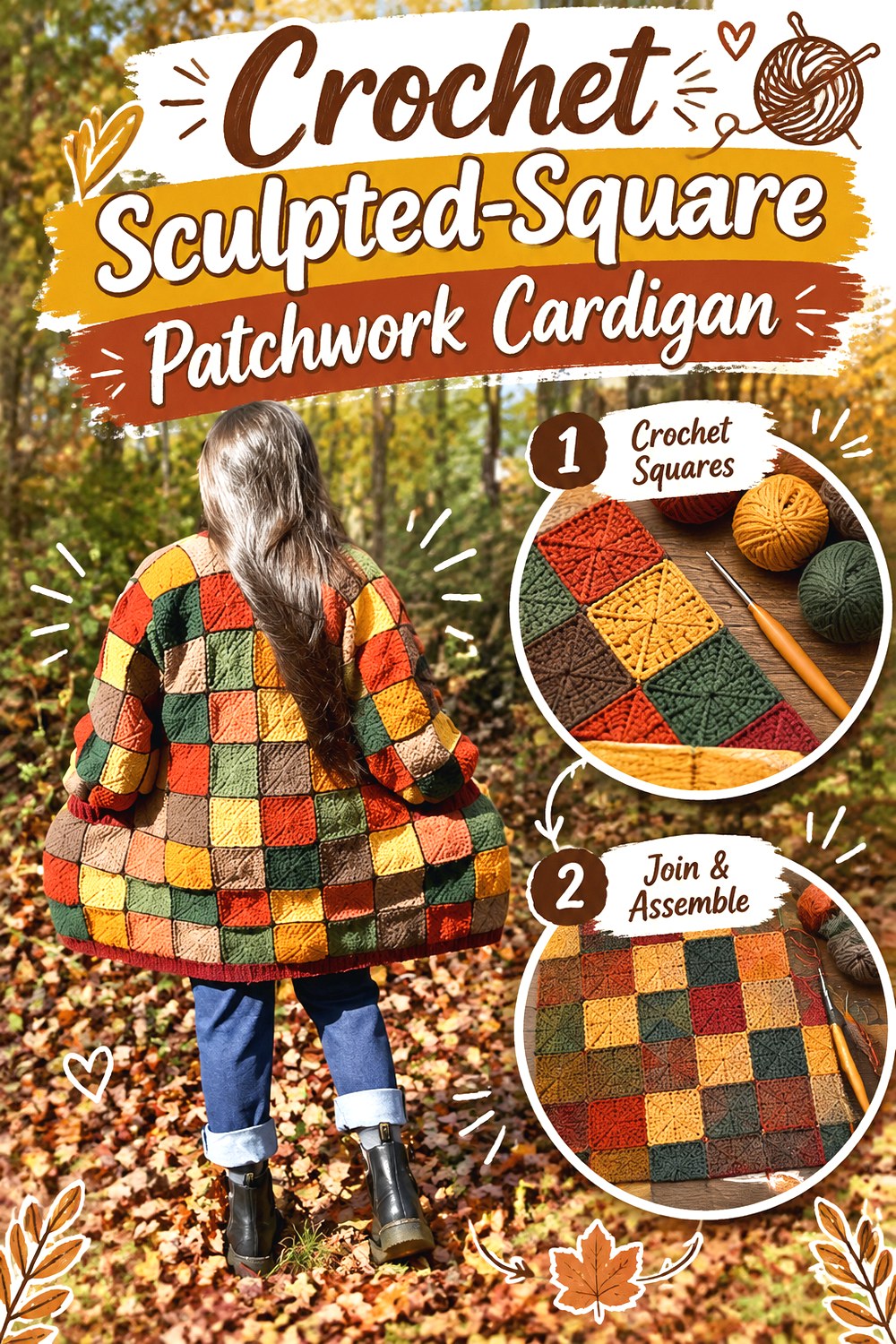
Virkadia’s patchwork cardigan adds more shape engineering than a basic grid of identical squares. Joey Diehl describes the design as particularly suitable for scrap yarn or stash busting, while the garment uses variations of its square motif to handle areas such as cuffs, fronts, and neckline shaping.
That distinction makes this project interesting for readers who like modular crochet but want the garment silhouette to look more intentionally sculpted. Rather than forcing standard squares into every location, the motif system changes where the body needs a different contour. It also includes prominent sleeves and pockets, giving plenty of opportunities to distribute color across functional as well as decorative pieces.
Take Advantage of the Shaped Square Variants
When a modular garment includes specially shaped motifs, treat those pieces as structural rather than interchangeable decoration. Their purpose is to help the patchwork follow the body and garment edges more naturally.
Keep shaped motifs clearly labeled during assembly, especially if many scraps make them visually similar. Replacing one with a standard square simply because the color fits may change the intended contour.
Keep Dense Textures Wearable
A highly textured square made with a thick leftover yarn can become noticeably heavier than neighboring motifs. Across an entire oversized cardigan, those small differences add up.
After joining a representative group, hold the fabric vertically and feel how it bends. If some scraps create rigid patches, reserve them for another accessory rather than assuming assembly will soften the difference.
Reinforce Pocket Zones
A pocket places a second layer over the patchwork and introduces localized pulling when used. Inspect the motifs and joins behind it before attachment, particularly if they contain older or loosely plied leftovers.
The strongest-looking square is not always structurally strongest. If a yarn shows abrasion or weakened strands, keep that motif away from areas that will be handled frequently.
Original Tutorial and Creator Credit
Creator/Site: Virkadia / Joey Diehl
17. Crochet Woven Scrap Sleeveless Cardigan

The Winterlight design from Knitting with Chopsticks uses leftovers in an unusual way: scrap yarn is woven through crocheted fabric instead of simply becoming the next stripe or motif. The finished piece is sleeveless and built from long panels, with fringe adding another textural element.
This approach is especially attractive when your leftover pieces are too limited or inconsistent to carry a major structural section. They can contribute surface color while the underlying crochet provides continuity. The sleeveless silhouette also offers a useful break from the many full-sleeve cardigans in this list, creating a layer that can work over shirts or other garments without concentrating additional scrap bulk at the arms.
Use Tiny Scraps as Surface Weaving
Surface embellishment can accommodate lengths that would be frustrating to integrate into a conventional panel. Grouping similar tones or alternating high-contrast colors can create very different results from the same base fabric.
Before weaving every leftover available, test a small section. Extremely fuzzy, fragile, or thick yarn may be difficult to draw through the fabric cleanly and may alter its drape more than expected.
Prevent the Panels From Puckering
Woven yarn should decorate the crochet rather than cinch it. If an inserted strand is pulled too tightly, the base fabric can gather or become narrower.
Lay the panel flat periodically and then hang it vertically. Adjust any inserted yarn that restricts the natural movement of the underlying crochet. This matters especially when the embellishment fiber has less elasticity than the base yarn.
Treat Fringe as Added Weight
Fringe can visually extend a sleeveless cardigan and use additional short lengths, but it also adds weight along an edge. Dense fringe made from heavy leftovers may pull more strongly than a light decorative treatment.
Before trimming or permanently arranging every strand, attach a representative sample and hold the garment upright. That gives a more realistic picture of how the hem will hang after the fringe is complete.
Original Tutorial and Creator Credit
Creator/Site: Knitting with Chopsticks
18. Crochet Slouchy Textured Scrap Cardigan
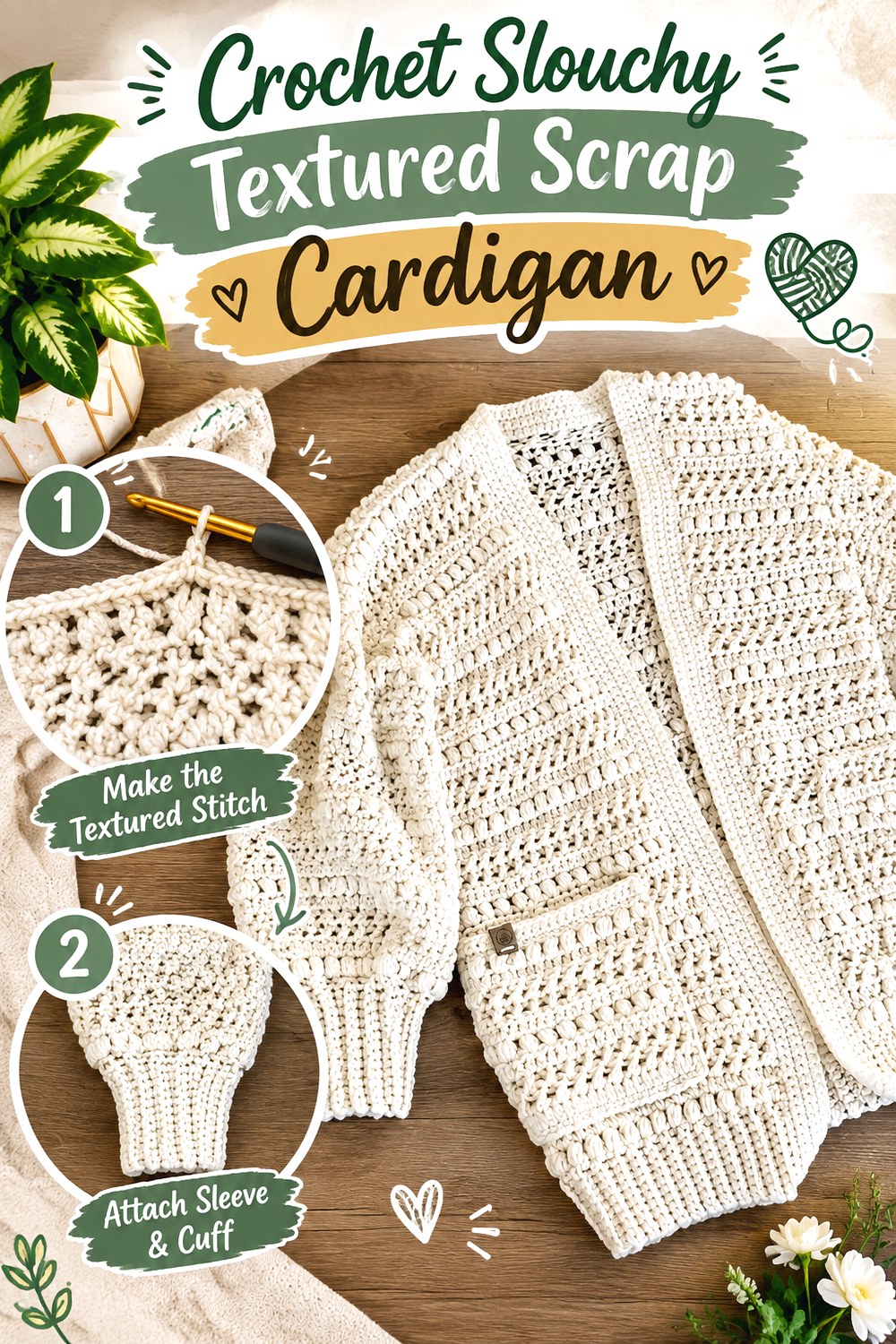
Cactus & Lace Designs closes the list with a loose, highly textured stash cardigan. Ashley explains that the multicolored version developed from combining random worsted-weight skeins from her stash, while the design itself uses an oversized silhouette and a largely continuous main body before the sleeves are attached.
This makes the project a strong counterpoint to motif-heavy upcycling. The scraps still remain visible, but texture helps unify their transitions so the eye reads the finished surface as one richly varied fabric. Because the silhouette is intentionally slouchy, the main decisions are less about lining up squares and more about maintaining compatible gauge, comfortable weight, and enough drape for the garment to hang as intended.
Mix Color Without Mixing Fabric Behavior
Random color can look intentionally eclectic; random gauge rarely does. Keep the yarns close enough in thickness and behavior that the textured fabric remains consistent across transitions.
When an appealing leftover differs noticeably, work a sample beside one of the main yarns. If it changes the panel width or stiffness, enjoying that skein in another project may produce a better result than forcing it into this cardigan.
Check Slouch Against Shoulder Fit
A generous cardigan still needs a shoulder and arm area that moves comfortably. Added width can create relaxed drape, but a heavy stash combination may also pull the garment downward.
Try the body on before investing all remaining yarn in sleeve or edge details when the construction permits. Observe whether the shoulder line feels intentionally dropped or simply stretched by weight.
Let Texture Unify the Scraps
Textured stitches cast small shadows and create a repeated surface pattern, which can help visually connect yarn colors that might otherwise feel unrelated. This is particularly useful when the stash contains shades from several past projects.
Avoid assuming texture will hide every incompatibility, however. It can blend color changes, but differences in yarn thickness, sheen, fuzziness, or elasticity may remain obvious both visually and by touch.
Original Tutorial and Creator Credit
Creator/Site: Cactus & Lace Designs / Ashley
Which Upcycled Cardigan Approach Fits Your Materials?
The most useful choice depends less on the colors you own than on the form those materials are already in.
| Starting material | Ideas to compare | Main advantage | Main checkpoint |
|---|---|---|---|
| Existing crochet blanket or afghan | 1–5 | Preserves substantial finished crochet | Condition, dimensions, and safe alteration method |
| Numerous small yarn scraps | 6, 7, 10, 12, 13, 16 | Small quantities can become visible motifs or patches | Consistent gauge and planned color distribution |
| Larger partial skeins | 9, 14, 15, 18 | Continuous panels and stripes use longer leftovers efficiently | Fiber compatibility and enough yarn for finishing |
| Scraps suited to geometric growth | 8, 11 | Color changes can follow larger hexagon units | Matching dimensions between garment halves |
| Very short decorative leftovers | 17 | Scraps can become surface accents instead of structural fabric | Avoiding puckering, excess bulk, and added weight |
Conclusion
The most convincing crochet upcycled cardigans do more than display leftover color. They make the limitations of reclaimed material part of the design. An old afghan can become a cocoon, paneled cardigan, or carefully reinforced thrift flip; partial skeins can become stripes, textured panels, hexagons, or pockets; and tiny remnants can supply patchwork motifs or woven surface detail.
Choose the project by examining what you already have first—its quantity, condition, weight, gauge, and drape—then decide which construction uses those qualities most effectively. For irreversible blanket alterations, fit adjustments, motif counts, and exact construction details, follow the linked original tutorials rather than treating a roundup as a substitute for the creator’s instructions.
Frequently Asked Questions
Can I mix different yarn weights in an upcycled crochet cardigan?
Sometimes, but matching the label category alone does not guarantee compatible fabric. Two leftovers can differ substantially in thickness, elasticity, halo, and gauge. Crochet a sample using the yarns together and compare its width, density, and drape before building a garment section. Modular designs may offer more flexibility because individual scraps can be evaluated motif by motif, but pieces that must join still need compatible dimensions.
How do I know whether an old crochet blanket is suitable for a cardigan?
Inspect the entire textile rather than judging only its appearance. Check motif joins, borders, under-repaired areas, worn strands, stains, and places where the yarn has become brittle or felted. Then consider weight and drape by wrapping or hanging the blanket. A structurally sound blanket can still be uncomfortable as clothing if it is exceptionally heavy or rigid. For any design involving cutting, follow a tutorial specifically intended for altering crochet.
Is unpicking granny-square joins better than cutting the blanket?
Neither method is universally better. If the blanket consists of separable motifs with accessible joins, carefully unpicking those seams can preserve the individual squares, as demonstrated in the Creativebug upcycle. Cutting may allow different garment shapes but creates live crochet edges that require an appropriate stabilization method. The blanket’s construction should determine the method, not convenience alone.
What should I do when my scrap yarns have different fiber contents?
Start with gauge and fabric behavior, then think about care. Wool, cotton, acrylic, and blends may stretch, relax, or respond to washing differently. A mixed-fiber garment should generally be cared for according to the most sensitive component unless the yarn manufacturers and project designer provide more specific compatible guidance. Keep original yarn labels where possible, and test questionable combinations in a swatch before investing the scraps in a full cardigan.
How can I stop a scrap cardigan from looking randomly assembled?
Create one repeated visual rule. That could be a consistent joining color, a restricted palette, repeating stripe widths, evenly distributed dark values, matching cuffs, or a recurring motif background. Lay patchwork pieces out before assembly and photograph the arrangement. For striped or continuous designs, periodically view the whole garment from a distance. Intentional repetition usually creates more cohesion than trying to make every individual leftover coordinate perfectly.
Can I resize a cardigan made from a reclaimed blanket?
Possibly, but the available blanket dimensions and the chosen construction place limits on adjustment. A cocoon cardigan may depend heavily on the blanket’s overall rectangle, while a dismantled granny-square blanket may allow changes through motif arrangement. Before altering the textile, compare the planned garment width, arm openings, body length, and layering room with the intended wearer. Use the original tutorial’s construction logic when making changes rather than assuming extra fabric can be added anywhere.