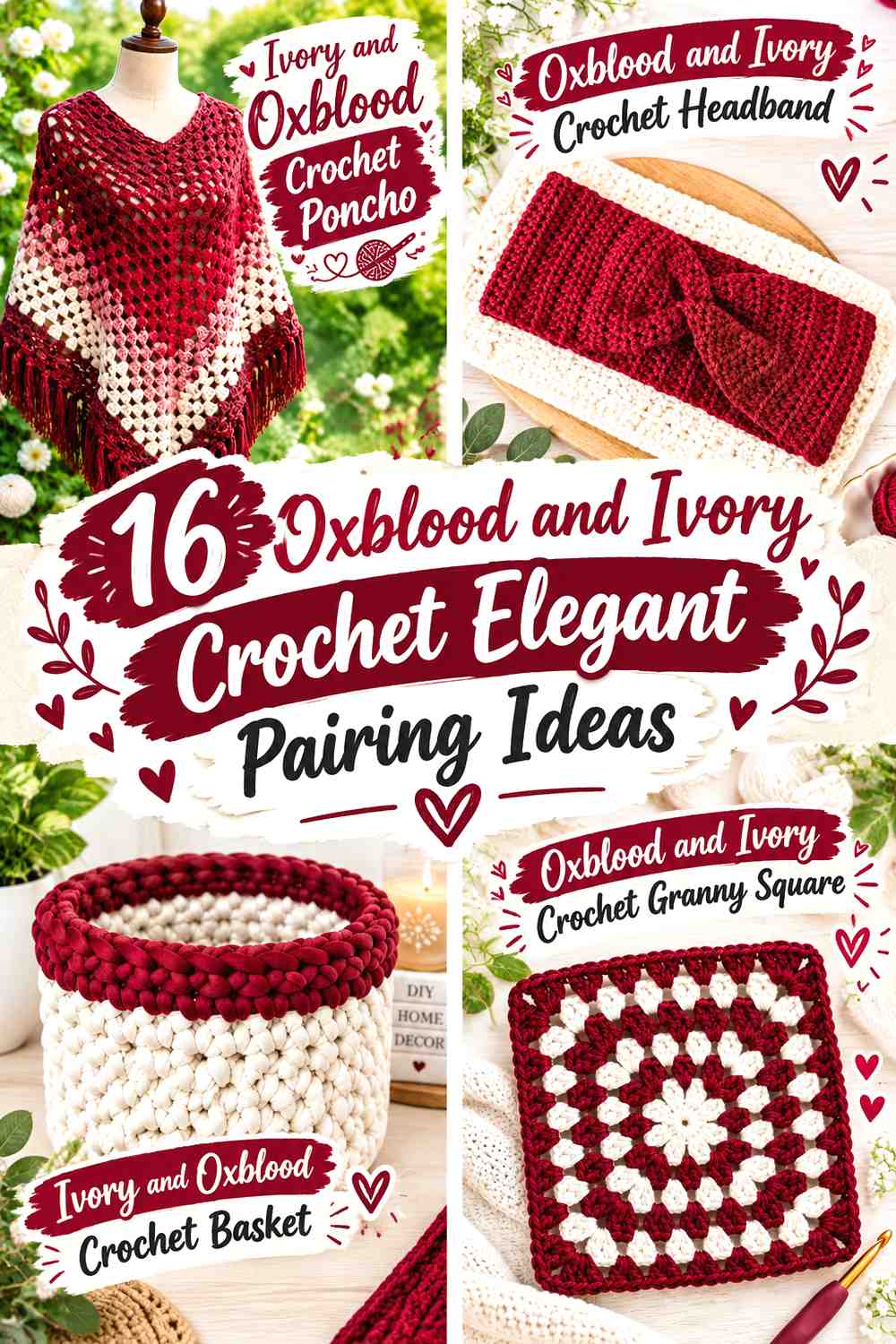
16 Oxblood and Ivory Crochet Elegant Pairing Ideas
Oxblood and ivory create a crochet pairing built around strong light-and-dark separation. Oxblood can give a project a deep visual anchor, while ivory introduces enough lightness to keep borders, motifs, ribbing, and textured stitches from disappearing into one dark surface.
The proportions matter. A mostly ivory cardigan with oxblood cuffs feels very different from an oxblood sweater edged in ivory. On blankets and pillows, the darker shade can frame the entire piece, while accessories such as hats and gloves allow oxblood to cover more surface without overwhelming a larger outfit.
These 16 ideas show different ways to distribute the same two colors across wearables, accessories, motifs, and home decor. The tutorials support the crochet construction; the oxblood-and-ivory color plans are independent adaptations.
Quick List
- Oxblood And Ivory Crochet Cardigan
- Ivory And Oxblood Crochet Pillow
- Oxblood And Ivory Crochet Blanket
- Ivory And Oxblood Crochet Tote Bag
- Oxblood And Ivory Crochet Scarf
- Oxblood And Ivory Crochet Beanie
- Ivory And Oxblood Crochet Shawl
- Oxblood And Ivory Crochet Vest
- Oxblood And Ivory Crochet Sweater
- Ivory And Oxblood Crochet Cowl
- Oxblood And Ivory Crochet Bucket Hat
- Ivory And Oxblood Crochet Fingerless Gloves
- Oxblood And Ivory Crochet Granny Square
- Ivory And Oxblood Crochet Basket
- Oxblood And Ivory Crochet Headband
- Ivory And Oxblood Crochet Poncho
Decide Whether Oxblood or Ivory Should Lead
The easiest way to keep this two-color pairing controlled is to give one shade noticeably more surface area. Ivory can be useful across large garment panels, blanket sections, or pillow faces when you want oxblood to act as a strong frame. Oxblood can dominate smaller accessories or selected garment panels when you want a deeper overall result.
Avoid dividing every project exactly in half. Because the two shades have very different visual weight, equal quantities do not necessarily create an equally balanced appearance.
Use Ivory to Protect Crochet Detail Against Oxblood
Oxblood can make a dense crochet surface look visually heavier, particularly when shadows form around cables, ribbing, bobbles, or other raised texture. Ivory placed beside those details can give them clearer separation.
This does not mean ivory always belongs around every textured section. If the stitch pattern itself is the focus, a broad single-color area may show it more clearly than frequent alternating stripes.
Repeat Oxblood and Ivory at Structural Edges
Cuffs, necklines, hems, borders, handles, joins, brims, and pillow edges give you natural places to repeat a secondary color. Using those existing structural areas usually creates a more deliberate pairing than inserting unrelated color changes simply to use both shades.
For a calmer result, choose two or three repeated locations rather than outlining every possible edge.
1. Oxblood And Ivory Crochet Cardigan
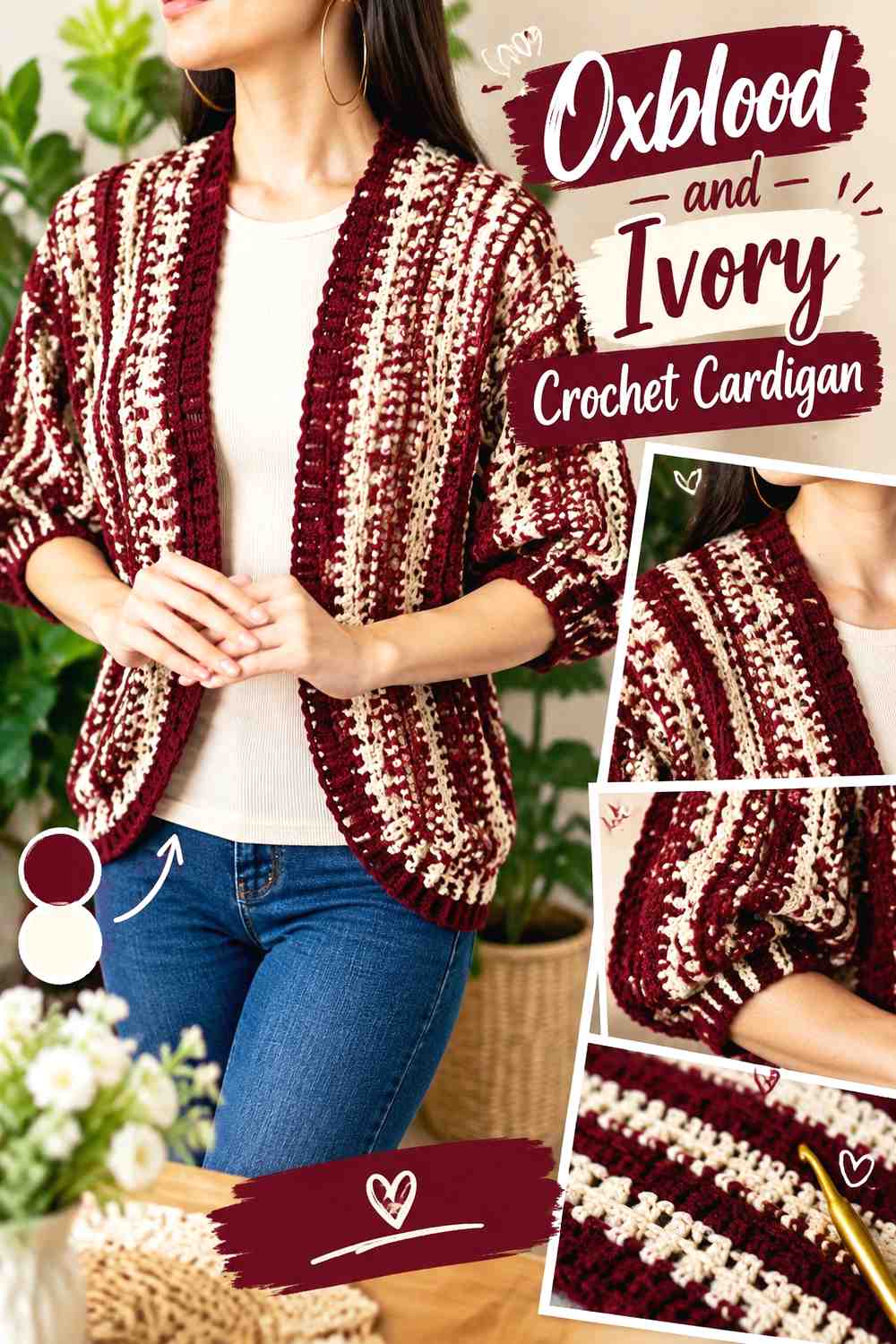
An ivory-led cardigan gives oxblood plenty of impact without requiring the darker shade to cover large body panels. Ivory can run through the back, fronts, and sleeves, while oxblood defines cuffs, the front opening, or the lower band. Because a cardigan has several separate edges, repeating oxblood selectively can visually connect the garment.
Ivory Can Keep the Oxblood Crochet Cardigan Light Across Large Panels
Use ivory on the broad back and front sections when you want the cardigan to remain visually lighter. A continuous ivory field also gives cables, ribbing, or other surface texture room to remain visible.
Oxblood then becomes more noticeable when it appears at smaller structural points instead of competing across half of every panel.
Oxblood Can Define Ivory Crochet Cardigan Cuffs and Front Bands
Oxblood at both cuffs creates repetition, and carrying the same shade into the front edging can connect the sleeves with the center of the garment.
Watch the width of each dark band. Wide cuffs, a wide front border, and a wide hem together may shift the cardigan from ivory-led to nearly oxblood-dominant.
Creator Credit: TCDDIY YouTube tutorial
2. Ivory And Oxblood Crochet Pillow
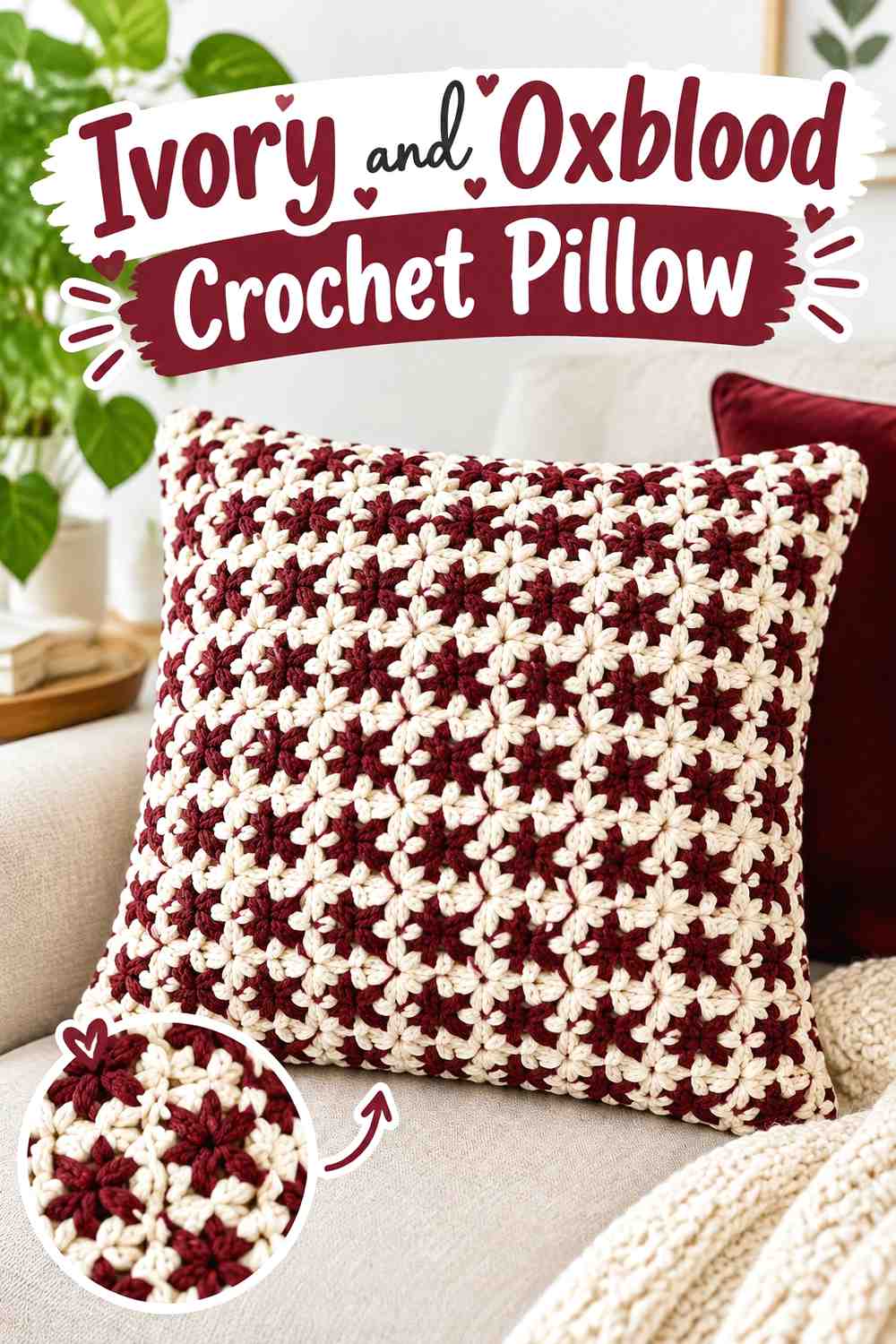
A pillow is well suited to an ivory center surrounded by oxblood because the darker edge creates a clear frame around the front surface. Ivory can also give raised stitches or waffle-like texture greater visibility, while oxblood can be introduced through a central motif or outer border.
Ivory Can Reveal Texture Across an Oxblood Crochet Pillow
Let ivory occupy the broadest textured part of the pillow when surface detail is important. The lighter field makes shadows around raised crochet features easier to distinguish than they may be across a uniformly dark surface.
If the pillow already contains a strong central motif, keep the surrounding ivory relatively uninterrupted.
Oxblood Can Frame an Ivory Crochet Pillow Without Taking Over
An oxblood outer border creates definition around an ivory pillow face. Because that border surrounds the entire piece, it can contribute substantial visual weight even when it is fairly narrow.
Repeat a small amount of oxblood within the front motif if you want the border to feel connected rather than added only at the edge.
Creator Credit: Fios Cruzados por Joana Gouveia YouTube tutorial
3. Oxblood And Ivory Crochet Blanket
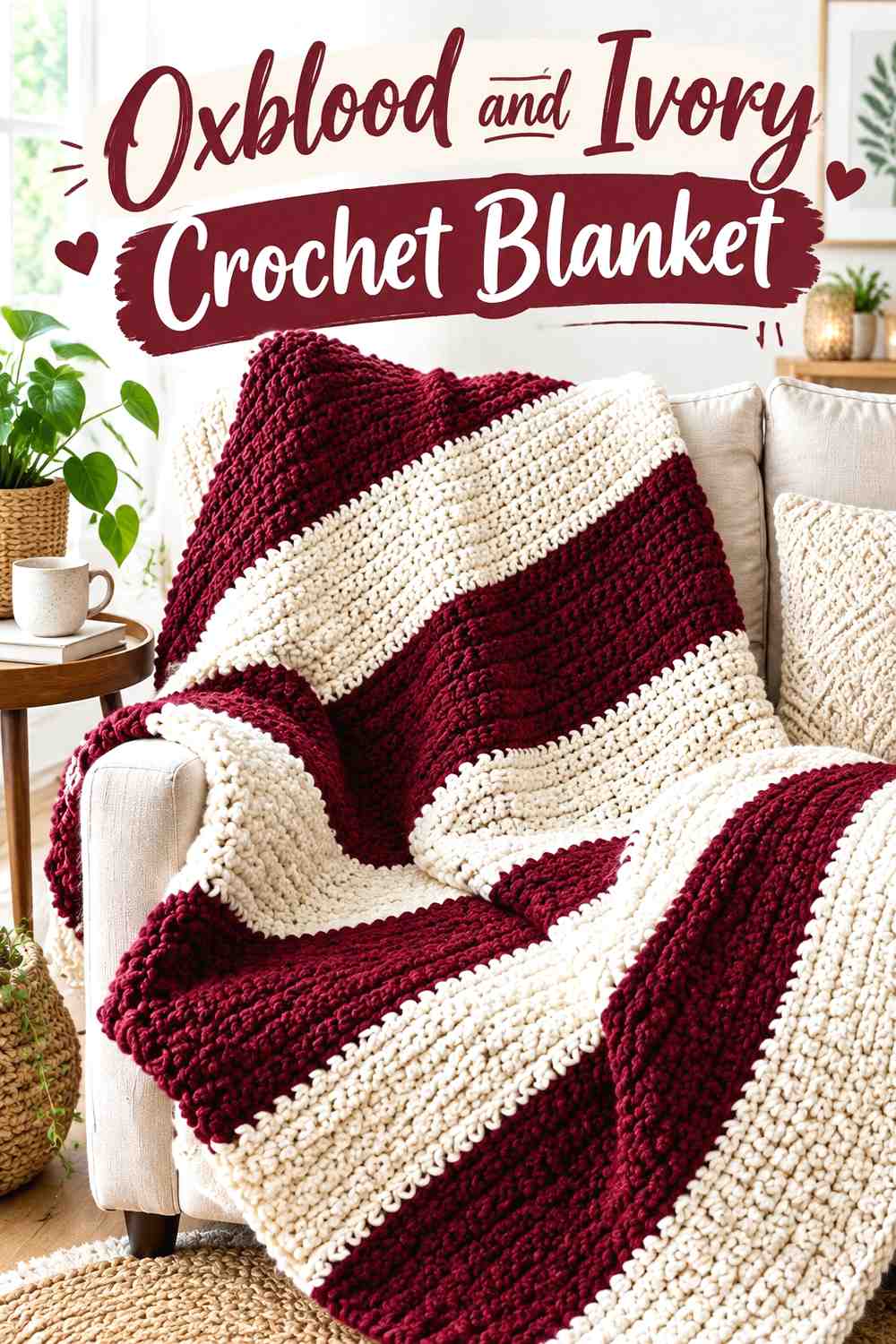
For a blanket, use larger oxblood and ivory sections rather than numerous narrow stripes if you want the pairing to remain refined and easy to read. Ivory can provide generous breaks between deeper oxblood areas, while an oxblood border can bring the entire layout back together.
Ivory Can Break Up Large Oxblood Crochet Blanket Sections
Ivory intervals prevent dark blanket sections from visually merging into one continuous block. They are especially useful when the stitch pattern already creates substantial texture.
Make the ivory areas wide enough to function as real sections rather than tiny separator lines if clear contrast is the goal.
Oxblood Can Give an Ivory Crochet Blanket a Defined Outer Edge
An oxblood border gives a lighter blanket a strong finishing frame. The border does not need to be the widest section because it repeats around the entire perimeter.
If oxblood appears nowhere inside the blanket body, consider repeating it in a limited interior band so the border relates to the overall palette.
Creator Credit: B.Hooked Crochet YouTube tutorial
4. Ivory And Oxblood Crochet Tote Bag
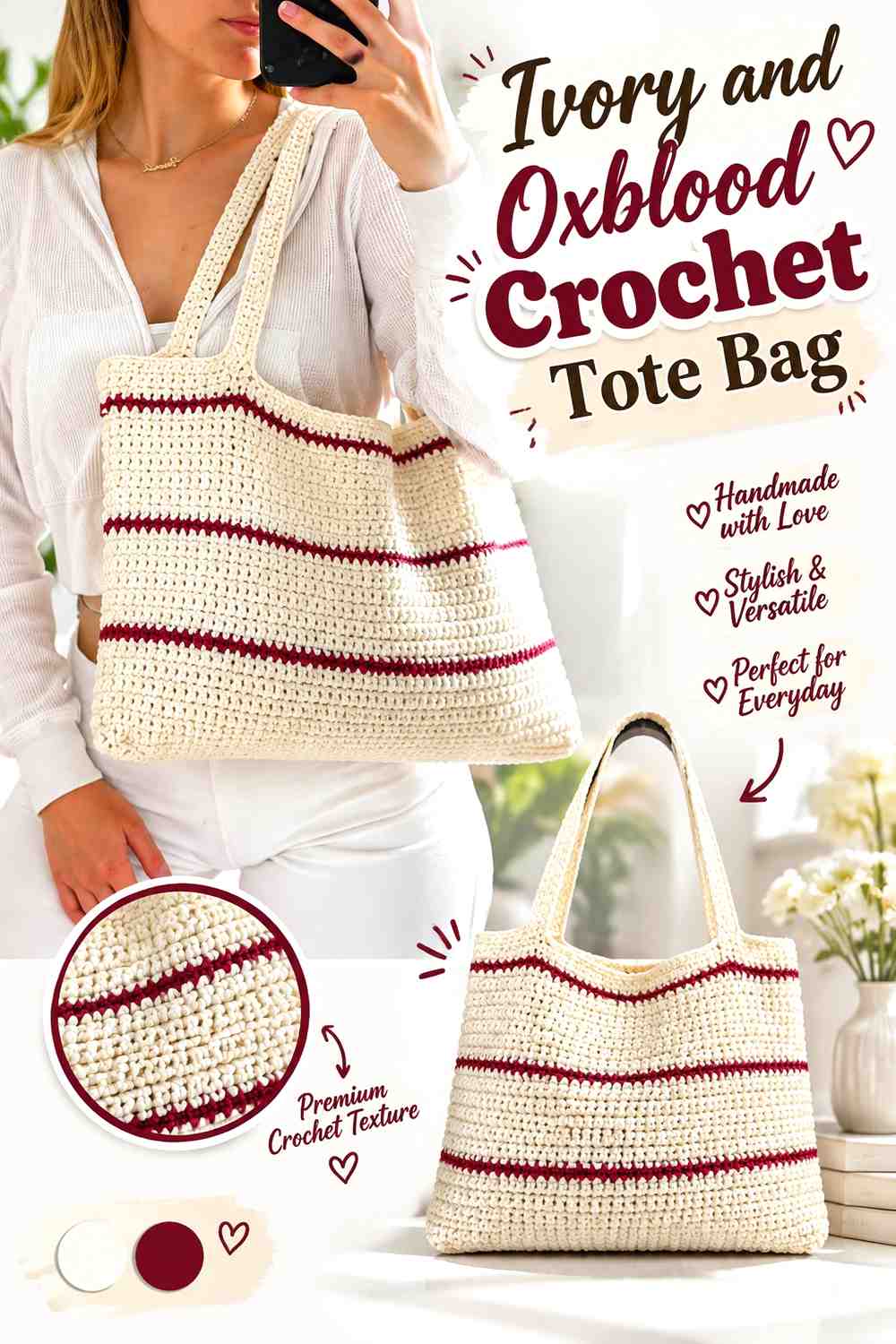
A tote gives the two colors obvious structural zones. Ivory can cover the upper body, while oxblood is useful at the base, handles, or opening. Placing the darker shade low on the bag creates visual weight without interrupting the main body with repeated stripes.
Oxblood Can Ground the Ivory Crochet Tote Base
Using oxblood around the lower portion gives the bag a dark visual foundation. It also separates the base from an ivory upper body without requiring a complex color sequence.
If the tote has a strongly textured stitch pattern, keep the transition between the two shades relatively simple.
Ivory Can Keep Oxblood Crochet Tote Handles From Feeling Too Heavy
When the handles are oxblood, leaving the largest body area ivory prevents the darkest color from controlling the entire bag. You can also repeat a narrow oxblood band near the opening to connect the handles to the body.
Keep functional construction decisions, including handle dimensions and reinforcement, tied to the tutorial rather than changing them simply for color placement.
Creator Credit: crochet daniela YouTube tutorial
5. Oxblood And Ivory Crochet Scarf
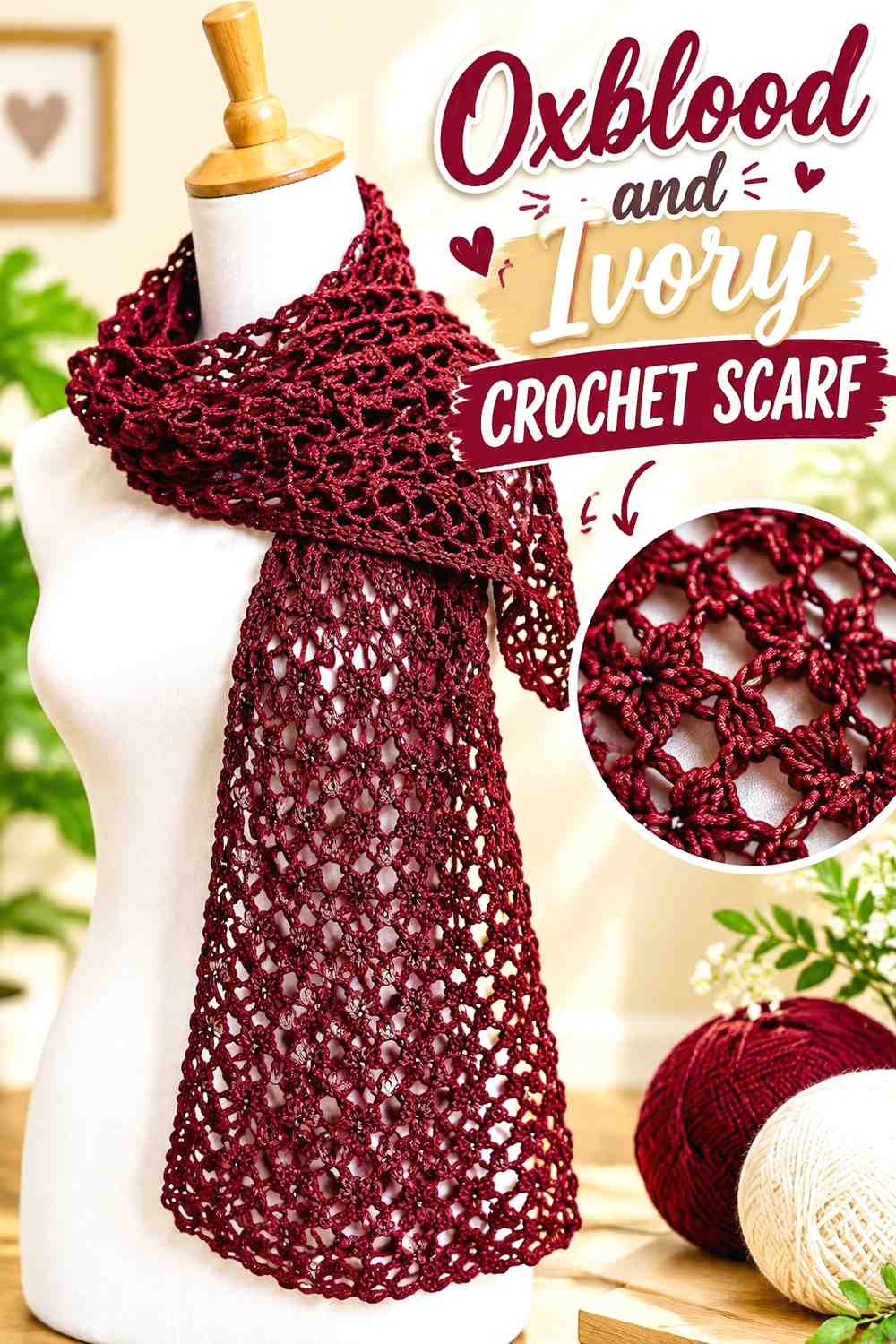
A scarf allows long uninterrupted blocks of oxblood and ivory, which can be more effective than frequent striping. Let oxblood carry most of the length for a deeper result, then use ivory near the ends or as one substantial central interruption.
Oxblood Can Carry Long Crochet Scarf Sections
Broad oxblood areas remain recognizable even when the scarf is folded or wrapped several times. They also give the scarf a consistent main color rather than turning the surface into a repetitive stripe pattern.
Ivory Can Give Oxblood Crochet Scarf Ends Strong Contrast
Ivory at both ends produces a repeated light finish that is likely to remain visible when the scarf is worn.
If you add fringe, decide whether it should continue the ivory ends or return to oxblood. Mixing the two shades randomly at the fringe can weaken an otherwise controlled block layout.
Creator Credit: Handwork diy YouTube tutorial
6. Oxblood And Ivory Crochet Beanie
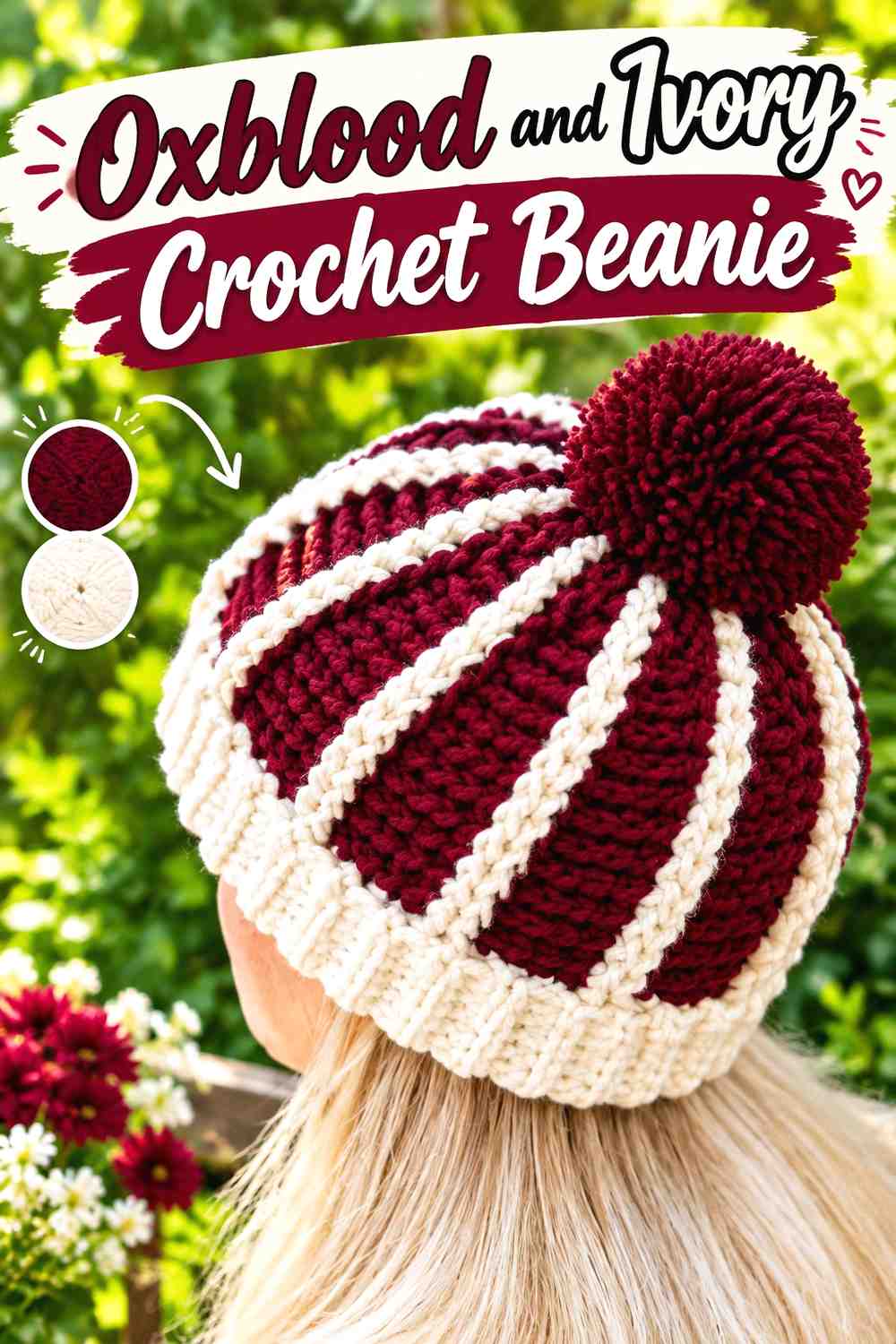
A beanie is compact enough for oxblood to dominate without creating the same visual weight it would across a full sweater. Ivory can define the brim, crown detail, or a single band, while the darker main field keeps the hat clearly connected to the oxblood side of the pairing.
Oxblood Can Keep Crochet Beanie Ribbing Visually Continuous
Use oxblood across most of the crown when ribbing or another repeated texture is an important feature. One uninterrupted color allows the surface lines to continue without numerous color breaks.
Ivory Can Give an Oxblood Crochet Beanie Brim Clear Definition
An ivory brim creates a strong light boundary around the lower edge of the hat. Since the brim encircles the whole piece, even a modest depth can provide enough ivory to balance an oxblood crown.
If you use ivory at the brim, additional ivory crown stripes may not be necessary.
Creator Credit: Di’s Handicrafts (Crochet and Knitting) YouTube tutorial
7. Ivory And Oxblood Crochet Shawl

A shawl can begin with ivory near the center or upper portion and gradually introduce oxblood toward the wider outer edge. This arrangement is useful because later sections of a triangular shawl often occupy considerably more surface area than earlier ones.
Ivory Can Preserve a Lighter Oxblood Crochet Shawl Center
Keeping ivory through a substantial central area ensures that the light shade remains visible once oxblood is introduced farther out.
Judge the palette by surface area rather than simply counting how many sections are worked in each color.
Oxblood Can Create a Strong Ivory Crochet Shawl Border
Oxblood near the widest edge creates a defined finish and can emphasize the triangular outline.
Before making the dark section very deep, drape the developing shawl and check how much ivory remains visible around the shoulders.
Creator Credit: Bag-O-Day Crochet YouTube tutorial
8. Oxblood And Ivory Crochet Vest
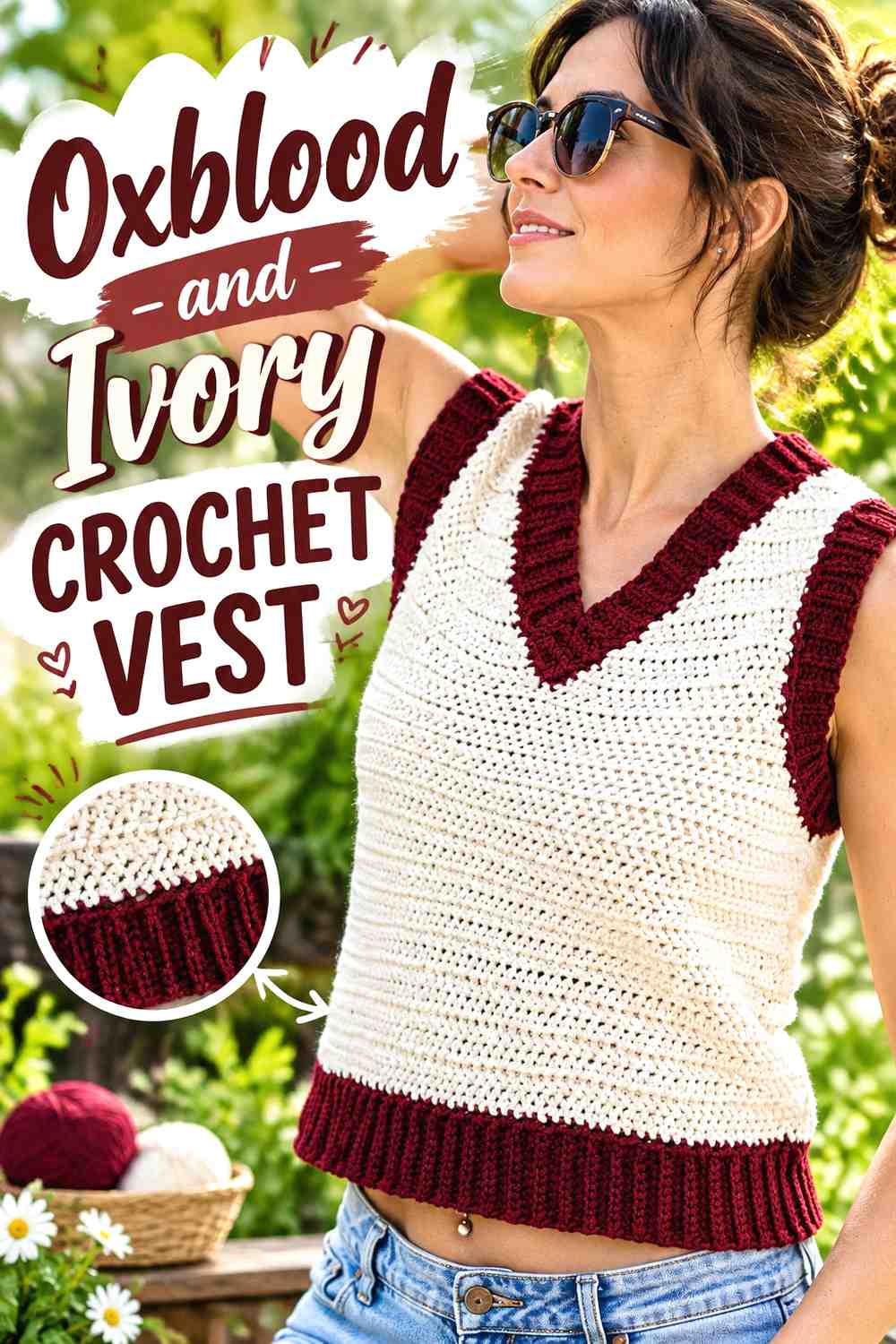
A vest provides neckline, armholes, hem, and possibly a front opening for secondary-color placement. Keep the main body oxblood when you want a rich darker layer, then let ivory outline selected openings rather than every edge.
Oxblood Can Give the Crochet Vest Body One Strong Main Field
Using oxblood across the front and back panels prevents the shorter garment from being divided into too many horizontal sections.
This approach is particularly useful when the vest already includes noticeable stitch texture or panel shaping.
Ivory Can Outline Oxblood Crochet Vest Armholes and Necklines
Ivory around the neckline and armholes creates strong separation against the dark body and clarifies the garment’s shape.
Assess all ivory bands together before adding a contrasting hem. Several wide light borders can occupy more visual area than expected.
Creator Credit: Leelee Knits YouTube tutorial
9. Oxblood And Ivory Crochet Sweater
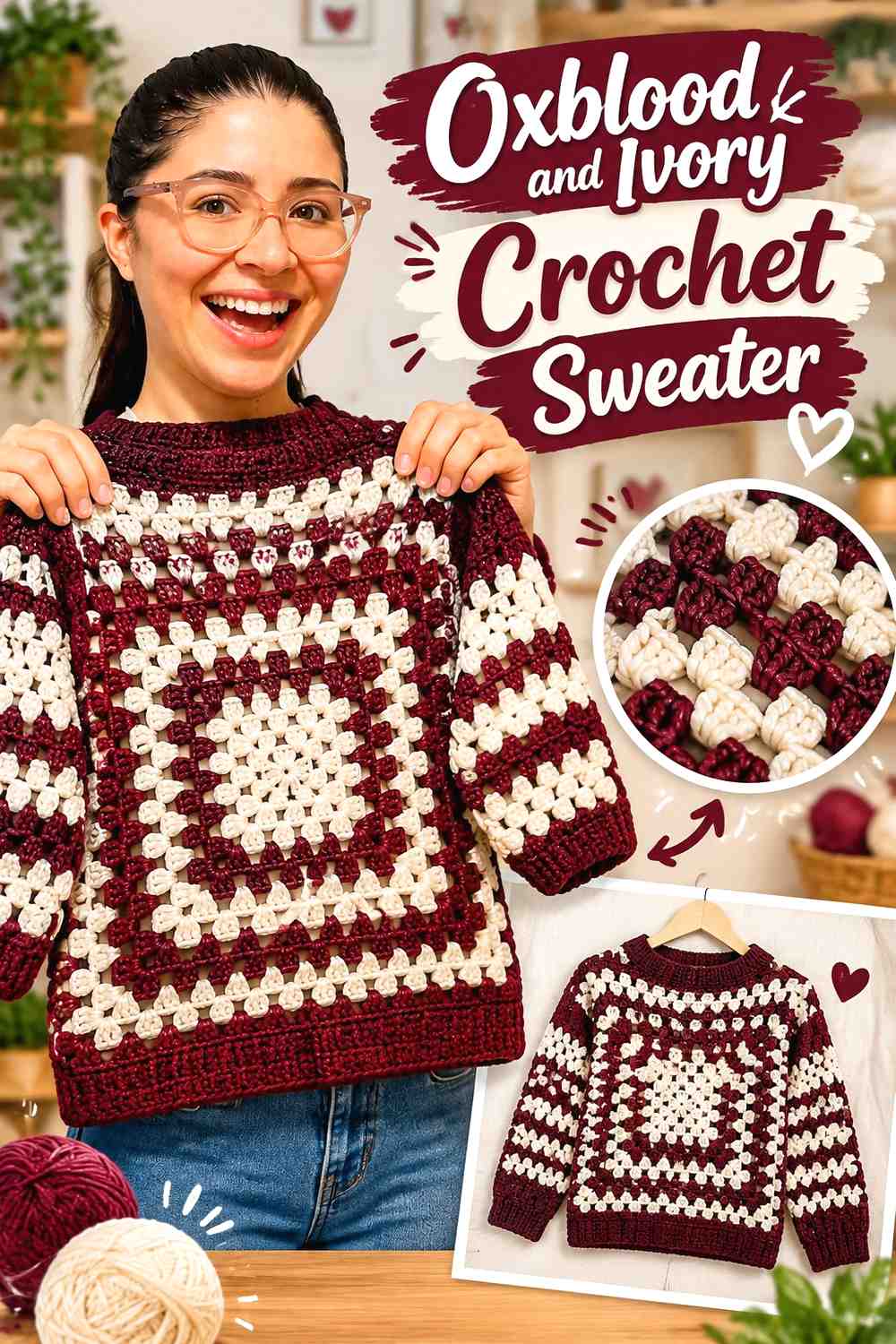
A pullover gives oxblood a large uninterrupted torso surface, so ivory works particularly well when concentrated at the neckline, cuffs, hem, or one major color-blocked section. A controlled ivory placement keeps the sweater from looking divided into too many competing zones.
Oxblood Can Lead the Main Crochet Sweater Panels
Use oxblood across most of the torso when you want the deep shade to establish the garment’s identity. Keeping the largest panel solid can also help textured crochet remain easier to follow visually.
Ivory Can Lighten Oxblood Crochet Sweater Cuffs and Necklines
Ivory at the cuffs and neckline creates repeated light accents at natural garment boundaries.
If you also add an ivory hem, compare the combined area of all three features. A very wide ivory frame can become as visually important as the oxblood torso.
Creator Credit: Brunaticality YouTube tutorial
10. Ivory And Oxblood Crochet Cowl

A mostly ivory cowl allows textured stitches to remain prominent while oxblood supplies one strong accent band or edge. Because the fabric naturally folds around the neck, broader color sections usually remain more recognizable than several narrow stripes.
Ivory Can Keep Oxblood Crochet Cowl Texture Visible
Use ivory across the largest textured surface if stitch definition is more important than creating a dark accessory.
The shadows created by dimensional crochet can provide visual interest without requiring frequent color changes.
Oxblood Can Create One Focused Accent on an Ivory Crochet Cowl
A broad oxblood band can be enough to establish the pairing. Position it where it is likely to remain visible after the cowl folds rather than placing several small accents that may disappear within the drape.
Creator Credit: Crochet with Clare YouTube tutorial
11. Oxblood And Ivory Crochet Bucket Hat

A bucket hat has three visually distinct areas: top, side, and brim. That makes it easy to assign clear roles to oxblood and ivory without introducing arbitrary stripes. Oxblood can dominate the crown and side while ivory creates a contrasting brim.
Oxblood Can Keep the Crochet Bucket Hat Crown Unified
Using oxblood over the top and side sections gives the hat a continuous darker upper shape. This is clearer than alternating colors repeatedly through each circular section.
Ivory Can Separate an Oxblood Crochet Bucket Hat Brim
An ivory brim creates an immediate contrast at the widest part of the hat. Because the brim occupies a prominent horizontal plane, it can balance a larger oxblood crown even with less total yarn area.
If you want oxblood to remain dominant, avoid adding another large ivory section at the top.
Creator Credit: VivCrochets YouTube tutorial
12. Ivory And Oxblood Crochet Fingerless Gloves
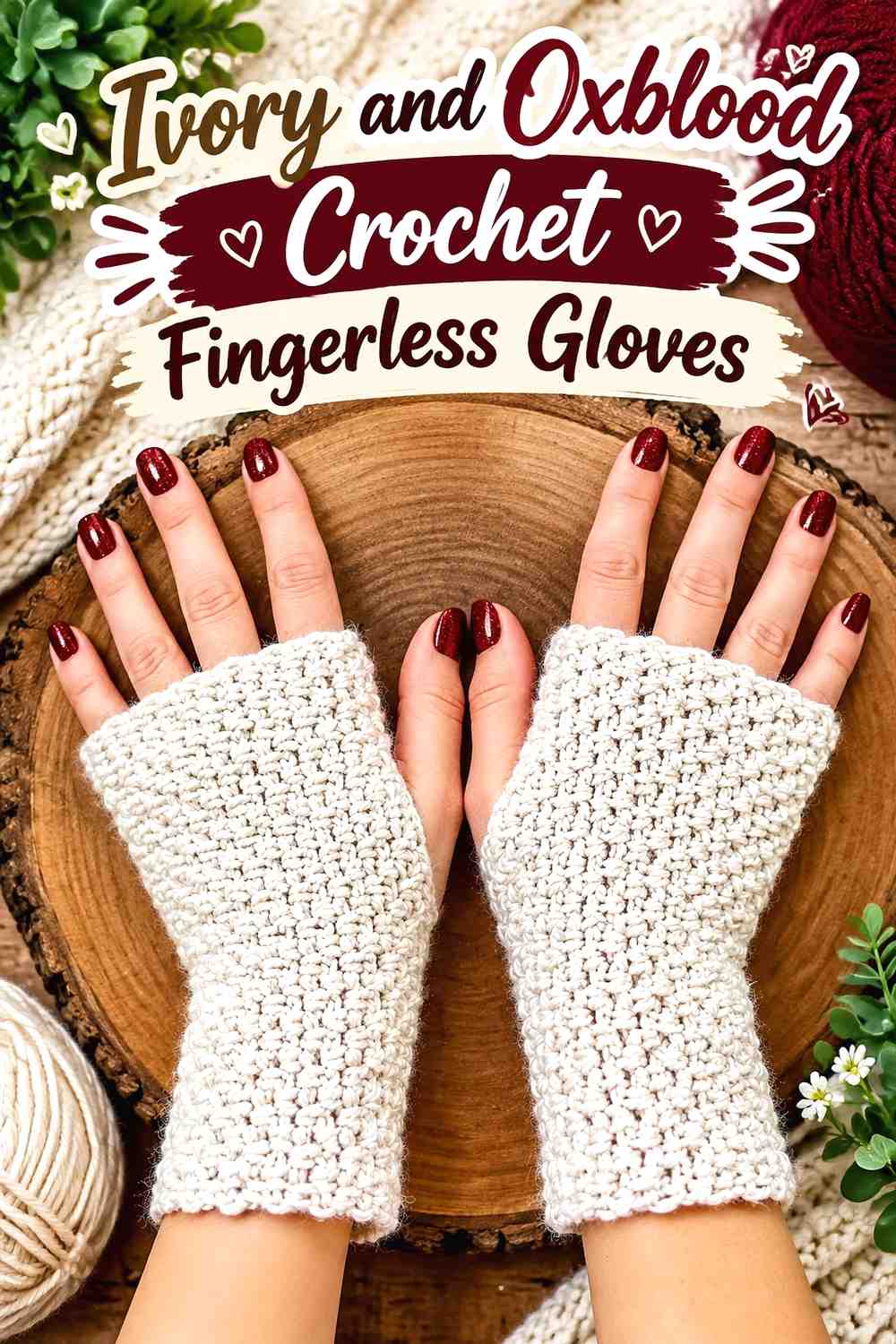
Fingerless gloves benefit from simple color placement because the hand, thumb opening, and cuff already create several structural details. An ivory hand with an oxblood cuff provides a clear two-part division that is easy to repeat consistently across the pair.
Ivory Can Keep the Main Oxblood Crochet Glove Surface Light
An ivory hand section gives the accessory a lighter overall appearance and makes any surface texture easier to distinguish.
Maintain the same ivory coverage on both gloves so the pair remains visually coordinated.
Oxblood Can Give Ivory Crochet Glove Cuffs a Dark Anchor
Oxblood cuffs create a strong transition at the wrist and can connect the gloves with an oxblood sweater, vest, or cardigan.
Because the gloves are small, a deep cuff may already provide enough oxblood without adding additional stripes across the hand.
Creator Credit: naztazia YouTube tutorial
13. Oxblood And Ivory Crochet Granny Square
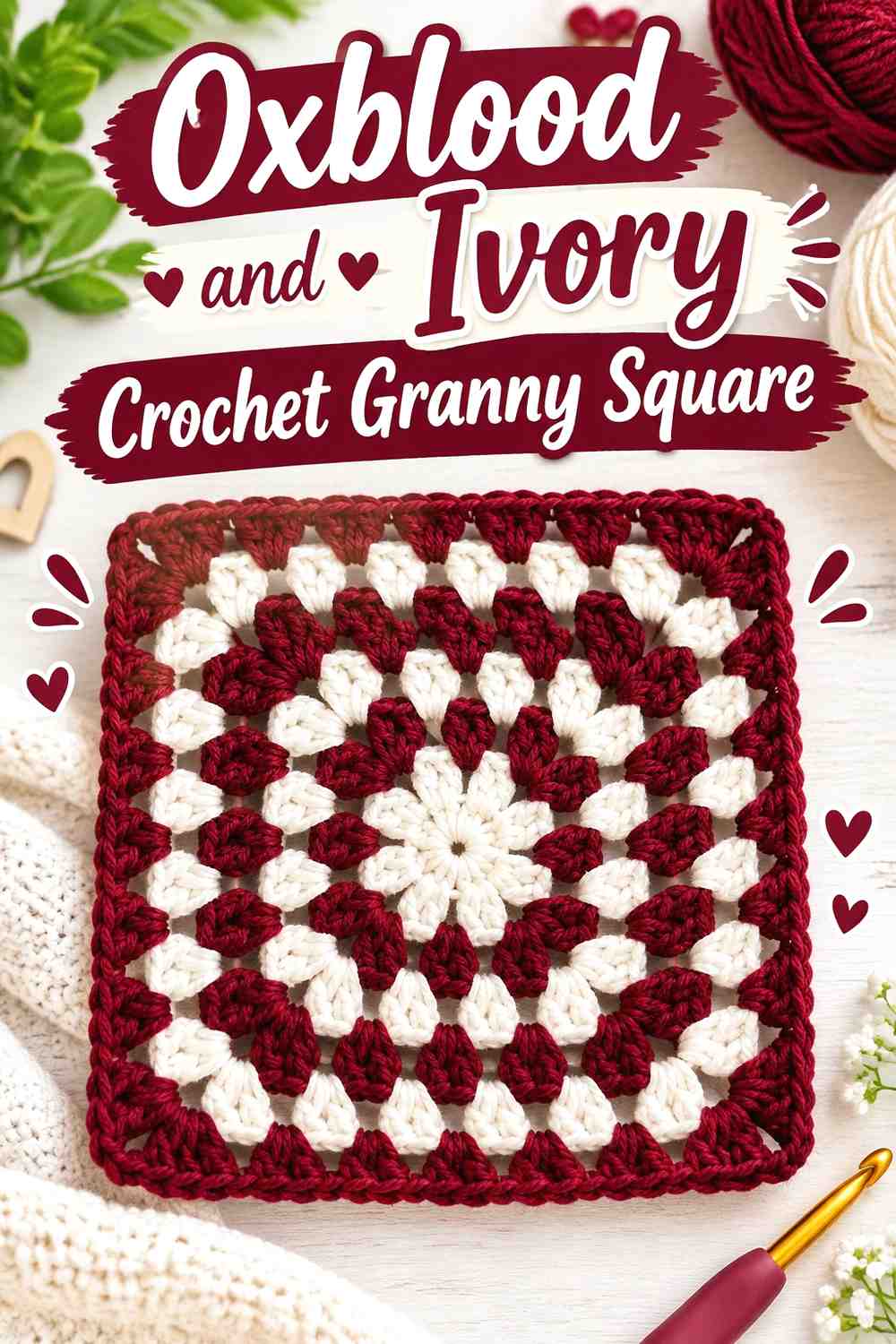
A granny square is one of the best places to explore repeated oxblood-and-ivory contrast because the colors can change roles from center to outer rounds. Oxblood can establish a dark center while ivory creates separation around it, or the arrangement can be reversed across alternating motifs.
Oxblood Can Give an Ivory Crochet Granny Square a Defined Center
An oxblood center creates an immediate focal point without requiring the dark shade to occupy most of the motif.
Surrounding that center with ivory creates strong separation and makes the geometry easier to distinguish when multiple squares are placed together.
Ivory Can Keep Oxblood Crochet Granny Square Borders Distinct
Ivory around darker motif sections can stop neighboring oxblood areas from visually merging after the squares are joined.
If every square uses the same two colors, vary proportions cautiously so the final project still has a repeated visual rhythm.
Creator Credit: Hooked by Robin YouTube tutorial
14. Ivory And Oxblood Crochet Basket
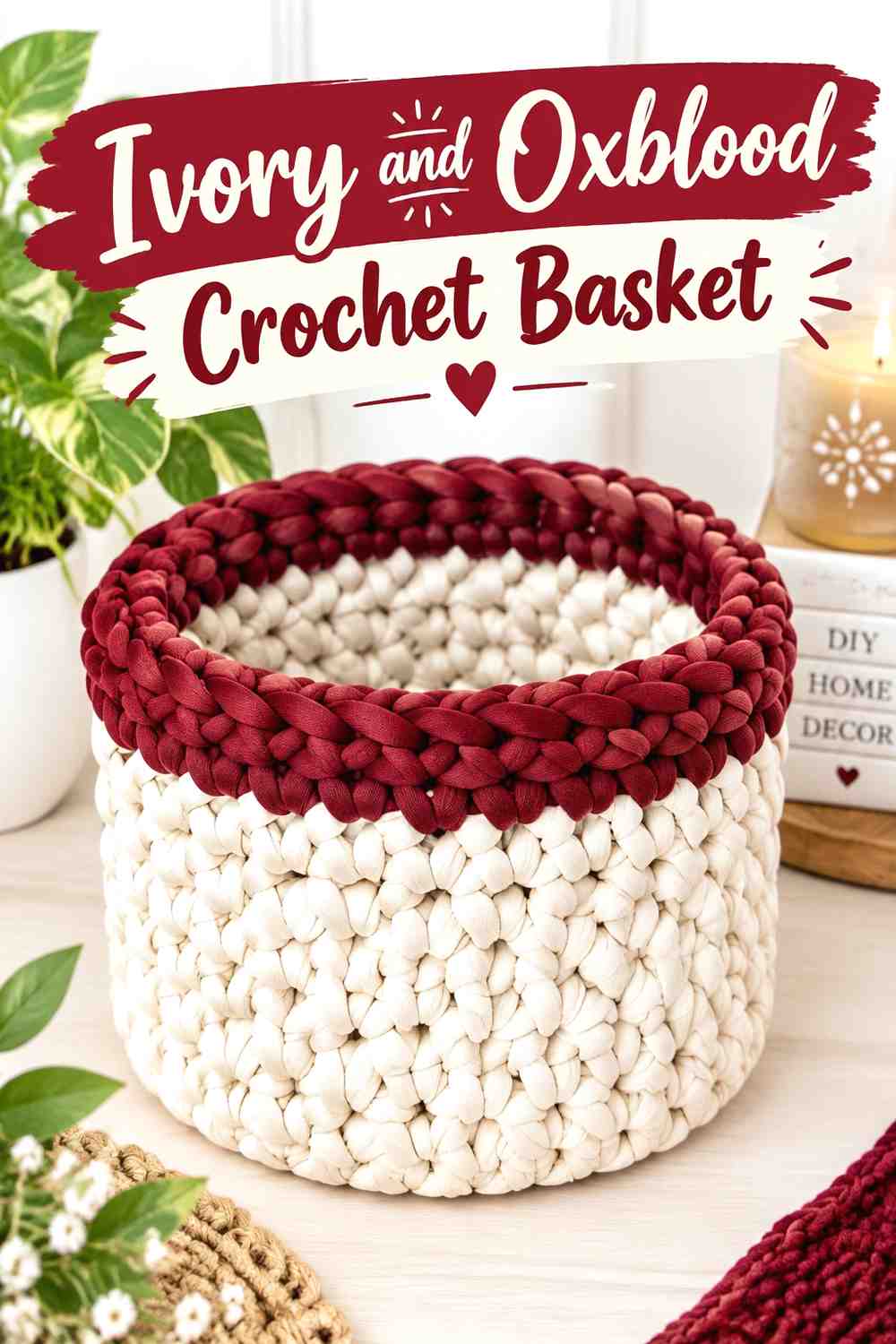
A basket provides clear zones for color planning: base, walls, rim, and handles. Ivory can cover most of the body while oxblood grounds the bottom or defines the upper edge. Keeping the color changes tied to those structural areas gives the basket a cleaner two-tone appearance.
Oxblood Can Ground an Ivory Crochet Basket Base
A dark oxblood base creates a strong visual foundation beneath lighter ivory walls. The color transition also helps distinguish the lower structure from the storage area above it.
Ivory Can Keep Oxblood Crochet Basket Walls From Feeling Too Dark
Ivory through most of the walls allows dense crochet texture to remain easier to see and stops the basket from becoming one large dark block.
An oxblood rim can repeat the base color and visually connect the top and bottom without requiring extra stripes through the middle.
Creator Credit: Lallaulab YouTube tutorial
15. Oxblood And Ivory Crochet Headband
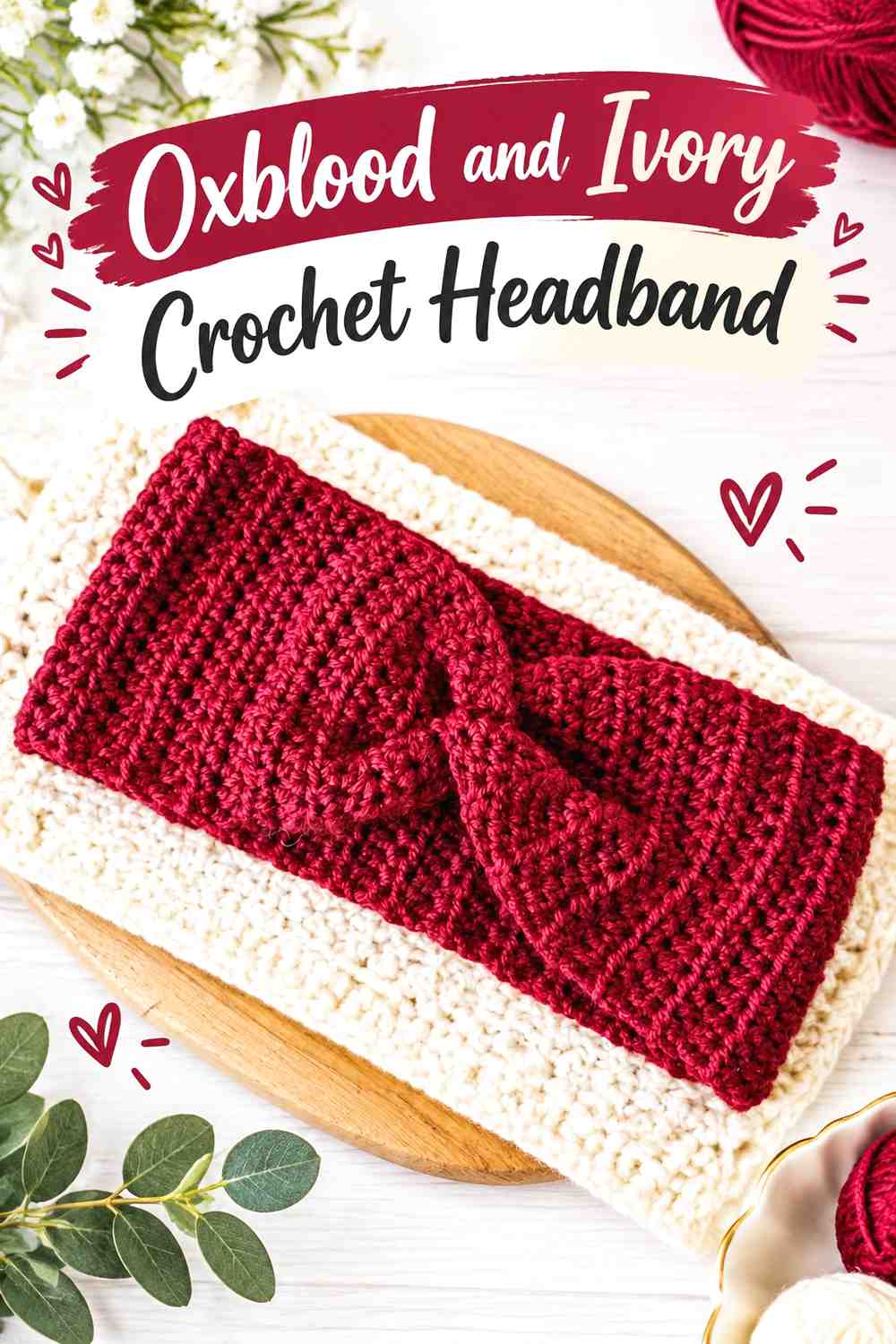
A headband is compact enough for oxblood to cover most of the surface while ivory is reserved for an edge, center detail, or contrasting textured section. Because the accessory is narrow, even a small ivory area can remain highly visible.
Oxblood Can Make the Crochet Headband a Focused Dark Accent
Keeping most of the headband oxblood creates one continuous main shade rather than fragmenting the narrow accessory with many color changes.
This is particularly useful when the construction includes a twist, knot, braid-like effect, or strong ribbing.
Ivory Can Highlight Oxblood Crochet Headband Texture
Place ivory where you want a structural feature to become easier to see, such as a center section or controlled edge.
Avoid outlining every side in ivory if the band is already narrow, since the lighter color can quickly become visually dominant.
Creator Credit: يلا نتعلم سوا كروشيه YouTube tutorial
16. Ivory And Oxblood Crochet Poncho

A poncho offers one of the largest surfaces in the collection, making color hierarchy especially important. Ivory can dominate the main body while oxblood defines the neckline and lower border, or oxblood can appear as one large lower section rather than several narrow stripes.
Ivory Can Keep a Large Oxblood Crochet Poncho Visually Open
Using ivory through most of the body reduces the visual weight of such a large crochet piece and gives textured or openwork sections a clear background.
It also creates more contrast when oxblood is introduced around the perimeter.
Oxblood Can Frame an Ivory Crochet Poncho Neckline and Lower Edge
Repeating oxblood at the neckline and hem links two distant parts of the poncho. Because the lower border spans a large circumference, keep its depth in proportion to the ivory body.
A very wide oxblood hem may visually outweigh a much smaller neckline detail, even though both use the same color.
Creator Credit: The Crochet Crowd YouTube tutorial
Comparing Oxblood and Ivory Crochet Placement
For an ivory-dominant result, the cardigan, pillow, shawl, cowl, fingerless gloves, basket, and poncho give the light shade generous surface area while using oxblood as a frame or anchor. These approaches are especially useful when texture visibility is important.
The vest, sweater, beanie, scarf, bucket hat, and headband allow oxblood to carry more visual weight. Ivory becomes a strategic contrast around openings, brims, ends, or cuffs rather than sharing the surface equally.
Blankets, tote bags, and granny squares sit between the two approaches because their layouts make it easy to adjust the proportions. They are useful places to experiment with the pairing before deciding how much oxblood you want across a larger wearable.
Conclusion
Oxblood and ivory work most clearly in crochet when the colors are given different jobs. Ivory can open up large surfaces, expose stitch texture, and separate motifs. Oxblood can frame edges, ground bases, define garment openings, or become the dominant shade when a deeper finished look is wanted.
The shape of the project should guide the placement. Cardigans and sweaters offer cuffs, bands, and necklines; pillows and blankets provide centers and borders; bags and baskets have bases, handles, and rims; and smaller accessories can support a larger percentage of oxblood without turning an entire outfit dark.
Before committing to a large project, compare the actual yarns in a small piece of the intended stitch texture. Then decide which shade will dominate and identify the limited structural areas where the second color will repeat.
Frequently Asked Questions
Should Oxblood or Ivory Be the Main Crochet Color?
Either can lead. Ivory gives larger crochet surfaces a lighter appearance and often makes texture easier to see, while oxblood produces a deeper overall field. The stronger choice depends on the finished item and how much visual weight you want the dark shade to carry.
How Much Ivory Should I Use With Oxblood Crochet?
There is no required ratio. A small ivory cuff or border can create substantial contrast against oxblood, while an ivory-dominant blanket or cardigan may need several repeated oxblood accents to keep the darker color connected to the whole design.
Does Ivory Show Crochet Texture More Clearly Than Oxblood?
It can when the darker yarn makes shadows within the texture less distinct, but the result depends on the yarn and stitch pattern. Swatch the actual colors if cables, bobbles, ribbing, or other raised features are important to the design.
How Can I Stop an Oxblood and Ivory Crochet Project From Looking Too Striped?
Use larger blocks and structural color changes. Place the second shade at cuffs, borders, handles, hems, motif centers, or other natural divisions instead of alternating colors at short intervals throughout the entire item.
Can I Substitute Another Light Neutral for Ivory in Oxblood Crochet?
Yes. Preserve the role the ivory was performing. If it provided strong light-and-dark contrast, choose another light neutral that remains clearly lighter than the oxblood. A deeper beige or tan will create a softer contrast and therefore change the finished balance.
What Can I Use Instead of Oxblood in an Ivory Crochet Project?
Look for another deep muted red, burgundy, wine, or red-brown direction that maintains the dark visual role of oxblood. Compare the substitute directly with ivory so the level of contrast remains suitable for your planned borders or motifs.
Should Oxblood or Ivory Be Used for a Crochet Border?
Either can work. Oxblood creates a stronger dark frame around an ivory center, while ivory can lighten the edge of an oxblood-dominant project. Choose the border according to whether you want the outer edge to visually contain the project or soften it.


