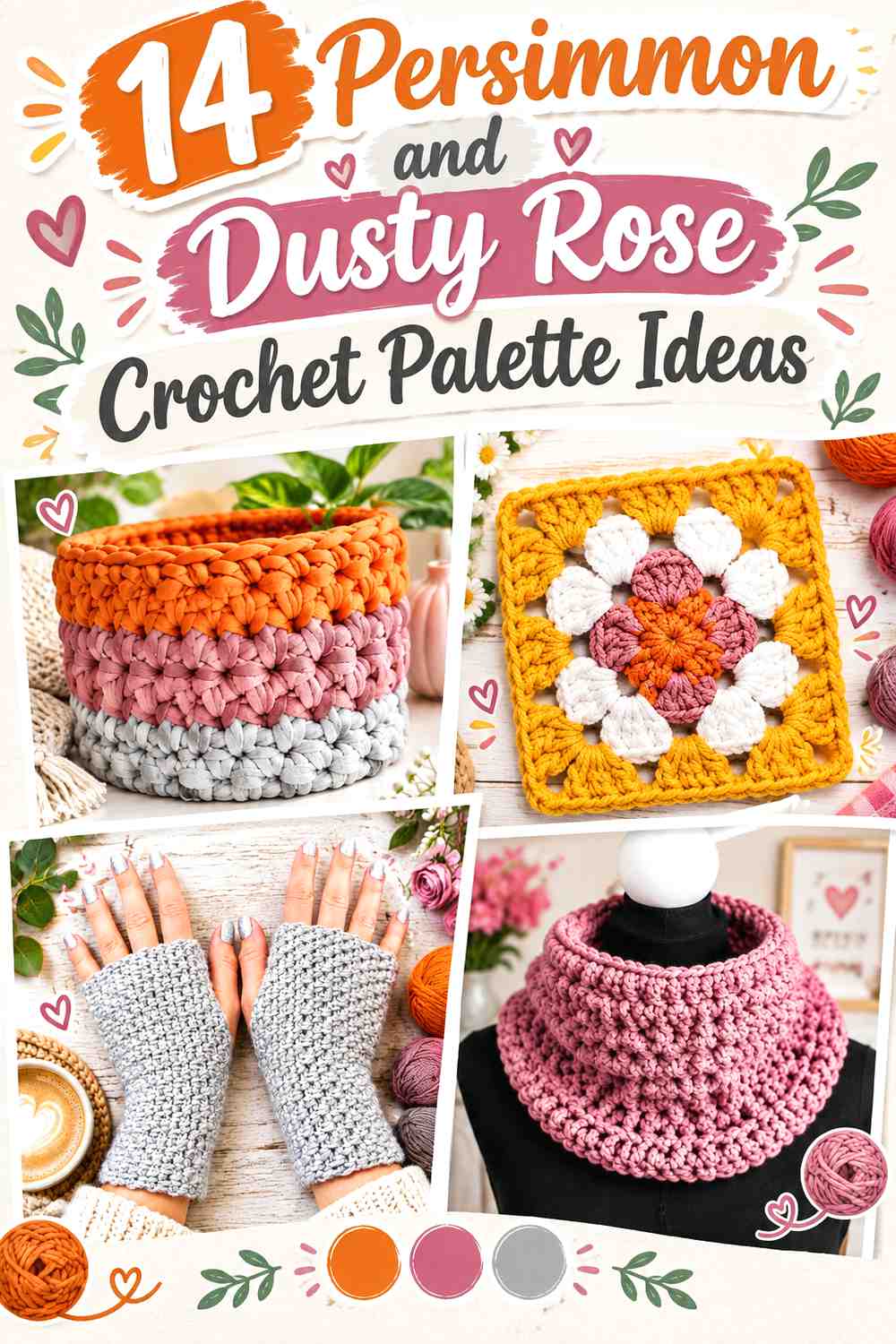
14 Persimmon and Dusty Rose Crochet Palette Ideas
Persimmon and dusty rose sit close enough in warmth to feel connected, but they do not have to compete for equal space in a crochet project. Persimmon has more visual intensity, so it can become a strong focal color on borders, panels, motifs, or accessories. Dusty rose is softer and can occupy a larger area when you want the finished project to feel less saturated.
Adding a third color changes that relationship significantly. Cream can separate the two warm shades, olive can ground them, burgundy can deepen them, and charcoal can give the palette a stronger dark anchor. The placement matters just as much as the colors themselves.
These 14 ideas use persimmon and dusty rose in different proportions across wearables, accessories, motifs, and home decor so you can compare dominant colors, borders, texture visibility, accent placement, and supporting neutrals before choosing a palette.
Quick List
- Persimmon Dusty Rose And Cream Crochet Cardigan
- Persimmon Dusty Rose And Oatmeal Crochet Pillow
- Persimmon Dusty Rose And Camel Crochet Blanket
- Persimmon Dusty Rose And Olive Crochet Tote Bag
- Persimmon Dusty Rose And Burgundy Crochet Scarf
- Persimmon Dusty Rose And Charcoal Crochet Beanie
- Persimmon Dusty Rose And Plum Crochet Shawl
- Persimmon Dusty Rose And Sage Crochet Vest
- Persimmon Dusty Rose And Chocolate Crochet Sweater
- Persimmon Dusty Rose And Ivory Crochet Cowl
- Persimmon Dusty Rose And Teal Crochet Bucket Hat
- Persimmon Dusty Rose And Taupe Crochet Fingerless Gloves
- Persimmon Dusty Rose And Mustard Crochet Granny Square
- Persimmon Dusty Rose And Soft Gray Crochet Basket
Give Persimmon and Dusty Rose Different Crochet Roles
Persimmon and dusty rose become easier to control when one shade is clearly dominant. On a cardigan, for example, dusty rose might cover the body panels while persimmon appears on the cuffs and front band. On a granny square, persimmon can move to the center while dusty rose fills a wider surrounding round.
Avoid assuming that a 50/50 split creates the strongest balance. Because persimmon is usually the more visually assertive direction, a smaller amount may still attract substantial attention. Lay the yarns together before starting and decide which color should be noticed first.
Use a Third Color to Separate Persimmon and Dusty Rose
When persimmon and dusty rose have similar lightness, small adjacent details can merge more than expected. A third shade can create separation. Cream, oatmeal, or ivory can lighten motif borders and joins, while burgundy, chocolate, charcoal, or another deeper shade can define an outer edge.
If contrast is important around small crochet details, take a grayscale photo of the yarns before committing. Different hues do not necessarily provide strong light-and-dark contrast.
1. Persimmon Dusty Rose And Cream Crochet Cardigan
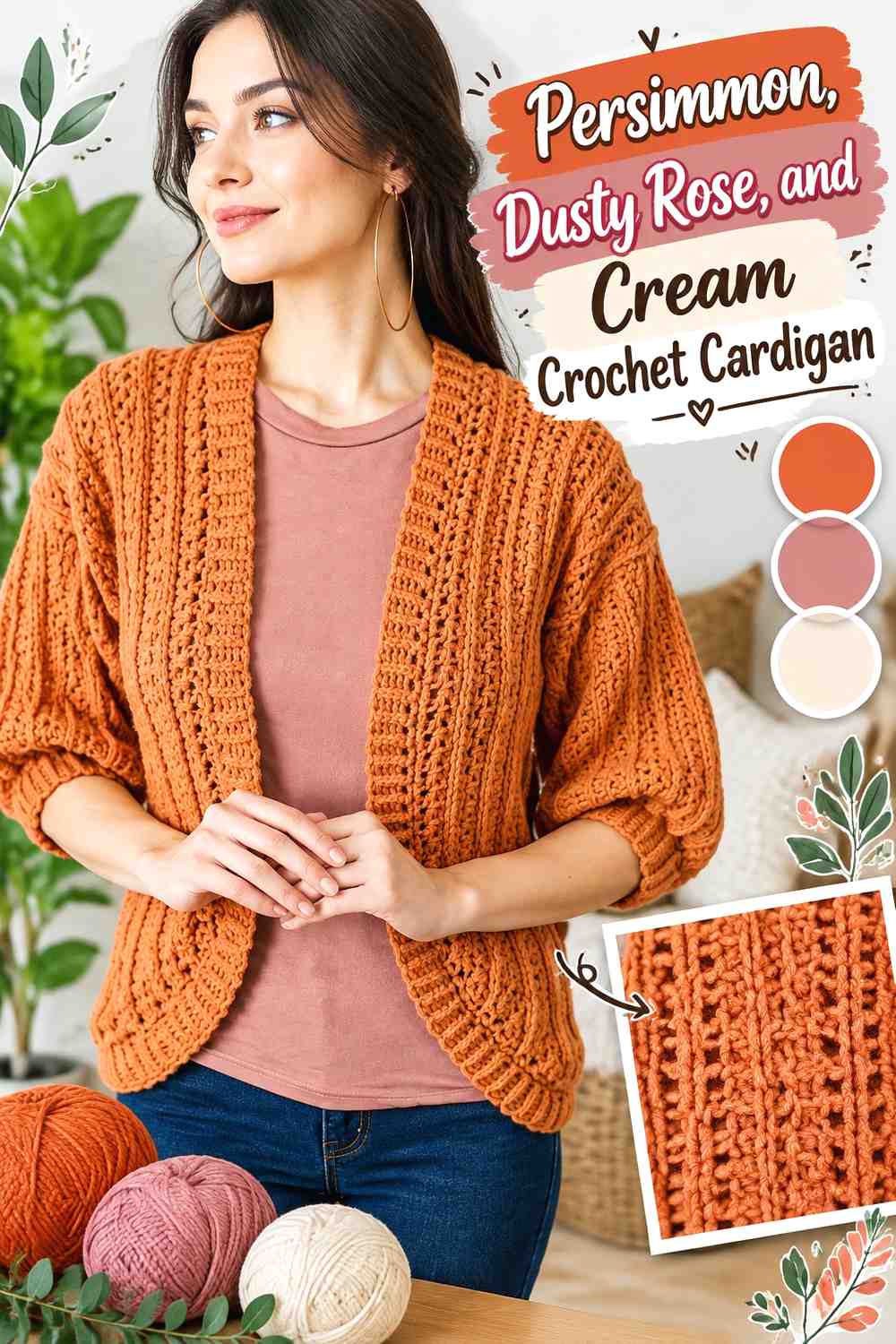
Dusty rose can carry most of a cardigan while persimmon adds stronger warm accents around cuffs, bands, or selected panel details. Cream is useful between them because it creates a lighter interruption and prevents every garment edge from becoming equally saturated. On a cardigan, this three-color hierarchy is especially useful because sleeves, fronts, neckline, pockets, and lower edging already provide natural locations for controlled color changes.
Dusty Rose Can Carry the Main Crochet Cardigan Panels
Use dusty rose across the back and front panels when you want the softer shade to establish the cardigan’s overall appearance. Keeping large surfaces consistent also gives cables, ribbing, or other noticeable crochet texture more room to remain visible.
Persimmon then has more impact when it appears in smaller structural areas rather than competing across half of every panel.
Persimmon Can Define Dusty Rose Cardigan Cuffs
Persimmon cuffs provide a clear warm endpoint to dusty rose sleeves. You can repeat persimmon along the front band so the cuff color does not appear isolated.
If that creates too much orange-red coverage, insert cream at the neckline or lower edge instead of adding another large persimmon section.
Cream Can Separate Persimmon and Dusty Rose Cardigan Details
Cream works particularly well where persimmon would otherwise touch dusty rose in narrow bands. A slim cream transition can make both warm colors easier to identify.
Keep the cream placement repeated rather than random. One neckline detail and a related lower edge, for example, will usually feel more connected than unrelated cream patches across the body.
Creator Credit: TCDDIY
2. Persimmon Dusty Rose And Oatmeal Crochet Pillow
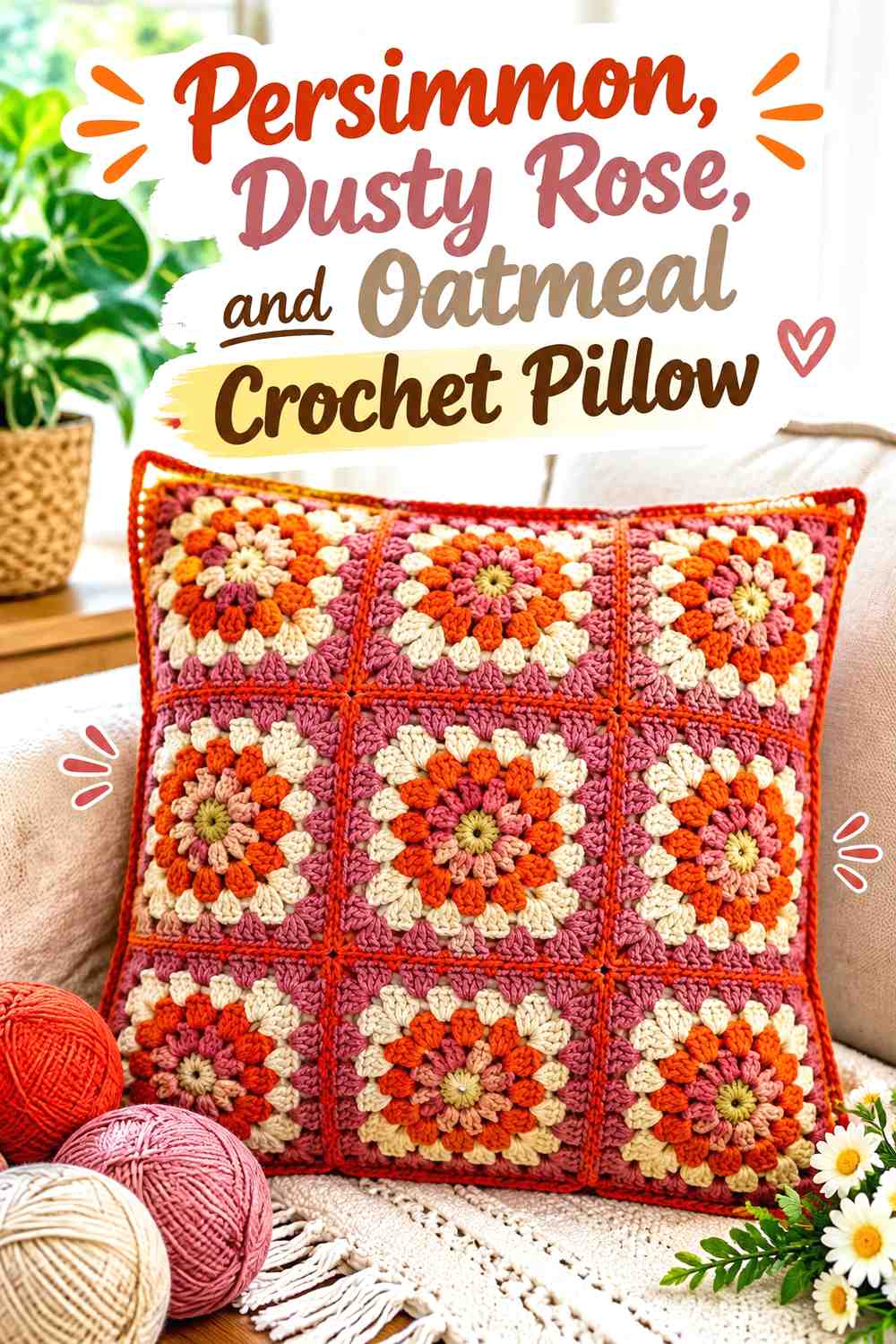
A pillow gives persimmon and dusty rose a broad flat surface where color proportions are immediately visible. Oatmeal can serve as the quieter base, dusty rose can fill a secondary section or repeated motifs, and persimmon can mark the border or focal texture. This arrangement keeps the two warmer colors noticeable without requiring them to cover the entire pillow face.
Oatmeal Can Give Persimmon More Definition on the Crochet Pillow
Use oatmeal around persimmon bobbles, raised motifs, or a central panel when you want the stronger color to remain clearly outlined. The neutral space also keeps a large pillow from becoming one uninterrupted warm block.
If oatmeal and dusty rose are close in value, compare them in the actual stitch texture before placing small rose details against the neutral.
Dusty Rose Can Soften a Persimmon Crochet Pillow Border
A dusty rose section between an oatmeal center and persimmon edge creates a more gradual color transition. This is useful on a pillow because the border frames the entire object and can otherwise become disproportionately dominant.
Keep the persimmon edge narrower when the center already contains persimmon motifs.
Creator Credit: Sirin’s Crochet
3. Persimmon Dusty Rose And Camel Crochet Blanket
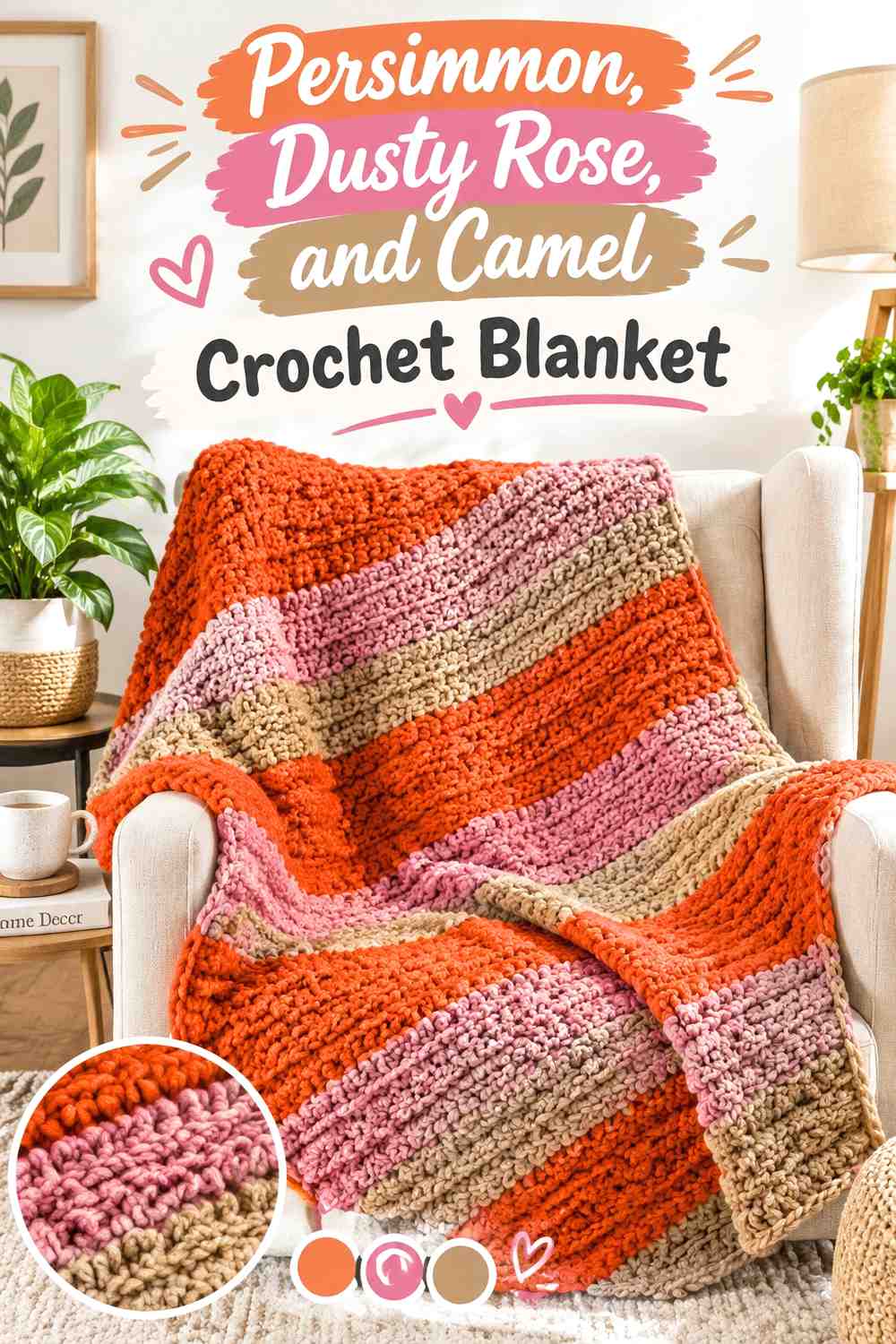
Camel adds an earthy neutral direction to persimmon and dusty rose without creating the sharp separation of cream. For a blanket, dusty rose can cover the widest sections, camel can provide repeated resting areas, and persimmon can become a narrower accent. Larger blocks are especially useful when the blanket has noticeable stitch texture that would be obscured by constant color changes.
Dusty Rose Can Cover the Broadest Crochet Blanket Sections
Give dusty rose the largest share when you want the blanket to stay muted despite including persimmon. Wide rose sections also make it easier to see stitch repetition without every row becoming a new color decision.
Persimmon can then appear at wider intervals rather than being alternated equally with dusty rose.
Camel Can Keep Persimmon Blanket Stripes From Competing With Dusty Rose
Place camel between stronger persimmon and dusty rose sections when the two warm shades begin to feel crowded. Camel can function as visual breathing room while still maintaining a warm overall palette.
If all three colors are similar in value, increase the width of the neutral sections instead of relying on thin camel lines to separate them.
Persimmon Can Give the Dusty Rose Crochet Blanket a Stronger Border
A persimmon outer edge can visually contain broad dusty rose and camel sections. Because the border surrounds the whole blanket, it does not need to be especially wide to make an impact.
Repeat a small amount of persimmon inside the blanket so the outer edge does not introduce what looks like an unrelated final color.
Creator Credit: B.Hooked Crochet
4. Persimmon Dusty Rose And Olive Crochet Tote Bag
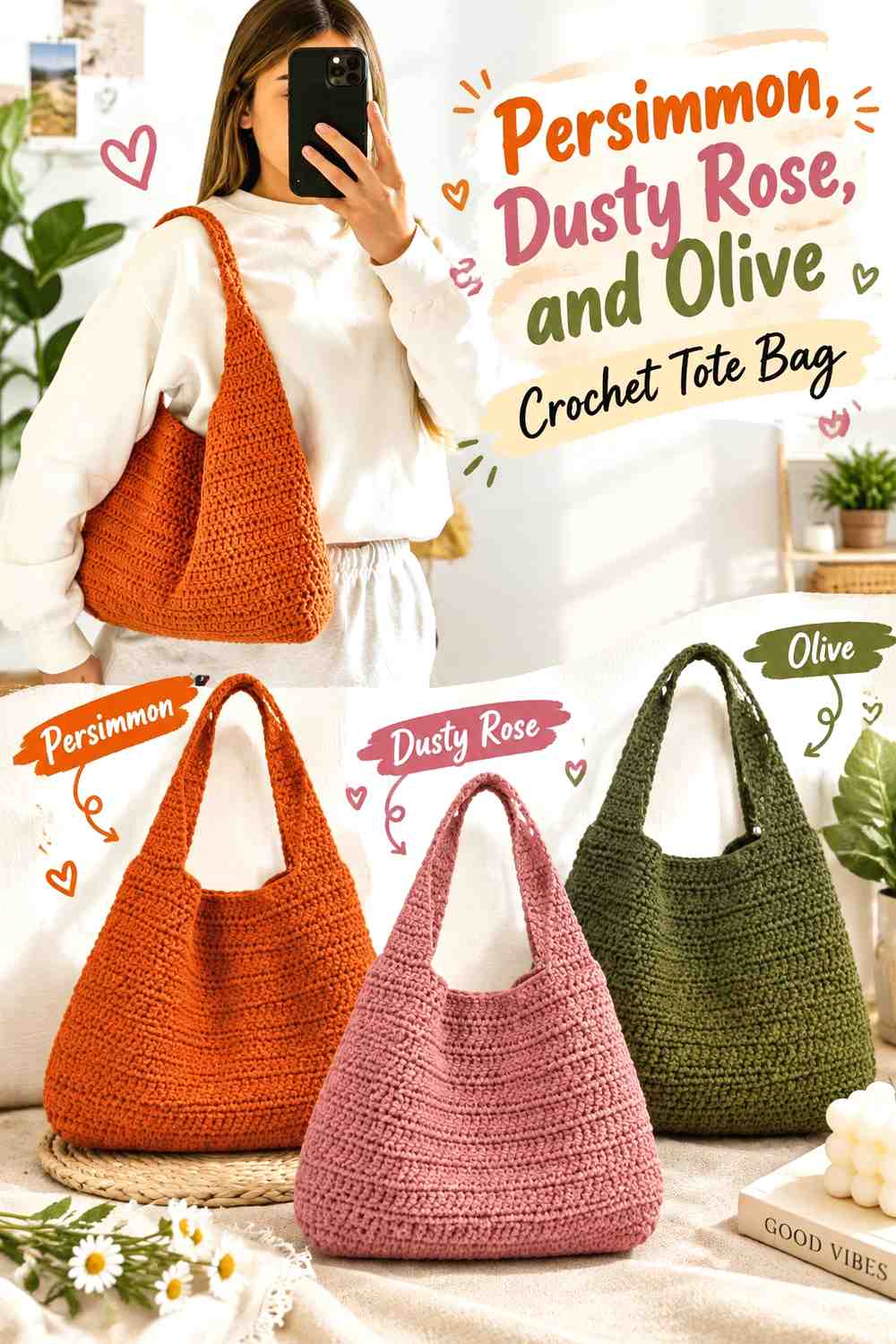
Olive changes the palette by adding a muted green contrast against both warm shades. On a tote, olive can take the base or lower body where a visually grounding color is useful, dusty rose can cover the upper body, and persimmon can appear around handles, motifs, or trim. The bag’s clear structural areas make this palette easier to control than scattering all three colors randomly.
Olive Can Ground Persimmon and Dusty Rose on the Crochet Tote Base
Using olive low on the tote gives the stronger warm colors a darker or quieter foundation, depending on the exact yarns selected. It also creates a clear color break between the base and the visible upper body.
Before choosing olive, compare its value with persimmon. If they are nearly identical in grayscale, use dusty rose or a lighter join between small adjacent details.
Dusty Rose Can Carry More of the Crochet Tote Body Than Persimmon
A larger dusty rose section keeps the tote from becoming overly saturated. Persimmon can then be reserved for a narrower band, motif center, or handle detail.
This hierarchy is particularly useful on a tote because handles already attract attention. Strong persimmon across both the handles and most of the body can make the secondary colors feel incidental.
Persimmon Can Repeat on Olive Crochet Tote Handles
A persimmon handle or handle accent creates a visible color repeat above the main body. If you use persimmon here, repeat at least a small amount elsewhere on the bag so the handles remain part of the palette rather than appearing attached from another project.
Creator Credit: crochet daniela
5. Persimmon Dusty Rose And Burgundy Crochet Scarf

Burgundy deepens persimmon and dusty rose instead of separating them with a neutral. This creates a richer three-color scarf in which value contrast becomes especially important. Use dusty rose for the lightest or largest section, persimmon for medium visual intensity, and burgundy at ends or strategically spaced bands.
Dusty Rose Can Keep a Burgundy Crochet Scarf From Looking Too Dark
Broad dusty rose areas break up deeper burgundy and stronger persimmon sections. This matters on a scarf because several layers may overlap once it is wrapped around the neck.
If dusty rose is the lightest yarn, keep some of it near sections likely to remain visible after wrapping.
Burgundy Can Anchor Persimmon Crochet Scarf Ends
Using burgundy near the ends provides a deep finishing point and makes persimmon appear brighter by comparison. Matching burgundy ends also create symmetry without requiring a rigid alternating stripe sequence.
If fringe is added, decide whether it should reinforce burgundy or return to dusty rose rather than mixing all three colors without a clear plan.
Persimmon Can Connect Burgundy and Dusty Rose Scarf Sections
Persimmon sits naturally between the softness of dusty rose and the depth of burgundy. Use it as an intermediate block when a direct rose-to-burgundy transition feels too abrupt.
Give persimmon enough width to read as a deliberate bridge rather than a thin accidental line.
Creator Credit: Tejido a Crochet Mariam
6. Persimmon Dusty Rose And Charcoal Crochet Beanie
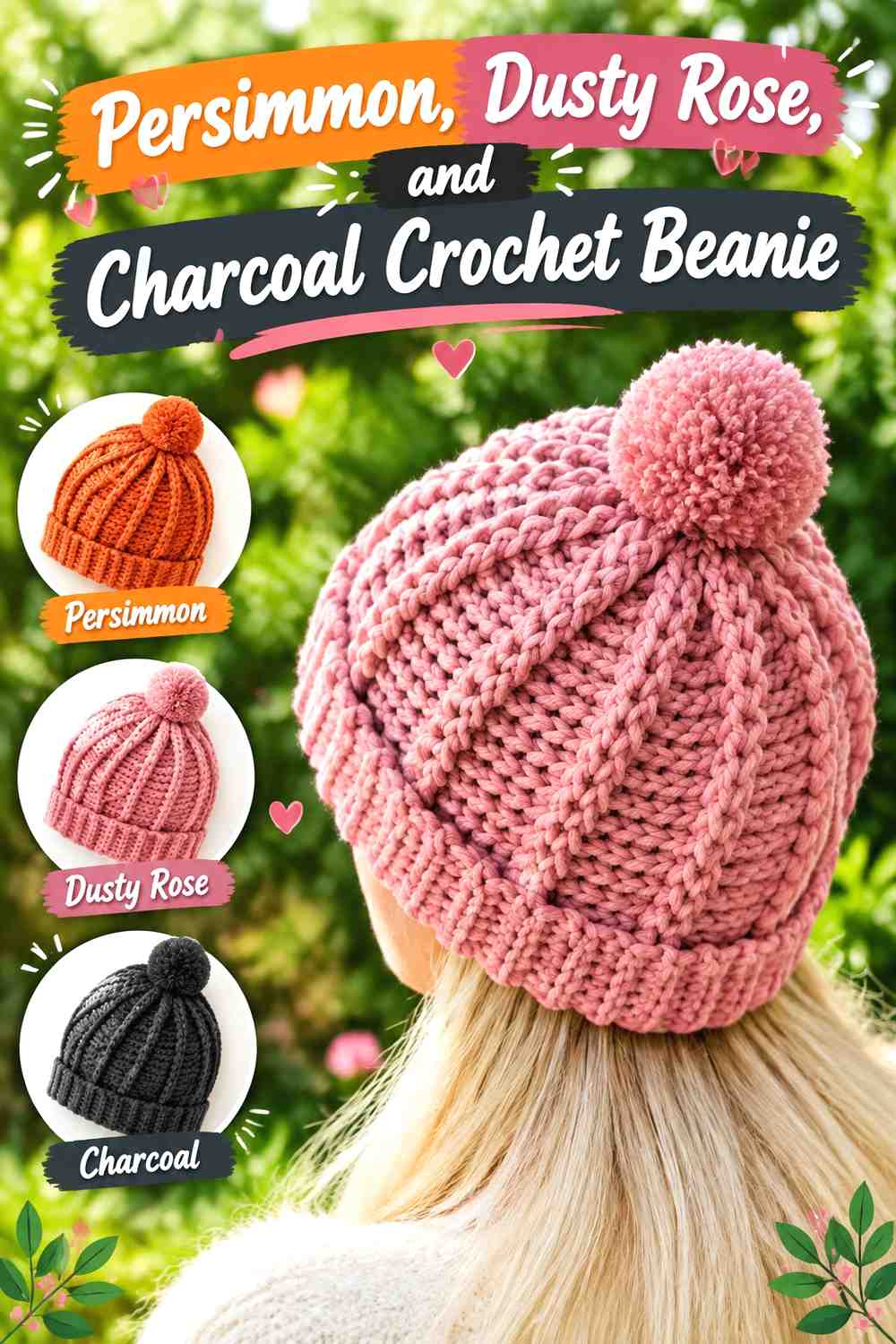
Charcoal gives this palette its strongest dark anchor. A charcoal crown can make persimmon and dusty rose around the brim appear more defined, while a dusty rose crown with charcoal ribbing produces a softer result. Because a beanie is small, choose one dominant placement rather than dividing the hat into many equal stripes.
Charcoal Can Give Persimmon Crochet Beanie Details Strong Separation
Use charcoal beside a persimmon accent when you want the orange-red shade to remain clearly visible. A dark brim, narrow band, or crown section can provide enough contrast without spreading charcoal across the entire hat.
Check the value of your exact persimmon yarn, since a deep muted persimmon may need a lighter neighbor instead.
Dusty Rose Can Keep the Charcoal Crochet Beanie Softer
Dusty rose on the main crown reduces the visual weight of charcoal while still leaving room for a persimmon accent. This is useful when the ribbed texture itself already gives the beanie plenty of surface variation.
Avoid placing all three colors in very narrow stripes if the ribbing is the feature you want readers to notice first.
Creator Credit: Di’s Handicrafts (Crochet and Knitting)
7. Persimmon Dusty Rose And Plum Crochet Shawl
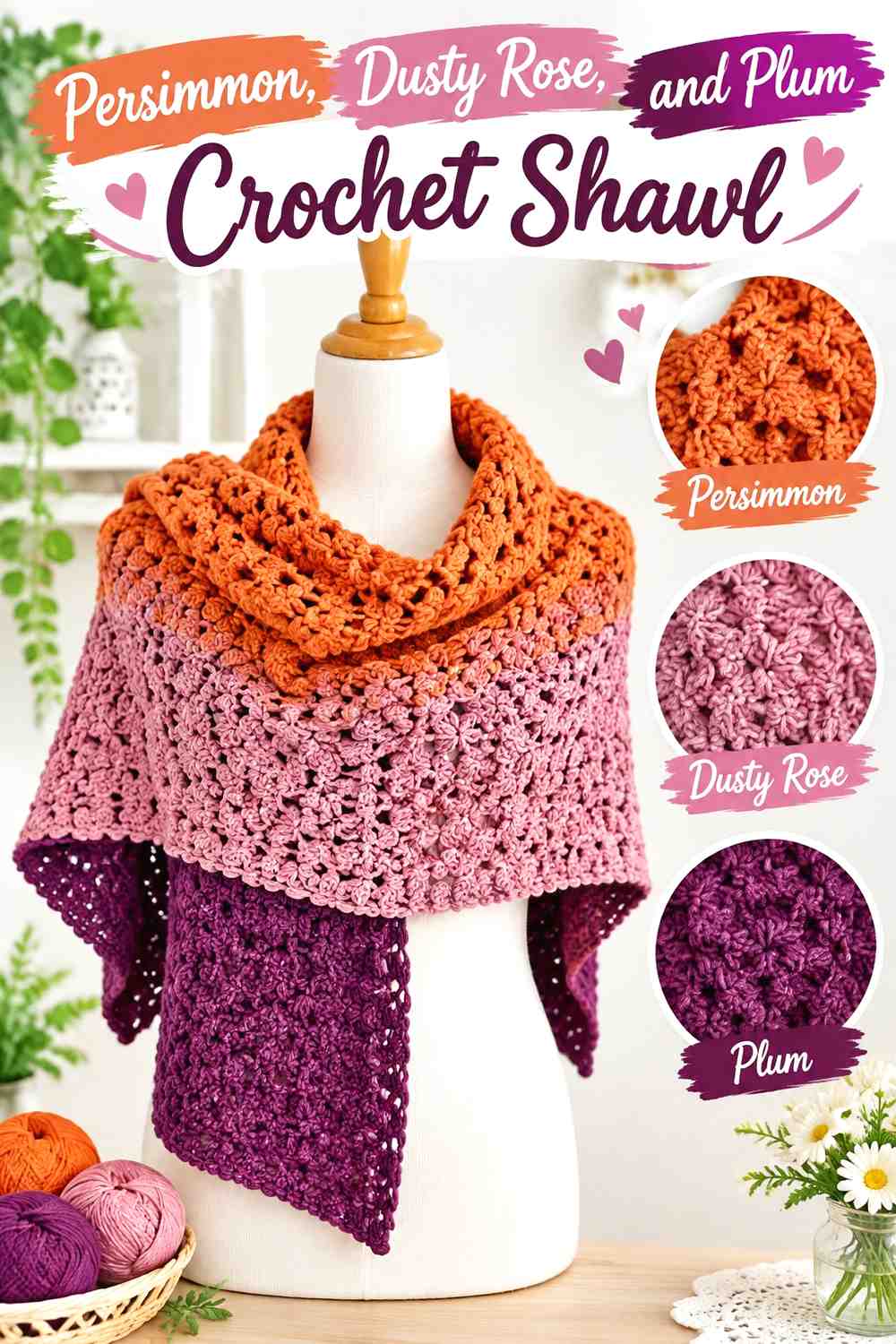
Plum moves the palette away from an entirely orange-pink direction by introducing a deeper purple-red note. On a shawl, dusty rose can dominate the central field, persimmon can appear in a substantial secondary section, and plum can define the outer edge where its darker value has the most framing power.
Dusty Rose Can Keep the Persimmon Crochet Shawl Center Light
Starting with dusty rose around the center or upper section gives the softer color enough visual space before the shawl widens. This becomes important because later rows or sections occupy progressively more area on many shawl shapes.
Do not judge color balance only by the number of rows devoted to each shade; compare the actual finished area.
Plum Can Frame Persimmon and Dusty Rose Along the Crochet Shawl Edge
A plum edge gives the shawl a deeper outer boundary and can help both warm colors appear more distinct. It is particularly useful when persimmon and dusty rose look similar in grayscale.
If plum is very dark, keep the border proportionate so it frames the shawl rather than visually replacing the lighter center.
Persimmon Can Add a Strong Transition Before the Plum Crochet Border
Place persimmon between dusty rose and plum when you want a progression from softer to stronger and darker color. A broader persimmon section will read more intentionally than several narrow orange lines spread throughout the shawl.
Creator Credit: Fiber Flux
8. Persimmon Dusty Rose And Sage Crochet Vest
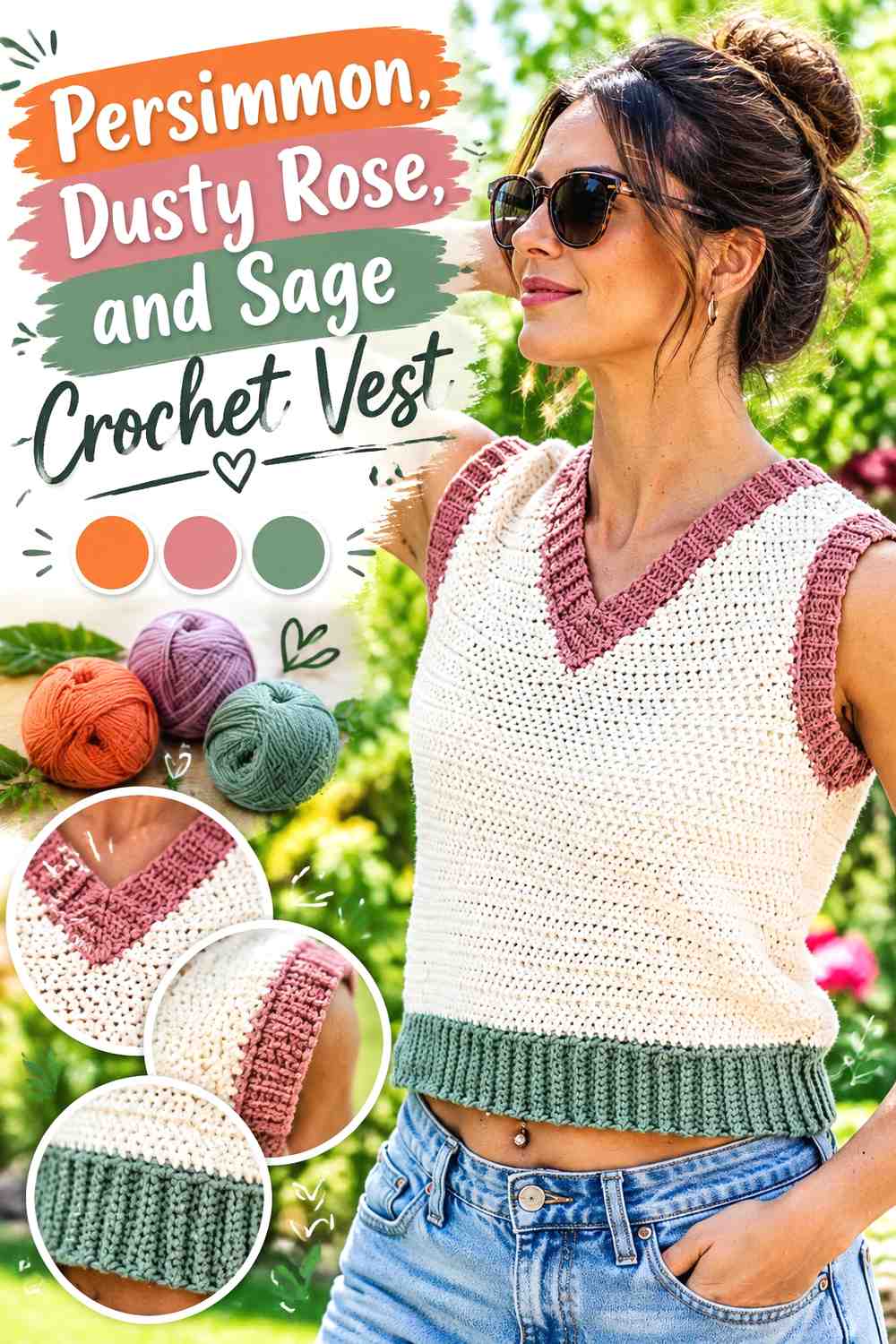
Sage brings a softened green into the palette without the deeper visual weight of olive. On a vest, dusty rose can remain the main body shade while sage appears around ribbing or selected panels and persimmon becomes the smallest but strongest accent.
Because a vest has several visible edges, control how many of those edges receive the same accent color.
Dusty Rose Can Unify the Main Crochet Vest Panels
Keeping most of the front and back dusty rose creates a consistent garment field. This is especially useful when the vest has panel seams, textured stitches, or contrasting ribbing already dividing the surface.
Persimmon then has more room to function as an intentional highlight.
Sage Can Separate Persimmon From Dusty Rose Crochet Vest Ribbing
Sage works well around a neckline or armhole when placing persimmon directly against dusty rose feels too warm or too similar in value. A muted green edge also creates a different type of contrast from adding a lighter neutral.
Repeat sage in at least one additional location, such as the lower band, if you want it to feel integrated.
Persimmon Can Stay Small on a Dusty Rose and Sage Crochet Vest
Persimmon does not need to cover a full panel. A narrow lower stripe, small motif section, or controlled edging detail may provide enough color because the shade already has more visual intensity than dusty rose and sage.
Creator Credit: Leelee Knits
9. Persimmon Dusty Rose And Chocolate Crochet Sweater

Chocolate brown gives persimmon and dusty rose a dark warm anchor that suits larger sweater surfaces particularly well. Instead of dividing the sweater equally, use chocolate at ribbing or the lower torso, dusty rose across a larger central body section, and persimmon where you want the strongest color block.
Chocolate Can Ground Persimmon Crochet Sweater Cuffs and Hem
Chocolate ribbing can define the lower edge and sleeve ends without interrupting the torso repeatedly. This creates a strong structural frame around lighter or brighter sections.
If the sweater has a large neckline band, decide whether repeating chocolate there will create useful continuity or make the dark framing too heavy.
Dusty Rose Can Balance a Large Persimmon Crochet Sweater Block
A broad dusty rose section next to persimmon reduces the amount of intense warm color across the torso. The softer pink also gives you a place to show texture without introducing yet another contrasting yarn.
For a more controlled result, align major color changes with existing sweater construction rather than changing shades at arbitrary points.
Persimmon Can Lead the Crochet Sweater Without Covering Every Panel
Persimmon can remain the first color noticed even if it occupies less than half of the sweater. Use it on one substantial body section or repeat it between the body and sleeves.
This is usually clearer than adding tiny persimmon details to every edge.
Creator Credit: Brunaticality
10. Persimmon Dusty Rose And Ivory Crochet Cowl
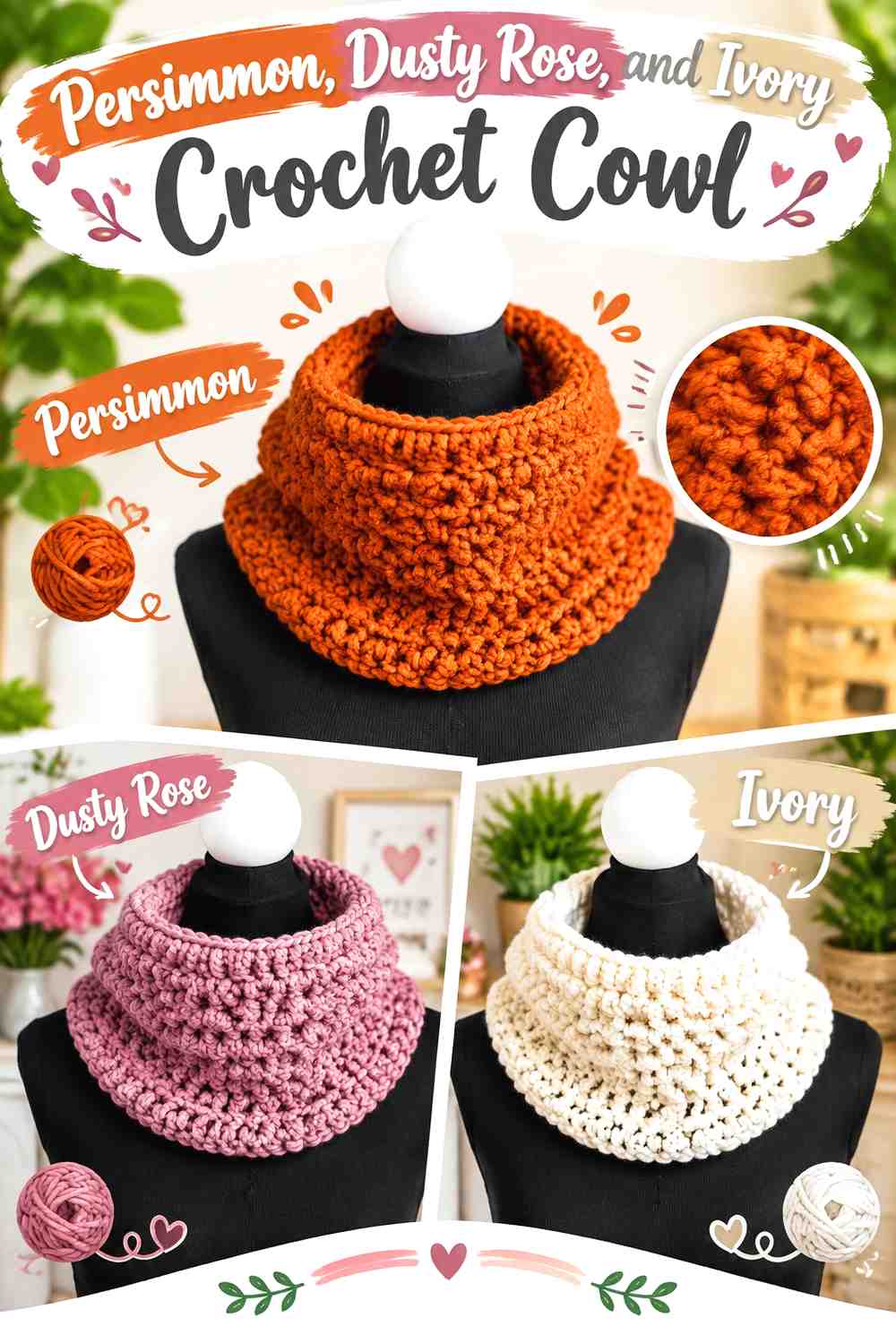
Ivory provides stronger light separation than the deeper supporting colors in several other palettes. That makes this combination useful for a textured cowl where raised stitches or openwork need to remain visible. Dusty rose can cover most of the loop, ivory can define borders, and persimmon can appear in one concentrated section.
Ivory Can Keep Persimmon Crochet Cowl Texture Easy to See
Place ivory beside persimmon around detailed stitchwork when the two warm main colors would otherwise blend into the shadows of the texture. A light edge can also define the top and bottom of the cowl.
If ivory becomes the most visually noticeable color, reduce its width rather than adding more persimmon to compensate.
Dusty Rose Can Carry the Main Crochet Cowl Surface
Dusty rose gives the cowl a softer central field and allows stitch texture to stay continuous. This works well when the cowl already has dimensional detail and does not need many color changes to create interest.
Persimmon Can Create One Focused Accent on the Dusty Rose Cowl
A single persimmon band or inset section can be more effective than several thin stripes. Because a cowl folds and bunches when worn, larger blocks are more likely to remain recognizable.
Creator Credit: Crochet with Clare
11. Persimmon Dusty Rose And Teal Crochet Bucket Hat

Teal creates the clearest cool contrast in this collection. Because all three colors can be noticeable, the bucket hat needs a strong hierarchy. Dusty rose can cover the crown and sides, teal can define the brim, and persimmon can be reserved for one band or smaller repeated detail.
Teal Can Give Persimmon Crochet Bucket Hat Details Strong Hue Contrast
A teal brim places a cool shade directly beside the warmer persimmon and dusty rose family. Keep the teal area controlled if the warm pair should still define the palette.
If your teal is highly saturated, it may become the strongest color even in a relatively small amount.
Dusty Rose Can Keep the Teal Crochet Bucket Hat Crown Quieter
Dusty rose works well over the largest crown area because it gives the hat a muted base before the stronger teal and persimmon details are introduced.
On a structured hat shape, broad sections generally stay clearer than many narrow circular stripes.
Persimmon Can Connect the Dusty Rose Crown to a Teal Crochet Brim
A persimmon band between dusty rose and teal can serve as a warm transition and ensure persimmon remains clearly represented. Keep it narrower than the main crown if dusty rose is intended to dominate.
Creator Credit: VivCrochets
12. Persimmon Dusty Rose And Taupe Crochet Fingerless Gloves

Taupe gives this palette a quieter neutral foundation. Fingerless gloves are small, so there is little reason to divide each hand into many separate bands. Use taupe for the body, dusty rose at the cuffs, and persimmon as a narrower repeated accent.
Taupe Can Keep Persimmon Crochet Glove Details Controlled
A taupe hand section provides a calm background for stronger persimmon details. This also keeps the shape of the thumb opening and upper edge from competing with numerous color changes.
Make the placement consistent across both gloves so the pair reads as one coordinated set.
Dusty Rose Can Give Taupe Crochet Glove Cuffs a Softer Transition
Dusty rose cuffs create a warmer shift from a taupe body without making the wrist the strongest point of the accessory. They can also connect the gloves to a dusty rose sweater or cardigan.
Persimmon Can Repeat Sparingly Across Dusty Rose Crochet Gloves
Use persimmon in a slim cuff stripe or another matching detail on both gloves. Because the accessory is small, even limited persimmon can become noticeable.
Avoid adding a different persimmon placement to each glove unless deliberate asymmetry is part of your plan.
Creator Credit: naztazia
13. Persimmon Dusty Rose And Mustard Crochet Granny Square
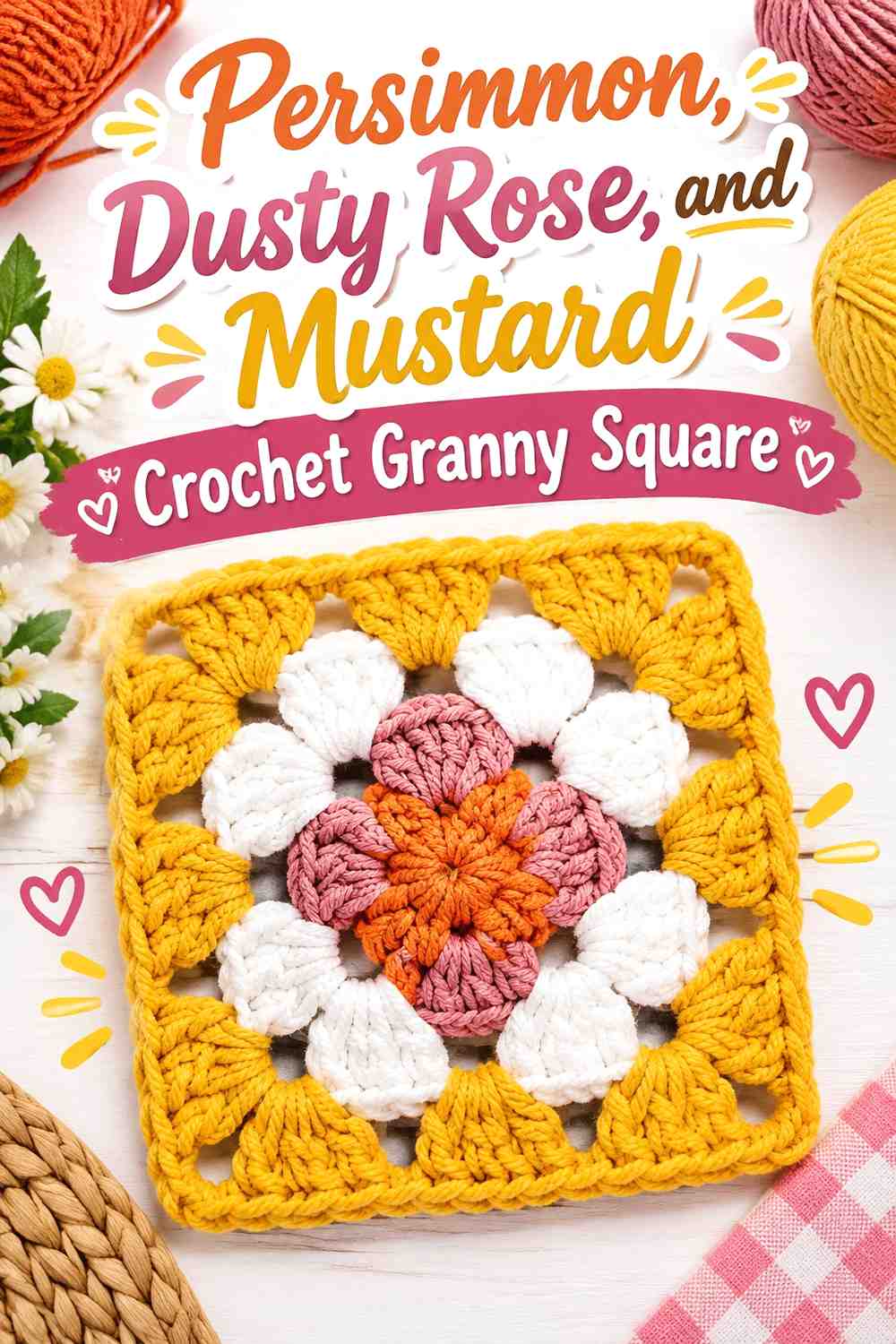
Mustard makes this the warmest and most saturated direction in the collection. A granny square needs especially clear color hierarchy because several colors appear within a small area. Persimmon can form the center, dusty rose can provide a wider intermediate section, and mustard can be repeated carefully rather than receiving equal space in every round.
Persimmon Can Give the Crochet Granny Square a Strong Center
Using persimmon at the center immediately establishes the main accent without requiring large quantities of the color. Surrounding it with dusty rose allows the center to remain noticeable while softening the transition outward.
This arrangement works particularly well when many squares will eventually be viewed together.
Dusty Rose Can Separate Persimmon From Mustard in the Crochet Motif
When persimmon and mustard sit directly together, the square can become heavily warm and saturated. Dusty rose between them creates a softer visual interval.
Check value as well as hue. If all three yarns appear similarly light or dark in grayscale, motif boundaries may still merge.
Mustard Should Repeat Carefully With Persimmon Crochet Granny Squares
Use mustard in a consistent outer section or repeated accent across the square set. Avoid changing its location randomly from motif to motif unless the project is intentionally mixed.
A consistent outer color can also make later joining decisions easier to visualize.
Creator Credit: Hooked by Robin
14. Persimmon Dusty Rose And Soft Gray Crochet Basket
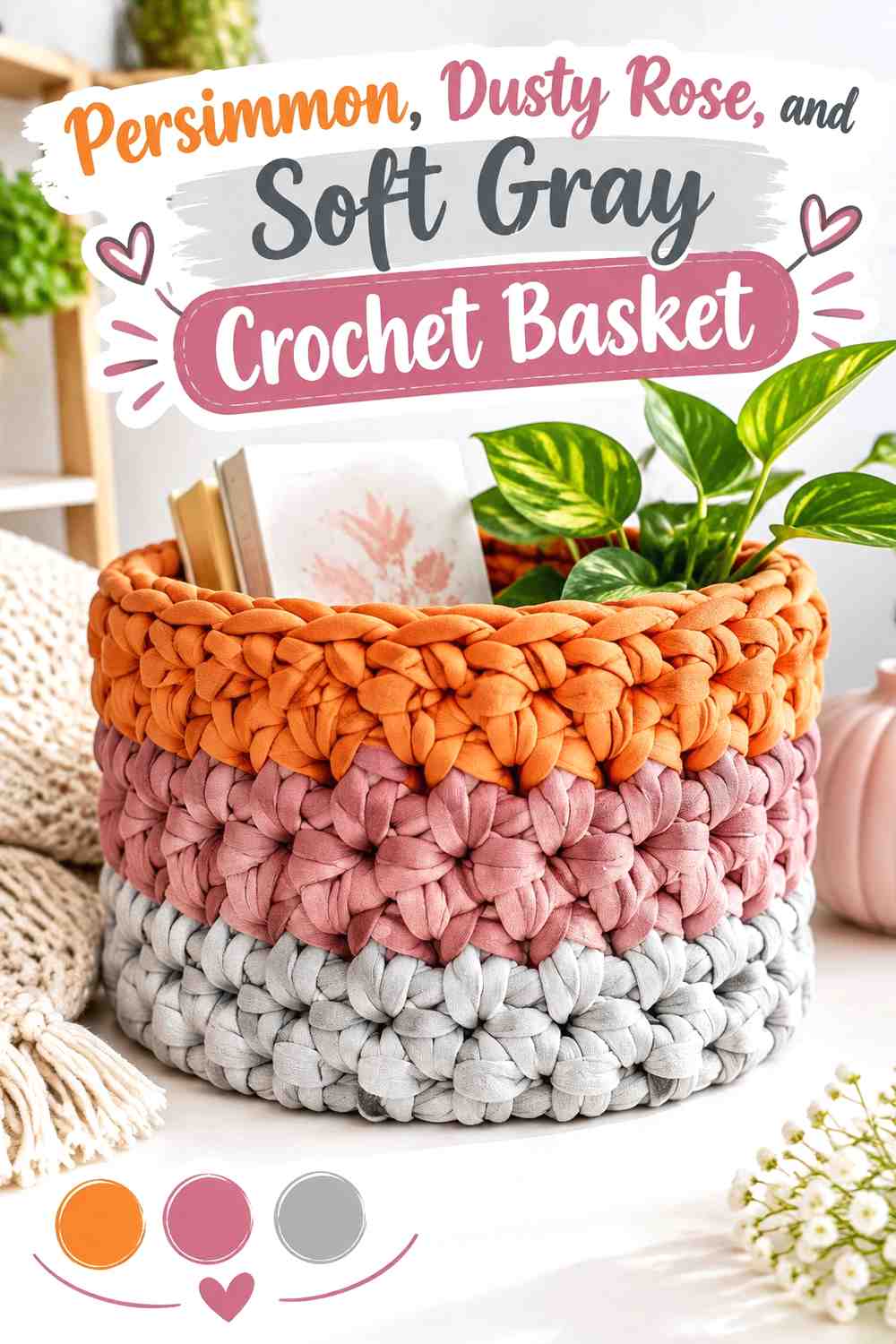
Soft gray cools the palette without adding the strong hue contrast of teal. On a basket, gray can form the base and lower walls, dusty rose can occupy the larger visible body, and persimmon can define the rim or handles. The structure of the basket gives each shade an obvious location, which helps keep three colors organized.
Soft Gray Can Ground Persimmon Crochet Basket Walls
Starting with soft gray near the base gives the basket a neutral foundation and allows the warmer colors to become more noticeable higher up.
If the basket’s texture is dense, compare gray and dusty rose in a swatch because shadows may reduce the visual difference between two muted shades.
Dusty Rose Can Cover More of the Crochet Basket Than Persimmon
A larger dusty rose middle section keeps the basket warm without making persimmon dominate every visible surface. It also provides a useful transition between a soft gray base and a brighter rim.
Persimmon Can Define Dusty Rose Crochet Basket Handles or Rim
Persimmon along the top edge or handles places the strongest shade where the eye naturally follows the basket’s outline. If both the rim and handles use persimmon, you may not need additional orange-red sections elsewhere.
Keep structural adjustments tied to the tutorial rather than changing handle or wall dimensions simply to accommodate the color plan.
Creator Credit: Lallaulab
How the Persimmon and Dusty Rose Palettes Compare
For a lighter palette, the cream cardigan, oatmeal pillow, and ivory cowl give persimmon and dusty rose plenty of visual separation without adding another strong hue.
Camel, taupe, and soft gray create quieter supporting roles. These are useful when the two main colors should remain clearly responsible for the project’s overall identity.
Olive, sage, and teal introduce green or blue-green contrast. Olive creates the earthiest result, sage stays more muted, while teal can become a prominent third color and therefore needs more careful control.
Burgundy, plum, chocolate, and charcoal move the schemes darker. They are useful for borders, cuffs, outer edges, and other areas where stronger value contrast can help define the crochet shape.
Mustard creates the most closely related warm palette. Because persimmon, dusty rose, and mustard can all compete for attention, this combination benefits most from unequal proportions and planned repetition.
Conclusion
Persimmon and dusty rose can move in several different directions depending on the third color and where each shade appears. Cream, oatmeal, and ivory make the combination lighter; camel and taupe keep it earthy and restrained; burgundy, plum, chocolate, and charcoal increase depth; and olive, sage, or teal add a cooler counterpoint.
The project itself should determine the color placement. Cardigans and sweaters offer cuffs, bands, panels, and necklines. Pillows and blankets give you borders and large surface areas. Bags and baskets provide bases, handles, and rims. Granny squares require closer attention to centers, surrounding rounds, and repeated motif placement.
Before committing to a large project, compare the actual yarns together and check their contrast in the stitch texture you intend to use. Then give one shade the dominant role and let the others support, frame, separate, or accent it.
Frequently Asked Questions
Does Persimmon or Dusty Rose Work Better as the Main Crochet Color?
Either can be dominant, but the result changes considerably. Persimmon creates a stronger warm focal point, while dusty rose produces a softer overall field. On larger garments or blankets, dusty rose can cover more area while persimmon remains highly visible in smaller sections.
What Neutral Colors Work With Persimmon and Dusty Rose Crochet?
Cream, ivory, oatmeal, camel, taupe, gray, chocolate brown, and charcoal can all play useful roles, depending on the contrast you need. Lighter neutrals create separation, while darker neutrals can define borders and edges.
How Can I Tell if Persimmon and Dusty Rose Have Enough Contrast?
Compare the actual yarns side by side and photograph them in grayscale. If they become nearly the same gray value, small motifs or narrow stripes may not separate clearly. Larger blocks or a lighter or darker third color can make the distinction stronger.
Can I Add Green to a Persimmon and Dusty Rose Crochet Palette?
Yes. Muted sage creates a softer contrast, while olive produces a deeper earthy direction. Keep one green shade in a supporting role if you want persimmon and dusty rose to remain the main identity of the project.
How Do I Substitute Persimmon Without Changing the Whole Crochet Palette?
Choose another muted orange, red-orange, or warm terracotta direction that preserves roughly the same lightness and saturation relationship with dusty rose. The exact color name matters less than maintaining the dominant, supporting, and accent roles you planned.
How Do I Replace Dusty Rose in a Persimmon Crochet Project?
Look for another softened pink that remains visibly distinct from persimmon. If the original dusty rose was the quieter or lighter color, preserve that relationship rather than replacing it with a bright pink that competes equally with persimmon.
How Many Colors Should I Use With Persimmon and Dusty Rose Crochet?
Two colors can be enough when their contrast is clear and the project has strong texture. A third shade is useful when you need a neutral break, darker border, cooler counterpoint, or clearer motif separation. Adding more colors should solve a specific visual problem rather than simply increase variety.