
12 Dusty Blue and Camel Crochet Cozy Looks
Dusty blue and camel create a useful crochet pairing because the colors bring different visual strengths to a cozy wardrobe. Dusty blue has a muted, cooler appearance that can cover larger garment areas without feeling overly bright, while camel adds a warmer neutral break around edges, cuffs, ribbing, and accessories.
The important decision is not simply whether to use both colors, but how much space each should receive. A dusty blue cardigan with camel bands reads differently from a camel sweater interrupted by a dusty blue yoke. Smaller pieces such as beanies, mittens, and boot cuffs also give you room to reverse the balance without making a whole outfit feel repetitive.
The 12 ideas below use different color distributions so you can compare dominant shades, borders, texture visibility, paired-accessory placement, and ways to repeat dusty blue and camel across a layered crochet look.
Quick List
- Dusty Blue And Camel Crochet Cardigan
- Camel And Dusty Blue Crochet Sweater
- Dusty Blue And Camel Crochet Chunky Scarf
- Camel And Dusty Blue Crochet Ribbed Beanie
- Dusty Blue And Camel Crochet Cowl
- Camel And Dusty Blue Crochet Wrap
- Dusty Blue And Camel Crochet Vest
- Camel And Dusty Blue Crochet Fingerless Gloves
- Dusty Blue And Camel Crochet Leg Warmers
- Dusty Blue And Camel Crochet Shawl
- Camel And Dusty Blue Crochet Mittens
- Camel And Dusty Blue Crochet Boot Cuffs
Plan Dusty Blue and Camel by Visual Area, Not Equal Amounts
Dusty blue and camel do not need to occupy equal areas of a crochet piece. In fact, giving one color a clear dominant role usually makes it easier to understand the shape of a cardigan, sweater, vest, or wrap. The second color can then highlight areas that naturally frame the item, such as cuffs, necklines, hems, edges, pockets, or ribbed bands.
Consider the whole outfit before deciding which shade should lead. If several accessories are already camel, a dusty blue outer layer gives the combination more separation. When the largest garment is camel, smaller dusty blue sections can prevent the warm neutral from becoming visually continuous from neckline to hem.
Check Dusty Blue and Camel Contrast Around Crochet Texture
Two yarn colors can look clearly different in the skein yet appear closer once they are broken into small crochet stitches. Before placing dusty blue beside camel around cables, bobbles, ribbing, or narrow stripes, compare the actual yarns side by side. A grayscale photo can also help reveal whether there is enough light-and-dark difference for the intended detail.
When the two shades have similar value, use larger blocks instead of tiny alternating details. Broad dusty blue panels beside camel cuffs will remain easier to distinguish than a very narrow two-color texture in which each shade appears in nearly equal amounts.
1. Dusty Blue And Camel Crochet Cardigan
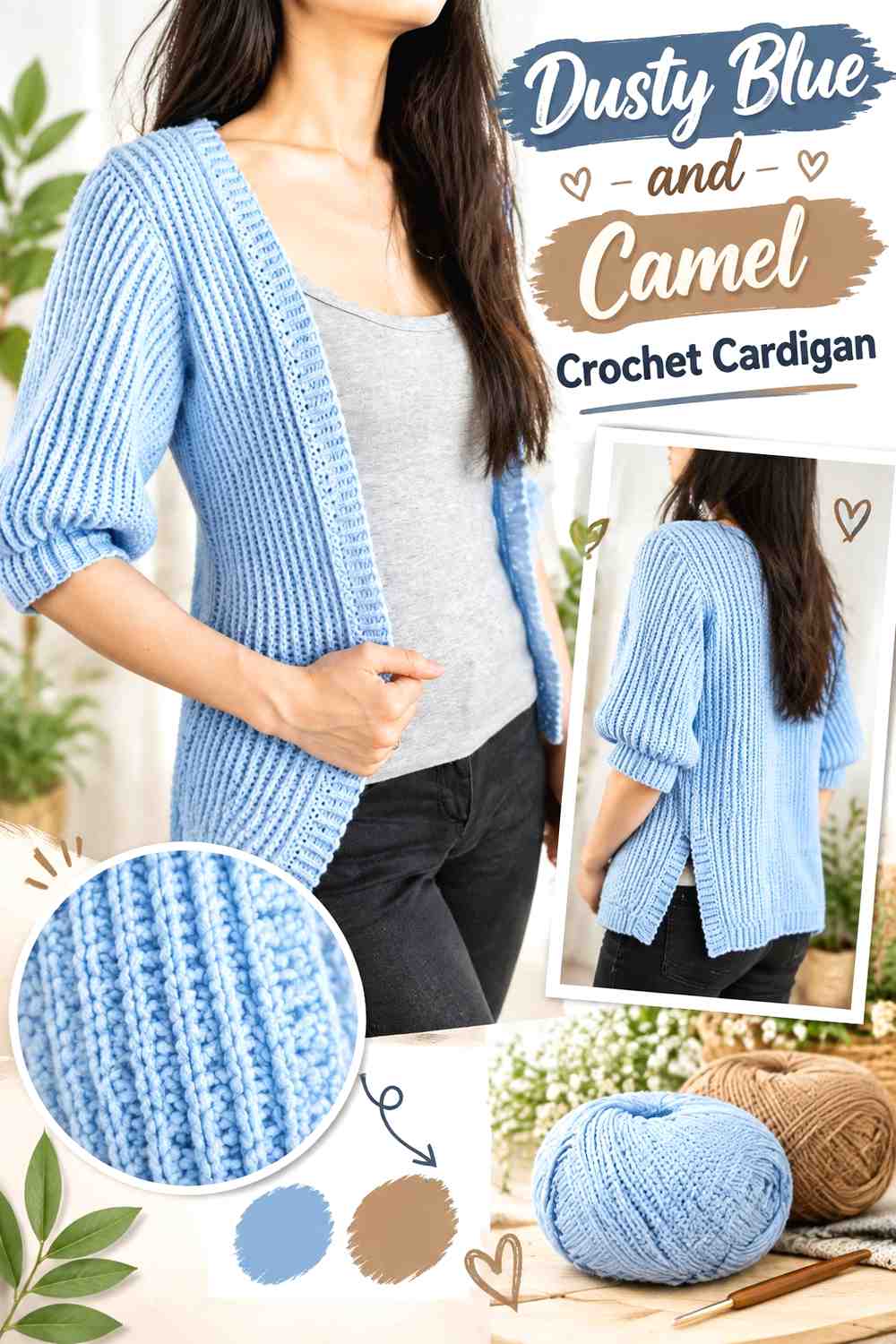
Let dusty blue cover most of the cardigan body when you want the cooler shade to define the overall layer, then repeat camel in smaller structural areas. Front bands, cuffs, a lower edge, or pocket trim are useful places for camel because they outline the cardigan without dividing the main panels into too many competing sections.
Before adapting a cardigan tutorial, look at where its seams, bands, sleeves, and edges naturally create color breaks. Those construction lines are usually more useful for a two-color plan than introducing an arbitrary stripe across the middle of a panel.
Dusty Blue Can Lead the Crochet Cardigan Panels
Keeping the back, front panels, and most of the sleeves dusty blue gives the cardigan a continuous main field. This is especially useful when the crochet fabric already contains noticeable surface texture, because one uninterrupted color lets that texture remain part of the garment instead of competing with frequent color changes.
If your dusty blue and camel have similar lightness, larger dusty blue areas also make the palette easier to read from a distance.
Camel Can Define Dusty Blue Cardigan Cuffs and Edging
Camel works well as a repeated framing color. Using it at the sleeve cuffs and front edging connects separate parts of the cardigan, while a matching lower band can make the placement feel intentional rather than added at the last minute.
Keep the camel sections proportionally smaller if dusty blue is meant to remain dominant. Very wide camel bands can shift the cardigan from dusty-blue-led to a nearly equal two-color design.
Creator Credit: TCDDIY
2. Camel And Dusty Blue Crochet Sweater
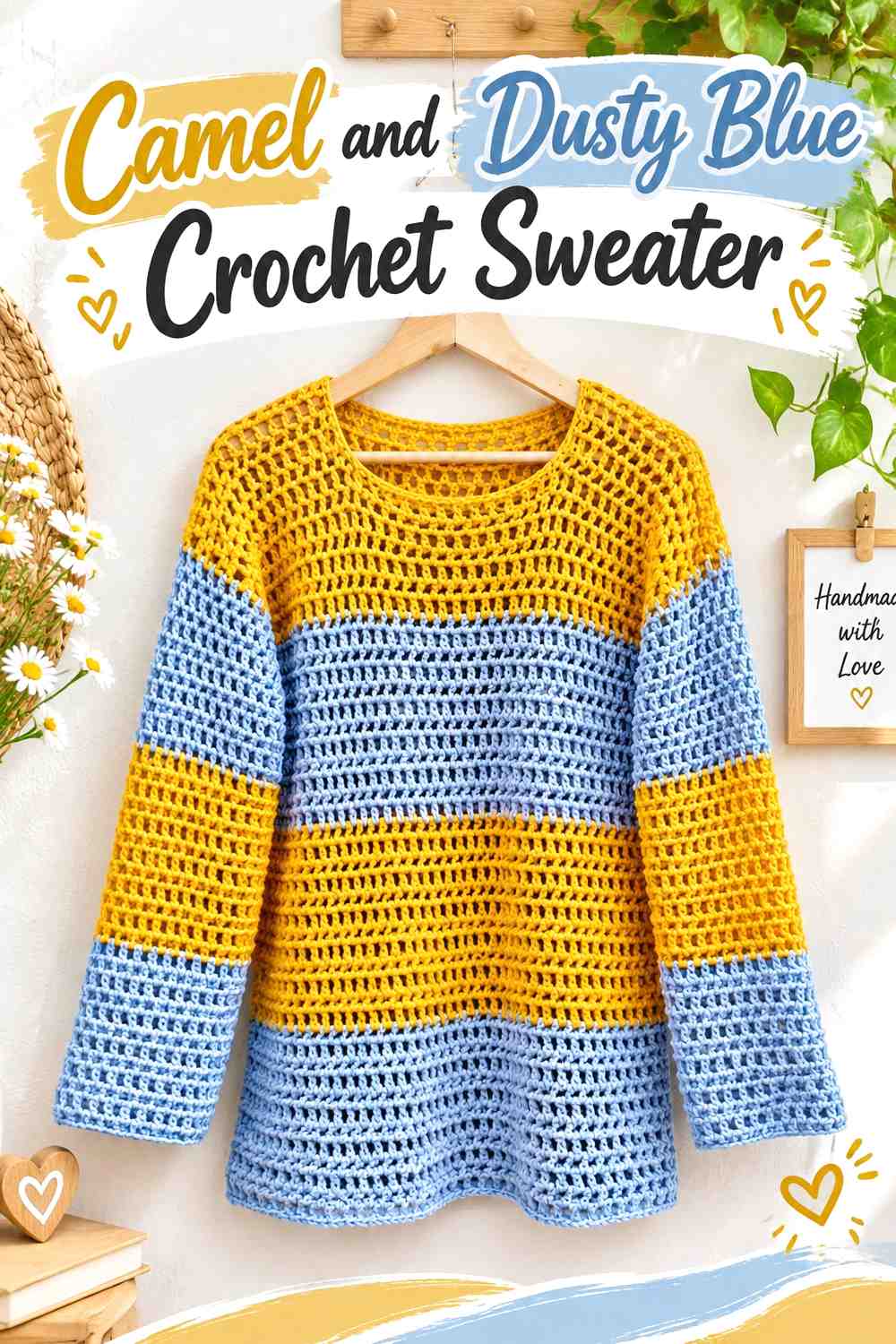
Reverse the cardigan balance for a sweater by allowing camel to occupy most of the body. The warmer neutral creates a strong base for a pullover, while dusty blue can be concentrated around the upper body, cuffs, or hem depending on where you want the color change to attract attention.
Because a sweater has a closed front, color placement reads across one larger uninterrupted surface. That makes the position of dusty blue more noticeable than it would be on a narrow cardigan band.
Camel Can Carry Most of the Crochet Sweater Body
Using camel from the main torso through a substantial part of the sleeves gives the sweater one clear dominant color. It also leaves room to make dusty blue a deliberate secondary feature instead of scattering small blue details everywhere.
If the sweater contains prominent stitch texture, check a camel swatch before adding multiple color sections. Sometimes the texture itself already provides enough visual movement.
Dusty Blue Can Break Up Camel Near the Sweater Yoke or Hem
A dusty blue upper section creates a very different balance from dusty blue used only at the lower edge. Placement near the yoke draws more attention toward the neckline and shoulders, while a dusty blue hem gives the camel body a cooler visual finish.
Avoid adding dusty blue simultaneously to every available edge unless you want a strongly outlined sweater. Choosing one or two repeated locations creates a calmer color hierarchy.
Creator Credit: Handwork diy
3. Dusty Blue And Camel Crochet Chunky Scarf
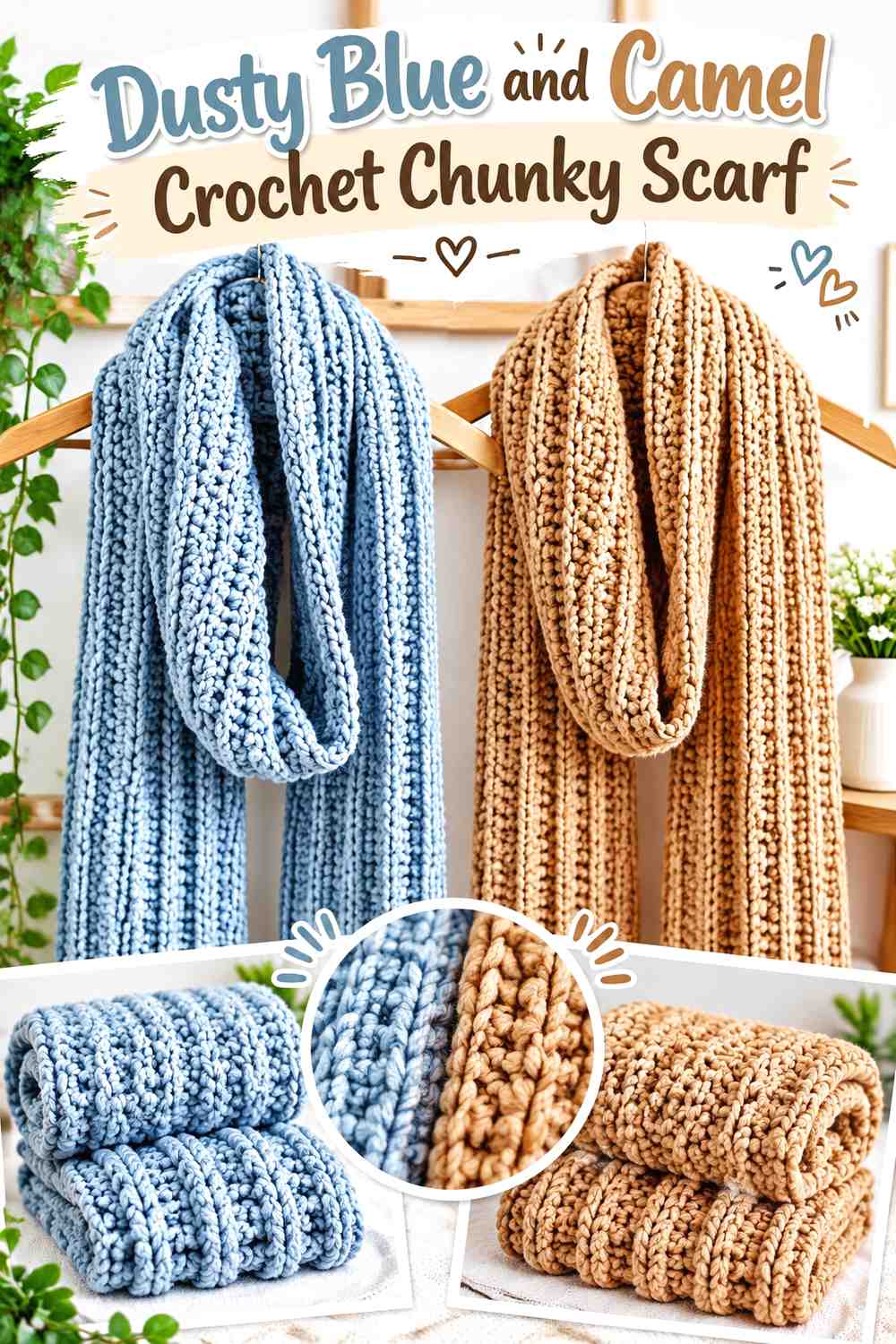
A scarf gives you more freedom to divide dusty blue and camel because there are no armholes, neckline shaping, or garment panels to interrupt the color sequence. Broad color blocks can work particularly well because the scarf will naturally fold, overlap, and wrap around the body.
Instead of alternating the colors mechanically, give dusty blue a slightly larger share and use camel to mark the ends or create a few spaced sections. This keeps the scarf connected to a dusty-blue-led outfit without making camel disappear.
Dusty Blue Works Well Across Longer Crochet Scarf Sections
Long dusty blue blocks give the scarf visual continuity when it is wrapped more than once. The color remains recognizable even when only portions of the scarf are visible around a coat or sweater.
This is usually clearer than using many narrow dusty blue and camel stripes, especially if both yarns are muted and close in value.
Camel Can Give Dusty Blue Scarf Ends a Warmer Finish
Camel at both ends creates repetition without requiring equal amounts of each color. Because scarf ends often remain visible when the center is wrapped around the neck, the camel sections can become an intentional finishing detail.
If you add fringe or another decorative edge, decide whether it should reinforce the camel end section or return to dusty blue. Mixing both colors randomly at the very edge can weaken an otherwise controlled block arrangement.
Creator Credit: Just Be Crafty
4. Camel And Dusty Blue Crochet Ribbed Beanie

A ribbed beanie is a useful place to make camel dominant because the smaller scale prevents the warm neutral from taking over an entire outfit. Dusty blue can then sit at the brim, where the contrasting band remains visible around the face even when the crown is mostly camel.
The ribbed texture itself creates strong lines, so the palette does not need many extra color changes.
Camel Lets Crochet Beanie Ribbing Stay Visually Consistent
Using camel through most of the beanie keeps the vertical or horizontal ribbed effect continuous. A solid field also avoids breaking the texture into multiple small bands that can make the crown look busier than necessary.
If the camel yarn has noticeable variation of its own, an even simpler color distribution may work better.
Dusty Blue Can Turn the Camel Beanie Brim Into a Clear Accent
A dusty blue folded or lower brim creates one strong secondary section. Because the brim surrounds the entire beanie, even a relatively narrow area can carry enough dusty blue to connect the hat with a blue cardigan, scarf, or wrap.
Check the finished brim depth before deciding how much dusty blue to introduce. A much deeper contrasting brim will visually compete more strongly with the camel crown.
Creator Credit: VivCrochets
5. Dusty Blue And Camel Crochet Cowl
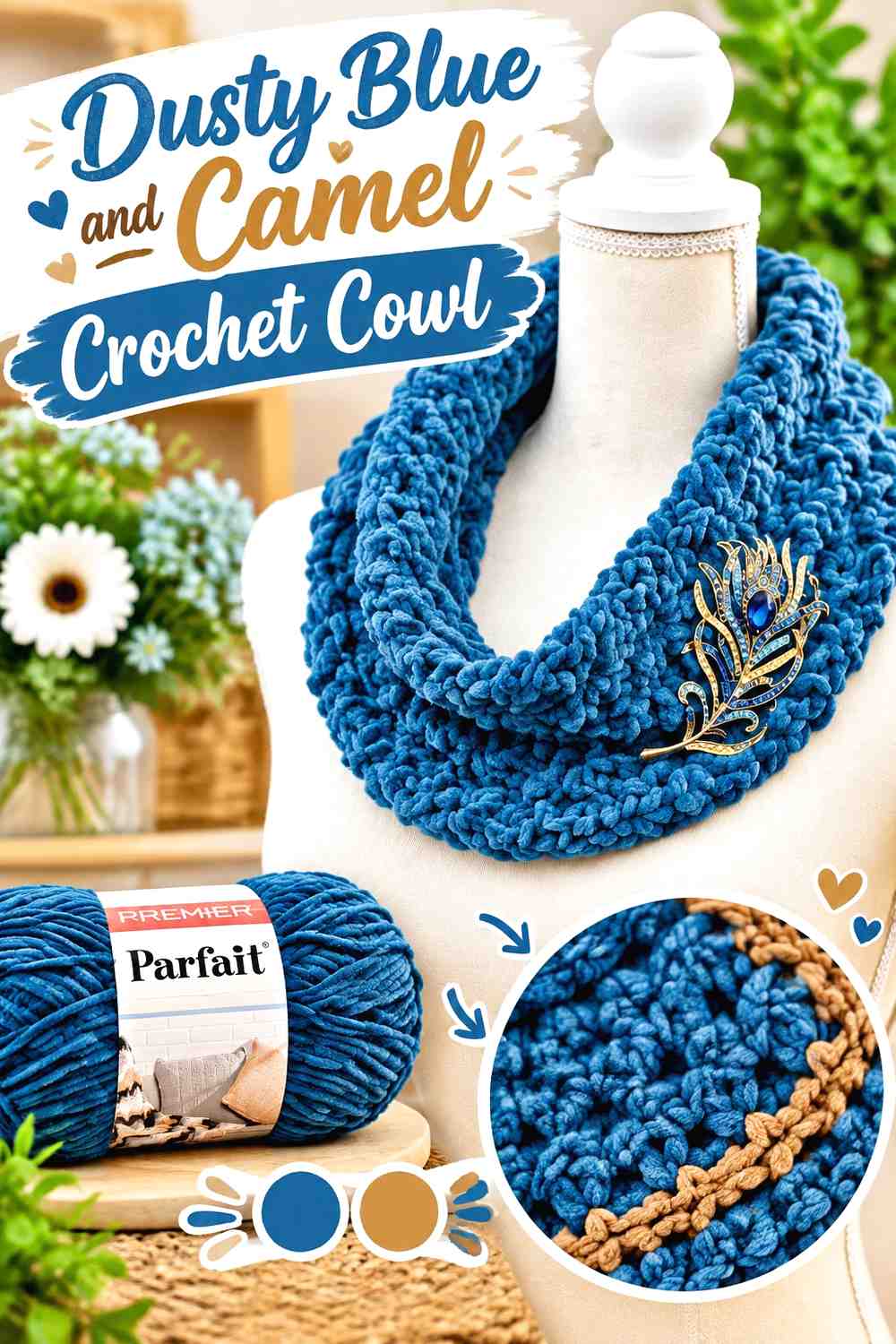
A cowl can keep dusty blue as the main color while using camel as a controlled edge or single inset band. Because a cowl forms a compact loop around the neck, too many alternating sections can quickly turn two muted colors into a striped focal point.
Keeping most of the center dusty blue lets the shape and stitch texture do more of the work.
Dusty Blue Gives the Crochet Cowl a Continuous Main Surface
Use dusty blue through the largest textured section when the cowl contains raised stitches, clusters, or another noticeable surface. One main color keeps those changes easier to see than a frequently alternating two-color sequence.
This also makes the cowl easier to coordinate with a camel coat, sweater, or cardigan because the accessory contributes a larger block of blue.
Camel Can Frame Dusty Blue Without Splitting the Crochet Cowl
Camel edging at the top and bottom gives the cowl two repeated warm lines without dividing the center. That placement is useful when you want camel to be clearly present but still secondary.
If the two edges are already highly textured, test whether camel makes that texture clearer or less distinct before committing to both borders.
Creator Credit: Bag-O-Day Crochet
6. Camel And Dusty Blue Crochet Wrap
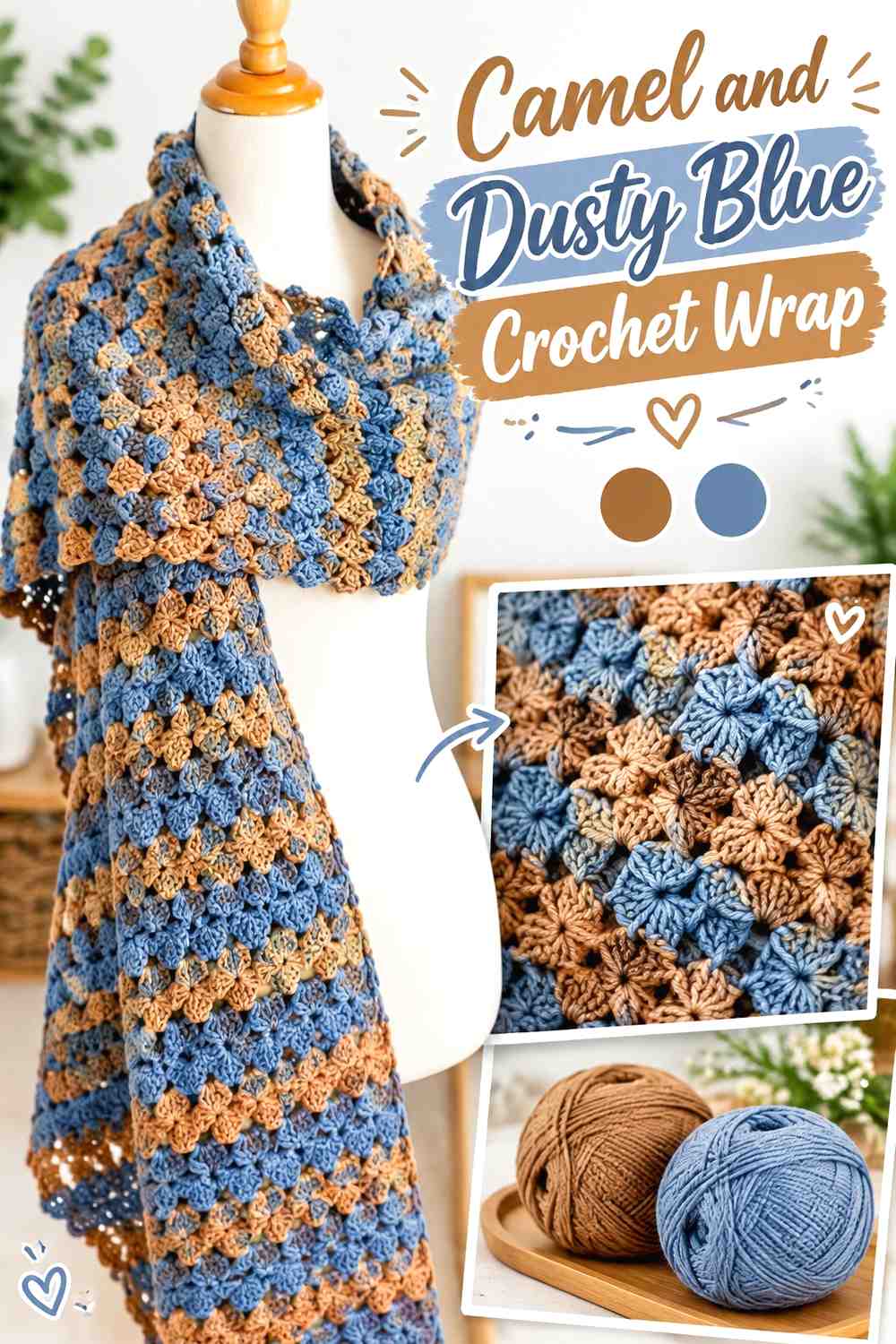
A larger wrap is an opportunity to let camel occupy more visual space while dusty blue appears in deliberate bands or a substantial border. The wide surface makes tiny accent stripes less necessary; one broad dusty blue section can contribute more to the design than several narrow ones.
Think about how the wrap will be worn as well as how it looks flat. Sections near the long edges and ends may be more visible once it is draped around the shoulders.
Camel Can Form a Calm Crochet Wrap Background
A mostly camel wrap gives the stitch pattern one continuous base and allows dusty blue to function as a true secondary shade. This approach is particularly useful when the crochet surface already has openwork or strong repetition.
Before adding blue, identify which part of the wrap remains most visible when folded. That is a better location for the secondary color than placing it where it may disappear beneath another layer.
Dusty Blue Can Create a Defined Camel Wrap Border
A dusty blue outer edge creates a noticeable cool frame around the warmer camel field. The contrast becomes particularly clear when the wrap is draped because the edge traces the outer shape rather than appearing as an isolated stripe.
For a softer transition, choose a dusty blue that remains muted rather than switching to a much brighter blue with similar undertones but very different saturation.
Creator Credit: Fiber Flux
7. Dusty Blue And Camel Crochet Vest

A vest naturally offers several framing areas for the second color: armholes, neckline, front opening, and lower edge. Let dusty blue lead the main body panels, then use camel selectively on those boundaries rather than applying camel to every border automatically.
Because there are no sleeves, even relatively narrow camel bands can make up a noticeable part of the finished color scheme.
Dusty Blue Can Keep the Crochet Vest Body Visually Unified
Using dusty blue across the main front and back areas lets the vest act as one large cool-toned layer over simpler wardrobe neutrals. It also avoids splitting a shorter garment into several horizontal color zones.
If the vest uses joined motifs rather than plain panels, dusty blue can still remain dominant by appearing consistently in the largest portion of each repeated motif.
Camel Can Outline Dusty Blue Crochet Vest Openings
Camel around the neckline and armholes makes the vest’s shape more defined without requiring a full color-blocked panel. Repeating the same camel treatment at the lower edge can connect the three areas.
If all borders are wide, however, camel may become much more prominent than expected. Lay the garment flat and assess the total camel area rather than judging each band separately.
Creator Credit: Sirin’s Crochet
8. Camel And Dusty Blue Crochet Fingerless Gloves

Fingerless gloves are small enough that camel can cover the hand while dusty blue is reserved for the cuffs and another repeated detail. The contrast is especially useful in a matching pair because the color placement should remain consistent from one glove to the other.
Avoid introducing numerous tiny blue stripes simply because the project is small. A single purposeful cuff can provide enough contrast.
Camel Can Keep the Crochet Fingerless Glove Body Simple
A camel hand section keeps the accessory visually neutral and makes it easier to pair with a dusty blue sweater, cardigan, or shawl. The uninterrupted body also prevents the thumb opening and hand shape from competing with a busy color sequence.
Make both glove bodies from the same planned color area so the pair remains balanced.
Dusty Blue Can Make Camel Crochet Glove Cuffs More Distinct
Dusty blue cuffs give the gloves a strong connection to other blue pieces in the outfit. Because cuffs sit directly beside sleeves, this color choice becomes particularly noticeable when worn with a camel outer layer.
If the cuff is highly ribbed, compare the shades in that texture before finishing the second glove. Similar-value colors can look less separated once the ribbing creates additional shadow.
Creator Credit: naztazia
9. Dusty Blue And Camel Crochet Leg Warmers
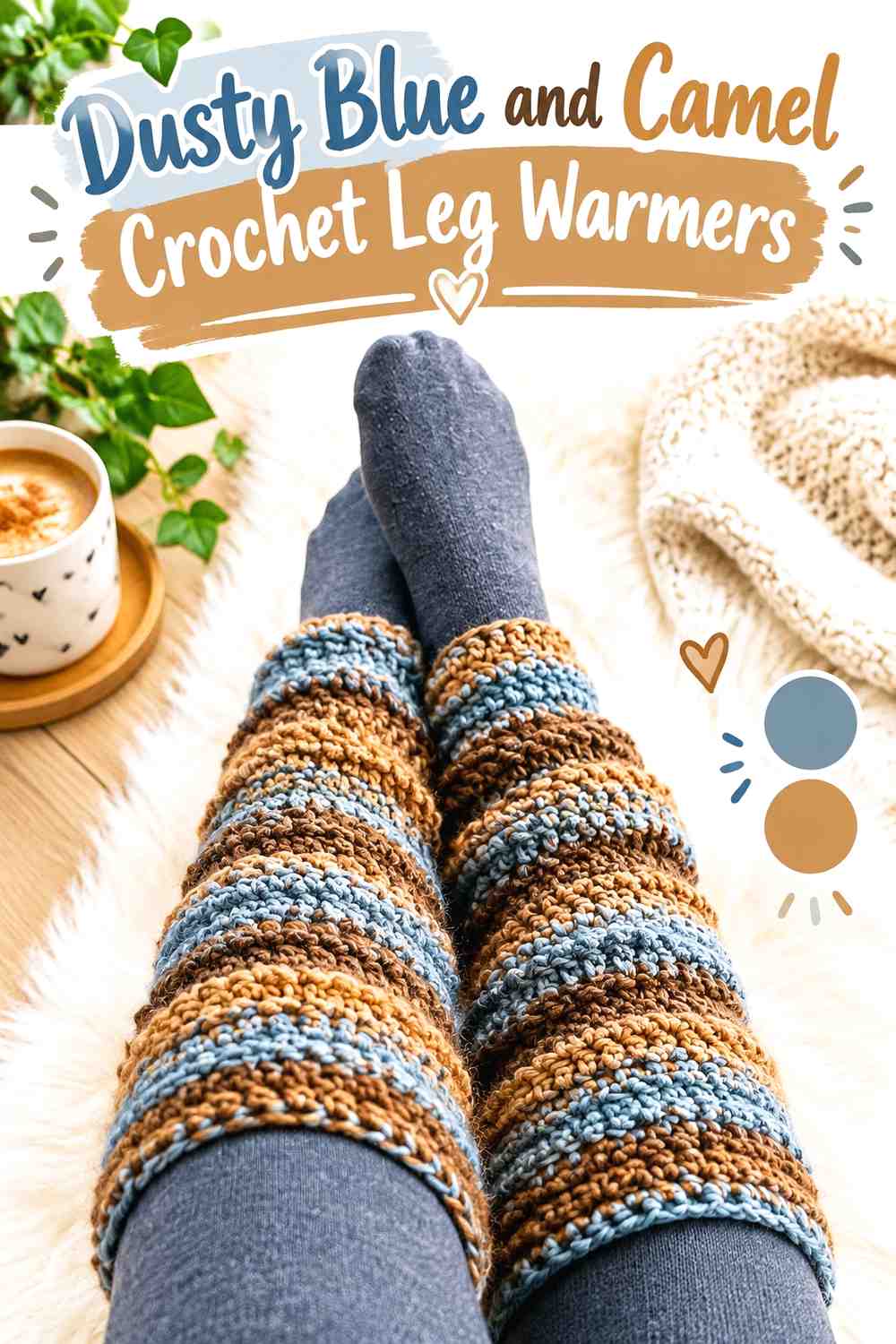
For leg warmers, dusty blue can carry most of the length while camel appears at the upper and lower bands. Repeating camel at both ends frames each piece and keeps the pair coordinated even when part of the lower section is hidden by footwear.
This distribution also prevents frequent horizontal stripes from making the leg warmers feel overly segmented.
Dusty Blue Can Extend Through Most of the Crochet Leg Warmers
A long dusty blue center emphasizes the vertical shape of each leg warmer and gives the color enough space to remain dominant. When both pieces are worn together, large uninterrupted blue sections also create stronger pair consistency.
Check both pieces side by side while working so their visible color proportions remain similar.
Camel Can Anchor Dusty Blue Crochet Leg Warmer Bands
Camel at the top and bottom creates warm endpoints around the cooler center. A wider top band and narrower lower band can add variation while still repeating the same secondary color.
If the leg warmers will frequently disappear partly inside boots, give the upper camel section enough presence to remain visible rather than relying on color placement that will usually be covered.
Creator Credit: B.Hooked Crochet
10. Dusty Blue And Camel Crochet Shawl
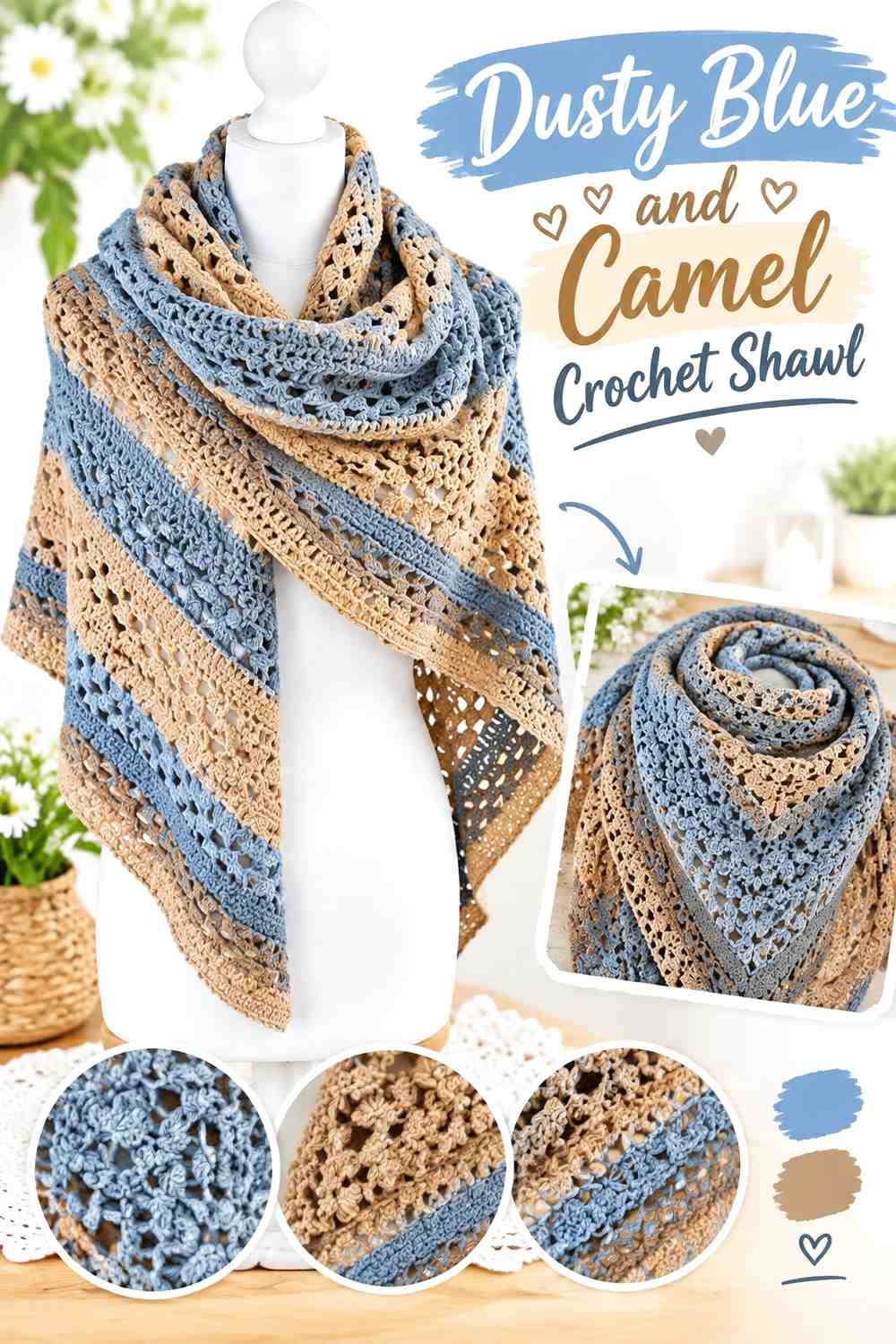
A triangular shawl creates a different color problem from a rectangular wrap because sections become progressively wider as the shape expands. Dusty blue can dominate the central area while camel is introduced closer to the outer edge, where a relatively small number of color changes can occupy a surprisingly large visual area.
Plan the balance by finished area rather than simply counting how many sections use each shade.
Dusty Blue Can Establish the Crochet Shawl Center
Beginning with dusty blue gives the shawl a clear cool-toned core. As the piece grows, maintaining blue through a substantial central section prevents later camel areas from making the original dominant shade look incidental.
This placement also works well when you want the dusty blue center to remain visible high on the shoulders.
Camel Can Warm the Outer Edge of a Dusty Blue Crochet Shawl
Camel used near the outer portion produces a warm frame that becomes increasingly noticeable as the shawl widens. A camel border or broad final section can therefore contribute plenty of color without requiring multiple camel bands throughout the center.
Before committing to a very deep border, lay the shawl over the shoulders and estimate how much of the dusty blue center will remain visible.
Creator Credit: Bella Coco
11. Camel And Dusty Blue Crochet Mittens
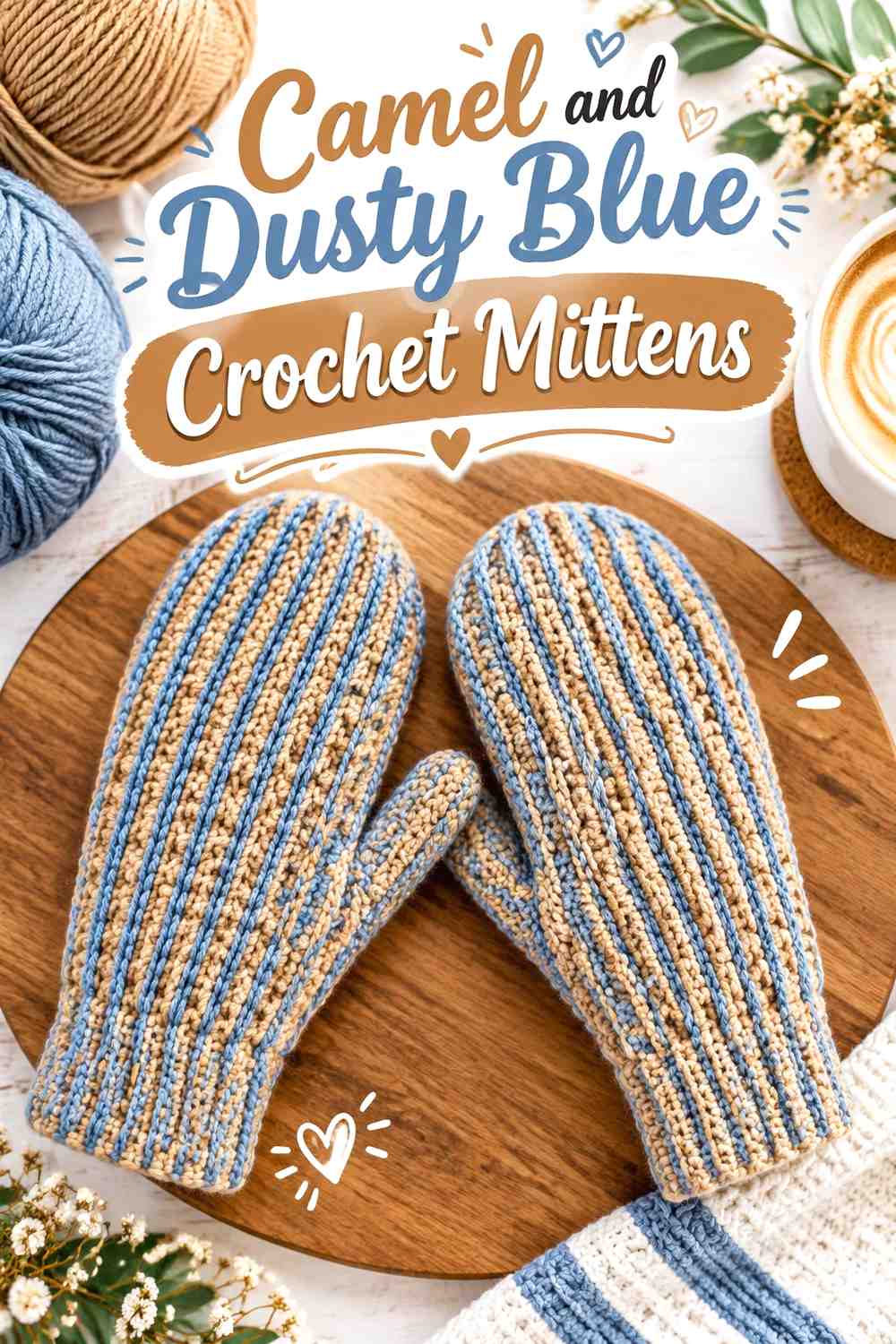
Mittens benefit from restrained color placement because shaping already creates several visual changes around the cuff, hand, thumb, and top. Use camel across the main hand and reserve dusty blue for the cuff or another clearly defined section.
Most importantly, repeat the same color division on both mittens. Small differences in placement become more obvious when the pair is worn together.
Camel Can Cover the Main Crochet Mitten Hand
A camel hand section gives the mitten one uninterrupted warm field from the wrist upward. Keeping this area solid also allows shaping and ribbed or textured stitches to remain visible without the interruption of narrow stripes.
When adapting another mitten tutorial, make color changes only where they do not interfere with following its construction directions.
Dusty Blue Can Connect Camel Crochet Mittens to Blue Sleeves
Dusty blue cuffs are useful when the mittens will be worn with a dusty blue cardigan, sweater, or coat layer because the repeated shade creates continuity at the wrist.
For stronger separation, make sure the dusty blue and camel remain distinguishable in the cuff texture. If they merge visually, enlarging the dusty blue cuff is usually clearer than adding more tiny color details.
Creator Credit: Diving Ducks Crochet
12. Camel And Dusty Blue Crochet Boot Cuffs
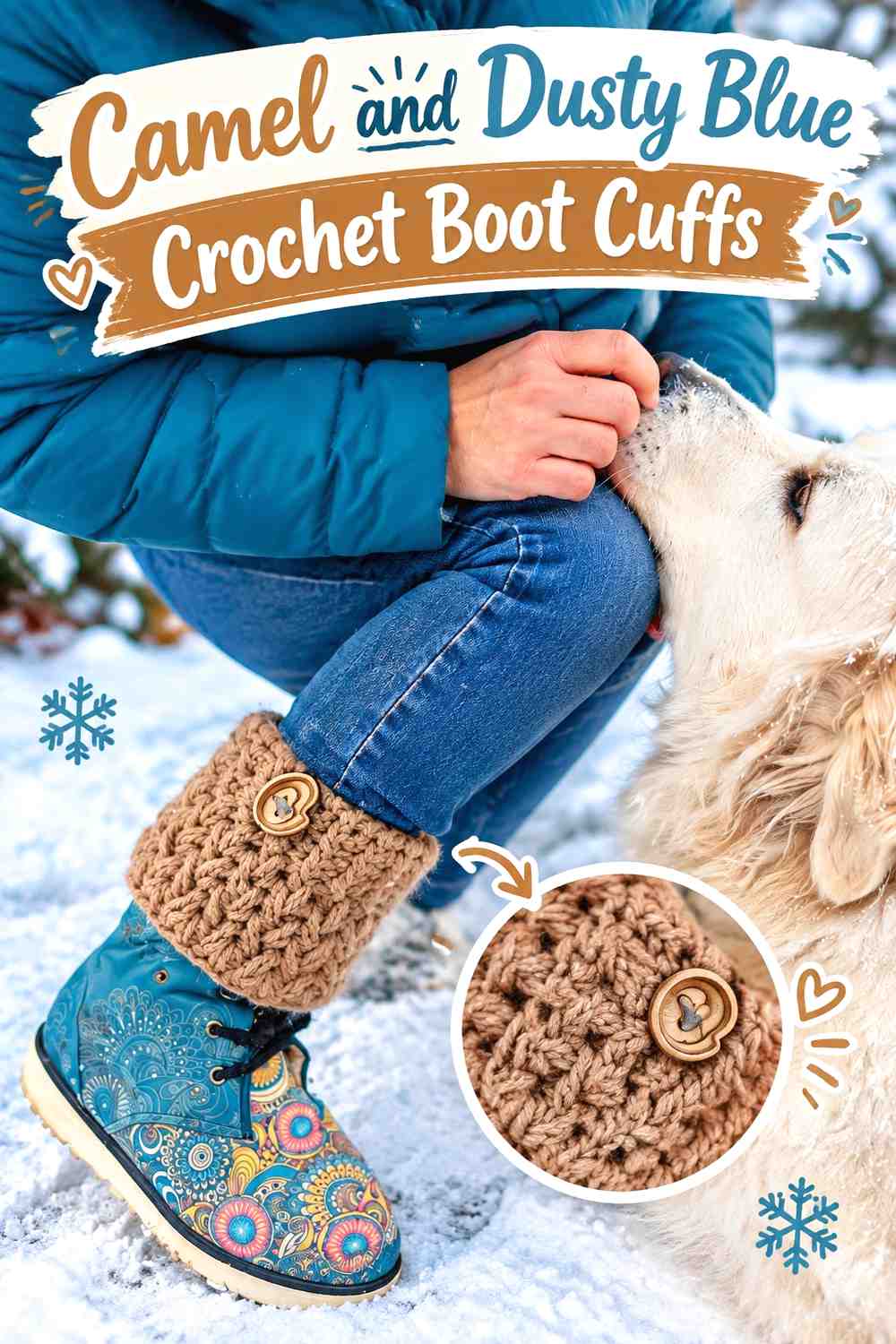
Boot cuffs offer a compact way to repeat both shades without introducing another large garment. Camel can form the ribbed lower section hidden partly inside the boot, while dusty blue occupies more of the visible upper texture.
This reverses several of the dusty-blue-dominant ideas earlier in the list and gives the palette a useful finishing accessory.
Camel Can Ground the Crochet Boot Cuff Ribbing
A camel ribbed base creates a neutral transition between the boot and the more visible upper section. Even if much of that ribbing sits inside the boot, the portion that remains visible can connect naturally with camel used elsewhere in the outfit.
Because fit matters for a boot cuff, follow the tutorial’s construction and sizing guidance rather than changing dimensions simply to create a larger color section.
Dusty Blue Can Lead the Visible Camel Crochet Boot Cuff Detail
Placing dusty blue in the upper textured area makes the cooler shade the part most likely to show above the boot. This works particularly well when the outfit already has camel in a sweater, scarf, or bag and needs a smaller blue repeat lower down.
If the decorative texture is intricate, use a dusty blue with enough value separation from camel that the transition remains readable around the top edge.
Creator Credit: The Crochet Crowd
Comparing the Dusty Blue and Camel Crochet Looks
For the strongest dusty-blue presence, the cardigan, cowl, vest, leg warmers, and shawl give the cooler shade substantial surface area. These options work when dusty blue should be the first color noticed and camel should mainly provide edging or structure.
The sweater, wrap, fingerless gloves, mittens, and boot cuffs move more visual weight toward camel. They are useful for building a warmer neutral base while repeating dusty blue in controlled sections.
The scarf and beanie sit between those approaches because their smaller size makes it easier to adjust the proportions without changing an entire outfit. They are also practical places to test the palette before committing to a larger garment.
Conclusion
Dusty blue and camel become more useful together when each shade has a specific job. Dusty blue can create broad muted surfaces on cardigans, vests, shawls, and leg warmers, while camel can frame those pieces through cuffs, borders, necklines, and other structured edges.
You can also reverse that hierarchy. A camel sweater, wrap, mitten, or fingerless glove gives the warmer color more space while dusty blue becomes the repeated accent that connects separate accessories.
Before starting a full project, compare the actual yarns in the stitch texture you plan to use. Then choose one dominant shade, decide exactly where the second color will repeat, and use the original tutorial for the construction details.
Frequently Asked Questions
Should Dusty Blue or Camel Be the Main Crochet Color?
Either can lead. Choose according to the amount of each color you want visible across the finished outfit. Dusty blue works naturally as a broad field on larger layers, while camel can create a warmer neutral base. What matters most is giving the two colors clearly different visual roles rather than automatically splitting every piece 50/50.
How Can I Tell Whether Dusty Blue and Camel Have Enough Crochet Contrast?
Place the yarns beside each other and look at them from a short distance. You can also photograph them in grayscale to compare their light-and-dark values. If they look almost identical in grayscale, use larger color blocks around detailed crochet texture instead of relying on very narrow stripes or tiny motifs.
What Can Replace Dusty Blue in This Crochet Palette?
Choose another muted blue that preserves approximately the same visual role. If dusty blue was meant to contrast clearly with camel, keep that light-and-dark relationship when selecting the substitute. Switching to a highly saturated blue can change the character of the entire palette even if it belongs to the same general color family.
What Can Replace Camel in a Dusty Blue Crochet Project?
Look for another warm, softened neutral rather than focusing on an exact color name. A nearby tan, beige, or light brown direction can serve a similar role if it still gives dusty blue the separation you want. Compare the replacement beside the blue yarn before beginning a large piece.
Do Dusty Blue and Camel Need to Be Used in the Same Proportion on Matching Accessories?
No. Repetition matters more than identical percentages. A beanie might be mostly camel with a dusty blue brim, while matching mittens could use camel on the hands and dusty blue only on the cuffs. Repeating the same two shades can connect the pieces even when their color distributions differ.
How Can I Keep a Dusty Blue and Camel Crochet Outfit From Looking Too Busy?
Avoid making every piece equally two-toned. Let some items be strongly dusty-blue-led and others camel-led, then use smaller accent areas to repeat the opposite shade. This creates a clear visual hierarchy across the outfit instead of turning every cardigan, scarf, hat, and mitten into competing stripes.