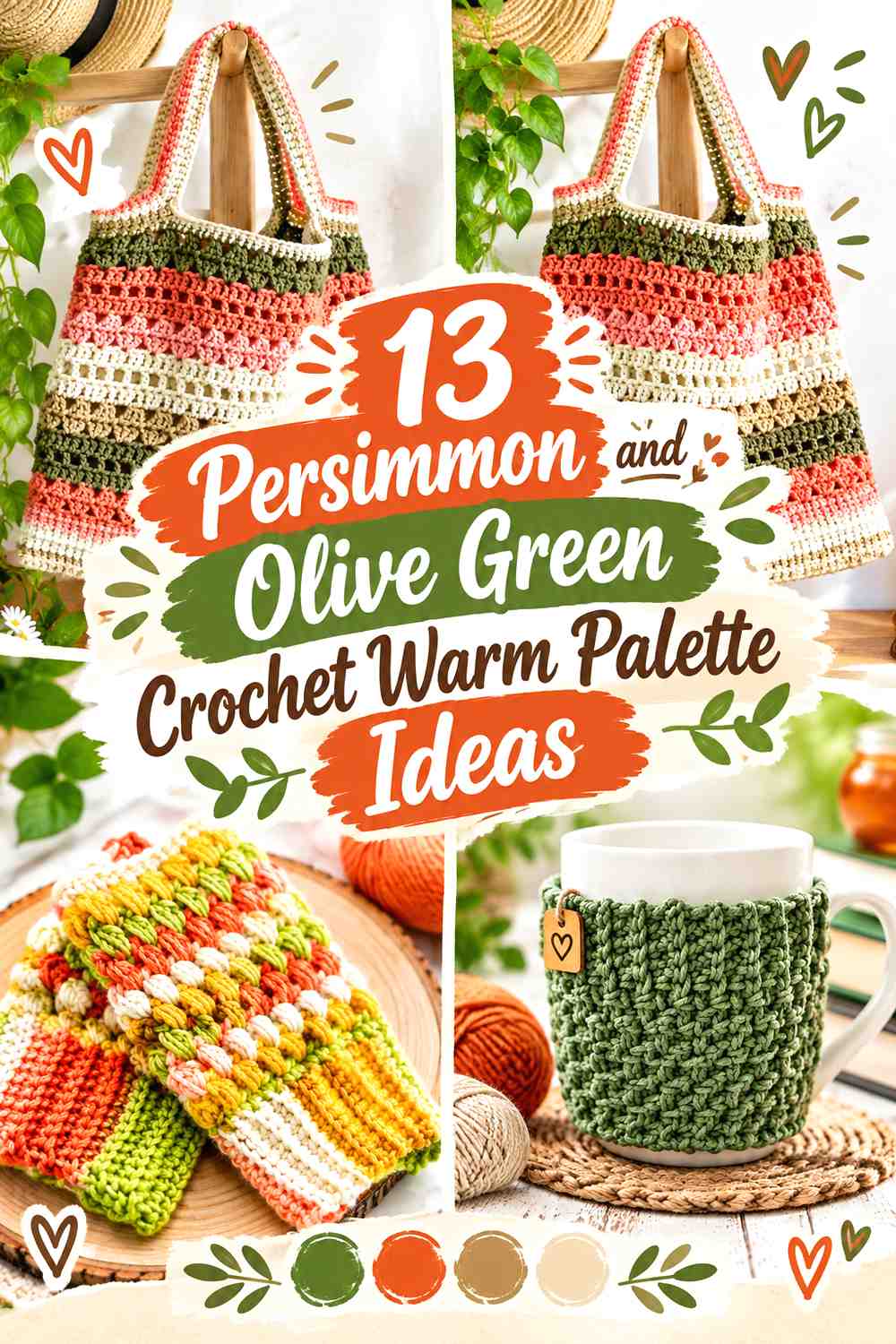
13 Persimmon and Olive Green Crochet Warm Palette Ideas
Persimmon and olive green make a useful crochet pairing when you want warm autumn color without relying entirely on brown, mustard, or burgundy. Persimmon brings the stronger orange-red note, while olive green adds a muted botanical counterweight that can cover large areas without competing with every textured stitch.
The balance between them changes the finished project. A persimmon-led scarf feels warmer and more saturated, while an olive-green vest with persimmon edging has a quieter base and sharper warm accents. Cream, oatmeal, camel, and similar neutrals can help when the two main yarns are close in value or when a heavily textured surface needs more separation.
The tutorials below support each crochet construction concept. The persimmon-and-olive-green palettes are independent adaptations, so the linked creators should not be assumed to have used these exact color combinations.
Quick List
- Olive Green Persimmon And Oatmeal Crochet Hexagon Cardigan
- Persimmon And Olive Green Crochet Openwork Market Bag
- Olive Green And Persimmon Crochet Textured Beanie
- Persimmon Olive Green And Mustard Crochet Cowl
- Olive Green Persimmon And Cream Crochet Puff Square Cushion
- Persimmon And Olive Green Crochet Storage Basket
- Olive Green Persimmon And Camel Crochet Modern Vest
- Persimmon And Olive Green Crochet Triangle Shawl
- Olive Green Persimmon And Oatmeal Crochet Mug Cozy
- Persimmon And Olive Green Crochet Puff Stitch Fingerless Gloves
- Olive Green Persimmon And Cream Crochet Textured Market Tote
- Persimmon And Olive Green Crochet Twisted Headband
- Olive Green Persimmon And Camel Crochet Fall Scarf
How to Balance Persimmon and Olive Green in Crochet
Persimmon usually attracts attention faster because of its warmer orange-red direction, so it can feel dominant even when olive green covers a similar amount of fabric. Decide whether you want warmth or muted green to control the finished project before placing the first color change.
For a cardigan or shawl, olive green can cover broad panels while persimmon appears at borders, cuffs, or repeated bands. Smaller items such as headbands and mug cozies can handle a larger percentage of persimmon because the total visual area is limited.
Use Neutrals to Separate Persimmon and Olive Green Texture
Persimmon and olive green are different hues, but particular yarns may still be close in lightness. That can matter in puff stitches, small squares, narrow stripes, or highly textured crochet where shadows already make details look darker.
Compare the yarns side by side before committing to a large project. If the colors merge more than expected, cream or oatmeal can provide a light break around motifs or between bands. Camel offers a subtler transition when you want the whole palette to remain warm and earthy.
1. Olive Green Persimmon And Oatmeal Crochet Hexagon Cardigan
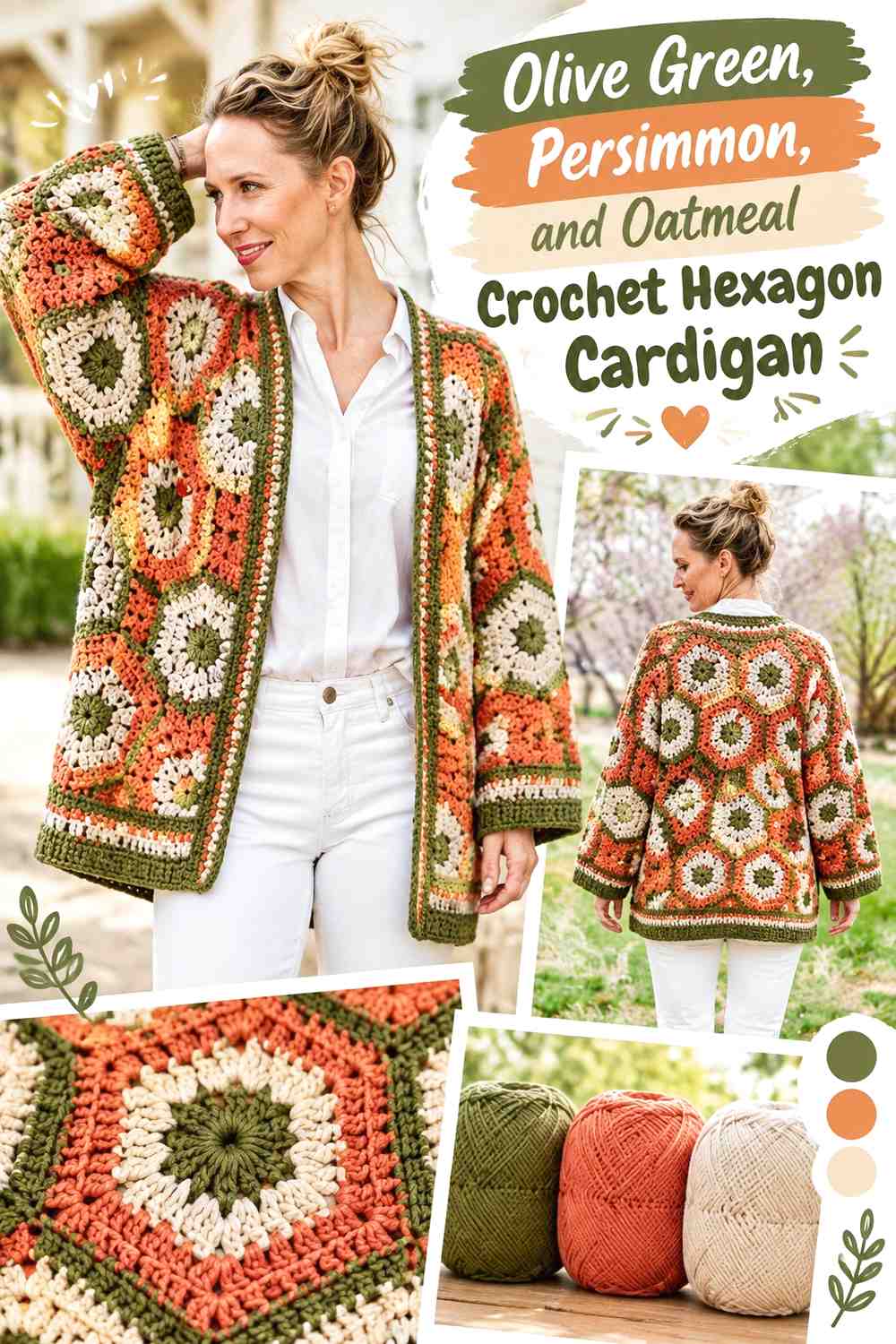
Hexagon cardigans naturally offer repeated bands of color across large pieces. Olive green can establish the dominant field, persimmon can return at controlled intervals, and oatmeal can create breathing room before the two hexagons become sleeves and body panels.
Olive Green Can Stabilize the Crochet Hexagon Cardigan Palette
Use olive green across broader sections of both hexagons so the cardigan retains a consistent base once the pieces are folded. A strong dominant shade is especially useful here because the expanding shape already creates plenty of visual movement.
Persimmon Should Repeat Consistently Across Olive Green Crochet Hexagons
Place persimmon in comparable locations on both main pieces. If one hexagon receives much more of the warm color, one side or sleeve can look visually heavier after assembly even when the construction itself is symmetrical.
Oatmeal Can Separate Persimmon and Olive Green Crochet Cardigan Bands
An oatmeal section can provide a lighter pause between the strongest colors. Use it selectively rather than between every band, or the neutral may begin to dominate a cardigan intended to focus on persimmon and olive green.
Creator Credit: Make & Do Crew
2. Persimmon And Olive Green Crochet Openwork Market Bag
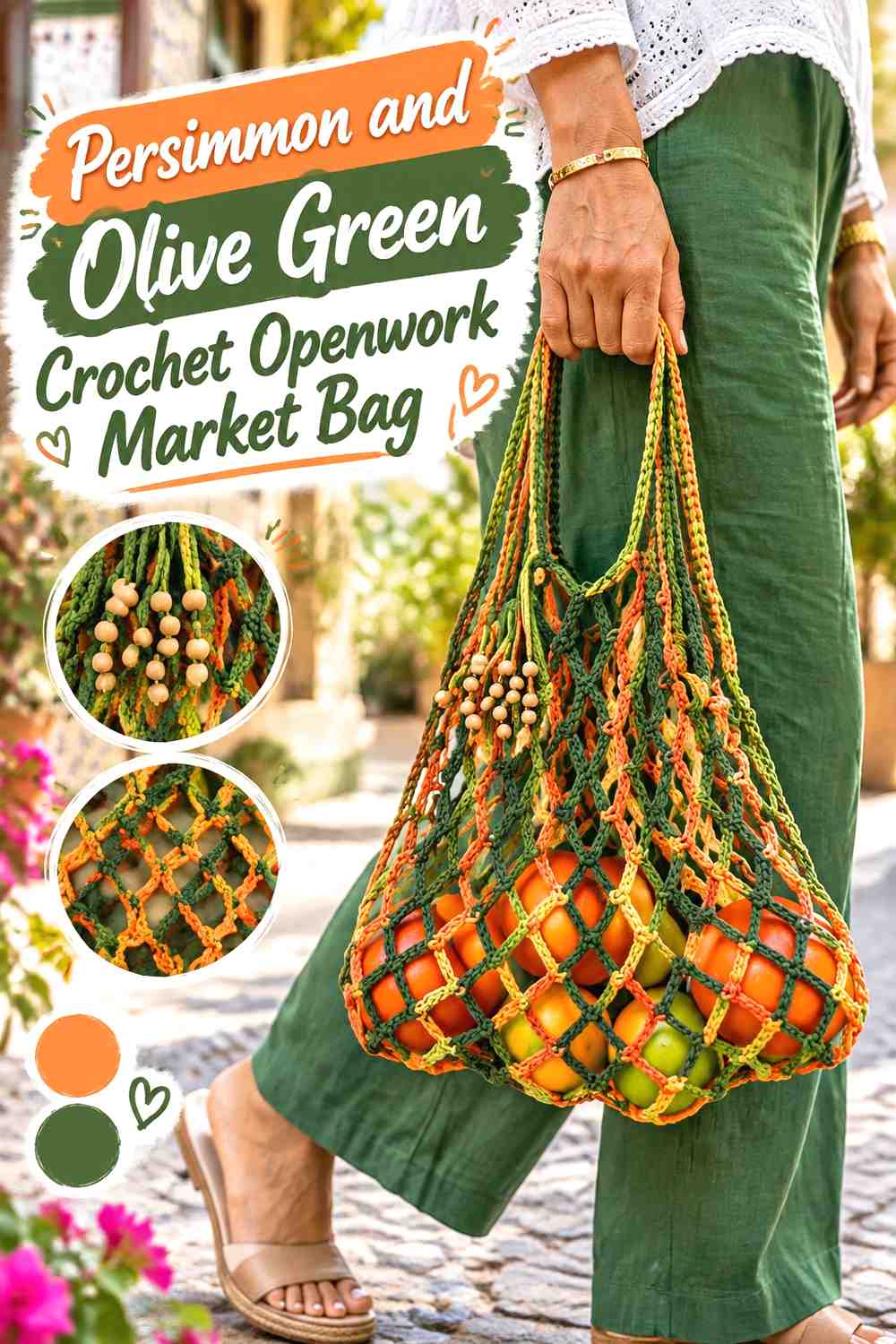
Openwork already introduces strong visual rhythm, so this bag benefits from simple color zoning. Persimmon can cover the main body while olive green defines the base, handles, or upper edge rather than interrupting every openwork section.
Persimmon Can Keep the Crochet Market Bag Body Visually Connected
Use persimmon across a broad section of the bag so the open spaces remain the main surface pattern. Frequent alternation between orange-red and green can make the holes, stitch structure, and stripes all compete at once.
Olive Green Can Define Persimmon Crochet Market Bag Handles
Handles are a natural place for the darker supporting color because they repeat on both sides of the bag. Bringing olive green into the base as well creates a visual connection from bottom to top.
Creator Credit: HOME Handwork Diy
3. Olive Green And Persimmon Crochet Textured Beanie
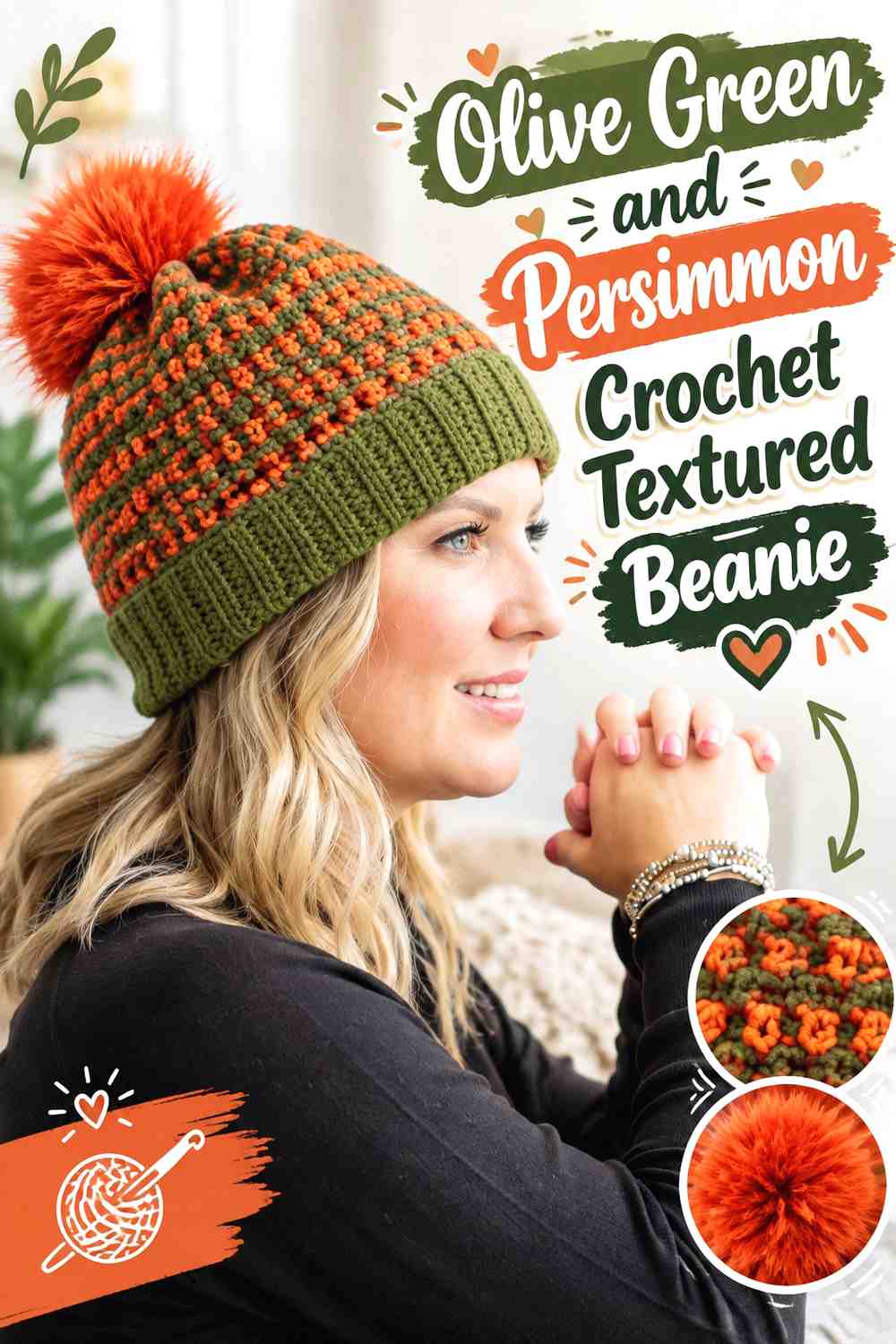
An olive-green beanie gives textured stitches a muted field while leaving persimmon available for a focused warmer accent. Keeping the palette simple is particularly useful on a small hat where texture already supplies substantial detail.
Olive Green Can Carry the Main Crochet Beanie Texture
Let olive green cover most of the crown when the stitch pattern includes ridges, post stitches, or another strongly defined surface. One continuous color makes those shadows and raised areas easier to follow.
Persimmon Can Warm the Olive Green Crochet Beanie Brim
A persimmon brim creates an obvious color change near the face without breaking up the crown texture. If a full warm brim feels too dominant, keep the lower edge olive and use persimmon in a narrower band immediately above it.
Creator Credit: Bella Coco
4. Persimmon Olive Green And Mustard Crochet Cowl
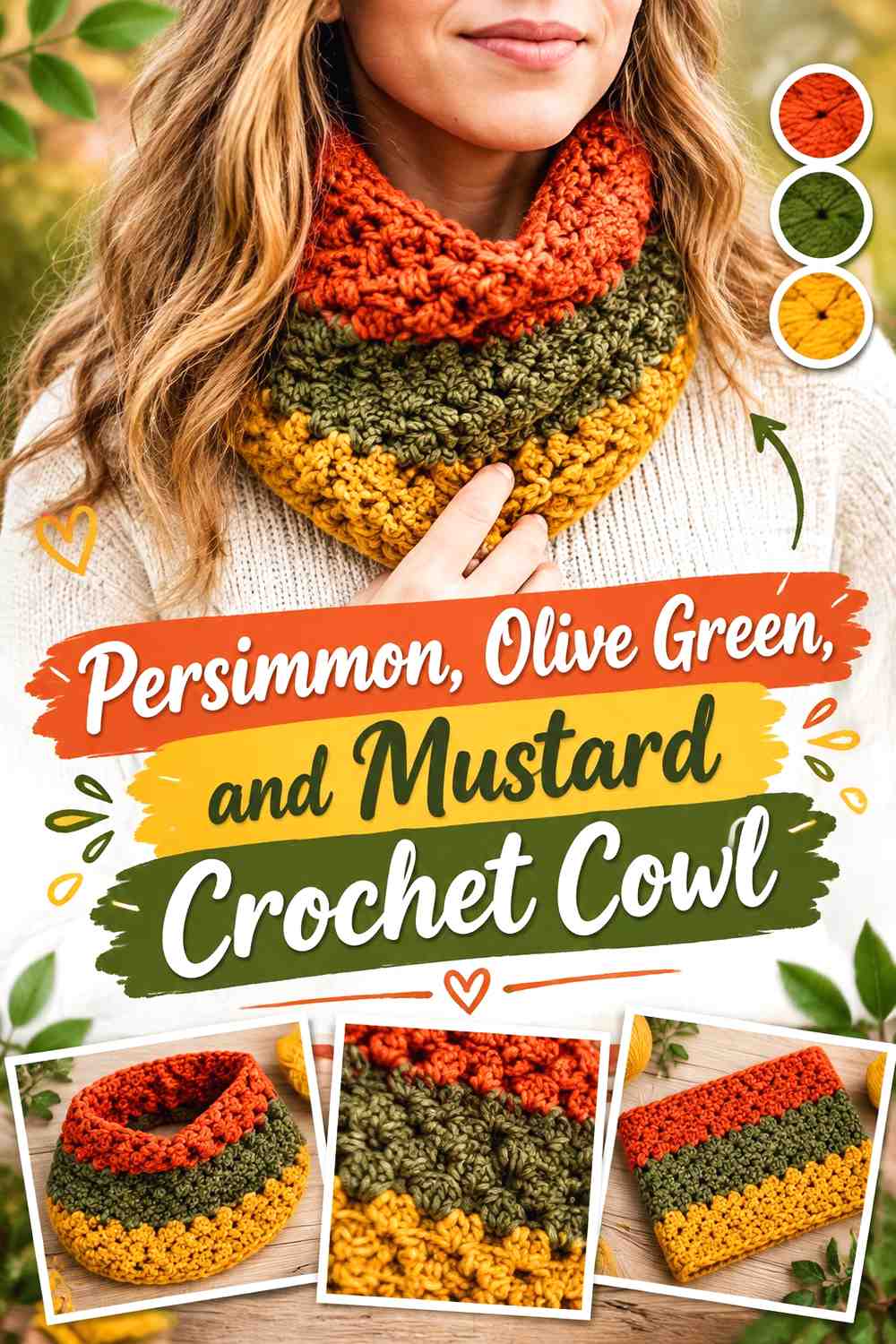
A cowl is seen as a continuous loop, so each important color should appear from more than one angle. Persimmon can lead the fabric, olive green can form substantial repeated bands, and mustard can be kept narrow so it acts as a warm bridge rather than a third equal competitor.
Persimmon Can Carry Most of the Crochet Cowl Surface
Use persimmon through the larger textured sections so the warm color remains visible when the cowl gathers and folds. Broad areas are more reliable than isolated narrow stripes, which can disappear once the fabric is worn.
Olive Green Should Repeat Around the Persimmon Crochet Cowl
Place olive green at more than one interval so it does not rotate completely out of view. Repetition also helps the green feel intentional against a persimmon-dominant background.
Mustard Can Bridge Persimmon and Olive Green Crochet Bands
Mustard works best here in smaller amounts. A narrow mustard section can soften the transition between orange-red and muted green without changing the project into a three-color striped cowl with no clear hierarchy.
Creator Credit: Sigoni Macaroni
5. Olive Green Persimmon And Cream Crochet Puff Square Cushion
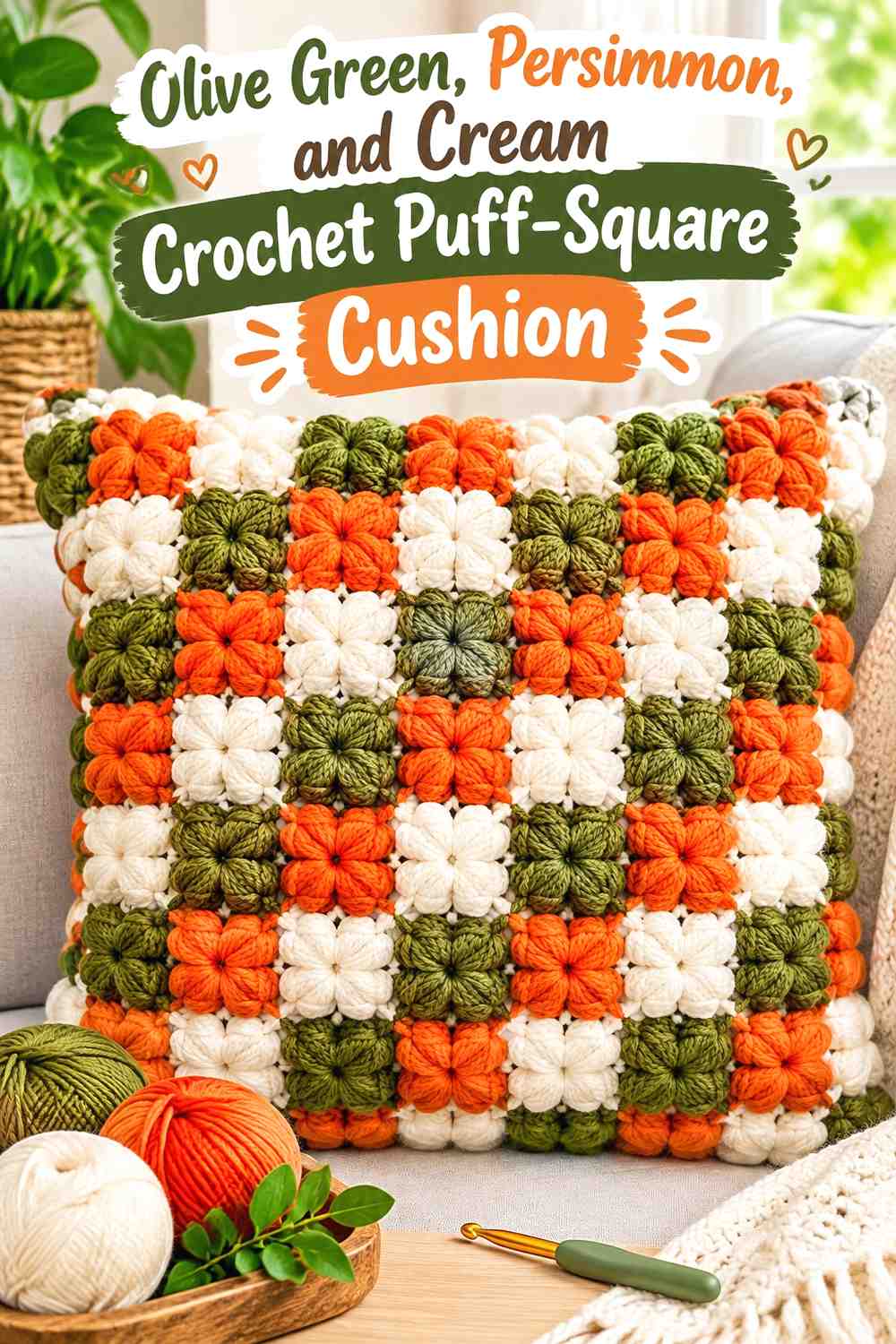
Puff squares create both color and physical texture, which means the palette needs more control than a flat cushion face. Olive green can organize the background or alternating motifs, persimmon can mark raised focal areas, and cream can clarify individual square boundaries.
Olive Green Can Organize the Crochet Puff-Square Cushion Grid
Repeat olive-green squares or outer motif areas according to a predictable arrangement. A consistent grid helps the cushion face look planned instead of relying on random color placement across many small units.
Persimmon Can Bring Forward Olive Green Crochet Puff Details
Use persimmon where you want the raised texture to receive stronger visual emphasis. Limiting the warm shade to selected centers or alternating motifs keeps it distinct instead of letting every square compete equally.
Cream Can Separate Persimmon and Olive Green Crochet Squares
A cream joining area or border can create enough light space for individual motifs to remain recognizable. This is especially useful when shadows inside the puff texture make both persimmon and olive appear darker.
Creator Credit: Hooked by Robin
6. Persimmon And Olive Green Crochet Storage Basket
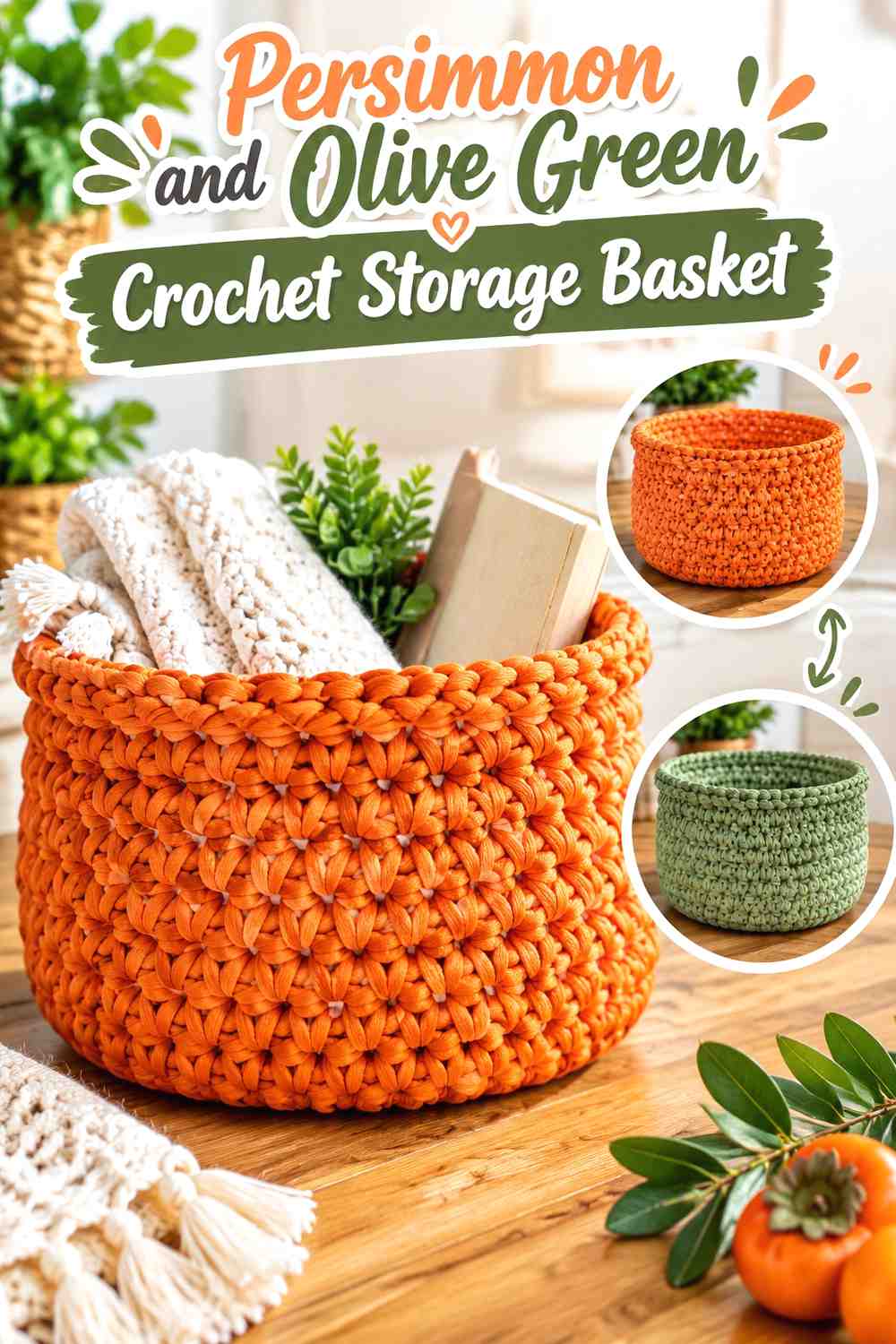
A basket naturally divides into base, walls, and rim, giving the two colors obvious placement opportunities. Persimmon can occupy the main walls for warmth, while olive green defines the bottom or top edge without requiring complicated striping.
Persimmon Can Cover the Main Crochet Basket Walls
Keeping the vertical surface mostly persimmon lets the basket’s stitch texture remain continuous. It also makes the warm color visible even when the basket is partly filled and the base cannot be seen.
Olive Green Can Ground the Persimmon Crochet Basket Base
An olive-green base creates a darker-looking foundation beneath the warmer walls. Repeat green at the rim if you want a balanced top-and-bottom frame instead of leaving the supporting shade entirely underneath the basket.
Creator Credit: Melanie Ham
7. Olive Green Persimmon And Camel Crochet Modern Vest
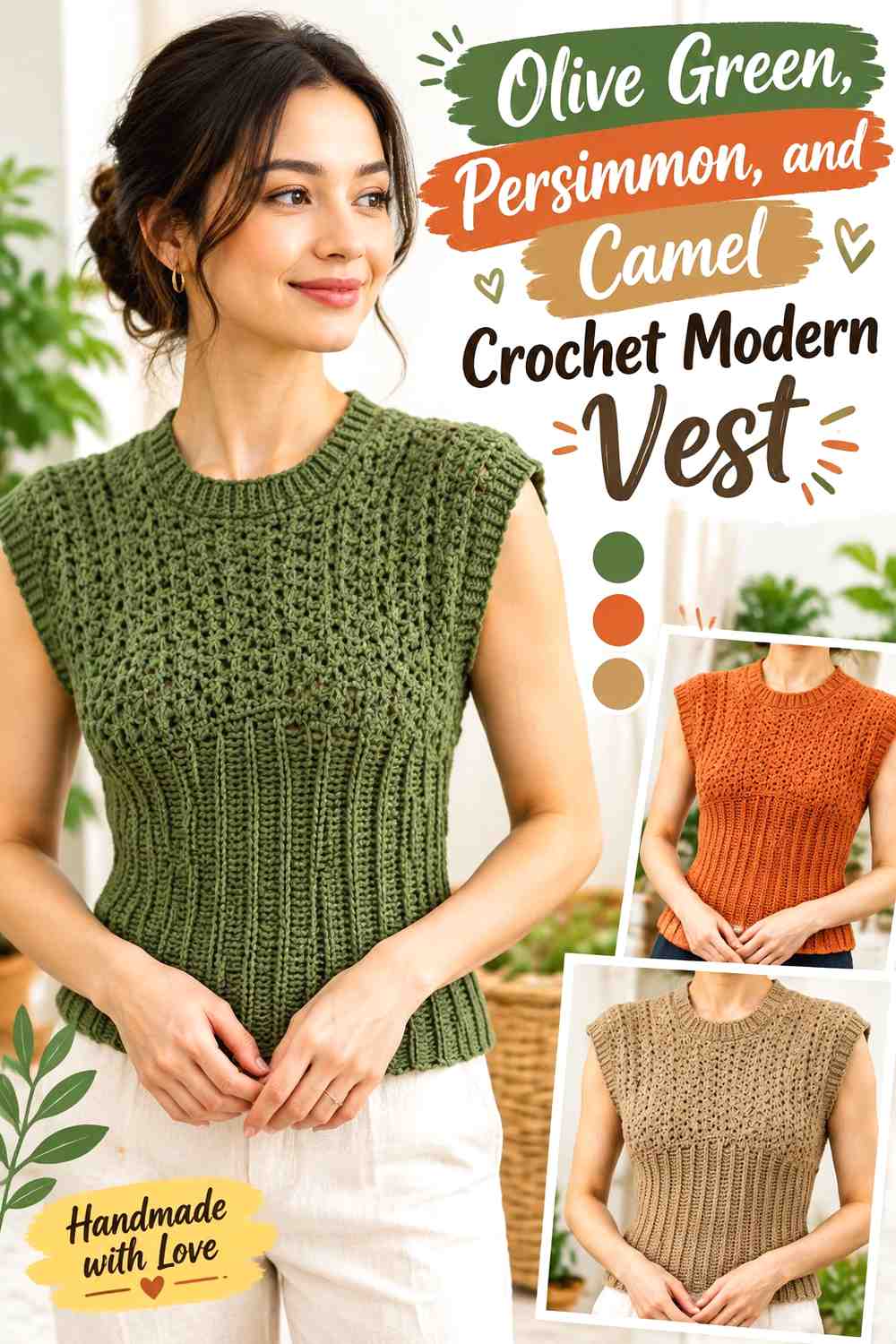
A sleeveless vest places most of its color weight on the front and back panels, so the dominant shade is especially noticeable. Olive green can cover those larger surfaces, while persimmon emphasizes neckline or edging and camel softens transitions around smaller finishing areas.
Olive Green Can Lead the Crochet Vest Body Panels
Use olive green across the main front and back areas for a continuous muted field. This gives the vest enough visual quiet for persimmon edging to register clearly instead of competing with large orange-red blocks.
Persimmon Can Frame the Olive Green Crochet Vest Neckline
The neckline is an efficient place to introduce the warm accent because it naturally outlines the garment’s upper shape. Repeat a small amount of persimmon at the lower edge or armholes if the neckline otherwise feels isolated.
Camel Can Soften Persimmon and Olive Green Crochet Vest Finishing
Camel can work as a narrow intermediary around ribbing or trim when direct orange-red-to-green contrast feels too abrupt. Keep it secondary so it supports rather than replaces the central pairing.
Creator Credit: TCDDIY
8. Persimmon And Olive Green Crochet Triangle Shawl
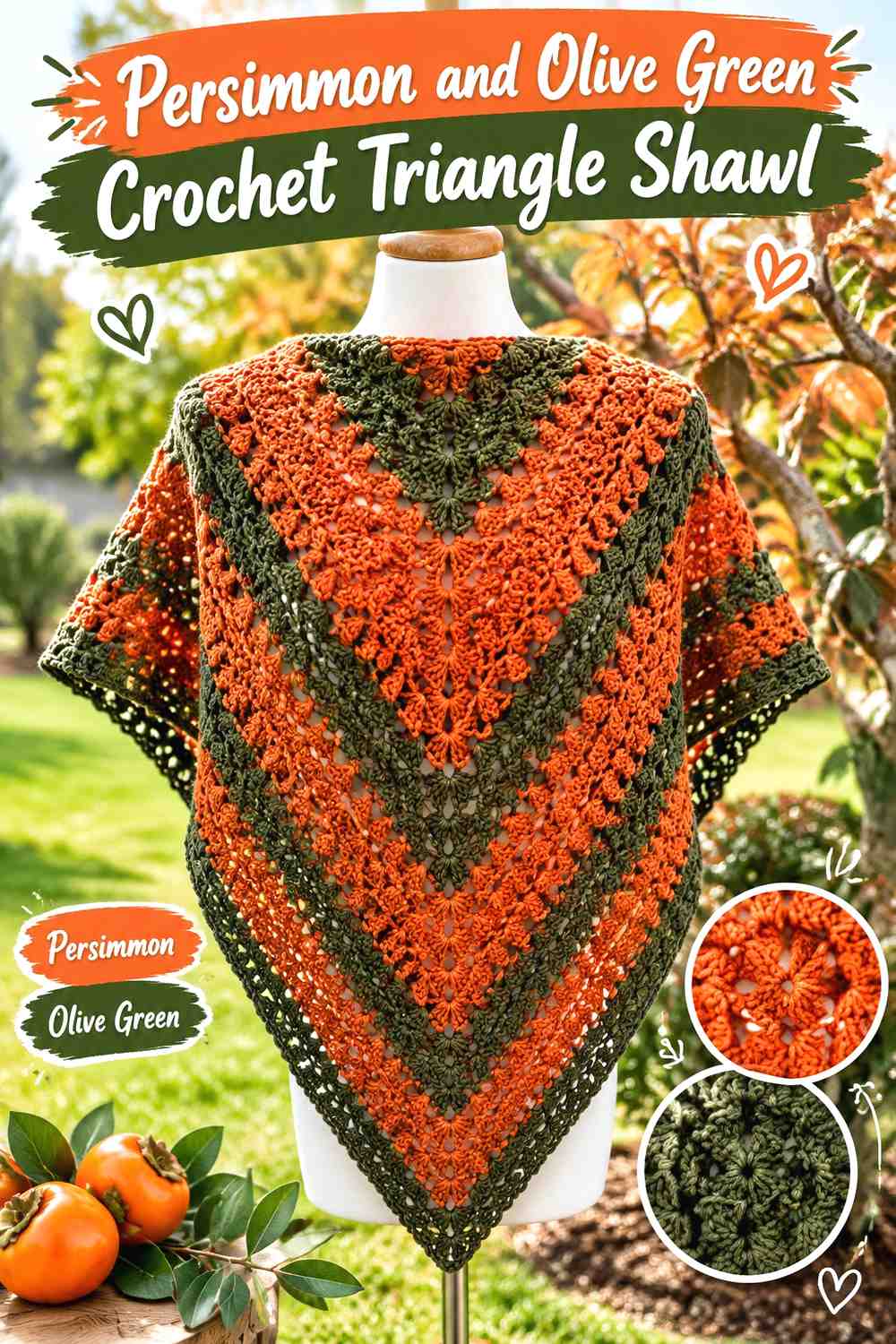
A triangular shawl offers a natural way to change color as the fabric expands. Persimmon can dominate the center or upper area, while olive green grows more noticeable toward the outer edge, creating a warmer core with a grounded border.
Persimmon Can Establish the Crochet Shawl Center
Starting with a substantial persimmon area gives the warm shade enough space to remain visible after the shawl is folded or draped. Small center-only accents can disappear once the fabric is worn around the shoulders.
Olive Green Can Frame the Persimmon Crochet Shawl Edge
Increase the olive-green share toward the outer portion if you want the shawl to finish with a darker visual frame. This placement also lets the border feel connected to the palette rather than introducing a completely new finishing color.
Creator Credit: Bag-O-Day Crochet
9. Olive Green Persimmon And Oatmeal Crochet Mug Cozy
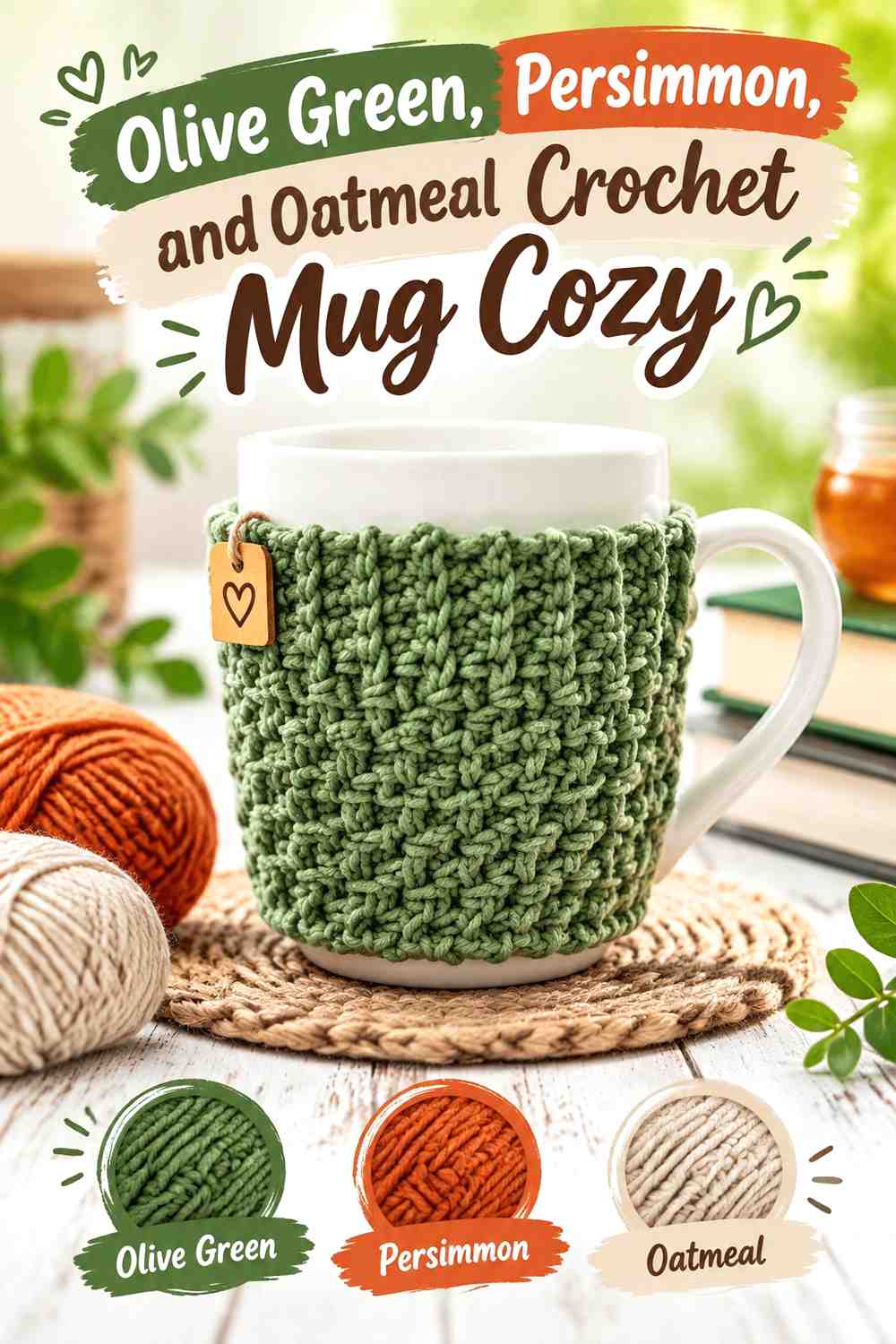
A mug cozy has limited space, so three colors need sharply defined roles. Olive green can cover most of the fabric, persimmon can mark the fastening or central accent area, and oatmeal can keep small textured details from disappearing.
Olive Green Can Keep the Crochet Mug Cozy Surface Continuous
Use olive green across the majority of the wrap when the cozy already includes visible stitch texture. A stable base color prevents a small project from becoming crowded with narrow bands.
Persimmon Can Highlight the Olive Green Crochet Mug Cozy Closure
A button area, strap, or narrow edge is a useful location for persimmon because the warmer color attracts attention to a functional feature. It also introduces contrast without requiring half of the cozy to change color.
Oatmeal Can Separate Persimmon From Olive Green Crochet Texture
If the two main yarns look too similar in value, a small oatmeal transition can preserve the outline of a strap or border. Use the neutral sparingly because the cozy does not offer much surface area for three equal colors.
Creator Credit: love.life.yarn. by Amanda Saladin
10. Persimmon And Olive Green Crochet Puff Stitch Fingerless Gloves
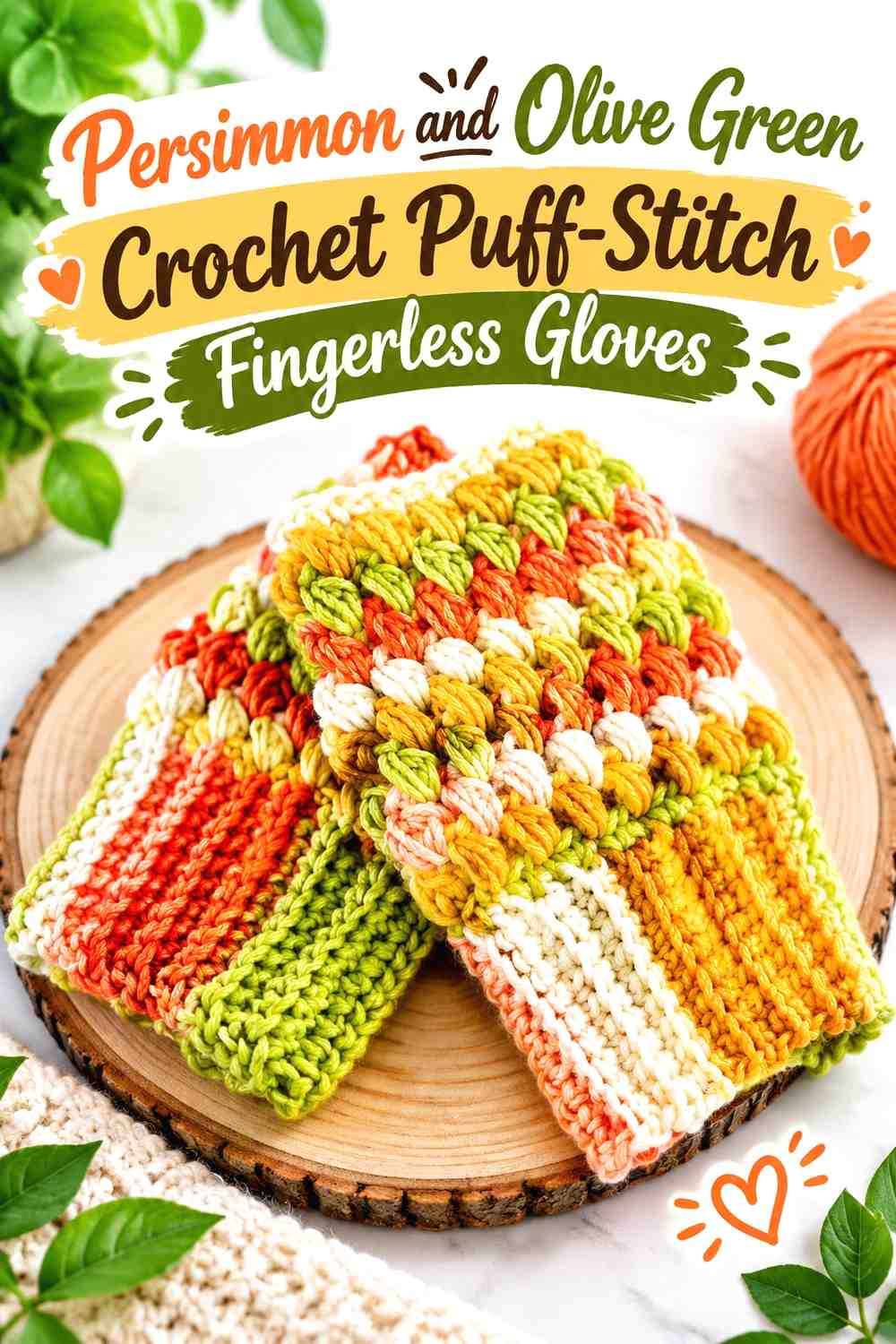
Fingerless gloves need mirrored color placement because two separate pieces are viewed together. Persimmon can lead across the hand while olive green defines the cuffs, giving the darker muted shade a practical visual anchor.
Persimmon Can Keep Crochet Puff-Stitch Gloves Warm and Visible
Use persimmon across the main textured hand area so the raised stitches share one continuous warm field. Switching colors too often inside puff texture can make the surface busier than the small accessory needs.
Olive Green Can Ground Persimmon Crochet Fingerless Glove Cuffs
Matching olive-green cuffs provide a consistent lower boundary on both gloves. Keep the green placement comparable on the pair so one hand does not appear darker or more heavily accented than the other.
Creator Credit: B.Hooked Crochet
11. Olive Green Persimmon And Cream Crochet Textured Market Tote
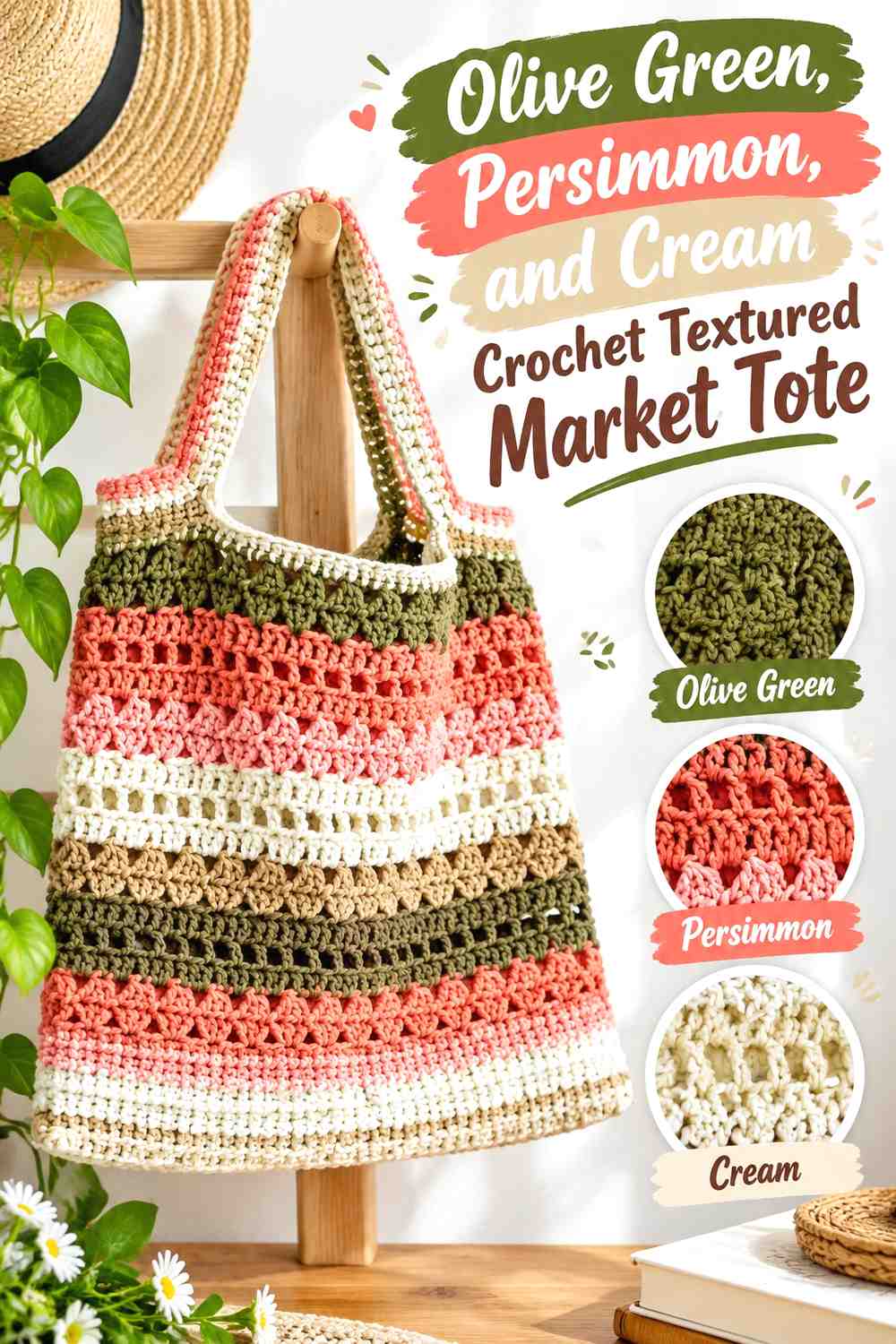
This bag reverses the earlier persimmon-led market-bag direction. Olive green can cover the varied stitchwork on the main body, persimmon can appear at the upper section or handles, and cream can provide a light break where several textures meet.
Olive Green Can Unite the Crochet Market Tote’s Mixed Texture
When the side of a bag uses several stitch treatments, a single olive-green field can keep them visually related. Adding color changes at every texture change would make both the color and the stitches compete for attention.
Persimmon Can Define Olive Green Crochet Tote Handles
Persimmon handles create a warm top edge that remains visible while the tote is carried. Repeat a smaller amount of persimmon near the base or upper body if you want the accent to connect more clearly with the bag itself.
Cream Can Give Persimmon and Olive Green Crochet Tote Sections Space
A narrow cream section can mark the transition between the olive body and persimmon finishing. This is useful when the bag already has substantial surface detail and needs one quieter area.
Creator Credit: Winding Road Crochet
12. Persimmon And Olive Green Crochet Twisted Headband
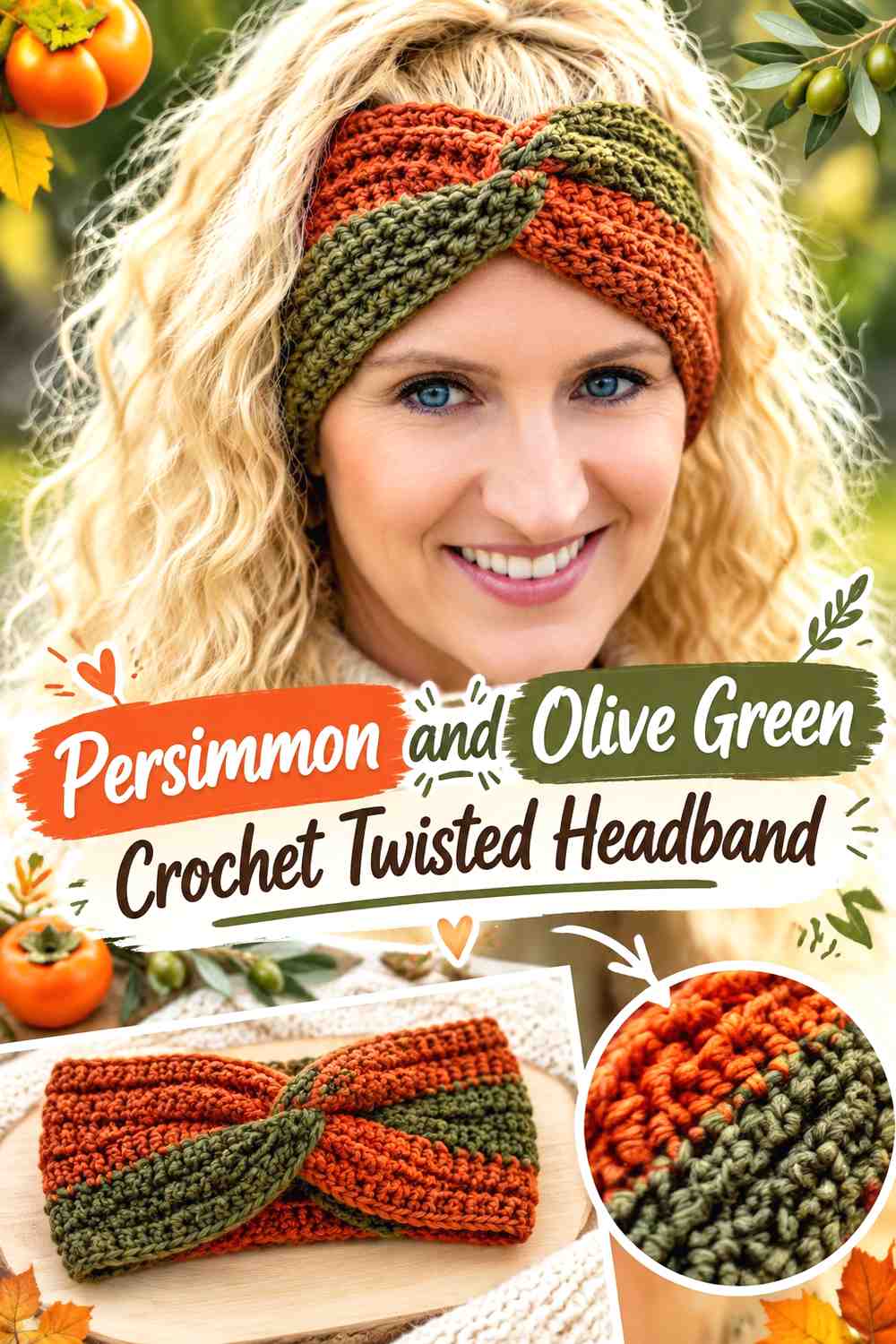
A twisted headband is narrow enough that simple color blocking has more impact than complicated stripes. Persimmon can cover most of the band, while olive green draws attention toward the twist or gives the lower edge a darker break.
Persimmon Can Keep the Crochet Headband Ribbing Cohesive
Use persimmon through a substantial portion of the ribbed fabric so the linear texture runs uninterrupted. Repeated tiny color changes may weaken the visual direction created by the ribs.
Olive Green Can Emphasize the Persimmon Crochet Headband Twist
Placing olive green near the center twist makes the construction detail easier to notice against the warm field. Alternatively, keep the twist persimmon and use olive green at both ends so the join produces a balanced darker accent.
Creator Credit: naztazia
13. Olive Green Persimmon And Camel Crochet Fall Scarf
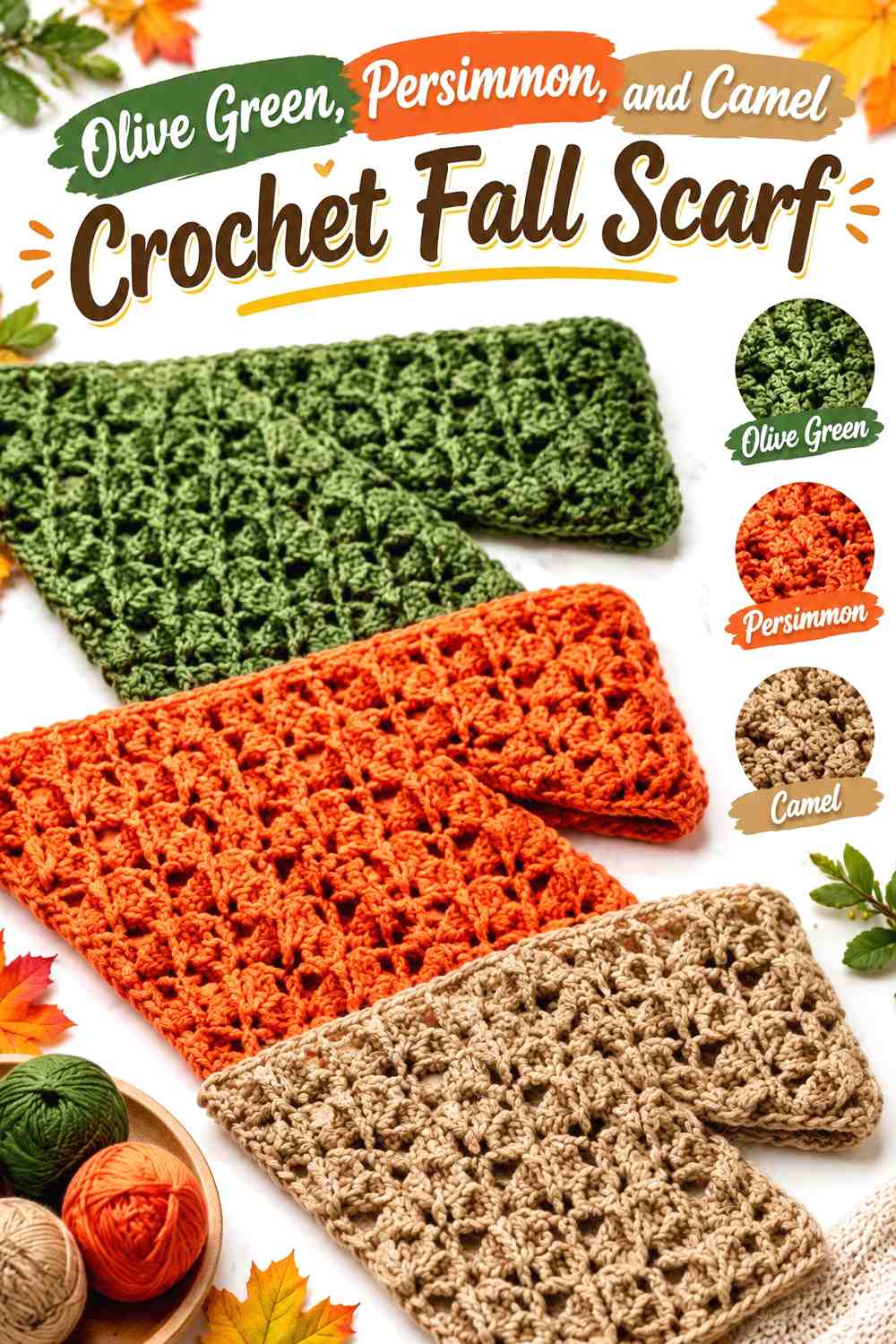
A long scarf gives olive green enough space to lead without making persimmon disappear. Broad olive sections can create the main field, persimmon can repeat in warm blocks or bands, and camel can keep transitions softer than a bright cream would.
Olive Green Can Establish the Main Crochet Fall Scarf Length
Use broad olive-green stretches so the muted shade remains visible after wrapping and folding. Long continuous sections also let the scarf’s stitch repeat stay readable instead of breaking at constant color changes.
Persimmon Should Repeat Across the Olive Green Crochet Scarf
Distribute persimmon in more than one location rather than saving the warm color for a single end. Repetition makes the palette look balanced when one end hangs differently from the other.
Camel Can Soften Persimmon and Olive Green Crochet Scarf Transitions
Camel offers a warmer neutral break than cream. Use it in narrow sections between the strongest color blocks when you want gentler transitions while still keeping persimmon and olive green clearly dominant.
Creator Credit: Atreyu Crochet
Comparing Persimmon-Led and Olive-Green-Led Crochet Palettes
Persimmon-led projects put the warmest shade across the largest visible surfaces. The striped hat, openwork bag, cowl, basket, shawl, gloves, and twisted headband all work well when orange-red is intended to attract attention first.
Olive-green-led projects create a more muted foundation. The hexagon cardigan, beanie, puff-square cushion, vest, mug cozy, textured tote, and fall scarf give green more visual area and use persimmon as the warmer interruption.
For clearer light-and-dark separation, add cream or oatmeal near detailed motifs, joins, or textured sections. Camel and mustard provide a closer tonal relationship when you want to preserve a warmer, lower-contrast autumn direction.
Conclusion
Persimmon and olive green can move from warm and expressive to muted and earthy simply by changing which shade occupies the larger surface.
Choose persimmon as the dominant color when you want scarves, hats, accessories, or decor pieces to show more orange-red warmth. Let olive green lead when the project has large cardigan panels, bag bodies, or other broad surfaces where a quieter base gives persimmon accents more definition.
Texture should influence the final palette placement. Puff squares, ribbing, openwork, and heavily textured bag surfaces already create visual movement, so fewer and more deliberate color zones can work better than constant alternation. If persimmon and olive green are close in value, introduce a light neutral only where the extra separation improves an edge, motif, join, or textured detail.
Use each linked creator tutorial for the exact construction method, then adapt the palette around the particular project’s body, border, brim, cuff, handle, motif, or finishing areas.
Frequently Asked Questions
Do persimmon and olive green work together in crochet?
Yes. Persimmon supplies a warmer orange-red direction while olive green provides a muted green counterpoint. The pairing is most effective when you decide which color should dominate instead of automatically dividing the project into equal amounts.
Which should be darker in a persimmon and olive green crochet palette?
There is no requirement that one always be darker. What matters is whether your chosen yarns have enough value separation for the detail you want to show. Compare them side by side, especially before using them in small motifs or textured colorwork.
What neutral works with persimmon and olive green crochet?
Cream and oatmeal are useful when you need a noticeably lighter separator. Camel creates a warmer, more subdued transition. Choose the neutral according to whether you want stronger definition or a closer earthy relationship.
How can I use persimmon and olive green without making crochet stripes too busy?
Make one color dominant through wider or more frequent sections. Use the supporting shade for selected bands, borders, cuffs, handles, or motif areas instead of alternating both colors in identical narrow stripes.
Can persimmon and olive green work in crochet granny squares?
Yes. Give each shade a repeated role, such as persimmon centers with olive-green outer sections or alternating dominant colors from square to square. A consistent joining color can help organize a large motif layout.
Should persimmon or olive green be used for crochet borders?
Either can work. Olive green can create a grounded edge around a persimmon field, while persimmon can give an olive-green project a warmer, more noticeable finish. Judge the border against the center before committing because a very dark edge can visually outweigh a lighter interior.
How do I replace persimmon or olive green if I cannot find the exact shade?
Preserve the color role rather than searching for an exact commercial match. Replace persimmon with another warm, softened orange-red and olive with another muted earthy green, then compare the two replacements together to make sure their contrast still suits the project’s texture and placement.